Herbs & Botanicals · Herbs · Very bitter old stomach herb of the daisy family, with thujone, a nerve toxin, as its main safety issue and only very-low-certainty human evidence
Wormwood
Artemisia absinthium L. · also called Wormwood, absinthe wormwood, ajenjo (Spanish), absinthe or armoise amere (French), Wermut (German), assenzio (Italian)
Wormwood is a silvery, very bitter plant of the daisy family. The dried leaves and flowering tops have been used for centuries as a bitter tea or tincture for poor appetite and upset stomach, and it flavours absinthe liquor. Human research is limited to a few very small trials: two Crohn's disease trials from one research group, one skin-product trial for knee pain and one small kidney pilot. The EU accepts it only as a traditional herbal medicine for appetite and mild digestive complaints in adults. Its main risks are thujone, which can cause seizures (above all from the essential oil), pregnancy, liver and bile problems, and daisy-family allergy. It is a different plant from sweet wormwood (Artemisia annua) and is not the same as absinthe.
General information, not medical advice. Last substantive update · Not medically reviewed. A named clinician has not signed off on this page. How this page is made
About Wormwood
Wormwood (Artemisia absinthium) is a very bitter, silvery plant of the daisy family used for centuries as a stomach tonic and a flavouring for absinthe. Human research is thin: two tiny Crohn's trials from one group, a knee-pain skin trial, a kidney pilot and a skin-cream trial, all rated very low certainty. The EU accepts it only for temporary loss of appetite and mild digestive complaints in adults. The safety picture matters more than the benefits: thujone can cause seizures, and the essential oil has caused serious poisoning.
What it is
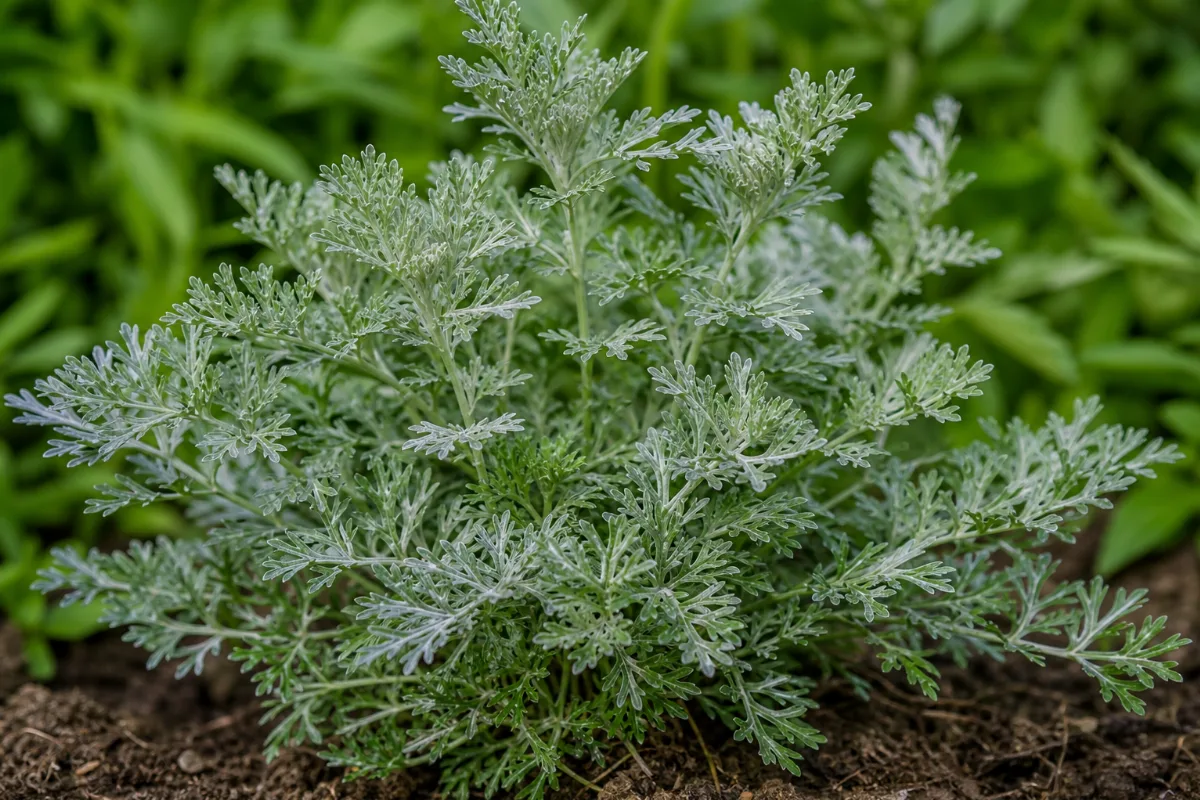
Wormwood (Artemisia absinthium L.) is a perennial plant of the daisy family (Asteraceae). The medicinal part is the dried leaves and leafy flowering tops, which the European Pharmacopoeia defines by their bitterness and essential oil content. It grows naturally on dry, rocky ground in Europe, Asia and northern Africa.
It contains intensely bitter compounds (absinthin and relatives), a volatile oil whose make-up varies by plant type, flavonoids and phenolic acids. The volatile oil can contain thujone, a compound that blocks GABA-A receptors in the brain.
Traditional and current uses
The EU assessment report traces wormwood from ancient Egyptian, Greek and Roman texts through the Middle Ages, mainly for digestion, gut worms, jaundice and fevers. In modern Europe it is a bitter tonic to promote appetite and bile flow. The EU accepts it as a traditional herbal medicine, for adults, for temporary loss of appetite and mild stomach and gut complaints, with a doctor to be seen if symptoms last more than 2 weeks.
People also use wormwood for Crohn's disease, worms, liver problems and many other things. Only Crohn's disease has any human trial evidence, and it is from two very small trials by the same group.
Why thujone matters
Thujone is a nerve toxin. In animals it causes dose-dependent tremors and convulsions by blocking GABA-A receptors. The EU report says humans appear at least as sensitive as animals. Essential oil of wormwood has caused seizures and organ injury in people who swallowed it. No poisoning from herbal tea has been reported. The amount of thujone in a product varies enormously with the plant type and how it is extracted: water tea carries little, strong alcohol extracts and oil carry much more.
The EU therefore says the amount of thujone in a wormwood medicine must be stated and its daily exposure kept below 6 mg. Some trial products, including the one used in the kidney pilot, were made thujone-free.
Wormwood, sweet wormwood and absinthe are not the same
Sweet wormwood (Artemisia annua) is a different species and the source of the malaria drug artemisinin. Mugwort, Roman wormwood and southernwood are also different. Absinthe is a spirit flavoured with wormwood, not a herbal medicine. In one analysis, absinthes made to old recipes and a 1930 bottle held low thujone, so alcohol probably explains most of the old 'absinthism' stories. None of that makes concentrated wormwood products safe.
Results on this page apply to wormwood herb preparations, thujone-free wormwood products and skin products as described in each study, not to those other plants or drinks.
At a glance
Traditional uses history, not proof
- Ancient Egypt, Greece and Rome: the EU assessment report cites wormwood for fevers and menstrual pains (Egyptian Ebers Papyrus), jaundice (Hippocrates) and gut worms and digestion (Pliny, Dioscorides)
- Medieval Europe: used against tapeworm and for stomach complaints (Paracelsus, Galen, Hildegard von Bingen), as reported in the EU assessment report
- Modern European herbal medicine: a bitter stomach herb to promote appetite and bile flow; tincture listed in German pharmacopoeias from 1872
- EU today: registered as a traditional herbal medicine, for adults only, for temporary loss of appetite and mild dyspeptic or gut complaints
Studied for research
- Crohn's disease symptoms and remission as an add-on to usual care, very low
- Coming off steroids in Crohn's disease, very low
- Mood scores in people with Crohn's disease, very low
- Knee osteoarthritis pain with wormwood ointment on the skin, very low
- Protein in the urine in IgA nephropathy (thujone-free product, no control group), very low
- Dark circles under the eyes with a wormwood cream, very low
- Loss of appetite and mild indigestion, insufficient (traditional use only)
- Bile and digestive juice flow, intestinal worms and amoebas, liver and nerve protection: insufficient or animal studies only
Main compounds
- Thujone (alpha and beta), a volatile oil compound that blocks GABA-A receptors and can cause seizures; the amount varies hugely by plant type and extraction
- Bitter sesquiterpene lactones such as absinthin (up to 0.28% of the dried herb) and artabsin
- Volatile oil (0.2 to 1.5% of the herb) with variable chemistry, including chrysanthenyl acetate and sabinyl acetate in some types
- Flavonoids, caffeic and chlorogenic acids
Common forms
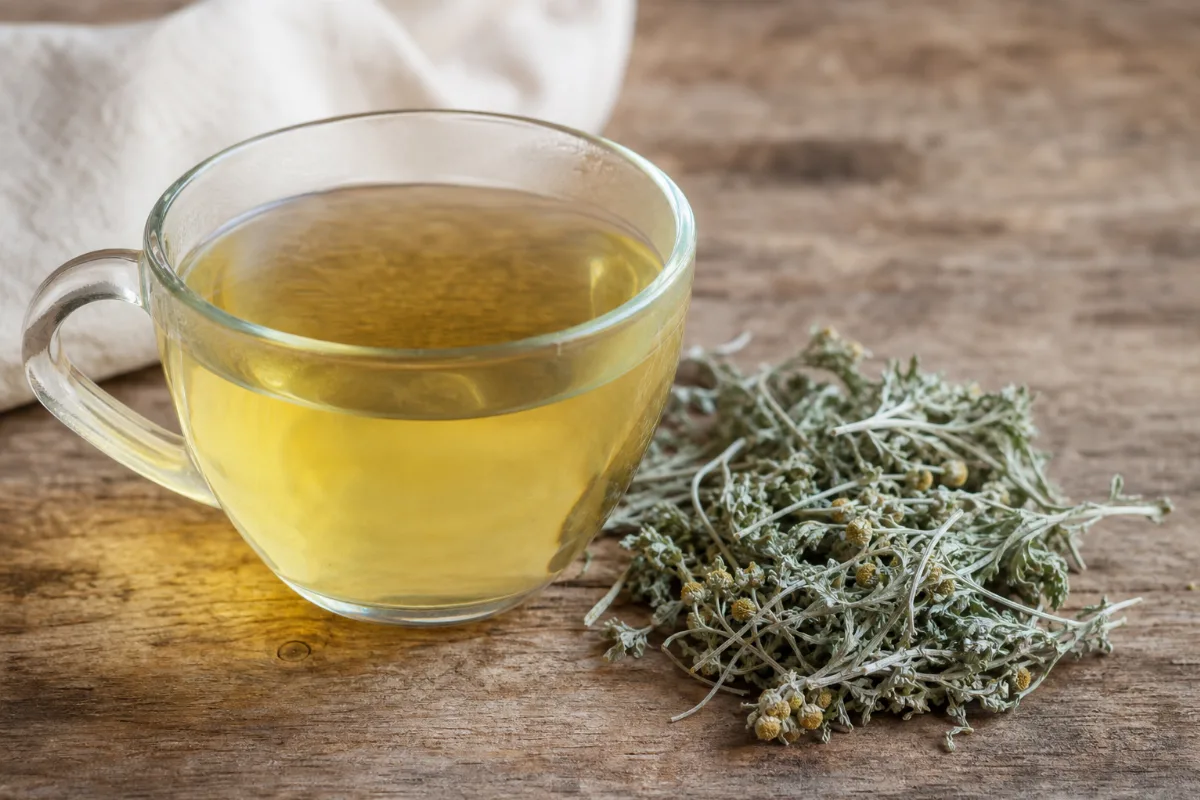
- Dried leaves and flowering tops as a bitter tea
- Tinctures and liquid extracts (contain alcohol)
- Powder or capsules, including thujone-free products
- Ointments, liniments and creams for the skin
- Essential oil (not for swallowing; the main poisoning risk) and absinthe liquor (a different product)
Research links: EU herbal monograph on wormwood herb (European Medicines Agency) · EU assessment report on wormwood herb (European Medicines Agency) · EMA wormwood herb page and summary for the public · Research Library · Genes & Biomarkers Library
The plant and its history
- Accepted scientific name
- Artemisia absinthium L.
- Naming authority
- L. (Linnaeus); accepted species in the GBIF backbone (key 3121319), checked 2026-10-25
- Synonyms
- GBIF lists 21 synonyms or infraspecific names for this accepted name, for example Absinthium officinale Brot., Absinthium vulgare Lam., Absinthium majus Garsault and Artemisia absinthium var. absinthium.
- Common names
- Wormwood (English); Ajenjo (EU monograph also lists 'absenta') (Spanish); Absinthe; armoise amere (EU assessment report) (French); Wermut, Wermutkraut, Magenkraut (German); Assenzio (Italian); Absinto (Portuguese)
- Botanical family
- Asteraceae (daisy family, also called Compositae)
- Classification
- Plantae > Tracheophyta > Magnoliopsida > Asterales > Asteraceae > Artemisia > Artemisia absinthium
- Native range
- The EU assessment report says Artemisia absinthium is native to temperate regions of Europe, Asia and northern Africa. A case report adds Northern and Central Asia and North Africa.
- Habitat
- Grows naturally on uncultivated arid ground, rocky slopes and wastelands and can be cultivated in dry soil (EU assessment report).
- What the plant looks like
- Roots: Not verified in the sources read.; Stems: Described as a perennial shrubby plant (review abstract); further stem detail not verified.; Leaves: Deeply cut, silvery, oval, velvety below and toothed, according to a dermatology case report's plant description (not a botanical source).; Flowers: The part used is the leaves or leafy flowering tops (basal leaves or slightly leafy flowering tops in the European Pharmacopoeia definition). Flower colour and head size not verified here.; Fruit: Not relevant to the medicinal use; not verified.
- Cultivation
- Can be cultivated in dry soil (EU assessment report). Not otherwise verified.
- Harvest and processing
- The European Pharmacopoeia (monograph 1380) defines the herb as dried whole or cut basal leaves or slightly leafy flowering tops, with at least 2 ml/kg essential oil and a bitterness value of at least 10,000. The bitter constituents rise during flowering, so harvest time matters (EU assessment report).
- Look-alikes and adulterants
- Name: Sweet wormwood, Artemisia annua L. (GBIF accepted); Note: A different species and the source of the malaria drug artemisinin. Results for A. annua should not be applied to wormwood and vice versa; the trial authors of the eye-cream study report an artemisinin level in A. absinthium, which was not independently checked.; Name: Mugwort (A. vulgaris), Roman wormwood (A. pontica) and southernwood (A. abrotanum) (all GBIF accepted); Note: Other Artemisia species with different chemistry. Do not substitute them for wormwood or the reverse.; Name: Absinthe (the spirit); Note: Not a plant: a wormwood-flavoured liquor. Thujone in absinthe is regulated in food law and findings about absinthe do not apply to herbal wormwood products.
- Sustainability and conservation
- Not assessed in the sources read.
The plant and the parts used
Traditional use and history history, not clinical proof
| Tradition or era | Documented use | Source |
|---|---|---|
| Ancient Egypt, Greece and Rome | The EU assessment report says the Egyptians used wormwood (or a close relative) as an antiseptic, stimulant and tonic, and for fevers and menstrual pains (Ebers Papyrus); Hippocrates recommended it for jaundice; Pliny and Dioscorides describe it for gut worms and digestion. | s-ema-ar-wormwood |
| Middle Ages Europe | Used against tapeworm; Paracelsus called it a stomach and worm herb that also guards against sea-sickness; Dioscorides, Galen and Hildegard von Bingen highlight stomach complaints. | s-ema-ar-wormwood |
| Modern European herbal medicine | Used as a bitter 'amarum aromaticum' to promote appetite in gastritis, low stomach acid and dyspepsia, and as a bile-stimulating and liver remedy. A tincture was listed in German pharmacopoeias from 1872. | s-ema-ar-wormwood |
| 19th-century absinthe and 'absinthism' | The spirit absinthe was blamed for a mental disorder with hallucinations, sleeplessness and convulsions. Chemical analysis of recipe-made and vintage absinthes found low thujone, and the authors conclude thujone plays no, or only a minor, role compared with alcohol. | p15896935 |
| EU regulation (today) | Registered as a traditional herbal medicine for appetite and mild digestive complaints; EU food law limits thujone in drinks; monograph under periodic review in 2026. | s-ema-wormwood-summary |
Traditional use shows how a plant was used. It does not show that a supplement works or is safe today.
What is inside, and how it may work
What the plant contains and how those compounds act in cells and animals. Laboratory and animal mechanisms are not proven effects in people.
Main compounds
| Compound | Family | Where it is concentrated | Activity studied | Level of evidence |
|---|---|---|---|---|
| alpha-Thujone PubChem 261491 | monoterpene ketone (volatile oil) | Essential oil of leaves and flowering tops; amount depends on chemotype The oil held 0.2-1.5% of the herb; thujone share varies a lot (about 8% to 50% alpha-thujone in some French samples, 14-43% beta-thujone in a Croatian type, none in others). In one tested sample thujone was 4.8% of the oil. | Blocks the GABA-A chloride channel and causes convulsions in animals; broken down quickly by liver enzymes. 14 25 6 | Animal research |
| beta-Thujone PubChem 91456 | monoterpene ketone | Essential oil Up to 14-43% in a Croatian chemotype; 62 mg/L in a 6-month 95% alcohol macerate (EU report). | Less toxic than alpha-thujone in a mouse test (subcutaneous LD50 442 vs 134 mg/kg, EU report). 6 18 | Animal research |
| Absinthin PubChem 442138 | sesquiterpene lactone dimer (bitter) | Aerial parts Up to 0.28% of the dried herb (EU report). | The most bitter compound; stimulates gastric and bile secretion in animals. 6 | Animal research |
| Anabsinthin PubChem 44558930 | sesquiterpene lactone (bitter) | Aerial parts Not given. | Bitter constituent listed by the EU report. 6 21 | Traditional use |
| Artabsin PubChem 442146 | sesquiterpene lactone (azulene-type) | Aerial parts 0.04-0.16% of the fresh herb (EU report). | Bitter constituent listed by the EU report; amount is the share of the fresh herb. 6 21 | Traditional use |
| Sabinyl acetate and chrysanthenyl acetate PubChem 94266 | monoterpene esters | Essential oil Main oil components of some chemotypes (chrysanthenyl acetate 15-50% in a French type). The CID given is sabinyl acetate; chrysanthenyl acetate is CID 162747. | Not studied for health effects in the sources read; they mark chemotypes that carry little or no thujone. 6 21 | Traditional use |
| Chamazulene and matricin PubChem 10719 | azulenes | Aerial parts Matricin 0.007% of the dried herb (EU report); chamazulene CID 10719, matricin CID 92265. | Not studied for wormwood health outcomes in the sources read. 6 21 | Traditional use |
| Flavonoids and phenolic acids (quercetin, rutin, chlorogenic acid, caffeic acid) PubChem 5280343 | polyphenols | Aerial parts Not given. | Listed constituents; antioxidant activity in lab tests. CIDs: quercetin 5280343, rutin 5280805, chlorogenic acid 1794427, caffeic acid 689043. 6 26 | Laboratory research |
| Artemisinin (reported trace) PubChem 68827 | sesquiterpene lactone endoperoxide | Not established One eye-cream study reports 1.29 microgram per mg of cream; this was not checked elsewhere. | The malaria drug comes from Artemisia annua, not from wormwood. This entry records only that one paper reported it. 12 21 | Laboratory research |
Mechanisms, receptors and pathways
| Target or pathway | Gene or receptor | What was found | Level |
|---|---|---|---|
| GABA-A receptor chloride channel blockade (thujone) | GABA-A receptor | Alpha-thujone blocked GABA currents in rat neurons; poisoning signs in mice resembled picrotoxinin and were eased by diazepam and phenobarbital; a fly strain resistant to channel blockers was tolerant to thujone. In people, high thujone with alcohol briefly worsened attention. 14 3 | Animal research |
| Bitter taste and gut secretion reflexes | Bitter taste receptors (mouth and gut lining) | The EU report describes that bitter compounds raise saliva, gastric juice and bile secretion through taste receptors; bitter receptors were found in the gut lining in animals. Saliva rose over 100% in four volunteers given a wormwood preparation (an old study). 6 | Human data |
| TNF-alpha lowering | TNF | Lab studies reported wormwood extracts suppress TNF-alpha; in 20 patients with Crohn's, blood TNF-alpha fell on wormwood but not in the control group. 16 | Human data |
| Liver enzyme metabolism of thujone | CYP2A6, CYP3A4, CYP2B6 | In human liver preparations CYP2A6 is the main enzyme breaking thujone down, then CYP3A4 and a little CYP2B6; metabolism makes it less toxic. 25 14 | Laboratory research |
| Inhibition of drug-metabolising enzymes | Liver microsomal enzymes | A wormwood extract prolonged barbiturate sleep and increased strychnine lethality in mice, which the authors read as slowed liver drug metabolism. 11 | Animal research |
| Porphyrin synthesis (heme pathway) | 5-aminolevulinic acid synthase | Thujone raised porphyrin production and induced 5-aminolevulinic acid synthase in chick liver cells, like known porphyria-triggering drugs. 2 | Laboratory research |
| Cannabinoid receptors (weak) | CB1, CB2 | An older suggestion that thujone resembles THC was tested; thujone showed only weak affinity and failed to give typical cannabinoid effects, so a direct role at normal intakes is unlikely (EU report). 6 | Laboratory research |
Absorption, metabolism and elimination
- Absorption
- No data exist for the herb or its preparations (EU report). In rats and mice, alpha-thujone was absorbed rapidly after gavage; bioavailability was higher in rats than mice and higher in female than male rats.
- Distribution
- Thujone reached the brain in rats and mice, with higher brain-to-plasma ratios in females.
- Metabolism
- Thujone is hydroxylated (7-hydroxy-alpha-thujone is the main product in mouse liver) and then conjugated; this lowers toxicity. In human liver preparations CYP2A6 is main, with CYP3A4 and CYP2B6 less so. Species differences are large.
- Elimination
- Not studied in people. In animals, dose-adjusted exposure rose faster than the dose in some groups, hinting at saturable elimination.
- Bioavailability
- Unknown in people. In two volunteers who drank absinthe with 3.85 mg thujone, thujone could not be detected in blood (detection limit 0.34 ng/ml); conjugates were not measured.
Isolated compounds versus whole extracts
Wormwood tea, extracts and oil are very different. According to one study in the EU report, cold water and 30% alcohol extracts held no detectable thujone, while 90% alcohol and steam distillation carried most of it; the report estimates only about a third of the oil passes into a hot-water tea. Bitter-secretion effects in volunteers did not need thujone: a thujone-free wormwood powder had similar or stronger effects than a thujone-containing preparation. The IgA nephropathy trial also used a thujone-free product. Results for one preparation therefore cannot be moved to another, and neither can results for thujone alone.
Nutritional composition
Wormwood is a bitter medicinal and flavouring herb, not a food source of nutrients. The sources read give no vitamin or mineral amounts for it, so it should not be counted as a nutritional food.
6 very low certainty5 not enough evidence
What is Wormwood good for?
The main proposed uses and how strong the human evidence is for each. "Very low" means a very small or unclear study, "insufficient" means there is not enough to judge, and "against" means a good trial found no benefit. Nothing about wormwood is rated higher than very low. These results come from specific powders, blends, ointments and creams and cannot be moved to other wormwood products, to wormwood oil, to absinthe, or to related species such as sweet wormwood.
Benefits, one by one
Each card is a research question, not a promise. Tap a goal to filter. Open a card to see the studies, doses and limits.
Crohn's disease: symptom scores and remission (add-on to usual treatment)
Very low certaintyTwo very small trials from the same research group reported that wormwood herb powder, added to usual Crohn's treatment, improved symptom scores and brought more people into remission than placebo or no extra treatment. The results are strikingly large, have not been repeated by anyone else, and one trial used a blend of four ingredients. Reviews call the evidence encouraging but limited.
5 studiesTwo small trials used wormwood herb powder: one as a capsule blend wi…
Studies, doses and limits
What the trials found
Omer 2007: 40 adults with Crohn's disease on steroids were given a wormwood-containing herbal blend or placebo for 10 weeks while steroids were tapered to zero. Krebs 2010: 20 adults with active Crohn's disease (10 per group) were given dried powdered wormwood or a control for 6 weeks on top of usual treatment. Two reviews (Ng 2013, Holleran 2020) list these as the only wormwood trials in Crohn's.
Results
Omer 2007 (abstract): 18 of 20 (90%) on the herbal blend improved steadily; after 8 weeks 13 of 20 (65%) were almost symptom-free versus none on placebo. Krebs 2010: remission in 8 of 10 on wormwood versus 2 of 10 in the control group after 6 weeks; CDAI fell from 275 to below 175 on wormwood versus 282 to 230 in controls.
Effect sizes as reported
No confidence intervals are given in either abstract. Remission 65% vs 0% (Omer, n = 40) and 8/10 vs 2/10 (Krebs, n = 20).
Why this rating
Two tiny trials by the same group, one of a four-ingredient blend, with unusually large effects, incomplete reporting, a control group that is described differently in different sources, and no independent repeat. The reviewers who list them (Ng 2013, Holleran 2020) say the evidence is limited, from single small studies with short follow-up, and call for larger trials. Neither review gives a formal GRADE rating.
Form and dose studied
Two small trials used wormwood herb powder: one as a capsule blend with rose petals, cardamom and mastic (3 x 500 mg a day for 10 weeks) and one as dried powdered wormwood (3 x 750 mg a day for 6 weeks), both added to usual Crohn's treatment. These are trial settings, not advice.
Who was studied
Adults with Crohn's disease confirmed by colonoscopy and biopsy (per the EU report), mostly from Germany. Not studied in children, in ulcerative colitis, or in people on biologic drugs such as infliximab (excluded from Krebs 2010).
Limits
Very small groups. The blend in the 2007 trial means wormwood alone was not tested. Funding not stated in the abstracts. Follow-up ended at 20 weeks. Wormwood contains thujone, a nerve-toxic compound, and the trials did not report side effects in the abstracts.
Why researchers looked
Wormwood is a bitter herb used for stomach and gut complaints for centuries. Lab work reported it lowers inflammation signals (TNF-alpha), which are involved in Crohn's disease, so it was tried in people with Crohn's.
Traditional use
The EU assessment report lists traditional use of wormwood for gut complaints, loss of appetite and digestion, and a survey of healers in Pakistan reports use for inflammatory bowel disease. The EU does not list Crohn's disease as an approved use.
Proposed mechanism Preliminary mechanism
In the lab, wormwood extracts reduced TNF-alpha and other inflammatory signals, and in the 2010 trial blood TNF-alpha was lower in the wormwood group. The authors suggest immune effects. No mechanism has been proven in people.
A proposed mechanism does not show that the effect happens in people.
Crohn's disease needs medical care. Do not stop prescribed medicines for wormwood. The EU lists liver disease and bile duct blockage as reasons not to use wormwood, and does not recommend it in pregnancy or breastfeeding. Thujone is a seizure risk at high amounts, especially from the essential oil.
Crohn's disease: coming off steroids without a flare
Very low certaintyIn the 2007 trial, people with Crohn's disease on steroids were taken off steroids over 10 weeks. Most on the wormwood blend stayed well; most on placebo flared. This is the one result that is closest to a clinical outcome, but it comes from a single 40-person trial of a blend.
3 studiesBlend capsules of wormwood herb with rose petals, cardamom and mastic…
Studies, doses and limits
What the trials found
Omer 2007 tapered steroids to zero by week 10 in all 40 patients, with other Crohn's medicines kept the same.
Results
Steroids had to be restarted in 2 of 20 (10%) on the herbal blend. In the placebo group the abstract says 16 of 20 (80%) needed steroids again, while the EU assessment report says 16 had flare-ups and 11 restarted steroids. Both sources agree on 2 versus a large number of placebo patients flaring.
Effect sizes as reported
2/20 vs 16/20 flared or restarted steroids per the abstract; no confidence interval or risk ratio reported.
Why this rating
One small trial of a blend, a mismatch between sources on how many placebo patients restarted steroids, no repeat, and no formal rating from the reviewers.
Form and dose studied
Blend capsules of wormwood herb with rose petals, cardamom and mastic resin for 10 weeks (per EU report). Trial setting only.
Who was studied
Adults with Crohn's on up to 40 mg a day of prednisone equivalent for at least 3 weeks, in five German sites.
Limits
Only 40 people; the blend cannot be split into its parts; only 20 weeks of observation; the steroid taper was a protocol, not real-world care.
Why researchers looked
Long-term steroid use has serious side effects, so any add-on that makes steroid tapering easier would matter to people with Crohn's.
Traditional use
Not a traditional use; this is a modern trial question.
Proposed mechanism Preliminary mechanism
Not established. The authors suggest immune modulation and possible anti-viral effects; these are their ideas, not shown findings.
A proposed mechanism does not show that the effect happens in people.
Never taper steroids without a doctor. Wormwood is not approved in the EU for Crohn's disease.
Mood and quality of life in people with Crohn's disease
Very low certaintyBoth Crohn's trials also measured depression scores and quality of life, and both reported better scores with wormwood. These were secondary measures in sick people, in tiny trials, so they only show that mood scores moved with gut symptoms.
3 studiesSame as the Crohn's trials.
Studies, doses and limits
What the trials found
Omer 2007 used the 21-item Hamilton Depression Scale (HAMD). Krebs 2010 used HAMD and the IBD quality-of-life questionnaire (IBDQ).
Results
Omer 2007 (EU report): HAMD fell by an average of 9.8 points on the herbal blend versus 3.4 on placebo; the report also says 70% on the blend and none on placebo had remission of depressive symptoms. Krebs 2010: mood improved on wormwood (no numbers in the abstract).
Effect sizes as reported
HAMD change 9.8 (SD 5.8) vs 3.4 (SD 6.6) points; no confidence interval.
Why this rating
Secondary outcome in two very small trials of people with an active disease; changes are likely tied to gut symptoms; the depression results are known only from an abstract and the EU report; no repeat.
Form and dose studied
Same as the Crohn's trials.
Who was studied
People with Crohn's disease; not people with depression as a main problem.
Limits
Not a trial in depression. HAMD changes are expected to follow disease activity. Wormwood is not an established treatment for low mood.
Why researchers looked
Mood and quality of life are low in many people with active Crohn's, so trials measured them alongside gut symptoms.
Traditional use
Wormwood has been called a tonic and a brain tonic in traditional texts. This is not a studied mood use.
Proposed mechanism Preliminary mechanism
No mood mechanism is proven. Better scores may simply follow better gut symptoms.
A proposed mechanism does not show that the effect happens in people.
Anyone with depression should see a clinician. Thujone from wormwood can affect the nervous system.
Knee osteoarthritis pain (wormwood ointment or liniment on the skin)
Very low certaintyOne trial of 90 people in Iran compared a 3% wormwood ointment, a 3% wormwood liniment and piroxicam anti-inflammatory gel on painful knees. The ointment worked about as well as the gel on most measures; the liniment helped only briefly. There was no placebo group, so it does not show wormwood beats placebo.
3 studiesOintment or liniment containing 3% wormwood (plant part not stated), …
Studies, doses and limits
What the trials found
Basiri 2017: 90 outpatients aged 30-70 with knee osteoarthritis were randomly given wormwood ointment 3%, wormwood liniment 3% or piroxicam gel three times a day for 4 weeks, double-blind, with visits at weeks 4 and 6. Registered as IRCT201202123109N3.
Results
Piroxicam gel improved all measures with no relapse after stopping. Wormwood ointment improved all measures except WOMAC stiffness, comparable to the gel. Wormwood liniment reduced pain scores only at week 4, with pain returning by week 6.
Effect sizes as reported
No scores, differences or confidence intervals in the abstract.
Why this rating
A single trial, no placebo arm, no numbers in the abstract, short follow-up and one country.
Form and dose studied
Ointment or liniment containing 3% wormwood (plant part not stated), applied to the skin three times a day for 4 weeks. Trial setting only.
Who was studied
Adults 30-70 with primary knee osteoarthritis in Hamadan, Iran.
Limits
No placebo. Skin side effects not reported in the abstract. Cannot be moved to other wormwood products or to tea.
Why researchers looked
Wormwood has traditionally been used to reduce pain and inflammation, so a skin product was tried on knee osteoarthritis.
Traditional use
The abstract says wormwood was used traditionally to reduce pain and inflammation. The EU assessment report lists wound and fever uses in traditional medicine but does not list osteoarthritis.
Proposed mechanism Preliminary mechanism
Not shown in people. Lab studies point to anti-inflammatory effects of wormwood constituents.
A proposed mechanism does not show that the effect happens in people.
Wormwood on the skin can cause irritation or allergic reactions; one case report describes a first-degree burn from a wormwood poultice, and people allergic to daisy-family plants should avoid it.
IgA nephropathy: protein in the urine (thujone-free wormwood)
Very low certaintyIn a pilot trial with no comparison group, 10 people with IgA nephropathy took a thujone-free wormwood product for 6 months and had a large fall in urine protein, with unchanged kidney function. With no placebo and only 10 people, this is a signal to test, not evidence that it works.
2 studiesA thujone-free wormwood preparation, 1.8 g per day for 6 months (tria…
Studies, doses and limits
What the trials found
Krebs 2010 (IgA nephropathy): 10 adults with biopsy-proven IgA nephropathy and 0.5 to 3.5 g per day of urine protein despite two kidney-protecting drugs took thujone-free wormwood for 6 months and were followed for 6 more months.
Results
Urine protein-creatinine ratio fell from 2,340 (+/-530) to 315 (+/-200) mg/g (P < 0.001) and stayed low in the 6 months after stopping. eGFR and creatinine clearance did not change. Mean arterial pressure fell modestly (P < 0.002).
Effect sizes as reported
Protein-creatinine ratio down by about 87% from baseline (calculated from the reported means); no confidence interval.
Why this rating
Open, uncontrolled study of 10 people from the same group as the Crohn's trials, with a very large effect and no replication.
Form and dose studied
A thujone-free wormwood preparation, 1.8 g per day for 6 months (trial setting only). Thujone-free wormwood is not the same as ordinary wormwood herb or oil.
Who was studied
Adults with normal kidney function and early IgA nephropathy on dual renin-angiotensin blockade.
Limits
No control group, so natural variation and the effect of the background drugs cannot be separated. Not repeated.
Why researchers looked
TNF-alpha is thought to be involved in IgA nephropathy, and the same group had seen wormwood lower TNF-alpha in Crohn's disease.
Traditional use
Not a traditional use.
Proposed mechanism Preliminary mechanism
The authors suggest lowering TNF-alpha. This was not measured in this trial.
A proposed mechanism does not show that the effect happens in people.
The authors call thujone-free wormwood favourable for safety, but that statement is about a thujone-free product in 10 people. Kidney disease needs medical care and some herbs can harm kidneys; one case of kidney failure followed swallowing wormwood essential oil.
Loss of appetite and mild indigestion (traditional bitter)
Not enough evidenceThis is the use the EU accepts, but only on the strength of long history. There are no good trials of wormwood tea or extracts in people with poor appetite or indigestion. The EU committee itself noted the lack of studies.
3 studiesThe EU lists traditional tea, powder, juice and tincture forms and sa…
Studies, doses and limits
What the trials found
The EU assessment report says clinical data supporting appetite and indigestion uses are lacking. The only human work it lists is small volunteer studies measuring digestive juices through a tube, not studies of patients.
Results
No trial in patients with poor appetite or indigestion was found.
Effect sizes as reported
Not applicable.
Why this rating
Traditional use is accepted by the EU, but there are no patient trials to rate.
Form and dose studied
The EU lists traditional tea, powder, juice and tincture forms and says to consult a doctor if symptoms last more than 2 weeks. Amounts are for a pharmacist or doctor to advise.
Who was studied
Adults only; not under 18.
Limits
Plausibility from bitterness does not prove benefit. The same weakness applies to other bitter herbs.
Why researchers looked
Bitter herbs are thought to wake up digestion by taste and gut reflexes.
Traditional use
The EU monograph allows wormwood herb as a traditional herbal medicine for temporary loss of appetite and mild dyspeptic or gut complaints in adults, based on long-standing use (at least 30 years, 15 of them in the EU). The assessment report traces use back to ancient Egyptian, Greek and Roman texts.
Proposed mechanism Pharmacological theory
Bitter compounds such as absinthin stimulate saliva, stomach and bile secretion by taste and nerve reflexes. This is from lab and old volunteer work described in the EU report; wormwood itself was not tested in patients.
A proposed mechanism does not show that the effect happens in people.
Contraindicated in bile duct blockage, cholangitis and liver disease; gallstones need medical advice; avoid in pregnancy and breastfeeding; thujone limits apply.
Bile and digestive juice flow (volunteer studies)
Not enough evidenceOld small volunteer studies put wormwood preparations into the upper gut through a tube. Some earlier ones reported more bile and digestive enzymes; two double-blind studies at a very low amount found rises that were not statistically significant. None tested patients.
1 studiesTube delivery of ethanolic extracts; not an ordinary use.
Studies, doses and limits
What the trials found
The EU report describes: a 1975 study in 15 patients with liver disorders reporting increased duodenal secretion after a dry ethanol preparation; a study in healthy volunteers comparing preparations with and without thujone; and two double-blind studies (Jagusch 1988, 20 volunteers; Kistler 1988, 10 volunteers) using a very low amount, in which secretion rose 10-20% but not significantly. These are secondhand descriptions from the report.
Results
Secretion rose in the older small studies; the double-blind ones found non-significant 10-20% increases. The report suggests the very low amount used may explain that.
Effect sizes as reported
Not available beyond the EU report's description.
Why this rating
Tiny, old studies measuring gut juices, not symptoms, described only through a regulator's summary; results not consistent.
Form and dose studied
Tube delivery of ethanolic extracts; not an ordinary use.
Who was studied
Healthy volunteers and a few patients with liver disease (1975).
Limits
Primary papers were not read. Measuring secretion is not the same as relieving symptoms.
Why researchers looked
Wormwood is described as a choleretic, a herb that promotes bile flow.
Traditional use
Used as a bitter 'amarum aromaticum' to promote appetite and bile flow in European medicine (EU report).
Proposed mechanism Pharmacological theory
Bitter stimulation of secretion.
A proposed mechanism does not show that the effect happens in people.
The EU contraindicates wormwood in liver disease and bile duct blockage, so a 'liver and bile' use should not be self-treated.
Intestinal worms and amoebic dysentery (traditional)
Not enough evidenceWormwood has been used against gut worms since ancient times. Apart from an uncontrolled study of 20 patients with amoebic dysentery described in an EU report, no human trial of this use was found. The EU report says there are no published human efficacy studies for the worm-killing use.
1 studiesNot recommended to copy. The study used high daily amounts of powder;…
Studies, doses and limits
What the trials found
The EU report describes Tahir 1997, an uncontrolled study of 20 patients with amoebiasis given powdered wormwood for 15 days, with symptom relief reported in most and amoebae gone from stool in 70%. It says no published studies evaluate efficacy of wormwood as an anthelmintic in humans.
Results
Reported relief of pain, loose stools and blood in stool in most of 20 patients; no control group.
Effect sizes as reported
Symptoms improved in about 85% on average (EU report's description); no control.
Why this rating
One uncontrolled study known only through the EU report, plus animal work.
Form and dose studied
Not recommended to copy. The study used high daily amounts of powder; this is not a suggestion.
Who was studied
Patients aged 14-65 (country not stated in the EU report's description).
Limits
No control group, primary paper not read, high amounts used. Infections like amoebiasis and worms need proper medical treatment.
Why researchers looked
Long history of use as an anthelmintic (worm-expelling) herb. Animal and lab studies (for example in sheep) tested extracts against worms.
Traditional use
Pliny and Dioscorides are cited in the EU report for use against gut worms, and the Middle Ages for tapeworm.
Proposed mechanism Laboratory research
Lab and animal work reports that wormwood extracts act against some worms and protozoa. This does not show people can safely clear infections with it.
A proposed mechanism does not show that the effect happens in people.
Do not treat parasites with wormwood instead of medicine; high amounts or oil carry a seizure risk from thujone.
Dark circles under the eyes (wormwood eye cream)
Very low certaintyIn a small double-blind trial, a 20% wormwood water-extract eye cream was compared with placebo cream; a quarter of the volunteers dropped out and most measures did not differ between the creams at the end. Only skin pigment (melanin) was lower with wormwood.
3 studiesA cream with 20% wormwood water extract, standardised by the authors …
Studies, doses and limits
What the trials found
Hamdi 2023: 60 adults enrolled, 21 on wormwood and 24 on placebo finished. Skin redness and melanin were measured with a mexameter.
Results
Both creams changed measures over time. After the study, colour difference (DE), lightness (DL) and redness did not differ between groups; melanin was lower with wormwood (P = 0.01). The groups differed at the start in DE and DL (P < 0.001).
Effect sizes as reported
No effect sizes in the abstract.
Why this rating
Single small trial, high drop-out, unbalanced groups, mostly null between-group results.
Form and dose studied
A cream with 20% wormwood water extract, standardised by the authors to 1.29 microgram artemisinin per mg of cream. Trial setting only.
Who was studied
Adults with infra-orbital dark circles in Tehran.
Limits
Cosmetic outcome, 25% drop-out, baseline imbalance. The authors report artemisinin in this wormwood; that figure comes from this one paper and was not checked against other sources, and the main source of artemisinin is a different plant.
Why researchers looked
Persian medicine texts recommend wormwood for darkened skin under the eyes.
Traditional use
Persian medicine texts, according to the trial authors.
Proposed mechanism Preliminary mechanism
Not established.
A proposed mechanism does not show that the effect happens in people.
Skin irritation and allergy are possible, especially in people allergic to daisy-family plants; patch testing is sensible. Do not put wormwood near the eyes without medical advice.
Liver protection (animal studies only)
Not enough evidenceIn mice and rats, wormwood extract reduced liver damage from paracetamol and carbon tetrachloride. No human trial of wormwood for liver disease was found, and the EU lists liver disease as a reason not to use wormwood.
3 studiesNot applicable.
Studies, doses and limits
What the trials found
None found.
Results
Gilani 1995: pretreatment with 500 mg/kg extract cut paracetamol deaths in mice from 100% to 20% and blunted liver enzyme rises in rats (P < 0.01). The same extract lengthened barbiturate sleep and increased strychnine deaths in mice.
Effect sizes as reported
Not applicable (animal).
Why this rating
Animal data only; high doses; none in people.
Form and dose studied
Not applicable.
Who was studied
Mice and rats.
Limits
Animal protection does not predict human benefit. The EU report lists liver disease as a contraindication.
Why researchers looked
Traditional use for liver complaints, hepatitis and jaundice in several cultures.
Traditional use
The EU report cites use for jaundice from Hippocrates and a survey of healers in Pakistan for liver disease and hepatitis.
Proposed mechanism Animal research
The authors suggest it may work partly by blocking liver drug-metabolising enzymes, which would also mean it could change how other drugs are handled.
A proposed mechanism does not show that the effect happens in people.
People with liver disease should not self-treat with wormwood (EU contraindication).
Nerve-cell protection (rat and cell studies only)
Not enough evidenceRat studies have reported protective effects of wormwood on the brain, and one suggestion was possible use after stroke. Thujone is a seizure-causing nerve toxin, so a comment in the literature urges caution. No human trial exists.
1 studiesNot applicable.
Studies, doses and limits
What the trials found
None found.
Results
A commentary (Lachenmeier 2010) says wormwood neuroprotection was seen in rats and suggested for stroke, but it was unclear whether the EMA thujone limit would be exceeded in therapeutic use, and calls for careful risk-benefit analysis before human use. The original rat paper was not read.
Effect sizes as reported
Not applicable.
Why this rating
Animal findings known only through a commentary; no human data.
Form and dose studied
Not applicable.
Who was studied
Rats.
Limits
Original rat study not read; protective effects in rats often fail to show in people.
Why researchers looked
Reports of antioxidant and neuroprotective effects in lab models.
Traditional use
Wormwood was called a brain tonic in some traditional surveys (EU report).
Proposed mechanism Animal research
Not established; effects were seen in rats.
A proposed mechanism does not show that the effect happens in people.
Thujone can cause convulsions at high amounts; people with epilepsy should avoid wormwood products.
Connections to the rest of health
How Wormwood connects to the rest of our health knowledge graph. Every link says what kind of connection it is. A safety link (for example to the liver) is a warning, not a benefit. A study that merely mentions a topic never creates a benefit link.
Explore every connection: goals, body systems, organs, symptoms, genes
A. Wellness goals
| Connected to | Kind of connection | Evidence status | Context | Studies |
|---|---|---|---|---|
| Gut Health | Potential benefit | Very low certainty | Crohn's disease: symptom scores and remission (add-on to usual treatment): Two very small trials from the same research group reported that wormwood herb powder, added to usual Crohn's treatment, improved symptom scores and brought more people into remission than placebo or no extra treatment. The results are strikingly large, have not been repeated by anyone else, and one trial used a blend of four ingredients. Reviews call the evidence encouraging but limited. Crohn's disease: coming off steroids without a flare: In the 2007 trial, people with Crohn's disease on steroids were taken off steroids over 10 weeks. Most on the wormwood blend stayed well; most on placebo flared. This is the one result that is closest to a clinical outcome, but it comes from a single 40-person trial of a blend. | 24 16 23 13 6 |
| Digestive Support | Potential benefit | Very low certainty | Crohn's disease: symptom scores and remission (add-on to usual treatment): Two very small trials from the same research group reported that wormwood herb powder, added to usual Crohn's treatment, improved symptom scores and brought more people into remission than placebo or no extra treatment. The results are strikingly large, have not been repeated by anyone else, and one trial used a blend of four ingredients. Reviews call the evidence encouraging but limited. | 24 16 23 13 6 |
| Inflammation Balance | Potential benefit | Very low certainty | Crohn's disease: symptom scores and remission (add-on to usual treatment): Two very small trials from the same research group reported that wormwood herb powder, added to usual Crohn's treatment, improved symptom scores and brought more people into remission than placebo or no extra treatment. The results are strikingly large, have not been repeated by anyone else, and one trial used a blend of four ingredients. Reviews call the evidence encouraging but limited. Crohn's disease: coming off steroids without a flare: In the 2007 trial, people with Crohn's disease on steroids were taken off steroids over 10 weeks. Most on the wormwood blend stayed well; most on placebo flared. This is the one result that is closest to a clinical outcome, but it comes from a single 40-person trial of a blend. | 24 16 23 13 6 1 5 7 |
| Mood Balance | Potential benefit | Very low certainty | Mood and quality of life in people with Crohn's disease: Both Crohn's trials also measured depression scores and quality of life, and both reported better scores with wormwood. These were secondary measures in sick people, in tiny trials, so they only show that mood scores moved with gut symptoms. | 24 16 6 |
| Joint Support | Potential benefit | Very low certainty | Knee osteoarthritis pain (wormwood ointment or liniment on the skin): One trial of 90 people in Iran compared a 3% wormwood ointment, a 3% wormwood liniment and piroxicam anti-inflammatory gel on painful knees. The ointment worked about as well as the gel on most measures; the liniment helped only briefly. There was no placebo group, so it does not show wormwood beats placebo. | 1 5 7 |
| Digestive Support | Traditional use | Not enough evidence | Loss of appetite and mild indigestion (traditional bitter): This is the use the EU accepts, but only on the strength of long history. There are no good trials of wormwood tea or extracts in people with poor appetite or indigestion. The EU committee itself noted the lack of studies. Intestinal worms and amoebic dysentery (traditional): Wormwood has been used against gut worms since ancient times. Apart from an uncontrolled study of 20 patients with amoebic dysentery described in an EU report, no human trial of this use was found. The EU report says there are no published human efficacy studies for the worm-killing use. | 7 6 9 |
| Digestive Support | Preliminary mechanism | Not enough evidence | Bile and digestive juice flow (volunteer studies): Old small volunteer studies put wormwood preparations into the upper gut through a tube. Some earlier ones reported more bile and digestive enzymes; two double-blind studies at a very low amount found rises that were not statistically significant. None tested patients. | 6 |
| Liver Support | Preliminary mechanism | Not enough evidence | Bile and digestive juice flow (volunteer studies): Old small volunteer studies put wormwood preparations into the upper gut through a tube. Some earlier ones reported more bile and digestive enzymes; two double-blind studies at a very low amount found rises that were not statistically significant. None tested patients. Liver protection (animal studies only): In mice and rats, wormwood extract reduced liver damage from paracetamol and carbon tetrachloride. No human trial of wormwood for liver disease was found, and the EU lists liver disease as a reason not to use wormwood. | 6 11 7 |
| Gut Health | Traditional use | Not enough evidence | Intestinal worms and amoebic dysentery (traditional): Wormwood has been used against gut worms since ancient times. Apart from an uncontrolled study of 20 patients with amoebic dysentery described in an EU report, no human trial of this use was found. The EU report says there are no published human efficacy studies for the worm-killing use. | 6 |
| Healthy Skin | Potential benefit | Very low certainty | Dark circles under the eyes (wormwood eye cream): In a small double-blind trial, a 20% wormwood water-extract eye cream was compared with placebo cream; a quarter of the volunteers dropped out and most measures did not differ between the creams at the end. Only skin pigment (melanin) was lower with wormwood. | 12 5 6 |
| Brain Health | Preliminary mechanism | Not enough evidence | Nerve-cell protection (rat and cell studies only): Rat studies have reported protective effects of wormwood on the brain, and one suggestion was possible use after stroke. Thujone is a seizure-causing nerve toxin, so a comment in the literature urges caution. No human trial exists. | 19 |
B. Body systems
| Connected to | Kind of connection | Evidence status | Context | Studies |
|---|---|---|---|---|
| Nervous system | Adverse effect or risk | Low certainty | Seizures and convulsions in animals and in essential oil poisoning; brief attention changes in a human alcohol experiment; GABA-A receptor blockade. Seizures in animals and in essential oil poisoning; thujone blocks GABA-A receptors. Preparation or compound: Thujone; essential oil; high-thujone alcohol extracts |
14 3 29 6 |
| Reproductive system | Contraindication | Very low certainty | EU does not recommend use in pregnancy or breastfeeding; thujone stimulates the uterus; rat data show fewer implantations. EU says not recommended in pregnancy and breastfeeding; thujone stimulates the uterus; rat data show fewer implantations. Preparation or compound: Wormwood herb and extracts; thujone |
7 6 |
| Liver and bile | Contraindication | Not enough evidence | EU contraindication for bile duct obstruction, cholangitis and liver disease; animal protection and possible enzyme inhibition. Preparation or compound: Wormwood herb |
7 11 |
| Skin | Adverse effect or risk | Very low certainty | Contact reactions, mouth burning and a facial burn; cross-allergy within the daisy family. Preparation or compound: Wormwood herb on skin or mouth |
6 5 |
| Digestive system | Traditional use | Not enough evidence | EU traditional use for temporary loss of appetite and mild dyspepsia; no patient trials. EU traditional use for temporary loss of appetite and mild dyspepsia; very small Crohn's trials. Preparation or compound: Wormwood herb, bitter compounds such as absinthin |
7 9 24 16 |
| Digestive System | Biological association | Very low certainty | Studied for: Crohn's disease: symptom scores and remission (add-on to usual treatment) Studied for: Crohn's disease: coming off steroids without a flare | 24 16 23 13 6 7 9 |
| Immune System | Biological association | Very low certainty | Studied for: Crohn's disease: symptom scores and remission (add-on to usual treatment) Studied for: Crohn's disease: coming off steroids without a flare | 24 16 23 13 6 |
| Stress Mood | Biological association | Very low certainty | Studied for: Mood and quality of life in people with Crohn's disease | 24 16 6 |
| Musculoskeletal System | Biological association | Very low certainty | Studied for: Knee osteoarthritis pain (wormwood ointment or liniment on the skin) | 1 5 7 |
| Urinary System | Biological association | Very low certainty | Studied for: IgA nephropathy: protein in the urine (thujone-free wormwood) | 17 29 |
| Hepatic System | Biological association | Not enough evidence | Studied for: Bile and digestive juice flow (volunteer studies) Studied for: Liver protection (animal studies only) | 6 11 7 |
| Integumentary System | Biological association | Very low certainty | Studied for: Dark circles under the eyes (wormwood eye cream) | 12 5 6 |
| Nervous System | Biological association | Not enough evidence | Studied for: Nerve-cell protection (rat and cell studies only) | 19 |
I. Biomarkers
| Connected to | Kind of connection | Evidence status | Context | Studies |
|---|---|---|---|---|
| Crohn's Disease Activity Index (CDAI) | Biological association | Very low certainty | Measured in trials: lowered. A lab change is not the same as a health benefit. | 16 24 |
| Blood TNF-alpha (an inflammation signal) | Biological association | Very low certainty | Measured in trials: lowered. A lab change is not the same as a health benefit. | 16 |
| Hamilton Depression Scale (HAMD) | Biological association | Very low certainty | Measured in trials: lowered. A lab change is not the same as a health benefit. | 24 16 |
| IBD quality-of-life score (IBDQ) | Biological association | Very low certainty | Measured in trials: raised. A lab change is not the same as a health benefit. | 16 24 |
| Knee pain and function scores (VAS pain and WOMAC) | Biological association | Very low certainty | Measured in trials: lowered. A lab change is not the same as a health benefit. | 1 |
| Urine protein-creatinine ratio | Biological association | Very low certainty | Measured in trials: lowered. A lab change is not the same as a health benefit. | 17 |
| Mean arterial blood pressure | Biological association | Very low certainty | Measured in trials: lowered. A lab change is not the same as a health benefit. | 17 |
| Estimated kidney filtration rate (eGFR) | Biological association | Very low certainty | Measured in trials: no-change. A lab change is not the same as a health benefit. | 17 |
| Skin melanin index (mexameter) | Biological association | Very low certainty | Measured in trials: lowered. A lab change is not the same as a health benefit. | 12 |
J. Genes, receptors and enzymes
| Connected to | Kind of connection | Evidence status | Context | Studies |
|---|---|---|---|---|
| GABA-A receptor (GABR genes) | Preliminary mechanism | Animal | Thujone blocks it; basis of the seizure and sedative-interaction warnings. | 14 |
| TNF (tumour necrosis factor alpha) | Preliminary mechanism | Human | Lowered in blood in a 20-patient Crohn's trial. | 16 |
| CYP2A6, CYP3A4, CYP2B6 | Preliminary mechanism | In vitro | Enzymes that break down thujone. | 25 |
K. Biological pathways
L. Active compounds
| Connected to | Kind of connection | Evidence status | Context | Studies |
|---|---|---|---|---|
| alpha-Thujone | Biological association | Animal | Blocks the GABA-A chloride channel and causes convulsions in animals; broken down quickly by liver enzymes. Preparation or compound: Essential oil of leaves and flowering tops; amount depends on chemotype |
14 25 6 |
| beta-Thujone | Biological association | Animal | Less toxic than alpha-thujone in a mouse test (subcutaneous LD50 442 vs 134 mg/kg, EU report). Preparation or compound: Essential oil |
6 18 |
| Absinthin | Biological association | Animal | The most bitter compound; stimulates gastric and bile secretion in animals. Preparation or compound: Aerial parts |
6 |
| Anabsinthin | Biological association | Traditional use | Bitter constituent listed by the EU report. Preparation or compound: Aerial parts |
6 21 |
| Artabsin | Biological association | Traditional use | Bitter constituent listed by the EU report; amount is the share of the fresh herb. Preparation or compound: Aerial parts |
6 21 |
| Sabinyl acetate and chrysanthenyl acetate | Biological association | Traditional use | Not studied for health effects in the sources read; they mark chemotypes that carry little or no thujone. Preparation or compound: Essential oil |
6 21 |
| Chamazulene and matricin | Biological association | Traditional use | Not studied for wormwood health outcomes in the sources read. Preparation or compound: Aerial parts |
6 21 |
| Flavonoids and phenolic acids (quercetin, rutin, chlorogenic acid, caffeic acid) | Biological association | In vitro | Listed constituents; antioxidant activity in lab tests. CIDs: quercetin 5280343, rutin 5280805, chlorogenic acid 1794427, caffeic acid 689043. Preparation or compound: Aerial parts |
6 26 |
| Artemisinin (reported trace) | Biological association | In vitro | The malaria drug comes from Artemisia annua, not from wormwood. This entry records only that one paper reported it. Preparation or compound: Not established |
12 21 |
Each connection is stored with the ingredient, the connected record, the kind of connection, the evidence status, the supporting studies, the preparation or compound involved, and a review date (last reviewed October 25, 2026).
Evidence at a glance: what changed in 9 lab markers
Tap a number to show only those markers. Counts are markers, not people.
The evidence
The research centre for Wormwood. Every record here was checked against PubMed or the publisher's page; we never list a study we have not verified.
Evidence by outcome
Bars show how many studies we found for each outcome, not how well it works. People are added up across trials only (reviews are not added, to avoid double counting).
How we rate evidence
High certainty
Several well-run trials or reviews agree; further research is unlikely to change the picture much.
Moderate certainty
Good trials point the same way, but some doubt remains.
Low certainty
Small, short or inconsistent trials. The finding could change with better research.
Very low certainty
Very little or very weak human data. Treat as a possibility only.
Mixed findings
Trials or reviews disagree with each other.
Not enough evidence
Not enough human research to say either way.
Evidence against
Good research found no benefit, or found harm.
We take the reviewers' own risk-of-bias and GRADE statements where they exist, and otherwise judge from study size, design, consistency, directness and whether a product matches what is sold. Many publications do not make evidence high. Method note: We searched PubMed, read the EU herbal monograph, assessment report and addendum for wormwood herb and the EMA wormwood page, and checked plant names in GBIF and the NCBI taxonomy, compounds in PubChem and the US food flavouring rule (21 CFR 172.510). Only abstracts were read for the PubMed studies; the 1997 poisoning report has no abstract and is described through the EU report. Some sources were not verified: no NCCIH page on wormwood was found; the NIH LiverTox and LactMed pages could not be opened; the German Commission E and WHO monographs and the EMA thujone public statement are known only through the EU report; the older volunteer and amoebiasis studies are described as the EU report describes them; and the outcome of the 2026 EU periodic review was not checked. Certainty ratings are the compiler's own reading, not formal grades. No study is cited that we could not verify.
Study library: every study we checked 29
| Study | Design | People | Product, dose, length | Result |
|---|---|---|---|---|
| Basiri 2017 Topical Effects of Artemisia Absinthium Ointment and Liniment in Comparison with Piroxicam Gel in Patients with Knee Joint Osteoarthritis: A Randomized Double-Blind Controlled Trial. Iran J Med Sci · PMID 29184260 |
Randomised double blind controlled trial |
90 Outpatients aged 30-70 with primary knee osteoarthritis, Hamadan, Iran |
Wormwood ointment 3% or wormwood liniment 3% (applied to the skin) unspecified (plant part not stated in the abstract) Three times a day 4 weeks of treatment, visits at weeks 4 and 6 · vs Piroxicam gel (an anti-inflammatory gel); no placebo arm |
Piroxicam gel improved every measure with no relapse after stopping. Wormwood ointment improved all measures except WOMAC stiffness, with improvement described as comparable to piroxicam gel. Wormwood liniment reduced pain scores only at week 4, and pain came back by week 6. The abstract gives no mean scores. Ointment comparable to piroxicam gel on most measures; liniment short-lived (No numbers given in the abstract) Methods, limits and fundingOutcomes: Pain (10-point visual analogue scale) and WOMAC pain, physical function and stiffness scores Limitations: No placebo group, so 'comparable to piroxicam' does not show that either gel beats placebo. Short follow-up. Abstract gives no scores or side effects. Single-country trial. Funding and conflicts: Not stated in the abstract Registration: IRCT201202123109N3 Read: abstract |
| Bonkovsky 1992 Porphyrogenic properties of the terpenes camphor, pinene, and thujone (with a note on historic implications for absinthe and the illness of Vincent van Gogh). Biochem Pharmacol · PMID 1610401 · DOI |
Laboratory study in-vitro |
Chick embryo liver cell cultures | Thujone, camphor and alpha-pinene (isolated compounds) Not applicable Not applicable Not applicable · vs Not applicable |
Thujone raised porphyrin production and induced ALA synthase in chick liver cells, like known porphyria-triggering drugs. The authors conclude these terpenes are porphyrogenic and hazardous to patients with underlying defects in liver haem synthesis. Thujone is porphyrogenic in cell tests (Not applicable) Methods, limits and fundingOutcomes: Porphyrin build-up and the enzyme ALA synthase Limitations: Chick cell cultures only; no human case of wormwood triggering porphyria was found. Funding and conflicts: Not stated in the abstract Read: abstract |
| Dettling 2004 Absinthe: attention performance and mood under the influence of thujone. J Stud Alcohol · PMID 15536765 · DOI |
Randomised controlled human experiment (three drinks with the same alcohol and different thujone) |
25 25 healthy volunteers (the EU report says 22 were analysed) |
Alcohol drinks with the same alcohol and different amounts of thujone (none, low, high) Not applicable The EU report gives about 0, 1.5 mg and 15 mg thujone in total, and 0.028 to 0.28 mg per kg Single drink · vs Alcohol-only drink |
The high-thujone drink worsened attention in the outer field of vision (fewer correct reactions, slower reactions, more false alarms), most clearly at the first measurement. Alcohol alone and alcohol with low thujone did not. The anti-anxiety effect of alcohol was temporarily counteracted by high thujone. The authors explain this by thujone blocking GABA-A receptors. High thujone dose impaired attention for a short time (Not applicable) Methods, limits and fundingOutcomes: Attention test and mood questionnaires after drinking Limitations: Small study of healthy adults given alcohol, not wormwood tea. The number of volunteers differs between the abstract (25) and the EU report (22). Effects were short-lived and measured within 90 minutes. Funding and conflicts: Not stated in the abstract Read: abstract + EU assessment report summary |
| Dosoky 2021 Maternal Reproductive Toxicity of Some Essential Oils and Their Constituents. Int J Mol Sci · PMID 33673548 · DOI |
Review animal |
Not applicable (animal and lab studies of essential oils in pregnancy) | Essential oil constituents including thujone essential oil Not applicable Not applicable · vs Not applicable |
Reviews reproductive effects of essential-oil constituents including thujone and says herbs, herbal preparations and essential oils are questionable to use in pregnancy. The abstract does not give the thujone findings; only the abstract was read. General caution for essential oils in pregnancy (Not applicable) Methods, limits and fundingOutcomes: Abortion, hormone effects, teratogenicity and fetal toxicity Limitations: Thujone-specific findings were not read, only the abstract's general statement. Funding and conflicts: No conflict of interest stated Read: abstract |
| El Makrini 2016 Artemisia absinthium: burning plant! Pan Afr Med J · PMID 27313817 · DOI |
Case report (image in medicine) |
1 A 50-year-old woman in Rabat, Morocco |
Wormwood poultice on the face (for wrinkles) leaf (poultice) Not stated Not stated · vs Not applicable |
After a poultice of wormwood on the face she had sharp facial pain and dry erythema on the cheeks and forehead without blisters, described as a first-degree burn. It improved over a few days with care. Skin irritation or burn (Not applicable) Methods, limits and fundingOutcomes: Skin reaction Limitations: One case; the poultice was home-made and the exposure time is not stated. Funding and conflicts: Not applicable Read: full-text |
| European Medicines Agency 2017 Assessment report on Artemisia absinthium L., herba (EMA/HMPC/751484/2016) European Medicines Agency · Source |
Regulatory assessment report |
Not applicable | Wormwood herb, extracts, essential oil and thujone aerial parts (herb) Not applicable Not applicable · vs Not applicable |
Summarises Crohn's trials, small bile and digestive-secretion studies in volunteers (not significant at the very low dose used), an uncontrolled amoebiasis study in 20 patients (Tahir 1997), animal toxicity (thujone convulsions; NTP two-year rat and mouse studies with seizures and some evidence of tumours in male rats), rat anti-fertility data, case reports (contact allergy, burn, infant poisoning, essential oil poisoning with seizures), thujone metabolism by CYP2A6, CYP3A4 and CYP2B6, and the EU food limits on thujone. States that clinical data for appetite and digestion uses are lacking and that no human studies exist for the worm-killing use. Not applicable Methods, limits and fundingOutcomes: Chemistry, history, pharmacology, toxicology, human studies, case reports, safety Limitations: Secondary summary of other people's studies; some primary papers were not read. Funding and conflicts: Public regulator document Read: full-text |
| European Medicines Agency 2020 European Union herbal monograph on Artemisia absinthium L., herba (EMA/HMPC/751490/2016 Corr. 1) European Medicines Agency · Source |
Regulatory monograph |
Not applicable | Wormwood herb (Absinthii herba): comminuted herb, powder, expressed juice, tincture 1:5 in 70% ethanol aerial parts (herb) Not applicable Not applicable · vs Not applicable |
Traditional use only: temporary loss of appetite and mild dyspeptic/gastrointestinal disorders in adults and elderly. Not recommended under 18 or in pregnancy and lactation. Contraindicated in allergy to Asteraceae plants and in bile duct obstruction, cholangitis or liver disease; gallstones need medical advice. Consult a doctor if symptoms last more than 2 weeks. Interactions: none reported. Undesirable effects: none known. No overdose reported. Preclinical: thujone is neurotoxic and low-thujone types are preferred; a dry ethanol extract in pregnant rats reduced implantation sites and pups; thujone stimulates the uterus. The thujone amount must be stated for a product and the daily exposure must stay below 6.0 mg. Reference date 30 May 2017; corrected 4 March 2020 (driving section). Not applicable Methods, limits and fundingOutcomes: Traditional-use indications, contraindications, warnings, pregnancy, interactions, thujone limit Limitations: Traditional-use status rests on long use, not on trials. Documents describe herbal medicines, not supplements generally. Funding and conflicts: Public regulator document Read: full-text |
| European Medicines Agency 2020 Addendum to Assessment report on Artemisia absinthium L., herba (EMA/HMPC/13144/2020) European Medicines Agency · Source |
Regulatory addendum |
Not applicable | Wormwood herb aerial parts (herb) Not applicable Not applicable · vs Not applicable |
In March 2020 the committee removed the earlier driving warning because it had been based only on the thujone study by Dettling et al. (2004) and not on wormwood itself; the section now says no studies on driving have been done. Not applicable Methods, limits and fundingOutcomes: Review of the driving and machinery warning Limitations: Only the first part of the document was read. Funding and conflicts: Public regulator document Read: full-text |
| European Medicines Agency 2026 EMA wormwood herb page (Absinthii herba) and summary for the public European Medicines Agency · Source |
Regulatory web page |
Not applicable | Wormwood herb aerial parts (herb) Not applicable Not applicable · vs Not applicable |
The page states the HMPC concluded that wormwood herb preparations can be used on the basis of traditional use for temporary loss of appetite or mild heartburn and stomach/gut disorders, only in adults, with a doctor to be consulted if symptoms last more than 2 weeks. It notes the lack of studies in patients with these conditions. It lists a call for scientific data for a periodic review of the monograph (revision 2 consultation 15 March to 15 June 2026); the outcome was not checked. Not applicable Methods, limits and fundingOutcomes: Status, uses and review dates Limitations: Page read 2026-10-25; the outcome of the 2026 review was not checked. Funding and conflicts: Public regulator document Read: full-text |
| GBIF Secretariat 2026 GBIF Backbone Taxonomy: Artemisia absinthium L. (usage key 3121319) GBIF API · Source |
Database record |
Not applicable | Taxonomy record Not applicable Not applicable Not applicable · vs Not applicable |
Accepted species Artemisia absinthium L., family Asteraceae, 21 synonyms or infraspecific names in the synonym list returned on 2026-10-25. Related species checked: A. annua L. (8373355), A. vulgaris L. (3120946), A. pontica L. (8195160) and A. abrotanum L. (8042568), all accepted. Not applicable Methods, limits and fundingOutcomes: Accepted name, family and synonyms Limitations: Name database, not research. Funding and conflicts: Public database Read: full-text |
| Gilani 1995 Preventive and curative effects of Artemisia absinthium on acetaminophen and CCl4-induced hepatotoxicity. Gen Pharmacol · PMID 7590079 · DOI |
Animal study animal |
Mice and rats given liver poisons | Water-methanol extract of wormwood unspecified 500 mg/kg orally (rats, twice daily for two days) 2 days · vs Untreated animals |
Pre-treatment lowered the rise in liver enzymes (GOT, GPT) after paracetamol or CCl4 in rats and cut paracetamol deaths in mice from 100% to 20%. The extract also lengthened pentobarbital sleep and increased strychnine-induced deaths in mice, which the authors read as inhibition of liver drug-metabolising enzymes. Liver protection in animals; signs of enzyme inhibition (P < 0.01 for the main comparisons (as given in the abstract)) Methods, limits and fundingOutcomes: Liver enzymes after paracetamol (acetaminophen) or carbon tetrachloride poisoning; effect on sleep time and strychnine toxicity Limitations: Animals given very high doses of a lab extract; not tested in people. The enzyme-inhibition signs suggest possible drug interactions that were never tested in humans. Funding and conflicts: Not stated in the abstract Read: abstract |
| Hamdi 2023 Evaluation of the Effect of Artemisia Absinthium L. Eye-Cream on Infra-Orbital Dark Circle: A Randomized, Double-Blind, Placebo-Controlled Clinical Trial. Galen Med J · PMID 38774851 · DOI |
Randomised double blind placebo controlled trial |
60 Adults with dark circles under the eyes, Tehran, Iran (60 enrolled; 21 on wormwood and 24 on placebo finished) |
Eye cream made with a 20% water extract of wormwood (standardised to 1.29 +/- 0.02 microgram artemisinin per mg of cream by HPLC, as the authors report) unspecified Not stated in the abstract Not stated in the abstract · vs Placebo cream |
Both groups changed over time, with larger falls in colour difference, redness and melanin in the wormwood group. After the study the two groups did not differ in DE, DL or redness; melanin was lower with wormwood (P = 0.01). The groups also differed at baseline in DE and DL (P below 0.001). Only the melanin measure differed between groups at the end (Not given) Methods, limits and fundingOutcomes: Skin redness (erythema) and pigment (melanin) measured by mexameter, plus colour measures DE and DL Limitations: A quarter of the volunteers did not finish (45 of 60 completed). The groups were not balanced at the start. Most measures did not differ between groups at the end. Cosmetic outcome. The authors link the cream to Persian medicine texts. Funding and conflicts: No conflict of interest stated Read: abstract |
| Holleran 2020 Herbal medicinal products for inflammatory bowel disease: A focus on those assessed in double-blind randomised controlled trials. Phytother Res · PMID 31701598 · DOI |
Narrative review |
People with inflammatory bowel disease in double-blind randomised trials of herbal products | Several herbal products; Artemisia absinthium extract was listed for Crohn's disease various Not applicable Not applicable · vs Not applicable |
The authors list wormwood extract and Boswellia serrata resin extract as having efficacy evidence in Crohn's disease, but say most evidence comes from single small RCTs with short follow-up, that long-term effects and safety are not established, and that larger trials are needed before use is recommended. Evidence acknowledged but called limited (Not applicable) Methods, limits and fundingOutcomes: Efficacy, safety and interaction potential of herbal products in IBD Limitations: Narrative review, not a pooled analysis. Funding and conflicts: Not stated in the abstract Read: abstract |
| Höld 2000 Alpha-thujone (the active component of absinthe): gamma-aminobutyric acid type A receptor modulation and metabolic detoxification. Proc Natl Acad Sci U S A · PMID 10725394 · DOI |
Laboratory and animal study animal |
Mice, fruit flies, rat nerve cells and mouse liver and brain tissue | Alpha-thujone (isolated compound) Not applicable Not applicable Not applicable · vs Not applicable |
Alpha-thujone blocked GABA-A receptor currents in rat neurons and the poisoning signs in mice resembled those of picrotoxinin, a known GABA blocker; diazepam and phenobarbital eased the poisoning signs in mice. Mouse liver enzymes (cytochrome P450) rapidly turned alpha-thujone into 7-hydroxy-alpha-thujone and other products that were less toxic. Thujone is a rapid-acting, readily detoxified GABA-A blocker (Not applicable) Methods, limits and fundingOutcomes: Mechanism of neurotoxicity and metabolism Limitations: Mouse, fly and cell work; not tested in people. Doses and conditions do not map onto a cup of tea. Funding and conflicts: Not stated in the abstract Read: abstract |
| Kocaoglu 2014 Persistent metabolic acidosis and severe diarrhoea due to Artemisia absinthium poisoning. J Pak Med Assoc · PMID 25823193 |
Case report |
1 A 10-month-old boy |
Home-prepared wormwood extract given for a common cold unspecified Not stated Not stated · vs Not applicable |
The infant developed severe diarrhoea and persistent metabolic acidosis after ingesting a home-prepared wormwood extract. The abstract gives no preparation details. The EU assessment report notes that, because the preparation was not described, a clear link to wormwood cannot be stated. Severe illness in an infant (Not applicable) Methods, limits and fundingOutcomes: Poisoning effects Limitations: One case; no information on dose or preparation. Funding and conflicts: Not applicable Read: abstract |
| Krebs 2010 Wormwood (Artemisia absinthium) suppresses tumour necrosis factor alpha and accelerates healing in patients with Crohn's disease - A controlled clinical trial. Phytomedicine · PMID 19962291 · DOI |
Controlled clinical trial (the EU report calls it randomised, double blind, multicentre) |
20 Adults with Crohn's disease, CDAI 200 or more, on stable usual treatment (no infliximab or similar) |
Dried powdered wormwood aerial parts (herb) 3 x 750 mg per day 6 weeks · vs Control group of 10 patients (the abstract also calls it a placebo group) |
Average serum TNF-alpha fell from 24.5 (+/-3.5) pg/ml to 8.0 (+/-2.5) pg/ml after 6 weeks on wormwood; in the control group 25.7 (+/-4.6) to 21.1 (+/-3.2). CDAI fell from 275 (+/-15) to below 175 (+/-12) on wormwood; control 282 (+/-11) to 230 (+/-14). Eight wormwood patients reached remission (CDAI below 170 or a fall of 70 points) versus two in the control group. IBDQ and mood scores also improved on wormwood. Large fall in TNF-alpha and CDAI in 10 versus 10 patients (No confidence intervals given) Methods, limits and fundingOutcomes: Serum TNF-alpha, CDAI, IBDQ, Hamilton depression score Limitations: Only 20 people. The abstract says patients were 'randomly selected' and does not describe blinding or what the control group received; the EU report describes it as double-blind and placebo-controlled. Same research group as the 2007 trial and no independent repeat was found. Effect sizes are unusually large. Funding is not stated in the abstract. Funding and conflicts: Not stated in the abstract Read: abstract + EU assessment report summary |
| Krebs 2010 Wormwood (Artemisia absinthium) for poorly responsive early-stage IgA nephropathy: a pilot uncontrolled trial. Am J Kidney Dis · PMID 20843592 · DOI |
Pilot uncontrolled trial |
10 Adults with biopsy-proven IgA nephropathy, normal kidney function and protein in the urine despite two blood-pressure/kidney-protecting drugs |
Thujone-free wormwood preparation aerial parts (herb) 1.8 g per day 6 months, then 6 months without supplement · vs None (before-and-after, no control group) |
Urine protein-creatinine ratio fell from 2,340 (+/-530) to 315 (+/-200) mg/g at the end of supplementation (P < 0.001) and stayed low during 6 supplement-free months. eGFR and creatinine clearance did not change. Mean arterial blood pressure fell modestly (P < 0.002). Fall in urine protein of about 87% in an uncontrolled group (Not given) Methods, limits and fundingOutcomes: Urine protein-creatinine ratio, blood pressure, kidney function (eGFR, creatinine clearance) Limitations: Open, uncontrolled, 10 people. No placebo, so changes cannot be assigned to wormwood. Same research group as the Crohn's trials. The effect is far larger than usually seen with supplements. Product was thujone-free, so safety findings do not apply to ordinary wormwood preparations. Funding and conflicts: Not stated in the abstract Read: abstract |
| Lachenmeier 2006 Thujone--cause of absinthism? Forensic Sci Int · PMID 15896935 · DOI |
Laboratory analysis of absinthe in-vitro |
Absinthes made to 19th-century recipes, a 1930 vintage Pernod and two Swiss absinthes | Absinthe liquor (wormwood spirit), not a herbal medicine aerial parts (herb) Wormwood at 6 kg per 100 L spirit for the recipe-made products Not applicable · vs Not applicable |
All products tested were below 35 mg/L thujone; recipe-made absinthes averaged 1.3 mg/L (range 0 to 4.3), the vintage absinthe 1.8 mg/L and the Swiss absinthes 9.4 and 1.7 mg/L. The authors say thujone levels of 260 mg/L reported in the 19th century could not be confirmed and that thujone plays no role or only a minor role in 'absinthism'. Thujone in absinthe was low (Not applicable) Methods, limits and fundingOutcomes: Alpha- and beta-thujone concentration by GC-MS Limitations: Tests absinthe liquor, not herbal wormwood medicines; it does not show that concentrated wormwood products are safe. The conclusion about absinthism is the authors' own. Funding and conflicts: Not stated in the abstract Read: abstract |
| Lachenmeier 2010 Wormwood (Artemisia absinthium L.)--a curious plant with both neurotoxic and neuroprotective properties? J Ethnopharmacol · PMID 20542104 · DOI |
Comment (letter) animal |
Not applicable | Wormwood plant aerial parts (herb) Not applicable Not applicable · vs Not applicable |
States that if threshold amounts are exceeded thujone causes dose-dependent tonic-clonic seizures in animals, probably through GABA-A receptors. Notes that neuroprotective properties of wormwood were reported in rats and that the plant was suggested as possibly useful in stroke, but says the adverse profile demands a cautious reading and that it was unclear whether the EMA thujone threshold would be exceeded in therapeutic use. Calls for careful risk-benefit analysis before human use. Caution about rat neuroprotection findings (Not applicable) Methods, limits and fundingOutcomes: Commentary on a rat study that reported neuroprotective effects, and on thujone toxicity Limitations: A short commentary, not a study. The rat neuroprotection paper it comments on was not itself read. Funding and conflicts: Not stated in the abstract Read: abstract |
| NCBI 2026 NCBI Taxonomy: Artemisia absinthium (taxid 72332) NCBI Taxonomy · Source |
Database record |
Not applicable | Taxonomy record Not applicable Not applicable Not applicable · vs Not applicable |
Species rank, taxid 72332, found through the NCBI taxonomy API on 2026-10-25. Not applicable Methods, limits and fundingOutcomes: Species rank and identifier Limitations: Name database, not research. Funding and conflicts: Public database Read: full-text |
| NCBI PubChem 2026 PubChem compound records for wormwood constituents PubChem PUG REST · Source |
Database record in-vitro |
Not applicable | Compound records Not applicable Not applicable Not applicable · vs Not applicable |
Checked on 2026-10-25: thujone CID 261491 (C10H16O), beta-thujone 91456, absinthin 442138 (C30H40O6), anabsinthin 44558930, artabsin 442146 (C15H20O3), chamazulene 10719, sabinyl acetate 94266, chrysanthenyl acetate 162747, matricin 92265, alpha-bisabolol 1549992, quercetin 5280343, rutin 5280805, chlorogenic acid 1794427, caffeic acid 689043, artemisinin 68827. Not applicable Methods, limits and fundingOutcomes: Compound IDs, formulas and names Limitations: Database record, not research. Funding and conflicts: Public database Read: full-text |
| NCCIH (National Center for Complementary and Integrative Health) 2026 NCCIH: no wormwood page found nccih.nih.gov · Source |
Absence of a page |
Not applicable | Not applicable Not applicable Not applicable Not applicable · vs Not applicable |
The address https://www.nccih.nih.gov/health/wormwood returned a 'page not found' response on 2026-10-25. The search was not exhaustive, so this means none was found, not that none exists. Not applicable Methods, limits and fundingOutcomes: Whether NCCIH has a wormwood fact sheet Limitations: Single address checked. Funding and conflicts: Public agency Read: summary-only |
| Ng 2013 Systematic review: the efficacy of herbal therapy in inflammatory bowel disease. Aliment Pharmacol Ther · PMID 23981095 · DOI |
Systematic review |
1484 People with ulcerative colitis or Crohn's disease in 21 randomised trials (14 UC, 7 CD) |
Many herbal products; wormwood (Artemisia absinthium) was one in Crohn's disease various Not applicable Not applicable · vs Placebo or active comparators |
In Crohn's disease, wormwood and Tripterygium wilfordii were each reported as better than placebo (wormwood for inducing remission). The authors call the results encouraging but say studies remain limited and varied and larger controlled studies are needed. Wormwood listed as superior to placebo in Crohn's trials (Not applicable) Methods, limits and fundingOutcomes: Response and remission rates Limitations: The review pooled very different herbs and did not rate wormwood's trials as high quality. It relies on the same small trials described here. Funding and conflicts: Not stated in the abstract Read: abstract |
| Omer 2007 Steroid-sparing effect of wormwood (Artemisia absinthium) in Crohn's disease: a double-blind placebo-controlled study. Phytomedicine · PMID 17240130 · DOI |
Randomised controlled trial |
40 Adults with Crohn's disease on a stable steroid dose (up to 40 mg prednisone equivalent) at five sites in Germany |
Herbal blend capsules containing powdered wormwood herb (the EU assessment report says the capsules also held rose petals, cardamom seeds and mastic resin; the placebo held those three without wormwood) aerial parts (herb) 3 x 500 mg per day 10 weeks of treatment, then observed to week 20 · vs Placebo capsules |
Abstract: 18 of 20 (90%) on wormwood steadily improved while steroids were tapered. After 8 weeks 13 of 20 (65%) on wormwood were almost symptom-free versus none on placebo. Steroids had to be restarted in 2 of 20 (10%) on wormwood. In the placebo group Crohn's symptoms got worse after tapering; the abstract says steroids had to be restarted in 16 of 20 (80%), while the EU assessment report says 16 had flare-ups and 11 restarted steroids. HAMD fell by 9.8 points (SD 5.8) on wormwood versus 3.4 (SD 6.6) on placebo (from the EU report). Large benefit on symptom scores and steroid restart in a very small trial (No confidence intervals in the abstract) Methods, limits and fundingOutcomes: Crohn's Disease Activity Index (CDAI), IBD quality-of-life score (IBDQ), Hamilton depression score (HAMD), visual analogue scale, need to restart steroids while steroids were tapered to zero by week 10 Limitations: Only 40 people, 20 per group. The product was a blend, so the effect cannot be put down to wormwood alone. The two groups of figures for steroid restarts do not match between sources. Same research group as the 2010 trial; no independent repeat of the trial was found. Effects are unusually large for a herbal product. Funding is not stated in the abstract. Funding and conflicts: Not stated in the abstract Read: abstract + EU assessment report summary |
| Pelkonen 2013 Thujone and thujone-containing herbal medicinal and botanical products: toxicological assessment. Regul Toxicol Pharmacol · PMID 23201408 · DOI |
Review animal |
Not applicable (animal and in-vitro toxicology, human liver preparations) | Thujone and thujone-containing products various Not applicable Not applicable · vs Not applicable |
Thujone blocks the GABA-A receptor in animals, causing excitation and convulsions in a dose-dependent way. Neurotoxicity is the main toxic outcome in acute and chronic animal studies; there is some equivocal evidence of carcinogenicity in rats. CYP2A6 is the main enzyme that breaks it down, then CYP3A4 and CYP2B6. The best estimates for allowable daily intake from herbal products and diet are of the order of 3-7 mg per day. Key gaps are human dose-effect data and bioavailability. Safe daily intake estimated at about 3-7 mg thujone (Not applicable) Methods, limits and fundingOutcomes: Neurotoxicity, metabolism, carcinogenicity and exposure limits Limitations: Mostly animal and lab data; the authors say human dose-effect data are missing. The abstract says the current view 'rather downgrades' the risk to humans. Funding and conflicts: Not stated in the abstract Read: abstract |
| Szopa 2020 Artemisia absinthium L.-Importance in the History of Medicine, the Latest Advances in Phytochemistry and Therapeutical, Cosmetological and Culinary Uses. Plants (Basel) · PMID 32825178 · DOI |
Narrative review in-vitro |
Not applicable | Wormwood herb (Absinthii herba) and essential oil aerial parts (herb) Not applicable Not applicable · vs Not applicable |
Describes wormwood as an important historical medicinal plant used for stomach and gut complaints, worms, anaemia, insomnia, bladder disease, slow-healing wounds and fever, and lists laboratory activities. Names the main active groups as essential oil, bitter sesquiterpene lactones, flavonoids, azulenes, phenolic acids, tannins and lignans. Historical and chemistry review (Not applicable) Methods, limits and fundingOutcomes: History, chemistry and uses Limitations: Many activities listed are from lab and animal studies, not shown in people. Funding and conflicts: No conflict of interest stated Read: abstract |
| US Food and Drug Administration (electronic Code of Federal Regulations) 2026 21 CFR 172.510 - Natural flavoring substances and natural substances used in conjunction with flavors eCFR · Source |
Regulation |
Not applicable | Artemisia (wormwood), Artemisia spp. aerial parts (herb) Not applicable Not applicable · vs Not applicable |
The table lists 'Artemisia (wormwood), Artemisia spp.' as a natural flavouring allowed only as a finished food that is thujone free. Only the text of the listing was read, not the footnote. Not applicable Methods, limits and fundingOutcomes: Permitted food use of wormwood Limitations: Regulation of flavourings in food, not a ruling on herbal supplements or medicines. Funding and conflicts: Public regulator document Read: full-text |
| Waidyanatha 2013 Toxicokinetics of alpha-thujone following intravenous and gavage administration of alpha-thujone or alpha- and beta-thujone mixture in male and female F344/N rats and B6C3F1 mice. Toxicol Appl Pharmacol · PMID 23669748 · DOI |
Animal toxicokinetic study animal |
Male and female rats and mice | Alpha-thujone or alpha/beta-thujone mixture Not applicable Not applicable Not applicable · vs Not applicable |
Thujone was absorbed rapidly after gavage and reached the brain. Female rats had higher bioavailability than males and more brain exposure, in line with females being more sensitive to thujone neurotoxicity in both species. Exposure rose faster than the dose in some groups, suggesting elimination can become saturated. Females more sensitive; exposure may rise faster than dose (Not applicable) Methods, limits and fundingOutcomes: Absorption, bioavailability and brain levels of thujone Limitations: Animal data from the US National Toxicology Program; not tested in people. Funding and conflicts: The PubMed record lists NIH extramural research support; the abstract gives no further funding detail Read: abstract |
| Weisbord 1997 Poison on line--acute renal failure caused by oil of wormwood purchased through the Internet. N Engl J Med · PMID 9297113 · DOI |
Case report |
1 A 31-year-old man (details from the EU assessment report; the PubMed record has no abstract) |
Essential oil of wormwood bought online essential oil About 10 ml swallowed by accident (per the EU report) Single exposure · vs Not applicable |
The title reports acute renal failure caused by oil of wormwood. The EU assessment report summarises it: he was agitated, incoherent and disoriented, then had tonic-clonic seizures; leg muscle soreness and heart failure followed, with abnormal sodium, potassium and bicarbonate. By day 17 blood chemistry had returned to normal. Serious poisoning from essential oil (Not applicable) Methods, limits and fundingOutcomes: Poisoning effects Limitations: Only the title and the EU report's summary were read; the full case was not read. One person. Essential oil is not the same as tea or the herb. Funding and conflicts: Not applicable Read: summary-only (title + EU assessment report) |
What we do not know yet
- What the evidence supports: nothing about wormwood is above very low certainty. The Crohn's, knee, kidney and skin findings each rest on one small trial or one research group, and the EU accepts only a traditional appetite and digestion use.
- What is uncertain: the abstracts omit side effects, confidence intervals and funding, the 2007 Crohn's trial used a four-ingredient blend, sources disagree on how many placebo patients restarted steroids, and the knee trial had no placebo.
- What is missing: no patient trial of wormwood tea or extract for appetite or indigestion, no human interaction, pregnancy, breastfeeding or pharmacokinetic study of the herb, no independent repeat of the Crohn's trials, and no long-term safety data.
- What we could not check: NIH LiverTox and LactMed, the full EMA thujone public statement, the German Commission E and WHO monographs, the primary papers behind the old volunteer and amoebiasis studies and the 1997 poisoning case, and the outcome of the 2026 EU periodic review.
How new research is added
New studies are found by a saved PubMed search and are placed in a review queue. A person reads each one before it changes any evidence rating or safety wording. New publications never change ratings automatically.
Lab markers
What changed in blood or saliva tests during trials. A changed number is not the same as feeling or being healthier, and we give no "normal ranges".
Inflammatory 1
Blood TNF-alpha (an inflammation signal)
Lowered in trials
Tumour necrosis factor alpha is an immune messenger that is high in active Crohn's disease; drugs that block it are standard in severe cases.
Very low certaintyResults and what it means
Why it was measured
Lab studies suggested wormwood lowers TNF-alpha, so the 2010 trial measured it in blood.
Statistical vs. clinical meaning
A biomarker change is not a clinical benefit, and a fall this large with an herb from 10 patients needs independent confirmation.
Safety implication
Unknown whether lowering TNF-alpha has any effect on infection risk with wormwood; not studied.
| Study | Result | People | Product |
|---|---|---|---|
| 16 | Serum TNF-alpha fell from 24.5 (+/-3.5) pg/ml to 8.0 (+/-2.5) pg/ml on wormwood; the control group went from 25.7 (+/-4.6) to 21.1 (+/-3.2) pg/ml. | 20 adults with Crohn's | Dried powdered wormwood, 6 weeks, added to usual treatment |
Organ function 1
Estimated kidney filtration rate (eGFR)
No clear change in trials
A blood-test estimate of how well the kidneys filter.
Very low certaintyResults and what it means
Why it was measured
Safety and function check in the IgA nephropathy pilot.
Statistical vs. clinical meaning
In 10 people over a year this is reassuring only for thujone-free wormwood.
Safety implication
Not informative for normal wormwood or oil; one poisoning case with oil involved acute renal failure.
| Study | Result | People | Product |
|---|---|---|---|
| 17 | eGFR and endogenous creatinine clearance were unchanged throughout the study. | 10 adults with IgA nephropathy | Thujone-free wormwood, 6 months |
Other 7
Crohn's Disease Activity Index (CDAI)
Lowered in trials
A scored questionnaire of stools, pain, well-being and other signs used to measure how active Crohn's disease is. The trials counted remission as a score under 170 or a fall of 70 points.
Very low certaintyResults and what it means
Why it was measured
Main symptom measure in both Crohn's trials.
Statistical vs. clinical meaning
A symptom score is partly subjective. A large fall in two very small trials from one group needs independent repeat.
Safety implication
None for the score itself; see safety for thujone and liver cautions.
| Study | Result | People | Product |
|---|---|---|---|
| 16 | CDAI fell from 275 (+/-15) to below 175 (+/-12) on wormwood and from 282 (+/-11) to 230 (+/-14) in the control group over 6 weeks; remission in 8 of 10 vs 2 of 10. | 20 adults with Crohn's disease | Dried powdered wormwood, 6 weeks |
| 24 | The abstract reports steady CDAI improvement in 18 of 20 on the herbal blend; actual scores are not given in the abstract (the EU report gives start values of 238-321). | 40 adults with Crohn's on steroids | Herbal blend with wormwood, 10 weeks |
Hamilton Depression Scale (HAMD)
Lowered in trials
A clinician-scored questionnaire for the severity of depression symptoms.
Very low certaintyResults and what it means
Why it was measured
Used as a mood measure in people with Crohn's disease.
Statistical vs. clinical meaning
Mood scores may follow gut symptoms and were secondary outcomes.
Safety implication
Thujone can affect the nervous system; mood effects of wormwood in people without Crohn's were not studied.
| Study | Result | People | Product |
|---|---|---|---|
| 24 | Per the EU report, HAMD total fell by an average of 9.8 points (SD 5.8) on the herbal blend and 3.4 (SD 6.6) on placebo. | 40 adults with Crohn's on steroids | Herbal blend with wormwood, 10 weeks |
| 16 | The abstract says mood improved on wormwood; no numbers are given. | 20 adults with Crohn's | Dried powdered wormwood, 6 weeks |
IBD quality-of-life score (IBDQ)
Raised in trials
A questionnaire on bowel symptoms, energy, emotions and social life in people with inflammatory bowel disease; higher is better.
Very low certaintyResults and what it means
Why it was measured
Measures how patients feel, not only lab signs.
Statistical vs. clinical meaning
Patient-reported but only reported in words; size unknown.
Safety implication
None found.
| Study | Result | People | Product |
|---|---|---|---|
| 16 | The abstract says IBDQ reflected faster clinical response with wormwood; no scores are given. | 20 adults with Crohn's | Dried powdered wormwood, 6 weeks |
| 24 | IBDQ was measured and the abstract reports improvement with wormwood; no scores are given in the abstract. | 40 adults with Crohn's | Herbal blend with wormwood, 10 weeks |
Knee pain and function scores (VAS pain and WOMAC)
Lowered in trials
A 10-point pain scale and the WOMAC questionnaire, which scores knee pain, stiffness and physical function in osteoarthritis.
Very low certaintyResults and what it means
Why it was measured
Main outcomes of the knee osteoarthritis trial.
Statistical vs. clinical meaning
Patient-reported pain; no placebo arm so the size of true benefit is unknown.
Safety implication
Skin reactions possible.
| Study | Result | People | Product |
|---|---|---|---|
| 1 | Wormwood ointment improved all measures except WOMAC stiffness, comparable to piroxicam gel; liniment reduced pain scores only at week 4 and pain returned by week 6. No scores in the abstract. | 90 adults with knee osteoarthritis | 3% wormwood ointment or liniment vs piroxicam gel, 4 weeks |
Urine protein-creatinine ratio
Lowered in trials
A urine test of how much protein leaks through the kidneys, adjusted for urine concentration. High values signal kidney damage.
Very low certaintyResults and what it means
Why it was measured
Main outcome of the IgA nephropathy pilot.
Statistical vs. clinical meaning
A large before-and-after change with no control group.
Safety implication
Kidney function (eGFR) did not change in the 10 people.
| Study | Result | People | Product |
|---|---|---|---|
| 17 | Fell from 2,340 (+/-530) to 315 (+/-200) mg/g at 6 months (P < 0.001) and stayed low during 6 months off the supplement. | 10 adults with IgA nephropathy | Thujone-free wormwood, 6 months, add-on to usual drugs |
Mean arterial blood pressure
Lowered in trials
The average pressure in the arteries over a heartbeat cycle.
Very low certaintyResults and what it means
Why it was measured
Secondary outcome in the IgA nephropathy pilot.
Statistical vs. clinical meaning
No control group; background blood pressure drugs continued.
Safety implication
People on blood-pressure drugs should tell their doctor about any herbal use.
| Study | Result | People | Product |
|---|---|---|---|
| 17 | A moderate but significant fall (P < 0.002); the abstract gives no values. | 10 adults with IgA nephropathy | Thujone-free wormwood, 6 months |
Skin melanin index (mexameter)
Lowered in trials
A device reading of the pigment in the skin under the eye; lower means paler skin.
Very low certaintyResults and what it means
Why it was measured
Primary measure of dark circles.
Statistical vs. clinical meaning
A measured skin change of unknown visible size.
Safety implication
Skin irritation was not reported in the abstract.
| Study | Result | People | Product |
|---|---|---|---|
| 12 | Melanin after the study was lower in the wormwood group than the placebo group (P = 0.01); colour difference, lightness and redness did not differ between groups. | 45 adults who finished (21 wormwood, 24 placebo) | 20% wormwood water-extract eye cream vs placebo cream |
Safety
What studies and official sources say about side effects, medicines and who should check first. Each point shows what kind of evidence it comes from.
Main points to know 9
- Thujone can cause seizures; the essential oil is the main danger. Wormwood contains thujone, a compound that blocks GABA-A receptors in the brain. In animals this causes excitement, tremors and convulsions in a dose-dependent way. Humans appear to be at least as sensitive as animals, according to a European scientific committee quoted in the EU assessment report. Poisoning with seizures has been reported after swallowing wormwood essential oil. No case of overdose from herbal tea has been reported (EU report). Animal research 14 25 6 29
- Swallowing essential oil of wormwood has caused serious poisoning. A 31-year-old man who accidentally swallowed about 10 ml of the essential oil became agitated and disoriented, then had tonic-clonic seizures; leg muscle soreness and heart failure followed with abnormal sodium, potassium and bicarbonate. He recovered by day 17. The title of the report says the oil caused acute renal failure. This is a single case summarised by the EU report; the full paper was not read. Do not swallow the essential oil. Case report 29 6
- Not for pregnancy or breastfeeding. The EU says use is not recommended in pregnancy and breastfeeding. Thujone stimulates the uterus; wormwood extract reduced implantation and pups in pregnant rats; no human data exist. Whether wormwood can end a pregnancy was not tested in people; claims that it is an abortifacient could not be confirmed in the sources read, so treat it as a possible risk. Authoritative guidance 7 6 4
- Daisy-family (Asteraceae) allergy and skin reactions. Wormwood belongs to the daisy family. The EU monograph lists allergy to the plant or to other Asteraceae plants as a contraindication. Reported reactions include a burning, sore mouth with a positive patch test in a woman using a five-plant product, redness after contact with the flowers, and a first-degree burn after a facial poultice. Case report 7 6 5
- Epilepsy and seizure risk. No study of wormwood in people with epilepsy was found. Because thujone causes convulsions in animals and lowers the seizure threshold by blocking GABA-A, people with epilepsy or on anti-seizure drugs should not use wormwood products without their doctor. This is a precaution drawn from the thujone evidence, not a finding in patients. Pharmacological theory 14 25 19
- Liver disease, bile duct blockage and gallstones. The EU lists obstruction of the bile duct, cholangitis and liver disease as contraindications, and says people with gallstones or other bile disorders should see a doctor first. Wormwood stimulates bile flow in tube studies. Authoritative guidance 7 6
- Time limits and age limits as sources state them. The EU monograph says to consult a doctor or qualified health practitioner if symptoms last longer than 2 weeks, and that use is not recommended under 18. It also caps thujone from wormwood medicines at 6.0 mg per person per day and says the thujone amount must be stated on the product. The Crohn's trials ran 6 to 10 weeks and the IgA nephropathy pilot 6 months using a thujone-free product; long-term safety of ordinary wormwood is not established (Holleran 2020). Authoritative guidance 7 6 13 17
- Infants and children. A 10-month-old developed severe diarrhoea and persistent metabolic acidosis after a home-made wormwood extract was given for a cold. The preparation was not described, so the link is uncertain, but the EU does not recommend use under 18. Case report 15 6
- Alcohol-based products and absinthe. Wormwood tinctures contain alcohol, and absinthe is a spirit. In a trial in healthy volunteers, a drink with a high amount of thujone made attention worse for a short time compared with the same amount of alcohol alone. Absinthe made to historical recipes held low thujone in one analysis, so the old absinthism stories probably owe more to alcohol, but that does not make concentrated wormwood products safe. Controlled trial 3 18
Side effects 8
| Effect | How often | Severity and recovery | Evidence |
|---|---|---|---|
| Convulsions or seizures, agitation, confusion Linked to essential oil and high thujone amounts; animal studies show dose-dependent seizures. | Not established | severe The man in the essential oil case recovered fully by day 17 (EU report summary); outcomes in other cases are not described. | Case report 29 6 |
| Dizziness, weakness, leg tremor, vomiting, severe diarrhoea, urinary retention after excessive intake of concentrated preparations Old case descriptions (Lewin 1929, Roth 1994) quoted second-hand in the EU report; the report also says an aversion to the taste tends to stop heavy intake. | Not established | moderate Not stated. | Case report 6 |
| Muscle soreness, heart failure and salt imbalance after swallowing the essential oil The title of the report names acute renal failure; kidney details were not read. | Not established | severe Resolved by day 17 in the reported case. | Case report 29 6 |
| Short-lived worse attention (peripheral field), more false alarms and slower reactions after high-thujone alcohol The EU first advised against driving after wormwood on the basis of this study, then removed that advice in 2020 because the study tested thujone with alcohol, not wormwood. | Not established | mild Effects were strongest at 30 minutes and weaker at 90 minutes. | Controlled trial 3 8 |
| Allergic contact reactions: burning of the mouth and tongue with redness, reddened skin after contact with flowers Contact reaction cases reported in the EU report; the 'scarlatina-like' redness is described as very rare there, citing a source. | Not established | mild to moderate Not stated. | Case report 6 |
| First-degree chemical burn of the face from a wormwood poultice One 50-year-old woman. | Not established | mild Improved in a few days. | Case report 5 |
| Severe diarrhoea and persistent metabolic acidosis in an infant No preparation details, so the link is uncertain. | Not established | severe Not stated in the abstract. | Case report 15 6 |
| No adverse effects were reported for the wormwood herbal preparations in clinical trials The EU says undesirable effects are 'none known' for the herbal preparations, but the trials were tiny (10 to 40 people) and abstracts report no side-effect data, so safety is not proven. | Not established | not applicable Not applicable | Authoritative guidance 6 7 |
Liver
No published human case of liver injury from wormwood was found in the sources read. The EU monograph nevertheless lists liver disease, cholangitis and bile duct obstruction as contraindications. Wormwood extract protected the liver in mice and rats given paracetamol or carbon tetrachloride, but the same extract also lengthened barbiturate sleep, suggesting it slows liver drug-handling enzymes. Thujone raised porphyrin production in chick liver cells, so people with porphyria are a theoretical concern. We could not open an NIH LiverTox page for wormwood (the NCBI Bookshelf site blocked automated requests), so no LiverTox likelihood score is given. 11 2 7
How often. No frequency of human liver injury was found. Not finding reports is not proof that none exist; human exposure in trials was very small.
Monitoring. No agency monitoring advice was found. People with liver disease, gallstones or porphyria, or who take medicines handled by the liver, should ask a doctor or pharmacist first. Seek care for yellow skin or eyes, dark urine, or severe abdominal pain.
This is a safety connection. It is not evidence that Wormwood supports liver health.
Medicines and supplements 7
| With | Why it matters | Importance | Evidence | What to do |
|---|---|---|---|---|
| Sedatives and medicines that act on GABA receptors (for example benzodiazepines, barbiturates, sleep medicines) prescription | Thujone blocks the GABA-A receptor, the target that these medicines strengthen. In mice, diazepam and phenobarbital eased the poisoning signs from thujone. | Could weaken the effect of the medicine. The EU report says effects on GABA medicines have not been reported. No human study. | Pharmacological theory Very low certainty 14 6 | Tell your doctor or pharmacist before combining. |
| Anti-seizure medicines (antiepileptics) prescription | Thujone causes seizures in animals by blocking GABA-A; this could in theory lower the seizure threshold in people treated for epilepsy. | Not studied in people. | Pharmacological theory Very low certainty 14 25 | People with epilepsy should avoid wormwood products unless their doctor agrees. |
| Medicines cleared by CYP2A6, CYP3A4 or CYP2B6 liver enzymes prescription | Human liver preparations in the lab show thujone is broken down mainly by CYP2A6, then CYP3A4 and a little CYP2B6. In mice a wormwood extract lengthened pentobarbital sleep and increased strychnine deaths, which the authors read as slowed drug-metabolising enzymes. | The EU report says real-world interactions with drugs are probably not likely because several enzymes are involved and thujone is cleared fast, but the data are inadequate. | Laboratory research Very low certainty 25 11 6 | No human data. Ask a pharmacist if you take medicines with a narrow safety margin. |
| Alcohol other | Thujone and alcohol act on the same GABA receptor in opposite directions. In 25 healthy volunteers, high thujone with alcohol worsened attention and temporarily counteracted alcohol's calming effect. | Small short-term changes in a lab test; no everyday outcomes measured. | Controlled trial Low certainty 3 8 | Tinctures and absinthe contain alcohol; avoid combining high-thujone products with alcohol and driving. |
| Other thujone sources (absinthe, wormwood bitters and vermouth-type wines, wormwood oil, thujone-containing herbs such as sage) supplement | Thujone adds up across products; the EU thujone ceiling counts dietary exposure as well as medicines. The EU report notes about 1 mg a day from the average diet. | No case of a harmful combination was found; the ceiling is a precaution. | Authoritative guidance Low certainty 7 6 8 | Count all thujone sources; the EU says the amount of thujone in a wormwood product must be stated. |
| Steroids, mesalazine, azathioprine and methotrexate (medicines used in Crohn's disease) prescription | Not studied as an interaction. Patients in the Crohn's trials kept taking these medicines at stable doses. | No interaction was reported in the abstracts; the trials were not designed to look for one. | Controlled trial Very low certainty 24 16 | Do not stop or change Crohn's medicines on your own. |
| Blood thinners, diabetes medicines, blood-pressure medicines prescription | No interaction data of any kind were found for wormwood with these classes in the sources read. The IgA nephropathy pilot recorded a modest fall in blood pressure in people already on blood-pressure-lowering drugs. | Unknown. | Pharmacological theory Not enough evidence 17 6 | Not found does not mean safe; ask a pharmacist. |
Who should check first 9
| Situation | Advice | Evidence |
|---|---|---|
| Allergy to wormwood or to other plants of the daisy family (Asteraceae/Compositae) | Do not use. EU monograph contraindication. | Authoritative guidance 7 |
| Obstruction of the bile duct, cholangitis or liver disease | Do not use. EU monograph contraindication. | Authoritative guidance 7 6 |
| Pregnancy or trying to conceive | Not recommended: thujone stimulates the uterus and a rat study showed fewer implantations and pups; no human data. Abortifacient claims were not verified in the sources read. | Authoritative guidance 7 6 4 |
| Breastfeeding | Not recommended: no data on passage into milk or effects on the infant. | Authoritative guidance 7 6 |
| Children and adolescents under 18 | Not recommended; data are not sufficient. An infant poisoning case has been reported. | Authoritative guidance 7 15 |
| Epilepsy or other seizure disorders | Avoid unless a doctor agrees; this is a precaution from thujone's seizure effects and is not an EU-listed contraindication. | Pharmacological theory 14 25 |
| Gallstones or other bile disorders | See a doctor before use (EU warning). | Authoritative guidance 7 |
| Porphyria | Avoid unless a doctor agrees; thujone induced porphyrin build-up in chick liver cells. No human case found. | Laboratory research 2 6 |
| Kidney disease | See a doctor first. One person developed kidney failure after swallowing the essential oil; rats given high doses of thujone had kidney changes. A thujone-free product left kidney function unchanged in 10 people. | Case report 29 17 6 |
Overdose, product quality and regulators
Summary. The main hazard is thujone, a nerve toxin that causes convulsions. Herbal tea is not known to have caused poisoning; the essential oil and strong alcohol extracts are the concern. The EU report calls the preclinical safety data scarce.
Animal. Oral LD50 for a mix of alpha- and beta-thujone was reported as 192 mg/kg in rats, 230 mg/kg in mice and 396 mg/kg in guinea pigs; wormwood essential oil oral LD50 was 0.96 g/kg in rats (EU report). In US National Toxicology Program studies, thujone by gavage caused dose-dependent seizures and deaths in rats and mice; females were more sensitive. In 13-week rat drinking-water tests of a wormwood extract up to about 1.3 to 2.1 g/kg a day, no toxic effects were judged significant (EU report). Chronic dosing with a wormwood essence caused epilepsy then stupor in dogs.
Human doses studied. Trials gave wormwood herb powder for 6 to 10 weeks and a thujone-free product for 6 months in 10 people; abstracts report no side-effect data. A human experiment gave alcohol drinks with about 0, 1.5 and 15 mg of thujone.
High dose or long term signals. In 2-year NTP studies in rats given thujone, seizures rose with dose and there were brain, spleen and kidney changes at the top doses; the report found some evidence of cancer (preputial gland tumours) in male rats at 25 mg/kg and no evidence in female rats or in mice (EU report). No studies of wormwood preparations and cancer have been published.
Overdose response. The EU monograph says no case of overdose has been reported. Overdose of alcoholic wormwood preparations or the essential oil can cause CNS disturbance, convulsions, unconsciousness and death according to older textbooks quoted in the report. A thujone intake of 3 to 7 mg a day is considered of no special concern and the EU caps wormwood medicines at 6 mg a day; the 'therapeutic margin' from first effects to seizures is unknown.
Genotoxicity. Thujone was negative in the Ames bacteria test. In mice dosed for 3 months, males showed no rise in micronucleated red cells but females had a small significant rise; bone marrow was not poisoned (EU report). The EU did not support a list entry because of lack of genotoxicity data on the herb.
Toxic plant parts. Thujone sits mainly in the essential oil of the aerial parts (leaves and flowering tops, the EU herbal substance). Thujone content depends on the plant's chemotype and on how it is extracted: in one study cold water and 30% alcohol extracts held no detectable thujone, while 90% alcohol and steam distillation carried most of it; in two ethanol macerates, beta-thujone was 0.2 mg/L after 30 days in 20% alcohol versus 62 mg/L after 6 months in 95% alcohol. Other plant parts were not discussed in the sources read.
No wormwood-specific contamination study was found. The key quality issues are the thujone content, which varies hugely between chemotypes and extracts, essential oil sold online, and confusion with other Artemisia species.
Thujone varies by plant type and extraction. Wormwood chemotypes can have high alpha-thujone, beta-thujone or none at all (some French and high-altitude plants carry mainly epoxyocimene and chrysanthenyl acetate), and the extraction method changes thujone as much as the plant does (EU report). The EU says low-thujone types are preferred. 6 7
Essential oil sold online. A reported renal failure and seizure case followed essential oil of wormwood bought through the Internet. Oil is concentrated and not the same as a tea. 29 6
Other Artemisia species. Sweet wormwood (Artemisia annua, the source of the malaria drug artemisinin), mugwort (A. vulgaris), Roman wormwood (A. pontica) and southernwood (A. abrotanum) are different species. Results and risks should not be moved between them. A product label should name Artemisia absinthium and the plant part. 10
Combination products. The 2007 Crohn's trial and a contact-allergy case both involved blends or mixed products (four-ingredient capsule; five-plant herbal medicine). Their results cannot be attributed to wormwood alone. 24 6
| Body | Action | Date |
|---|---|---|
| European Medicines Agency, Committee on Herbal Medicinal Products (HMPC) (European Union) | EU herbal monograph on Artemisia absinthium L., herba (EMA/HMPC/751490/2016 Corr. 1): traditional use only, for temporary loss of appetite and mild dyspeptic/gastrointestinal disorders, in adults. Contraindicated in Asteraceae allergy, bile duct obstruction, cholangitis and liver disease; not recommended in pregnancy, breastfeeding and under 18; see a doctor if symptoms last over 2 weeks; thujone daily exposure below 6.0 mg and amount to be stated. source | 2020-03-04 |
| European Medicines Agency, HMPC (European Union) | Assessment report (EMA/HMPC/751484/2016): traditional use only; a well-established use and a list entry were not supported because of missing efficacy and genotoxicity data. source | 2017-05-01 |
| European Medicines Agency, HMPC (European Union) | Addendum (EMA/HMPC/13144/2020): the driving-and-machinery warning, which had rested only on the thujone-with-alcohol study, was removed in March 2020. source | 2020-03-04 |
| European Medicines Agency (European Union) | The EMA wormwood page lists a call for scientific data for a periodic review of the monograph (consultation 15 March to 15 June 2026). The outcome was not checked. source | 2026-03-15 |
| US Food and Drug Administration (21 CFR 172.510) (United States) | Artemisia (wormwood), Artemisia spp., is listed as a natural flavouring allowed in finished food only if it is thujone free. source | 2026-10-25 |
When to get medical help
- Convulsions or seizure, confusion or unconsciousness after taking wormwood tincture, oil or absinthe: call emergency services now.
- Any swallowed wormwood essential oil, in a child or an adult: call poison control or emergency services.
- Face, lip or throat swelling, trouble breathing or widespread hives: stop and call emergency services.
- Severe diarrhoea or fast breathing in an infant after a herbal extract: seek urgent care.
- Yellow skin or eyes, dark urine, severe belly pain, muscle pain with very little urine: stop and see a clinician.
Stop the supplement and contact a clinician or emergency service. In the US, Poison Control is 1-800-222-1222.
General information only, not medical advice. Ask a clinician or pharmacist before use, especially with medicines, in pregnancy or with a health condition. See the Natural Remedy Safety guide.
Frequently asked questions
Does wormwood help Crohn's disease?
Possibly, but the evidence is very weak. Two very small trials from the same research group (40 and 20 people) reported large gains in symptom scores and remission when wormwood was added to usual treatment, and one of them used a blend of four ingredients. No independent team has repeated the work. Two reviews call it encouraging but limited and ask for larger trials. Never stop Crohn's medicines or steroids because of wormwood.
Can wormwood cause seizures?
Yes, in the right circumstances. Thujone in wormwood blocks GABA-A receptors and causes convulsions in animals, and a man who swallowed about 10 ml of the essential oil had seizures and other serious effects. No case of overdose from herbal tea has been reported, but the amount of thujone in tinctures and oils varies hugely, so these carry the main risk.
Is wormwood safe in pregnancy or while breastfeeding?
No. The EU does not recommend wormwood in pregnancy or breastfeeding. Thujone stimulates the uterus, a wormwood extract reduced implantations and pups in pregnant rats, and there are no human studies. Whether wormwood can end a pregnancy was not confirmed in the sources we read, so treat it as a possible risk.
Should people with epilepsy avoid wormwood?
Who should not use wormwood?
The EU monograph lists allergy to wormwood or other daisy-family plants, bile duct obstruction, cholangitis and liver disease as contraindications, and says people with gallstones should ask a doctor first. It is not recommended in pregnancy, breastfeeding or under 18. Our sources also support caution in epilepsy, porphyria and kidney disease.
How long can wormwood be used?
The EU says to see a doctor or qualified health practitioner if symptoms last more than 2 weeks while using a wormwood medicine. The Crohn's trials ran 6 to 10 weeks and the kidney pilot 6 months with a thujone-free product. Long-term safety of ordinary wormwood has not been studied, so ask a doctor or pharmacist about amounts and length of use.
Can wormwood harm the liver or kidneys?
No human case of liver injury from wormwood was found in our sources, but the EU lists liver disease and bile duct blockage as reasons not to use it, and we could not read the NIH LiverTox page. One person developed kidney failure after swallowing the essential oil. In a 10-person pilot a thujone-free product left kidney filtration unchanged. People with liver or kidney disease should ask a doctor first.
Does wormwood interact with medicines?
The EU says none have been reported, but no human interaction study exists. In theory thujone could work against sedatives and anti-seizure medicines that act on GABA. Thujone is cleared by liver enzymes (CYP2A6, CYP3A4, CYP2B6), and in mice a wormwood extract slowed drug breakdown. Thujone and alcohol also oppose each other in the brain. We found no data for blood thinners, diabetes or blood-pressure medicines, which does not mean they are safe to combine. Ask a pharmacist.
Is wormwood the same as sweet wormwood or absinthe?
No. Sweet wormwood (Artemisia annua) is a different species and the source of the malaria drug artemisinin. Absinthe is a wormwood-flavoured spirit, and its thujone content in one analysis was low. Findings for one should not be applied to the others. Look for Artemisia absinthium and the plant part on a label.
Does wormwood help digestion or appetite?
This is the traditional use the EU accepts, but there are no patient trials. The committee noted the lack of studies, and the EU report says clinical data are lacking. Bitter herbs are thought to stimulate digestive juices, and volunteer studies at low amounts found rises that were not statistically significant.
Does wormwood on the skin help knee arthritis?
Is wormwood approved as a medicine?
In the EU it is a registered traditional herbal medicine for specific minor uses, not a proven treatment, and the monograph was under periodic review in 2026. We found no NCCIH fact sheet and could not read the NIH LiverTox or LactMed pages. In the US, wormwood is allowed as a food flavouring only when the finished food is thujone free.
Explore by health goal
Digestive SupportGut HealthInflammation BalanceLiver SupportMood BalanceJoint SupportHealthy SkinBrain Health
Editorial transparency
- Written by
- AlternativeMed editorial team. Research compiled with AI assistance, then checked against PubMed records.
- Medical review
- None. This page has not been reviewed by a physician or pharmacist.
- First published
- 2026-10-25
- Last substantive update
- 2026-10-25
- How we research
- We searched PubMed, read the EU herbal monograph, assessment report and addendum for wormwood herb and the EMA wormwood page, and checked plant names in GBIF and the NCBI taxonomy, compounds in PubChem and the US food flavouring rule (21 CFR 172.510). Only abstracts were read for the PubMed studies; the 1997 poisoning report has no abstract and is described through the EU report. Some sources were not verified: no NCCIH page on wormwood was found; the NIH LiverTox and LactMed pages could not be opened; the German Commission E and WHO monographs and the EMA thujone public statement are known only through the EU report; the older volunteer and amoebiasis studies are described as the EU report describes them; and the outcome of the 2026 EU periodic review was not checked. Certainty ratings are the compiler's own reading, not formal grades. No study is cited that we could not verify.
- How we rate evidence
- See "How we rate evidence" in the Evidence tab.
- Independence
- No product is promoted on this page. No affiliate links are shown. If one is added later it will be labelled and kept apart from the evidence.
Sources 29
Each source was opened and checked. Where we read only the abstract, it says so. The small numbers in the text point here.
- Basiri Z, Zeraati F, Esna-Ashari F, et al.. Topical Effects of Artemisia Absinthium Ointment and Liniment in Comparison with Piroxicam Gel in Patients with Knee Joint Osteoarthritis: A Randomized Double-Blind Controlled Trial.. Iran J Med Sci. 2017. PMID 29184260. (abstract)
- Bonkovsky HL, Cable EE, Cable JW, et al.. Porphyrogenic properties of the terpenes camphor, pinene, and thujone (with a note on historic implications for absinthe and the illness of Vincent van Gogh).. Biochem Pharmacol. 1992. PMID 1610401. DOI 10.1016/0006-2952(92)90314-9. (abstract)
- Dettling A, Grass H, Schuff A, et al.. Absinthe: attention performance and mood under the influence of thujone.. J Stud Alcohol. 2004. PMID 15536765. DOI 10.15288/jsa.2004.65.573. (abstract + EU assessment report summary)
- Dosoky NS, Setzer WN. Maternal Reproductive Toxicity of Some Essential Oils and Their Constituents.. Int J Mol Sci. 2021. PMID 33673548. DOI 10.3390/ijms22052380. (abstract)
- El Makrini NI, Hassam B. Artemisia absinthium: burning plant!. Pan Afr Med J. 2016. PMID 27313817. DOI 10.11604/pamj.2016.23.10.8605. (full-text)
- European Medicines Agency, HMPC. Assessment report on Artemisia absinthium L., herba (EMA/HMPC/751484/2016). European Medicines Agency. 2017. (full-text)
- European Medicines Agency, Committee on Herbal Medicinal Products (HMPC). European Union herbal monograph on Artemisia absinthium L., herba (EMA/HMPC/751490/2016 Corr. 1). European Medicines Agency. 2020. (full-text)
- European Medicines Agency, HMPC. Addendum to Assessment report on Artemisia absinthium L., herba (EMA/HMPC/13144/2020). European Medicines Agency. 2020. (full-text)
- European Medicines Agency. EMA wormwood herb page (Absinthii herba) and summary for the public. European Medicines Agency. 2026. (full-text)
- GBIF Secretariat. GBIF Backbone Taxonomy: Artemisia absinthium L. (usage key 3121319). GBIF API. 2026. (full-text)
- Gilani AH, Janbaz KH. Preventive and curative effects of Artemisia absinthium on acetaminophen and CCl4-induced hepatotoxicity.. Gen Pharmacol. 1995. PMID 7590079. DOI 10.1016/0306-3623(94)00194-r. (abstract)
- Hamdi H, Shirbeigi L, Rahimzadeh M, et al.. Evaluation of the Effect of Artemisia Absinthium L. Eye-Cream on Infra-Orbital Dark Circle: A Randomized, Double-Blind, Placebo-Controlled Clinical Trial.. Galen Med J. 2023. PMID 38774851. DOI 10.31661/gmj.v12i.2413. (abstract)
- Holleran G, Scaldaferri F, Gasbarrini A, et al.. Herbal medicinal products for inflammatory bowel disease: A focus on those assessed in double-blind randomised controlled trials.. Phytother Res. 2020. PMID 31701598. DOI 10.1002/ptr.6517. (abstract)
- Höld KM, Sirisoma NS, Ikeda T, et al.. Alpha-thujone (the active component of absinthe): gamma-aminobutyric acid type A receptor modulation and metabolic detoxification.. Proc Natl Acad Sci U S A. 2000. PMID 10725394. DOI 10.1073/pnas.070042397. (abstract)
- Kocaoglu C, Ozel A. Persistent metabolic acidosis and severe diarrhoea due to Artemisia absinthium poisoning.. J Pak Med Assoc. 2014. PMID 25823193. (abstract)
- Krebs S, Omer TN, Omer B. Wormwood (Artemisia absinthium) suppresses tumour necrosis factor alpha and accelerates healing in patients with Crohn's disease - A controlled clinical trial.. Phytomedicine. 2010. PMID 19962291. DOI 10.1016/j.phymed.2009.10.013. (abstract + EU assessment report summary)
- Krebs S, Omer B, Omer TN, et al.. Wormwood (Artemisia absinthium) for poorly responsive early-stage IgA nephropathy: a pilot uncontrolled trial.. Am J Kidney Dis. 2010. PMID 20843592. DOI 10.1053/j.ajkd.2010.06.025. (abstract)
- Lachenmeier DW, Emmert J, Kuballa T, et al.. Thujone--cause of absinthism?. Forensic Sci Int. 2006. PMID 15896935. DOI 10.1016/j.forsciint.2005.04.010. (abstract)
- Lachenmeier DW. Wormwood (Artemisia absinthium L.)--a curious plant with both neurotoxic and neuroprotective properties?. J Ethnopharmacol. 2010. PMID 20542104. DOI 10.1016/j.jep.2010.05.062. (abstract)
- NCBI. NCBI Taxonomy: Artemisia absinthium (taxid 72332). NCBI Taxonomy. 2026. (full-text)
- NCBI PubChem. PubChem compound records for wormwood constituents. PubChem PUG REST. 2026. (full-text)
- NCCIH (National Center for Complementary and Integrative Health). NCCIH: no wormwood page found. nccih.nih.gov. 2026. (summary-only)
- Ng SC, Lam YT, Tsoi KK, et al.. Systematic review: the efficacy of herbal therapy in inflammatory bowel disease.. Aliment Pharmacol Ther. 2013. PMID 23981095. DOI 10.1111/apt.12464. (abstract)
- Omer B, Krebs S, Omer H, et al.. Steroid-sparing effect of wormwood (Artemisia absinthium) in Crohn's disease: a double-blind placebo-controlled study.. Phytomedicine. 2007. PMID 17240130. DOI 10.1016/j.phymed.2007.01.001. (abstract + EU assessment report summary)
- Pelkonen O, Abass K, Wiesner J. Thujone and thujone-containing herbal medicinal and botanical products: toxicological assessment.. Regul Toxicol Pharmacol. 2013. PMID 23201408. DOI 10.1016/j.yrtph.2012.11.002. (abstract)
- Szopa A, Pajor J, Klin P, et al.. Artemisia absinthium L.-Importance in the History of Medicine, the Latest Advances in Phytochemistry and Therapeutical, Cosmetological and Culinary Uses.. Plants (Basel). 2020. PMID 32825178. DOI 10.3390/plants9091063. (abstract)
- US Food and Drug Administration (electronic Code of Federal Regulations). 21 CFR 172.510 - Natural flavoring substances and natural substances used in conjunction with flavors. eCFR. 2026. (full-text)
- Waidyanatha S, Johnson JD, Hong SP, et al.. Toxicokinetics of alpha-thujone following intravenous and gavage administration of alpha-thujone or alpha- and beta-thujone mixture in male and female F344/N rats and B6C3F1 mice.. Toxicol Appl Pharmacol. 2013. PMID 23669748. DOI 10.1016/j.taap.2013.05.001. (abstract)
- Weisbord SD, Soule JB, Kimmel PL. Poison on line--acute renal failure caused by oil of wormwood purchased through the Internet.. N Engl J Med. 1997. PMID 9297113. DOI 10.1056/NEJM199709183371205. (summary-only (title + EU assessment report))