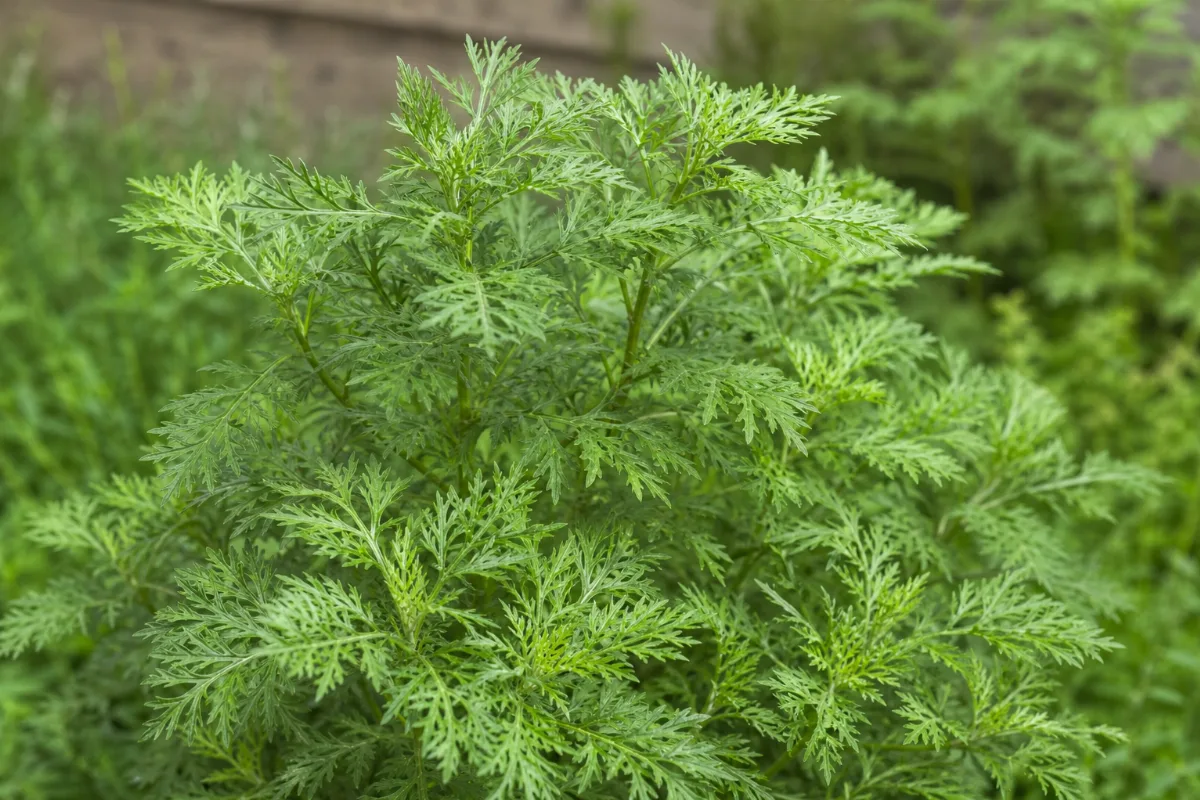
Herbs & Botanicals · Source plant of artemisinin
Sweet Wormwood
Artemisia annua · also called Sweet wormwood, sweet Annie, sweet sagewort, annual wormwood, qing hao
Sweet wormwood is a Chinese herb and the original source of artemisinin, the compound behind modern malaria medicines. The World Health Organization advises against using the plant or its tea to prevent or treat malaria, because the tea often does not cure the infection and may help drug resistance spread. Evidence for other uses is small and weak. Liver injury has been reported with the tea and with extract supplements.
General information, not medical advice. Last substantive update · Not medically reviewed. A named clinician has not signed off on this page. How this page is made
About Sweet Wormwood
Sweet wormwood is the plant that gave us artemisinin, but the plant and its tea are not a substitute for malaria medicines. WHO advises against them, and health risks include liver injury. Other uses have little or no human evidence.
Safety first: malaria, liver and pregnancy
Do not use sweet wormwood tea or capsules to prevent or treat malaria. WHO does not support Artemisia plant material in any form for this, says the amount of artemisinin varies a lot and is often too low to clear the infection, and warns that herbal use could speed artemisinin resistance. Malaria can become severe fast, so any fever after travel to a malaria area needs a doctor.
Liver injury has been reported. One traveller developed severe cholestatic hepatitis (jaundice) after drinking the tea, and New Zealand's regulator logged 25 liver-harm reports for one extract supplement, with most people recovering after stopping. Stop and seek help if you notice yellow skin or eyes, dark urine, pale stools or itching.
For pregnancy, breastfeeding, young children and people with liver or kidney disease, there are no safety data for the herb. WHO's guidance for pregnancy concerns prescription medicines under medical care, not the herb. Lab work suggests possible interactions with medicines processed by liver enzymes; ask a pharmacist.
What it is
Sweet wormwood (Artemisia annua) is an annual plant of the daisy family used in Chinese medicine, where it is called qing hao. The leafy aerial parts are used. They contain artemisinin, other terpenes, flavonoids and a volatile oil.
A litre of tea from nine grams of leaves held 94.5 mg of artemisinin in one volunteer study, about a fifth of the usual daily dose of the drug. Brewing temperature changes how much ends up in the cup.
Do not mix it up
The herb is not the same as purified artemisinin or artesunate, which are prescription medicines with their own dosing, side effects and monitoring. Results from drug studies, such as hearing problems or cancer trials, should not be assumed for the herb.
It is also a different plant from wormwood (Artemisia absinthium), mugwort (Artemisia vulgaris) and African wormwood (Artemisia afra). The African wormwood tea in one cell study had almost no artemisinin.
Allergy drops made from the plant's pollen are another separate product.
What the evidence shows
The one controlled trial of tea we read compared it with quinine, not with modern combination medicines, and found 74% cured at day 7 versus 91%. A 2026 review of small studies says tea alone falls well below combination medicines at day 28 (its authors promote the tea; their conclusion that it might be 'complementary' conflicts with WHO). A large 2019 trial that favoured the tea was retracted in 2020.
For osteoarthritis, one 42-person pilot of a branded extract found benefit in the low-dose group only, and the authors work for the maker. For COVID-19 there are only cell-culture results. For rheumatoid arthritis, lupus, cancer and HIV we found no human trial of the herb.
What regulators say
WHO (2019) does not support Artemisia plant material for malaria. Medsafe in New Zealand warns about liver harm with an extract supplement. Memorial Sloan Kettering lists liver, hearing and dizziness reports and advises people with ulcers to avoid it.
We found no EU herbal monograph (EMA), NCCIH page or LactMed entry for Artemisia annua, but this was a search, not a full check of those sites. The NIH LiverTox entry for artemisinin could not be opened.
At a glance
Traditional uses history, not proof
- Traditional Chinese medicine for fever and malaria; water preparations of the dried herb are in the Chinese pharmacopoeia.
- Used for inflammation, headaches and bleeding according to Memorial Sloan Kettering.
- Recent grassroots use as a malaria tea in some regions and by travellers, which WHO advises against.
Studied for research
- Malaria treatment with tea: WHO advises against (against)
- Malaria prevention: not supported; case reports of severe malaria (against)
- Osteoarthritis pain, one branded extract: small industry-linked pilot (low)
- COVID-19: lab work only (insufficient)
- Seasonal hay fever: pollen allergy drops, not herb (low)
- Rheumatoid arthritis and lupus: no human trials of the herb found (insufficient)
- Cancer and HIV: studies of the drug artesunate, not the herb (insufficient)
Main compounds
- Artemisinin, the antimalarial compound, in varying amounts
- Arteannuin B and other terpenes
- Flavonoids such as luteolin and quercetin
- Camphor and scopoletin (found in a tea tested after a liver case)
Common forms
- Tea (infusion) of the leaves
- Extract capsules or soft gels sold for joints
- Dried herb
- Not the same: artemisinin and artesunate medicines, and pollen allergy drops
Research links: WHO: use of non-pharmaceutical forms of Artemisia · Memorial Sloan Kettering: Artemisia annua · Medsafe liver-harm alert on an Artemisia annua extract · Research Library · Genes & Biomarkers Library
The plant and its history
- Accepted scientific name
- Artemisia annua L.
- Naming authority
- Accepted name in the GBIF backbone (usage key 8373355), exact match, checked 2026-10-25.
- Common names
- Sweet wormwood; sweet Annie; sweet sagewort; annual wormwood (English); Qing hao (Chinese (pinyin))
- Botanical family
- Asteraceae (daisy family)
- Classification
- Plantae > Tracheophyta > Magnoliopsida > Asterales > Asteraceae > Artemisia > Artemisia annua
- Native range
- Not verified in the sources read (the herb is traditional in China).
- Habitat
- Not verified.
- What the plant looks like
- Leaves: Aerial parts and leaves are the parts used for tea.
- Cultivation
- Artemisinin content varies between cultivars (cell study: 1.6 mg/g dry weight leaf in one A. annua cultivar).
- Harvest and processing
- Not verified.
- Look-alikes and adulterants
- Name: Wormwood (Artemisia absinthium); Note: Different species with its own page; contains bitter compounds and thujone, not the source of artemisinin.; Name: Mugwort (Artemisia vulgaris); Note: Different species with its own page.; Name: African wormwood (Artemisia afra); Note: Different species; the tea in the cell study had almost no artemisinin.
Traditional use and history history, not clinical proof
| Tradition or era | Documented use | Source |
|---|---|---|
| Traditional Chinese medicine | Used for fever, inflammation, headaches, bleeding and malaria. Water preparations of the dried herb are listed in the pharmacopoeia of the People's Republic of China for fever and malaria. | p14993622 |
| Modern medicine | Source plant of artemisinin, from which prescription malaria combination medicines were developed. | s-msk-artemisia-annua |
| Recent grassroots use | Tea promoted in some malaria-affected regions and by travellers; WHO advises against it. | s-who-2019 |
Traditional use shows how a plant was used. It does not show that a supplement works or is safe today.
What is inside, and how it may work
What the plant contains and how those compounds act in cells and animals. Laboratory and animal mechanisms are not proven effects in people.
Main compounds
| Compound | Family | Where it is concentrated | Activity studied | Level of evidence |
|---|---|---|---|---|
| Artemisinin PubChem 68827 | sesquiterpene lactone (endoperoxide) | Leaves 94.5 mg in one litre of tea from nine grams of leaves in one volunteer study; varies by plant and brewing. | Kills malaria parasites; the basis of prescription artemisinin medicines. 16 21 13 | Human data |
| Arteannuin B PubChem 6543478 | sesquiterpene lactone | Leaves | Found in the tea in the liver-injury case report; its role in the injury is not known. 17 14 | Human data |
| Flavonoids (luteolin, quercetin, casticin) | flavonoids | Leaves | Named in a 2026 review as boosting artemisinin's effect on parasites in lab tests. 15 | Laboratory research |
| Essential oil constituents (camphor, scopoletin and others) | terpenes and coumarins | Leaves | Camphor and scopoletin were found in the tea from the hepatitis case; effects not established. 17 | Human data |
Mechanisms, receptors and pathways
| Target or pathway | Gene or receptor | What was found | Level |
|---|---|---|---|
| Parasite killing by artemisinin | Artemisinin is the antimalarial compound; mechanisms were not reviewed here. 8 | Pharmacological theory | |
| Drug-metabolising enzymes CYP2B6 and CYP3A4 | CYP2B6, CYP3A4 | Pure artemisinin increased the enzyme genes and proteins in liver cells; teas blocked enzyme activity after the gene step. 6 | Laboratory research |
| Resistance evolution in mouse malaria | Whole dried plant slowed resistance 3-fold versus pure artemisinin in mice. Mouse data only; not a tea. 2 | Animal research | |
| SARS-CoV-2 in cells | Hot-water extracts reduced virus activity in monkey kidney cells. 11 | Laboratory research |
Absorption, metabolism and elimination
- Absorption
- After a litre of tea (nine grams of leaves) in 14 healthy men, peak blood artemisinin was 240 +/- 75 ng/mL; absorption was faster than from solid dose forms, with similar overall absorption.
- Distribution
- Not covered in the sources read.
- Metabolism
- Cleared by CYP2B6 and CYP3A4 according to the cell study.
- Elimination
- Not reported in the abstract.
- Bioavailability
- Similar to oral solid dosage forms per the volunteer study.
Isolated compounds versus whole extracts
The tea gives a fifth of a drug dose of artemisinin plus many other plant compounds. Lab and mouse work suggests other compounds may boost activity and slow resistance, but this has not been shown in people, and WHO's position remains against the herb for malaria. Whole-herb liver injury reports exist.
Nutritional composition
Not used as a food; no nutrient data were gathered.
2 low certainty4 not enough evidence2 evidence against
What is Sweet Wormwood good for?
The main proposed uses and how strong the human evidence is for each. "Against" means official advice or the evidence points the wrong way, and "insufficient" means there is not enough evidence to judge. Several rows concern drugs or allergy drops made from the plant, not the tea or herb. Ratings are this team's own reading, not formal grades. No product links are shown.
Benefits, one by one
Each card is a research question, not a promise. Tap a goal to filter. Open a card to see the studies, doses and limits.
Malaria treatment with the herbal tea
Evidence againstHealth agencies advise against using sweet wormwood tea or other plant products to treat malaria. Tea clears parasites quickly in small trials, but the infection often comes back, and the tea does not match standard combination medicines.
7 studiesNo amounts are given on this page. Ask a doctor or pharmacist.
Studies, doses and limits
What the trials found
The one randomised trial we read (Mueller 2004, open-label pilot) compared tea with quinine: quick symptom and parasite clearance, but a 7-day cure rate averaging 74% versus 91% with quinine and high recrudescence (infection returning). A 2026 systematic review of 30 small studies reports that day-28 cure with tea alone fell far below the 95.5 to 98.6% benchmark for standard combination medicines (Blanke 1 of 9 cured; Magalhaes 0 of 7). In a volunteer study, a litre of tea held 94.5 mg artemisinin, about 19% of the usual daily dose of the drug. A large 2019 trial that claimed tea beat a combination medicine was retracted by the journal in 2020 and is not used here. WHO does not support Artemisia plant material in any form for malaria and warns that it could speed artemisinin resistance. Tea compared directly with an artemisinin combination medicine: we found no valid trial.
Results
Mueller 2004: 7-day cure 74% (tea) vs 91% (quinine). 2026 review: day-28 cure with tea 1/9 in Blanke trial; gap of 84 percentage points or more versus the combination-medicine benchmark (authors' figure).
Effect sizes as reported
Cure at day 7: 74% vs 91% (no CI in abstract)
Why this rating
WHO position is against it, the only controlled trial read found lower cure than quinine, and the main trials claiming success were retracted. Certainty that the tea is a reliable malaria treatment is rated 'against'.
Form and dose studied
No amounts are given on this page. Ask a doctor or pharmacist.
Who was studied
Trial participants were people with uncomplicated malaria. Safety in children under five, pregnancy and breastfeeding is not established.
Limits
Very small trials, open-label, no valid head-to-head trial with a combination medicine. The 2026 review was written by authors who promote the tea and conclude it could be 'complementary', which conflicts with WHO. Artemisinin level in tea varies a lot.
Why researchers looked
The plant is the original source of artemisinin, the compound behind modern malaria medicines. Grassroots groups promote the tea as a cheap local treatment.
Traditional use
Used in Chinese medicine for fever and malaria; water preparations of the dried herb are in the Chinese pharmacopoeia (as stated in the Rath 2004 abstract).
Proposed mechanism Pharmacological theory
Artemisinin, a compound in the leaves, kills malaria parasites. Tea holds less of it than a drug dose and the amount varies by plant and by how the tea is made.
A proposed mechanism does not show that the effect happens in people.
Using the tea alone can leave malaria untreated and may help resistant parasites spread. Malaria can become severe quickly; see a doctor at once for fever after travel to a malaria area.
Malaria prevention (travellers)
Evidence againstUsing the tea to prevent malaria is not supported. A traveller who drank it regularly still got severe malaria, and another developed serious liver inflammation from it.
3 studiesNo amounts are given on this page. Ask a doctor or pharmacist.
Studies, doses and limits
What the trials found
WHO says artemisinin in any form does not work well for preventing malaria. Two case reports from our sources: severe falciparum malaria despite regular tea (2023), and severe cholestatic hepatitis in a traveller who used the tea for prevention (2019). No trial of the tea for prevention was found.
Results
No trials. Two case reports.
Effect sizes as reported
Not applicable (no trials)
Why this rating
WHO position plus two cautionary case reports; no supporting trials.
Form and dose studied
No amounts are given on this page. Ask a doctor or pharmacist.
Who was studied
Travellers to malaria areas.
Limits
Case reports cannot show how common these outcomes are.
Why researchers looked
Some travellers take the tea as a natural alternative to prescription malaria prevention.
Traditional use
No established traditional prevention use was found in the sources we read.
Proposed mechanism Pharmacological theory
Artemisinin is cleared from the body in hours, so a plant tea is not expected to protect for long.
A proposed mechanism does not show that the effect happens in people.
Severe malaria and liver injury both occurred.
Osteoarthritis pain (one branded extract)
Low certaintyA small, industry-linked trial of one extract found less pain and stiffness in the lower-dose group only. It needs repeating, and the product has been linked to liver harm.
4 studiesNo amounts are given on this page. Ask a doctor or pharmacist.
Studies, doses and limits
What the trials found
One 12-week pilot: 42 adults, 14 per group, Arthrem (an Artemisia annua extract supplement) versus placebo. The low-dose group improved on the WOMAC osteoarthritis score (-12.2, p=0.0159) and pain scale (-21.4 mm, p=0.0082), but so did the placebo group to a smaller, non-significant degree; the high-dose group showed no change. A 6-month open-label extension kept the scores. Both papers have authors from the maker, Promisia Ltd. NZ regulator Medsafe later received 25 reports of liver harm linked to this product.
Results
WOMAC total change -12.2 (SD 13.84) low dose vs -7.8 (SD 19.80) placebo, each versus own baseline; pain scale -21.4 mm vs -11.5 mm.
Effect sizes as reported
Within-group changes; the abstract gives no direct between-group test.
Why this rating
One small pilot, odd dose pattern (high dose did nothing), no between-group test given, industry authors, and an open extension without a control group.
Form and dose studied
No amounts are given on this page. Ask a doctor or pharmacist.
Who was studied
Adults with hip or knee osteoarthritis.
Limits
Pilot size; one product; unreplicated; liver safety signal.
Why researchers looked
Artemisinin and related compounds reduce inflammation in lab tests, which led to a trial in hip and knee osteoarthritis.
Traditional use
Not a traditional use for osteoarthritis in the sources we read.
Proposed mechanism Preliminary mechanism
Anti-inflammatory activity seen in lab work; not shown in the trial itself.
A proposed mechanism does not show that the effect happens in people.
Liver harm reports (see Safety). Not an alternative to checking with a doctor.
COVID-19 (claims from lab work)
Not enough evidenceLab studies show tea extracts act on the virus in cells. We found no human trial showing the tea prevents or treats COVID-19.
2 studiesNo amounts are given on this page. Ask a doctor or pharmacist.
Studies, doses and limits
What the trials found
Cell-culture study only (Nair 2022): extracts of four cultivars were active against the original virus and five variants. The authors say teas 'could potentially' help; no clinical trial of the herb was found in our PubMed search, and the MSK page does not cover COVID-19.
Results
Cell culture IC50 0.3 to 8.4 uM (by artemisinin content).
Effect sizes as reported
Not applicable
Why this rating
Lab result only; no human data found.
Form and dose studied
No amounts are given on this page. Ask a doctor or pharmacist.
Who was studied
None studied.
Limits
Cells are not people; blood levels from tea may not reach these concentrations (not tested here).
Why researchers looked
Teas were tested on SARS-CoV-2 in cell cultures during the pandemic.
Traditional use
Not applicable.
Proposed mechanism Laboratory research
Hot-water extracts reduced SARS-CoV-2 activity in monkey kidney cells.
A proposed mechanism does not show that the effect happens in people.
Relying on an unproven tea could delay real care.
Seasonal hay fever from Artemisia pollen (allergy drops, not herb)
Low certaintyA Chinese allergy treatment made from the plant's pollen, placed under the tongue, lowered symptoms in people allergic to that pollen. It is not a tea or supplement and says nothing about them.
2 studiesNo amounts are given on this page. Ask a doctor or pharmacist.
Studies, doses and limits
What the trials found
A 2026 open-label phase IV trial of 316 adults over two pollen seasons found the symptom-and-medication score fell from 4.03 to 1.74 in year 1 and 1.25 in year 2 and stayed low a year after stopping (1.34). Side effects were mostly mild. There was no comparison group. MSK also notes studies of this treatment showing improvement.
Results
Score 4.03 -> 1.74 -> 1.25; 1.34 after stopping.
Effect sizes as reported
Large change in an uncontrolled study
Why this rating
Large and long, but open-label with no control group.
Form and dose studied
No amounts are given on this page. Ask a doctor or pharmacist.
Who was studied
Adults allergic to this pollen in northern China.
Limits
No placebo group; treatment is only for people with that allergy.
Why researchers looked
Artemisia pollen is a leading cause of late-summer hay fever in northern China.
Traditional use
None; this is a modern allergy treatment.
Proposed mechanism Preliminary mechanism
Gradual exposure to the allergen builds tolerance: the study measured rises in sIgA and sIgG4 antibodies.
A proposed mechanism does not show that the effect happens in people.
Can cause allergic reactions; given under medical supervision.
Rheumatoid arthritis, lupus and other autoimmune conditions
Not enough evidenceWe found no human trial of Artemisia annua tea or herb for rheumatoid arthritis or lupus. Lab and animal work on artemisinin-type compounds exists; it does not show the herb helps people.
1 studiesNo amounts are given on this page. Ask a doctor or pharmacist.
Studies, doses and limits
What the trials found
Our PubMed search surfaced only lab, animal and review articles on artemisinin derivatives. The MSK page says nothing about lupus. We found no human trial of the herb for either condition.
Results
No human results.
Effect sizes as reported
Not applicable
Why this rating
No human trials of the herb.
Form and dose studied
No amounts are given on this page. Ask a doctor or pharmacist.
Who was studied
None.
Limits
All lab or animal; artemisinin-type drugs differ from the plant.
Why researchers looked
Artemisinin-type drugs calm immune cells in lab studies.
Traditional use
None found.
Proposed mechanism Animal research
Immune-calming effects of artemisinin-type compounds in cells and animals.
A proposed mechanism does not show that the effect happens in people.
Do not stop prescribed immune medicines for an herb.
Cancer (drug studies, not the herb)
Not enough evidenceStudies involve the drug artesunate, not the herb. Early trials found it generally tolerated in advanced cancer; no trial shows it works as a cancer treatment.
1 studiesNo amounts are given on this page. Ask a doctor or pharmacist.
Studies, doses and limits
What the trials found
MSK describes lab and animal studies, early safety trials of oral artesunate with hearing monitoring advised, and one study of intravenous artesunate with modest activity. No trial has established it as effective. Nothing here tests the herb.
Results
Not applicable
Effect sizes as reported
Not applicable
Why this rating
Drug studies only.
Form and dose studied
No amounts are given on this page. Ask a doctor or pharmacist.
Who was studied
Advanced cancer patients (drug trials).
Limits
Not the herb; hearing problems were a concern with artesunate.
Why researchers looked
Lab work shows artemisinin-type compounds can slow tumour cells.
Traditional use
None.
Proposed mechanism Laboratory research
Lab effects on tumour cells.
A proposed mechanism does not show that the effect happens in people.
Hearing and balance problems were reported with artesunate.
HIV
Not enough evidenceA study of the drug artesunate in people already on HIV medicines found no clinical benefit. Nothing tests the herb.
1 studiesNo amounts are given on this page. Ask a doctor or pharmacist.
Studies, doses and limits
What the trials found
MSK reports no clinical benefit in people on antiretroviral therapy with incomplete immune recovery (drug study).
Results
Not applicable
Effect sizes as reported
Not applicable
Why this rating
Single drug study, negative.
Form and dose studied
No amounts are given on this page. Ask a doctor or pharmacist.
Who was studied
People with HIV on treatment.
Limits
We did not read the original study.
Why researchers looked
Looked at for immune effects.
Traditional use
None.
Proposed mechanism Pharmacological theory
Not established.
A proposed mechanism does not show that the effect happens in people.
Not applicable.
Connections to the rest of health
How Sweet Wormwood connects to the rest of our health knowledge graph. Every link says what kind of connection it is. A safety link (for example to the liver) is a warning, not a benefit. A study that merely mentions a topic never creates a benefit link.
Explore every connection: goals, body systems, organs, symptoms, genes
A. Wellness goals
| Connected to | Kind of connection | Evidence status | Context | Studies |
|---|---|---|---|---|
| Immune Support | Traditional use | Evidence against | Malaria treatment with the herbal tea: Health agencies advise against using sweet wormwood tea or other plant products to treat malaria. Tea clears parasites quickly in small trials, but the infection often comes back, and the tea does not match standard combination medicines. | 20 9 16 21 15 10 8 |
| Immune Support | Adverse effect or risk | Evidence against | Malaria prevention (travellers): Using the tea to prevent malaria is not supported. A traveller who drank it regularly still got severe malaria, and another developed serious liver inflammation from it. | 20 1 17 |
| Joint Support | Potential benefit | Low certainty | Osteoarthritis pain (one branded extract): A small, industry-linked trial of one extract found less pain and stiffness in the lower-dose group only. It needs repeating, and the product has been linked to liver harm. | 18 5 7 8 |
| Inflammation Balance | Potential benefit | Low certainty | Osteoarthritis pain (one branded extract): A small, industry-linked trial of one extract found less pain and stiffness in the lower-dose group only. It needs repeating, and the product has been linked to liver harm. | 18 5 7 8 |
| Immune Support | Preliminary mechanism | Not enough evidence | COVID-19 (claims from lab work): Lab studies show tea extracts act on the virus in cells. We found no human trial showing the tea prevents or treats COVID-19. | 11 8 |
| Immune Support | Potential benefit | Low certainty | Seasonal hay fever from Artemisia pollen (allergy drops, not herb): A Chinese allergy treatment made from the plant's pollen, placed under the tongue, lowered symptoms in people allergic to that pollen. It is not a tea or supplement and says nothing about them. HIV: A study of the drug artesunate in people already on HIV medicines found no clinical benefit. Nothing tests the herb. | 4 8 |
| Inflammation Balance | Preliminary mechanism | Not enough evidence | Rheumatoid arthritis, lupus and other autoimmune conditions: We found no human trial of Artemisia annua tea or herb for rheumatoid arthritis or lupus. Lab and animal work on artemisinin-type compounds exists; it does not show the herb helps people. | 8 |
| Joint Support | Preliminary mechanism | Not enough evidence | Rheumatoid arthritis, lupus and other autoimmune conditions: We found no human trial of Artemisia annua tea or herb for rheumatoid arthritis or lupus. Lab and animal work on artemisinin-type compounds exists; it does not show the herb helps people. | 8 |
B. Body systems
| Connected to | Kind of connection | Evidence status | Context | Studies |
|---|---|---|---|---|
| Immune system / infection | Contraindication | Moderate certainty | WHO advises against use; resistance concern. Preparation or compound: Tea used for malaria |
20 15 |
| Hearing and balance | Adverse effect or risk | Low certainty | Hearing problems and vertigo with the drug; not shown for the herb. Preparation or compound: Artesunate (drug) |
8 |
| Immune System | Biological association | Evidence against | Studied for: Malaria treatment with the herbal tea Studied for: Malaria prevention (travellers) | 20 9 16 21 15 10 8 1 17 11 4 |
| Musculoskeletal System | Biological association | Low certainty | Studied for: Osteoarthritis pain (one branded extract) Studied for: Rheumatoid arthritis, lupus and other autoimmune conditions | 18 5 7 8 |
| Respiratory System | Biological association | Not enough evidence | Studied for: COVID-19 (claims from lab work) Studied for: Seasonal hay fever from Artemisia pollen (allergy drops, not herb) | 11 8 4 |
C. Body parts and organs
| Connected to | Kind of connection | Evidence status | Context | Studies |
|---|---|---|---|---|
| Liver | Adverse effect or risk | Moderate certainty | Case report and a regulator alert link them to liver injury. A case report and a regulator alert link them to liver injury. Preparation or compound: Tea and extract supplements |
17 7 |
| Stomach and gut | Contraindication | Low certainty | MSK advises against use with ulcers or gut disorders. Preparation or compound: Herb |
8 |
I. Biomarkers
| Connected to | Kind of connection | Evidence status | Context | Studies |
|---|---|---|---|---|
| Malaria cure rate and recrudescence | Biological association | Low certainty | Measured in trials: mixed. A lab change is not the same as a health benefit. | 9 15 20 |
| WOMAC osteoarthritis score and pain scale | Biological association | Low certainty | Measured in trials: lowered. A lab change is not the same as a health benefit. | 18 5 |
| Combined symptom and medication score (CSMS) | Biological association | Low certainty | Measured in trials: lowered. A lab change is not the same as a health benefit. | 4 |
| Allergy antibodies (IgE, sIgA, sIgG4) | Biological association | Low certainty | Measured in trials: mixed. A lab change is not the same as a health benefit. | 4 |
J. Genes, receptors and enzymes
L. Active compounds
| Connected to | Kind of connection | Evidence status | Context | Studies |
|---|---|---|---|---|
| Artemisinin | Biological association | Human | Kills malaria parasites; the basis of prescription artemisinin medicines. Preparation or compound: Leaves |
16 21 13 |
| Arteannuin B | Biological association | Human | Found in the tea in the liver-injury case report; its role in the injury is not known. Preparation or compound: Leaves |
17 14 |
| Flavonoids (luteolin, quercetin, casticin) | Biological association | In vitro | Named in a 2026 review as boosting artemisinin's effect on parasites in lab tests. Preparation or compound: Leaves |
15 |
| Essential oil constituents (camphor, scopoletin and others) | Biological association | Human | Camphor and scopoletin were found in the tea from the hepatitis case; effects not established. Preparation or compound: Leaves |
17 |
Each connection is stored with the ingredient, the connected record, the kind of connection, the evidence status, the supporting studies, the preparation or compound involved, and a review date (last reviewed October 25, 2026).
Evidence at a glance: what changed in 4 lab markers
Tap a number to show only those markers. Counts are markers, not people.
The evidence
The research centre for Sweet Wormwood. Every record here was checked against PubMed or the publisher's page; we never list a study we have not verified.
Evidence by outcome
Bars show how many studies we found for each outcome, not how well it works. People are added up across trials only (reviews are not added, to avoid double counting).
How we rate evidence
High certainty
Several well-run trials or reviews agree; further research is unlikely to change the picture much.
Moderate certainty
Good trials point the same way, but some doubt remains.
Low certainty
Small, short or inconsistent trials. The finding could change with better research.
Very low certainty
Very little or very weak human data. Treat as a possibility only.
Mixed findings
Trials or reviews disagree with each other.
Not enough evidence
Not enough human research to say either way.
Evidence against
Good research found no benefit, or found harm.
We take the reviewers' own risk-of-bias and GRADE statements where they exist, and otherwise judge from study size, design, consistency, directness and whether a product matches what is sold. Many publications do not make evidence high. Method note: We started from our existing Artemisia annua summary, read PubMed abstracts for each cited paper, and read the WHO, Memorial Sloan Kettering and Medsafe pages through a page-summarising tool, and checked plant names in GBIF and compounds in PubChem. Not verified: the LiverTox entry (page blocked; score taken from a search summary), WHO's first-trimester malaria guideline (read only through secondary sources), and EMA, NCCIH, LactMed and FDA status (searched only; nothing found for EMA, NCCIH and LactMed). The retracted 2019 and 2018 Phytomedicine trials are not used as evidence. Certainty ratings are the compiler's own reading, not formal grades. No study is cited that we could not verify.
Study library: every study we checked 21
| Study | Design | People | Product, dose, length | Result |
|---|---|---|---|---|
| Cohen 2023 A severe case of Plasmodium falciparum malaria imported by a French traveler from Cameroon to French Guiana despite regular intake of Artemisia annua herbal tea Rev Inst Med Trop Sao Paulo · PMID 36651464 · DOI |
Case report |
1 One traveller who used the tea for malaria prevention |
Artemisia annua herbal tea aerial parts Not applicable Not applicable · vs Not applicable |
Severe P. falciparum malaria developed despite regular tea. The authors say use of the tea as prophylaxis is not recommended because it lacks efficacy and the risk of severe malaria is real. Tea did not prevent severe malaria in this case Methods, limits and fundingOutcomes: Severe malaria despite tea Limitations: Single case. Read: abstract |
| Elfawal 2015 Dried whole-plant Artemisia annua slows evolution of malaria drug resistance and overcomes resistance to artemisinin Proc Natl Acad Sci U S A · PMID 25561559 · DOI |
Animal research animal |
Rodent malaria models (P. yoelii, P. chabaudi) | Dried whole-plant Artemisia annua (not a tea) versus pure artemisinin whole dried plant Not applicable Not applicable · vs Not applicable |
In mice, the whole plant overcame existing artemisinin resistance in P. yoelii and stable resistance in P. chabaudi arose three times more slowly than with pure artemisinin. Mouse data only; not shown in people Methods, limits and fundingOutcomes: Efficacy and speed of resistance evolution Limitations: Rodent parasites, dried plant not tea; the authors themselves say it is not a tea or infusion. Funding and conflicts: Authors declare no conflict of interest Read: abstract |
| GBIF Secretariat 2026 GBIF Backbone Taxonomy: Artemisia annua L. GBIF species match API · Source |
Database record authoritative-guidance |
unspecified Not applicable Not applicable · vs Not applicable |
Exact match; status ACCEPTED; usage key 8373355; family Asteraceae, order Asterales, genus Artemisia (checked 2026-10-25). Identity confirmed Methods, limits and fundingOutcomes: Accepted name check Funding and conflicts: Public database Read: full-text | |
| Gao 2026 Artemisia annua Sublingual Immunotherapy Is Efficacious and Well Tolerated in Patients With Season Allergic Rhinitis: A Prospective, Open-Label, Multicenter Phase IV Trial Allergy · PMID 42517450 · DOI |
Open label trial |
316 316 adults in northern China allergic to Artemisia pollen; eight centres |
Artemisia annua pollen sublingual immunotherapy (an allergy treatment, not a tea or herb supplement) pollen Not applicable Two pollen seasons, then 1 year of follow-up · vs None (no control group) |
Score fell from 4.03 +/- 0.75 before treatment to 1.74 +/- 0.92 in year 1 and 1.25 +/- 0.74 in year 2, and stayed stable (1.34 +/- 0.93) one year after stopping. Mostly mild, self-limiting side effects. Serum total IgE rose briefly in year 1; sIgA and sIgG4 rose. Large fall in symptom score, with no control group Methods, limits and fundingOutcomes: Combined symptom and medication score at peak pollen season Limitations: Open-label, no comparison group; allergen treatment only for people allergic to this pollen. Read: abstract |
| Hunt 2016 An open-label six-month extension study to investigate the safety and efficacy of an extract of Artemisia annua for managing pain, stiffness and functional limitation associated with osteoarthritis of the hip and knee N Z Med J · PMID 27806033 |
Open label extension |
34 34 people who finished the pilot trial; 28 completed 6 more months |
Arthrem, Artemisia annua extract supplement unspecified (extract) Not applicable 6 months · vs None (open-label) |
Well tolerated for up to nine months; WOMAC improvements from the pilot were maintained over six months. Maintained scores, no control group Methods, limits and fundingOutcomes: Safety and WOMAC Limitations: No comparison group; people who stayed on were those who did well; liver tests were checked but the abstract does not give numbers. Funding and conflicts: Lead author is Principal Scientist at Promisia Ltd (industry-linked). Read: abstract |
| Kane 2022 Artemisia extracts differ from artemisinin effects on human hepatic CYP450s 2B6 and 3A4 in vitro J Ethnopharmacol · PMID 35934190 · DOI |
Laboratory research in-vitro |
Human liver cell line (HepaRG) and liver microsomes | Hot-water tea of A. annua (SAM cultivar) and two A. afra teas; pure artemisinin; rifampicin control leaves Not applicable Not applicable · vs Not applicable |
All three teas inhibited CYP2B6 and CYP3A4 enzyme activity. Artemisinin and the high-artemisinin A. annua tea increased CYP2B6 and CYP3A4 gene transcription, but only pure artemisinin increased the proteins. Tea blocked enzyme activity while pure artemisinin induced it (lab only) Methods, limits and fundingOutcomes: CYP2B6 and CYP3A4 gene activity, protein and enzyme activity Limitations: Cell and microsome work only; no human interaction data. Funding and conflicts: Authors declare no competing interests Read: abstract |
| Medsafe (New Zealand Medicines and Medical Devices Safety Authority) 2023 Artemisia annua extract marketed as Arthrem: risk of harm to the liver Medsafe Early Warning System (published 27 Nov 2018, revised 29 Aug 2023) · Source |
Regulator safety alert authoritative-guidance |
25 Consumers of one Artemisia annua extract supplement (Arthrem); reports to the NZ Centre for Adverse Reactions Monitoring up to 30 Sept 2018 |
Artemisia annua extract supplement (Arthrem) unspecified Not applicable Not applicable · vs Not applicable |
25 reports of liver toxicity; the product was suspected in all 25 (one other product co-suspected in two). Patterns: hepatocellular 6, cholestatic 7, mixed 3, one cirrhosis, unknown 8. All stopped the product; most had recovered or were improving when reported. Estimated 0.5 to 6.3 cases per 10,000 consumers. In the 12-week pilot study, 1 of 14 people on the higher-dose arm developed hepatitis the investigators thought possibly related. Medsafe has not approved any product with this extract. Regulator warning Methods, limits and fundingOutcomes: Liver toxicity reports Limitations: Spontaneous reports; the rate is an estimate. Read through a page-summarising tool. Funding and conflicts: Public regulator Read: summary-only |
| Memorial Sloan Kettering Cancer Center 2026 Artemisia annua (Herbs, Botanicals and Other Products) MSK About Herbs · Source |
Clinical monograph (patient and professional summary) authoritative-guidance |
Artemisia annua herb, extracts and artemisinin-type drugs aerial parts Not applicable Not applicable · vs Not applicable |
Evidence for uses beyond malaria is limited. Lists case reports of hepatitis (one with an artemisinin supplement, one with tea), possible hearing damage and vertigo with oral artesunate in cancer trials, dizziness, delayed haemolytic anaemia after artemisinin malaria treatment, and skin irritation with topical use. Says people with ulcers or gut disorders should not use it. Says lab studies show extracts induce CYP2B6 and CYP3A4 and that clinical relevance is unknown. Describes a small pilot osteoarthritis trial and its extension, allergic rhinitis immunotherapy studies and an HIV study with no clinical benefit. Has no information on pregnancy, COVID-19 or lupus. Summary source Methods, limits and fundingOutcomes: Uses, side effects, contraindications and interactions Limitations: Read through a page-summarising tool. A cancer-centre summary page, not a systematic review. Funding and conflicts: Non-profit cancer centre Read: summary-only | |
| Mueller 2004 Randomized controlled trial of a traditional preparation of Artemisia annua L. (Annual Wormwood) in the treatment of malaria Trans R Soc Trop Med Hyg · PMID 15109558 · DOI |
Controlled trial |
People with uncomplicated malaria; open randomised pilot (country not stated in the abstract) | Traditional tea preparations of Artemisia annua aerial parts (leaves) Not applicable 7 days of medication · vs Quinine |
Quick resolution of parasites and symptoms. After 7 days, cure rates averaged 74% for the Artemisia preparations versus 91% for quinine. Recrudescence (infection returning) rates were high in the Artemisia groups. The authors concluded tea monotherapy cannot be recommended as an alternative to modern antimalarials. 74% vs 91% cure at day 7 Methods, limits and fundingOutcomes: Parasite and symptom resolution, 7-day cure, recrudescence Limitations: Open-label pilot; n not given in abstract; comparator was quinine, not an artemisinin combination medicine. Read: abstract |
| Munyangi 2020 Retraction notice: Artemisia annua and Artemisia afra tea infusions vs. artesunate-amodiaquine (ASAQ) in treating Plasmodium falciparum malaria in a large scale, double blind, randomized clinical trial Phytomedicine · PMID 32972797 · DOI |
Retraction notice |
unspecified Not applicable Not applicable · vs Not applicable |
The journal retracted the 2019 trial that had compared Artemisia tea with artesunate-amodiaquine. The retracted paper is not used as evidence on this page. The same journal also retracted a related schistosomiasis trial by the same group (title seen only). Retracted: do not rely on it Methods, limits and fundingOutcomes: Retraction of the 2019 Phytomedicine trial (Phytomedicine 57:49-56) Limitations: The notice text itself gives no reason in the record read. Read: abstract | |
| Nair 2022 Artemisia annua L. hot-water extracts show potent activity in vitro against Covid-19 variants including delta J Ethnopharmacol · PMID 34737005 · DOI |
Laboratory research in-vitro |
Vero E6 monkey kidney cells infected with SARS-CoV-2 variants | Hot-water extracts of four A. annua cultivars dried leaves Not applicable Not applicable · vs Not applicable |
Extracts were active against the original virus and five variants in cells (IC50 0.3 to 8.4 uM by artemisinin content). The authors suggest teas 'could potentially' help, which is not shown in people. Lab result only Methods, limits and fundingOutcomes: Virus activity in cell culture Limitations: Cell culture. We found no human trial of the herb for COVID-19 in our PubMed search. Read: abstract |
| National Institute of Diabetes and Digestive and Kidney Diseases (LiverTox) LiverTox: Artemisinin (entry reported by search summary) NCBI Bookshelf · Source |
Regulator/database entry authoritative-guidance |
Artemisinin (purified) and derivatives unspecified Not applicable Not applicable · vs Not applicable |
NOT verified by us: a web search summary of the LiverTox entry says artemisinin is scored D (possible rare cause of clinically apparent liver injury) and that most published cases involve Artemisia annua products. The page itself could not be opened (it showed a bot check). Likelihood score D (secondhand) Methods, limits and fundingOutcomes: Liver injury likelihood category Limitations: Page not opened; entry concerns the purified drug, not the herb. Funding and conflicts: Public database Read: summary-only | |
| National Library of Medicine 2026 PubChem: Artemisinin (CID 68827) PubChem · Source |
Database record authoritative-guidance |
unspecified Not applicable Not applicable · vs Not applicable |
CID 68827, formula C15H22O5. Identity confirmed Methods, limits and fundingOutcomes: Compound identity Funding and conflicts: Public database Read: summary-only | |
| National Library of Medicine 2026 PubChem: Arteannuin B (CID 6543478) PubChem · Source |
Database record authoritative-guidance |
unspecified Not applicable Not applicable · vs Not applicable |
CID 6543478, formula C15H20O3. Identity confirmed Methods, limits and fundingOutcomes: Compound identity Funding and conflicts: Public database Read: summary-only | |
| Nkola 2026 Phytochemical synergy in Artemisia annua herbal tea against malaria: a systematic review of its efficacy and safety in the context of emerging Pfkelch13 resistance Infectious Diseases of Poverty · PMID 42596018 · DOI |
Systematic review |
30 studies (randomised trials, quasi-experimental studies, lab synergy assays, rodent models) from 2000 to 2025 | Whole-plant Artemisia annua tea (infusion) aerial parts (leaves) Not applicable Not applicable · vs Quinine, sulfadoxine-pyrimethamine, ACT benchmark |
Tea cleared parasites quickly (within 72 hours) but day-28 cure with tea alone fell consistently below the 95.5 to 98.6% ACT benchmark wherever directly reported (Blanke: 1 of 9 cured at day 28; Magalhaes: 0 of 7 sustained cure). Mueller 2004 day-7 cure 74% vs 91% with quinine. Adverse events were mostly mild (bitter taste, short-lived stomach upset); safety data for children under five, pregnancy, breastfeeding and liver or kidney disease are critically insufficient. The authors suggest the tea should be at most a complement to ACT. Day-28 cure gap of 84 percentage points or more versus ACT (authors' figure) Methods, limits and fundingOutcomes: Parasite clearance, cure rates, safety, resistance modelling Limitations: Narrative review of very small trials. Several reviewed trials had a handful of patients. The lead author shares a name with the first author of two Artemisia tea trials that were retracted (not verified that it is the same person). The review states a generative-AI tool was used for writing. Its rodent resistance findings are not human data. Its 'complementary' conclusion goes against WHO's position. Funding and conflicts: Authors declare no competing interests Read: abstract |
| Rath 2004 Pharmacokinetic study of artemisinin after oral intake of a traditional preparation of Artemisia annua L. (annual wormwood) Am J Trop Med Hyg · PMID 14993622 |
Pharmacokinetic study |
14 14 healthy male volunteers |
One litre of tea made from nine grams of Artemisia annua leaves leaves Not applicable Single occasion · vs Not applicable |
Peak blood artemisinin 240 +/- 75 ng/mL; AUC 336 +/- 71 ng/mL x hr. Absorbed faster from tea than from solid dosage forms, with similar bioavailability. The litre of tea held 94.5 mg artemisinin, about 19% of the usually recommended daily dose of the drug. Blood levels were enough for some clinical effect but not enough to treat the tea as equal to artemisinin drugs. Tea gave a fifth of a drug dose of artemisinin Methods, limits and fundingOutcomes: Artemisinin in blood Limitations: Healthy men, one batch of plant, single tea; content varies by plant and preparation. Read: abstract |
| Ruperti-Repilado 2019 Danger of Herbal Tea: A Case of Acute Cholestatic Hepatitis Due to Artemisia annua Tea Front Med (Lausanne) · PMID 31681778 · DOI |
Case report |
1 One traveller returning from Ethiopia who drank Artemisia annua tea to prevent malaria |
Artemisia annua tea aerial parts Not applicable Not applicable · vs Not applicable |
Jaundice, high liver enzymes (total bilirubin 186.6 umol/L). Biopsy showed portal hepatitis with bile duct inflammation. The tea contained arteannuin b, deoxyartemisin, camphor and scopoletin. No other cause found; RUCAM causality score 'probably'. Bilirubin normalised after 3 months. The authors say artemisinin derivatives for malaria prevention are ineffective and potentially harmful. Probable herb-induced liver injury Methods, limits and fundingOutcomes: Severe cholestatic hepatitis Limitations: Single case. Read: abstract |
| Stebbings 2016 A pilot randomized, placebo-controlled clinical trial to investigate the efficacy and safety of an extract of Artemisia annua administered over 12 weeks, for managing pain, stiffness, and functional limitation associated with osteoarthritis of the hip and knee Clin Rheumatol · PMID 26631103 · DOI |
Controlled trial |
42 42 adults with hip or knee osteoarthritis, 14 per group |
Arthrem, a branded Artemisia annua extract supplement unspecified (extract) Not applicable 12 weeks · vs Placebo |
Low-dose group: WOMAC total fell by 12.2 (SD 13.84; p=0.0159) versus 7.8 (SD 19.80; p=0.1029) in placebo; pain scale fell 21.4 mm (p=0.0082) versus 11.5 mm (p=0.1757) in placebo. The high-dose group showed no significant change. The abstract reports within-group changes, not a direct low-dose-versus-placebo test. Small, within-group changes in the low-dose arm only Methods, limits and fundingOutcomes: WOMAC total, stiffness, function; pain on a 100 mm visual scale Limitations: Pilot with 14 per group; no clear dose response (higher dose did nothing); between-group comparison not reported in the abstract. One person on the high dose later had possible hepatitis (per Medsafe). Funding and conflicts: Two authors work for Promisia Ltd, which makes the product (industry-linked). Read: abstract |
| World Health Organization (reported by severemalaria.org and a guideline database) 2022 WHO guidelines for malaria: first-trimester treatment update (as reported by secondary sources) WHO Guidelines for malaria · Source |
Guideline (secondary report) authoritative-guidance |
Pregnant women in the first trimester with uncomplicated P. falciparum malaria | Artemether-lumefantrine (a prescription artemisinin combination medicine) unspecified Not applicable Not applicable · vs Not applicable |
NOT verified against the WHO document: secondary sources say that since November 2022 WHO has recommended artemether-lumefantrine in the first trimester, based on low-certainty observational data with no signal of birth defects or miscarriage. This concerns the prescription medicine, not the herb or tea. Guidance about the drug, not the plant Methods, limits and fundingOutcomes: Treatment recommendation in first trimester Limitations: WHO primary document not opened. Funding and conflicts: Public health agency Read: summary-only |
| World Health Organization 2019 The use of non-pharmaceutical forms of Artemisia WHO news item (10 October 2019) · Source |
Authoritative position statement authoritative-guidance |
Teas, tablets, capsules and other Artemisia plant products promoted for malaria | Artemisia plant material in any non-pharmaceutical form aerial parts Not applicable Not applicable · vs Not applicable |
WHO does not support the promotion or use of Artemisia plant material in any form to prevent or treat malaria. It says artemisinin content varies a lot between products, is often too low to clear all parasites or stop the infection coming back, and that widespread herbal use could speed the spread of artemisinin resistance. It recommends artemisinin-based combination therapies instead. Position: against use of the plant for malaria Methods, limits and fundingOutcomes: WHO position on use for preventing or treating malaria Limitations: Read through a page-summarising tool, not the full WHO review document. Funding and conflicts: Public health agency Read: summary-only |
| van der Kooy 2011 The content of artemisinin in the Artemisia annua tea infusion Planta Med · PMID 21544776 · DOI |
Laboratory analysis in-vitro |
Tea infusions prepared by different methods leaves Not applicable Not applicable · vs Not applicable |
Artemisinin extraction into the tea is very sensitive to temperature, and extraction efficiency above 90% can be reached. The authors note earlier papers disagreed about how much artemisinin tea holds. Tea content depends on how it is made Methods, limits and fundingOutcomes: Artemisinin in tea Limitations: Lab chemistry; no clinical outcomes. Read: abstract |
What we do not know yet
- What the evidence supports: WHO's position against the tea for malaria, liver injury reports, and small trials for osteoarthritis and pollen allergy.
- What is missing: any valid trial of tea versus a combination medicine, any trial for prevention, human interaction studies, and pregnancy safety data.
- Not found: EMA, NCCIH and LactMed pages for the herb (search only).
- The 2019 Frontiers case series on extract liver injury and the LiverTox page were not read.
How new research is added
New studies are found by a saved PubMed search and are placed in a review queue. A person reads each one before it changes any evidence rating or safety wording. New publications never change ratings automatically.
Lab markers
What changed in blood or saliva tests during trials. A changed number is not the same as feeling or being healthier, and we give no "normal ranges".
Other 4
Malaria cure rate and recrudescence
Mixed results in trials
The share of people whose parasites are gone and stay gone after treatment. Recrudescence means the infection comes back.
Low certaintyResults and what it means
Why it was measured
Shows whether a malaria treatment truly cures.
Statistical vs. clinical meaning
Quick early clearance followed by the infection returning is the main reason the tea is not recommended.
Safety implication
Under-treated infection can become severe and help resistant parasites spread.
| Study | Result | People | Product |
|---|---|---|---|
| 9 | 7-day cure averaged 74% with Artemisia tea preparations vs 91% with quinine; high recrudescence in tea groups. | People with uncomplicated malaria | Artemisia annua tea preparations vs quinine |
| 15 | Early parasite clearance within 72 hours, but day-28 cure with tea alone fell below the 95.5 to 98.6% benchmark for combination medicines (Blanke 1 of 9; Magalhaes 0 of 7) as summarised by the review. | Small trials in the review | Whole-plant tea |
WOMAC osteoarthritis score and pain scale
Lowered in trials
WOMAC scores pain, stiffness and difficulty with daily tasks; lower is better. The pain scale is a 100 mm line the person marks.
Low certaintyResults and what it means
Why it was measured
Measures how much osteoarthritis is affecting a person.
Statistical vs. clinical meaning
Placebo arm also improved; the abstract does not report a direct comparison between low dose and placebo.
Safety implication
One high-dose participant developed possible hepatitis.
| Study | Result | People | Product |
|---|---|---|---|
| 18 | Low-dose arm: WOMAC total -12.2 (SD 13.84), pain scale -21.4 mm from baseline; placebo -7.8 and -11.5 mm; high-dose arm no significant change. | 42 adults with hip or knee osteoarthritis | Arthrem extract vs placebo, 12 weeks |
Combined symptom and medication score (CSMS)
Lowered in trials
A score that adds up hay fever symptoms and the medicines used; lower is better.
Low certaintyResults and what it means
Why it was measured
Shows how well hay fever is controlled.
Statistical vs. clinical meaning
No control group, so natural variation in pollen counts is not separated out.
Safety implication
Mostly mild side effects.
| Study | Result | People | Product |
|---|---|---|---|
| 4 | 4.03 +/- 0.75 before; 1.74 +/- 0.92 (year 1); 1.25 +/- 0.74 (year 2); 1.34 +/- 0.93 one year after stopping. | 316 adults allergic to Artemisia pollen | Artemisia annua pollen sublingual immunotherapy |
Allergy antibodies (IgE, sIgA, sIgG4)
Mixed results in trials
Blood and nasal-fluid antibodies that shift during allergy immunotherapy.
Low certaintyResults and what it means
Why it was measured
Used to study how the treatment changes the immune response.
Statistical vs. clinical meaning
Antibody change is not the same as symptom relief.
Safety implication
A temporary IgE rise can accompany allergic reactions.
| Study | Result | People | Product |
|---|---|---|---|
| 4 | Total IgE rose briefly in year 1 and returned to baseline by year 2; sIgA and sIgG4 rose in serum and nasal fluid. | 316 adults | Artemisia annua pollen immunotherapy |
Safety
What studies and official sources say about side effects, medicines and who should check first. Each point shows what kind of evidence it comes from.
Main points to know 5
- Do not use the tea or herb to treat or prevent malaria. WHO does not support using Artemisia plant material in any form, including tea, to prevent or treat malaria. Content of the active compound varies and is often too low to clear all parasites, so the infection can return. WHO also warns widespread herbal use could speed artemisinin resistance, which would weaken the prescription medicines millions rely on. A traveller developed severe malaria despite regular tea. Seek medical care for any fever after being in a malaria area. Authoritative guidance 20 9 1 15
- Liver injury has been reported with both tea and an extract supplement. A 2019 case report links the tea to severe cholestatic hepatitis (jaundice) in a traveller, with a probable causal score. New Zealand's regulator received 25 liver-harm reports tied to one extract supplement, with an estimated 0.5 to 6.3 cases per 10,000 consumers; most people recovered after stopping. One of 14 people on the higher dose in the pilot trial developed hepatitis. Stop and get medical help for jaundice, dark urine, pale stools, itching or belly pain. Case report 17 7 18 12
- Pregnancy, breastfeeding and young children: no safety data for the herb. A 2026 review says safety data for the tea are critically insufficient in children under five, pregnancy, breastfeeding and liver or kidney disease. This is missing evidence, not proof of safety. WHO's first-trimester position, as reported by secondary sources, concerns a prescription artemisinin medicine given under medical care, not the herb. Authoritative guidance 15 19
- Possible interaction with medicines cleared by liver enzymes (lab evidence only). MSK reports that lab studies show Artemisia extracts induce the liver enzymes CYP2B6 and CYP3A4, which clear many medicines, and says clinical relevance is unknown. A 2022 liver-cell study found pure artemisinin increased these enzymes, but teas blocked enzyme activity instead. No human interaction study was found, so the direction in people is unknown. Laboratory research 8 6
- Tea strength varies, and the herb is not the same as the drugs. One litre of tea in a volunteer study held about a fifth of a usual daily drug dose of artemisinin, and content changes with plant and brewing. The prescription medicines (artemisinin, artesunate) are purified, dosed products with their own side effects, including hearing problems and delayed anaemia, which should not be assumed for the herb. Pharmacokinetic 16 21 8
Side effects 6
| Effect | How often | Severity and recovery | Evidence |
|---|---|---|---|
| Liver inflammation and jaundice (cholestatic or hepatocellular) Tea and an extract supplement; regulator estimate 0.5 to 6.3 per 10,000 consumers of the supplement. | 0.5 to 6.3 cases per 10,000 consumers (Medsafe estimate for one extract product) | serious Most recovered after stopping (bilirubin normal after 3 months in the case report) | Case report 17 7 |
| Bitter taste and short-lived stomach upset Review of 30 small studies found mostly mild events and no serious events in the retained studies; the studies were small. | Not established | mild Settled in the trials reviewed | Systematic review 15 |
| Dizziness Listed by MSK as a possible side effect. | Not established | mild to moderate Not stated | Authoritative guidance 8 |
| Hearing problems and vertigo Linked mainly to oral artesunate (a drug) in cancer trials; monitoring advised there. Not shown for the herb. | Not established | moderate Not stated | Authoritative guidance 8 |
| Delayed haemolytic anaemia (red cells breaking down) Reported after artemisinin-based malaria drug treatment; not shown for the herb. | Not established | serious Not stated | Authoritative guidance 8 |
| Skin irritation with topical use Listed by MSK for topical use. | Not established | mild Not stated | Authoritative guidance 8 |
Liver
Liver harm is the best-documented risk of the herb products. A tea user developed severe cholestatic hepatitis (RUCAM 'probably'). Medsafe received 25 reports linked to one Artemisia annua extract (6 hepatocellular, 7 cholestatic, 3 mixed, one cirrhosis, 8 unknown pattern); most were recovering after stopping. LiverTox's entry for artemisinin, as summarised secondhand, scores it D (possible rare cause) with most cases involving A. annua products; we could not open the page. 17 7 12 18
How often. Medsafe's estimate is 0.5 to 6.3 cases per 10,000 consumers of one extract; no rate is available for tea.
Monitoring. Medsafe advises stopping the product and seeing a doctor for nausea, belly pain, pale stools, dark urine, itching or jaundice. No routine blood-test schedule was found.
- . Traveller with severe cholestatic hepatitis after Artemisia annua tea for malaria prevention; bilirubin normal at 3 months. 17
- . 25 NZ reports with one extract supplement (to 30 Sept 2018). 7
This is a safety connection. It is not evidence that Sweet Wormwood supports liver health.
Medicines and supplements 3
| With | Why it matters | Importance | Evidence | What to do |
|---|---|---|---|---|
| Antimalarial medicines (artemisinin combination therapy and others) prescription | Using the tea instead of, or on top of, a full prescribed course can mean under-treatment and exposes parasites to low artemisinin levels. | WHO advises against plant products for malaria and warns about resistance. No interaction trial; the concern is substitution and resistance. | Authoritative guidance Low certainty 20 | Do not replace antimalarial medicines with the tea. Tell the prescriber if you have used it. |
| Medicines cleared by CYP3A4 or CYP2B6 (many prescription drugs) prescription | Pure artemisinin increased CYP2B6/CYP3A4 gene activity in liver cells; teas blocked enzyme activity instead. Net effect in people unknown. | MSK: clinical relevance has not been determined. | Laboratory research Very low certainty 8 6 | Ask a pharmacist before combining with medicines with narrow safety margins. |
| Alcohol and other liver-stressing medicines or supplements prescription | Added liver strain is plausible given the liver injury reports. | Theoretical; no study of combinations found. | Pharmacological theory Very low certainty 17 7 | Be cautious and report jaundice or dark urine promptly. |
Who should check first 6
| Situation | Advice | Evidence |
|---|---|---|
| Malaria, or fever after travel to a malaria area | Seek medical care; do not rely on the tea. | Authoritative guidance 20 1 |
| Stomach ulcers or gut disorders | MSK says people with ulcers or gastrointestinal disorders should not take it. The reason is not stated. | Authoritative guidance 8 |
| Liver or kidney disease | Safety data are insufficient; avoid unless a doctor agrees. | Systematic review 15 |
| Pregnancy and breastfeeding | No safety data for the herb; avoid. MSK has no pregnancy information. | Systematic review 15 8 |
| Children under five | Safety data are insufficient; avoid. | Systematic review 15 |
| Previous liver reaction to Artemisia annua products | Do not use again. | Case report 17 7 |
Overdose, product quality and regulators
Summary. We found no toxic-dose figures for the herb in the sources read. Known harms are liver injury reports and, for the drugs, hearing problems and delayed anaemia. Neurotoxicity of artemisinin has been raised in animal work, but we did not read that literature and found no human herb case.
Animal. Not reviewed; we did not read animal toxicity papers.
Human doses studied. Not given here.
High dose or long term signals. The higher-dose arm in the osteoarthritis pilot showed one hepatitis case and no benefit; the six-month extension was reported as well tolerated.
Overdose response. No overdose report was found.
Genotoxicity. Not checked.
Toxic plant parts. No toxic-part warning was found for the leaves.
Main quality problem is variability: artemisinin content differs between plants, cultivars and brewing. No heavy-metal or pesticide testing of products was found in the sources read. Do not confuse with other Artemisia plants.
Variable artemisinin content. WHO says artemisinin content varies substantially between herbal products. Brewing temperature strongly changes how much reaches the tea. 20 21 16
Different Artemisia species. Wormwood (A. absinthium), mugwort and African wormwood (A. afra) are different plants. A. afra tea in the cell study had almost no artemisinin. 6
Supplements with other ingredients. One co-suspected product in the Medsafe alert was a different product, so labels and ingredients matter. 7
| Body | Action | Date |
|---|---|---|
| World Health Organization (International) | Does not support Artemisia plant material in any form (including tea) for preventing or treating malaria; warns about resistance. source | 2019-10-10 |
| Medsafe (New Zealand) (New Zealand) | Liver-harm alert on an Artemisia annua extract supplement; no product with the extract approved. source | 2023-08-29 |
| Memorial Sloan Kettering Cancer Center (United States (non-profit)) | Monograph listing liver, hearing and dizziness reports, ulcer caution, CYP2B6/3A4 induction in the lab. source | 2026-10-25 |
When to get medical help
- Fever, chills or flu-like illness within months of travel to a malaria area: seek medical care the same day.
- Yellow skin or eyes, dark urine, pale stools, itching or belly pain: stop the product and get medical help.
- New ringing in the ears, hearing loss or marked dizziness after artemisinin-type medicines: tell the doctor.
- Unusual tiredness, pale skin or dark urine weeks after malaria drug treatment: tell the doctor (delayed anaemia).
Stop the supplement and contact a clinician or emergency service. In the US, Poison Control is 1-800-222-1222.
General information only, not medical advice. Ask a clinician or pharmacist before use, especially with medicines, in pregnancy or with a health condition. See the Natural Remedy Safety guide.
Frequently asked questions
Can sweet wormwood tea treat or prevent malaria?
Why does WHO worry about resistance?
Tea often holds too little artemisinin to clear every parasite. Surviving parasites can become resistant, which could weaken the combination medicines that save lives.
What about the studies saying tea beat the standard medicines?
A large 2019 trial making that claim was retracted by the journal in 2020, so it should not be relied on. We found no valid trial showing tea beats a combination medicine.
Is sweet wormwood the same as artemisinin?
Can it harm the liver?
Is it safe in pregnancy or breastfeeding?
Does it interact with medicines?
Does it help arthritis?
Does it work against COVID-19?
Only in cell-culture studies. We found no human trial of the herb.
Are the pollen allergy drops the same thing?
No. They are a medical allergy treatment made from the pollen for people allergic to it; a 316-person study showed lasting hay fever relief, but this says nothing about tea or capsules.
Is it the same as wormwood or mugwort?
No. Those are different Artemisia plants with their own pages. Wormwood (A. absinthium) is not the source of artemisinin.
Where do I ask about amounts or about my medicines?
Ask a doctor or pharmacist, especially if you take regular medicines, are pregnant or have liver problems. This page does not give amounts.
Explore by health goal
Editorial transparency
- Written by
- AlternativeMed editorial team. Research compiled with AI assistance, then checked against PubMed records.
- Medical review
- None. This page has not been reviewed by a physician or pharmacist.
- First published
- 2026-10-25
- Last substantive update
- 2026-10-25
- How we research
- We started from our existing Artemisia annua summary, read PubMed abstracts for each cited paper, and read the WHO, Memorial Sloan Kettering and Medsafe pages through a page-summarising tool, and checked plant names in GBIF and compounds in PubChem. Not verified: the LiverTox entry (page blocked; score taken from a search summary), WHO's first-trimester malaria guideline (read only through secondary sources), and EMA, NCCIH, LactMed and FDA status (searched only; nothing found for EMA, NCCIH and LactMed). The retracted 2019 and 2018 Phytomedicine trials are not used as evidence. Certainty ratings are the compiler's own reading, not formal grades. No study is cited that we could not verify.
- How we rate evidence
- See "How we rate evidence" in the Evidence tab.
- Independence
- No product is promoted on this page. No affiliate links are shown. If one is added later it will be labelled and kept apart from the evidence.
Sources 21
Each source was opened and checked. Where we read only the abstract, it says so. The small numbers in the text point here.
- Cohen O, Boutrou M, Nacher M, et al.. A severe case of Plasmodium falciparum malaria imported by a French traveler from Cameroon to French Guiana despite regular intake of Artemisia annua herbal tea. Rev Inst Med Trop Sao Paulo. 2023. PMID 36651464. DOI 10.1590/S1678-9946202365003. (abstract)
- Elfawal MA, Towler MJ, Reich NG, et al.. Dried whole-plant Artemisia annua slows evolution of malaria drug resistance and overcomes resistance to artemisinin. Proc Natl Acad Sci U S A. 2015. PMID 25561559. DOI 10.1073/pnas.1413127112. (abstract)
- GBIF Secretariat. GBIF Backbone Taxonomy: Artemisia annua L.. GBIF species match API. 2026. (full-text)
- Gao Y, Wang X, Xue J, et al.. Artemisia annua Sublingual Immunotherapy Is Efficacious and Well Tolerated in Patients With Season Allergic Rhinitis: A Prospective, Open-Label, Multicenter Phase IV Trial. Allergy. 2026. PMID 42517450. DOI 10.1111/all.70462. (abstract)
- Hunt S, Stebbings S, McNamara D. An open-label six-month extension study to investigate the safety and efficacy of an extract of Artemisia annua for managing pain, stiffness and functional limitation associated with osteoarthritis of the hip and knee. N Z Med J. 2016. PMID 27806033. (abstract)
- Kane NF, Kiani BH, Desrosiers MR, et al.. Artemisia extracts differ from artemisinin effects on human hepatic CYP450s 2B6 and 3A4 in vitro. J Ethnopharmacol. 2022. PMID 35934190. DOI 10.1016/j.jep.2022.115587. (abstract)
- Medsafe (New Zealand Medicines and Medical Devices Safety Authority). Artemisia annua extract marketed as Arthrem: risk of harm to the liver. Medsafe Early Warning System (published 27 Nov 2018, revised 29 Aug 2023). 2023. (summary-only)
- Memorial Sloan Kettering Cancer Center, Integrative Medicine Service. Artemisia annua (Herbs, Botanicals and Other Products). MSK About Herbs. 2026. (summary-only)
- Mueller MS, Runyambo N, Wagner I, et al.. Randomized controlled trial of a traditional preparation of Artemisia annua L. (Annual Wormwood) in the treatment of malaria. Trans R Soc Trop Med Hyg. 2004. PMID 15109558. DOI 10.1016/j.trstmh.2003.09.001. (abstract)
- Munyangi J, Cornet-Vernet L, Idumbo M, et al.. Retraction notice: Artemisia annua and Artemisia afra tea infusions vs. artesunate-amodiaquine (ASAQ) in treating Plasmodium falciparum malaria in a large scale, double blind, randomized clinical trial. Phytomedicine. 2020. PMID 32972797. DOI 10.1016/j.phymed.2020.153304. (abstract)
- Nair MS, Huang Y, Fidock DA, et al.. Artemisia annua L. hot-water extracts show potent activity in vitro against Covid-19 variants including delta. J Ethnopharmacol. 2022. PMID 34737005. DOI 10.1016/j.jep.2021.114797. (abstract)
- National Institute of Diabetes and Digestive and Kidney Diseases (LiverTox). LiverTox: Artemisinin (entry reported by search summary). NCBI Bookshelf. . (summary-only)
- National Library of Medicine. PubChem: Artemisinin (CID 68827). PubChem. 2026. (summary-only)
- National Library of Medicine. PubChem: Arteannuin B (CID 6543478). PubChem. 2026. (summary-only)
- Nkola JMW, Zalagile PA, Mbutshu HL, et al.. Phytochemical synergy in Artemisia annua herbal tea against malaria: a systematic review of its efficacy and safety in the context of emerging Pfkelch13 resistance. Infectious Diseases of Poverty. 2026. PMID 42596018. DOI 10.1186/s40249-026-01486-x. (abstract)
- Rath K, Taxis K, Walz G, et al.. Pharmacokinetic study of artemisinin after oral intake of a traditional preparation of Artemisia annua L. (annual wormwood). Am J Trop Med Hyg. 2004. PMID 14993622. (abstract)
- Ruperti-Repilado FJ, Haefliger S, Rehm S, et al.. Danger of Herbal Tea: A Case of Acute Cholestatic Hepatitis Due to Artemisia annua Tea. Front Med (Lausanne). 2019. PMID 31681778. DOI 10.3389/fmed.2019.00221. (abstract)
- Stebbings S, Beattie E, McNamara D, Hunt S. A pilot randomized, placebo-controlled clinical trial to investigate the efficacy and safety of an extract of Artemisia annua administered over 12 weeks, for managing pain, stiffness, and functional limitation associated with osteoarthritis of the hip and knee. Clin Rheumatol. 2016. PMID 26631103. DOI 10.1007/s10067-015-3110-z. (abstract)
- World Health Organization (reported by severemalaria.org and a guideline database). WHO guidelines for malaria: first-trimester treatment update (as reported by secondary sources). WHO Guidelines for malaria. 2022. (summary-only)
- World Health Organization. The use of non-pharmaceutical forms of Artemisia. WHO news item (10 October 2019). 2019. (summary-only)
- van der Kooy F, Verpoorte R. The content of artemisinin in the Artemisia annua tea infusion. Planta Med. 2011. PMID 21544776. DOI 10.1055/s-0030-1271065. (abstract)