Herbs & Botanicals · Herbs · Orange berry and its oils, with only low-certainty evidence for any use
Sea Buckthorn
Hippophae rhamnoides L. · also called Sea buckthorn, seaberry, espino amarillo (Spanish), Sanddorn (German)
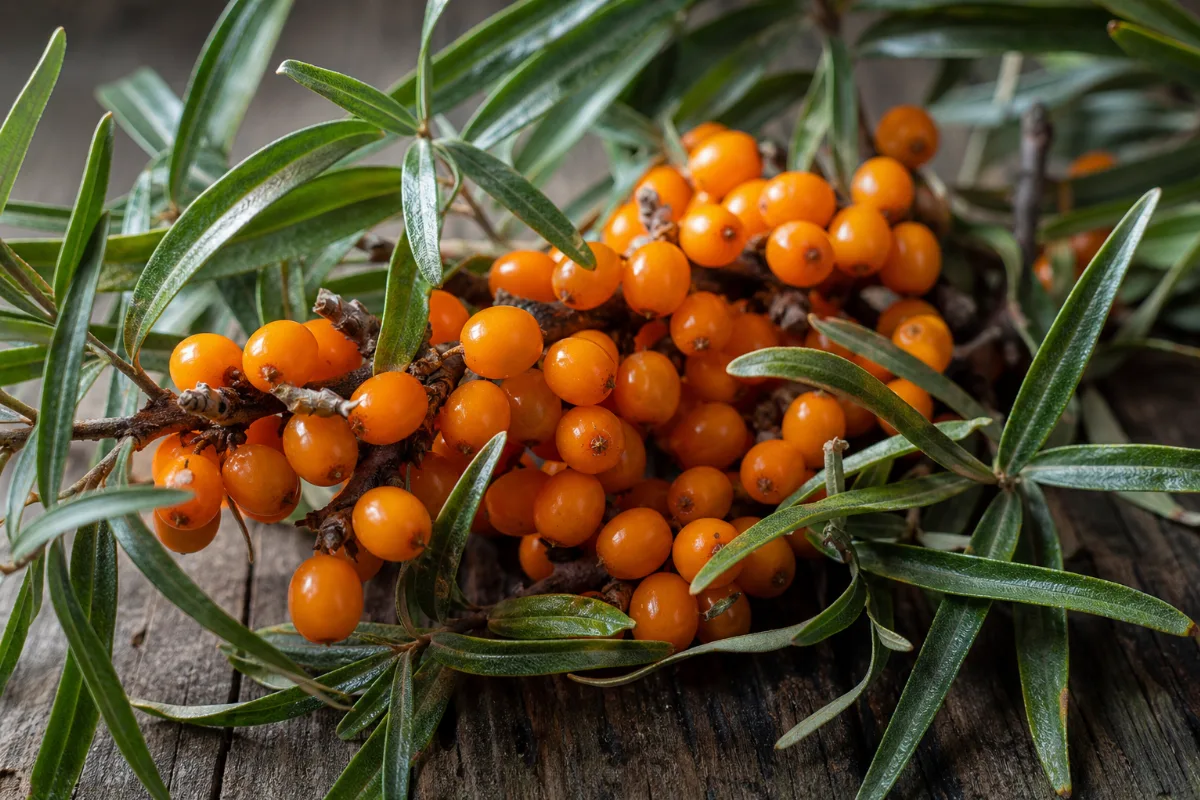
Sea buckthorn is a thorny shrub of the oleaster family whose orange berries are eaten as juice and puree and pressed into two different oils: pulp (berry flesh) oil and seed oil. The leaf is also used in teas and extracts. This profile keeps berry, oils and leaf apart because they are different products. Nothing about sea buckthorn reaches more than low certainty in people.
General information, not medical advice. Last substantive update · Not medically reviewed. A named clinician has not signed off on this page. How this page is made
About Sea Buckthorn
Sea buckthorn comes as berries and juice, pulp oil, seed oil, fruit extracts and leaf products. Pooled trials hint at lower cholesterol and triglycerides in people with abnormal blood fats; small trials of the oil show modest results for dry eye and menopausal vaginal dryness; one trial favoured a cream for burns; nothing beats low certainty. Trials found no benefit for blood pressure or cold prevention. There is no controlled human trial of the leaf. Possible extra bleeding tendency, blood sugar effects, pregnancy and kidney issues are covered in the safety section.
What it is
Sea buckthorn (Hippophae rhamnoides) is a shrub of the oleaster family (Elaeagnaceae) whose accepted name was confirmed in GBIF and NCBI Taxonomy. Its orange berries, the oils pressed from them, and its leaves are used. The berry flesh gives pulp oil and the seed gives seed oil; they have different fatty acids (pulp oil is rich in palmitic, oleic and palmitoleic acids, seed oil in linoleic, alpha-linolenic and oleic acids).
Berries, oils, extracts and leaf are not interchangeable. Each result on this page names the part and product studied.
Traditional and current uses
A review of traditional Chinese medicine says different parts of the plant were used for cough, digestion, blood circulation and pain. Other papers describe use for centuries in Europe and Asia as food and medicine. These are traditional statements read in abstracts only, not proof of benefit.
Today it is used as juice, puree, oil capsules, eyelid sprays, vaginal and skin products and teas.
What is in it and how it works
The fruit and leaf contain flavonols such as isorhamnetin and quercetin. The oils carry different fatty acids, plus vitamin E, carotenoids and sterols. In a human study, isorhamnetin-rich flavonols were absorbed quickly, and a little oil seemed to increase their absorption at the higher dose.
In the lab, fruit flavonols and seed extracts reduced platelet activity and clot formation. In rats, a sea buckthorn preparation restored a liver enzyme (CYP2D6) lowered by liver injury. Whether any of this happens in people at normal intakes is not known. Different forms behave differently: in one crossover trial berries tended to lower triglycerides while a phenolic extract raised them.
What the research shows
The pooled analysis of 15 trials found lower triglycerides, total and LDL cholesterol and higher HDL, only in people with abnormal blood fats and with high heterogeneity; it found no effect on blood sugar, blood pressure or BMI. Single small trials suggest benefit for dry eye (oil), menopausal vaginal dryness (oil), constipation (a fruit extract) and burns (a cream), but each rests on one or two small studies, several with authors tied to a sea buckthorn company. Trials found no benefit for preventing colds or for dry mouth in dialysis patients, and the Cochrane review found no convincing evidence for supplements in eczema.
For the leaf, a 2026 review of 85 papers found no controlled human trial of a characterized preparation and said the evidence does not justify therapeutic use of leaves. Because trials differ so much in product and dose, results should not be moved from one form to another.
At a glance
Traditional uses history, not proof
- Traditional Chinese medicine: a review reports different parts of the plant used for cough, digestion, blood circulation and pain (abstract read only).
- Europe and Asia: described as used for centuries as a medicine and nutritional supplement; no older source was checked.
Studied for research
- Cholesterol and triglycerides, low
- Blood sugar and insulin after meals, low
- Dry eye, low
- Vaginal dryness after menopause, low
- Constipation, low
- Burns (cream), low
- Blood pressure, against
- Preventing colds, against
Main compounds
- Isorhamnetin and quercetin glycosides, flavonols in fruit and leaf
- Palmitoleic acid (omega-7) in pulp oil
- Alpha-linolenic and linoleic acid in seed oil
- Vitamin E, carotenoids and sterols in berry oil
Common forms
- Berries, juice and puree
- Pulp (berry flesh) oil and seed oil
- Fruit extracts and capsules
- Creams and eyelid sprays
- Leaf tea and extracts
Research links: EU herbal monograph search (European Medicines Agency); no sea buckthorn monograph confirmed · NIH Herbs at a Glance (no sea buckthorn page found) · Research Library · Genes & Biomarkers Library
The plant and its history
- Accepted scientific name
- Hippophae rhamnoides L.
- Naming authority
- L.
- Common names
- Sea buckthorn (en); Seaberry (en); Espino amarillo (es); Sanddorn (de)
- Botanical family
- Elaeagnaceae (the oleaster family)
- Classification
- Plantae > Tracheophyta > Magnoliopsida > Rosales > Elaeagnaceae > Hippophae > Hippophae rhamnoides
- Native range
- Not verified in a source read here. General references place it in Europe and Asia.
- Habitat
- Not verified.
- What the plant looks like
- Roots: Not verified; Stems: Not verified; Leaves: Narrow leaves are used in teas and extracts (Kordas 2026); botanical details not verified.; Flowers: Not verified; Fruit: Orange berries (Slawinska 2024 describes sea buckthorn as a tree or shrub with small, orange berries).
- Cultivation
- Not verified; fruit and leaf composition varies by cultivar and harvest (Kordas 2026; Ma 2023 on quality markers).
- Harvest and processing
- Seeds are sometimes roasted; roasting did not remove their lab anti-platelet effect (Slawinska 2024). Oil is made from pulp or from seed and the two oils differ (Yang 1999).
- Look-alikes and adulterants
- Name: Other Hippophae species; Note: Hippophae salicifolia appears in a title we saw (a bacteria study); no species in the health trials read here is other than H. rhamnoides unless stated. Not verified further.; Name: Other plants sold as berry oils or extracts; Note: Products should name the species and plant part; no adulteration survey was found.
- Sustainability and conservation
- Not checked.
Traditional use and history history, not clinical proof
| Tradition or era | Documented use | Source |
|---|---|---|
| Traditional Chinese medicine | Different parts of the plant were used for cough, aiding digestion, invigorating blood circulation and relieving pain. | p36930583 |
| Europe and Asia (general) | Used for centuries as a medicine and nutritional supplement. | p30081653 |
| Ancient Greek horse legend and Tibetan or Himalayan uses | Often repeated in popular sources. | NOT verified; no primary source read, not used on the page. |
Traditional use shows how a plant was used. It does not show that a supplement works or is safe today.
What is inside, and how it may work
What the plant contains and how those compounds act in cells and animals. Laboratory and animal mechanisms are not proven effects in people.
Main compounds
| Compound | Family | Where it is concentrated | Activity studied | Level of evidence |
|---|---|---|---|---|
| Isorhamnetin and its glycosides PubChem 5281654 | Flavonol | fruit; leaf | Sea buckthorn is a rich source; anti-platelet in the lab (Stochmal 2022); absorbed in humans (Suomela 2006). 23 22 9 | Laboratory research |
| Quercetin (as glycosides) PubChem 5280343 | Flavonol | leaf | Leaf glycosides of isorhamnetin, quercetin and kaempferol (Kordas 2026). 9 | Laboratory research |
| Palmitoleic acid PubChem 445638 | Omega-7 monounsaturated fatty acid | pulp oil About 25 percent of pulp oil fatty acids in one analysis (Yang 1999). | Raised in plasma after pulp oil; effects not established. 28 | Controlled trial |
| Alpha-linolenic acid PubChem 5280934 | Omega-3 fatty acid | seed oil About 25 percent of seed oil fatty acids; linoleic acid about 34 percent (Yang 1999). | Raised in plasma after seed oil; linked to eczema symptom change in that trial. 28 | Controlled trial |
| Vitamin E (tocopherols), carotenoids and sterols PubChem 14985 | Oil-soluble vitamins and sterols | berry oil | Listed as features of the oil (Johansson 2000). The CID given is alpha-tocopherol, as one example; the abstract does not name forms. 8 | Unclear |
| Proanthocyanidins, ellagitannins, triterpenoids | Polyphenols and triterpenes | berry extract; leaf | Berry proanthocyanidin extract raised some circulating stem cells (Drapeau 2019); leaf contains tannins and triterpenoids (Kordas 2026). 3 9 | Controlled trial |
Mechanisms, receptors and pathways
| Target or pathway | Gene or receptor | What was found | Level |
|---|---|---|---|
| Platelet activation and adhesion | Glycoprotein IIb/IIIa, P-selectin, COX-1 | Seed extracts lowered activated GPIIb/IIIa by 38.4-62.2 percent (10 µM ADP) and inhibited COX-1 in the lab; isorhamnetin and derivatives reduced clot formation in whole blood. 24 22 | Laboratory research |
| Platelet aggregation in humans | ADP pathway | Berry oil lowered ADP-induced aggregation in 12 healthy men. 8 | Human data |
| Insulin secretion after meals | Not identified | Lower and delayed insulin rise after a sugary meal with sea buckthorn puree. 17 | Human data |
| Plasma fatty acid composition | Not applicable | Seed oil raised alpha-linolenic acid; pulp oil raised palmitoleic acid in plasma. 28 | Human data |
| Drug-metabolizing enzyme CYP2D6 | CYP2D6, cAMP/PKA/NF-kappaB | In rats with BCG-induced liver injury, a preparation restored lowered CYP2D6. 31 | Animal research |
| Skin inflammation and barrier | Not specified | Preclinical models show lower inflammatory mediators and better barrier function. 7 | Animal research |
| Circulating stem cells | CD34, CD309, CD31, CD90 markers | Selective rise in some cell types after a berry extract. 3 | Human data |
Absorption, metabolism and elimination
- Absorption
- Isorhamnetin-rich flavonols from sea buckthorn were rapidly absorbed at two dosages in humans (Suomela 2006).
- Distribution
- Not found in the sources read.
- Metabolism
- Not found in the sources read; a rat study links a preparation to CYP2D6 expression (Zou 2023).
- Elimination
- Not found.
- Bioavailability
- A small amount of sea buckthorn oil added to the porridge seemed to increase flavonol bioavailability at the higher dose (Suomela 2006). No human pharmacokinetic study of a characterized leaf preparation exists (Kordas 2026).
Isolated compounds versus whole extracts
Products behave differently. In a crossover study berries tended to lower triglycerides in higher-risk women while a phenolic extract mixed with maltodextrin raised them (Larmo 2013). Isolated flavonols in porridge did not change oxidized LDL, CRP or homocysteine (Suomela 2006). Pulp oil and seed oil gave different eczema results (Yang 1999). So results for one form cannot be assumed for another, and leaf results cannot be taken from berry trials (Kordas 2026).
Nutritional composition
The two oils differ in fatty acids: pulp oil is mainly palmitic (33 percent), oleic (26 percent) and palmitoleic (25 percent), and seed oil is mainly linoleic (34 percent), alpha-linolenic (25 percent) and oleic (19 percent) acid (Yang 1999). Vitamin E, carotenoids and sterols are listed as features of the berry oil (Johansson 2000). Berry vitamin and mineral content was not read.
1 mixed findings7 low certainty3 very low certainty3 not enough evidence3 evidence against
What was looked at
The 17 benefits and uses checked for Sea Buckthorn, each with how strong the evidence is. Tap one to open it.
- Blood fats (cholesterol and triglycerides)Low certainty
- Blood sugar and insulin response after mealsLow certainty
- Blood pressureEvidence against
- Inflammation marker (CRP)Mixed findings
- Blood platelets and clottingVery low certainty
- Weight and overall metabolic profileLow certainty
- Dry eyeLow certainty
- Vaginal dryness after menopauseLow certainty
- Eczema (atopic dermatitis)Very low certainty
- Burns and wound healing (applied to the skin)Low certainty
- Rosacea and skin inflammationNot enough evidence
- ConstipationLow certainty
- Indigestion in children (functional dyspepsia)Very low certainty
- Preventing colds and infectionsEvidence against
- Dry mouth and oxidative stress in dialysis patientsEvidence against
- Circulating stem cells (a lab marker)Not enough evidence
- The leaf (tea and extracts)Not enough evidence
Lab markers tracked in the studies
TriglyceridesLDL cholesterolHDL cholesterolTotal cholesterolBlood glucoseInsulin response after a mealC-reactive protein (CRP)Platelet aggregation (ADP-induced)Tear film osmolarityOcular Surface Disease Index (OSDI)Integrity of the vaginal liningSpontaneous complete bowel movements per weekLeptin and neuropeptide YPlasma phosphate, sodium and ironCirculating stem and progenitor cells
What is Sea Buckthorn good for?
The main studied uses and how strong the human evidence is for each. "Low" means small or inconsistent studies, "very low" means one small or unclear study, "insufficient" means not enough to judge, and "against" means trials found no benefit. Nothing about sea buckthorn is above low.
Benefits, one by one
Each card is a research question, not a promise. Tap a goal to filter. Open a card to see the studies, doses and limits.
Blood fats (cholesterol and triglycerides)
Low certaintyPooling 15 trials, sea buckthorn supplements were linked to lower triglycerides, total and LDL cholesterol and higher HDL. The effect showed up only in people who already had abnormal blood fats, and the trials varied a lot. It is a lab-number change, not proof of fewer heart attacks.
4 studiesProducts pooled in the meta-analysis are not listed in the abstract. …
Studies, doses and limits
What the trials found
A 2022 meta-analysis of 15 randomized trials (Geng 2022; abstract read) found lower triglycerides, total cholesterol and LDL and higher HDL overall, with the effect limited to people with abnormal blood fats. In a 30-day crossover study in 80 overweight women (Larmo 2013), berries tended to lower triglycerides and VLDL in the higher-risk group and the oil showed a downward trend in cholesterol, but most single changes were not significant after correction for multiple testing, and a phenolic extract mixed with maltodextrin raised triglycerides and VLDL. In 12 healthy men, 4 weeks of berry oil did not change plasma lipids (Johansson 2000).
Results
Meta-analysis: lower triglycerides, total cholesterol and LDL, higher HDL, only in people with abnormal lipids. Healthy people: no change in the small oil study.
Effect sizes as reported
Standardised mean differences: triglycerides -0.722 (95% CI -1.129 to -0.316), total cholesterol -0.345 (-0.639 to -0.051), LDL -0.396 (-0.755 to -0.037), HDL +0.370 (0.056 to 0.684).
Why this rating
Pooled result is statistically significant but the authors report high heterogeneity even after subgroup analysis, the abstract does not name the products, and no GRADE rating is given in it. The one extract-versus-berry comparison went in the opposite direction. We rate it low.
Form and dose studied
Products pooled in the meta-analysis are not listed in the abstract. Individual trials used dried berries, oil (5 g a day in Johansson 2000) and a phenolic extract; see each study.
Who was studied
Adults, mostly with abnormal lipids or overweight.
Limits
High heterogeneity; unclear products; a change in blood tests does not show fewer heart attacks or strokes.
Why researchers looked
Berries and oils contain unsaturated fats and flavonols, so researchers tested them for effects on blood fats.
Traditional use
Sea buckthorn berries and oil have a long place in European and Asian food and folk medicine. A review of the traditional Chinese use says different parts of the plant were used for cough, to aid digestion, to invigorate blood circulation and to relieve pain (Ma 2023, abstract only). This is traditional use, not proof of benefit.
Proposed mechanism Preliminary mechanism
Lab and animal work suggests flavonoids and fatty acids may change how the body handles fats; this has not been shown to be the reason in people.
A proposed mechanism does not show that the effect happens in people.
No serious problems were reported in these abstracts. Anyone on cholesterol medicine should keep taking it unless a doctor says otherwise.
Blood sugar and insulin response after meals
Low certaintyIn one small crossover study, eating sea buckthorn puree with a sugary meal gave a smaller, later rise in insulin in overweight men, with no change in blood sugar itself. Over weeks, the pooled trials found no effect on blood sugar.
4 studiesSea buckthorn puree in a sucrose-containing test meal; the dose is no…
Studies, doses and limits
What the trials found
Eighteen overweight or obese men ate three test meals (sea buckthorn puree, strawberry puree or a control with added fructose) in a single-blinded crossover design (Mortensen 2018). Blood glucose was not affected, but insulin was 39.6 percent lower at 30 minutes (P < 0.01) and 16.5 percent lower at 45 minutes (P < 0.05), the peak insulin rise was 23.6 percent lower, and desire for something sweet was higher after sea buckthorn. The 2022 meta-analysis (Geng 2022) found no effect on blood sugar overall. A 2026 review (Kordas 2026) says effects on glucose regulation in human trials were small or inconsistent.
Results
Single meal: lower and delayed insulin, no glucose change. Weeks-long trials pooled: no effect on blood sugar.
Effect sizes as reported
Insulin 39.6 percent lower at 30 min, 16.5 percent lower at 45 min; peak rise 23.6 percent lower; glucose unchanged.
Why this rating
One single-blinded study of 18 men, one meal, no diabetes patients; the pooled analysis found no blood sugar effect. A lower insulin response is not the same as better blood sugar control. We rate it low.
Form and dose studied
Sea buckthorn puree in a sucrose-containing test meal; the dose is not given in the abstract.
Who was studied
Overweight or obese men; no people with diabetes in this study.
Limits
One meal; small; no long-term data in people with diabetes.
Why researchers looked
Berry polyphenols are thought to slow sugar absorption, so researchers tested sea buckthorn with a sugary meal.
Traditional use
Sea buckthorn berries and oil have a long place in European and Asian food and folk medicine. A review of the traditional Chinese use says different parts of the plant were used for cough, to aid digestion, to invigorate blood circulation and to relieve pain (Ma 2023, abstract only). This is traditional use, not proof of benefit.
Proposed mechanism Pharmacological theory
Not shown in these studies; possible slowing of sugar uptake is a hypothesis from lab work.
A proposed mechanism does not show that the effect happens in people.
If you take diabetes medicines, ask your doctor or pharmacist before adding concentrated sea buckthorn products, because an effect on blood sugar has not been ruled out.
Blood pressure
Evidence againstThe pooled trials found that sea buckthorn did not lower blood pressure. A small Chinese trial of a flavone extract compared with blood pressure drugs reported no rise in heart rate or stress hormones after exercise, but its abstract gives no blood pressure numbers.
3 studiesTotal flavones extract (Zhang 2001); products pooled in Geng 2022 are…
Studies, doses and limits
What the trials found
The 2022 meta-analysis (Geng 2022) found no effect on blood pressure overall. In 88 people with essential hypertension (Zhang 2001, Chinese-language abstract), 8 weeks of total sea buckthorn flavones did not change resting heart rate or stress hormones (catecholamines) in the flavone group, and after isometric exercise heart rate, blood pressure and catecholamines did not rise as they did on nifedipine. The comparison drugs were nifedipine and verapamil, with no placebo group.
Results
Pooled trials: no effect on blood pressure. Flavone trial: no resting change; blunted exercise response compared with nifedipine; no blood pressure numbers in the abstract.
Effect sizes as reported
Not quantified in the abstracts.
Why this rating
The pooled analysis found no blood pressure effect, so we rate the evidence against a blood pressure benefit. The flavone trial is old, in Chinese, without a placebo, and gives no numbers.
Form and dose studied
Total flavones extract (Zhang 2001); products pooled in Geng 2022 are not named in the abstract.
Who was studied
Adults with high blood pressure (Zhang 2001).
Limits
Old trial; no placebo; blood pressure values not available to us.
Why researchers looked
Flavonoids from the fruit are thought to relax blood vessels or calm the stress-nerve system, so this was tested.
Traditional use
Sea buckthorn berries and oil have a long place in European and Asian food and folk medicine. A review of the traditional Chinese use says different parts of the plant were used for cough, to aid digestion, to invigorate blood circulation and to relieve pain (Ma 2023, abstract only). This is traditional use, not proof of benefit.
Proposed mechanism Preliminary mechanism
Lab studies suggest effects on the sympathetic (stress) nerves; not confirmed in people.
A proposed mechanism does not show that the effect happens in people.
People taking blood pressure medicines should not swap them for sea buckthorn. No study of sea buckthorn combined with those medicines was found.
Inflammation marker (CRP)
Mixed findingsResults are mixed. One trial in 254 healthy adults found a small fall in the inflammation marker CRP with berries, but two other human studies, one in dialysis patients and one with isolated flavonols, found no change.
4 studiesBerries (Larmo 2008, dose not in abstract); oil 2 g a day (Rodhe 2013…
Studies, doses and limits
What the trials found
In 254 healthy volunteers (233 finished), sea buckthorn berries did not change the number or length of colds, but CRP fell more than with placebo (difference in median change -0.059 mg/l, P = 0.039; Larmo 2008). In 45 hemodialysis patients, sea buckthorn oil for 8 weeks did not change high-sensitivity CRP or other inflammation markers (Rodhe 2013). Isorhamnetin-rich flavonols in porridge did not change CRP, oxidized LDL or homocysteine (Suomela 2006).
Results
One small CRP fall in healthy adults; no change in dialysis patients or with isolated flavonols.
Effect sizes as reported
CRP difference in median change -0.059 mg/l (P = 0.039) in Larmo 2008; the other two studies showed no significant change.
Why this rating
Positive and null human results, a very small CRP change that may have no meaning for health, and different products (berries, oil, isolated flavonols). We rate it mixed.
Form and dose studied
Berries (Larmo 2008, dose not in abstract); oil 2 g a day (Rodhe 2013); isolated flavonols in porridge (Suomela 2006).
Who was studied
Healthy adults; dialysis patients.
Limits
The CRP change was a secondary outcome and very small.
Why researchers looked
CRP is a blood marker of inflammation linked to heart risk, and berries are rich in antioxidants.
Traditional use
Sea buckthorn berries and oil have a long place in European and Asian food and folk medicine. A review of the traditional Chinese use says different parts of the plant were used for cough, to aid digestion, to invigorate blood circulation and to relieve pain (Ma 2023, abstract only). This is traditional use, not proof of benefit.
Proposed mechanism Preliminary mechanism
Lab studies report anti-inflammatory effects of the flavonoids; the human trials did not show this clearly.
A proposed mechanism does not show that the effect happens in people.
See the safety tab for the blood chemistry changes seen in dialysis patients.
Blood platelets and clotting
Very low certaintyIn one small trial in 12 healthy men, 4 weeks of sea buckthorn berry oil lowered a lab measure of how readily platelets clump. Lab tests on human blood with seed extracts and a fruit flavonol also show anti-platelet activity. This is also why bleeding precautions matter (see the safety tab).
5 studiesBerry oil 5 g a day for 4 weeks (Johansson 2000); isolated compounds …
Studies, doses and limits
What the trials found
Twelve healthy men took 5 g a day of berry oil or fractionated coconut oil for 4 weeks in a crossover design; the oil lowered ADP-induced platelet aggregation rate and maximum aggregation, while lipids and glucose did not change (Johansson 2000). In the lab, isorhamnetin and two derivatives from the fruit reduced clot formation in human whole blood (Stochmal 2022), and raw and roasted seed extracts lowered platelet activation and inhibited COX-1 (Slawinska 2024). A 2026 review says platelet effects in human trials were small or inconsistent (Kordas 2026).
Results
Human: lower platelet aggregation with berry oil in one small study. Lab: anti-platelet effects of fruit flavonol and seed extracts.
Effect sizes as reported
Numbers are not given in the human abstract; lab tests used 50 micrograms per mL.
Why this rating
One 12-person preliminary crossover study plus test-tube work. Lab antiplatelet activity does not tell us whether a bleeding risk exists at normal intakes. We rate it very low.
Form and dose studied
Berry oil 5 g a day for 4 weeks (Johansson 2000); isolated compounds and seed extracts in the lab.
Who was studied
Healthy men.
Limits
Small; no bleeding outcome measured; lab results use concentrations not known to be reached in the body.
Why researchers looked
Platelet clumping contributes to blood clots, and fatty acids and flavonols in the plant are known to affect it in the lab.
Traditional use
Sea buckthorn berries and oil have a long place in European and Asian food and folk medicine. A review of the traditional Chinese use says different parts of the plant were used for cough, to aid digestion, to invigorate blood circulation and to relieve pain (Ma 2023, abstract only). This is traditional use, not proof of benefit.
Proposed mechanism Preliminary mechanism
In human blood in the lab, isorhamnetin and seed extracts reduced clot formation, platelet activation and the enzyme COX-1; the real-world effect of eating or taking sea buckthorn is not known.
A proposed mechanism does not show that the effect happens in people.
Possible additive effect with blood thinners and antiplatelet medicines; no human interaction study or bleeding case report was found. See the safety tab.
Weight and overall metabolic profile
Low certaintySea buckthorn did not change body weight measures in the pooled trials. A crossover study found berries, oil and a phenolic extract each changed the overall blood metabolite pattern, and the direction depended on the person's starting profile.
4 studiesDried berries, oil or extract, 30 days (Larmo 2013).
Studies, doses and limits
What the trials found
The meta-analysis (Geng 2022) found no effect on BMI. In 80 overweight women, dried berries, oil, a phenolic extract and bilberries each shifted the overall blood metabolite profile in a 30-day crossover study, with changes that depended on the baseline profile (Larmo 2013). A 2026 review on leaves (Kordas 2026) found human trials of berries, puree, juice and oils had small or inconsistent effects on lipids, glucose, blood pressure and platelets.
Results
No BMI effect in pooled trials; profile changes depend on starting state.
Effect sizes as reported
Not quantified here beyond the meta-analysis statement of no BMI effect.
Why this rating
Based on one meta-analysis statement and one exploratory crossover study with no placebo arm in the abstract. We rate it low.
Form and dose studied
Dried berries, oil or extract, 30 days (Larmo 2013).
Who was studied
Overweight women.
Limits
Exploratory; multiple testing; no weight-loss outcome.
Why researchers looked
Researchers asked whether berries change the wider blood chemistry that links to metabolic syndrome.
Traditional use
Sea buckthorn berries and oil have a long place in European and Asian food and folk medicine. A review of the traditional Chinese use says different parts of the plant were used for cough, to aid digestion, to invigorate blood circulation and to relieve pain (Ma 2023, abstract only). This is traditional use, not proof of benefit.
Proposed mechanism Preliminary mechanism
Not established.
A proposed mechanism does not show that the effect happens in people.
Same as under blood fats.
Dry eye
Low certaintyTwo Finnish trials found sea buckthorn oil, swallowed or sprayed on the closed eyelid, eased dry eye symptoms somewhat. The studies were small and involve authors tied to a sea buckthorn company, and the spray also contained hyaluronate.
3 studiesOral oil 2 g a day for 3 months; eyelid spray with hyaluronate (amoun…
Studies, doses and limits
What the trials found
In a double-blind trial of 100 adults with dry eye (86 finished), 2 g a day of sea buckthorn oil for 3 months led to a smaller rise in tear film osmolarity than placebo (ITT P = 0.04; per protocol P = 0.02). Redness was lower in the ITT analysis (P = 0.04) and burning in the per protocol analysis (P = 0.04) (Larmo 2010). In a three-part randomized study of an eyelid spray containing sea buckthorn oil and sodium hyaluronate, symptom scores (OSDI) fell more in the treated eye than the untreated eye (P = 0.0007, n = 40 in part three) and than a commercial spray (P = 0.022, n = 10) (Larmo 2019).
Results
Oral oil: smaller rise in tear osmolarity; some symptoms improved. Spray: lower OSDI than untreated eye.
Effect sizes as reported
Oral oil ITT P = 0.04 for osmolarity; spray OSDI P = 0.0007 vs untreated eye.
Why this rating
Two small trials from the same research circle, results differ by analysis set, the spray used an untreated eye rather than placebo and contains hyaluronate, and authors are linked to a sea buckthorn company. We rate it low.
Form and dose studied
Oral oil 2 g a day for 3 months; eyelid spray with hyaluronate (amount per use not in the abstract).
Who was studied
Adults with dry eye.
Limits
Small; company-linked authors; combination spray.
Why researchers looked
Oil rich in fatty acids and antioxidants could support the tear film.
Traditional use
Sea buckthorn berries and oil have a long place in European and Asian food and folk medicine. A review of the traditional Chinese use says different parts of the plant were used for cough, to aid digestion, to invigorate blood circulation and to relieve pain (Ma 2023, abstract only). This is traditional use, not proof of benefit.
Proposed mechanism Pharmacological theory
Unknown; the authors suggested the fatty acids and antioxidants.
A proposed mechanism does not show that the effect happens in people.
The spray was well tolerated in the first part (n = 2).
Vaginal dryness after menopause
Low certaintyOne placebo-controlled trial of 116 postmenopausal women found swallowed sea buckthorn oil improved the health of the vaginal lining; the main index was not significantly better. A separate Chinese trial of a vaginal suppository (a combination product) found results similar to estrogen ointment before a colposcopy exam.
3 studiesOral oil 3 g a day for 3 months (Larmo 2014); compound sea-buckthorn …
Studies, doses and limits
What the trials found
In 116 postmenopausal women with vaginal dryness, itching or burning (98 finished), 3 g a day of sea buckthorn oil for 3 months improved integrity of the vaginal epithelium better than placebo (OR 3.1, 95% CI 1.11-8.95; in compliant participants only OR 2.9, CI 0.99-8.35, a trend). The overall vaginal health index trend was not significant (P = 0.08) (Larmo 2014). In 377 women before colposcopy, a compound sea-buckthorn oil vaginal suppository for 2 weeks improved epithelial integrity and colposcopy adequacy versus no treatment (P < 0.001), similar to estrogen ointment; the breast discomfort, dizziness and headache reported were in the estrogen group only (Yu 2025).
Results
Oral oil: better epithelial integrity than placebo, index trend not significant. Suppository: similar to estrogen ointment, better than nothing.
Effect sizes as reported
OR 3.1 (95% CI 1.11-8.95) for epithelial integrity.
Why this rating
One placebo-controlled trial with a borderline main index, plus a combination-product trial without a placebo. Authors of the first have ties to Aromtech Ltd. We rate it low.
Form and dose studied
Oral oil 3 g a day for 3 months (Larmo 2014); compound sea-buckthorn oil vaginal suppository for 2 weeks (Yu 2025, a combination product, ingredients not in the abstract).
Who was studied
Postmenopausal women.
Limits
Small; combination product in the second trial; no symptom-based placebo trial for the suppository.
Why researchers looked
Oil rich in fatty acids is used for mucous membranes; women who cannot use estrogen look for options.
Traditional use
Sea buckthorn berries and oil have a long place in European and Asian food and folk medicine. A review of the traditional Chinese use says different parts of the plant were used for cough, to aid digestion, to invigorate blood circulation and to relieve pain (Ma 2023, abstract only). This is traditional use, not proof of benefit.
Proposed mechanism Pharmacological theory
Unknown.
A proposed mechanism does not show that the effect happens in people.
In Yu 2025, local vaginal reactions did not differ significantly from the estrogen group, and the suppository group had no breast discomfort, dizziness or headache.
Eczema (atopic dermatitis)
Very low certaintyA small old trial of seed oil and pulp oil found improvement with pulp oil, but the placebo group improved too. A Cochrane review found no convincing evidence for any dietary supplement in eczema.
3 studiesSeed oil or pulp oil 5 g a day for 4 months.
Studies, doses and limits
What the trials found
In 49 patients with atopic dermatitis who took 5 g of seed oil, pulp oil or paraffin oil daily for 4 months, dermatitis improved significantly with pulp oil (P < 0.01) and with paraffin oil (P < 0.001) but not significantly with seed oil (P = 0.11) (Yang 1999). The 2012 Cochrane review of 11 trials in 596 people concluded there is no convincing evidence of benefit from dietary supplements in established eczema; sea buckthorn seed and pulp oil was one of the single small studies included (Bath-Hextall 2012).
Results
Placebo improved as much as or more than the oils.
Effect sizes as reported
Pulp oil P < 0.01; seed oil P = 0.11; paraffin placebo P < 0.001.
Why this rating
One small 1999 trial where the placebo also improved, and a Cochrane conclusion of no convincing evidence. We rate it very low.
Form and dose studied
Seed oil or pulp oil 5 g a day for 4 months.
Who was studied
People with atopic dermatitis.
Limits
Small groups; old; placebo effect.
Why researchers looked
The oils contain skin-related fatty acids.
Traditional use
Sea buckthorn berries and oil have a long place in European and Asian food and folk medicine. A review of the traditional Chinese use says different parts of the plant were used for cough, to aid digestion, to invigorate blood circulation and to relieve pain (Ma 2023, abstract only). This is traditional use, not proof of benefit.
Proposed mechanism Preliminary mechanism
The authors linked symptom change to rises of alpha-linolenic acid in plasma in the seed oil group.
A proposed mechanism does not show that the effect happens in people.
None reported in the abstracts.
Burns and wound healing (applied to the skin)
Low certaintyOne randomized trial in 55 people with second-degree burns found a sea buckthorn cream healed burns faster than the standard silver sulfadiazine dressing. This is about a cream on the skin, not a supplement.
3 studiesSea buckthorn cream dressing (composition not in the abstract).
Studies, doses and limits
What the trials found
Fifty-five adults with second-degree burns got sea buckthorn cream or 1 percent silver sulfadiazine dressings until healed; healing was shorter with sea buckthorn cream (P < 0.001), and the abstract gives no days (Abdullahzadeh 2021). In rats, seed oil by mouth and on the skin sped burn healing with no toxicity seen in acute and sub-acute oral tests (Upadhyay 2009).
Results
Shorter healing time than silver sulfadiazine in one trial.
Effect sizes as reported
P < 0.001; number of days not in abstract.
Why this rating
One small triple-blind trial with no days given and no cream composition in the abstract, backed by rat work. We rate it low.
Form and dose studied
Sea buckthorn cream dressing (composition not in the abstract).
Who was studied
Adults with second-degree burns.
Limits
Small; single center; product details missing.
Why researchers looked
Oil rich in fatty acids and antioxidants is used on skin damage; rat studies of seed oil showed faster healing.
Traditional use
Sea buckthorn berries and oil have a long place in European and Asian food and folk medicine. A review of the traditional Chinese use says different parts of the plant were used for cough, to aid digestion, to invigorate blood circulation and to relieve pain (Ma 2023, abstract only). This is traditional use, not proof of benefit.
Proposed mechanism Animal research
In rats, seed oil raised wound contraction and collagen markers (Upadhyay 2009).
A proposed mechanism does not show that the effect happens in people.
Skin product only; burns need medical care.
Rosacea and skin inflammation
Not enough evidenceA 2026 review found sea buckthorn compounds reduce inflammation in lab and animal skin models, but there are no trials in people with rosacea.
2 studiesExtracts, oils and isolated compounds.
Studies, doses and limits
What the trials found
A PRISMA-style review of 26 PubMed studies from 2020 on found consistent lower inflammation and better barrier function in preclinical models, with limited clinical data on rosacea (Hincu 2026).
Results
No human rosacea results.
Why this rating
Evidence is almost entirely lab and animal work; no rosacea trials.
Form and dose studied
Extracts, oils and isolated compounds.
Limits
Only PubMed since 2020; lab work.
Why researchers looked
Rosacea involves inflammation and a weak skin barrier, which sea buckthorn compounds affect in the lab.
Traditional use
Sea buckthorn berries and oil have a long place in European and Asian food and folk medicine. A review of the traditional Chinese use says different parts of the plant were used for cough, to aid digestion, to invigorate blood circulation and to relieve pain (Ma 2023, abstract only). This is traditional use, not proof of benefit.
Proposed mechanism Laboratory research
In lab and animal models, sea buckthorn compounds lowered pro-inflammatory mediators and improved barrier integrity (Hincu 2026).
A proposed mechanism does not show that the effect happens in people.
None known.
Constipation
Low certaintyOne 28-day, placebo-controlled trial in 90 adults found a sea buckthorn fruit extract raised complete bowel movements from 1.5 to 2.6 a week and improved stool form, with no adverse events reported. It is a single, sponsor-supplied study.
2 studiesHydroethanolic fruit extract 500 mg a day for 28 days.
Studies, doses and limits
What the trials found
Ninety adults with chronic idiopathic constipation took 500 mg a day of a hydroethanolic fruit extract or placebo for 28 days; weekly spontaneous complete bowel movements rose from 1.5 to 2.6 (P < 0.001) and the Bristol stool form score from 1.4 to 3.5 (P < 0.001) with no change on placebo; bloating, abdominal pain and heaviness fell, flatulence did not differ, quality of life was largely unchanged, and no adverse events were reported (Morone 2026).
Results
Complete bowel movements 1.5 to 2.6 a week; stool form normalised.
Effect sizes as reported
1.5 to 2.6 a week (P < 0.001).
Why this rating
One single-center, 4-week trial with product supplied by the sponsor and no independent replication. We rate it low.
Form and dose studied
Hydroethanolic fruit extract 500 mg a day for 28 days.
Who was studied
Adults with chronic idiopathic constipation.
Limits
One center; short; sponsor-supplied product.
Why researchers looked
Fruit extracts contain flavonoids and other compounds that the authors say may act like a mild laxative.
Traditional use
Sea buckthorn berries and oil have a long place in European and Asian food and folk medicine. A review of the traditional Chinese use says different parts of the plant were used for cough, to aid digestion, to invigorate blood circulation and to relieve pain (Ma 2023, abstract only). This is traditional use, not proof of benefit.
Proposed mechanism Preliminary mechanism
Not established; the study characterised 75 compounds in the extract by mass spectrometry (flavonoids, triterpenoids, phospholipids).
A proposed mechanism does not show that the effect happens in people.
Because it increases bowel movements, people with loose stools or bowel disease should ask a doctor first (a precaution, not a finding).
Indigestion in children (functional dyspepsia)
Very low certaintyOne trial in 120 children reported faster stomach emptying and higher appetite-related hormones with sea buckthorn, but the abstract is unclear on the product and dose and reports no symptom scores. We treat it as very weak.
2 studiesNot stated in the abstract.
Studies, doses and limits
What the trials found
One hundred and twenty children with functional dyspepsia were randomized to sea buckthorn, domperidone or both for 8 weeks; leptin and neuropeptide Y were higher and ultrasound stomach emptying was faster in the sea buckthorn groups than domperidone alone, and body fat measures increased (Xiao 2013). An erratum was later published.
Results
Faster stomach emptying and higher leptin and NPY than domperidone alone.
Effect sizes as reported
Not quantified in the abstract.
Why this rating
Unclear product and dose, no symptom outcome, hormone and ultrasound measures only, and a correction was issued. We rate it very low.
Who was studied
Children with functional dyspepsia.
Limits
Unclear methods; weight and fat measures rose; no clinical symptom result in the abstract.
Why researchers looked
Sea buckthorn is used in traditional Chinese medicine to aid digestion (Ma 2023).
Traditional use
Sea buckthorn berries and oil have a long place in European and Asian food and folk medicine. A review of the traditional Chinese use says different parts of the plant were used for cough, to aid digestion, to invigorate blood circulation and to relieve pain (Ma 2023, abstract only). This is traditional use, not proof of benefit.
Proposed mechanism Preliminary mechanism
Not established.
A proposed mechanism does not show that the effect happens in people.
Not a basis for giving sea buckthorn to children; ask a pediatrician.
Preventing colds and infections
Evidence againstIn 254 healthy adults, sea buckthorn berries did not reduce the number or length of colds or digestive infections. Urinary infections were too few to judge.
2 studiesBerry product, dose not in the abstract.
Studies, doses and limits
What the trials found
A double-blind, placebo-controlled trial of 254 healthy volunteers (233 finished) found no difference in the number or duration of common colds (relative risk 1.15, 95% CI 0.90-1.48 for number; 1.05, CI 0.87-1.27 for duration) or digestive infections (Larmo 2008).
Results
No effect on colds.
Effect sizes as reported
RR 1.15 (0.90-1.48) number; RR 1.05 (0.87-1.27) duration.
Why this rating
A randomized, placebo-controlled trial of reasonable size found no benefit for colds. We rate the evidence against a cold-prevention benefit.
Form and dose studied
Berry product, dose not in the abstract.
Who was studied
Healthy adults.
Limits
One trial; urinary infection signal too small to judge.
Why researchers looked
Berries are rich in antioxidants, so they were tested for preventing colds.
Traditional use
Sea buckthorn berries and oil have a long place in European and Asian food and folk medicine. A review of the traditional Chinese use says different parts of the plant were used for cough, to aid digestion, to invigorate blood circulation and to relieve pain (Ma 2023, abstract only). This is traditional use, not proof of benefit.
Proposed mechanism Pharmacological theory
Not established.
A proposed mechanism does not show that the effect happens in people.
None reported in the abstract.
Dry mouth and oxidative stress in dialysis patients
Evidence againstA crossover trial in 45 dialysis patients found sea buckthorn oil did not improve saliva flow, DNA damage or inflammation. It did change some blood minerals.
2 studiesOil capsules, 500 mg each, 4 a day.
Studies, doses and limits
What the trials found
In 45 hemodialysis patients, 2 g a day of sea buckthorn oil for 8 weeks versus placebo (4-week washout) did not change DNA breaks, oxidative DNA lesions, saliva flow or inflammation markers, while plasma phosphate and sodium rose and plasma iron fell (Rodhe 2013).
Results
No benefit on the main outcomes.
Effect sizes as reported
No significant changes in the primary outcomes.
Why this rating
A placebo-controlled crossover found no effect on the main outcomes. We rate the evidence against a benefit here.
Form and dose studied
Oil capsules, 500 mg each, 4 a day.
Who was studied
Adults on hemodialysis.
Limits
Small; dialysis patients only.
Why researchers looked
Dialysis patients often have dry mouth, inflammation and oxidative stress.
Traditional use
Sea buckthorn berries and oil have a long place in European and Asian food and folk medicine. A review of the traditional Chinese use says different parts of the plant were used for cough, to aid digestion, to invigorate blood circulation and to relieve pain (Ma 2023, abstract only). This is traditional use, not proof of benefit.
Proposed mechanism Pharmacological theory
Not established.
A proposed mechanism does not show that the effect happens in people.
Raised phosphate and sodium and lowered iron are a caution for kidney patients.
Circulating stem cells (a lab marker)
Not enough evidenceA 12-person study found a berry extract raised some circulating stem cell types within two hours. This is a lab count with no known health meaning.
2 studiesProanthocyanidin-rich berry extract, 500 mg once.
Studies, doses and limits
What the trials found
Twelve healthy adults took 500 mg of a proanthocyanidin-rich berry extract or placebo in a crossover design; blood drawn 1 and 2 hours later showed selective rises in some progenitor, endothelial and mesenchymal stem cell types (Drapeau 2019). Authors disclose ties to companies in the field.
Results
Brief rise in some circulating cell counts.
Effect sizes as reported
Not quantified in the abstract.
Why this rating
Twelve people, one dose, a lab count with no health outcome, and company-linked authors.
Form and dose studied
Proanthocyanidin-rich berry extract, 500 mg once.
Who was studied
Healthy adults.
Limits
No clinical meaning shown.
Why researchers looked
The authors explored whether polyphenols mobilise cells involved in repair.
Traditional use
Sea buckthorn berries and oil have a long place in European and Asian food and folk medicine. A review of the traditional Chinese use says different parts of the plant were used for cough, to aid digestion, to invigorate blood circulation and to relieve pain (Ma 2023, abstract only). This is traditional use, not proof of benefit.
Proposed mechanism Preliminary mechanism
Not established.
A proposed mechanism does not show that the effect happens in people.
None reported.
The leaf (tea and extracts)
Not enough evidenceNo controlled human trial has tested a characterized sea buckthorn leaf preparation. Lab and animal work is encouraging, but a 2026 review says it does not justify therapeutic use of the leaves.
2 studiesLeaf preparations in animal and lab work only.
Studies, doses and limits
What the trials found
A structured review of 85 publications (Kordas 2026) found that human trials examined berries, puree, juice and oils, and that no controlled human trial or human pharmacokinetic study has evaluated a chemically characterized leaf preparation.
Results
No human leaf trials.
Why this rating
No controlled human evidence for leaf.
Form and dose studied
Leaf preparations in animal and lab work only.
Limits
Content varies by cultivar, harvest and extraction.
Why researchers looked
The leaf is rich in flavonol glycosides and tannins and is used in teas and traditional preparations.
Traditional use
Sea buckthorn berries and oil have a long place in European and Asian food and folk medicine. A review of the traditional Chinese use says different parts of the plant were used for cough, to aid digestion, to invigorate blood circulation and to relieve pain (Ma 2023, abstract only). This is traditional use, not proof of benefit.
Proposed mechanism Animal research
Leaf preparations improved selected metabolic, vascular or inflammatory outcomes in animal and ex vivo models; isolated flavonols support plausibility but do not identify what drives the leaf's effects (Kordas 2026).
A proposed mechanism does not show that the effect happens in people.
Human safety of regular leaf use has not been tested in trials.
Connections to the rest of health
How Sea Buckthorn connects to the rest of our health knowledge graph. Every link says what kind of connection it is. A safety link (for example to the liver) is a warning, not a benefit. A study that merely mentions a topic never creates a benefit link.
Explore every connection: goals, body systems, organs, symptoms, genes
A. Wellness goals
| Connected to | Kind of connection | Evidence status | Context | Studies |
|---|---|---|---|---|
| Cholesterol Balance | Potential benefit | Low certainty | Blood fats (cholesterol and triglycerides): Pooling 15 trials, sea buckthorn supplements were linked to lower triglycerides, total and LDL cholesterol and higher HDL. The effect showed up only in people who already had abnormal blood fats, and the trials varied a lot. It is a lab-number change, not proof of fewer heart attacks. | 6 12 8 15 |
| Heart Health | Potential benefit | Low certainty | Blood fats (cholesterol and triglycerides): Pooling 15 trials, sea buckthorn supplements were linked to lower triglycerides, total and LDL cholesterol and higher HDL. The effect showed up only in people who already had abnormal blood fats, and the trials varied a lot. It is a lab-number change, not proof of fewer heart attacks. Blood pressure: The pooled trials found that sea buckthorn did not lower blood pressure. A small Chinese trial of a flavone extract compared with blood pressure drugs reported no rise in heart rate or stress hormones after exercise, but its abstract gives no blood pressure numbers. | 6 12 8 15 30 10 21 23 22 24 9 |
| Metabolic Health | Potential benefit | Low certainty | Blood fats (cholesterol and triglycerides): Pooling 15 trials, sea buckthorn supplements were linked to lower triglycerides, total and LDL cholesterol and higher HDL. The effect showed up only in people who already had abnormal blood fats, and the trials varied a lot. It is a lab-number change, not proof of fewer heart attacks. Blood sugar and insulin response after meals: In one small crossover study, eating sea buckthorn puree with a sugary meal gave a smaller, later rise in insulin in overweight men, with no change in blood sugar itself. Over weeks, the pooled trials found no effect on blood sugar. | 6 12 8 15 17 9 |
| Blood Sugar Balance | Potential benefit | Low certainty | Blood sugar and insulin response after meals: In one small crossover study, eating sea buckthorn puree with a sugary meal gave a smaller, later rise in insulin in overweight men, with no change in blood sugar itself. Over weeks, the pooled trials found no effect on blood sugar. | 17 6 9 15 |
| Blood Pressure Support | Potential benefit | Evidence against | Blood pressure: The pooled trials found that sea buckthorn did not lower blood pressure. A small Chinese trial of a flavone extract compared with blood pressure drugs reported no rise in heart rate or stress hormones after exercise, but its abstract gives no blood pressure numbers. Blood platelets and clotting: In one small trial in 12 healthy men, 4 weeks of sea buckthorn berry oil lowered a lab measure of how readily platelets clump. Lab tests on human blood with seed extracts and a fruit flavonol also show anti-platelet activity. This is also why bleeding precautions matter (see the safety tab). | 6 30 15 8 22 24 9 |
| Inflammation Balance | Potential benefit | Mixed findings | Inflammation marker (CRP): Results are mixed. One trial in 254 healthy adults found a small fall in the inflammation marker CRP with berries, but two other human studies, one in dialysis patients and one with isolated flavonols, found no change. Eczema (atopic dermatitis): A small old trial of seed oil and pulp oil found improvement with pulp oil, but the placebo group improved too. A Cochrane review found no convincing evidence for any dietary supplement in eczema. | 10 21 23 15 28 2 7 9 |
| Weight Management | Potential benefit | Low certainty | Weight and overall metabolic profile: Sea buckthorn did not change body weight measures in the pooled trials. A crossover study found berries, oil and a phenolic extract each changed the overall blood metabolite pattern, and the direction depended on the person's starting profile. | 6 12 9 15 |
| Healthy Skin | Potential benefit | Low certainty | Dry eye: Two Finnish trials found sea buckthorn oil, swallowed or sprayed on the closed eyelid, eased dry eye symptoms somewhat. The studies were small and involve authors tied to a sea buckthorn company, and the spray also contained hyaluronate. Eczema (atopic dermatitis): A small old trial of seed oil and pulp oil found improvement with pulp oil, but the placebo group improved too. A Cochrane review found no convincing evidence for any dietary supplement in eczema. | 11 14 15 28 2 1 25 7 |
| Menopause Support | Potential benefit | Low certainty | Vaginal dryness after menopause: One placebo-controlled trial of 116 postmenopausal women found swallowed sea buckthorn oil improved the health of the vaginal lining; the main index was not significantly better. A separate Chinese trial of a vaginal suppository (a combination product) found results similar to estrogen ointment before a colposcopy exam. | 13 29 15 |
| Womens Wellness | Potential benefit | Low certainty | Vaginal dryness after menopause: One placebo-controlled trial of 116 postmenopausal women found swallowed sea buckthorn oil improved the health of the vaginal lining; the main index was not significantly better. A separate Chinese trial of a vaginal suppository (a combination product) found results similar to estrogen ointment before a colposcopy exam. | 13 29 15 |
| Digestive Support | Potential benefit | Low certainty | Constipation: One 28-day, placebo-controlled trial in 90 adults found a sea buckthorn fruit extract raised complete bowel movements from 1.5 to 2.6 a week and improved stool form, with no adverse events reported. It is a single, sponsor-supplied study. Indigestion in children (functional dyspepsia): One trial in 120 children reported faster stomach emptying and higher appetite-related hormones with sea buckthorn, but the abstract is unclear on the product and dose and reports no symptom scores. We treat it as very weak. | 16 15 27 |
| Gut Health | Potential benefit | Low certainty | Constipation: One 28-day, placebo-controlled trial in 90 adults found a sea buckthorn fruit extract raised complete bowel movements from 1.5 to 2.6 a week and improved stool form, with no adverse events reported. It is a single, sponsor-supplied study. | 16 15 |
| Immune Support | Potential benefit | Evidence against | Preventing colds and infections: In 254 healthy adults, sea buckthorn berries did not reduce the number or length of colds or digestive infections. Urinary infections were too few to judge. Dry mouth and oxidative stress in dialysis patients: A crossover trial in 45 dialysis patients found sea buckthorn oil did not improve saliva flow, DNA damage or inflammation. It did change some blood minerals. | 10 15 21 |
| Healthy Aging | Potential benefit | Not enough evidence | Circulating stem cells (a lab marker): A 12-person study found a berry extract raised some circulating stem cell types within two hours. This is a lab count with no known health meaning. | 3 15 |
| Longevity | Potential benefit | Not enough evidence | Circulating stem cells (a lab marker): A 12-person study found a berry extract raised some circulating stem cell types within two hours. This is a lab count with no known health meaning. | 3 15 |
B. Body systems
| Connected to | Kind of connection | Evidence status | Context | Studies |
|---|---|---|---|---|
| Cardiovascular system | Drug or supplement interaction | Very low certainty | Platelet-lowering effects in lab and in one small human study; possible additive effect with blood thinners. Not shown to cause bleeding. Platelet-lowering effects in the lab and in one small human study; possible added effect with blood thinners. A precaution, not a shown bleeding risk. Preparation or compound: Berry oil; seed extracts; isorhamnetin |
8 22 24 |
| Kidneys | Adverse effect or risk | Low certainty | Higher plasma phosphate and sodium and lower iron in dialysis patients. Preparation or compound: Sea buckthorn oil 2 g a day |
21 |
| Blood sugar control | Drug or supplement interaction | Low certainty | Lower insulin response after a sugary meal in one small study. Preparation or compound: Sea buckthorn berry puree |
17 |
| Cardiovascular System | Biological association | Low certainty | Studied for: Blood fats (cholesterol and triglycerides) Studied for: Blood pressure | 6 12 8 15 30 10 21 23 22 24 9 |
| Metabolism Weight | Biological association | Low certainty | Studied for: Blood fats (cholesterol and triglycerides) Studied for: Blood sugar and insulin response after meals | 6 12 8 15 17 9 |
| Endocrine System | Biological association | Low certainty | Studied for: Blood sugar and insulin response after meals | 17 6 9 15 |
| Immune System | Biological association | Mixed findings | Studied for: Inflammation marker (CRP) Studied for: Eczema (atopic dermatitis) | 10 21 23 15 28 2 3 |
| Integumentary System | Biological association | Low certainty | Studied for: Dry eye Studied for: Eczema (atopic dermatitis) | 11 14 15 28 2 1 25 7 |
| Reproductive System | Biological association | Low certainty | Studied for: Vaginal dryness after menopause | 13 29 15 |
| Digestive System | Biological association | Low certainty | Studied for: Constipation Studied for: Indigestion in children (functional dyspepsia) | 16 15 27 |
| Urinary System | Biological association | Evidence against | Studied for: Dry mouth and oxidative stress in dialysis patients | 21 15 |
I. Biomarkers
| Connected to | Kind of connection | Evidence status | Context | Studies |
|---|---|---|---|---|
| Triglycerides | Biological association | Low certainty | Measured in trials: lowered. A lab change is not the same as a health benefit. | 6 12 |
| LDL cholesterol | Biological association | Low certainty | Measured in trials: lowered. A lab change is not the same as a health benefit. | 6 12 |
| HDL cholesterol | Biological association | Low certainty | Measured in trials: raised. A lab change is not the same as a health benefit. | 6 |
| Total cholesterol | Biological association | Low certainty | Measured in trials: lowered. A lab change is not the same as a health benefit. | 6 |
| Blood glucose | Biological association | Low certainty | Measured in trials: no-change. A lab change is not the same as a health benefit. | 17 6 |
| Insulin response after a meal | Biological association | Low certainty | Measured in trials: lowered. A lab change is not the same as a health benefit. | 17 |
| C-reactive protein (CRP) | Biological association | Mixed findings | Measured in trials: mixed. A lab change is not the same as a health benefit. | 10 21 23 |
| Platelet aggregation (ADP-induced) | Biological association | Very low certainty | Measured in trials: lowered. A lab change is not the same as a health benefit. | 8 |
| Tear film osmolarity | Biological association | Low certainty | Measured in trials: lowered. A lab change is not the same as a health benefit. | 11 |
| Ocular Surface Disease Index (OSDI) | Biological association | Low certainty | Measured in trials: lowered. A lab change is not the same as a health benefit. | 14 |
| Integrity of the vaginal lining | Biological association | Low certainty | Measured in trials: raised. A lab change is not the same as a health benefit. | 13 29 |
| Spontaneous complete bowel movements per week | Biological association | Low certainty | Measured in trials: raised. A lab change is not the same as a health benefit. | 16 |
| Leptin and neuropeptide Y | Biological association | Very low certainty | Measured in trials: raised. A lab change is not the same as a health benefit. | 27 |
| Plasma phosphate, sodium and iron | Biological association | Low certainty | Measured in trials: mixed. A lab change is not the same as a health benefit. | 21 |
| Circulating stem and progenitor cells | Biological association | Not enough evidence | Measured in trials: raised. A lab change is not the same as a health benefit. | 3 |
J. Genes, receptors and enzymes
K. Biological pathways
L. Active compounds
| Connected to | Kind of connection | Evidence status | Context | Studies |
|---|---|---|---|---|
| Isorhamnetin and its glycosides | Biological association | In vitro | Sea buckthorn is a rich source; anti-platelet in the lab (Stochmal 2022); absorbed in humans (Suomela 2006). Preparation or compound: fruit; leaf |
23 22 9 |
| Quercetin (as glycosides) | Biological association | In vitro | Leaf glycosides of isorhamnetin, quercetin and kaempferol (Kordas 2026). Preparation or compound: leaf |
9 |
| Palmitoleic acid | Biological association | Rct | Raised in plasma after pulp oil; effects not established. Preparation or compound: pulp oil |
28 |
| Alpha-linolenic acid | Biological association | Rct | Raised in plasma after seed oil; linked to eczema symptom change in that trial. Preparation or compound: seed oil |
28 |
| Vitamin E (tocopherols), carotenoids and sterols | Biological association | Unclear | Listed as features of the oil (Johansson 2000). The CID given is alpha-tocopherol, as one example; the abstract does not name forms. Preparation or compound: berry oil |
8 |
| Proanthocyanidins, ellagitannins, triterpenoids | Biological association | Rct | Berry proanthocyanidin extract raised some circulating stem cells (Drapeau 2019); leaf contains tannins and triterpenoids (Kordas 2026). Preparation or compound: berry extract; leaf |
3 9 |
Each connection is stored with the ingredient, the connected record, the kind of connection, the evidence status, the supporting studies, the preparation or compound involved, and a review date (last reviewed October 25, 2026).
Evidence at a glance: what changed in 15 lab markers
Tap a number to show only those markers. Counts are markers, not people.
The evidence
The research centre for Sea Buckthorn. Every record here was checked against PubMed or the publisher's page; we never list a study we have not verified.
Evidence by outcome
Bars show how many studies we found for each outcome, not how well it works. People are added up across trials only (reviews are not added, to avoid double counting).
How we rate evidence
High certainty
Several well-run trials or reviews agree; further research is unlikely to change the picture much.
Moderate certainty
Good trials point the same way, but some doubt remains.
Low certainty
Small, short or inconsistent trials. The finding could change with better research.
Very low certainty
Very little or very weak human data. Treat as a possibility only.
Mixed findings
Trials or reviews disagree with each other.
Not enough evidence
Not enough human research to say either way.
Evidence against
Good research found no benefit, or found harm.
We take the reviewers' own risk-of-bias and GRADE statements where they exist, and otherwise judge from study size, design, consistency, directness and whether a product matches what is sold. Many publications do not make evidence high. Method note: We searched PubMed, checked each study record, read abstracts, and checked plant names in GBIF and NCBI Taxonomy and compounds in PubChem. We tried the NCCIH page and EMA search and a Bookshelf search for LiverTox and LactMed. Full texts were not read for most studies.
Study library: every study we checked 31
| Study | Design | People | Product, dose, length | Result |
|---|---|---|---|---|
| Abdullahzadeh 2021 To compare the effect of sea buckthorn and silver sulfadiazine dressing on period of wound healing in patients with second-degree burns: A randomized triple-blind clinical trial Wound Repair Regen · PMID 33792111 · DOI |
Controlled trial |
55 Adults with second-degree burns |
Sea buckthorn cream dressing (applied to the skin) topical cream (composition not given in abstract) not given in abstract until healed · vs 1 percent silver sulfadiazine dressing |
Healing was faster with sea buckthorn cream than with silver sulfadiazine (P < 0.001); the abstract gives no days Shorter healing time Methods, limits and fundingOutcomes: Time to complete wound healing Limitations: Small; the abstract gives no numbers or cream composition; applied to the skin, not swallowed Funding and conflicts: Not stated in abstract Read: abstract |
| Bath-Hextall 2012 Dietary supplements for established atopic eczema Cochrane Database Syst Rev · PMID 22336810 · DOI |
Systematic review |
596 People with established atopic eczema (11 trials) |
Dietary supplements including one trial of sea buckthorn seed or pulp oil oil varied varied · vs placebo |
No convincing evidence of benefit for dietary supplements; cannot be recommended No convincing benefit Methods, limits and fundingOutcomes: Eczema severity Limitations: Evidence searched to 2010; sea buckthorn was a single small trial Funding and conflicts: None known Read: abstract |
| Drapeau 2019 Rapid and selective mobilization of specific stem cell types after consumption of a polyphenol-rich extract from sea buckthorn berries (Hippophae) in healthy human subjects Clin Interv Aging · PMID 30787601 · DOI |
Controlled trial |
12 Healthy adults |
Proanthocyanidin-rich sea buckthorn berry extract berry extract 500 mg once blood sampled 1 and 2 hours after a single dose, crossover · vs placebo |
Selective rise in some circulating stem cell types within hours Not quantified in abstract Methods, limits and fundingOutcomes: Circulating stem and progenitor cell counts Limitations: Twelve people, single dose, a blood-cell count only with no health outcome; authors have ties to the maker Funding and conflicts: Co-founder of Biomx StemCeuticals LLC and research director of NIS Labs among authors Read: abstract |
| European Medicines Agency 2026 EMA / HMPC herbal monograph for sea buckthorn: none found European Medicines Agency · Source |
Regulator check |
Attempted 2026-10-25 | unspecified |
The EMA website search could not be opened from this system, so no monograph was confirmed or ruled out Methods, limits and fundingOutcomes: Attempted 2026-10-25 Limitations: Could not be verified Read: summary-only |
| GBIF 2026 GBIF Backbone Taxonomy: Hippophae rhamnoides L. (usageKey 3039285) GBIF · Source |
Database |
Accepted-name check, queried via API 2026-10-25 | unspecified |
Status ACCEPTED, species, family Elaeagnaceae, order Rosales, kingdom Plantae Methods, limits and fundingOutcomes: Accepted-name check, queried via API 2026-10-25 Limitations: Name check only Read: full-text |
| Geng 2022 Effects of sea buckthorn (Hippophae rhamnoides L.) on factors related to metabolic syndrome: A systematic review and meta-analysis of randomized controlled trial Phytother Res · PMID 36043374 · DOI |
Meta-analysis |
Adults in 15 randomized trials of sea buckthorn supplements (mixed products) | Sea buckthorn supplements (products differ between trials; abstract does not list them) unspecified not given in abstract not given in abstract · vs placebo or control |
Lower triglycerides, total and LDL cholesterol and higher HDL overall; lipid effects only in people with abnormal lipids; no effect on blood sugar, blood pressure or BMI Standardised mean differences: triglycerides -0.722, total cholesterol -0.345, LDL -0.396, HDL +0.370 (Triglycerides -1.129 to -0.316; total cholesterol -0.639 to -0.051; LDL -0.755 to -0.037; HDL 0.056 to 0.684) Methods, limits and fundingOutcomes: Triglycerides, total cholesterol, LDL, HDL, blood sugar, blood pressure, BMI Limitations: High heterogeneity even after subgroup analysis; products not specified in the abstract; no GRADE given in the abstract Funding and conflicts: Not stated in abstract Read: abstract |
| Hincu 2026 Rosacea and Hippophae rhamnoides: A Phytonutrient Approach to Skin Repair (The Systematic Review) Medicina (Kaunas) · PMID 42075548 · DOI |
Systematic review in-vitro |
26 studies, mostly in vitro and animal, from 2020 on | Sea buckthorn extracts, oils and isolated compounds mixed varied varied · vs varied |
Preclinical studies show lower inflammatory markers and better barrier function; clinical data on rosacea are limited Not applicable Methods, limits and fundingOutcomes: Inflammation, oxidative stress, skin barrier Limitations: Only PubMed, studies from 2020; mostly lab and animal work; no rosacea trials Funding and conflicts: None declared Read: abstract |
| Johansson 2000 Sea buckthorn berry oil inhibits platelet aggregation J Nutr Biochem · PMID 11120446 · DOI |
Controlled trial |
12 Healthy normolipidemic men |
Supercritical CO2-extracted sea buckthorn berry oil berry oil 5 g a day 4 weeks, crossover · vs fractionated coconut oil |
Lower ADP-induced platelet aggregation rate and maximum aggregation; lipids and glucose unchanged Platelet aggregation reduced (numbers not in abstract) Methods, limits and fundingOutcomes: Platelet aggregation, plasma lipids, glucose Limitations: Small, preliminary crossover; authors call for dose-response work Funding and conflicts: Not stated in abstract Read: abstract |
| Kordas 2026 Sea Buckthorn in Cardiovascular and Metabolic Health: Evidence for the Role of the Leaves Nutrients · PMID 42796992 · DOI |
Systematic review animal |
85 publications (structured narrative review) | Sea buckthorn leaf preparations, isolated constituents and other sea buckthorn materials leaf varied varied · vs varied |
Leaf preparations improved some outcomes in animal and ex vivo models; human trials used berries, puree, juice and oils with small or inconsistent effects on lipids, glucose, blood pressure and platelets; no controlled human trial of a characterized leaf preparation; current evidence does not justify therapeutic use of leaves Not applicable Methods, limits and fundingOutcomes: Cardiovascular and metabolic outcomes Limitations: Narrative review; no human leaf trial exists Funding and conflicts: No conflict declared Read: abstract |
| Larmo 2008 Effects of sea buckthorn berries on infections and inflammation: a double-blind, randomized, placebo-controlled trial Eur J Clin Nutr · PMID 17593932 · DOI |
Controlled trial |
254 Healthy volunteers; 233 completed |
Sea buckthorn berry product berry (form not given in abstract) not given in abstract not given in abstract · vs placebo product |
No difference in colds or digestive infections; CRP fell slightly more than with placebo (difference in median change -0.059 mg/l, P = 0.039) Colds: relative risk 1.15 for number, 1.05 for duration (no difference) (Number of colds 0.90-1.48; duration 0.87-1.27) Methods, limits and fundingOutcomes: Number and length of common colds, digestive and urinary infections, CRP Limitations: CRP was a secondary outcome; urinary infections too few to judge Funding and conflicts: Not stated in abstract Read: abstract |
| Larmo 2010 Oral sea buckthorn oil attenuates tear film osmolarity and symptoms in individuals with dry eye J Nutr · PMID 20554904 · DOI |
Controlled trial |
100 Adults aged 20-75 with dry eye symptoms; 86 completed |
Sea buckthorn oil (oral) pulp/seed oil (not specified in abstract) 2 g a day 3 months · vs placebo oil |
Rise in tear osmolarity over the cold season was smaller with sea buckthorn oil than placebo (ITT P = 0.04; per protocol P = 0.02); redness difference significant in ITT (P = 0.04), burning in per protocol (P = 0.04) Smaller rise in osmolarity versus placebo Methods, limits and fundingOutcomes: Tear film osmolarity, redness, burning Limitations: Symptom results differed between analysis sets; osmolarity rose in both groups; funding not given in abstract; authors from the University of Turku Funding and conflicts: Not stated in abstract Read: abstract |
| Larmo 2013 Effects of sea buckthorn and bilberry on serum metabolites differ according to baseline metabolic profiles in overweight women: a randomized crossover trial Am J Clin Nutr · PMID 23945716 · DOI |
Controlled trial |
80 Overweight women |
Dried sea buckthorn berries; sea buckthorn oil; sea buckthorn phenolic ethanol extract with maltodextrin; frozen bilberries (four arms) berry; oil; berry phenolic extract not given in abstract 30 days each, crossover · vs other arms |
All arms changed the overall profile; berries tended to lower triglycerides and VLDL in the higher-risk group; the oil showed a downward trend in cholesterol; the extract raised VLDL and triglycerides Most single-metabolite changes were not significant after correction Methods, limits and fundingOutcomes: Serum metabolite profile (NMR): triglycerides, VLDL, LDL Limitations: Most individual changes lost significance after correction for multiple testing; no placebo arm in the abstract Funding and conflicts: Not stated in abstract (registered NCT01860547; one author at Aromtech Ltd) Read: abstract |
| Larmo 2014 Effects of sea buckthorn oil intake on vaginal atrophy in postmenopausal women: a randomized, double-blind, placebo-controlled study Maturitas · PMID 25104582 · DOI |
Controlled trial |
116 Postmenopausal women with vaginal dryness, itching or burning; 98 completed |
Sea buckthorn oil (oral) oil (not specified in abstract) 3 g a day 3 months · vs placebo oil |
Better improvement in vaginal epithelium integrity than placebo (OR 3.1); vaginal health index trend not significant (P = 0.08) Odds ratio 3.1 for epithelial integrity (1.11-8.95 (all participants); 0.99-8.35 (compliant only)) Methods, limits and fundingOutcomes: Integrity of vaginal epithelium, vaginal health index, symptoms Limitations: Benefit was a trend in compliant participants only; main index missed significance; one author at Aromtech Ltd Funding and conflicts: One author listed at Aromtech Ltd Read: abstract |
| Larmo 2019 Effects of a sea buckthorn oil spray emulsion on dry eye Cont Lens Anterior Eye · PMID 30497904 · DOI |
Controlled trial |
52 Adults 25-70 with dry eye (OSDI 20 or more); parts of n = 2, 10 and 40 |
Sea buckthorn oil plus sodium hyaluronate eyelid spray emulsion (applied on closed eyelid) oil (not specified) spray; amount per use not given in abstract 1.5 months (part three) · vs commercial reference spray, or untreated fellow eye |
OSDI fell more in the treated eye than the untreated eye (P = 0.0007) and than a reference spray (P = 0.022, n = 10) Lower OSDI in treated eye Methods, limits and fundingOutcomes: OSDI symptom score, dryness, watering Limitations: Product also contains hyaluronate, so oil alone cannot be credited; untreated control, not placebo; small; one author affiliated with Aromtech Ltd Funding and conflicts: One author listed at Aromtech Ltd (a sea buckthorn company) Read: abstract |
| Ma 2023 Hippophae rhamnoides L.: A Comprehensive Review on the Botany, Traditional Uses, Phytonutrients, Health Benefits, Quality Markers, and Applications J Agric Food Chem · PMID 36930583 · DOI |
Narrative review in-vitro |
Review of botany, chemistry and pharmacology | Different parts of H. rhamnoides all parts varied varied · vs varied |
Parts of the plant have been used in traditional Chinese medicine for cough, digestion, blood circulation and pain; reports of many lab effects; authors say mechanisms, quality control and potential toxicity need more study Not applicable Methods, limits and fundingOutcomes: Traditional uses; compounds; lab pharmacology Limitations: Mostly lab evidence; authors call for toxicity work Funding and conflicts: Not stated in abstract Read: abstract |
| Morone 2026 Hippophae rhamnoides L. Fruit Extract Relieves Chronic Idiopathic Constipation and Improves Bowel Function: A Monocentric, Randomized, Double-Blind, Placebo-Controlled, Clinical Trial Nutrients · PMID 41829976 · DOI |
Controlled trial |
90 Adults with chronic idiopathic constipation |
Hydroethanolic extract of sea buckthorn fruit (capsule) fruit extract 500 mg a day 28 days · vs placebo capsule |
Complete bowel movements rose from 1.5 to 2.6 a week (P < 0.001) and stool form from 1.4 to 3.5 on the Bristol scale (P < 0.001) with no change on placebo; bloating, abdominal pain and heaviness fell; no adverse events reported 1.5 to 2.6 complete bowel movements a week Methods, limits and fundingOutcomes: Weekly spontaneous complete bowel movements, stool form (Bristol scale), bloating, pain Limitations: Single center; 4 weeks only; product supplied free by the sponsor Funding and conflicts: Study products supplied free by the sponsor EPO S.r.l.; authors declare no personal conflict Read: abstract |
| Mortensen 2018 Sea buckthorn decreases and delays insulin response and improves glycaemic profile following a sucrose-containing berry meal: a randomised, controlled, crossover study of Danish sea buckthorn and strawberries in overweight and obese male subjects Eur J Nutr · PMID 29022100 · DOI |
Controlled trial |
18 Overweight or obese men |
Sea buckthorn puree in a sucrose-containing meal berry puree not given in abstract single meal tests (2 hours each) · vs strawberry meal; control meal with added fructose |
Glucose unchanged; insulin lower at 30 min (39.6 percent, P < 0.01) and 45 min (16.5 percent, P < 0.05); peak insulin 23.6 percent lower (P < 0.01); desire for something sweet increased Lower and later insulin rise; no change in glucose Methods, limits and fundingOutcomes: Blood glucose and insulin after the meal; appetite Limitations: Single-blind; 18 men; single meal only Funding and conflicts: Not stated in abstract Read: abstract |
| NCBI 2026 NCBI Taxonomy: Hippophae rhamnoides (taxid 193516) NCBI · Source |
Database |
Taxon id found by esearch on 2026-10-25 | unspecified |
One taxonomy record found for Hippophae rhamnoides Methods, limits and fundingOutcomes: Taxon id found by esearch on 2026-10-25 Limitations: Id lookup only Read: full-text |
| NCBI Bookshelf 2026 NIH LiverTox and LactMed: no sea buckthorn monograph found NCBI Bookshelf · Source |
Regulator check |
Bookshelf search 2026-10-25 | unspecified |
A Bookshelf search for Hippophae found only general book mentions (including a multi-product Herbalife entry and the LactMed overview); no entry for sea buckthorn itself was found. The mentions were not read. Methods, limits and fundingOutcomes: Bookshelf search 2026-10-25 Limitations: Not verified Read: summary-only |
| NCCIH 2026 NCCIH (NIH) sea buckthorn page: not found NCCIH · Source |
Regulator check |
Searched on 2026-10-25 | unspecified |
The address /health/sea-buckthorn returned page-not-found and the Herbs at a Glance page did not list sea buckthorn Methods, limits and fundingOutcomes: Searched on 2026-10-25 Limitations: Absence of a page is not proof of anything Read: summary-only |
| Rodhe 2013 The effect of sea buckthorn supplement on oral health, inflammation, and DNA damage in hemodialysis patients: a double-blinded, randomized crossover study J Ren Nutr · PMID 23131570 · DOI |
Controlled trial |
45 Adults on hemodialysis |
Sea buckthorn oil extract capsules oil 4 capsules a day, 500 mg of oil each (2 g a day) 8 weeks per period, 4-week washout, crossover · vs placebo capsules |
No change in DNA damage, saliva flow or inflammation; plasma phosphate and sodium rose and plasma iron fell Null for main outcomes Methods, limits and fundingOutcomes: DNA damage in salivary glands, saliva flow, inflammation markers, blood chemistry Limitations: Dialysis patients only; effects on blood minerals are a safety signal Funding and conflicts: Not stated in abstract Read: abstract |
| Stochmal 2022 Antiplatelet and Anticoagulant Activity of Isorhamnetin and Its Derivatives Isolated from Sea Buckthorn Berries, Measured in Whole Blood Molecules · PMID 35889302 · DOI |
Laboratory research in-vitro |
Human blood in the lab | Isorhamnetin and two isorhamnetin glycosides from sea buckthorn fruit isolated compounds 50 µg/mL lab test · vs control blood |
Compounds reduced clot-formation area compared with control and showed anti-adhesive platelet activity Reduced thrombus formation in the lab Methods, limits and fundingOutcomes: Clot formation (T-TAS), platelet activation and adhesion Limitations: Test tube only; isolated compounds at lab concentrations Funding and conflicts: No conflict declared Read: abstract |
| Suomela 2006 Absorption of flavonols derived from sea buckthorn (Hippophaë rhamnoides L.) and their effect on emerging risk factors for cardiovascular disease in humans J Agric Food Chem · PMID 16968106 · DOI |
Controlled trial |
Humans (number not given in abstract) | Sea buckthorn flavonol aglycones in oatmeal porridge at two dosages, with or without sea buckthorn oil isolated flavonols (isorhamnetin-rich) two dosages (amounts not given in abstract) not given in abstract |
No significant effect on those markers; flavonols absorbed rapidly; a little added oil seemed to raise flavonol absorption at the higher dose No change in markers Methods, limits and fundingOutcomes: Oxidized LDL, CRP, homocysteine, antioxidant potential, paraoxonase; absorption Limitations: Abstract does not state participant numbers or duration Funding and conflicts: Not stated in abstract Read: abstract |
| Sławińska 2024 Anti-Platelet Activity of Sea Buckthorn Seeds and Its Relationship with Thermal Processing Foods · PMID 39123591 · DOI |
Laboratory research in-vitro |
Human blood and platelets in the lab | Extracts of raw and roasted sea buckthorn seeds seed extract 50 µg/mL (and others) lab test · vs control |
Seed extracts lowered platelet activation markers by roughly 31 to 62 percent depending on test and inhibited COX-1; roasting did not remove the effect Anti-platelet activity in the lab Methods, limits and fundingOutcomes: Thrombus formation, platelet activation, aggregation, COX-1 Limitations: Test tube only Funding and conflicts: No conflict declared Read: abstract |
| Upadhyay 2009 Safety and healing efficacy of Sea buckthorn (Hippophae rhamnoides L.) seed oil on burn wounds in rats Food Chem Toxicol · PMID 19425187 · DOI |
Animal research animal |
Rats | Supercritical CO2-extracted sea buckthorn seed oil seed oil 2.5 ml/kg by mouth and 200 microlitres on the skin 7 days (efficacy); acute and sub-acute toxicity tests · vs silver sulfadiazine; control |
Faster burn healing in rats; no adverse effects in acute and sub-acute oral toxicity tests No toxicity seen Methods, limits and fundingOutcomes: Wound healing; acute and sub-acute oral toxicity Limitations: Rats only Funding and conflicts: Not stated in abstract Read: abstract |
| Wen 2020 Genotoxicity and teratogenicity of seabuckthorn (Hippophae rhamnoides L.) berry oil Drug Chem Toxicol · PMID 30081653 · DOI |
Animal research animal |
Bacteria, mice and pregnant rats | Sea buckthorn berry oil berry oil Rats: 1.17, 2.34 and 4.68 g/kg on days 7-16 of pregnancy; mice up to 9.36 g/kg single or 10 days · vs vehicle control |
No genotoxicity and no treatment-related maternal or embryo toxicity None found Methods, limits and fundingOutcomes: Mutation, sperm shape, micronucleus rate, maternal and fetal toxicity Limitations: Animal and bacterial tests only; not humans Funding and conflicts: Not stated in abstract Read: abstract |
| Xiao 2013 Influence of hippophae rhamnoides on two appetite factors, gastric emptying and metabolic parameters, in children with functional dyspepsia Hell J Nucl Med · PMID 23529392 · DOI |
Controlled trial |
120 Children with functional dyspepsia |
Hippophae rhamnoides (form not given in abstract) unspecified not given in abstract 8 weeks · vs domperidone; or both |
Leptin and neuropeptide Y were higher and stomach emptying faster in the groups that received sea buckthorn than domperidone alone Not quantified in abstract Methods, limits and fundingOutcomes: Plasma leptin and neuropeptide Y, gastric emptying by ultrasound, growth measures Limitations: Abstract is unclear about the product and dose; no symptom score reported; an erratum exists Funding and conflicts: Not stated in abstract Read: abstract |
| Yang 1999 Effects of dietary supplementation with sea buckthorn (Hippophaë rhamnoides) seed and pulp oils on atopic dermatitis J Nutr Biochem · PMID 15539258 · DOI |
Controlled trial |
49 People with atopic dermatitis |
Sea buckthorn seed oil; pulp oil seed oil; pulp (berry flesh) oil 5 g a day (10 capsules) 4 months · vs paraffin oil |
Dermatitis improved with pulp oil (P < 0.01) and with paraffin placebo (P < 0.001) but not significantly with seed oil (P = 0.11); no change in IgE Placebo also improved Methods, limits and fundingOutcomes: Dermatitis score, plasma fatty acids, IgE Limitations: Placebo improved as much or more; small groups; the Cochrane review judged the evidence unconvincing Funding and conflicts: Not stated in abstract Read: abstract |
| Yu 2025 A prospective study of vaginal topical pretreatment of compound sea-buckthorn oil suppository in postmenopausal women prior to colposcopy Sci Rep · PMID 40133564 · DOI |
Controlled trial |
377 Postmenopausal women before colposcopy; 368 analysed |
Compound sea-buckthorn oil vaginal suppository (a combination product) oil in a combination formula not given in abstract 2 weeks · vs untreated group; estrogen ointment |
Epithelial integrity and colposcopy adequacy were better than untreated (P < 0.001) and similar to estrogen ointment; headache, dizziness and breast discomfort occurred in the estrogen group only Better than no treatment; not different from estrogen Methods, limits and fundingOutcomes: Vaginal epithelium integrity, colposcopy adequacy, side effects Limitations: Combination product; not blinded to a placebo; short; a colposcopy procedure outcome, not daily symptoms Funding and conflicts: No competing interests declared Read: abstract |
| Zhang 2001 Effect of total flavones of Hippophae rhamnoides L. on sympathetic activity in hypertension Hua Xi Yi Ke Da Xue Xue Bao · PMID 12528545 |
Controlled trial |
88 Adults with essential hypertension |
Total flavones of sea buckthorn fruit flavone extract (part not stated in abstract) not given in abstract 8 weeks · vs nifedipine; verapamil |
Flavones did not change resting heart rate or catecholamines; after exercise, heart rate, blood pressure and catecholamines did not rise as they did on nifedipine Not quantified in abstract Methods, limits and fundingOutcomes: Heart rate, blood pressure, plasma catecholamines at rest and after isometric exercise Limitations: Abstract (in Chinese) gives no blood pressure numbers; no placebo group Funding and conflicts: Not stated in abstract Read: abstract |
| Zou 2023 Hippophae rhamnoides reverses decreased CYP2D6 expression in rats with BCG-induced liver injury Sci Rep · PMID 37833431 · DOI |
Animal research animal |
Rats with BCG-induced liver injury | Hippophae rhamnoides preparation (labelled HRP; exact product not given in abstract) unspecified not given in abstract 1 week · vs untreated injured rats |
Liver injury lowered CYP2D6 and the sea buckthorn preparation restored it Restored CYP2D6 in injured rat liver Methods, limits and fundingOutcomes: CYP2D6 activity via dextromethorphan, liver proteins Limitations: Rats with induced liver injury; no healthy-animal or human data Funding and conflicts: No competing interests declared Read: abstract |
What we do not know yet
- What the evidence supports: nothing is above low certainty. Cholesterol and triglycerides, dry eye, menopausal vaginal dryness, constipation and burns are low; blood pressure and cold prevention are against; leaf has no controlled human trial.
- What is uncertain: most trials come from a few groups, several with ties to a sea buckthorn company, products and amounts differ, and almost all studies were read as abstracts.
- What is missing: any study with blood thinners, pregnancy or breastfeeding data, long-term safety beyond about 4 months, and a trial of the leaf. EMA, FDA, Commission E and WHO documents were not read.
How new research is added
New studies are found by a saved PubMed search and placed in a review queue. A person reads each one before it changes any rating or safety wording.
Lab markers
What changed in blood or saliva tests during trials. A changed number is not the same as feeling or being healthier, and we give no "normal ranges".
Metabolic 6
Triglycerides
Lowered in trials
A blood fat that rises after meals and is linked to heart and metabolic risk.
Low certaintyResults and what it means
Why it was measured
Often high in metabolic syndrome.
Statistical vs. clinical meaning
The pooled result is significant but heterogeneous; the extract arm went the other way.
Safety implication
None identified from this measure.
| Study | Result | People | Product |
|---|---|---|---|
| 6 | Standardised mean difference -0.722 (95% CI -1.129 to -0.316); lower with sea buckthorn overall | Adults in 15 trials | Sea buckthorn supplements |
| 12 | Triglycerides and VLDL decreased in the higher-risk group with berries; they increased with the phenolic extract plus maltodextrin | 80 overweight women | Berries, oil, extract, bilberry |
LDL cholesterol
Lowered in trials
The cholesterol carried in low-density particles, often called bad cholesterol.
Low certaintyResults and what it means
Why it was measured
A standard heart risk marker.
Statistical vs. clinical meaning
Small standardised effect with a wide interval reaching near zero.
Safety implication
None identified.
HDL cholesterol
Raised in trials
The cholesterol carried in high-density particles, often called good cholesterol.
Low certaintyTotal cholesterol
Lowered in trials
All the cholesterol in the blood.
Low certaintyBlood glucose
No clear change in trials
The sugar level in the blood.
Low certaintyResults and what it means
Why it was measured
Used to judge blood sugar control.
Statistical vs. clinical meaning
Consistent null result for glucose across both sources.
Safety implication
See the interactions section for diabetes medicines.
Insulin response after a meal
Lowered in trials
The insulin rise after eating sugar.
Low certaintyResults and what it means
Why it was measured
A high, fast insulin rise is linked to poor metabolic health.
Statistical vs. clinical meaning
One single-blinded, one-meal crossover of 18 men.
Safety implication
Low blood sugar events are not mentioned in the abstract; not studied in people on diabetes drugs.
| Study | Result | People | Product |
|---|---|---|---|
| 17 | Insulin 39.6 percent lower at 30 min (P < 0.01) and 16.5 percent lower at 45 min (P < 0.05); maximum rise 23.6 percent lower | 18 overweight or obese men | Sea buckthorn puree in a sucrose-containing meal |
Inflammatory 1
C-reactive protein (CRP)
Mixed results in trials
A blood marker of inflammation.
Mixed findingsResults and what it means
Why it was measured
Linked to heart risk.
Statistical vs. clinical meaning
Tiny statistically significant fall in one study, null in two.
Safety implication
None identified.
| Study | Result | People | Product |
|---|---|---|---|
| 10 | Median change difference -0.059 mg/l vs placebo (P = 0.039) | 254 healthy volunteers | Sea buckthorn berries |
| 21 | No significant change in high-sensitivity CRP | 45 hemodialysis patients | Sea buckthorn oil 2 g a day |
| 23 | No significant change in CRP | Humans (number not in abstract) | Isorhamnetin-rich flavonols in porridge |
Other 8
Platelet aggregation (ADP-induced)
Lowered in trials
How strongly platelets clump together when triggered in the lab.
Very low certaintyResults and what it means
Why it was measured
Platelet clumping contributes to clot formation.
Statistical vs. clinical meaning
One small preliminary crossover.
Safety implication
Possible bleeding-tendency signal with blood thinners; not studied.
| Study | Result | People | Product |
|---|---|---|---|
| 8 | Lower rate of ADP-induced aggregation and lower maximum aggregation after berry oil; numbers not in abstract | 12 healthy men | Berry oil 5 g a day for 4 weeks |
Tear film osmolarity
Lowered in trials
How concentrated the tears are; higher means more dry-eye stress.
Low certaintyResults and what it means
Why it was measured
A key dry-eye measure.
Statistical vs. clinical meaning
One trial, analysis-set dependent.
Safety implication
None identified.
| Study | Result | People | Product |
|---|---|---|---|
| 11 | Smaller rise from baseline than placebo (ITT P = 0.04; per protocol P = 0.02); osmolarity rose in both groups | 86 completers of 100 adults with dry eye | Oil 2 g a day, 3 months |
Ocular Surface Disease Index (OSDI)
Lowered in trials
A questionnaire score of dry eye symptoms; lower is better.
Low certaintyResults and what it means
Why it was measured
A patient-reported dry-eye measure.
Statistical vs. clinical meaning
Questionnaire symptoms, not blinded to an untreated fellow eye.
Safety implication
None identified.
| Study | Result | People | Product |
|---|---|---|---|
| 14 | OSDI lower in the eye treated with the oil-and-hyaluronate spray than untreated control (P = 0.0007) and a reference spray (P = 0.022) | Adults with dry eye (n = 10 and 40 in two parts) | Eyelid spray emulsion with sea buckthorn oil and hyaluronate |
Integrity of the vaginal lining
Raised in trials
A doctor's score of how intact the vaginal tissue is.
Low certaintyResults and what it means
Why it was measured
Marker of vaginal atrophy.
Statistical vs. clinical meaning
Exam finding, one oral trial with borderline results and one combination-product trial.
Safety implication
None identified.
Spontaneous complete bowel movements per week
Raised in trials
How often someone has a complete bowel movement without laxatives.
Low certaintyResults and what it means
Why it was measured
The main constipation outcome.
Statistical vs. clinical meaning
One sponsor-supplied trial.
Safety implication
Possible loose stools in people not constipated; not studied.
| Study | Result | People | Product |
|---|---|---|---|
| 16 | 1.5 to 2.6 a week with the extract (P < 0.001); no change with placebo | 90 adults with chronic idiopathic constipation | Fruit extract 500 mg a day, 28 days |
Leptin and neuropeptide Y
Raised in trials
Hormones involved in appetite.
Very low certaintyResults and what it means
Why it was measured
Used in the children's dyspepsia trial.
Statistical vs. clinical meaning
Unclear methods and an erratum.
Safety implication
Unclear.
| Study | Result | People | Product |
|---|---|---|---|
| 27 | Higher after treatment in sea buckthorn groups than domperidone alone (no numbers in abstract) | 120 children with functional dyspepsia | Hippophae rhamnoides, 8 weeks |
Plasma phosphate, sodium and iron
Mixed results in trials
Blood minerals that dialysis patients must keep within narrow limits.
Low certaintyResults and what it means
Why it was measured
Safety lab values.
Statistical vs. clinical meaning
One crossover study; a safety signal rather than a benefit.
Safety implication
Kidney patients should talk to their kidney team before using the oil.
| Study | Result | People | Product |
|---|---|---|---|
| 21 | Phosphate and sodium rose and iron fell with sea buckthorn oil vs placebo (no numbers in abstract) | 45 hemodialysis patients | Oil 2 g a day, 8 weeks |
Circulating stem and progenitor cells
Raised in trials
Counts of repair-type cells in blood.
Not enough evidenceResults and what it means
Safety
What studies and official sources say about side effects, medicines and who should check first. Each point shows what kind of evidence it comes from.
Main points to know 6
- Sea buckthorn in trials was generally well tolerated, but no trial was built to measure safety. The trials we read (berries, oil, a fruit extract and a vaginal suppository, from 4 weeks to 4 months) mostly did not report serious problems in their abstracts, and the 2026 constipation trial reported no adverse events. These were small studies, so uncommon harms could be missed. No frequency of side effects can be given. Controlled trial 16 13 29 28
- Bleeding and blood thinners: a plausible but untested concern. In one small crossover trial berry oil lowered a lab measure of platelet clumping in 12 men, and in lab tests with human blood seed extracts and a fruit flavonol reduced platelet activation and clot formation. We found no report of a bleeding event or a study of sea buckthorn taken with warfarin, aspirin or other blood thinners. This is a theoretical interaction. Ask a doctor or pharmacist before combining it with blood thinners or before surgery. Laboratory research 8 22 24
- Blood sugar and blood pressure. Sea buckthorn puree lowered the insulin rise after a sugary meal in 18 men but did not change glucose; the pooled trials found no effect on blood sugar or blood pressure. An effect strong enough to matter with diabetes or blood pressure medicines has not been shown, and has not been ruled out either. People on those medicines should check before adding concentrated products. Meta-analysis 17 6 30
- Pregnancy and breastfeeding: no human safety data. We found no human study in pregnancy or breastfeeding. In pregnant rats, berry oil caused no maternal or embryo toxicity at the doses tested. Rat results do not prove safety in women. Food amounts are the most that can be said to be reasonable; ask a doctor about supplements. Animal research 26
- Dialysis and kidney disease. In 45 dialysis patients, 8 weeks of the oil raised plasma phosphate and sodium and lowered iron. People with kidney disease should ask their kidney team first. Controlled trial 21
- The leaf has no human safety testing. No controlled human trial or human pharmacokinetic study has evaluated a characterized leaf preparation, and the reviewers say the evidence does not justify therapeutic use of leaves. Leaf tea and extracts are different products from the berry and oil and should not be assumed to share their safety record. Authoritative guidance 9
Side effects 5
| Effect | How often | Severity and recovery | Evidence |
|---|---|---|---|
| Change in blood minerals (higher phosphate and sodium, lower iron) in dialysis patients Seen with 2 g a day of oil for 8 weeks in 45 hemodialysis patients; magnitude not in the abstract. | Not established | moderate (lab changes) Not stated | Controlled trial 21 |
| Bowel changes: more frequent, softer bowel movements in constipated adults This was the intended effect in constipation; it has not been studied in people with loose stools. | Not established | mild Not stated | Controlled trial 16 |
| Increased desire for something sweet after a sea buckthorn meal Reported in the 18-man single-meal study. | Not established | mild Not stated | Controlled trial 17 |
| No adverse events reported (constipation trial); no breast discomfort, dizziness or headache (suppository trial) The 2026 constipation trial reported no adverse events. In the suppository trial, local vaginal reactions were not significantly different from the estrogen group. Small trials can miss uncommon effects. | Not established | none to mild Not applicable | Controlled trial 16 29 |
| Bleeding or bruising Inferred only from platelet tests; no case or trial reports bleeding. | Not established | unknown Not applicable | Pharmacological theory 8 22 24 |
Liver
We found no published human case of liver injury from sea buckthorn berry, oil or leaf in the sources read. A 2014 trial of oral oil measured liver enzymes, but its abstract does not report the result. In rats and mice, extracts of sea buckthorn were reported to protect the liver in several lab studies, and in rats with induced liver injury a preparation restored a drug-metabolizing enzyme (CYP2D6). These animal results are not human safety data. We did not find a dedicated NIH LiverTox page for sea buckthorn, so no likelihood score is given. 13 31
How often. No frequency can be given; no human case reports were found.
Monitoring. No monitoring guidance was found.
This is a safety connection. It is not evidence that Sea Buckthorn supports liver health.
Medicines and supplements 7
| With | Why it matters | Importance | Evidence | What to do |
|---|---|---|---|---|
| Warfarin, heparin, other anticoagulants anticoagulant | Platelet-inhibiting effects seen in the lab and in one small human study; effect on clotting factors not studied | Unknown; theoretical additive bleeding risk | Laboratory research Very low certainty 8 22 24 | Do not combine without asking a doctor; no bleeding report or interaction study was found. |
| Aspirin, clopidogrel and other antiplatelet drugs; NSAIDs antiplatelet | Seed extracts inhibited COX-1 and platelet activation in the lab, the same pathway aspirin acts on | Unknown; theoretical | Laboratory research Very low certainty 24 22 | Ask a doctor or pharmacist; mention it before any surgery or dental work. |
| Diabetes medicines (insulin, metformin, sulfonylureas and others) antidiabetic | Lower insulin response after a sugary meal in one crossover study; pooled trials found no effect on blood sugar | Unknown; not studied with medicines | Controlled trial Low certainty 17 6 | Monitor blood sugar if you add concentrated sea buckthorn products. |
| Blood pressure medicines antihypertensive | Pooled trials found no blood pressure effect; a flavone extract was compared with, not combined with, nifedipine and verapamil | Unknown | Meta-analysis Low certainty 6 30 | No known interaction in the sources read; tell your doctor about any supplement. |
| Medicines cleared by CYP2D6 (examples: some antidepressants, beta-blockers, tamoxifen, codeine) drug-metabolism | In rats with induced liver injury, a sea buckthorn preparation restored lowered CYP2D6 expression; no data in healthy animals or people | Unknown | Animal research Very low certainty 31 | No human interaction study was found; ask a pharmacist if you take narrow-range drugs. |
| Estrogen products hormone | The suppository trial compared a sea buckthorn product with estrogen ointment; they were not combined | None found | Controlled trial Low certainty 29 13 | No interaction reported; the oral oil trial notes use in women who cannot take estrogen. |
| Cholesterol-lowering medicines lipid-lowering | Pooled trials suggest modest lipid changes in people with abnormal lipids | Unknown | Meta-analysis Low certainty 6 | Keep taking prescribed medicines; check with your doctor. |
Who should check first 6
| Situation | Advice | Evidence |
|---|---|---|
| Taking anticoagulants or antiplatelet medicines, bleeding disorders, or planned surgery | Ask a doctor first. No bleeding case was found; this is a precaution based on platelet findings. | Laboratory research 22 24 8 |
| Pregnancy or breastfeeding | No human safety data. Food amounts only unless a doctor advises otherwise. | Animal research 26 |
| Kidney disease or dialysis | Ask your kidney team; blood phosphate and sodium rose in dialysis patients taking the oil. | Controlled trial 21 |
| Diabetes treated with medicines | Check blood sugar more closely and tell your doctor. | Controlled trial 17 |
| Children | One trial in children with indigestion exists (Xiao 2013) but its methods are unclear; it is not a basis for giving sea buckthorn to children. | Controlled trial 27 |
| Allergy to the plant | No allergy report was found in the sources read; stop if hives, swelling or breathing trouble appear. | Pharmacological theory |
Overdose, product quality and regulators
Summary. Rat and mouse tests of berry oil and seed oil found no genotoxicity and no toxicity at the doses tested. Human long-term safety has not been studied in trials.
Animal. Berry oil did not cause mutations in Salmonella at up to 5000 micrograms per plate, had no effect on mouse sperm shape or micronucleus rate at 2.34-9.36 g/kg, and pregnant rats given 1.17-4.68 g/kg on days 7-16 had no maternal or embryo toxicity (Wen 2020). Seed oil by mouth caused no adverse effects in acute and sub-acute toxicity tests in rats (Upadhyay 2009).
Human doses studied. Trials used 2-5 g a day of oil for up to 4 months, 500 mg a day of a fruit extract for 28 days, and 500 mg of a berry extract once. See each study for the product.
High dose or long term signals. No toxic signal in the trials read; long-term use beyond 4 months has not been studied in trials.
Overdose response. No overdose reports found in the sources read.
Genotoxicity. No genotoxicity for berry oil in three tests (Wen 2020). Other products not tested in the sources read.
Toxic plant parts. No toxic plant part was identified in the sources read. Leaf and bark have little or no human safety data.
We found no survey of heavy metals, pesticides or adulteration in retail sea buckthorn products. Different products (berry, pulp oil, seed oil, extract, leaf) are not interchangeable, and one trial found a phenolic extract and berries pushed triglycerides in opposite directions.
Different forms act differently. In 80 overweight women a phenolic extract raised triglycerides and VLDL while berries lowered them in the higher-risk group. 12
Pulp oil and seed oil differ. Pulp oil is mostly palmitic, oleic and palmitoleic acids; seed oil is mostly linoleic, alpha-linolenic and oleic acids, and they gave different eczema results. 28
Leaf quality varies. Leaf composition varies with cultivar, harvest and extraction. 9
| Body | Action | Date |
|---|---|---|
| NCCIH (NIH) (United States) | No NCCIH fact sheet for sea buckthorn was found; the likely address returned page-not-found. source | 2026-10-25 |
When to get medical help
- Unusual bleeding, easy bruising, black or bloody stools, or a nosebleed that will not stop, especially if you take a blood thinner.
- Hives, swelling of the face or throat, or trouble breathing after taking it.
- Severe or lasting stomach pain, vomiting or diarrhea.
- Very low blood sugar signs (shaking, sweating, confusion) if you use diabetes medicines.
- Swelling, shortness of breath or weakness in someone on dialysis.
Stop the supplement and contact a clinician or emergency service. In the US, Poison Control is 1-800-222-1222.
General information only, not medical advice. Ask a clinician or pharmacist before use, especially with medicines, in pregnancy or with a health condition. See the Natural Remedy Safety guide.
Frequently asked questions
Does sea buckthorn lower cholesterol?
Does it help dry eye?
Does it help vaginal dryness after menopause?
Can it lower blood pressure or blood sugar?
Does it prevent colds?
No. In a placebo-controlled trial of 254 healthy adults, berries did not change the number or length of colds.
Is it safe with blood thinners?
Is sea buckthorn safe in pregnancy or breastfeeding?
There are no human data. Berry oil caused no harm to pregnant rats or their young at the doses tested, which does not prove safety in women. Talk to a doctor before using supplements.
Are the berry, the oils and the leaf the same?
Does it help eczema or skin problems?
Does it affect the kidneys or dialysis patients?
In 45 dialysis patients the oil did not help saliva or inflammation, and blood phosphate and sodium rose while iron fell. Kidney patients should ask their kidney team first.
Can it cause liver problems?
We found no human case of liver injury from sea buckthorn, and several animal studies describe liver protection. NIH LiverTox has no entry we could find, so this is not a guarantee.
Should I ask a doctor or pharmacist about amounts?
Yes. Trials used many different products and amounts, so a doctor or pharmacist can advise based on your health and medicines.
Explore by health goal
Heart HealthMetabolic HealthInflammation BalanceHealthy SkinBlood Pressure SupportDigestive SupportImmune SupportCholesterol BalanceBlood Sugar BalanceWeight ManagementMenopause SupportWomens WellnessGut HealthHealthy AgingLongevity
Editorial transparency
- Written by
- AlternativeMed editorial team. Research compiled with AI assistance, then checked against PubMed records.
- Medical review
- None. This page has not been reviewed by a physician or pharmacist.
- First published
- 2026-10-25
- Last substantive update
- 2026-10-25
- How we research
- We searched PubMed, checked each study record, read abstracts, and checked plant names in GBIF and NCBI Taxonomy and compounds in PubChem. We tried the NCCIH page and EMA search and a Bookshelf search for LiverTox and LactMed. Full texts were not read for most studies.
- How we rate evidence
- See "How we rate evidence" in the Evidence tab.
- Independence
- No product is promoted on this page. No affiliate links are shown. If one is added later it will be labelled and kept apart from the evidence.
Sources 31
Each source was opened and checked. Where we read only the abstract, it says so. The small numbers in the text point here.
- Abdullahzadeh M, Shafiee S.. To compare the effect of sea buckthorn and silver sulfadiazine dressing on period of wound healing in patients with second-degree burns: A randomized triple-blind clinical trial. Wound Repair Regen. 2021. PMID 33792111. DOI 10.1111/wrr.12916. (abstract)
- Bath-Hextall FJ, Jenkinson C, Humphreys R, et al.. Dietary supplements for established atopic eczema. Cochrane Database Syst Rev. 2012. PMID 22336810. DOI 10.1002/14651858.CD005205.pub3. (abstract)
- Drapeau C, Benson KF, Jensen GS.. Rapid and selective mobilization of specific stem cell types after consumption of a polyphenol-rich extract from sea buckthorn berries (Hippophae) in healthy human subjects. Clin Interv Aging. 2019. PMID 30787601. DOI 10.2147/CIA.S186893. (abstract)
- European Medicines Agency. EMA / HMPC herbal monograph for sea buckthorn: none found. European Medicines Agency. 2026. (summary-only)
- GBIF. GBIF Backbone Taxonomy: Hippophae rhamnoides L. (usageKey 3039285). GBIF. 2026. (full-text)
- Geng Y, Wang J, Chen K, et al.. Effects of sea buckthorn (Hippophae rhamnoides L.) on factors related to metabolic syndrome: A systematic review and meta-analysis of randomized controlled trial. Phytother Res. 2022. PMID 36043374. DOI 10.1002/ptr.7596. (abstract)
- Hincu MA, Nicoara DA, Niculet E, et al.. Rosacea and Hippophae rhamnoides: A Phytonutrient Approach to Skin Repair (The Systematic Review). Medicina (Kaunas). 2026. PMID 42075548. DOI 10.3390/medicina62040676. (abstract)
- Johansson AK, Korte H, Yang B, et al.. Sea buckthorn berry oil inhibits platelet aggregation. J Nutr Biochem. 2000. PMID 11120446. DOI 10.1016/s0955-2863(00)00105-4. (abstract)
- Kordas A, Majewski MS.. Sea Buckthorn in Cardiovascular and Metabolic Health: Evidence for the Role of the Leaves. Nutrients. 2026. PMID 42796992. DOI 10.3390/nu18183009. (abstract)
- Larmo P, Alin J, Salminen E, et al.. Effects of sea buckthorn berries on infections and inflammation: a double-blind, randomized, placebo-controlled trial. Eur J Clin Nutr. 2008. PMID 17593932. DOI 10.1038/sj.ejcn.1602831. (abstract)
- Larmo PS, Järvinen RL, Setälä NL, et al.. Oral sea buckthorn oil attenuates tear film osmolarity and symptoms in individuals with dry eye. J Nutr. 2010. PMID 20554904. DOI 10.3945/jn.109.118901. (abstract)
- Larmo PS, Kangas AJ, Soininen P, et al.. Effects of sea buckthorn and bilberry on serum metabolites differ according to baseline metabolic profiles in overweight women: a randomized crossover trial. Am J Clin Nutr. 2013. PMID 23945716. DOI 10.3945/ajcn.113.060590. (abstract)
- Larmo PS, Yang B, Hyssälä J, et al.. Effects of sea buckthorn oil intake on vaginal atrophy in postmenopausal women: a randomized, double-blind, placebo-controlled study. Maturitas. 2014. PMID 25104582. DOI 10.1016/j.maturitas.2014.07.010. (abstract)
- Larmo P, Järvinen R, Laihia J, et al.. Effects of a sea buckthorn oil spray emulsion on dry eye. Cont Lens Anterior Eye. 2019. PMID 30497904. DOI 10.1016/j.clae.2018.11.011. (abstract)
- Ma QG, He NX, Huang HL, et al.. Hippophae rhamnoides L.: A Comprehensive Review on the Botany, Traditional Uses, Phytonutrients, Health Benefits, Quality Markers, and Applications. J Agric Food Chem. 2023. PMID 36930583. DOI 10.1021/acs.jafc.2c06916. (abstract)
- Morone MV, Spadarella G, Di Minno A, et al.. Hippophae rhamnoides L. Fruit Extract Relieves Chronic Idiopathic Constipation and Improves Bowel Function: A Monocentric, Randomized, Double-Blind, Placebo-Controlled, Clinical Trial. Nutrients. 2026. PMID 41829976. DOI 10.3390/nu18050806. (abstract)
- Mortensen MW, Spagner C, Cuparencu C, et al.. Sea buckthorn decreases and delays insulin response and improves glycaemic profile following a sucrose-containing berry meal: a randomised, controlled, crossover study of Danish sea buckthorn and strawberries in overweight and obese male subjects. Eur J Nutr. 2018. PMID 29022100. DOI 10.1007/s00394-017-1550-8. (abstract)
- NCBI. NCBI Taxonomy: Hippophae rhamnoides (taxid 193516). NCBI. 2026. (full-text)
- NCBI Bookshelf. NIH LiverTox and LactMed: no sea buckthorn monograph found. NCBI Bookshelf. 2026. (summary-only)
- NCCIH. NCCIH (NIH) sea buckthorn page: not found. NCCIH. 2026. (summary-only)
- Rodhe Y, Woodhill T, Thorman R, et al.. The effect of sea buckthorn supplement on oral health, inflammation, and DNA damage in hemodialysis patients: a double-blinded, randomized crossover study. J Ren Nutr. 2013. PMID 23131570. DOI 10.1053/j.jrn.2012.08.006. (abstract)
- Stochmal A, Rolnik A, Skalski B, et al.. Antiplatelet and Anticoagulant Activity of Isorhamnetin and Its Derivatives Isolated from Sea Buckthorn Berries, Measured in Whole Blood. Molecules. 2022. PMID 35889302. DOI 10.3390/molecules27144429. (abstract)
- Suomela JP, Ahotupa M, Yang B, et al.. Absorption of flavonols derived from sea buckthorn (Hippophaë rhamnoides L.) and their effect on emerging risk factors for cardiovascular disease in humans. J Agric Food Chem. 2006. PMID 16968106. DOI 10.1021/jf061889r. (abstract)
- Sławińska N, Żuchowski J, Stochmal A, et al.. Anti-Platelet Activity of Sea Buckthorn Seeds and Its Relationship with Thermal Processing. Foods. 2024. PMID 39123591. DOI 10.3390/foods13152400. (abstract)
- Upadhyay NK, Kumar R, Mandotra SK, et al.. Safety and healing efficacy of Sea buckthorn (Hippophae rhamnoides L.) seed oil on burn wounds in rats. Food Chem Toxicol. 2009. PMID 19425187. DOI 10.1016/j.fct.2009.02.002. (abstract)
- Wen P, Zhao P, Qin G, et al.. Genotoxicity and teratogenicity of seabuckthorn (Hippophae rhamnoides L.) berry oil. Drug Chem Toxicol. 2020. PMID 30081653. DOI 10.1080/01480545.2018.1497047. (abstract)
- Xiao M, Qiu X, Yue D, et al.. Influence of hippophae rhamnoides on two appetite factors, gastric emptying and metabolic parameters, in children with functional dyspepsia. Hell J Nucl Med. 2013. PMID 23529392. DOI 10.1967/s002449910070. (abstract)
- Yang B, Kalimo KO, Mattila LM, et al.. Effects of dietary supplementation with sea buckthorn (Hippophaë rhamnoides) seed and pulp oils on atopic dermatitis. J Nutr Biochem. 1999. PMID 15539258. DOI 10.1016/s0955-2863(99)00049-2. (abstract)
- Yu Y, Li Q, Cao Y, et al.. A prospective study of vaginal topical pretreatment of compound sea-buckthorn oil suppository in postmenopausal women prior to colposcopy. Sci Rep. 2025. PMID 40133564. DOI 10.1038/s41598-025-95036-4. (abstract)
- Zhang X, Zhang M, Gao Z, et al.. Effect of total flavones of Hippophae rhamnoides L. on sympathetic activity in hypertension. Hua Xi Yi Ke Da Xue Xue Bao. 2001. PMID 12528545. (abstract)
- Zou H, Hao P, Cao Y, et al.. Hippophae rhamnoides reverses decreased CYP2D6 expression in rats with BCG-induced liver injury. Sci Rep. 2023. PMID 37833431. DOI 10.1038/s41598-023-44590-w. (abstract)
Where to buy
Check the label first. Whatever you buy, look for these:
- The plant part and the extract type or ratio on the label
- A standardized amount of the active compounds, where relevant
- A third-party testing mark (USP, NSF or ConsumerLab)
- Interactions: ask a pharmacist if you take medicines, are pregnant or have a medical condition
Talk to a pharmacist or doctor before you start any supplement, especially if you take medicines. See the Safety tab for interactions.
Support our free guides: as an Amazon Associate we earn from qualifying purchases. Full disclosure.


