Herbs & Botanicals · Herbs · Chilean berry rich in delphinidin pigments, with small trials on blood sugar and dry eye
Maqui Berry
Aristotelia chilensis (Molina) Stuntz · also called Maqui, maqui berry, Chilean wineberry (this common name was not verified in a source read)
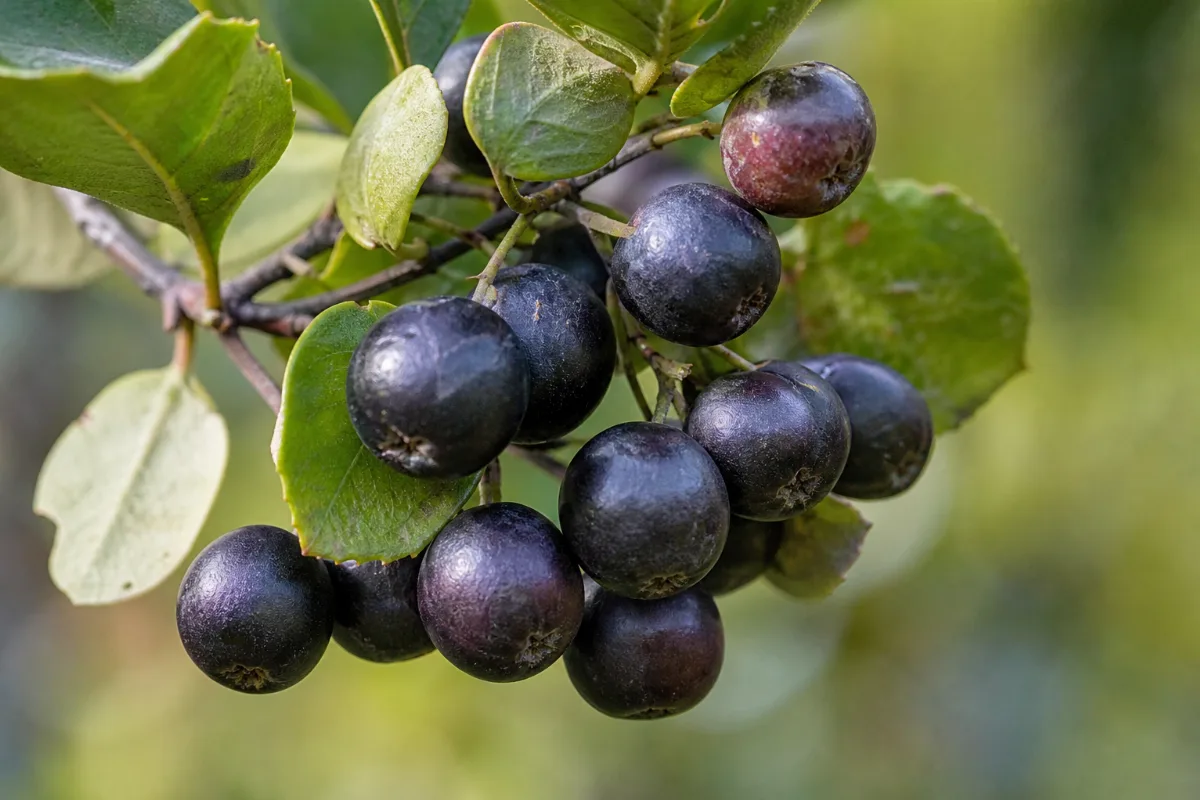
Maqui is a dark berry from a shrub or tree native to Chile, rich in anthocyanin pigments, especially delphinidin ones. It has a history in Mapuche folk medicine and is now sold as a powder, juice and standardized extract. Human research is small: a few short trials suggest less rise in blood sugar after a meal and more tear production, mostly using branded extracts, with low certainty.
General information, not medical advice. Last substantive update · Not medically reviewed. A named clinician has not signed off on this page. How this page is made
About Maqui Berry
Maqui (Aristotelia chilensis) is a Chilean berry that is very rich in delphinidin anthocyanins. Human research is limited to about a dozen small, short trials, mostly of branded extracts. They suggest a smaller blood sugar rise after a meal and more tear production, both at low certainty. Safety data are thin, and the main cautions are for people on diabetes medicine or blood thinners, people facing surgery, and anyone pregnant or breastfeeding. Ask a doctor or pharmacist about amounts and about your medicines.
What it is
Maqui (Aristotelia chilensis) is a shrub or tree native to Chile, in the family Elaeocarpaceae. The ripe black berry is the part used in nearly all trials. GBIF lists the name as accepted.
Maqui is sold as juice, powder and standardized extracts. Studies mostly test extracts that concentrate the pigments, such as Delphinol, which is standardized to at least 25% delphinidins. The leaves contain different chemicals, including alkaloids, and are not the same product.
Traditional and current uses
In Mapuche folk medicine, maqui was used for digestive ailments, fever, skin lesions and wounds, and the berries were made into a drink. A review describes the juice as astringent, tonic and used against diarrhoea.
Today it is mainly taken as an antioxidant, for blood sugar and, in the case of branded eye extracts, for dry eye. No European herbal monograph or NCCIH page on maqui was found.
Blood sugar
A branded extract taken before a rice meal lowered blood sugar and insulin versus placebo in ten volunteers. An open exploratory study with different doses before a glucose drink saw lower glucose peaks at higher doses.
A three-month trial without a control group saw HbA1c fall by 0.30 points. The systematic review says long trials gave small and inconsistent effects. Rat gut and mouse work suggests blocked glucose uptake and enzyme effects, which has not been confirmed in people.
Dry eye
Three small trials found more tear production, and symptom scores improved. The largest, with 74 people, was placebo-controlled and used a branded extract for four weeks. An independent trial in India with 20 people also saw benefit on tear production and symptoms, but not on tear break-up time or corneal staining.
The authors of the pilot trial suggest antioxidants help tear glands. That idea has not been tested in people.
Antioxidant markers, heart and other uses
Markers of oxidative damage were lower after four weeks in one trial but not at follow-up. Blood pressure, blood fats and body measures mostly did not change in controlled trials.
Laboratory work on platelets, inflammation pathways and nerve channels is interesting, but it used leaves, unripe fruit or isolated compounds and has not been tested in people.
At a glance
Traditional uses history, not proof
- Mapuche folk medicine in Chile: used for digestive ailments, fever, skin lesions and wounds, and to make an alcoholic drink from the berries.
- Described in a review as an astringent, tonic and antidiarrhoeal juice. These traditional uses have not been tested in trials.
Studied for research
- Blood sugar after meals, low certainty
- Dry eye (tear production and symptoms), low certainty
- Fasting blood sugar, HbA1c, oxidative stress markers, blood fats, heart rate variability and others, very low or insufficient certainty
Main compounds
- Delphinidin anthocyanins (for example delphinidin 3-O-glucoside): the main pigments
- Cyanidin 3-O-sambubioside and phenolic acids such as gallic acid
- Indole alkaloids such as aristoteline in the leaves (not the fruit)
Common forms
- Standardized fruit extracts (for example Delphinol, MaquiBright)
- Fruit powder and juice, sometimes mixed with citrus
- Leaf products exist but were not tested for safety in people
Research links: Systematic review of human trials on maqui (Antioxidants, 2026) · Review of maqui and metabolic health (Food and Function, 2024) · Maqui dry eye trial, 74 people (2019) · Research Library · Genes & Biomarkers Library
The plant and its history
- Accepted scientific name
- Aristotelia chilensis (Molina) Stuntz
- Naming authority
- (Molina) Stuntz, as returned by the GBIF Backbone Taxonomy API on 2026-10-25 (accepted, exact match). NCBI Taxonomy lists the species with taxid 138855.
- Synonyms
- Aristotelia macqui L'Her.; Aristotelia glabra Miers; Aristotelia glandulosa Ruiz & Pav.; Aristotelia lucida Salisb.; Aristotelia chilensis (Molina) B.Fedtsch.
- Common names
- Maqui (Spanish and English); Maqui berry (English); Chilean wineberry (English (NOT verified; not found in a source read))
- Botanical family
- Elaeocarpaceae (GBIF), order Oxalidales. One review spells the family 'Eleocarpaceae' (p26778456); GBIF's spelling is used here.
- Classification
- Plantae > Tracheophyta > Magnoliopsida > Oxalidales > Elaeocarpaceae > Aristotelia > Aristotelia chilensis
- Native range
- Native to Chile (p26778456, p37958488, p41750585 describe it as Chilean or South American). Exact native range and any spread to other countries were not verified.
- Habitat
- Not verified here.
- What the plant looks like
- Roots: Not verified here.; Stems: A shrub or tree (p36234679).; Leaves: Not verified here; the leaves contain indole alkaloids (p37958488).; Flowers: Not verified here.; Fruit: Edible black berries (p37958488, p40141065); ripe fruit is the part used in nearly all human trials.
- Cultivation
- Domesticated clones named Luna Nueva, Morena and Perla Negra are reported (p33909702); wider cultivation details were not verified.
- Harvest and processing
- Trial products were extracts standardized to anthocyanins (Delphinol, MaquiBright), a nutraceutical and juice in citrus drinks; harvesting details were not verified.
- Look-alikes and adulterants
- Name: Other Aristotelia species (for example wineberry in New Zealand); Note: NOT verified in a source read here. The genus has other species; only A. chilensis has been studied in the trials found.; Name: Unrelated dark berries sold as 'superfruits' (acai, bilberry, blackcurrant, elderberry); Note: Also rich in anthocyanins but different plants; results for maqui cannot be moved to them. Check the Latin name on the label.
- Sustainability and conservation
- Not verified here.
Traditional use and history history, not clinical proof
| Tradition or era | Documented use | Source |
|---|---|---|
| Mapuche folk medicine, Chile | Used as an anti-inflammatory for digestive ailments, fever and skin lesions (p37958488), for wounds and digestive treatment and to make an alcoholic drink from the berries (p40141065). | p37958488 |
| Traditional description of the juice | The juice of the berries is described as astringent, tonic and antidiarrhoeal (p26778456). The review also claims the leaves have antibacterial and antitumour activity, which is laboratory work. | p26778456 |
| EMA/HMPC | No European herbal monograph found, so no official traditional-use statement is available. | s-ema-maqui-search |
| Superfruit era (2010s onwards) | Marketed as a superfruit for antioxidants. Specific marketing claims are NOT verified. | p31066379 |
Traditional use shows how a plant was used. It does not show that a supplement works or is safe today.
What is inside, and how it may work
What the plant contains and how those compounds act in cells and animals. Laboratory and animal mechanisms are not proven effects in people.
Main compounds
| Compound | Family | Where it is concentrated | Activity studied | Level of evidence |
|---|---|---|---|---|
| Delphinidin PubChem 128853 | anthocyanidin (pigment) | Fruit Delphinol is standardized to at least 25% delphinidins and at least 35% total anthocyanins (p24861886). A mouse study found 86% of 30 polyphenols in an extract were delphinidin or cyanidin anthocyanins (p41582858). | Blocked sodium-dependent glucose transport in rat small intestine (p24861886). Reviews describe it as the most potent antioxidant anthocyanin type (p25892567). 7 20 10 | Animal research |
| Delphinidin 3-O-glucoside PubChem 165558 | anthocyanin | Fruit Content not verified. | Rises in human blood after a maqui extract, peaking about 1.0 +/- 0.3 hours after intake (p30423989). 18 | Human data |
| Cyanidin 3-O-sambubioside PubChem 3084569 | anthocyanin | Fruit Content not verified. | Rises in human blood after a maqui extract, peaking about 2.0 +/- 1.1 hours after intake (p30423989). 18 | Human data |
| Gallic acid PubChem 370 | phenolic acid | Fruit (breakdown product of anthocyanins) Not verified. | Seen in human blood as a breakdown product after a maqui extract (p30423989). 18 | Human data |
| Protocatechuic acid PubChem 72 | phenolic acid | Fruit (breakdown product of anthocyanins) Not verified. | Seen in human blood as a breakdown product after a maqui extract (p30423989). 18 | Human data |
| Quercetin PubChem 5280343 | flavonol | Leaves (isolated in the cited paper) Not verified. | Isolated from maqui leaves together with alkaloids (p37958488); no activity was reported for it in that abstract. 13 | Laboratory research |
| Aristoteline PubChem 323714 | indole alkaloid | Leaves Not verified. | Blocked the NaV1.8 sodium channel in cells with an IC50 of 68 +/- 3 micromolar (p37958488). Not a fruit compound. 13 | Laboratory research |
Mechanisms, receptors and pathways
| Target or pathway | Gene or receptor | What was found | Level |
|---|---|---|---|
| Intestinal sodium-dependent glucose transport | Sodium-glucose cotransporters (SGLT1 is the one named by the authors of p27820958) | Delphinidin inhibited sodium-dependent glucose transport in rodent small intestine, and Delphinol lowered blood sugar and insulin after rice in ten volunteers (p24861886). Another group's work is cited as attributing the effect to SGLT1 inhibition (p27820958). The human trial did not measure transport. 7 2 | Animal research |
| Digestive enzymes: DPP-IV, alpha-glucosidase, lipase | DPP4, alpha-glucosidase, pancreatic lipase | In test tubes a maqui extract inhibited all three (IC50 3.1, 38 and 3.3 micrograms per mL). In mice it lowered blood sugar after a glucose challenge only, with lower gut and plasma DPP-IV activity (p41582858). 10 | Animal research |
| Platelet activation | P-selectin and CD63 exposure | Leaf and unripe fruit extracts reduced platelet aggregation induced by several agonists and lowered reactive oxygen species (p33909702). 15 | Laboratory research |
| Pain-related sodium channel | NaV1.8 (gene SCN10A) | Leaf alkaloids aristoteline and hobartine blocked NaV1.8 in cell recordings (p37958488). Not shown for berry products. 13 | Laboratory research |
| NF-kB inflammation signalling | IkB-alpha phosphorylation, NF-kB | A leaf alkaloid, 9-hydroxyaristoquinolone, reduced NF-kB signalling in a microglial cell line (p40141065). A 2026 review lists NF-kB and Nrf2-HO-1 as pathways for maqui in general (p41750585). 14 19 | Laboratory research |
| Eye surface inflammation | IL-1 beta, IL-6, IL-17A, TNF-alpha, MMP9, IL-10 | In 20 people with dry eye, tear levels of several inflammatory proteins fell and IL-10 rose versus placebo after 2 months of a maqui extract (p37026311). This is a human finding but does not show why. 9 | Human data |
Absorption, metabolism and elimination
- Absorption
- After a single dose of Delphinol in 12 healthy adults, delphinidin-3-O-glucoside peaked in plasma at 1.0 +/- 0.3 hours and cyanidin-3-O-sambubioside at 2.0 +/- 1.1 hours; levels were near baseline within 8 hours (p30423989).
- Distribution
- Not found in the sources read.
- Metabolism
- Gallic acid and protocatechuic acid appeared as breakdown products (p30423989). After two months of a citrus-maqui drink, eleven phenolic metabolites were found in urine (p33499139).
- Elimination
- Metabolites were excreted in urine in the beverage study (p33499139); the amounts depended on the sweetener. No half-life data in the abstracts.
- Bioavailability
- Fast uptake and quick fall-off (p30423989). A review suggests technologies to protect the berry's compounds through the small intestine (p38618933). No percentage absorbed was found.
Isolated compounds versus whole extracts
Trials did not test the whole fruit as eaten. They used standardized extracts (Delphinol, MaquiBright), a nutraceutical and a citrus-maqui juice. Delphinol is standardized to at least 25% delphinidins and at least 35% total anthocyanins (p24861886). Lab work on single pigments such as delphinidin does not show that whole berry products act the same way. Results for one product cannot be applied to another, and leaf extracts contain different compounds from fruit extracts.
Nutritional composition
No per-100-g nutrient numbers were verified in this round. A 2026 review describes the berry as rich in delphinidin anthocyanins, dietary fibre and antioxidant micronutrients (p41750585), without figures in the abstract. Check product labels.
6 low certainty4 very low certainty3 not enough evidence
What was looked at
The 13 benefits and uses checked for Maqui Berry, each with how strong the evidence is. Tap one to open it.
- Blood sugar after meals (rice or glucose test)Low certainty
- Fasting blood sugar and insulinVery low certainty
- Three-month blood sugar marker (HbA1c) in prediabetesVery low certainty
- Dry eye: tear productionLow certainty
- Dry eye: symptom scoresLow certainty
- Eye tiredness from screen workVery low certainty
- Oxidative stress markersLow certainty
- General inflammation markers (IL-6, TNF-alpha, IL-10)Not enough evidence
- Cholesterol and blood fatsLow certainty
- Blood pressureLow certainty
- Stress resilience and heart rate variabilityVery low certainty
- Weight and body compositionNot enough evidence
- Platelet stickiness and blood clottingNot enough evidence
Lab markers tracked in the studies
Blood glucose and insulin after a test mealHbA1cFasting insulinTear production (Schirmer test)Dry eye symptom scores (OSDI, DEQS)Tear inflammation markersOxidized LDLUrinary F2-isoprostanesLDL cholesterolHDL cholesterolHeart rate variability (HRV)Blood pressureIL-10, IL-6 and TNF-alpha in blood
What is Maqui Berry good for?
The main proposed uses and how strong the human evidence is for each. "Low" means small or limited trials point one way, "very low" means a single small or uncontrolled study, and "insufficient" means there is not enough human evidence to judge. Nothing here is rated moderate or high.
Benefits, one by one
Each card is a research question, not a promise. Tap a goal to filter. Open a card to see the studies, doses and limits.
Blood sugar after meals (rice or glucose test)
Low certaintyA maqui berry extract taken just before a starchy meal or glucose drink lowered the blood sugar rise in small trials of people with raised blood sugar. The trials are small, short and mostly used one branded extract.
4 studiesStandardized extracts (Delphinol) taken before a carbohydrate load; n…
Studies, doses and limits
What the trials found
In ten volunteers with moderate glucose intolerance (double-blind crossover), Delphinol before a rice meal lowered blood glucose and insulin after the meal compared with placebo (p24861886). A second, open exploratory study in prediabetic adults gave different Delphinol doses one hour before a glucose drink; higher doses lowered glucose peaks and total glucose in the blood was unchanged (p28025651). The 2026 systematic review says acute studies consistently showed lower blood sugar after meals (p42351960).
Results
Lower blood sugar and insulin after the test meal versus placebo in the 10-person trial; numbers not given in the abstract.
Effect sizes as reported
Significant versus placebo in the crossover trial; dose-dependent lowering of glucose peaks in the exploratory study.
Why this rating
Small trials (10 people in the only blinded one), single branded extract, short term and industry-linked. A single test meal result is not the same as better long-term control. The systematic review's own certainty for the whole field ranged from moderate to very low (p42351960).
Form and dose studied
Standardized extracts (Delphinol) taken before a carbohydrate load; no other product was tested for this use.
Who was studied
Adults with moderate glucose intolerance or prediabetes.
Limits
Small and short. The mechanism comes from rat gut and mice. Most human trials tested branded extracts (Delphinol, MaquiBright) and several were funded or written by people at the companies that make them.
Why researchers looked
Delphinidin pigments in the berry blocked sugar uptake in rat gut tissue, so researchers tested a standardized extract before a carbohydrate meal.
Traditional use
Maqui berries were used in Mapuche folk medicine in Chile; the juice was described as astringent, tonic and antidiarrhoeal (p26778456). Eye use is a modern supplement idea, not a documented traditional use.
Proposed mechanism Animal research
In rat small intestine, delphinidin blocked sodium-dependent glucose transport (p24861886). In mice, a maqui extract inhibited the enzymes alpha-glucosidase, lipase and DPP-IV in test tubes, and only lowered blood sugar after a plain glucose challenge (p41582858). These are lab and animal findings, not shown in people.
A proposed mechanism does not show that the effect happens in people.
Could lower blood sugar further in people who already take glucose-lowering medicine (theory); see the safety section.
Fasting blood sugar and insulin
Very low certaintyIn one exploratory study the extract lowered blood sugar and insulin measured before the glucose drink. A three-month study found small, not significant drops in fasting sugar and insulin.
2 studiesDelphinol only.
Studies, doses and limits
What the trials found
In the open exploratory study of prediabetic adults, Delphinol lowered baseline blood glucose and insulin in a dose-dependent way (p28025651). In the 31-person three-month trial, fasting insulin and glucose fell but not significantly (p27820958).
Results
Dose-dependent lowering reported without numbers in the abstract; not significant in the 3-month trial.
Effect sizes as reported
No effect size available from the abstracts.
Why this rating
One open study without placebo and one before-and-after trial without a control group; both on the same branded extract.
Form and dose studied
Delphinol only.
Who was studied
Prediabetic adults.
Limits
Open design, no placebo; opposite findings in the longer trial. Most human trials tested branded extracts (Delphinol, MaquiBright) and several were funded or written by people at the companies that make them.
Why researchers looked
Researchers asked whether the extract also changes blood sugar when no meal is eaten.
Traditional use
Maqui berries were used in Mapuche folk medicine in Chile; the juice was described as astringent, tonic and antidiarrhoeal (p26778456). Eye use is a modern supplement idea, not a documented traditional use.
Proposed mechanism Preliminary mechanism
The authors of the exploratory study (p28025651) suggest three possible routes: blocking intestinal sugar transporters, an incretin effect, or better insulin sensitivity. None was tested directly in that study.
A proposed mechanism does not show that the effect happens in people.
As above: possible added effect with blood sugar medicines.
Three-month blood sugar marker (HbA1c) in prediabetes
Very low certaintyIn one 31-person trial without a comparison group, HbA1c drifted down by 0.30 points over three months. With no placebo group, this cannot be credited to the extract.
2 studiesDelphinol 180 mg each morning was used in the trial; ask a doctor or …
Studies, doses and limits
What the trials found
Adults with newly found moderate glucose intolerance took Delphinol each morning. HbA1c went from 5.65% to 5.35% over three months (P = 0.003) (p27820958). The review of human trials says long trials gave modest and inconsistent effects on HbA1c (p42351960).
Results
HbA1c 5.65% to 5.35% at 3 months (before and after).
Effect sizes as reported
P = 0.003 versus baseline; no control group.
Why this rating
Uncontrolled before-and-after design, 31 people, one branded extract, drift or lifestyle change cannot be ruled out; the systematic review calls long-term effects inconsistent.
Form and dose studied
Delphinol 180 mg each morning was used in the trial; ask a doctor or pharmacist about amounts.
Who was studied
Newly diagnosed prediabetes.
Limits
No placebo. Most human trials tested branded extracts (Delphinol, MaquiBright) and several were funded or written by people at the companies that make them.
Why researchers looked
HbA1c shows average blood sugar over about two to three months, so it is the natural next test after the meal studies.
Traditional use
Maqui berries were used in Mapuche folk medicine in Chile; the juice was described as astringent, tonic and antidiarrhoeal (p26778456). Eye use is a modern supplement idea, not a documented traditional use.
Proposed mechanism Preliminary mechanism
Same proposed routes as above; none was tested in this trial.
A proposed mechanism does not show that the effect happens in people.
People on diabetes medicine should speak to their prescriber first.
Dry eye: tear production
Low certaintyThree small trials found more tear production after one to two months of a maqui extract. Two were on makers' branded products. One placebo-controlled trial from an eye hospital in India is independent of the makers.
4 studiesMaquiBright (30 or 60 mg/day) and a maqui berry extract (dose not in …
Studies, doses and limits
What the trials found
In a 74-person placebo-controlled trial, 60 mg/day of MaquiBright for 4 weeks raised Schirmer tear production by 6.4 +/- 8.1 mm more than placebo (P = 0.005) (p31193920). In a 20-person randomized trial in India, maqui berry extract for 2 months raised Schirmer test results and lowered symptom scores versus placebo (p37026311). In a 13-person pilot with no placebo, Schirmer rose from 16.3 to 24.4 mm (30 mg) and from 18.7 to 27.6 mm (60 mg) (p25208615). Tear break-up time and corneal staining did not change in the Indian trial. The systematic review calls eye outcomes the most consistent evidence for maqui (p42351960).
Results
Schirmer +6.4 mm versus placebo (n=74); 16.3 to 24.4 mm and 18.7 to 27.6 mm in the pilot.
Effect sizes as reported
P = 0.005 in the largest trial.
Why this rating
Three small, short trials point the same way, but two involve makers of the product, the pilot had no placebo, and tear break-up time and staining did not improve in the independent trial. The systematic review's range was moderate to very low overall (p42351960).
Form and dose studied
MaquiBright (30 or 60 mg/day) and a maqui berry extract (dose not in abstract).
Who was studied
Adults with dry eye or screen-related eye dryness.
Limits
Small samples; short; branded products. Most human trials tested branded extracts (Delphinol, MaquiBright) and several were funded or written by people at the companies that make them.
Why researchers looked
Earlier lab work suggested oxidative stress harms the tear glands, and maqui is rich in antioxidant anthocyanins, so researchers tested tear volume with the Schirmer strip test.
Traditional use
Maqui berries were used in Mapuche folk medicine in Chile; the juice was described as astringent, tonic and antidiarrhoeal (p26778456). Eye use is a modern supplement idea, not a documented traditional use.
Proposed mechanism Pharmacological theory
The authors of the pilot trial propose that antioxidant effects help restore tear gland activity (p25208615). That idea was not tested in the trial.
A proposed mechanism does not show that the effect happens in people.
No adverse events were reported in the trials that said so.
Dry eye: symptom scores
Low certaintySymptom questionnaires improved with maqui in the same small trials, but people know when they feel better, and the pilot had no placebo group.
3 studiesAs above.
Studies, doses and limits
What the trials found
In the Indian randomized trial, the OSDI symptom score fell more than with placebo (p37026311). In the 74-person trial, bothersome eye symptoms on the DEQS improved more than with placebo after a screen task (P = 0.037) (p31193920). In the pilot, DEQS fell from 41.0 to 18.9 (30 mg) and from 40.2 to 11.1 (60 mg) over 60 days with no placebo (p25208615).
Results
DEQS 40.2 to 11.1 (60 mg, pilot, no placebo); OSDI lower than placebo.
Effect sizes as reported
P < 0.05 in the Indian trial; P = 0.037 in the Japanese trial.
Why this rating
Self-reported scores in small trials; the biggest drops come from the trial without a placebo.
Form and dose studied
As above.
Who was studied
Adults with dry eye.
Limits
Subjective outcomes; small trials; branded products. Most human trials tested branded extracts (Delphinol, MaquiBright) and several were funded or written by people at the companies that make them.
Why researchers looked
Symptoms are what matter most to people with dry eye, so trials used questionnaires such as the OSDI and DEQS.
Traditional use
Maqui berries were used in Mapuche folk medicine in Chile; the juice was described as astringent, tonic and antidiarrhoeal (p26778456). Eye use is a modern supplement idea, not a documented traditional use.
Proposed mechanism Pharmacological theory
Not established; see tear production.
A proposed mechanism does not show that the effect happens in people.
See safety file. See an eye doctor for pain, redness or any loss of vision.
Eye tiredness from screen work
Very low certaintyOne 74-person trial of people who work on screens for four or more hours a day found less eye fatigue after a gaming task with maqui than with placebo.
1 studiesMaquiBright 60 mg/day.
Studies, doses and limits
What the trials found
After 4 weeks of 60 mg/day MaquiBright, eye fatigue on a visual analogue scale after a screen task (P = 0.047) and stiff shoulders (P = 0.035) improved more than with placebo (p31193920). The authors say the extract 'seemed to' reduce eye fatigue.
Results
P = 0.047 for eye fatigue after a screen task.
Effect sizes as reported
Borderline significance; many outcomes tested.
Why this rating
A single trial of 74 people with borderline p values among several outcomes tested; funding not stated and the extract is branded.
Form and dose studied
MaquiBright 60 mg/day.
Who was studied
Japanese adults aged 30 to 60 with screen work.
Limits
One trial, borderline results. Most human trials tested branded extracts (Delphinol, MaquiBright) and several were funded or written by people at the companies that make them.
Why researchers looked
Long screen use dries and tires the eyes, so the Japanese trial tested a maqui extract in screen workers.
Traditional use
No traditional use found for this.
Proposed mechanism Pharmacological theory
Not established.
A proposed mechanism does not show that the effect happens in people.
No adverse events were reported.
Oxidative stress markers
Low certaintyIn one 42-person trial, oxidized LDL and a urine marker of oxidative damage were lower after four weeks of a maqui extract than at the start, but not at follow-up. These are lab markers, not proof of better health.
5 studiesDelphinol 162 mg anthocyanins three times a day; a 330 mL/day citrus-…
Studies, doses and limits
What the trials found
In healthy, overweight and smoking adults aged 45 to 65, Delphinol (162 mg anthocyanins three times a day for 4 weeks) was linked with lower oxidized LDL and lower urinary F2-isoprostanes than at baseline (p < 0.05); there was no difference 40 days after stopping (p26400431). In overweight adults, a citrus-maqui drink raised antioxidant capacity (ORAC) by 21% only in people with lower starting antioxidant status; oxidized LDL did not change (p34323244). The systematic review notes these were mainly surrogate endpoints (p42351960).
Results
Lower oxidized LDL and F2-isoprostanes than baseline at 4 weeks (p < 0.05); ORAC +21% in a subgroup.
Effect sizes as reported
p < 0.05 versus baseline; effect gone at follow-up.
Why this rating
Marker changes from a small crossover trial of a branded extract, compared with baseline, that did not last; the citrus-maqui drink is a combination and its change appeared in a subgroup only.
Form and dose studied
Delphinol 162 mg anthocyanins three times a day; a 330 mL/day citrus-maqui drink. These are what trials used, not advice.
Who was studied
Healthy, overweight and smoking adults.
Limits
Surrogate markers; short; branded extract. Most human trials tested branded extracts (Delphinol, MaquiBright) and several were funded or written by people at the companies that make them.
Why researchers looked
Maqui is rich in anthocyanins that are strong antioxidants in the test tube, so trials measured markers of oxidative damage.
Traditional use
Maqui berries were used in Mapuche folk medicine in Chile; the juice was described as astringent, tonic and antidiarrhoeal (p26778456). Eye use is a modern supplement idea, not a documented traditional use.
Proposed mechanism Preliminary mechanism
Delphinidins scavenge free radicals in the lab, and the reviews describe Nrf2-HO-1 and NF-kB pathway effects (p41750585, p25892567). That is largely lab and animal evidence.
A proposed mechanism does not show that the effect happens in people.
None specific.
General inflammation markers (IL-6, TNF-alpha, IL-10)
Not enough evidenceThe only human data on blood inflammation markers come from a citrus-maqui drink trial where the sweetener mattered more than the maqui. No effect of maqui itself can be separated out.
3 studiesCitrus-maqui drink 330 mL/day.
Studies, doses and limits
What the trials found
In 138 overweight adults, a citrus-maqui drink for 60 days with stevia, sucralose or sucrose changed IL-10 only in the stevia group (higher); the authors said stevia gave an anti-inflammatory response. No maqui-free comparison was used, so the role of maqui is unknown (p34323244).
Results
IL-10 higher with the stevia version only.
Effect sizes as reported
Not interpretable for maqui alone.
Why this rating
Combination drink, no no-maqui control, results driven by sweetener.
Form and dose studied
Citrus-maqui drink 330 mL/day.
Who was studied
Overweight adults.
Limits
Cannot separate maqui from the other ingredients. Reviews rely on lab studies.
Why researchers looked
Reviews describe NF-kB lowering by maqui compounds in cells and animals, so inflammation markers were measured in a trial.
Traditional use
Maqui berries were used in Mapuche folk medicine in Chile; the juice was described as astringent, tonic and antidiarrhoeal (p26778456). Eye use is a modern supplement idea, not a documented traditional use.
Proposed mechanism Laboratory research
Lab work shows maqui compounds can quiet NF-kB signalling in cells (p41750585; leaf alkaloid p40141065 in microglia cells).
A proposed mechanism does not show that the effect happens in people.
None specific.
Cholesterol and blood fats
Low certaintyResults are mixed. A three-month trial without a control group saw LDL fall and HDL rise, but two other trials saw no change in lipids.
6 studiesAs used in the trials listed.
Studies, doses and limits
What the trials found
In 31 prediabetic adults without a control group, 180 mg/day Delphinol lowered LDL after 3 months (P = 0.001) and raised HDL, while total cholesterol and triglycerides did not change; VLDL fell at 1 month and rose back (p27820958). In the 4-week crossover trial, lipids did not differ (p26400431). In the citrus-maqui drink trial, LDL and triglycerides did not change (p34323244). The systematic review says lipid effects were modest and inconsistent (p42351960).
Results
LDL lower (P = 0.001) and HDL higher in the uncontrolled trial; no change in two others.
Effect sizes as reported
No placebo-controlled change.
Why this rating
The only positive result is from an uncontrolled trial; two controlled trials were null; the review calls lipid effects inconsistent.
Form and dose studied
As used in the trials listed.
Who was studied
Prediabetic, healthy, smokers and overweight adults.
Limits
Lipids were secondary outcomes. Most human trials tested branded extracts (Delphinol, MaquiBright) and several were funded or written by people at the companies that make them.
Why researchers looked
Delphinidin-rich fruits were expected to help blood fats, so lipids were measured as a side outcome.
Traditional use
Maqui berries were used in Mapuche folk medicine in Chile; the juice was described as astringent, tonic and antidiarrhoeal (p26778456). Eye use is a modern supplement idea, not a documented traditional use.
Proposed mechanism Laboratory research
Not established in people. Reviews mention lipase inhibition in test tubes (p26778456; p41582858 in mice).
A proposed mechanism does not show that the effect happens in people.
None specific.
Blood pressure
Low certaintyThe one trial that measured blood pressure over 24 hours found no difference. There is no evidence that maqui lowers blood pressure.
3 studiesNot applicable.
Studies, doses and limits
What the trials found
After 4 weeks of Delphinol, ambulatory blood pressure did not differ from placebo (p26400431). Blood pressure did not differ between start and end in a 30-day trial of a maqui nutraceutical either (p36420523).
Results
No significant differences.
Effect sizes as reported
Null.
Why this rating
Two small null results, and blood pressure was a side outcome in both.
Who was studied
Healthy adults.
Limits
Small, short, secondary outcome. Most human trials tested branded extracts (Delphinol, MaquiBright) and several were funded or written by people at the companies that make them.
Why researchers looked
Delphinidins have been proposed to improve blood vessel function in the lab.
Traditional use
Maqui berries were used in Mapuche folk medicine in Chile; the juice was described as astringent, tonic and antidiarrhoeal (p26778456). Eye use is a modern supplement idea, not a documented traditional use.
Proposed mechanism Laboratory research
Reviews say delphinidins increase endothelial nitric oxide synthase in cells (p25892567); not shown in people.
A proposed mechanism does not show that the effect happens in people.
None specific.
Stress resilience and heart rate variability
Very low certaintyIn a small single-blind trial with no placebo, heart rate variability and a mental health score improved in people taking a maqui product, but the authors say hot weather probably distorted the results.
2 studiesA maqui nutraceutical, 1,000 mg/day.
Studies, doses and limits
What the trials found
In 30 healthy adults, 1,000 mg/day of a maqui nutraceutical for 30 days versus no supplement raised HRV measures of autonomic coordination (p = 0.05) and parasympathetic activity, which fell in controls, and improved the SF-12 mental score (p = 0.02). Resilience and perceived stress questionnaires did not change. The authors say unusual hot weather likely biased many results (p36420523).
Results
HRV coordination p = 0.05; SF-12 mental p = 0.02; other questionnaires unchanged.
Effect sizes as reported
Borderline.
Why this rating
30 people, single-blind, no placebo, controls had no supplement, weather bias admitted by the authors; stress questionnaires showed no change.
Form and dose studied
A maqui nutraceutical, 1,000 mg/day.
Who was studied
Healthy adults.
Limits
Single small trial. Funding not stated.
Why researchers looked
Antioxidants and polyphenols were proposed to affect the autonomic nervous system, so the trial measured heart rate variability (HRV).
Traditional use
No traditional use found for this.
Proposed mechanism Pharmacological theory
Not established.
A proposed mechanism does not show that the effect happens in people.
None specific.
Weight and body composition
Not enough evidenceNo trial showed maqui helps with weight loss. A 30-day trial saw small, non-significant body composition differences between groups, and a trial with Delphinol saw no change in body measures.
3 studiesNot applicable.
Studies, doses and limits
What the trials found
After 4 weeks of Delphinol there were no significant differences in anthropometric measures (p26400431). In the 30-day maqui nutraceutical trial, the control group showed non-significant increases in fat mass and resistance and decreases in body water and lean mass (p36420523); the maqui group's body measures are not described in the abstract.
Results
No significant differences.
Effect sizes as reported
Null.
Why this rating
Short trials and no weight-loss outcome tested.
Who was studied
Healthy and overweight adults.
Limits
No weight-loss trial found.
Why researchers looked
Maqui's effect on fat-digesting enzymes in test tubes suggested a weight angle.
Traditional use
Maqui berries were used in Mapuche folk medicine in Chile; the juice was described as astringent, tonic and antidiarrhoeal (p26778456). Eye use is a modern supplement idea, not a documented traditional use.
Proposed mechanism Animal research
In test tubes, a maqui extract inhibited pancreatic lipase, but in mice it did not lower fat after an olive oil challenge (p41582858).
A proposed mechanism does not show that the effect happens in people.
None specific.
Platelet stickiness and blood clotting
Not enough evidenceLeaf and unripe-fruit extracts reduced platelet clumping in test tubes. No human study of the ripe berry or supplements has measured this, and it matters mainly as a safety question.
3 studiesNot applicable.
Studies, doses and limits
What the trials found
No human trials were found. A review concludes maqui is promising for platelet effects but needs detailed studies (p36234679). A review of Delphinol says delphinidins decrease platelet activity (p25892567).
Why this rating
Test-tube results on leaf and unripe fruit extracts, not the ripe berry; no human data.
Limits
Laboratory only.
Why researchers looked
Anthocyanins and phenolic compounds can reduce platelet activation in the lab, so researchers tested maqui extracts on human platelets.
Traditional use
No traditional use found for this.
Proposed mechanism Laboratory research
Extracts of leaves and unripe fruit lowered platelet aggregation by several triggers, lowered P-selectin and CD63 exposure and lowered reactive oxygen species (p33909702).
A proposed mechanism does not show that the effect happens in people.
Raises a theoretical bleeding concern with blood thinners; see the safety section.
Connections to the rest of health
How Maqui Berry connects to the rest of our health knowledge graph. Every link says what kind of connection it is. A safety link (for example to the liver) is a warning, not a benefit. A study that merely mentions a topic never creates a benefit link.
Explore every connection: goals, body systems, organs, symptoms, genes
A. Wellness goals
| Connected to | Kind of connection | Evidence status | Context | Studies |
|---|---|---|---|---|
| Blood Sugar Balance | Demonstrated clinical effect | Low certainty | Blood sugar after meals (rice or glucose test): A maqui berry extract taken just before a starchy meal or glucose drink lowered the blood sugar rise in small trials of people with raised blood sugar. The trials are small, short and mostly used one branded extract. | 7 1 10 3 |
| Metabolic Health | Demonstrated clinical effect | Low certainty | Blood sugar after meals (rice or glucose test): A maqui berry extract taken just before a starchy meal or glucose drink lowered the blood sugar rise in small trials of people with raised blood sugar. The trials are small, short and mostly used one branded extract. | 7 1 10 3 |
| Blood Sugar Balance | Potential benefit | Very low certainty | Fasting blood sugar and insulin: In one exploratory study the extract lowered blood sugar and insulin measured before the glucose drink. A three-month study found small, not significant drops in fasting sugar and insulin. Three-month blood sugar marker (HbA1c) in prediabetes: In one 31-person trial without a comparison group, HbA1c drifted down by 0.30 points over three months. With no placebo group, this cannot be credited to the extract. | 1 2 3 |
| Metabolic Health | Potential benefit | Very low certainty | Three-month blood sugar marker (HbA1c) in prediabetes: In one 31-person trial without a comparison group, HbA1c drifted down by 0.30 points over three months. With no placebo group, this cannot be credited to the extract. | 2 3 |
| Healthy Aging | Potential benefit | Low certainty | Oxidative stress markers: In one 42-person trial, oxidized LDL and a urine marker of oxidative damage were lower after four weeks of a maqui extract than at the start, but not at follow-up. These are lab markers, not proof of better health. | 5 22 19 20 3 |
| Inflammation Balance | Preliminary mechanism | Not enough evidence | General inflammation markers (IL-6, TNF-alpha, IL-10): The only human data on blood inflammation markers come from a citrus-maqui drink trial where the sweetener mattered more than the maqui. No effect of maqui itself can be separated out. | 22 19 14 |
| Cholesterol Balance | Potential benefit | Low certainty | Cholesterol and blood fats: Results are mixed. A three-month trial without a control group saw LDL fall and HDL rise, but two other trials saw no change in lipids. | 2 5 22 3 10 17 |
| Heart Health | Potential benefit | Low certainty | Cholesterol and blood fats: Results are mixed. A three-month trial without a control group saw LDL fall and HDL rise, but two other trials saw no change in lipids. | 2 5 22 3 10 17 |
| Blood Pressure Support | Potential benefit | Low certainty | Blood pressure: The one trial that measured blood pressure over 24 hours found no difference. There is no evidence that maqui lowers blood pressure. | 5 4 20 |
| Stress Reduction | Potential benefit | Very low certainty | Stress resilience and heart rate variability: In a small single-blind trial with no placebo, heart rate variability and a mental health score improved in people taking a maqui product, but the authors say hot weather probably distorted the results. | 4 3 |
| Resilience Support | Potential benefit | Very low certainty | Stress resilience and heart rate variability: In a small single-blind trial with no placebo, heart rate variability and a mental health score improved in people taking a maqui product, but the authors say hot weather probably distorted the results. | 4 3 |
| Weight Management | Potential benefit | Not enough evidence | Weight and body composition: No trial showed maqui helps with weight loss. A 30-day trial saw small, non-significant body composition differences between groups, and a trial with Delphinol saw no change in body measures. | 5 4 10 |
| Heart Health | Preliminary mechanism | Not enough evidence | Platelet stickiness and blood clotting: Leaf and unripe-fruit extracts reduced platelet clumping in test tubes. No human study of the ripe berry or supplements has measured this, and it matters mainly as a safety question. | 15 16 20 |
B. Body systems
| Connected to | Kind of connection | Evidence status | Context | Studies |
|---|---|---|---|---|
| Cardiovascular system | Drug or supplement interaction | Not enough evidence | Lab antiplatelet effect; possible added bleeding tendency with blood thinners (theory). Preparation or compound: Leaf and unripe fruit extracts |
15 16 |
| Endocrine system | Drug or supplement interaction | Low certainty | Blood sugar and insulin lowering; see diabetes medicine caution. Possible added low blood sugar with diabetes medicines (theory). Preparation or compound: Maqui berry extract |
7 2 1 |
| Endocrine System | Biological association | Low certainty | Studied for: Blood sugar after meals (rice or glucose test) Studied for: Fasting blood sugar and insulin | 7 1 10 3 2 |
| Metabolism Weight | Biological association | Low certainty | Studied for: Blood sugar after meals (rice or glucose test) Studied for: Weight and body composition | 7 1 10 3 5 4 |
| Nervous System | Biological association | Low certainty | Studied for: Dry eye: tear production Studied for: Dry eye: symptom scores | 21 9 8 3 4 |
| Cardiovascular System | Biological association | Low certainty | Studied for: Oxidative stress markers Studied for: Cholesterol and blood fats | 5 22 19 20 3 2 10 17 4 15 16 |
| Immune System | Biological association | Not enough evidence | Studied for: General inflammation markers (IL-6, TNF-alpha, IL-10) | 22 19 14 |
I. Biomarkers
| Connected to | Kind of connection | Evidence status | Context | Studies |
|---|---|---|---|---|
| Blood glucose | Drug or supplement interaction | Low certainty | Lowers blood sugar after test meals; could add to diabetes medicine effects (theory). Preparation or compound: Maqui berry extract (Delphinol) |
7 1 |
| Blood glucose | Potential benefit | Low certainty | Lower blood sugar and insulin after a test meal in small trials. Preparation or compound: Maqui berry extract (Delphinol) |
7 1 |
| HbA1c | Potential benefit | Very low certainty | Fell 0.30 points over 3 months in a trial with no control group. Preparation or compound: Maqui berry extract (Delphinol) |
2 |
| Blood glucose and insulin after a test meal | Biological association | Low certainty | Measured in trials: lowered. A lab change is not the same as a health benefit. | 7 1 3 |
| HbA1c | Biological association | Very low certainty | Measured in trials: lowered. A lab change is not the same as a health benefit. | 2 3 |
| Fasting insulin | Biological association | Very low certainty | Measured in trials: mixed. A lab change is not the same as a health benefit. | 1 2 |
| Tear production (Schirmer test) | Biological association | Low certainty | Measured in trials: raised. A lab change is not the same as a health benefit. | 21 8 9 |
| Dry eye symptom scores (OSDI, DEQS) | Biological association | Low certainty | Measured in trials: lowered. A lab change is not the same as a health benefit. | 9 21 8 |
| Tear inflammation markers | Biological association | Very low certainty | Measured in trials: lowered. A lab change is not the same as a health benefit. | 9 3 |
| Oxidized LDL | Biological association | Low certainty | Measured in trials: lowered. A lab change is not the same as a health benefit. | 5 22 |
| Urinary F2-isoprostanes | Biological association | Low certainty | Measured in trials: lowered. A lab change is not the same as a health benefit. | 5 |
| LDL cholesterol | Biological association | Low certainty | Measured in trials: mixed. A lab change is not the same as a health benefit. | 2 5 22 |
| HDL cholesterol | Biological association | Very low certainty | Measured in trials: mixed. A lab change is not the same as a health benefit. | 2 22 |
| Heart rate variability (HRV) | Biological association | Very low certainty | Measured in trials: raised. A lab change is not the same as a health benefit. | 4 |
| Blood pressure | Biological association | Low certainty | Measured in trials: no-change. A lab change is not the same as a health benefit. | 5 4 |
| IL-10, IL-6 and TNF-alpha in blood | Biological association | Not enough evidence | Measured in trials: mixed. A lab change is not the same as a health benefit. | 22 |
J. Genes, receptors and enzymes
| Connected to | Kind of connection | Evidence status | Context | Studies |
|---|---|---|---|---|
| SLC5A1 (SGLT1) | Preliminary mechanism | Animal | Intestinal sodium-glucose transport named by the authors of p27820958 as a proposed target. | 7 2 |
| DPP4 | Preliminary mechanism | Animal | Enzyme inhibited by a maqui extract in test tubes and mice. | 10 |
| SCN10A (NaV1.8) | Preliminary mechanism | In vitro | Blocked by leaf alkaloids in cells. | 13 |
K. Biological pathways
| Connected to | Kind of connection | Evidence status | Context | Studies |
|---|---|---|---|---|
| NF-kB signalling | Preliminary mechanism | In vitro | Reduced by a leaf alkaloid in microglial cells; named in a review for maqui. | 14 19 |
| Nrf2-HO-1 antioxidant response | Preliminary mechanism | In vitro | Named in a 2026 review as a pathway modulated by maqui; no primary study read here. | 19 |
| Platelet activation (P-selectin, CD63) | Preliminary mechanism | In vitro | Reduced by leaf and unripe fruit extracts in the lab. | 15 |
L. Active compounds
| Connected to | Kind of connection | Evidence status | Context | Studies |
|---|---|---|---|---|
| Delphinidin | Biological association | Animal | Blocked sodium-dependent glucose transport in rat small intestine (p24861886). Reviews describe it as the most potent antioxidant anthocyanin type (p25892567). Preparation or compound: Fruit |
7 20 10 |
| Delphinidin 3-O-glucoside | Biological association | Human | Rises in human blood after a maqui extract, peaking about 1.0 +/- 0.3 hours after intake (p30423989). Preparation or compound: Fruit |
18 |
| Cyanidin 3-O-sambubioside | Biological association | Human | Rises in human blood after a maqui extract, peaking about 2.0 +/- 1.1 hours after intake (p30423989). Preparation or compound: Fruit |
18 |
| Gallic acid | Biological association | Human | Seen in human blood as a breakdown product after a maqui extract (p30423989). Preparation or compound: Fruit (breakdown product of anthocyanins) |
18 |
| Protocatechuic acid | Biological association | Human | Seen in human blood as a breakdown product after a maqui extract (p30423989). Preparation or compound: Fruit (breakdown product of anthocyanins) |
18 |
| Quercetin | Biological association | In vitro | Isolated from maqui leaves together with alkaloids (p37958488); no activity was reported for it in that abstract. Preparation or compound: Leaves (isolated in the cited paper) |
13 |
| Aristoteline | Biological association | In vitro | Blocked the NaV1.8 sodium channel in cells with an IC50 of 68 +/- 3 micromolar (p37958488). Not a fruit compound. Preparation or compound: Leaves |
13 |
Each connection is stored with the ingredient, the connected record, the kind of connection, the evidence status, the supporting studies, the preparation or compound involved, and a review date (last reviewed October 25, 2026).
The evidence
The research centre for Maqui Berry. Every record here was checked against PubMed or the publisher's page; we never list a study we have not verified.
Evidence by outcome
Bars show how many studies we found for each outcome, not how well it works. People are added up across trials only (reviews are not added, to avoid double counting).
How we rate evidence
High certainty
Several well-run trials or reviews agree; further research is unlikely to change the picture much.
Moderate certainty
Good trials point the same way, but some doubt remains.
Low certainty
Small, short or inconsistent trials. The finding could change with better research.
Very low certainty
Very little or very weak human data. Treat as a possibility only.
Mixed findings
Trials or reviews disagree with each other.
Not enough evidence
Not enough human research to say either way.
Evidence against
Good research found no benefit, or found harm.
We take the reviewers' own risk-of-bias and GRADE statements where they exist, and otherwise judge from study size, design, consistency, directness and whether a product matches what is sold. Many publications do not make evidence high. Method note: We searched PubMed for maqui and Aristotelia chilensis, read the abstracts of the human trials, the 2026 systematic review and selected reviews and laboratory studies, checked the plant name against GBIF, and looked for EMA, NCCIH, LiverTox and LactMed entries (none found). Numbers come only from abstracts; full texts were not read.
Study library: every study we checked 25
| Study | Design | People | Product, dose, length | Result |
|---|---|---|---|---|
| Alvarado 2016 Delphinidin-Rich Maqui Berry Extract (Delphinol®) Lowers Fasting and Postprandial Glycemia and Insulinemia in Prediabetic Individuals during Oral Glucose Tolerance Tests. Biomed Res Int · PMID 28025651 · DOI |
Clinical trial |
Prediabetic adults having oral glucose tolerance tests | Delphinol standardized maqui berry extract (branded) fruit Several different doses Four tests at least one week apart, each one hour before glucose · vs Open exploratory design, no placebo described |
The extract lowered baseline blood glucose and insulin, dose-dependently. Glucose peaks fell with higher doses. Total glucose in the blood was unchanged. Low doses delayed the glucose and insulin peaks; the highest dose reversed that. The authors call the results open and exploratory. Qualitative; numbers not given in the abstract Methods, limits and fundingOutcomes: Blood glucose and insulin curves during the glucose tolerance test Limitations: Open, exploratory, no placebo mentioned; number of volunteers not given in the abstract. Funding and conflicts: Supported by an unconditional research grant from MNL-Chile, which holds the Delphinol trademark; one author is from MNL-Chile. Read: abstract |
| Alvarado 2016 Delphinol® standardized maqui berry extract significantly lowers blood glucose and improves blood lipid profile in prediabetic individuals in three-month clinical trial. Panminerva Med · PMID 27820958 |
Clinical trial |
31 Adults newly diagnosed with moderate glucose intolerance (prediabetes) |
Delphinol standardized maqui berry extract (branded) fruit 180 mg/day in the morning 3 months · vs No control group described |
HbA1c fell from 5.65 +/- 0.09% to 5.50% (P = 0.084) at 1 month, 5.39% (P = 0.010) at 2 months and 5.35 +/- 0.08% (P = 0.003) at 3 months. Fasting insulin and glucose fell but not significantly. OGTT results did not change. LDL fell after 3 months (P = 0.001); VLDL fell at 1 month and then rose back; HDL rose; total cholesterol and triglycerides did not change. No adverse effects. HbA1c -0.30 percentage points at 3 months (5.65 to 5.35) Methods, limits and fundingOutcomes: HbA1c, OGTT, fasting glucose and insulin, blood lipids Limitations: Before-and-after design with no placebo group; 31 people; short; many outcomes. Funding and conflicts: Funding not stated in the abstract. Branded extract; related papers on the same extract were funded by its maker. Read: abstract |
| Arce-Johnson 2026 Clinical Evidence on the Health Effects of Aristotelia chilensis (Maqui Berry) Supplementation: A Systematic Review of Human Trials. Antioxidants (Basel) · PMID 42351960 · DOI |
Systematic review |
Adults in 12 human trials of oral maqui supplementation (2014 to 2023) | Maqui berry products (various) fruit Varied by trial Acute to chronic · vs Varied |
Acute studies consistently showed lower blood sugar after meals and changes in the insulin response. Long trials showed small and inconsistent effects on HbA1c and lipids. Oxidative stress and autonomic markers improved but were surrogate measures. The most consistent evidence was for the eye: more tears, fewer dry eye symptoms and lower tear inflammation markers. Overall certainty of evidence ranged from moderate to very low (GRADE). No pooled effect size in the abstract Methods, limits and fundingOutcomes: Blood sugar, HbA1c, lipids, oxidative stress, autonomic measures, eye outcomes Limitations: Small trials, short duration, different products. Risk of bias assessed with RoB 2 and ROBINS-I. Funding and conflicts: Two authors are employed by Agrijohnson Ltda, a Chilean company with commercial interests in berry cultivation. The authors state the funders had no role in the study. Read: abstract |
| Cavezzi 2023 Short-term effects of a maqui-based nutraceutical on heart rate variability, psycho-physical resilience and on a few metabolic biomarkers: a randomized controlled study. J Complement Integr Med · PMID 36420523 · DOI |
Controlled trial |
30 Healthy adults (15 per group), Italy |
Maqui-based nutraceutical (Maqui 500, a product) fruit 1,000 mg/day 30 days · vs No supplement (single-blind) |
Heart rate variability measures of autonomic nervous system coordination and parasympathetic activity rose in the maqui group and fell in controls (p = 0.05 for coordination). The SF-12 mental score improved (p = 0.02). Blood tests, blood pressure and oxygen saturation did not differ. Other questionnaires did not change. The authors say unusual hot weather probably biased many results. p = 0.05 (HRV coordination); p = 0.02 (SF-12 mental) Methods, limits and fundingOutcomes: Heart rate variability, resilience and stress questionnaires, SF-12, blood tests, body composition Limitations: Single-blind, no placebo, 30 people, hot weather affected lifestyle, multiple outcomes. Funding and conflicts: Funding not stated in the abstract; the product is a commercial formula. Read: abstract |
| Davinelli 2015 A Randomized Clinical Trial Evaluating the Efficacy of an Anthocyanin-Maqui Berry Extract (Delphinol®) on Oxidative Stress Biomarkers. J Am Coll Nutr · PMID 26400431 · DOI |
Controlled trial |
42 Healthy, overweight and smoking adults aged 45 to 65 |
Delphinol standardized maqui berry extract (branded) fruit 162 mg anthocyanins, three times a day 4 weeks · vs Matched placebo (random order) |
Oxidized LDL was lower than at baseline in the maqui group (p < 0.05) and urinary F2-isoprostanes were lower at 4 weeks than at baseline (p < 0.05). At 40 days after stopping there was no difference. Body measures, ambulatory blood pressure and lipids did not differ at week 4. p < 0.05 versus baseline (not a stated between-group difference) Methods, limits and fundingOutcomes: Oxidized LDL, urinary F2-isoprostanes, weight measures, blood pressure, lipids Limitations: The abstract compares to baseline; effects were gone at follow-up; these are lab markers, not illness outcomes. Funding and conflicts: Delphinol is a trademark of MNL Chile; one author is from the Enervit Scientific Unit; funding not stated in the abstract. Read: abstract |
| European Medicines Agency 2026 EMA herbal medicines: search for Aristotelia chilensis / maqui (no monograph found) EMA website · Source |
Authoritative guidance n/a |
Aristotelia chilensis (maqui) fruit fruit |
A web search on 2026-10-25 for an EMA/HMPC herbal monograph or assessment report on maqui or Aristotelia chilensis returned none. The EMA search page itself could not be opened by the tool (HTTP 401), so absence is not confirmed on the EMA site. Methods, limits and fundingOutcomes: Whether an HMPC monograph or assessment report exists Limitations: Absence of search results is not proof that no document exists. Read: summary-only | |
| Hidalgo 2014 Delphinol® standardized maqui berry extract reduces postprandial blood glucose increase in individuals with impaired glucose regulation by novel mechanism of sodium glucose cotransporter inhibition. Panminerva Med · PMID 24861886 |
Controlled trial |
10 Ten volunteers with moderate glucose intolerance, plus diabetic rats and rat gut tissue |
Delphinol standardized maqui berry extract (branded; the 2014 paper gives >=25% delphinidins and >=35% total anthocyanins) fruit Single dose before a rice meal (human); 4 months (rats) · vs Placebo (crossover) |
Taken before rice, the extract lowered blood glucose and insulin after the meal compared with placebo (statistically significant; the numbers are not in the abstract). Delphinidin blocked sodium-dependent glucose transport in rat small intestine. In diabetic rats, 4 months of the extract lowered fasting glucose to the level of healthy rats. Significant versus placebo; numbers not given in abstract Methods, limits and fundingOutcomes: Blood glucose and insulin after a rice meal; glucose transport in rat gut Limitations: Only ten people; dose not stated in the abstract; the mechanism work was in rodents. Funding and conflicts: Funding not stated in the abstract. This is a branded extract and the paper is in a journal supplement; treat as possibly industry-linked. Read: abstract |
| Hitoe 2014 MaquiBright™ standardized maqui berry extract significantly increases tear fluid production and ameliorates dry eye-related symptoms in a clinical pilot trial. Panminerva Med · PMID 25208615 |
Clinical trial |
13 Healthy volunteers with moderately dry eyes (Japan) |
MaquiBright standardized maqui berry extract (branded) fruit 30 mg/day (n=7) or 60 mg/day (n=6) 60 days |
Schirmer rose from 16.3 +/- 2.6 mm to 24.4 +/- 4.8 mm with 30 mg and from 18.7 +/- 1.9 mm to 27.6 +/- 3.4 mm with 60 mg. At day 60 it was 20.5 +/- 2.8 mm (30 mg) and 27.1 +/- 2.7 mm (60 mg). DEQS fell from 41.0 +/- 7.7 to 18.9 +/- 3.9 (30 mg) and from 40.2 +/- 6.3 to 11.1 +/- 2.7 (60 mg) after 60 days. Blood safety tests showed no negative findings. P < 0.05 versus baseline in both groups Methods, limits and fundingOutcomes: Schirmer test, Dry Eye-related Quality of Life Score (DEQS) Limitations: Pilot trial with 13 people, no placebo group, so a placebo response cannot be separated out. Funding and conflicts: All authors are from Oryza Oil & Fat Chemical Co., the company that makes the extract (author affiliation). Read: abstract |
| Kundu 2023 Effect of maqui-berry extract in dry eye disease - A clinical and molecular analysis. Indian J Ophthalmol · PMID 37026311 · DOI |
Controlled trial |
20 Adults with dry eye disease (India) |
Maqui berry extract (MBE) fruit 2 months · vs Placebo |
OSDI symptom score fell and Schirmer test rose more than with placebo (p < 0.05). Tear break-up time and corneal staining did not change. Tear IL-1 beta, IL-6, IL-17A, TNF-alpha and MMP9 fell and IL-10 rose versus placebo. Significant for OSDI and Schirmer (p < 0.05); no change in break-up time or staining Methods, limits and fundingOutcomes: Schirmer test, tear break-up time, OSDI symptom score, corneal staining, tear cytokines Limitations: Only 20 people; the tear cytokines were measured in a subset; the dose and product details are not in the abstract. Funding and conflicts: Authors state no conflict of interest. Read: abstract |
| Lucini Mas 2026 Effect of maqui berry extract consumption on postprandial responses in mice: actions on digestive enzymes and relevance of DPP-IV inhibition. Food Funct · PMID 41582858 · DOI |
Animal research animal |
Enzyme assays and male mice | Maqui berry extract (MBE), 86% anthocyanins of delphinidin and cyanidin type fruit Not in abstract Single challenges · vs Control mice |
In test tubes the extract inhibited lipase, alpha-glucosidase and DPP-IV (IC50 3.3, 38 and 3.1 micrograms per mL). In mice it only lowered blood sugar after a glucose challenge, not after maltose or olive oil, and gut and plasma DPP-IV activity was lower. IC50 3.3 +/- 0.1, 38 +/- 5, 3.1 +/- 0.4 ug/mL Methods, limits and fundingOutcomes: Lipase, alpha-glucosidase and DPP-IV inhibition; blood sugar and fat after challenges Limitations: Mouse and test-tube work. Funding and conflicts: Not stated in the abstract. Read: abstract |
| NIH / 2026 LiverTox and LactMed: no maqui entry found NCBI Bookshelf · Source |
Authoritative guidance n/a |
Aristotelia chilensis (maqui) fruit fruit |
A web search on 2026-10-25 did not surface a LiverTox or LactMed entry for maqui or Aristotelia chilensis. A PubMed Books search for 'maqui' gave 2 hits that were not opened, so they are not claimed to be relevant. Methods, limits and fundingOutcomes: Whether LiverTox or LactMed have a maqui entry Limitations: Limited search; not exhaustive. Read: summary-only | |
| National Center for Complementary and Integrative Health 2026 NCCIH: no maqui page found at the expected addresses NCCIH website · Source |
Authoritative guidance n/a |
Aristotelia chilensis (maqui) fruit fruit |
On 2026-10-25 the addresses /health/maqui and /health/maqui-berry on nccih.nih.gov returned page-not-found, and a web search found no NCCIH page on maqui. The NCCIH herbs list was not read page by page. Methods, limits and fundingOutcomes: Whether NCCIH has a maqui fact sheet Limitations: Not found is not the same as confirmed absent. Read: summary-only | |
| Pérez 2023 Natural Compounds Purified from the Leaves of Aristotelia chilensis: Makomakinol, a New Alkaloid and the Effect of Aristoteline and Hobartine on Na(V) Channels. Int J Mol Sci · PMID 37958488 · DOI |
Laboratory research in-vitro |
Isolated nerve-channel assays | Alkaloids aristoteline and hobartine from maqui leaves leaf Laboratory concentrations |
Aristoteline and hobartine blocked NaV1.8 with IC50 of 68 +/- 3 and 54 +/- 1 micromolar. IC50 68 and 54 micromolar Methods, limits and fundingOutcomes: Block of the NaV1.8 sodium channel Limitations: Cell assay; leaf alkaloids, not fruit. Funding and conflicts: No conflict of interest declared. Read: abstract |
| Pérez 2025 9-Hydroxyaristoquinolone: A New Indole Alkaloid Isolated from Aristotelia chilensis with Inhibitory Activity of NF-κB in HMC-3 Microglia Cells. Int J Mol Sci · PMID 40141065 · DOI |
Laboratory research in-vitro |
Human microglial cell line HMC-3 | 9-hydroxyaristoquinolone, an alkaloid from maqui leaves leaf As low as 1 micromolar |
Protected cells from LPS-induced changes and reduced NF-kB signalling. Computer predictions (not tests) suggested no liver or gene toxicity. Not applicable Methods, limits and fundingOutcomes: NF-kB pathway and microglia shape Limitations: Cell line; computer prediction only for toxicity. Funding and conflicts: No competing interests declared. Read: abstract |
| Rodríguez 2021 Antiplatelet activity and chemical analysis of leaf and fruit extracts from Aristotelia chilensis. PLoS One · PMID 33909702 · DOI |
Laboratory research in-vitro |
Human platelets in the laboratory | Extracts of leaves and unripe fruit of the Luna Nueva and Morena maqui clones leaf and unripe fruit Laboratory concentrations · vs Untreated platelets |
The leaf and unripe fruit extracts reduced platelet clumping by several triggers, reduced P-selectin and CD63 exposure and lowered reactive oxygen species. The authors link this to the level of phenolic and anthocyanin compounds. Not applicable Methods, limits and fundingOutcomes: Platelet aggregation, P-selectin and CD63 exposure, reactive oxygen species Limitations: Laboratory only; leaf and unripe fruit, not the ripe berry products sold as supplements. Funding and conflicts: No conflicts declared. Read: abstract |
| Rodríguez 2022 A Comprehensive Literature Review on Cardioprotective Effects of Bioactive Compounds Present in Fruits of Aristotelia chilensis Stuntz (Maqui). Molecules · PMID 36234679 · DOI |
Review in-vitro |
Narrative review of heart-related effects of maqui fruit compounds | Maqui fruit fruit |
Says the berry's antiplatelet role is promising but that few studies link it to platelet activity and detailed studies are needed. Not applicable Methods, limits and fundingOutcomes: Platelet activity and cardiovascular risk Limitations: Narrative review, few primary studies. Funding and conflicts: No conflict of interest declared. Read: abstract |
| Romanucci 2016 Bioactive Compounds of Aristotelia chilensis Stuntz and their Pharmacological Effects. Curr Pharm Biotechnol · PMID 26778456 · DOI |
Review in-vitro |
Narrative review of traditional use, chemistry and biological activity | Aristotelia chilensis fruit and leaves fruit and leaf |
Lists anthocyanins, other flavonoids, alkaloids and phenolic acids, and many lab findings. The authors say toxicity, side effects and clinical trials still need attention. Not applicable Methods, limits and fundingOutcomes: Traditional use, compounds, lab effects Limitations: Narrative review; mostly lab findings. Funding and conflicts: Not stated in the abstract. Read: abstract |
| Schön 2018 Bioavailability Study of Maqui Berry Extract in Healthy Subjects. Nutrients · PMID 30423989 · DOI |
Pharmacokinetic study |
12 Twelve healthy adults |
Delphinol standardized maqui berry extract (branded) fruit Single dose (amount not in abstract) 8 hours of blood sampling · vs Baseline |
Both anthocyanins rose in blood in all 12 people. Delphinidin glucoside peaked at 1.0 +/- 0.3 hours and cyanidin sambubioside at 2.0 +/- 1.1 hours. Levels were close to baseline again within 8 hours. Gallic acid and protocatechuic acid were seen as breakdown products. Time to peak 1.0 +/- 0.3 h and 2.0 +/- 1.1 h Methods, limits and fundingOutcomes: Blood levels of delphinidin-3-O-glucoside, cyanidin-3-O-sambubioside, protocatechuic acid and gallic acid Limitations: Small; single dose; two anthocyanins and two breakdown products measured. Funding and conflicts: Sponsored by Anklam Extrakt GmbH, whose employees are authors; analysis was done by an independent contract research organization, per the authors. Read: abstract |
| Tiscornia 2026 Maqui as a Chilean Functional Food: Antioxidant Bioactivity, Nutritional Value, and Health Applications. Antioxidants (Basel) · PMID 41750585 · DOI |
Review in-vitro |
Narrative review of maqui as a functional food | Maqui fruit fruit |
Describes Nrf2-HO-1 and NF-kB pathways and early clinical evidence, and calls for robust clinical trials. Not applicable Methods, limits and fundingOutcomes: Antioxidant, anti-inflammatory and cardiometabolic effects Limitations: Narrative review. Funding and conflicts: No conflict of interest declared. Read: abstract |
| Watson 2015 Nutraceutical and antioxidant effects of a delphinidin-rich maqui berry extract Delphinol®: a review. Minerva Cardioangiol · PMID 25892567 |
Review |
Narrative review of delphinidin-rich maqui extract | Delphinol and delphinidins in general fruit |
Describes Delphinol trials on oxidized LDL and blood glucose and lab findings that delphinidins lower platelet activity. Not applicable Methods, limits and fundingOutcomes: Antioxidant, glucose, vascular and skin effects Limitations: Narrative review focused on one branded extract; not systematic. Funding and conflicts: Funding not stated in the abstract. Read: abstract |
| Yamashita 2019 Effects of MaquiBright(®) on improving eye dryness and fatigue in humans: A randomized, double-blind, placebo-controlled trial. J Tradit Complement Med · PMID 31193920 · DOI |
Controlled trial |
74 Japanese adults aged 30 to 60 with eye dryness, eye fatigue and 4 or more hours of screen work a day |
MaquiBright (BrightSight) standardized maqui berry extract (branded) fruit 60 mg/day (one capsule) 4 weeks · vs Placebo capsule |
Tear production before the screen task was higher with maqui by 6.4 +/- 8.1 mm in the Schirmer test than with placebo (P = 0.005). After the screen task, eye fatigue (P = 0.047), stiff shoulders (P = 0.035) and bothersome eye symptoms on the DEQS (P = 0.037) improved more with maqui. No adverse events were reported. Schirmer +6.4 +/- 8.1 mm vs placebo (P = 0.005) Methods, limits and fundingOutcomes: Schirmer test, tear break-up time, pupil response, flicker test, VAS and DEQS symptom scores Limitations: Single 4-week trial; many outcomes tested; effect on tear break-up time not reported in the abstract. Funding and conflicts: The authors are from ORTHOMEDICO Inc. (Tokyo) and an eye clinic; funding is not stated in the abstract. The extract is a branded product. Read: abstract |
| Zafrilla 2021 Biological effects of stevia, sucralose and sucrose in citrus-maqui juices on overweight subjects. Food Funct · PMID 34323244 · DOI |
Controlled trial |
138 Overweight adults |
Citrus-maqui juice (combination drink) sweetened with stevia, sucralose or sucrose fruit 330 mL/day 60 days · vs Sucrose-sweetened version of the same drink (no maqui-free control) |
Homocysteine rose 27% with sucralose and 40% with sucrose. IL-10 rose with the stevia version. ORAC rose 21% in people with lower baseline antioxidant status. HDL rose with sucralose and total cholesterol with sucrose. Triglycerides, LDL and oxidized LDL did not change. See results Methods, limits and fundingOutcomes: Antioxidant capacity (ORAC), homocysteine, oxidized LDL, liver enzymes, lipids, IL-6, TNF-alpha, IL-10 Limitations: A citrus and maqui mixture, so effects cannot be given to maqui alone; the three arms differ only in sweetener, with no no-maqui control. Funding and conflicts: Funding not stated in the abstract. Read: abstract |
| p33499139 Beverages Based on Second Quality Citrus Fruits and Maqui Berry, a Source of Bioactive (Poly)phenols: Sorting Out Urine Metabolites upon a Longitudinal Study. · Source |
Controlled trial |
Methods, limits and fundingRead: abstract | ||
| p38618933 Physiologic effects of the maqui berry (Aristotelia chilensis): a focus on metabolic homeostasis. · Source |
Review |
Methods, limits and fundingRead: abstract | ||
| s-gbif-aristotelia-chilensis GBIF Backbone Taxonomy: Aristotelia chilensis (Molina) Stuntz (usageKey 5651082) · Source |
Reference database n/a |
Methods, limits and fundingRead: full-text |
What we do not know yet
- What the evidence supports: a smaller blood sugar rise after a meal and more tear production, both rated low.
- What is uncertain: whether any effect lasts, and whether it applies to products other than the branded extracts tested.
- No large, independent, long placebo-controlled trial of blood sugar or HbA1c was found.
- The 3-month prediabetes trial had no control group.
- Dry eye trials were small, and tear break-up time and staining did not improve in the independent trial.
- Safety: no study longer than 3 months, no data on pregnancy, breastfeeding or children, and no interaction studies with diabetes medicines or blood thinners.
- Official status (EMA, NCCIH, LiverTox, LactMed, FDA, WHO) was not found or not read.
- Leaf safety in people is unknown.
- Abstracts only were read; full texts were not.
How new research is added
New studies are found by a saved PubMed search and are placed in a review queue. A person reads each one before it changes any evidence rating or safety wording.
Lab markers
What changed in blood or saliva tests during trials. A changed number is not the same as feeling or being healthier, and we give no "normal ranges".
Metabolic 5
Blood glucose and insulin after a test meal
Lowered in trials
Blood sugar and the hormone insulin measured after a rice meal or a glucose drink.
Low certaintyResults and what it means
Why it was measured
To see how much blood sugar rises after carbohydrates.
Statistical vs. clinical meaning
A change after one meal is a surrogate; it does not show better long-term control.
Safety implication
Possible added low blood sugar effect with diabetes medicines (theory).
| Study | Result | People | Product |
|---|---|---|---|
| 7 | Lower blood glucose and insulin after a rice meal than with placebo (numbers not given in abstract) | 10 volunteers with moderate glucose intolerance | Delphinol before rice |
| 1 | Dose-dependent lower baseline glucose and insulin and lower glucose peaks; total glucose in blood unchanged | Prediabetic adults | Delphinol at several doses before a glucose drink |
HbA1c
Lowered in trials
A blood test that reflects average blood sugar over about the past two to three months.
Very low certaintyResults and what it means
Why it was measured
To check longer-term blood sugar control.
Statistical vs. clinical meaning
Statistically significant in a before-and-after design without a control group; a 0.30-point change may or may not matter clinically.
Safety implication
People on diabetes medicine need medical guidance.
| Study | Result | People | Product |
|---|---|---|---|
| 2 | 5.65 +/- 0.09% at the start to 5.35 +/- 0.08% at 3 months (P = 0.003) | 31 adults with new moderate glucose intolerance | Delphinol 180 mg each morning, no control group |
Fasting insulin
Mixed results in trials
Insulin level measured after an overnight fast.
Very low certaintyResults and what it means
Why it was measured
Higher fasting insulin can go with reduced insulin sensitivity.
Statistical vs. clinical meaning
One short exploratory result and one non-significant trend.
Safety implication
None identified.
LDL cholesterol
Mixed results in trials
The cholesterol carried in low-density lipoprotein, often called the 'bad' cholesterol.
Low certaintyResults and what it means
Why it was measured
A standard heart risk marker.
Statistical vs. clinical meaning
Only the uncontrolled trial saw a drop.
Safety implication
None identified.
HDL cholesterol
Mixed results in trials
The cholesterol carried in high-density lipoprotein, often called the 'good' cholesterol.
Very low certaintyResults and what it means
Why it was measured
A standard heart risk marker.
Statistical vs. clinical meaning
Not consistent and not clearly due to maqui.
Safety implication
None identified.
Other 8
Tear production (Schirmer test)
Raised in trials
A paper strip placed under the lower eyelid for a set time; the length of wet paper in millimetres shows tear volume.
Low certaintyResults and what it means
Why it was measured
It is the standard simple measure of tear volume in dry eye.
Statistical vs. clinical meaning
Tear volume is measurable, but it does not always match how people feel; trials are small and branded.
Safety implication
None identified.
| Study | Result | People | Product |
|---|---|---|---|
| 21 | Higher than placebo by 6.4 +/- 8.1 mm in both eyes at 4 weeks (P = 0.005) | 74 screen workers with eye dryness | MaquiBright 60 mg/day |
| 8 | 16.3 to 24.4 mm (30 mg) and 18.7 to 27.6 mm (60 mg) in 60 days; 20.5 mm and 27.1 mm at day 60 | 13 people with moderately dry eyes | MaquiBright 30 or 60 mg/day, no placebo |
| 9 | Significant rise versus placebo at 2 months (numbers not in abstract) | 20 people with dry eye disease | Maqui berry extract |
Dry eye symptom scores (OSDI, DEQS)
Lowered in trials
Questionnaires that score how much dry eye bothers daily life.
Low certaintyResults and what it means
Why it was measured
They capture what people feel, which tear tests can miss.
Statistical vs. clinical meaning
Self-reported; the biggest change came from the uncontrolled pilot.
Safety implication
None identified.
| Study | Result | People | Product |
|---|---|---|---|
| 9 | OSDI score significantly lower than placebo at 2 months | 20 people with dry eye disease | Maqui berry extract |
| 21 | Bothersome ocular symptoms on DEQS lower than placebo after a screen task (P = 0.037) | 74 screen workers | MaquiBright 60 mg/day |
| 8 | DEQS 41.0 to 18.9 (30 mg); 40.2 to 11.1 (60 mg) at 60 days | 13 people | MaquiBright, no placebo |
Tear inflammation markers
Lowered in trials
Proteins in tear fluid (IL-1 beta, IL-6, IL-17A, TNF-alpha, MMP9, IL-10) that signal inflammation on the eye surface.
Very low certaintyResults and what it means
Why it was measured
To see whether the eye surface is less inflamed.
Statistical vs. clinical meaning
Measured in a subset of a 20-person trial; one trial only.
Safety implication
None identified.
| Study | Result | People | Product |
|---|---|---|---|
| 9 | IL-1 beta, IL-6, IL-17A, TNF-alpha and MMP9 significantly lower and IL-10 higher than placebo | A subset of the 20 people | Maqui berry extract for 2 months |
Oxidized LDL
Lowered in trials
LDL cholesterol that has been chemically damaged by oxygen radicals; it is linked to artery plaque.
Low certaintyResults and what it means
Why it was measured
A marker of oxidative damage to blood fats.
Statistical vs. clinical meaning
A lab marker; the change did not last after stopping.
Safety implication
None identified.
Urinary F2-isoprostanes
Lowered in trials
Chemicals formed when fats are damaged by oxygen radicals; they can be measured in urine.
Low certaintyResults and what it means
Why it was measured
A marker of oxidative stress in the body.
Statistical vs. clinical meaning
A lab marker only.
Safety implication
None identified.
| Study | Result | People | Product |
|---|---|---|---|
| 5 | Lower at 4 weeks than at baseline (p < 0.05); no difference at follow-up | 42 adults | Delphinol 162 mg anthocyanins three times a day |
Heart rate variability (HRV)
Raised in trials
How much the time between heartbeats varies; it reflects the balance of the body's automatic nervous system.
Very low certaintyResults and what it means
Why it was measured
A measure of stress and recovery.
Statistical vs. clinical meaning
A single small trial, affected by hot weather according to its authors.
Safety implication
None identified.
| Study | Result | People | Product |
|---|---|---|---|
| 4 | ANS coordination (p = 0.05), parasympathetic activity at 75 minutes, very low frequency and total power were higher at day 30 in the maqui group and lower in controls | 30 healthy adults | Maqui nutraceutical 1,000 mg/day, no-supplement control |
Blood pressure
No clear change in trials
The force of blood against artery walls.
Low certaintyResults and what it means
Why it was measured
A major heart risk marker.
Statistical vs. clinical meaning
Side outcome in small trials.
Safety implication
None identified.
IL-10, IL-6 and TNF-alpha in blood
Mixed results in trials
Signalling proteins; IL-6 and TNF-alpha promote inflammation and IL-10 dampens it.
Not enough evidenceResults and what it means
Safety
What studies and official sources say about side effects, medicines and who should check first. Each point shows what kind of evidence it comes from.
Main points to know 7
- Very little safety data, and no formal safety study of maqui supplements was found. Nothing was found that tests maqui supplements for safety as the main aim. The trials were short (up to 3 months) and small. Three trials said no adverse events were seen or that the extract was well tolerated: 60 mg/day MaquiBright for 4 weeks in 74 people reported no adverse events (p31193920), 180 mg/day Delphinol for 3 months in 31 people reported no adverse effects (p27820958), and 13 people on 30 or 60 mg/day for 60 days had blood safety tests with no negative findings (p25208615). These are small samples, so rare problems could be missed. A 2016 review says toxicity and side effects of the plant still need study (p26778456). Controlled trial 21 2 8 17
- If you take diabetes medicine: talk to your prescriber first. Maqui extract lowered blood sugar and insulin after a test meal and, in one exploratory study, baseline blood sugar (p24861886, p28025651). Taken with insulin, sulfonylureas or other blood sugar medicines it could add to their effect and raise the risk of low blood sugar. No study has tested maqui together with diabetes medicine, so this is a theory based on the trial effects and the proposed mechanism, not a documented interaction. Pharmacological theory 7 1 2
- Blood thinners and bleeding: a theoretical concern from test-tube work. In laboratory tests, extracts of maqui leaves and unripe fruit reduced platelet clumping (p33909702), and reviews describe antiplatelet potential (p36234679, p25892567). No human study measured bleeding or clotting with maqui, and no case report of bleeding was found. The test-tube work used leaves and unripe fruit, not the ripe berry supplements. Because platelets help blood clot, people on anticoagulants (such as warfarin or a DOAC) or antiplatelet drugs (such as aspirin or clopidogrel) should ask a doctor or pharmacist first. Laboratory research 15 16 20
- Before surgery. No published maqui-specific guidance on stopping before surgery was found. Two theoretical reasons for care are the possible effect on blood sugar control and the laboratory platelet findings above. Telling the surgical team about any supplement is standard advice; whether and when to stop should be decided with them. This is an extrapolation from theory, not an agency recommendation for maqui. Pharmacological theory 7 15
- Pregnancy and breastfeeding: no safety data. No study of maqui in pregnancy or breastfeeding was found, and no LactMed entry. Food amounts of the berry in the Chilean diet have not been studied for these groups in the sources read. Concentrated extracts should be avoided unless a clinician agrees, simply because safety is unknown. Authoritative guidance 11
- Leaves are not the berry. Maqui leaves contain indole alkaloids such as aristoteline and hobartine, which blocked a pain-related sodium channel (NaV1.8) in cell tests (p37958488) and another leaf alkaloid calmed an inflammation pathway in cell tests (p40141065). Berry products and leaf products are different. No human safety data on the leaf alkaloids were found. Make sure a product states 'fruit' or 'berry'. Laboratory research 13 14 17
- Branded extracts and industry links. Most human trials tested branded extracts (Delphinol, MaquiBright) and several were funded or written by employees of the makers (p28025651, p25208615, p30423989). Safety statements from those trials may be less independent. Controlled trial 1 8 18
Side effects 3
| Effect | How often | Severity and recovery | Evidence |
|---|---|---|---|
| None reported in short trials Small sample sizes; rare effects could be missed. Other trials in this set did not describe adverse events in their abstracts. | 0 reported: 74 people for 4 weeks (p31193920); 31 people for 3 months (p27820958); 13 people for 60 days (p25208615) | none Not applicable | Controlled trial 21 2 8 |
| Low blood sugar when combined with diabetes medicine Theory only. Not reported in any maqui trial. | Not established | mild to serious Usually reversible with sugar; severe cases need emergency care. | Pharmacological theory 7 1 |
| Bleeding or bruising with blood thinners Based on test-tube platelet studies of leaf and unripe fruit extracts. No human or case-report data found. | Not established | unknown Unknown | Laboratory research 15 |
Liver
No case of liver injury linked to maqui was found, and no LiverTox entry for maqui was found. One 60-day trial measured liver enzymes (ALP, AST, ALT and bilirubin) as safety markers in a citrus-maqui drink, but the abstract does not report the result for these tests (p34323244). A computer prediction (not a test) for one leaf alkaloid suggested no liver toxicity (p40141065), which is not evidence for the berry. 22 14 11
How often. No frequency of liver problems is known. Absence of cases is not proof of safety.
Monitoring. No agency monitoring advice was found. Stop and seek care for yellow skin or eyes, dark urine, pale stools or severe itching.
This is a safety connection. It is not evidence that Maqui Berry supports liver health.
Medicines and supplements 5
| With | Why it matters | Importance | Evidence | What to do |
|---|---|---|---|---|
| Diabetes medicines (insulin, sulfonylureas, metformin and others) drug | Maqui extract lowered blood sugar and insulin in small trials and blocked intestinal glucose transport in rat gut and inhibited enzymes in test tubes (p24861886, p41582858). This could add to the effect of medicines. | Possible low blood sugar. Not tested together in any study. | Pharmacological theory Very low certainty 7 1 10 | Ask the prescriber or pharmacist before taking it, and check blood sugar as advised. |
| Anticoagulants and antiplatelet drugs (warfarin, DOACs, aspirin, clopidogrel) drug | Leaf and unripe fruit extracts reduced platelet aggregation in the laboratory (p33909702). | Possible added bleeding tendency. No human data. | Laboratory research Very low certainty 15 16 | Ask a doctor or pharmacist before combining. |
| Other herbs and supplements that lower blood sugar herb-supplement | Added effect on blood sugar is conceivable if both lower it. | Not studied. | Pharmacological theory Not enough evidence 7 | Tell the pharmacist what you take. |
| Herbs and supplements that affect platelets herb-supplement | Added effect on platelets is conceivable if both reduce clumping. | Not studied. | Pharmacological theory Not enough evidence 15 | Tell the pharmacist what you take. |
| Medicines handled by liver enzymes or transporters (CYP, P-glycoprotein) drug | No study of maqui on drug-handling enzymes was read. | Unknown. Not found, not a finding of no interaction. | Authoritative guidance Not enough evidence 11 | Ask a pharmacist if you take medicine with a narrow safety margin. |
Who should check first 6
| Situation | Advice | Evidence |
|---|---|---|
| Taking insulin or other blood sugar medicine | Ask the prescriber first; blood sugar may fall further. | Pharmacological theory 7 |
| Taking anticoagulant or antiplatelet medicine, or a bleeding disorder | Ask a doctor or pharmacist first. | Laboratory research 15 |
| Planned surgery | Tell the surgical team about the supplement; decide with them whether to stop. This is extrapolated from theory. | Pharmacological theory 7 15 |
| Pregnancy or breastfeeding | No safety data found; concentrated extracts are best avoided unless a clinician agrees. | Authoritative guidance 11 |
| Children | No trials in children were found; no safe amount is known. | Authoritative guidance 3 |
| Using maqui instead of treatment for diabetes or an eye problem | Trials did not test replacing treatment. See a doctor or eye doctor for persistent dry eye, pain, redness or changes in vision. | Controlled trial 3 |
Overdose, product quality and regulators
Summary. No formal toxicity study of maqui fruit extracts was found among the sources read. Human trials up to 3 months did not report problems in the short statements read.
Animal. In diabetic rats, four months of Delphinol lowered fasting glucose to the level of healthy rats; the abstract does not mention toxicity findings (p24861886). No dedicated animal toxicology study was read.
Human doses studied. Doses used in trials: 30 and 60 mg/day of MaquiBright (up to 60 days), 180 mg/day of Delphinol (3 months), 162 mg anthocyanins three times a day (4 weeks) and 1,000 mg/day of a maqui nutraceutical (30 days). These are what trials used and not advice.
High dose or long term signals. No long-term (over 3 months) human data were found.
Overdose response. Not found.
Genotoxicity. No test of the berry extract was read. A computer prediction for one leaf alkaloid suggested no genotoxicity (p40141065); this does not apply to the berry.
Toxic plant parts. The leaves contain indole alkaloids with nerve-channel activity in cell tests (p37958488). No poisoning from leaves or fruit was found. Use the ripe fruit only; leaf products have not been studied for safety in humans.
No contamination or adulteration study of maqui supplements was found in the sources read.
Different products, different contents. Trials used a standardized extract (Delphinol: at least 25% delphinidins and at least 35% total anthocyanins, p24861886), a different branded extract (MaquiBright) and a citrus-maqui juice. A trial result from one product cannot be assumed for another. 7 21 22
Leaf versus fruit. Leaves and fruit differ in chemistry, and the leaves contain indole alkaloids. A label should state the part used. 13 15
| Body | Action | Date |
|---|
When to get medical help
- Shaking, sweating, confusion, fast heartbeat or fainting while taking maqui with diabetes medicine: treat low blood sugar and get medical help if it does not pass quickly.
- Unusual bleeding, black stools, large bruises or a nosebleed that will not stop if you also take a blood thinner: seek medical care.
- Swelling of the face, lips or throat, trouble breathing or widespread hives after taking it: call emergency services.
- Eye pain, marked redness, light sensitivity or any loss of vision: see an eye doctor urgently; this is not simple dry eye.
- Yellow skin or eyes, dark urine or pale stools: stop and seek care.
Stop the supplement and contact a clinician or emergency service. In the US, Poison Control is 1-800-222-1222.
General information only, not medical advice. Ask a clinician or pharmacist before use, especially with medicines, in pregnancy or with a health condition. See the Natural Remedy Safety guide.
Frequently asked questions
Does maqui berry lower blood sugar?
Does it help dry eyes?
It might. Three small trials found more tear production and better symptom scores, including a 74-person placebo-controlled trial. Certainty is low because the trials are small, two used branded products from firms linked to the authors, and tear break-up time did not improve in the independent trial. See an eye doctor if your eyes hurt, are very red or your sight changes.
Can I take maqui if I use diabetes medicine?
Is maqui safe with blood thinners?
Should I stop it before surgery?
Is it safe in pregnancy or breastfeeding?
No safety data were found for either, and no LactMed entry. Concentrated extracts are best avoided unless a clinician agrees.
Does it have side effects?
Does it lower cholesterol or blood pressure?
Is maqui an antioxidant?
Are maqui leaves and berries the same?
Do official bodies recommend maqui?
Are the studies independent?
Partly. Several trials used branded extracts and were funded or written by people at the makers. The dry eye trial from an eye hospital in India reported no conflict of interest. The 2026 systematic review has two authors employed by a Chilean berry-growing company. Treat the positive results with caution.
Explore by health goal
Blood Sugar BalanceMetabolic HealthHeart HealthHealthy AgingInflammation BalanceCholesterol BalanceBlood Pressure SupportStress ReductionResilience SupportWeight Management
Editorial transparency
- Written by
- AlternativeMed editorial team. Research compiled with AI assistance, then checked against PubMed records.
- Medical review
- None. This page has not been reviewed by a physician or pharmacist.
- First published
- 2026-10-25
- Last substantive update
- 2026-10-25
- How we research
- We searched PubMed for maqui and Aristotelia chilensis, read the abstracts of the human trials, the 2026 systematic review and selected reviews and laboratory studies, checked the plant name against GBIF, and looked for EMA, NCCIH, LiverTox and LactMed entries (none found). Numbers come only from abstracts; full texts were not read.
- How we rate evidence
- See "How we rate evidence" in the Evidence tab.
- Independence
- No product is promoted on this page. No affiliate links are shown. If one is added later it will be labelled and kept apart from the evidence.
Sources 25
Each source was opened and checked. Where we read only the abstract, it says so. The small numbers in the text point here.
- Alvarado JL, Leschot A, Olivera-Nappa Á, et al.. Delphinidin-Rich Maqui Berry Extract (Delphinol®) Lowers Fasting and Postprandial Glycemia and Insulinemia in Prediabetic Individuals during Oral Glucose Tolerance Tests.. Biomed Res Int. 2016. PMID 28025651. DOI 10.1155/2016/9070537. (abstract)
- Alvarado J, Schoenlau F, Leschot A, et al.. Delphinol® standardized maqui berry extract significantly lowers blood glucose and improves blood lipid profile in prediabetic individuals in three-month clinical trial.. Panminerva Med. 2016. PMID 27820958. (abstract)
- Arce-Johnson P, Rodríguez-Alvarez Y, Vallejos Sierra CG, et al.. Clinical Evidence on the Health Effects of Aristotelia chilensis (Maqui Berry) Supplementation: A Systematic Review of Human Trials.. Antioxidants (Basel). 2026. PMID 42351960. DOI 10.3390/antiox15060654. (abstract)
- Cavezzi A, Colucci R, Bastiani L. Short-term effects of a maqui-based nutraceutical on heart rate variability, psycho-physical resilience and on a few metabolic biomarkers: a randomized controlled study.. J Complement Integr Med. 2023. PMID 36420523. DOI 10.1515/jcim-2022-0292. (abstract)
- Davinelli S, Bertoglio JC, Zarrelli A, et al.. A Randomized Clinical Trial Evaluating the Efficacy of an Anthocyanin-Maqui Berry Extract (Delphinol®) on Oxidative Stress Biomarkers.. J Am Coll Nutr. 2015. PMID 26400431. DOI 10.1080/07315724.2015.1080108. (abstract)
- European Medicines Agency. EMA herbal medicines: search for Aristotelia chilensis / maqui (no monograph found). EMA website. 2026. (summary-only)
- Hidalgo J, Flores C, Hidalgo MA, et al.. Delphinol® standardized maqui berry extract reduces postprandial blood glucose increase in individuals with impaired glucose regulation by novel mechanism of sodium glucose cotransporter inhibition.. Panminerva Med. 2014. PMID 24861886. (abstract)
- Hitoe S, Tanaka J, Shimoda H. MaquiBright™ standardized maqui berry extract significantly increases tear fluid production and ameliorates dry eye-related symptoms in a clinical pilot trial.. Panminerva Med. 2014. PMID 25208615. (abstract)
- Kundu G, Shetty R, D'Souza S, et al.. Effect of maqui-berry extract in dry eye disease - A clinical and molecular analysis.. Indian J Ophthalmol. 2023. PMID 37026311. DOI 10.4103/IJO.IJO_2909_22. (abstract)
- Lucini Mas A, Mosele JI, Carrieri C, et al.. Effect of maqui berry extract consumption on postprandial responses in mice: actions on digestive enzymes and relevance of DPP-IV inhibition.. Food Funct. 2026. PMID 41582858. DOI 10.1039/d5fo04669f. (abstract)
- NIH / NLM. LiverTox and LactMed: no maqui entry found. NCBI Bookshelf. 2026. (summary-only)
- National Center for Complementary and Integrative Health. NCCIH: no maqui page found at the expected addresses. NCCIH website. 2026. (summary-only)
- Pérez R, Figueredo C, Burgos V, et al.. Natural Compounds Purified from the Leaves of Aristotelia chilensis: Makomakinol, a New Alkaloid and the Effect of Aristoteline and Hobartine on Na(V) Channels.. Int J Mol Sci. 2023. PMID 37958488. DOI 10.3390/ijms242115504. (abstract)
- Pérez R, Burgos V, Cabrera-Pardo JR, et al.. 9-Hydroxyaristoquinolone: A New Indole Alkaloid Isolated from Aristotelia chilensis with Inhibitory Activity of NF-κB in HMC-3 Microglia Cells.. Int J Mol Sci. 2025. PMID 40141065. DOI 10.3390/ijms26062419. (abstract)
- Rodríguez L, Trostchansky A, Wood I, et al.. Antiplatelet activity and chemical analysis of leaf and fruit extracts from Aristotelia chilensis.. PLoS One. 2021. PMID 33909702. DOI 10.1371/journal.pone.0250852. (abstract)
- Rodríguez L, Trostchansky A, Vogel H, et al.. A Comprehensive Literature Review on Cardioprotective Effects of Bioactive Compounds Present in Fruits of Aristotelia chilensis Stuntz (Maqui).. Molecules. 2022. PMID 36234679. DOI 10.3390/molecules27196147. (abstract)
- Romanucci V, D'Alonzo D, Guaragna A, et al.. Bioactive Compounds of Aristotelia chilensis Stuntz and their Pharmacological Effects.. Curr Pharm Biotechnol. 2016. PMID 26778456. DOI 10.2174/1389201017666160114095246. (abstract)
- Schön C, Wacker R, Micka A, et al.. Bioavailability Study of Maqui Berry Extract in Healthy Subjects.. Nutrients. 2018. PMID 30423989. DOI 10.3390/nu10111720. (abstract)
- Tiscornia C, Lorca E, Estremadoyro C, et al.. Maqui as a Chilean Functional Food: Antioxidant Bioactivity, Nutritional Value, and Health Applications.. Antioxidants (Basel). 2026. PMID 41750585. DOI 10.3390/antiox15020204. (abstract)
- Watson RR, Schönlau F. Nutraceutical and antioxidant effects of a delphinidin-rich maqui berry extract Delphinol®: a review.. Minerva Cardioangiol. 2015. PMID 25892567. (abstract)
- Yamashita SI, Suzuki N, Yamamoto K, et al.. Effects of MaquiBright(®) on improving eye dryness and fatigue in humans: A randomized, double-blind, placebo-controlled trial.. J Tradit Complement Med. 2019. PMID 31193920. DOI 10.1016/j.jtcme.2018.11.001. (abstract)
- Zafrilla P, Masoodi H, Cerdá B, et al.. Biological effects of stevia, sucralose and sucrose in citrus-maqui juices on overweight subjects.. Food Funct. 2021. PMID 34323244. DOI 10.1039/d1fo01160j. (abstract)
- . Beverages Based on Second Quality Citrus Fruits and Maqui Berry, a Source of Bioactive (Poly)phenols: Sorting Out Urine Metabolites upon a Longitudinal Study.. . . (abstract)
- . Physiologic effects of the maqui berry (Aristotelia chilensis): a focus on metabolic homeostasis.. . . (abstract)
- . GBIF Backbone Taxonomy: Aristotelia chilensis (Molina) Stuntz (usageKey 5651082). . . (full-text)
Where to buy
Check the label first. Whatever you buy, look for these:
- The plant part and the extract type or ratio on the label
- A standardized amount of the active compounds, where relevant
- A third-party testing mark (USP, NSF or ConsumerLab)
- Interactions: ask a pharmacist if you take medicines, are pregnant or have a medical condition
Talk to a pharmacist or doctor before you start any supplement, especially if you take medicines. See the Safety tab for interactions.
Support our free guides: as an Amazon Associate we earn from qualifying purchases. Full disclosure.


