Beverages · Drink
Orange Juice
Citrus sinensis (the fruit it is made from) · also called OJ, 100% orange juice, jugo de naranja (Spanish)
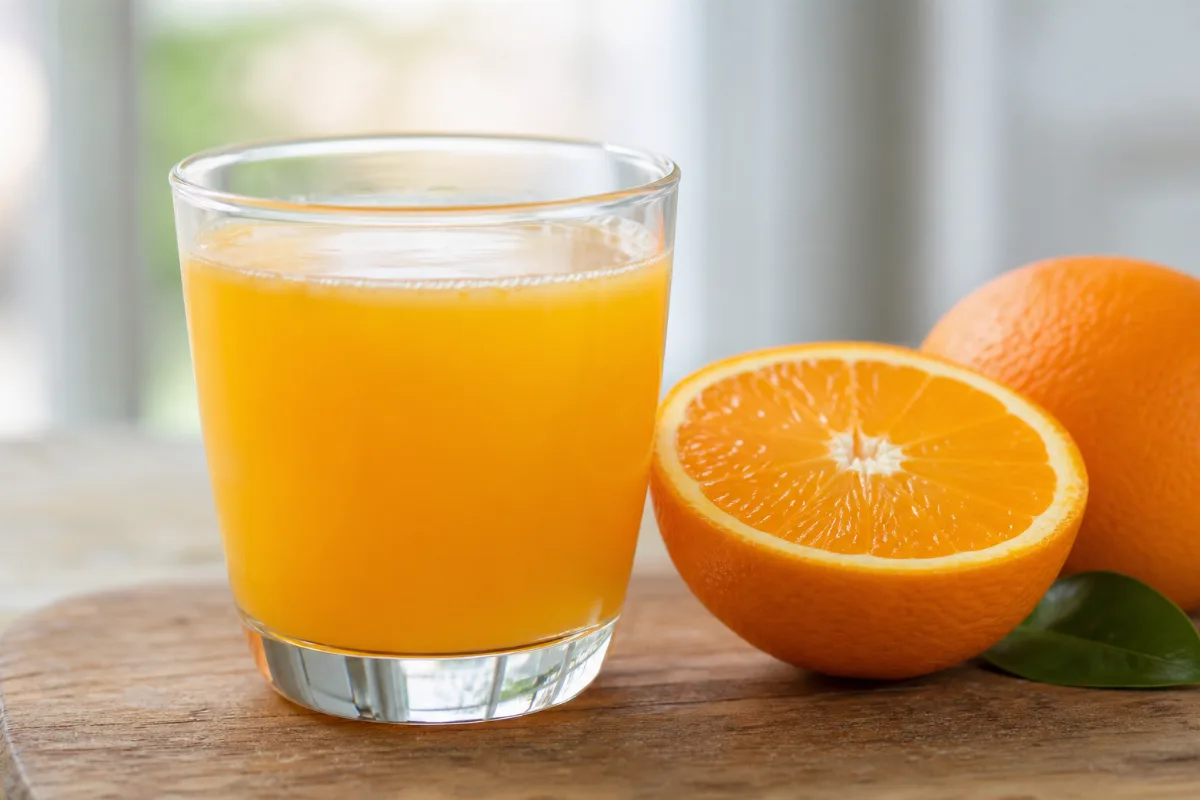
Orange juice is the liquid pressed from sweet oranges. One cup has about 84 mg of vitamin C, but also about 21 g of sugars and almost no fibre. Trials show small changes in cholesterol, and cohort studies link fruit juice with slightly higher diabetes risk. The main cautions are sugar, potassium in kidney disease, a few medicines such as fexofenadine, and untreated fresh-squeezed juice.
General information, not medical advice. Last substantive update · Not medically reviewed. A named clinician has not signed off on this page. How this page is made
About Orange Juice
Orange juice is a dependable source of vitamin C, with potassium and folate. It is also a sugary drink with little fibre. Trials show small, inconsistent changes in cholesterol, so it is best seen as a drink for pleasure and vitamin C, not a remedy.
What it is
Orange juice is the liquid pressed from sweet oranges (Citrus sinensis). It is sold fresh-squeezed, chilled from concentrate, or as "not from concentrate" in cartons. Some juice is pasteurized or otherwise treated and some is not.
One cup (249 g) of chilled juice provides about 122 calories, 20.7 g of sugars, 0.7 g of fibre, 84 mg of vitamin C, 443 mg of potassium and 47 mcg of folate (USDA FoodData Central). Fortified and fresh-squeezed juices differ.
What the research shows
Three pooled analyses of randomised trials found small falls in LDL or total cholesterol with orange juice. They disagree on which markers moved. One analysis in overweight adults found blood pressure about 1 mmHg lower.
In three large US cohorts, fruit juice went with a slightly higher risk of type 2 diabetes, while whole oranges showed no clear link. For 100% fruit juice, children's cohort studies show a very small higher BMI change per daily serving, and adult trials show no significant weight change.
Hesperidin, a citrus plant compound, did not change cholesterol or blood pressure when taken as a supplement.
Juice versus whole orange and supplements
A whole orange keeps its fibre; juice mostly does not. In diabetes studies, fruit juice and whole oranges did not show the same pattern.
Cholesterol results are for the juice. Hesperidin tablets are a different product, and in pooled trials they did not change cholesterol or blood pressure.
A 2026 symposium report argues juice should count as a processed fruit rather than a sugar-sweetened drink. It was sponsored by a fruit juice research body, so we mention it only to show the debate exists.
At a glance
Traditional uses history, not proof
- Drunk at breakfast and as a cold drink
- Popular as a source of vitamin C
Studied for research
- Vitamin C supply, high certainty (a nutrient fact, not a trial)
- Blood cholesterol in trials, low certainty
- Blood pressure, blood sugar and inflammation markers, low certainty and inconsistent
- Type 2 diabetes risk (fruit juice), very low certainty, a possible harm
- Body weight (100% fruit juice), low certainty and mixed
Main compounds
- Vitamin C (about 84 mg per cup)
- Sugars (about 21 g per cup) and very little fibre
- Potassium (about 443 mg per cup)
- Flavanones such as hesperidin, citrus plant compounds
Common forms
- Chilled juice, including from concentrate (the form the USDA figures describe)
- Not-from-concentrate juice in cartons
- Fresh-squeezed juice, pasteurized or not
- Fortified juice (for example with calcium and vitamin D)
- Juice drinks and cocktails with added sugar (not the same)
Research links: FDA: Juice safety · Orange juice and cholesterol, meta-analysis (Journal of Nutritional Science, 2023) · Fruit and type 2 diabetes, three cohorts (BMJ, 2013) · FDA: Grapefruit juice and some drugs · USDA FoodData Central: orange juice, chilled · Research Library · Genes & Biomarkers Library
What it is and its history
- Accepted scientific name
- Orange juice (the liquid pressed from sweet oranges, Citrus sinensis)
- Synonyms
- 100% orange juice; OJ
- Common names
- Orange juice (English); Jugo de naranja (Spanish)
- Family or group
- Citrus fruits (Rutaceae).
- Classification
- Rutaceae > Citrus sinensis (the fruit it is made from)
- Native range
- Not verified from a source read.
- What it looks like
- Fruit: The juice is pressed from the fruit of the sweet orange.
- Cultivation
- Not verified from a source read.
- Harvest and processing
- Sold fresh-squeezed, chilled from concentrate, or not from concentrate in cartons; some is pasteurized or otherwise treated, some is not (FDA page and earlier summary). Fortified versions and juice drinks with added sugar also exist.
- Look-alikes and adulterants
- Name: Whole orange; Note: Keeps the fibre that juice mostly lacks; a different food.; Name: Orange juice drink or cocktail; Note: Has less juice and often added sugar; not the same as 100% juice.; Name: Seville orange juice; Note: A different fruit; the FDA says Seville oranges may act like grapefruit with some medicines.
Photographs
Traditional use and history history, not clinical proof
| Tradition or era | Documented use | Source |
|---|---|---|
| Modern drink | Orange juice is a common breakfast drink and a common source of vitamin C. No source read documents its history. | NOT verified (no source read) |
Traditional use shows how it was used. It does not show that it works or is safe today.
What is inside, and how it may work
What it contains and how those compounds act in cells and animals. Laboratory and animal mechanisms are not proven effects in people.
Main compounds
| Compound | Family | Where it is concentrated | Activity studied | Level of evidence |
|---|---|---|---|---|
| Vitamin C (ascorbic acid) | vitamin | Juice 33.6 mg per 100 g; about 84 mg per cup (USDA, carried over) | An essential vitamin: helps form collagen and helps the body absorb iron. Light can lower the amount in clear bottles (MedlinePlus). 19 16 | Composition data |
| Flavanones (hesperidin and related) | flavonoid | Citrus fruit and juice | Studied for heart and metabolic markers; cohort studies link flavanone intake with lower heart disease, but supplements of hesperidin alone did not change cholesterol or blood pressure. 5 10 | Observational and trials; mixed |
| Sugars (mostly sucrose, glucose and fructose) | carbohydrate | Juice 8.3 g per 100 g; about 20.7 g per cup (USDA, carried over) | Counted as free sugars by the WHO. 19 20 | Composition data |
| Potassium | mineral | Juice 178 mg per 100 g; about 443 mg per cup (USDA, carried over) | Matters for people with kidney disease who must limit potassium. 19 18 | Composition data |
Mechanisms, receptors and pathways
| Target or pathway | Gene or receptor | What was found | Level |
|---|---|---|---|
| Drug uptake transporters in the gut (OATP) | OATP1A2 (named in the review) | Orange and grapefruit juice at high volume can block these transporters in people, lowering absorption of fexofenadine and a few other drugs. Spacing juice and drug apart reduces the effect. 3 6 | Human pharmacology studies and reviews |
| Antioxidant and blood-vessel effects of flavanones | Suggested routes behind possible heart effects; not established from the sources read. 5 | Preliminary mechanism |
Absorption, metabolism and elimination
- Absorption
- Not researched, except that orange juice lowers absorption of some drugs.
- Distribution
- Not found.
- Metabolism
- Not found.
- Elimination
- Not found.
- Bioavailability
- Not established.
Isolated compounds versus whole extracts
The cholesterol results are for juice. Hesperidin supplements, tested on their own, did not change cholesterol or blood pressure. Whole oranges keep their fibre, which juice mostly lacks, and in diabetes cohort studies fruit juice and whole oranges did not show the same pattern. A 2026 sponsored symposium report argues juice should count as processed fruit, not a sugar-sweetened drink; it was sponsored by a fruit juice research body and is used here only to show the debate exists.
Nutritional composition
Per 100 g of chilled orange juice, including from concentrate (USDA FoodData Central, SR Legacy record 169100): 49 kcal, 8.3 g sugars, 11.5 g carbohydrate, 0.3 g fibre and 0.68 g protein. One cup (249 g, about 8 fl oz) provides about 122 kcal, 20.7 g sugars, 0.7 g fibre, 84 mg vitamin C (close to the whole Daily Value), 47 mcg folate and 443 mg potassium. Freshly pressed juice, not-from-concentrate juice and fortified juice differ; some cartons add calcium and vitamin D. Per-cup figures are the per-100 g values multiplied by 2.49. These numbers were carried over from the USDA record cited earlier and were not re-opened for this page. Values vary with brand, fortification and storage.
1 high certainty3 low certainty2 very low certainty
What was looked at
The 6 benefits and uses checked for Orange Juice, each with how strong the evidence is. Tap one to open it.
- Vitamin C from the drinkHigh certainty
- Blood cholesterol (orange juice trials)Low certainty
- Blood pressure, blood sugar and inflammation markersLow certainty
- Type 2 diabetes riskVery low certainty
- Body weightLow certainty
- Flavanones (citrus plant compounds) and heart healthVery low certainty
Lab markers tracked in the studies
LDL cholesterolTotal cholesterol
What is Orange Juice good for?
The main studied uses and how strong the human evidence is for each. Most results are small changes in lab markers or links seen in eating habits, not proof that orange juice prevents or treats a disease.
Benefits, one by one
Each card is a research question, not a promise. Tap a goal to filter. Open a card to see the studies, doses and limits.
Vitamin C from the drink
High certaintyOne cup of chilled orange juice supplies about 84 mg of vitamin C, which is close to the whole Daily Value. This is the main thing the drink is good for, and it is a nutrient fact rather than a trial result.
2 studiesChilled orange juice as a drink. Fresh-squeezed juice and fortified j…
Studies, doses and limits
What the trials found
MedlinePlus lists citrus fruits and juices such as orange among the richest sources of vitamin C. The USDA record gives the amount per cup.
Results
About 84 mg per cup of chilled juice (carried over from the USDA record; see notes). MedlinePlus says light can lower vitamin C, so juice in a carton keeps it better than a clear bottle.
Effect sizes as reported
Per cup: about 84 mg, roughly 93% of the Daily Value (as printed from the USDA record).
Why this rating
This is a food-composition fact backed by a government encyclopedia, not a trial. The exact USDA figures were carried over and not re-opened.
Form and dose studied
Chilled orange juice as a drink. Fresh-squeezed juice and fortified juice differ.
Who was studied
General population.
Limits
Getting enough vitamin C from food is not the same as proof that extra prevents colds or other illness. MedlinePlus says vitamin C does not reduce the chance of getting a cold in most people.
Why researchers looked
Orange juice is one of the most common sources of vitamin C in many diets.
Proposed mechanism Established nutrition
Vitamin C helps form collagen and helps the body absorb iron. It is an essential vitamin.
A proposed mechanism does not show that the effect happens in people.
Very high vitamin C intakes from supplements are a different matter (see Safety).
Blood cholesterol (orange juice trials)
Low certaintyPooled trials of orange juice found small changes in blood cholesterol. LDL (the so-called bad cholesterol) fell by about 8 to 9 mg/dL in two analyses. A third found a fall in total cholesterol but not in LDL. The results differ between analyses and the trials were short.
3 studiesOrange juice as a drink. About 500 ml a day was where larger effects …
Studies, doses and limits
What the trials found
A 2023 pooled analysis of 9 randomised trials found LDL 8.35 mg/dL lower. A 2022 analysis of 10 trials found LDL 9.14 and total cholesterol 9.84 mg/dL lower. A 2021 analysis of 15 trials found total cholesterol 6.84 mg/dL lower but no clear LDL change.
Results
Small falls in LDL and total cholesterol in some analyses, no clear change in HDL or triglycerides in two of three. The authors of the 2023 analysis suggest intake above 500 ml a day might be what matters and ask for better trials.
Effect sizes as reported
LDL: -8.35 mg/dL (95% CI -15.43 to -1.26, 9 trials); -9.14 mg/dL (-15.79 to -2.49, 10 trials). Total cholesterol: -6.84 (-12.38 to -1.29, 15-trial analysis); -9.84 (-15.43 to -4.24).
Why this rating
The three analyses overlap in the trials they pooled and disagree on which markers moved. Small effects, short trials, and the authors of one call the evidence low to moderate quality. Blood markers only, no heart outcomes.
Form and dose studied
Orange juice as a drink. About 500 ml a day was where larger effects appeared in subgroup results, which is a lot of sugar (see Safety). This is not advice.
Who was studied
Adults in randomised trials.
Limits
Marker only; no study shows fewer heart attacks. Trials differ in amount and length.
Why researchers looked
Orange juice contains flavanones such as hesperidin, which might affect blood fats.
Proposed mechanism Preliminary mechanism
Flavanones and fibre-like pectin have been suggested as routes. Not shown in these analyses.
A proposed mechanism does not show that the effect happens in people.
A large daily amount means a lot of sugar and calories.
Blood pressure, blood sugar and inflammation markers
Low certaintyTrial analyses disagree. One found about 1 mmHg lower systolic blood pressure in overweight adults. One found small falls in glucose, insulin and an inflammation marker (C-reactive protein). Another found no clear effect on these. The changes are small and not consistent.
3 studiesOrange juice as a drink. Larger daily amounts (500 ml or more) appear…
Studies, doses and limits
What the trials found
A 2022 analysis of 8 trials in overweight adults found systolic blood pressure -0.98 mmHg. A 2022 analysis of 10 trials found lower glucose (-2.92 mg/dL), insulin and C-reactive protein. A 2021 analysis of 15 trials found a lower insulin-resistance score (HOMA-IR) but no clear effect on other markers, including blood pressure.
Results
Small, inconsistent changes. A fall of about 1 mmHg in blood pressure is very small.
Effect sizes as reported
Systolic blood pressure -0.98 mmHg (95% CI -1.52 to -0.44); glucose -2.92 mg/dL (-5.33 to -0.53); CRP -0.467 mg/L (-0.815 to -0.120); HOMA-IR -0.39 (-0.77 to -0.006).
Why this rating
The analyses disagree on which markers moved, overlap in the trials they pool, and are short. Markers only.
Form and dose studied
Orange juice as a drink. Larger daily amounts (500 ml or more) appeared in subgroup results of one analysis.
Who was studied
Adults in randomised trials, including overweight and obese adults.
Limits
Markers only. Whether any change matters for health is unknown. Observational studies point the other way for diabetes risk (see the diabetes entry).
Why researchers looked
Orange juice has flavanones and vitamin C, which might affect blood vessels and inflammation.
Proposed mechanism Unknown
Not established.
A proposed mechanism does not show that the effect happens in people.
Juice has about 21 g of sugars per cup; people watching blood sugar should ask their care team.
Type 2 diabetes risk
Very low certaintyIn three large US studies of health professionals followed for years, drinking more fruit juice went with a slightly higher chance of developing type 2 diabetes. Eating whole oranges showed no clear link either way. This is a link in eating habits, not proof that juice causes diabetes.
1 studiesFruit juice in general, as drunk.
Studies, doses and limits
What the trials found
A 2013 BMJ analysis pooled three cohorts (about 187,000 people). Per 3 servings a week, fruit juice had a hazard ratio of 1.08 for type 2 diabetes. Oranges: 0.99. The juice figure covers fruit juice as a whole, not orange juice alone.
Results
Slightly higher risk with more fruit juice; whole oranges neutral.
Effect sizes as reported
Fruit juice HR 1.08 (95% CI 1.05 to 1.11) per 3 servings a week; oranges HR 0.99 (0.95 to 1.03).
Why this rating
Observational. People who drink more juice may differ in other ways. The juice finding is for fruit juice in general. Participants were health professionals in the US.
Form and dose studied
Fruit juice in general, as drunk.
Who was studied
Health professionals in the US, followed 1984 to 2009.
Limits
Link, not cause. Not orange-juice specific.
Why researchers looked
Juice is a source of sugar with little fibre, so researchers have asked whether it differs from whole fruit.
Proposed mechanism Unknown
Not established.
A proposed mechanism does not show that the effect happens in people.
People with diabetes should ask their care team how juice fits into their plan.
Body weight
Low certaintyStudies of 100% fruit juice and weight are mixed. In children, each extra daily serving went with a very small higher BMI change in cohort studies. In adults, cohort results depended on whether energy intake was accounted for, and trials found no significant weight change.
1 studies100% fruit juice, a serving a day.
Studies, doses and limits
What the trials found
A 2024 analysis of 42 studies (17 child cohorts, 6 adult cohorts, 19 adult trials) looked at 100% fruit juice of any kind.
Results
Children: BMI change 0.03 higher per daily serving. Adults: cohorts unadjusted for energy showed 0.21 kg gain, adjusted showed -0.08 kg; trials -0.53 kg with a wide range that includes no change.
Effect sizes as reported
Children 0.03 BMI (95% CI 0.01 to 0.05); adult RCTs -0.53 kg (95% CI -1.55 to 0.48).
Why this rating
Mixed results; cohort studies cannot show cause; trials in adults were compared with no-calorie drinks. All 100% juices pooled, not orange juice alone.
Form and dose studied
100% fruit juice, a serving a day.
Who was studied
Children and adults.
Limits
No trials in children. Not orange-juice specific.
Why researchers looked
Juice adds calories without much fibre, so researchers have asked whether it adds to weight gain.
Proposed mechanism Unknown
Not established.
A proposed mechanism does not show that the effect happens in people.
None specific.
Flavanones (citrus plant compounds) and heart health
Very low certaintyCitrus fruits are rich in compounds called flavanones, such as hesperidin. A 2026 review of reviews links higher flavanone intake with lower heart disease and stroke in cohort studies. Hesperidin supplement pills, tested on their own, did not change cholesterol or blood pressure.
2 studiesFlavanones from foods and supplements (review); hesperidin supplement…
Studies, doses and limits
What the trials found
A 2026 review of 25 meta-analyses reported 12% to 22% lower relative risk of cardiovascular disease and 12% to 26% for stroke with higher flavanone intake, and favourable trial effects on cholesterol, blood pressure, glucose and CRP. A 2019 analysis of 10 trials (577 people) found hesperidin supplements had no effect on cholesterol, triglycerides or blood pressure.
Results
Cohort studies link flavanones with lower risk; hesperidin pills did not change markers.
Effect sizes as reported
Flavanones: relative risk reductions 12-22% (cardiovascular disease), 12-26% (stroke). Hesperidin supplements: total cholesterol -1.04 mg/dL (95% CI -5.65 to 3.57); systolic BP -0.85 mmHg (-3.07 to 1.36).
Why this rating
A review of reviews with mixed foods and supplements, whose authors urge caution. Flavanone intake is not the same as drinking orange juice. The supplement analysis is evidence against hesperidin pills.
Form and dose studied
Flavanones from foods and supplements (review); hesperidin supplements (trials). Neither is juice.
Who was studied
Adults in cohorts and trials.
Limits
Does not separate orange juice from other sources.
Why researchers looked
Flavanones are among the main plant compounds in orange juice.
Proposed mechanism Preliminary mechanism
Antioxidant and blood-vessel effects are suggested, mostly from lab work; not tested here.
A proposed mechanism does not show that the effect happens in people.
None specific.
Connections to the rest of health
How Orange Juice connects to the rest of our health knowledge graph. Every link says what kind of connection it is. A safety link (for example to the liver) is a warning, not a benefit. A study that merely mentions a topic never creates a benefit link.
Explore every connection: goals, body systems, organs, symptoms, genes
A. Wellness goals
| Connected to | Kind of connection | Evidence status | Context | Studies |
|---|---|---|---|---|
| Nutrient Support | High certainty | Vitamin C from the drink: One cup of chilled orange juice supplies about 84 mg of vitamin C, which is close to the whole Daily Value. This is the main thing the drink is good for, and it is a nutrient fact rather than a trial result. | 19 16 | |
| Cholesterol Balance | Potential benefit | Low certainty | Blood cholesterol (orange juice trials): Pooled trials of orange juice found small changes in blood cholesterol. LDL (the so-called bad cholesterol) fell by about 8 to 9 mg/dL in two analyses. A third found a fall in total cholesterol but not in LDL. The results differ between analyses and the trials were short. | 2 1 11 |
| Blood Sugar Balance | Low certainty | Blood pressure, blood sugar and inflammation markers: Trial analyses disagree. One found about 1 mmHg lower systolic blood pressure in overweight adults. One found small falls in glucose, insulin and an inflammation marker (C-reactive protein). Another found no clear effect on these. The changes are small and not consistent. | 9 1 11 | |
| Heart Health | Low certainty | Blood pressure, blood sugar and inflammation markers: Trial analyses disagree. One found about 1 mmHg lower systolic blood pressure in overweight adults. One found small falls in glucose, insulin and an inflammation marker (C-reactive protein). Another found no clear effect on these. The changes are small and not consistent. | 9 1 11 | |
| Blood Sugar Balance | Very low certainty | Type 2 diabetes risk: In three large US studies of health professionals followed for years, drinking more fruit juice went with a slightly higher chance of developing type 2 diabetes. Eating whole oranges showed no clear link either way. This is a link in eating habits, not proof that juice causes diabetes. | 12 | |
| Weight Management | Low certainty | Body weight: Studies of 100% fruit juice and weight are mixed. In children, each extra daily serving went with a very small higher BMI change in cohort studies. In adults, cohort results depended on whether energy intake was accounted for, and trials found no significant weight change. | 13 | |
| Heart Health | Very low certainty | Flavanones (citrus plant compounds) and heart health: Citrus fruits are rich in compounds called flavanones, such as hesperidin. A 2026 review of reviews links higher flavanone intake with lower heart disease and stroke in cohort studies. Hesperidin supplement pills, tested on their own, did not change cholesterol or blood pressure. | 5 10 |
B. Body systems
| Connected to | Kind of connection | Evidence status | Context | Studies |
|---|---|---|---|---|
| Immune System | Biological association | High certainty | Studied for: Vitamin C from the drink | 19 16 |
| Cardiovascular System | Biological association | Low certainty | Studied for: Blood cholesterol (orange juice trials) Studied for: Blood pressure, blood sugar and inflammation markers | 2 1 11 9 5 10 |
| Endocrine System | Biological association | Very low certainty | Studied for: Type 2 diabetes risk | 12 |
| Metabolism | Biological association | Low certainty | Studied for: Body weight | 13 |
E. Health conditions
| Connected to | Kind of connection | Evidence status | Context | Studies |
|---|---|---|---|---|
| Chronic kidney disease | Adverse effect or risk | Documented risk | NIDDK names orange juice as higher in potassium for people who must limit it. Preparation or compound: Orange juice (potassium) |
18 |
| Tooth decay | Adverse effect or risk | Documented risk | AAP and NHS say juice sugars can raise tooth decay risk. Preparation or compound: Fruit juice |
17 7 |
I. Biomarkers
| Connected to | Kind of connection | Evidence status | Context | Studies |
|---|---|---|---|---|
| LDL cholesterol | Biological association | Low certainty | Measured in trials: lowered slightly in some analyses. A lab change is not the same as a health benefit. | 2 1 11 |
| Total cholesterol | Biological association | Low certainty | Measured in trials: lowered slightly in two of three analyses. A lab change is not the same as a health benefit. | 11 1 2 |
L. Active compounds
| Connected to | Kind of connection | Evidence status | Context | Studies |
|---|---|---|---|---|
| Vitamin C (ascorbic acid) | Biological association | Composition data | An essential vitamin: helps form collagen and helps the body absorb iron. Light can lower the amount in clear bottles (MedlinePlus). Preparation or compound: Juice |
19 16 |
| Flavanones (hesperidin and related) | Biological association | Observational and trials; mixed | Studied for heart and metabolic markers; cohort studies link flavanone intake with lower heart disease, but supplements of hesperidin alone did not change cholesterol or blood pressure. Preparation or compound: Citrus fruit and juice |
5 10 |
| Sugars (mostly sucrose, glucose and fructose) | Biological association | Composition data | Counted as free sugars by the WHO. Preparation or compound: Juice |
19 20 |
| Potassium | Biological association | Composition data | Matters for people with kidney disease who must limit potassium. Preparation or compound: Juice |
19 18 |
Each connection is stored with the ingredient, the connected record, the kind of connection, the evidence status, the supporting studies, the preparation or compound involved, and a review date (last reviewed October 26, 2026).
Evidence at a glance: what the research found for 6 outcomes
Each outcome below is one thing researchers measured. Certainty is how far the evidence can be trusted, not how well it works. The full studies are on the next tab.
The evidence
The research centre for Orange Juice. Every record here was checked against PubMed or the publisher's page; we never list a study we have not verified.
Evidence by outcome
Bars show how many studies we found for each outcome, not how well it works. People are added up across trials only (reviews are not added, to avoid double counting).
How we rate evidence
High certainty
Several well-run trials or reviews agree; further research is unlikely to change the picture much.
Moderate certainty
Good trials point the same way, but some doubt remains.
Low certainty
Small, short or inconsistent trials. The finding could change with better research.
Very low certainty
Very little or very weak human data. Treat as a possibility only.
Mixed findings
Trials or reviews disagree with each other.
Not enough evidence
Not enough human research to say either way.
Evidence against
Good research found no benefit, or found harm.
We take the reviewers' own risk-of-bias and GRADE statements where they exist, and otherwise judge from study size, design, consistency, directness and whether a product matches what is sold. Many publications do not make evidence high. Method note: We started from our earlier orange juice summary, re-read the PubMed abstracts and the FDA, NIDDK, NHS, MedlinePlus and WHO pages. The USDA nutrient numbers were carried over and not re-opened. Only abstracts were read for studies. Items we could not verify are listed in the research gaps.
Study library: every study we checked 20
| Study | Design | People | Product, dose, length | Result |
|---|---|---|---|---|
| Alhabeeb 2022 Impact of orange juice consumption on cardiovascular disease risk factors: a systematic review and meta-analysis of randomized-controlled trials. Crit Rev Food Sci Nutr · PMID 33350317 · DOI |
Systematic review and meta analysis of RCTs |
10 randomised trials (searched to September 2020) | Orange juice juice Varied Varied · vs Varied |
Orange juice lowered glucose, insulin, HOMA-IR, total cholesterol, LDL and C-reactive protein (an inflammation marker) compared with controls. Body composition and other factors did not change. Effects on glucose, HOMA-IR, total cholesterol and LDL were robust in the subgroup drinking 500 ml a day or more. Glucose -2.92 mg/dL (95% CI -5.33 to -0.53); total cholesterol -9.84 mg/dL (-15.43 to -4.24); LDL -9.14 mg/dL (-15.79 to -2.49); CRP -0.467 mg/L (-0.815 to -0.120) Methods, limits and fundingOutcomes: Blood sugar, insulin, HOMA-IR, blood fats, C-reactive protein, body composition Limitations: Few trials; trials differ. The abstract does not state the quality of the evidence. This analysis found larger effects than the other two analyses of orange juice and blood fats. Funding and conflicts: Not stated in the abstract read Read: abstract |
| Amini 2023 Orange juice intake and lipid profile: a systematic review and meta-analysis of randomised controlled trials. J Nutr Sci · PMID 37008412 · DOI |
Systematic review and meta analysis of RCTs |
9 randomised trials of orange juice (searched in Cochrane, Scopus, PubMed, Embase) | Orange juice juice Varied Varied · vs Varied |
Orange juice did not clearly change triglycerides, total cholesterol or HDL. LDL fell by 8.35 mg/dL. The authors say daily intake above 500 ml might matter and call for better trials. LDL WMD -8.35 mg/dL (95% CI -15.43 to -1.26); total cholesterol -5.91 (-13.26 to 1.43); HDL 0.61 (-0.61 to 1.82); triglycerides -1.53 (-6.39 to 3.32) Methods, limits and fundingOutcomes: Triglycerides, total, HDL and LDL cholesterol Limitations: Few trials, small effect, trials differ. The 500 ml suggestion is the authors' reading, not a tested rule. Funding and conflicts: Not stated in the abstract read Read: abstract |
| Bailey 2011 Fruit juice inhibition of uptake transport: a new type of food-drug interaction. Br J Clin Pharmacol · PMID 21039758 · DOI |
Narrative review |
Human and lab studies of juice and drug uptake | Grapefruit and orange juice juice Varied Varied · vs Varied |
Orange juice at high volume lowered the oral absorption of fexofenadine, atenolol, celiprolol and ciprofloxacin. The effect lasted more than 2 hours but less than 4 hours, so spacing juice and drug apart can avoid it. Qualitative Methods, limits and fundingOutcomes: Drug absorption (fexofenadine and others) Limitations: Narrative review; abstract only. Mostly grapefruit data. Funding and conflicts: Not stated in the abstract read Read: abstract |
| Chen 2019 Food-drug interactions precipitated by fruit juices other than grapefruit juice: An update review. J Food Drug Anal · PMID 29703387 · DOI |
Systematic review of 46 RCTs |
46 randomised trials of juice-drug combinations (searched to December 2017) | Fruit juices other than grapefruit, including orange juice juice Varied Varied · vs Varied |
Orange juice lowered the absorption of aliskiren, atenolol, celiprolol, montelukast, fluoroquinolone antibiotics and alendronate, and raised the effect of aluminium-containing antacids. Seville orange juice raised felodipine levels. The authors say these other juices did not cause the severe interactions seen with grapefruit, but pharmacists should still screen for them. Qualitative Methods, limits and fundingOutcomes: Drug absorption and drug effects Limitations: Abstract only; the size of each interaction is not in the abstract. Many studies were small pharmacology studies. Funding and conflicts: Not stated in the abstract read Read: abstract |
| Doaei 2026 Flavanone Intake and Cardiometabolic Outcomes: A Synthesis of Meta-Analytic Evidence from Cohort and Clinical Studies. Epidemiologia (Basel) · PMID 42644892 · DOI |
Review of 25 meta analyses (12 of cohort studies, 13 of RCTs) |
Flavanone intake from foods and supplements, mostly citrus | Flavanones (a plant-compound family found in citrus), foods and supplements juice Varied Varied · vs Varied |
Higher flavanone intake was linked in cohort studies with 12% to 22% lower relative risk of cardiovascular disease and 12% to 26% for stroke. Trials showed favourable effects on total and LDL cholesterol, systolic blood pressure, glucose and C-reactive protein. The authors urge caution because studies and methods differ. Relative risk reductions 12-22% (cardiovascular disease), 12-26% (stroke); trial effects not quantified in the abstract Methods, limits and fundingOutcomes: Cardiovascular disease, stroke, blood fats, blood pressure, glucose, C-reactive protein Limitations: A review of reviews. Flavanones are not orange juice itself, and the abstract does not separate juice from supplements. Cohort links do not prove cause. Funding and conflicts: Not stated in the abstract read Read: abstract |
| Greenblatt 2010 Analysis of drug interactions involving fruit beverages and organic anion-transporting polypeptides. J Clin Pharmacol · PMID 19789373 · DOI |
Narrative review |
Clinical trials of fruit juice and drug uptake | Grapefruit, orange and apple juice juice Varied Varied · vs Varied |
Grapefruit, orange and apple juice can reduce the absorption of fexofenadine, but the clinical importance is not clearly established. Spacing juice and drug apart reduces the effect. Beyond fexofenadine and celiprolol, other meaningful interactions through this route were not established. Qualitative Methods, limits and fundingOutcomes: Oral absorption of fexofenadine and celiprolol Limitations: Narrative review; abstract only. Funding and conflicts: Not stated in the abstract read Read: abstract |
| Heyman 2017 Fruit Juice in Infants, Children, and Adolescents: Current Recommendations. Pediatrics · PMID 28562300 · DOI |
Guideline statement (American Academy of Pediatrics) |
Infants, children and adolescents | Fruit juice (all kinds) juice Varied Varied · vs Varied |
The statement says juice has some benefits but also potential harms. Its sugar adds calories and the risk of tooth decay, and its lack of protein and fibre can predispose to inappropriate weight gain. Pediatricians need to know about juice to advise parents. Guidance, not a trial Methods, limits and fundingOutcomes: Benefits and drawbacks of juice for children Limitations: Only the abstract was read, so numeric limits for each age are not reported here. Funding and conflicts: Professional society statement Read: abstract |
| Hutchins 2026 Fruit juices - more like fruit or sugar-sweetened beverages? Report of a symposium sponsored by the Fruit Juice Science Centre at IUNS-ICN Paris. J Nutr Sci · PMID 41541630 · DOI |
Symposium report (sponsored) |
Presentations at an international nutrition congress | 100% fruit juice juice Varied Varied · vs Varied |
The symposium concluded that the fruit matrix justifies treating 100% juice as a type of processed fruit, not as a sugar-sweetened drink. It reports that some trials of citrus juice find benefits for vascular function and blood pressure and others find neutral effects. Opinion and discussion, not a trial Methods, limits and fundingOutcomes: Fruit matrix, blood sugar and vascular markers Limitations: Sponsored by a fruit juice research body. Not a systematic review. Used only to show that the debate exists. Funding and conflicts: Sponsored by the Fruit Juice Science Centre (named in the title) Read: abstract |
| Li 2022 Does chronic consumption of orange juice improve cardiovascular risk factors in overweight and obese adults? A systematic review and meta-analysis of randomized controlled trials. Food Funct · PMID 36383179 · DOI |
Systematic review and meta analysis of RCTs |
8 trials in overweight and obese adults (searched to May 2022) | Orange juice juice Varied Varied · vs Varied |
Systolic blood pressure was about 1 mmHg lower and HDL slightly higher with orange juice. Total cholesterol, triglycerides, LDL, glucose, insulin, HOMA-IR and C-reactive protein did not change. Systolic blood pressure MD -0.98 mmHg (95% CI -1.52 to -0.44); HDL SMD 0.29 (0.03 to 0.54) Methods, limits and fundingOutcomes: Blood fats, blood pressure, blood sugar, insulin, inflammation Limitations: Eight trials in overweight and obese adults only. A fall of about 1 mmHg is very small. Funding and conflicts: Not stated in the abstract read Read: abstract |
| Mohammadi 2019 Hesperidin, a major flavonoid in orange juice, might not affect lipid profile and blood pressure: A systematic review and meta-analysis of randomized controlled clinical trials. Phytother Res · PMID 30632207 · DOI |
Systematic review and meta analysis of RCTs |
10 trials, 577 participants (searched to May 2018) | Hesperidin supplements (not juice) juice Varied Varied · vs Varied |
Hesperidin supplements had no effect on total, LDL or HDL cholesterol, triglycerides, or systolic or diastolic blood pressure. Total cholesterol WMD -1.04 mg/dL (95% CI -5.65 to 3.57); LDL -1.96 (-7.56 to 3.64); systolic BP -0.85 mmHg (-3.07 to 1.36) Methods, limits and fundingOutcomes: Blood fats and blood pressure Limitations: Supplements, not juice. No significant between-study differences. Funding and conflicts: Not stated in the abstract read Read: abstract |
| Motallaei 2021 Effects of orange juice intake on cardiovascular risk factors: A systematic review and meta-analysis of randomized controlled clinical trials. Phytother Res · PMID 34060162 · DOI |
Systematic review and meta analysis of RCTs |
15 trials, 639 participants (searched to January 2021) | Orange juice juice Varied Varied · vs Varied |
Orange juice lowered total cholesterol (10 trials) and an insulin-resistance score called HOMA-IR (4 trials). No significant effect on the other markers. The authors rate the meta-evidence low to moderate quality. Total cholesterol WMD -6.84 mg/dL (95% CI -12.38 to -1.29); HOMA-IR WMD -0.39 (-0.77 to -0.006) Methods, limits and fundingOutcomes: Body measures, blood pressure, blood fats, inflammation and blood-sugar markers Limitations: Low-to-moderate quality evidence per the authors; trials differ in juice amount and length. Funding and conflicts: Not stated in the abstract read Read: abstract |
| Muraki 2013 Fruit consumption and risk of type 2 diabetes: results from three prospective longitudinal cohort studies. BMJ · PMID 23990623 · DOI |
Pooled analysis of three prospective cohort studies |
66,105 women (Nurses' Health Study), 85,104 women (Nurses' Health Study II) and 36,173 men (Health Professionals Follow-up Study), health professionals in the US; 12,198 developed type 2 diabetes | Whole fruit by type, and fruit juice (all kinds) juice Varied Varied · vs Varied |
For every 3 servings a week, fruit juice went with a higher diabetes risk, while whole oranges showed no clear link. Several other whole fruits, such as blueberries, grapes and apples, went with lower risk. Fruit juice HR 1.08 (95% CI 1.05 to 1.11) per 3 servings a week; oranges HR 0.99 (0.95 to 1.03); total whole fruit HR 0.98 (0.97 to 0.99) Methods, limits and fundingOutcomes: New type 2 diabetes Limitations: Observational: shows a link, not cause. Fruit juice is not broken down by fruit type in the abstract. People who drink more juice may differ in other ways. Funding and conflicts: Support from NIH grants listed in the record; conflicts in the full paper (not read) Read: abstract |
| Nguyen 2024 Consumption of 100% Fruit Juice and Body Weight in Children and Adults: A Systematic Review and Meta-Analysis. JAMA Pediatr · PMID 38227336 · DOI |
Systematic review and meta analysis of cohort studies and RCTs |
42 studies: 17 child cohorts (45,851 children), 6 adult cohorts and 19 adult RCTs (268,095 adults) | 100% fruit juice (all kinds, not only orange) juice Varied Varied · vs Varied |
In children, each extra daily serving of 100% fruit juice went with a 0.03 higher BMI change in cohort studies. In adult cohorts, studies that did not adjust for energy intake showed weight gain, and those that did adjust did not. Adult trials found no significant weight change, with a wide range. Children cohorts: 0.03 BMI (95% CI 0.01 to 0.05) per daily serving. Adult RCTs: MD -0.53 kg (95% CI -1.55 to 0.48) Methods, limits and fundingOutcomes: Change in BMI (children) and body weight (adults) Limitations: All fruit juices pooled, not orange juice alone. Cohort studies show a link, not cause. No trials in children. Funding and conflicts: Research support from NIH and non-US government sources listed in the record; conflicts of interest are in the full paper (not read) Read: abstract |
| s-fda-grapefruit FDA: Grapefruit juice and some drugs don't mix · Source |
Official consumer guidance n/a |
Methods, limits and fundingRead: full-text | ||
| s-fda-juice-safety FDA: What you need to know about juice safety · Source |
Official consumer guidance n/a |
Methods, limits and fundingRead: full-text | ||
| s-medlineplus-vitc MedlinePlus: Vitamin C · Source |
Government health encyclopedia n/a |
Methods, limits and fundingRead: full-text | ||
| s-nhs-5aday NHS: 5 A DAY, what counts · Source |
Official health guidance n/a |
Methods, limits and fundingRead: full-text | ||
| s-niddk-ckd NIDDK: Eating and nutrition for chronic kidney disease · Source |
Official health guidance n/a |
Methods, limits and fundingRead: full-text | ||
| s-usda-fdc-169100 USDA FoodData Central: Orange juice, chilled, includes from concentrate (FDC 169100, SR Legacy) · Source |
Food composition database n/a |
Methods, limits and fundingRead: not re-opened (numbers carried over) | ||
| s-who-healthy-diet WHO: Healthy diet fact sheet · Source |
Official health guidance n/a |
Methods, limits and fundingRead: full-text |
What we do not know yet
- No trial has tested orange juice for heart attacks, stroke, diabetes or cancer outcomes.
- The cholesterol analyses pool overlapping trials and disagree on which markers moved.
- Most diabetes and weight data cover fruit juice in general, not orange juice alone.
- Allergy to citrus, pesticide and metal testing, acid reflux and pregnancy advice beyond the FDA and MedlinePlus statements were not researched.
- The USDA record was not re-opened for this page because the service was rate-limited; the nutrient numbers are carried over.
- The size of each juice-medicine interaction was not in the abstracts read.
How new research is added
New studies are found by a saved PubMed search and placed in a review queue before the page changes.
Lab markers
What changed in blood or saliva tests during trials. A changed number is not the same as feeling or being healthier, and we give no "normal ranges".
Metabolic 2
LDL cholesterol
Lowered slightly in some analyses in trials
The so-called bad cholesterol carried in the blood.
Low certaintyResults and what it means
Why it was measured
A common heart-risk marker.
Statistical vs. clinical meaning
A small change; no one knows if it changes heart outcomes.
Safety implication
A large daily volume of juice adds a lot of sugar.
Total cholesterol
Lowered slightly in two of three analyses in trials
All cholesterol carried in the blood.
Low certaintyResults and what it means
Why it was measured
A common heart-risk marker.
Statistical vs. clinical meaning
Small and not consistent between analyses.
Safety implication
None specific.
Safety
What studies and official sources say about side effects, medicines and who should check first. Each point shows what kind of evidence it comes from.
Main points to know 4
- Fresh-squeezed juice that is not pasteurized can carry harmful bacteria. The FDA says juice made from raw produce can be contaminated unless it has been pasteurized or otherwise treated. Children, older adults, pregnant women and people with weakened immune systems risk serious illness, or even death, from untreated juice. Packaged untreated juice must carry a warning label, but juice sold by the glass (for example at juice bars or farmers' markets) does not need one. Authoritative guidance 15
- It is a sugary drink, even with no sugar added. One cup has about 21 g of sugars and about 122 kcal, with almost no fibre (USDA values carried over; see notes). The WHO says most fruit juices, including those with no added sugar, contain significant free sugars, which should be limited. The NHS counts juice as at most one 5 A DAY portion, with a combined limit of 150 ml a day for juice, vegetable juice and smoothies, and says the sugars released by juicing can damage teeth. Authoritative guidance 19 20 17
- Potassium: people with kidney disease may need to limit orange juice. The NIDDK says damaged kidneys can struggle to remove potassium. For people who must limit it, it suggests apple, grape or cranberry juice rather than higher-potassium juices such as orange juice. One cup has about 443 mg of potassium (USDA values carried over). Ask your care team. Authoritative guidance 18 19
- Some medicines are absorbed less well with orange juice. The FDA says the allergy medicine fexofenadine (Allegra) may not work as well with orange or apple juice, and its label says not to take it with fruit juices. A 2019 review of 46 trials also lists orange juice with lower absorption of aliskiren, atenolol, celiprolol, montelukast, fluoroquinolone antibiotics and alendronate. A pharmacist can check your own medicines. Authoritative guidance and trial review 14 4 3 6
Side effects 3
| Effect | How often | Severity and recovery | Evidence |
|---|---|---|---|
| Tooth decay with frequent juice The NHS says to drink juice with meals. The AAP says juice sugar adds to the risk of tooth decay. | Not established | mild to moderate Damage to enamel is not reversible; early decay can be treated by a dentist. | Authoritative guidance 17 7 |
| Food poisoning from untreated juice FDA says outbreaks have been traced to untreated juice. No frequency is given in the page read. | Not established | mild to severe Varies | Authoritative guidance 15 |
| Stomach upset and diarrhoea from very high vitamin C intake MedlinePlus puts this at amounts above 2,000 mg a day, mostly from supplements. A cup of juice is far below that. | Not established | mild Settles when intake falls | Authoritative guidance 16 |
Liver
No liver injury linked to drinking orange juice was found in the sources read. LiverTox was not checked.
How often. No frequency found.
This is a safety connection. It is not evidence that Orange Juice supports liver health.
Medicines and supplements 4
| With | Why it matters | Importance | Evidence | What to do |
|---|---|---|---|---|
| Fexofenadine (Allegra, an allergy medicine) prescription and over-the-counter | Juice may block uptake transporters in the gut, so less drug is absorbed. | The FDA and the label say it may work less well with orange or apple juice. Reviews say the clinical importance is not clearly established and that spacing juice and drug apart reduces the effect. | Authoritative guidance, trials and reviews Moderate certainty 14 3 6 | Follow the medicine label. A pharmacist can advise on timing. |
| Other medicines whose absorption fell with orange juice in trials (aliskiren, atenolol, celiprolol, montelukast, fluoroquinolone antibiotics, alendronate) prescription | Reduced absorption, described in trials. | A review of 46 trials lists these as potential adverse interactions. The abstract does not give the size of each effect, and it says juices other than grapefruit did not cause the severe interactions seen with grapefruit. | Trial review Low certainty 4 3 | Ask a pharmacist how to time juice and these medicines. |
| Grapefruit-type interaction (statins, some blood pressure and heart-rhythm medicines) prescription | Applies to grapefruit juice, Seville oranges, pomelos and tangelos. | The FDA page lists Seville oranges, pomelos and tangelos as possibly acting like grapefruit juice and does not list regular orange juice as a general problem. Marmalade made from Seville oranges is a different product. | Authoritative guidance Moderate certainty 14 | Check the label that your juice is 100% sweet orange and not mixed with grapefruit. |
| Potassium-limiting treatment in kidney disease condition-related | Orange juice is relatively high in potassium. | NIDDK names it as a juice higher in potassium than apple, grape or cranberry juice. | Authoritative guidance Moderate certainty 18 | Follow your dietitian's plan. |
Who should check first 3
| Situation | Advice | Evidence |
|---|---|---|
| Advanced kidney disease on a potassium limit | Ask your care team before drinking orange juice; NIDDK suggests lower-potassium juices. | Authoritative guidance 18 |
| Pregnancy, older age, weak immune system, or children, with unpasteurized juice | Choose pasteurized or otherwise treated juice (FDA). | Authoritative guidance 15 |
| Taking fexofenadine (Allegra) | Do not take with fruit juices, per the label quoted by the FDA. | Authoritative guidance 14 |
Overdose, product quality and regulators
Summary. Pasteurized orange juice is an ordinary drink. The concerns in the sources read are sugar, potassium for people with kidney disease, medicine interactions and bacteria in untreated juice.
Animal. Not reviewed.
Human doses studied. Trials gave orange juice for weeks and the abstracts read mention no safety problem.
High dose or long term signals. Observational studies link much fruit juice with slightly higher diabetes risk and weight gain (see Benefits).
Overdose response. Not found.
Genotoxicity. Not reviewed.
The main concern in the sources read is bacteria in untreated, fresh-squeezed juice. Pesticide and metal testing for orange juice was not researched.
Bacteria in untreated juice. FDA says juice from raw produce can be contaminated unless pasteurized or treated, and outbreaks have been traced to untreated juice and cider. 15
| Body | Action | Date |
|---|---|---|
| FDA (US Food and Drug Administration) (United States) | Consumer advice on juice safety: untreated juice can carry bacteria; packaged untreated juice must carry a warning label source | page read 2026-10-26 |
| FDA (United States) | Consumer update: fexofenadine may not work as well with orange or apple juice; Seville oranges, pomelos and tangelos may act like grapefruit source | 2021-07-01 (page says content current as of) |
| NIDDK (US National Institute of Diabetes and Digestive and Kidney Diseases) (United States) | Names orange juice as higher in potassium for people with kidney disease who must limit potassium source | page read 2026-10-26 |
| NHS (UK) (United Kingdom) | Juice counts once towards 5 A DAY, combined limit 150 ml a day; drink with meals source | page read 2026-10-26 |
| WHO (International) | Fruit juice contains significant free sugars that should be limited source | page read 2026-10-26 |
When to get medical help
- Swelling of the lips, face, tongue or throat after drinking it
- Trouble breathing or wheezing
- Fever, bloody diarrhoea, severe vomiting or stomach pain after untreated juice
- Muscle weakness or an irregular heartbeat in someone with kidney disease (NIDDK says too much potassium can cause heart and muscle problems); seek urgent care
Stop using the product and contact a clinician or emergency service. In the US, Poison Control is 1-800-222-1222.
General information only, not medical advice. Ask a clinician or pharmacist before use, especially with medicines, in pregnancy or with a health condition. See the Natural Remedy Safety guide.
Frequently asked questions
What is orange juice good for?
Does orange juice lower cholesterol?
Does orange juice affect blood pressure?
Is orange juice bad for diabetes or blood sugar?
Does orange juice make you gain weight?
Studies of 100% fruit juice are mixed. In children, each extra daily serving went with a very small higher BMI change in cohorts. Adult trials found no significant weight change. These results cover fruit juice in general.
Is orange juice as healthy as a whole orange?
Does orange juice prevent colds?
No pooled trial of orange juice was found for this. MedlinePlus says vitamin C supplements or vitamin C-rich foods do not reduce the risk of getting a cold in most people.
Is orange juice bad for your teeth?
Can people with kidney disease drink orange juice?
Does orange juice interact with medicines?
The FDA says the allergy medicine fexofenadine may not work as well with orange or apple juice. A review of trials also lists lower absorption of some other medicines. This is separate from the grapefruit warning, which the FDA does not extend to regular orange juice. A pharmacist can check your medicines.
Is fresh-squeezed orange juice safe?
The FDA says untreated juice can carry harmful bacteria. Children, older adults, pregnant women and people with weak immune systems are at higher risk, so pasteurized juice is the safer choice. Packaged untreated juice must carry a warning label, but juice sold by the glass does not.
Explore by health goal
Blood Sugar BalanceHeart HealthNutrient SupportCholesterol BalanceWeight Management
Editorial transparency
- Written by
- AlternativeMed editorial team. Research compiled with AI assistance, then checked against the sources listed.
- Medical review
- None. This page has not been reviewed by a physician or pharmacist.
- First published
- 2026-10-26
- Last substantive update
- 2026-10-26
- How we research
- We started from our earlier orange juice summary, re-read the PubMed abstracts and the FDA, NIDDK, NHS, MedlinePlus and WHO pages. The USDA nutrient numbers were carried over and not re-opened. Only abstracts were read for studies. Items we could not verify are listed in the research gaps.
- How we rate evidence
- See "How we rate evidence" in the Evidence tab.
- Independence
- No product is promoted on this page. No affiliate links are shown.
Sources 20
Each source was opened and checked. Where we read only the abstract, it says so. The small numbers in the text point here.
- Alhabeeb H, Sohouli MH, Lari A, et al.. Impact of orange juice consumption on cardiovascular disease risk factors: a systematic review and meta-analysis of randomized-controlled trials.. Crit Rev Food Sci Nutr. 2022. PMID 33350317. DOI 10.1080/10408398.2020.1865263. (abstract)
- Amini MR, Sheikhhossein F, Bazshahi E, et al.. Orange juice intake and lipid profile: a systematic review and meta-analysis of randomised controlled trials.. J Nutr Sci. 2023. PMID 37008412. DOI 10.1017/jns.2023.22. (abstract)
- Bailey DG. Fruit juice inhibition of uptake transport: a new type of food-drug interaction.. Br J Clin Pharmacol. 2011. PMID 21039758. DOI 10.1111/j.1365-2125.2010.03722.x. (abstract)
- Chen M, Zhou SY, Fabriaga E, et al.. Food-drug interactions precipitated by fruit juices other than grapefruit juice: An update review.. J Food Drug Anal. 2019. PMID 29703387. DOI 10.1016/j.jfda.2018.01.009. (abstract)
- Doaei S, Gil-Lespinard M, Elban Z, et al.. Flavanone Intake and Cardiometabolic Outcomes: A Synthesis of Meta-Analytic Evidence from Cohort and Clinical Studies.. Epidemiologia (Basel). 2026. PMID 42644892. DOI 10.3390/epidemiologia7040108. (abstract)
- Greenblatt DJ. Analysis of drug interactions involving fruit beverages and organic anion-transporting polypeptides.. J Clin Pharmacol. 2010. PMID 19789373. DOI 10.1177/0091270009342251. (abstract)
- Heyman MB, Abrams SA, American Academy of Pediatrics Section on Gastroenterology, Hepatology, and Nutrition. Fruit Juice in Infants, Children, and Adolescents: Current Recommendations.. Pediatrics. 2017. PMID 28562300. DOI 10.1542/peds.2017-0967. (abstract)
- Hutchins KM, Ruxton CHS. Fruit juices - more like fruit or sugar-sweetened beverages? Report of a symposium sponsored by the Fruit Juice Science Centre at IUNS-ICN Paris.. J Nutr Sci. 2026. PMID 41541630. DOI 10.1017/jns.2025.10071. (abstract)
- Li L, Jin N, Ji K, et al.. Does chronic consumption of orange juice improve cardiovascular risk factors in overweight and obese adults? A systematic review and meta-analysis of randomized controlled trials.. Food Funct. 2022. PMID 36383179. DOI 10.1039/d2fo02195a. (abstract)
- Mohammadi M, Ramezani-Jolfaie N, Lorzadeh E, et al.. Hesperidin, a major flavonoid in orange juice, might not affect lipid profile and blood pressure: A systematic review and meta-analysis of randomized controlled clinical trials.. Phytother Res. 2019. PMID 30632207. DOI 10.1002/ptr.6264. (abstract)
- Motallaei M, Ramezani-Jolfaie N, Mohammadi M, et al.. Effects of orange juice intake on cardiovascular risk factors: A systematic review and meta-analysis of randomized controlled clinical trials.. Phytother Res. 2021. PMID 34060162. DOI 10.1002/ptr.7173. (abstract)
- Muraki I, Imamura F, Manson JE, et al.. Fruit consumption and risk of type 2 diabetes: results from three prospective longitudinal cohort studies.. BMJ. 2013. PMID 23990623. DOI 10.1136/bmj.f5001. (abstract)
- Nguyen M, Jarvis SE, Chiavaroli L, et al.. Consumption of 100% Fruit Juice and Body Weight in Children and Adults: A Systematic Review and Meta-Analysis.. JAMA Pediatr. 2024. PMID 38227336. DOI 10.1001/jamapediatrics.2023.6124. (abstract)
- . FDA: Grapefruit juice and some drugs don't mix. . . (full-text)
- . FDA: What you need to know about juice safety. . . (full-text)
- . MedlinePlus: Vitamin C. . . (full-text)
- . NHS: 5 A DAY, what counts. . . (full-text)
- . NIDDK: Eating and nutrition for chronic kidney disease. . . (full-text)
- . USDA FoodData Central: Orange juice, chilled, includes from concentrate (FDC 169100, SR Legacy). . . (not re-opened (numbers carried over))
- . WHO: Healthy diet fact sheet. . . (full-text)


