Leafy Greens
Spinach, kale, lettuce and other leafy greens: what cohort reviews found on heart disease, and the vitamin K advice for people taking warfarin, plus oxalate and food-safety notes.
Content last updated . This page has not been medically reviewed.
Safety first. Natural products can cause side effects and interact with medicines. Read functional food safety before you use anything on this page.
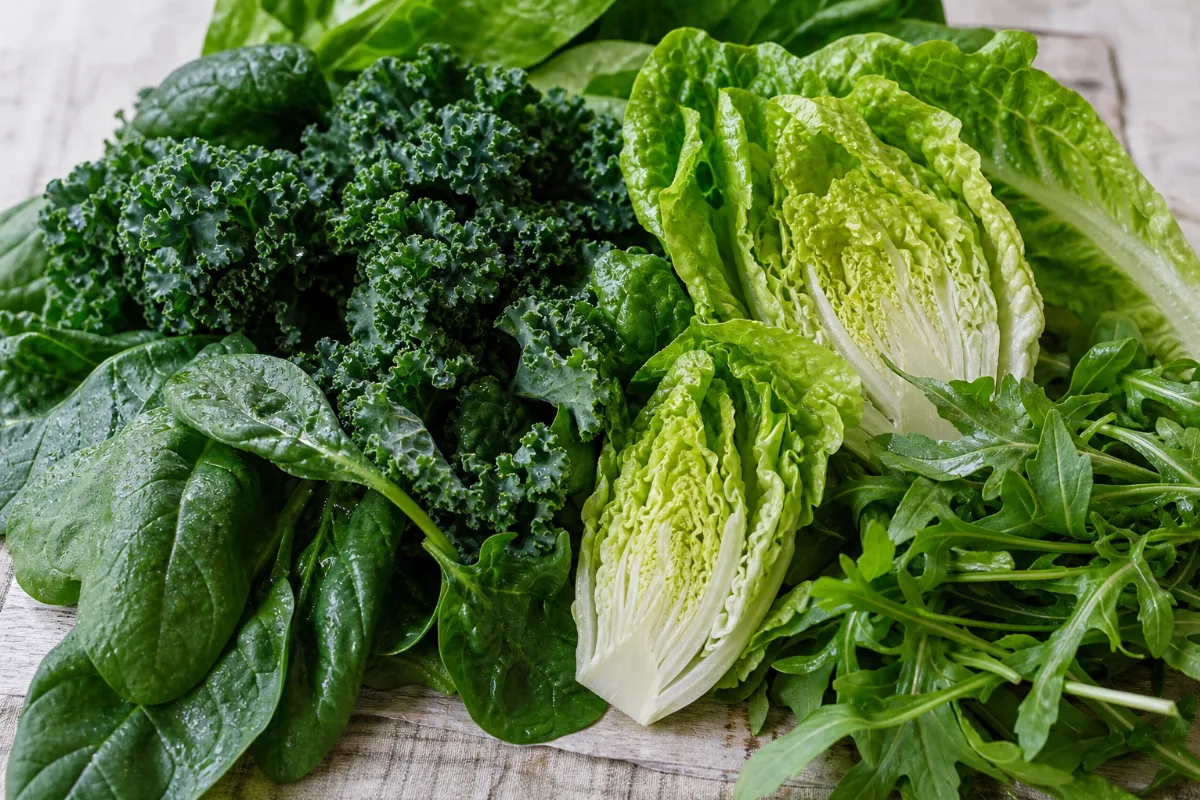
Leafy greens are the edible leaves of plants such as spinach (Spinacia oleracea L., family Amaranthaceae), kale and collards (Brassica oleracea L., Brassicaceae) and lettuce. They are a source of vitamin K and of lutein, a yellow plant pigment. This page is about greens as food. Information only.
Read this first: warfarin and vitamin K
Warfarin is a blood thinner. A hospital patient guide explains that vitamin K plays a key role in blood clotting, that warfarin reduces its clotting activity, and that a sudden change in vitamin K intake can throw off the balance with the medicine. [1] The guide lists dark green leafy vegetables such as kale, collards, spinach and mustard greens among vitamin K-rich foods, but says the goal is not to cut vitamin K out of your diet. The aim is to eat about the same amount from day to day. [1] It gives an example: if you normally have 2 daily servings, do not suddenly switch to 4 or none. [1] MedlinePlus likewise says to eat consistent amounts of vitamin K foods week to week and to talk to your doctor before changing your diet. [2]So the safe habit is consistency and telling your anticoagulation clinic, not avoiding greens. A clinician decides what is right for you; do not change or stop a prescribed medicine on your own. See foods and medicine interactions and medication interactions.
What research shows
| Question | What the source found | Strength of evidence | Study type |
|---|---|---|---|
| Cardiovascular disease | A meta-analysis of 17 cohort studies found green leafy vegetable intake associated with lower incident cardiovascular disease (pooled RR 0.93). [3] | Promising but limited | Cohort studies |
| Heart disease, stroke and death | A review of 24 meta-analyses reported that each 100 g a day of greens was associated with about 25% lower risk of all-cause mortality, coronary heart disease and stroke. [4] | Promising but limited | Meta-analyses of observational studies |
| Whole-diet context | A dose-response meta-analysis of 95 prospective studies reported inverse associations between green leafy vegetables and cardiovascular disease and death. [5] | Promising but limited | Cohort studies |
| Eye disease (lutein) | The 24-meta-analysis review found lutein intake inversely associated with age-related macular degeneration. [4] | Promising but limited | Observational; lutein from all foods |
| Disease prevention in trials of greens | Proper evidence not found in the sources we read (searched PubMed for leafy green intake trials and prevention). | Insufficient evidence | N/A |
These are associations from observational studies. People who eat more greens differ in other ways, so they do not prove greens prevent disease.
Oxalate and kidney stones
The US National Institute of Diabetes and Digestive and Kidney Diseases (NIDDK) says that if you have had calcium oxalate stones you may want to avoid some foods to reduce oxalate in urine, and its list includes spinach. [6] If you have had stones, ask a health professional which type and what to change. See foods, kidney disease, potassium and oxalates.Raw, cooked and frozen
A laboratory comparison found the vitamin content of frozen produce comparable to fresh overall, though beta-carotene fell in some items, including spinach. [8] See fresh, frozen and canned produce.Other individual considerations
- Allergy to leafy greens is possible. For trouble breathing or swelling of the face or throat, call 911.
- Green juices and powders are different products; the sources above do not cover them.
Related
Cruciferous vegetables · Dietary nitrate in beets and leafy greens · NattoHealth connections for Leafy Greens (overview)
What research links to eating or drinking this food, and how strong the evidence is. Many studies are observational or use juice, powder, oil or extracts rather than the food as eaten; each card says which.
Vitamin K from greens (USDA values)
Established roleRaw spinach, kale, romaine and arugula each list vitamin K in USDA data, with spinach and kale far above the others per 100 g. Greens are a main food source of vitamin K.
Supplements: Eating the food supplies the nutrient; the sources we read do not test greens as a vitamin K supplement.
Greens and cardiovascular disease (observational)
Preliminary or mixedCohort studies link eating more leafy greens with a lower risk of cardiovascular disease. A meta-analysis of 17 cohort studies found a pooled relative risk of 0.93. This is an association, not proof that greens prevent disease.
Supplements: Studied as whole foods in cohorts; no trials of greens preventing disease were found in the sources we read.
Lutein in greens and eye disease (observational)
Preliminary or mixedA review reported that higher lutein intake was inversely associated with age-related macular degeneration. Lutein comes from many foods, and this is an observational finding.
Supplements: Observational association only; this page does not cover lutein supplements.
Folate and vitamin A from greens (USDA values)
Established roleRaw spinach and romaine are notable folate sources per 100 g, and spinach, romaine and kale list vitamin A (as RAE) from carotenoids. These are nutrient amounts in the food, not proof of a disease benefit.
Supplements: Food values only; the sources we read do not test greens as folate or vitamin A supplements.
Raw, cooked and frozen greens
Preliminary or mixedA laboratory comparison found vitamin content of frozen produce was comparable to fresh overall, though beta-carotene fell in some items, including spinach.
Supplements: Food-processing finding; not a health-outcome claim.
Green juices and powders
Not enough evidenceGreen juices and powders are different products from whole leafy greens. The sources we read do not cover them, so the findings above should not be applied to them.
Supplements: Proper evidence not found in the sources we read.
Prevention of disease in trials of greens
Not enough evidenceProper evidence not found in the sources we read: searches for trials of leafy green intake and disease prevention did not turn up trial results, so benefits rest on observational studies.
Supplements: No good evidence of benefit from trials in the sources we read.
Connected topics
Open a group to see how each topic connects and how strong the evidence is.
Body systems (4)
- Cardiovascular SystemPreliminary or mixed
Observational studies associate leafy green intake with lower cardiovascular disease and death; no trials were found in the sources we read.
- Heart & CirculationPreliminary or mixed
Cohort studies link more leafy greens with lower cardiovascular disease risk (pooled RR 0.93 in 17 cohorts); this is observational and does not prove cause.
- Kidney & UrinaryDocumented risk
Oxalate in some greens (spinach is named by NIDDK) matters for people who form calcium oxalate stones.
- Digestive SystemDocumented risk
Greens eaten raw can carry E. coli; the FDA advises washing produce and refrigerating pre-cut or packaged greens.
Body parts (2)
Root causes (1)
- Medication Side EffectsDocumented risk
Vitamin K-rich greens such as kale, collards and spinach can affect warfarin, so patient guidance says to keep intake steady and tell the clinic about changes; do not avoid greens on your own.
Conditions & symptoms (4)
- Cardiovascular DiseasesPreliminary or mixed
Cohort studies associate more leafy greens with lower risk; observational, not proof.
- NephrolithiasisDocumented risk
NIDDK lists spinach among foods to reduce for people with calcium oxalate stones.
- Age Related Macular DegenerationPreliminary or mixed
A review found lutein intake inversely associated; observational.
- Escherichia Coli InfectionsDocumented risk
Raw greens can be contaminated; wash produce and refrigerate pre-cut greens (FDA).
Documented risks and interactions (4)
- Vitamin K and warfarin: keep intake consistent. Warfarin is a blood thinner. Leafy greens are rich in vitamin K, so a sudden change in how much you eat can upset the balance with the medicine. Patient guidance says to keep the amount steady from day to day, not to avoid greens, and to tell your clinic about changes.
- Oxalate and kidney stones. NIDDK says people who have had calcium oxalate stones may want to cut back on some high-oxalate foods, and its list includes spinach. Ask a health professional which type of stone you had and what to change.
- Food safety: E. coli and washing. A 2021 review that found benefits also said caution is needed about contamination of greens with potentially harmful organisms, specifically Escherichia coli. The FDA advises washing all produce under running water (no soap) and refrigerating pre-cut or packaged produce; washing lowers but does not remove bacteria.
- Allergy to leafy greens. Allergy to leafy greens is possible. For trouble breathing or swelling of the face or throat, call 911.
Frequently asked questions
Should I avoid spinach on warfarin?
Not necessarily. Patient guidance says to keep vitamin K intake consistent and tell your clinic about changes. [1]
Do leafy greens prevent heart disease?
Cohort studies link more greens to lower cardiovascular risk, but they cannot prove cause. [3]
Are leafy greens high in oxalate?
NIDDK lists spinach among foods to reduce if you have had calcium oxalate stones; ask a health professional. [6]
Should I wash bagged greens?
The FDA says to wash all produce under running water and to refrigerate pre-cut or packaged produce. [7]
Does lutein in greens protect eyesight?
A review found lutein intake inversely associated with age-related macular degeneration, an observational finding. [4]
More details: evidence, limits and cautions
The details behind this page: cautions, limits of the evidence and where sources disagree. Open any note to read it.
Food safety
References
- Cedars-Sinai. For Warfarin: Eating a Consistent Vitamin K Diet. Patient education page. Read 2026-10-23.
- MedlinePlus. Warfarin: MedlinePlus Drug Information. Read 2026-10-23.
- Ojagbemi A et al. Dietary intakes of green leafy vegetables and incidence of cardiovascular diseases. Cardiovasc J Afr 2021. PMID 34128951. Abstract read 2026-10-23.
- Li N et al. Green leafy vegetable and lutein intake and multiple health outcomes. Food Chem 2021. PMID 34034049. Abstract read 2026-10-23.
- Aune D et al. Fruit and vegetable intake and the risk of cardiovascular disease, total cancer and all-cause mortality: a systematic review and dose-response meta-analysis of prospective studies. Int J Epidemiol 2017. PMID 28338764. Abstract read 2026-10-23.
- National Institute of Diabetes and Digestive and Kidney Diseases (NIDDK). Eating, Diet, & Nutrition for Kidney Stones. Read 2026-10-23.
- US Food and Drug Administration. Selecting and Serving Produce Safely. Read 2026-10-23.
- Bouzari A et al. Vitamin retention in eight fruits and vegetables: a comparison of refrigerated and frozen storage. J Agric Food Chem 2015. PMID 25526594. Abstract read 2026-10-23.