Broccoli & Cruciferous Vegetables
Broccoli, cabbage, kale and other cruciferous vegetables: what observational studies found on cancer and heart risk, thyroid questions, and vitamin K with warfarin.
Content last updated . This page has not been medically reviewed.
Safety first. Natural products can cause side effects and interact with medicines. Read functional food safety before you use anything on this page.
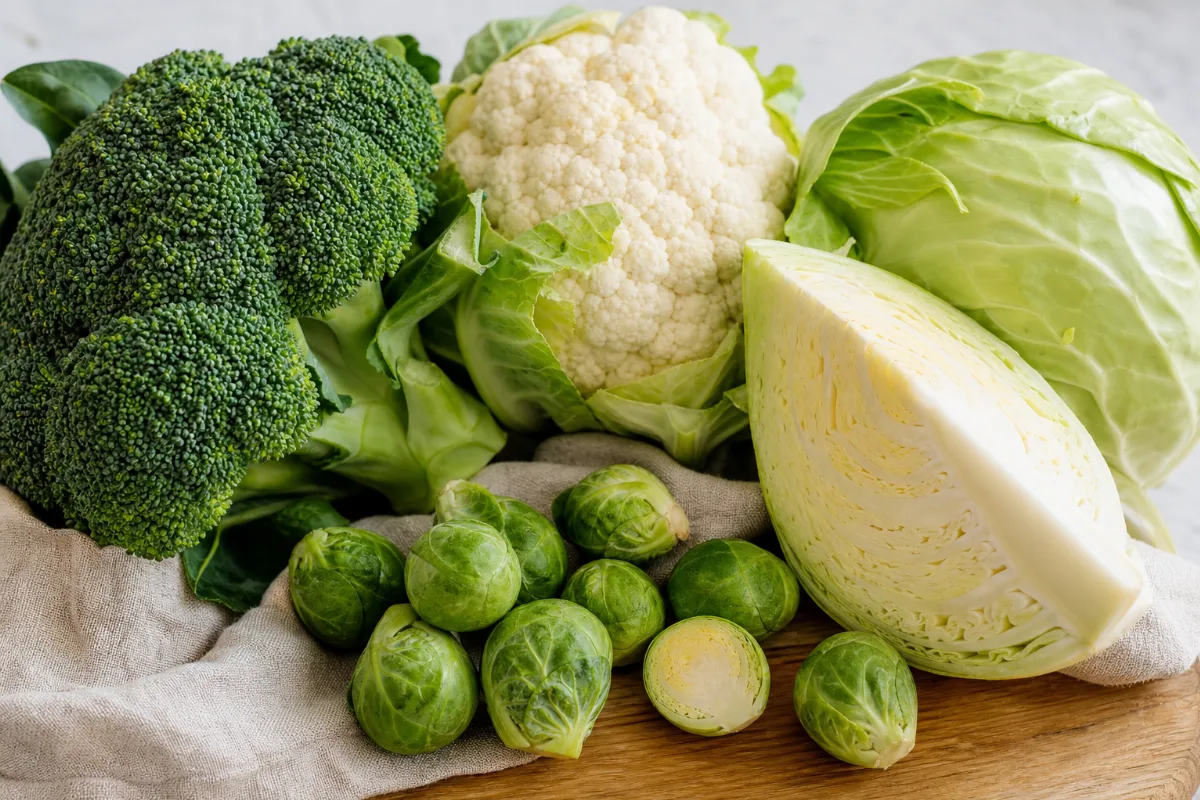
Cruciferous vegetables are plants of the cabbage family (Brassicaceae). Broccoli, cabbage, kale, Brussels sprouts, cauliflower and collards are forms of one species, Brassica oleracea L.; others, such as bok choy, are different species. They contain sulfur compounds called glucosinolates. The parts eaten are leaves, buds, flower heads and stems. This page is about them as food. Concentrated supplements are different products. Information only.
Read this first
- If you take warfarin, broccoli, kale, collards and Brussels sprouts are listed by one hospital patient guide among vitamin K-rich foods. The advice is to keep your intake consistent, not to avoid them. Tell your anticoagulation clinic before big changes. [1]
- Thyroid conditions: see the thyroid section below. Ask your clinician rather than cutting vegetables on your own.
What research shows
| Question | What the source found | Strength of evidence | Study type |
|---|---|---|---|
| Broccoli and any cancer | An updated meta-analysis of 23 case-control and 12 cohort studies found an inverse association: case-control OR 0.64, cohort RR 0.89. The authors note people with cancer ate less broccoli, which can bias results, and call for more cohort studies. [2] | Promising but limited (observational; case-control results are stronger than cohort results, a bias warning sign) | Observational |
| Cruciferous vegetables and prostate cancer | Highest versus lowest intake: RR 0.87, with a linear trend. [3] | Promising but limited | Observational (7 case-control, 9 cohort) |
| Heart disease, cancer and death | A dose-response meta-analysis of 95 prospective studies reported inverse associations for cruciferous vegetables with cardiovascular disease, all-cause mortality and total cancer. [4] | Promising but limited | Cohort studies |
| Prevention of cancer by eating them, in trials | Proper evidence not found in the sources we read (searched PubMed for broccoli and cruciferous vegetable intake and cancer prevention trials). | Insufficient evidence | N/A |
People who eat more vegetables differ from others in many ways, so these are associations, not proof of cause. The authors of the overall review say associations would only mean fewer deaths "if the observed associations are causal." [4]
Sulforaphane, a compound formed when glucosinolates break down, has its own page: sulforaphane and glucosinolates.
Thyroid questions
One review notes that some glucosinolate breakdown products, goitrin and thiocyanate, may decrease thyroid hormone production. [5] A 2024 systematic review of 123 articles (cells, animals and people) concluded the vast majority of results cast doubt on the idea that brassica vegetables have antithyroid effects in humans, and that eating them, particularly with adequate iodine, poses no adverse effects on thyroid function. [6] An earlier review found collards, Brussels sprouts and some Russian kale contain enough goitrin to potentially reduce thyroid iodine uptake, while commercial broccoli, broccoli rabe and Brassica oleracea kale contain much less and can be considered of minimal risk. [5] A published case report is titled "Myxedema coma induced by ingestion of raw bok choy" (we read only the title and record). [7] It concerns one person and unusually large amounts of one raw vegetable. If you have a thyroid condition or take thyroid medicine, whether vegetable amounts matter for you is not described in the sources we read; ask your clinician. This page gives no amounts.Related
Leafy greens · Tomatoes · Dietary nitrate in beets and leafy greensHealth connections for Cruciferous Vegetables (overview)
What research links to eating or drinking this food, and how strong the evidence is. Many studies are observational or use juice, powder, oil or extracts rather than the food as eaten; each card says which.
Vitamin C, vitamin K and folate from the vegetable itself
Established roleUSDA lists raw broccoli, Brussels sprouts, cabbage and cauliflower as notable sources of vitamin C and vitamin K, with folate and fiber as well. Amounts differ a lot between the four.
Supplements: Not applicable: this is about eating the food, not a supplement.
Broccoli and cancer risk (observational)
Preliminary or mixedAn updated meta-analysis of 23 case-control and 12 cohort studies found lower cancer risk with more broccoli (case-control OR 0.64, cohort RR 0.89). The authors note bias risks, and the case-control results are stronger than the cohort results.
Supplements: No trial evidence found that eating broccoli prevents cancer.
Cruciferous vegetables and prostate cancer risk
Preliminary or mixedHighest versus lowest intake was linked to RR 0.87, with a linear trend, in 7 case-control and 9 cohort studies.
Supplements: No trial evidence found.
Heart disease, cancer and death (all fruit and vegetables)
Preliminary or mixedA dose-response meta-analysis of 95 prospective studies reported inverse associations for cruciferous vegetables with heart disease, total cancer and all-cause death. The authors say the associations mean fewer deaths only if they are causal.
Supplements: Not applicable: this is about eating the food.
Prevention trials of eating them
Not enough evidenceThe sources we read include no randomized trials of eating broccoli or cruciferous vegetables to prevent cancer.
Supplements: Proper evidence not found in the sources we read.
Gas and digestive effects
Not enough evidenceThe sources we read do not describe digestive effects such as gas, so none are claimed.
Supplements: Proper evidence not found in the sources we read.
Connected topics
Open a group to see how each topic connects and how strong the evidence is.
Root causes (1)
- Medication Side EffectsDocumented risk
Vitamin K-rich cruciferous vegetables can affect warfarin; the advice is to keep intake consistent and tell the clinic about big changes.
Conditions & symptoms (2)
- Prostatic NeoplasmsPreliminary or mixed
Observational studies link higher cruciferous intake to lower prostate cancer risk (RR 0.87); this is association, not proof.
- Warfarin SyndromeDocumented risk
Not a disease caused by the vegetables; vitamin K-rich foods matter for people on warfarin, who are advised to keep intake steady.
Documented risks and interactions (4)
- Vitamin K and warfarin. Broccoli, kale, collards and Brussels sprouts are listed by a hospital patient guide among vitamin K-rich foods. The advice is to keep intake steady, not to avoid them, and to tell the anticoagulation clinic before big changes. MedlinePlus gives the same advice.
- Thyroid questions (goitrin and thiocyanate). Some glucosinolate breakdown products may reduce thyroid hormone production. A 2024 review of 123 articles found most results cast doubt on antithyroid effects in people, and no adverse effect on thyroid function from eating brassicas, particularly with adequate iodine.
- Raw bok choy case report. A case report describes myxedema coma after a person ate unusually large amounts of raw bok choy. We read only the title and citation.
- Washing and raw produce safety. The FDA says to wash produce under running water; soap or produce wash is not recommended, and washing lowers but does not remove bacteria.
Frequently asked questions
Does broccoli prevent cancer?
Observational studies show associations, with the authors cautioning about bias. We found no trial evidence. [2]
Are cruciferous vegetables bad for the thyroid?
A 2024 systematic review found no adverse effect on thyroid function from eating them, particularly with adequate iodine, but ask your clinician if you have a thyroid condition. [6]
Can I eat broccoli on warfarin?
Many people do. The advice is to keep intake consistent and tell your clinic about changes. [1]
Is raw or cooked better?
We did not find a source comparing them for health outcomes. See preparation.
Are broccoli supplements the same?
No. Supplements are separate products; see functional foods vs supplements vs medicine.
More details: evidence, limits and cautions
The details behind this page: cautions, limits of the evidence and where sources disagree. Open any note to read it.
Safety and individual considerations
- Vitamin K and warfarin: the patient guide says the goal is not to cut vitamin K out of your diet but to keep it steady, and that a sudden change may affect the medicine's action. [1] MedlinePlus advises eating consistent amounts of vitamin K foods week to week and talking to the doctor before diet changes. [8] See leafy greens.
- Digestive effects such as gas: Proper evidence not found in the sources we read.
- Raw produce safety: wash under running water; the FDA says soap or produce wash is not recommended and washing reduces but does not eliminate bacteria. [9] Raw sprouts carry their own risks; see raw sprouts, raw milk and undercooked foods.
- Pregnancy, children, kidney and liver disease: no special caution for vegetables as food appears in the sources we read.
References
- Cedars-Sinai. For Warfarin: Eating a Consistent Vitamin K Diet. Patient education page. Read 2026-10-23.
- Baladia E et al. Broccoli consumption and risk of cancer: an updated systematic review and meta-analysis of observational studies. Nutrients 2024. PMID 38892516. Abstract read 2026-10-23.
- Long J et al. Cruciferous vegetable intake and risk of prostate cancer: a systematic review and meta-analysis. Urol Int 2023. PMID 37343525. Abstract read 2026-10-23.
- Aune D et al. Fruit and vegetable intake and the risk of cardiovascular disease, total cancer and all-cause mortality: a systematic review and dose-response meta-analysis of prospective studies. Int J Epidemiol 2017. PMID 28338764. Abstract read 2026-10-23.
- Felker P et al. Concentrations of thiocyanate and goitrin in human plasma, their precursor concentrations in brassica vegetables, and associated potential risk for hypothyroidism. Nutr Rev 2016. PMID 26946249. Abstract read 2026-10-23.
- Galanty A et al. Do Brassica vegetables affect thyroid function? A comprehensive systematic review. Int J Mol Sci 2024. PMID 38612798. Abstract read 2026-10-23.
- Chu M, Seltzer TF. Myxedema coma induced by ingestion of raw bok choy. N Engl J Med 2010. PMID 20484407. Title and citation record read 2026-10-23; no abstract available.
- MedlinePlus. Warfarin: MedlinePlus Drug Information. Read 2026-10-23.
- US Food and Drug Administration. Selecting and Serving Produce Safely. Read 2026-10-23.