Beverages · Drink
Lemon Water & Infused Water
Citrus limon juice in water · also called Lemon water, infused water, fruit-infused water, agua de limon (Spanish)
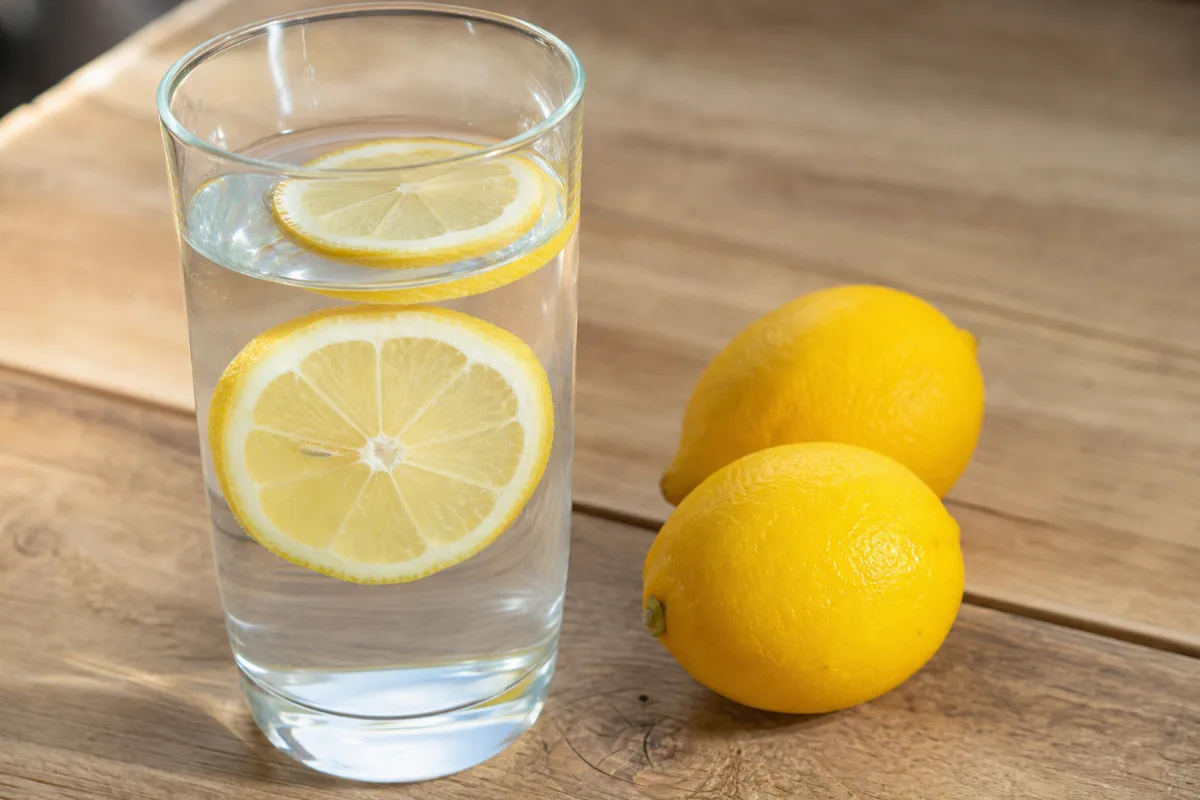
Lemon water is plain water with lemon juice or a slice of lemon added. Infused water uses other fruit, cucumber or herbs. Squeezing one lemon into water adds about 19 mg of vitamin C and roughly 11 calories, by a USDA summary we could not re-check. Small studies on kidney stones and gout are early and mixed, and we found no proof for detox or weight loss. The main caution is that lemon juice is acidic and can soften tooth enamel in lab tests.
General information, not medical advice. Last substantive update · Not medically reviewed. A named clinician has not signed off on this page. How this page is made
About Lemon Water & Infused Water
Lemon water is plain water with lemon juice or a slice added. It is mainly a way to flavour water. A squeeze of lemon adds a little vitamin C and very few calories. Research on kidney stones and gout is small and early, and we found no proof for detox or weight loss. Lemon juice is acidic, so people with sensitive teeth can ask a dentist.
What it is
This page covers water with lemon juice or lemon slices added, and infused water in general. It does not cover sweetened lemonade, bottled flavoured waters, lemon supplements or cleanse programs, which are different products.
The studies we read were mostly about lemon juice or lemonade, often in larger amounts than a squeeze in a glass. They cannot be applied directly to a slice in water.
What is in it
The numbers below are for raw lemon juice from a USDA FoodData Central summary that we could not re-open this time, so treat them as unverified. Per 100 g of juice: 22 kcal, 6.9 g carbohydrate, 2.52 g sugars, 38.7 mg vitamin C and 103 mg potassium. The juice of one lemon (48 g) has about 10.6 kcal, 1.2 g sugars, 18.6 mg vitamin C and 49 mg potassium. A wedge (5.9 g of juice) has about 1.3 kcal and 2.3 mg vitamin C.
The NHS says adults aged 19 to 64 need 40 mg of vitamin C a day and lists citrus fruit among good sources. Lemons also contain citric acid. Slices left in a pitcher extract an amount that no source we read measured, so we make no claim about infused water.
What the research shows
Kidney stones: a 2021 review of 13 articles found ten small studies where lemon, orange and grapefruit juices raised urine citrate, but lemon juice did not clearly change urine acidity, and the authors said larger data were needed. A 2007 crossover trial in 21 stone formers found lemonade did not improve urine citrate or pH, while potassium citrate did. A 2026 trial in 8 people found a sugar-free lemonade drink was well tolerated, but no differences between treatments were significant. NIDDK says drinking enough liquid, mainly water, is the most important step.
Gout: a retrospective study of 90 patients in Poland who drank the juice of two lemons in 2 litres of water each day found blood uric acid fell over six weeks in the gout and high-uric-acid groups compared with controls. It was a pilot study without randomisation, and it has a published erratum that we did not read.
Weight, colds and detox: we found no trial of lemon water. One trial found 500 mL of plain water before meals went with about 2 kg more weight lost over 12 weeks on a diet. A large review found vitamin C supplements did not cut the number of colds in the general community. Neither used lemon water. We found nothing to support detox or alkalizing claims.
At a glance
Traditional uses history, not proof
- Added to water for taste
- Popular belief about detox or weight loss is common, but no source we read supports it
Studied for research
- Kidney stone urine measures (citrate and acidity), mixed certainty
- Blood uric acid in gout, very low certainty
- Making plain water easier to drink, insufficient evidence
- Weight and colds, insufficient evidence for lemon water
- Detox and alkalizing claims, no evidence found
Main compounds
- Vitamin C (about 19 mg in the juice of one lemon, USDA summary)
- Citric acid, which is what the kidney stone studies looked at
- Potassium (about 49 mg in one lemon's juice, USDA summary)
- Small amounts of natural fruit sugar
Common forms
- Water with squeezed lemon juice (the form the nutrition figures describe)
- Water with a wedge or slice
- Hot lemon water, not studied separately
- Infused water with other fruit or herbs, not studied in the sources read
- Sweetened lemonade, a different drink
Research links: Citrus juices and kidney stones, review (Nutrients, 2021) · Lemonade versus potassium citrate, trial (Urology, 2007) · Lemon water and blood uric acid, pilot study (2025) · NHS: Vitamin C · NIDDK: Eating, diet and nutrition for kidney stones · Research Library · Genes & Biomarkers Library
What it is and its history
- Accepted scientific name
- Lemon water (juice of Citrus limon in drinking water)
- Common names
- Lemon water (English); Infused water (English); Fruit-infused water (English); Lemon-lime water (English); Agua de limon (Spanish)
- Harvest and processing
- Made at home or in cafes by squeezing lemon into water or leaving slices in water. Bottled and flavoured lemon waters and lemonades are different products, some with added sugar or sweeteners.
- Look-alikes and adulterants
- Name: Lemonade and sweetened lemon drinks; Note: Different drinks, with added sugar or citrate; they are what some of the kidney stone trials used.; Name: Water with cucumber, berries or herbs; Note: Infused water in general; no nutrition or health study of these was read.
Photographs
What is inside, and how it may work
What it contains and how those compounds act in cells and animals. Laboratory and animal mechanisms are not proven effects in people.
Main compounds
| Compound | Family | Where it is concentrated | Activity studied | Level of evidence |
|---|---|---|---|---|
| Vitamin C (ascorbic acid) | vitamin | Juice USDA summary: 38.7 mg per 100 g of juice; about 18.6 mg in the juice of one lemon (48 g). Not re-checked. | A nutrient the body needs. The NHS says adults 19 to 64 need 40 mg a day and lists citrus fruit as a source. 12 10 | Human data |
| Citric acid / citrate | organic acid | Juice Not given in the sources read. | Makes lemon juice sour and acidic. Urine citrate is what the kidney stone studies measured. 1 7 | Human data |
| Potassium | mineral | Juice USDA summary: 103 mg per 100 g of juice; about 49 mg in one lemon's juice. Not re-checked. | A mineral; the amount in a squeeze of lemon is small. 12 | Human data |
| Sugars | carbohydrate | Juice USDA summary: 2.52 g per 100 g of juice; about 1.2 g in one lemon's juice. Not re-checked. | Natural fruit sugars in the juice. Lemon water with no added sugar has very few. 12 | Human data |
Mechanisms, receptors and pathways
| Target or pathway | Gene or receptor | What was found | Level |
|---|---|---|---|
| Citrate in urine and stone formation | Not applicable | Citrate in urine can lower the chance of calcium stones forming. Small studies found lemon juice raised urine citrate, but in one trial lemonade did not improve citrate or pH. This is the reason these studies were done; stones themselves were not measured. 1 7 | Human data |
| Acid and tooth enamel | Not applicable | Acidic juice lowers the pH on the tooth surface and softened extracted tooth enamel in a lab test. 8 4 | Laboratory research |
Absorption, metabolism and elimination
- Absorption
- Not found in the sources read.
- Distribution
- Not found.
- Metabolism
- Not found.
- Elimination
- Not found.
Isolated compounds versus whole extracts
This page is about lemon juice or slices in drinking water. Results for lemonade, a commercial sugar-free lemonade drink, potassium citrate medicine and vitamin C supplements are comparisons, not results for lemon water.
Nutritional composition
Nutrition source: USDA FoodData Central, raw lemon juice (FDC 167747, SR Legacy), taken from our own earlier saved summary. The USDA record was NOT re-opened this time (the API refused the request as over its rate limit), so treat these numbers as unverified. Per 100 g of juice: 22 kcal, 6.9 g carbohydrate, 2.52 g total sugars, 0.3 g fibre, 38.7 mg vitamin C, 103 mg potassium, 20 mcg folate (DFE) and 1 mg sodium. The USDA household portion for one lemon is 48 g of juice, which gives about 10.6 kcal, 3.3 g carbohydrate, 1.2 g sugars, 18.6 mg vitamin C, 49 mg potassium and 0.5 mg sodium; one wedge (5.9 g of juice) gives about 1.3 kcal and 2.3 mg vitamin C. These are the juice only. Plain water adds no calories, and slices left in a pitcher extract an amount that no source read measured, so we make no claim about infused water. Values vary with the fruit. Bottled flavoured waters and lemonades have their own labels.
1 mixed findings1 very low certainty4 not enough evidence
What was looked at
The 6 benefits and uses checked for Lemon Water & Infused Water, each with how strong the evidence is. Tap one to open it.
- Kidney stones (urine citrate and urine acidity)Mixed findings
- Gout and blood uric acidVery low certainty
- Making plain water easier to drinkNot enough evidence
- WeightNot enough evidence
- Colds and vitamin CNot enough evidence
- "Detox", "alkalizing" and cleanse claimsNot enough evidence
Lab markers tracked in the studies
Urine citrateUrine pH (acidity)Blood uric acid (serum urate)Body weightNumber of colds caught
What is Lemon Water & Infused Water good for?
The main studied uses and how strong the human evidence is for each. Most results come from small studies of lemon juice or lemonade, or from plain water or supplements, not from a slice of lemon in a glass of water.
Benefits, one by one
Each card is a research question, not a promise. Tap a goal to filter. Open a card to see the studies, doses and limits.
Kidney stones (urine citrate and urine acidity)
Mixed findingsLemon juice contains citrate, and citrate in urine can lower the chance of stones forming. In small studies, citrus juices including lemon raised urine citrate. But in a 21-person crossover trial, lemonade did not improve urine citrate or acidity while a citrate medicine did, and in an 8-person trial a sugar-free lemonade drink raised citrate without a significant difference between treatments. Nobody has shown that lemon water prevents stones coming back.
4 studiesLemon juice and lemonade studied, not lemon water. The abstracts do n…
Studies, doses and limits
What the trials found
A 2021 narrative review of 13 articles found ten small studies where orange, grapefruit and lemon juices raised urine citrate, but lemon juice did not significantly change urine pH. A 2007 crossover trial in 21 stone formers found lemonade did not improve citrate or pH, unlike potassium citrate. A 2026 randomised crossover trial in 8 people with low urine citrate found a sugar-free citrate lemonade drink was well tolerated, but differences between treatments were not significant.
Results
Mixed. Urine citrate tended to rise with lemon juice in small studies; lemonade did not improve citrate or pH in one trial. No trial of stone recurrence with lemon water was found.
Effect sizes as reported
2021 review: citrate up with lemon juice, no significant pH change. 2007 trial: citrate and pH improved only with potassium citrate. 2026 trial (n = 8): citrate rose with all regimens, between-regimen P = 0.5 to 0.9.
Why this rating
Small studies of juice, lemonade or a commercial lemonade drink point in different directions, none measured actual stones, and none tested a slice of lemon in a glass of water.
Form and dose studied
Lemon juice and lemonade studied, not lemon water. The abstracts do not give amounts we could compare with a squeeze in a glass.
Who was studied
Adults who form kidney stones.
Limits
Urine measures only; no stone outcomes. Very small trials. Commercial lemonade differs from lemon water.
Why researchers looked
Some kidney stones form when urine is low in citrate, and lemons are a citrus source of citrate.
Traditional use
Not a traditional use in the sources we read.
Proposed mechanism Preliminary mechanism
Citrate in urine can bind calcium and make stones less likely to form. This idea is the reason these small studies were done; the trials measured urine, not stones.
A proposed mechanism does not show that the effect happens in people.
People who form stones should ask their clinician before using lemon juice as a treatment; a citrate medicine worked better than lemonade in the 2007 trial.
Gout and blood uric acid
Very low certaintyOne retrospective clinic study in Poland (90 patients) found blood uric acid fell over six weeks in people with gout and in people with high uric acid who drank the juice of two lemons in 2 litres of water each day, compared with controls. The authors called it a pilot study. It is an early finding that needs proper trials.
1 studiesJuice of two lemons in 2 litres of water daily, as suggested by clini…
Studies, doses and limits
What the trials found
A 2025 retrospective cohort of 90 patients from two Polish outpatient rheumatology clinics compared three groups after six weeks: gout, high uric acid without gout, and controls with other diagnoses.
Results
Blood uric acid fell more in the gout group than in the high-uric-acid group (p = 0.03) and more in the high-uric-acid group than in the controls (p = 0.003). Kidney filtration (GFR) rose in the gout group.
Effect sizes as reported
p values only in the abstract; the size of the change is not given.
Why this rating
A retrospective review of records with no randomisation or placebo, groups that differ by diagnosis, a large daily amount of lemon juice, and an erratum published in 2026 that we did not read.
Form and dose studied
Juice of two lemons in 2 litres of water daily, as suggested by clinic providers, for six weeks. This is what the patients did, not advice.
Who was studied
Adults with gout or high blood uric acid in Poland.
Limits
Not randomised. Medicines and other diet changes may differ between groups. Gout flares and attack rates were not reported in the abstract.
Why researchers looked
Clinicians at the two clinics had suggested lemon water to their patients, and the researchers then looked back at the records.
Traditional use
Not described in the sources we read.
Proposed mechanism Unknown
The abstract does not propose a mechanism.
A proposed mechanism does not show that the effect happens in people.
People with gout or kidney disease should follow their own clinician's plan and not replace medicines with lemon water.
Making plain water easier to drink
Not enough evidenceAdding lemon or lime can make water taste better, and plain water instead of sugary drinks is a common public-health tip. We could not open the CDC page that lists this tip, and no trial compared lemon water with plain water for how much people drank.
1 studiesWater with a wedge or squeezed lemon.
Studies, doses and limits
What the trials found
No trial of lemon water against plain water for fluid intake was found. Our earlier summary says the CDC lists a lemon or lime wedge as a way to flavour water, but the CDC page returned Access Denied when we tried to read it, so this is unverified.
Results
A practical tip, not a measured result.
Why this rating
No study read measured this, and the one agency source could not be opened.
Form and dose studied
Water with a wedge or squeezed lemon.
Who was studied
General population.
Limits
No trial.
Why researchers looked
Flavour can make plain water easier to choose than a sweet drink.
Traditional use
Everyday practice, not a studied tradition.
Proposed mechanism Unknown
None; this is about taste and habit.
A proposed mechanism does not show that the effect happens in people.
Citrus is acidic; see the Safety tab for teeth.
Weight
Not enough evidenceNo trial of lemon water for weight was found. In one small trial, older adults on a reduced-calorie diet who drank 500 mL of plain water before meals lost about 2 kg more over 12 weeks than those on the diet alone. That was plain water, so it says nothing about lemon.
1 studiesPlain water, not lemon water.
Studies, doses and limits
What the trials found
A 2010 randomised trial in 48 adults aged 55 to 75 compared 500 mL of plain water before each main meal with diet alone. Lemon was not used.
Results
About 2 kg more weight lost with plain water before meals. For lemon water: no study found.
Effect sizes as reported
About 2 kg greater weight loss over 12 weeks (plain water).
Why this rating
Insufficient for lemon water because it was not tested. The plain-water result comes from one small trial where people knew their group.
Form and dose studied
Plain water, not lemon water.
Who was studied
Overweight or obese adults on a reduced-calorie diet.
Limits
One small trial; plain water only.
Why researchers looked
Lemon water is often promoted for weight loss.
Traditional use
Popular belief, not a documented tradition.
Proposed mechanism Human trial
In the trial, water before a meal lowered the energy eaten at that meal at the start of the study.
A proposed mechanism does not show that the effect happens in people.
None specific.
Colds and vitamin C
Not enough evidenceLemon juice contains some vitamin C, but a glass of lemon water has far less than the supplements tested in trials. A large review found regular vitamin C supplements did not reduce how many colds people in the general community caught, but shortened colds slightly. That review is about supplements, not lemon water.
2 studiesSupplements, not lemon water.
Studies, doses and limits
What the trials found
The 2013 Cochrane review pooled 29 placebo-controlled trial comparisons (11,306 people) of vitamin C at 0.2 g a day or more.
Results
Community trials: catching a cold RR 0.97 (0.94 to 1.00). Regular use shortened colds by 8% in adults and 14% in children. Starting vitamin C after symptoms began showed no consistent effect.
Effect sizes as reported
RR 0.97 (0.94 to 1.00); duration -8% adults, -14% children
Why this rating
Insufficient for lemon water: the trials were of supplements of at least 0.2 g a day, and no trial of lemon water for colds was found.
Form and dose studied
Supplements, not lemon water.
Who was studied
General community; also runners, skiers and soldiers.
Limits
Supplements are not the food or drink.
Why researchers looked
Vitamin C is the best-known reason people drink lemon water when they feel a cold coming.
Traditional use
Popular belief.
Proposed mechanism Human trial
Vitamin C is a nutrient the body needs; how it might shorten colds is not settled in the abstract.
A proposed mechanism does not show that the effect happens in people.
None specific. See the Safety tab for vitamin C and the NHS.
"Detox", "alkalizing" and cleanse claims
Not enough evidenceWe found no study in the sources we read showing that lemon water detoxes the body or changes the body's acid balance. Absence from the sources we read is not proof of no effect.
0 studiesLemon water.
Studies, doses and limits
Results
No human evidence found.
Why this rating
No studies were found in the sources read.
Form and dose studied
Lemon water.
Limits
No studies.
Why researchers looked
These claims are widespread online.
Traditional use
Popular belief.
Proposed mechanism Unknown
No mechanism in the sources read.
A proposed mechanism does not show that the effect happens in people.
None specific.
Connections to the rest of health
How Lemon Water & Infused Water connects to the rest of our health knowledge graph. Every link says what kind of connection it is. A safety link (for example to the liver) is a warning, not a benefit. A study that merely mentions a topic never creates a benefit link.
Explore every connection: goals, body systems, organs, symptoms, genes
A. Wellness goals
| Connected to | Kind of connection | Evidence status | Context | Studies |
|---|---|---|---|---|
| Kidney Health | Mixed findings | Kidney stones (urine citrate and urine acidity): Lemon juice contains citrate, and citrate in urine can lower the chance of stones forming. In small studies, citrus juices including lemon raised urine citrate. But in a 21-person crossover trial, lemonade did not improve urine citrate or acidity while a citrate medicine did, and in an 8-person trial a sugar-free lemonade drink raised citrate without a significant difference between treatments. Nobody has shown that lemon water prevents stones coming back. | 1 7 5 11 | |
| Joint Health | Potential benefit | Very low certainty | Gout and blood uric acid: One retrospective clinic study in Poland (90 patients) found blood uric acid fell over six weeks in people with gout and in people with high uric acid who drank the juice of two lemons in 2 litres of water each day, compared with controls. The authors called it a pilot study. It is an early finding that needs proper trials. | 3 |
| Preventive Wellness | Not enough evidence | Making plain water easier to drink: Adding lemon or lime can make water taste better, and plain water instead of sugary drinks is a common public-health tip. We could not open the CDC page that lists this tip, and no trial compared lemon water with plain water for how much people drank. | 9 | |
| Weight Management | Not enough evidence | Weight: No trial of lemon water for weight was found. In one small trial, older adults on a reduced-calorie diet who drank 500 mL of plain water before meals lost about 2 kg more over 12 weeks than those on the diet alone. That was plain water, so it says nothing about lemon. | 2 | |
| Immune Support | Not enough evidence | Colds and vitamin C: Lemon juice contains some vitamin C, but a glass of lemon water has far less than the supplements tested in trials. A large review found regular vitamin C supplements did not reduce how many colds people in the general community caught, but shortened colds slightly. That review is about supplements, not lemon water. | 6 10 | |
| Detox | Not enough evidence | "Detox", "alkalizing" and cleanse claims: We found no study in the sources we read showing that lemon water detoxes the body or changes the body's acid balance. Absence from the sources we read is not proof of no effect. |
B. Body systems
| Connected to | Kind of connection | Evidence status | Context | Studies |
|---|---|---|---|---|
| Kidney Urinary | Biological association | Mixed findings | Studied for: Kidney stones (urine citrate and urine acidity) Studied for: Gout and blood uric acid | 1 7 5 11 3 9 |
| Musculoskeletal System | Biological association | Very low certainty | Studied for: Gout and blood uric acid | 3 |
| Metabolic System | Biological association | Not enough evidence | Studied for: Weight | 2 |
| Immune System | Biological association | Not enough evidence | Studied for: Colds and vitamin C | 6 10 |
| Digestive System | Biological association | Not enough evidence | Studied for: "Detox", "alkalizing" and cleanse claims |
E. Health conditions
| Connected to | Kind of connection | Evidence status | Context | Studies |
|---|---|---|---|---|
| Kidney stones | Mixed findings | Small studies show citrate in urine rising with lemon juice, but one trial found lemonade did not improve citrate or pH. Preparation or compound: Lemon juice and lemonade |
1 7 | |
| Gout | Preliminary | One retrospective pilot study found lower blood uric acid after six weeks. Preparation or compound: Juice of two lemons in 2 litres of water daily |
3 | |
| Tooth enamel erosion | Adverse effect or risk | Lab evidence | Lime juice softened extracted teeth in a lab study; lemon water was not tested. Preparation or compound: Acidic fruit juices |
8 4 |
I. Biomarkers
| Connected to | Kind of connection | Evidence status | Context | Studies |
|---|---|---|---|---|
| Urine citrate | Biological association | Mixed findings | Measured in trials: raised. A lab change is not the same as a health benefit. | 1 7 5 |
| Urine pH (acidity) | Biological association | Low certainty | Measured in trials: raised. A lab change is not the same as a health benefit. | 1 7 |
| Blood uric acid (serum urate) | Biological association | Very low certainty | Measured in trials: lowered. A lab change is not the same as a health benefit. | 3 |
| Body weight | Biological association | Low certainty | Measured in trials: lowered. A lab change is not the same as a health benefit. | 2 |
| Number of colds caught | Biological association | Moderate certainty | Measured in trials: lowered. A lab change is not the same as a health benefit. | 6 |
K. Biological pathways
L. Active compounds
| Connected to | Kind of connection | Evidence status | Context | Studies |
|---|---|---|---|---|
| Vitamin C (ascorbic acid) | Biological association | Human | A nutrient the body needs. The NHS says adults 19 to 64 need 40 mg a day and lists citrus fruit as a source. Preparation or compound: Juice |
12 10 |
| Citric acid / citrate | Biological association | Human | Makes lemon juice sour and acidic. Urine citrate is what the kidney stone studies measured. Preparation or compound: Juice |
1 7 |
| Potassium | Biological association | Human | A mineral; the amount in a squeeze of lemon is small. Preparation or compound: Juice |
12 |
| Sugars | Biological association | Human | Natural fruit sugars in the juice. Lemon water with no added sugar has very few. Preparation or compound: Juice |
12 |
Each connection is stored with the ingredient, the connected record, the kind of connection, the evidence status, the supporting studies, the preparation or compound involved, and a review date (last reviewed October 26, 2026).
The evidence
The research centre for Lemon Water & Infused Water. Every record here was checked against PubMed or the publisher's page; we never list a study we have not verified.
Evidence by outcome
Bars show how many studies we found for each outcome, not how well it works. People are added up across trials only (reviews are not added, to avoid double counting).
How we rate evidence
High certainty
Several well-run trials or reviews agree; further research is unlikely to change the picture much.
Moderate certainty
Good trials point the same way, but some doubt remains.
Low certainty
Small, short or inconsistent trials. The finding could change with better research.
Very low certainty
Very little or very weak human data. Treat as a possibility only.
Mixed findings
Trials or reviews disagree with each other.
Not enough evidence
Not enough human research to say either way.
Evidence against
Good research found no benefit, or found harm.
We take the reviewers' own risk-of-bias and GRADE statements where they exist, and otherwise judge from study size, design, consistency, directness and whether a product matches what is sold. Many publications do not make evidence high. Method note: We started from our existing lemon water summary, re-read the PubMed abstracts for eight studies and the NHS and NIDDK pages. Only abstracts were read for studies. Little research was held for this item, so the page is smaller than most. Items we could not verify (the USDA values and the CDC page) are flagged.
Study library: every study we checked 12
| Study | Design | People | Product, dose, length | Result |
|---|---|---|---|---|
| Barghouthy 2021 Role of Citrus Fruit Juices in Prevention of Kidney Stone Disease (KSD): A Narrative Review. Nutrients · PMID 34836376 · DOI |
Systematic review |
13 articles: 3 large population studies and 10 small prospective clinical studies on orange, grapefruit and lemon juices and kidney stones | Citrus juices (orange, grapefruit, lemon or lemonade) Juice Varied by study; not given in the abstract Varied · vs Mostly none or baseline |
Ten small prospective studies found orange, grapefruit and lemon juices all raised urine citrate. Only orange and grapefruit juice made urine less acidic; lemon juice did not significantly change urine pH. Orange and grapefruit juices raised urine oxalate. In three large population studies grapefruit juice went with more stones and orange juice did not. The authors say lemon juice had a smaller protective role than orange juice and that larger and better data are needed before recommendations. Qualitative: citrate up with lemon juice; no significant pH change (Not applicable (narrative review)) Methods, limits and fundingOutcomes: Stone formation (population studies); urine citrate, urine pH and urine oxalate (small clinical studies) Limitations: Narrative review of mostly small studies of juice or lemonade, not of a slice in water. The abstract does not say how much juice was used. Funding and conflicts: Authors declare no conflict of interest relevant to the content. Read: abstract |
| Dennis 2010 Water consumption increases weight loss during a hypocaloric diet intervention in middle-aged and older adults. Obesity (Silver Spring) · PMID 19661958 · DOI |
Randomized controlled trial |
48 48 overweight or obese adults aged 55 to 75 (BMI 25 to 40) |
Plain water, 500 mL before each daily meal, with a reduced-calorie diet (no lemon) Juice 500 mL before each main meal 12 weeks · vs Reduced-calorie diet alone |
Weight loss was about 2 kg greater in the water group than in the diet-alone group, and that group lost weight 44% faster over the 12 weeks. A 500 mL water drink before a test meal lowered energy eaten at the start (498 versus 541 kcal, p = 0.009) but not clearly at week 12 (480 versus 506 kcal, p = 0.069). About 2 kg more weight lost over 12 weeks (Not given in the abstract) Methods, limits and fundingOutcomes: Body weight, and energy eaten at a test meal Limitations: Small trial in older adults on a diet. It tested plain water, not lemon water. People knew their group. Funding and conflicts: Funding is not stated in the abstract. Read: abstract |
| Edyta 2025 Lemon Water Reduces Serum Urate Levels in Gout Patients and Individuals With Hyperuricemia-A Pilot Study. Int J Rheum Dis · PMID 41355048 · DOI |
Retrospective cohort |
90 90 patients from two Polish outpatient rheumatology clinics: gout (group A), high uric acid without gout (group B), and a control group with other diagnoses (group C) |
Juice of two squeezed lemons mixed with 2 litres of water each day (a general recommendation made by clinic providers) Juice As recommended by the clinics 6 weeks · vs Between-group comparison (group C as control) |
After six weeks, serum urate fell more in the gout group than in the high-uric-acid group (p = 0.03) and more in the high-uric-acid group than in the control group (p = 0.003). GFR rose in the gout group compared with the other two (p = 0.03 and p = 0.0007). The authors conclude lemon water may be a helpful adjunct; the title calls it a pilot study. Group differences in change in serum urate (p = 0.03, p = 0.003); numbers of change not given in the abstract (Not given in the abstract) Methods, limits and fundingOutcomes: Serum urate, glomerular filtration rate (GFR), urine pH Limitations: Retrospective review of medical records, no randomisation, no placebo, no blinding, and the groups differ by diagnosis, so medicines and diet changes could play a part. The drink was a large daily amount, far more than a squeeze in a glass. An erratum was published in 2026 (Int J Rheum Dis 2026 Feb; 29(2):e70577); we did not read what it corrects. Funding and conflicts: Funding and conflicts are not stated in the abstract. Read: abstract |
| Guazzo 2026 An In Vitro and In Vivo Assessment of Acidogenicity of Several Alcoholic and Non-Alcoholic Beverages. Clin Exp Dent Res · PMID 42830648 · DOI |
Lab and short human test |
19 19 healthy adults (tooth-surface pH test); drinks tested in the lab |
Sparkling wines, red and white wine, an alcoholic soft drink, a non-alcoholic soft drink, beer and orange juice, compared with water (lemon water was not tested) Juice 10 mL held in the mouth for 1 minute Up to 30 minutes of measurement · vs Water |
All drinks except water caused an immediate drop in tooth-surface pH, followed by recovery toward baseline within 10 to 15 minutes. Drinks with high titratable acidity (traditional sparkling wine, orange juice) gave a more lasting acid challenge. The authors say the study measured short-term pH, not tooth loss. pH drop then recovery within 10 to 15 minutes; lowest mean pH 6.2 (Not given in the abstract) Methods, limits and fundingOutcomes: Tooth-surface pH after the drink; acidity measures in the lab Limitations: Lemon water was not one of the drinks. It shows how quickly mouth acidity recovers after other acidic drinks. Funding and conflicts: Authors declare no conflicts of interest. Read: abstract |
| Guo 2026 Effects of a commercial lemonade beverage, potassium citrate, and combination therapy on urinary stone risk parameters in hypocitraturic stone formers: a randomized crossover trial. Transl Androl Urol · PMID 42729157 · DOI |
Randomized crossover trial |
8 8 adults with kidney stones and low urine citrate (hypocitraturia) |
A commercial sugar-free citrate lemonade drink, potassium citrate, or both Juice Three one-week periods; amounts per day are in the abstract (not repeated here as advice) 1 week each, 1 week washout · vs Each regimen compared with the others |
The lemonade drink gave the largest rise in urine volume and the combination the largest rise in urine citrate, but none of these differences reached statistical significance. The lemonade drink lowered the uric acid stone-risk measure more than potassium citrate (P = 0.002). The drink was well tolerated with no adverse effects reported. The authors say multi-centre studies are needed. Citrate up with all regimens; between-regimen differences not significant (P = 0.5 to 0.9) (Not given in the abstract) Methods, limits and fundingOutcomes: 24-hour urine volume, citrate, pH and stone-risk measures Limitations: Only 8 patients, one week per regimen, a commercial sugar-free lemonade drink (not real lemon in water). Stone recurrence not measured. Funding and conflicts: Registered trial (ClinicalTrials.gov NCT05389995). Several authors report consulting for urology device companies; no food-company funding is stated in the abstract. Read: abstract |
| Hemila 2013 Vitamin C for preventing and treating the common cold. Cochrane Database Syst Rev · PMID 23440782 · DOI |
Systematic review meta analysis |
11306 29 trial comparisons, 11,306 people; 10,708 in general community trials and 598 marathon runners, skiers and soldiers |
Vitamin C supplements, at least 0.2 g per day (not lemon water) Juice At least 0.2 g a day (supplement trials) Varied · vs Placebo |
In general community trials the pooled risk ratio for catching a cold was 0.97 (95% CI 0.94 to 1.00). In 598 marathon runners, skiers and soldiers it was 0.48 (0.35 to 0.64). Regular vitamin C shortened colds by 8% in adults (3% to 12%) and 14% in children (7% to 21%). Taking vitamin C only after symptoms began showed no consistent effect. Cold risk RR 0.97 (community); duration -8% adults, -14% children (RR 0.97 (0.94 to 1.00)) Methods, limits and fundingOutcomes: How many people caught a cold; how long colds lasted Limitations: Tested supplements of at least 0.2 g a day, not a glass of lemon water. One lemon's juice has far less vitamin C than that. Funding and conflicts: Review authors state no conflicts of interest in the entry. Read: abstract |
| Koff 2007 Comparison between lemonade and potassium citrate and impact on urine pH and 24-hour urine parameters in patients with kidney stone formation. Urology · PMID 17572176 · DOI |
Crossover trial |
21 21 people who form kidney stones |
Lemonade versus potassium citrate (a prescription-type citrate supplement) Juice · vs Each treatment compared with the other and with baseline |
Potassium citrate, but not lemonade, improved urine citrate and pH to a significant degree. Urine volume was lower on potassium citrate than on lemonade. Neither changed urine uric acid significantly. The authors conclude lemonade did not improve urine citrate or pH, but did help keep urine output up. Citrate and pH improved significantly with potassium citrate, not with lemonade (Not given in the abstract) Methods, limits and fundingOutcomes: 24-hour urine citrate, pH, volume and uric acid Limitations: Small prospective crossover trial in stone formers. Lemonade, not a slice of lemon in water. The recipe and amount are not in the abstract. Stone outcomes were not measured. Funding and conflicts: Funding is not stated in the abstract. Read: abstract |
| Mohamed Rasheed 2025 Evaluating the Erosive Effects of Freshly Squeezed Local Fruit Juices on Human Dental Enamel and Consumption Patterns Among Malaysian Adults. Nutrients · PMID 40871604 · DOI |
Lab study plus survey human teeth (lab) |
189 A survey of 189 dental clinic attenders in Malaysia, and a laboratory test on 40 extracted human premolar teeth |
Freshly squeezed lime juice, pineapple juice, citric acid, and distilled water; teeth soaked Juice Teeth immersed in juice (not sipping) 10 days of immersion · vs Distilled water |
Lime (57.7%) was the most commonly drunk juice in the survey. In the lab, both lime and pineapple juice significantly reduced enamel hardness and increased roughness (p < 0.0001), and lime juice caused the greatest enamel volume loss, which the authors link to its higher acidity. Lab: lower enamel hardness, more roughness with lime juice (p < 0.0001) (Not given in the abstract) Methods, limits and fundingOutcomes: Enamel volume loss, surface roughness, hardness (lab); juice habits (survey) Limitations: Lime juice, not lemon, and juice rather than juice diluted in water. Teeth were soaked for days; people rinse with saliva and do not hold a drink in the mouth for days. It shows the juice is acidic, not how often lemon water harms teeth. Funding and conflicts: Authors declare no conflicts of interest. Read: abstract |
| s-cdc-water CDC: Water and healthier drinks · Source |
Health agency n/a |
Methods, limits and fundingRead: not-read | ||
| s-nhs-vitc NHS: Vitamin C · Source |
Health agency n/a |
Methods, limits and fundingRead: full-text | ||
| s-niddk-stones NIDDK: Eating, Diet, & Nutrition for Kidney Stones · Source |
Health agency n/a |
Methods, limits and fundingRead: full-text | ||
| s-usda-fdc-167747 USDA FoodData Central: Lemon juice, raw (FDC 167747, SR Legacy) · Source |
Food database n/a |
Methods, limits and fundingRead: summary-only |
What we do not know yet
- No trial of lemon water against plain water was found for fluid intake, weight, colds, kidney stone recurrence or anything else.
- The kidney stone and gout studies used juice, lemonade or a commercial lemonade drink in amounts that differ from a squeeze in a glass.
- The gout finding rests on one retrospective pilot study that has an erratum we did not read.
- The USDA values and the CDC page could not be re-opened, so they are unverified.
- Teeth, allergy, medicine, pregnancy and children data for lemon water itself were not found; infused water and food safety of cut fruit were not researched.
How new research is added
New studies are found by a saved PubMed search and placed in a review queue before the page changes.
Lab markers
What changed in blood or saliva tests during trials. A changed number is not the same as feeling or being healthier, and we give no "normal ranges".
Metabolic 1
Body weight
Lowered in trials
How much a person weighs, measured weekly in the trial.
Low certaintyResults and what it means
Why it was measured
It is the usual outcome in weight studies.
Statistical vs. clinical meaning
A plain-water result from one small trial. Not a lemon-water result.
Safety implication
None specific.
| Study | Result | People | Product |
|---|---|---|---|
| 2 | About 2 kg more weight lost with 500 mL of plain water before meals than with diet alone over 12 weeks | 48 overweight or obese adults aged 55 to 75 | Plain water before each main meal |
Other 4
Urine citrate
Raised in trials
The amount of citrate in a 24-hour urine collection. Citrate helps keep calcium from forming stones.
Mixed findingsResults and what it means
Why it was measured
Low urine citrate is a risk factor for kidney stones.
Statistical vs. clinical meaning
Pointing in different directions; not shown to lower actual stone recurrence.
Safety implication
None specific.
| Study | Result | People | Product |
|---|---|---|---|
| 1 | Ten small prospective studies found lemon, orange and grapefruit juices raised urine citrate | Mostly stone formers or volunteers | Citrus juices |
| 7 | Lemonade did not improve urine citrate significantly; potassium citrate did | 21 stone formers | Lemonade versus potassium citrate, crossover |
| 5 | Citrate rose with a sugar-free lemonade drink, potassium citrate and both, without a significant difference between them | 8 adults with low urine citrate | One week each, crossover |
Urine pH (acidity)
Raised in trials
How acidic or alkaline the urine is. Some stones form more easily in acidic urine.
Low certaintyResults and what it means
Why it was measured
Citrus juices that make urine less acidic could in theory lower the risk of some stones.
Statistical vs. clinical meaning
No clear effect of lemon juice on urine pH in the studies read.
Safety implication
None specific.
Blood uric acid (serum urate)
Lowered in trials
The level of uric acid in the blood. Very high levels can form crystals in joints and cause gout.
Very low certaintyResults and what it means
Why it was measured
It is the usual lab marker followed in gout.
Statistical vs. clinical meaning
A lab marker in one retrospective study; gout attacks were not reported.
Safety implication
Do not stop gout medicines without asking your clinician.
| Study | Result | People | Product |
|---|---|---|---|
| 3 | Serum urate fell more after six weeks in gout and high-uric-acid groups than in controls (p = 0.03 and p = 0.003) | 90 patients in two Polish clinics | Juice of two lemons in 2 L of water daily |
Number of colds caught
Lowered in trials
The share of people who have one or more colds during a trial.
Moderate certaintyResults and what it means
Why it was measured
It shows whether vitamin C helps prevent colds.
Statistical vs. clinical meaning
For supplements: little effect in the general community. Not a lemon-water result.
Safety implication
None specific.
| Study | Result | People | Product |
|---|---|---|---|
| 6 | RR 0.97 (0.94 to 1.00) in general community trials; RR 0.48 (0.35 to 0.64) in 598 runners, skiers and soldiers | 11,306 people in 29 trial comparisons | Vitamin C supplements of 0.2 g a day or more |
Safety
What studies and official sources say about side effects, medicines and who should check first. Each point shows what kind of evidence it comes from.
Main points to know 3
- Lemon juice is acidic and can soften tooth enamel in lab tests. A 2025 lab study on 40 extracted human teeth found that soaking in lime juice for 10 days (a close cousin of lemon) lowered enamel hardness and caused the most enamel loss of the juices tested. A 2026 study of 19 adults found that acidic drinks such as orange juice, soft drinks and wine lowered tooth-surface pH within a minute, and it recovered in most drinks within 10 to 15 minutes. Lemon water itself was not tested in either study, and neither measured tooth damage in people who drink it. If you have sensitive teeth or enamel wear, ask a dentist. Lab and short human test 8 4
- If you form kidney stones, ask your clinician before using lemon juice as a treatment. In a 21-person crossover trial, lemonade did not improve urine citrate or pH, while potassium citrate did. NIDDK says drinking enough liquid, mainly water, is the most important thing to prevent stones; the page we read does not mention lemon. Human trial 7 11
- Lemon water does not replace medicine for gout or kidney disease. The one gout study was a retrospective review of 90 patients, and it has an erratum we did not read. It does not show lemon water can replace medicines. Observational 3
Side effects 3
| Effect | How often | Severity and recovery | Evidence |
|---|---|---|---|
| Possible tooth-enamel wear from frequent acidic drinks Lab and short-term findings only. Whether this happens with ordinary lemon water was not tested. | No frequency in people was found in the sources read. | mild to moderate, can be lasting Not described in the sources read. | Lab and short human test 8 4 |
| Stomach upset from very large amounts of vitamin C supplements The NHS figure (more than 1,000 mg a day) is about supplements. One lemon's juice has about 19 mg in the USDA summary we hold, so this does not describe lemon water. | Not established | mild The NHS says symptoms should disappear once supplements are stopped. | Authoritative guidance 10 |
| Citrus allergy The sources we read gave no allergy data for lemon. Stop and get urgent help for trouble breathing or swelling of the face or throat. | No frequency found. | can be serious in rare cases Not described. | Not found |
Liver
No liver problem from lemon water was found in the sources read. LiverTox and similar liver-safety sources were not searched.
How often. No frequency was found.
Monitoring. No agency monitoring advice was found.
This is a safety connection. It is not evidence that Lemon Water & Infused Water supports liver health.
Medicines and supplements 2
| With | Why it matters | Importance | Evidence | What to do |
|---|---|---|---|---|
| Medicines in general prescription | No interaction between lemon juice in water and medicines was found in the sources read. | None found. This is an absence of evidence in what we read, not proof of safety. | Not found Not enough evidence | Ask a pharmacist if you take regular medicines. Lemon is a different fruit from grapefruit, whose medicine interactions are well known and are not covered here. |
| Potassium-limiting medicines or a low-potassium diet diet | Lemon juice contains a small amount of potassium (about 49 mg for the juice of one lemon in the USDA summary we hold, not re-checked). | A squeeze in water is a small amount. People told to limit potassium can still check with their care team. | Food composition summary Low certainty 12 | If you have kidney disease or have been told to limit potassium, ask your care team. |
Who should check first 4
| Situation | Advice | Evidence |
|---|---|---|
| People who form kidney stones | Ask your clinician before using lemon juice as a treatment. In one trial, a citrate medicine worked better than lemonade; NIDDK stresses enough liquid, mainly water. | Human trial 7 11 |
| Sensitive teeth or enamel wear | Ask a dentist. The studies we read did not test straws, rinsing with plain water, or timing. | Lab and short human test 8 4 |
| A fluid or potassium limit set by your clinician (for example in heart or kidney disease) | Follow your clinician's limit. Lemon water counts as fluid. | Clinical judgment |
| Pregnancy, breastfeeding and young children | The sources we read gave no specific advice on lemon water. Ask your midwife, doctor or pharmacist. | Not found |
Overdose, product quality and regulators
Summary. No toxicity from lemon water was found in the sources read. It is a food-strength drink.
Animal. Not reviewed.
Human doses studied. The gout study used the juice of two lemons in 2 litres of water a day for six weeks; the abstract does not report side effects.
High dose or long term signals. Not found, other than the acidity and enamel findings above.
Washing, storing and food-safety advice for cut lemons and infused water was not researched in an official source.
Washing the lemon and keeping cut fruit. No official source on washing or storing cut lemons or on how long infused water keeps was read, so we give no timings.
| Body | Action | Date |
|---|---|---|
| NHS (UK) (United Kingdom) | Vitamin C: adults 19 to 64 need 40 mg a day from the diet; citrus fruit and orange juice are good sources; over 1,000 mg a day of supplements can cause stomach pain, diarrhoea and wind. source | 2020-08-03 |
| NIDDK (US) (United States) | Drinking enough liquid, mainly water, is the most important thing to prevent kidney stones. source | 2017-05 |
When to get medical help
- Swelling of the face, lips or throat, trouble breathing, or widespread hives after a citrus drink or food: in the US call 911; in the UK call 999; elsewhere call your local emergency number.
- Severe pain in the side or back with fever, vomiting or blood in the urine (possible kidney stone or infection): get medical care the same day.
- Severe or lasting stomach pain after a vitamin C supplement: stop it and ask a doctor or pharmacist.
Stop using the product and contact a clinician or emergency service. In the US, Poison Control is 1-800-222-1222.
General information only, not medical advice. Ask a clinician or pharmacist before use, especially with medicines, in pregnancy or with a health condition. See the Natural Remedy Safety guide.
Frequently asked questions
What does this page cover?
Water with lemon juice or lemon slices, and infused water in general. Sweetened lemonade, bottled flavoured waters and supplements are different products.
What is in lemon water?
By a USDA summary we could not re-check, the juice of one lemon in water adds about 10.6 kcal, 1.2 g of sugars, 18.6 mg of vitamin C and 49 mg of potassium. A single wedge adds much less. Plain water adds no calories.
Is lemon water a good source of vitamin C?
Does lemon water help prevent kidney stones?
The evidence is mixed. Small studies found citrus juices raised urine citrate, but a 21-person trial found lemonade did not improve urine citrate or acidity, unlike a citrate medicine. No trial showed fewer stones. NIDDK says drinking enough liquid, mainly water, is the most important step. Ask your clinician if you form stones.
Does lemon water lower uric acid or help gout?
One retrospective pilot study of 90 patients found blood uric acid fell over six weeks when people drank the juice of two lemons in 2 litres of water daily. It was not randomised and has an erratum we did not read. Do not stop gout medicines without asking your clinician.
Will lemon water help me lose weight?
We found no trial of lemon water for weight. One trial found plain water before meals went with about 2 kg more weight lost over 12 weeks on a reduced-calorie diet, but lemon was not used.
Does lemon water boost the immune system or prevent colds?
We found no trial of lemon water for colds. A large review found vitamin C supplements did not reduce how many colds people in the general community caught, but shortened colds slightly. That review is about supplements, not lemon water.
Does lemon water detox the body or make it alkaline?
We found no evidence for this in the sources we read. That is an absence of evidence in what we read, not proof of no effect.
Is lemon water bad for my teeth?
Does lemon water interact with medicines?
We found no interaction in the sources we read, but we did not search a drug database. Lemon is a different fruit from grapefruit. If you take regular medicines, ask a pharmacist.
Is lemon water safe in pregnancy or for children?
The sources we read gave no specific advice for lemon water. Ask your midwife, doctor or pharmacist.
What about infused water with cucumber, berries or herbs?
No source we read measured what leaves a slice and enters the water, or studied the health effects, so we make no claim about it.
Explore by health goal
Kidney HealthJoint HealthPreventive WellnessWeight ManagementImmune SupportDetox
Editorial transparency
- Written by
- AlternativeMed editorial team. Research compiled with AI assistance, then checked against the sources listed.
- Medical review
- None. This page has not been reviewed by a physician or pharmacist.
- First published
- 2026-10-26
- Last substantive update
- 2026-10-26
- How we research
- We started from our existing lemon water summary, re-read the PubMed abstracts for eight studies and the NHS and NIDDK pages. Only abstracts were read for studies. Little research was held for this item, so the page is smaller than most. Items we could not verify (the USDA values and the CDC page) are flagged.
- How we rate evidence
- See "How we rate evidence" in the Evidence tab.
- Independence
- No product is promoted on this page. No affiliate links are shown. Funding of most studies is not stated in their abstracts.
Sources 12
Each source was opened and checked. Where we read only the abstract, it says so. The small numbers in the text point here.
- Barghouthy Y, Somani BK. Role of Citrus Fruit Juices in Prevention of Kidney Stone Disease (KSD): A Narrative Review.. Nutrients. 2021. PMID 34836376. DOI 10.3390/nu13114117. (abstract)
- Dennis EA, Dengo AL, Comber DL, Flack KD, et al.. Water consumption increases weight loss during a hypocaloric diet intervention in middle-aged and older adults.. Obesity (Silver Spring). 2010. PMID 19661958. DOI 10.1038/oby.2009.235. (abstract)
- Edyta BK, Brunetti L, Naomi S. Lemon Water Reduces Serum Urate Levels in Gout Patients and Individuals With Hyperuricemia-A Pilot Study.. Int J Rheum Dis. 2025. PMID 41355048. DOI 10.1111/1756-185x.70488. (abstract)
- Guazzo R, Bressan E, Lehrkinder A, Campus G, et al.. An In Vitro and In Vivo Assessment of Acidogenicity of Several Alcoholic and Non-Alcoholic Beverages.. Clin Exp Dent Res. 2026. PMID 42830648. DOI 10.1002/cre2.70462. (abstract)
- Guo JN, Patel A, Tsai KP, Khondakar N, et al.. Effects of a commercial lemonade beverage, potassium citrate, and combination therapy on urinary stone risk parameters in hypocitraturic stone formers: a randomized crossover trial.. Transl Androl Urol. 2026. PMID 42729157. DOI 10.21037/tau-2026-0345. (abstract)
- Hemila H, Chalker E. Vitamin C for preventing and treating the common cold.. Cochrane Database Syst Rev. 2013. PMID 23440782. DOI 10.1002/14651858.CD000980.pub4. (abstract)
- Koff SG, Paquette EL, Cullen J, Gancarczyk KK, et al.. Comparison between lemonade and potassium citrate and impact on urine pH and 24-hour urine parameters in patients with kidney stone formation.. Urology. 2007. PMID 17572176. DOI 10.1016/j.urology.2007.02.008. (abstract)
- Mohamed Rasheed ZB, Zakaria ASI, Abdul Rahman F, et al.. Evaluating the Erosive Effects of Freshly Squeezed Local Fruit Juices on Human Dental Enamel and Consumption Patterns Among Malaysian Adults.. Nutrients. 2025. PMID 40871604. DOI 10.3390/nu17162576. (abstract)
- . CDC: Water and healthier drinks. . . (not-read)
- . NHS: Vitamin C. . . (full-text)
- . NIDDK: Eating, Diet, & Nutrition for Kidney Stones. . . (full-text)
- . USDA FoodData Central: Lemon juice, raw (FDC 167747, SR Legacy). . . (summary-only)


