Fruits · Fruit
Lemons
Citrus limon · also called Lemon, limon (Spanish)
The lemon is a sour citrus fruit, eaten mostly as juice and zest. It is a good source of vitamin C, which prevents scurvy. For colds, kidney stones, weight and blood pressure the evidence is weak or missing, and the cold trials used vitamin C tablets, not lemons. The main cautions are sun-and-juice skin rashes, tooth wear from acidic drinks, and rare seed allergy.
General information, not medical advice. Last substantive update · Not medically reviewed. A named clinician has not signed off on this page. How this page is made
About Lemons
The lemon is a sour, juicy fruit that is a good source of vitamin C. It is a nutritious food, not a proven remedy: most health claims about lemon water are not backed by lemon trials.
What it is
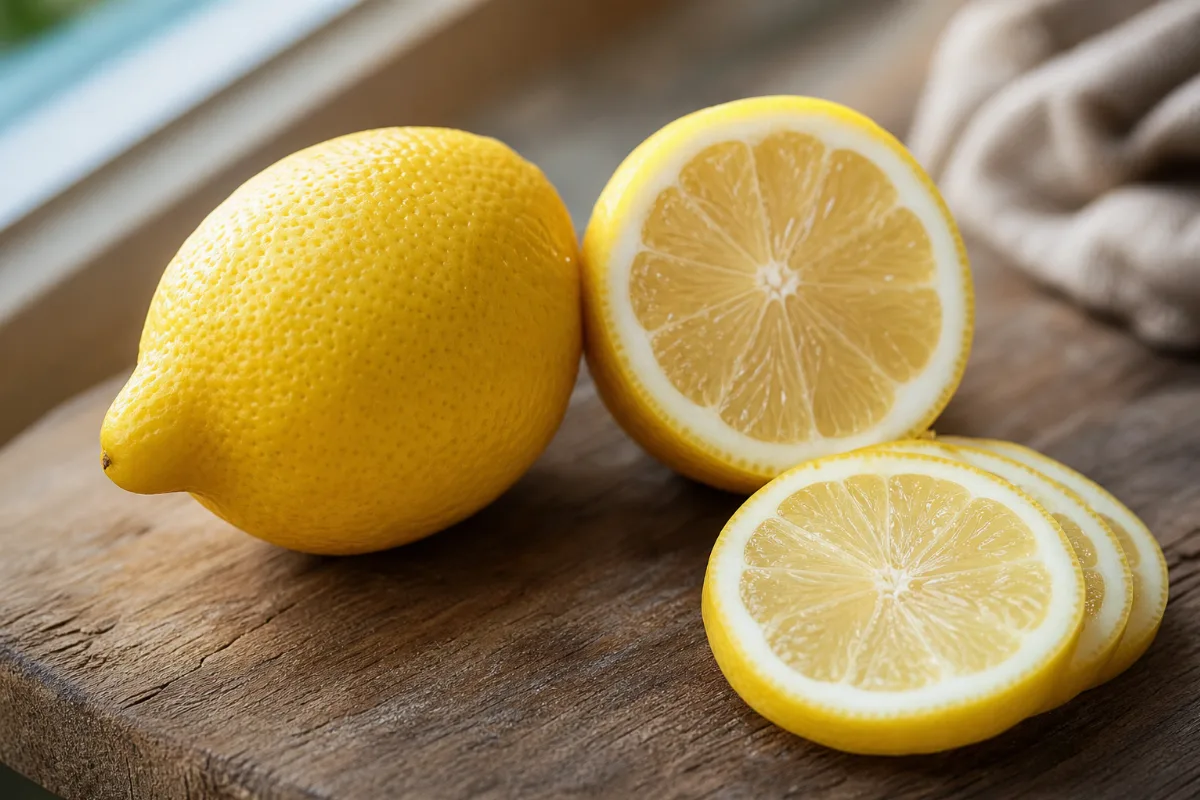
The lemon (Citrus limon) is the fruit of a small tree in the citrus family. People eat the juicy pulp, drink the juice and use the zest for flavour.
USDA data for raw lemon without peel: 29 kcal per 100 g. One lemon (58 g edible portion) has about 17 kcal, 1.6 g fibre, 1.5 g sugars, 31 mg vitamin C and 80 mg potassium. It has no vitamin K. Cooking and storage can lower the vitamin C. Other nutrients are small per fruit.
What the research shows
The firmest fact is about vitamin C: too little causes scurvy, and vitamin C foods prevent it. That is a nutrient fact, not a lemon trial.
Colds are the most common reason people drink lemon. The large Cochrane review tested vitamin C tablets, not lemons, and found no fewer colds in the general public and only a small shortening of colds with daily use.
Two small studies in healthy people found lemon juice with bread lowered the blood sugar peak. Lemonade studies for kidney stones were tiny and mixed. Blood pressure, weight and cancer results are very low certainty and not lemon-specific.
Vitamin C tablets versus the fruit
The cold trials used vitamin C tablets of at least 200 mg a day. One lemon has about 31 mg. Lemonade studies used commercial or homemade drinks, which vary a lot in citric acid. Results for one form do not carry over to another.
Amounts
This page gives no amounts to eat or drink. Ask a doctor or pharmacist what is right for you, especially if you take medicine or have kidney stones.
At a glance
Traditional uses history, not proof
- Used as a sour flavouring in drinks and cooking
- Drunk in hot or cold lemon drinks for colds and as a general tonic; long use is not proof it works
Studied for research
- Preventing scurvy through vitamin C, high certainty for the nutrient, no lemon trial
- Common cold, catching one, against (vitamin C tablets, general public)
- Kidney stones, insufficient evidence
- Blood sugar after a starchy meal, low certainty (healthy people, one meal)
- Blood pressure and weight, very low certainty
Main compounds
- Vitamin C (ascorbic acid)
- Citric acid
- Small amounts of carotenoids (USDA)
- Furocoumarins, named in lime juice and peel (skin reaction)
Common forms
- Raw fruit and zest as food
- Fresh lemon juice
- Commercial sugar-free lemonade (used in a 2026 stone trial)
- A syrup-and-juice lemon detox drink (used in a weight trial)
- Vitamin C tablets (used in cold trials; not the same as lemon)
Research links: NHS: Scurvy · Cochrane review: vitamin C and the common cold (2013) · AHRQ systematic review: preventing recurrent kidney stones (2026) · Research Library · Genes & Biomarkers Library
What it is and its history
- Accepted scientific name
- Citrus limon
- Naming authority
- (L.) Osbeck (GBIF accepted, written Citrus × limon; usageKey 7647136)
- Common names
- Lemon (English); Limon (Spanish)
- Family or group
- Rutaceae (the citrus family), which also includes oranges, limes and grapefruit.
- Classification
- Plantae > Tracheophyta > Magnoliopsida > Sapindales > Rutaceae > Citrus > Citrus limon
- Native range
- Not verified from a source read.
- Habitat
- Not verified from a source read.
- What it looks like
- Roots: Not verified.; Stems: Not verified.; Leaves: Not verified.; Flowers: Not verified.; Fruit: The fruit is the food. USDA lists one 2-1/8 inch lemon as 58 g of edible portion (peeled).
- Cultivation
- Not verified from a source read.
- Harvest and processing
- Eaten raw as fruit, juiced, or used as zest. Studies used fresh juice, commercial lemonade and a syrup-and-juice detox drink.
- Look-alikes and adulterants
- Name: Lime (Citrus species); Note: A different citrus fruit. Skin-reaction case reports are mostly for lime, and lime evidence should not be assumed for lemon.; Name: Lemon balm, lemongrass, lemon verbena; Note: Unrelated herbs with a lemon scent. They are not the fruit and are covered on their own pages.
- Sustainability and conservation
- Not assessed.
Photographs
Traditional use and history history, not clinical proof
| Tradition or era | Documented use | Source |
|---|---|---|
| Scurvy and vitamin C foods | A 2023 review says scurvy was common during the Age of Sail on long sea voyages without fresh food, and that it occurs wherever diets lack vitamin C. It does not name lemon. | p37795755 |
| Culinary use | Lemon juice and zest are used as sour flavourings in drinks and cooking (general knowledge; no historical source was read). | Not verified |
Traditional use shows how it was used. It does not show that it works or is safe today.
What is inside, and how it may work
What it contains and how those compounds act in cells and animals. Laboratory and animal mechanisms are not proven effects in people.
Main compounds
| Compound | Family | Where it is concentrated | Activity studied | Level of evidence |
|---|---|---|---|---|
| Ascorbic acid (vitamin C) PubChem 54670067 | vitamin | Fruit pulp and juice USDA: 53 mg per 100 g raw lemon without peel (about 31 mg in a 58 g lemon) | Essential nutrient. MedlinePlus says it helps absorb iron and is needed for collagen. Prevents scurvy. 24 26 21 16 | Human data |
| Citric acid PubChem 311 | organic acid | Juice About 1.44 g per ounce of fresh lemon juice (lab analysis); ready-made lemonades 0.03 to 0.22 g per ounce | Source of the sour taste. In urine, citrate helps stop calcium stones forming; whether lemon drinks raise it reliably is unclear. 25 15 8 6 | Human data |
| Beta-cryptoxanthin, beta-carotene and lutein plus zeaxanthin | carotenoid | Pulp (USDA lists tiny amounts) USDA per 100 g: 20 micrograms beta-cryptoxanthin, 3 micrograms beta-carotene, 11 micrograms lutein plus zeaxanthin | Present only in tiny amounts; no lemon trial of these was found. 26 | Composition only |
| Furocoumarins | phototoxic plant compounds | Juice and peel (stated for lime) | Case reports link lime juice or peel furocoumarins and sunlight to skin reactions. 1 | Case report |
| Flavonoids and other plant compounds | polyphenols | Not looked up | Not researched here. No lemon-specific human trial of these compounds was read, so no claim is made. | Not assessed |
Mechanisms, receptors and pathways
| Target or pathway | Gene or receptor | What was found | Level |
|---|---|---|---|
| Vitamin C and collagen/iron handling | Not specified | Vitamin C is needed to avoid scurvy and helps the body absorb iron from plant foods. Source: NHS, MedlinePlus and a 2004 review. 22 21 16 | Human data |
| Acid slows starch digestion | Salivary alpha-amylase | The authors of two crossover trials attribute the lower blood sugar peak after bread to acid inhibiting starch breakdown. This is their interpretation, not a direct proof. 4 5 | Human data |
| Urinary citrate | Not specified | Citrate in urine is a recognised inhibitor of calcium stone formation. Small lemonade studies show inconsistent rises in urine citrate. 8 6 14 | Human data |
| Acid erosion of enamel | Not applicable | Lemon juice and cola caused severe enamel surface erosion on extracted teeth in the lab. 13 | Laboratory research |
Absorption, metabolism and elimination
- Absorption
- Not studied for lemon.
- Distribution
- Not found.
- Metabolism
- Not found.
- Elimination
- Not found.
- Bioavailability
- Not established for lemon. A 2004 review notes ascorbic acid is unstable in cooking and storage, and MedlinePlus says cooking and storage can reduce vitamin C.
Isolated compounds versus whole extracts
The cold trials used vitamin C tablets of 0.2 g a day or more, far above one lemon (about 31 mg). The stone studies used lemonade and a commercial sugar-free drink. The blood sugar trials used lemon juice. The detox trial used a syrup-and-juice program. Results from one form do not carry over to another.
Nutritional composition
Nutrition from USDA FoodData Central (raw lemon without peel, FDC 167746, published 4/1/2019, read 2026-10-25). Per 100 g: 29 kcal, 2.8 g fibre, 2.5 g total sugars, 53 mg vitamin C, 138 mg potassium, 26 mg calcium, 0.6 mg iron, 11 micrograms folate (DFE), 0.08 mg vitamin B6, 9.3 g carbohydrate, 1.1 g protein, 0.3 g fat, about 89 g water. One lemon (2-1/8 inch, 58 g edible portion): about 17 kcal, 1.6 g fibre, 1.5 g sugars, 31 mg vitamin C (about a third of the 90 mg MedlinePlus lists for adult men), 80 mg potassium, 15 mg calcium, 6 micrograms folate. One wedge (7 g): about 3.7 mg vitamin C. USDA lists no vitamin K. Figures vary with variety and ripeness, and cooking and storage can lower vitamin C (MedlinePlus). Lemon is mainly a vitamin C food; its other nutrients are small per fruit.
1 high certainty1 moderate certainty1 mixed findings1 low certainty3 very low certainty1 not enough evidence1 evidence against
What was looked at
The 9 benefits and uses checked for Lemons, each with how strong the evidence is. Tap one to open it.
- Preventing scurvy (severe vitamin C shortage)High certainty
- Common cold: catching one (vitamin C trials, not lemon)Evidence against
- Common cold: how long it lasts (vitamin C trials, not lemon)Mixed findings
- Kidney stones: lemon juice and lemonadeNot enough evidence
- Blood sugar after a starchy meal (lemon juice with bread)Low certainty
- Blood pressure (lemon intake and walking, observational)Very low certainty
- Body weight and insulin resistance (the 'lemon detox' diet)Very low certainty
- Lung cancer risk and citrus fruit (observational)Very low certainty
- Absorbing iron from plant foods (vitamin C role)Moderate certainty
Lab markers tracked in the studies
Urinary citrateCitric acid in lemon juice (product analysis)Blood glucose peak after breadGastric emptying rate (MRI)Systolic blood pressure changehs-CRP (inflammation marker)
What is Lemons good for?
The main studied uses and how strong the human evidence is for each. Many results come from vitamin C tablets or from drinks other than plain lemon.
Benefits, one by one
Each card is a research question, not a promise. Tap a goal to filter. Open a card to see the studies, doses and limits.
Preventing scurvy (severe vitamin C shortage)
High certaintyScurvy comes from going without enough vitamin C for a long time. Fruit and vegetables are the main source, and lemon is one vitamin C food. The NHS says mild cases are often treated by adding vitamin C foods. No trial has tested lemon itself for scurvy.
3 studiesRaw lemon fruit and juice as food. Cooking and long storage can lower…
Studies, doses and limits
What the trials found
The NHS says scurvy is caused by too little vitamin C over a long period, that fruit and vegetables are the main source, and that mild cases are often easily treated by adding vitamin C to the diet, for example from fresh fruit and vegetables. A 2023 review describes scurvy as still occurring today in people with very limited diets, such as some children with feeding problems. USDA lists 53 mg of vitamin C per 100 g of raw lemon without peel.
Results
The link between vitamin C foods and scurvy is well accepted. No trial of lemon specifically was found.
Effect sizes as reported
USDA: 53 mg vitamin C per 100 g raw lemon (peeled).
Why this rating
High for the general point that a diet with vitamin C prevents scurvy (health-agency and review statements). There is no lemon-specific trial, and a normal varied diet already prevents scurvy.
Form and dose studied
Raw lemon fruit and juice as food. Cooking and long storage can lower vitamin C (MedlinePlus).
Who was studied
People with very limited diets: little or no fresh fruit and vegetables, some smokers, people with eating problems or heavy alcohol or drug use (NHS).
Limits
Not a trial of lemon. Scurvy is rare with an ordinary diet. This is not a treatment for anyone with suspected scurvy.
Why researchers looked
Lemon is best known as a vitamin C food, so people ask whether it protects against vitamin C shortage.
Traditional use
Lemon has long been used as a sour flavouring and a source of vitamin C; long use is not proof that it treats any condition.
Proposed mechanism Authoritative guidance
Lemon is a good food source of vitamin C (ascorbic acid), which the body needs to make collagen and to absorb iron from plant foods. Lemon juice is also rich in citric acid, which is acidic and is a form of citrate.
A proposed mechanism does not show that the effect happens in people.
Anyone with bleeding gums, easy bruising, tiredness and joint pain should see a doctor, not rely on food alone.
Common cold: catching one (vitamin C trials, not lemon)
Evidence againstTrials of daily vitamin C tablets did not lower the chance of catching a cold in the general public. The only group that clearly benefited was people under brief severe physical stress, such as marathon runners, skiers and soldiers in cold conditions. These trials used tablets, not lemons.
1 studiesVitamin C tablets of 0.2 g (200 mg) or more a day. One lemon holds ab…
Studies, doses and limits
What the trials found
A Cochrane review pooled 29 trial comparisons with 11,306 people. In general community trials (10,708 people) the risk ratio for catching a cold on regular vitamin C was 0.97 (95% CI 0.94 to 1.00). In 598 marathon runners, skiers and soldiers on subarctic exercises it was 0.48 (0.35 to 0.64). The review only counted trials with at least 0.2 g a day versus placebo. No trial of lemon, lemon juice or lemon water was found.
Results
Daily vitamin C supplements did not reduce colds in the general public. Lemon itself was not tested.
Effect sizes as reported
General public: RR 0.97 (0.94 to 1.00). Extreme exercise or cold: RR 0.48 (0.35 to 0.64).
Why this rating
A large Cochrane review found no effect for the general public. The authors say routine vitamin C is not justified. A lemon contains far less vitamin C than the trial amounts, so the result does not carry over directly.
Form and dose studied
Vitamin C tablets of 0.2 g (200 mg) or more a day. One lemon holds about 31 mg (USDA).
Who was studied
General community adults; separate small group of people under severe short-term physical stress.
Limits
Supplement trials, not food. Review published 2013; the record says none of the other review authors has a conflict of interest.
Why researchers looked
Lemon is often drunk for colds because of its vitamin C, so the vitamin C evidence is the nearest guide.
Traditional use
Lemon has long been used as a sour flavouring and a source of vitamin C; long use is not proof that it treats any condition.
Proposed mechanism Authoritative guidance
Lemon is a good food source of vitamin C (ascorbic acid), which the body needs to make collagen and to absorb iron from plant foods. Lemon juice is also rich in citric acid, which is acidic and is a form of citrate.
A proposed mechanism does not show that the effect happens in people.
Large vitamin C supplement amounts can upset the stomach (NHS, MedlinePlus). See the Safety tab.
Common cold: how long it lasts (vitamin C trials, not lemon)
Mixed findingsIn trials where people took vitamin C every day, colds were slightly shorter: 8% in adults and 14% in children. When vitamin C was only started after cold symptoms began, the trials showed no consistent effect. Again these were tablets, not lemons.
1 studiesVitamin C tablets, at least 0.2 g a day.
Studies, doses and limits
What the trials found
In the same Cochrane review, 31 comparisons (9,745 colds) found regular vitamin C shortened colds by 8% in adults (3% to 12%) and 14% in children (7% to 21%). In children, 1 to 2 g a day shortened colds by 18%. Seven comparisons of vitamin C started at cold onset (3,249 colds) showed no consistent effect on duration or severity.
Results
A small, steady effect on cold length in daily-supplement trials. Taking it after symptoms start did not show a clear effect.
Effect sizes as reported
Adults -8% (3% to 12%); children -14% (7% to 21%) duration with regular vitamin C. Therapeutic use: no consistent effect.
Why this rating
Consistent small effect with regular tablets, but no consistent effect when started at illness. Lemon itself not tested.
Form and dose studied
Vitamin C tablets, at least 0.2 g a day.
Who was studied
Adults and children in community trials.
Limits
Supplement trials only. Amounts far above what a lemon provides.
Why researchers looked
People drink hot lemon drinks when they have a cold, so readers ask whether it shortens a cold.
Traditional use
Lemon has long been used as a sour flavouring and a source of vitamin C; long use is not proof that it treats any condition.
Proposed mechanism Authoritative guidance
Lemon is a good food source of vitamin C (ascorbic acid), which the body needs to make collagen and to absorb iron from plant foods. Lemon juice is also rich in citric acid, which is acidic and is a form of citrate.
A proposed mechanism does not show that the effect happens in people.
None specific to lemon.
Kidney stones: lemon juice and lemonade
Not enough evidenceLemon juice is rich in citric acid, and citrate in urine helps protect against calcium stones. Small studies of lemonade changed urine markers in people with low urine citrate, but these were tiny and mixed. A 2026 large review rated lemon juice or lime powder as low-certainty for at least a small harm in stone prevention trials. There is no good evidence that lemon prevents stones.
5 studiesSugar-free commercial lemonade (Guo), lemonade therapy made at home (…
Studies, doses and limits
What the trials found
A 2026 randomised crossover trial in 8 stone formers with low urine citrate compared a sugar-free commercial lemonade drink (1 L daily), potassium citrate and a mix. Urine citrate rose most with the combination (+173 versus +68 for potassium citrate), but differences between regimens were not statistically significant (P=0.8). A 2007 retrospective study of 11 patients on long-term lemonade therapy found urine citrate rose by 383 mg a day (P<0.05) and the stone rate fell from 1.00 to 0.13 stones per patient a year (P>0.05, not significant). A 2006 crossover study in 13 volunteers found orange juice raised urine citrate and pH but lemonade did not. A 2008 lab analysis found fresh lemon juice contains 1.44 g citric acid per ounce, while ready-made lemonades range from 0.03 to 0.22 g per ounce. A 2026 AHRQ systematic review of stone prevention graded lemon juice or lime powder as low certainty for at least a small harm, and said evidence for most diet changes was insufficient.
Results
Mixed and weak. Urine markers sometimes change, but no good trial shows fewer stones from eating or drinking lemon.
Effect sizes as reported
Guo 2026: urine citrate +173 (combination) vs +68 (potassium citrate), P=0.8. Kang 2007: +383 mg/day (P<0.05); stone rate 1.00 to 0.13 (P>0.05). Odvina 2006: orange juice but not lemonade raised urine citrate.
Why this rating
Tiny studies (8, 11 and 13 people), one retrospective, results not significant, and a systematic review that graded lemon juice or lime powder as possible low-certainty harm.
Form and dose studied
Sugar-free commercial lemonade (Guo), lemonade therapy made at home (Kang), lemonade (Odvina). Not the same as fresh lemon juice in a typical diet.
Who was studied
People who form calcium stones, many with low urine citrate; small volunteer group in the 2006 study.
Limits
Very small studies; commercial lemonade products differ in citric acid by up to about 6-fold; the 2026 trial authors say multi-centre studies are needed. Some authors of the 2026 trial report consulting for device companies.
Why researchers looked
Stone clinics sometimes discuss lemonade as a food-based way to raise urine citrate in people who cannot tolerate citrate medicine.
Traditional use
Lemon has long been used as a sour flavouring and a source of vitamin C; long use is not proof that it treats any condition.
Proposed mechanism Preliminary mechanism
Citrate in urine binds calcium and can make calcium stones less likely to form. Lemon juice is one of the richest food sources of citric acid. Whether that raises urine citrate depends on the drink, and lemonade made differently can behave differently.
A proposed mechanism does not show that the effect happens in people.
People with kidney stones or kidney disease should ask a clinician before using lemon drinks as a stone remedy.
Blood sugar after a starchy meal (lemon juice with bread)
Low certaintyIn two small crossover studies by the same French group, drinking lemon juice with bread gave a lower blood sugar peak than water. The likely reason is the acid, which slows starch digestion, and not a special lemon compound. Both studies were in healthy volunteers and looked at one meal only.
2 studiesLemon juice drink (250 mL, water-diluted in the 2022 study) taken wit…
Studies, doses and limits
What the trials found
A 2021 randomised crossover trial gave healthy volunteers 100 g of bread with 250 mL of water, black tea or lemon juice. Lemon juice lowered the mean blood glucose peak by 30% (p<0.01) and delayed it by more than 35 minutes (78 versus 41 minutes with water). Tea had no effect. Food eaten 3 hours later was not changed. A 2022 follow-up in 10 participants used MRI: lemon juice gave blood glucose 35% lower at 55 minutes (P=0.039), stomach contents 1.5 times larger at 30 minutes, and 1.5 times faster gastric emptying.
Results
Lower and later blood sugar peak after bread when taken with lemon juice, in healthy people, single meal.
Effect sizes as reported
2021: peak -30% (p<0.01), delayed from 41 to 78 minutes. 2022: glucose -35% at 55 minutes (P=0.039), n=10.
Why this rating
Two small, short, randomised crossover trials in healthy volunteers by one research group. No people with diabetes, no long-term effect shown, and the effect is likely due to acidity.
Form and dose studied
Lemon juice drink (250 mL, water-diluted in the 2022 study) taken with 100 g of bread; trial detail, not advice.
Who was studied
Healthy adult volunteers.
Limits
Single meals; finger-prick glucose; small samples (n=10 in 2022; the 2021 abstract does not give n). Vinegar and other acids may do the same.
Why researchers looked
Acidic foods such as vinegar have been seen to lower blood sugar after starch, so researchers tried lemon juice.
Traditional use
Lemon has long been used as a sour flavouring and a source of vitamin C; long use is not proof that it treats any condition.
Proposed mechanism Preliminary mechanism
Low pH can switch off the saliva enzyme alpha-amylase that starts digesting starch, so glucose enters the blood later and lower. The authors say lemon juice behaves like vinegar and other acidic foods.
A proposed mechanism does not show that the effect happens in people.
Acidic drinks and teeth: see the Safety tab. People with diabetes should ask their care team before changing meals.
Blood pressure (lemon intake and walking, observational)
Very low certaintyA Japanese study of 101 middle-aged women recorded lemon intake and daily steps for five months. Both were linked with a smaller rise in systolic blood pressure. Because nobody was randomly assigned to lemon, this cannot show that lemon lowers blood pressure.
1 studiesDaily lemon intake as recorded by participants (form not specified in…
Studies, doses and limits
What the trials found
In 101 women on an island in Hiroshima, Japan, self-recorded lemon intake and steps over five months both showed a significant negative correlation with the change in systolic blood pressure. Multiple regression linked lemon intake to blood citric acid change and steps to blood pressure change.
Results
A link in a small observational study; no controlled trial was found.
Effect sizes as reported
Significant negative correlation with systolic blood pressure change (details not in the abstract).
Why this rating
Observational, one region, self-recorded intake, only women, and people who eat more lemon also tended to walk and look after their health. Two authors work at the company Pokka Sapporo Food and Beverage, which sells lemon products.
Form and dose studied
Daily lemon intake as recorded by participants (form not specified in the abstract).
Who was studied
Middle-aged women in a Japanese island community.
Limits
Correlation only; confounded by exercise and health-consciousness; industry-linked authors.
Why researchers looked
Lemon has been proposed to help blood pressure through citric acid or other compounds.
Traditional use
Lemon has long been used as a sour flavouring and a source of vitamin C; long use is not proof that it treats any condition.
Proposed mechanism Preliminary mechanism
The authors suggest lemon intake may act through blood citric acid, and walking through a different pathway. This is a suggestion from correlation, not tested.
A proposed mechanism does not show that the effect happens in people.
None specific.
Body weight and insulin resistance (the 'lemon detox' diet)
Very low certaintyA 7-day 'lemon detox' program of maple and palm syrups with lemon juice cut body fat and insulin resistance in 84 overweight Korean women. A matched placebo diet with the same calories did as well on most measures, so the authors credit the very low calories, not the lemon. Only the inflammation marker hs-CRP fell just in the lemon group.
1 studiesLemon detox juice (maple and palm syrups plus lemon juice) for 7 days…
Studies, doses and limits
What the trials found
A 2015 randomised trial: 84 premenopausal overweight women were split into a no-diet control, a pair-fed placebo diet, and a lemon detox group (maple and palm syrup plus lemon juice) for 7 days, then 4 days of transition food. Body weight, BMI, body fat and waist-hip ratio fell more in both the lemon and placebo-diet groups than in the control. Insulin, insulin resistance, leptin and adiponectin fell in both. hs-CRP fell only in the lemon group. Haemoglobin and haematocrit stayed stable only in the lemon group.
Results
Short, very low-calorie diet reduced weight and insulin resistance. Placebo diet did similarly. Not evidence that lemon water alone helps.
Effect sizes as reported
Details not in the abstract; hs-CRP lower only in the lemon detox group.
Why this rating
One 11-day trial in 84 women, a very low-calorie program, mixed product with syrups, and the lemon-specific marker (hs-CRP) was a secondary finding. No long-term follow-up.
Form and dose studied
Lemon detox juice (maple and palm syrups plus lemon juice) for 7 days; a calorie-restriction program, not plain lemon water.
Who was studied
Overweight premenopausal Korean women.
Limits
Very low-calorie diet; weight loss mostly explained by calories; short; funding not stated in the abstract.
Why researchers looked
Lemon water and 'detox' drinks are popular for weight loss and cleansing.
Traditional use
Lemon has long been used as a sour flavouring and a source of vitamin C; long use is not proof that it treats any condition.
Proposed mechanism Preliminary mechanism
The authors say the effects come from calorie restriction. They suggest the lower hs-CRP in the lemon group might be a possible extra effect, but this was not tested.
A proposed mechanism does not show that the effect happens in people.
Very low-calorie diets are not suitable for everyone. Ask a doctor before trying one.
Lung cancer risk and citrus fruit (observational)
Very low certaintyA 2021 review of 21 observational studies found that people who ate the most citrus fruit had a 9% lower chance of lung cancer than those who ate the least. Citrus here means oranges, grapefruit, lemons and similar fruit together, not lemons alone. This kind of study cannot show that citrus prevents cancer.
1 studiesCitrus fruit eaten as food, mixed types.
Studies, doses and limits
What the trials found
A meta-analysis of 21 case-control and cohort studies found an odds ratio of 0.91 (95% CI 0.84 to 0.98) for the highest versus the lowest citrus intake. The curve was non-linear: lowest risk around 60 g a day, with no clear further change above 80 g a day.
Results
A small link in observational studies for citrus as a group; nothing lemon-specific.
Effect sizes as reported
OR 0.91 (0.84 to 0.98), highest vs lowest citrus intake, 21 studies.
Why this rating
Observational studies can be confounded: people who eat more fruit differ in other ways (for example smoking). Lemon was not analysed alone.
Form and dose studied
Citrus fruit eaten as food, mixed types.
Who was studied
Adults in case-control and cohort studies.
Limits
Cannot show cause. Smoking is the main cause of lung cancer; eating citrus is not a substitute for quitting.
Why researchers looked
Citrus fruit contains vitamin C and flavonoids, which researchers have linked with lower cancer risk in lab studies.
Traditional use
Lemon has long been used as a sour flavouring and a source of vitamin C; long use is not proof that it treats any condition.
Proposed mechanism Preliminary mechanism
Not tested in this review. Vitamin C and plant compounds in citrus have been proposed to protect cells, but this was not studied here.
A proposed mechanism does not show that the effect happens in people.
Not a replacement for quitting smoking or lung-cancer screening.
Absorbing iron from plant foods (vitamin C role)
Moderate certaintyVitamin C helps the body absorb iron from plant foods eaten in the same meal. A 2004 review calls ascorbic acid the most efficient enhancer of non-heme iron absorption in the right foods. No trial tested lemon itself.
2 studiesVitamin C added to meals, mostly as ascorbic acid; lemon juice as a n…
Studies, doses and limits
What the trials found
A review of iron-absorption studies says ascorbic acid is the most efficient enhancer of non-heme iron absorption when it is stable in the food. Its effect is bigger in meals containing inhibitors of absorption. Citric acid and other organic acids were less effective, with limited data. MedlinePlus also says vitamin C helps the body absorb iron. A lab study of hummus (not in people) is not cited.
Results
Vitamin C is a recognised iron-absorption enhancer. Lemon-specific human trials were not found.
Effect sizes as reported
No single figure; the review is qualitative.
Why this rating
Moderate for vitamin C as a nutrient (based on a review of many absorption studies). Lemon-specific evidence: none found. Single-meal studies may overstate long-term effects.
Form and dose studied
Vitamin C added to meals, mostly as ascorbic acid; lemon juice as a natural source.
Who was studied
Mostly healthy adults and some children in absorption studies.
Limits
A review, not a lemon trial. The review itself says long-term effects may be less than predicted from single meals.
Why researchers looked
Lemon juice is often squeezed on beans, greens and cereals, so readers ask whether it helps iron absorption.
Traditional use
Lemon has long been used as a sour flavouring and a source of vitamin C; long use is not proof that it treats any condition.
Proposed mechanism Authoritative guidance
Ascorbic acid reduces iron to a form that is easier to absorb and can bind it in a more absorbable form.
A proposed mechanism does not show that the effect happens in people.
None specific to lemon.
Connections to the rest of health
How Lemons connects to the rest of our health knowledge graph. Every link says what kind of connection it is. A safety link (for example to the liver) is a warning, not a benefit. A study that merely mentions a topic never creates a benefit link.
Explore every connection: goals, body systems, organs, symptoms, genes
B. Body systems
| Connected to | Kind of connection | Evidence status | Context | Studies |
|---|---|---|---|---|
| Immune System | Biological association | High certainty | Studied for: Preventing scurvy (severe vitamin C shortage) Studied for: Common cold: catching one (vitamin C trials, not lemon) | 22 12 26 7 16 21 |
| Integumentary System | Biological association | High certainty | Studied for: Preventing scurvy (severe vitamin C shortage) | 22 12 26 |
| Respiratory System | Biological association | Evidence against | Studied for: Common cold: catching one (vitamin C trials, not lemon) Studied for: Common cold: how long it lasts (vitamin C trials, not lemon) | 7 17 |
| Urinary System | Biological association | Not enough evidence | Studied for: Kidney stones: lemon juice and lemonade | 6 8 14 15 2 |
| Kidney Urinary | Biological association | Not enough evidence | Studied for: Kidney stones: lemon juice and lemonade | 6 8 14 15 2 |
| Metabolism Weight | Biological association | Low certainty | Studied for: Blood sugar after a starchy meal (lemon juice with bread) Studied for: Body weight and insulin resistance (the 'lemon detox' diet) | 4 5 11 |
| Blood Sugar Support | Biological association | Low certainty | Studied for: Blood sugar after a starchy meal (lemon juice with bread) Studied for: Body weight and insulin resistance (the 'lemon detox' diet) | 4 5 11 |
| Cardiovascular System | Biological association | Very low certainty | Studied for: Blood pressure (lemon intake and walking, observational) | 9 |
| Heart Circulation | Biological association | Very low certainty | Studied for: Blood pressure (lemon intake and walking, observational) | 9 |
| Digestive System | Biological association | Moderate certainty | Studied for: Absorbing iron from plant foods (vitamin C role) | 16 21 |
C. Body parts and organs
| Connected to | Kind of connection | Evidence status | Context | Studies |
|---|---|---|---|---|
| Skin | Adverse effect or risk | Documented risk | Furocoumarins in lime juice or peel can make skin react to sunlight. Citrus juice on skin plus sun can cause a dark rash (lime documented). Preparation or compound: Citrus juice or peel on skin plus sunlight (lime documented) |
1 |
| Teeth | Adverse effect or risk | Lab only | Roughened enamel on extracted teeth in the lab. Preparation or compound: Lemon juice |
13 |
E. Health conditions
I. Biomarkers
| Connected to | Kind of connection | Evidence status | Context | Studies |
|---|---|---|---|---|
| Urinary citrate | Biological association | Not enough evidence | Measured in trials: mixed. A lab change is not the same as a health benefit. | 8 6 14 |
| Citric acid in lemon juice (product analysis) | Biological association | Moderate certainty | Measured in trials: descriptive. A lab change is not the same as a health benefit. | 15 |
| Blood glucose peak after bread | Biological association | Low certainty | Measured in trials: lowered. A lab change is not the same as a health benefit. | 4 5 |
| Gastric emptying rate (MRI) | Biological association | Low certainty | Measured in trials: raised. A lab change is not the same as a health benefit. | 5 |
| Systolic blood pressure change | Biological association | Very low certainty | Measured in trials: lowered. A lab change is not the same as a health benefit. | 9 |
| hs-CRP (inflammation marker) | Biological association | Very low certainty | Measured in trials: lowered. A lab change is not the same as a health benefit. | 11 |
K. Biological pathways
| Connected to | Kind of connection | Evidence status | Context | Studies |
|---|---|---|---|---|
| Vitamin C | Preliminary mechanism | Human | Lemon is a vitamin C food; scurvy results from too little vitamin C. | 26 22 |
| Citrate | Preliminary mechanism | Human | Lemon juice is rich in citric acid; effects on urine citrate are inconsistent in small studies. | 15 6 |
L. Active compounds
| Connected to | Kind of connection | Evidence status | Context | Studies |
|---|---|---|---|---|
| Ascorbic acid (vitamin C) | Biological association | Human | Essential nutrient. MedlinePlus says it helps absorb iron and is needed for collagen. Prevents scurvy. Preparation or compound: Fruit pulp and juice |
24 26 21 16 |
| Citric acid | Biological association | Human | Source of the sour taste. In urine, citrate helps stop calcium stones forming; whether lemon drinks raise it reliably is unclear. Preparation or compound: Juice |
25 15 8 6 |
| Beta-cryptoxanthin, beta-carotene and lutein plus zeaxanthin | Biological association | Composition only | Present only in tiny amounts; no lemon trial of these was found. Preparation or compound: Pulp (USDA lists tiny amounts) |
26 |
| Furocoumarins | Biological association | Case report | Case reports link lime juice or peel furocoumarins and sunlight to skin reactions. Preparation or compound: Juice and peel (stated for lime) |
1 |
| Flavonoids and other plant compounds | Biological association | Not assessed | Not researched here. No lemon-specific human trial of these compounds was read, so no claim is made. Preparation or compound: Not looked up |
Each connection is stored with the ingredient, the connected record, the kind of connection, the evidence status, the supporting studies, the preparation or compound involved, and a review date (last reviewed October 25, 2026).
Evidence at a glance: what changed in 5 lab markers
Tap a number to show only those markers. Counts are markers, not people.
The evidence
The research centre for Lemons. Every record here was checked against PubMed or the publisher's page; we never list a study we have not verified.
Evidence by outcome
Bars show how many studies we found for each outcome, not how well it works. People are added up across trials only (reviews are not added, to avoid double counting).
How we rate evidence
High certainty
Several well-run trials or reviews agree; further research is unlikely to change the picture much.
Moderate certainty
Good trials point the same way, but some doubt remains.
Low certainty
Small, short or inconsistent trials. The finding could change with better research.
Very low certainty
Very little or very weak human data. Treat as a possibility only.
Mixed findings
Trials or reviews disagree with each other.
Not enough evidence
Not enough human research to say either way.
Evidence against
Good research found no benefit, or found harm.
We take the reviewers' own risk-of-bias and GRADE statements where they exist, and otherwise judge from study size, design, consistency, directness and whether a product matches what is sold. Many publications do not make evidence high. Method note: We started from our existing lemon summary, re-checked nutrition at USDA FoodData Central, and searched PubMed for human trials, reviews, interaction and case-report evidence. Only abstracts were read for studies. Items we could not verify are flagged in the research gaps.
Study library: every study we checked 26
| Study | Design | People | Product, dose, length | Result |
|---|---|---|---|---|
| Aleksiev T. 2025 Mojito-Induced Phytophotodermatitis: A Case of Lime-Triggered Skin Reaction. Case Rep Dermatol · PMID 41064302 · DOI |
Case report |
1 25-year-old woman |
Lime juice spilled on skin in sun Juice |
Linear dark (hyperpigmented) skin lesion on the forearm after a mojito spilled on the skin during prolonged sun exposure. The article says furocoumarins in lime juice or peel cause the reaction, which is often mistaken for allergy, burns or cellulitis. Single case Methods, limits and fundingOutcomes: Diagnosis Limitations: One case; lime, not lemon. Funding and conflicts: No conflicts declared. Read: abstract |
| Asher 2026 Recurrent Nephrolithiasis in Adults and Children: Comparative Effectiveness of Preventive Medical Strategies: Systematic Review. AHRQ EPC Systematic Review (Rockville MD) · PMID 41945680 · DOI |
Systematic review |
28 studies (24 randomised trials, N=4,203; 4 non-randomised, N=24,353); adults and children with kidney stones | Diet and drug strategies, including lemon juice or lime powder Varied · vs Placebo or no treatment |
More water, a normal-to-high calcium low-protein low-sodium diet, thiazides, citrates and allopurinol had low-certainty evidence of at least small benefit. Lemon juice or lime powder was graded low certainty for at least a small harm; benefit evidence for other diet changes was insufficient. Lemon juice or lime powder: low strength of evidence for at least a small harm Methods, limits and fundingOutcomes: Stone recurrence and adverse events Limitations: Higher risk of bias in several included studies; English-language only; studies with fewer than 30 per group were excluded. Funding and conflicts: US government (AHRQ) evidence review; no commercial funding stated in the abstract. Read: abstract |
| Chen 2018 Food-drug interactions precipitated by fruit juices other than grapefruit juice: An update review. J Food Drug Anal · PMID 29703387 · DOI |
Systematic review |
46 randomised trials of fruit juices (other than grapefruit) with drugs | Fruit juices including lemon juice and lime juice Juice |
22 juice-drug combinations were potentially clinically relevant. Lemon juice with the imaging agent 99mTc-tetrofosmin was listed among the beneficial combinations. No lemon juice combination was listed among the adverse ones. Other juices (apple, orange, pomelo, grape, Seville orange) did cause adverse interactions with named drugs. Methods, limits and fundingOutcomes: Pharmacokinetic and pharmacodynamic juice-drug interactions Limitations: Few lemon trials; the review says more research is needed. Funding and conflicts: No conflicts declared. Read: abstract |
| Freitas 2021 Lemon juice, but not tea, reduces the glycemic response to bread in healthy volunteers: a randomized crossover trial. Eur J Nutr · PMID 32201919 · DOI |
Controlled trial |
Healthy adult volunteers | Lemon juice, black tea, or water with bread Juice 250 mL with 100 g bread (trial detail, not advice) Single meal, 180 minutes of glucose monitoring · vs Water |
Lemon juice lowered the mean blood glucose peak by 30% (p<0.01) and delayed it by more than 35 minutes (78 versus 41 minutes with water, p<0.0001). Tea had no effect. None of the drinks changed later food intake. Peak -30%, delayed 78 vs 41 min (p<0.01) Methods, limits and fundingOutcomes: Capillary blood glucose over 180 minutes and later energy intake Limitations: Healthy volunteers; one meal; sample size not given in the abstract. Funding and conflicts: Not stated in the abstract. Read: abstract |
| Freitas 2022 Glycemic response, satiety, gastric secretions and emptying after bread consumption with water, tea or lemon juice: a randomized crossover intervention using MRI. Eur J Nutr · PMID 35013789 · DOI |
Controlled trial |
10 Ten healthy participants |
Water-diluted lemon juice, black tea, or water with bread Juice 250 mL with 100 g bread (trial detail, not advice) Single meal, 180 minutes · vs Water |
Lemon juice: stomach contents 1.5-fold at 30 minutes (454.0 vs 298.4 mL), emptying 1.5 times faster (P<0.01), blood glucose 35% lower at 55 minutes (P=0.039). Tea had no effect. Glucose -35% at 55 minutes (P=0.039) Methods, limits and fundingOutcomes: Gastric volumes by MRI, blood glucose, appetite Limitations: Ten participants, healthy, one meal. Funding and conflicts: Registered NCT03265392. Funding not stated in the abstract. Registration: NCT03265392 Read: abstract |
| Guo 2026 Effects of a commercial lemonade beverage, potassium citrate, and combination therapy on urinary stone risk parameters in hypocitraturic stone formers: a randomized crossover trial. Transl Androl Urol · PMID 42729157 · DOI |
Controlled trial |
8 Stone formers with isolated low urine citrate |
Commercial sugar-free lemonade (Crystal Light), potassium citrate, or both Lemonade 1 L daily; potassium citrate 15 mEq daily; or half of each (trial detail, not advice) 3 weekly periods with 1-week washouts · vs Potassium citrate |
Largest citrate rise with the combination; none of the regimen differences reached significance. Lemonade lowered uric acid supersaturation more than potassium citrate (P=0.002). No adverse effects reported. Citrate +172 lemonade, +68 potassium citrate, +173 combination (P=0.8) (P=0.8 for citrate) Methods, limits and fundingOutcomes: 24-hour urine volume, citrate, pH, supersaturation Limitations: Eight patients; a commercial drink, not fresh lemon; the authors say multi-centre studies are needed. Funding and conflicts: Several authors report consulting for device makers; no beverage industry funding is stated in the abstract. Registered NCT05389995. Registration: NCT05389995 Read: abstract |
| Hemila 2013 Vitamin C for preventing and treating the common cold. Cochrane Database Syst Rev · PMID 23440782 · DOI |
Meta-analysis |
11306 29 trial comparisons in the general community and in marathon runners, skiers and soldiers; 31 comparisons for duration |
Vitamin C tablets (not lemon) At least 0.2 g a day; trial detail, not advice Varied · vs Placebo |
General community: RR 0.97 (0.94 to 1.00); extreme-stress group RR 0.48 (0.35 to 0.64). Regular vitamin C shortened colds by 8% (adults) and 14% (children); therapeutic use showed no consistent effect. RR 0.97 general community; RR 0.48 under extreme exercise or cold (95% CI 0.94 to 1.00; 0.35 to 0.64) Methods, limits and fundingOutcomes: Cold incidence, duration, severity Limitations: Supplements only, not lemons; trials under 0.2 g a day were excluded; published 2013. Funding and conflicts: The record says none of the other review authors has a conflict of interest; the lead author's declaration is not shown in the abstract. Read: abstract |
| Kang 2007 Long-term lemonade based dietary manipulation in patients with hypocitraturic nephrolithiasis. J Urol · PMID 17382731 · DOI |
Retrospective cohort |
11 Patients with low urine citrate and stones on long-term lemonade therapy, matched to 11 on potassium citrate |
Lemonade therapy (homemade lemonade) Juice Mean 44.4 months · vs Matched potassium citrate group |
10 of 11 patients had higher urine citrate. Stone rate fell from 1.00 to 0.13 per patient per year, not statistically significant. Citrate +383 mg a day (P<0.05); potassium citrate +482 mg a day (P<0.0001) (stone rate P>0.05) Methods, limits and fundingOutcomes: Urine citrate, stone burden and stone formation rate Limitations: Retrospective, 11 patients, no randomisation. Funding and conflicts: Not stated in the abstract. Read: abstract |
| Kato 2014 Effect on blood pressure of daily lemon ingestion and walking. J Nutr Metab · PMID 24818015 · DOI |
Cross sectional |
101 Middle-aged women on an island in Hiroshima, Japan |
Self-recorded lemon intake 5 months |
Lemon intake and number of steps both showed significant negative correlations with systolic blood pressure change. Significant negative correlation (no figure in the abstract) Methods, limits and fundingOutcomes: Change in systolic blood pressure and other body measures Limitations: Observational; self-reported; confounded by walking and health habits. Funding and conflicts: Two authors are affiliated with Pokka Sapporo Food and Beverage Ltd., a company that sells lemon products; treat as industry-linked. Read: abstract |
| Kayode 2020 Lemon seed allergy: a case presentation. Allergy Asthma Clin Immunol · PMID 32377208 · DOI |
Case report |
1 26-year-old woman with recurrent anaphylaxis |
Lemon seed Seed |
IgE-mediated allergy to lemon seed shown by prick-to-prick testing, with cross-sensitisation to seeds of other citrus fruit. Single case Methods, limits and fundingOutcomes: Allergy testing Limitations: One patient; seed, not flesh or juice. Funding and conflicts: No competing interests declared. Read: abstract |
| Kim 2015 Lemon detox diet reduced body fat, insulin resistance, and serum hs-CRP level without hematological changes in overweight Korean women. Nutr Res · PMID 25912765 · DOI |
Controlled trial |
84 Overweight premenopausal Korean women |
Lemon detox program: maple and palm syrups with lemon juice Juice 7 days plus 4 days of transition food · vs Pair-fed placebo diet and a no-diet control |
Weight, BMI, body fat and waist-hip ratio fell in both the lemon and placebo diet groups versus control. Insulin, insulin resistance, leptin and adiponectin fell in both. hs-CRP fell only in the lemon detox group. Haemoglobin and haematocrit stayed stable in the lemon group. Methods, limits and fundingOutcomes: Body weight, BMI, body fat, insulin resistance, adipokines, hs-CRP, blood count Limitations: A very low-calorie program; short; mixed product; funding not stated in the abstract. Funding and conflicts: Not stated in the abstract. Read: abstract |
| Kinlin 2023 Scurvy: old disease, new lessons. Paediatr Int Child Health · PMID 37795755 · DOI |
Narrative review |
Review of scurvy history and current cases | Vitamin C deficiency (not lemon) |
Scurvy occurs wherever diets lack vitamin C; it was common on long sea voyages; today it is seen in people with very limited diets, including some children with autism spectrum disorder or feeding problems. Methods, limits and fundingOutcomes: History, epidemiology and clinical picture of scurvy Limitations: Narrative review, no lemon-specific data. Funding and conflicts: Not stated in the abstract. Read: abstract |
| Lile 2026 Comparative Evaluation of Beverage-Induced Surface Alterations on Dental Enamel: An In Vitro Biomaterial Study. Bioengineering (Basel) · PMID 41899900 · DOI |
Laboratory research in-vitro |
42 42 extracted human molars, 6 per group |
Lemon juice, orange juice, Coca-Cola, coffee, mouthwashes Juice 5-day erosion cycle after 24 h in simulated saliva 5 days · vs Untreated control |
Coca-Cola and lemon juice caused extensive prism exposure and severe loss of intercrystalline material; orange juice moderate; coffee mainly staining. The authors say results should not be read as clinical outcomes. Methods, limits and fundingOutcomes: Enamel surface changes by scanning electron microscopy Limitations: Laboratory study on extracted teeth; no people. Funding and conflicts: No conflicts declared. Read: abstract |
| Odvina CV. 2006 Comparative value of orange juice versus lemonade in reducing stone-forming risk. Clin J Am Soc Nephrol · PMID 17699358 · DOI |
Controlled trial |
13 Nine healthy volunteers and four stone formers |
Lemonade, orange juice, and distilled water in sequence Sequential periods on a constant metabolic diet · vs Distilled water |
Orange juice, but not lemonade, raised alkali absorption, urinary pH and citrate; orange juice lowered calcium oxalate supersaturation. Orange juice raised urinary citrate and pH; lemonade did not Methods, limits and fundingOutcomes: 24-hour urine acid-base profile and stone risk Limitations: Short; 13 people; the author says more study is needed. Funding and conflicts: Supported by NIH, according to the record. Read: abstract |
| Penniston 2008 Quantitative assessment of citric acid in lemon juice, lime juice, and commercially-available fruit juice products. J Endourol · PMID 18290732 · DOI |
Other n/a |
21 commercial juices and concentrates plus fresh juice of three fruits | Fresh lemon and lime juice, concentrates, ready-to-drink lemonades Juice · vs Other juices |
Lemon juice 1.44 and lime juice 1.38 g per ounce; ready-made lemonades 0.03 to 0.22 g per ounce. Lemon juice 1.44 g citric acid per ounce Methods, limits and fundingOutcomes: Citric acid content by ion chromatography Limitations: Lab composition only; no people studied. Funding and conflicts: Not stated in the abstract. Read: abstract |
| Teucher 2004 Enhancers of iron absorption: ascorbic acid and other organic acids. Int J Vitam Nutr Res · PMID 15743017 · DOI |
Narrative review |
Review of iron-absorption studies | Ascorbic acid and other organic acids (not lemon) |
Ascorbic acid is the most efficient enhancer of non-heme iron absorption when stable in the food; the effect is larger in meals with inhibitors. Citric acid and other organic acids were less effective, with limited data. Methods, limits and fundingOutcomes: Non-heme iron absorption Limitations: Narrative review of mostly single-meal studies; no lemon-specific data. Funding and conflicts: Not stated in the abstract. Read: abstract |
| Wang 2021 Citrus fruit intake and lung cancer risk: A meta-analysis of observational studies. Pharmacol Res · PMID 33529754 · DOI |
Meta-analysis |
21 case-control and cohort studies of adults | Citrus fruit as food (mixed types, not lemon alone) Fruit Highest versus lowest intake; lowest risk near 60 g a day · vs Lowest intake |
Highest versus lowest citrus intake: OR 0.91; non-linear dose-response, minimum around 60 g a day, no clear change above 80 g a day. OR 0.91 (95% CI 0.84 to 0.98) Methods, limits and fundingOutcomes: Lung cancer risk Limitations: Observational; citrus as a group; confounding by smoking and diet. Funding and conflicts: Not stated in the abstract. Read: abstract |
| s-fda-grapefruit FDA: Grapefruit Juice and Some Drugs Don't Mix · Source |
Regulator n/a |
Methods, limits and fundingRead: full-text | ||
| s-fda-produce FDA: Selecting and Serving Produce Safely · Source |
Regulator n/a |
Methods, limits and fundingRead: full-text | ||
| s-gbif-citrus-limon GBIF Backbone: Citrus limon (L.) Osbeck (usageKey 7647136) · Source |
Reference database n/a |
Methods, limits and fundingRead: full-text | ||
| s-medlineplus-vitc MedlinePlus: Vitamin C · Source |
Health agency n/a |
Methods, limits and fundingRead: full-text | ||
| s-nhs-scurvy NHS: Scurvy · Source |
Health agency n/a |
Methods, limits and fundingRead: full-text | ||
| s-nhs-vitc NHS: Vitamin C · Source |
Health agency n/a |
Methods, limits and fundingRead: full-text | ||
| s-pubchem-ascorbic-acid PubChem: L-Ascorbic acid (CID 54670067) · Source |
Reference database n/a |
Methods, limits and fundingRead: full-text | ||
| s-pubchem-citric-acid PubChem: Citric acid (CID 311) · Source |
Reference database n/a |
Methods, limits and fundingRead: full-text | ||
| s-usda-fdc-167746 USDA FoodData Central: Lemons, raw, without peel (FDC 167746) · Source |
Reference database n/a |
Methods, limits and fundingRead: full-text |
What we do not know yet
- No trial has tested lemon, lemon juice or lemon water for colds, scurvy or any other illness outcome.
- Kidney stone studies of lemonade were tiny, short and mixed, and none followed stone recurrence in a controlled trial.
- Blood sugar findings are from healthy people and single meals.
- No human trial of lemon water and tooth wear, and no lemon-specific skin reaction case, was found.
- Plant compounds such as flavonoids, reflux, residues and pregnancy were not researched beyond what is stated.
How new research is added
New studies are found by a saved PubMed search and placed in a review queue before the page changes.
Lab markers
What changed in blood or saliva tests during trials. A changed number is not the same as feeling or being healthier, and we give no "normal ranges".
Inflammatory 1
hs-CRP (inflammation marker)
Lowered in trials
A blood marker of general inflammation.
Very low certaintyResults and what it means
Why it was measured
Used to track low-level inflammation linked with heart risk.
Statistical vs. clinical meaning
A secondary finding in a very low-calorie program; the product also contained maple and palm syrup.
Safety implication
None specific.
| Study | Result | People | Product |
|---|---|---|---|
| 11 | Reduced only in the lemon detox group, not the placebo diet group | 84 overweight women | 7-day lemon detox program |
Other 5
Urinary citrate
Mixed results in trials
The amount of citrate in the urine. Citrate helps stop calcium stones from forming.
Not enough evidenceResults and what it means
Why it was measured
Low urine citrate (hypocitraturia) is a recognised stone risk, so it is used as a stand-in for stone risk.
Statistical vs. clinical meaning
Changes differ between studies and drinks. A change in a urine marker is not the same as fewer stones.
Safety implication
None specific.
| Study | Result | People | Product |
|---|---|---|---|
| 8 | Rose by a mean of 383 mg a day on long-term lemonade therapy (P<0.05); 10 of 11 patients rose | 11 patients with low urine citrate and stones | Lemonade therapy, retrospective |
| 6 | Rose by 172 (sugar-free lemonade alone) and 173 (combination) versus 68 with potassium citrate; differences between regimens not significant | 8 stone formers with low urine citrate | Commercial sugar-free lemonade, 1 week |
| 14 | Orange juice raised urine citrate versus control; lemonade did not | 13 volunteers (9 healthy, 4 stone formers) | Lemonade, 24-hour urine on a controlled diet |
Citric acid in lemon juice (product analysis)
Descriptive in trials
How much citric acid is in juice, measured in a lab, not in people.
Moderate certaintyResults and what it means
Why it was measured
Citric acid is what makes juice a possible source of citrate.
Statistical vs. clinical meaning
A lab measurement of what is in the drink. It does not show a health effect.
Safety implication
Acidic; see teeth on the Safety tab.
| Study | Result | People | Product |
|---|---|---|---|
| 15 | Lemon juice 1.44 g and lime juice 1.38 g per ounce; ready-made lemonades 0.03 to 0.22 g per ounce | 21 commercial juices plus three fresh fruits, ion chromatography | Lab analysis |
Blood glucose peak after bread
Lowered in trials
The highest blood sugar level after a meal with starch.
Low certaintyResults and what it means
Why it was measured
A lower, later peak means starch reached the blood more slowly.
Statistical vs. clinical meaning
A single-meal effect in healthy people. It does not show long-term benefit for blood sugar control.
Safety implication
None specific.
Gastric emptying rate (MRI)
Raised in trials
How quickly food leaves the stomach, measured by MRI.
Low certaintyResults and what it means
Why it was measured
Used to explain why blood sugar changes after a meal.
Statistical vs. clinical meaning
Small sample; the finding was reported alongside lower blood sugar. Appetite scores did not differ significantly.
Safety implication
None specific.
| Study | Result | People | Product |
|---|---|---|---|
| 5 | Stomach contents 1.5 times larger at 30 minutes; emptying 1.5 times faster (P<0.01) | 10 healthy participants | Water-diluted lemon juice with bread |
Systolic blood pressure change
Lowered in trials
Change in the top blood pressure number over five months.
Very low certaintyResults and what it means
Why it was measured
A standard cardiovascular risk marker.
Statistical vs. clinical meaning
A correlation only; lemon was not randomly assigned.
Safety implication
None specific.
| Study | Result | People | Product |
|---|---|---|---|
| 9 | Significant negative correlation with lemon intake and with steps walked | 101 middle-aged women | Self-recorded lemon intake (observational) |
Safety
What studies and official sources say about side effects, medicines and who should check first. Each point shows what kind of evidence it comes from.
Main points to know 4
- Citrus juice on skin plus sun can cause a skin rash. Lime juice or peel on the skin followed by sunlight can cause a streaky dark skin reaction called phytophotodermatitis, caused by furocoumarins. The case read was for lime. Lemon is a related citrus fruit, but we did not find a lemon case. Rinse juice off skin before going into strong sun. The sources read do not say how common it is. Case report 1
- Lemon seed allergy has been reported. A 2020 case report describes a woman with repeated severe allergic reactions (anaphylaxis) to lemon seed, with cross-reaction to other citrus seeds. We found no source we read on how common lemon allergy is. Swelling of the face or throat or trouble breathing needs emergency help. Case report 10
- Lemon juice roughened tooth enamel in the lab. In a 2026 laboratory study, lemon juice and cola caused severe enamel surface erosion on extracted teeth over a 5-day cycle. The authors say this is not a clinical result. No human trial of lemon water and tooth wear was found. Laboratory research 13
- People who form kidney stones: lemon is not a proven remedy. A 2026 systematic review graded lemon juice or lime powder as low certainty for at least a small harm in stone prevention trials. Small lemonade studies show mixed urine changes. Ask a clinician before using lemon drinks for stones. Systematic review 2 6
Side effects 3
| Effect | How often | Severity and recovery | Evidence |
|---|---|---|---|
| Dark streaky skin reaction after citrus juice or peel plus sunlight (phytophotodermatitis) Evidence is for lime juice; lemon is related but no lemon case was read. | Not established | mild to moderate Not stated in the abstract | Case report 1 |
| Allergic reaction to lemon seed, including anaphylaxis in one reported case One adult. How common this is was not found. | Not established | severe (one case) Not stated | Case report 10 |
| Stomach pain, diarrhoea and wind with very large vitamin C amounts This applies to vitamin C supplements above 1,000 mg a day (NHS) or 2,000 mg a day (MedlinePlus). A lemon holds about 31 mg of vitamin C, so food does not reach these amounts. | Not established | mild The NHS says symptoms should disappear once the supplements are stopped | Authoritative guidance 23 21 |
Liver
No liver injury from eating lemon was found in the sources read. LiverTox was not checked for lemon.
How often. No frequency was found.
Monitoring. No agency monitoring advice was found.
This is a safety connection. It is not evidence that Lemons supports liver health.
Medicines and supplements 3
| With | Why it matters | Importance | Evidence | What to do |
|---|---|---|---|---|
| Medicines affected by grapefruit juice prescription | Grapefruit and a few related fruits change how some medicines are handled in the body. The FDA page names grapefruit, Seville oranges, pomelos and tangelos. It does not name lemon. | The absence of lemon on that page is not proof of safety. A 2018 review of juice and drug trials did not list lemon juice among its adverse combinations. | Authoritative guidance Low certainty 18 3 | If your medicine label warns about grapefruit, ask a pharmacist about lemon and other citrus. |
| Lemon juice and the imaging agent 99mTc-tetrofosmin diagnostic | A review listed lemon juice among juices with a beneficial interaction with this heart-scan tracer. | Listed in a 2018 review of 46 randomised trials; the abstract gives no further detail. | Systematic review Low certainty 3 | Follow the scan centre's instructions about food and drink before a test. |
| Iron tablets or iron-rich plant meals supplement | Vitamin C helps the body absorb iron (MedlinePlus). This is usually a benefit, but it means more iron is absorbed. | Relevant mainly to people told to limit iron; no lemon-specific study was found. | Authoritative guidance Low certainty 21 | People told to limit iron should ask their doctor about vitamin C foods. |
Who should check first 3
| Situation | Advice | Evidence |
|---|---|---|
| Known allergy to citrus seeds or fruit | Avoid the food that triggers symptoms and ask an allergist. Call emergency services for trouble breathing or face and throat swelling. | Case report 10 |
| Sensitive teeth or enamel wear | Ask a dentist. In the lab, lemon juice eroded enamel. | Laboratory research 13 |
| Kidney stones or kidney disease | Ask a clinician before using lemon juice or lemonade as a remedy. | Systematic review 2 |
Overdose, product quality and regulators
Summary. No toxicity from lemon as ordinary food was found in the sources read. The concerns are skin reactions, allergy and tooth wear.
Animal. Not reviewed.
Human doses studied. Trials gave lemon juice drinks for single meals, a week of lemonade or a 7-day lemon detox program. The 2026 lemonade trial reported no adverse effects; the other abstracts do not report on safety.
Overdose response. Not found.
Genotoxicity. Not researched.
Toxic or hazardous parts. Seed allergy reported in one case. No toxic part was identified in the sources read.
Washing produce reduces dirt and germs. Pesticide residues, wax and heavy metals on lemons were not researched.
Food safety handling. The FDA says to wash all produce under running water, scrub firm produce with a clean brush, avoid soap or produce wash, and keep cut produce at 40 F (4 C) or below. 19
| Body | Action | Date |
|---|---|---|
| FDA (US Food and Drug Administration) (United States) | Grapefruit consumer update names grapefruit, Seville oranges, pomelos and tangelos as fruits that might affect medicines; lemon is not named source | 2021-07-01 |
| FDA (US Food and Drug Administration) (United States) | Produce safety guidance: wash, scrub, refrigerate cut produce source | |
| NHS (UK) (United Kingdom) | Vitamin C page: adults 19 to 64 need 40 mg a day; over 1,000 mg a day of supplements can cause stomach pain, diarrhoea and wind source | 2020-08-03 |
| MedlinePlus (US National Library of Medicine) (United States) | Vitamin C page: US adult intakes; over 2,000 mg a day not recommended; large supplement doses not recommended in pregnancy source |
When to get medical help
- Trouble breathing, swelling of the lips, face or throat, or widespread hives after eating a lemon or its seeds
- Bleeding gums, easy bruising, tiredness and joint pain in someone with a very limited diet (possible vitamin C shortage; NHS lists these symptoms)
- A severe skin reaction after citrus juice on skin and sun
- Severe pain in the side or back, fever or blood in urine in someone with kidney stones
Stop using the product and contact a clinician or emergency service. In the US, Poison Control is 1-800-222-1222.
General information only, not medical advice. Ask a clinician or pharmacist before use, especially with medicines, in pregnancy or with a health condition. See the Natural Remedy Safety guide.
Frequently asked questions
What are lemons good for?
Does lemon water prevent colds?
Does lemon water shorten a cold?
Not tested. Daily vitamin C tablets shortened colds by 8% in adults and 14% in children, but vitamin C started after symptoms began showed no consistent effect.
Does lemon juice prevent or dissolve kidney stones?
Does lemon help with weight loss or detox?
No good evidence. A lemon detox diet cut weight, but a placebo diet with the same calories did too. 'Detox' effects were not shown.
Does lemon lower blood sugar?
Does lemon lower blood pressure?
Not shown. One observational study linked lemon intake and walking with smaller blood pressure rises, but it cannot show cause.
Is lemon bad for teeth?
In the lab, lemon juice severely roughened enamel on extracted teeth. There is no human trial of lemon water. Ask a dentist if you have sensitive teeth.
Can lemon juice and sun burn my skin?
Lime juice on skin plus sunlight can cause a dark, streaky rash. Lemon is a related citrus, so rinse juice off before going into strong sun.
Does lemon interact with medicines?
Is lemon safe in pregnancy?
No source read warns about normal food amounts. Large vitamin C supplement doses are not recommended in pregnancy (MedlinePlus). Ask your doctor.
Can I be allergic to lemon?
Yes, one case of lemon seed anaphylaxis has been reported. For trouble breathing or swelling of the face or throat, call emergency services.
Explore by health goal
Editorial transparency
- Written by
- AlternativeMed editorial team. Research compiled with AI assistance, then checked against the sources listed.
- Medical review
- None. This page has not been reviewed by a physician or pharmacist.
- First published
- 2026-10-25
- Last substantive update
- 2026-10-25
- How we research
- We started from our existing lemon summary, re-checked nutrition at USDA FoodData Central, and searched PubMed for human trials, reviews, interaction and case-report evidence. Only abstracts were read for studies. Items we could not verify are flagged in the research gaps.
- How we rate evidence
- See "How we rate evidence" in the Evidence tab.
- Independence
- No product is promoted on this page. No affiliate links are shown.
Sources 26
Each source was opened and checked. Where we read only the abstract, it says so. The small numbers in the text point here.
- Aleksiev T.. Mojito-Induced Phytophotodermatitis: A Case of Lime-Triggered Skin Reaction.. Case Rep Dermatol. 2025. PMID 41064302. DOI 10.1159/000547675. (abstract)
- Asher GN, Viprakasit DP, Aymes SE, et al.. Recurrent Nephrolithiasis in Adults and Children: Comparative Effectiveness of Preventive Medical Strategies: Systematic Review.. AHRQ EPC Systematic Review (Rockville MD). 2026. PMID 41945680. DOI 10.23970/AHRQEPCSRKIDNEY. (abstract)
- Chen M, Zhou SY, Fabriaga E, Zhang PH, Zhou Q.. Food-drug interactions precipitated by fruit juices other than grapefruit juice: An update review.. J Food Drug Anal. 2018. PMID 29703387. DOI 10.1016/j.jfda.2018.01.009. (abstract)
- Freitas D, Boue F, Benallaoua M, et al.. Lemon juice, but not tea, reduces the glycemic response to bread in healthy volunteers: a randomized crossover trial.. Eur J Nutr. 2021. PMID 32201919. DOI 10.1007/s00394-020-02228-x. (abstract)
- Freitas D, Boue F, Benallaoua M, et al.. Glycemic response, satiety, gastric secretions and emptying after bread consumption with water, tea or lemon juice: a randomized crossover intervention using MRI.. Eur J Nutr. 2022. PMID 35013789. DOI 10.1007/s00394-021-02762-2. (abstract)
- Guo JN, Patel A, Tsai KP, et al.. Effects of a commercial lemonade beverage, potassium citrate, and combination therapy on urinary stone risk parameters in hypocitraturic stone formers: a randomized crossover trial.. Transl Androl Urol. 2026. PMID 42729157. DOI 10.21037/tau-2026-0345. (abstract)
- Hemila H, Chalker E.. Vitamin C for preventing and treating the common cold.. Cochrane Database Syst Rev. 2013. PMID 23440782. DOI 10.1002/14651858.CD000980.pub4. (abstract)
- Kang DE, Sur RL, Haleblian GE, et al.. Long-term lemonade based dietary manipulation in patients with hypocitraturic nephrolithiasis.. J Urol. 2007. PMID 17382731. DOI 10.1016/j.juro.2006.11.058. (abstract)
- Kato Y, Domoto T, Hiramitsu M, et al.. Effect on blood pressure of daily lemon ingestion and walking.. J Nutr Metab. 2014. PMID 24818015. DOI 10.1155/2014/912684. (abstract)
- Kayode OS, Prado N, Thursfield DJ, Till SJ, Siew LQC.. Lemon seed allergy: a case presentation.. Allergy Asthma Clin Immunol. 2020. PMID 32377208. DOI 10.1186/s13223-020-00429-x. (abstract)
- Kim MJ, Hwang JH, Ko HJ, Na HB, Kim JH.. Lemon detox diet reduced body fat, insulin resistance, and serum hs-CRP level without hematological changes in overweight Korean women.. Nutr Res. 2015. PMID 25912765. DOI 10.1016/j.nutres.2015.04.001. (abstract)
- Kinlin LM, Weinstein M.. Scurvy: old disease, new lessons.. Paediatr Int Child Health. 2023. PMID 37795755. DOI 10.1080/20469047.2023.2262787. (abstract)
- Lile IE, Stana O, Marian D, et al.. Comparative Evaluation of Beverage-Induced Surface Alterations on Dental Enamel: An In Vitro Biomaterial Study.. Bioengineering (Basel). 2026. PMID 41899900. DOI 10.3390/bioengineering13030369. (abstract)
- Odvina CV.. Comparative value of orange juice versus lemonade in reducing stone-forming risk.. Clin J Am Soc Nephrol. 2006. PMID 17699358. DOI 10.2215/CJN.00800306. (abstract)
- Penniston KL, Nakada SY, Holmes RP, Assimos DG.. Quantitative assessment of citric acid in lemon juice, lime juice, and commercially-available fruit juice products.. J Endourol. 2008. PMID 18290732. DOI 10.1089/end.2007.0304. (abstract)
- Teucher B, Olivares M, Cori H.. Enhancers of iron absorption: ascorbic acid and other organic acids.. Int J Vitam Nutr Res. 2004. PMID 15743017. DOI 10.1024/0300-9831.74.6.403. (abstract)
- Wang J, Gao J, Xu HL, et al.. Citrus fruit intake and lung cancer risk: A meta-analysis of observational studies.. Pharmacol Res. 2021. PMID 33529754. DOI 10.1016/j.phrs.2021.105430. (abstract)
- . FDA: Grapefruit Juice and Some Drugs Don't Mix. . . (full-text)
- . FDA: Selecting and Serving Produce Safely. . . (full-text)
- . GBIF Backbone: Citrus limon (L.) Osbeck (usageKey 7647136). . . (full-text)
- . MedlinePlus: Vitamin C. . . (full-text)
- . NHS: Scurvy. . . (full-text)
- . NHS: Vitamin C. . . (full-text)
- . PubChem: L-Ascorbic acid (CID 54670067). . . (full-text)
- . PubChem: Citric acid (CID 311). . . (full-text)
- . USDA FoodData Central: Lemons, raw, without peel (FDC 167746). . . (full-text)
Where to buy
Check the label first. Whatever you buy, look for these:
- Unsweetened with no added sugar, if you want the fruit alone
- Sulfur dioxide (sulfites) listed on the label: some people react
- A best-by date and a resealable bag
- Dried fruit is high in sugar and calories, so watch portions
Talk to a pharmacist or doctor before you start any supplement, especially if you take medicines. See the Safety tab for interactions.
Support our free guides: as an Amazon Associate we earn from qualifying purchases. Full disclosure.


