Poppy Seeds: Nutrients, What Research Shows and Safety
Poppy seeds as food: what is in them, what research does and does not show, and the safety facts on opium alkaloids, drug tests, poppy seed tea and allergy.
Content last updated . This page has not been medically reviewed.
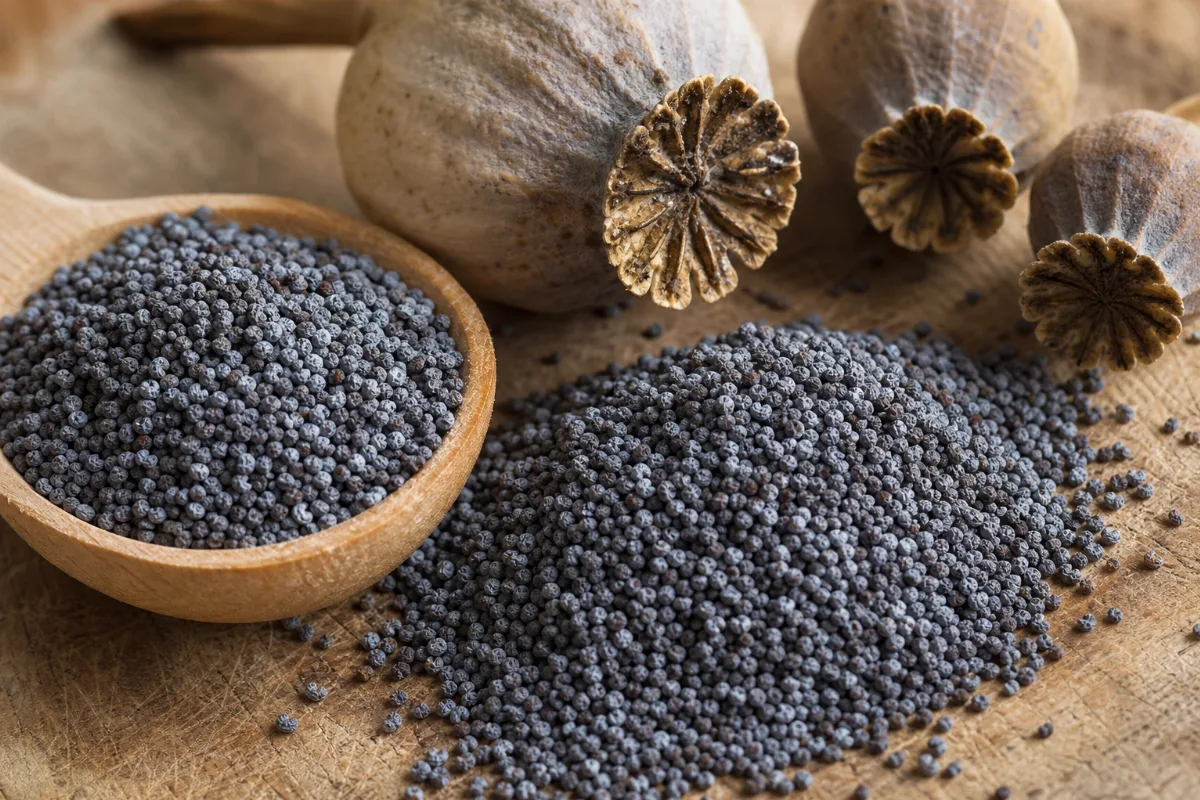
Poppy seeds are the tiny kidney-shaped seeds of the opium poppy (Papaver somniferum, family Papaveraceae). They are used whole in breads, bagels and cakes, ground into fillings, and pressed into oil. The plant also makes morphine and codeine, so this page gives the safety facts as much room as the nutrition. It keeps the culinary seed apart from tea, extracts and hype. [1][3][16]
Read this first
- The seeds do not naturally contain opium alkaloids, but they can pick them up from the plant's sap through pest damage or harvesting. EFSA (the European Food Safety Authority) said in 2011 that foods with poppy seeds could be a health concern for some consumers, and confirmed its safety reference value in a 2018 update. [2][3]
- Poppy seed tea made from unwashed seeds has been linked to overdose and death. Do not treat it as a food or a home remedy. If someone is hard to wake, breathes slowly or has blue lips after taking it, call 911 (or your local emergency number). [5][6][7]
- Eating poppy seed foods can make a urine drug test read positive for opiates. Tests cannot always tell food from medicine. [8][9][10]
- Poppy seed allergy is rare but can be severe, including anaphylaxis. [11][12][13]
- For the nutrition: USDA lists poppy seeds as high in calcium, manganese, copper and fiber per 100 g, but a spoonful is small. Studies showing that eating them prevents or treats any disease: Proper evidence not found in the sources we read.
What is in it (USDA values)
USDA lists this as "Spices, poppy seed" (SR Legacy). The household portions USDA gives are 1 teaspoon (2.8 g) and 1 tablespoon (8.8 g). The table uses the tablespoon. [1]
| Nutrient | Per 100 g | Per 1 tablespoon (8.8 g) | % Daily Value per tablespoon |
|---|---|---|---|
| Energy | 525 kcal | 46 kcal | no DV |
| Total fat | 41.56 g | 3.66 g | 5% |
| Saturated fat | 4.517 g | 0.40 g | 2% |
| Protein | 17.99 g | 1.58 g | 3% |
| Fiber | 19.5 g | 1.72 g | 6% |
| Calcium | 1438 mg | 127 mg | 10% |
| Magnesium | 347 mg | 30.5 mg | 7% |
| Manganese | 6.707 mg | 0.59 mg | 26% |
| Copper | 1.627 mg | 0.14 mg | 16% |
| Zinc | 7.9 mg | 0.70 mg | 6% |
| Iron | 9.76 mg | 0.86 mg | 5% |
| Phosphorus | 870 mg | 76.6 mg | 6% |
| Omega-3 ALA | 0.273 g | 0.024 g | no DV |
% Daily Value uses the FDA 2016 Daily Values and is computed from the per-100-g numbers; values vary with variety, growing place and storage. [1]
Most of the fat is polyunsaturated (28.6 g of the 41.6 g total per 100 g), and USDA lists a small amount of omega-3 ALA. [1] A review of the poppy genus reports phenolic compounds such as flavonols, but the health effects it describes come from laboratory and animal (preclinical) studies, and that review covers the whole Papaver genus, not the seed as eaten. [16]
What research says
| Health goal | What the sources found | Strength of evidence | What was studied |
|---|---|---|---|
| Source of minerals and fiber | USDA lists high concentrations of calcium, manganese, copper and fiber per 100 g. A tablespoon gives about a tenth of the Daily Value of calcium and about a quarter for manganese. [1] | Established (as a nutrient composition fact) | Laboratory analysis of the seed |
| Heart health and cholesterol | The nuts and seeds heart reviews we read did not separate poppy seeds. Proper evidence not found in the sources we read. | Insufficient evidence | No poppy-seed trial found |
| Blood sugar, weight, cancer, brain health | Proper evidence not found in the sources we read for eating poppy seeds. | Insufficient evidence | None found |
| Pain relief, anticancer, antidiabetic effects | A review reports many preclinical studies of Papaver plants. It says clinical and toxicology studies are still needed. [16] | Lab or animal only | Plant extracts, mostly not the culinary seed |
| Drug-test results after eating seeds | Several dosing studies found opiate-positive urine after poppy seed foods (see safety). [8][9][10] | Established (a measured effect, not a benefit) | Healthy volunteers eating seed foods |
Eaten as food vs taken as tea, extract or supplement. The culinary seeds on a bagel are a very different exposure from a tea brewed from a large amount of unwashed seeds. Doctors quoted by KFF Health News called the morphine in washed seeds such as those on an everything bagel "relatively trivial", while tea from large amounts of unwashed seeds can lead to overdose. [5] A laboratory study found that lethal amounts of morphine can be rinsed from poppy seed coats by home-brewing methods. [6]
How much is a normal serving
We did not find an official recommended serving of poppy seeds from USDA, the NHS or EFSA. USDA gives household measures only: 1 teaspoon is 2.8 g and 1 tablespoon is 8.8 g. A tablespoon has about 46 kcal. [1] This is information, not a prescription. For the alkaloid safety side, EFSA states an acute reference dose of 10 micrograms of morphine per kilogram of body weight, which it says some consumers could exceed in one serving, especially children, if the seeds are contaminated. [2][3] Cooking and baking: a laboratory study found that heat processing lowered the levels of all the alkaloids it measured compared with untreated seeds. [14] EFSA said in 2011 that washing, soaking, grinding and cooking may lower alkaloid levels, by up to about 90% with processing. [2]
Safety, allergy and medicines
- Morphine and codeine on the seeds. EFSA (2011) based its assessment on morphine, set an acute reference dose of 10 micrograms per kilogram of body weight, and said people who eat foods with large amounts of poppy seeds are likely to exceed it on at least some occasions. Condiment amounts on bread could be exceeded rarely, especially by young children. [2] In 2018 EFSA confirmed the value, added codeine (counted as 0.2 morphine equivalents) and found that seeds from varieties grown for pharmaceutical use gave exposures above the reference dose in most age groups; some exceedance also occurred at high intakes for low-alkaloid food varieties. [3]
- Germany's regulator (BfR). In 2005/2006 the Bundesinstitut für Risikobewertung proposed a provisional daily upper intake of 6.3 micrograms of morphine per kilogram of body weight and a guidance value of 4 micrograms per gram of seed. It noted that washing the seeds could lower morphine drastically, and advised against excessive intake of foods with a high poppy seed content, particularly during pregnancy. [4] That opinion is older than EFSA's 2018 update; we did not read the current EU legal maximum levels, so we do not quote them.
- Pregnancy and babies. Besides BfR's advice about pregnancy [4], BfR described a case in which a baby given strained poppy seeds as a home remedy was treated for suspected opiate poisoning. Do not give poppy seed preparations to infants. [4] Anyone who is pregnant or breastfeeding can ask a clinician; see foods in pregnancy: what official bodies advise.
- Poppy seed tea. A study of tea brewed from online-bought seeds found morphine in the seeds from under 1 up to 2,788 mg/kg, and lethal amounts could be rinsed out by home-brewing. [6] A clinical review says unwashed seeds sold online can make a tea strong enough to cause effects and withdrawal if stopped, although the sale is legal in the US. [7] KFF Health News (2024) reported a young man's death in 2016 after he drank the rinse of seeds he bought online, and said the Center for Science in the Public Interest had petitioned the FDA in 2021 to limit opiate content in poppy seeds. [5] We did not read a primary source for a death count, so we give none. Taking other opioids or sedatives together raises the risk. [5]
- Drug tests. In a controlled study, 12 volunteers ate a poppy seed roll and then raw seeds with about 3.2 mg of morphine; urine morphine reached 155 to 1,408 ng/mL after the roll and 294 to 4,213 ng/mL after raw seeds. [10] In one study, 18% of urine samples after certain seed products were codeine-positive but morphine-negative at a 300 ng/mL cutoff. [8] In a 10-day daily-eating study, two of five products gave opiate-positive urine at 300 ng/mL at every time point; 65% of those samples were still codeine-positive at a 2,000 ng/mL cutoff, and none reached 15,000 ng/mL. [9] The authors conclude that seed foods cannot always be told apart from codeine use by urine levels or ratios. [8] If you must take a drug test, tell the testing program and a medical reviewer about poppy seed foods; this is information, not legal advice.
- Allergy. Poppy seed allergy is rare, but reactions can be severe. A 2006 report describes anaphylaxis after poppy seed cake and cross-sensitization with buckwheat. [13] A 2024 study of 36 sensitized patients (10 with a positive food challenge) found that poppy seed proteins cross-react with hazelnut, buckwheat and almond proteins. [11] A case report describes a boy with symptoms from inhaling poppy seed, with sensitization also to hazelnut and peanut. [12] For trouble breathing or swelling of the face or throat, call 911 (or your local emergency number). See food allergy basics and emergency signs.
- Large amounts of raw seed. One autopsy case report describes a woman who died from a bowel obstruction made of raw poppy seeds; her blood morphine was under 10 ng/mL, so the cause was not opiate poisoning. This is one case. [15]
- Medicines. We did not find a source we could read on interactions between poppy seed foods and prescription medicines, other than the added opioid risk with tea. [5]
- Choking, oxalate, kidney minerals, mold. We did not read a source on these for poppy seeds. Proper evidence not found.
Choosing, storing and food safety
- For cooking, buy seeds sold as a spice or baking ingredient. Seeds sold in bulk as unwashed or "for tea" are the product linked to harm. [5][7]
- Washing, soaking, grinding and cooking may lower alkaloid levels, according to EFSA. [2] That is not a guarantee, because levels in different batches vary widely. [6]
- For rancidity and mold in seeds in general, see storing nuts and seeds: rancidity, mold and aflatoxin.
Related pages
Health connections for Poppy Seeds
What research links to eating or drinking this food, and how strong the evidence is. Many studies are observational or use juice, powder, oil or extracts rather than the food as eaten; each card says which.
Minerals and fiber in the seed
Established roleUSDA lists high calcium, manganese, copper and fiber per 100 g; a tablespoon (8.8 g) gives about 10% of the Daily Value for calcium and 26% for manganese.
Supplements: Dietary source only; no trial shows health outcomes from eating the seeds.
Energy and fat
Established role525 kcal per 100 g and 46 kcal per tablespoon; most of the fat is polyunsaturated.
Supplements: A food-level fact; weight outcomes were not studied for poppy seeds in the sources we read.
Plant extract research (pain, cancer, diabetes)
Lab or animal research onlyA review reports preclinical studies of Papaver plants and says clinical and toxicology studies are still needed; it does not cover the eaten seed.
Supplements: Not evidence for eating the seeds.
Connected topics
Open a group to see how each topic connects and how strong the evidence is.
Body systems (3)
- Immune SystemDocumented risk
Poppy seed allergy is rare but can be severe.
- Nervous SystemDocumented risk
Morphine from contaminated seeds, mainly in tea from unwashed seeds, can affect consciousness; BfR describes impaired consciousness in the worst case.
- Respiratory SystemDocumented risk
BfR names respiratory depression among the morphine effects to expect from highly contaminated seed batches.
Body parts (2)
- Immune SystemDocumented risk
Allergic sensitization to poppy seed proteins.
- Nervous SystemDocumented risk
See nervous system under body systems.
Conditions & symptoms (4)
- AnaphylaxisDocumented risk
Anaphylaxis after poppy seed cake has been reported.
- Drug OverdoseDocumented risk
Tea from unwashed seeds has been linked to morphine overdose and death.
- Food AllergyDocumented risk
Poppy seed allergy is rare but can be severe.
- Opioid UseDocumented risk
A clinical review describes dependence and withdrawal in people who use poppy seed tea habitually.
Documented risks and interactions (6)
- Morphine and codeine residues on the seeds. Seeds do not naturally contain opium alkaloids but can be contaminated by plant sap during pest damage or harvest. EFSA set an acute reference dose of 10 micrograms of morphine per kg body weight and found it could be exceeded by some consumers, especially from seeds of pharmaceutical varieties.
- Poppy seed tea (unwashed seeds). Tea brewed from large amounts of unwashed seeds has been linked to overdose and death, and lethal amounts of morphine can be rinsed from seed coats. This is not a food use.
- Positive urine drug tests. Dosing studies found opiate-positive urine after poppy seed foods, and levels cannot always separate seed foods from codeine use.
- Pregnancy and infants. Germany's BfR advised against excessive intake of foods high in poppy seeds, especially in pregnancy, and described a baby treated for suspected opiate poisoning after a poppy seed home remedy.
- Poppy seed allergy. Rare but can be severe, including anaphylaxis; cross-reactions with hazelnut, buckwheat and almond proteins were reported.
- Very large raw intake (bowel obstruction). One autopsy case report describes death from a bowel obstruction made of raw poppy seeds, with low blood morphine. One case only.
Frequently asked questions
Can poppy seeds make me fail a drug test?
Yes, they can. Dosing studies found opiate-positive urine after poppy seed foods, and one study could not reliably tell seed foods from codeine use by urine numbers. [8][9][10] Tell the testing program and a medical reviewer.
Is poppy seed tea safe?
No. Tea from large amounts of unwashed seeds has been linked to overdose and death, and lethal amounts of morphine can be rinsed from the seed coats. [5][6][7]
Are poppy seeds on a bagel or muffin dangerous?
EFSA said some people could exceed its reference dose with condiment amounts rarely, especially young children, if the seeds are contaminated. Doctors quoted by KFF Health News called the morphine in washed seeds on a bagel relatively trivial. [2][5]
Can I eat poppy seeds in pregnancy?
Germany's BfR advised against excessive intake of foods with high poppy seed content, particularly during pregnancy. [4] Ask a clinician about your own situation.
Can you be allergic to poppy seeds?
Yes, but it is rare. Reactions can be severe, and cross-reactions with hazelnut, buckwheat and almond proteins were reported. [11][13] For trouble breathing or swelling, call 911.
References
- U.S. Department of Agriculture. FoodData Central: Spices, poppy seed (FDC 171330). SR Legacy, April 2018 release. Read 2026-10-23.
- European Food Safety Authority. EFSA assesses public health risks of opium alkaloids in poppy seeds. 8 November 2011. Read 2026-10-23.
- EFSA CONTAM Panel. Update of the Scientific Opinion on opium alkaloids in poppy seeds. EFSA J 2018. PMID 32625895. Abstract read 2026-10-23.
- Bundesinstitut für Risikobewertung (BfR). BfR recommends provisional daily upper intake level and a guidance value for morphine in poppy seeds. Health Assessment No. 012/2006, 27 December 2005. Read 2026-10-23.
- Hilzenrath D. Poppy seed tea triggers morphine overdose, drawing attention of lawmakers. KFF Health News via Healthbeat, 9 October 2024. Read 2026-10-23.
- Quantification of morphine, codeine, and thebaine in home-brewed poppy seed tea by LC-MS/MS. PubMed. J Anal Toxicol 2018. PMID 28973785. Abstract read 2026-10-23.
- Poppy seed tea: a short review and case study. PubMed. 2019. PMID 30719627. Abstract read 2026-10-23.
- Poppy seed consumption may be associated with codeine-only urine drug test results. PubMed. J Anal Toxicol 2023. PMID 36181466. Abstract read 2026-10-23.
- Urine and hair drug test results associated with daily consumption of codeine-predominant poppy seed food products. PubMed. J Anal Toxicol 2024. PMID 37987376. Abstract read 2026-10-23.
- Concentrations of morphine and codeine in paired oral fluid and urine specimens following ingestion of a poppy seed roll and raw poppy seeds. PubMed. J Anal Toxicol 2015. PMID 26378141. Abstract read 2026-10-23.
- Poppy seed allergy: molecular diagnosis and cross-reactivity with tree nuts. PubMed. 2024. PMID 38734371. Abstract read 2026-10-23.
- Poppy seed allergy: a case report and review of the literature. PubMed. 2006. PMID 16948357. Abstract read 2026-10-23.
- Cross-sensitization between poppy seed and buckwheat in a food-allergic patient with poppy seed anaphylaxis. PubMed. 2006. PMID 16601355. Abstract read 2026-10-23.
- Carlin MG, Dean JR, Ames JM. Opium alkaloids in harvested and thermally processed poppy seeds. PubMed. Front Chem 2020. PMID 33195013. Abstract read 2026-10-23.
- Death due to complications of bowel obstruction following raw poppy seed ingestion. PubMed. 2018. PMID 28543087. Abstract read 2026-10-23.
- Butnariu M et al. Papaver plants: current insights on phytochemical and nutritional composition along with biotechnological applications. PubMed. Oxid Med Cell Longev 2022. PMID 36824615. Abstract read 2026-10-23.