Nuts & Seeds · Nut
Baru Nuts
Dipteryx alata · also called Baru almond, cumbaru
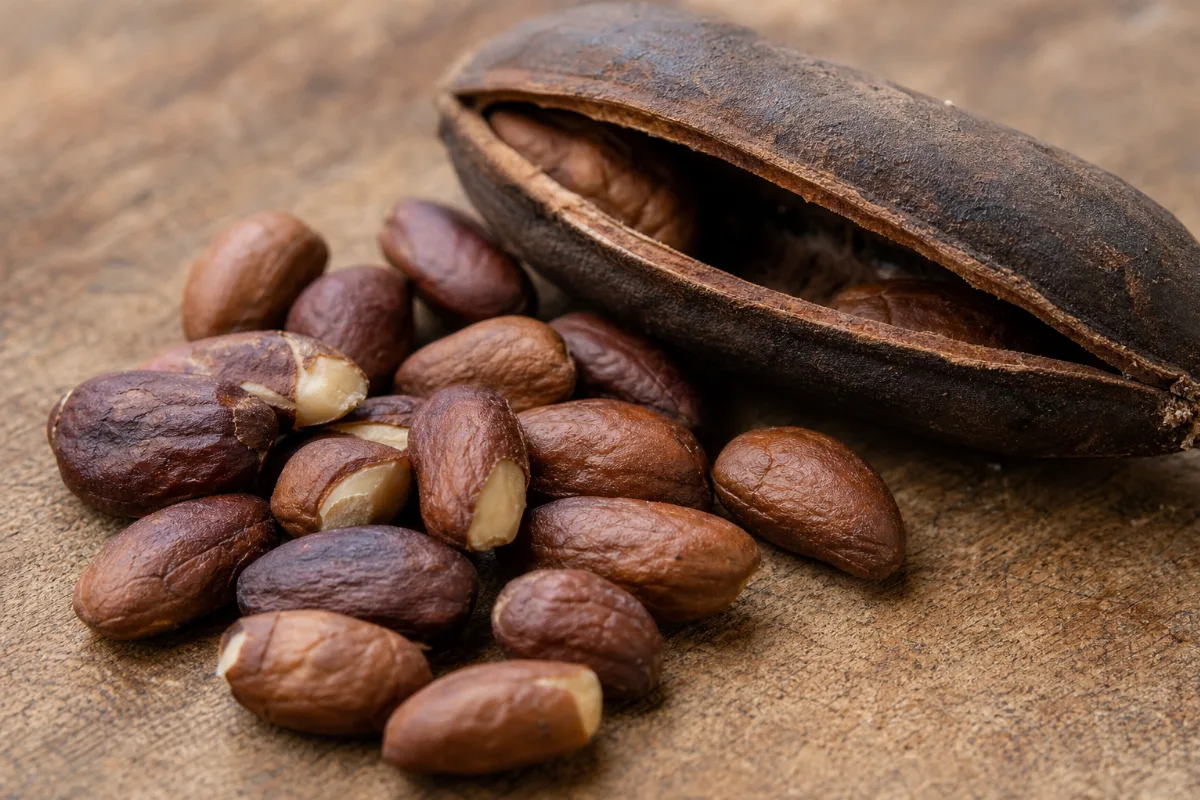
Baru is the seed of a Brazilian savanna tree. It is a legume seed, like peanut, though it is sold as a nut and tastes a little like roasted peanut. Only a few small trials exist, mostly in women with overweight, and they found a slightly higher HDL cholesterol and a smaller waist. The main caution is allergy: no baru allergy study exists, so people allergic to peanuts or other legumes should ask an allergist first.
General information, not medical advice. Last substantive update · Not medically reviewed. A named clinician has not signed off on this page. How this page is made
About Baru Nuts
Baru is a high-fat, high-protein legume seed from Brazil. It is a nutritious food, not a proven remedy, and the research is small.
What it is
The baru nut (Dipteryx alata) is the seed of a tree of the Brazilian Cerrado, a tropical savanna. It belongs to the legume family, like peanut and soy, although it is sold as a nut or baru almond.
USDA has no entry that we could re-check, so the numbers come from a 2025 analysis of raw nuts from nine regions of Mato Grosso, Brazil. Per 100 g: fat 36.0 to 48.2 g (about half of it oleic acid), protein 21.6 to 24.2 g and fibre 11.7 to 15.6 g. A 1 ounce (28 g) handful works out to about 10 to 13.5 g fat, 6 to 7 g protein and 3.3 to 4.4 g fibre (our arithmetic). We found no calorie figure. Values vary with place, roasting and storage.
What the research shows
The best evidence is one 8-week trial in 46 women with overweight or obesity. Waist size was 2.45 cm smaller and HDL 4.8 mg/dL higher with baru than with a baru-free diet. The HDL interval only just excluded zero.
The second paper from the same group (the antioxidant enzyme result) appears to report the same trial. A 15-person pilot had no comparison group. Trials of baru oil in dialysis patients and rat studies are about the oil, not the seed. Lab work on extracts says nothing about eating baru.
Seed versus oil versus extracts
The seed trials used about 20 g of whole seeds. The dialysis trials used oil and the rat study used oil. Lab studies used extracts. Results from one form do not apply to another.
Amounts
This page gives no amount to eat. Because baru is high in fat, a small portion supplies a lot of energy. Ask a doctor or dietitian what is right for you, especially if you have kidney disease or an allergy.
At a glance
Traditional uses history, not proof
- Eaten roasted as a snack and used in Brazilian Cerrado cooking
- Communities in the Cerrado use parts of the tree for various ailments (2024 review); long use is not proof it works
Studied for research
- HDL cholesterol, low certainty (one small trial)
- Waist size, low certainty (one small trial)
- Antioxidant enzyme activity, very low certainty
- Kidney dialysis inflammation and bowel habits (baru oil, not the seed), insufficient
- Gut bacteria, insufficient (15-person pilot)
Main compounds
- Oleic acid (the main fat)
- Linoleic acid
- Protein and fibre
- Gallic acid and related phenolics (lab work)
Common forms
- Roasted whole seeds, about 20 g in the trials
- Raw seeds (analysed, safety not studied)
- Baru oil (used in dialysis and rat studies; not the same as the seed)
- Lab extracts (not food)
Research links: PubMed: baru almond-enriched diet trial (2018) · PubMed: comprehensive analysis of baru nuts (2025) · PubMed: microbiological survey of baru nuts (2026) · Research Library · Genes & Biomarkers Library
What it is and its history
- Accepted scientific name
- Dipteryx alata
- Naming authority
- Vogel
- Common names
- Baru nut (English); Baru almond (English); Cumbaru (Portuguese (from our earlier summary; not re-verified))
- Family or group
- Fabaceae, the legume family, which also includes peanut, soy, beans and lentils (the 2019 trial paper calls baru a legume seed).
- Classification
- Plantae > Not looked up > Not looked up > Not looked up > Fabaceae (legume family) > Dipteryx > Dipteryx alata
- Native range
- The Brazilian Cerrado (tropical savanna); the 2024 review calls it a widespread Brazilian tree.
- Habitat
- Not verified from a source read beyond the Cerrado.
- What it looks like
- Roots: Not verified.; Stems: Not verified.; Leaves: The 2024 review says leaves received the least research attention (1.6% of studies).; Flowers: Not verified.; Fruit: The tree makes a fruit with a pulp and a seed. The seed (almond) is the part eaten as a nut; the pulp has also been analysed.
- Cultivation
- Not verified from a source read.
- Harvest and processing
- The seeds are usually sold roasted (our earlier summary). Raw nuts were analysed in the 2025 study. Safety of eating raw seeds was not studied.
- Look-alikes and adulterants
- Name: Almonds, Brazil nuts and peanuts; Note: Other nuts and seeds; baru is a different plant and, unlike almonds, is a legume seed.
- Sustainability and conservation
- Not assessed.
Photographs
Traditional use and history history, not clinical proof
| Tradition or era | Documented use | Source |
|---|---|---|
| Cerrado communities | The 2024 review says all parts of the baru are used by traditional communities to treat various diseases and that the almond and pulp have gained commercial prominence for their nutritional value. It does not give dates or detail. | p39109711 |
Traditional use shows how it was used. It does not show that it works or is safe today.
What is inside, and how it may work
What it contains and how those compounds act in cells and animals. Laboratory and animal mechanisms are not proven effects in people.
Main compounds
| Compound | Family | Where it is concentrated | Activity studied | Level of evidence |
|---|---|---|---|---|
| Oleic acid | monounsaturated fatty acid | Seed 49.7-54.0% of the fat in raw nuts from nine Mato Grosso regions (2025 analysis); 47.20 g/100 g in roasted nuts (2020 analysis) | The main fat of the seed. 3 9 | Human data |
| Linoleic acid | polyunsaturated fatty acid | Seed 22.6-26.5% of the fat | An omega-6 fatty acid. 3 | Human data |
| Gallic acid and its derivatives (gallotannins, esters) | phenolic compounds | Roasted seed Not given in the abstract | Antioxidant in test-tube assays; gallic acid and methyl gallate seemed most responsible. 9 | Laboratory research |
Mechanisms, receptors and pathways
| Target or pathway | Gene or receptor | What was found | Level |
|---|---|---|---|
| Antioxidant activity of phenolics | Not specified | Antioxidant in lab assays and slowed growth of HT29 cells in culture; in people only one antioxidant enzyme (GPx) rose in one trial. 9 15 | Laboratory research |
| Platelet function | Not specified | Baru oil lowered platelet clumping in rats. 13 | Animal research |
Absorption, metabolism and elimination
- Absorption
- Not studied.
- Distribution
- Not found.
- Metabolism
- Not found.
- Elimination
- Not found.
- Bioavailability
- Not established.
Isolated compounds versus whole extracts
The seed trials used about 20 g of whole seeds. The kidney trials used oil (5 g, or 500 mg capsules), and the rat study used oil. Lab studies used extracts. Results for one form do not carry over to another.
Nutritional composition
No USDA FoodData Central entry for baru was found in our earlier check; we could not re-run the search on 2026-10-26 because the USDA service was rate-limited, so this is not re-verified. The numbers below come from a published analysis, not USDA: Cordeiro et al. 2025 (PubMed 41185295), raw baru nuts from nine regions of Mato Grosso state, Brazil. The abstract gives percentages and does not say whether they are by fresh or dry weight, so treat them as approximate. Per 100 g: total fat 36.0 to 48.2 g, protein 21.6 to 24.2 g, dietary fibre 11.7 to 15.6 g. Of the fat, oleic acid is 49.7 to 54.0% and linoleic acid 22.6 to 26.5%. For a handful of 1 ounce (28 g, our arithmetic from those ranges, not a measured portion): fat about 10.1 to 13.5 g, protein about 6.0 to 6.8 g, fibre about 3.3 to 4.4 g. We found no calorie figure in the sources read, so none is shown. A 2024 review of 127 studies gives wider ranges: protein 19 to 30 g per 100 g and 75 to 81% of fatty acids unsaturated. A 2026 paper used X-ray fluorescence for minerals, but its abstract gives no numbers, so no mineral table is shown. Values change with variety, growing place, roasting and storage.
2 low certainty1 very low certainty4 not enough evidence
What was looked at
The 7 benefits and uses checked for Baru Nuts, each with how strong the evidence is. Tap one to open it.
- Blood fats (HDL cholesterol)Low certainty
- Waist size and body fatLow certainty
- Antioxidant enzyme activity (a lab marker)Very low certainty
- Baru almond OIL in people on kidney dialysis (inflammation and bowel habits)Not enough evidence
- Gut bacteriaNot enough evidence
- Platelets and blood vessels (rats given baru oil)Not enough evidence
- Antioxidant and cell-growth tests in the labNot enough evidence
Lab markers tracked in the studies
HDL cholesterolWaist circumferenceGlutathione peroxidase activityC-reactive protein (us-CRP)
What is Baru Nuts good for?
What small studies found, and how strong the human evidence is. Little research exists, and some results are for baru oil or lab extracts rather than the seed.
Benefits, one by one
Each card is a research question, not a promise. Tap a goal to filter. Open a card to see the studies, doses and limits.
Blood fats (HDL cholesterol)
Low certaintyOne 8-week trial in 46 women with overweight or obesity found HDL (the so-called good cholesterol) was 4.8 mg/dL higher on a baru diet than on a baru-free diet. The result only just reached statistical significance. A 15-person pilot with no comparison group reported better HDL and lower LDL, without numbers in its abstract.
2 studiesWhole seed in diets (the companion paper states 20 g added; trial det…
Studies, doses and limits
What the trials found
Randomised trial: 46 women, 8 weeks, baru-enriched versus baru-free diet (HDL +4.82 mg/dL, 95% CI 0.03 to 8.88). Pilot: 15 people with obesity, 60 days, before-and-after only.
Results
HDL higher in the baru group. The interval nearly includes zero. The pilot reported lower total and LDL cholesterol but gave no numbers in the abstract.
Effect sizes as reported
HDL +4.82 mg/dL (95% CI 0.03 to 8.88).
Why this rating
One small trial with a borderline interval, plus an uncontrolled pilot. Both come from Brazilian groups. A blood marker is not the same as fewer heart attacks.
Form and dose studied
Whole seed in diets (the companion paper states 20 g added; trial detail, not advice).
Who was studied
Adult women with overweight or obesity (trial); 15 people with obesity (pilot).
Limits
8 weeks; women only; funding is not stated in the abstracts; no long-term or heart-event data.
Why researchers looked
Nuts as a group are linked to heart health, and baru is a legume seed with unsaturated fat, protein and fibre.
Traditional use
Baru is a traditional food of the Brazilian Cerrado; long use is not proof of any health effect.
Proposed mechanism Human trial marker
Not shown. The trial authors also measured CETP (a protein that moves cholesterol between particles), which was lower in the baru group. The abstracts do not prove why HDL changed.
A proposed mechanism does not show that the effect happens in people.
See the Safety tab for allergy and food-safety points.
Waist size and body fat
Low certaintyIn the same 8-week trial, waist circumference fell 2.45 cm more on baru than on the baru-free diet. Nut trials in general show no change in body weight. So baru is not shown to cause weight loss.
2 studiesWhole seed.
Studies, doses and limits
What the trials found
Randomised trial in 46 women (waist -2.45 cm, 95% CI -3.90 to -0.23). A meta-analysis of 55 general nut trials found no change in body weight, BMI or waist circumference; body fat fell slightly only where substitution instructions were given. Baru was not named in that review.
Results
Waist fell in the baru trial. General nut evidence shows no weight gain.
Effect sizes as reported
Waist -2.45 cm (95% CI -3.90 to -0.23).
Why this rating
A single small trial; a general meta-analysis of other nuts does not prove the same for baru.
Form and dose studied
Whole seed.
Who was studied
Women with overweight or obesity.
Limits
Diets were set to the same energy, so this is not a weight-loss trial.
Why researchers looked
People ask whether adding a high-fat nut helps or harms body weight.
Proposed mechanism None
Not established.
A proposed mechanism does not show that the effect happens in people.
Baru is high in fat (36-48 g per 100 g), so it supplies a lot of energy in a small amount.
Antioxidant enzyme activity (a lab marker)
Very low certaintyThe baru group raised the activity of one antioxidant enzyme, glutathione peroxidase, compared with the comparison group. Other inflammation and oxidative markers did not differ. An enzyme level is a lab marker, not a health outcome.
2 studiesWhole seed.
Studies, doses and limits
What the trials found
Randomised trial: 46 women, 8 weeks. GPx +0.08 U/mg (95% CI +0.05 to +0.12) versus -0.07 (95% CI -0.12 to -0.03). No difference in catalase, superoxide dismutase, MDA or cytokines.
Results
One of several markers moved.
Effect sizes as reported
GPx +0.08 vs -0.07 U/mg.
Why this rating
One marker out of many, in the same small trial as the HDL result, with no clinical outcome.
Form and dose studied
Whole seed.
Who was studied
Women with overweight or obesity.
Limits
The trial papers appear to report the same trial, so they are not two confirmations.
Why researchers looked
Baru contains phenolic compounds, mainly gallic acid and its relatives, that show antioxidant activity in test tubes.
Proposed mechanism Laboratory research
Gallic acid and related phenolics are antioxidant in test-tube assays (a separate lab paper). Whether this explains the enzyme change in people is not shown.
A proposed mechanism does not show that the effect happens in people.
None specific.
Baru almond OIL in people on kidney dialysis (inflammation and bowel habits)
Not enough evidenceTwo 12-week trials gave baru oil (not the seed) to people on hemodialysis. In one the inflammation marker CRP fell and in the other constipation scores improved. Body composition, blood fats and oxidative stress did not improve. These are oil results and do not carry over to eating the seed.
3 studiesBaru almond oil (5 g; or 10 capsules of 500 mg); trial detail, not ad…
Studies, doses and limits
What the trials found
Trial 1: 29 patients (17 baru oil, 12 mineral oil placebo), 12 weeks, us-CRP -1.2 vs +0.8 mg/L (p = 0.01). Trial 2: 35 patients, 12 weeks, single-blind, Rome IV score 6.1 to 2.8 (p = 0.04) and self-perceived constipation 45% to 15%. A 2025 systematic review of nuts in chronic kidney disease (4 studies, all at moderate-to-high risk of bias) called the findings positive for baru oil but needing more study.
Results
Small gains in two markers; no gain in several others.
Effect sizes as reported
us-CRP -1.2 vs +0.8 mg/L; Rome IV 6.1 to 2.8.
Why this rating
Two small trials of an oil, in a special patient group, with moderate-to-high bias risk in the review.
Form and dose studied
Baru almond oil (5 g; or 10 capsules of 500 mg); trial detail, not advice.
Who was studied
Adults on hemodialysis.
Limits
Oil, not the seed. No trial of the seed in dialysis patients was found.
Why researchers looked
People on dialysis often have inflammation and constipation, and have few safe food options.
Proposed mechanism None
Not established.
A proposed mechanism does not show that the effect happens in people.
People with kidney disease need advice from their kidney team about foods and supplements.
Gut bacteria
Not enough evidenceA pilot of 15 people with obesity reported changes in stool bacteria after 60 days of eating baru. There was no comparison group and the abstract gives no numbers, so it is a first hint only.
1 studiesWhole seeds (trial detail, not advice).
Studies, doses and limits
What the trials found
Uncontrolled pilot, 15 people, 60 days: the abstract reports a fall in the Faecalibacterium family and a rise in the Prevotella genus and calls the changes positive.
Results
Bacteria counts changed; what that means for health is not shown.
Effect sizes as reported
Not given in the abstract.
Why this rating
No control group, tiny sample, no numbers in the abstract.
Form and dose studied
Whole seeds (trial detail, not advice).
Who was studied
People with obesity.
Limits
Before-and-after only.
Why researchers looked
Fibre and phenolics in nuts can feed gut bacteria.
Proposed mechanism None
Not established.
A proposed mechanism does not show that the effect happens in people.
None specific.
Platelets and blood vessels (rats given baru oil)
Not enough evidenceRats given baru oil for 10 days had less platelet clumping, less clotting and better aorta function. This is animal work on an oil and says nothing yet about people eating the seed.
1 studiesOil in rats.
Studies, doses and limits
Results
Lower platelet aggregation and clotting in rats.
Effect sizes as reported
p < 0.05; no effect sizes in the abstract.
Why this rating
Animal only, an oil, very high doses by body weight.
Form and dose studied
Oil in rats.
Who was studied
Rats.
Limits
Not tested in humans.
Why researchers looked
Researchers looked for heart-related effects of the oil.
Proposed mechanism Animal research
The authors report less superoxide production in platelets; not tested in people.
A proposed mechanism does not show that the effect happens in people.
If this ever applied to people, a blood-thinning effect would matter for people taking blood thinners; no human data exist.
Antioxidant and cell-growth tests in the lab
Not enough evidenceIn test tubes, baru nut extracts showed antioxidant activity and slowed the growth of a human colon cancer cell line. This is lab work only. It is not evidence that eating baru affects cancer.
1 studiesLab extracts.
Studies, doses and limits
Results
Cells in culture grew more slowly with extracts.
Effect sizes as reported
Not given in the abstract.
Why this rating
Cell and test-tube work only.
Form and dose studied
Lab extracts.
Who was studied
Cell line (HT29).
Limits
Extracts are not the food; no human data.
Why researchers looked
Gallic acid and related phenolics are common in roasted baru.
Proposed mechanism Laboratory research
Gallic acid and methyl gallate seemed responsible for the antioxidant activity in the assays.
A proposed mechanism does not show that the effect happens in people.
None.
Connections to the rest of health
How Baru Nuts connects to the rest of our health knowledge graph. Every link says what kind of connection it is. A safety link (for example to the liver) is a warning, not a benefit. A study that merely mentions a topic never creates a benefit link.
Explore every connection: goals, body systems, organs, symptoms, genes
A. Wellness goals
| Connected to | Kind of connection | Evidence status | Context | Studies |
|---|---|---|---|---|
| Cholesterol Balance | Biological association | Low certainty | Blood fats (HDL cholesterol): One 8-week trial in 46 women with overweight or obesity found HDL (the so-called good cholesterol) was 4.8 mg/dL higher on a baru diet than on a baru-free diet. The result only just reached statistical significance. A 15-person pilot with no comparison group reported better HDL and lower LDL, without numbers in its abstract. | 14 2 |
| Weight Management | Biological association | Low certainty | Waist size and body fat: In the same 8-week trial, waist circumference fell 2.45 cm more on baru than on the baru-free diet. Nut trials in general show no change in body weight. So baru is not shown to cause weight loss. | 14 5 |
| Cellular Protection | Biological association | Very low certainty | Antioxidant enzyme activity (a lab marker): The baru group raised the activity of one antioxidant enzyme, glutathione peroxidase, compared with the comparison group. Other inflammation and oxidative markers did not differ. An enzyme level is a lab marker, not a health outcome. | 15 9 |
| Gut Health | Biological association | Not enough evidence | Baru almond OIL in people on kidney dialysis (inflammation and bowel habits): Two 12-week trials gave baru oil (not the seed) to people on hemodialysis. In one the inflammation marker CRP fell and in the other constipation scores improved. Body composition, blood fats and oxidative stress did not improve. These are oil results and do not carry over to eating the seed. Gut bacteria: A pilot of 15 people with obesity reported changes in stool bacteria after 60 days of eating baru. There was no comparison group and the abstract gives no numbers, so it is a first hint only. | 11 12 6 2 |
B. Body systems
| Connected to | Kind of connection | Evidence status | Context | Studies |
|---|---|---|---|---|
| Cardiovascular System | Biological association | Low certainty | Studied for: Blood fats (HDL cholesterol) Studied for: Platelets and blood vessels (rats given baru oil) | 14 2 13 |
| Metabolism Weight | Biological association | Low certainty | Studied for: Waist size and body fat | 14 5 |
| Immune System | Biological association | Very low certainty | Studied for: Antioxidant enzyme activity (a lab marker) | 15 9 |
| Urinary System | Biological association | Not enough evidence | Studied for: Baru almond OIL in people on kidney dialysis (inflammation and bowel habits) | 11 12 6 |
| Digestive System | Biological association | Not enough evidence | Studied for: Baru almond OIL in people on kidney dialysis (inflammation and bowel habits) Studied for: Gut bacteria | 11 12 6 2 |
E. Health conditions
| Connected to | Kind of connection | Evidence status | Context | Studies |
|---|---|---|---|---|
| Food allergy | Adverse effect or risk | Possible risk | No baru allergy study found; peanut-allergic people are often sensitized to other legumes. Baru is a legume seed; no allergy study found. Preparation or compound: Baru seed (legume) |
8 1 7 |
| Choking | Adverse effect or risk | Documented risk | Whole nuts and seeds are choking hazards for young children (CDC, not re-verified). Preparation or compound: Whole or chopped seeds |
16 |
I. Biomarkers
| Connected to | Kind of connection | Evidence status | Context | Studies |
|---|---|---|---|---|
| HDL cholesterol | Biological association | Preliminary | Higher in one small 8-week trial. Measured in trials: increase. A lab change is not the same as a health benefit. Preparation or compound: Whole baru seeds |
14 2 |
| Waist circumference | Biological association | Low certainty | Measured in trials: decrease. A lab change is not the same as a health benefit. | 14 5 |
| Glutathione peroxidase activity | Biological association | Very low certainty | Measured in trials: increase. A lab change is not the same as a health benefit. | 15 |
| C-reactive protein (us-CRP) | Biological association | Not enough evidence | Measured in trials: decrease. A lab change is not the same as a health benefit. | 11 |
K. Biological pathways
| Connected to | Kind of connection | Evidence status | Context | Studies |
|---|---|---|---|---|
| Monounsaturated fat (oleic acid) | Preliminary mechanism | Human | The main fat in baru. | 3 |
L. Active compounds
| Connected to | Kind of connection | Evidence status | Context | Studies |
|---|---|---|---|---|
| Oleic acid | Biological association | Human | The main fat of the seed. Preparation or compound: Seed |
3 9 |
| Linoleic acid | Biological association | Human | An omega-6 fatty acid. Preparation or compound: Seed |
3 |
| Gallic acid and its derivatives (gallotannins, esters) | Biological association | In vitro | Antioxidant in test-tube assays; gallic acid and methyl gallate seemed most responsible. Preparation or compound: Roasted seed |
9 |
Each connection is stored with the ingredient, the connected record, the kind of connection, the evidence status, the supporting studies, the preparation or compound involved, and a review date (last reviewed October 26, 2026).
Evidence at a glance: what the research found for 7 outcomes
Each outcome below is one thing researchers measured. Certainty is how far the evidence can be trusted, not how well it works. The full studies are on the next tab.
The evidence
The research centre for Baru Nuts. Every record here was checked against PubMed or the publisher's page; we never list a study we have not verified.
Evidence by outcome
Bars show how many studies we found for each outcome, not how well it works. People are added up across trials only (reviews are not added, to avoid double counting).
How we rate evidence
High certainty
Several well-run trials or reviews agree; further research is unlikely to change the picture much.
Moderate certainty
Good trials point the same way, but some doubt remains.
Low certainty
Small, short or inconsistent trials. The finding could change with better research.
Very low certainty
Very little or very weak human data. Treat as a possibility only.
Mixed findings
Trials or reviews disagree with each other.
Not enough evidence
Not enough human research to say either way.
Evidence against
Good research found no benefit, or found harm.
We take the reviewers' own risk-of-bias and GRADE statements where they exist, and otherwise judge from study size, design, consistency, directness and whether a product matches what is sold. Many publications do not make evidence high. Method note: We started from our existing baru summary and page, re-read the PubMed abstracts and the NHS, FDA and MedlinePlus pages, and flagged anything we could not open. Only abstracts were read for studies.
Study library: every study we checked 19
| Study | Design | People | Product, dose, length | Result |
|---|---|---|---|---|
| Bublin 2014 Cross-reactivity of peanut allergens. Curr Allergy Asthma Rep · PMID 24554241 · DOI |
Narrative review n/a |
Review of peanut allergen biology | Peanut |
Clinical observations frequently report an association of peanut allergy with allergies to legumes, tree nuts, seeds, fruits and pollen. n/a (n/a) Methods, limits and fundingOutcomes: Cross-reactivity Limitations: Does not mention baru. Funding and conflicts: Authors declare no conflicts (grant support listed). Read: abstract |
| Campos 2024 Daily intake of baru (Dipteryx alata Vog.), a Cerrado native almond, promotes changes in the intestinal microbiota of individuals with obesity: A pilot study. Food Res Int · PMID 38763648 · DOI |
Pilot uncontrolled |
15 15 people with obesity, 60 days |
Baru almond (seed) Whole seed 20 g portion through the day (trial detail, not advice) 60 days |
The abstract reports better HDL and lower total and LDL cholesterol, and changes in stool bacteria (a fall in the Faecalibacterium family and a rise in the Prevotella genus). No numbers in the abstract. Not given in the abstract (Not given in the abstract) Methods, limits and fundingOutcomes: Body measures, blood pressure, glucose, blood fats, insulin, iron, stool bacteria Limitations: No comparison group, 15 people, no numbers in the abstract, so changes cannot be credited to baru. Funding and conflicts: Authors declare no competing interests. Read: abstract |
| Cordeiro 2025 Comprehensive physical and chemical analysis of Brazilian baru nuts (Dipteryx alata Vog.). Food Res Int · PMID 41185295 · DOI |
Composition analysis n/a |
Raw baru nuts from nine regions of Mato Grosso, Brazil | Raw baru nut Seed |
Lipids 36.0-48.2%, oleic acid 49.7-54.0% and linoleic acid 22.6-26.5% of the fat, protein 21.6-24.2%, fibre 11.7-15.6%. Aroma compounds differed by region. Ranges as given (n/a) Methods, limits and fundingOutcomes: Fat, protein, fibre, fatty acids, aroma compounds Limitations: Abstract gives percentages without saying fresh or dry weight; raw nuts, not roasted. Funding and conflicts: No competing interests declared. Read: abstract |
| Gonçalves Lima 2026 Microbiological Characterization of Baru Nuts From the Cerrado Biome, Brazil. J Food Sci · PMID 41960607 · DOI |
Lab survey n/a |
Baru nut samples from the Cerrado, Brazil | Baru nut Seed |
S. aureus was below the limit in all samples. Molds and yeasts reached up to 2.70 log10 CFU/g. Among 17 Enterobacteriaceae species identified, Cronobacter sp. made up 3.8% and Salmonella sp. 1.0% of isolates. The authors call for ongoing monitoring. Molds/yeasts up to 2.70 log10 CFU/g (n/a) Methods, limits and fundingOutcomes: Counts of bacteria, molds and yeasts; identification of Enterobacteriaceae Limitations: A lab survey of samples, not a recall or outbreak report; sample number and sellers not in the abstract. Funding and conflicts: No conflicts declared. Read: abstract |
| Guarneiri 2021 Intake of Nuts or Nut Products Does Not Lead to Weight Gain, Independent of Dietary Substitution Instructions: A Systematic Review and Meta-Analysis of Randomized Trials. Adv Nutr · PMID 32945861 · DOI |
Meta-analysis |
55 trials of adults eating nuts or nut snacks for more than 3 weeks | Nuts in general (baru not named in the abstract) Nuts and nut products Varied Varied · vs Usual diet |
No change in body weight, BMI or waist circumference with nut-enriched diets. A small fall in body fat percentage (SMD -0.32) only in trials that gave substitution instructions. Body weight SMD -0.01 kg (with instructions), 0.01 kg (without) (Body fat with instructions: -0.61 to -0.03) Methods, limits and fundingOutcomes: Body weight, BMI, waist circumference, body fat percentage Limitations: Varied methods; many outcomes unreported. Not a baru study. Funding and conflicts: Not shown in the abstract. Read: abstract |
| Lazzarin 2025 Nut consumption in chronic kidney disease: a systematic review. Front Nutr · PMID 41293182 · DOI |
Systematic review |
1270 4 studies (3 trials, 1 cohort) in chronic kidney disease |
Brazil nuts, walnuts and baru almond oil Nuts and oil Varied Varied · vs Varied |
Found positive effects of Brazil nuts and baru almond oil on oxidative stress and inflammation markers. All four studies had moderate-to-high risk of bias. Not pooled (not given) Methods, limits and fundingOutcomes: Lipids, inflammation, oxidative stress, blood pressure, mortality Limitations: Only four studies, heterogeneous, moderate-to-high risk of bias. Funding and conflicts: No conflicts declared. Read: abstract |
| Miyashita 2025 Baru Proteins: Extraction Methods and Techno-Functional Properties for Sustainable Nutrition and Food Innovation. Foods · PMID 40282688 · DOI |
Narrative review n/a |
Review of baru protein research | Baru almond protein |
Baru protein 23-30% (w/w) with a balanced essential amino acid profile. The authors say research is still needed on gelation and on allergenic potential. n/a (n/a) Methods, limits and fundingOutcomes: Protein content, extraction, food properties Limitations: A food-technology review; not a clinical source. Funding and conflicts: No conflicts declared. Read: abstract |
| Muller 2022 Relevance of sensitization to legumes in peanut-allergic children. Pediatr Allergy Immunol · PMID 36156816 · DOI |
Retrospective cohort |
195 195 peanut-allergic children aged 1-17 in one French hospital |
Legumes (baru not tested) Foods |
122 children (63.9%) were sensitized to at least one other legume; allergy to at least one legume was confirmed in 34 of those (27.9%). Half of the reactions to other legumes were severe. 63.9% sensitized; 27.9% of those confirmed allergic (not given) Methods, limits and fundingOutcomes: Sensitization to other legumes and confirmed allergy Limitations: One hospital, retrospective; baru was not among the legumes studied. Funding and conflicts: No conflicts declared. Read: abstract |
| Oliveira-Alves 2020 Identification of functional compounds in baru (Dipteryx alata Vog.) nuts: Nutritional value, volatile and phenolic composition, antioxidant activity and antiproliferative effect. Food Res Int · PMID 32247467 · DOI |
Lab cell-line |
Roasted baru nut extracts tested in test tubes and a human colon cancer cell line (HT29) | Roasted baru nut extract Extract |
Baru is a good source of protein and monounsaturated fat (oleic acid 47.20 g/100 g). Main phenolics were gallic acid and its derivatives. Extracts slowed growth of HT29 cells in culture. Oleic acid 47.20 g/100 g (n/a) Methods, limits and fundingOutcomes: Composition, antioxidant tests, cell growth Limitations: Test-tube and cell work only; says nothing about eating baru. Funding and conflicts: Not stated in the abstract. Read: abstract |
| Santos 2024 Baru (Dipteryx alata): a comprehensive review of its nutritional value, functional foods, chemical composition, ethnopharmacology, pharmacological activities and benefits for human health. Braz J Biol · PMID 39109711 · DOI |
Narrative review (PRISMA style search) mixed |
127 127 studies of baru, any type |
Baru (almond, pulp, other parts) Various |
Almond protein 19-30 g/100 g and 75-81% unsaturated fatty acids. Most studied biological activity was antioxidant activity. Almond was the most studied part (59.8%). n/a (n/a) Methods, limits and fundingOutcomes: Nutrition, chemistry, biological activity Limitations: Mostly composition and lab work; the review does not rate clinical certainty. Funding and conflicts: Not stated in the abstract. Read: abstract |
| Schincaglia 2020 Effects of baru almond oil (Dipteryx alata Vog.) supplementation on body composition, inflammation, oxidative stress, lipid profile, and plasma fatty acids of hemodialysis patients: A randomized, double-blind, placebo-controlled clinical trial. Complement Ther Med · PMID 32951729 · DOI |
Controlled trial |
29 Hemodialysis patients (17 baru oil, 12 placebo), 12 weeks |
Baru almond OIL (not the whole seed) Oil 5 g of oil (trial detail, not advice) 12 weeks · vs 5 g mineral oil |
us-CRP fell with baru oil (-1.2 vs +0.8 mg/L). Baru oil did not improve body composition, blood fats or oxidative stress. us-CRP -1.2 vs +0.8 mg/L (p = 0.01) Methods, limits and fundingOutcomes: us-CRP, body composition, oxidative stress, blood fats, plasma fatty acids Limitations: Oil, not seed; 29 people; dialysis patients only. Funding and conflicts: Authors do not state a funder in the abstract. Read: abstract |
| Schincaglia 2021 The Effect of Baru (Dypterix alata Vog.) Almond Oil on Markers of Bowel Habits in Hemodialysis Patients. Evid Based Complement Alternat Med · PMID 34135977 · DOI |
Single blind trial |
35 35 hemodialysis patients, 12 weeks |
Baru almond OIL (capsules) Oil 10 capsules a day of 500 mg (trial detail, not advice) 12 weeks · vs Mineral oil capsules |
The baru oil group had a lower Rome IV score (6.1 to 2.8) and less straining, and fewer people felt constipated (45% to 15%). The mineral oil group did not change. Rome IV 6.1 to 2.8 (p = 0.04) (not given) Methods, limits and fundingOutcomes: Bowel habits (Rome IV score, Bristol scale, self-perceived constipation) Limitations: Single-blind, oil capsules not the seed, dialysis patients, groups allocated 1:2. Funding and conflicts: Authors declare no conflicts of interest. Read: abstract |
| Silva-Luis 2022 Effects of Baru Almond Oil (Dipteryx alata Vog.) Treatment on Thrombotic Processes, Platelet Aggregation, and Vascular Function in Aorta Arteries. Nutrients · PMID 35631239 · DOI |
Animal research rat |
18 Male Wistar rats, 6 per group, 10 days |
Baru almond OIL Oil 7.2 and 14.4 mL/kg/day in rats 10 days · vs Control rats |
Oil reduced platelet aggregation and clotting and improved aorta function in rats. p < 0.05 (not given) Methods, limits and fundingOutcomes: Platelet clumping, clot formation, aorta function Limitations: Rats only, oil only, very high doses per body weight; no human data. Funding and conflicts: No conflict declared. Read: abstract |
| de Souza 2018 A baru almond-enriched diet reduces abdominal adiposity and improves high-density lipoprotein concentrations: a randomized, placebo-controlled trial. Nutrition · PMID 30086484 · DOI |
Controlled trial |
46 46 women with overweight or obesity, 8 weeks |
Baru almond (seed) Whole seed (the abstract does not say roasted; the trial portion is given in the companion paper as 20 g) Portion not stated in this abstract 8 weeks · vs Baru almond-free diet, same energy |
Compared with the baru-free diet: waist circumference -2.45 cm; CETP expression -0.23 mcg/mL; HDL +4.82 mg/dL. Waist -2.45 cm; HDL +4.82 mg/dL (Waist 95% CI -3.90 to -0.23; HDL 95% CI 0.03 to 8.88) Methods, limits and fundingOutcomes: Waist circumference, blood pressure, glucose, blood fats, plasma fatty acids, CETP expression Limitations: One small trial; the HDL interval only just excludes zero; 8 weeks; women only. Funding and conflicts: Not stated in the abstract. Registered as RBR-2wpryx. Read: abstract |
| de Souza 2019 Baru Almonds Increase the Activity of Glutathione Peroxidase in Overweight and Obese Women: A Randomized, Placebo-Controlled Trial. Nutrients · PMID 31366053 · DOI |
Controlled trial |
46 46 women with overweight or obesity (22 comparison, 24 baru), 8 weeks |
Baru almond (seed) Whole seed 20 g of baru almonds added to diet advice (trial detail, not advice) 8 weeks · vs Diet advice with placebo |
The baru group raised glutathione peroxidase (GPx) activity (+0.08 U/mg vs -0.07) and plasma copper. No differences in catalase, superoxide dismutase, MDA or cytokines. GPx +0.08 U/mg (95% CI +0.05 to +0.12) vs -0.07 (95% CI -0.12 to -0.03) (as given) Methods, limits and fundingOutcomes: Oxidative stress and inflammation markers, antioxidant enzymes, minerals Limitations: GPx is a lab marker, not a health outcome. Same group, population size and duration as the HDL trial, so the two papers appear to report the same trial. Funding and conflicts: Authors declare no conflicts of interest. Read: abstract |
| s-cdc-choking CDC: Choking hazards for young children · Source |
Health agency n/a |
Methods, limits and fundingRead: summary-only | ||
| s-fda-allergens FDA: Food Allergies · Source |
Regulator n/a |
Methods, limits and fundingRead: full-text | ||
| s-medlineplus-aflatoxin MedlinePlus: Aflatoxin · Source |
Health agency n/a |
Methods, limits and fundingRead: full-text | ||
| s-nhs-food-allergy NHS: Food allergy · Source |
Health agency n/a |
Methods, limits and fundingRead: full-text |
What we do not know yet
- Only a few small trials exist, mostly from one Brazilian group; an independent repeat is missing.
- No allergy study or case report on baru was found.
- No calorie, vitamin or mineral figures were verified; nutrition rests on one published analysis.
- No data on raw versus roasted baru safety, medicines, pregnancy or breastfeeding.
- The CDC choking page and a USDA search could not be re-checked.
How new research is added
New studies are found by a saved PubMed search and placed in a review queue before the page changes.
Lab markers
What changed in blood or saliva tests during trials. A changed number is not the same as feeling or being healthier, and we give no "normal ranges".
Metabolic 1
HDL cholesterol
Increase in trials
The cholesterol carried in HDL particles, often called good cholesterol.
Low certaintyResults and what it means
Why it was measured
Higher HDL is linked with lower heart risk in observational data, but raising it with food has not been shown to cut heart events.
Statistical vs. clinical meaning
Small and borderline. A marker, not a heart outcome.
Safety implication
None specific.
Other 3
Waist circumference
Decrease in trials
The measurement around the waist, used as a rough sign of belly fat.
Low certaintyResults and what it means
Why it was measured
More belly fat is linked with higher metabolic risk.
Statistical vs. clinical meaning
One small trial; general nut evidence shows no clear waist change.
Safety implication
None specific.
Glutathione peroxidase activity
Increase in trials
An enzyme the body uses to handle oxidative stress.
Very low certaintyResults and what it means
Why it was measured
Used as a marker of antioxidant defence.
Statistical vs. clinical meaning
A lab marker. Other oxidative markers did not change.
Safety implication
None specific.
| Study | Result | People | Product |
|---|---|---|---|
| 15 | +0.08 U/mg versus -0.07 U/mg in the comparison group | 46 women with overweight or obesity | 20 g baru almonds with diet advice, 8 weeks |
C-reactive protein (us-CRP)
Decrease in trials
A blood marker of inflammation.
Not enough evidenceResults and what it means
Why it was measured
Often raised in people on dialysis.
Statistical vs. clinical meaning
A marker in a small trial of an oil.
Safety implication
None specific.
| Study | Result | People | Product |
|---|---|---|---|
| 11 | -1.2 mg/L with baru oil versus +0.8 mg/L with mineral oil (p = 0.01) | 29 hemodialysis patients | 5 g baru almond oil, 12 weeks (oil, not seed) |
Safety
What studies and official sources say about side effects, medicines and who should check first. Each point shows what kind of evidence it comes from.
Main points to know 3
- Baru is a legume seed sold as a nut: ask about allergy first. Baru (Dipteryx alata) belongs to the legume family, like peanut and soy, although it is sold as a nut. We found no allergy study or case report on baru. A 2025 review of baru proteins says allergenic potential still needs study. A review of peanut allergy says peanut allergy is often seen with allergy to other legumes, tree nuts and seeds, and a French study of 195 peanut-allergic children found 63.9% sensitized to at least one other legume and 27.9% of those confirmed allergic. None of this proves baru reacts. People with peanut, legume or tree nut allergy should ask an allergist before trying it. Expert review and cohort 7 1 8
- Possible germs and mold in raw baru nuts. A 2026 laboratory survey of baru nut samples found no Staphylococcus aureus above its limit but found molds and yeasts up to 2.70 log10 CFU/g, and identified Salmonella (1.0% of isolates) and Cronobacter (3.8%) among the Enterobacteriaceae it typed. The authors call for ongoing monitoring. This is a lab survey, not a recall or an outbreak. Lab survey 4
- Choking risk for young children. The CDC lists whole or chopped nuts and seeds as foods to avoid for young children. We could not re-open that page (access denied), so this point comes from our earlier summary and is not re-verified. Authoritative guidance 16
Side effects 2
| Effect | How often | Severity and recovery | Evidence |
|---|---|---|---|
| Allergic reaction to baru (not reported in any source found) No case report or study found. Listed because baru is a legume seed and legume allergies are common in peanut-allergic people. | Not established | unknown Not applicable | None found 7 |
| No adverse effects were described in the baru trial abstracts The abstracts do not report on safety either way, so absence of mention is not proof of safety. | Not established | not reported Not applicable | Rct abstract 14 15 2 |
Liver
No liver injury from baru was found in the abstracts read. LiverTox was not checked.
How often. Not found.
Monitoring. No agency advice found.
This is a safety connection. It is not evidence that Baru Nuts supports liver health.
Medicines and supplements 2
| With | Why it matters | Importance | Evidence | What to do |
|---|---|---|---|---|
| Any medicine prescription | No baru-medicine interaction was found in the sources read. | Unknown. Absence of evidence is not proof of safety. | None found Not enough evidence 13 | Ask a pharmacist if you take medicines, especially blood thinners, since rat studies of the oil showed less clotting (rats only, not tested in people). |
| Blood thinners (warfarin, aspirin and similar) prescription | A rat study of baru oil found less platelet clumping and clotting. No human data. | Theoretical only. | Animal research Not enough evidence 13 | Ask a pharmacist or doctor. |
Who should check first 3
| Situation | Advice | Evidence |
|---|---|---|
| Peanut, legume or tree nut allergy | Ask an allergist first. For trouble breathing or swelling of the face or throat, call emergency services. | Cohort study 8 1 19 17 |
| Kidney disease or a kidney diet | No trustworthy potassium or phosphorus figures for the seed were found. Ask your kidney team. The dialysis trials used oil under supervision. | Gap 11 6 |
| Children under about 4 | Whole or chopped nuts and seeds are choking hazards (CDC, not re-verified). | Authoritative guidance 16 |
Overdose, product quality and regulators
Summary. No toxic effect of baru as a food was found in the sources read. Roasting is described as a way to reduce anti-nutritional compounds, but safety of raw baru was not studied.
Animal. A 10-day rat study of the oil did not report on safety in its abstract; safety was not its aim.
Human doses studied. Trials gave about 20 g of the seed a day for 8 weeks, or 5 g of oil for 12 weeks. Abstracts do not report safety outcomes.
Overdose response. Not found.
Genotoxicity. Not researched.
Toxic or hazardous parts. Not researched.
Nuts, seeds and legumes can carry aflatoxin mold toxins, and baru samples in a 2026 survey carried molds and some potentially pathogenic bacteria.
Aflatoxin in nuts, seeds and legumes. MedlinePlus says aflatoxins come from a mold that grows on nuts, seeds and legumes, that the FDA allows low levels as unavoidable, and that you can reduce intake by buying major brands and discarding nuts that look moldy, discolored or shriveled. No baru-specific aflatoxin data were found. 18
Microbes in baru nuts. Lab survey: molds and yeasts up to 2.70 log10 CFU/g; Salmonella 1.0% and Cronobacter 3.8% of the Enterobacteriaceae isolates. 4
| Body | Action | Date |
|---|---|---|
| FDA (US Food and Drug Administration) (United States) | Lists the nine major food allergens (including tree nuts, peanuts and soybeans); baru is not named source | 2026-03-11 |
| NHS (UK) (United Kingdom) | Lists peanuts, soybeans, peas, chickpeas and tree nuts among common allergy triggers; baru is not named source | 2026-08-20 |
| MedlinePlus (US NLM) (United States) | Aflatoxin page: mold on nuts, seeds and legumes; FDA allows low unavoidable levels source | 2025-01-08 |
When to get medical help
- Trouble breathing, wheezing, swelling of the lips, face or throat, widespread hives or fainting after eating baru or any nut or seed
- A young child who is choking
- Vomiting, severe diarrhoea or fever after eating nuts that were moldy or had been stored badly
Stop using the product and contact a clinician or emergency service. In the US, Poison Control is 1-800-222-1222.
General information only, not medical advice. Ask a clinician or pharmacist before use, especially with medicines, in pregnancy or with a health condition. See the Natural Remedy Safety guide.
Frequently asked questions
Is a baru nut really a nut?
What is in baru nuts?
Does baru lower cholesterol?
Does baru help with weight loss?
Is baru good for your gut?
Only a first hint. A 15-person pilot with no comparison group reported changes in stool bacteria after 60 days.
Is baru oil the same as eating baru?
Can people with a peanut allergy eat baru?
Is baru safe for young children?
Whole or chopped nuts and seeds are choking hazards for young children, according to the CDC. We could not re-open that page, so this is not re-verified.
Are baru nuts safe from germs and mold?
Can baru interact with medicines?
No interaction was found, but almost nothing has been tested. Rats given the oil had less platelet clumping, so ask a pharmacist if you take blood thinners.
Is baru safe in pregnancy or breastfeeding?
We found no source about baru in pregnancy or breastfeeding, so we cannot say. Ask your doctor or midwife.
Explore by health goal
Gut HealthCholesterol BalanceWeight ManagementCellular Protection
Editorial transparency
- Written by
- AlternativeMed editorial team. Research compiled with AI assistance, then checked against the sources listed.
- Medical review
- None. This page has not been reviewed by a physician or pharmacist.
- First published
- 2026-10-26
- Last substantive update
- 2026-10-26
- How we research
- We started from our existing baru summary and page, re-read the PubMed abstracts and the NHS, FDA and MedlinePlus pages, and flagged anything we could not open. Only abstracts were read for studies.
- How we rate evidence
- See "How we rate evidence" in the Evidence tab.
- Independence
- No product is promoted on this page. No affiliate links are shown.
Sources 19
Each source was opened and checked. Where we read only the abstract, it says so. The small numbers in the text point here.
- Bublin M, Breiteneder H.. Cross-reactivity of peanut allergens.. Curr Allergy Asthma Rep. 2014. PMID 24554241. DOI 10.1007/s11882-014-0426-8. (abstract)
- Campos SB, Oliveira Filho JG, Santos DCD, Egea MB.. Daily intake of baru (Dipteryx alata Vog.), a Cerrado native almond, promotes changes in the intestinal microbiota of individuals with obesity: A pilot study.. Food Res Int. 2024. PMID 38763648. DOI 10.1016/j.foodres.2024.114370. (abstract)
- Cordeiro MWS, de Candido de Oliveira F, Robalo SS, da Silva LP, Furlan JM, Wagner R.. Comprehensive physical and chemical analysis of Brazilian baru nuts (Dipteryx alata Vog.).. Food Res Int. 2025. PMID 41185295. DOI 10.1016/j.foodres.2025.117539. (abstract)
- Gonçalves Lima CM, Amorim-Neto DP, de Castro BG, Perini Leme Giordano AL, Dal Pian BM, et al.. Microbiological Characterization of Baru Nuts From the Cerrado Biome, Brazil.. J Food Sci. 2026. PMID 41960607. DOI 10.1111/1750-3841.71043. (abstract)
- Guarneiri LL, Cooper JA.. Intake of Nuts or Nut Products Does Not Lead to Weight Gain, Independent of Dietary Substitution Instructions: A Systematic Review and Meta-Analysis of Randomized Trials.. Adv Nutr. 2021. PMID 32945861. DOI 10.1093/advances/nmaa113. (abstract)
- Lazzarin T, Ballarin RS, Azevedo PS, Cardoso BR, Minicucci MF.. Nut consumption in chronic kidney disease: a systematic review.. Front Nutr. 2025. PMID 41293182. DOI 10.3389/fnut.2025.1659516. (abstract)
- Miyashita NMR, Hudson EA, Rezende JP, Vidigal MCTR, Pires ACDS.. Baru Proteins: Extraction Methods and Techno-Functional Properties for Sustainable Nutrition and Food Innovation.. Foods. 2025. PMID 40282688. DOI 10.3390/foods14081286. (abstract)
- Muller T, Luc A, Adam T, Jarlot-Chevaux S, Dumond P, Schweitzer C, Codreanu-Morel F, Divaret-Chauveau A.. Relevance of sensitization to legumes in peanut-allergic children.. Pediatr Allergy Immunol. 2022. PMID 36156816. DOI 10.1111/pai.13846. (abstract)
- Oliveira-Alves SC, Pereira RS, Pereira AB, Ferreira A, Mecha E, Silva AB, Serra AT, Bronze MR.. Identification of functional compounds in baru (Dipteryx alata Vog.) nuts: Nutritional value, volatile and phenolic composition, antioxidant activity and antiproliferative effect.. Food Res Int. 2020. PMID 32247467. DOI 10.1016/j.foodres.2020.109026. (abstract)
- Santos JMD, Borges JAT, Santos SMD, Silva RMMF, Trichez VDK, Formagio ASN.. Baru (Dipteryx alata): a comprehensive review of its nutritional value, functional foods, chemical composition, ethnopharmacology, pharmacological activities and benefits for human health.. Braz J Biol. 2024. PMID 39109711. DOI 10.1590/1519-6984.278932. (abstract)
- Schincaglia RM, Cuppari L, Neri HFS, Cintra DE, Sant'Ana MR, Mota JF.. Effects of baru almond oil (Dipteryx alata Vog.) supplementation on body composition, inflammation, oxidative stress, lipid profile, and plasma fatty acids of hemodialysis patients: A randomized, double-blind, placebo-controlled clinical trial.. Complement Ther Med. 2020. PMID 32951729. DOI 10.1016/j.ctim.2020.102479. (abstract)
- Schincaglia RM, Pimentel GD, Peixoto MDRG, Cuppari L, Mota JF.. The Effect of Baru (Dypterix alata Vog.) Almond Oil on Markers of Bowel Habits in Hemodialysis Patients.. Evid Based Complement Alternat Med. 2021. PMID 34135977. DOI 10.1155/2021/3187305. (abstract)
- Silva-Luis CC, de Brito Alves JL, et al.. Effects of Baru Almond Oil (Dipteryx alata Vog.) Treatment on Thrombotic Processes, Platelet Aggregation, and Vascular Function in Aorta Arteries.. Nutrients. 2022. PMID 35631239. DOI 10.3390/nu14102098. (abstract)
- de Souza RGM, Gomes AC, de Castro IA, Mota JF.. A baru almond-enriched diet reduces abdominal adiposity and improves high-density lipoprotein concentrations: a randomized, placebo-controlled trial.. Nutrition. 2018. PMID 30086484. DOI 10.1016/j.nut.2018.06.001. (abstract)
- de Souza RGM, Gomes AC, Navarro AM, Cunha LCD, Silva MAC, Junior FB, Mota JF.. Baru Almonds Increase the Activity of Glutathione Peroxidase in Overweight and Obese Women: A Randomized, Placebo-Controlled Trial.. Nutrients. 2019. PMID 31366053. DOI 10.3390/nu11081750. (abstract)
- . CDC: Choking hazards for young children. . . (summary-only)
- . FDA: Food Allergies. . . (full-text)
- . MedlinePlus: Aflatoxin. . . (full-text)
- . NHS: Food allergy. . . (full-text)
Where to buy
Check the label first. Whatever you buy, look for these:
- Raw or roasted, and salted or unsalted
- A best-by date, since nuts and seeds turn rancid
- Tree nut and peanut allergy warnings
- A resealable bag, and cool storage once opened
Talk to a pharmacist or doctor before you start any supplement, especially if you take medicines. See the Safety tab for interactions.
Support our free guides: as an Amazon Associate we earn from qualifying purchases. Full disclosure.


