Functional Foods · Seed
Flaxseed
Linum usitatissimum · also called Flax, linseed, linaza
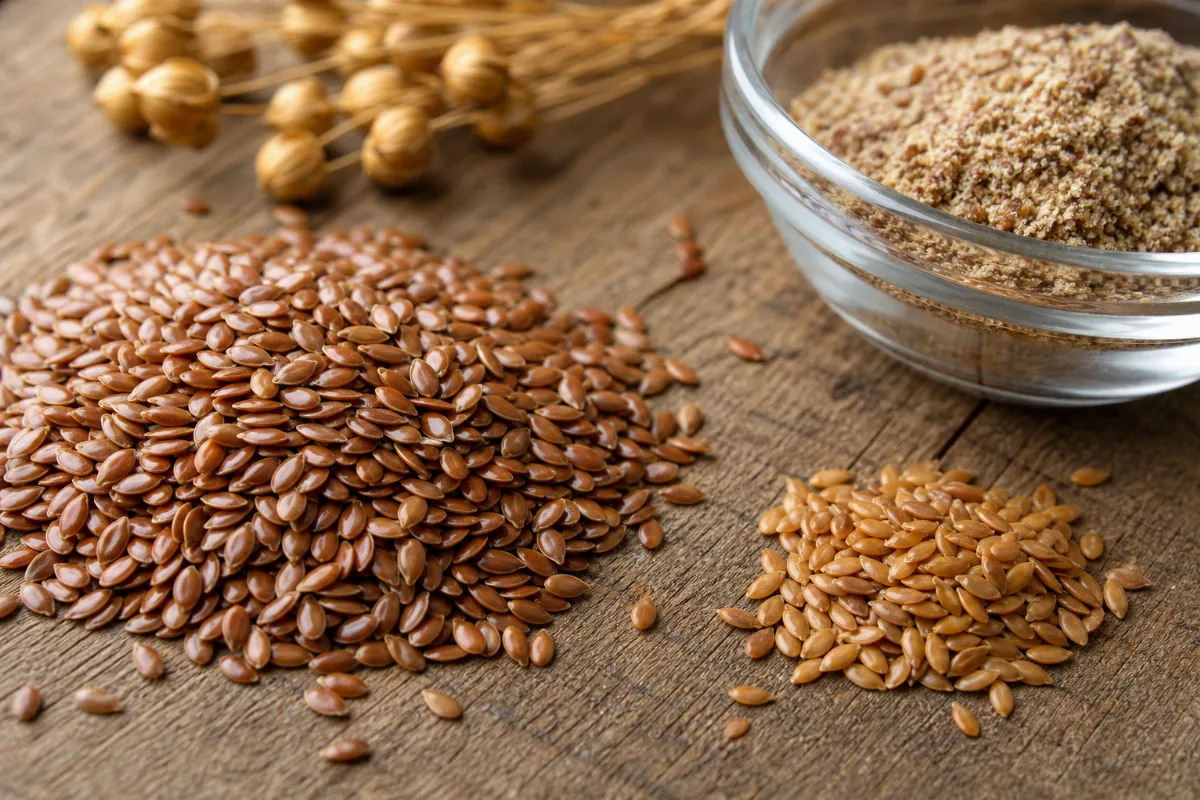
Flaxseed is the small brown or golden seed of the flax plant, rich in fibre and in a plant omega-3 fat called ALA. In pooled trials, flaxseed products lowered cholesterol and blood pressure by small amounts, but the evidence is low-certainty and mixes seed with oil and extracts. Ground seed gives the body more lignan products than whole seed. The main cautions are raw or unripe seed, allergy, blood-thinning medicines and pregnancy.
General information, not medical advice. Last substantive update · Not medically reviewed. A named clinician has not signed off on this page. How this page is made
About Flaxseed
Flaxseed is the seed of the flax plant. It is a source of fibre and plant omega-3 fat. It is a food, not a proven remedy: the cholesterol and blood pressure findings come from pooled trials of mixed flaxseed products, and the safety cautions are better documented than the benefits.
What it is
Flaxseed, also called flax or linseed, is the seed of Linum usitatissimum L. in the flax family (Linaceae), according to GBIF. NCCIH says it was originally cultivated near the Middle East and has a long history of use, including linen in ancient Egypt, stews in Ethiopia and laxatives in ancient Greece. A 1998 review says it has been eaten as a grain in different parts of the world since ancient times.
USDA data for raw flaxseed, per 100 g: 534 kcal, 18.29 g protein, 42.16 g fat (28.73 g polyunsaturated), 28.88 g carbohydrate, 27.3 g fibre, 255 mg calcium, 5.73 mg iron, 392 mg magnesium and 642 mg phosphorus. A tablespoon of ground seed (7 g) has about 37 kcal, 1.3 g protein, 3.0 g fat and 1.9 g fibre. USDA lists no ALA value for this item; the Linus Pauling Institute gives 1.6 g of ALA in a tablespoon of ground flaxseed.
Whole, ground, oil and extracts are different
In a 12-person crossover study, blood levels of the lignan products enterodiol and enterolactone were 28% as high after whole seed as after ground seed, and 43% as high after crushed seed. The authors conclude that crushing and milling substantially improve how much of these compounds the body gets. That study measured blood levels only, not any health effect.
Flaxseed oil has no fibre and is a different product. In a 2016 blood pressure analysis, flaxseed powder lowered the top number but oil and lignan extract did not, and a 2024 review of olive and flaxseed oils found no significant blood pressure effect. NCCIH says a mucilage powder may support weight loss but lignan extract and oil supplements do not seem to.
What the research shows
The best evidence is pooled trials of blood markers. Across 62 trials (3,772 people), flaxseed products lowered LDL by about 4.2 mg/dL and triglycerides by about 9.4 mg/dL. Across 33 trials (2,427 people), blood pressure fell by about 3.2 and 2.6 mmHg, with very large differences between trials. These pool seed, powder, oil and extracts, and no trial of heart attacks or strokes was read.
Two small trials found better bowel habits in constipation. One compared flaxseed flour with lactulose and had no placebo group; the other used baked flaxseed against placebo cookies in people with type 2 diabetes. A 7-trial analysis found lower fasting glucose and HbA1c in prediabetes and type 2 diabetes, and a 45-trial analysis found about 1 kg lower weight. Inflammation markers moved a little for CRP, IL-6 and VCAM-1 and not for others.
Breast cancer and menopause evidence is too thin to say anything firm: a 2014 review of 10 mostly small or observational studies found no significant drop in hot flashes and an association with lower breast cancer risk that cannot show cause.
Food versus supplements
Many trials gave "flaxseed supplementation", which can mean powder, capsules, oil or lignan extract. The 2016 analysis shows these forms can behave differently, and NCCIH makes the same point for weight loss. The constipation and blood sugar findings are for ground seed, flour or baked seed. Flaxseed oil, lignan extract and mucilage powder are different products from the seed and are not covered here.
At a glance
Traditional uses history, not proof
- Eaten as a seed food and pressed for oil; NCCIH lists linen, stews and laxatives in ancient times
- Long use is not proof that it treats any condition
Studied for research
- Fibre, plant omega-3 (ALA) and minerals, high certainty for the nutrient content
- Blood fats (cholesterol, triglycerides), low certainty
- Blood pressure, low certainty
- Constipation, low certainty (two small trials)
- Blood sugar in prediabetes and type 2 diabetes, low certainty
- Body weight and waist size, low certainty
- Inflammation markers, low certainty
- Breast cancer and menopause symptoms, insufficient evidence
Main compounds
- Dietary fibre and mucilage
- Alpha-linolenic acid (ALA)
- Lignans (SDG)
- Cyanogenic glucosides (a natural plant toxin)
- Magnesium, phosphorus, manganese and copper
Common forms
- Whole seed, raw as food (USDA values read)
- Ground or milled seed (the form in many trials)
- Baked seed in cookies or flour (used in two constipation trials)
- Flaxseed oil, lignan extract and mucilage powder are different products and are not covered
Research links: 2020 review: flaxseed and blood fats (62 trials) · 2023 review: flaxseed and blood pressure (33 trials) · 2005 study: whole, crushed and ground flaxseed and lignans · NCCIH: Flaxseed and Flaxseed Oil · Research Library · Genes & Biomarkers Library
What it is and its history
- Accepted scientific name
- Linum usitatissimum L.
- Naming authority
- L. (GBIF accepted)
- Common names
- Flaxseed (English); Flax (English); Linseed (English); Linaza (Spanish)
- Family or group
- Linaceae (the flax family), as given by GBIF.
- Classification
- Plantae > Tracheophyta > Magnoliopsida > Malpighiales > Linaceae > Linum > Linum usitatissimum
- Native range
- NCCIH says flaxseed was originally cultivated near the Middle East. No wild range was verified.
- Habitat
- Not verified from a source read.
- What it looks like
- Roots: Not verified.; Stems: Not verified.; Leaves: Not verified.; Flowers: Not verified.; Fruit: The food is the seed. Not otherwise described in the sources read.
- Cultivation
- Not verified from a source read.
- Harvest and processing
- A 1998 review says flaxseed is used whole or milled in foods and that oil extraction leaves a meal that needed detoxification of cyanide when used in animal feed. NCCIH warns against eating raw or unripe flaxseeds. The 2005 crossover study compared whole, crushed and ground seed. Other processing steps were not read.
- Look-alikes and adulterants
- Name: Flaxseed oil; Note: Pressed oil with no fibre. It is a different product, and results for oil do not transfer to the seed.; Name: Flaxseed lignan extract and mucilage powder; Note: Isolated parts of the seed used in some trials. NCCIH and the 2016 blood pressure analysis show these can behave differently from the seed or powder.; Name: Chia seeds; Note: Another seed food with its own page; not the same plant or nutrient mix.
- Sustainability and conservation
- Not assessed.
Photographs
Traditional use and history history, not clinical proof
| Tradition or era | Documented use | Source |
|---|---|---|
| Ancient times (as summarised by NCCIH) | NCCIH says flaxseed has a long history of traditional use for health and industrial purposes: originally cultivated near the Middle East, used for linen in ancient Egypt, stews in Ethiopia and laxatives in ancient Greece. In North America, European settlers used flaxseed for poultices and the oil for paints. | s-nccih-flax |
| Ancient times to present | A 1998 review says flaxseed has been used as an edible grain in different parts of the world since ancient times. | p9598210 |
Traditional use shows how it was used. It does not show that it works or is safe today.
What is inside, and how it may work
What it contains and how those compounds act in cells and animals. Laboratory and animal mechanisms are not proven effects in people.
Main compounds
| Compound | Family | Where it is concentrated | Activity studied | Level of evidence |
|---|---|---|---|---|
| Dietary fibre (including mucilage) | carbohydrate | Whole seed; the mucilage is in the outer seed coat USDA: 27.3 g fibre per 100 g; about 1.9 g in a tablespoon of ground seed (7 g) | A food-technology review says the mucilage is mainly in the outer layer of the seed hull and is made of an arabinoxylan and a pectin-like material, and states it is "known to" delay gastric emptying, lower serum cholesterol and improve glycemic control. The abstract cites no trials for these. 28 15 | Review statement |
| Alpha-linolenic acid (ALA) PubChem 5280934 | omega-3 fatty acid | Seed (more in the oil) Linus Pauling Institute: 1.6 g per tablespoon of ground flaxseed; 7.3 g per tablespoon of flaxseed oil. USDA lists no ALA value for this item. | ALA is an essential omega-3 fat. The Adequate Intake for adults is 1.6 g a day for men and 1.1 g a day for women (US National Academy of Medicine, via the Linus Pauling Institute). 25 27 | Reference |
| Lignans (secoisolariciresinol diglucoside, SDG) PubChem 9917980 | lignan | Seed No content figure was read. | Gut bacteria convert plant lignans into enterodiol (CID 115089) and enterolactone (CID 114739). Blood levels of these were lower after whole seed than after ground seed in a 12-person study. 8 6 27 | Human data |
| Cyanogenic glucosides | plant toxin | Seed No amount read. IFST reports bound cyanide released when ground or chewed. | A 1998 review says they can release cyanide on breakdown and that levels produced by self-digestion are below harmful limits for humans. 21 24 | Lab |
| Protein, minerals and vitamins | nutrients | Seed USDA per 100 g: protein 18.29 g; magnesium 392 mg; phosphorus 642 mg; calcium 255 mg; iron 5.73 mg; manganese 2.482 mg; copper 1.22 mg; thiamin 1.644 mg | Nutrient content only; no health effect was read for these amounts. 28 | Reference |
Mechanisms, receptors and pathways
| Target or pathway | Gene or receptor | What was found | Level |
|---|---|---|---|
| Conversion of lignans by gut bacteria | Not specified in the sources read | The 2005 abstract states that intestinal bacteria convert plant lignans into enterodiol and enterolactone, and that milling and crushing the seed raised the blood levels of these products. It measured blood levels only, not any health effect. 8 | Human data |
| Cyanide release when the seed is broken | Not specified | IFST (reporting EFSA) says breaking the seed brings degrading enzymes into contact with bound cyanide, which releases it. This is a food-chemistry explanation, not a measure of harm. 24 21 | Lab |
| Estrogen-like activity of lignans (theory) | Not specified | The breast cancer review describes flax lignans as possibly phytoestrogenic, anti-inflammatory and hormone modulating by theory. The review did not test this mechanism. 4 | Hypothesis |
Absorption, metabolism and elimination
- Absorption
- Lignan products (enterodiol and enterolactone) in blood were 28% as high after whole seed and 43% as high after crushed seed, compared with ground seed, in a 12-person crossover study.
- Distribution
- Not found.
- Metabolism
- Gut bacteria convert plant lignans into enterodiol and enterolactone (2005 abstract).
- Elimination
- Not found.
- Bioavailability
- Milling and crushing the seed substantially improve the bioavailability of enterolignans (2005 abstract). Bioavailability of ALA, fibre effects and cadmium from the seed were not read.
Isolated compounds versus whole extracts
Flaxseed products are not interchangeable. In the 2016 blood pressure analysis, flaxseed powder lowered systolic pressure but oil and lignan extract did not. A 2024 review of oils found no significant blood pressure effect, and it is about oils. NCCIH says a mucilage powder may support weight loss but lignan extract and oil supplements do not seem to. Whole seed gives less lignan uptake than ground seed.
Nutritional composition
Nutrition from USDA FoodData Central, Seeds, flaxseed (FDC 169414, SR Legacy, April 2018 release; values read 2026-10-26 from a saved copy kept by us because the public API is rate-limited). Per 100 g: 534 kcal, 18.29 g protein, 42.16 g fat (3.663 g saturated, 7.527 g monounsaturated, 28.73 g polyunsaturated), 28.88 g carbohydrate, 1.55 g sugars, 27.3 g fibre, 255 mg calcium, 5.73 mg iron, 392 mg magnesium, 642 mg phosphorus, 813 mg potassium, 30 mg sodium, 4.34 mg zinc, 2.482 mg manganese, 1.22 mg copper, 25.4 micrograms selenium, 1.644 mg thiamin, 0.161 mg riboflavin, 3.08 mg niacin, 0.473 mg vitamin B6, 87 micrograms DFE folate, 78.7 mg choline and 4.3 micrograms vitamin K. One typical USDA portion, 1 tablespoon of ground seed (7.0 g, the 100 g values multiplied by 0.07): about 37 kcal, 1.3 g protein, 3.0 g fat, 2.0 g carbohydrate, 1.9 g fibre, 18 mg calcium, 0.4 mg iron, 27 mg magnesium, 45 mg phosphorus, 57 mg potassium, 2 mg sodium. One tablespoon of whole seed is 10.3 g (about 2.8 g fibre). USDA lists no value for ALA for this item; the Linus Pauling Institute gives 1.6 g of ALA per tablespoon of ground flaxseed and 7.3 g per tablespoon of flaxseed oil. Flaxseed oil has no fibre and is a different product. Values vary with crop and brand; check the label.
1 high certainty6 low certainty1 not enough evidence
What was looked at
The 8 benefits and uses checked for Flaxseed, each with how strong the evidence is. Tap one to open it.
- Fibre, plant omega-3 (ALA) and other nutrients (nutrient content)High certainty
- Blood fats (cholesterol and triglycerides)Low certainty
- Blood pressureLow certainty
- ConstipationLow certainty
- Blood sugar in prediabetes and type 2 diabetesLow certainty
- Body weight and waist sizeLow certainty
- Inflammation markersLow certainty
- Breast cancer and menopause symptomsNot enough evidence
Lab markers tracked in the studies
LDL cholesterolTotal cholesterol and triglyceridesApolipoprotein B and lipoprotein(a)Systolic and diastolic blood pressureFasting blood glucoseHbA1cC-reactive protein (CRP)Body weight, BMI and waist circumference
What is Flaxseed good for?
The main studied uses and how strong the human evidence is for each. Most results are for flaxseed products in general (seed, powder, oil or extract), not for the seed alone.
Benefits, one by one
Each card is a research question, not a promise. Tap a goal to filter. Open a card to see the studies, doses and limits.
Fibre, plant omega-3 (ALA) and other nutrients (nutrient content)
High certaintyFlaxseed is a very fibre-rich seed. USDA lists 27.3 g of fibre, 42.16 g of fat and 18.29 g of protein per 100 g, with a lot of magnesium, phosphorus, manganese, copper and thiamin. One tablespoon of ground seed (7 g) has about 1.9 g of fibre. The Linus Pauling Institute lists 1.6 g of the plant omega-3 ALA in a tablespoon of ground flaxseed.
2 studiesWhole and ground raw seed from the USDA table. Flaxseed oil has no fi…
Studies, doses and limits
What the trials found
No trial was read showing that eating flaxseed corrects a shortfall in fibre or omega-3 fat. USDA lists no ALA value for the item, so the ALA figure comes from the Linus Pauling Institute and not from USDA.
Results
Flaxseed is a fibre-rich food with a lot of polyunsaturated fat. How much the body takes up from the whole seed was not shown here, and ground seed gives lignan products more readily than whole seed (see the details section).
Effect sizes as reported
USDA per 100 g: fibre 27.3 g; protein 18.29 g; fat 42.16 g (28.73 g polyunsaturated); magnesium 392 mg; phosphorus 642 mg; calcium 255 mg; iron 5.73 mg. Linus Pauling Institute: ALA 1.6 g per tablespoon of ground seed.
Why this rating
High that the food contains these nutrients (reference tables). Not tested as a treatment for any nutrient shortfall.
Form and dose studied
Whole and ground raw seed from the USDA table. Flaxseed oil has no fibre and is a different product.
Who was studied
General adult diet.
Limits
Nutrient facts, not trials. Values vary with the crop and brand. The ALA figure is from a different reference than the rest.
Why researchers looked
People eat flaxseed for its fibre and as a plant source of omega-3 fat (ALA).
Traditional use
NCCIH says flaxseed has a long history of traditional use, including laxatives in ancient Greece. Traditional use is not evidence that it works.
Proposed mechanism Nutrient database
These are nutrient amounts in the food, taken from reference tables.
A proposed mechanism does not show that the effect happens in people.
See the Safety tab for raw seed, allergy, medicines and pregnancy.
Blood fats (cholesterol and triglycerides)
Low certaintyPooled trials of flaxseed products found small drops in total cholesterol, LDL cholesterol and triglycerides and no change in HDL cholesterol. LDL fell by about 4 mg/dL on average. Apolipoprotein B and lipoprotein(a), two other blood-fat markers, also fell.
2 studiesMixed flaxseed products (seed, ground seed, powder, oil and extracts …
Studies, doses and limits
What the trials found
One meta-analysis of 62 randomized trials (3,772 people) and one GRADE-assessed meta-analysis of apolipoproteins. Both pooled mixed flaxseed products, so the result is not for the seed alone.
Results
Total cholesterol, triglycerides, LDL and apolipoprotein B fell a little. HDL cholesterol and apolipoprotein A-I did not change significantly.
Effect sizes as reported
Total cholesterol -5.4 mg/dL; triglycerides -9.4 mg/dL; LDL -4.2 mg/dL; HDL +0.05 mg/dL (not significant). Apo-B SMD -0.57 with very large differences between trials (I2 83%).
Why this rating
Small average changes, mixed products pooled, very large differences between trials for apolipoprotein B, and blood markers rather than heart attacks. The apolipoprotein analysis is GRADE-assessed but its ratings are not given in the abstract.
Form and dose studied
Mixed flaxseed products (seed, ground seed, powder, oil and extracts are not separated in the abstracts).
Who was studied
Adults in randomized trials.
Limits
No trial of heart attacks or strokes was read. The pooled forms are not the same as eating the seed.
Why researchers looked
Flaxseed contains fibre, ALA and lignans, which could in theory lower blood fats.
Traditional use
Not a traditional use.
Proposed mechanism Hypothesis
Not shown. The authors of the lipid analysis point to ALA, phenolic compounds and lignans as possible causes; this was not tested.
A proposed mechanism does not show that the effect happens in people.
None specific beyond the general flaxseed cautions.
Blood pressure
Low certaintyTwo meta-analyses found flaxseed products lowered blood pressure by about 3 mmHg (top number) and 2 to 2.6 mmHg (bottom number). Differences between trials were very large. Powder lowered the top number but oil and lignan extract did not, so the result depends on the form.
3 studiesVarious flaxseed products. The 2016 analysis splits powder, oil and l…
Studies, doses and limits
What the trials found
A 2023 meta-analysis of 33 trials (2,427 people) and a 2016 meta-analysis of 15 trials (1,302 people). A separate 2024 review of 17 trials of olive oil and flaxseed oil (3 flaxseed oil) found no significant effect on blood pressure, which is a review of oils and not of the seed.
Results
Both meta-analyses found small average falls. The effect was bigger in longer trials (over 20 weeks in the 2023 analysis; 12 weeks or more in the 2016 analysis). The oil review found nothing significant.
Effect sizes as reported
2023: systolic -3.19 mmHg, diastolic -2.61 mmHg, both with I2 above 92%. 2016: systolic -2.85 mmHg, diastolic -2.39 mmHg; powder systolic -1.81 mmHg (significant), oil and lignan extract systolic not significant.
Why this rating
Small average change, very large differences between trials (I2 above 92%), mixed forms and populations, and blood pressure readings rather than heart attacks or strokes.
Form and dose studied
Various flaxseed products. The 2016 analysis splits powder, oil and lignan extract; the 2023 abstract does not.
Who was studied
Adults, including people with overweight and high blood pressure.
Limits
The two analyses overlap in trials. Results for oil should not be applied to the seed.
Why researchers looked
Fibre, ALA and lignans have been proposed to relax blood vessels or affect blood pressure.
Traditional use
Not a traditional use.
Proposed mechanism Unknown
Not shown in these analyses.
A proposed mechanism does not show that the effect happens in people.
If you take blood pressure medicine, tell your clinician about big diet changes.
Constipation
Low certaintyTwo small randomized trials in adults with constipation reported better bowel habits with flaxseed: one with flaxseed flour for 4 weeks compared with lactulose (no placebo), and one with baked flaxseed cookies for 12 weeks in people who also had type 2 diabetes.
2 studiesFlaxseed flour in trial 1; baked seed in cookies in trial 2.
Studies, doses and limits
What the trials found
Trial 1: 90 adults with functional constipation, flaxseed flour (60 people) versus lactulose (30 people), 4 weeks. Trial 2: 53 constipated adults with type 2 diabetes, baked flaxseed in cookies versus placebo cookies, 12 weeks, single-blind.
Results
In trial 1, the median constipation score fell from 14 to 6.5 with flaxseed and from 15 to 9 with lactulose, and bowel movements per week rose from 2 to 7 and 2 to 6. In trial 2, the constipation symptom score improved more with flaxseed than placebo (2.46 versus 0.41).
Effect sizes as reported
Median Wexner score 14 to 6.5 (flaxseed) vs 15 to 9 (lactulose); weekly bowel movements 2 to 7 vs 2 to 6. Trial 2: symptom score change 2.46 vs 0.41.
Why this rating
Two small trials. One has no placebo group and compares with another remedy; the other is single-blind and only in people with type 2 diabetes.
Form and dose studied
Flaxseed flour in trial 1; baked seed in cookies in trial 2.
Who was studied
Adults with functional constipation (trial 1); adults with type 2 diabetes and constipation (trial 2).
Limits
Short, small, from single centres. No trial in children or older adults was read.
Why researchers looked
Flaxseed is high in fibre and has a gel-like coat (mucilage).
Traditional use
NCCIH says flaxseed was used as a laxative in ancient Greece. Traditional use is not evidence that it works.
Proposed mechanism Hypothesis
Not tested in these trials. The fibre and gel-like seed coat are the usual explanations.
A proposed mechanism does not show that the effect happens in people.
NCCIH says higher amounts may cause bloating, fullness and diarrhea.
Blood sugar in prediabetes and type 2 diabetes
Low certaintyA meta-analysis of 7 trials of milled or ground flaxseed in people with prediabetes or type 2 diabetes found lower fasting glucose, insulin, HbA1c and insulin resistance. The authors say more trials are needed.
3 studiesMilled or ground seed in the meta-analysis; baked seed in cookies in …
Studies, doses and limits
What the trials found
One meta-analysis of 7 randomized trials (2022). The 53-person constipation trial in type 2 diabetes also reported lower fasting glucose and HbA1c with baked flaxseed than with placebo cookies.
Results
Milled or ground seed lowered fasting glucose, insulin, HbA1c and insulin resistance on average.
Effect sizes as reported
Fasting glucose SMD -0.392 (I2 64.8%); insulin SMD -0.287; HbA1c SMD -0.442; HOMA-IR SMD -0.284. Trial 2: fasting glucose -26.7 mg/dL versus -1.9 mg/dL with placebo.
Why this rating
Only 7 small trials, moderate differences between trials for glucose, and a fixed-effect model. Blood markers only.
Form and dose studied
Milled or ground seed in the meta-analysis; baked seed in cookies in the single trial.
Who was studied
Adults with prediabetes or type 2 diabetes.
Limits
Not a treatment claim. People who take diabetes medicines should not change them without their prescriber.
Why researchers looked
Fibre and the gel-like seed coat slow how fast food leaves the stomach and may affect blood sugar.
Traditional use
Not a traditional use.
Proposed mechanism Review statement
Not tested. The mucilage review says the seed gum is "known to" delay gastric emptying and improve glycemic control, but the abstract cites no studies for that.
A proposed mechanism does not show that the effect happens in people.
Tell your prescriber if you make a large diet change while taking diabetes medicine.
Body weight and waist size
Low certaintyA meta-analysis of 45 placebo-controlled trials found flaxseed supplementation lowered weight by about 1 kg, BMI by 0.3 and waist size by 0.8 cm on average. The effect was seen in subgroups with whole seed, with 12 weeks or longer and in people with higher BMI. NCCIH mentions one trial of a flaxseed mucilage powder, and says lignan extract and oil do not seem to help with weight loss.
2 studiesMixed forms; the effect was seen in the whole-seed subgroup.
Studies, doses and limits
What the trials found
One meta-analysis of 45 randomized placebo-controlled trials (2017). NCCIH reports one trial of a flaxseed mucilage powder (not whole seed) in adults with overweight or obesity.
Results
Small average changes. The subgroup findings (whole seed, longer trials, higher BMI) are less reliable than the overall result.
Effect sizes as reported
Weight -0.99 kg (95% CI -1.67 to -0.31); BMI -0.30 kg/m2; waist -0.80 cm.
Why this rating
About one kilogram on average, mixed forms, and subgroup findings. NCCIH says the mucilage and lignan or oil evidence is a different product from the seed.
Form and dose studied
Mixed forms; the effect was seen in the whole-seed subgroup.
Who was studied
Adults; larger effect in people with higher BMI.
Limits
Not a weight-loss treatment. Mucilage powder, lignan extract and oil are not the same as the seed.
Why researchers looked
Fibre can increase fullness, and flaxseed is a fibre-rich food.
Traditional use
Not a traditional use.
Proposed mechanism Unknown
Not shown.
A proposed mechanism does not show that the effect happens in people.
None specific.
Inflammation markers
Low certaintyA meta-analysis of 40 trials found flaxseed supplementation lowered CRP, IL-6 and VCAM-1 a little and did not change TNF-alpha, ICAM-1 or E-selectin significantly.
2 studiesSeveral flaxseed forms.
Studies, doses and limits
What the trials found
One meta-analysis of 40 randomized trials with 2,520 participants (2020). The 2024 oil review (3 flaxseed oil trials) found no significant effect on CRP or IL-6; that is oil, not seed.
Results
Some markers fell and others did not, so the picture is mixed.
Effect sizes as reported
CRP -0.387 mg/L; IL-6 -0.154 pg/mL; VCAM-1 -22.809 ng/mL; TNF-alpha, ICAM-1, E-selectin not significant.
Why this rating
Small average changes in some markers only, mixed forms, and blood markers rather than illness.
Form and dose studied
Several flaxseed forms.
Who was studied
Adults in randomized trials.
Limits
These are lab markers; the abstract does not show that they mean people feel or do better.
Why researchers looked
Flaxseed ALA and lignans are proposed to calm inflammation.
Traditional use
Not a traditional use.
Proposed mechanism Unknown
Not tested.
A proposed mechanism does not show that the effect happens in people.
None specific.
Breast cancer and menopause symptoms
Not enough evidenceA 2014 review of 10 mostly small or observational studies found no significant drop in hot flashes with flax. Observational data linked flax with lower breast cancer risk. This cannot show that flax prevents cancer, and it is not a treatment claim.
1 studiesGround flax and a lignan extract in different studies.
Studies, doses and limits
What the trials found
One systematic review (search to January 2013) of 2 randomized trials, 2 uncontrolled trials, 1 biomarker study and 5 observational studies.
Results
Hot flash symptoms fell but not significantly. In one placebo-controlled study in newly diagnosed breast cancer, ground flax raised a tumour cell-death index and lowered HER2 expression; cell proliferation fell but not significantly. Observational data linked flax with lower risk and lower mortality.
Effect sizes as reported
Observational: breast cancer risk adjusted OR 0.82 (95% CI 0.69 to 0.97); mortality among women with breast cancer HR 0.69 (95% CI 0.50 to 0.95).
Why this rating
Few small studies, many uncontrolled or observational, and the trial results for hot flashes were not significant.
Form and dose studied
Ground flax and a lignan extract in different studies.
Who was studied
Women with or at risk of breast cancer; menopausal women.
Limits
Observational links cannot prove cause. No newer trial was read.
Why researchers looked
Flaxseed lignans are plant compounds with a structure similar to estrogen, and flax has been studied in women with breast cancer and menopause symptoms.
Traditional use
Not a traditional use.
Proposed mechanism Hypothesis
Not shown by these studies. The review authors describe flax as "phytoestrogenic" in theory.
A proposed mechanism does not show that the effect happens in people.
Ask your cancer care team before changing your diet if you have a hormone-sensitive condition. See the Safety tab.
Connections to the rest of health
How Flaxseed connects to the rest of our health knowledge graph. Every link says what kind of connection it is. A safety link (for example to the liver) is a warning, not a benefit. A study that merely mentions a topic never creates a benefit link.
Explore every connection: goals, body systems, organs, symptoms, genes
A. Wellness goals
| Connected to | Kind of connection | Evidence status | Context | Studies |
|---|---|---|---|---|
| Preventive Wellness | High certainty | Fibre, plant omega-3 (ALA) and other nutrients (nutrient content): Flaxseed is a very fibre-rich seed. USDA lists 27.3 g of fibre, 42.16 g of fat and 18.29 g of protein per 100 g, with a lot of magnesium, phosphorus, manganese, copper and thiamin. One tablespoon of ground seed (7 g) has about 1.9 g of fibre. The Linus Pauling Institute lists 1.6 g of the plant omega-3 ALA in a tablespoon of ground flaxseed. | 28 25 | |
| Cholesterol Balance | Low certainty | Blood fats (cholesterol and triglycerides): Pooled trials of flaxseed products found small drops in total cholesterol, LDL cholesterol and triglycerides and no change in HDL cholesterol. LDL fell by about 4 mg/dL on average. Apolipoprotein B and lipoprotein(a), two other blood-fat markers, also fell. | 5 2 | |
| Blood Pressure Support | Low certainty | Blood pressure: Two meta-analyses found flaxseed products lowered blood pressure by about 3 mmHg (top number) and 2 to 2.6 mmHg (bottom number). Differences between trials were very large. Powder lowered the top number but oil and lignan extract did not, so the result depends on the form. | 9 19 11 | |
| Digestive Health | Low certainty | Constipation: Two small randomized trials in adults with constipation reported better bowel habits with flaxseed: one with flaxseed flour for 4 weeks compared with lactulose (no placebo), and one with baked flaxseed cookies for 12 weeks in people who also had type 2 diabetes. | 18 17 | |
| Blood Sugar Balance | Low certainty | Blood sugar in prediabetes and type 2 diabetes: A meta-analysis of 7 trials of milled or ground flaxseed in people with prediabetes or type 2 diabetes found lower fasting glucose, insulin, HbA1c and insulin resistance. The authors say more trials are needed. | 20 17 15 | |
| Healthy Weight | Low certainty | Body weight and waist size: A meta-analysis of 45 placebo-controlled trials found flaxseed supplementation lowered weight by about 1 kg, BMI by 0.3 and waist size by 0.8 cm on average. The effect was seen in subgroups with whole seed, with 12 weeks or longer and in people with higher BMI. NCCIH mentions one trial of a flaxseed mucilage powder, and says lignan extract and oil do not seem to help with weight loss. | 12 26 | |
| Preventive Wellness | Low certainty | Inflammation markers: A meta-analysis of 40 trials found flaxseed supplementation lowered CRP, IL-6 and VCAM-1 a little and did not change TNF-alpha, ICAM-1 or E-selectin significantly. | 1 11 | |
| Womens Wellness | Not enough evidence | Breast cancer and menopause symptoms: A 2014 review of 10 mostly small or observational studies found no significant drop in hot flashes with flax. Observational data linked flax with lower breast cancer risk. This cannot show that flax prevents cancer, and it is not a treatment claim. | 4 |
B. Body systems
| Connected to | Kind of connection | Evidence status | Context | Studies |
|---|---|---|---|---|
| Digestive System | Biological association | High certainty | Studied for: Fibre, plant omega-3 (ALA) and other nutrients (nutrient content) Studied for: Constipation | 28 25 18 17 |
| Cardiovascular System | Biological association | Low certainty | Studied for: Blood fats (cholesterol and triglycerides) Studied for: Blood pressure | 5 2 9 19 11 |
| Endocrine System | Biological association | Low certainty | Studied for: Blood sugar in prediabetes and type 2 diabetes | 20 17 15 |
| Metabolic System | Biological association | Low certainty | Studied for: Body weight and waist size | 12 26 |
| Immune System | Biological association | Low certainty | Studied for: Inflammation markers | 1 11 |
| Reproductive System | Biological association | Not enough evidence | Studied for: Breast cancer and menopause symptoms | 4 |
E. Health conditions
| Connected to | Kind of connection | Evidence status | Context | Studies |
|---|---|---|---|---|
| Food allergy | Adverse effect or risk | Documented risk | Rare flaxseed allergy, including anaphylaxis in a case series; third among non-sesame seed allergens in a patient registry. Rare flaxseed allergy, including anaphylaxis in a case series. Preparation or compound: Flaxseed as food |
14 10 |
| High cholesterol | Preliminary | Small average fall in LDL in pooled trials of flaxseed products; not a treatment. Preparation or compound: Flaxseed products |
5 |
I. Biomarkers
| Connected to | Kind of connection | Evidence status | Context | Studies |
|---|---|---|---|---|
| LDL cholesterol | Biological association | Low certainty | Measured in trials: lowered. A lab change is not the same as a health benefit. | 5 |
| Total cholesterol and triglycerides | Biological association | Low certainty | Measured in trials: lowered. A lab change is not the same as a health benefit. | 5 |
| Apolipoprotein B and lipoprotein(a) | Biological association | Low certainty | Measured in trials: lowered. A lab change is not the same as a health benefit. | 2 |
| Systolic and diastolic blood pressure | Biological association | Low certainty | Measured in trials: lowered. A lab change is not the same as a health benefit. | 9 19 |
| Fasting blood glucose | Biological association | Low certainty | Measured in trials: lowered. A lab change is not the same as a health benefit. | 20 |
| HbA1c | Biological association | Low certainty | Measured in trials: lowered. A lab change is not the same as a health benefit. | 20 17 |
| C-reactive protein (CRP) | Biological association | Low certainty | Measured in trials: lowered. A lab change is not the same as a health benefit. | 1 |
| Body weight, BMI and waist circumference | Biological association | Low certainty | Measured in trials: lowered. A lab change is not the same as a health benefit. | 12 |
K. Biological pathways
| Connected to | Kind of connection | Evidence status | Context | Studies |
|---|---|---|---|---|
| Lignans (enterolignans) | Preliminary mechanism | Human | Gut bacteria turn flax lignans into enterodiol and enterolactone; ground seed gives higher blood levels than whole seed. | 8 |
| Alpha-linolenic acid | Preliminary mechanism | Reference | A plant omega-3 fat; ground flaxseed is a rich food source by the Linus Pauling Institute table. | 25 |
| LDL cholesterol | Preliminary mechanism | Human | Small average fall in pooled trials of flaxseed products. | 5 |
L. Active compounds
| Connected to | Kind of connection | Evidence status | Context | Studies |
|---|---|---|---|---|
| Dietary fibre (including mucilage) | Biological association | Review statement | A food-technology review says the mucilage is mainly in the outer layer of the seed hull and is made of an arabinoxylan and a pectin-like material, and states it is "known to" delay gastric emptying, lower serum cholesterol and improve glycemic control. The abstract cites no trials for these. Preparation or compound: Whole seed; the mucilage is in the outer seed coat |
28 15 |
| Alpha-linolenic acid (ALA) | Biological association | Reference | ALA is an essential omega-3 fat. The Adequate Intake for adults is 1.6 g a day for men and 1.1 g a day for women (US National Academy of Medicine, via the Linus Pauling Institute). Preparation or compound: Seed (more in the oil) |
25 27 |
| Lignans (secoisolariciresinol diglucoside, SDG) | Biological association | Human | Gut bacteria convert plant lignans into enterodiol (CID 115089) and enterolactone (CID 114739). Blood levels of these were lower after whole seed than after ground seed in a 12-person study. Preparation or compound: Seed |
8 6 27 |
| Cyanogenic glucosides | Biological association | Lab | A 1998 review says they can release cyanide on breakdown and that levels produced by self-digestion are below harmful limits for humans. Preparation or compound: Seed |
21 24 |
| Protein, minerals and vitamins | Biological association | Reference | Nutrient content only; no health effect was read for these amounts. Preparation or compound: Seed |
28 |
Each connection is stored with the ingredient, the connected record, the kind of connection, the evidence status, the supporting studies, the preparation or compound involved, and a review date (last reviewed October 26, 2026).
The evidence
The research centre for Flaxseed. Every record here was checked against PubMed or the publisher's page; we never list a study we have not verified.
Evidence by outcome
Bars show how many studies we found for each outcome, not how well it works. People are added up across trials only (reviews are not added, to avoid double counting).
How we rate evidence
High certainty
Several well-run trials or reviews agree; further research is unlikely to change the picture much.
Moderate certainty
Good trials point the same way, but some doubt remains.
Low certainty
Small, short or inconsistent trials. The finding could change with better research.
Very low certainty
Very little or very weak human data. Treat as a possibility only.
Mixed findings
Trials or reviews disagree with each other.
Not enough evidence
Not enough human research to say either way.
Evidence against
Good research found no benefit, or found harm.
We take the reviewers' own risk-of-bias and GRADE statements where they exist, and otherwise judge from study size, design, consistency, directness and whether a product matches what is sold. Many publications do not make evidence high. Method note: We started from our existing flaxseed summary as a lead list, re-checked nutrition against saved USDA FoodData Central data, read the NCCIH, FDA, IFST and Linus Pauling Institute pages, and re-read PubMed abstracts for reviews, trials and lab studies. Only abstracts were read for studies. Items we could not verify are flagged in the research gaps.
Study library: every study we checked 28
| Study | Design | People | Product, dose, length | Result |
|---|---|---|---|---|
| Askarpour 2020 Effect of flaxseed supplementation on markers of inflammation and endothelial function: A systematic review and meta-analysis. Cytokine · PMID 31739218 · DOI |
Systematic review meta analysis |
2520 40 randomized trials, 2,520 participants |
Flaxseed supplementation of several forms Several forms Differs by trial Differs by trial · vs Control groups in each trial |
Flaxseed supplementation lowered CRP, IL-6 and VCAM-1 a little. It had no significant effect on TNF-alpha, ICAM-1 or E-selectin. The authors call for well-designed trials to confirm the mixed findings. CRP -0.387 mg/L; IL-6 -0.154 pg/mL; VCAM-1 -22.809 ng/mL; TNF-alpha, ICAM-1, E-selectin not significant (CRP -0.653 to -0.121; IL-6 -0.299 to -0.010; VCAM-1 -41.498 to -4.120) Methods, limits and fundingOutcomes: CRP, IL-6, TNF-alpha, VCAM-1, ICAM-1, E-selectin Limitations: Blood markers only. Some markers moved and others did not. Funding and conflicts: No competing interests declared in the PubMed record. Read: abstract |
| Benam 2024 Does flaxseed supplementation affect apo-lipoproteins? A GRADE-assessed systematic review and meta-analysis. Prostaglandins Other Lipid Mediat · PMID 39002708 · DOI |
Systematic review meta analysis |
Randomized trials in adults (number of trials not given in the abstract) | Flaxseed supplementation · vs Control groups in each trial |
Flaxseed supplementation lowered apolipoprotein B and lipoprotein(a) and did not change apolipoprotein A-I. Differences between trials were very large for apolipoprotein B and apolipoprotein A-I. Apo-B SMD -0.57 (I2 83.2%); lipoprotein(a) SMD -0.34 (I2 30.3%); apo-A-I SMD -0.37, not significant (I2 89.2%) (Apo-B -0.95 to -0.19; lipoprotein(a) -0.59 to -0.09; apo-A-I -0.87 to 0.13) Methods, limits and fundingOutcomes: Apolipoprotein B, lipoprotein(a), apolipoprotein A-I Limitations: Very large differences between trials (I2 83% for apo-B). The abstract says it is GRADE-assessed but does not give the GRADE ratings, so no GRADE rating is repeated here. Blood markers only. Funding and conflicts: No competing interests declared in the PubMed record. Read: abstract |
| Chiu 1998 Effects of pharmacological fiber supplements on levothyroxine absorption. Thyroid · PMID 9737361 · DOI |
Small crossover pharmacokinetic |
8 8 volunteers |
Psyllium and calcium polycarbophil fibre supplements (not flaxseed) Psyllium husk mucilloid 3.4 g psyllium or 1000 mg polycarbophil with a single levothyroxine dose Three sessions 4 weeks apart · vs Levothyroxine alone |
Levothyroxine absorption was 89% alone, 86% with polycarbophil and 80% with psyllium. The authors conclude neither fibre supplement is likely to cause malabsorption of levothyroxine that these methods could detect. Absorption 89% alone, 80% with psyllium (Alone 75 to 104%; with psyllium 64 to 95%) Methods, limits and fundingOutcomes: Absorption of levothyroxine Limitations: Eight people and a single dose. It tested psyllium, not flaxseed, so it is only an indirect pointer about fibre in general. Funding and conflicts: Funding is not stated in the abstract. Read: abstract |
| Flower 2014 Flax and Breast Cancer: A Systematic Review. Integr Cancer Ther · PMID 24013641 · DOI |
Systematic review |
10 studies: 2 randomized trials, 2 uncontrolled trials, 1 biomarker study and 5 observational studies | Flax as food or supplement (ground flax and a lignan extract in different studies) Ground flax and lignan extract Differs by study Differs by study · vs Placebo in some trials |
Hot flash symptoms fell a little with flax but not significantly. In a placebo-controlled study in newly diagnosed breast cancer, ground flax raised a tumour cell-death index and lowered HER2 expression; cell proliferation fell but not significantly. Observational data linked flax with lower risk of breast cancer and lower death rates among women with breast cancer. Observational: breast cancer risk AOR 0.82; mortality among breast cancer patients HR 0.69 (Risk 0.69 to 0.97; mortality 0.50 to 0.95) Methods, limits and fundingOutcomes: Hot flashes in women with breast cancer; tumour markers; breast cancer risk and survival Limitations: Few and small studies, many uncontrolled or observational, which cannot prove cause. The authors state the evidence suggests an association; it is not a treatment claim. Search ended January 2013. Funding and conflicts: Funding is not stated in the abstract. Read: abstract |
| Hadi 2020 Effect of flaxseed supplementation on lipid profile: An updated systematic review and dose-response meta-analysis of sixty-two randomized controlled trials. Pharmacol Res · PMID 31899314 · DOI |
Systematic review meta analysis |
3772 62 randomized trials, 3,772 adults |
Flaxseed products of several kinds (supplementation) Mixed flaxseed products; the abstract does not separate whole seed, powder, oil or extract · vs Control groups in each trial |
Flaxseed supplementation lowered total cholesterol, triglycerides and LDL cholesterol a little and did not change HDL cholesterol. The authors say larger, better-designed studies are needed. Total cholesterol -5.389 mg/dL; triglycerides -9.422 mg/dL; LDL -4.206 mg/dL; HDL +0.047 mg/dL (not significant) (Total cholesterol -9.483 to -1.295; triglycerides -15.514 to -3.330; LDL -7.260 to -1.151; HDL -0.777 to 0.872) Methods, limits and fundingOutcomes: Total cholesterol, triglycerides, LDL cholesterol, HDL cholesterol Limitations: Blood markers only, not heart attacks or strokes. The abstract does not say which flaxseed forms drove the result, so it cannot be read as the result for the seed as eaten. Funding and conflicts: No competing interests declared in the PubMed record. Read: abstract |
| Hu 2024 A review of flaxseed lignan and the extraction and refinement of secoisolariciresinol diglucoside. Crit Rev Food Sci Nutr · PMID 36448088 · DOI |
Narrative review n/a |
Food chemistry review | Lignans (secoisolariciresinol diglucoside, SDG) from flaxseed Seed |
The review names flaxseed, sesame, wheat, barley, oats and rye as sources of lignans and says flaxseed is a major source. It summarises how lignans are extracted and how they are handled in the body; the abstract gives no health findings. Not applicable (Not applicable) Methods, limits and fundingOutcomes: Lignan chemistry, metabolism and extraction Limitations: Abstract has no trial results. Funding and conflicts: Funding is not stated in the abstract. Read: abstract |
| Khan 2007 Maternal flaxseed diet during pregnancy or lactation increases female rat offspring's susceptibility to carcinogen-induced mammary tumorigenesis. Reprod Toxicol · PMID 17398067 · DOI |
Animal study rat |
Pregnant or lactating rats and their female offspring | Flaxseed mixed into rat feed Seed 5% or 10% of the diet Pregnancy or lactation · vs Control diet |
In rats, flaxseed in the mother's diet during pregnancy or lactation shortened the time to mammary tumours in the offspring after a chemical carcinogen. In a separate group of young rats, the cadmium in a flaxseed diet was six-fold higher than the level allowed for humans by the WHO and built up in the liver and kidneys. The authors say it is not known whether the cadmium caused the tumour effect. Animal results only (Not applicable) Methods, limits and fundingOutcomes: Mammary tumours after a chemical carcinogen; cadmium in the diet and in the animals Limitations: Rats given a chemical carcinogen. This does not show the same would happen in people, and the flaxseed source in the cadmium experiment differed from the main experiment. Funding and conflicts: Government research support is listed in the PubMed record. Read: abstract |
| Kuijsten 2005 The relative bioavailability of enterolignans in humans is enhanced by milling and crushing of flaxseed. J Nutr · PMID 16317125 · DOI |
Randomized crossover |
12 12 healthy adults |
Whole, crushed or ground flaxseed eaten as a diet supplement Whole seed, crushed seed, ground seed Study amount set by body weight (see abstract) 10 days for each form, with 11-day wash-outs · vs Ground flaxseed was the reference form |
Blood levels of the lignan products were lower after whole seed than after ground seed, and lower after crushed seed than after ground seed. The authors conclude that crushing and milling substantially improve how much of these compounds the body gets. Relative to ground: whole seed 28%; crushed seed 43% (Not given in the abstract (P at or below 0.01 for both)) Methods, limits and fundingOutcomes: Blood (plasma) levels of enterodiol and enterolactone, which gut bacteria make from flax lignans Limitations: Small study in healthy people. It measured blood levels of lignan products, not any health outcome. Funding and conflicts: Funding is not stated in the abstract. Read: abstract |
| Li 2023 Effect of flaxseed supplementation on blood pressure: a systematic review, and dose-response meta-analysis of randomized clinical trials. Food Funct · PMID 36622248 · DOI |
Systematic review meta analysis |
2427 33 trials (43 treatment arms), 2,427 participants |
Various flaxseed products (supplementation) Various products; the abstract does not separate whole seed, powder, oil or extract Trial-level amounts and durations differ Differs by trial (subgroups above and below 20 weeks) · vs Control groups in each trial |
Flaxseed supplementation lowered both systolic and diastolic blood pressure on average. The effect was larger in trials longer than 20 weeks, in people with overweight (BMI 25 to 30) and in people with high blood pressure. Systolic -3.19 mmHg (I2 92.5%); diastolic -2.61 mmHg (I2 94.1%) (Systolic -4.15 to -2.24; diastolic -3.27 to -1.94) Methods, limits and fundingOutcomes: Systolic and diastolic blood pressure Limitations: Very large differences between trials (I2 above 92%). Mixed products and populations. Blood pressure readings, not heart attacks or strokes. Funding and conflicts: No competing interests declared in the PubMed record. Read: abstract |
| Liu 2026 Seeds, Spices-Not Always So Nice: A Report on the Food Allergy Research & Education Patient Registry. J Allergy Clin Immunol Pract · PMID 42413615 · DOI |
Registry survey |
2601 2,601 registry participants reporting an allergy to sesame, other seeds and/or herbs and spices |
Seeds and spices as food Seeds and spices |
The top three non-sesame seed allergens reported were sunflower, mustard and flaxseed. About 80% of these allergies were diagnosed before age 18. Epinephrine was given for about one third of reported reactions, whatever the food. Flaxseed was third among non-sesame seed allergens (no flaxseed-only count in the abstract) (Not applicable) Methods, limits and fundingOutcomes: Which seeds and spices people report allergies to; age at diagnosis; reaction treatment Limitations: Patient-reported registry data, not confirmed by food challenge. The abstract gives no flaxseed-only numbers. Funding and conflicts: Funding is not stated in the abstract. Read: abstract |
| McNabb 2024 Supplementation of Olive Oil and Flaxseed Oil on Blood Pressure and Inflammation in Healthy and At-Risk Adults: A Systematic Literature Review and Meta-Analysis. Curr Hypertens Rev · PMID 39558500 · DOI |
Systematic review meta analysis |
17 randomized trials: 14 of olive oil and 3 of flaxseed oil | Olive oil and flaxseed oil (oils, not seed) Oil only, no fibre · vs Control groups in each trial |
Pooled olive oil and flaxseed oil trials found no significant effect on blood pressure or on CRP or IL-6. This is a review of oils; only 3 of the 17 trials were of flaxseed oil. Systolic MD -0.48 mmHg; diastolic MD -0.47 mmHg (both not significant) (Systolic -1.76 to 0.80; diastolic -1.33 to 0.39) Methods, limits and fundingOutcomes: Blood pressure and inflammation markers (CRP, IL-6, TNF-alpha) Limitations: About oils, mostly olive oil. It does not test the seed, so it is shown only to separate oil from seed. Funding and conflicts: No competing interests declared in the PubMed record. Read: abstract |
| Mohammadi-Sartang 2017 The effect of flaxseed supplementation on body weight and body composition: a systematic review and meta-analysis of 45 randomized placebo-controlled trials. Obes Rev · PMID 28635182 · DOI |
Systematic review meta analysis |
45 randomized placebo-controlled trials | Flaxseed supplementation of several forms Whole flaxseed and other forms; subgroups analysed Subgroups included 30 g a day or more 12 weeks or longer in the subgroup that showed an effect · vs Placebo |
Flaxseed supplementation lowered weight, BMI and waist circumference by small amounts. Subgroup analyses found the effects with whole flaxseed, with trials of 12 weeks or longer and in people with higher BMI. Weight -0.99 kg; BMI -0.30 kg/m2; waist -0.80 cm (Weight -1.67 to -0.31; BMI -0.53 to -0.08; waist -1.40 to -0.20) Methods, limits and fundingOutcomes: Body weight, BMI, waist circumference Limitations: About one kilogram on average. Subgroup findings are less reliable than the overall result. The abstract does not state funding. Funding and conflicts: Funding is not stated in the abstract. Read: abstract |
| Outzen 2024 Evaluating the health impact of increased linseed consumption in the Danish population. Food Chem Toxicol · PMID 38056808 · DOI |
Risk benefit modelling model |
Modelled Danish population aged 15 to 74 | Linseed (flaxseed) as food Seed Model scenarios of higher intake · vs Current intake |
In the model, the benefit from added dietary fibre outweighed the harm from added cadmium in every scenario. Including ALA made the estimated benefit larger. The authors list sources of uncertainty and call for more research on cadmium and ALA uptake from linseed. Up to 670 DALYs per 100,000 people per year averted, in the best scenario (Not applicable) Methods, limits and fundingOutcomes: Cadmium risk against fibre benefit, in disability-adjusted life years Limitations: A computer model with many assumptions, not a trial in people. It is about the Danish population, so it does not settle the question for others. Funding and conflicts: No competing interests declared in the PubMed record. Read: abstract |
| Parrinello 2026 Flaxseed allergy: insights from a case series. Eur Ann Allergy Clin Immunol · PMID 41823680 · DOI |
Case series |
3 patients with flaxseed allergy | Flaxseed in food (bread with dark seeds, an energy bar) Seed |
Three cases. One man had hives and swelling after bread with dark seeds and was sensitised to several seeds. One man had skin symptoms after an energy bar and tested positive only to flaxseed. One woman had repeated lip swelling and anaphylaxis and had first been misdiagnosed with sesame allergy. The authors call flaxseed allergy rare but emerging and hard to diagnose, partly because flaxseed is often missing from ingredient labels and commercial tests lack specific flaxseed allergen molecules. Three case reports (no rates) (Not applicable) Methods, limits and fundingOutcomes: Allergic symptoms and allergy test results Limitations: Three cases cannot show how common flaxseed allergy is. Published online ahead of print in March 2026. Funding and conflicts: No competing interests are stated in the abstract. Read: abstract |
| Puligundla 2022 A Review of Extraction Techniques and Food Applications of Flaxseed Mucilage. Foods · PMID 35741874 · DOI |
Narrative review n/a |
Food science review | Flaxseed mucilage (gum from the seed coat) Outer seed coat |
The review says flaxseed mucilage is found mainly in the outer layer of the seed hull and is made of an arabinoxylan and a pectin-like material. It states that the mucilage is "known to possess" effects such as delayed gastric emptying, reduced serum cholesterol and improved glycemic control, but the abstract does not give the studies behind that. Not applicable (Not applicable) Methods, limits and fundingOutcomes: Mucilage extraction and food uses Limitations: A food-technology review; health statements in the abstract are not backed by cited trials here. Funding and conflicts: No competing interests declared in the PubMed record. Read: abstract |
| Skrzypiec 2025 Superfood consumers' exposure to selected heavy metals. Nutr Health · PMID 37812435 · DOI |
Laboratory analysis |
48 samples of superfood products (flaxseed, chia, black cumin, goji, buckwheat, millet, almonds, quinoa, green tea) | Ground flaxseed and other foods Seed |
The highest cadmium level among the samples was in a ground flaxseed sample. The abstract says the exposure assessment found a likely risk of adverse effects (hazard quotient above 1) for arsenic with flaxseed, almonds, quinoa and green tea at the assumed average and maximum arsenic levels. Highest cadmium: 0.35 mg/kg (ground flaxseed sample); hazard quotient above 1 for arsenic with flaxseed (Not applicable) Methods, limits and fundingOutcomes: Cadmium and arsenic in the samples; hazard quotient (a screening risk estimate) Limitations: Only 48 samples across many foods, and the number of flaxseed samples is not given in the abstract. A hazard quotient above 1 is a screening flag, not proof of harm. Where the samples were bought is not stated in the abstract. Funding and conflicts: No competing interests declared in the PubMed record. Read: abstract |
| Soltanian 2018 A randomized trial of the effects of flaxseed to manage constipation, weight, glycemia, and lipids in constipated patients with type 2 diabetes. Nutr Metab (Lond) · PMID 29760761 · DOI |
Randomized controlled trial single blind |
53 53 constipated adults with type 2 diabetes |
Baked flaxseed in cookies Seed (baked into cookies) 10 g of flaxseed in cookies, twice a day 12 weeks · vs Placebo cookies |
After 12 weeks the flaxseed group improved on constipation symptom score, weight, BMI, fasting glucose, HbA1c, total and LDL cholesterol and HDL cholesterol more than the placebo group. The authors report good compliance and no adverse effects. Versus placebo cookies: weight -3.8 kg vs 0.0; fasting glucose -26.7 vs -1.9 mg/dL; LDL -21.0 vs -4.3 mg/dL; constipation symptom score change 2.46 vs 0.41 (Not given in the abstract (all P below 0.05)) Methods, limits and fundingOutcomes: Constipation symptom scores, weight, BMI, fasting glucose, HbA1c, blood lipids Limitations: Single-blind and small (53 people), from one centre. The abstract does not say how many finished. Several results are given as change from the start in each group, and the HbA1c of the placebo group rose, which is unusual. Funding and conflicts: No competing interests declared in the PubMed record. Read: abstract |
| Sun 2020 Effects of flaxseed supplementation on functional constipation and quality of life in a Chinese population: A randomized trial. Asia Pac J Clin Nutr · PMID 32229443 · DOI |
Randomized controlled trial active comparator |
90 90 adults with functional constipation (Rome IV criteria) |
Flaxseed flour taken with meals Seed (flour) 50 g a day of flaxseed flour (60 people) versus 15 mL a day of lactulose solution (30 people) 4 weeks · vs Lactulose (no placebo group) |
Bowel habits improved in both groups. The median constipation score fell from 14 to 6.5 with flaxseed flour and from 15 to 9 with lactulose. Bowel movements per week rose from 2 to 7 with flaxseed and from 2 to 6 with lactulose. The authors say flaxseed flour was somewhat more effective at raising bowel movement frequency. Median Wexner score 14 to 6.5 (flaxseed) vs 15 to 9 (lactulose); bowel movements per week 2 to 7 vs 2 to 6 (Not given in the abstract (P below 0.001 within each group)) Methods, limits and fundingOutcomes: Wexner constipation score, stool form, bowel movements per week, constipation quality of life Limitations: No placebo group, and the two groups were not the same size. It compared flaxseed with another remedy, so it cannot show how much came from the flaxseed itself. Four weeks only. Funding and conflicts: Funding is not stated in the abstract. Read: abstract |
| Ursoniu 2016 Effects of flaxseed supplements on blood pressure: A systematic review and meta-analysis of controlled clinical trial. Clin Nutr · PMID 26071633 · DOI |
Systematic review meta analysis |
1302 15 trials (19 treatment arms), 1,302 participants |
Flaxseed powder, flaxseed oil and flaxseed lignan extract (supplements) Powder, oil and lignan extract analysed separately Differs by trial Trials of 12 weeks or more compared with shorter trials · vs Control groups in each trial |
Overall, blood pressure fell. By form: systolic pressure fell significantly with flaxseed powder but not with oil or lignan extract; diastolic pressure fell with powder and oil but not with lignan extract. Trials of 12 weeks or more showed a larger diastolic effect than shorter ones. Overall systolic -2.85 mmHg; diastolic -2.39 mmHg. Powder: systolic -1.81, diastolic -1.28. Oil: systolic -4.62 (not significant), diastolic -4.10. Lignan extract: not significant. (Overall systolic -5.37 to -0.33; diastolic -3.78 to -0.99) Methods, limits and fundingOutcomes: Systolic and diastolic blood pressure Limitations: Older analysis (search to 2015) with fewer trials than the 2023 analysis. Forms behave differently, so one result does not carry over to another form. Funding and conflicts: No competing interests declared in the PubMed record. Read: abstract |
| Villarreal-Renteria 2022 Effect of flaxseed (Linum usitatissimum) supplementation on glycemic control and insulin resistance in prediabetes and type 2 diabetes: A systematic review and meta-analysis of randomized controlled trials. Complement Ther Med · PMID 35843472 · DOI |
Systematic review meta analysis |
7 randomized trials in prediabetes and type 2 diabetes | Milled or ground flaxseed Milled or ground seed Differs by trial Differs by trial · vs Control groups in each trial |
Milled or ground flaxseed lowered fasting glucose, insulin, HbA1c and HOMA-IR in people with prediabetes or type 2 diabetes. The authors say more trials are needed on amounts and method. Fasting glucose SMD -0.392 (I2 64.8%); insulin SMD -0.287; HbA1c SMD -0.442; HOMA-IR SMD -0.284 (Glucose -0.596 to -0.187; insulin -0.534 to -0.041; HbA1c -0.770 to -0.114; HOMA-IR -0.530 to -0.038) Methods, limits and fundingOutcomes: Fasting blood glucose, insulin, HbA1c, insulin resistance (HOMA-IR) Limitations: Only 7 small trials, analysed with a fixed-effect model despite moderate differences between trials for glucose. Results are standardised units, not mg/dL. Funding and conflicts: No competing interests declared in the PubMed record. Read: abstract |
| Wanasundara 1998 Process-induced compositional changes of flaxseed. Adv Exp Med Biol · PMID 9598210 · DOI |
Narrative review |
Review of flaxseed processing studies | Flaxseed and flaxseed products Seed |
The review says flaxseed has been eaten in different parts of the world since ancient times. It says the seeds contain cyanogenic glucosides that can release cyanide when broken down, that cyanide levels produced by self-digestion (autolysis) are below harmful limits for humans, and that studies to that date of oxidised seed fats found no harmful effects when flaxseed made up to 28% of baked products. Meal left after oil extraction needed detoxification when used in animal feed. Not applicable (Not applicable) Methods, limits and fundingOutcomes: Fibre, ALA and lignans; cyanogenic glucosides; oxidation of seed fats Limitations: A 1998 review, now old. It does not give the cyanide amounts in its abstract, and the full text was not read. Funding and conflicts: Funding is not stated in the abstract. Read: abstract |
| s-fda-allergens US FDA: Food Allergies · Source |
Health agency n/a |
Methods, limits and fundingRead: full-text | ||
| s-gbif-linum GBIF Backbone: Linum usitatissimum L. (usageKey 2873861) · Source |
Reference database n/a |
Methods, limits and fundingRead: full-text | ||
| s-ifst-efsa-linseed Institute of Food Science and Technology (IFST): EFSA responds to media reports on cyanide in linseed · Source |
Trade body report of regulator n/a |
Methods, limits and fundingRead: full-text | ||
| s-lpi-efa Linus Pauling Institute, Oregon State University: Essential Fatty Acids · Source |
Reference database n/a |
Methods, limits and fundingRead: full-text | ||
| s-nccih-flax NCCIH (US National Institutes of Health): Flaxseed and Flaxseed Oil · Source |
Health agency n/a |
Methods, limits and fundingRead: full-text | ||
| s-pubchem-compounds PubChem name lookups: linolenic acid, secoisolariciresinol diglucoside, enterolactone, enterodiol · Source |
Reference database n/a |
Methods, limits and fundingRead: full-text | ||
| s-usda-fdc-169414 USDA FoodData Central: Seeds, flaxseed (FDC 169414, SR Legacy, April 2018) · Source |
Reference database n/a |
Methods, limits and fundingRead: full-text |
What we do not know yet
- No trial of eating whole or ground flaxseed on its own was found for heart attacks, strokes or deaths; most results are for pooled flaxseed products.
- The two constipation trials are small, and one has no placebo group.
- No source read gave advice for young children, kidney disease, gout, oxalate or FODMAP, and the EFSA cyanide opinion itself was not read.
- Whether flaxseed changes how blood thinners or other medicines work was not found in any case report or trial.
- Liver safety (LiverTox), breastfeeding (LactMed) and pesticide or mould contamination were not searched.
How new research is added
New studies are found by a saved PubMed search and placed in a review queue before the page changes.
Lab markers
What changed in blood or saliva tests during trials. A changed number is not the same as feeling or being healthier, and we give no "normal ranges".
Metabolic 3
LDL cholesterol
Lowered in trials
The "bad" cholesterol carried in the blood. Higher levels are linked to more heart disease.
Low certaintyResults and what it means
Why it was measured
It is the usual blood marker used in diet trials for heart risk.
Statistical vs. clinical meaning
A small average fall in a blood marker; not a measure of heart attacks.
Safety implication
None specific.
| Study | Result | People | Product |
|---|---|---|---|
| 5 | LDL -4.206 mg/dL (95% CI -7.260 to -1.151) | 62 randomized trials, 3,772 adults | Flaxseed supplementation, mixed products |
HbA1c
Lowered in trials
A blood test showing average blood sugar over about 2 to 3 months.
Low certaintyResults and what it means
Why it was measured
It is the usual long-term marker used in diabetes care.
Statistical vs. clinical meaning
Lower on average in small trials.
Safety implication
See above.
Body weight, BMI and waist circumference
Lowered in trials
Simple body measures of size and weight.
Low certaintyResults and what it means
Why it was measured
Used in diet trials as a weight outcome.
Statistical vs. clinical meaning
About one kilogram on average.
Safety implication
None specific.
| Study | Result | People | Product |
|---|---|---|---|
| 12 | Weight -0.99 kg (95% CI -1.67 to -0.31); BMI -0.30 kg/m2; waist -0.80 cm | 45 placebo-controlled trials | Flaxseed supplementation, mixed forms |
Other 5
Total cholesterol and triglycerides
Lowered in trials
Total cholesterol is all the cholesterol in the blood; triglycerides are the main fat in the blood.
Low certaintyResults and what it means
Why it was measured
Standard markers of blood fat levels.
Statistical vs. clinical meaning
Small average falls; HDL cholesterol did not change.
Safety implication
None specific.
| Study | Result | People | Product |
|---|---|---|---|
| 5 | Total cholesterol -5.389 mg/dL (95% CI -9.483 to -1.295); triglycerides -9.422 mg/dL (95% CI -15.514 to -3.330); HDL cholesterol +0.047 mg/dL, not significant | 62 randomized trials, 3,772 adults | Flaxseed supplementation, mixed products |
Apolipoprotein B and lipoprotein(a)
Lowered in trials
Apolipoprotein B is a protein on the particles that carry "bad" cholesterol. Lipoprotein(a) is another fat-carrying particle linked to heart risk.
Low certaintyResults and what it means
Why it was measured
Used as extra markers of heart risk.
Statistical vs. clinical meaning
Fell on average, with very large differences between trials for apo-B.
Safety implication
None specific.
| Study | Result | People | Product |
|---|---|---|---|
| 2 | Apo-B SMD -0.57 (95% CI -0.95 to -0.19, I2 83.2%); lipoprotein(a) SMD -0.34 (95% CI -0.59 to -0.09); apo-A-I SMD -0.37, not significant | Randomized trials in adults | Flaxseed supplementation |
Systolic and diastolic blood pressure
Lowered in trials
Systolic is the top number and diastolic the bottom number of a blood pressure reading, in mmHg.
Low certaintyResults and what it means
Why it was measured
High blood pressure raises the risk of heart disease and stroke.
Statistical vs. clinical meaning
Small average falls with very large differences between trials.
Safety implication
Tell your clinician if you take blood pressure medicine and change your diet a lot.
| Study | Result | People | Product |
|---|---|---|---|
| 9 | Systolic -3.19 mmHg (95% CI -4.15 to -2.24, I2 92.5%); diastolic -2.61 mmHg (95% CI -3.27 to -1.94, I2 94.1%) | 33 trials, 2,427 participants | Various flaxseed products |
| 19 | Systolic -2.85 mmHg (95% CI -5.37 to -0.33); diastolic -2.39 mmHg (95% CI -3.78 to -0.99). Powder lowered systolic pressure; oil and lignan extract did not. | 15 trials, 1,302 participants | Flaxseed powder, oil and lignan extract |
Fasting blood glucose
Lowered in trials
Blood sugar measured after not eating, usually overnight.
Low certaintyResults and what it means
Why it was measured
It is a standard marker of blood sugar control.
Statistical vs. clinical meaning
Lower on average; measured in standardised units.
Safety implication
People using diabetes medicine should tell their prescriber about big diet changes.
| Study | Result | People | Product |
|---|---|---|---|
| 20 | Fasting glucose SMD -0.392 (95% CI -0.596 to -0.187, I2 64.8%); insulin SMD -0.287; HOMA-IR SMD -0.284 | 7 trials in prediabetes and type 2 diabetes | Milled or ground flaxseed |
C-reactive protein (CRP)
Lowered in trials
A blood protein that rises with inflammation.
Low certaintyResults and what it means
Why it was measured
A common marker of whole-body inflammation.
Statistical vs. clinical meaning
Small average fall; some other markers did not move.
Safety implication
None specific.
| Study | Result | People | Product |
|---|---|---|---|
| 1 | CRP -0.387 mg/L (95% CI -0.653 to -0.121); IL-6 -0.154 pg/mL; TNF-alpha not significant | 40 trials, 2,520 participants | Flaxseed supplementation, mixed forms |
Safety
What studies and official sources say about side effects, medicines and who should check first. Each point shows what kind of evidence it comes from.
Main points to know 6
- Do not eat raw or unripe flaxseed. NCCIH says: "Don't eat raw or unripe flaxseeds; they may contain potentially toxic compounds." A 1998 review explains that flaxseed contains cyanogenic glucosides, which can release cyanide when broken down, and says the cyanide levels produced by self-digestion are below harmful limits for humans. IFST (reporting EFSA) says bound cyanide in linseed is released when it is ground or chewed. EFSA wrote that a risk for younger age groups could not be excluded for ground linseed, then clarified the wording was taken out of context and a highly conservative estimate. The EFSA opinion itself was not read. Authoritative guidance 26 21 24
- Flaxseed allergy is rare but real. A 2026 case series describes three people allergic to flaxseed, including hives, lip swelling and one anaphylaxis, and notes that flaxseed is often missing from ingredient labels. In a US patient registry of 2,601 people with seed or spice allergies, flaxseed was the third most common non-sesame seed allergen, after sunflower and mustard. Flaxseed is not one of the nine major food allergens listed by the US FDA. If you have a seed or sesame allergy, ask an allergist before trying flaxseed. Case series and registry 14 10 22
- Blood-thinning medicines. NCCIH says there are theoretical reasons to suspect that flaxseed or flaxseed oil might interact with anticoagulant or antiplatelet drugs. No trial or case report was read. If you take a blood thinner, ask your prescriber or pharmacist. Theoretical 26
- Pregnancy and breastfeeding. NCCIH says some studies of flaxseed in pregnancy suggest it is possibly unsafe, but the evidence is not conclusive, and little is known about breastfeeding. A rat study found that a flaxseed diet in pregnancy or lactation shortened the time to mammary tumours in the offspring after a chemical carcinogen. That is animal evidence and does not show the same in people. Ask your midwife or doctor. Authoritative guidance and animal 26 7
- Digestive effects. NCCIH says higher amounts of flaxseed or flaxseed oil supplements may cause uncomfortable digestive symptoms such as bloating, fullness and diarrhea. Authoritative guidance 26
- Cadmium in flaxseed. Flaxseed can contain cadmium, a heavy metal. A lab study of 48 superfood samples found the highest cadmium level (0.35 mg/kg) in a ground flaxseed sample. A Danish modelling study found the fibre benefit outweighed the added cadmium harm in every scenario it tested, with large uncertainty. Neither study is a trial in people. Laboratory analysis and model 16 13
Side effects 2
| Effect | How often | Severity and recovery | Evidence |
|---|---|---|---|
| Bloating, a feeling of fullness and diarrhea NCCIH's statement covers supplements as well as the seed. The two trials of flaxseed for constipation did not give side effect counts in their abstracts, and one reported no adverse effects. | No frequency given by NCCIH. It says this occurs with higher amounts of flaxseed or flaxseed oil supplements. | mild Not described. | Authoritative guidance 26 |
| Allergic reactions, from skin symptoms to anaphylaxis Registry data are patient-reported, not confirmed by food challenge. | No rate found. Flaxseed ranked third among non-sesame seed allergens in a 2,601-person registry of patient-reported allergies. | can be severe (anaphylaxis) Not described. | Case series and registry 14 10 |
Liver
No liver injury from eating flaxseed was found in the sources read. A liver-safety source (such as LiverTox) was not searched.
How often. No frequency was found.
Monitoring. No agency monitoring advice was found.
This is a safety connection. It is not evidence that Flaxseed supports liver health.
Medicines and supplements 3
| With | Why it matters | Importance | Evidence | What to do |
|---|---|---|---|---|
| Blood thinners (anticoagulant and antiplatelet drugs) prescription | NCCIH gives "theoretical reasons" to suspect an interaction but does not state a mechanism in the page read. | No case report or trial was found in the sources read. The statement is a caution, not a documented interaction. | Theoretical Very low certainty 26 | Ask your prescriber or pharmacist before adding flaxseed, and tell the surgical team about flaxseed products before surgery. |
| Oral medicines in general (fibre could slow absorption) prescription | Fibre in food could in theory slow how fast a tablet is absorbed. No source read tested this for flaxseed. | The one related study found that psyllium fibre did not change levothyroxine absorption enough to detect in 8 volunteers (89% alone, 80% with psyllium). That was psyllium, not flaxseed. | Indirect small study Not enough evidence 3 | If timing of a medicine matters (for example thyroid tablets), ask your pharmacist whether to separate it from high-fibre foods. |
| Medicines for diabetes, blood pressure or cholesterol prescription | Flaxseed products lowered blood sugar, blood pressure and cholesterol markers a little in trials, so a big diet change could in theory add to a medicine's effect. | No source read tested flaxseed together with these medicines. This is a general caution, not a documented interaction. | Theoretical Not enough evidence 9 20 5 | Tell your clinician or pharmacist if you make a big change to what you eat. |
Who should check first 6
| Situation | Advice | Evidence |
|---|---|---|
| Raw or unripe flaxseed | NCCIH advises not to eat raw or unripe flaxseeds. | Authoritative guidance 26 |
| Known seed or flaxseed allergy | Avoid flaxseed and ask an allergist about your own case. For trouble breathing or swelling of the face, lips or throat, call 911 or your local emergency number. | Case series 14 22 |
| Taking a blood thinner | Ask your prescriber or pharmacist first; NCCIH describes the interaction as theoretical. | Theoretical 26 |
| Pregnancy or breastfeeding | NCCIH says flaxseed is possibly unsafe in pregnancy according to some studies but the evidence is not conclusive. Ask your midwife, doctor or dietitian. | Authoritative guidance 26 |
| Breast cancer or another hormone-sensitive condition | Flaxseed lignans are discussed as estrogen-like in theory. The studies read are small or observational. Ask your cancer care team how flaxseed fits your care. | Observational 4 |
| Young children eating ground flaxseed | EFSA wrote that a risk for younger age groups could not be excluded for ground linseed in a conservative estimate, and later said the wording was misread. No child-specific advice from a source read. Ask a paediatrician or dietitian. | Authoritative guidance 24 |
Overdose, product quality and regulators
Summary. The safety points are raw or unripe seed, cyanide that is released from ground or chewed seed, cadmium in the seed, allergy and medicine questions. No toxicity from ordinary cooked or baked flaxseed as food was found in the sources read.
Animal. A rat study found that a flaxseed diet in pregnancy or lactation shortened tumour latency in offspring after a chemical carcinogen, and that cadmium from a flaxseed diet built up in the rats' liver and kidneys.
High dose or long term signals. NCCIH says limited amounts of flaxseed (especially lignan extract or mucilage) or oral flaxseed oil supplements may be safe for up to 6 months, and that higher amounts may cause bloating, fullness and diarrhea. These statements are about supplements as well as the seed.
Overdose response. Not found.
Genotoxicity. Not researched.
Toxic or hazardous parts. NCCIH warns against raw or unripe flaxseeds. IFST reports bound cyanide in linseed that is released on grinding or chewing.
Cadmium is the contaminant found in the sources read. Pesticides, mould and storage were not researched.
Cadmium. The highest cadmium level among 48 superfood samples was in a ground flaxseed sample (0.35 mg/kg). The abstract also reports a hazard quotient above 1 for arsenic with flaxseed. This is a screening flag, not proof of harm. 16
Risk against benefit. In a Danish model, the fibre benefit outweighed the harm from added cadmium in every intake scenario, with large uncertainty. 13
| Body | Action | Date |
|---|---|---|
| NCCIH (US National Institutes of Health) (United States) | Flaxseed and Flaxseed Oil: do not eat raw or unripe flaxseeds; higher amounts may cause bloating, fullness and diarrhea; theoretical interaction with anticoagulant and antiplatelet drugs; possibly unsafe in pregnancy according to some studies, not conclusive; little known about breastfeeding. source | 2025-02 |
| US FDA (United States) | Food Allergies: lists nine major food allergens (milk, eggs, fish, crustacean shellfish, tree nuts, peanuts, wheat, soybeans, sesame). Flaxseed is not on the list. source | 2026-03-11 |
When to get medical help
- Trouble breathing, wheezing, swelling of the lips, face, tongue or throat, widespread hives, repeated vomiting, dizziness or collapse after eating flaxseed (possible anaphylaxis): use epinephrine if prescribed, then call 911 or your local emergency number
- Unusual bleeding or bruising while taking a blood thinner and eating more flaxseed: contact your prescriber
Stop using the product and contact a clinician or emergency service. In the US, Poison Control is 1-800-222-1222.
General information only, not medical advice. Ask a clinician or pharmacist before use, especially with medicines, in pregnancy or with a health condition. See the Natural Remedy Safety guide.
Frequently asked questions
What is flaxseed?
Is ground flaxseed better than whole?
For lignans, in one small crossover study of 12 healthy adults, lignan products in the blood were only 28% as high after whole seed as after ground seed. That shows better uptake, not proven health benefit.
Does flaxseed lower cholesterol?
Does flaxseed lower blood pressure?
Does flaxseed help constipation?
Does flaxseed help blood sugar?
A 7-trial analysis in prediabetes and type 2 diabetes found lower fasting glucose, insulin and HbA1c with milled or ground flaxseed. The authors say more trials are needed. Do not change diabetes medicine on your own.
Is flaxseed oil the same as flaxseed?
Is raw flaxseed safe?
Can you be allergic to flaxseed?
Does flaxseed interact with blood thinners?
NCCIH says there are theoretical reasons to suspect it might interact with anticoagulant or antiplatelet drugs. No trial or case report was read. Ask your prescriber or pharmacist.
Is flaxseed safe in pregnancy?
NCCIH says some studies suggest it is possibly unsafe in pregnancy, but the evidence is not conclusive, and little is known about breastfeeding. Ask your midwife or doctor.
Does flaxseed affect breast cancer or hormones?
A 2014 review of 10 mostly small or observational studies found no significant drop in hot flashes and linked flax with lower breast cancer risk, which cannot show cause. If you have a hormone-sensitive condition, ask your cancer care team.
Explore by health goal
Preventive WellnessCholesterol BalanceBlood Pressure SupportDigestive HealthBlood Sugar BalanceHealthy WeightWomens Wellness
Editorial transparency
- Written by
- AlternativeMed editorial team. Research compiled with AI assistance, then checked against the sources listed.
- Medical review
- None. This page has not been reviewed by a physician or pharmacist.
- First published
- 2026-10-26
- Last substantive update
- 2026-10-26
- How we research
- We started from our existing flaxseed summary as a lead list, re-checked nutrition against saved USDA FoodData Central data, read the NCCIH, FDA, IFST and Linus Pauling Institute pages, and re-read PubMed abstracts for reviews, trials and lab studies. Only abstracts were read for studies. Items we could not verify are flagged in the research gaps.
- How we rate evidence
- See "How we rate evidence" in the Evidence tab.
- Independence
- No product is promoted on this page. No affiliate links are shown. Funding is not stated in most abstracts and is flagged where unknown.
Sources 28
Each source was opened and checked. Where we read only the abstract, it says so. The small numbers in the text point here.
- Askarpour M, Karimi M, Hadi A, et al.. Effect of flaxseed supplementation on markers of inflammation and endothelial function: A systematic review and meta-analysis.. Cytokine. 2020. PMID 31739218. DOI 10.1016/j.cyto.2019.154922. (abstract)
- Benam SP, Mirabdali S, Ebrahimi N, et al.. Does flaxseed supplementation affect apo-lipoproteins? A GRADE-assessed systematic review and meta-analysis.. Prostaglandins Other Lipid Mediat. 2024. PMID 39002708. DOI 10.1016/j.prostaglandins.2024.106872. (abstract)
- Chiu AC, Sherman SI. Effects of pharmacological fiber supplements on levothyroxine absorption.. Thyroid. 1998. PMID 9737361. DOI 10.1089/thy.1998.8.667. (abstract)
- Flower G, Fritz H, Balneaves LG, et al.. Flax and Breast Cancer: A Systematic Review.. Integr Cancer Ther. 2014. PMID 24013641. DOI 10.1177/1534735413502076. (abstract)
- Hadi A, Askarpour M, Salamat S, et al.. Effect of flaxseed supplementation on lipid profile: An updated systematic review and dose-response meta-analysis of sixty-two randomized controlled trials.. Pharmacol Res. 2020. PMID 31899314. DOI 10.1016/j.phrs.2019.104622. (abstract)
- Hu Y, Tse TJ, Shim YY, et al.. A review of flaxseed lignan and the extraction and refinement of secoisolariciresinol diglucoside.. Crit Rev Food Sci Nutr. 2024. PMID 36448088. DOI 10.1080/10408398.2022.2148627. (abstract)
- Khan G, Penttinen P, Cabanes A, et al.. Maternal flaxseed diet during pregnancy or lactation increases female rat offspring's susceptibility to carcinogen-induced mammary tumorigenesis.. Reprod Toxicol. 2007. PMID 17398067. DOI 10.1016/j.reprotox.2007.02.002. (abstract)
- Kuijsten A, Arts IC, van't Veer P, Hollman PC. The relative bioavailability of enterolignans in humans is enhanced by milling and crushing of flaxseed.. J Nutr. 2005. PMID 16317125. DOI 10.1093/jn/135.12.2812. (abstract)
- Li L, Li H, Gao Y, et al.. Effect of flaxseed supplementation on blood pressure: a systematic review, and dose-response meta-analysis of randomized clinical trials.. Food Funct. 2023. PMID 36622248. DOI 10.1039/d2fo02566c. (abstract)
- Liu EY, Lopez S, Bufford JL, et al.. Seeds, Spices-Not Always So Nice: A Report on the Food Allergy Research & Education Patient Registry.. J Allergy Clin Immunol Pract. 2026. PMID 42413615. DOI 10.1016/j.jaip.2026.06.042. (abstract)
- McNabb TB, Young I, Newman RG, et al.. Supplementation of Olive Oil and Flaxseed Oil on Blood Pressure and Inflammation in Healthy and At-Risk Adults: A Systematic Literature Review and Meta-Analysis.. Curr Hypertens Rev. 2024. PMID 39558500. DOI 10.2174/0115734021337760241104063418. (abstract)
- Mohammadi-Sartang M, Mazloom Z, Raeisi-Dehkordi H, et al.. The effect of flaxseed supplementation on body weight and body composition: a systematic review and meta-analysis of 45 randomized placebo-controlled trials.. Obes Rev. 2017. PMID 28635182. DOI 10.1111/obr.12550. (abstract)
- Outzen M, Thomsen ST, Andersen R, et al.. Evaluating the health impact of increased linseed consumption in the Danish population.. Food Chem Toxicol. 2024. PMID 38056808. DOI 10.1016/j.fct.2023.114308. (abstract)
- Parrinello G, Villalta D. Flaxseed allergy: insights from a case series.. Eur Ann Allergy Clin Immunol. 2026. PMID 41823680. DOI 10.23822/EurAnnACI.1764-1489.429. (abstract)
- Puligundla P, Lim S. A Review of Extraction Techniques and Food Applications of Flaxseed Mucilage.. Foods. 2022. PMID 35741874. DOI 10.3390/foods11121677. (abstract)
- Skrzypiec M, Osmala-Kurpiewska W. Superfood consumers' exposure to selected heavy metals.. Nutr Health. 2025. PMID 37812435. DOI 10.1177/02601060231206307. (abstract)
- Soltanian N, Janghorbani M. A randomized trial of the effects of flaxseed to manage constipation, weight, glycemia, and lipids in constipated patients with type 2 diabetes.. Nutr Metab (Lond). 2018. PMID 29760761. DOI 10.1186/s12986-018-0273-z. (abstract)
- Sun J, Bai H, Ma J, et al.. Effects of flaxseed supplementation on functional constipation and quality of life in a Chinese population: A randomized trial.. Asia Pac J Clin Nutr. 2020. PMID 32229443. DOI 10.6133/apjcn.202003_29(1).0009. (abstract)
- Ursoniu S, Sahebkar A, Andrica F, et al.. Effects of flaxseed supplements on blood pressure: A systematic review and meta-analysis of controlled clinical trial.. Clin Nutr. 2016. PMID 26071633. DOI 10.1016/j.clnu.2015.05.012. (abstract)
- Villarreal-Renteria AI, Herrera-Echauri DD, Rodriguez-Rocha NP, et al.. Effect of flaxseed (Linum usitatissimum) supplementation on glycemic control and insulin resistance in prediabetes and type 2 diabetes: A systematic review and meta-analysis of randomized controlled trials.. Complement Ther Med. 2022. PMID 35843472. DOI 10.1016/j.ctim.2022.102852. (abstract)
- Wanasundara PK, Shahidi F. Process-induced compositional changes of flaxseed.. Adv Exp Med Biol. 1998. PMID 9598210. DOI 10.1007/978-1-4899-1925-0_26. (abstract)
- . US FDA: Food Allergies. . . (full-text)
- . GBIF Backbone: Linum usitatissimum L. (usageKey 2873861). . . (full-text)
- . Institute of Food Science and Technology (IFST): EFSA responds to media reports on cyanide in linseed. . . (full-text)
- . Linus Pauling Institute, Oregon State University: Essential Fatty Acids. . . (full-text)
- . NCCIH (US National Institutes of Health): Flaxseed and Flaxseed Oil. . . (full-text)
- . PubChem name lookups: linolenic acid, secoisolariciresinol diglucoside, enterolactone, enterodiol. . . (full-text)
- . USDA FoodData Central: Seeds, flaxseed (FDC 169414, SR Legacy, April 2018). . . (full-text)


