Functional Foods · Seed
Chia Seeds
Salvia hispanica · also called Chia, chia seed, salba
Chia seeds are tiny seeds that are high in fibre and the plant omega-3 fat ALA. In small trials they were linked to lower blood pressure, but they did not help weight loss or blood sugar in pooled studies. The main cautions are that dry seeds swell and have blocked a food pipe, allergy (possibly linked to sesame) and a possible added effect with blood pressure medicine.
General information, not medical advice. Last substantive update · Not medically reviewed. A named clinician has not signed off on this page. How this page is made
About Chia Seeds
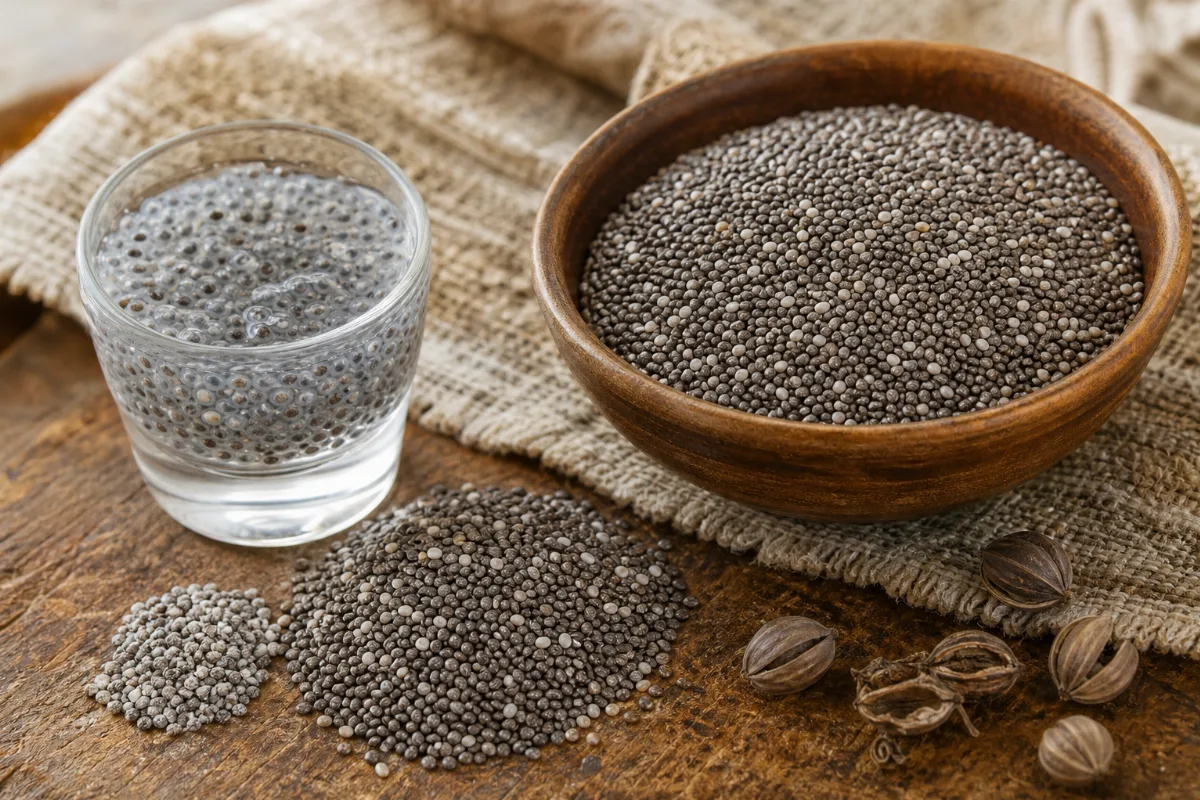
Chia seeds are the tiny seeds of Salvia hispanica, a plant in the mint family. They are a food that is very high in fibre and in the plant omega-3 fat ALA. They swell and form a gel in liquid. The benefit evidence is small and mostly low certainty, and weight loss claims are not supported.
What it is
Chia seeds come from Salvia hispanica L., in the mint family (Lamiaceae). GBIF lists it as an accepted name. Memorial Sloan Kettering (MSK) says the plant is native to Central and South America and the seeds have been eaten since ancient times. Detailed history was not read from a source.
USDA data for dried chia seeds, per 100 g: 486 kcal, 16.5 g protein, 30.7 g fat (17.8 g of it ALA), 42.1 g carbohydrate, 34.4 g fibre, 631 mg calcium, 7.72 mg iron and 335 mg magnesium. One ounce (28 g) has about 138 kcal, 4.7 g protein, 5.0 g ALA, 9.8 g fibre and 179 mg calcium.
What the research shows
Blood pressure has the most support. Two 2025 pooled analyses, of 8 trials each, found lower systolic and diastolic pressure with chia. One small trial gave chia flour to people with high blood pressure, and another gave whole seeds to adults with type 2 diabetes, both for 12 weeks. A 2025 review of reviews rated the certainty moderate to low for most outcomes and said overall effectiveness remains uncertain.
CRP, an inflammation marker, was lower in a 2024 analysis of 4 trials (210 people) but IL-6 and TNF-alpha did not change. The one placebo-controlled trial of 76 overweight adults found no change in any of them.
Cholesterol results disagree. The 2021 analysis of 10 trials had ranges that all included no effect. The 2025 review of reviews reported small improvements.
Weight loss is not supported. The 12-week placebo-controlled trial and two pooled analyses found no change in weight, BMI or body fat. Pooled blood sugar results were also not significant. A pooled analysis found a small waist drop of about 1.5 cm, which another did not.
At a glance
Traditional uses history, not proof
- Eaten as a food since ancient times (per Memorial Sloan Kettering)
- Long use as food is not proof that it treats any condition
Studied for research
- Fibre and omega-3 (ALA) content, high certainty for the nutrient content
- Blood pressure, low certainty
- Inflammation marker CRP, low certainty
- Cholesterol and triglycerides, mixed
- Weight loss, evidence against
- Waist size, mixed
- Blood sugar, insufficient evidence
- Plant compounds, lab evidence only
Main compounds
- Alpha-linolenic acid (ALA)
- Dietary fibre
- Protein
- Flavonoids, phenolic acids and tocopherols
Common forms
- Dried whole seeds, as food (USDA values read)
- Chia flour and whole seed as used in trials
- Soaked seeds, chia gel and puddings (nutrient values not read)
- Chia oil and chia supplements are different products and are not covered
Research links: 2025 pooled analysis: chia and blood pressure (8 trials) · 2009 trial: chia in overweight adults · 2026 review: chia seed allergy · Research Library · Genes & Biomarkers Library
What it is and its history
- Accepted scientific name
- Salvia hispanica L.
- Naming authority
- L. (GBIF accepted; the plant whose seeds are eaten as chia)
- Common names
- Chia (English); Chia seed (English); Salba (English (a trademarked chia variety, per the existing nutrient summary)); Chia (Spanish)
- Family or group
- Lamiaceae (the mint family), as given by GBIF.
- Classification
- Plantae > Lamiales > Lamiaceae > Salvia > Salvia hispanica
- Native range
- MSK says the chia plant is native to Central and South America.
- Habitat
- Not verified from a source read.
- Look-alikes and adulterants
- Not researched. Chia is a different plant from flaxseed, and the two have separate evidence.
Photographs
Traditional use and history history, not clinical proof
| Tradition or era | Documented use | Source |
|---|---|---|
| Memorial Sloan Kettering Cancer Center, About Herbs: Chia | ||
| None |
Traditional use shows how it was used. It does not show that it works or is safe today.
What is inside, and how it may work
What it contains and how those compounds act in cells and animals. Laboratory and animal mechanisms are not proven effects in people.
Main compounds
| Compound | Family | Where it is concentrated | Activity studied | Level of evidence |
|---|---|---|---|---|
| Alpha-linolenic acid (ALA) | omega-3 fatty acid | Seed USDA: 17.8 g per 100 g of dried seed | A plant omega-3 fat. Blood ALA rose 24.4% in a 12-week placebo-controlled trial; EPA and DHA did not change. 17 5 | Human data |
| Dietary fibre | fibre | Seed USDA: 34.4 g per 100 g | The seed swells and forms a gel with liquid (MSK; case report). Health effects of the fibre were not tested separately. 17 15 | Human data |
| Protein | protein | Seed USDA: 16.5 g per 100 g | MSK says the main protein fractions are globulins, with peptides resembling sesame proteins; this is the source of the allergy and sesame cross-reactivity questions. 17 15 8 | Lab |
| Flavonoids, phenolic acids and tocopherols | polyphenols and vitamin E forms | Seed and fractions Not read | Reported anti-inflammatory and other actions are from lab and animal work. 3 15 | Lab |
Mechanisms, receptors and pathways
| Target or pathway | Gene or receptor | What was found | Level |
|---|---|---|---|
| Swelling and gel formation with liquid | Not applicable | MSK says chia can absorb up to 27 times its weight in water. The case report authors note it forms a gel that can cause an obstruction. 15 16 | Human data |
| Allergen proteins and sesame cross-recognition | 2S albumins, 7S vicilin-like globulins, 11S legumin-like globulins and oleosins (candidate allergens) | Molecular studies found IgE recognition and possible cross-reactivity with sesame; the review stresses this does not establish a clinical cross-allergy. 8 | Lab |
| Blood pressure lowering | Not identified | No mechanism has been shown in people. Fibre, ALA and other compounds are proposed. 11 | Hypothesis |
Absorption, metabolism and elimination
- Absorption
- Not found for chia nutrients in people, apart from the rise in blood ALA in one trial.
- Distribution
- Not found.
- Metabolism
- Not found.
- Elimination
- Not found.
- Bioavailability
- Not established. A food-industry review discusses how well chia's compounds are released, but its abstract gives no figures.
Isolated compounds versus whole extracts
The trials mostly used whole seed or milled seed (flour). Chia oil, capsules and powders are different products and were not covered. Results for the seed should not be assumed for the oil.
Nutritional composition
Nutrition from USDA FoodData Central (SR Legacy, FDC 170554, dried chia seeds; values read 2026-10-26 from the data feed because the public API key was rate-limited). Per 100 g: 486 kcal, 5.8 g water, 16.5 g protein, 30.7 g fat (3.33 g saturated, 2.31 g monounsaturated, 23.7 g polyunsaturated, of which 17.8 g is the omega-3 ALA), 42.1 g carbohydrate, 34.4 g fibre, 631 mg calcium, 7.72 mg iron, 335 mg magnesium, 860 mg phosphorus, 407 mg potassium, 16 mg sodium, 4.58 mg zinc, 0.924 mg copper, 2.72 mg manganese and 55.2 micrograms selenium. One typical USDA portion is 1 ounce (28.35 g, the 100 g values multiplied by 0.2835): about 138 kcal, 4.7 g protein, 8.7 g fat, 5.0 g ALA, 11.9 g carbohydrate, 9.8 g fibre, 179 mg calcium, 2.2 mg iron and 95 mg magnesium. Soaked seeds, chia flour, chia oil and chia drinks were not read; products with added sugar or other ingredients will differ.
1 high certainty2 mixed findings2 low certainty2 not enough evidence1 evidence against
What was looked at
The 8 benefits and uses checked for Chia Seeds, each with how strong the evidence is. Tap one to open it.
- Blood pressureLow certainty
- Inflammation marker (C-reactive protein)Low certainty
- Cholesterol and triglyceridesMixed findings
- Omega-3 (ALA) and fibre contentHigh certainty
- Weight loss and body compositionEvidence against
- Waist sizeMixed findings
- Blood sugar and insulinNot enough evidence
- Plant compounds (lab evidence only)Not enough evidence
Lab markers tracked in the studies
Systolic blood pressureDiastolic blood pressureC-reactive protein (CRP)LDL, HDL, total cholesterol and triglyceridesBody weight and BMIWaist circumferenceFasting glucose, HbA1c and insulin
What is Chia Seeds good for?
The studied uses and how strong the human evidence is for each. Most trials are small and about 12 weeks long, and several pooled results found no effect.
Benefits, one by one
Each card is a research question, not a promise. Tap a goal to filter. Open a card to see the studies, doses and limits.
Blood pressure
Low certaintyTwo 2025 pooled analyses of small trials found lower blood pressure in people eating chia seed or chia flour: systolic about 5.6 to 7.2 mmHg lower, diastolic about 6.0 to 7.5 mmHg lower. The trials are few and small, and some had no placebo. It is not a replacement for blood pressure treatment.
6 studiesWhole seed and milled seed (flour) in trials. Chia oil and capsules w…
Studies, doses and limits
What the trials found
Two meta-analyses (8 trials each) and two small trials were read. One trial gave chia flour to people with high blood pressure, with and without medicine. One gave whole seeds to adults with type 2 diabetes against a control group with no placebo. A 2025 review of reviews gave smaller standardised effects and rated certainty moderate to low for most outcomes.
Results
Lower blood pressure in the pooled trials. The systolic effect was significant in people starting under 140 mmHg systolic. Trials mostly lasted about 12 weeks.
Effect sizes as reported
Systolic -7.19 mmHg (95% CI -10.63 to -3.73) and diastolic -6.04 mmHg (-9.58 to -2.49) in one analysis; systolic -5.61 (-8.77 to -2.44) and diastolic -7.49 (-9.64 to -5.34) in the other.
Why this rating
Low: pooled analyses of only 8 small trials each, no placebo in some, and the umbrella review rated most outcomes moderate to low. No heart attack or stroke outcome was measured.
Form and dose studied
Whole seed and milled seed (flour) in trials. Chia oil and capsules were not covered.
Who was studied
Adults, including people with high blood pressure and people with type 2 diabetes.
Limits
Small trials, 12 weeks, some without placebo, blood pressure is a stand-in measure and not a disease outcome.
Why researchers looked
Chia is high in fibre and in the omega-3 fat ALA, and both are linked to blood pressure in other research.
Traditional use
Chia has been eaten as a food since ancient times, per MSK. Long use as food is not proof that it lowers blood pressure.
Proposed mechanism Hypothesis
No mechanism has been shown in people. Fibre, ALA and other compounds are proposed.
A proposed mechanism does not show that the effect happens in people.
MSK warns chia may add to the effect of blood pressure medicines; see the Safety tab.
Inflammation marker (C-reactive protein)
Low certaintyA 2024 pooled analysis of 4 trials (210 people) found a lower CRP blood level after chia, but no change in two other inflammation markers (IL-6, TNF-alpha). The CRP result only just reached statistical significance.
3 studiesChia seed in trials.
Studies, doses and limits
What the trials found
One meta-analysis of 4 randomised trials. The largest single trial read (76 overweight adults, 12 weeks, placebo-controlled) found no difference in CRP, IL-6 or TNF-alpha between groups.
Results
CRP lower in the pooled analysis; IL-6 and TNF-alpha unchanged. The review of reviews also reported a small CRP fall.
Effect sizes as reported
CRP -0.64 mg/dl (95% CI -1.24 to -0.04). IL-6 and TNF-alpha not significant.
Why this rating
Low: 4 trials, the CRP interval almost touches zero, and the one placebo-controlled trial read found nothing.
Form and dose studied
Chia seed in trials.
Who was studied
Adults in the 4 pooled trials.
Limits
Few trials; CRP is a marker, not a disease outcome.
Why researchers looked
ALA and fibre in chia are thought to calm inflammation, and CRP is an easy blood marker to measure.
Traditional use
Not described in the sources read.
Proposed mechanism Hypothesis
Not shown in people. The proposed ideas are omega-3 fat, fibre and antioxidant compounds.
A proposed mechanism does not show that the effect happens in people.
No specific safety concern for this use.
Cholesterol and triglycerides
Mixed findingsReviews disagree. A 2021 pooled analysis of 10 trials found the ranges for total cholesterol, LDL, HDL and triglycerides all included no effect. A 2025 review of reviews reported small improvements in total cholesterol, LDL and triglycerides and a small fall in HDL.
4 studiesChia seed in trials.
Studies, doses and limits
What the trials found
One meta-analysis of 10 trials and one review of reviews. The 54-year-old man in an MSK case report was eating chia to lower cholesterol, which shows the claim is popular, not that it works.
Results
No clear effect on cholesterol or triglycerides in the meta-analysis. Blood ALA rose, as expected from the seed's fat. The umbrella review's small cholesterol gains are the pooled trials viewed another way, and the two sources do not agree.
Effect sizes as reported
2021 analysis: total cholesterol -2.98 (-9.98 to 4.02); triglycerides -14.09 mg/dL (-33.46 to 5.28); LDL 2.07 mg/dL (-5.05 to 9.19). All include zero.
Why this rating
Mixed: the meta-analysis found no clear effect, the review of reviews found small effects, and the placebo-controlled trial of 76 people found no change in blood fats.
Form and dose studied
Chia seed in trials.
Who was studied
Adults.
Limits
Small trials; the sources disagree; blood fats are a stand-in marker.
Why researchers looked
Chia has a lot of fibre and ALA, both studied for blood fats.
Traditional use
Not described in the sources read.
Proposed mechanism Hypothesis
Not shown in people.
A proposed mechanism does not show that the effect happens in people.
No specific safety concern for this use.
Omega-3 (ALA) and fibre content
High certaintyBy USDA data, dried chia seeds are very high in fibre (34.4 g per 100 g) and in the plant omega-3 fat ALA (17.8 g per 100 g). One ounce (28 g) gives about 9.8 g fibre and 5.0 g ALA. This is what the food contains, not proof of a health effect.
2 studiesDried whole seeds from USDA tables. Soaked seeds, flour and chia oil …
Studies, doses and limits
What the trials found
In the placebo-controlled trial of 76 overweight adults, blood ALA rose 24.4% with chia and fell 2.8% with placebo, so the seed's ALA does reach the blood. Blood EPA and DHA did not change.
Results
A nutrient fact. No trial read tested chia against low fibre or low omega-3 intake as a treatment.
Effect sizes as reported
USDA per 100 g: ALA 17.8 g, fibre 34.4 g, protein 16.5 g. Per 28.35 g ounce: about 5.0 g ALA, 9.8 g fibre.
Why this rating
High that the food contains these nutrients (USDA data). Not a claim about disease benefit.
Form and dose studied
Dried whole seeds from USDA tables. Soaked seeds, flour and chia oil were not read for nutrients.
Who was studied
General adult diet.
Limits
Nutrient facts, not trials. Chia oil and milled seed were not read.
Why researchers looked
People eat chia for fibre and plant omega-3.
Traditional use
Eaten as food since ancient times, per MSK.
Proposed mechanism Nutrient database
These are nutrient amounts in the food from a USDA table.
A proposed mechanism does not show that the effect happens in people.
Dry seeds swell a lot; see the Safety tab.
Weight loss and body composition
Evidence againstChia has no good evidence of helping weight loss. A 12-week placebo-controlled trial in 76 overweight adults found no change in body mass or body composition, and two pooled analyses found no significant change in weight or BMI. MSK also says chia did not appear to affect weight loss.
4 studiesChia seed in trials.
Studies, doses and limits
What the trials found
One placebo-controlled trial and two meta-analyses of 8 trials each.
Results
No effect on weight, BMI or body fat. The trial that tested it directly found nothing at 12 weeks.
Effect sizes as reported
Weight +0.09 kg (95% CI -0.76 to 0.93) and BMI -0.31 kg/m2 (-0.96 to 0.34) in one analysis, both non-significant.
Why this rating
Against: the placebo-controlled trial and both pooled analyses found no effect.
Form and dose studied
Chia seed in trials.
Who was studied
Overweight and obese adults, and adults in pooled trials.
Limits
Trials up to 12 weeks; small.
Why researchers looked
Chia swells with liquid and is high in fibre, so people hope it helps fullness.
Traditional use
Not described in the sources read.
Proposed mechanism Hypothesis
Not shown. MSK mentions small studies suggesting fullness but no weight loss.
A proposed mechanism does not show that the effect happens in people.
None specific.
Waist size
Mixed findingsOne pooled analysis found a small drop in waist size (about 1.5 cm). Another pooled analysis of 8 trials found no significant change. This is a mixed, small finding.
3 studiesChia seed in trials.
Studies, doses and limits
What the trials found
Two meta-analyses of 8 trials each that disagree.
Results
Waist -1.46 cm in one, no significant effect in the other. The review of reviews also reported a small waist fall.
Effect sizes as reported
Waist WMD -1.46 cm (95% CI -2.68 to -0.25) in one analysis.
Why this rating
Mixed: two analyses of mostly the same small body of trials reach different answers.
Form and dose studied
Chia seed in trials.
Who was studied
Adults.
Limits
Few small trials.
Why researchers looked
Waist size is a simple measure of belly fat.
Traditional use
Not described in the sources read.
Proposed mechanism Hypothesis
Not shown.
A proposed mechanism does not show that the effect happens in people.
None specific.
Blood sugar and insulin
Not enough evidenceA 2024 pooled analysis of 8 trials (362 people) found no significant effect of chia on fasting blood sugar, HbA1c or insulin. A 2025 analysis found the same for fasting glucose and HbA1c. A small trial in people with type 2 diabetes also found no difference in these measures.
3 studiesChia seed in trials.
Studies, doses and limits
What the trials found
One meta-analysis of 8 trials plus the glycaemic result from a second analysis and the 42-person type 2 diabetes trial.
Results
No significant effect on fasting glucose, HbA1c or insulin.
Effect sizes as reported
Fasting glucose +0.79% (95% CI -0.97 to 2.55); HbA1c -0.12% (-0.27 to 0.02); insulin +1.23% (-1.77 to 4.22).
Why this rating
Insufficient to show a benefit: no significant effect found, but the trials are few, small and very different from each other.
Form and dose studied
Chia seed in trials.
Who was studied
Adults, including people with type 2 diabetes.
Limits
Large differences between trials.
Why researchers looked
Fibre and gel-forming seeds can slow how fast sugar enters the blood.
Traditional use
Not described in the sources read.
Proposed mechanism Animal research
Not shown in people. MSK notes animal studies on insulin resistance.
A proposed mechanism does not show that the effect happens in people.
MSK lists a possible blood-sugar-lowering effect; see the Safety tab. If you take diabetes medicine, ask your pharmacist.
Plant compounds (lab evidence only)
Not enough evidenceChia contains plant compounds such as flavonoids, phenolic acids and tocopherols. Reviews describe anti-inflammatory and other actions, but these come from lab and animal work, not from trials in people.
2 studiesSeed, oil and meal fractions in lab studies.
Studies, doses and limits
Results
Lab and animal findings do not show a health effect in people.
Why this rating
Insufficient: lab and animal work only.
Form and dose studied
Seed, oil and meal fractions in lab studies.
Limits
Not tested in people; the review is from a food-industry setting.
Why researchers looked
Researchers look at what else is in chia besides fibre and fat.
Traditional use
Not described in the sources read.
Proposed mechanism Lab animal
Lab and animal findings only; MSK's laboratory and animal summary lists antioxidant, anti-inflammatory, anticancer and antithrombotic activities.
A proposed mechanism does not show that the effect happens in people.
None specific.
Connections to the rest of health
How Chia Seeds connects to the rest of our health knowledge graph. Every link says what kind of connection it is. A safety link (for example to the liver) is a warning, not a benefit. A study that merely mentions a topic never creates a benefit link.
Explore every connection: goals, body systems, organs, symptoms, genes
A. Wellness goals
| Connected to | Kind of connection | Evidence status | Context | Studies |
|---|---|---|---|---|
| Blood Pressure Support | Low certainty | Blood pressure: Two 2025 pooled analyses of small trials found lower blood pressure in people eating chia seed or chia flour: systolic about 5.6 to 7.2 mmHg lower, diastolic about 6.0 to 7.5 mmHg lower. The trials are few and small, and some had no placebo. It is not a replacement for blood pressure treatment. | 11 9 12 2 1 15 | |
| Heart Health | Low certainty | Blood pressure: Two 2025 pooled analyses of small trials found lower blood pressure in people eating chia seed or chia flour: systolic about 5.6 to 7.2 mmHg lower, diastolic about 6.0 to 7.5 mmHg lower. The trials are few and small, and some had no placebo. It is not a replacement for blood pressure treatment. Inflammation marker (C-reactive protein): A 2024 pooled analysis of 4 trials (210 people) found a lower CRP blood level after chia, but no change in two other inflammation markers (IL-6, TNF-alpha). The CRP result only just reached statistical significance. | 11 9 12 2 1 15 6 5 10 | |
| Cholesterol Support | Mixed findings | Cholesterol and triglycerides: Reviews disagree. A 2021 pooled analysis of 10 trials found the ranges for total cholesterol, LDL, HDL and triglycerides all included no effect. A 2025 review of reviews reported small improvements in total cholesterol, LDL and triglycerides and a small fall in HDL. | 10 1 5 15 | |
| Digestive Health | High certainty | Omega-3 (ALA) and fibre content: By USDA data, dried chia seeds are very high in fibre (34.4 g per 100 g) and in the plant omega-3 fat ALA (17.8 g per 100 g). One ounce (28 g) gives about 9.8 g fibre and 5.0 g ALA. This is what the food contains, not proof of a health effect. | 17 5 | |
| Heart Health | High certainty | Omega-3 (ALA) and fibre content: By USDA data, dried chia seeds are very high in fibre (34.4 g per 100 g) and in the plant omega-3 fat ALA (17.8 g per 100 g). One ounce (28 g) gives about 9.8 g fibre and 5.0 g ALA. This is what the food contains, not proof of a health effect. | 17 5 | |
| Healthy Weight | Evidence against | Weight loss and body composition: Chia has no good evidence of helping weight loss. A 12-week placebo-controlled trial in 76 overweight adults found no change in body mass or body composition, and two pooled analyses found no significant change in weight or BMI. MSK also says chia did not appear to affect weight loss. | 5 9 11 15 | |
| Healthy Weight | Mixed findings | Waist size: One pooled analysis found a small drop in waist size (about 1.5 cm). Another pooled analysis of 8 trials found no significant change. This is a mixed, small finding. | 9 11 1 | |
| Blood Sugar Balance | Not enough evidence | Blood sugar and insulin: A 2024 pooled analysis of 8 trials (362 people) found no significant effect of chia on fasting blood sugar, HbA1c or insulin. A 2025 analysis found the same for fasting glucose and HbA1c. A small trial in people with type 2 diabetes also found no difference in these measures. | 7 11 2 | |
| Antioxidant Support | Not enough evidence | Plant compounds (lab evidence only): Chia contains plant compounds such as flavonoids, phenolic acids and tocopherols. Reviews describe anti-inflammatory and other actions, but these come from lab and animal work, not from trials in people. | 3 15 |
B. Body systems
| Connected to | Kind of connection | Evidence status | Context | Studies |
|---|---|---|---|---|
| Cardiovascular System | Biological association | Low certainty | Studied for: Blood pressure Studied for: Inflammation marker (C-reactive protein) | 11 9 12 2 1 15 6 5 10 |
| Immune System | Biological association | Low certainty | Studied for: Inflammation marker (C-reactive protein) Studied for: Plant compounds (lab evidence only) | 6 5 1 3 15 |
| Digestive System | Biological association | High certainty | Studied for: Omega-3 (ALA) and fibre content | 17 5 |
| Metabolic System | Biological association | Evidence against | Studied for: Weight loss and body composition Studied for: Waist size | 5 9 11 15 1 7 2 |
E. Health conditions
| Connected to | Kind of connection | Evidence status | Context | Studies |
|---|---|---|---|---|
| Food allergy | Adverse effect or risk | Documented risk | Case reports of immediate reactions and anaphylaxis; possible cross-reactivity with sesame is unproven. Case reports of immediate reactions and anaphylaxis; sesame cross-reactivity unproven. Preparation or compound: Chia seed protein |
8 15 |
| Eosinophilic esophagitis | Drug or supplement interaction | Case report | The one reported chia impaction was in a patient with likely eosinophilic esophagitis. Preparation or compound: Dry whole chia seeds |
16 |
| High blood pressure | Preliminary | Pooled small trials found lower blood pressure with chia; not a treatment. Preparation or compound: Chia seed or flour |
11 9 |
I. Biomarkers
| Connected to | Kind of connection | Evidence status | Context | Studies |
|---|---|---|---|---|
| Systolic blood pressure | Biological association | Low certainty | Measured in trials: lowered. A lab change is not the same as a health benefit. | 11 9 2 5 |
| Diastolic blood pressure | Biological association | Low certainty | Measured in trials: lowered. A lab change is not the same as a health benefit. | 11 9 12 |
| C-reactive protein (CRP) | Biological association | Low certainty | Measured in trials: lowered. A lab change is not the same as a health benefit. | 6 5 |
| LDL, HDL, total cholesterol and triglycerides | Biological association | Mixed findings | Measured in trials: mixed. A lab change is not the same as a health benefit. | 10 1 5 |
| Body weight and BMI | Biological association | Evidence against | Measured in trials: no-change. A lab change is not the same as a health benefit. | 5 9 |
| Waist circumference | Biological association | Mixed findings | Measured in trials: mixed. A lab change is not the same as a health benefit. | 9 11 |
| Fasting glucose, HbA1c and insulin | Biological association | Not enough evidence | Measured in trials: no-change. A lab change is not the same as a health benefit. | 7 2 |
K. Biological pathways
| Connected to | Kind of connection | Evidence status | Context | Studies |
|---|---|---|---|---|
| Alpha-linolenic acid (ALA) | Preliminary mechanism | Human | Chia is a rich plant source of this omega-3 fat. | 17 5 |
| Dietary fibre | Preliminary mechanism | Human | Chia is very high in fibre; it swells and forms a gel with liquid. | 17 15 |
| Blood pressure | Preliminary mechanism | Human | Pooled small trials found lower blood pressure with chia; certainty low. | 11 9 |
| C-reactive protein | Preliminary mechanism | Human | Pooled trials found a lower CRP; certainty low. | 6 |
L. Active compounds
| Connected to | Kind of connection | Evidence status | Context | Studies |
|---|---|---|---|---|
| Alpha-linolenic acid (ALA) | Biological association | Human | A plant omega-3 fat. Blood ALA rose 24.4% in a 12-week placebo-controlled trial; EPA and DHA did not change. Preparation or compound: Seed |
17 5 |
| Dietary fibre | Biological association | Human | The seed swells and forms a gel with liquid (MSK; case report). Health effects of the fibre were not tested separately. Preparation or compound: Seed |
17 15 |
| Protein | Biological association | Lab | MSK says the main protein fractions are globulins, with peptides resembling sesame proteins; this is the source of the allergy and sesame cross-reactivity questions. Preparation or compound: Seed |
17 15 8 |
| Flavonoids, phenolic acids and tocopherols | Biological association | Lab | Reported anti-inflammatory and other actions are from lab and animal work. Preparation or compound: Seed and fractions |
3 15 |
Each connection is stored with the ingredient, the connected record, the kind of connection, the evidence status, the supporting studies, the preparation or compound involved, and a review date (last reviewed October 26, 2026).
The evidence
The research centre for Chia Seeds. Every record here was checked against PubMed or the publisher's page; we never list a study we have not verified.
Evidence by outcome
Bars show how many studies we found for each outcome, not how well it works. People are added up across trials only (reviews are not added, to avoid double counting).
How we rate evidence
High certainty
Several well-run trials or reviews agree; further research is unlikely to change the picture much.
Moderate certainty
Good trials point the same way, but some doubt remains.
Low certainty
Small, short or inconsistent trials. The finding could change with better research.
Very low certainty
Very little or very weak human data. Treat as a possibility only.
Mixed findings
Trials or reviews disagree with each other.
Not enough evidence
Not enough human research to say either way.
Evidence against
Good research found no benefit, or found harm.
We take the reviewers' own risk-of-bias and GRADE statements where they exist, and otherwise judge from study size, design, consistency, directness and whether a product matches what is sold. Many publications do not make evidence high. Method note: We started from our existing chia seeds summary, re-checked nutrition against USDA FoodData Central, read the Memorial Sloan Kettering and FDA pages and a case report abstract, and re-read PubMed abstracts for reviews, trials and an outbreak report. Only abstracts were read for studies. Items we could not verify are flagged in the research gaps.
Study library: every study we checked 17
| Study | Design | People | Product, dose, length | Result |
|---|---|---|---|---|
| Al-Younis 2025 A Critical Review of the Health Benefits Associated with Chia Seeds (Salvia Hispanica L.). Plant Foods Hum Nutr · PMID 41076614 · DOI |
Umbrella review |
2500 8 meta-analyses covering about 2,500 participants |
Chia supplementation (forms vary between the trials) Seed Varies Varies · vs Control groups in the trials |
Small but statistically significant improvements in blood pressure, total and LDL cholesterol, triglycerides, waist and CRP, and a small drop in HDL. GRADE certainty ranged from moderate to low for most outcomes. The authors say overall effectiveness remains uncertain. Hedges g: diastolic BP -0.550; systolic BP -0.119; total cholesterol -0.300; LDL -0.300; triglycerides -0.200; waist -0.289; CRP -0.165; HDL -0.093 (Diastolic -0.718 to -0.382; systolic -0.228 to -0.010) Methods, limits and fundingOutcomes: Blood pressure, blood fats, inflammation, waist Limitations: A review of reviews that re-uses the same small trials; effect sizes are standardised, not in mmHg or mg/dL. Its cholesterol result disagrees with the 2021 meta-analysis, whose intervals included no effect. Funding and conflicts: The authors declare no competing interests. Read: abstract |
| Alwosais 2021 Chia seed (Salvia hispanica L.) supplementation to the diet of adults with type 2 diabetes improved systolic blood pressure: A randomized controlled trial. Nutr Health · PMID 33530854 · DOI |
Randomised controlled trial |
42 42 adults with type 2 diabetes |
Chia seeds Seed 40 g a day 12 weeks · vs Control group that took no supplement (no placebo) |
Systolic blood pressure was lower in the chia group than in the control group. No differences in any other measure tested. Systolic BP difference significant (p = 0.007); size in mmHg not given in the abstract (Not given in the abstract) Methods, limits and fundingOutcomes: Fasting glucose, insulin, HbA1c, blood pressure, lipids, body weight, hs-CRP Limitations: Small trial with no placebo (the control group took no supplement); 12 weeks only. Funding and conflicts: Funding not stated in the abstract. Read: abstract |
| Balakrishnan 2025 A Comprehensive Review of Phenolic Compounds in Chia Seeds and Their Applications in the Food Industry. Plant Foods Hum Nutr · PMID 39853445 · DOI |
Narrative review mixed (mostly lab) |
Food-science and laboratory literature on chia compounds | Chia seed phenolic compounds, oil and meal Seed |
Describes flavonoids, phenolic acids and tocopherols in chia and says they have been reported to have anti-inflammatory, anti-diabetic and heart-health actions. The abstract does not name human trials for these actions. Not applicable (Not applicable) Methods, limits and fundingOutcomes: Compounds in chia, their release from the food, uses in food products Limitations: A food-industry review; the claimed actions are not shown in people by this abstract. Funding and conflicts: The authors declare no competing interests. Read: abstract |
| Harvey 2017 International outbreak of multiple Salmonella serotype infections linked to sprouted chia seed powder - USA and Canada, 2013-2014. Epidemiol Infect · PMID 28318456 · DOI |
Outbreak investigation |
94 94 people with outbreak-strain Salmonella infection in 16 US states and 4 Canadian provinces, 2013-2014 |
Sprouted chia seed powder (13 brands from a single Canadian firm) Sprouted seed, powdered |
21% of the 94 ill people were hospitalised and none died. 54 of the 56 people who ate chia seed powder named 13 brands that traced to one firm. Outbreak strains were found in leftover and unopened product, which was recalled. The authors note that sprouted seeds are a recognised cause of food poisoning. Not applicable (Not applicable) Methods, limits and fundingOutcomes: Illness linked to sprouted chia seed powder Limitations: A 2013-2014 outbreak tied to sprouted chia seed powder; it does not show that ordinary dry whole seeds carry the same risk. Funding and conflicts: Conflict of interest: none stated. Read: abstract |
| Nieman 2009 Chia seed does not promote weight loss or alter disease risk factors in overweight adults. Nutr Res · PMID 19628108 · DOI |
Randomised controlled trial |
76 90 overweight or obese adults aged 20 to 70 were enrolled; 76 finished (39 chia, 37 placebo) |
Chia seed or placebo, mixed in water Seed 25 g twice a day 12 weeks · vs Placebo |
Blood ALA rose in the chia group. No group differences in body mass or composition, inflammation, oxidative stress, blood pressure or blood fats. Plasma ALA +24.4% with chia vs -2.8% with placebo; no differences in the other measures (Not given in the abstract) Methods, limits and fundingOutcomes: Body mass and composition, inflammation markers, oxidative stress, blood pressure, blood fats, blood fatty acids Limitations: Single-blinded; 12 weeks; 14 of 90 people did not finish. Funding and conflicts: Funding not stated in the abstract. Read: abstract |
| Pam 2024 Chia seed supplementation and inflammatory biomarkers: a systematic review and meta-analysis. J Nutr Sci · PMID 39703891 · DOI |
Systematic review meta analysis |
210 4 randomised trials, 210 participants (search to June 2024) |
Chia seed supplementation (trial products as given) Seed · vs Control groups in each trial |
CRP was lower with chia. No significant effect on IL-6 or TNF-alpha. CRP WMD -0.64 mg/dl; IL-6 WMD 0.29 pg/dl (not significant); TNF-alpha WMD 0.05% (not significant) (CRP -1.24 to -0.04; IL-6 -0.40 to 0.98; TNF-alpha -0.21 to 0.30) Methods, limits and fundingOutcomes: C-reactive protein (CRP), interleukin-6 (IL-6), tumour necrosis factor-alpha (TNF-alpha) Limitations: Only 4 trials; the CRP interval just excludes zero. The authors say larger studies are needed. Funding and conflicts: The authors declare no conflict of interest. Read: abstract |
| Pam 2024 The effectiveness of chia seed in improving glycemic status: A systematic review and meta-analysis. Diabetes Metab Syndr · PMID 38917708 · DOI |
Systematic review meta analysis |
362 8 randomised trials (10 arms), 362 participants (search to January 2024) |
Chia seed consumption Seed · vs Control groups in each trial |
No significant effect on fasting glucose, HbA1c or insulin. Fasting glucose WMD 0.79%; HbA1c WMD -0.12%; insulin WMD 1.23% (none significant) (Glucose -0.97 to 2.55; HbA1c -0.27 to 0.02; insulin -1.77 to 4.22) Methods, limits and fundingOutcomes: Fasting blood glucose, HbA1c, insulin Limitations: Few studies and large differences between them. Funding and conflicts: The authors declare no conflicts of interest. Registration: PROSPERO CRD42023441766 Read: abstract |
| Porr 2026 Chia Seed Allergy: Emerging Clinical Evidence, Molecular Allergens, and the Unresolved Question of Cross-Reactivity. Nutrients · PMID 42797010 · DOI |
Narrative review |
Case reports, conference reports, one case series and molecular studies of chia allergy | Chia seed as a food allergen Seed |
Chia is a potential emerging food allergen. Published clinical evidence is a small number of case reports, conference reports and one case series of immediate IgE-mediated reactions, skin reactions and anaphylaxis. Molecular studies found IgE recognition and possible cross-reactivity, especially with sesame, but this does not establish a real-life cross-allergy. The evidence cannot show how common chia allergy is. Not applicable (Not applicable) Methods, limits and fundingOutcomes: Clinical reactions, candidate allergens, cross-reactivity with sesame Limitations: No standard diagnostic extracts, no chia food-challenge protocol; prevalence, natural history and reaction thresholds are unknown. Funding and conflicts: The authors declare no conflicts of interest. Read: abstract |
| Saadh 2025 The Effects of Chia Seed (Salvia hispanica L.) Consumption on Blood Pressure and Body Composition in Adults: A Systematic Review and Meta-analysis of Randomized Controlled Trials. Clin Ther · PMID 39672763 · DOI |
Systematic review meta analysis |
372 8 randomised trials, 372 adults (search to October 2024) |
Chia seed consumption (trial products as given in each trial) Seed · vs Control groups in each trial |
Chia was linked to lower diastolic and systolic blood pressure and a slightly smaller waist. No significant effect on BMI or weight. Diastolic BP WMD -7.49 mmHg; systolic BP WMD -5.61 mmHg; waist WMD -1.46 cm; BMI -0.31 kg/m2 (not significant); weight +0.09 kg (not significant) (Diastolic -9.64 to -5.34; systolic -8.77 to -2.44; waist -2.68 to -0.25; BMI -0.96 to 0.34; weight -0.76 to 0.93) Methods, limits and fundingOutcomes: Systolic and diastolic blood pressure, waist, weight, BMI Limitations: Few, small trials; the authors say more and larger studies are needed. Funding and conflicts: The authors declare no competing interests. Read: abstract |
| Silva 2021 Chia seed (Salvia hispanica L.) consumption and lipid profile: a systematic review and meta-analysis. Food Funct · PMID 34378609 · DOI |
Systematic review meta analysis |
10 randomised trials in adults (search to August 2020) | Chia seed consumption Seed · vs Control groups in each trial |
Every cholesterol and triglyceride range included no effect. Blood ALA, EPA and omega-6 (LA) rose and DHA fell. The authors conclude the effect appears neutral or beneficial. Total cholesterol MD -2.98; triglycerides MD -14.09 mg/dL; LDL MD 2.07 mg/dL; HDL MD -2.92 mg/dL (as printed in the abstract) (Total cholesterol -9.98 to 4.02; triglycerides -33.46 to 5.28; LDL -5.05 to 9.19; HDL -5.91 to 0.06) Methods, limits and fundingOutcomes: Total cholesterol, triglycerides, LDL, HDL, and blood fatty acids Limitations: All intervals include zero, so no clear effect on blood fats was shown. The abstract describes the HDL value in a confusing way; only the numbers are quoted. Funding and conflicts: Not stated in the abstract. Read: abstract |
| TaghipourSheshdeh 2025 The Effect of Chia Seed on Blood Pressure, Body Composition, and Glycemic Control: A GRADE-Assessed Systematic Review and Dose-Response Meta-Analysis of Randomized Controlled Trials. Nutr Rev · PMID 39225983 · DOI |
Systematic review meta analysis |
8 randomised trials (search to August 2023) | Chia seed consumption (trial products as given in each trial) Seed · vs Control groups in each trial |
Blood pressure was lower with chia. No significant effect on body weight, body fat percentage, waist, BMI, fasting glucose or HbA1c. The systolic effect was significant in people with a starting systolic pressure under 140 mmHg. Systolic BP WMD -7.19 mmHg; diastolic BP WMD -6.04 mmHg (Systolic -10.63 to -3.73; diastolic -9.58 to -2.49) Methods, limits and fundingOutcomes: Systolic and diastolic blood pressure, body weight, body fat, waist, BMI, fasting glucose, HbA1c Limitations: Only 8 small trials; the authors say the limited data must be kept in mind. The abstract does not give the GRADE ratings. Funding and conflicts: Not stated in the abstract. Registration: PROSPERO CRD42023462575 Read: abstract |
| Toscano 2014 Chia flour supplementation reduces blood pressure in hypertensive subjects. Plant Foods Hum Nutr · PMID 25403867 · DOI |
Randomised controlled trial |
26 26 adults with high blood pressure: 10 on blood pressure medicine given chia, 9 not on medicine given chia, 7 on medicine given placebo |
Chia flour (milled seed) or placebo Seed, ground 35 g a day 12 weeks · vs Placebo (only people on blood pressure medicine received placebo) |
Average clinical blood pressure fell in the chia groups and not in placebo. People not on medicine had a lower systolic pressure after chia. 24-hour systolic pressure fell in all chia groups; 24-hour diastolic pressure did not change. Untreated chia group systolic 146.8 to 137.3 mmHg (p<0.05); mean clinical BP in treated chia group 111.3 to 100.1 mmHg (p<0.001) (Not given in the abstract) Methods, limits and fundingOutcomes: Clinical and 24-hour blood pressure, inflammation, oxidative stress and nitric oxide markers Limitations: Very small groups, no untreated placebo group, so the untreated result is not compared with placebo directly. Flour, not whole seed. Funding and conflicts: Funding not stated in the abstract. Read: abstract |
| s-fda-allergens US FDA: Food Allergies · Source |
Health agency n/a |
Methods, limits and fundingRead: full-text | ||
| s-gbif-salvia-hispanica GBIF species match: Salvia hispanica L. · Source |
Taxonomy database plant |
Methods, limits and fundingRead: api | ||
| s-msk-chia Memorial Sloan Kettering Cancer Center: About Herbs, Botanicals and Other Products: Chia · Source |
Health agency n/a |
Methods, limits and fundingRead: full-text | ||
| s-simmelink-2017 Watch it grow: Esophageal impaction with chia seeds (Simmelink et al., Case Reports in Internal Medicine 2017;4(2)) · Source |
Case report |
Methods, limits and fundingRead: abstract | ||
| s-usda-fdc-170554 USDA FoodData Central: Seeds, chia seeds, dried (SR Legacy, FDC 170554) · Source |
Food composition database n/a |
Methods, limits and fundingRead: data-feed |
What we do not know yet
- No trial of heart attacks, strokes or other disease outcomes was found for chia.
- Most trials are small, about 12 weeks, and some had no placebo; the reviews and the 2021 cholesterol analysis disagree.
- How common chia allergy and dry-seed blockage are is unknown; each rests on case reports.
- No official source on chia in pregnancy, breastfeeding or for children was read.
- Gut health, fullness, bones and the brain were not found in trials; chia oil and supplements were not covered.
- Heavy metals, mould toxins, oxalate, kidney and gout questions, and EFSA status were not researched.
How new research is added
New studies are found by a saved PubMed search and placed in a review queue before the page changes.
Lab markers
What changed in blood or saliva tests during trials. A changed number is not the same as feeling or being healthier, and we give no "normal ranges".
Metabolic 1
Body weight and BMI
No clear change in trials
Body weight and body mass index (weight relative to height).
Evidence againstResults and what it means
Why it was measured
Used to judge weight-loss effects.
Statistical vs. clinical meaning
No weight effect found.
Safety implication
None specific.
Other 6
Systolic blood pressure
Lowered in trials
The top number in a blood pressure reading, the pressure when the heart beats.
Low certaintyResults and what it means
Why it was measured
High pressure over years raises the risk of heart disease and stroke.
Statistical vs. clinical meaning
A modest average fall in small trials; one placebo-controlled trial found nothing.
Safety implication
Could add to the effect of blood pressure medicines (MSK).
| Study | Result | People | Product |
|---|---|---|---|
| 11 | SBP -7.19 mmHg (95% CI -10.63 to -3.73) | 8 randomised trials | Chia seed consumption |
| 9 | SBP -5.61 mmHg (95% CI -8.77 to -2.44) | 8 randomised trials, 372 adults | Chia seed consumption |
| 2 | SBP lower than control (p = 0.007); size not given in the abstract | 42 adults with type 2 diabetes | Chia seeds, 12 weeks, no placebo |
| 5 | No difference in blood pressure between chia and placebo | 76 overweight or obese adults | Chia seed, 12 weeks |
Diastolic blood pressure
Lowered in trials
The bottom number in a blood pressure reading, the pressure between beats.
Low certaintyResults and what it means
Why it was measured
It is the second number used to diagnose and follow high blood pressure.
Statistical vs. clinical meaning
Falls in the pooled trials but not in the small flour trial's 24-hour readings.
Safety implication
See blood pressure medicines on the Safety tab.
| Study | Result | People | Product |
|---|---|---|---|
| 11 | DBP -6.04 mmHg (95% CI -9.58 to -2.49) | 8 randomised trials | Chia seed consumption |
| 9 | DBP -7.49 mmHg (95% CI -9.64 to -5.34) | 8 randomised trials, 372 adults | Chia seed consumption |
| 12 | No change in 24-hour diastolic pressure in either chia group | 26 adults with high blood pressure | Chia flour, 12 weeks |
C-reactive protein (CRP)
Lowered in trials
A blood marker that rises with inflammation in the body.
Low certaintyResults and what it means
Why it was measured
It is a common, cheap marker of general inflammation.
Statistical vs. clinical meaning
A small pooled difference that just reaches significance; not a disease outcome.
Safety implication
None specific.
LDL, HDL, total cholesterol and triglycerides
Mixed results in trials
Fats carried in the blood. LDL is the 'bad' cholesterol, HDL the 'good' one.
Mixed findingsResults and what it means
Why it was measured
Blood fats are used to estimate heart disease risk.
Statistical vs. clinical meaning
Sources disagree; no clear effect shown.
Safety implication
None specific.
| Study | Result | People | Product |
|---|---|---|---|
| 10 | Total cholesterol -2.98, triglycerides -14.09 mg/dL, LDL +2.07 mg/dL, HDL -2.92 mg/dL; every interval includes zero | 10 randomised trials | Chia seed consumption |
| 1 | Small falls in total cholesterol (g -0.300), LDL (g -0.300) and triglycerides (g -0.200), and a small fall in HDL (g -0.093) | 8 meta-analyses, about 2,500 participants | Chia supplementation |
| 5 | No difference in lipoproteins between chia and placebo | 76 overweight or obese adults | Chia seed, 12 weeks |
Waist circumference
Mixed results in trials
The distance around the waist, a simple measure of belly fat.
Mixed findingsResults and what it means
Why it was measured
Belly fat is linked to heart and metabolic risk.
Statistical vs. clinical meaning
Two analyses disagree.
Safety implication
None specific.
Fasting glucose, HbA1c and insulin
No clear change in trials
Fasting glucose is blood sugar after not eating. HbA1c reflects average blood sugar over about three months.
Not enough evidenceResults and what it means
Why it was measured
The usual markers used to follow blood sugar control.
Statistical vs. clinical meaning
No significant effect found; the evidence is thin.
Safety implication
See diabetes medicine on the Safety tab.
| Study | Result | People | Product |
|---|---|---|---|
| 7 | Fasting glucose +0.79% (95% CI -0.97 to 2.55); HbA1c -0.12% (-0.27 to 0.02); insulin +1.23% (-1.77 to 4.22) | 8 randomised trials (10 arms), 362 participants | Chia seed consumption |
| 2 | No differences in glucose, insulin or HbA1c between chia and control | 42 adults with type 2 diabetes | Chia seeds, 12 weeks, no placebo |
Safety
What studies and official sources say about side effects, medicines and who should check first. Each point shows what kind of evidence it comes from.
Main points to know 4
- Dry seeds swell: a food-pipe blockage has been reported. Memorial Sloan Kettering (MSK) says never to eat dry chia seeds on their own, because they can absorb up to 27 times their weight in water and may lodge in the throat. It says to mix them with enough liquid to let them swell first. A 2017 case report describes the first chia seed impaction its authors know of, in a patient with likely eosinophilic esophagitis (an inflammatory food-pipe condition). MSK describes a 39-year-old man who needed emergency removal of seeds. One case report cannot tell us how often this happens, and no rate was found. If you have trouble swallowing, ask your clinician first. Case report and authoritative guidance 15 16
- Allergy, including a possible link with sesame. A 2026 review calls chia a potential emerging food allergen. Reports include immediate reactions, skin symptoms and anaphylaxis. Lab studies suggest possible cross-reactivity with sesame, but the review stresses this does not prove a real-life cross-allergy, and nobody knows how common chia allergy is. MSK lists a man with facial swelling, rash, shortness of breath and dizziness after a few days of chia, and a man with hand eczema after adding chia to yogurt. If you are allergic to sesame, ask an allergist before trying chia. Sesame is one of the nine major US food allergens; chia is not on that list. Case reports and review 8 15 13
- May add to blood pressure medicine. MSK says chia may add to the effects of blood pressure medicines, because chia flour lowered blood pressure in treated and untreated people in a small trial. No trial of chia with a specific medicine was found. Ask a pharmacist. Authoritative guidance 15 12
- Sprouted chia seed powder has caused food poisoning. In 2013-2014 a Salmonella outbreak in the US and Canada was linked to sprouted chia seed powder: 94 ill people, 21% in hospital, none died. The product was recalled. This outbreak was tied to sprouted powder from one firm; it does not show that ordinary dry seeds carry the same risk. Outbreak investigation 4
Side effects 4
| Effect | How often | Severity and recovery | Evidence |
|---|---|---|---|
| Throat or food-pipe blockage from dry seeds swelling The reported patient had likely eosinophilic esophagitis. Case reports cannot show how common this is. | Not found. One case report with a published abstract; MSK cites the same case. | can be a medical emergency In the reported case the seeds were removed in hospital. | Case report 16 15 |
| Allergic reactions, from skin rash to anaphylaxis Clinical evidence is a small number of case reports, conference reports and one case series. | Not known. The 2026 review could not determine prevalence. | can be severe (anaphylaxis) Not described. | Case reports 8 15 |
| Food poisoning (Salmonella) from contaminated sprouted chia seed powder Tied to sprouted seed powder; not shown for ordinary whole seed. | 94 cases in one 2013-2014 outbreak | 21% of the ill people were hospitalised No deaths reported. | Outbreak investigation 4 |
| Side effects in the trials read MSK says small studies suggest chia is well tolerated when properly used. | Not given in the abstracts | Not stated Not stated | Authoritative guidance 15 |
Liver
No liver injury from eating chia seeds was found in the sources read. A liver-safety source (such as LiverTox) was not searched for chia.
How often. No frequency was found.
Monitoring. No agency monitoring advice was found.
This is a safety connection. It is not evidence that Chia Seeds supports liver health.
Medicines and supplements 3
| With | Why it matters | Importance | Evidence | What to do |
|---|---|---|---|---|
| Blood pressure medicines prescription | Chia flour lowered blood pressure in a small trial of 26 people with high blood pressure, with or without medicine, so the two effects could add together. | MSK says chia may increase the effects of these medicines and lists 'do not take if you are on blood pressure medications'. No trial tested chia against a specific medicine. | Authoritative guidance and small trial Low certainty 15 12 | Tell your doctor or pharmacist if you plan to eat chia regularly while on blood pressure medicine. |
| Medicines or tests for blood sugar prescription | MSK lists a possible blood-sugar-lowering effect under lab interactions. | The pooled trials found no significant effect on fasting glucose or HbA1c, so any effect is unproven and likely small. | Authoritative guidance Very low certainty 15 7 | If you take medicine for diabetes, ask your pharmacist. |
| Blood thinners and bleeding prescription | MSK says high intakes of omega-3 fats (n-3 PUFAs) could alter bleeding and clotting times. The source it cites is not about chia. | No trial or case in people was read showing chia food changes bleeding. This is a theoretical caution. | Theoretical Not enough evidence 15 | If you take a blood thinner or have surgery planned, mention a big change in what you eat to your clinician. |
Who should check first 5
| Situation | Advice | Evidence |
|---|---|---|
| Trouble swallowing, a narrowed food pipe, or eosinophilic esophagitis | Ask your clinician or a speech-language pathologist before eating seeds that swell with liquid. Never eat dry chia on its own (MSK). | Authoritative guidance 15 16 |
| Known seed allergy or sesame allergy | Ask an allergist. For trouble breathing or swelling of the face or throat, call 911 or your local emergency number. | Case reports and review 8 15 |
| Taking blood pressure medicine | Ask your pharmacist whether regular chia could matter for your treatment. | Authoritative guidance 15 |
| Pregnancy or breastfeeding | No official statement about chia in pregnancy or breastfeeding was found in the sources read. Ask your midwife, doctor or dietitian. | Not found |
| Young children and older adults with swallowing difficulty | The sources read do not give child-specific advice. The swallowing caution above applies to anyone with trouble swallowing; ask a clinician. | Not found 15 |
Overdose, product quality and regulators
Summary. No toxicity from chia as an ordinary food was found in the sources read. The safety points are swallowing, allergy, medicine questions and food poisoning from contaminated sprouted powder.
Animal. Not reviewed.
Overdose response. Not found.
Genotoxicity. Not researched.
Sprouted chia seed powder was the vehicle of a 2013-2014 Salmonella outbreak. Other contamination (heavy metals, mould toxins, pesticides) was not researched.
Salmonella in sprouted chia seed powder. 94 people ill in 16 US states and 4 Canadian provinces; product traced to one Canadian firm and recalled; outbreak strains found in leftover and unopened product. 4
| Body | Action | Date |
|---|---|---|
| Memorial Sloan Kettering Cancer Center (not a regulator) (United States) | About Herbs: Chia. Never eat dry chia seeds on their own; use caution with swallowing problems, allergy and blood pressure medicines. source | 2022-03-31 |
| US FDA (United States) | Food Allergies: lists the nine major food allergens (milk, eggs, fish, crustacean shellfish, tree nuts, peanuts, wheat, soybeans, sesame). Chia is not on the list. source | 2026-03-11 |
When to get medical help
- Trouble breathing, wheezing, swelling of the lips, face, tongue or throat, widespread hives, repeated vomiting, dizziness or collapse after eating chia (possible anaphylaxis): use epinephrine if prescribed, then call 911 or your local emergency number
- Seeds stuck in the throat or chest, pain or inability to swallow your saliva, drooling, or being unable to swallow after eating chia: seek emergency care
- Severe diarrhoea, fever and stomach cramps after eating a sprouted seed powder: seek medical care and report the product
Stop using the product and contact a clinician or emergency service. In the US, Poison Control is 1-800-222-1222.
General information only, not medical advice. Ask a clinician or pharmacist before use, especially with medicines, in pregnancy or with a health condition. See the Natural Remedy Safety guide.
Frequently asked questions
What are chia seeds?
Are chia seeds high in fibre and omega-3?
By USDA data, dried chia seeds have 34.4 g of fibre and 17.8 g of the omega-3 fat ALA per 100 g. One ounce (28 g) has about 9.8 g fibre and 5.0 g ALA. That is a nutrient fact, not proof of a health effect.
Do chia seeds lower blood pressure?
Do chia seeds help you lose weight?
Do chia seeds lower cholesterol?
Do chia seeds help with blood sugar or diabetes?
Do chia seeds reduce inflammation?
Is it safe to eat chia seeds dry?
Can people with a sesame allergy eat chia?
Can chia seeds cause an allergic reaction?
Do chia seeds interact with medicines?
Are chia seeds safe in pregnancy?
No official statement about chia in pregnancy or breastfeeding was found in the sources read. Ask your midwife, doctor or dietitian.
Are chia and flaxseed the same?
No. They are different plants with separate evidence. Flaxseed has its own page.
Explore by health goal
Heart HealthHealthy WeightBlood Pressure SupportCholesterol SupportDigestive HealthBlood Sugar BalanceAntioxidant Support
Editorial transparency
- Written by
- AlternativeMed editorial team. Research compiled with AI assistance, then checked against the sources listed.
- Medical review
- None. This page has not been reviewed by a physician or pharmacist.
- First published
- 2026-10-26
- Last substantive update
- 2026-10-26
- How we research
- We started from our existing chia seeds summary, re-checked nutrition against USDA FoodData Central, read the Memorial Sloan Kettering and FDA pages and a case report abstract, and re-read PubMed abstracts for reviews, trials and an outbreak report. Only abstracts were read for studies. Items we could not verify are flagged in the research gaps.
- How we rate evidence
- See "How we rate evidence" in the Evidence tab.
- Independence
- No product is promoted on this page. No affiliate links are shown. Trial funding was not stated in the abstracts read.
Sources 17
Each source was opened and checked. Where we read only the abstract, it says so. The small numbers in the text point here.
- Al-Younis ZK, Al-Shawi SG, Kareem AK, et al.. A Critical Review of the Health Benefits Associated with Chia Seeds (Salvia Hispanica L.).. Plant Foods Hum Nutr. 2025. PMID 41076614. DOI 10.1007/s11130-025-01401-z. (abstract)
- Alwosais EZM, Al-Ozairi E, Zafar TA, Alkandari S. Chia seed (Salvia hispanica L.) supplementation to the diet of adults with type 2 diabetes improved systolic blood pressure: A randomized controlled trial.. Nutr Health. 2021. PMID 33530854. DOI 10.1177/0260106020981819. (abstract)
- Balakrishnan G, Garg S, Ramesh B, et al.. A Comprehensive Review of Phenolic Compounds in Chia Seeds and Their Applications in the Food Industry.. Plant Foods Hum Nutr. 2025. PMID 39853445. DOI 10.1007/s11130-024-01248-w. (abstract)
- Harvey RR, Heiman Marshall KE, Burnworth L, et al.. International outbreak of multiple Salmonella serotype infections linked to sprouted chia seed powder - USA and Canada, 2013-2014.. Epidemiol Infect. 2017. PMID 28318456. DOI 10.1017/S0950268817000504. (abstract)
- Nieman DC, Cayea EJ, Austin MD, et al.. Chia seed does not promote weight loss or alter disease risk factors in overweight adults.. Nutr Res. 2009. PMID 19628108. DOI 10.1016/j.nutres.2009.05.011. (abstract)
- Pam P, Asemani S, Azizi MH, Jamilian P. Chia seed supplementation and inflammatory biomarkers: a systematic review and meta-analysis.. J Nutr Sci. 2024. PMID 39703891. DOI 10.1017/jns.2024.70. (abstract)
- Pam P, El Sayed I, Asemani S, et al.. The effectiveness of chia seed in improving glycemic status: A systematic review and meta-analysis.. Diabetes Metab Syndr. 2024. PMID 38917708. DOI 10.1016/j.dsx.2024.103065. (abstract)
- Porr C, Vidrighin A, Catana AC, et al.. Chia Seed Allergy: Emerging Clinical Evidence, Molecular Allergens, and the Unresolved Question of Cross-Reactivity.. Nutrients. 2026. PMID 42797010. DOI 10.3390/nu18183027. (abstract)
- Saadh MJ, Abosaoda MK, Baldaniya L, et al.. The Effects of Chia Seed (Salvia hispanica L.) Consumption on Blood Pressure and Body Composition in Adults: A Systematic Review and Meta-analysis of Randomized Controlled Trials.. Clin Ther. 2025. PMID 39672763. DOI 10.1016/j.clinthera.2024.11.012. (abstract)
- Silva LA, Verneque BJF, Mota APL, Duarte CK. Chia seed (Salvia hispanica L.) consumption and lipid profile: a systematic review and meta-analysis.. Food Funct. 2021. PMID 34378609. DOI 10.1039/d1fo01287h. (abstract)
- TaghipourSheshdeh F, Behzadi M, Bashiri S, Mohammadi-Sartang M. The Effect of Chia Seed on Blood Pressure, Body Composition, and Glycemic Control: A GRADE-Assessed Systematic Review and Dose-Response Meta-Analysis of Randomized Controlled Trials.. Nutr Rev. 2025. PMID 39225983. DOI 10.1093/nutrit/nuae113. (abstract)
- Toscano LT, da Silva CS, Toscano LT, et al.. Chia flour supplementation reduces blood pressure in hypertensive subjects.. Plant Foods Hum Nutr. 2014. PMID 25403867. DOI 10.1007/s11130-014-0452-7. (abstract)
- . US FDA: Food Allergies. . . (full-text)
- . GBIF species match: Salvia hispanica L.. . . (api)
- . Memorial Sloan Kettering Cancer Center: About Herbs, Botanicals and Other Products: Chia. . . (full-text)
- . Watch it grow: Esophageal impaction with chia seeds (Simmelink et al., Case Reports in Internal Medicine 2017;4(2)). . . (abstract)
- . USDA FoodData Central: Seeds, chia seeds, dried (SR Legacy, FDC 170554). . . (data-feed)


