Beverages · Drink
Decaf Coffee
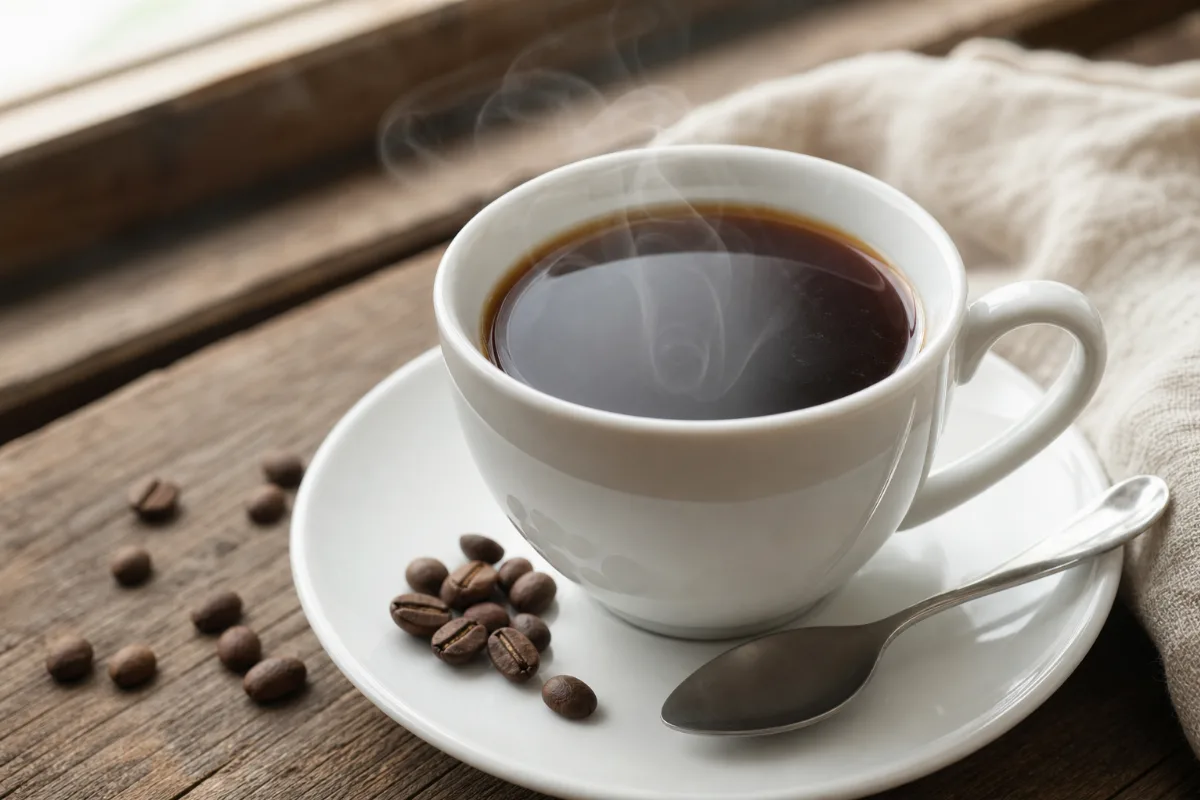
Coffea arabica and Coffea canephora (decaffeinated) · also called Decaf, decaffeinated coffee, café descafeinado
Decaf is coffee with most of the caffeine taken out. A cup has about 2 mg of caffeine by USDA data, against about 95 mg in regular coffee, but it is not caffeine-free. Large studies link coffee, decaf included, to lower diabetes risk and fewer deaths, which cannot prove cause. The main cautions are leftover caffeine, caffeine in pregnancy, and one unresolved bladder cancer signal in men.
General information, not medical advice. Last substantive update · Not medically reviewed. A named clinician has not signed off on this page. How this page is made
About Decaf Coffee
Decaf is brewed coffee that has had most of its caffeine removed. It is a low-caffeine drink, not caffeine-free. It is a food, not a proven remedy: the diabetes and death findings are observational and mostly about coffee overall, and the one trial found no change in blood sugar.
What it is and what is in a cup
Decaf is coffee, from the beans of Coffea arabica or Coffea canephora, that has had most of its caffeine taken out. This page covers decaf as a drink. For regular coffee, see the coffee page.
USDA data for brewed decaf made with tap water, per 100 g: 0 kcal, 0.1 g protein, 0 g fat, 0 g sugars, 54 mg potassium, 5 mg magnesium, 2 mg sodium and 1 mg caffeine. One cup (237 g) has about 128 mg potassium, 12 mg magnesium and 2.4 mg caffeine. No nutrient in a plain cup is a notable source. Milk, sugar and syrups change these numbers a lot.
How much caffeine is left
Decaf has much less caffeine than regular coffee. USDA lists about 2.4 mg per cup against about 95 mg for regular brewed coffee, and the FDA says decaf typically has 2 to 15 mg in 8 fluid ounces.
It varies. A small 2006 lab survey found 0 to 13.9 mg in a 16-ounce coffee-shop decaf, and 3.0 to 15.8 mg in a decaf espresso shot from one outlet. If a clinician told you to avoid caffeine, ask whether decaf is suitable.
What the research shows
Most research is on coffee overall. A pooled analysis of 28 studies found each extra cup of decaf went with 6% lower type 2 diabetes risk, and a pooled analysis of 21 studies said decaf showed links with fewer deaths similar to regular coffee. These are observational and cannot show cause.
The one trial of decaf was small: 45 overweight adults drank 5 cups a day for 8 weeks. Blood sugar measures did not change. A liver protein, fetuin-A, fell by 20%.
In about 121,000 US adults followed for up to 36 years, decaf was not linked with total cancer. Colorectal and aggressive prostate cancer risks were slightly lower. For acid reflux and sleep, no study read separated decaf, so the evidence is insufficient.
At a glance
Traditional uses history, not proof
- Drunk as a hot or iced beverage in many cuisines
- Long use as a drink is not proof that it treats any condition
Studied for research
- Low caffeine compared with regular coffee, high certainty
- Deaths from any cause, low certainty (observational)
- Type 2 diabetes risk, low certainty (observational)
- Blood sugar markers, very low certainty (one small trial)
- Cancer risk, low certainty (observational)
- Acid reflux and sleep, insufficient evidence for decaf
Main compounds
- Caffeine (small amount left)
- Potassium
- Magnesium
- Niacin
Common forms
- Brewed decaf coffee (USDA values read)
- Decaf espresso and coffee-shop decaf (caffeine measured in a 2006 lab survey)
- Instant decaf (used in one trial; nutrients not read)
- Caffeine pills and green coffee bean extract are different products and are not covered
Research links: 2014 review: coffee, decaf and type 2 diabetes (28 studies) · 2025 study: decaf and cancer · 2006 lab survey: caffeine in decaf · Research Library · Genes & Biomarkers Library
What it is and its history
- Accepted scientific name
- Coffee (Coffea arabica L. and Coffea canephora Pierre ex A.Froehner), decaffeinated
- Naming authority
- Not verified against GBIF or NCBI for this page; the species names come from the existing nutrient summary.
- Common names
- Decaf (English); Decaf coffee (English); Decaffeinated coffee (English); Café descafeinado (Spanish)
- Family or group
- Decaf is a drink made from roasted coffee beans (the seeds of Coffea plants). Family and plant details were not verified for this page.
- Classification
- Plantae > Coffea
- Native range
- Not verified from a source read.
- Habitat
- Not verified from a source read.
- What it looks like
- Roots: Not verified.; Stems: Not verified.; Leaves: Not verified.; Flowers: Not verified.; Fruit: Not verified. USDA gives household portions of 1 fl oz (29.6 g), 6 fl oz (178 g) and 1 cup of 8 fl oz (237 g) for brewed decaf.
- Cultivation
- Not verified from a source read.
- Harvest and processing
- Decaf is coffee that has had most of its caffeine removed from the green beans before roasting. US federal rules mention methylene chloride as one solvent that may be used to extract caffeine from green coffee beans (limit 10 parts per million in decaffeinated roasted and instant coffee). Other methods (water, carbon dioxide) are mentioned on some labels but were not read from a source, so they are not described here.
- Look-alikes and adulterants
- Name: Regular coffee; Note: Has about 40 mg of caffeine per 100 g (USDA) against 1 mg for decaf. Most coffee research does not separate the two.; Name: Green coffee bean extract; Note: A supplement made from unroasted beans; it is a different product with its own page.; Name: Caffeine-free herbal drinks and chicory-based coffee substitutes; Note: Not coffee; not covered by the studies read.
- Sustainability and conservation
- Not assessed.
Photographs
What is inside, and how it may work
What it contains and how those compounds act in cells and animals. Laboratory and animal mechanisms are not proven effects in people.
Main compounds
| Compound | Family | Where it is concentrated | Activity studied | Level of evidence |
|---|---|---|---|---|
| Caffeine | alkaloid (methylxanthine) | Coffee bean (mostly removed in decaf) USDA brewed decaf: 1 mg per 100 g (about 2.4 mg per 237 g cup). FDA: typically 2 to 15 mg per 8 fl oz. Regular brewed coffee: 40 mg per 100 g. | The main reason people choose decaf is to take in less caffeine; the sleep review links caffeine to later and shorter sleep. 12 13 9 1 | Human data |
| Potassium | mineral | Brewed drink USDA: 54 mg per 100 g (about 128 mg per 237 g cup) | A small amount; not a notable source. 12 | Human data |
| Magnesium | mineral | Brewed drink USDA: 5 mg per 100 g (about 12 mg per 237 g cup) | A small amount; not a notable source. 12 | Human data |
| Niacin (vitamin B3) | vitamin | Brewed drink USDA: 0.222 mg per 100 g (about 0.53 mg per 237 g cup) | A small amount; not a notable source. 12 | Human data |
| Methylene chloride (processing residue) | solvent | Not a coffee compound; a possible residue of one decaffeination method US legal limit 10 parts per million in decaffeinated roasted and instant coffee; no measurements of products were read. | Studied as a concern in the 2025 cohort, which did not measure residue. 8 7 | Human data |
Mechanisms, receptors and pathways
| Target or pathway | Gene or receptor | What was found | Level |
|---|---|---|---|
| Adenosine receptors and sleep | Adenosine neurotransmission genes (named in the sleep review's abstract) | The sleep review describes caffeine's effect on sleep and says gene variants involved in adenosine signalling and metabolism affect how sensitive a person is. This concerns caffeine, not decaf. 1 | Human data |
| Liver and fat-tissue markers | Fetuin-A, adiponectin, interleukin-6 (blood markers) | In an 8-week trial, decaf lowered fetuin-A by 20% versus no coffee; adiponectin and interleukin-6 rose with caffeinated coffee. The authors suggest this may contribute to long-term effects of coffee; this is their interpretation, not a tested mechanism. 6 | Human data |
Absorption, metabolism and elimination
- Absorption
- Not found for decaf.
- Distribution
- Not found.
- Metabolism
- Not found. The sleep review notes that gene variants in caffeine metabolism affect sensitivity to caffeine.
- Elimination
- Not found. The FDA says people differ widely in how fast they clear caffeine.
- Bioavailability
- Not established.
Isolated compounds versus whole extracts
All the findings here are about decaf or coffee drunk as a beverage. Caffeine pills, green coffee bean extract and other coffee supplements are different products and are not covered. The trial used instant decaf at 5 cups a day; the cohort studies used food questionnaires.
Nutritional composition
Nutrition from USDA FoodData Central (SR Legacy, April 2018 release), read from the saved USDA copy in the project on 2026-10-26 because the public USDA API was rate-limited; the FoodData Central page itself was not reopened. Brewed decaf coffee made with tap water (FDC 171889), per 100 g: 0 kcal, 99.3 g water, 0.1 g protein, 0 g fat, 0 g carbohydrate, 0 g sugars, 54 mg potassium, 2 mg sodium, 2 mg calcium, 0.05 mg iron, 5 mg magnesium, 1 mg phosphorus, 0.02 mg zinc, 0.027 mg manganese, 0.007 mg copper, 0.222 mg niacin and 1 mg caffeine. One typical USDA portion of 1 cup (8 fl oz, 237 g; the 100 g values multiplied by 2.37): 0 kcal, about 0.2 g protein, 0 g sugar, about 128 mg potassium, 12 mg magnesium, 5 mg sodium, 0.5 mg niacin, 0.06 mg manganese and 2.4 mg caffeine. Regular brewed coffee (FDC 171890) has 1 kcal, 49 mg potassium and 40 mg caffeine per 100 g, about 95 mg caffeine per cup. No nutrient in a plain cup is a notable source. Added milk, sugar or syrup change these values a lot. The plant compounds in decaf (such as chlorogenic acids) were not measured in any source read, so none are listed.
1 high certainty3 low certainty1 very low certainty2 not enough evidence
What was looked at
The 7 benefits and uses checked for Decaf Coffee, each with how strong the evidence is. Tap one to open it.
- A coffee drink with most of the caffeine removed (nutrient content)High certainty
- Deaths from any cause (observational)Low certainty
- Type 2 diabetes risk (observational)Low certainty
- Blood sugar and metabolic markers (one small trial)Very low certainty
- Cancer risk (observational)Low certainty
- Acid reflux (coffee overall)Not enough evidence
- SleepNot enough evidence
Lab markers tracked in the studies
Type 2 diabetes (new cases)Death from any causeCaffeine in the drinkFetuin-AGlucose tolerance and insulin sensitivityBladder cancer (new cases)
What is Decaf Coffee good for?
The main studied uses and how strong the human evidence is for each. Most research is on coffee overall; only some studies report decaf separately, and none is a trial of decaf for disease.
Benefits, one by one
Each card is a research question, not a promise. Tap a goal to filter. Open a card to see the studies, doses and limits.
A coffee drink with most of the caffeine removed (nutrient content)
High certaintyBy USDA data, a cup (237 g) of brewed decaf has about 2.4 mg of caffeine and no calories, against about 95 mg in regular brewed coffee. The FDA says decaf typically has 2 to 15 mg in 8 fluid ounces, so it is low in caffeine, not caffeine-free.
4 studiesBrewed decaf, decaf espresso and coffee-shop decaf. Instant decaf was…
Studies, doses and limits
What the trials found
No trial was read that tested decaf as a way to cut caffeine for a health reason. A 2006 lab survey of coffee-shop decafs found 0 to 13.9 mg of caffeine in a 16-ounce serving from ten outlets, and 3.0 to 15.8 mg in a decaf espresso shot from one outlet.
Results
Decaf is a low-caffeine drink. How much caffeine is left depends on the coffee and the shop.
Effect sizes as reported
USDA brewed decaf per 100 g: caffeine 1 mg (about 2.4 mg per 237 g cup). Regular brewed coffee: 40 mg per 100 g (about 95 mg per cup). FDA: typically 2 to 15 mg in 8 fluid ounces. 2006 lab survey: 0 to 13.9 mg per 16 ounces.
Why this rating
High that decaf has much less caffeine than regular coffee (USDA, FDA and a lab survey agree). Amounts vary between drinks, and the lab survey is small and from 2006.
Form and dose studied
Brewed decaf, decaf espresso and coffee-shop decaf. Instant decaf was not measured in the sources read.
Who was studied
General adult diet.
Limits
Food-table and survey numbers, not a trial. Caffeine in a cup of decaf varies with the bean, the method and how it is brewed.
Why researchers looked
People who want the taste of coffee with less caffeine drink decaf.
Traditional use
Coffee has long been drunk as a beverage. Long use as a drink is not proof that it treats any condition.
Proposed mechanism Nutrient database
These are caffeine and nutrient amounts in the drink, taken from USDA tables, the FDA and a lab survey.
A proposed mechanism does not show that the effect happens in people.
Caffeine is still present; see the Safety tab for pregnancy and for people told to avoid caffeine.
Deaths from any cause (observational)
Low certaintyIn a pooled analysis of 21 large studies, people who drank about 3 cups of coffee a day had 13% lower risk of dying from any cause than people who drank little or none. The authors say decaf showed a similar link, but they gave no separate decaf number. This is a link, not proof that coffee is the cause.
1 studiesCoffee as a drink (brewed), caffeinated and decaffeinated.
Studies, doses and limits
What the trials found
A meta-analysis of 21 cohort articles (10,103,115 people, 240,303 deaths) found a curved relationship between coffee and death from any cause. At 3 cups a day risk was 13% lower (RR 0.87, 95% CI 0.84 to 0.89) than for no or rare coffee. The abstract says similar inverse links were found for caffeinated and decaffeinated coffee.
Results
A modest lower risk in coffee drinkers, in observational data only.
Effect sizes as reported
Coffee overall at 3 cups a day: RR 0.87 (0.84 to 0.89). No separate decaf figure in the abstract.
Why this rating
Low: observational only, based on self-reported intake, and the decaf result is a one-line statement without numbers.
Form and dose studied
Coffee as a drink (brewed), caffeinated and decaffeinated.
Who was studied
Adults in cohort studies in several countries.
Limits
Cannot show cause. The 13% figure is for coffee overall. The abstract does not give decaf-only numbers.
Why researchers looked
Coffee is one of the most common drinks in the world, so researchers asked whether drinking it is linked to how long people live.
Traditional use
Coffee has long been drunk as a beverage. Long use as a drink is not proof that it treats any condition.
Proposed mechanism Not established
Not established. The studies are observational and cannot show why coffee drinkers may live longer; coffee drinkers may differ in other ways.
A proposed mechanism does not show that the effect happens in people.
See the Safety tab for the other findings on decaf.
Type 2 diabetes risk (observational)
Low certaintyIn a pooled analysis of 28 studies, each extra cup of decaf a day went with 6% lower type 2 diabetes risk, against 9% lower for regular coffee. The two were not statistically different. This is a link, not proof that decaf prevents diabetes.
1 studiesCoffee as a drink, caffeinated and decaffeinated.
Studies, doses and limits
What the trials found
A systematic review and dose-response meta-analysis of 28 prospective studies (1,109,272 people, 45,335 cases of type 2 diabetes) found that for each extra cup a day the risk was lower: RR 0.91 (95% CI 0.89 to 0.94) for caffeinated coffee and RR 0.94 (0.91 to 0.98) for decaffeinated coffee, with no significant difference between them (P = 0.17).
Results
A small lower risk per cup in both kinds of coffee, in observational data only.
Effect sizes as reported
Per extra cup a day: decaf RR 0.94 (0.91 to 0.98); regular coffee RR 0.91 (0.89 to 0.94).
Why this rating
Low: observational cohorts with self-reported coffee intake. The finding is consistent across many studies, but it cannot show cause. The abstract lists NIH extramural support; no industry funding is stated.
Form and dose studied
Coffee as a drink, caffeinated and decaffeinated.
Who was studied
Adults in prospective studies; follow-up 10 months to 20 years.
Limits
Cannot show cause. People who drink coffee may differ in diet and activity. The one small trial (see the Body tab) did not change blood sugar measures.
Why researchers looked
Coffee drinking has been linked to lower diabetes risk, and researchers asked whether decaf shows the same link, which would point away from caffeine.
Traditional use
Coffee has long been drunk as a beverage. Long use as a drink is not proof that it treats any condition.
Proposed mechanism Not established
Not established. The authors do not identify a cause in the abstract.
A proposed mechanism does not show that the effect happens in people.
None specific beyond the general cautions on the Safety tab.
Blood sugar and metabolic markers (one small trial)
Very low certaintyIn an 8-week trial of 45 overweight adults, drinking 5 cups of decaf a day did not change glucose tolerance or insulin sensitivity. It lowered fetuin-A, a liver protein, by 20%. That is a lab marker, not a health benefit.
1 studiesInstant decaf coffee, 5 cups a day as in the trial (not advice).
Studies, doses and limits
What the trials found
A randomised parallel-arm trial in 45 healthy overweight non-smokers who drank coffee regularly: 5 cups (177 mL each) a day of instant caffeinated coffee, instant decaf or no coffee (water) for 8 weeks. Decaf versus no coffee: fetuin-A -20% (95% CI -35 to -1). Caffeinated coffee raised adiponectin and interleukin-6; the abstract reports no adiponectin or interleukin-6 change for decaf. No significant differences between groups for glucose tolerance, insulin sensitivity or insulin secretion.
Results
No change in blood sugar measures. One liver marker fell.
Effect sizes as reported
Decaf versus water: fetuin-A -20% (-35% to -1%). Glucose tolerance, insulin sensitivity and secretion: no significant difference.
Why this rating
Very low: 45 people, 8 weeks, a lab marker as the outcome and an interval that nearly reaches zero. No blood sugar benefit was found.
Form and dose studied
Instant decaf coffee, 5 cups a day as in the trial (not advice).
Who was studied
Healthy, overweight, non-smoking regular coffee drinkers, average age 40.
Limits
Very small and short. Healthy people only. The result says nothing about people who already have diabetes.
Why researchers looked
After cohort studies linked decaf to lower diabetes risk, researchers asked what decaf changes in the body.
Traditional use
Coffee has long been drunk as a beverage. Long use as a drink is not proof that it treats any condition.
Proposed mechanism Not established
Not established. The authors suggest that changes in fat-tissue and liver markers may play a part over the long term.
A proposed mechanism does not show that the effect happens in people.
None specific.
Cancer risk (observational)
Low certaintyIn two large US studies of about 121,000 health professionals followed for up to 36 years, decaf was not linked to total cancer. It was linked to slightly lower colorectal and aggressive prostate cancer risk. It was linked to higher bladder cancer risk in men who had never smoked, which the authors say needs more study.
1 studiesDecaf coffee as a drink, compared with non-drinkers, adjusted for reg…
Studies, doses and limits
What the trials found
A prospective cohort of 75,988 women (Nurses' Health Study) and 45,349 men (Health Professionals Follow-up Study) found 34,120 new cancers over up to 36 years. Per extra cup of decaf a day: total cancer HR 1.00 (0.98 to 1.01); colorectal HR 0.96 (0.92 to 0.99); aggressive prostate HR 0.93 (0.87 to 0.99). A higher lung cancer risk faded to null in never-smokers. In men who never smoked, bladder cancer risk was higher at 0.1 to 0.9 cups a day (HR 1.30, 1.01 to 1.68) and 1 to 1.9 cups (HR 1.42, 1.00 to 2.03); at 2 to 2.9 cups (HR 1.43, 0.91 to 2.23) and 3 or more cups (HR 1.79, 0.92 to 3.50) the results were not significant. The trend was borderline (P = 0.06). No link was seen in women.
Results
No link with total cancer, small inverse links for two cancers, and one unresolved warning signal for bladder cancer in one group.
Effect sizes as reported
Total cancer HR 1.00; colorectal 0.96; aggressive prostate 0.93; bladder in male never-smokers 1.30 to 1.79 across cup bands.
Why this rating
Low: observational food-questionnaire data, with many comparisons. The bladder result is in one subgroup and could be chance, though the authors say it held in several checks. The authors disclose that one author receives AstraZeneca research funding to Harvard, which they describe as unrelated.
Form and dose studied
Decaf coffee as a drink, compared with non-drinkers, adjusted for regular coffee.
Who was studied
US health professionals (nurses and other health professionals) followed by food-frequency questionnaire.
Limits
Cannot show cause. The abstract does not say which decaffeination method was used, so it cannot link the bladder result to a solvent.
Why researchers looked
People worried about the chemical used to remove caffeine from some decaf, so researchers looked at cancer in decaf drinkers.
Traditional use
Coffee has long been drunk as a beverage. Long use as a drink is not proof that it treats any condition.
Proposed mechanism Not established
Not established. The study did not measure solvent residue and the abstract does not say which decaffeination method the coffee used.
A proposed mechanism does not show that the effect happens in people.
See the Safety tab for the bladder signal and the decaffeination solvent limit.
Acid reflux (coffee overall)
Not enough evidenceA 2026 pooled analysis of 40 studies found acid reflux slightly more common in coffee drinkers than non-drinkers. It did not separate decaf, so there is not enough evidence about decaf alone.
1 studiesCoffee as a drink, decaf not separated.
Studies, doses and limits
What the trials found
A systematic review and meta-analysis of 40 studies (85,400 coffee drinkers, 36,674 non-drinkers): GERD in 34.9% of coffee users and 30.7% of non-users (OR 1.18, 95% CI 1.03 to 1.36, I2 about 89%). No significant link with Barrett's esophagus (OR 1.13, 0.79 to 1.61). The authors say the clinical importance is unclear and that routine coffee avoidance needs more study. The abstract does not report decaf separately.
Results
A small link with reflux for coffee overall. Nothing on decaf alone.
Effect sizes as reported
Coffee overall: GERD OR 1.18 (1.03 to 1.36); Barrett's OR 1.13 (0.79 to 1.61).
Why this rating
Insufficient for decaf: the evidence is for coffee overall, it is observational, and the studies differ a lot from each other.
Form and dose studied
Coffee as a drink, decaf not separated.
Who was studied
Adults in 40 studies.
Limits
No study of decaf and reflux was read. People with reflux should ask their clinician what suits them.
Why researchers looked
People with reflux are often told to cut back on coffee, and decaf is a common swap.
Traditional use
Coffee has long been drunk as a beverage. Long use as a drink is not proof that it treats any condition.
Proposed mechanism Not established
Not established.
A proposed mechanism does not show that the effect happens in people.
None specific.
Sleep
Not enough evidenceCaffeine and coffee can make sleep worse by delaying it and shortening it. Decaf has little caffeine, but no study read tested decaf on sleep, so there is not enough evidence.
2 studiesCoffee and caffeine, decaf not separated.
Studies, doses and limits
What the trials found
A systematic review of epidemiological studies and randomised trials found that caffeine typically prolonged the time to fall asleep, reduced total sleep time and sleep efficiency, and worsened perceived sleep quality. Older adults and people with certain gene variants may be more sensitive. The abstract does not report decaf on its own.
Results
Caffeine disturbs sleep. Whether the small amount in decaf does was not shown in the sources read.
Effect sizes as reported
No numbers in the abstract.
Why this rating
Insufficient for decaf: the review is about caffeine and coffee, not decaf.
Form and dose studied
Coffee and caffeine, decaf not separated.
Who was studied
Mostly men in Western countries, according to the abstract.
Limits
Decaf was not tested. A lab survey found some decafs contain up to about 14 to 16 mg of caffeine, so very sensitive people may still notice it.
Why researchers looked
Caffeine is the main reason people give up regular coffee in the evening, so decaf is often chosen for sleep.
Traditional use
Coffee has long been drunk as a beverage. Long use as a drink is not proof that it treats any condition.
Proposed mechanism Authoritative guidance
The review describes caffeine acting on sleep; it does not test decaf.
A proposed mechanism does not show that the effect happens in people.
See the Safety tab for leftover caffeine.
Connections to the rest of health
How Decaf Coffee connects to the rest of our health knowledge graph. Every link says what kind of connection it is. A safety link (for example to the liver) is a warning, not a benefit. A study that merely mentions a topic never creates a benefit link.
Explore every connection: goals, body systems, organs, symptoms, genes
A. Wellness goals
| Connected to | Kind of connection | Evidence status | Context | Studies |
|---|---|---|---|---|
| Preventive Wellness | High certainty | A coffee drink with most of the caffeine removed (nutrient content): By USDA data, a cup (237 g) of brewed decaf has about 2.4 mg of caffeine and no calories, against about 95 mg in regular brewed coffee. The FDA says decaf typically has 2 to 15 mg in 8 fluid ounces, so it is low in caffeine, not caffeine-free. | 12 13 9 4 | |
| Healthy Aging | Low certainty | Deaths from any cause (observational): In a pooled analysis of 21 large studies, people who drank about 3 cups of coffee a day had 13% lower risk of dying from any cause than people who drank little or none. The authors say decaf showed a similar link, but they gave no separate decaf number. This is a link, not proof that coffee is the cause. | 3 | |
| Preventive Wellness | Low certainty | Deaths from any cause (observational): In a pooled analysis of 21 large studies, people who drank about 3 cups of coffee a day had 13% lower risk of dying from any cause than people who drank little or none. The authors say decaf showed a similar link, but they gave no separate decaf number. This is a link, not proof that coffee is the cause. Cancer risk (observational): In two large US studies of about 121,000 health professionals followed for up to 36 years, decaf was not linked to total cancer. It was linked to slightly lower colorectal and aggressive prostate cancer risk. It was linked to higher bladder cancer risk in men who had never smoked, which the authors say needs more study. | 3 7 | |
| Blood Sugar Balance | Low certainty | Type 2 diabetes risk (observational): In a pooled analysis of 28 studies, each extra cup of decaf a day went with 6% lower type 2 diabetes risk, against 9% lower for regular coffee. The two were not statistically different. This is a link, not proof that decaf prevents diabetes. | 2 | |
| Blood Sugar Balance | Very low certainty | Blood sugar and metabolic markers (one small trial): In an 8-week trial of 45 overweight adults, drinking 5 cups of decaf a day did not change glucose tolerance or insulin sensitivity. It lowered fetuin-A, a liver protein, by 20%. That is a lab marker, not a health benefit. | 6 | |
| Metabolic Health | Very low certainty | Blood sugar and metabolic markers (one small trial): In an 8-week trial of 45 overweight adults, drinking 5 cups of decaf a day did not change glucose tolerance or insulin sensitivity. It lowered fetuin-A, a liver protein, by 20%. That is a lab marker, not a health benefit. | 6 | |
| Digestive Support | Not enough evidence | Acid reflux (coffee overall): A 2026 pooled analysis of 40 studies found acid reflux slightly more common in coffee drinkers than non-drinkers. It did not separate decaf, so there is not enough evidence about decaf alone. | 5 | |
| Better Sleep | Not enough evidence | Sleep: Caffeine and coffee can make sleep worse by delaying it and shortening it. Decaf has little caffeine, but no study read tested decaf on sleep, so there is not enough evidence. | 1 4 |
B. Body systems
| Connected to | Kind of connection | Evidence status | Context | Studies |
|---|---|---|---|---|
| Nervous System | Biological association | High certainty | Studied for: A coffee drink with most of the caffeine removed (nutrient content) Studied for: Sleep | 12 13 9 4 1 |
| Cardiovascular System | Biological association | Low certainty | Studied for: Deaths from any cause (observational) | 3 |
| Endocrine System | Biological association | Low certainty | Studied for: Type 2 diabetes risk (observational) Studied for: Blood sugar and metabolic markers (one small trial) | 2 6 |
| Digestive System | Biological association | Low certainty | Studied for: Cancer risk (observational) Studied for: Acid reflux (coffee overall) | 7 5 |
| Urinary System | Biological association | Low certainty | Studied for: Cancer risk (observational) | 7 |
E. Health conditions
| Connected to | Kind of connection | Evidence status | Context | Studies |
|---|---|---|---|---|
| Bladder cancer | Preliminary or mixed | Higher risk in male never-smokers in one cohort; the authors call for more study. Preparation or compound: Decaf coffee as a drink |
7 | |
| Gastroesophageal reflux disease | Not enough evidence | Slightly more reflux in coffee drinkers; decaf not separated. Preparation or compound: Coffee overall |
5 | |
| Type 2 diabetes | Preliminary or mixed | Lower risk per cup of decaf in cohort studies; no change in blood sugar measures in one small trial. Preparation or compound: Decaf coffee as a drink |
2 6 |
I. Biomarkers
| Connected to | Kind of connection | Evidence status | Context | Studies |
|---|---|---|---|---|
| Type 2 diabetes (new cases) | Biological association | Low certainty | Measured in trials: lower risk (association). A lab change is not the same as a health benefit. | 2 |
| Death from any cause | Biological association | Low certainty | Measured in trials: lower risk (association). A lab change is not the same as a health benefit. | 3 |
| Caffeine in the drink | Biological association | High certainty | Measured in trials: much lower than regular coffee. A lab change is not the same as a health benefit. | 12 13 4 9 |
| Fetuin-A | Biological association | Very low certainty | Measured in trials: lowered. A lab change is not the same as a health benefit. | 6 |
| Glucose tolerance and insulin sensitivity | Biological association | Very low certainty | Measured in trials: no significant change. A lab change is not the same as a health benefit. | 6 |
| Bladder cancer (new cases) | Biological association | Low certainty | Measured in trials: higher risk in one subgroup (association). A lab change is not the same as a health benefit. | 7 |
K. Biological pathways
| Connected to | Kind of connection | Evidence status | Context | Studies |
|---|---|---|---|---|
| Caffeine | Preliminary mechanism | Human | Much lower in decaf than in regular coffee, but not zero. | 12 9 |
| Fetuin-A | Preliminary mechanism | Human | Lowered by decaf in one small 8-week trial. | 6 |
| Type 2 diabetes | Preliminary mechanism | Human | Lower risk per cup of decaf in cohort studies; no change in blood sugar measures in one small trial. | 2 6 |
L. Active compounds
| Connected to | Kind of connection | Evidence status | Context | Studies |
|---|---|---|---|---|
| Caffeine | Adverse effect or risk | Documented risk | Decaf has about 2 to 15 mg of caffeine per 8-ounce cup by FDA, so it is not caffeine-free. Decaf still contains about 2 to 15 mg per 8-ounce cup according to the FDA. Preparation or compound: Caffeine left in decaf |
9 4 |
| Caffeine | Biological association | Human | The main reason people choose decaf is to take in less caffeine; the sleep review links caffeine to later and shorter sleep. Preparation or compound: Coffee bean (mostly removed in decaf) |
12 13 9 1 |
| Potassium | Biological association | Human | A small amount; not a notable source. Preparation or compound: Brewed drink |
12 |
| Magnesium | Biological association | Human | A small amount; not a notable source. Preparation or compound: Brewed drink |
12 |
| Niacin (vitamin B3) | Biological association | Human | A small amount; not a notable source. Preparation or compound: Brewed drink |
12 |
| Methylene chloride (processing residue) | Biological association | Human | Studied as a concern in the 2025 cohort, which did not measure residue. Preparation or compound: Not a coffee compound; a possible residue of one decaffeination method |
8 7 |
Each connection is stored with the ingredient, the connected record, the kind of connection, the evidence status, the supporting studies, the preparation or compound involved, and a review date (last reviewed October 26, 2026).
Evidence at a glance: what changed in 1 lab markers
Tap a number to show only those markers. Counts are markers, not people.
The evidence
The research centre for Decaf Coffee. Every record here was checked against PubMed or the publisher's page; we never list a study we have not verified.
Evidence by outcome
Bars show how many studies we found for each outcome, not how well it works. People are added up across trials only (reviews are not added, to avoid double counting).
How we rate evidence
High certainty
Several well-run trials or reviews agree; further research is unlikely to change the picture much.
Moderate certainty
Good trials point the same way, but some doubt remains.
Low certainty
Small, short or inconsistent trials. The finding could change with better research.
Very low certainty
Very little or very weak human data. Treat as a possibility only.
Mixed findings
Trials or reviews disagree with each other.
Not enough evidence
Not enough human research to say either way.
Evidence against
Good research found no benefit, or found harm.
We take the reviewers' own risk-of-bias and GRADE statements where they exist, and otherwise judge from study size, design, consistency, directness and whether a product matches what is sold. Many publications do not make evidence high. Method note: We started from our existing decaf summary, re-checked nutrition against saved USDA FoodData Central data, read the FDA, NHS, MedlinePlus pages and the federal rule on methylene chloride, and re-read PubMed abstracts for the lab survey, trials, cohorts and reviews. Only abstracts were read for studies. Items we could not verify are flagged in the research gaps.
Study library: every study we checked 13
| Study | Design | People | Product, dose, length | Result |
|---|---|---|---|---|
| Clark 2017 Coffee, caffeine, and sleep: A systematic review of epidemiological studies and randomized controlled trials. Sleep Med Rev · PMID 26899133 · DOI |
Systematic review meta analysis |
Epidemiological studies and randomised trials of coffee and caffeine (numbers not given in the abstract) | Coffee and caffeine (decaf is not reported separately in the abstract) Coffee and caffeine · vs Placebo or lower caffeine |
Caffeine typically lengthened the time to fall asleep, shortened total sleep, lowered sleep efficiency and worsened perceived sleep quality. Older adults and some genetic types may be more sensitive. Most studies were in men in Western countries. The abstract does not report decaf on its own. No numbers in the abstract (Not applicable) Methods, limits and fundingOutcomes: Sleep latency, total sleep time, sleep efficiency, sleep quality Limitations: About caffeine and coffee, not decaf. Decaf has little caffeine, so these results cannot be carried over to it directly. Funding and conflicts: Funding is not stated in the abstract. Read: abstract |
| Ding 2014 Caffeinated and decaffeinated coffee consumption and risk of type 2 diabetes: a systematic review and a dose-response meta-analysis. Diabetes Care · PMID 24459154 · DOI |
Systematic review meta analysis |
1109272 28 prospective studies; 1,109,272 people and 45,335 cases of type 2 diabetes; follow-up 10 months to 20 years |
Coffee, caffeinated and decaffeinated, as drunk Coffee as a drink Observational: compared people by cups a day (not advice) 10 months to 20 years · vs No or rare coffee drinking |
More coffee was linked to lower type 2 diabetes risk in a dose-response pattern. For each extra cup a day, risk was lower by 9% for caffeinated coffee and 6% for decaffeinated coffee. The difference between the two was not statistically significant (P = 0.17). The authors conclude both kinds were linked to lower risk. Per 1 cup/day more: caffeinated RR 0.91; decaffeinated RR 0.94; difference P = 0.17 (Caffeinated 0.89 to 0.94; decaffeinated 0.91 to 0.98) Methods, limits and fundingOutcomes: Type 2 diabetes Limitations: Observational, so it cannot show cause. Coffee intake was self-reported. Several risk factors for diabetes go together with coffee habits. Funding and conflicts: Listed as NIH-supported research (extramural). Other funding is not stated in the abstract. Read: abstract |
| Li 2019 Caffeinated and decaffeinated coffee consumption and risk of all-cause mortality: a dose-response meta-analysis of cohort studies. J Hum Nutr Diet · PMID 30786114 · DOI |
Systematic review meta analysis |
10103115 21 cohort study articles; 10,103,115 people and 240,303 deaths |
Brewed coffee, caffeinated and decaffeinated, as drunk (self-reported) Coffee as a drink Observational: compared people by cups a day (not advice) · vs No or rare coffee drinking |
Coffee drinking was linked to lower risk of death from any cause in a curved (non-linear) pattern. At 3 cups a day risk was 13% lower than for no or rare drinking. The authors say similar inverse links were found for caffeinated and decaffeinated coffee; the abstract gives no separate numbers for decaf. Coffee overall at 3 cups a day: RR 0.87 (0.84 to 0.89) Methods, limits and fundingOutcomes: Death from any cause Limitations: Observational, so it shows a link, not cause. The 13% figure is for coffee overall; the abstract gives no separate decaf number. Intake was self-reported. Funding and conflicts: Funding is not stated in the abstract. Read: abstract |
| McCusker 2006 Caffeine content of decaffeinated coffee. J Anal Toxicol · PMID 17132260 · DOI |
Laboratory analysis n/a |
Decaffeinated coffee drinks bought from coffee shops (10 samples from different outlets, plus 6 espresso and 6 brewed samples from one outlet) | Decaf coffee drinks as served |
Ten decaf samples from different outlets held 0 to 13.9 mg of caffeine per 16-oz serving. At one outlet, decaf espresso held 3.0 to 15.8 mg per shot and brewed decaf 12.0 to 13.4 mg per 16-oz serving. The authors advise that people who are vulnerable to caffeine should know that coffee sold as decaf can contain caffeine, and call for more research on low amounts in caffeine-restricted patients. 0 to 13.9 mg per 16-oz serving (10 outlets); espresso 3.0 to 15.8 mg per shot; brewed 12.0 to 13.4 mg per 16-oz (one outlet) (Not applicable) Methods, limits and fundingOutcomes: Caffeine content measured in the lab Limitations: A small 2006 lab survey of coffee-shop drinks. It shows what was in those samples, not what is in every decaf today. It says nothing about health effects. Funding and conflicts: Funding is not stated in the abstract. Read: abstract |
| Muftah 2026 Association of Coffee Intake With Risk of Gastroesophageal Reflux Disease and Complications: A Systematic Review and Meta-Analysis. Clin Transl Gastroenterol · PMID 41677121 · DOI |
Systematic review meta analysis |
122074 40 studies; 85,400 coffee drinkers and 36,674 non-drinkers |
Coffee drinking (decaf not separated in the abstract) Coffee as a drink Observational: drinkers versus non-drinkers · vs Non-drinkers of coffee |
GERD was slightly more common in coffee drinkers than non-drinkers (34.9% versus 30.7%). No significant link with Barrett's esophagus. The authors say the size of the effect is of unclear clinical importance and that routine coffee avoidance for reflux needs more study. GERD OR 1.18; Barrett's OR 1.13 (not significant) (GERD 1.03 to 1.36 (I2 89%); Barrett's 0.79 to 1.61) Methods, limits and fundingOutcomes: Acid reflux (GERD) and Barrett's esophagus Limitations: Observational with very large differences between studies (I2 about 89%). Coffee overall, not decaf. Funding and conflicts: Funding: one author's NIH/NIDDK training award is stated; no competing interests reported. Read: abstract |
| Wedick 2011 Effects of caffeinated and decaffeinated coffee on biological risk factors for type 2 diabetes: a randomized controlled trial. Nutr J · PMID 21914162 · DOI |
Controlled trial |
45 45 healthy, overweight, non-smoking regular coffee drinkers; average age 40, BMI 29.5 |
Instant decaffeinated coffee versus instant caffeinated coffee versus no coffee (water) Coffee as a drink 5 cups of 177 mL a day (trial detail, not advice) 8 weeks · vs No coffee (water) |
Compared with no coffee, decaf lowered fetuin-A (a liver protein) by 20%. Caffeinated coffee raised adiponectin and interleukin-6. For glucose tolerance, insulin sensitivity and insulin secretion, no significant differences were found between the three groups. The authors suggest the changes in fat-tissue and liver markers may contribute to long-term effects of coffee, which this trial did not show. Decaf versus no coffee: fetuin-A -20% (-35% to -1%) Methods, limits and fundingOutcomes: Adiponectin, interleukin-6, fetuin-A, glucose tolerance, insulin sensitivity, insulin secretion Limitations: Very small and short, in healthy overweight people. The fetuin-A change is a lab marker, not a health outcome, and the interval nearly touches zero. Instant coffee at 5 cups a day. Funding and conflicts: Registered NCT00305097. Listed as NIH-supported research. Other funding is not stated in the abstract. Registration: NCT00305097 Read: abstract |
| Zhang 2025 Decaffeinated coffee consumption and risk of total and site-specific cancer. Ann Oncol · PMID 40180122 · DOI |
Cohort prospective |
121337 75,988 women (Nurses' Health Study, 1984-2020) and 45,349 men (Health Professionals Follow-up Study, 1986-2020); 34,120 new cancers over up to 36 years |
Decaf coffee as drunk (food-frequency questionnaire every 4 years), adjusted for regular coffee Coffee as a drink Observational: per 1 cup a day higher intake, and cup bands Up to 36 years · vs Non-drinkers of decaf |
Decaf was not linked to total cancer (per extra cup a day, HR 1.00). Lower risk was seen for colorectal cancer (HR 0.96) and aggressive prostate cancer (HR 0.93). A higher lung cancer risk faded to null in never-smokers. Among men who had never smoked, decaf was linked to higher bladder cancer risk (HR 1.30 for 0.1 to 0.9 cups a day versus none; HR 1.42 for 1 to 1.9 cups; the higher bands were not statistically significant), with a borderline trend (P = 0.06). No such link was seen in women. The authors say this needs further study. The paper was motivated by methylene chloride, a decaffeination solvent, but the abstract does not say that solvent residue was measured. Total cancer HR 1.00 per cup/day; colorectal HR 0.96; aggressive prostate HR 0.93; bladder in male never-smokers HR 1.30 (0.1-0.9 cups/day), 1.42 (1-1.9), 1.43 (2-2.9, not significant), 1.79 (3 or more, not significant) (Total 0.98 to 1.01; colorectal 0.92 to 0.99; aggressive prostate 0.87 to 0.99; bladder 1.01 to 1.68, 1.00 to 2.03, 0.91 to 2.23, 0.92 to 3.50) Methods, limits and fundingOutcomes: Total cancer and 14 site-specific cancers Limitations: Observational. Food questionnaires. Mostly US health professionals. The bladder result is in one subgroup (men who never smoked) of many comparisons and could be chance, though the authors say it held in several checks. The decaffeination method was not stated in the abstract. Funding and conflicts: A conflict statement lists research funding from AstraZeneca to Harvard and equity in Convergent Therapeutics for one author, described as unrelated to this work. Read: abstract |
| s-cfr-173-255 US Code of Federal Regulations, 21 CFR 173.255: Methylene chloride (Cornell Legal Information Institute copy) · Source |
Regulation n/a |
Methods, limits and fundingRead: full-text | ||
| s-fda-caffeine US FDA: Spilling the Beans: How Much Caffeine Is Too Much? · Source |
Health agency n/a |
Methods, limits and fundingRead: full-text | ||
| s-medlineplus-foodallergy MedlinePlus: Food allergy · Source |
Health agency n/a |
Methods, limits and fundingRead: full-text | ||
| s-nhs-foods-to-avoid NHS: Foods to avoid in pregnancy · Source |
Health agency n/a |
Methods, limits and fundingRead: full-text | ||
| s-usda-fdc-171889 USDA FoodData Central: Beverages, coffee, brewed, prepared with tap water, decaffeinated (FDC 171889, SR Legacy, April 2018) · Source |
Reference database n/a |
Methods, limits and fundingRead: full-text | ||
| s-usda-fdc-171890 USDA FoodData Central: Beverages, coffee, brewed, prepared with tap water (FDC 171890, SR Legacy, April 2018) · Source |
Reference database n/a |
Methods, limits and fundingRead: full-text |
What we do not know yet
- No trial of decaf was found for deaths, diabetes, cancer, reflux or sleep; the results are observational or about coffee overall.
- The mortality and reflux abstracts do not give decaf-only numbers.
- The bladder cancer finding is from one cohort and the decaffeination method was not stated.
- Plant compounds in decaf, children, medicine interactions, mould toxins, acrylamide and heavy metals were not researched.
- Only abstracts were read for studies; full papers were not.
How new research is added
New studies are found by a saved PubMed search and placed in a review queue before the page changes.
Lab markers
What changed in blood or saliva tests during trials. A changed number is not the same as feeling or being healthier, and we give no "normal ranges".
Other 6
Type 2 diabetes (new cases)
Lower risk (association) in trials
Long-term high blood sugar caused by the body not using insulin well.
Low certaintyResults and what it means
Why it was measured
The outcome that matters most, counted over many years in cohort studies.
Statistical vs. clinical meaning
A small link per cup. Not proof of cause.
Safety implication
None specific.
| Study | Result | People | Product |
|---|---|---|---|
| 2 | Per extra cup a day: decaf RR 0.94 (0.91 to 0.98); regular coffee RR 0.91 (0.89 to 0.94); difference P = 0.17 | 28 prospective studies, 1,109,272 people, 45,335 cases | Coffee as a drink (observational) |
Death from any cause
Lower risk (association) in trials
Counts every death, whatever the cause, over many years.
Low certaintyResults and what it means
Why it was measured
A broad outcome used in large cohort studies.
Statistical vs. clinical meaning
A modest link. The decaf part has no separate numbers in the abstract.
Safety implication
None specific.
| Study | Result | People | Product |
|---|---|---|---|
| 3 | Coffee overall at 3 cups a day: RR 0.87 (0.84 to 0.89); the abstract says decaf showed similar inverse links, without numbers | 21 cohort articles, 10,103,115 people, 240,303 deaths | Coffee as a drink (observational) |
Caffeine in the drink
Much lower than regular coffee in trials
The amount of caffeine in a serving, measured in milligrams.
High certaintyResults and what it means
Why it was measured
It is the main reason people choose decaf.
Statistical vs. clinical meaning
Low but not zero, and it varies by drink.
Safety implication
Matters for people told to avoid caffeine.
| Study | Result | People | Product |
|---|---|---|---|
| 12 | 1 mg per 100 g (about 2.4 mg per 237 g cup), against 40 mg per 100 g for regular brewed coffee (s-usda-fdc-171890) | USDA food table, brewed with tap water | Brewed decaf coffee |
| 4 | 0 to 13.9 mg per 16-oz serving from ten outlets; decaf espresso 3.0 to 15.8 mg per shot at one outlet | Coffee-shop samples in a lab survey | Decaf coffee drinks as served |
Fetuin-A
Lowered in trials
A protein made by the liver that has been linked to fatty liver and insulin resistance.
Very low certaintyResults and what it means
Why it was measured
The trial authors measured it to look for liver and metabolic effects of coffee.
Statistical vs. clinical meaning
A change in a lab marker in a very small trial. It is not a measured health benefit.
Safety implication
None specific.
| Study | Result | People | Product |
|---|---|---|---|
| 6 | Decaf versus no coffee: fetuin-A -20% (95% CI -35% to -1%) | 45 healthy overweight adults | Instant decaf, 5 cups a day for 8 weeks |
Glucose tolerance and insulin sensitivity
No significant change in trials
How well the body clears sugar from the blood and responds to insulin.
Very low certaintyResults and what it means
Why it was measured
The direct measures of blood sugar control.
Statistical vs. clinical meaning
No benefit found in this small trial.
Safety implication
None specific.
| Study | Result | People | Product |
|---|---|---|---|
| 6 | No significant differences between decaf, caffeinated coffee and water for glucose tolerance, insulin sensitivity or insulin secretion | 45 healthy overweight adults | Instant decaf, 5 cups a day for 8 weeks |
Bladder cancer (new cases)
Higher risk in one subgroup (association) in trials
Cancer of the bladder lining.
Low certaintyResults and what it means
Why it was measured
Examined because of concern about a decaffeination solvent.
Statistical vs. clinical meaning
An unresolved signal that the authors say needs more study. It does not show that decaf causes bladder cancer.
Safety implication
See the Safety tab.
| Study | Result | People | Product |
|---|---|---|---|
| 7 | Male never-smokers, decaf versus none: HR 1.30 (1.01 to 1.68) at 0.1 to 0.9 cups a day; 1.42 (1.00 to 2.03) at 1 to 1.9; 1.43 (0.91 to 2.23) at 2 to 2.9; 1.79 (0.92 to 3.50) at 3 or more; trend P = 0.06. No link in women. | 45,349 men and 75,988 women, up to 36 years | Decaf coffee as a drink (observational) |
Safety
What studies and official sources say about side effects, medicines and who should check first. Each point shows what kind of evidence it comes from.
Main points to know 4
- Decaf still has some caffeine. The FDA says decaf coffee typically has 2 to 15 mg of caffeine in an 8-fluid-ounce cup, and that decaffeinated does not mean caffeine-free. A 2006 lab survey found up to 13.9 mg in a 16-ounce coffee-shop decaf and up to 15.8 mg in a decaf espresso shot. If a clinician told you to avoid caffeine, or you react strongly to it, ask whether decaf is suitable. Authoritative guidance 9 4 12
- Pregnancy and breastfeeding: count the caffeine. The NHS says not to have more than 200 mg of caffeine a day in pregnancy and that too much caffeine has been linked to a higher chance of miscarriage and stillbirth. The FDA says people who are pregnant, trying to become pregnant or breastfeeding should ask a health care provider whether to limit caffeine. Decaf has little caffeine but not none. Neither source gives decaf-specific advice in the parts read. Authoritative guidance 11 9
- A bladder cancer signal in men who never smoked. One large US cohort found higher bladder cancer risk with decaf in men who had never smoked (HR 1.30 to 1.79 across cup bands, trend P = 0.06), and none in women. The authors say this needs more study. It is an association in one subgroup and does not show that decaf causes bladder cancer. Observational 7
- The decaffeination solvent question. Some decaf is made using methylene chloride. US rules allow no more than 10 parts per million of it in decaffeinated roasted coffee and in instant decaf. The 2025 cohort was motivated by this concern, but its abstract does not say that residue was measured or which method the coffee used, so it is not a finding that the solvent harmed anyone. Regulatory 8 7
Side effects 2
| Effect | How often | Severity and recovery | Evidence |
|---|---|---|---|
| Effects of the small amount of caffeine that remains (for example trouble sleeping or jitters) in people who are very sensitive The FDA says people who react strongly to caffeine may want to avoid decaf altogether. The sleep review is about caffeine and coffee, not decaf. | No frequency was found for decaf. | mild Not described for decaf. | Authoritative guidance 9 1 |
| Possible slightly higher rate of acid reflux (coffee overall) The analysis does not separate decaf. The authors say the clinical importance is unclear. | GERD in 34.9% of coffee users versus 30.7% of non-users in a pooled analysis (OR 1.18). | mild Not described. | Observational 5 |
Liver
No liver injury from drinking decaf was found in the sources read. A liver-safety source (such as LiverTox) was not searched for decaf coffee.
How often. No frequency was found.
Monitoring. No agency monitoring advice was found.
This is a safety connection. It is not evidence that Decaf Coffee supports liver health.
Medicines and supplements 2
| With | Why it matters | Importance | Evidence | What to do |
|---|---|---|---|---|
| Medicines where a clinician has advised avoiding caffeine prescription | The 2006 lab study notes that some patients on certain prescription medicines are advised to stop caffeine and that caffeine can interact with some anti-anxiety drugs. The FDA says some medications can make people more sensitive to caffeine's effects. The amounts in decaf are small. | No source read describes an interaction between decaf itself and a named medicine. The point is that decaf is not caffeine-free. | Authoritative guidance Not enough evidence 4 9 | Ask your doctor or pharmacist whether decaf is fine with your medicines. |
| Medicines in general (decaf-specific interactions) prescription | No decaf-specific drug interaction was found. This is an absence of evidence in the sources read, not proof of safety. | None found Not enough evidence | Tell your pharmacist if you drink a lot of coffee, including decaf. |
Who should check first 4
| Situation | Advice | Evidence |
|---|---|---|
| Told by a clinician to avoid all caffeine | Decaf is not caffeine-free. Ask whether it is suitable. | Authoritative guidance 9 4 |
| Pregnancy, trying to conceive or breastfeeding | Count the caffeine in decaf together with other sources, and ask your midwife, doctor or provider about your limit. | Authoritative guidance 11 9 |
| Acid reflux (GERD) | A pooled analysis found reflux slightly more common in coffee drinkers, though decaf was not separated. Ask your clinician what suits you. | Observational 5 |
| Diabetes or kidney disease | Plain brewed decaf has no sugar and 54 mg of potassium per 100 g (about 128 mg per cup) by USDA data. Added sugar, syrups and milk change this a lot. No decaf-specific kidney advice was read; ask your care team or dietitian. | Reference data 12 |
Overdose, product quality and regulators
Summary. No toxicity from decaf as an ordinary drink was found in the sources read. The safety points are leftover caffeine, caffeine in pregnancy, one unresolved bladder cancer signal and the solvent limit.
Animal. Not reviewed.
High dose or long term signals. The trial gave 5 cups of decaf a day for 8 weeks to 45 healthy adults and reported fetuin-A, adiponectin, interleukin-6 and glucose measures; safety events were not reported in the abstract.
Overdose response. Not found.
Genotoxicity. Not researched.
The one residue question read is methylene chloride, a solvent used by some makers to remove caffeine. Mould toxins, acrylamide, pesticides and heavy metals in decaf were not researched.
Methylene chloride residue. US federal rules allow methylene chloride as a residue from extracting caffeine from green coffee beans at no more than 10 parts per million in decaffeinated roasted coffee and in decaffeinated instant coffee. The rule is a legal limit; no measurements of real products were read. 8
Decaffeination method and cancer. The 2025 cohort did not measure solvent residue and its abstract does not say which decaffeination method was used. 7
| Body | Action | Date |
|---|---|---|
| US FDA (United States) | Consumer update: decaffeinated coffees and teas still contain some caffeine, typically 2 to 15 mg in an 8-fluid-ounce cup of decaf coffee; people who are pregnant, trying to become pregnant or breastfeeding should talk to a provider about caffeine; the Dietary Guidelines say children under 2 should avoid caffeinated drinks. source | 2024-08-28 |
| US Code of Federal Regulations (21 CFR 173.255) (United States) | Methylene chloride may be present in decaffeinated roasted coffee and decaffeinated instant coffee as a residue from caffeine extraction at no more than 10 parts per million. source | |
| NHS (United Kingdom) | Foods to avoid in pregnancy: no more than 200 mg of caffeine a day; caffeine is found in coffee, tea, cola, energy drinks and chocolate. source | 2026-06-15 |
| MedlinePlus (US National Library of Medicine) (United States) | Food allergy: lists the common food allergies (eggs, fish, milk, peanuts, shellfish, soy, tree nuts, wheat); coffee is not on the list. Call 911 or the local emergency number for serious or whole-body reactions after eating any food. source | 2024-10-29 |
When to get medical help
- Trouble breathing, wheezing, swelling of the lips, face, tongue or throat, widespread hives or collapse after a coffee drink (often from added milk, soy, nut syrups or other ingredients): call 911 or your local emergency number
- Fast or irregular heartbeat, chest pain or severe shaking if you are very sensitive to caffeine: seek medical help
Stop using the product and contact a clinician or emergency service. In the US, Poison Control is 1-800-222-1222.
General information only, not medical advice. Ask a clinician or pharmacist before use, especially with medicines, in pregnancy or with a health condition. See the Natural Remedy Safety guide.
Frequently asked questions
What is decaf coffee?
Is decaf coffee caffeine-free?
How does decaf compare with regular coffee for caffeine?
What nutrients are in decaf coffee?
Plain brewed decaf has no calories, sugar or fat. A cup has about 128 mg of potassium and 12 mg of magnesium by USDA data. It is not a notable source of any nutrient.
Does decaf coffee lower the risk of type 2 diabetes?
Does decaf coffee help you live longer?
A pooled analysis of 21 studies linked coffee, with decaf showing similar links, to lower risk of death from any cause. It is observational, the decaf result had no separate numbers, and it cannot prove cause.
Does decaf coffee cause cancer?
A US cohort of about 121,000 adults found no link between decaf and total cancer. It found a higher bladder cancer risk in men who never smoked, which the authors say needs more study, and lower colorectal and aggressive prostate cancer risks.
Is the solvent used to make decaf harmful?
Is decaf coffee safe in pregnancy?
Does decaf coffee cause acid reflux?
A pooled analysis found reflux slightly more common in coffee drinkers, but it did not separate decaf. There is not enough evidence about decaf alone.
Will decaf coffee keep me awake?
Can I drink decaf if I am allergic to nuts or dairy?
Coffee itself is not on MedlinePlus's list of common food allergies. Milk, soy or nut syrups added in a cafe can cause reactions, so check what is added.
Explore by health goal
Preventive WellnessBlood Sugar BalanceHealthy AgingMetabolic HealthDigestive SupportBetter Sleep
Editorial transparency
- Written by
- AlternativeMed editorial team. Research compiled with AI assistance, then checked against the sources listed.
- Medical review
- None. This page has not been reviewed by a physician or pharmacist.
- First published
- 2026-10-26
- Last substantive update
- 2026-10-26
- How we research
- We started from our existing decaf summary, re-checked nutrition against saved USDA FoodData Central data, read the FDA, NHS, MedlinePlus pages and the federal rule on methylene chloride, and re-read PubMed abstracts for the lab survey, trials, cohorts and reviews. Only abstracts were read for studies. Items we could not verify are flagged in the research gaps.
- How we rate evidence
- See "How we rate evidence" in the Evidence tab.
- Independence
- No product is promoted on this page. No affiliate links are shown. One cancer study author discloses unrelated research funding; this is stated where the study is used.
Sources 13
Each source was opened and checked. Where we read only the abstract, it says so. The small numbers in the text point here.
- Clark I, Landolt HP. Coffee, caffeine, and sleep: A systematic review of epidemiological studies and randomized controlled trials.. Sleep Med Rev. 2017. PMID 26899133. DOI 10.1016/j.smrv.2016.01.006. (abstract)
- Ding M, Bhupathiraju SN, Chen M, van Dam RM, et al.. Caffeinated and decaffeinated coffee consumption and risk of type 2 diabetes: a systematic review and a dose-response meta-analysis.. Diabetes Care. 2014. PMID 24459154. DOI 10.2337/dc13-1203. (abstract)
- Li Q, Liu Y, Sun X, Yin Z, et al.. Caffeinated and decaffeinated coffee consumption and risk of all-cause mortality: a dose-response meta-analysis of cohort studies.. J Hum Nutr Diet. 2019. PMID 30786114. DOI 10.1111/jhn.12633. (abstract)
- McCusker RR, Fuehrlein B, Goldberger BA, Gold MS, et al.. Caffeine content of decaffeinated coffee.. J Anal Toxicol. 2006. PMID 17132260. DOI 10.1093/jat/30.8.611. (abstract)
- Muftah M, McCarty TR, Hartnett D, Flanagan R, et al.. Association of Coffee Intake With Risk of Gastroesophageal Reflux Disease and Complications: A Systematic Review and Meta-Analysis.. Clin Transl Gastroenterol. 2026. PMID 41677121. DOI 10.14309/ctg.0000000000000996. (abstract)
- Wedick NM, Brennan AM, Sun Q, Hu FB, et al.. Effects of caffeinated and decaffeinated coffee on biological risk factors for type 2 diabetes: a randomized controlled trial.. Nutr J. 2011. PMID 21914162. DOI 10.1186/1475-2891-10-93. (abstract)
- Zhang Y, Ma C, Zhao L, Mucci LA, et al.. Decaffeinated coffee consumption and risk of total and site-specific cancer.. Ann Oncol. 2025. PMID 40180122. DOI 10.1016/j.annonc.2025.03.018. (abstract)
- . US Code of Federal Regulations, 21 CFR 173.255: Methylene chloride (Cornell Legal Information Institute copy). . . (full-text)
- . US FDA: Spilling the Beans: How Much Caffeine Is Too Much?. . . (full-text)
- . MedlinePlus: Food allergy. . . (full-text)
- . NHS: Foods to avoid in pregnancy. . . (full-text)
- . USDA FoodData Central: Beverages, coffee, brewed, prepared with tap water, decaffeinated (FDC 171889, SR Legacy, April 2018). . . (full-text)
- . USDA FoodData Central: Beverages, coffee, brewed, prepared with tap water (FDC 171890, SR Legacy, April 2018). . . (full-text)


