Beverages · Drink
Rice Milk
Oryza sativa (rice drink) · also called Rice drink, rice beverage, leche de arroz
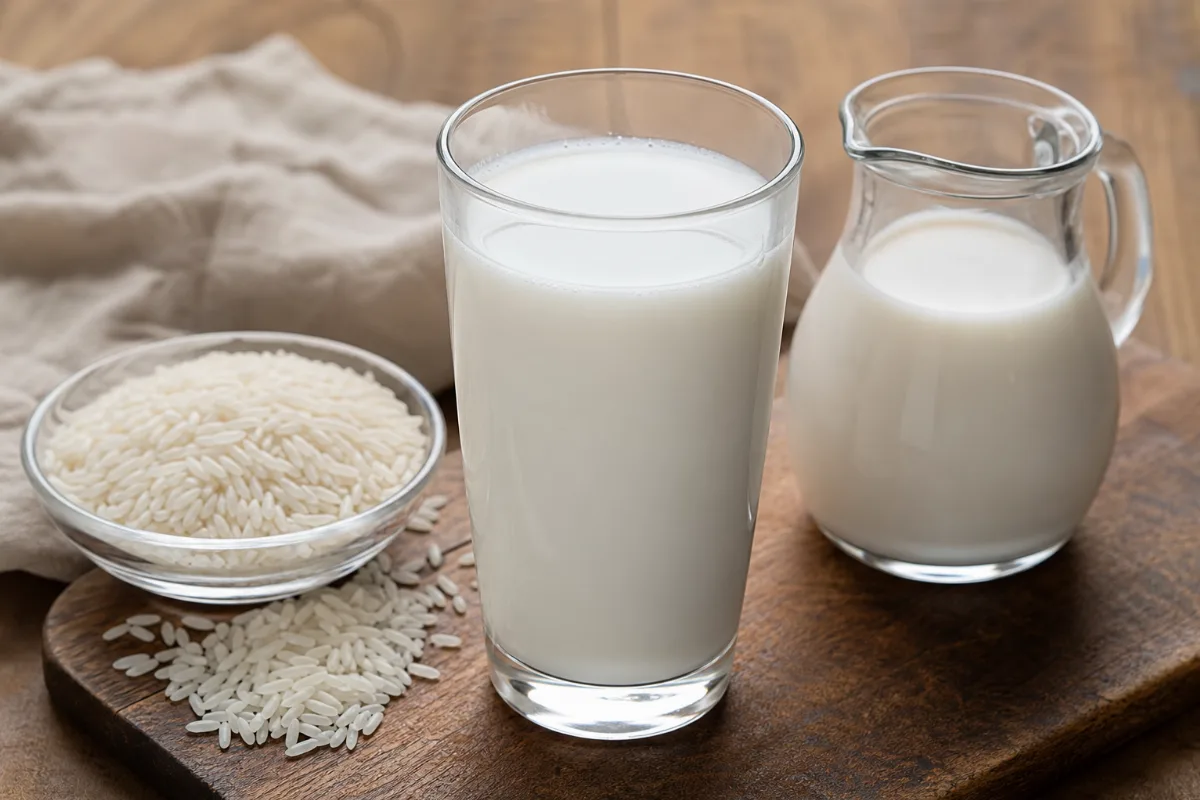
Rice milk is a dairy-free drink made from rice. It is mostly starch and water, with very little protein, and its calcium and vitamin B12 are added by the maker. No trial has tested it for a health benefit. The main caution is arsenic: the NHS and the Food Safety Authority of Ireland advise against rice drinks for young children.
General information, not medical advice. Last substantive update · Not medically reviewed. A named clinician has not signed off on this page. How this page is made
About Rice Milk
Rice milk is a dairy-free drink made from rice. It has very little protein, and any calcium or B12 comes from fortification. It is a drink, not a proven remedy. Official bodies advise against it for young children because of arsenic.
What it is
Rice milk, also called rice drink, is a packaged drink made from rice and water. People use it in place of cow's milk when they avoid dairy. It is a processed food, and how it is made was not read from a source for this page.
USDA data for unsweetened rice milk, per 100 g: 47 kcal, 0.28 g protein, 0.97 g fat, 9.17 g carbohydrate, 5.28 g sugars, 118 mg calcium and 0.63 micrograms of vitamin B12. One cup (240 g) has about 113 kcal, 0.7 g protein, 22 g carbohydrate, 283 mg calcium and 1.5 micrograms of B12.
What is in it, and what is not
Rice is mostly starch, so the drink gives energy but very little protein or fat. In a New Zealand lab analysis, rice drinks had 0.4 g of protein per 100 g, against 3.3 to 3.6 g in cow's milk. Rice and oat were the only plant drinks with measurable glucose and maltose, and rice products had the most sugar and the most sodium of the plant drinks tested, even without added sugar.
Calcium and B12 are added by the maker and differ by brand. Calcium can also settle: in one rice product, an unshaken pack had 96% less calcium than a well-mixed sample. The USDA item is called unsweetened but lists 5.28 g of sugars per 100 g, which USDA does not explain, so check the label of what you buy.
What the research shows
No trial of rice milk for a health benefit was found. The evidence is about what the drink contains. The lab analysis concluded that apart from calcium-fortified soy, none of the plant drinks was broadly comparable to cow's milk. That study was funded by a dairy company, though the low protein is also in the USDA table.
A 2026 review found that partly replacing cow's milk with plant drinks went with slightly lower height and BMI in five-year-olds, and described case reports of severe undernutrition with plant drinks as the main drink in the first two years of life. The authors rate the evidence as low quality, and it is not specific to rice.
Drink versus rice and rice formula
This page is about the packaged drink. Whole rice, brown rice and rice-based infant formula are different foods. The Irish authority notes that rice-based infant formula is not legally sold in Europe because it does not meet infants' needs.
At a glance
Traditional uses history, not proof
- Used today as a dairy-free milk alternative
- No traditional medicine use is described in the sources read
Studied for research
- Nutrient content, high certainty for the amounts (low protein; calcium and B12 only if added)
- As a nutritional replacement for cow's milk, evidence against
- Growth in children when plant drinks replace milk, very low certainty and a possible harm
- Blood sugar, insufficient evidence
Main compounds
- Starch and sugars (glucose, maltose)
- Protein (very little)
- Added calcium and vitamins
- Inorganic arsenic (a contaminant)
Common forms
- Unsweetened rice milk (USDA values)
- Calcium-fortified rice drinks
- Sweetened, flavoured and brown rice drinks (not read)
Research links: 2022 lab analysis: plant drinks compared with milk · 2021 EFSA: inorganic arsenic in the diet · 2026 review: plant drinks in early life · Research Library · Genes & Biomarkers Library
What it is and its history
- Accepted scientific name
- Oryza sativa L. (rice), the grain the drink is made from
- Naming authority
- Rice drink is a processed food; the plant name is given for the grain only
- Common names
- Rice milk (English); Rice drink (English); Rice beverage (English); Leche de arroz (Spanish); Bebida de arroz (Spanish)
- Family or group
- Poaceae (grass family); not checked against a database for this page. Rice milk itself is a processed drink.
- Classification
- Plantae > Poaceae > Oryza > Oryza sativa
- Native range
- Not verified from a source read.
- Habitat
- Not verified from a source read.
- What it looks like
- Roots: Not verified.; Stems: Not verified.; Leaves: Not verified.; Flowers: Not verified.; Fruit: USDA household portion: one cup is 240 g.
- Cultivation
- Not verified from a source read.
- Harvest and processing
- How rice drinks are made (milling, enzyme treatment, fortification) was not read from a source. One lab analysis found glucose and maltose in rice drinks, which suggests the starch is partly broken down; this is an inference, not a source statement.
- Look-alikes and adulterants
- Name: Oat, almond, soy and coconut drinks; Note: Other plant drinks with their own pages; nutrient content differs, and soy drinks have much more protein.; Name: Rice-based infant formula; Note: A different product, regulated separately; not covered here.
- Sustainability and conservation
- Not assessed.
Photographs
What is inside, and how it may work
What it contains and how those compounds act in cells and animals. Laboratory and animal mechanisms are not proven effects in people.
Main compounds
| Compound | Family | Where it is concentrated | Activity studied | Level of evidence |
|---|---|---|---|---|
| Starch and sugars (glucose, maltose) | carbohydrate | Rice grain USDA: 9.17 g carbohydrate and 5.28 g sugars per 100 g. | Provide the energy in the drink. Rice products in the lab analysis had the highest total sugar of the plant drinks tested. 7 4 | Human data |
| Protein | protein | Rice grain USDA 0.28 g per 100 g; lab 0.4 g per 100 g. | Very low compared with cow's milk (3.3 to 3.6 g per 100 g). 7 4 | Human data |
| Added calcium and vitamins (calcium, B12, A, D, riboflavin) | fortification | Added by the maker USDA per 100 g: calcium 118 mg, vitamin B12 0.63 micrograms, vitamin A 63 micrograms (RAE). | Not natural to rice; present only in fortified products and varies by brand. 7 4 | Human data |
| Inorganic arsenic | contaminant | Taken up by the rice plant from soil and water EFSA rice drink mean 8.2 to 17.4 micrograms per kg (lower to upper bound). | A contaminant, not a nutrient; the reason for official advice for young children. 1 | Human data |
Mechanisms, receptors and pathways
| Target or pathway | Gene or receptor | What was found | Level |
|---|---|---|---|
| Low protein and fat | Not applicable | Rice grain is mostly starch, which fits the very low protein and fat seen in the USDA table and the lab analysis. This is a plain explanation, not a tested mechanism. 7 4 | Human data |
| Colloidal stability (settling) | Not applicable | In one rice product, an unshaken pack had 96% less calcium than a well-mixed sample, so added calcium can settle at the bottom. 4 | Lab |
Absorption, metabolism and elimination
- Absorption
- Not found for rice milk nutrients.
- Distribution
- Not found.
- Metabolism
- Not found.
- Elimination
- Not found.
- Bioavailability
- Not established for the added calcium in rice milk in people in the sources read.
Isolated compounds versus whole extracts
This page is about the packaged drink. Rice as a whole grain, brown rice, and rice-based infant formula are different foods with their own pages or rules.
Nutritional composition
Nutrition from USDA FoodData Central, 'Beverages, rice milk, unsweetened' (FDC 171942, SR Legacy, April 2018). Values were taken from our saved nutrient summary for rice milk, which records them from that USDA record; the USDA site itself was not re-opened for this page. Per 100 g: 47 kcal, 0.28 g protein, 0.97 g fat, 9.17 g carbohydrate, 5.28 g sugars, 0.3 g fibre, 118 mg calcium, 0.63 micrograms vitamin B12, 0.282 mg manganese, 0.142 mg riboflavin, 63 micrograms vitamin A (RAE) and 39 mg sodium. One typical USDA portion is 1 cup (240 g, the 100 g values multiplied by 2.4): about 113 kcal, 0.7 g protein, 2.3 g fat, 22 g carbohydrate, 12.7 g sugars, 0.7 g fibre, 283 mg calcium, 1.5 micrograms vitamin B12, 0.68 mg manganese, 0.34 mg riboflavin, 151 micrograms vitamin A and 94 mg sodium. The USDA item is called unsweetened, yet it lists added vitamins and calcium and 5.28 g of sugars per 100 g, which USDA does not explain. A lab analysis of rice drinks in New Zealand found 0.4 g protein, 1.0 g fat and about 120 mg calcium per 100 g. Sweetened, flavoured, unfortified and brown rice drinks vary, so check the label.
1 high certainty1 very low certainty1 not enough evidence1 evidence against
What was looked at
The 4 benefits and uses checked for Rice Milk, each with how strong the evidence is. Tap one to open it.
What is Rice Milk good for?
There are no trials of rice milk for a health benefit. Below are the studied questions and how strong the evidence is. This is a small page because little research exists.
Benefits, one by one
Each card is a research question, not a promise. Tap a goal to filter. Open a card to see the studies, doses and limits.
Nutrient content (low protein, calcium and B12 only if fortified)
High certaintyRice milk is mostly starch and water. Per cup (240 g), USDA lists about 113 kcal, 0.7 g of protein, 22 g of carbohydrate, 283 mg of calcium and 1.5 micrograms of vitamin B12, but the calcium and B12 are added by the maker and differ by brand.
3 studiesUnsweetened rice milk (USDA item). Sweetened, flavoured, unfortified …
Studies, doses and limits
What the trials found
No trial was read testing rice milk as a source of any nutrient in people. A lab analysis of three rice products found 0.4 g of protein per 100 g, against 3.3 to 3.6 g in cow's milk.
Results
Rice milk gives energy mainly from carbohydrate and has very little protein. Calcium and B12 appear on paper because they are added. Unfortified products have far less, and the amounts vary by brand.
Effect sizes as reported
USDA per 100 g: protein 0.28 g, calcium 118 mg, vitamin B12 0.63 micrograms. Lab (3 rice products): protein 0.4 g, fat 1.0 g, calcium about 120 mg per 100 g.
Why this rating
High that the drink contains roughly these amounts (USDA table plus a lab analysis). Not tested for any health effect.
Form and dose studied
Unsweetened rice milk (USDA item). Sweetened, flavoured, unfortified and brown rice drinks were not read.
Who was studied
General diet.
Limits
Nutrient facts, not trials. The lab analysis is from New Zealand and is funded by a dairy company. Other brands differ.
Why researchers looked
People choose rice milk when they avoid cow's milk, so researchers compare what is in it with what is in milk.
Traditional use
Rice drinks are a modern packaged food. No traditional medicine use is described in the sources read.
Proposed mechanism Nutrient database
These are nutrient amounts in the drink, taken from a USDA table and a lab analysis.
A proposed mechanism does not show that the effect happens in people.
Rice drinks are not advised for children under 5 in the UK or up to 4.5 years in Ireland, because of arsenic. See the Safety tab.
As a replacement for cow's milk (nutrition)
Evidence againstResearchers who compared plant drinks with cow's milk found rice milk is not nutritionally close to it, mainly because it has so little protein.
3 studiesRice drinks on sale in New Zealand; USDA unsweetened item.
Studies, doses and limits
What the trials found
No trial in people comparing rice milk with cow's milk was found. A lab analysis in New Zealand concluded that, apart from calcium-fortified soy, none of the plant drinks tested was broadly comparable to milk.
Results
Rice milk does not match cow's milk for protein or fat. It can match some added nutrients such as calcium when fortified, and shaking the pack matters because calcium can settle.
Effect sizes as reported
Protein 0.4 g per 100 g in rice drink against 3.3 to 3.6 g in milk (lab). In one rice product, an unshaken pack had 96% less calcium than a well-mixed sample.
Why this rating
The evidence is against rice milk being a nutritional equal of cow's milk. Industry funding (a dairy company) is flagged, but the low protein is also in the USDA table.
Form and dose studied
Rice drinks on sale in New Zealand; USDA unsweetened item.
Who was studied
Adults and children in general; not tested in any group.
Limits
A small market snapshot. Rice milk may still suit an adult who gets protein and other nutrients from other foods; no study was read on that.
Why researchers looked
Plant drinks are used by people with milk allergy, lactose intolerance or vegan diets, so reviewers ask whether they match milk.
Proposed mechanism Nutrient database
Rice is mostly starch, so the drink has little protein or fat unless something is added.
A proposed mechanism does not show that the effect happens in people.
Not advised as a milk replacement for young children; see the Safety tab.
Growth in children when plant drinks replace cow's milk
Very low certaintyA 2026 review of observational studies linked partly replacing cow's milk with plant drinks with slightly lower height and BMI in five-year-olds. Rice drinks were not separated out, and the link may not be cause.
1 studiesPlant-based drinks in general.
Studies, doses and limits
What the trials found
The review found lower intake of nutrients typical of cow's milk with exclusive plant drink use, lower height and BMI per cup of plant drink in five-year-olds, and case reports of severe undernutrition (mostly in the first two years of life). It found no long-term studies and no randomised trials.
Results
A small association in observational data, and case reports. The authors say the quality is low and residual confounding makes the risk hard to measure.
Effect sizes as reported
Per cup of plant drink in five-year-olds: height-for-age z-score -0.04 (-0.07 to -0.01); BMI-for-age z-score -0.06 (-0.09 to -0.03); about 0.2 cm and 0.1 kg.
Why this rating
Observational data and case reports with confounding, not specific to rice drinks.
Form and dose studied
Plant-based drinks in general.
Who was studied
Infants, children and adolescents.
Limits
Not rice-specific. This is a possible harm, not a benefit.
Why researchers looked
Parents sometimes give plant drinks to children in place of milk, so reviewers checked growth and nutrition.
Proposed mechanism Hypothesis
Plant drinks usually have less protein and fewer nutrients such as iodine unless they are fortified, which could explain it. Not shown for rice drink.
A proposed mechanism does not show that the effect happens in people.
This is a reason the Safety tab advises against rice drinks for young children.
Blood sugar
Not enough evidenceNo study of rice milk and blood sugar was found. USDA lists about 22 g of carbohydrate in a cup, and the lab analysis found measurable glucose and maltose in rice drinks.
2 studiesUnsweetened rice milk (USDA).
Studies, doses and limits
What the trials found
No human study was found.
Results
There is nothing to report on blood sugar effects. Only the carbohydrate content is known.
Effect sizes as reported
USDA per cup: about 22 g carbohydrate, 12.7 g sugars (not explained by USDA for an item called unsweetened).
Why this rating
No human study of rice milk and blood sugar was read.
Form and dose studied
Unsweetened rice milk (USDA).
Who was studied
Not studied.
Limits
Nutrient content only. People who count carbohydrate can check the label.
Why researchers looked
People with diabetes ask about carbohydrate in milk alternatives.
Proposed mechanism Laboratory analysis
Not shown. Rice drinks contain starch-derived sugars such as glucose and maltose even when no sugar is added.
A proposed mechanism does not show that the effect happens in people.
Ask a doctor, dietitian or pharmacist about your own diet if you have diabetes.
Connections to the rest of health
How Rice Milk connects to the rest of our health knowledge graph. Every link says what kind of connection it is. A safety link (for example to the liver) is a warning, not a benefit. A study that merely mentions a topic never creates a benefit link.
Explore every connection: goals, body systems, organs, symptoms, genes
A. Wellness goals
| Connected to | Kind of connection | Evidence status | Context | Studies |
|---|---|---|---|---|
| Preventive Wellness | High certainty | Nutrient content (low protein, calcium and B12 only if fortified): Rice milk is mostly starch and water. Per cup (240 g), USDA lists about 113 kcal, 0.7 g of protein, 22 g of carbohydrate, 283 mg of calcium and 1.5 micrograms of vitamin B12, but the calcium and B12 are added by the maker and differ by brand. | 7 4 2 | |
| Preventive Wellness | Evidence against | As a replacement for cow's milk (nutrition): Researchers who compared plant drinks with cow's milk found rice milk is not nutritionally close to it, mainly because it has so little protein. | 4 2 7 | |
| Preventive Wellness | Very low certainty | Growth in children when plant drinks replace cow's milk: A 2026 review of observational studies linked partly replacing cow's milk with plant drinks with slightly lower height and BMI in five-year-olds. Rice drinks were not separated out, and the link may not be cause. | 3 | |
| Blood Sugar Balance | Not enough evidence | Blood sugar: No study of rice milk and blood sugar was found. USDA lists about 22 g of carbohydrate in a cup, and the lab analysis found measurable glucose and maltose in rice drinks. | 7 4 |
B. Body systems
| Connected to | Kind of connection | Evidence status | Context | Studies |
|---|---|---|---|---|
| Digestive System | Biological association | High certainty | Studied for: Nutrient content (low protein, calcium and B12 only if fortified) Studied for: As a replacement for cow's milk (nutrition) | 7 4 2 |
| Musculoskeletal System | Biological association | Very low certainty | Studied for: Growth in children when plant drinks replace cow's milk | 3 |
| Endocrine System | Biological association | Not enough evidence | Studied for: Blood sugar | 7 4 |
E. Health conditions
| Connected to | Kind of connection | Evidence status | Context | Studies |
|---|---|---|---|---|
| Child malnutrition | Case reports | Case reports of severe undernutrition with exclusive plant drink use in early life; not specific to rice. Case reports of severe undernutrition with plant drinks as the main drink in early life; not specific to rice. Preparation or compound: Plant drinks replacing milk or formula |
3 |
G. Root causes and contributing factors
| Connected to | Kind of connection | Evidence status | Context | Studies |
|---|---|---|---|---|
| Heavy metal exposure | Documented risk | Rice drink had the highest inorganic arsenic of the milk and dairy group in EFSA data; official advice is aimed at young children. Preparation or compound: Inorganic arsenic in rice drinks |
1 6 |
K. Biological pathways
| Connected to | Kind of connection | Evidence status | Context | Studies |
|---|---|---|---|---|
| Calcium | Preliminary mechanism | Lab | Present in fortified rice milk only; it can settle in an unshaken pack. | 7 4 |
| Vitamin B12 | Preliminary mechanism | Lab | Added by the maker; USDA lists 0.63 micrograms per 100 g. | 7 |
| Inorganic arsenic | Preliminary mechanism | Human | A contaminant taken up by rice; the reason young children are advised against rice drinks. | 1 |
L. Active compounds
| Connected to | Kind of connection | Evidence status | Context | Studies |
|---|---|---|---|---|
| Starch and sugars (glucose, maltose) | Biological association | Human | Provide the energy in the drink. Rice products in the lab analysis had the highest total sugar of the plant drinks tested. Preparation or compound: Rice grain |
7 4 |
| Protein | Biological association | Human | Very low compared with cow's milk (3.3 to 3.6 g per 100 g). Preparation or compound: Rice grain |
7 4 |
| Added calcium and vitamins (calcium, B12, A, D, riboflavin) | Biological association | Human | Not natural to rice; present only in fortified products and varies by brand. Preparation or compound: Added by the maker |
7 4 |
| Inorganic arsenic | Biological association | Human | A contaminant, not a nutrient; the reason for official advice for young children. Preparation or compound: Taken up by the rice plant from soil and water |
1 |
Each connection is stored with the ingredient, the connected record, the kind of connection, the evidence status, the supporting studies, the preparation or compound involved, and a review date (last reviewed October 26, 2026).
Evidence at a glance: what the research found for 4 outcomes
Each outcome below is one thing researchers measured. Certainty is how far the evidence can be trusted, not how well it works. The full studies are on the next tab.
The evidence
The research centre for Rice Milk. Every record here was checked against PubMed or the publisher's page; we never list a study we have not verified.
Evidence by outcome
Bars show how many studies we found for each outcome, not how well it works. People are added up across trials only (reviews are not added, to avoid double counting).
How we rate evidence
High certainty
Several well-run trials or reviews agree; further research is unlikely to change the picture much.
Moderate certainty
Good trials point the same way, but some doubt remains.
Low certainty
Small, short or inconsistent trials. The finding could change with better research.
Very low certainty
Very little or very weak human data. Treat as a possibility only.
Mixed findings
Trials or reviews disagree with each other.
Not enough evidence
Not enough human research to say either way.
Evidence against
Good research found no benefit, or found harm.
We take the reviewers' own risk-of-bias and GRADE statements where they exist, and otherwise judge from study size, design, consistency, directness and whether a product matches what is sold. Many publications do not make evidence high. Method note: We started from our existing rice milk summary, read the PubMed abstracts of two reviews, the full text of a lab analysis and the EFSA arsenic report (first part), and the Irish FSAI and UK NHS pages. USDA values come from our saved summary of the USDA record. Items we could not verify are flagged in the research gaps.
Study library: every study we checked 7
| Study | Design | People | Product, dose, length | Result |
|---|---|---|---|---|
| European Food Safety Authority (EFSA) 2021 Chronic dietary exposure to inorganic arsenic. EFSA J · PMID 33537067 · DOI |
Exposure assessment |
Dietary surveys from 23 European countries (44 surveys, 87,945 people) and 5,985 food and 7,623 water samples collected across Europe in 2013 to 2018 | Inorganic arsenic in the whole diet, including 43 rice drink samples Rice drink samples (43) |
Exposure was highest in infants, toddlers and other children. Among milk and dairy products, rice drink was the group with the highest inorganic arsenic level, with mean levels of 8.2 to 17.4 micrograms per kg (lower to upper bound). Across the whole diet, the main contributors were rice, rice-based products, grain products without rice and drinking water. At the 95th percentile, the highest estimates for infants, toddlers and other children fell within the range of EFSA's earlier benchmark dose values. Mean exposure (lower bound) in toddlers 0.30 micrograms per kg body weight a day; 95th percentile (lower to upper bound) 0.58 in toddlers and 1.20 in infants (Benchmark dose lower limit range 0.3 to 8 micrograms per kg body weight a day (EFSA 2009)) Methods, limits and fundingOutcomes: Estimated dietary exposure to inorganic arsenic by age group Limitations: A modelled estimate for the whole diet, not for rice drink alone. Many samples were below detection, so lower and upper bound estimates differ by two to three times. Only the first part of the long report was read in detail. Funding and conflicts: EFSA is an independent EU agency. Read: full-text (in part) |
| Fructuoso 2021 An Overview on Nutritional Aspects of Plant-Based Beverages Used as Substitutes for Cow's Milk. Nutrients · PMID 34444815 · DOI |
Narrative review n/a |
122 plant-based beverages of 22 different matrices described in published studies | Plant-based beverages used in place of cow's milk Plant drinks |
Nutrient amounts varied very widely between products: energy 6 to 183 kcal per 100 mL, protein 0.06 to 12.43 g per 100 mL and calcium 0 to 1252.94 mg per 100 mL. Some drinks reached certain cow's milk nutrient amounts, but the authors say the qualities differ and care is needed when replacing milk with them. Ranges only, not rice-specific (Not applicable) Methods, limits and fundingOutcomes: Energy, macronutrients, fibre and some minerals as reported in the studies Limitations: A literature review of product analyses, not a health trial. The abstract does not give rice drink figures. Funding and conflicts: The authors declare no conflict of interest. Read: abstract |
| Schlune 2026 Plant-Based Drinks as an Alternative to Cow's Milk in Early Life: Health Effects in Infancy, Childhood, and Adolescence. Dtsch Arztebl Int · PMID 41562594 · DOI |
Narrative review |
Infants, children and adolescents in cross-sectional and cohort studies and case reports | Plant-based milk alternatives in general (rice drinks are not reported separately in the abstract) Plant drinks Per cup of plant drink in five-year-olds · vs Cow's milk |
Intake of nutrients typical of cow's milk, such as iodine, was lower with exclusive plant drink use. Even partly replacing cow's milk with plant drinks went with lower height and BMI in five-year-olds. Case reports describe severe undernutrition with exclusive or mainly plant drink use, mostly in the first two years of life. No long-term studies and no randomised trials were found. Height-for-age z-score -0.04 per cup of plant drink; BMI-for-age z-score -0.06 per cup, about 0.2 cm in height and 0.1 kg in weight (Height z-score -0.07 to -0.01; BMI z-score -0.09 to -0.03) Methods, limits and fundingOutcomes: Nutrient intake, linear growth, body-mass index, severe undernutrition Limitations: Observational data of low quality with residual confounding, so the risk is hard to quantify. The case reports have limited value. The abstract does not separate rice drinks from other plant drinks. Funding and conflicts: The authors declare no conflict of interest. Read: abstract |
| Smith 2022 Nutritional assessment of plant-based beverages in comparison to bovine milk. Front Nutr · PMID 36003838 · DOI |
Laboratory analysis n/a |
Plant drinks and milk on sale in New Zealand: a label survey (7 rice products) and lab analysis of selected products (3 rice products) | Almond, coconut, oat, rice and soy drinks compared with cow's milk Rice drink (3 products analysed) |
Rice drinks had the lowest protein of the drinks tested: 0.4 g per 100 g in the lab (milk 3.3 to 3.6 g) and 1.0 g fat per 100 g (milk 3.3 g). Rice and oat were the only plant drinks with measurable glucose and maltose, and rice products had the highest total sugar and the highest sodium. In one representative rice product, an unshaken pack had 96% less calcium than a well-mixed sample. The authors conclude that apart from calcium-fortified soy, none of the plant drinks was broadly comparable to milk. Rice protein 0.4 +/- 0.07 g per 100 g; fat 1 +/- 0.17 g per 100 g; calcium about 0.12 +/- 0.03 g per 100 g (lab, 3 products) (Mean +/- standard deviation) Methods, limits and fundingOutcomes: Protein, fat, sugars, minerals, amino acids, and protein and calcium in shaken versus unshaken packs Limitations: A New Zealand market snapshot of a few products; only one rice product was tested for shaken versus unshaken calcium. Products differ by country and brand. Funding and conflicts: Funded by Fonterra Cooperative Ltd. (a dairy company) and the International Dairy Federation New Zealand branch; two authors work for Fonterra. Read as industry-funded. Read: full-text |
| s-fsai-2022 Food Safety Authority of Ireland: Warning Against Using Rice Milk for Infants and Young Children (10 March 2022) · Source |
Health agency n/a |
Methods, limits and fundingRead: full-text | ||
| s-nhs-rice-drinks NHS: Drinks and cups for babies and young children (rice drinks) · Source |
Health agency n/a |
Methods, limits and fundingRead: full-text | ||
| s-usda-fdc-171942 USDA FoodData Central: Beverages, rice milk, unsweetened (FDC 171942, SR Legacy, April 2018) · Source |
Reference database n/a |
Methods, limits and fundingRead: summary-only |
What we do not know yet
- No trial of rice milk for any health outcome was found.
- Sweetened, flavoured, unfortified, brown rice and homemade rice drinks were not researched.
- No source was read on pregnancy, breastfeeding or adults and arsenic from rice milk.
- US advice (FDA, CDC) on rice milk was not verified, and the USDA values come from a saved summary.
- Most nutrient comparison rests on one dairy-industry-funded lab analysis.
How new research is added
New studies are found by a saved PubMed search and placed in a review queue before the page changes.
Lab markers
What changed in blood or saliva tests during trials. A changed number is not the same as feeling or being healthier, and we give no "normal ranges".
Safety
What studies and official sources say about side effects, medicines and who should check first. Each point shows what kind of evidence it comes from.
Main points to know 2
- Not advised for babies and young children (arsenic). The NHS says children under 5 should not have rice drinks in place of breast milk, infant formula or cow's milk, because they may contain too much arsenic. The Food Safety Authority of Ireland (2022) says infants and young children up to 4.5 years should not have rice milk in place of those drinks. Rice takes up more arsenic than other grains, and in EFSA's European data rice drink had the highest inorganic arsenic level of any milk or dairy product group. The risk is long-term and estimated, not sudden poisoning, and the NHS says a child who has already had rice drinks is at no immediate risk but should switch. Authoritative guidance 6 5 1
- Little protein: not a stand-in for milk in early life. A 2026 review of observational studies and case reports links replacing cow's milk with plant drinks in early life with lower growth and, in rare case reports, severe undernutrition. It is not specific to rice, and the evidence is low quality. Observational 3 4
Side effects 2
| Effect | How often | Severity and recovery | Evidence |
|---|---|---|---|
| Possible poor growth or undernutrition if rice drink replaces milk or formula in young children Plant drinks in general, not rice drinks alone. | Per cup of plant drink in five-year-olds: height-for-age z-score -0.04 (-0.07 to -0.01). Case reports mostly in the first two years of life; no frequency found. | can be severe in infants (case reports of undernutrition) Not described in the abstract read. | Observational 3 |
| Long-term arsenic exposure from rice products (estimated risk, not acute poisoning) Whole diet, not rice drink alone. Most official advice is aimed at young children. | EFSA mean exposure (lower bound) in toddlers 0.30 micrograms per kg body weight a day, whole diet. At the 95th percentile, estimates for infants, toddlers and other children were within EFSA's earlier benchmark range. | No illness was shown from rice drinks in the sources read; this is a precaution. Not applicable. | Exposure estimate 1 |
Liver
No liver injury from rice milk was found in the sources read. Liver safety was not searched in a dedicated source.
How often. No frequency was found.
Monitoring. No agency monitoring advice was found.
This is a safety connection. It is not evidence that Rice Milk supports liver health.
Medicines and supplements 1
| With | Why it matters | Importance | Evidence | What to do |
|---|---|---|---|---|
| Medicines in general prescription | No medicine interaction with rice milk was found in the sources read. This is an absence of information, not proof of safety. | No evidence found Not enough evidence 4 | Ask your doctor or pharmacist if you have a question about your own medicines. |
Who should check first 3
| Situation | Advice | Evidence |
|---|---|---|
| Infants and children under 5 (UK) or up to 4.5 years (Ireland), as a substitute for milk or formula | Official bodies advise against rice drinks for this group because of arsenic. Ask your health visitor, doctor or dietitian about suitable milk alternatives, especially if the child has a milk allergy. | Authoritative guidance 6 5 |
| Pregnancy or breastfeeding | No pregnancy or breastfeeding advice about rice drinks was read. Ask your midwife, doctor or dietitian about your own diet. | No evidence found |
| People who rely on milk alternatives for most of their protein and calcium | Rice milk has very little protein, and calcium depends on fortification and on shaking the pack. Check the label and ask a dietitian if rice milk is a main drink in your diet. | Laboratory analysis 4 7 |
Overdose, product quality and regulators
Summary. Rice milk as an ordinary drink is not described as acutely toxic in the sources read. The concern raised by official bodies is long-term inorganic arsenic exposure in young children.
Animal. Not reviewed.
High dose or long term signals. EFSA estimated that high-end exposure in infants, toddlers and other children from the whole diet reached its earlier benchmark range; rice products are a main contributor.
Overdose response. Not found.
Genotoxicity. Not researched.
Rice takes up arsenic from soil and water. The EFSA data included 43 rice drink samples with mean inorganic arsenic of 8.2 to 17.4 micrograms per kg (lower to upper bound), the highest in the milk and dairy group. Other contaminants (cadmium, mould, pesticides) and the effect of brown versus white rice were not researched.
Inorganic arsenic. Rice drink had the highest inorganic arsenic among milk and dairy products in European data collected 2013 to 2018. The NHS notes the UK sets maximum levels for inorganic arsenic in rice and rice products, with stricter levels for foods for young children. 1 6
Calcium settles in the pack. In one representative rice product, an unshaken pack had 96% less calcium than a well-mixed sample. 4
| Body | Action | Date |
|---|---|---|
| Food Safety Authority of Ireland (Ireland) | Infants and young children up to 4.5 years old should not consume rice milk as a substitute for cows' milk, breast milk or infant formula (inorganic arsenic). source | 2022-03-10 |
| NHS (United Kingdom) | Children under 5 years old should not have rice drinks as a substitute for breast milk, infant formula or cows' milk because they may contain too much arsenic. Calcium-fortified unsweetened soya, oat or almond drinks can be given from age 1. source | 2022-10-05 |
| European Food Safety Authority (European Union) | Scientific opinion on chronic dietary exposure to inorganic arsenic: exposure highest in infants, toddlers and other children; rice drink was the highest milk and dairy group for inorganic arsenic. source | 2021-01 |
When to get medical help
- Rice drink given to a baby or young child as their main milk, with poor feeding, poor weight gain or weakness: see a doctor or health visitor
- Trouble breathing, swelling of the face or throat or widespread hives after any food: call 911 or your local emergency number
Stop using the product and contact a clinician or emergency service. In the US, Poison Control is 1-800-222-1222.
General information only, not medical advice. Ask a clinician or pharmacist before use, especially with medicines, in pregnancy or with a health condition. See the Natural Remedy Safety guide.
Frequently asked questions
What is rice milk?
Is rice milk as nutritious as cow's milk?
No. In a New Zealand lab analysis, rice drinks had 0.4 g of protein per 100 g against 3.3 to 3.6 g in cow's milk. The authors, who work partly for a dairy company, found none of the plant drinks except fortified soy broadly comparable to milk.
Does rice milk have calcium and vitamin B12?
Should I shake rice milk before pouring?
A lab analysis found an unshaken rice pack had 96% less calcium than a well-mixed sample, in one representative product. So shaking the pack matters if you use it for added calcium.
Is rice milk safe for babies and young children?
Why does rice milk have arsenic?
My child has already had rice drinks. Should I worry?
The NHS says there is no immediate risk, but it is best to switch to a different kind of milk. The concern is long-term exposure. Talk to your health visitor or doctor if you are unsure.
Can rice milk affect a child's growth?
A 2026 review of observational studies linked partly replacing cow's milk with plant drinks with slightly lower height and BMI at age five, and described rare case reports of undernutrition. It was not specific to rice and cannot prove cause.
Does rice milk affect blood sugar?
Is rice milk free of added sugar?
Is rice milk safe in pregnancy or for adults?
Explore by health goal
Editorial transparency
- Written by
- AlternativeMed editorial team. Research compiled with AI assistance, then checked against the sources listed.
- Medical review
- None. This page has not been reviewed by a physician or pharmacist.
- First published
- 2026-10-26
- Last substantive update
- 2026-10-26
- How we research
- We started from our existing rice milk summary, read the PubMed abstracts of two reviews, the full text of a lab analysis and the EFSA arsenic report (first part), and the Irish FSAI and UK NHS pages. USDA values come from our saved summary of the USDA record. Items we could not verify are flagged in the research gaps.
- How we rate evidence
- See "How we rate evidence" in the Evidence tab.
- Independence
- No product is promoted on this page. No affiliate links are shown. The lab analysis cited was funded by a dairy company (Fonterra); this is stated where it is used.
Sources 7
Each source was opened and checked. Where we read only the abstract, it says so. The small numbers in the text point here.
- European Food Safety Authority (EFSA), Arcella D, Cascio C, Gomez Ruiz JA. Chronic dietary exposure to inorganic arsenic.. EFSA J. 2021. PMID 33537067. DOI 10.2903/j.efsa.2021.6380. (full-text (in part))
- Fructuoso I, Romão B, Han H, Raposo A, et al.. An Overview on Nutritional Aspects of Plant-Based Beverages Used as Substitutes for Cow's Milk.. Nutrients. 2021. PMID 34444815. DOI 10.3390/nu13082650. (abstract)
- Schlune A, Nebelung N, Schidelko LP, Brettschneider AK, et al.. Plant-Based Drinks as an Alternative to Cow's Milk in Early Life: Health Effects in Infancy, Childhood, and Adolescence.. Dtsch Arztebl Int. 2026. PMID 41562594. DOI 10.3238/arztebl.m2025.0223. (abstract)
- Smith NW, Dave AC, Hill JP, McNabb WC. Nutritional assessment of plant-based beverages in comparison to bovine milk.. Front Nutr. 2022. PMID 36003838. DOI 10.3389/fnut.2022.957486. (full-text)
- . Food Safety Authority of Ireland: Warning Against Using Rice Milk for Infants and Young Children (10 March 2022). . . (full-text)
- . NHS: Drinks and cups for babies and young children (rice drinks). . . (full-text)
- . USDA FoodData Central: Beverages, rice milk, unsweetened (FDC 171942, SR Legacy, April 2018). . . (summary-only)


