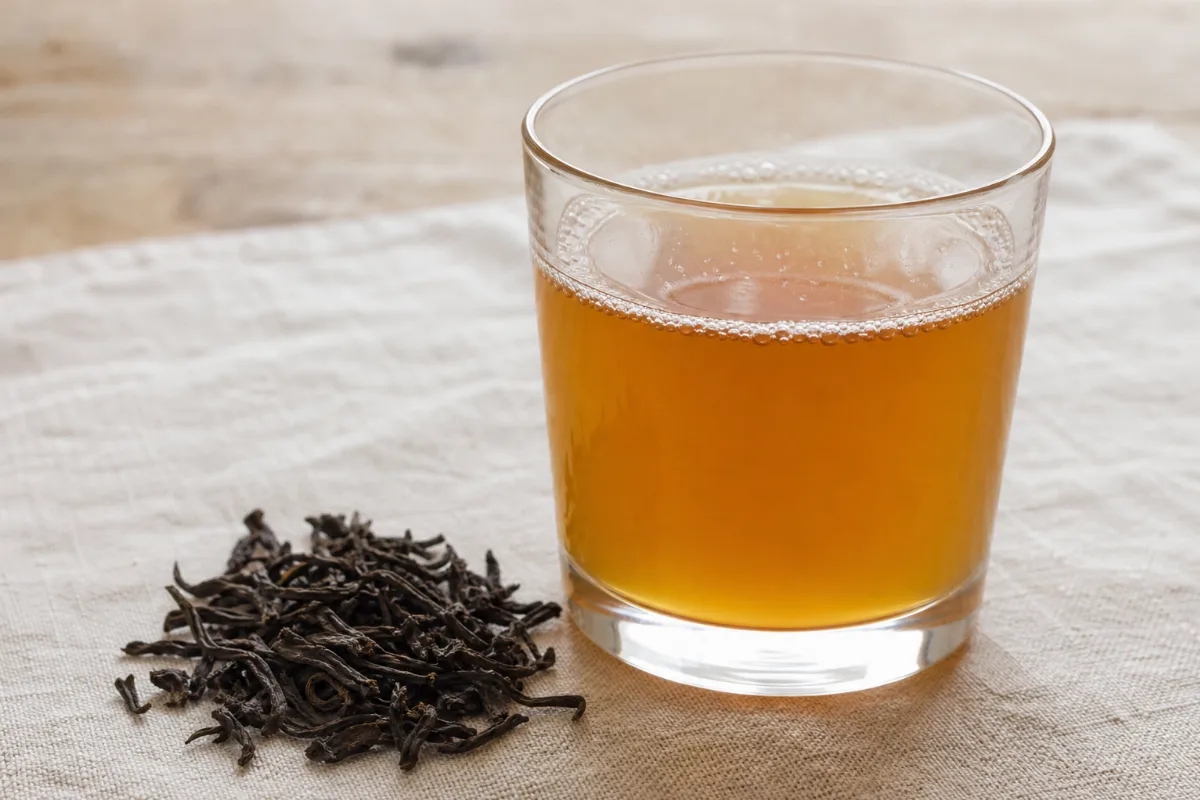
Herbal Teas & Extracts · Fermented tea
Kombucha (Fermented Tea)
Tea (Camellia sinensis) fermented with a SCOBY · also called Kombucha tea, fermented tea, tea fungus drink, SCOBY tea, mushroom tea (a folk name; it is not a mushroom)
Kombucha is sweet tea fermented with a mat of bacteria and yeast (a SCOBY). It is fizzy and sour and contains some alcohol, caffeine and sugar. A few small trials looked at blood sugar and gut bacteria, with weak, mixed results. Home-brewed kombucha and kombucha made in ceramic pots have been linked to serious harm, including lead poisoning. Poison Control advises young children, pregnant women and people with weak immune systems not to drink it.
General information, not medical advice. Last substantive update · Not medically reviewed. A named clinician has not signed off on this page. How this page is made
About Kombucha (Fermented Tea)
Kombucha is tea and sugar fermented with a SCOBY, a mat of bacteria and yeast. It is sour, fizzy, and contains some alcohol, caffeine and sugar. Human evidence for benefits is very thin. The risks are better documented: contamination in home brews, lead leaching from ceramic, case reports of lactic acidosis and liver injury, and alcohol that varies by bottle.
What it is
Kombucha is a sparkling sugared tea. A sweetened tea is fermented at room temperature for several days with a cellulose mat of acetic acid bacteria and yeast, often called a SCOBY or "tea fungus". Yeast turn sugar into alcohol and the bacteria turn some of it into acetic acid, which makes the drink sour. The tea is usually black or green tea.
The word "mushroom" is a folk name. The culture is bacteria and yeast, not a mushroom.
Drink, home brew, hard kombucha and supplements
The trials here used finished drinks. Home-brewed kombucha is where most case reports come from. Hard kombucha is made to contain more alcohol. Powders, gummies and capsules sold as kombucha are different products, and results for the drink do not carry over to them.
What the research shows
A 2018 systematic review found one human study among 310 articles. Since then a few small trials have been published. One pilot in 12 adults with type 2 diabetes saw lower fasting blood sugar, but the placebo period also fell. One meal test in 11 healthy adults saw a lower blood sugar and insulin response. Four small studies saw shifts in gut bacteria, which are not health outcomes. In a trial of 59 adults with excess weight on a diet, cholesterol and triglycerides fell within the kombucha group, but the group did not differ from diet alone. In 90 runners the main antioxidant marker did not change.
Several trials were linked to kombucha companies, and a fibre was added in one. No trial tested detox, cancer, immunity or weight-loss claims.
Alcohol, sugar, caffeine and teeth
Alcohol ranged from not detected to 3.62% in Canada; in New Zealand 2 of 9 samples were above that country's 1.15% limit. The US TTB treats kombucha at 0.5% alcohol or more, even after bottling, as an alcohol beverage. Caffeine comes from the tea; no typical figure was found for shop products. Sugar varies by product. Kombucha is acidic (pH about 2.8 to 3.7), and lab tests found it can soften enamel more than cola.
At a glance
Traditional uses history, not proof
- Folk tonic in many places; a review says drinking kombucha was reported as early as 220 B.C. (history, not proof of benefit)
- Popular home-brewed health drink in the 1990s, when the Iowa illness cluster was reported
- Today a bottled "functional" drink sold for its taste and gut-health image
Studied for research
- Fasting blood sugar in type 2 diabetes, very low (one pilot of 12 people)
- Blood sugar and insulin after one meal in healthy adults, very low (11 people)
- Gut bacteria changes, very low (four small studies)
- Gut symptoms, very low (one trial)
- Cholesterol, triglycerides and uric acid, very low (main comparison not significant)
- Antioxidant and immune markers in runners, very low (main result null)
- Detox, cancer, immunity, weight loss: insufficient (no human trials)
Main compounds
- Acetic acid and other organic acids, which make it sour
- Ethanol (alcohol), usually trace but sometimes above 1%
- Caffeine from the tea, amount varies and is not well measured
- Tea polyphenols, changed by fermentation
- Sugars left after fermentation
Common forms
- Bottled commercial kombucha (the drink most studied here)
- Home-brewed kombucha (linked to most serious case reports; no instructions given)
- Hard kombucha (made to be an alcoholic drink)
- Kombucha powders, gummies and supplements (different products; not covered by the trials)
Research links: Poison Control: Kombucha tea, health tonic or dangerous? · TTB (US Treasury): Kombucha and alcohol rules · CDC: Illness possibly linked to kombucha, Iowa 1995 · Research Library · Genes & Biomarkers Library
What it is and its history
- Accepted scientific name
- Kombucha (tea fermented with a SCOBY)
- Naming authority
- Not a species. It is a drink made from tea (Camellia sinensis (L.) Kuntze, Theaceae, accepted in GBIF key 3189635, checked 2026-10-25) and sugar, fermented by a mixed culture.
- Common names
- Kombucha (English); Kombucha tea, fermented tea (English); Tea fungus, SCOBY tea, mushroom tea (English)
- Family or group
- Base tea plant: Camellia sinensis, Theaceae
- What it looks like
- Leaves: The tea leaf is the starting material.
- Cultivation
- Not described here; we give no home-brewing instructions.
- Harvest and processing
- A sweetened tea infusion is fermented at ambient temperature for several days with a cellulose pellicle (tea fungus) of acetic acid bacteria and yeast (review).
- Look-alikes and adulterants
- Name: Kombucha-flavoured supplements, powders and gummies; Note: Not the same product; results for the drink do not carry over.; Name: Hard kombucha; Note: Deliberately made stronger in alcohol; an alcoholic drink.; Name: Water kefir, jun and other fermented drinks; Note: Different cultures; evidence here does not apply.
Photographs
Traditional use and history history, not clinical proof
| Tradition or era | Documented use | Source |
|---|---|---|
| Early reports | A review says drinking kombucha has been reported as early as 220 B.C. This is a historical claim in a microbiology review, not proof of benefit. | p36360067 |
| 1990s United States | Kombucha became popular as a home-brewed tonic. The 1995 Iowa illness cluster led to a CDC report. | s-cdc-mmwr1995 |
| Today | Sold as a bottled functional drink; reviews describe regulations focusing on pH and alcohol content. | p35029317 |
Traditional use shows how it was used. It does not show that it works or is safe today.
What is inside, and how it may work
What it contains and how those compounds act in cells and animals. Laboratory and animal mechanisms are not proven effects in people.
Main compounds
| Compound | Family | Where it is concentrated | Activity studied | Level of evidence |
|---|---|---|---|---|
| Acetic acid PubChem 176 | organic acid | Made by acetic acid bacteria from ethanol during fermentation The diabetes pilot found lactic and acetic acids both below 1% in the product tested. | Lowers pH and gives the sour taste; also dissolves lead from glaze and tooth mineral in lab tests. 25 16 15 | Laboratory |
| Ethanol (alcohol) PubChem 702 | alcohol | Made by yeast from sugars Mean 0.77% ABV, up to 3.62% in 684 samples (Canada); mean 0.56 to 0.68% in 9 New Zealand samples; 1.5% in one trial product. | Makes some kombucha an alcohol beverage under US rules at 0.5% or more. 13 18 16 1 | Human observational |
| Caffeine PubChem 2519 | purine alkaloid | From the tea leaf 114 mg/L in the lowest of four lab-made green tea batches; others higher, not stated. | Stimulant; amount in shop products unknown. 10 24 | Laboratory |
| Tea polyphenols (catechins and relatives) | polyphenols | From the tea leaf; changed by fermentation One lab batch with hibiscus reached 291 mg/L total polyphenols; a trial reported 145 phenolic compounds in a black tea kombucha. | Antioxidant in the lab; effects in people unproven. 10 7 | Laboratory |
| Sugars and organic acids | carbohydrates and acids | Sugar is added before fermentation; yeast turn sucrose into fructose, glucose and then ethanol Low-energy on average (43.6 kJ per serving) in a New Zealand survey, with large differences between products. | Gives sweetness and energy; amount varies. 25 18 | Human observational |
Mechanisms, receptors and pathways
| Target or pathway | Gene or receptor | What was found | Level |
|---|---|---|---|
| Fermentation: yeast make ethanol, acetic acid bacteria turn it into acetic acid | Yeast hydrolyse sucrose into fructose and glucose then ethanol; bacteria oxidise ethanol to acetic acid, lowering pH. 25 | Laboratory | |
| Acid and lead leaching | The authors of the Australian cases suggest acids in the tea eluted lead from the glaze, as wine does from lead crystal. 19 | Case report | |
| Blood sugar lowering (suggested) | Suggested by animal work and two small human trials; no mechanism shown in people. 16 3 | Preliminary | |
| Gut microbiome shifts | Some trials saw shifts in gut microbe counts; whether they matter for health is not shown. 8 2 7 | Human observational |
Absorption, metabolism and elimination
- Absorption
- No data in the sources read.
- Distribution
- No data.
- Metabolism
- No data for kombucha itself. Caffeine and ethanol are handled as for other drinks (not verified here).
- Elimination
- No data.
- Bioavailability
- Not studied for kombucha.
Isolated compounds versus whole extracts
Kombucha is a finished drink, not an extract. Results from lab compounds, from kombucha powders or supplements, from a fibre-added product or from a different tea base do not carry over to another bottle. Reviews say sugar type and amount, time and temperature change the acids, phenolics and alcohol.
Nutritional composition
Kombucha is a low-energy drink on average, with sugars and carbohydrates varying most between products (35 New Zealand labels). It is not a meaningful source of vitamins that the sources read quantify.
6 very low certainty1 not enough evidence
What was looked at
The 7 benefits and uses checked for Kombucha (Fermented Tea), each with how strong the evidence is. Tap one to open it.
- Fasting blood sugar in type 2 diabetesVery low certainty
- Blood sugar and insulin after one meal (healthy adults)Very low certainty
- Gut bacteria compositionVery low certainty
- Bowel and gut symptoms (self-reported)Very low certainty
- Cholesterol, triglycerides and uric acid markersVery low certainty
- Antioxidant, immune and exercise markers in runnersVery low certainty
- Detox, cancer, immune boost, weight loss and other general claimsNot enough evidence
Lab markers tracked in the studies
Fasting blood glucoseGlycaemic index and insulin index of a mealGut bacteria and fungi (stool sequencing)Gut permeability tests and symptom questionnaireCholesterol, LDL and triglyceridesFasting insulin and HOMA-IRAntioxidant capacity (FRAP) and immune cells
What is Kombucha (Fermented Tea) good for?
Kombucha has not been shown to treat or prevent any condition. Read every row as a small, early signal.
Benefits, one by one
Each card is a research question, not a promise. Tap a goal to filter. Open a card to see the studies, doses and limits.
Fasting blood sugar in type 2 diabetes
Very low certaintyOne very small pilot study of 12 adults with type 2 diabetes found lower fasting blood sugar after 4 weeks of drinking kombucha. The placebo period also dropped, the group was tiny, and the kombucha contained alcohol. It is a reason to test further, not a reason to drink it for diabetes.
2 studiesStudies used a drink: kombucha made from green or black tea, in one t…
Studies, doses and limits
What the trials found
Mendelson 2023: 12 adults with type 2 diabetes took a kombucha drink or a placebo drink for 4 weeks each, with an 8-week break between, and measured their own fasting blood sugar.
Results
Fasting glucose with kombucha: 164 to 116 mg/dL at 4 weeks (p = 0.035). With placebo: 162 to 141 mg/dL (p = 0.078). The kombucha contained 1.5% ethanol.
Effect sizes as reported
No confidence intervals, and no direct kombucha-versus-placebo test is reported in the abstract.
Why this rating
One crossover pilot of 12 people with self-measured glucose, within-drink comparisons only, and an industry-linked author. A second trial of "kombucha mushrooms" in diabetes (2025) was seen but not used because the abstract does not make clear what was swallowed.
Form and dose studied
Studies used a drink: kombucha made from green or black tea, in one trial with added fibre. Kombucha powders, gummies and supplements are different products and no result here carries over to them.
Who was studied
Adults with type 2 diabetes.
Limits
Tiny and short. Unknown whether any effect comes from the tea, the acids, the microbes, or chance. The drink contained alcohol.
Why researchers looked
Animal studies suggested kombucha might lower blood sugar, so researchers tried it in people with type 2 diabetes.
Traditional use
Kombucha has a long folk history as a health tonic. One review reports drinking it as early as 220 B.C. That is history, not proof of benefit.
Proposed mechanism Preliminary mechanism
Not shown in people. Researchers suggest acids and tea compounds may slow sugar uptake, but the pilot did not test a mechanism.
A proposed mechanism does not show that the effect happens in people.
Kombucha has real safety cautions (home-brew contamination, lead from ceramic, alcohol, caffeine, sugar, pregnancy and weak immunity). See the Safety tab. People with diabetes should not use kombucha in place of medicines and should talk with their doctor, because the drink contains sugar and alcohol.
Blood sugar and insulin after one meal (healthy adults)
Very low certaintyIn 11 healthy adults, drinking unpasteurised kombucha with a high-sugar-starch meal gave a lower blood sugar and insulin response than the same meal with soda water. It was one meal, one product, and a small group. It does not show any benefit from regular drinking.
1 studiesStudies used a drink: kombucha made from green or black tea, in one t…
Studies, doses and limits
What the trials found
Atkinson 2023: 11 healthy adults had a standard meal with soda water, a diet soft drink or unpasteurised kombucha, and the 2-hour blood sugar and insulin responses were compared.
Results
Glycaemic index 68 with kombucha versus 86 with soda water (p = 0.041); insulin index 70 versus 85 (p = 0.041). The diet soft drink did not differ from soda water.
Effect sizes as reported
No confidence intervals in the abstract.
Why this rating
Eleven people, one meal, one kombucha, and an author linked to a kombucha company.
Form and dose studied
Studies used a drink: kombucha made from green or black tea, in one trial with added fibre. Kombucha powders, gummies and supplements are different products and no result here carries over to them.
Who was studied
Healthy adults.
Limits
One-meal result only; no long-term data.
Why researchers looked
If kombucha acids slow digestion, a meal drunk with it might raise blood sugar less.
Traditional use
Kombucha has a long folk history as a health tonic. One review reports drinking it as early as 220 B.C. That is history, not proof of benefit.
Proposed mechanism Preliminary mechanism
Not shown. The authors say mechanisms still need study.
A proposed mechanism does not show that the effect happens in people.
Kombucha has real safety cautions (home-brew contamination, lead from ceramic, alcohol, caffeine, sugar, pregnancy and weak immunity). See the Safety tab. People with diabetes should not use kombucha in place of medicines and should talk with their doctor, because the drink contains sugar and alcohol.
Gut bacteria composition
Very low certaintyFour small human studies looked at gut bacteria after drinking kombucha for 4 to 10 weeks. Two found some shifts in particular bacteria; one found no difference from the control group. Changes in microbe counts are not the same as better health, and none of these studies showed a health gain from the shift.
4 studiesStudies used a drink: kombucha made from green or black tea, in one t…
Studies, doses and limits
What the trials found
Ecklu-Mensah 2024 (24 healthy adults, 4 weeks): modest microbiome changes, no clear biochemical benefit. Arce-Lopez 2025 (60 healthy adults, fibre-enriched kombucha vs unfermented tea, 6 weeks): more Bifidobacterium. Costa 2025 (46 adults with and without obesity, black tea kombucha, 8 weeks, no control group): shifts in several groups. Fraiz 2024 (59 adults with excess weight, 10 weeks): no differences in microbiota between groups.
Results
Results are changes in relative amounts of bacteria and fungi. The kombucha-group fasting insulin and HOMA-IR rose in Ecklu-Mensah (within group). Bifidobacterium rose and Ruminococcus torques fell in Arce-Lopez.
Effect sizes as reported
P-values only in the abstracts.
Why this rating
Four small studies, one with no control group, one with added fibre, two funded or advised by kombucha companies, results inconsistent.
Form and dose studied
Studies used a drink: kombucha made from green or black tea, in one trial with added fibre. Kombucha powders, gummies and supplements are different products and no result here carries over to them.
Who was studied
Healthy adults; adults with overweight or obesity.
Limits
Microbe shifts are not health outcomes. People differ a lot in their gut bacteria.
Why researchers looked
Kombucha contains live bacteria and yeast and tea compounds that gut microbes digest, so researchers asked whether it changes the gut microbiome.
Traditional use
Kombucha is often sold as good for gut flora; that is marketing unless trials show a benefit.
Proposed mechanism Preliminary mechanism
Kombucha delivers acids, tea polyphenols and some live microbes. The trials observed microbe changes but did not prove how they arise.
A proposed mechanism does not show that the effect happens in people.
Kombucha has real safety cautions (home-brew contamination, lead from ceramic, alcohol, caffeine, sugar, pregnancy and weak immunity). See the Safety tab. People with diabetes should not use kombucha in place of medicines and should talk with their doctor, because the drink contains sugar and alcohol.
Bowel and gut symptoms (self-reported)
Very low certaintyOne trial in 59 adults with excess weight on a calorie-cut diet reported fewer gut-movement symptoms in the green tea kombucha group than in the control group. Gut permeability and microbiota did not differ. It is a single small trial with self-reported symptoms.
1 studiesStudies used a drink: kombucha made from green or black tea, in one t…
Studies, doses and limits
What the trials found
Fraiz 2024: control diet group (29) versus the same diet plus green tea kombucha (30) for 10 weeks.
Results
The kombucha group reported lower symptoms related to gut motility than the control group. No differences in intestinal permeability tests or microbiota.
Effect sizes as reported
No effect size or interval in the abstract.
Why this rating
One small trial, self-reported symptoms, control group had no placebo drink.
Form and dose studied
Studies used a drink: kombucha made from green or black tea, in one trial with added fibre. Kombucha powders, gummies and supplements are different products and no result here carries over to them.
Who was studied
Adults with excess body weight on a diet.
Limits
No placebo drink; symptoms are subjective.
Why researchers looked
People drink kombucha hoping it helps digestion.
Traditional use
Kombucha has a long folk history as a health tonic. One review reports drinking it as early as 220 B.C. That is history, not proof of benefit.
Proposed mechanism Preliminary mechanism
No mechanism shown.
A proposed mechanism does not show that the effect happens in people.
Kombucha has real safety cautions (home-brew contamination, lead from ceramic, alcohol, caffeine, sugar, pregnancy and weak immunity). See the Safety tab. People with diabetes should not use kombucha in place of medicines and should talk with their doctor, because the drink contains sugar and alcohol.
Cholesterol, triglycerides and uric acid markers
Very low certaintyTwo trials looked at blood fats. In adults with excess weight on a calorie-cut diet, cholesterol, LDL, triglycerides and uric acid fell from the group's own starting point in the green tea kombucha group, but the kombucha group did not differ from the diet-only group. A Spanish trial of fibre-added kombucha saw a small triglyceride difference in healthy adults. Both are small, short and funded or advised in part by public or industry sources.
3 studiesStudies used a drink: kombucha made from green or black tea, in one t…
Studies, doses and limits
What the trials found
Bonifacio 2026: 59 adults with excess weight, diet alone versus diet plus green tea kombucha, 10 weeks. Arce-Lopez 2025: 60 healthy adults, fibre-enriched kombucha versus unfermented tea, 6 weeks.
Results
Bonifacio: within kombucha group total cholesterol (p = 0.024), LDL (p = 0.035), triglycerides (p = 0.012) and uric acid (p = 0.027) fell, but between-group differences were not significant for any marker (p > 0.05); men had lower HbA1c than control men (p = 0.010, subgroup). Arce-Lopez: triglycerides differed between groups (p = 0.031); 69.59 to 62.80 mg/dL in the kombucha group (p = 0.053).
Effect sizes as reported
No confidence intervals in the abstracts.
Why this rating
The main comparison in the larger trial was null; the other trial used a fibre-added product in healthy people.
Form and dose studied
Studies used a drink: kombucha made from green or black tea, in one trial with added fibre. Kombucha powders, gummies and supplements are different products and no result here carries over to them.
Who was studied
Adults with excess weight; healthy adults.
Limits
The key between-group result was not significant. Fasting insulin and HOMA-IR rose within the kombucha group in a third trial (Ecklu-Mensah 2024), which argues against a clear metabolic benefit.
Why researchers looked
Tea compounds are linked in other research with blood fats, so kombucha made from tea was tested.
Traditional use
Kombucha has a long folk history as a health tonic. One review reports drinking it as early as 220 B.C. That is history, not proof of benefit.
Proposed mechanism Preliminary mechanism
Not shown in these trials.
A proposed mechanism does not show that the effect happens in people.
Kombucha has real safety cautions (home-brew contamination, lead from ceramic, alcohol, caffeine, sugar, pregnancy and weak immunity). See the Safety tab. People with diabetes should not use kombucha in place of medicines and should talk with their doctor, because the drink contains sugar and alcohol.
Antioxidant, immune and exercise markers in runners
Very low certaintyA 12-week trial in 90 healthy beginner runners found no change in the main antioxidant marker with green tea kombucha. Some immune cell counts differed, but the authors say these are exploratory.
1 studiesStudies used a drink: kombucha made from green or black tea, in one t…
Studies, doses and limits
What the trials found
Bonifacio 2026b: 90 healthy adults (18-45) in three groups: control, green tea kombucha, or kombucha with grape skin extract, 12 weeks of supervised running training.
Results
Primary outcome (FRAP) did not change (p > 0.05); no change in acute immune or oxidative responses to exercise. Neutrophils rose (p = 0.026) and lymphocytes fell (p = 0.023) in the kombucha group; these did not hold up after correction for many tests.
Effect sizes as reported
p-values only.
Why this rating
Primary result null; the rest exploratory.
Form and dose studied
Studies used a drink: kombucha made from green or black tea, in one trial with added fibre. Kombucha powders, gummies and supplements are different products and no result here carries over to them.
Who was studied
Healthy adults starting running.
Limits
Immune-cell shifts were small and unexplained; they should not be read as a benefit or a harm.
Why researchers looked
Kombucha is marketed as antioxidant-rich and as helping recovery.
Traditional use
Kombucha has a long folk history as a health tonic. One review reports drinking it as early as 220 B.C. That is history, not proof of benefit.
Proposed mechanism Preliminary mechanism
Not shown.
A proposed mechanism does not show that the effect happens in people.
Kombucha has real safety cautions (home-brew contamination, lead from ceramic, alcohol, caffeine, sugar, pregnancy and weak immunity). See the Safety tab. People with diabetes should not use kombucha in place of medicines and should talk with their doctor, because the drink contains sugar and alcohol.
Detox, cancer, immune boost, weight loss and other general claims
Not enough evidenceNo human trials support claims that kombucha detoxes the body, treats or prevents cancer, boosts immunity or causes weight loss. The 2018 systematic review found one study with human results among 310 articles. Lab and animal studies describe antioxidant, antimicrobial and anti-cancer effects, which do not show the same effect in people.
3 studiesStudies used a drink: kombucha made from green or black tea, in one t…
Studies, doses and limits
What the trials found
No human trials found for these uses in the reviews read.
Why this rating
Reviews say benefits are attributed on the basis of non-human research and call for clinical trials.
Form and dose studied
Studies used a drink: kombucha made from green or black tea, in one trial with added fibre. Kombucha powders, gummies and supplements are different products and no result here carries over to them.
Limits
Several small trials have appeared since the 2018 review, but they measured blood markers and gut microbes, not these claims.
Why researchers looked
Marketing and traditional use make many claims; this row records that they are not tested in people.
Traditional use
Kombucha has a long folk history as a health tonic. One review reports drinking it as early as 220 B.C. That is history, not proof of benefit.
Proposed mechanism Preliminary mechanism
Lab and animal studies only.
A proposed mechanism does not show that the effect happens in people.
Kombucha has real safety cautions (home-brew contamination, lead from ceramic, alcohol, caffeine, sugar, pregnancy and weak immunity). See the Safety tab. People with diabetes should not use kombucha in place of medicines and should talk with their doctor, because the drink contains sugar and alcohol.
Connections to the rest of health
How Kombucha (Fermented Tea) connects to the rest of our health knowledge graph. Every link says what kind of connection it is. A safety link (for example to the liver) is a warning, not a benefit. A study that merely mentions a topic never creates a benefit link.
Explore every connection: goals, body systems, organs, symptoms, genes
A. Wellness goals
| Connected to | Kind of connection | Evidence status | Context | Studies |
|---|---|---|---|---|
| Blood Sugar Balance | Potential benefit | Very low certainty | Fasting blood sugar in type 2 diabetes: One very small pilot study of 12 adults with type 2 diabetes found lower fasting blood sugar after 4 weeks of drinking kombucha. The placebo period also dropped, the group was tiny, and the kombucha contained alcohol. It is a reason to test further, not a reason to drink it for diabetes. Blood sugar and insulin after one meal (healthy adults): In 11 healthy adults, drinking unpasteurised kombucha with a high-sugar-starch meal gave a lower blood sugar and insulin response than the same meal with soda water. It was one meal, one product, and a small group. It does not show any benefit from regular drinking. | 16 26 3 |
| Gut Health | Potential benefit | Very low certainty | Gut bacteria composition: Four small human studies looked at gut bacteria after drinking kombucha for 4 to 10 weeks. Two found some shifts in particular bacteria; one found no difference from the control group. Changes in microbe counts are not the same as better health, and none of these studies showed a health gain from the shift. Bowel and gut symptoms (self-reported): One trial in 59 adults with excess weight on a calorie-cut diet reported fewer gut-movement symptoms in the green tea kombucha group than in the control group. Gut permeability and microbiota did not differ. It is a single small trial with self-reported symptoms. | 8 2 7 9 |
| Digestive Support | Potential benefit | Very low certainty | Gut bacteria composition: Four small human studies looked at gut bacteria after drinking kombucha for 4 to 10 weeks. Two found some shifts in particular bacteria; one found no difference from the control group. Changes in microbe counts are not the same as better health, and none of these studies showed a health gain from the shift. Bowel and gut symptoms (self-reported): One trial in 59 adults with excess weight on a calorie-cut diet reported fewer gut-movement symptoms in the green tea kombucha group than in the control group. Gut permeability and microbiota did not differ. It is a single small trial with self-reported symptoms. | 8 2 7 9 |
| Heart Health | Potential benefit | Very low certainty | Cholesterol, triglycerides and uric acid markers: Two trials looked at blood fats. In adults with excess weight on a calorie-cut diet, cholesterol, LDL, triglycerides and uric acid fell from the group's own starting point in the green tea kombucha group, but the kombucha group did not differ from the diet-only group. A Spanish trial of fibre-added kombucha saw a small triglyceride difference in healthy adults. Both are small, short and funded or advised in part by public or industry sources. | 4 2 8 |
| Cholesterol Balance | Potential benefit | Very low certainty | Cholesterol, triglycerides and uric acid markers: Two trials looked at blood fats. In adults with excess weight on a calorie-cut diet, cholesterol, LDL, triglycerides and uric acid fell from the group's own starting point in the green tea kombucha group, but the kombucha group did not differ from the diet-only group. A Spanish trial of fibre-added kombucha saw a small triglyceride difference in healthy adults. Both are small, short and funded or advised in part by public or industry sources. | 4 2 8 |
| Weight Management | Potential benefit | Very low certainty | Cholesterol, triglycerides and uric acid markers: Two trials looked at blood fats. In adults with excess weight on a calorie-cut diet, cholesterol, LDL, triglycerides and uric acid fell from the group's own starting point in the green tea kombucha group, but the kombucha group did not differ from the diet-only group. A Spanish trial of fibre-added kombucha saw a small triglyceride difference in healthy adults. Both are small, short and funded or advised in part by public or industry sources. Detox, cancer, immune boost, weight loss and other general claims: No human trials support claims that kombucha detoxes the body, treats or prevents cancer, boosts immunity or causes weight loss. The 2018 systematic review found one study with human results among 310 articles. Lab and animal studies describe antioxidant, antimicrobial and anti-cancer effects, which do not show the same effect in people. | 4 2 8 14 26 21 |
| Immune Support | Potential benefit | Very low certainty | Antioxidant, immune and exercise markers in runners: A 12-week trial in 90 healthy beginner runners found no change in the main antioxidant marker with green tea kombucha. Some immune cell counts differed, but the authors say these are exploratory. Detox, cancer, immune boost, weight loss and other general claims: No human trials support claims that kombucha detoxes the body, treats or prevents cancer, boosts immunity or causes weight loss. The 2018 systematic review found one study with human results among 310 articles. Lab and animal studies describe antioxidant, antimicrobial and anti-cancer effects, which do not show the same effect in people. | 5 14 26 21 |
| Muscle Recovery | Potential benefit | Very low certainty | Antioxidant, immune and exercise markers in runners: A 12-week trial in 90 healthy beginner runners found no change in the main antioxidant marker with green tea kombucha. Some immune cell counts differed, but the authors say these are exploratory. | 5 |
B. Body systems
| Connected to | Kind of connection | Evidence status | Context | Studies |
|---|---|---|---|---|
| Liver | Adverse effect or risk | Very low certainty | Liver injury case reports; cause and frequency unknown. Liver injury case reports. Preparation or compound: Kombucha drink |
23 11 21 |
| Pregnancy | Contraindication | Very low certainty | Poison Control advises avoiding it in pregnancy; alcohol content varies. Preparation or compound: Kombucha drink |
21 13 |
| Endocrine System | Biological association | Very low certainty | Studied for: Fasting blood sugar in type 2 diabetes Studied for: Blood sugar and insulin after one meal (healthy adults) | 16 26 3 |
| Metabolism Weight | Biological association | Very low certainty | Studied for: Fasting blood sugar in type 2 diabetes Studied for: Cholesterol, triglycerides and uric acid markers | 16 26 4 2 8 |
| Digestive System | Biological association | Very low certainty | Studied for: Gut bacteria composition Studied for: Bowel and gut symptoms (self-reported) | 8 2 7 9 |
| Cardiovascular System | Biological association | Very low certainty | Studied for: Cholesterol, triglycerides and uric acid markers | 4 2 8 |
| Immune System | Biological association | Very low certainty | Studied for: Antioxidant, immune and exercise markers in runners Studied for: Detox, cancer, immune boost, weight loss and other general claims | 5 14 26 21 |
E. Health conditions
| Connected to | Kind of connection | Evidence status | Context | Studies |
|---|---|---|---|---|
| Lead poisoning | Adverse effect or risk | Low certainty | Two case reports and a family outbreak. Preparation or compound: Kombucha made or stored in ceramic |
19 17 |
| Lactic acidosis | Adverse effect or risk | Very low certainty | Iowa 1995 cluster and a 2017 case. Preparation or compound: Kombucha drink |
6 12 |
I. Biomarkers
| Connected to | Kind of connection | Evidence status | Context | Studies |
|---|---|---|---|---|
| Fasting blood glucose | Biological association | Very low certainty | Measured in trials: lowered. A lab change is not the same as a health benefit. | 16 |
| Glycaemic index and insulin index of a meal | Biological association | Very low certainty | Measured in trials: lowered. A lab change is not the same as a health benefit. | 3 |
| Gut bacteria and fungi (stool sequencing) | Biological association | Very low certainty | Measured in trials: mixed. A lab change is not the same as a health benefit. | 8 2 7 9 |
| Gut permeability tests and symptom questionnaire | Biological association | Very low certainty | Measured in trials: mixed. A lab change is not the same as a health benefit. | 9 |
| Cholesterol, LDL and triglycerides | Biological association | Very low certainty | Measured in trials: lowered. A lab change is not the same as a health benefit. | 4 2 |
| Fasting insulin and HOMA-IR | Biological association | Very low certainty | Measured in trials: raised. A lab change is not the same as a health benefit. | 8 |
| Antioxidant capacity (FRAP) and immune cells | Biological association | Very low certainty | Measured in trials: unchanged. A lab change is not the same as a health benefit. | 5 |
L. Active compounds
| Connected to | Kind of connection | Evidence status | Context | Studies |
|---|---|---|---|---|
| Acetic acid | Biological association | Laboratory | Lowers pH and gives the sour taste; also dissolves lead from glaze and tooth mineral in lab tests. Preparation or compound: Made by acetic acid bacteria from ethanol during fermentation |
25 16 15 |
| Ethanol (alcohol) | Biological association | Human observational | Makes some kombucha an alcohol beverage under US rules at 0.5% or more. Preparation or compound: Made by yeast from sugars |
13 18 16 1 |
| Caffeine | Biological association | Laboratory | Stimulant; amount in shop products unknown. Preparation or compound: From the tea leaf |
10 24 |
| Tea polyphenols (catechins and relatives) | Biological association | Laboratory | Antioxidant in the lab; effects in people unproven. Preparation or compound: From the tea leaf; changed by fermentation |
10 7 |
| Sugars and organic acids | Biological association | Human observational | Gives sweetness and energy; amount varies. Preparation or compound: Sugar is added before fermentation; yeast turn sucrose into fructose, glucose and then ethanol |
25 18 |
Each connection is stored with the ingredient, the connected record, the kind of connection, the evidence status, the supporting studies, the preparation or compound involved, and a review date (last reviewed October 25, 2026).
Evidence at a glance: what changed in 6 lab markers
Tap a number to show only those markers. Counts are markers, not people.
The evidence
The research centre for Kombucha (Fermented Tea). Every record here was checked against PubMed or the publisher's page; we never list a study we have not verified.
Evidence by outcome
Bars show how many studies we found for each outcome, not how well it works. People are added up across trials only (reviews are not added, to avoid double counting).
How we rate evidence
High certainty
Several well-run trials or reviews agree; further research is unlikely to change the picture much.
Moderate certainty
Good trials point the same way, but some doubt remains.
Low certainty
Small, short or inconsistent trials. The finding could change with better research.
Very low certainty
Very little or very weak human data. Treat as a possibility only.
Mixed findings
Trials or reviews disagree with each other.
Not enough evidence
Not enough human research to say either way.
Evidence against
Good research found no benefit, or found harm.
We take the reviewers' own risk-of-bias and GRADE statements where they exist, and otherwise judge from study size, design, consistency, directness and whether a product matches what is sold. Many publications do not make evidence high. Method note: We searched PubMed and read the abstract of every study cited. We read the Poison Control and TTB pages and the FDA caffeine update in full. The CDC 1995 report blocked direct download, so it was read through a web-fetch summary, not line by line. Checked: tea plant name (GBIF) and compounds (PubChem). Not checked: NHS, NCCIH, EFSA and LiverTox pages on kombucha, and any CDC or FDA statement on kombucha in pregnancy (none found). One liver case report (PMID 26882579) has no case details in its abstract. Certainty ratings are the compiler's own reading, not formal grades.
Study library: every study we checked 26
| Study | Design | People | Product, dose, length | Result |
|---|---|---|---|---|
| Alcohol and Tobacco Tax and Trade Bureau (TTB) 2019 Kombucha TTB · Source |
Regulator page (read in full) not applicable |
Not applicable | Kombucha (fermented tea) |
Says that under federal law, kombucha at 0.5% alcohol by volume or more at any time during production, at bottling, or any time after bottling is an alcohol beverage under TTB rules, including kombucha that rises to 0.5% afterwards through continued fermentation in the bottle. Kombucha that is never at or above 0.5% falls under FDA rules. Page says last reviewed 2015 and last updated 2019. Clear alcohol rule for the US (Not applicable) Methods, limits and fundingOutcomes: Safety statements Limitations: This is a tax and labelling rule, not a safety limit. Funding and conflicts: Public body or charity; no product promoted Read: read in full (2026-10-25) |
| Arce-López 2025 Effect of fiber-modified kombucha tea on gut microbiota in healthy population: A randomized controlled trial (RCT). Curr Res Food Sci · PMID 40689297 · DOI |
Randomised double blind parallel trial |
60 Healthy adults (58 completed), Spain |
Fibre-enriched kombucha (a modified product) Not shown here 6 weeks · vs Unfermented tea drink |
Triglycerides differed between groups (p = 0.031); in the kombucha group they went from 69.59 to 62.80 mg/dL (p = 0.053, not significant). Bifidobacterium rose and Ruminococcus torques fell in the kombucha group. Small shift in triglycerides and some gut bacteria with a modified, fibre-added kombucha (Only means and p-values in the abstract) Methods, limits and fundingOutcomes: Blood biochemistry and gut microbiota (16S sequencing) Limitations: Product had added fibre, so the result is not for plain kombucha. Healthy people with low starting triglycerides. 6 weeks. Funding and conflicts: Financial support from a kombucha company (Komvida Kombucha) declared Registration: NCT06626997 Read: abstract |
| Atkinson 2023 Glycemic index and insulin index after a standard carbohydrate meal consumed with live kombucha: A randomised, placebo-controlled, crossover trial. Front Nutr · PMID 36875857 · DOI |
Randomised placebo controlled crossover |
11 11 healthy adults, Australia |
Unpasteurised live kombucha drunk with a standard high-glycaemic meal Not shown here One meal test per drink · vs Soda water and diet lemonade soft drink |
GI with kombucha was 68 versus 86 with soda water (p = 0.041); II was 70 versus 85 (p = 0.041). Diet lemonade did not differ from soda water. Lower blood sugar and insulin response to one meal when kombucha was drunk with it (No confidence intervals in the abstract) Methods, limits and fundingOutcomes: Glycaemic index (GI) and insulin index (II) from 2-hour blood responses Limitations: 11 healthy people, a single meal, one kombucha product. Says nothing about long-term use or about people with diabetes. Funding and conflicts: One author consults for and co-owns a company making kombucha-based tonics and helped design the study and write the paper; the paper says he did not collect or analyse data Registration: ANZCTR 12620000460909 Read: abstract |
| Bonifácio 2026 Effect of Green Tea Kombucha Within an Energy-Restricted Diet on Cardiometabolic Risk Markers in Individuals With Excess Body Weight: A Randomized Controlled Trial. J Food Sci · PMID 41957662 · DOI |
Randomised controlled trial |
59 Adults with excess body weight (BMI above 27), Brazil |
Green tea kombucha added to an energy-restricted diet Not shown here 10 weeks · vs Energy-restricted diet alone |
Within the kombucha group total cholesterol (p = 0.024), LDL (p = 0.035), VLDL, triglycerides (p = 0.012) and uric acid (p = 0.027) fell compared with the start. Between the two groups, no marker differed significantly in the whole sample (p > 0.05). Men in the kombucha group had a lower HbA1c than men in the control group (p = 0.010). Improvements from the group's own starting point, but no proven difference from diet alone (No confidence intervals in the abstract) Methods, limits and fundingOutcomes: Cardiometabolic blood markers Limitations: The key comparison (kombucha versus control) was not significant for any marker; the men-only result is a subgroup. No placebo drink. Funding and conflicts: Public research funders; authors report no conflicts Read: abstract |
| Bonifácio 2026 Acute and Chronic Effects of Green Tea Kombucha With and Without Grape Skin Extract on Immune and Oxidative Stress Markers in Beginner Runners: A Randomized Controlled Trial. J Food Sci · PMID 42799570 · DOI |
Randomised clinical trial |
90 Healthy adults aged 18 to 45 starting running training, Brazil |
Green tea kombucha, with or without grape skin extract Not shown here 12 weeks · vs Control group (no kombucha) |
No significant change in the primary outcome (FRAP) and none in acute immune or oxidative responses to exercise (p > 0.05). In the kombucha group neutrophils rose (p = 0.026) and lymphocytes fell (p = 0.023) over the weeks. After adjustment for multiple testing the authors call the findings exploratory. Main outcome unchanged; scattered immune-cell changes that are exploratory (p-values only) Methods, limits and fundingOutcomes: Antioxidant capacity (FRAP, primary), immune cells, oxidative stress markers around exercise Limitations: Primary result null; other findings did not hold after correction for many tests. Funding and conflicts: Public research funders; authors report no conflicts Read: abstract |
| Centers for Disease Control and Prevention (MMWR 1995;44:892-893 1995 Unexplained severe illness possibly associated with consumption of Kombucha tea - Iowa, 1995 MMWR · Source |
Public health investigation report not applicable |
Not applicable | Kombucha (fermented tea) |
Two women in Iowa became severely ill with metabolic (lactic) acidosis after drinking kombucha daily for about two months. One (59) had cardiac arrest and died; the other (48) had pulmonary oedema and cardiac arrest, was resuscitated and went home. Both had markedly raised lactic acid. Tests found yeasts and bacteria but no known human disease-causing organisms; alcohol in the tea was 0.7% to 1.3% and no methanol was found. The investigation did not establish a causal link. The report says the tea is acidic and should not be prepared or stored in ceramic or lead crystal containers, and that doctors should consider kombucha in unexplained lactic acidosis. Cause of the illnesses never established; container advice given (Not applicable) Methods, limits and fundingOutcomes: Safety statements Limitations: The report page blocked direct download; it was read through a web fetch tool summary, not line by line. Funding and conflicts: Public body or charity; no product promoted Read: read via web-fetch summary (2026-10-25); not line-by-line |
| Costa 2025 Regular Consumption of Black Tea Kombucha Modulates the Gut Microbiota in Individuals with and without Obesity. J Nutr · PMID 39732435 · DOI |
Pre post clinical intervention study (no control group) |
46 23 normal-weight and 23 adults with obesity, Brazil |
Black tea kombucha Not shown here 8 weeks |
Kombucha-linked groups increased; Subdoligranulum rose in the obese group (P = 0.031); Ruminococcus and Dorea fell in the obese group; fungal diversity increased. These are changes in microbe counts, not shown to be health benefits. Changes in gut microbe make-up; no health outcome measured in the abstract (P-values only) Methods, limits and fundingOutcomes: Gut bacteria and fungi, from stool samples Limitations: No control group, so changes may have other causes. Microbe changes are not the same as better health. Funding and conflicts: Authors report no conflicts of interest Registration: ReBEC U1111-1263-9550 Read: abstract |
| Ecklu-Mensah 2024 Modulating the human gut microbiome and health markers through kombucha consumption: a controlled clinical study. Sci Rep · PMID 39738315 · DOI |
Randomised controlled trial (small, controlled clinical study) |
24 Healthy adults eating a Western diet, USA |
Kombucha daily for 4 weeks (commercial brand) Not shown here 4-week intervention within an 8-week study · vs Control group (8 people; kombucha group 16) |
No significant changes in biochemical or inflammation markers across the whole group. Within the kombucha group fasting insulin and HOMA-IR rose; in the control group HDL cholesterol fell. A kombucha-linked probiotic (Weizmannia) and some short-chain-fatty-acid-producing groups were more abundant in drinkers at the end. Modest microbiome change, no clear health-marker benefit; fasting insulin and HOMA-IR rose within the kombucha group (No confidence intervals in the abstract) Methods, limits and fundingOutcomes: Stool microbiome (shotgun sequencing), blood biochemistry and inflammation markers Limitations: 24 people; the authors say numbers were small and people differed a lot from each other. Funding and conflicts: Funded by a kombucha company (GT's living foods); a co-author sat on its scientific advisory board (per the paper) Read: abstract |
| Fraiz 2024 The Impact of Green Tea Kombucha on the Intestinal Health, Gut Microbiota, and Serum Metabolome of Individuals with Excess Body Weight in a Weight Loss Intervention: A Randomized Controlled Trial. Foods · PMID 39594049 · DOI |
Randomised controlled trial |
59 Adults with excess body weight on an energy-restricted diet, Brazil |
Green tea kombucha Not shown here 10 weeks · vs Energy-restricted diet alone (control, 29; kombucha, 30) |
No differences between groups in gut permeability or gut microbiota. Only the control group had rises in stool pH, lactulose/mannitol ratio and zonulin. The kombucha group reported fewer gut movement-related symptoms than the control group. No change in microbiota or permeability; fewer self-reported gut-motility symptoms (No effect sizes in the abstract) Methods, limits and fundingOutcomes: Gut microbiota, gut permeability tests, stool pH, gut symptom questionnaire, blood metabolites Limitations: Self-reported symptoms, 59 people, control group had no placebo drink Funding and conflicts: Public research funders; authors report no conflicts Read: abstract |
| Gantner 2025 Influence of Herbal Additives on the Physicochemical, Microbiological, Polyphenolic, and Sensory Profile of Green Tea-Based Kombucha. Foods · PMID 41154033 · DOI |
Laboratory study (brewed batches) laboratory |
Four lab-made green tea kombucha batches | Green tea kombucha with spearmint, hibiscus or butterfly pea flower, and a plain control Not shown here Fermented 4 days at about 24 C · vs Plain batch |
The spearmint batch had the lowest caffeine (114 mg/L). All batches were microbiologically safe by the tests used. The abstract gives no caffeine for the other batches. Shows kombucha made from tea contains caffeine; lab batches are not shop products (Not applicable) Methods, limits and fundingOutcomes: Polyphenols, caffeine, microbes, sensory quality Limitations: Researcher-made batches; one fermentation time. Funding and conflicts: Authors declare no conflicts Read: abstract |
| Gedela 2016 A Case of Hepatotoxicity Related to Kombucha Tea Consumption. S D Med · PMID 26882579 |
Case report |
1 One adult, USA (details not in the abstract) |
Kombucha tea Not shown here |
The abstract gives only the background: a few case reports suggest kombucha may pose life-threatening or other adverse effects. The case itself is described in the title only (hepatotoxicity related to kombucha). Liver injury case report; details not read (Not applicable) Methods, limits and fundingOutcomes: Liver injury (hepatotoxicity) Limitations: Only the title and the introduction were available; the case details were not read. Funding and conflicts: Not stated in the abstract Read: abstract (introduction only; case details not in the abstract) |
| Holbourn 2017 Kombucha: is a cup of tea good for you? BMJ Case Rep · PMID 29197835 · DOI |
Case report |
1 A 54-year-old woman with asthma, UK |
Kombucha tea Not shown here |
Breathlessness with severe metabolic lactic acidosis; she drank kombucha tea, which has been linked to lactic acidosis. She made a full recovery with supportive care and stopping the tea. One case of lactic acidosis in a kombucha drinker who recovered (Not applicable) Methods, limits and fundingOutcomes: Lactic acidosis Limitations: One case; cause not proven. Funding and conflicts: Not stated in the abstract Read: abstract |
| Jang 2021 Ethanol Concentration of Kombucha Teas in British Columbia, Canada. J Food Prot · PMID 34143179 · DOI |
Survey of commercial products |
684 Kombucha from processors and retail venues in British Columbia, Canada |
Kombucha (various brands) Not shown here |
Mean 0.77% and median 0.62% ABV, from not detected up to 3.62%. Four teas (0.6%) made by BC processors were over 3% ABV. 31.5% of samples were above BC's 1% limit for non-alcoholic drinks. Kombucha made in BC and from BC processors and restaurants had higher alcohol. About one in three bottles above 1% ABV in this survey (Not applicable) Methods, limits and fundingOutcomes: Ethanol concentration (alcohol by volume, ABV) Limitations: One Canadian province; not all of the world's kombucha. Sold-in-store bottles at the time of purchase. Funding and conflicts: Not stated in the abstract Read: abstract |
| Kapp 2019 Kombucha: a systematic review of the empirical evidence of human health benefit. Ann Epidemiol · PMID 30527803 · DOI |
Systematic review |
All human studies of kombucha found by July 2018 searches (310 articles reviewed) | Kombucha (any) Not shown here |
Only one study reporting results of empirical research in people; nothing in grant or trial registries. Almost no human evidence existed up to 2018 (Not applicable) Methods, limits and fundingOutcomes: Number of studies with empirical results in people Limitations: Search is from 2018; several small trials have appeared since. Funding and conflicts: Not stated in the abstract Read: abstract |
| Lind 2023 Erosive potential of ice tea beverages and kombuchas. Acta Odontol Scand · PMID 37192014 · DOI |
Laboratory study laboratory |
7 commercial kombuchas and 18 tea drinks | Commercial kombucha and iced tea Not shown here Short exposures in the lab · vs Water and cola drinks |
Kombucha pH was 2.82 to 3.66 (cola 2.48 to 2.54). Calcium release for kombucha was 198 to 746 mg/L versus 57.7 to 71.9 for cola. Enamel etching was seen under the microscope. The authors say kombuchas especially have considerable erosive potential. Kombucha could dissolve tooth mineral more than cola in this lab test (Not applicable) Methods, limits and fundingOutcomes: pH, fluoride, calcium dissolved from hydroxyapatite, enamel surface Limitations: Lab test on mineral grains and enamel, not people. Funding and conflicts: Not stated in the abstract Read: abstract |
| Mendelson 2023 Kombucha tea as an anti-hyperglycemic agent in humans with diabetes - a randomized controlled pilot investigation. Front Nutr · PMID 37588049 · DOI |
Randomised double blind placebo controlled crossover pilot |
12 Adults with type 2 diabetes, single hospital system in the USA |
Commercial kombucha drink (a kombucha product), 4 weeks, then placebo drink Not shown here 4 weeks per drink, 8-week washout · vs Placebo drink |
Fasting glucose in the kombucha period fell from 164 to 116 mg/dL at 4 weeks (p = 0.035); with placebo it went from 162 to 141 (p = 0.078). The kombucha tested contained 1.5% ethanol. Lower fasting glucose on kombucha in a tiny pilot; the placebo period also dropped, and the abstract reports no direct kombucha-versus-placebo test (Only p-values for within-drink changes; no confidence intervals and no direct kombucha-versus-placebo test in the abstract) Methods, limits and fundingOutcomes: Fasting blood glucose (self-measured), questionnaires on overall, gut, skin, mental and vulvovaginal health Limitations: Only 12 people, 4 weeks, within-drink comparisons, self-measured glucose, product contained alcohol. The authors call it a pilot needing larger studies. Funding and conflicts: Co-founder of and an author with a financial interest in Synbiotic Health declared; drinks donated by Craft Kombucha, which had no access to data (per the paper) Registration: NCT04107207 Read: abstract |
| Munilla García 2023 [Brote familiar de saturnismo asociado al consumo de kombucha fabricada y comercializada en envases cerámicos.]. Rev Esp Salud Publica · PMID 37226984 |
Outbreak investigation |
A family in Spain making and selling kombucha | Kombucha fermented and sold in ceramic containers Not shown here |
High blood lead found in affected people. Lead in kombucha was 0.95 mg/kg (unpackaged, 14 days), 7.1 mg/kg (unpackaged, 19 days) and 47 mg/kg (packaged, ready to drink). Lead leaching from the containers was 5.8 to 73 mg/L. The ceramic containers were identified as the source. Ceramic containers named as the source of a lead outbreak (Not applicable) Methods, limits and fundingOutcomes: Blood lead, lead in kombucha and containers Limitations: Number of affected people not given in the abstract. Written in Spanish; the English abstract was read. Funding and conflicts: Not stated in the abstract Read: abstract |
| Nordstrom 2026 Comparing Alcolyzer and GC-FID for Ethanol Measurement in Kombucha: Insights From Nutritional Labeling and Brewer Practices in New Zealand. J Food Sci · PMID 41536259 · DOI |
Laboratory survey with brewer interviews |
9 Nine commercial kombucha samples and 35 nutrition labels, New Zealand |
Commercial kombucha Not shown here |
Mean alcohol 0.68% ABV (Alcolyzer) and 0.56% (GC-FID). 22% of samples (2 of 9) were above New Zealand's 1.15% ABV limit for non-alcoholic drinks. Kombucha was classed as a low-energy drink (43.6 kJ per serving on average); sugars and carbohydrates varied most between products. Brewers named high starting sugar, added flavours after fermentation and poor monitoring as factors in alcohol variation. Alcohol and sugar vary between products (Not applicable) Methods, limits and fundingOutcomes: Ethanol by two methods; nutrition label information Limitations: Only nine samples. Funding and conflicts: Not stated in the abstract Read: abstract |
| Phan 1998 Lead poisoning from drinking Kombucha tea brewed in a ceramic pot. Med J Aust · PMID 9887919 · DOI |
Case report (two cases) |
2 A married couple in Australia |
Home-brewed kombucha made in a ceramic pot Not shown here Drunk for six months |
Two cases of symptomatic lead poisoning needing chelation therapy; the authors suggest acids in the tea pulled lead out of the pot glaze. Lead poisoning linked to a ceramic brewing pot in two people (Not applicable) Methods, limits and fundingOutcomes: Lead poisoning Limitations: Case report: shows it happened, not how often. Funding and conflicts: Not stated in the abstract Read: abstract |
| Pierce 2023 Millennial drinks: acidity, fluoride content, and enamel softening. Gen Dent · PMID 37358581 |
Laboratory study laboratory |
13 beverages including kombucha; extracted human molars | Kombucha and other drinks Not shown here 30-minute immersion · vs Other drinks |
All drinks were acidic (pH below 4.5; range 2.652 to 4.242). The kombucha tested (pH 2.820) softened enamel second most after an energy drink. The authors say consumers should know the erosive potential of drinks. Kombucha softened enamel in a lab test (Not applicable) Methods, limits and fundingOutcomes: pH, fluoride, enamel hardness Limitations: Extracted teeth, one kombucha product. Funding and conflicts: No conflicts reported Read: abstract |
| Poison Control (US poison centres) 2026 Kombucha tea: Health tonic or dangerous? Poison Control · Source |
Public health advice page (read in full) not applicable |
Not applicable | Kombucha (fermented tea) |
Says home-brewed kombucha has been associated with several adverse events including at least one death, a case of cardiac arrest, several cases of hepatitis, one of severe muscle weakness and heart muscle inflammation, and skin anthrax; lead poisoning occurred after brewing in ceramic containers. None was attributed to bacterial contamination, but contamination is possible if home brewing is not careful. Says some commercial kombucha was recalled because alcohol was higher than advertised (a non-alcoholic product may contain no more than 0.5 percent), with some at up to three percent, and continued fermentation in the bottle is thought to be the cause. Says there are no scientific studies to support the health claims and that young children, pregnant women and people with weak immune systems should not drink kombucha, store-bought or homemade. Also describes a 1995 liver (hepatitis) case in a 53-year-old man who recovered. Advises young children, pregnant women and people with weak immune systems not to drink it (Not applicable) Methods, limits and fundingOutcomes: Safety statements Limitations: Page is a summary written for the public, not a systematic review; page date not shown on the page itself, so the year is the year of retrieval. Funding and conflicts: Public body or charity; no product promoted Read: read in full (2026-10-25) |
| Racki 2026 Erosive potential of Kombuchas: an in vitro study in an oral cavity simulator. Odontology · PMID 40996613 · DOI |
Laboratory study laboratory |
Two Brazilian kombucha brands, bovine enamel and dentin | Commercial kombucha Not shown here 5 days of repeated exposure with tooth brushing and artificial saliva · vs Water and cola |
One brand caused less surface loss than cola; the other was similar to cola; both caused more than water. The authors conclude that regular consumption might raise the risk of erosive tooth wear. Surface loss in cow teeth similar to or less than cola (Not applicable) Methods, limits and fundingOutcomes: Surface loss of enamel and dentin Limitations: Cow teeth in a simulator, two brands. Funding and conflicts: No conflicts declared Read: abstract |
| Sannapaneni 2023 Kombucha-Induced Massive Hepatic Necrosis: A Case Report and a Review of Literature. Gastro Hep Adv · PMID 39132615 · DOI |
Case report with literature review |
1 A healthy Asian woman with no past illness |
Kombucha Not shown here |
Severe acute liver injury associated with drinking kombucha. The authors say much is unknown about the amount of herbal tea that can be safely ingested. One case of severe liver injury after kombucha (Not applicable) Methods, limits and fundingOutcomes: Severe acute liver injury (massive liver cell death) Limitations: One case; cause not proven; the supplement or other exposures could not be ruled out from the abstract. Funding and conflicts: No conflicts stated Read: abstract |
| US Food and Drug Administration (consumer update) 2025 Spilling the Beans: How Much Caffeine Is Too Much? FDA · Source |
Regulator consumer update (read in full) not applicable |
Not applicable | Kombucha (fermented tea) |
Says the FDA has cited 400 milligrams a day as an amount not generally associated with negative effects for most adults, with wide variation in sensitivity; people who are pregnant, trying to become pregnant or breastfeeding should talk to a health care provider about limiting caffeine. Says the Dietary Guidelines for Americans advise avoiding caffeinated drinks for children younger than 2. Lists typical amounts per 12 oz for green tea (37 mg) and black tea (71 mg). It does not mention kombucha. Adult caffeine reference; does not mention kombucha (Not applicable) Methods, limits and fundingOutcomes: Safety statements Limitations: Not about kombucha; used only as general caffeine background. Year is approximate (page undated in the text read). Funding and conflicts: Public body or charity; no product promoted Read: read in full (2026-10-25) |
| Wang 2022 Kombucha: Production and Microbiological Research. Foods · PMID 36360067 · DOI |
Narrative review |
Microbes in kombucha | Kombucha Not shown here |
Describes kombucha as a sparkling sugared tea fermented with a cellulose pellicle (tea fungus) of acetic acid bacteria and yeast. Yeast turn sucrose into fructose and glucose then ethanol; acetic acid bacteria turn ethanol into acetic acid, which lowers pH and gives the sour taste. Notes consumption reported as early as 220 B.C. Background on how the drink forms (Not applicable) Methods, limits and fundingOutcomes: Microbiology of the starter culture Limitations: Microbiology review; says nothing about safety in people. Funding and conflicts: Authors declare no conflict of interest Read: abstract |
| de Miranda 2022 Kombucha: A review of substrates, regulations, composition, and biological properties. J Food Sci · PMID 35029317 · DOI |
Narrative review |
Kombucha production, composition, regulation and effects | Kombucha Not shown here |
Says antioxidant, antimicrobial, antidiabetic and anticancer effects are attributed to kombucha, but clinical studies in people are still needed. Says toxic effects are unclear, and consumption is contraindicated in infants, pregnant women, children under 4, people with kidney failure and with HIV. Says sugar type and amount, time and temperature change the acids, vitamins, phenolics and alcohol content. Benefit claims mostly untested in people; a list of groups told to avoid it (Not applicable) Methods, limits and fundingOutcomes: Composition, claimed benefits, toxic effects, regulation Limitations: A review, not a trial. The source of its contraindication list is not stated in the abstract. Funding and conflicts: Not stated in the abstract Read: abstract |
What we do not know yet
- What the evidence supports: serious case reports and surveys show real risks (lead from ceramic, alcohol that varies, home-brew contamination). All benefits are very low certainty.
- What is uncertain: how often harm happens, typical caffeine and sugar in shop products, safety in pregnancy, and any effect of kombucha supplements. Trials were small, short, and some were linked to kombucha companies.
How new research is added
New studies are found by a saved PubMed search and are placed in a review queue. A person reads each one before it changes any evidence rating or safety wording. New publications never change ratings automatically.
Lab markers
What changed in blood or saliva tests during trials. A changed number is not the same as feeling or being healthier, and we give no "normal ranges".
Other 7
Fasting blood glucose
Lowered in trials
Blood sugar after not eating overnight.
Very low certaintyResults and what it means
Why it was measured
Main outcome in the diabetes pilot.
Statistical vs. clinical meaning
Both periods fell; no direct comparison between them is given in the abstract.
Safety implication
The drink in the trial contained alcohol (1.5%) and sugar.
| Study | Result | People | Product |
|---|---|---|---|
| 16 | 164 to 116 mg/dL on kombucha at 4 weeks (p = 0.035); 162 to 141 on placebo (p = 0.078). | 12 adults with type 2 diabetes | Kombucha vs placebo drink, 4 weeks each (crossover) |
Glycaemic index and insulin index of a meal
Lowered in trials
How much a meal raises blood sugar and insulin over 2 hours, compared with pure glucose.
Very low certaintyResults and what it means
Why it was measured
Main outcome of the single-meal study.
Statistical vs. clinical meaning
One meal in 11 people.
Safety implication
None specific.
| Study | Result | People | Product |
|---|---|---|---|
| 3 | GI 68 versus 86 and insulin index 70 versus 85 with kombucha versus soda water (both p = 0.041). | 11 healthy adults | Kombucha, diet soft drink or soda water with a standard meal |
Gut bacteria and fungi (stool sequencing)
Mixed results in trials
Relative amounts of microbes in stool samples.
Very low certaintyResults and what it means
Why it was measured
Used in four trials as a signal that kombucha reaches the gut.
Statistical vs. clinical meaning
Microbe counts are not health outcomes and results disagree.
Safety implication
None specific.
| Study | Result | People | Product |
|---|---|---|---|
| 8 | Weizmannia and some short-chain-fatty-acid-producing groups higher in drinkers. | 24 healthy adults | Kombucha 4 weeks |
| 2 | Bifidobacterium rose; Ruminococcus torques fell. | 58 healthy adults | Fibre-enriched kombucha vs unfermented tea, 6 weeks |
| 7 | Subdoligranulum rose in the obese group (P = 0.031); fungal diversity increased. | 46 adults | Black tea kombucha, 8 weeks, no control |
| 9 | No differences in microbiota between groups. | 59 adults with excess weight | Green tea kombucha, 10 weeks |
Gut permeability tests and symptom questionnaire
Mixed results in trials
Urine lactulose/mannitol ratio, plasma zonulin and a questionnaire of gut symptoms.
Very low certaintyResults and what it means
Why it was measured
Measured in the Brazilian green tea kombucha trial.
Statistical vs. clinical meaning
Symptoms are self-reported.
Safety implication
None specific.
| Study | Result | People | Product |
|---|---|---|---|
| 9 | No between-group difference in permeability; fewer motility-related symptoms reported in the kombucha group. | 59 adults with excess weight | Green tea kombucha, 10 weeks |
Cholesterol, LDL and triglycerides
Lowered in trials
Blood fats linked to heart health.
Very low certaintyResults and what it means
Why it was measured
Measured in two trials.
Statistical vs. clinical meaning
The larger-trial comparison between groups was not significant.
Safety implication
None specific.
| Study | Result | People | Product |
|---|---|---|---|
| 4 | Fell within the kombucha group (total cholesterol p = 0.024, LDL p = 0.035, triglycerides p = 0.012) but no between-group difference. | 59 adults with excess weight | Green tea kombucha plus diet versus diet, 10 weeks |
| 2 | Triglycerides differed between groups (p = 0.031). | 58 healthy adults | Fibre-enriched kombucha versus unfermented tea, 6 weeks |
Fasting insulin and HOMA-IR
Raised in trials
Measures of insulin level and insulin resistance.
Very low certaintyResults and what it means
Why it was measured
Measured in the Ecklu-Mensah trial.
Statistical vs. clinical meaning
A signal against benefit; small trial.
Safety implication
None known.
| Study | Result | People | Product |
|---|---|---|---|
| 8 | Fasting insulin and HOMA-IR rose within the kombucha group; no significant change across the whole cohort. | 24 healthy adults | Kombucha 4 weeks |
Antioxidant capacity (FRAP) and immune cells
Unchanged in trials
A blood antioxidant measure and white cell counts.
Very low certaintyResults and what it means
Why it was measured
Outcomes of the runners trial.
Statistical vs. clinical meaning
Main outcome null.
Safety implication
None known.
| Study | Result | People | Product |
|---|---|---|---|
| 5 | FRAP unchanged (p > 0.05); neutrophils higher (p = 0.026) and lymphocytes lower (p = 0.023) in the kombucha group; exploratory. | 90 healthy adults | Green tea kombucha, 12 weeks |
Safety
What studies and official sources say about side effects, medicines and who should check first. Each point shows what kind of evidence it comes from.
Main points to know 8
- Home brewing and ceramic pots: contamination and lead. Poison Control says home-brewed kombucha has been linked to several serious events, including at least one death, cardiac arrest, hepatitis, severe muscle weakness with heart muscle inflammation, and skin anthrax. It says none was pinned on germs in the drink, but contamination is possible if home brewing is not careful. Kombucha is acidic and can pull lead out of ceramic glaze: two people in Australia needed treatment for lead poisoning after six months of drinking kombucha brewed in a ceramic pot, and a family in Spain was poisoned by kombucha fermented and sold in ceramic containers (lead up to 47 mg/kg in the ready drink). The CDC report says not to prepare or store kombucha in ceramic or lead crystal. These are case reports, so they show harm can happen, not how often. Case report 21 19 17 6
- Severe acid build-up (lactic acidosis). In 1995 two women in Iowa who had drunk kombucha daily for about two months became severely ill with high blood lactic acid. One died; one recovered. The CDC investigation found no known disease-causing organism and did not establish that the tea was the cause. A 2017 UK case describes a woman with asthma who had severe lactic acidosis, drank kombucha, and recovered after stopping it. Single cases cannot prove cause. Case report 6 12
- Liver injury case reports. Case reports describe liver injury after drinking kombucha, including a 2023 report of massive liver cell death in a healthy woman, a 2016 case of liver toxicity, and a 1995 case of hepatitis in a man who recovered (as Poison Control describes it). They cannot show cause or how common it is. Case report 23 11 21
- Alcohol: usually trace, sometimes measurable. Fermentation makes alcohol, and it can keep rising in the bottle. In 684 samples in British Columbia the mean was 0.77% alcohol by volume (ABV), the highest 3.62%, and 31.5% were above the 1% limit used there for non-alcoholic drinks. In New Zealand 2 of 9 samples (22%) were above that country's 1.15% limit. The US TTB treats kombucha at 0.5% ABV or more, at any time including after bottling, as an alcohol beverage. Poison Control says some bottles reached about 3%. A diabetes pilot product measured 1.5%. Check the label if you avoid alcohol, are pregnant, or are giving it to a child. Observational 13 18 1 21 16
- Pregnancy, young children and weak immune systems. Poison Control says young children, pregnant women and people with weakened immune systems should not drink kombucha, store-bought or homemade. A review lists infants, pregnant women, children under 4, people with kidney failure and people with HIV as groups for whom it is contraindicated, while noting that its toxic effects are unclear. No CDC or FDA statement specifically about kombucha in pregnancy was found. Authoritative guidance 21 26
- Caffeine. Kombucha starts as tea, so it can contain caffeine. The only measured figure found is from lab-made batches: the lowest of four green tea batches had 114 mg of caffeine per litre; the others were higher but not given. No typical shop-bought figure was found. The FDA cites 400 mg a day from all sources as an amount not generally linked with harm in most adults, and advises people who are pregnant or breastfeeding to ask their health care provider about limiting caffeine. Laboratory 10 24
- Acid and tooth enamel. Kombucha is acidic (pH 2.82 to 3.66 in seven commercial products). In lab tests it released more calcium from tooth mineral than cola and softened enamel in extracted teeth; in a simulator one brand caused less tooth surface loss than cola and another similar to it. These were lab tests, not studies of people. Laboratory 15 20 22
- Sugar and supplements. Kombucha starts as sweetened tea; some sugar remains and amounts vary by product. A New Zealand study of 35 labels found sugars and carbohydrates varied most and classed kombucha as low-energy on average. Kombucha powders, gummies and supplements are different products, and the safety reports above are about the drink. A 2026 case report of liver injury linked to a kombucha-based supplement exists but was not read beyond its title. Observational 18
Side effects 7
| Effect | How often | Severity and recovery | Evidence |
|---|---|---|---|
| Lead poisoning (from ceramic brewing or storage) Linked to ceramic pots and containers, not to the tea itself. | Not established | severe Both Australian patients needed chelation therapy; outcome after treatment is not described in the abstract. | Case report 19 17 |
| Lactic acidosis (severe acid build-up in the blood) Cause not established in the Iowa cases. | Not established | severe One Iowa patient died, one recovered; the UK patient recovered after stopping the tea. | Case report 6 12 |
| Liver injury, hepatitis Cause not proven; frequency unknown. | Not established | severe The 1995 patient recovered over a month (Poison Control); the 2023 case was severe. | Case report 21 23 11 |
| Alcohol exposure above the label or above a non-alcoholic limit Matters most in pregnancy, childhood, alcohol avoidance and with some medicines. | 31.5% of 684 samples in British Columbia were above 1% ABV; 2 of 9 in New Zealand above 1.15% ABV. | moderate Not applicable. | Observational 13 18 |
| Caffeine effects (sleeplessness, jitters, fast heartbeat) FDA lists these as signs of too much caffeine from any source. Kombucha-specific amounts are unknown. | Not established | mild Usually passes as caffeine wears off. | Authoritative guidance 24 |
| Tooth enamel softening or erosion Lab evidence only. | Not established | mild Lost enamel does not regrow. | Laboratory 15 20 22 |
| Skin anthrax, severe muscle weakness with heart muscle inflammation, cardiac arrest (home-brewed kombucha) Listed by Poison Control without case details; read second-hand. | Not established | severe Not described in the page read. | Case report 21 |
Liver
Case reports of liver injury exist: massive liver cell death in a healthy woman (2023), a 2016 case of liver toxicity, and a 1995 case of hepatitis that Poison Control describes. None proves cause. The 2016 and 2023 abstracts do not show what else the patients took. No LiverTox entry for kombucha was looked up. Poison Control and the 2022 review list no routine liver monitoring. 23 11 21
How often. Frequency unknown; case reports cannot give a rate.
Monitoring. No agency monitoring advice was found. People with liver disease or on liver-affecting medicines should ask a doctor.
This is a safety connection. It is not evidence that Kombucha (Fermented Tea) supports liver health.
Medicines and supplements 5
| With | Why it matters | Importance | Evidence | What to do |
|---|---|---|---|---|
| Medicines for diabetes (insulin, glucose-lowering tablets) prescription | Two small trials found lower blood sugar after kombucha, so in theory it could add to these medicines. This is a theory; no interaction was tested. | Unknown. The drink also contains sugar and alcohol. | Pharmacological theory Very low certainty 16 3 | Ask your doctor or pharmacist before drinking it regularly. |
| Medicines that raise caffeine sensitivity, and stimulants prescription | The FDA says some medications and conditions make people more sensitive to caffeine. | Depends on the medicine and on how much caffeine is in the kombucha, which is unknown. | Authoritative guidance Low certainty 24 | Ask your pharmacist if you have been told to limit caffeine. |
| Alcohol, and medicines that should not be mixed with alcohol prescription | Kombucha contains alcohol, from trace to about 3.6% in surveyed samples. | Unknown for any particular medicine. No interaction study of kombucha was found. | Pharmacological theory Very low certainty 13 21 | Ask your pharmacist if your medicine says to avoid alcohol. |
| Immune-suppressing medicines and conditions prescription | Kombucha contains live microbes and Poison Control advises people with weakened immune systems to avoid it. | No infection from the drink itself has been proven in the sources read. | Authoritative guidance Low certainty 21 26 | Do not drink it without asking your care team. |
| Other herbs and supplements herbal | Proper evidence not found for interactions with other herbs or supplements. | None Not enough evidence | Not described is not proof of none. |
Who should check first 7
| Situation | Advice | Evidence |
|---|---|---|
| Pregnancy | Poison Control says pregnant women should not drink it. Ask your midwife or doctor. | Authoritative guidance 21 26 |
| Breastfeeding | No kombucha-specific statement was found. The FDA says to ask a provider about limiting caffeine; alcohol content varies. | Authoritative guidance 24 |
| Infants and young children | Poison Control says young children should not drink it; a review lists infants and children under 4. The Dietary Guidelines advise avoiding caffeinated drinks under 2 (FDA page). | Authoritative guidance 21 26 24 |
| Weakened immune system, HIV, kidney failure | Poison Control says people with weak immune systems should not drink it; a review lists HIV and kidney failure. | Authoritative guidance 21 26 |
| Liver disease or past kombucha-linked liver injury | Ask a doctor first; liver injury case reports exist. | Case report 23 |
| Avoiding alcohol (for health, faith, recovery or law) | Check the label and know that bottles can contain alcohol that rises after bottling. | Observational 13 1 |
| Diabetes | Ask your doctor; the drink contains sugar and possibly alcohol and two small trials saw blood sugar changes. | Clinical trial 16 |
Overdose, product quality and regulators
Summary. No dose-based toxicity data exist for kombucha. The harms reported are from contamination (home brewing), lead leaching from ceramic, an unexplained acidosis cluster, liver case reports, and alcohol and caffeine content that vary by bottle.
Animal. Not researched here.
Human doses studied. Trials gave a daily serving of a kombucha drink for 4 to 12 weeks without reporting serious harm in the abstracts; the abstracts do not report adverse events.
High dose or long term signals. The Iowa women drank it daily for about two months, and one had increased her serving and fermentation time shortly before becoming ill (CDC).
Overdose response. Not described.
Genotoxicity. Not researched here.
Home-brewed kombucha is the main concern. Commercial drinks can still vary in alcohol and sugar.
Lead from ceramic. Lead in kombucha fermented and sold in ceramic containers measured 0.95 to 47 mg/kg; lead leaching from the containers measured 5.8 to 73 mg/L. The authors say migration limits should be revised. 17 19
Germs and mould in home brews. Poison Control says contamination is possible with careless home brewing; none of the listed cases was attributed to germs in the drink. We give no home-brewing instructions. 21
Alcohol variation in shop bottles. Alcohol varied from not detected to 3.62% ABV in Canada and brewers named high starting sugar, post-fermentation flavours and poor monitoring as causes of variation in New Zealand. 13 18
Supplements vs the drink. Kombucha powders, gummies and capsules were not covered by the sources read.
| Body | Action | Date |
|---|---|---|
| Poison Control (US poison centres) (United States) | Page "Kombucha tea: Health tonic or dangerous?" says no scientific studies support the health claims; home-brew has been linked to serious events; young children, pregnant women and people with weak immune systems should not drink it. source | 2026-10-25 (date read; page itself undated) |
| Alcohol and Tobacco Tax and Trade Bureau (TTB) (United States) | Kombucha at or above 0.5% alcohol by volume at any time, including after bottling, is an alcohol beverage under federal law. source | 2019-08-13 (last updated) |
| Centers for Disease Control and Prevention (MMWR) (United States) | 1995 Iowa report on two women with lactic acidosis; causal link not established; advises against preparing or storing kombucha in ceramic or lead crystal containers. source | 1995 |
| US Food and Drug Administration (United States) | Consumer update on caffeine: 400 mg a day from all sources is cited as an amount not generally linked with harm in most adults; pregnant or breastfeeding people should ask a provider about limiting caffeine. Does not mention kombucha. source | undated in the text read |
When to get medical help
- Confusion, deep fast breathing, severe weakness or collapse after drinking kombucha: call emergency services. These can be signs of severe acid build-up.
- Dark urine, yellow skin or eyes, or strong belly pain after drinking kombucha: get urgent medical care (possible liver injury).
- Signs of lead poisoning (belly pain, tiredness, headache, pins and needles) after drinking kombucha made or stored in ceramic: see a doctor and say so.
- Unexpected effects after kombucha: call a poison centre (in the US, 1-800-222-1222).
Stop using the product and contact a clinician or emergency service. In the US, Poison Control is 1-800-222-1222.
General information only, not medical advice. Ask a clinician or pharmacist before use, especially with medicines, in pregnancy or with a health condition. See the Natural Remedy Safety guide.
Frequently asked questions
Is kombucha safe?
For most healthy adults, shop-bought kombucha has not been shown in these sources to cause harm in trials, but there are serious case reports (lead poisoning, lactic acidosis, liver injury) and real cautions. Poison Control says young children, pregnant women and people with weak immune systems should not drink it. Ask a doctor if unsure.
Is home-brewed kombucha dangerous?
Does kombucha contain alcohol?
Can pregnant women drink kombucha?
Is kombucha safe for children?
Does kombucha contain caffeine?
Does kombucha help with blood sugar or diabetes?
Is kombucha good for gut health?
Can kombucha harm the liver?
Does kombucha damage teeth?
Does kombucha detox the body or cure cancer?
Are kombucha supplements the same as the drink?
No. Powders, gummies and capsules were not covered by the trials or case reports used here, and results for the drink do not carry over. A kombucha-based supplement has been reported in a liver injury case, which we did not read beyond its title.
Explore by health goal
Blood Sugar BalanceGut HealthDigestive SupportWeight ManagementImmune SupportHeart HealthCholesterol BalanceMuscle Recovery
Editorial transparency
- Written by
- AlternativeMed editorial team. Research compiled with AI assistance, then checked against PubMed records.
- Medical review
- None. This page has not been reviewed by a physician or pharmacist.
- First published
- 2026-10-25
- Last substantive update
- 2026-10-25
- How we research
- We searched PubMed and read the abstract of every study cited. We read the Poison Control and TTB pages and the FDA caffeine update in full. The CDC 1995 report blocked direct download, so it was read through a web-fetch summary, not line by line. Checked: tea plant name (GBIF) and compounds (PubChem). Not checked: NHS, NCCIH, EFSA and LiverTox pages on kombucha, and any CDC or FDA statement on kombucha in pregnancy (none found). One liver case report (PMID 26882579) has no case details in its abstract. Certainty ratings are the compiler's own reading, not formal grades.
- How we rate evidence
- See "How we rate evidence" in the Evidence tab.
- Independence
- No product is promoted on this page. No affiliate links are shown. If one is added later it will be labelled and kept apart from the evidence.
Sources 26
Each source was opened and checked. Where we read only the abstract, it says so. The small numbers in the text point here.
- Alcohol and Tobacco Tax and Trade Bureau (TTB), US Treasury. Kombucha. TTB. 2019. (read in full (2026-10-25))
- Arce-López B, Bazan GX, Molina S et al.. Effect of fiber-modified kombucha tea on gut microbiota in healthy population: A randomized controlled trial (RCT).. Curr Res Food Sci. 2025. PMID 40689297. DOI 10.1016/j.crfs.2025.101130. (abstract)
- Atkinson FS, Cohen M, Lau K et al.. Glycemic index and insulin index after a standard carbohydrate meal consumed with live kombucha: A randomised, placebo-controlled, crossover trial.. Front Nutr. 2023. PMID 36875857. DOI 10.3389/fnut.2023.1036717. (abstract)
- Bonifácio DB, Fraiz GM, Lacerda UV et al.. Effect of Green Tea Kombucha Within an Energy-Restricted Diet on Cardiometabolic Risk Markers in Individuals With Excess Body Weight: A Randomized Controlled Trial.. J Food Sci. 2026. PMID 41957662. DOI 10.1111/1750-3841.71050. (abstract)
- Bonifácio DB, de Paulo RS, Mendes PHV et al.. Acute and Chronic Effects of Green Tea Kombucha With and Without Grape Skin Extract on Immune and Oxidative Stress Markers in Beginner Runners: A Randomized Controlled Trial.. J Food Sci. 2026. PMID 42799570. DOI 10.1111/1750-3841.71505. (abstract)
- Centers for Disease Control and Prevention (MMWR 1995;44:892-893, 899-900). Unexplained severe illness possibly associated with consumption of Kombucha tea - Iowa, 1995. MMWR. 1995. (read via web-fetch summary (2026-10-25); not line-by-line)
- Costa MAC, da Silva Duarte V, Fraiz GM et al.. Regular Consumption of Black Tea Kombucha Modulates the Gut Microbiota in Individuals with and without Obesity.. J Nutr. 2025. PMID 39732435. DOI 10.1016/j.tjnut.2024.12.013. (abstract)
- Ecklu-Mensah G, Miller R, Maseng MG et al.. Modulating the human gut microbiome and health markers through kombucha consumption: a controlled clinical study.. Sci Rep. 2024. PMID 39738315. DOI 10.1038/s41598-024-80281-w. (abstract)
- Fraiz GM, Bonifácio DB, Lacerda UV et al.. The Impact of Green Tea Kombucha on the Intestinal Health, Gut Microbiota, and Serum Metabolome of Individuals with Excess Body Weight in a Weight Loss Intervention: A Randomized Controlled Trial.. Foods. 2024. PMID 39594049. DOI 10.3390/foods13223635. (abstract)
- Gantner M, Piotrowska A, Kostyra E et al.. Influence of Herbal Additives on the Physicochemical, Microbiological, Polyphenolic, and Sensory Profile of Green Tea-Based Kombucha.. Foods. 2025. PMID 41154033. DOI 10.3390/foods14203497. (abstract)
- Gedela M, Potu KC, Gali VL et al.. A Case of Hepatotoxicity Related to Kombucha Tea Consumption.. S D Med. 2016. PMID 26882579. (abstract (introduction only; case details not in the abstract))
- Holbourn A, Hurdman J. Kombucha: is a cup of tea good for you?. BMJ Case Rep. 2017. PMID 29197835. DOI 10.1136/bcr-2017-221702. (abstract)
- Jang SS, McINTYRE L, Chan M et al.. Ethanol Concentration of Kombucha Teas in British Columbia, Canada.. J Food Prot. 2021. PMID 34143179. DOI 10.4315/JFP-21-130. (abstract)
- Kapp JM, Sumner W. Kombucha: a systematic review of the empirical evidence of human health benefit.. Ann Epidemiol. 2019. PMID 30527803. DOI 10.1016/j.annepidem.2018.11.001. (abstract)
- Lind E, Mähönen H, Latonen RM et al.. Erosive potential of ice tea beverages and kombuchas.. Acta Odontol Scand. 2023. PMID 37192014. DOI 10.1080/00016357.2023.2199848. (abstract)
- Mendelson C, Sparkes S, Merenstein DJ et al.. Kombucha tea as an anti-hyperglycemic agent in humans with diabetes - a randomized controlled pilot investigation.. Front Nutr. 2023. PMID 37588049. DOI 10.3389/fnut.2023.1190248. (abstract)
- Munilla García Z, Costa Ferrer MÁ, Escrivà Cerrudo S et al.. [Brote familiar de saturnismo asociado al consumo de kombucha fabricada y comercializada en envases cerámicos.].. Rev Esp Salud Publica. 2023. PMID 37226984. (abstract)
- Nordstrom K, Naila A, Wan M et al.. Comparing Alcolyzer and GC-FID for Ethanol Measurement in Kombucha: Insights From Nutritional Labeling and Brewer Practices in New Zealand.. J Food Sci. 2026. PMID 41536259. DOI 10.1111/1750-3841.70853. (abstract)
- Phan TG, Estell J, Duggin G et al.. Lead poisoning from drinking Kombucha tea brewed in a ceramic pot.. Med J Aust. 1998. PMID 9887919. DOI 10.5694/j.1326-5377.1998.tb123448.x. (abstract)
- Pierce S, Amini A, Tantbirojn D et al.. Millennial drinks: acidity, fluoride content, and enamel softening.. Gen Dent. 2023. PMID 37358581. (abstract)
- Poison Control (US poison centres). Kombucha tea: Health tonic or dangerous?. Poison Control. 2026. (read in full (2026-10-25))
- Racki DNO, Fedatto F, Arthur RA et al.. Erosive potential of Kombuchas: an in vitro study in an oral cavity simulator.. Odontology. 2026. PMID 40996613. DOI 10.1007/s10266-025-01210-5. (abstract)
- Sannapaneni S, Philip S, Desai A et al.. Kombucha-Induced Massive Hepatic Necrosis: A Case Report and a Review of Literature.. Gastro Hep Adv. 2023. PMID 39132615. DOI 10.1016/j.gastha.2022.09.014. (abstract)
- US Food and Drug Administration (consumer update). Spilling the Beans: How Much Caffeine Is Too Much?. FDA. 2025. (read in full (2026-10-25))
- Wang B, Rutherfurd-Markwick K, Zhang XX et al.. Kombucha: Production and Microbiological Research.. Foods. 2022. PMID 36360067. DOI 10.3390/foods11213456. (abstract)
- de Miranda JF, Ruiz LF, Silva CB et al.. Kombucha: A review of substrates, regulations, composition, and biological properties.. J Food Sci. 2022. PMID 35029317. DOI 10.1111/1750-3841.16029. (abstract)
Where to buy
Check the label first. Whatever you buy, look for these:
- The herb is the first or only ingredient
- Organic or lab-tested if that matters to you
- Loose leaf or tea bags, and how long they have been stored
- If you take medicines or are pregnant, ask a pharmacist about the herb first
Talk to a pharmacist or doctor before you start any supplement, especially if you take medicines. See the Safety tab for interactions.
Support our free guides: as an Amazon Associate we earn from qualifying purchases. Full disclosure.


