Beverages · Drink
Sports & Electrolyte Drinks
Carbohydrate-electrolyte beverages (a manufactured drink, not a plant) · also called Sports drinks, electrolyte drinks, carbohydrate-electrolyte drinks
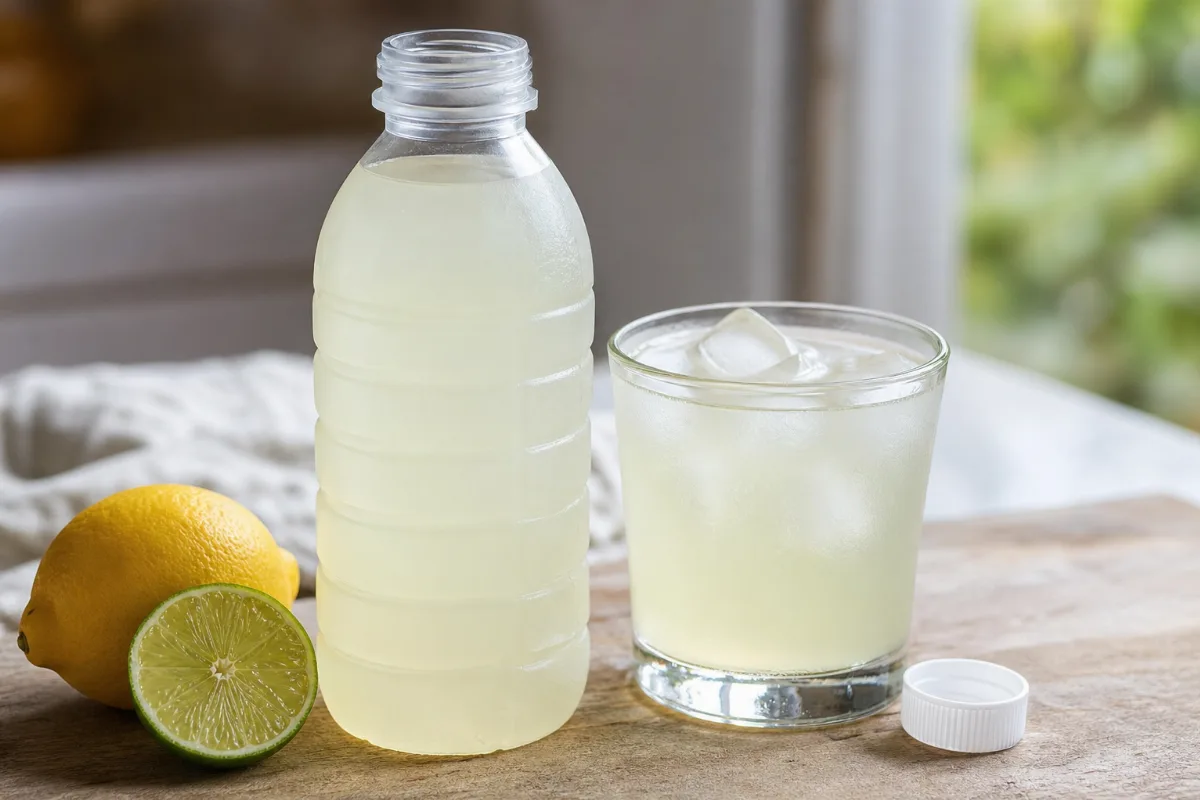
Sports drinks are flavoured drinks of water, sugar and salts such as sodium and potassium. In trials they may help rehydration and give a small boost to endurance exercise, but they also carry sugar and calories. The American Academy of Pediatrics warns against frequent use by children and teenagers. Drinking far more than thirst asks can cause dangerous low blood sodium.
General information, not medical advice. Last substantive update · Not medically reviewed. A named clinician has not signed off on this page. How this page is made
About Sports & Electrolyte Drinks
Sports drinks are flavoured drinks made of water, sugar and small amounts of salts. They were made for athletes who sweat a lot. They are a manufactured food, not a remedy, and the research is limited to a few reviews of mostly small trials.
What is in it
USDA lists two ready-to-drink sports drinks. The lemon-lime item has, per 100 g, 32 kcal, 6.11 g total sugars, 42 mg sodium, 18 mg potassium and no caffeine. In an 8 fl oz portion (244 g) that is about 78 kcal, 14.9 g sugars, 102 mg sodium and 44 mg potassium. It is fortified with B vitamins, which many sports drinks are not.
The second item has, per 100 g, 26 kcal, 5.24 g sugars, 39 mg sodium and 15 mg potassium. An 8 fl oz portion has about 63 kcal and 12.8 g sugars. A whole 609 g bottle has about 158 kcal, 31.9 g sugars, 238 mg sodium and 91 mg potassium. USDA lists both by brand name; products differ, so check the label.
What the research shows
For rehydration after hard exercise, a 2025 review of 19 controlled trials found carbohydrate-electrolyte drinks may work better than water, with variation between studies. For performance, a 2026 pooled analysis of 21 trials in warm conditions found a small average benefit, mostly for endurance, and said it could not show the drinks offset the effect of heat.
The ACSM position stand (2007) says drinks with electrolytes and carbohydrate can give benefits over water alone under certain circumstances, and that sweat rates and sweat salt content vary widely between people. A second 2025 review found skim or low-fat milk improved hydration status in 4 studies and fresh coconut water showed no difference from water in 3 trials.
The effect on weight and teeth is on the harm side. Sugar-sweetened drinks as a group are linked to weight gain, and lab studies show acid and sugar can wear enamel. No analysis read looked at sports drinks alone for weight.
At a glance
Traditional uses history, not proof
- A modern manufactured drink, not a traditional food
- Made to replace some of the water and salts lost in sweat during hard exercise
Studied for research
- Rehydration after hard exercise, low certainty (a review of 19 trials)
- Endurance performance in warm weather, low certainty (21 trials, small average effect)
- Everyday drinking and weight, moderate certainty of harm for sugary drinks as a group
- Teeth and enamel, very low certainty (mostly lab studies)
- Illness with diarrhea or vomiting, insufficient evidence for sports drinks
Main compounds
- Water
- Sugars (carbohydrate)
- Sodium
- Potassium
- Added vitamins in some products
Common forms
- Ready-to-drink sports drinks (two USDA items read)
- Electrolyte powders, tablets and oral rehydration salts are different products and are not covered
Research links: 2026 pooled analysis: carbohydrate-electrolyte drinks and exercise performance · 2025 review: carbohydrate-electrolyte drinks and rehydration · 2011 AAP report: sports drinks and energy drinks for children · Research Library · Genes & Biomarkers Library
What it is and its history
- Accepted scientific name
- Carbohydrate-electrolyte beverages (sports drinks)
- Naming authority
- Not a plant or animal product; a manufactured drink.
- Common names
- Sports drinks (English); Electrolyte drinks (English); Carbohydrate-electrolyte drinks (English); Bebidas deportivas (Spanish); Bebidas isotonicas (Spanish)
- Harvest and processing
- Manufactured drink. How it is made was not read from a source.
- Look-alikes and adulterants
- Name: Energy drinks; Note: A different product; the AAP says the terms should not be used interchangeably. Energy drinks contain caffeine or other stimulants.; Name: Oral rehydration solution; Note: A medical-style mix of clean water, sugar and salt that WHO recommends for diarrhoea.; Name: Electrolyte powders and tablets; Note: Different products; the trials read used ready-to-drink drinks.; Name: Coconut water; Note: A natural drink; a review found no difference from water in 3 trials after exercise.
Photographs
What is inside, and how it may work
What it contains and how those compounds act in cells and animals. Laboratory and animal mechanisms are not proven effects in people.
Main compounds
| Compound | Family | Where it is concentrated | Activity studied | Level of evidence |
|---|---|---|---|---|
| Carbohydrate (sugars) | carbohydrate | USDA per 100 g: 7.84 g carbohydrate and 6.11 g total sugars (first item); 6.43 g and 5.24 g (second item) | Supplies energy; the drinks tested in trials had 0 to 9% carbohydrate. 13 12 2 | Human data |
| Sodium | electrolyte | USDA per 100 g: 42 mg (first item), 39 mg (second item) | A salt lost in sweat; in the drink it is meant to replace some of that loss. 13 12 7 | Human data |
| Potassium | electrolyte | USDA per 100 g: 18 mg (first item), 15 mg (second item) | A smaller amount than sodium; role in the drink not examined in the abstracts read. 13 12 | Human data |
| Added vitamins (niacin, B6, B12) | vitamin | First USDA item only: niacin 1.565 mg, vitamin B6 0.153 mg, vitamin B12 0.91 mcg per 100 g (from fortification). The second item has little. | Not examined; many sports drinks do not have them. 13 12 | Human data |
Mechanisms, receptors and pathways
| Target or pathway | Gene or receptor | What was found | Level |
|---|---|---|---|
| Fluid and salt replacement | Not specified | The ACSM says drinks with electrolytes and carbohydrate can give benefits over water alone under certain circumstances. How this works was not described in the abstract. 7 2 | Human data |
| Dental enamel | Not applicable | Low pH, high buffering capacity and sugar are the properties named in a 2025 review as potentially harmful to teeth. 5 3 | Lab |
Absorption, metabolism and elimination
- Absorption
- Not found in the sources read.
- Distribution
- Not found.
- Metabolism
- Not found.
- Elimination
- Not found.
Isolated compounds versus whole extracts
The trial results are for ready-to-drink carbohydrate-electrolyte drinks. Electrolyte powders, tablets and oral rehydration salts are different products and were not covered by those trials. Milk and coconut water were compared with water in a separate review.
Nutritional composition
Nutrition from USDA FoodData Central (SR Legacy, April 2018 release; values read 2026-10-26 from a saved copy of the USDA data in the repo, because the public API key was rate-limited). Both items are brand-name ready-to-drink sports drinks; USDA lists them by brand, so no brand is named here. Item one (lemon-lime, FDC 175108), per 100 g: 32 kcal, 7.84 g carbohydrate, 6.11 g total sugars, 0 g protein, 0.05 g fat, 42 mg sodium, 18 mg potassium, 1.565 mg niacin, 0.153 mg vitamin B6, 0.91 mcg vitamin B12, 0 mg caffeine. One 8 fl oz portion (244 g, the 100 g values times 2.44): about 78 kcal, 19.1 g carbohydrate, 14.9 g total sugars, 102 mg sodium, 44 mg potassium. A 12 fl oz portion (365 g): about 117 kcal and 22.3 g sugars. Item two (FDC 173660), per 100 g: 26 kcal, 6.43 g carbohydrate, 5.24 g total sugars, 39 mg sodium, 15 mg potassium, 0 mg caffeine. One 8 fl oz portion: about 63 kcal, 12.8 g sugars, 95 mg sodium, 37 mg potassium. One bottle (609 g): about 158 kcal, 31.9 g sugars, 238 mg sodium, 91 mg potassium. Values differ by product and these are two examples, not an average. This describes what is in the drink and is not advice on how much to drink.
1 moderate certainty3 low certainty1 very low certainty1 not enough evidence
What was looked at
The 6 benefits and uses checked for Sports & Electrolyte Drinks, each with how strong the evidence is. Tap one to open it.
- Rehydration after hard exerciseLow certainty
- Exercise performance in moderate-to-hot weatherLow certainty
- Fluid replacement during exercise (expert position)Low certainty
- Everyday drinking and weight (sugar-sweetened drinks as a group)Moderate certainty
- Teeth and enamelVery low certainty
- Illness with vomiting or diarrheaNot enough evidence
Lab markers tracked in the studies
Aerobic endurance performanceHydration status after exerciseBody weight
What is Sports & Electrolyte Drinks good for?
The main studied uses and how strong the human evidence is for each. The trials are mostly in athletes and use ready-to-drink carbohydrate-electrolyte drinks, and several items below are concerns rather than benefits.
Benefits, one by one
Each card is a research question, not a promise. Tap a goal to filter. Open a card to see the studies, doses and limits.
Rehydration after hard exercise
Low certaintyA 2025 review of 19 controlled trials found carbohydrate-electrolyte drinks (0 to 9% carbohydrate) may help the body rehydrate after exercise more than water does. The authors saw variation between studies and suggested a commercial drink when whole foods are not available.
2 studiesReady-to-drink carbohydrate-electrolyte solutions. Powders, tablets a…
Studies, doses and limits
What the trials found
19 controlled trials in adults and children, drink with 0 to 9% carbohydrate against water. Many measured outcomes leaned toward the sports drink. The abstract names variability between studies and does not give the certainty ratings.
Results
Possibly helpful for rehydration after exercise-caused dehydration. Plain water is the comparison, and the review does not say water fails.
Effect sizes as reported
No pooled numbers in the abstract.
Why this rating
Low: the review found a possible benefit but reported variability between studies and no pooled size in the abstract, and the certainty ratings were not read. Only the abstract was read.
Form and dose studied
Ready-to-drink carbohydrate-electrolyte solutions. Powders, tablets and oral rehydration salts are different products.
Who was studied
Adults and children who became dehydrated through exercise.
Limits
Abstract only. The search ended in June 2022. Funding is not stated in the abstract.
Why researchers looked
People lose water and salts in sweat, and sports drinks were made to put some back.
Traditional use
Not a traditional food. Sports drinks are a modern manufactured drink.
Proposed mechanism Authoritative guidance
The sodium and sugar in the drink may help the gut take up water and may help the body hold on to it. This is the usual explanation, and it was not tested in the abstracts read.
A proposed mechanism does not show that the effect happens in people.
Sugar, calories and over-drinking: see the Safety tab.
Exercise performance in moderate-to-hot weather
Low certaintyA 2026 pooled analysis of 21 randomised trials (316 people) found a small average benefit for carbohydrate-electrolyte drinks over water or a no-calorie placebo, mostly for endurance exercise. The range of results was wide, and it crossed zero.
1 studiesCarbohydrate-electrolyte drinks taken during a single exercise sessio…
Studies, doses and limits
What the trials found
21 randomised trials in people exercising at 22 degrees C or warmer, drink during exercise against water or a no-calorie placebo.
Results
A small positive average difference, concentrated in aerobic endurance. Evidence for anaerobic endurance, explosive power and strength was inconclusive.
Effect sizes as reported
Overall g = 0.37 (95% CI 0.21 to 0.53); aerobic endurance g = 0.45 (0.26 to 0.64); 95% prediction interval -0.21 to 0.96.
Why this rating
Low: average effect is small, the prediction interval crossed zero (a new trial could show no benefit), trials were small, and only the abstract was read. The authors used GRADE but the abstract does not give the ratings.
Form and dose studied
Carbohydrate-electrolyte drinks taken during a single exercise session.
Who was studied
Mostly athletes in moderate to hot conditions.
Limits
The trials compared drinks with water in the same heat, so the authors say the results do not show that the drink offsets heat-related losses. Funding is not stated in the abstract.
Why researchers looked
Athletes drink them during long sessions in the hope of keeping performance up.
Traditional use
Not a traditional food.
Proposed mechanism Authoritative guidance
Carbohydrate supplies fuel and salts replace some of what sweat loses. This is the usual explanation, not tested in the abstract read.
A proposed mechanism does not show that the effect happens in people.
Sugar and calories: see the Safety tab.
Fluid replacement during exercise (expert position)
Low certaintyThe American College of Sports Medicine says drinks with electrolytes and carbohydrate can give benefits over water alone under certain circumstances, and that sweat losses vary widely from person to person.
1 studiesBeverages with electrolytes and carbohydrate.
Studies, doses and limits
What the trials found
This is an expert position stand from 2007, not a trial.
Results
It recommends customised plans and aims to avoid losing more than 2% of body weight from water deficit during exercise.
Effect sizes as reported
No numbers beyond the 2% body weight figure.
Why this rating
Low: expert opinion from 2007, abstract only. It supports a role in some situations and gives no figure for how much any drink helps.
Form and dose studied
Beverages with electrolytes and carbohydrate.
Who was studied
People doing physical activity.
Limits
Old (2007). Only the abstract was read.
Why researchers looked
Athletes and coaches need guidance on drinking during sport.
Traditional use
Not a traditional food.
Proposed mechanism Authoritative guidance
Not given in the abstract.
A proposed mechanism does not show that the effect happens in people.
See the Safety tab.
Everyday drinking and weight (sugar-sweetened drinks as a group)
Moderate certaintyThis is a concern, not a benefit. Pooled studies link sugar-sweetened drinks with weight gain, and the American Academy of Pediatrics says frequent or excessive caloric sports drink use can raise overweight risk in young people.
3 studiesSugar-sweetened beverages in general.
Studies, doses and limits
What the trials found
A 2013 pooled analysis of 32 articles (cohorts and trials) of sugar-sweetened drinks as a group, mostly soft drinks. A 2011 AAP report on sports and energy drinks in youth.
Results
Higher intake went with weight gain in cohorts. Trials that added the drinks raised adult weight, and trials that reduced them lowered BMI gain in children. No analysis in the sources read looked at sports drinks alone.
Effect sizes as reported
Adult cohorts +0.22 kg a year per daily serving (95% CI 0.09 to 0.34, random effects); adult trials +0.85 kg (0.50 to 1.20).
Why this rating
Moderate for sugar-sweetened drinks as a group (cohorts and randomised trials agree), but indirect for sports drinks, which were not analysed separately. The direction is harm, not benefit.
Form and dose studied
Sugar-sweetened beverages in general.
Who was studied
Children and adults.
Limits
Mostly soft drinks. Cohort results are associations. Abstract only.
Why researchers looked
Sports drinks contain sugar and calories and are often drunk by people who are not exercising hard.
Traditional use
Not a traditional food.
Proposed mechanism Authoritative guidance
Liquid calories are added to the day's total. Not tested separately for sports drinks in the abstracts read.
A proposed mechanism does not show that the effect happens in people.
See the Safety tab for children and sugar.
Teeth and enamel
Very low certaintyReviews say sports drinks are acidic and sugary and can wear enamel in lab studies. Evidence in people is thin.
2 studiesSports drinks as sold.
Studies, doses and limits
What the trials found
A 2005 review found only one study that had linked sports drinks to dental erosion in people. A 2025 review says tooth wear has many causes and sports drinks look like only one contributor.
Results
Lab evidence of possible harm; little human evidence. This is a possible risk, not a benefit.
Effect sizes as reported
No numbers in the abstracts.
Why this rating
Very low: mostly lab studies and two narrative reviews, abstracts only. The 2025 review is in Dutch with an English abstract.
Form and dose studied
Sports drinks as sold.
Limits
Narrative reviews, no pooled numbers. Abstract only.
Why researchers looked
Sports drinks are acidic and contain sugar and are sipped often.
Traditional use
Not a traditional food.
Proposed mechanism Lab
Low pH and high buffering capacity, plus sugar. This is described in the review abstract.
A proposed mechanism does not show that the effect happens in people.
See the Safety tab.
Illness with vomiting or diarrhea
Not enough evidenceWHO says diarrhea should be treated with oral rehydration solution made of clean water, sugar and salt. No source read shows that a ready-to-drink sports drink works as well.
2 studiesOral rehydration solutions are a different product from sports drinks.
Studies, doses and limits
What the trials found
No trial of sports drinks for illness was read. WHO and the NHS point to oral rehydration solution.
Results
Insufficient evidence for sports drinks in illness; oral rehydration solution is the official advice.
Why this rating
Insufficient: only agency statements about oral rehydration solution were read, none about sports drinks.
Form and dose studied
Oral rehydration solutions are a different product from sports drinks.
Who was studied
Children and adults with diarrhea.
Limits
No direct comparison was found in the sources read.
Why researchers looked
People often reach for sports drinks when they are ill.
Traditional use
Not a traditional food.
Proposed mechanism Authoritative guidance
Not applicable.
A proposed mechanism does not show that the effect happens in people.
See urgent signs on the Safety tab.
Connections to the rest of health
How Sports & Electrolyte Drinks connects to the rest of our health knowledge graph. Every link says what kind of connection it is. A safety link (for example to the liver) is a warning, not a benefit. A study that merely mentions a topic never creates a benefit link.
Explore every connection: goals, body systems, organs, symptoms, genes
A. Wellness goals
| Connected to | Kind of connection | Evidence status | Context | Studies |
|---|---|---|---|---|
| Hydration | Low certainty | Rehydration after hard exercise: A 2025 review of 19 controlled trials found carbohydrate-electrolyte drinks (0 to 9% carbohydrate) may help the body rehydrate after exercise more than water does. The authors saw variation between studies and suggested a commercial drink when whole foods are not available. Fluid replacement during exercise (expert position): The American College of Sports Medicine says drinks with electrolytes and carbohydrate can give benefits over water alone under certain circumstances, and that sweat losses vary widely from person to person. | 2 7 | |
| Exercise Performance | Low certainty | Exercise performance in moderate-to-hot weather: A 2026 pooled analysis of 21 randomised trials (316 people) found a small average benefit for carbohydrate-electrolyte drinks over water or a no-calorie placebo, mostly for endurance exercise. The range of results was wide, and it crossed zero. | 8 | |
| Healthy Weight | Moderate certainty | Everyday drinking and weight (sugar-sweetened drinks as a group): This is a concern, not a benefit. Pooled studies link sugar-sweetened drinks with weight gain, and the American Academy of Pediatrics says frequent or excessive caloric sports drink use can raise overweight risk in young people. | 6 1 15 | |
| Oral Health | Very low certainty | Teeth and enamel: Reviews say sports drinks are acidic and sugary and can wear enamel in lab studies. Evidence in people is thin. | 3 5 | |
| Hydration | Not enough evidence | Illness with vomiting or diarrhea: WHO says diarrhea should be treated with oral rehydration solution made of clean water, sugar and salt. No source read shows that a ready-to-drink sports drink works as well. | 14 11 |
B. Body systems
| Connected to | Kind of connection | Evidence status | Context | Studies |
|---|---|---|---|---|
| Urinary System | Biological association | Low certainty | Studied for: Rehydration after hard exercise Studied for: Fluid replacement during exercise (expert position) | 2 7 |
| Musculoskeletal System | Biological association | Low certainty | Studied for: Exercise performance in moderate-to-hot weather | 8 |
| Endocrine System | Biological association | Moderate certainty | Studied for: Everyday drinking and weight (sugar-sweetened drinks as a group) | 6 1 15 |
| Digestive System | Biological association | Very low certainty | Studied for: Teeth and enamel Studied for: Illness with vomiting or diarrhea | 3 5 14 11 |
E. Health conditions
| Connected to | Kind of connection | Evidence status | Context | Studies |
|---|---|---|---|---|
| Low blood sodium | Adverse effect or risk | Documented risk | Low blood sodium can be life-threatening; very large volumes drunk quickly can cause water toxicity. Preparation or compound: Over-drinking fluids, including sports drinks |
9 10 |
| Overweight and obesity | Adverse effect or risk | Documented risk | AAP says frequent or excessive caloric sports drinks can raise overweight risk in young people; pooled studies link sugar-sweetened drinks to weight gain. Preparation or compound: Frequent sugary sports drinks |
1 6 |
| Dehydration | Preliminary | A 2025 review of 19 trials found a possible rehydration benefit over water after exercise. Preparation or compound: Carbohydrate-electrolyte drinks |
2 |
I. Biomarkers
| Connected to | Kind of connection | Evidence status | Context | Studies |
|---|---|---|---|---|
| Aerobic endurance performance | Biological association | Low certainty | Measured in trials: slightly improved. A lab change is not the same as a health benefit. | 8 |
| Hydration status after exercise | Biological association | Low certainty | Measured in trials: possibly improved. A lab change is not the same as a health benefit. | 2 |
| Body weight | Biological association | Moderate certainty | Measured in trials: increased with more intake. A lab change is not the same as a health benefit. | 6 |
K. Biological pathways
| Connected to | Kind of connection | Evidence status | Context | Studies |
|---|---|---|---|---|
| Sodium | Preliminary mechanism | Human | A sports drink adds some sodium to fluid; sweat loses it. Both low blood sodium and sodium on low-salt diets are safety questions. | 13 9 |
| Free sugars | Preliminary mechanism | Human | Sports drinks contain sugars, which count toward WHO's free sugar limit. | 13 15 |
| Aerobic endurance performance | Preliminary mechanism | Human | A small average improvement in a 2026 pooled analysis. | 8 |
L. Active compounds
| Connected to | Kind of connection | Evidence status | Context | Studies |
|---|---|---|---|---|
| Carbohydrate (sugars) | Biological association | Human | Supplies energy; the drinks tested in trials had 0 to 9% carbohydrate. | 13 12 2 |
| Sodium | Biological association | Human | A salt lost in sweat; in the drink it is meant to replace some of that loss. | 13 12 7 |
| Potassium | Biological association | Human | A smaller amount than sodium; role in the drink not examined in the abstracts read. | 13 12 |
| Added vitamins (niacin, B6, B12) | Biological association | Human | Not examined; many sports drinks do not have them. | 13 12 |
Each connection is stored with the ingredient, the connected record, the kind of connection, the evidence status, the supporting studies, the preparation or compound involved, and a review date (last reviewed October 26, 2026).
Evidence at a glance: what the research found for 6 outcomes
Each outcome below is one thing researchers measured. Certainty is how far the evidence can be trusted, not how well it works. The full studies are on the next tab.
The evidence
The research centre for Sports & Electrolyte Drinks. Every record here was checked against PubMed or the publisher's page; we never list a study we have not verified.
Evidence by outcome
Bars show how many studies we found for each outcome, not how well it works. People are added up across trials only (reviews are not added, to avoid double counting).
How we rate evidence
High certainty
Several well-run trials or reviews agree; further research is unlikely to change the picture much.
Moderate certainty
Good trials point the same way, but some doubt remains.
Low certainty
Small, short or inconsistent trials. The finding could change with better research.
Very low certainty
Very little or very weak human data. Treat as a possibility only.
Mixed findings
Trials or reviews disagree with each other.
Not enough evidence
Not enough human research to say either way.
Evidence against
Good research found no benefit, or found harm.
We take the reviewers' own risk-of-bias and GRADE statements where they exist, and otherwise judge from study size, design, consistency, directness and whether a product matches what is sold. Many publications do not make evidence high. Method note: We started from our existing page for this drink, re-checked nutrition against saved USDA FoodData Central data, read the WHO, NHS, MedlinePlus and National Academies pages, and re-read PubMed abstracts for the reviews and reports. Only abstracts were read for studies. Items we could not verify are flagged in the research gaps.
Study library: every study we checked 15
| Study | Design | People | Product, dose, length | Result |
|---|---|---|---|---|
| AAP Committee on Nutrition and the Council on Sports Medicine and Fitness 2011 Sports drinks and energy drinks for children and adolescents: are they appropriate? Pediatrics · PMID 21624882 · DOI |
Clinical report |
Children and adolescents (clinical report of the American Academy of Pediatrics) | Sports drinks and energy drinks |
Sports drinks and energy drinks are different products and the terms should not be used interchangeably. Caffeine and other stimulants in energy drinks have no place in the diet of children and adolescents. Frequent or excessive intake of caloric sports drinks can substantially increase the risk of overweight or obesity. Use in youth athletes in regular endurance or high-intensity sport is outside the report. No numbers in the abstract (Not applicable) Methods, limits and fundingOutcomes: Overweight, obesity, appropriate use Limitations: A 2011 expert report, not a trial. Only the abstract was read. Funding is not stated in the abstract. Funding and conflicts: Funding is not stated in the abstract. Read: abstract |
| Borra 2025 Oral Rehydration Beverages for Treating Exercise-Associated Dehydration: A Systematic Review, Part I. Carbohydrate-Electrolyte Solutions. J Athl Train · PMID 38116803 · DOI |
Systematic review |
19 controlled trials in adults and children who became dehydrated by exercise (3,485 articles screened) | Carbohydrate-electrolyte solutions with 0 to 9% carbohydrate Not given in the abstract Not given in the abstract · vs Water |
Many outcomes showed a possible benefit of carbohydrate-electrolyte drinks over water. The authors say drinks with 4 to 9% carbohydrate may work best and suggest commercial drinks for rehydration when whole foods are not available. They note variability between studies and assessed certainty with GRADE; the abstract does not give the ratings. No pooled numbers in the abstract (Not applicable) Methods, limits and fundingOutcomes: Rehydration after exercise (many outcomes) Limitations: Studies varied. Certainty ratings are not in the abstract. Search ended June 2022. Funding is not stated in the abstract. Funding and conflicts: Funding is not stated in the abstract. Read: abstract |
| Coombes 2005 Sports drinks and dental erosion. Am J Dent · PMID 15973827 |
Narrative review |
Literature review | Sports drinks |
For most people who are active, sports drinks give no benefit over water. Many lab studies show that acidic drinks can wear enamel. Only one study had linked sports drinks to dental erosion in people. Drinking habits and saliva may matter more. No numbers in the abstract (Not applicable) Methods, limits and fundingOutcomes: Dental erosion Limitations: A 2005 narrative review. It is old, and the statement that sports drinks give most people no benefit over water is the author's view. Funding is not stated in the abstract. Funding and conflicts: Funding is not stated in the abstract. Read: abstract |
| De Brier 2025 Oral Rehydration Beverages for Treating Exercise-Associated Dehydration: A Systematic Review, Part II. The Effectiveness of Alternatives to Carbohydrate-Electrolyte Drinks. J Athl Train · PMID 38116818 · DOI |
Systematic review |
11 studies comparing skim or low-fat milk, coconut water or beer with water after exercise-induced dehydration | Milk, coconut water or beer (0 to 5% alcohol) as alternatives to sports drinks Not given in the abstract Not given in the abstract · vs Water |
Skim or low-fat milk improved hydration status in 4 studies. Fresh coconut water showed no difference from water in 3 trials. Evidence for beer was insufficient. The authors rate the milk evidence very low certainty. This review is about alternatives, not sports drinks. 4 studies (milk) improved; 3 trials (coconut water) no difference (Not applicable) Methods, limits and fundingOutcomes: Fluid volume and hydration status Limitations: Very low certainty for milk, by the authors. Funding is not stated in the abstract. Funding and conflicts: Funding is not stated in the abstract. Read: abstract |
| Gambon 2025 [Sports drinks and dental erosion]. Ned Tijdschr Tandheelkd · PMID 41058492 · DOI |
Narrative review |
Literature review (Dutch-language article with an English abstract) | Sports drinks |
Sports drinks often have a low pH, high buffering capacity and a lot of sugar, which can harm teeth. Tooth wear has many causes, and sports drinks look like only one possible contributor. No numbers in the abstract (Not applicable) Methods, limits and fundingOutcomes: Tooth wear Limitations: A short review; only the abstract was read. Funding is not stated in the abstract. Funding and conflicts: Funding is not stated in the abstract. Read: abstract |
| Malik 2013 Sugar-sweetened beverages and weight gain in children and adults: a systematic review and meta-analysis. Am J Clin Nutr · PMID 23966427 · DOI |
Systematic review meta analysis |
32 articles: 20 in children (15 cohorts, 5 trials) and 12 in adults (7 cohorts, 5 trials) | Sugar-sweetened beverages in general (sports drinks are one kind) One extra daily serving (cohort studies) Cohorts followed people for about a year · vs Lower intake |
In cohorts, one extra daily serving of sugar-sweetened drinks went with a small rise in BMI in children and about 0.12 to 0.22 kg a year in adults. In children, trials that cut these drinks reduced BMI gain slightly. In adults, trials that added them increased weight by 0.85 kg. Adult cohorts +0.22 kg (random effects) or +0.12 kg (fixed) per daily serving per year; adult trials +0.85 kg; child trials BMI -0.17 (random) or -0.12 (fixed) (Adult cohorts 0.09 to 0.34 (random); adult trials 0.50 to 1.20; child trials, random effects, -0.39 to 0.05 (not significant)) Methods, limits and fundingOutcomes: Body weight and BMI Limitations: This covers sugar-sweetened drinks as a group, mostly soft drinks, and not sports drinks alone. The cohort results are associations. The abstract notes NIH research support. Funding and conflicts: Funding is not stated in the abstract; the record lists NIH extramural research support. Read: abstract |
| Sawka 2007 American College of Sports Medicine position stand. Exercise and fluid replacement. Med Sci Sports Exerc · PMID 17277604 · DOI |
Guideline |
Individuals performing physical activity (position stand of the American College of Sports Medicine) | Fluid replacement during and after exercise, including drinks with electrolytes and carbohydrate Not given in the abstract · vs Water |
Because sweating rates and sweat salt content vary a lot between people, customised fluid plans are recommended. The aim during exercise is to avoid losing more than 2% of body weight from water deficit. Drinks with electrolytes and carbohydrate can give benefits over water alone under certain circumstances. No numbers beyond the 2% body weight figure (Not applicable) Methods, limits and fundingOutcomes: Hydration guidance Limitations: A 2007 position stand, an expert statement rather than a trial. Only the abstract was read. Funding is not stated in the abstract. Funding and conflicts: Funding is not stated in the abstract. Read: abstract |
| Wang 2026 Effects of Acute Carbohydrate-Electrolyte Supplementation on Exercise Performance in Moderate-to-Hot Ambient Conditions: A Systematic Review and Meta-Analysis. Nutrients · PMID 42884651 · DOI |
Systematic review meta analysis |
316 21 randomised trials (32 effect sizes), 316 people, exercising at 22 degrees C or warmer |
Carbohydrate-electrolyte drink during exercise Not given in the abstract Acute (during one exercise session) · vs Water or a no-calorie placebo |
A small positive average difference in performance, concentrated in aerobic endurance. Evidence for anaerobic endurance, explosive power and strength was inconclusive. The range of likely results in a new trial crossed zero. Overall g = 0.37 (I2 46.7%); aerobic endurance g = 0.45 (Overall 0.21 to 0.53; 95% prediction interval -0.21 to 0.96; aerobic endurance 0.26 to 0.64) Methods, limits and fundingOutcomes: Exercise performance (aerobic endurance, anaerobic endurance, explosive power, strength) Limitations: The trials compared drinks with water in the same heat, not hot with cool weather, so the authors say the results do not show the drink offsets heat-related losses. Trials were small (316 people in all). Funding is not stated in the abstract. Funding and conflicts: Funding is not stated in the abstract. Registration: PROSPERO CRD420261410953 Read: abstract |
| s-medlineplus-hyponatremia MedlinePlus: Low blood sodium (hyponatremia) · Source |
Health agency n/a |
Methods, limits and fundingRead: full-text | ||
| s-nam-water-2005 Institute of Medicine (National Academies): Dietary Reference Intakes for Water, Potassium, Sodium, Chloride, and Sulfate, chapter 4 Water (2005) · Source |
Health agency n/a |
Methods, limits and fundingRead: full-text | ||
| s-nhs-dehydration NHS: Dehydration · Source |
Health agency n/a |
Methods, limits and fundingRead: full-text | ||
| s-usda-fdc-173660 USDA FoodData Central: Beverages, sports drink, ready-to-drink, brand-name item (SR Legacy, FDC 173660) · Source |
Nutrient database n/a |
Methods, limits and fundingRead: full-text | ||
| s-usda-fdc-175108 USDA FoodData Central: Beverages, lemon-lime flavored, ready-to-drink sports drink, brand-name item (SR Legacy, FDC 175108) · Source |
Nutrient database n/a |
Methods, limits and fundingRead: full-text | ||
| s-who-diarrhoea WHO: Diarrhoeal disease fact sheet (7 March 2024) · Source |
Health agency n/a |
Methods, limits and fundingRead: full-text | ||
| s-who-healthy-diet WHO: Healthy diet fact sheet (26 January 2026) · Source |
Health agency n/a |
Methods, limits and fundingRead: full-text |
What we do not know yet
- The evidence is from athletes; no trial in the sources read tested sports drinks for ordinary daily thirst.
- Only abstracts were read, so the size of the rehydration benefit and the certainty ratings are not stated.
- Weight and teeth evidence is for sugary drinks or acidic drinks in general, not sports drinks alone.
- Pregnancy, breastfeeding, kidney disease, heart disease, diabetes, sweeteners, colours and contamination were not researched.
- Only two USDA products were read; other products differ.
How new research is added
New studies are found by a saved PubMed search and placed in a review queue before the page changes.
Lab markers
What changed in blood or saliva tests during trials. A changed number is not the same as feeling or being healthier, and we give no "normal ranges".
Metabolic 1
Body weight
Increased with more intake in trials
How much a person weighs; in children, BMI is used.
Moderate certaintyResults and what it means
Why it was measured
It is the usual outcome in studies of sugary drinks.
Statistical vs. clinical meaning
A modest average weight gain with sugar-sweetened drinks as a group; sports drinks were not analysed on their own.
Safety implication
See Safety.
| Study | Result | People | Product |
|---|---|---|---|
| 6 | Adult trials of adding sugar-sweetened drinks: +0.85 kg (95% CI 0.50 to 1.20); adult cohorts +0.22 kg a year per daily serving (0.09 to 0.34) | 12 adult studies (7 cohorts, 5 trials) within 32 articles | Sugar-sweetened beverages of all kinds |
Other 2
Aerobic endurance performance
Slightly improved in trials
How well a person does in exercise that relies on steady, long effort, such as running or cycling.
Low certaintyResults and what it means
Why it was measured
It is the main outcome in trials of drinks taken during exercise.
Statistical vs. clinical meaning
A small average improvement; the prediction interval crossed zero, so single trials can differ.
Safety implication
Sugar and calories; see Safety.
| Study | Result | People | Product |
|---|---|---|---|
| 8 | g = 0.45 (95% CI 0.26 to 0.64) for aerobic endurance; overall g = 0.37 across 32 effect sizes | 21 randomised trials, 316 people, exercising at 22 degrees C or warmer | Carbohydrate-electrolyte drink during exercise against water or a no-calorie placebo |
Hydration status after exercise
Possibly improved in trials
Whether the body has regained the water lost in sweat, judged by measures such as fluid retained or body weight regained.
Low certaintyResults and what it means
Why it was measured
It shows whether a drink helps people recover after dehydrating exercise.
Statistical vs. clinical meaning
A possible benefit for rehydration after hard exercise; the abstract notes variability between studies.
Safety implication
None specific beyond over-drinking; see Safety.
| Study | Result | People | Product |
|---|---|---|---|
| 2 | Many outcomes leaned toward carbohydrate-electrolyte drinks over water; no pooled numbers in the abstract | 19 controlled trials in adults and children | Drinks with 0 to 9% carbohydrate against water |
Safety
What studies and official sources say about side effects, medicines and who should check first. Each point shows what kind of evidence it comes from.
Main points to know 4
- It contains sugar and calories, so it is not an everyday health drink. In the USDA lemon-lime item, 8 fl oz has about 78 kcal and 14.9 g of sugars. WHO says free sugars should be under 10% of daily energy (about 50 g on a 2,000 kcal diet). The American Academy of Pediatrics says frequent or excessive intake of caloric sports drinks can substantially raise the risk of overweight or obesity in children and teenagers. Authoritative guidance 13 15 1
- Drinking far more than thirst asks can be dangerous. Low blood sodium can be a life-threatening emergency (MedlinePlus). The National Academies say acute water toxicity has been reported after rapid drinking of very large amounts of fluid, above what the kidneys can excrete. A sports drink contains water, so over-drinking it carries the same risk. Authoritative guidance 9 10
- Sports drinks and energy drinks are different products. The AAP says the terms should not be used interchangeably and that caffeine and other stimulants in energy drinks have no place in the diet of children and teenagers. The two USDA sports drink items list 0 mg caffeine, but other products may differ, so read the label. Authoritative guidance 1 13 12
- Teeth. Reviews say sports drinks are acidic and sugary and can wear enamel in lab studies. Only one study had linked them to erosion in people in a 2005 review. Lab 3 5
Side effects 3
| Effect | How often | Severity and recovery | Evidence |
|---|---|---|---|
| Weight gain with frequent sugary-drink intake For sugar-sweetened drinks as a group, not sports drinks alone. | Adult cohorts: about 0.12 to 0.22 kg a year per extra daily serving of sugar-sweetened drinks (all kinds) | mild to moderate over time Not described in the abstract. | Observational 6 |
| Low blood sodium (hyponatremia) from drinking too much fluid Symptoms listed by MedlinePlus include confusion, headache, nausea, muscle cramps and convulsions. | Not given in the sources read. | can be life-threatening Not described in the sources read. | Authoritative guidance 9 10 |
| Enamel wear (erosion) Mostly lab evidence. | Not given. | mild to moderate Not described. | Lab 3 5 |
Liver
No liver injury linked to ordinary sports drinks was found in the sources read. LiverTox was not checked.
How often. No frequency found.
This is a safety connection. It is not evidence that Sports & Electrolyte Drinks supports liver health.
Medicines and supplements 3
| With | Why it matters | Importance | Evidence | What to do |
|---|---|---|---|---|
| Water pills (diuretics) prescription | Diuretics increase urine output and the loss of sodium in the urine, and are a listed cause of low blood sodium. | MedlinePlus lists diuretic medicines among causes of low blood sodium. It does not give advice about sports drinks and diuretics. | Authoritative guidance Low certainty 9 | Ask your prescriber or pharmacist about fluids and salt. |
| Low-sodium or low-potassium diets for heart or kidney disease condition | Sports drinks contain sodium and potassium (about 238 mg sodium and 91 mg potassium in a 609 g bottle of the second USDA item). | No source read gives advice on sports drinks for kidney or heart disease. The amounts are modest, but the question is real for people on restricted diets. | Nutrient database Not enough evidence 12 | Ask your clinician, because no source read answers this. |
| Diabetes medicines and blood sugar condition | The drinks contain sugars (6.11 g per 100 g in the first USDA item). | No source read gives advice for people with diabetes. The sugar counts as carbohydrate. | Nutrient database Not enough evidence 13 | Ask your clinician or dietitian how to count it. |
Who should check first 3
| Situation | Advice | Evidence |
|---|---|---|
| Illness with vomiting or diarrhea | WHO recommends oral rehydration solution for diarrhea. Ask a pharmacist which one suits you or your child. | Authoritative guidance 14 11 |
| Children and teenagers | The AAP warns against frequent or excessive caloric sports drinks. Ask a paediatrician about young athletes, because the report left them out. | Authoritative guidance 1 |
| Low-sodium, low-potassium, diabetes or kidney or heart conditions | Ask your clinician; no source read covers sports drinks for these conditions. | Authoritative guidance 12 |
Overdose, product quality and regulators
Summary. Ordinary sports drinks are a food. The risks in the sources read are sugar and calories, over-drinking and tooth wear.
Animal. Not reviewed.
High dose or long term signals. Very large volumes drunk quickly can cause water toxicity and low blood sodium (National Academies).
Overdose response. Not found beyond the warning signs listed.
Genotoxicity. Not reviewed.
Contamination and ingredients such as sweeteners, colours and preservatives were not researched.
| Body | Action | Date |
|---|---|---|
| WHO (World Health Organization) (International) | Healthy diet fact sheet: free sugars under 10% of total daily energy, with under 5% possibly giving more benefit. source | 2026-01-26 |
| WHO (World Health Organization) (International) | Diarrhoeal disease fact sheet: diarrhoea should be treated with oral rehydration solution. source | 2024-03-07 |
| American Academy of Pediatrics (United States) | Clinical report: sports drinks and energy drinks are different products; frequent or excessive caloric sports drinks can substantially raise overweight risk in youth. source | 2011-06 |
When to get medical help
- Confusion, severe headache, repeated vomiting, muscle cramps or spasms, convulsions or collapse after drinking a lot of fluid or after long exercise: these can be signs of low blood sodium; get urgent medical help
- Dizziness that does not go away on standing, unusual drowsiness, very dark pee or peeing much less than usual, fast breathing or a fast heart rate (NHS urgent signs of dehydration): seek urgent medical advice
- Swelling of the face or throat or trouble breathing after any food or drink: call 911 or your local emergency number
Stop using the product and contact a clinician or emergency service. In the US, Poison Control is 1-800-222-1222.
General information only, not medical advice. Ask a clinician or pharmacist before use, especially with medicines, in pregnancy or with a health condition. See the Natural Remedy Safety guide.
Frequently asked questions
What are sports drinks?
Are sports drinks better than water?
Do sports drinks help you rehydrate?
Possibly after exercise. A 2025 review of 19 trials found carbohydrate-electrolyte drinks may help more than water, with variation between studies.
How much sugar is in a sports drink?
Can children drink sports drinks?
The AAP says frequent or excessive caloric sports drinks can substantially raise the risk of overweight or obesity in children and teenagers. It left out young athletes in regular endurance or high-intensity sport, so ask a paediatrician.
Are sports drinks the same as energy drinks?
Can you drink too much of them?
Do sports drinks hurt teeth?
Should I use a sports drink when I have diarrhea or vomiting?
Do coconut water or milk work as well after exercise?
A 2025 review found skim or low-fat milk improved hydration status in 4 studies (very low certainty) and fresh coconut water showed no difference from water in 3 trials.
Do sports drinks affect medicines or health conditions?
What are the warning signs of dehydration?
Thirst, headache, light-headedness, dark yellow pee, peeing less often, dizziness and a dry mouth. Babies, children and older adults are at higher risk. The NHS lists signs that need urgent advice.
Explore by health goal
Editorial transparency
- Written by
- AlternativeMed editorial team. Research compiled with AI assistance, then checked against the sources listed.
- Medical review
- None. This page has not been reviewed by a physician or pharmacist.
- First published
- 2026-10-26
- Last substantive update
- 2026-10-26
- How we research
- We started from our existing page for this drink, re-checked nutrition against saved USDA FoodData Central data, read the WHO, NHS, MedlinePlus and National Academies pages, and re-read PubMed abstracts for the reviews and reports. Only abstracts were read for studies. Items we could not verify are flagged in the research gaps.
- How we rate evidence
- See "How we rate evidence" in the Evidence tab.
- Independence
- No product is promoted on this page. No affiliate links are shown. Funding was not stated in the abstracts read.
Sources 15
Each source was opened and checked. Where we read only the abstract, it says so. The small numbers in the text point here.
- AAP Committee on Nutrition and the Council on Sports Medicine and Fitness. Sports drinks and energy drinks for children and adolescents: are they appropriate?. Pediatrics. 2011. PMID 21624882. DOI 10.1542/peds.2011-0965. (abstract)
- Borra V, De Brier N, Berry DC, et al.. Oral Rehydration Beverages for Treating Exercise-Associated Dehydration: A Systematic Review, Part I. Carbohydrate-Electrolyte Solutions.. J Athl Train. 2025. PMID 38116803. DOI 10.4085/1062-6050-0682.22. (abstract)
- Coombes JS. Sports drinks and dental erosion.. Am J Dent. 2005. PMID 15973827. (abstract)
- De Brier N, Borra V, Berry DC, et al.. Oral Rehydration Beverages for Treating Exercise-Associated Dehydration: A Systematic Review, Part II. The Effectiveness of Alternatives to Carbohydrate-Electrolyte Drinks.. J Athl Train. 2025. PMID 38116818. DOI 10.4085/1062-6050-0686.22. (abstract)
- Gambon DL. [Sports drinks and dental erosion].. Ned Tijdschr Tandheelkd. 2025. PMID 41058492. DOI 10.5177/ntvt.2025.10.25020. (abstract)
- Malik VS, Pan A, Willett WC, Hu FB. Sugar-sweetened beverages and weight gain in children and adults: a systematic review and meta-analysis.. Am J Clin Nutr. 2013. PMID 23966427. DOI 10.3945/ajcn.113.058362. (abstract)
- Sawka MN, Burke LM, Eichner ER, et al.. American College of Sports Medicine position stand. Exercise and fluid replacement.. Med Sci Sports Exerc. 2007. PMID 17277604. DOI 10.1249/mss.0b013e31802ca597. (abstract)
- Wang X, Liang T, Liu Y, et al.. Effects of Acute Carbohydrate-Electrolyte Supplementation on Exercise Performance in Moderate-to-Hot Ambient Conditions: A Systematic Review and Meta-Analysis.. Nutrients. 2026. PMID 42884651. DOI 10.3390/nu18193200. (abstract)
- . MedlinePlus: Low blood sodium (hyponatremia). . . (full-text)
- . Institute of Medicine (National Academies): Dietary Reference Intakes for Water, Potassium, Sodium, Chloride, and Sulfate, chapter 4 Water (2005). . . (full-text)
- . NHS: Dehydration. . . (full-text)
- . USDA FoodData Central: Beverages, sports drink, ready-to-drink, brand-name item (SR Legacy, FDC 173660). . . (full-text)
- . USDA FoodData Central: Beverages, lemon-lime flavored, ready-to-drink sports drink, brand-name item (SR Legacy, FDC 175108). . . (full-text)
- . WHO: Diarrhoeal disease fact sheet (7 March 2024). . . (full-text)
- . WHO: Healthy diet fact sheet (26 January 2026). . . (full-text)


