Spices · Spice
Cumin
Cuminum cyminum · also called Cummin, comino (Spanish), jeera (Hindi)
Cumin is a seed spice from the carrot family, used whole or ground. Pooled trials of cumin supplements disagree on blood sugar and show small changes in cholesterol, but none tested cumin used in cooking. A teaspoon of seed is mostly flavour and supplies only small amounts of nutrients. The main cautions are allergy (including rare severe reactions), peanut protein found in past ground cumin recalls, and keeping to food amounts in pregnancy.
General information, not medical advice. Last substantive update · Not medically reviewed. A named clinician has not signed off on this page. How this page is made
About Cumin
Cumin is a flavourful seed spice, not a proven remedy. Studies of cumin supplements show mixed or small changes in blood tests, and none looked at cumin as eaten in cooking.
What it is
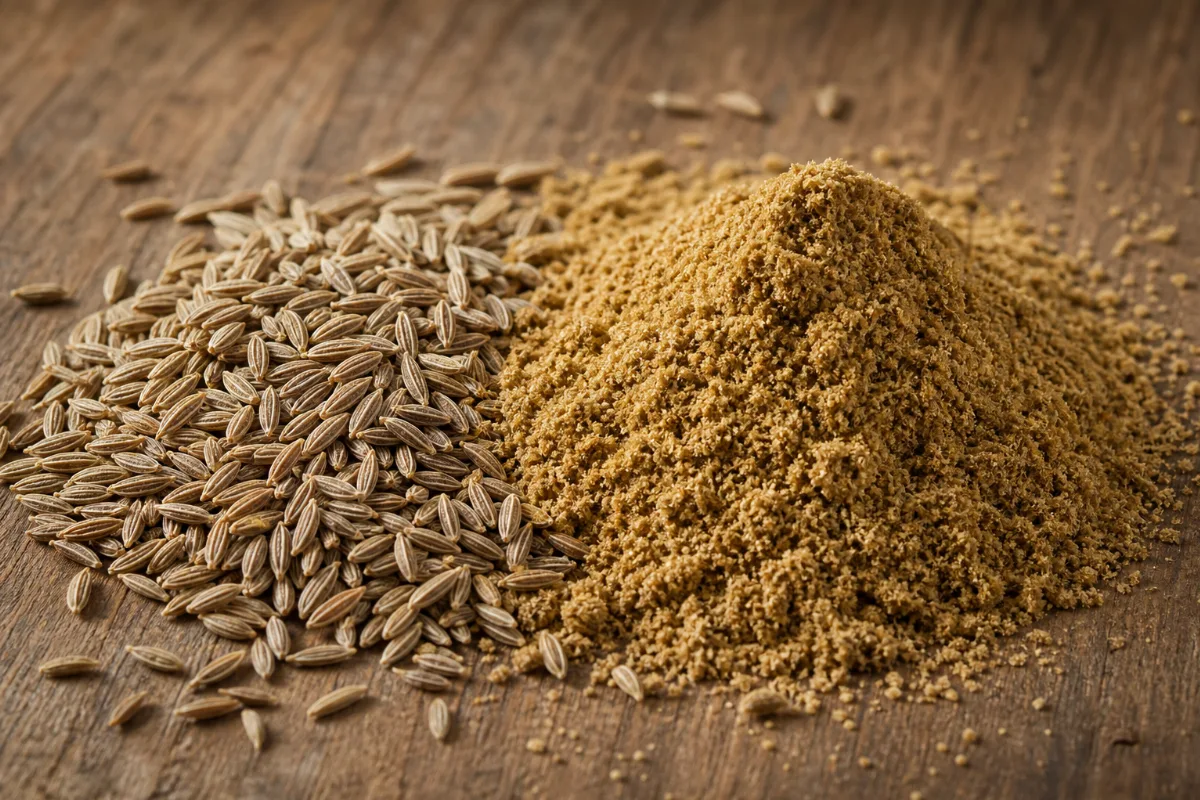
Cumin is the seed of Cuminum cyminum, a plant in the carrot family (Apiaceae). It is sold as whole seed or ground powder. Black cumin (Nigella sativa) is a different plant.
USDA data for cumin seed: 375 kcal per 100 g. One teaspoon (2.1 g) provides about 8 kcal, 0.2 g fibre, 1.4 mg iron, 20 mg calcium, 8 mg magnesium and 38 mg potassium. Per 100 g it looks rich in minerals, but nobody eats 100 g, and a teaspoon is mostly flavour. These numbers describe what is in the food; they are not advice on how much to eat.
What the research shows
We found no study of cumin used as a cooking spice. The research is on supplements, an oil and drops.
Three reviews of cumin supplement trials disagree on fasting blood sugar. One found no significant change and said its results do not support cumin for this. Two found lower fasting blood sugar. For cholesterol, a 2018 review found lower total and LDL cholesterol and higher HDL, while a 2022 review found no overall effect on LDL.
The abstracts do not say which product each trial used, and the trials differ a lot from each other. The reviews measured blood tests and body measures, not heart attacks or diabetes complications.
An uncontrolled study of cumin essential oil in irritable bowel syndrome and one trial of cumin drops for breast milk are very low certainty.
Spice versus supplements
The trials in this page used supplements, an essential oil or oral drops. Their results do not carry over to cumin used in cooking, and the abstracts do not say which product was tested.
The oil is more concentrated than the spice. LactMed reports skin reactions to sunlight after contact with the oil.
Amounts
This page gives no amounts to eat or take. Ask a doctor, pharmacist or dietitian what is right for you, especially if you take diabetes medicine, are pregnant or breastfeeding, or have an allergy.
At a glance
Traditional uses history, not proof
- Used traditionally in India, Pakistan and Türkiye to support milk supply
- Used by some pregnant women in Asian countries for gas, stomach pain and to help labour (reported in a review of surveys)
- Long use as a spice and in folk medicine is not proof that it treats any condition
Studied for research
- Fasting blood sugar, mixed (three reviews of supplement trials disagree)
- Cholesterol (total, LDL, HDL), low certainty (supplements)
- Triglycerides, very low certainty (supplements)
- Waist size and body mass index, low certainty (supplements)
- Irritable bowel symptoms, very low certainty (one case series of an oil, no control group)
- Breast milk supply, very low certainty (one trial of drops)
Main compounds
- Cuminaldehyde
- Other aldehydes in the volatile oil
- Flavonoids
- Terpenes
Common forms
- Whole seed and ground powder as a spice
- Spice blends that contain cumin
- Cumin supplements, essential oil and drops (the trials used these, not the spice)
Research links: 2021 review: cumin supplements and blood sugar markers · 2018 review: cumin supplements and blood fats · 2026 report: cumin anaphylaxis and spice allergy in children · LactMed: cumin · Research Library · Genes & Biomarkers Library
What it is and its history
- Accepted scientific name
- Cuminum cyminum
- Naming authority
- L. (GBIF accepted)
- Common names
- Cumin (English); Cummin (English (US FDA list spelling)); Comino (Spanish); Jeera (Hindi and Urdu)
- Family or group
- Apiaceae (the carrot or parsley family), as given by GBIF. Coriander, anise and fennel are in the same family and cross-react in allergy tests (see Safety).
- Classification
- Plantae > Tracheophyta > Magnoliopsida > Apiales > Apiaceae > Cuminum > Cuminum cyminum
- Native range
- Not verified from a source read.
- Habitat
- Not verified from a source read.
- What it looks like
- Roots: Not verified.; Stems: Not verified.; Leaves: Not verified.; Flowers: Not verified.; Fruit: The seed is the part used as a spice. USDA lists whole seed by the teaspoon (2.1 g) and tablespoon (6 g). Botanical detail was not read from a source.
- Cultivation
- Not verified from a source read.
- Harvest and processing
- Sold as whole seed or ground powder, sometimes treated to reduce germs before sale (the recall records mention ethylene oxide treated and sterile treated ground cumin). How it is grown, dried and ground was not read from a source.
- Look-alikes and adulterants
- Name: Black cumin (black caraway), Nigella sativa; Note: A different plant. The FDA list gives 'Cumin, black (black caraway)' and 'Caraway, black (black cumin)' as names for Nigella sativa, separate from cumin. Studies of black cumin or black seed are not studies of cumin.
- Sustainability and conservation
- Not assessed.
Photographs
Traditional use and history history, not clinical proof
| Tradition or era | Documented use | Source |
|---|---|---|
| Traditional use in India, Pakistan and Türkiye (LactMed) | Used as a galactogogue, a substance said to increase milk supply, with some literature support, including as part of an herbal mixture. | s-lactmed-cumin |
| Pregnancy surveys in Asian countries (2017 systematic review) | Taken by mouth in the first and second trimester for flatulence, abdominal pain and to facilitate labour; used in India as an abortifacient. | p29137614 |
| Traditional herbal medicine (2021 review introduction) | The review says it is used as an antiseptic and for other purposes; these uses are listed as traditional and were not checked. | p34371114 |
Traditional use shows how it was used. It does not show that it works or is safe today.
What is inside, and how it may work
What it contains and how those compounds act in cells and animals. Laboratory and animal mechanisms are not proven effects in people.
Main compounds
| Compound | Family | Where it is concentrated | Activity studied | Level of evidence |
|---|---|---|---|---|
| Cuminaldehyde PubChem 326 | aromatic aldehyde (volatile oil) | Seed (volatile oil) | LactMed names cuminaldehyde and other aldehydes in the seed's volatile oil. No effect of the isolated compound was read. 15 17 | Identity only |
| Flavonoids and terpenes | plant compounds | Seed | LactMed says the seeds contain numerous flavonoids and terpenes. No individual compound or effect was read. 15 | Identity only |
Mechanisms, receptors and pathways
| Target or pathway | Gene or receptor | What was found | Level |
|---|---|---|---|
| Allergy to cumin proteins | IgE antibodies binding PR-10 (Bet v 1-like) allergens and profilin | In blood serum from people who reacted to spiced food, antibodies bound to proteins in cumin, anise, fennel and coriander extracts; antibody binding was blocked by birch pollen allergens. A 2026 review says cumin allergens belong to the PR-10 family. 6 8 | Lab (human serum) |
Absorption, metabolism and elimination
- Absorption
- Not found.
- Distribution
- Not found.
- Metabolism
- Not found.
- Elimination
- Not found.
- Bioavailability
- Not found.
Isolated compounds versus whole extracts
The trials in the Benefits tab used cumin supplements, an essential oil or oral drops, and the abstracts do not say which product each trial used. They did not test cumin as a food spice, so their results do not carry over to cooking amounts. LactMed's skin reactions to sunlight are linked to the oil, not to the spice.
Nutritional composition
Nutrition from USDA FoodData Central, 'Spices, cumin seed' (FDC 170923, SR Legacy, 2018 data; read from the USDA SR Legacy download, not the live database). Per 100 g: 375 kcal, 17.8 g protein, 22.3 g fat (1.5 g saturated), 44.2 g carbohydrate (2.3 g sugars), 10.5 g fibre, 931 mg calcium, 66.4 mg iron, 366 mg magnesium, 499 mg phosphorus, 1,788 mg potassium, 168 mg sodium, 4.8 mg zinc, 5.4 micrograms vitamin K and 10 micrograms folate (DFE). USDA household portions are 1 teaspoon of whole seed (2.1 g) and 1 tablespoon (6 g). Per teaspoon (2.1 g), calculated from the per-100 g values: about 8 kcal, 0.4 g protein, 0.5 g fat, 0.9 g carbohydrate, 0.2 g fibre, 20 mg calcium, 1.4 mg iron, 8 mg magnesium, 38 mg potassium and 4 mg sodium. Per 100 g cumin looks rich in minerals, but a teaspoon is mostly flavour and supplies only small amounts. Real products vary. This page gives no advice on how much to eat.
2 mixed findings2 low certainty3 very low certainty
What was looked at
The 7 benefits and uses checked for Cumin, each with how strong the evidence is. Tap one to open it.
- Fasting blood sugar (cumin supplements)Mixed findings
- HbA1c, insulin and insulin resistance (cumin supplements)Mixed findings
- Total cholesterol, LDL and HDL cholesterol (cumin supplements)Low certainty
- Triglycerides (cumin supplements)Very low certainty
- Waist size and body mass index (cumin supplements)Low certainty
- Irritable bowel syndrome symptoms (cumin essential oil)Very low certainty
- Breast milk supply (cumin oral drops)Very low certainty
Lab markers tracked in the studies
Fasting blood sugarHbA1cInsulin and insulin resistance (HOMA-IR)LDL cholesterolHDL cholesterolTriglycerides
What is Cumin good for?
The studied uses and how strong the human evidence is for each. Every result below is for cumin supplements, an oil or drops, not for cumin used as a spice, and trials differ a lot from each other.
Benefits, one by one
Each card is a research question, not a promise. Tap a goal to filter. Open a card to see the studies, doses and limits.
Fasting blood sugar (cumin supplements)
Mixed findingsThree reviews of trials of cumin supplements disagree. One found no significant change in fasting blood sugar and said its results do not support cumin for this. Two others found lower fasting blood sugar. None of these tested cumin used as a cooking spice.
3 studiesCumin supplements of unstated form. The abstracts do not name the pro…
Studies, doses and limits
What the trials found
Karimian 2021 pooled 8 randomised trials (552 adults) of cumin versus placebo. Tavakoli-Rouzbehani 2021 pooled 8 controlled trials in people with different chronic diseases. Liu 2025 pooled 9 randomised trials (8 to 24 weeks) in adults with metabolic disorders.
Results
Karimian 2021: no significant change in fasting blood sugar (mean difference -17.77 mg/dl, 95% CI -36.42 to 0.87, p = 0.06), insulin or insulin resistance; the authors say the results do not support cumin for blood sugar markers. Tavakoli-Rouzbehani 2021: lower fasting blood sugar and HbA1c, no significant change in insulin. Liu 2025: lower fasting blood sugar, with very large differences between trials (I2 94.6%).
Effect sizes as reported
Karimian 2021: WMD -17.77 mg/dl (95% CI -36.42 to 0.87). Tavakoli-Rouzbehani 2021: SMD -1.4 (95% CI -2.29 to -0.51), as written in the abstract. Liu 2025: SMD -1.38 (95% CI -2.26 to -0.50).
Why this rating
Mixed. Two of three reviews found a drop and one did not. The trials were small, results differed a lot between trials, and the abstracts do not say which cumin product each trial used. The 2021 Tavakoli-Rouzbehani abstract gives its units in an unusual way and is quoted as written.
Form and dose studied
Cumin supplements of unstated form. The abstracts do not name the product, and no trial of cooking amounts was found.
Who was studied
Adults, including people with long-term disease or metabolic disorders. Countries are not stated in the abstracts.
Limits
A change in a blood test is not the same as better long-term health. The reviews did not report diabetes complications. Funding is not stated in the abstracts.
Why researchers looked
Cumin is a traditional herbal medicine and researchers noticed it may lower blood sugar, so trials were run in adults with different long-term conditions.
Traditional use
Cumin is eaten as a seasoning. Long use in food is not proof that it helps blood sugar.
Proposed mechanism Not established
Not established in the reviews read. They report changes in blood tests, not how cumin might act.
A proposed mechanism does not show that the effect happens in people.
Cumin supplements are not a replacement for diabetes care. Ask a doctor or pharmacist before using them if you take medicine for blood sugar. This is a precaution, not a documented interaction; see the Safety tab.
HbA1c, insulin and insulin resistance (cumin supplements)
Mixed findingsHbA1c is a blood test that shows average blood sugar over about three months. One 2021 review reported lower HbA1c after cumin supplements. The two 2021 reviews that measured insulin found no significant change.
2 studiesCumin supplements of unstated form.
Studies, doses and limits
What the trials found
Tavakoli-Rouzbehani 2021 (8 controlled trials) reported HbA1c, insulin, HOMA-IR and QUICKI. Karimian 2021 (8 randomised trials, 552 adults) reported insulin and HOMA-IR.
Results
Tavakoli-Rouzbehani 2021: lower HbA1c and a higher QUICKI score (a measure of insulin sensitivity), no significant change in insulin. The abstract says the HOMA-IR result became significant only after a sensitivity analysis. Karimian 2021: no significant change in insulin or HOMA-IR.
Effect sizes as reported
Tavakoli-Rouzbehani 2021: HbA1c SMD -1.71 (95% CI -3.24 to -0.18); QUICKI SMD 0.89 (0.37 to 1.4); insulin SMD -0.70 (-1.84 to 0.45). Karimian 2021: insulin -0.49 (-1.19 to 0.21); HOMA-IR -0.06 (-0.21 to 0.10).
Why this rating
Mixed. Only one review measured HbA1c, and the two reviews disagree on insulin resistance depending on the analysis. The abstract gives no certainty rating.
Form and dose studied
Cumin supplements of unstated form.
Who was studied
Adults, including people with long-term disease.
Limits
Few trials, large differences between trials, unusual units in one abstract. Not a test of cumin as a food.
Why researchers looked
Researchers look at HbA1c and insulin to see whether a lower fasting blood sugar reflects a lasting change.
Traditional use
No traditional use is tied to these tests.
Proposed mechanism Not established
Not established in the reviews read.
A proposed mechanism does not show that the effect happens in people.
Same precaution as for fasting blood sugar: ask a pharmacist if you take diabetes medicine.
Total cholesterol, LDL and HDL cholesterol (cumin supplements)
Low certaintyA 2018 review of 6 trials (376 adults) found lower total and LDL cholesterol and higher HDL after cumin supplements. A 2022 review found a small drop in total cholesterol but no clear effect on LDL overall. The 2025 review found higher HDL.
3 studiesCumin supplements of unstated form. No trial of cooking amounts was f…
Studies, doses and limits
What the trials found
Hadi 2018: 6 randomised trials, 376 adults. Tavakoli-Rouzbehani 2022: 8 randomised trials. Liu 2025: 9 randomised trials in adults with metabolic disorders.
Results
Hadi 2018: total cholesterol fell by about 10.9 mg/dl, LDL by about 6.9 mg/dl, and HDL rose by about 3.4 mg/dl. Tavakoli-Rouzbehani 2022: total cholesterol fell by about 4.0 mg/dl; the abstract says the current evidence has not shown an effect on LDL, though longer supplementation in a subgroup looked beneficial. Liu 2025: higher HDL.
Effect sizes as reported
Hadi 2018: total cholesterol MD -10.90 mg/dl (95% CI -21.39 to -0.42); LDL MD -6.94 (-11.53 to -2.35); HDL MD 3.35 (1.58 to 5.12). Tavakoli-Rouzbehani 2022: total cholesterol WMD -3.96 mg/dl (-6.51 to -1.04). Liu 2025: HDL SMD 0.77 (0.02 to 1.52), I2 92.3%.
Why this rating
Low. Small trials, results that differ between reviews (LDL), very large differences between trials in the 2025 review, and unstated product forms. The reviews measured blood tests, not heart attacks or strokes.
Form and dose studied
Cumin supplements of unstated form. No trial of cooking amounts was found.
Who was studied
Adults; the 2025 review was in adults with metabolic disorders.
Limits
Blood-test changes are small, and the abstracts do not report heart outcomes. Funding is not stated in the abstracts.
Why researchers looked
Blood fats are a common target in trials of herbs and spices.
Traditional use
Cumin is eaten as a seasoning. Long use in food is not proof that it changes cholesterol.
Proposed mechanism Not established
Not established in the reviews read.
A proposed mechanism does not show that the effect happens in people.
The 2018 review title calls cumin a safe approach, but the abstract gives no safety data. Ask a clinician before using supplements if you take cholesterol medicine.
Triglycerides (cumin supplements)
Very low certaintyTriglycerides are a blood fat. The 2018 review found no significant overall change, though a subgroup without high triglycerides had a drop. The 2025 review found lower triglycerides with very large differences between trials.
3 studiesCumin supplements of unstated form.
Studies, doses and limits
What the trials found
Hadi 2018 (6 trials), Tavakoli-Rouzbehani 2022 (8 trials), Liu 2025 (9 trials).
Results
Hadi 2018: the overall change was not significant (reported p = 0.053), but a significant drop was found in people who did not start with high triglycerides. Tavakoli-Rouzbehani 2022: the abstract says triglycerides improved after adjusting for publication bias. Liu 2025: lower triglycerides (SMD -0.58, 95% CI -1.14 to -0.02, I2 88.7%).
Effect sizes as reported
Hadi 2018: MD -20.48 mg/dl (95% CI -41.23 to -0.26), reported with p = 0.053; the interval and p value in the abstract do not match exactly. Liu 2025: SMD -0.58 (-1.14 to -0.02).
Why this rating
Very low. Results are borderline, one review's numbers are inconsistent in the abstract, a result depended on an adjustment for publication bias, and differences between trials are very large.
Form and dose studied
Cumin supplements of unstated form.
Who was studied
Adults; the 2025 review was in adults with metabolic disorders.
Limits
Borderline significance, heavy variation between trials, abstract-level reading only.
Why researchers looked
Triglycerides are one of the components of metabolic syndrome, so trials in adults with metabolic disorders tracked them.
Traditional use
No traditional use is tied to triglycerides.
Proposed mechanism Not established
Not established in the reviews read.
A proposed mechanism does not show that the effect happens in people.
No safety problems were reported in these abstracts, but they do not report side effects.
Waist size and body mass index (cumin supplements)
Low certaintyTwo reviews of cumin supplement trials found small drops in waist size (2025) and body mass index (2022). Both ask for larger, better trials.
2 studiesCumin supplements of unstated form.
Studies, doses and limits
What the trials found
Tavakoli-Rouzbehani 2022 (8 randomised trials) and Liu 2025 (9 randomised trials in adults with metabolic disorders).
Results
2022 review: BMI fell by about 0.9 kg/m2; waist size improved after adjusting for publication bias. 2025 review: smaller waist measurement (SMD -0.46, 95% CI -0.87 to -0.04).
Effect sizes as reported
Tavakoli-Rouzbehani 2022: BMI WMD -0.88 kg/m2 (95% CI -1.58 to -0.18). Liu 2025: waist circumference SMD -0.46 (-0.87 to -0.04), I2 56.1%.
Why this rating
Low. Small changes with intervals close to zero, trial products not named in the abstracts, and a reliance on publication-bias adjustment for one result.
Form and dose studied
Cumin supplements of unstated form.
Who was studied
Adults; the 2025 review was in adults with metabolic disorders.
Limits
Small changes. Body weight itself and long-term outcomes were not reported in the abstracts read.
Why researchers looked
Waist size and BMI are part of how metabolic syndrome is measured.
Traditional use
No traditional use is tied to weight loss in the sources read.
Proposed mechanism Not established
Not established in the reviews read.
A proposed mechanism does not show that the effect happens in people.
None specific in the abstracts.
Irritable bowel syndrome symptoms (cumin essential oil)
Very low certaintyOne small Iranian study of 57 people with irritable bowel syndrome (IBS) gave cumin essential oil drops and reported less pain, bloating and urgency. There was no comparison group, so this cannot show that the oil caused the change. It is an oil, not cumin as a spice.
1 studiesCumin essential oil taken as drops (the form is stated; the amount is…
Studies, doses and limits
What the trials found
Agah 2013: a case series (no control group) of 57 patients with IBS by Rome II criteria. Patients stopped their other treatments and received cumin essential oil drops. Symptoms were scored by questionnaire before treatment, 2 and 4 weeks into treatment, and 2 and 4 weeks after stopping.
Results
The abstract reports statistically significant falls in abdominal pain, bloating, incomplete emptying, urgency and mucus in the stool during and after treatment, and better stool consistency and frequency in people with constipation-type IBS. It gives no numbers and does not describe side effects.
Effect sizes as reported
Not given in the abstract.
Why this rating
Very low. A pilot case series with no placebo group, a symptom questionnaire, no numbers in the abstract and no side-effect report. IBS symptoms vary a lot on their own and respond to placebo, and other treatments were stopped. No repeat study was found.
Form and dose studied
Cumin essential oil taken as drops (the form is stated; the amount is not given here). This is not cumin as a spice.
Who was studied
Adults with IBS, Iran.
Limits
No control group, small, and the authors' conclusion about low cost goes beyond the data. Funding is not stated in the abstract.
Why researchers looked
Cumin is a traditional herbal remedy for gut problems such as bloating, so researchers tried an extract in people with IBS.
Traditional use
The abstract describes cumin as an herbal used for gut disorders such as bloating. Long use is not proof that it works.
Proposed mechanism Not established
Not established; the study did not test how the oil might act.
A proposed mechanism does not show that the effect happens in people.
Essential oils are concentrated. LactMed reports occasional skin reactions to sunlight after contact with cumin oil; see the Safety tab. IBS symptoms need a doctor's assessment.
Breast milk supply (cumin oral drops)
Very low certaintyOne randomised trial in Iran compared cumin drops, nettle drops and placebo in 117 new mothers. The abstract reports better infant weight and feeding measures with cumin than with placebo. It is a single trial of drops, not of cumin in food, and the infant outcomes are indirect measures of milk supply.
1 studiesCumin oral drops (a liquid product); not a food or a spice.
Studies, doses and limits
What the trials found
Farshad 2024: a triple-blind randomised trial of 117 lactating mothers of healthy infants aged 10 to 15 days. They received cumin oral drops (39), nettle oral drops (39) or placebo (39) for 4 weeks. Infant weight, breastfeeding frequency, wet diapers, diaper weight and stool frequency were compared.
Results
Groups were similar at the start. After 4 weeks all measures were significantly higher in the cumin and nettle groups than in the placebo group (P < 0.001), and higher in the cumin group than in the nettle group. The abstract gives no effect sizes.
Effect sizes as reported
Not given in the abstract.
Why this rating
Very low. One trial, no effect sizes in the abstract, indirect infant measures rather than milk volume, and no repeat trial. LactMed says no data exist on how much cumin passes into breast milk or on its safety and effect in nursing mothers or infants.
Form and dose studied
Cumin oral drops (a liquid product); not a food or a spice.
Who was studied
Healthy mothers 10 to 15 days after birth, Tehran, Iran.
Limits
Single trial, product details and funding are not in the abstract, and the infant safety of the drops was not reported. LactMed's note that safety data are lacking applies.
Why researchers looked
Cumin is used traditionally in some countries to support milk supply, and the trial authors suggest it contains plant compounds with oestrogen-like activity.
Traditional use
LactMed says cumin has been used traditionally as a galactogogue (a substance said to increase milk supply) in India, Pakistan and Türkiye, with some literature support.
Proposed mechanism Pharmacological theory
Suggested by the trial authors: phytoestrogens (plant compounds with oestrogen-like activity). Not tested in the trial.
A proposed mechanism does not show that the effect happens in people.
Breastfeeding mothers should ask a doctor, midwife or lactation consultant before using cumin drops or supplements. LactMed says galactogogues should never replace evaluation of other factors that affect milk production.
Connections to the rest of health
How Cumin connects to the rest of our health knowledge graph. Every link says what kind of connection it is. A safety link (for example to the liver) is a warning, not a benefit. A study that merely mentions a topic never creates a benefit link.
Explore every connection: goals, body systems, organs, symptoms, genes
A. Wellness goals
| Connected to | Kind of connection | Evidence status | Context | Studies |
|---|---|---|---|---|
| Blood Sugar Balance | Mixed findings | Fasting blood sugar (cumin supplements): Three reviews of trials of cumin supplements disagree. One found no significant change in fasting blood sugar and said its results do not support cumin for this. Two others found lower fasting blood sugar. None of these tested cumin used as a cooking spice. HbA1c, insulin and insulin resistance (cumin supplements): HbA1c is a blood test that shows average blood sugar over about three months. One 2021 review reported lower HbA1c after cumin supplements. The two 2021 reviews that measured insulin found no significant change. | 7 11 9 | |
| Cholesterol Balance | Low certainty | Total cholesterol, LDL and HDL cholesterol (cumin supplements): A 2018 review of 6 trials (376 adults) found lower total and LDL cholesterol and higher HDL after cumin supplements. A 2022 review found a small drop in total cholesterol but no clear effect on LDL overall. The 2025 review found higher HDL. | 5 12 9 | |
| Metabolic Health | Very low certainty | Triglycerides (cumin supplements): Triglycerides are a blood fat. The 2018 review found no significant overall change, though a subgroup without high triglycerides had a drop. The 2025 review found lower triglycerides with very large differences between trials. | 5 12 9 | |
| Weight Management | Low certainty | Waist size and body mass index (cumin supplements): Two reviews of cumin supplement trials found small drops in waist size (2025) and body mass index (2022). Both ask for larger, better trials. | 12 9 |
B. Body systems
| Connected to | Kind of connection | Evidence status | Context | Studies |
|---|---|---|---|---|
| Blood Sugar Support | Biological association | Mixed findings | Studied for: Fasting blood sugar (cumin supplements) Studied for: HbA1c, insulin and insulin resistance (cumin supplements) | 7 11 9 |
| Heart Circulation | Biological association | Low certainty | Studied for: Total cholesterol, LDL and HDL cholesterol (cumin supplements) | 5 12 9 |
| Metabolism Weight | Biological association | Very low certainty | Studied for: Triglycerides (cumin supplements) Studied for: Waist size and body mass index (cumin supplements) | 5 12 9 |
| Gut Health | Biological association | Very low certainty | Studied for: Irritable bowel syndrome symptoms (cumin essential oil) | 1 |
| Reproductive System | Biological association | Very low certainty | Studied for: Breast milk supply (cumin oral drops) | 4 |
E. Health conditions
| Connected to | Kind of connection | Evidence status | Context | Studies |
|---|---|---|---|---|
| Food allergy | Adverse effect or risk | Documented risk | Cumin is a known spice allergen with reported anaphylaxis; cross-reacts with birch and mugwort pollen and other carrot-family spices. Cumin is a known spice allergen; anaphylaxis has been reported, and it cross-reacts with birch and mugwort pollen and other carrot-family spices. Preparation or compound: Cumin as a food spice |
10 6 8 |
| Salmonella infections | Adverse effect or risk | Documented risk | A single recall for a positive Salmonella test; not a general finding about cumin. Preparation or compound: One recalled lot of ground cumin (2023) |
16 |
| Metabolic syndrome | Preliminary or mixed | Reviews of cumin supplements in adults with metabolic disorders reported small changes in several markers; trials differ greatly. Preparation or compound: Cumin supplements |
9 |
I. Biomarkers
| Connected to | Kind of connection | Evidence status | Context | Studies |
|---|---|---|---|---|
| Fasting blood sugar | Biological association | Mixed findings | Measured in trials: mixed. A lab change is not the same as a health benefit. | 7 11 9 |
| HbA1c | Biological association | Very low certainty | Measured in trials: lowered. A lab change is not the same as a health benefit. | 11 |
| Insulin and insulin resistance (HOMA-IR) | Biological association | Low certainty | Measured in trials: no-change. A lab change is not the same as a health benefit. | 7 11 |
| LDL cholesterol | Biological association | Low certainty | Measured in trials: mixed. A lab change is not the same as a health benefit. | 5 12 |
| HDL cholesterol | Biological association | Low certainty | Measured in trials: raised. A lab change is not the same as a health benefit. | 5 9 |
| Triglycerides | Biological association | Very low certainty | Measured in trials: mixed. A lab change is not the same as a health benefit. | 5 9 |
K. Biological pathways
L. Active compounds
| Connected to | Kind of connection | Evidence status | Context | Studies |
|---|---|---|---|---|
| Cuminaldehyde | Biological association | Identity only | LactMed names cuminaldehyde and other aldehydes in the seed's volatile oil. No effect of the isolated compound was read. Preparation or compound: Seed (volatile oil) |
15 17 |
| Flavonoids and terpenes | Biological association | Identity only | LactMed says the seeds contain numerous flavonoids and terpenes. No individual compound or effect was read. Preparation or compound: Seed |
15 |
Each connection is stored with the ingredient, the connected record, the kind of connection, the evidence status, the supporting studies, the preparation or compound involved, and a review date (last reviewed October 26, 2026).
Evidence at a glance: what changed in 6 lab markers
Tap a number to show only those markers. Counts are markers, not people.
The evidence
The research centre for Cumin. Every record here was checked against PubMed or the publisher's page; we never list a study we have not verified.
Evidence by outcome
Bars show how many studies we found for each outcome, not how well it works. People are added up across trials only (reviews are not added, to avoid double counting).
How we rate evidence
High certainty
Several well-run trials or reviews agree; further research is unlikely to change the picture much.
Moderate certainty
Good trials point the same way, but some doubt remains.
Low certainty
Small, short or inconsistent trials. The finding could change with better research.
Very low certainty
Very little or very weak human data. Treat as a possibility only.
Mixed findings
Trials or reviews disagree with each other.
Not enough evidence
Not enough human research to say either way.
Evidence against
Good research found no benefit, or found harm.
We take the reviewers' own risk-of-bias and GRADE statements where they exist, and otherwise judge from study size, design, consistency, directness and whether a product matches what is sold. Many publications do not make evidence high. Method note: We started from our existing cumin summary, re-checked nutrition at USDA FoodData Central, checked the plant name in GBIF, read the FDA spice list and the FDA recall database, read LactMed's summary through Europe PMC, and searched PubMed for reviews, trials and case reports. Only abstracts were read for studies, and one allergy case report had no abstract. Items we could not verify are flagged in the research gaps.
Study library: every study we checked 18
| Study | Design | People | Product, dose, length | Result |
|---|---|---|---|---|
| Agah 2013 Cumin extract for symptom control in patients with irritable bowel syndrome: a case series. Middle East J Dig Dis · PMID 24829694 |
Case series |
57 Adults with irritable bowel syndrome (Rome II criteria), Iran |
Cumin essential oil drops Drops each day (amount not repeated here) 4 weeks of treatment, then 4 weeks of follow-up |
Statistically significant improvement in all listed symptoms during and after treatment. No numbers or side effects in the abstract. Not given in the abstract (Not given in the abstract) Methods, limits and fundingOutcomes: Abdominal pain, bloating, incomplete defecation, urgency, mucus in stool, stool consistency and frequency Limitations: Pilot study with no control group; other treatments were stopped; self-reported questionnaire; the abstract names the product both 'extract' and 'essential oil'. Funding and conflicts: Not stated in the abstract. Read: abstract |
| Ahmed 2017 Safety classification of herbal medicines used among pregnant women in Asian countries: a systematic review. BMC Complement Altern Med · PMID 29137614 · DOI |
Systematic review |
Pregnant women in Asian countries (surveys) | Herbal medicines including cumin (Cuminum cyminum) |
Cumin is listed as used orally in the first and second trimester for flatulence, abdominal pain and to facilitate labour. The review says information on safety in human pregnancy is lacking, that in India it is used as an abortifacient, that large doses in animal studies showed antifertility activity, and that doses higher than commonly found in food should be avoided. The authors recommend that everyday food herbs such as cumin and black seed be used only in doses commonly found in food. Not applicable (Not applicable) Methods, limits and fundingOutcomes: Safety classification for use in pregnancy Limitations: A classification of mostly traditional use; the animal statement rests on a 1988 paper that was not read. Funding and conflicts: Not stated in the text read. Read: full-text |
| Boxer 1997 Cumin anaphylaxis: a case report. J Allergy Clin Immunol · PMID 9155844 |
Case report |
1 Not stated (no abstract) |
Cumin |
Only the title was read; the PubMed record has no abstract. The title reports a case of cumin anaphylaxis. Not applicable (Not applicable) Methods, limits and fundingOutcomes: Anaphylaxis Limitations: No abstract; details not read. Funding and conflicts: Not stated. Read: title-only |
| Farshad 2024 Comparison of the Effect of Cumin Cyminum and Nettle Oral Drops on the Breast Milk Sufficiency Indicators in New Mothers. Sultan Qaboos Univ Med J · PMID 38828245 · DOI |
Controlled trial |
117 Lactating mothers of healthy infants aged 10 to 15 days, Tehran, Iran |
Green cumin (Cuminum cyminum) oral drops Drops three times a day (amount not repeated here) 4 weeks · vs Nettle oral drops or placebo |
All indicators were significantly higher in the cumin and nettle groups than in the placebo group, and higher in the cumin group than in the nettle group (P < 0.001). Not given in the abstract (Not given in the abstract) Methods, limits and fundingOutcomes: Infant weight, breastfeeding frequency, wet diapers, diaper weight, stool frequency Limitations: Single trial; no effect sizes in the abstract; indirect measures of milk supply; no infant safety data in the abstract. Funding and conflicts: Not stated in the abstract. Read: abstract |
| Hadi 2018 Cumin (Cuminum cyminum L.) is a safe approach for management of lipid parameters: A systematic review and meta-analysis of randomized controlled trials. Phytother Res · PMID 30088304 · DOI |
Systematic review meta analysis |
376 Adults in 6 randomised trials |
Cumin supplementation · vs Control treatment |
Lower total and LDL cholesterol, higher HDL. Triglycerides were not significantly changed overall, but fell in the subgroup that did not start with high triglycerides. Total cholesterol MD -10.90 mg/dl; LDL MD -6.94; HDL MD 3.35; triglycerides MD -20.48 (TC -21.39 to -0.42 (p = 0.042); LDL -11.53 to -2.35; HDL 1.58 to 5.12; TG -41.23 to -0.26 (reported p = 0.053)) Methods, limits and fundingOutcomes: Total cholesterol, LDL, HDL, triglycerides Limitations: The triglyceride interval and p value in the abstract do not match exactly. The title calls cumin safe, but the abstract reports no safety data. Product form is not stated. Funding and conflicts: Not stated in the abstract. Read: abstract |
| Jensen-Jarolim 1997 Characterization of allergens in Apiaceae spices: anise, fennel, coriander and cumin. Clin Exp Allergy · PMID 9420134 |
In vitro patient sera |
15 15 patients with adverse reactions to spiced food (serum tests) |
Extracts of anise, fennel, coriander and cumin tested against patient blood serum Spice |
IgE binding to spice allergens occurred only in 10 of 15 patients (66%), all with allergy to pollen (birch, mugwort) and/or celeriac. In 5 of 15 (33%) with spice reactions but no pollen or celeriac allergy, no IgE binding was found; the authors suggest those reactions may be food intolerance. Bet v 1- and profilin-related allergens may explain type I (immediate) allergy to these Apiaceae spices. 10 of 15 had IgE binding (Not applicable) Methods, limits and fundingOutcomes: IgE antibody binding to spice proteins Limitations: Small lab study from 1997; results are for four spices together; not a measure of how common allergy is. Funding and conflicts: Not stated in the abstract. Read: abstract |
| Karimian 2021 The effect of cumin (Cuminum cyminum L.) supplementation on glycemic indices: A systematic review and meta-analysis of randomized controlled trials. Phytother Res · PMID 33720457 · DOI |
Systematic review meta analysis |
552 Adults in 8 randomised trials |
Cumin supplementation · vs Placebo |
No significant change in fasting blood sugar, insulin or HOMA-IR. The authors say the results do not support cumin supplementation for improving glycemic markers and ask for more high-quality trials. Fasting blood sugar WMD -17.77 mg/dl; insulin -0.49; HOMA-IR -0.06 (FBS -36.42 to 0.87 (p = 0.06); insulin -1.19 to 0.21; HOMA-IR -0.21 to 0.10) Methods, limits and fundingOutcomes: Fasting blood sugar, insulin, HOMA-IR Limitations: Product form, dose and trial quality are not in the abstract. The insulin unit is written oddly in the abstract. Funding and conflicts: Not stated in the abstract. Read: abstract |
| Lisiecka 2026 Allergic reactions to spices: a review of sensitivities to pepper, cumin, oregano, anise, mustard and other spices. Eur Ann Allergy Clin Immunol · PMID 40341008 · DOI |
Narrative review |
Published literature, 2010 to 2023 | Spices (pepper, cumin, oregano, anise, mustard and others) Spice |
Spice allergies are under-recognised. The review says cumin allergens belong to the PR-10 family and can provoke allergic reactions, and that cross-reactivity between cumin and other umbellifers is common. Diagnosis uses skin prick tests and specific IgE blood tests. Not applicable (Not applicable) Methods, limits and fundingOutcomes: Spice allergy and cross-reactivity Limitations: Narrative review; the abstract gives no counts or frequencies. Funding and conflicts: Not stated in the abstract. Read: abstract |
| Liu 2025 Potential benefits of Cuminum cyminum L supplementation on components of metabolic syndrome in adults with metabolic disorders: a GRADE-assessed systematic review and meta-analysis of randomized controlled trials. Front Nutr · PMID 41608519 · DOI |
Systematic review meta analysis |
Adults with metabolic disorders in 9 randomised trials published 2013 to 2020 | Cuminum cyminum L. supplementation 8 to 24 weeks · vs Control |
Lower fasting blood sugar, triglycerides and waist circumference, and higher HDL cholesterol. Differences between trials were very large (I2 56% to 95%). Subgroup analysis suggested more benefit in people over 50. The authors say larger, high-quality trials are needed. FBS SMD -1.38; TG SMD -0.58; waist SMD -0.46; HDL SMD 0.77 (FBS -2.26 to -0.50; TG -1.14 to -0.02; waist -0.87 to -0.04; HDL 0.02 to 1.52) Methods, limits and fundingOutcomes: Fasting blood sugar, triglycerides, waist circumference, HDL cholesterol Limitations: English-language studies only. Product forms are not in the abstract, and the GRADE ratings are not given in the abstract. Funding and conflicts: Not stated in the abstract. Read: abstract |
| Pessina 2026 Cumin anaphylaxis and allergy to spices in pediatrics: a case report and literature review. Front Immunol · PMID 42519315 · DOI |
Case report and review |
1 One child (case report) plus literature review |
Cumin spice (inhaled) |
The authors say this is the first report of cumin anaphylaxis by inhalation in a child. They advise suspecting spice allergy when reactions follow several different foods, and recommend prick-by-prick tests with spice powders, noting that native spices may cause false positives. Some evidence suggests small amounts of spices in home-cooked meals may be safe for children, but the literature is contradictory. Not applicable (Not applicable) Methods, limits and fundingOutcomes: Anaphylaxis, diagnosis Limitations: One patient; narrative review; no frequency data. Funding and conflicts: Not stated in the abstract. Read: abstract |
| Tavakoli-Rouzbehani 2021 The effects of Cuminum cyminum on glycemic parameters: A systematic review and meta-analysis of controlled clinical trials. J Ethnopharmacol · PMID 34371114 · DOI |
Systematic review meta analysis |
Patients with different chronic diseases in 8 studies | Cuminum cyminum supplementation · vs Control |
Lower fasting blood sugar, HbA1c and higher QUICKI; no significant effect on insulin. The abstract says HOMA-IR became significant after sensitivity analysis. GRADE was used but the ratings are not in the abstract. FBS SMD -1.4; HbA1c SMD -1.71; QUICKI SMD 0.89; insulin SMD -0.70 (FBS -2.29 to -0.51; HbA1c -3.24 to -0.18; QUICKI 0.37 to 1.4; insulin -1.84 to 0.45) Methods, limits and fundingOutcomes: Fasting blood sugar, HbA1c, HOMA-B, HOMA-IR, QUICKI, insulin Limitations: Units are written oddly in the abstract and quoted as written. Number of participants is not in the abstract. The abstract repeats the same numbers for HOMA-beta and HOMA-IR. Funding and conflicts: Not stated in the abstract. Read: abstract |
| Tavakoli-Rouzbehani 2022 Efficacy of Cuminum Cyminum supplementation on lipid profile and anthropometric parameters: A systematic review and meta-analysis of randomized controlled clinical trials. Phytother Res · PMID 34825421 · DOI |
Systematic review meta analysis |
Adults in 8 randomised controlled trials | Cuminum cyminum supplementation Subgroup of more than 8 weeks analysed for LDL · vs Control |
Lower BMI and total cholesterol. After adjusting for publication bias, waist size, HDL and triglycerides improved. No overall effect on LDL, though supplementation for more than 8 weeks looked beneficial for LDL in a subgroup. The authors say more high-quality studies are needed. BMI WMD -0.88 kg/m2; total cholesterol WMD -3.96 mg/dl (BMI -1.58 to -0.18 (p = 0.023); total cholesterol -6.51 to -1.04 (p = 0.008)) Methods, limits and fundingOutcomes: BMI, waist circumference, total cholesterol, LDL, HDL, triglycerides Limitations: Some results rely on a statistical adjustment for publication bias. Number of participants and product form are not in the abstract. Funding and conflicts: Not stated in the abstract. Read: abstract |
| s-fda-21cfr182-10 21 CFR 182.10: Spices and other natural seasonings and flavorings (eCFR) · Source |
Regulation n/a |
Methods, limits and fundingRead: full-text | ||
| s-gbif-cuminum-cyminum GBIF Backbone: Cuminum cyminum L. (usageKey 3034775) · Source |
Reference database n/a |
Methods, limits and fundingRead: full-text | ||
| s-lactmed-cumin LactMed: Cumin (Drugs and Lactation Database, NBK501873) · Source |
Health agency n/a |
Methods, limits and fundingRead: abstract | ||
| s-openfda-enforcement openFDA Food Enforcement Reports: products with 'cumin' in the description · Source |
Regulatory data n/a |
Methods, limits and fundingRead: full-text | ||
| s-pubchem-cuminaldehyde PubChem: Cuminaldehyde (CID 326) · Source |
Reference database n/a |
Methods, limits and fundingRead: full-text | ||
| s-usda-fdc-170923 USDA FoodData Central: Spices, cumin seed (FDC 170923, SR Legacy) · Source |
Reference database n/a |
Methods, limits and fundingRead: full-text |
What we do not know yet
- No study of cumin used as a cooking spice was found for blood sugar, cholesterol, weight or gut symptoms.
- The abstracts of the supplement trials do not say which cumin product was used, and funding and trial quality were not in them.
- The irritable bowel and breast milk findings each come from one small study.
- How common cumin allergy is was not found; only case reports, a small lab study and reviews were read.
- Heavy metals, pesticide residues and mould toxins, drug interaction studies, and EFSA, EMA, NCCIH and LiverTox entries were not read.
- Native range, cultivation and plant description were not read from a source.
How new research is added
New studies are found by a saved PubMed search and placed in a review queue before the page changes.
Lab markers
What changed in blood or saliva tests during trials. A changed number is not the same as feeling or being healthier, and we give no "normal ranges".
Metabolic 6
Fasting blood sugar
Mixed results in trials
Blood sugar after not eating for several hours.
Mixed findingsResults and what it means
Why it was measured
It is a basic check of how well the body handles sugar.
Statistical vs. clinical meaning
Reviews disagree. Supplements only; not a test of cooking amounts.
Safety implication
Ask a pharmacist before cumin supplements if you take diabetes medicine.
| Study | Result | People | Product |
|---|---|---|---|
| 7 | No significant change (WMD -17.77 mg/dl, 95% CI -36.42 to 0.87, p = 0.06) | 552 adults in 8 randomised trials | Cumin supplementation versus placebo |
| 11 | Lower fasting blood sugar (SMD -1.4, 95% CI -2.29 to -0.51, as written in the abstract) | Adults with different chronic diseases, 8 studies | Cuminum cyminum supplementation |
| 9 | Lower fasting blood sugar (SMD -1.38, 95% CI -2.26 to -0.50, I2 94.6%) | Adults with metabolic disorders, 9 trials | Cumin supplementation, 8 to 24 weeks |
HbA1c
Lowered in trials
A blood test showing average blood sugar over about three months.
Very low certaintyResults and what it means
Why it was measured
It shows longer-term blood sugar control.
Statistical vs. clinical meaning
Only one review reported it, with a wide interval.
Safety implication
None specific.
| Study | Result | People | Product |
|---|---|---|---|
| 11 | Lower HbA1c (SMD -1.71, 95% CI -3.24 to -0.18, as written in the abstract) | Adults with different chronic diseases | Cuminum cyminum supplementation |
Insulin and insulin resistance (HOMA-IR)
No clear change in trials
How much insulin is in the blood, and a score estimating how well the body responds to it.
Low certaintyResults and what it means
Why it was measured
Insulin resistance is a driver of high blood sugar.
Statistical vs. clinical meaning
Neither review found a clear effect on insulin.
Safety implication
None specific.
| Study | Result | People | Product |
|---|---|---|---|
| 7 | No significant change in insulin (-0.49, 95% CI -1.19 to 0.21) or HOMA-IR (-0.06, 95% CI -0.21 to 0.10) | 552 adults in 8 randomised trials | Cumin supplementation versus placebo |
| 11 | No significant change in insulin; HOMA-IR significant only after a sensitivity analysis | Adults with different chronic diseases | Cuminum cyminum supplementation |
LDL cholesterol
Mixed results in trials
The cholesterol carried in LDL particles, often called the 'bad' cholesterol.
Low certaintyResults and what it means
Why it was measured
High LDL is linked to heart disease.
Statistical vs. clinical meaning
The two reviews do not agree.
Safety implication
None specific.
| Study | Result | People | Product |
|---|---|---|---|
| 5 | Lower LDL (MD -6.94 mg/dl, 95% CI -11.53 to -2.35) | 376 adults in 6 randomised trials | Cumin supplementation versus control |
| 12 | Current evidence has not shown an effect on LDL; a subgroup with longer supplementation looked beneficial | 8 randomised trials | Cuminum cyminum supplementation |
HDL cholesterol
Raised in trials
The cholesterol carried in HDL particles, often called the 'good' cholesterol.
Low certaintyResults and what it means
Why it was measured
Higher HDL is linked to lower heart disease risk in population studies.
Statistical vs. clinical meaning
Two reviews agree on a rise, but trials differ a lot from each other.
Safety implication
None specific.
Triglycerides
Mixed results in trials
A type of fat in the blood.
Very low certaintyResults and what it means
Why it was measured
High triglycerides are part of metabolic syndrome.
Statistical vs. clinical meaning
Borderline results with very large differences between trials.
Safety implication
None specific.
| Study | Result | People | Product |
|---|---|---|---|
| 5 | Not significant overall (reported p = 0.053); significant drop in people without high triglycerides | 376 adults in 6 randomised trials | Cumin supplementation versus control |
| 9 | Lower triglycerides (SMD -0.58, 95% CI -1.14 to -0.02, I2 88.7%) | Adults with metabolic disorders, 9 trials | Cumin supplementation |
Safety
What studies and official sources say about side effects, medicines and who should check first. Each point shows what kind of evidence it comes from.
Main points to know 5
- Allergy: cumin can cause allergic reactions, including anaphylaxis in rare reports. Cumin is a known spice allergen. A 2026 review says cumin allergens belong to the PR-10 family and that cross-reaction with other plants in the carrot family is common. A 2026 report describes a child who had anaphylaxis (a severe, whole-body allergic reaction) from breathing in cumin, and an older case report is titled 'Cumin anaphylaxis'. In a 1997 lab study of 15 people who reacted to spiced food, 10 of 15 had antibodies to spice proteins, and all 10 were allergic to birch or mugwort pollen and/or celeriac. LactMed says people allergic to cumin or related herbs should avoid it. These reports show it can happen, not how often. Case report 10 3 6 8 15
- Hidden peanut: ground cumin was recalled many times in 2015 for possible peanut protein. The FDA recall database lists dozens of 2015 recall entries for ground cumin, or for blends made with it, because of possible undeclared peanut protein. One entry, from a spice processor, covered 231,350 lb of ground cumin seed. Most entries are from 2015, with a few later ones. This is a past contamination problem in the supply chain, not a property of cumin itself. If you have a peanut allergy, check labels and recalls for ground cumin and spice blends. Regulatory data 16
- Salmonella: one lot of ground cumin was recalled in 2023. The FDA recall database lists a 2023 recall of a retail ground cumin lot (6 oz tubs, best by 09/2024) after it tested positive for Salmonella. It was sold in stores in 16 US states. This is one recall, not a sign that cumin is generally unsafe, but dry spices can carry germs. The FDA recall database was the only source read; the company notice itself was not opened. Regulatory data 16
- Pregnancy: stay with food amounts. A 2017 systematic review of herbal medicines used in pregnancy in Asian countries says safety information for cumin in human pregnancy is lacking, that large doses in animal studies showed antifertility activity, and that amounts higher than those commonly found in food should be avoided. The review also says cumin is used in India as an abortifacient (a substance used to try to end a pregnancy). It is not an official body's statement. Ask your doctor or midwife about supplements and concentrated products. Review 2
- Breastfeeding: no data on supplements; cumin is a food spice. LactMed (US National Library of Medicine) says no data exist on how much of cumin passes into breast milk or on its safety and effect in nursing mothers or infants. It also says cumin is generally recognised as safe as a spice and flavouring, and generally well tolerated. Authoritative guidance 15
Side effects 2
| Effect | How often | Severity and recovery | Evidence |
|---|---|---|---|
| Allergic reactions to cumin, from mild symptoms to anaphylaxis The 2026 child case was triggered by inhaling cumin. The 1997 case report has no abstract; only its title was read. No source read says how common cumin allergy is. | Not established | can be severe Not stated in the abstracts | Case report 10 3 6 8 |
| Skin reactions to sunlight after skin contact with cumin oil (phototoxic reactions) Reported after contact with the oil, not after eating the spice. | occasional | not stated Not stated | Authoritative guidance 15 |
Liver
No liver injury from cumin was found in the sources read. A liver-safety source (such as LiverTox) was not opened for this food page.
How often. No frequency was found.
Monitoring. No agency monitoring advice was found.
This is a safety connection. It is not evidence that Cumin supports liver health.
Medicines and supplements 2
| With | Why it matters | Importance | Evidence | What to do |
|---|---|---|---|---|
| Diabetes medicines (insulin and tablets) prescription | Some trials of cumin supplements reported lower fasting blood sugar, so an added effect on blood sugar is conceivable. | No interaction study or case report was found. This is a precaution drawn from the trial results, not a documented interaction. No trial of cooking amounts was found. | Theoretical Not enough evidence 11 9 | If you take diabetes medicine and are thinking about cumin supplements or extracts, ask a doctor or pharmacist first. Cooking amounts are not known to cause a problem. |
| Other herbs and foods in the carrot (Apiaceae) family, and birch or mugwort pollen allergen cross-reactivity | Bet v 1-like (PR-10) proteins and profilin are shared between cumin, anise, fennel, coriander and birch pollen (immunoblot study); a 2026 review says cross-reactivity between cumin and other umbellifers is common. | People with birch or mugwort pollen allergy, celeriac allergy or allergy to another Apiaceae spice may react to cumin. Lab and clinical reports; not a prediction for any one person. | Laboratory research Low certainty 6 8 | If you already react to related spices or pollen, ask an allergist whether cumin is safe for you. |
Who should check first 5
| Situation | Advice | Evidence |
|---|---|---|
| Known allergy to cumin or related spices (anise, fennel, coriander) or celeriac | LactMed says to avoid cumin if allergic to it or to related herbs. Ask an allergist. Call emergency services for trouble breathing or swelling of the face or throat. | Authoritative guidance 15 6 |
| Peanut allergy (check ground cumin and spice blend labels) | Past recalls found peanut protein in ground cumin. Check labels and recalls and ask an allergist. | Regulatory data 16 |
| Pregnancy (concentrated cumin products) | A 2017 review says to avoid amounts higher than those commonly found in food. Ask your doctor or midwife. | Review 2 |
| Breastfeeding (supplements, oil or drops) | LactMed found no data on the safety or effect of cumin in nursing mothers or infants. Ask a doctor, midwife or lactation consultant. | Authoritative guidance 15 |
| Taking diabetes medicine and thinking about cumin supplements | A precaution only: ask a doctor or pharmacist. See Interactions. | Theoretical 11 9 |
Overdose, product quality and regulators
Summary. No toxicity from cumin as ordinary food was found in the sources read. The cautions are allergy, contamination in the supply chain, and pregnancy advice about amounts above food use.
Animal. The 2017 pregnancy review says large doses of aqueous cumin extracts showed antifertility activity in animals (the original 1988 animal paper was not read).
Human doses studied. Trials of cumin supplements ran 8 to 24 weeks in one review; the abstracts do not describe side effects or serious harm.
Overdose response. Not found.
Genotoxicity. Not researched.
Ground and dry spices can carry germs and, in cumin's case, have been found mixed with undeclared peanut protein. Both come from the FDA recall database.
Undeclared peanut protein. In the FDA recall database we counted about 50 recall entries from 2015 (from about 34 firms) for ground cumin or products made with it because of possible peanut protein. One entry, from a spice processor, covered 231,350 lb of ground cumin seed. Some entries are blends that used the recalled cumin, so the count is not a count of separate lots. A few similar entries are from 2016 to 2017. 16
Salmonella. A 2023 recall covered a lot of 6 oz ground cumin tubs after a positive Salmonella test, sold in 16 US states (147 cases). 16
Heavy metals and pesticide residues. No source about lead or other metals, or pesticide residues in cumin, was opened for this page, so none is claimed.
| Body | Action | Date |
|---|---|---|
| FDA (US) (United States) | Lists cumin (cummin, Cuminum cyminum L.) among spices and natural seasonings generally recognised as safe for their intended use (21 CFR 182.10). It also lists black cumin (Nigella sativa), a different plant, under its own entry. source | 1996-04-01 |
| LactMed (US National Library of Medicine) (United States) | Cumin is generally recognised as safe as a spice and flavouring and is generally well tolerated. Occasional phototoxic skin reactions after contact with the oil. People allergic to cumin or related herbs should avoid it. No data on breastfeeding safety. source | 2026-07-15 |
| FDA recall database (openFDA food enforcement reports) (United States) | Ground cumin recalled for possible undeclared peanut protein (2015, several firms, Class I) and for a positive Salmonella test (2023, Class I). source | 2023-05-24 |
When to get medical help
- Trouble breathing, wheezing, swelling of the lips, face or throat, widespread hives, dizziness or fainting after eating or breathing in cumin or a spice blend: call emergency services.
- Fever, stomach cramps and diarrhoea after a food that was recalled for Salmonella: contact a doctor.
- Severe or spreading skin reaction after cumin oil on the skin and sun exposure: stop using it and seek medical advice.
Stop using the product and contact a clinician or emergency service. In the US, Poison Control is 1-800-222-1222.
General information only, not medical advice. Ask a clinician or pharmacist before use, especially with medicines, in pregnancy or with a health condition. See the Natural Remedy Safety guide.
Frequently asked questions
What is cumin good for?
Does cumin lower blood sugar?
Does cumin lower cholesterol?
Can cumin help with weight loss?
Is cumin good for digestion or irritable bowel syndrome?
One small study with no control group reported fewer symptoms with cumin essential oil in 57 people. That is very low certainty and the oil is not the spice. See a doctor for ongoing gut symptoms.
Does cumin increase breast milk?
Can you be allergic to cumin?
Could ground cumin contain peanut?
In 2015 the FDA recall database lists dozens of recall entries for ground cumin or blends made with it because of possible peanut protein. If you have a peanut allergy, check labels and recalls.
Is cumin safe in pregnancy?
A 2017 review says safety data in human pregnancy are lacking and that amounts above those commonly found in food should be avoided. Ask your doctor or midwife about supplements and concentrated products.
Does cumin interact with medicines?
Is black cumin the same as cumin?
No. Black cumin (Nigella sativa, also called black seed) is a different plant. The FDA spice list gives it its own entry. Studies of black seed are not studies of cumin.
How much nutrition does a teaspoon of cumin give?
USDA data give about 8 kcal, 0.2 g fibre, 1.4 mg iron, 20 mg calcium and 38 mg potassium per teaspoon (2.1 g) of whole seed. A teaspoon is mostly flavour.
Explore by health goal
Blood Sugar BalanceCholesterol BalanceMetabolic HealthWeight Management
Editorial transparency
- Written by
- AlternativeMed editorial team. Research compiled with AI assistance, then checked against the sources listed.
- Medical review
- None. This page has not been reviewed by a physician or pharmacist.
- First published
- 2026-10-26
- Last substantive update
- 2026-10-26
- How we research
- We started from our existing cumin summary, re-checked nutrition at USDA FoodData Central, checked the plant name in GBIF, read the FDA spice list and the FDA recall database, read LactMed's summary through Europe PMC, and searched PubMed for reviews, trials and case reports. Only abstracts were read for studies, and one allergy case report had no abstract. Items we could not verify are flagged in the research gaps.
- How we rate evidence
- See "How we rate evidence" in the Evidence tab.
- Independence
- No product is promoted on this page. No affiliate links are shown.
Sources 18
Each source was opened and checked. Where we read only the abstract, it says so. The small numbers in the text point here.
- Agah S, Taleb AM, Moeini R, et al.. Cumin extract for symptom control in patients with irritable bowel syndrome: a case series.. Middle East J Dig Dis. 2013. PMID 24829694. (abstract)
- Ahmed M, Hwang JH, Choi S, Han D. Safety classification of herbal medicines used among pregnant women in Asian countries: a systematic review.. BMC Complement Altern Med. 2017. PMID 29137614. DOI 10.1186/s12906-017-1995-6. (full-text)
- Boxer M, Roberts M, Grammer L. Cumin anaphylaxis: a case report.. J Allergy Clin Immunol. 1997. PMID 9155844. (title-only)
- Farshad F, Sahebzad ES, Kheirkhah M, et al.. Comparison of the Effect of Cumin Cyminum and Nettle Oral Drops on the Breast Milk Sufficiency Indicators in New Mothers.. Sultan Qaboos Univ Med J. 2024. PMID 38828245. DOI 10.18295/squmj.3.2024.027. (abstract)
- Hadi A, Mohammadi H, Hadi Z, et al.. Cumin (Cuminum cyminum L.) is a safe approach for management of lipid parameters: A systematic review and meta-analysis of randomized controlled trials.. Phytother Res. 2018. PMID 30088304. DOI 10.1002/ptr.6162. (abstract)
- Jensen-Jarolim E, Leitner A, Hirschwehr R, et al.. Characterization of allergens in Apiaceae spices: anise, fennel, coriander and cumin.. Clin Exp Allergy. 1997. PMID 9420134. (abstract)
- Karimian J, Farrokhzad A, Jalili C. The effect of cumin (Cuminum cyminum L.) supplementation on glycemic indices: A systematic review and meta-analysis of randomized controlled trials.. Phytother Res. 2021. PMID 33720457. DOI 10.1002/ptr.7075. (abstract)
- Lisiecka MF. Allergic reactions to spices: a review of sensitivities to pepper, cumin, oregano, anise, mustard and other spices.. Eur Ann Allergy Clin Immunol. 2026. PMID 40341008. DOI 10.23822/EurAnnACI.1764-1489.400. (abstract)
- Liu M, Wu S, Falahatzadeh M, et al.. Potential benefits of Cuminum cyminum L supplementation on components of metabolic syndrome in adults with metabolic disorders: a GRADE-assessed systematic review and meta-analysis of randomized controlled trials.. Front Nutr. 2025. PMID 41608519. DOI 10.3389/fnut.2025.1618108. (abstract)
- Pessina B, Masiello E, Giovannini M, et al.. Cumin anaphylaxis and allergy to spices in pediatrics: a case report and literature review.. Front Immunol. 2026. PMID 42519315. DOI 10.3389/fimmu.2026.1838155. (abstract)
- Tavakoli-Rouzbehani OM, Faghfouri AH, Anbari M, et al.. The effects of Cuminum cyminum on glycemic parameters: A systematic review and meta-analysis of controlled clinical trials.. J Ethnopharmacol. 2021. PMID 34371114. DOI 10.1016/j.jep.2021.114510. (abstract)
- Tavakoli-Rouzbehani OM, Faghfouri AH, Anbari M, et al.. Efficacy of Cuminum Cyminum supplementation on lipid profile and anthropometric parameters: A systematic review and meta-analysis of randomized controlled clinical trials.. Phytother Res. 2022. PMID 34825421. DOI 10.1002/ptr.7327. (abstract)
- . 21 CFR 182.10: Spices and other natural seasonings and flavorings (eCFR). . . (full-text)
- . GBIF Backbone: Cuminum cyminum L. (usageKey 3034775). . . (full-text)
- . LactMed: Cumin (Drugs and Lactation Database, NBK501873). . . (abstract)
- . openFDA Food Enforcement Reports: products with 'cumin' in the description. . . (full-text)
- . PubChem: Cuminaldehyde (CID 326). . . (full-text)
- . USDA FoodData Central: Spices, cumin seed (FDC 170923, SR Legacy). . . (full-text)
Where to buy
Check the label first. Whatever you buy, look for these:
- Whole or ground: whole spices keep their flavor longer
- The origin and a packed-on or best-by date for freshness
- Organic or non-irradiated labeling if that matters to you
- A resealable, airtight container
Talk to a pharmacist or doctor before you start any supplement, especially if you take medicines. See the Safety tab for interactions.
Support our free guides: as an Amazon Associate we earn from qualifying purchases. Full disclosure.


