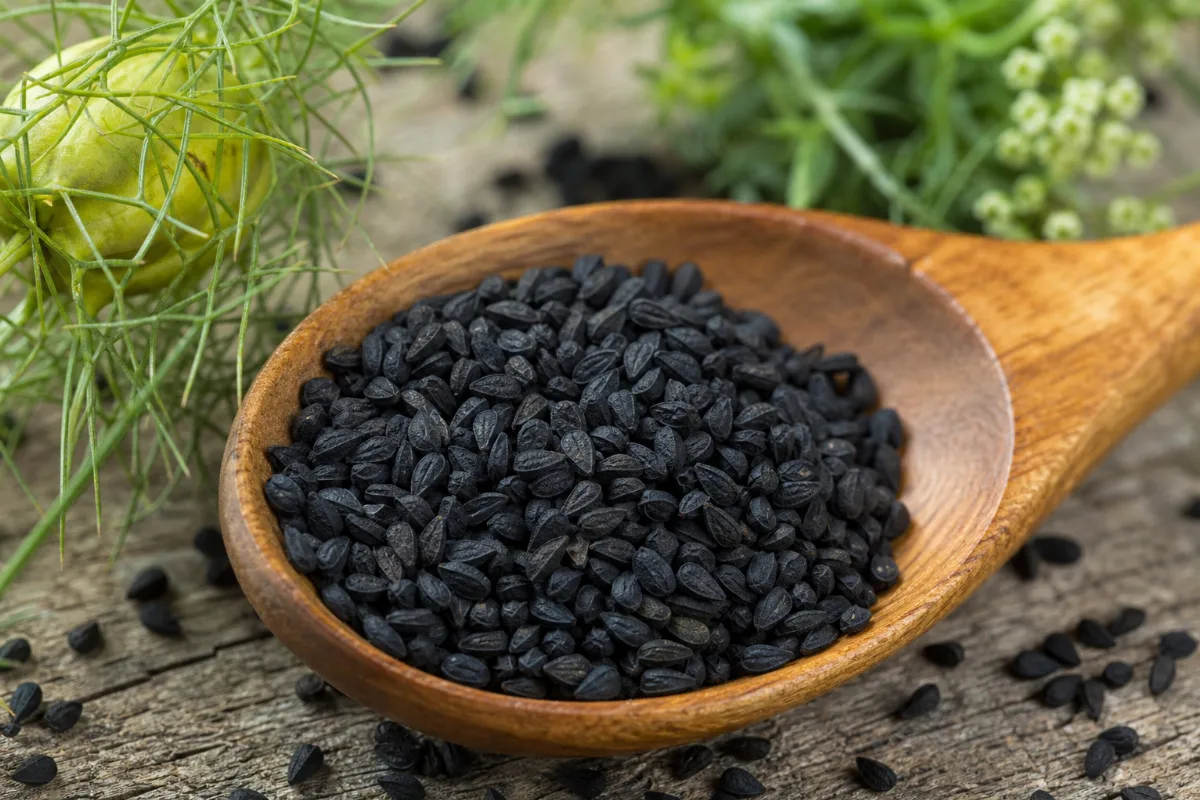
Herbs & Botanicals · Herbs · Spice seed and oil with low-certainty evidence for blood sugar, cholesterol and blood pressure
Black Seed
Nigella sativa L. · also called Black seed, black cumin, kalonji, nigella, fennel-flower, black caraway, cumin noir (French), Schwarzkümmel (German), neguilla (Spanish), habbat al-baraka (Arabic), çörekotu (Turkish)
Black seed is the small black seed of Nigella sativa, a flowering herb in the buttercup family, used as a spice and sold as oil, powder and capsules. It is not cumin or black pepper. Pooled trials point to small improvements in blood sugar, cholesterol, blood pressure and weight, but every use is rated low or very low certainty because trials are small, short and use different products. The main safety concerns are serious skin reactions from the oil, possible effects with diabetes and blood pressure medicines, and no safety data in pregnancy.
General information, not medical advice. Last substantive update · Not medically reviewed. A named clinician has not signed off on this page. How this page is made
About Black Seed
Black seed (Nigella sativa), also called black cumin or kalonji, is a small black seed from a flowering plant in the buttercup family. It is used as a spice and sold as seed powder, cold-pressed oil, extracts and capsules. For diabetes, cholesterol, blood pressure, weight and fatty liver, pooled trials mostly point in the same direction, but all are rated low certainty because the trials are small, short and varied. Asthma, hay fever and knee pain are low; arthritis, thyroid, COVID-19, stomach problems, mind and mood, fertility and skin uses are very low. The main safety concern is serious skin allergy from the oil, plus possible effects with diabetes, blood pressure and some other medicines, and no safety data in pregnancy.
What it is
Black seed is the seed of Nigella sativa L., an herb in the buttercup family (Ranunculaceae). It is listed in GBIF and NCBI as an accepted species, and its seed is rich in oils, proteins, alkaloids and saponins. Its best-known compound is thymoquinone.
The names are confusing. Black seed is not cumin and not black pepper. The 'black cumin' or 'kala jeera' sold in some markets can be Bunium persicum, an unrelated carrot-family plant. Always check the Latin name Nigella sativa on a product.
Traditional and current uses
A food-safety review says the seeds have been used as a food ingredient in Middle Eastern and Far Eastern cultures for about three thousand years. They are also used in folk medicine in many countries, for example for asthma, diarrhoea and high blood fats, and in Unani, Ayurvedic and Iranian traditional medicine. Traditional use is not proof that it works.
Today black seed is taken mainly for blood sugar, cholesterol, blood pressure, weight, allergies, joints and as a general tonic. Popular stories about ancient Egypt and religious sayings were not verified from primary sources.
Forms and what the research tested
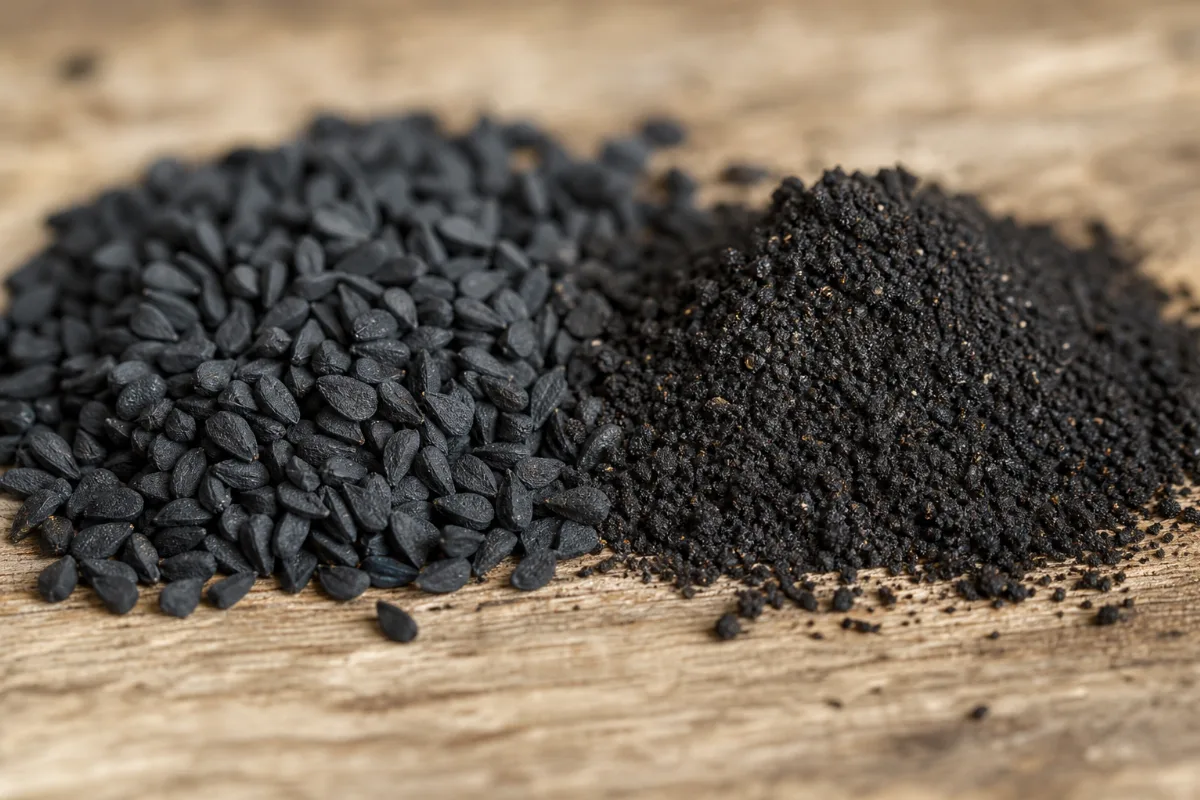
Trials tested very different products: ground seed, plain oil, solvent extracts, a standardised oil with piperine, and purified thymoquinone. Results for one product cannot be moved to another. In pooled analyses oil and powder behaved differently: oil lowered cholesterol and fasting sugar more, while powder lowered blood pressure more.
The amount of thymoquinone varies a lot between seed origins and oil products, and in one small test no thymoquinone could be found in the blood after swallowing oil. For amounts, ask a doctor or pharmacist.
What the research shows
Most human trials come from Iran, Saudi Arabia, Pakistan, Egypt and India. Most are small (20 to 120 people) and last 4 to 12 weeks. A review of 20 earlier meta-analyses rated the methods of 15 of them as critically low quality, and rated 88 of 110 outcomes as very low certainty and only 5 as moderate.
No trial measured heart attacks, strokes, kidney failure or deaths. Two asthma meta-analyses repeat the same four trials, two H. pylori trials may share participants, and one allergy trial was run by the maker of the product. No retracted human trial was found in our searches.
At a glance
Traditional uses history, not proof
- Food: a food-safety review says the seeds have been eaten in Middle Eastern and Far Eastern cultures for about 3,000 years.
- Folk and traditional medicine: used for asthma, diarrhoea, high blood fats, liver disease, knee complaints and to boost breast milk in Unani, Ayurvedic, Iranian and Middle Eastern practice. Not proof that it works.
- Modern use: supplements taken for blood sugar, cholesterol, blood pressure, weight, allergies and joints.
Studied for research
- Type 2 diabetes blood sugar, cholesterol, blood pressure, weight, fatty liver, inflammation markers, asthma, hay fever and knee osteoarthritis, low
- Metabolic syndrome, rheumatoid arthritis, Hashimoto thyroiditis, COVID-19, H. pylori and indigestion, memory and mood, male fertility, PCOS, seizures in children and skin conditions, very low
Main compounds
- Thymoquinone, the best-known compound of the seed oil
- Thymol, carvacrol and p-cymene from the essential oil; alpha-hederin (a saponin) and alkaloids such as nigellidine and nigellicine
- Fatty acids such as linoleic acid in the fixed oil
Common forms
- Whole or ground seed as a spice
- Cold-pressed black seed oil
- Seed powder or oil capsules and extracts
- Oil used on the skin (carries a skin-reaction risk)
Research links: Black seed and glycemic control: meta-analysis of 17 trials (abstract) · Black seed and blood lipids: meta-analysis of 17 trials (abstract) · Black seed and blood pressure: updated meta-analysis (abstract) · Overview of 20 meta-analyses of black seed (abstract) · Severe contact dermatitis to black seed oil (JAMA Dermatology, abstract) · LiverTox: black cumin seed (summary) · LactMed: black seed (summary) · GBIF: Nigella sativa L. · Research Library · Genes & Biomarkers Library
The plant and its history
- Accepted scientific name
- Nigella sativa L.
- Naming authority
- L.; published in Species Plantarum, page 534 (1753) (GBIF)
- Synonyms
- Nigella cretica Mill.; Nigella indica Roxb. ex Fleming; Nigella sativa var. cretica (Mill.) DC.; Nigella truncata Viv.
- Common names
- Black cumin (English); Black seed (English); Black caraway (English); Fennel-flower (English); Nutmeg-flower (English); Roman-coriander (English); Black onion seed (English); Cumin noir (French); Nigelle cultivée (French); Schwarzkümmel (German); Echter Schwarzkümmel (German); Neguilla (Spanish); Ajenuz (Spanish); Arañuel (Spanish); حبة البركة (habbat al-baraka) (Arabic); الحبة السوداء (Arabic); Çörekotu (Turkish); کلونجی (kalonji) (Urdu)
- Botanical family
- Ranunculaceae (buttercup family). It is not in the carrot family that holds cumin.
- Classification
- Plantae > Tracheophyta > Magnoliopsida > Ranunculales > Ranunculaceae > Nigella > Nigella sativa
- Native range
- LiverTox says the plant is native to Eastern Europe and the Middle East; other references say Mediterranean and western Asia. Not verified from a botanical flora.
- Habitat
- Not verified from a primary botanical source.
- What the plant looks like
- Roots: Not verified.; Stems: Not verified.; Leaves: Not verified.; Flowers: Not verified.; Fruit: The part used is the small black seed (LiverTox: 'produces black seeds'). Seed pod structure not verified.
- Cultivation
- Not verified from a primary source. Seeds are cultivated for spice and medicine in the Middle East and South Asia (not verified).
- Harvest and processing
- Not verified. Products are whole or ground seed, cold-pressed or solvent-extracted oil, extracts and capsules. Thymoquinone content differs between origins and oils (Singhal 2025; Tekbas 2023).
- Look-alikes and adulterants
- Name: Cuminum cyminum L. (cumin); Note: A different plant in the carrot family (Apiaceae); GBIF accepted species. 'Black cumin' is not cumin.; Name: Bunium persicum (Boiss.) B.Fedtsch. (black or kala jeera); Note: A synonym in GBIF of Elwendia persica, family Apiaceae. Sold as 'black cumin' in some markets but unrelated to Nigella sativa.; Name: Nigella damascena L. (love-in-a-mist); Note: A related garden species in the same genus (GBIF key 5371702). Its use and safety as a medicine were not reviewed.; Name: Nigella arvensis L.; Note: A related species; LactMed notes it has been used like black seed as a milk-boosting herb. Safety not reviewed.; Name: Piper nigrum L. (black pepper); Note: A different plant in the pepper family (Piperaceae). Not related despite the colour.
- Sustainability and conservation
- Not verified. No IUCN assessment was retrieved. N. sativa is a widely cultivated crop plant.
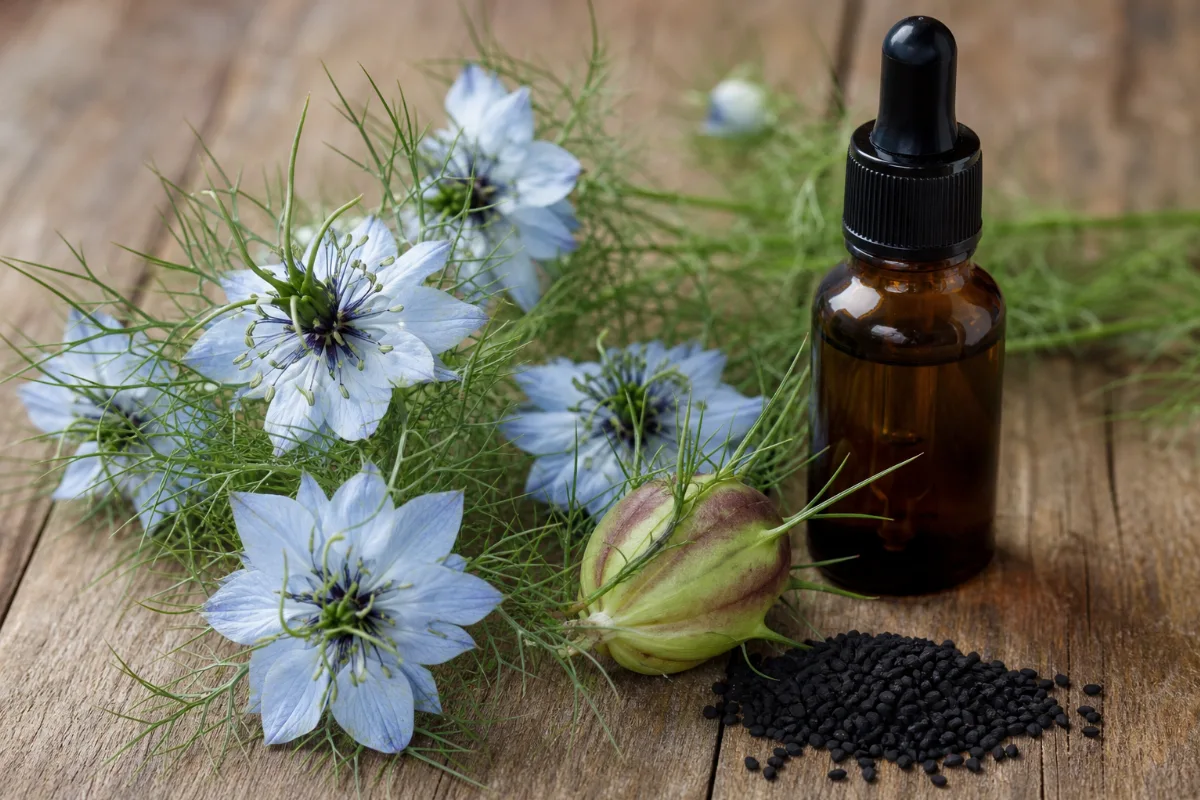
The plant and the parts used
Traditional use and history history, not clinical proof
| Tradition or era | Documented use | Source |
|---|---|---|
| Food use in the Middle East and Far East | A food-safety review states the whole or ground seeds have a three-thousand-year history as a food ingredient in Middle Eastern and Far Eastern cultures. This is the review author's statement. | p34838871 |
| Folk medicine in many countries | Used worldwide in folk medicine for asthma, diarrhoea and high blood fats, according to a 2003 pharmacology review. | p12722128 |
| Unani and Ayurvedic medicine | Used by Unani physicians (hakims) and Ayurvedic practitioners (vaids) for high cholesterol, obesity and high blood pressure, as stated in a Pakistani trial paper. | p19500003 |
| Iranian traditional medicine | Used for liver diseases (Khonche 2019), for knee joint complaints (Salimzadeh 2017, citing the Iranian traditional medicine pharmacopoeia) and, as a honey-based oil mix, for upper gut symptoms (Mohtashami 2015). | p30639231 |
| India, Turkey and the Middle East | Black seed (and the related Nigella arvensis) have been taken by mouth to boost breast milk. LactMed finds no valid clinical trials to support this. | s-lactmed-black-seed |
| Traditional medicine for seizures | The authors of a children's seizure pilot say black seed was known in traditional medicine to have anticonvulsant effects. | p21112742 |
| Ancient Egypt and religious tradition | Popular accounts say black seed was found in Tutankhamun's tomb and cite a religious saying that it heals everything except death. NOT verified: no primary source for either claim was read. | none read |
Traditional use shows how a plant was used. It does not show that a supplement works or is safe today.
What is inside, and how it may work
What the plant contains and how those compounds act in cells and animals. Laboratory and animal mechanisms are not proven effects in people.
Main compounds
| Compound | Family | Where it is concentrated | Activity studied | Level of evidence |
|---|---|---|---|---|
| Thymoquinone PubChem 10281 | quinone (from the essential oil) | Seed (essential oil); also in the fixed oil Varies by origin and product: highest in Vizag seed among three Indian regions; 36.56 g/L in the top of 19 oil products; one product standardised to 5% (Majeed 2024). No typical value is agreed. | The compound most credited with black seed's effects. Lowers blood sugar in diabetic animals (pooled analysis of 18 animal studies); blocks CYP2C9 and CYP3A4 in the lab; named as a skin allergen in oil allergy; purified thymoquinone cut seizures in a pilot of 22 children. Could not be detected in blood of two volunteers after swallowing oil. 22 7 34 59 3 96 93 62 71 | Animal research |
| Thymohydroquinone PubChem 95779 | hydroquinone (from the essential oil) | Seed oil Not found in the sources read. | Reduced form of thymoquinone. Listed only by name here; one study found TQ-H2 (the reduced form) in urine after repeated oil intake. 33 71 | Human data |
| Nigellone (dithymoquinone) PubChem 398941 | quinone dimer | Seed oil Not found in the sources read. | PubChem names this CID 'Nigellone'. No activity data were read. 71 | Laboratory research |
| Thymol PubChem 6989 | monoterpene phenol | Seed essential oil Not found. | Listed by a pooled animal analysis among constituents with anti-inflammatory and antioxidant action in an asthma model. 39 71 | Animal research |
| Carvacrol PubChem 10364 | monoterpene phenol | Seed essential oil Not found. | Listed with thymol and alpha-hederin in the same animal asthma analysis. 39 71 | Animal research |
| p-Cymene PubChem 7463 | monoterpene | Seed essential oil Not found. | Suggested, with thymoquinone, as a possible cause of the severe skin reaction in a case series. 38 71 | Case report |
| alpha-Hederin PubChem 73296 | triterpene saponin | Seed Not found. | Named in the asthma animal analysis among active constituents. The 2003 review notes saponins are present in the seed. 39 8 71 | Animal research |
| Nigellidine PubChem 136828302 | indazole alkaloid | Seed Not found. | Alkaloids are present in the seed (Ali 2003). No activity data read for this compound. 8 71 | Laboratory research |
| Nigellicine PubChem 11402337 | alkaloid | Seed Not found. | Alkaloids are present in the seed (Ali 2003). No activity data read. 8 71 | Laboratory research |
| Linoleic acid PubChem 5280450 | omega-6 fatty acid (fixed oil) | Seed fixed oil Not found in the sources read. | Detected, with thymoquinone and terpenes, in the black seed oil analysed in a skin-reaction case series. 38 71 | Other |
| beta-Elemene PubChem 6918391 | sesquiterpene | Seed essential oil Not found. | Named by LactMed as one of the many constituents of the essential oil. No activity data read. 27 71 | Other |
Mechanisms, receptors and pathways
| Target or pathway | Gene or receptor | What was found | Level |
|---|---|---|---|
| CYP2C9 inhibition | CYP2C9 | Thymoquinone blocked CYP2C9 strongly in human liver preparations (IC50 0.5 micromolar) and blocked warfarin and phenytoin breakdown. 7 102 101 | Laboratory research |
| CYP3A4 and CYP2C19 inhibition | CYP3A4, CYP2C19 | Thymoquinone blocked CYP3A4 strongly and CYP2C19 moderately in lab-made enzymes; in diabetic rats it lowered liver CYP3A2 and CYP2C11 proteins. 34 2 | Laboratory research |
| Blood sugar lowering | Not specified | Thymoquinone lowered blood glucose and raised insulin in diabetic animals (pooled analysis of 18 animal studies). In people, pooled analyses show lower fasting glucose and HbA1c but not clearly insulin or HOMA-IR, so the human mechanism is unclear. 22 92 49 | Animal research |
| Type 2 (allergy-type) immune signals | IL4, IL5, IL13, IL17, IgE | In animals with an asthma-like condition, black seed and its constituents lowered IL-4, IL-5, IL-13, IL-17 and IgE; IFN-gamma did not change. In asthma trials IgE and eosinophils fell in some. 39 57 88 | Animal research |
| Inflammation and antioxidant markers | TNF, CRP, SOD, GPX | Pooled human trials found lower CRP, TNF-alpha and MDA and higher SOD, GPx and total antioxidant capacity. These are blood markers. 51 65 | Human data |
| T-cell balance in rheumatoid arthritis | CD4, CD8, CD25 (T cells) | In 43 women with rheumatoid arthritis black seed oil lowered CD8 T cells and raised CD4+CD25+ cells and the CD4/CD8 ratio versus placebo. 54 | Human data |
| Gene activity in prediabetes | SIRT1, TP53 | In obese prediabetic adults black seed oil raised SIRT1 expression similar to metformin; the abstract also reports p53 expression was measured. 65 | Human data |
| Brain growth factor | BDNF | Serum BDNF was higher in men with depression given oil extract plus sertraline than in those given placebo plus sertraline. 105 | Human data |
| Kidney protection from chemotherapy | Antioxidant enzymes | In 12 animal studies black seed or thymoquinone protected the kidney from cisplatin, methotrexate, doxorubicin and ifosfamide damage by lowering lipid peroxidation and raising antioxidant enzymes. 25 | Animal research |
| Uterine muscle relaxation | Oxytocin response | The volatile oil reduced spontaneous and oxytocin-induced contractions in isolated rat and guinea pig uterus. 13 | Laboratory research |
Absorption, metabolism and elimination
- Absorption
- No human pharmacokinetic study was found. One attempt (two volunteers, 1 g or 3 g of thymoquinone-rich oil, blood drawn at 30 and 60 minutes) could not detect thymoquinone or its derivatives in serum; the authors suggest instability and strong protein binding. In a pilot of 8 healthy adults, thymoquinone and its reduced form were found qualitatively in urine after 20 days of oil capsules.
- Distribution
- No human tissue data were found.
- Metabolism
- Not studied in people. Thymoquinone blocks several CYP enzymes in the lab (CYP2C9 most strongly); the enzymes that break down thymoquinone itself were not described in the sources read.
- Elimination
- Not established in people. Urinary detection after repeated oil intake was qualitative only.
- Bioavailability
- Unknown in people. Not enough data to say how much thymoquinone reaches the blood from oil, powder or capsules.
Isolated compounds versus whole extracts
Black seed is a complex mix: a fixed oil, an essential oil, proteins, alkaloids and saponins. Thymoquinone gets most of the credit, but trials used whole seed, plain oil, solvent extracts, a standardised oil with piperine, and purified thymoquinone, so results cannot be swapped between them. Oil and powder differ in pooled analyses (oil better for cholesterol and fasting sugar, powder better for blood pressure and HDL). Thymoquinone content varies widely between seed origins and oil products, and thymoquinone could not be found in the blood after swallowing oil. Skin allergies seem tied to thymoquinone in the oil.
Nutritional composition
A nutrient table was not retrieved for this profile. Black seed is used as a spice and as oil; per a 2003 review the seed contains fixed and essential oils (with fatty acids such as linoleic acid), proteins, alkaloids and saponin. Amounts per serving were not verified, so no nutrient figures are given here.
9 low certainty10 very low certainty
What was looked at
The 19 benefits and uses checked for Black Seed, each with how strong the evidence is. Tap one to open it.
- Type 2 diabetes: blood sugar and HbA1cLow certainty
- Metabolic syndrome and prediabetesVery low certainty
- Cholesterol and triglyceridesLow certainty
- Blood pressureLow certainty
- Body weight and waistLow certainty
- Fatty liver (non-alcoholic fatty liver disease)Low certainty
- Blood markers of inflammation and oxidative stressLow certainty
- Asthma (added to usual treatment)Low certainty
- Allergic rhinitis (hay fever)Low certainty
- Rheumatoid arthritis (added to usual treatment)Very low certainty
- Knee osteoarthritis painLow certainty
- Hashimoto thyroiditis (underactive thyroid from autoimmunity)Very low certainty
- COVID-19 (mild, moderate or severe illness)Very low certainty
- Stomach: H. pylori and indigestionVery low certainty
- Memory, mood and depressionVery low certainty
- Male fertility: semen qualityVery low certainty
- Polycystic ovary syndrome (PCOS) in adolescentsVery low certainty
- Seizures in children (purified thymoquinone)Very low certainty
- Skin conditions (acne, eczema, vitiligo, warts and others)Very low certainty
Lab markers tracked in the studies
Fasting blood glucoseHbA1c (average blood sugar over about 3 months)Insulin and insulin resistance (HOMA-IR)Total cholesterolLDL cholesterolHDL cholesterolTriglyceridesBlood pressure (systolic and diastolic)Body weight and BMIC-reactive protein (CRP)Liver enzymes (ALT and AST)Asthma Control Test scoreFEV1 (lung function)Blood eosinophils and IgE (allergy markers)Total nasal symptom scoreCRP in joint diseaseDAS28 disease activity (rheumatoid arthritis)Knee pain (VAS) and WOMAC scoreTSH and anti-TPO antibodiesCOVID-19 recovery, viral clearance and deathH. pylori eradication and dyspepsia scoreSperm count, movement and shapeDepression score and BDNF
What is Black Seed good for?
The main proposed uses and how strong the human evidence is for each. "Low" means small or inconsistent studies point one way; "very low" means a single small or unclear study; no use here reaches moderate. Black seed as a spice in cooking is a normal food use; these results come from supplements and oils and may not apply to cooking amounts.
Benefits, one by one
Each card is a research question, not a promise. Tap a goal to filter. Open a card to see the studies, doses and limits.
Type 2 diabetes: blood sugar and HbA1c
Low certaintyIn adults with type 2 diabetes who were already on their usual medicines, black seed lowered fasting blood sugar and HbA1c in most pooled analyses. The drop in HbA1c was about 0.4 to 0.7 percentage points, which is modest. The trials are small and disagree with each other a lot, and black seed was weaker than metformin in the one head-to-head trial.
12 studiesSeed powder capsules (1 to 3 g/day) and seed oil capsules (about 0.5 …
Studies, doses and limits
What the trials found
Pooled analyses of randomized trials: Askari 2019 (17 trials; fasting glucose -9.93 mg/dl, after-meal glucose -14.79 mg/dl, HbA1c -0.57%; oil worked better than powder), Daryabeygi-Khotbehsara 2017 (7 trials in type 2 diabetes; fasting sugar -17.84 mg/dl, HbA1c -0.71%), Karimi 2025 (16 trials in type 2 diabetes; fasting glucose -21.43 mg/dL, HbA1c -0.44), Shirvani 2024 (30 trials; fasting sugar and HbA1c lower, insulin and HOMA-IR not changed, but heterogeneity above 92%) and a 2026 GRADE-based analysis of 31 trials in metabolic disease (fasting glucose -18.62 mg/dL, HbA1c -0.56). Individual trials: Bamosa 2010 (94 adults on diabetes drugs, 1, 2 or 3 g seed/day for 12 weeks; the 2 g dose cut HbA1c by 1.52% and no extra benefit at 3 g), Kaatabi 2015 (114 adults, 2 g/day for one year; fasting glucose 195 to 172 versus 180 to 180 on placebo; patients were allocated by convenience, not true randomization), Hadi 2021 (43 adults, 1,000 mg/day oil extract for 8 weeks; lower fasting sugar and HbA1c than placebo). In newly diagnosed type 2 diabetes, Moustafa 2019 compared 1,350 mg/day oil with metformin for 3 months in an open-label trial: the oil was worse than metformin for fasting glucose, after-meal glucose and HbA1c. A pilot in 30 healthy men (Pelegrin 2019, 1 g/day seed powder, 4 weeks) found no change in sugar or insulin.
Results
Most pooled analyses show lower fasting sugar (about 10 to 21 mg/dl) and HbA1c (about 0.4 to 0.7 points). The best single trial of long use (Kaatabi 2015) shows a 23 mg/dl fall over a year, but was not truly randomized. The head-to-head with metformin shows the seed is weaker.
Effect sizes as reported
Fasting glucose about -10 to -21 mg/dl; HbA1c about -0.4 to -0.7 percentage points in type 2 diabetes. Standardised effects in Shirvani 2024 (SMD -1.71 and -2.16) are not comparable across trials and rest on I-squared above 92%.
Why this rating
Direction is consistent across several pooled analyses and individual trials, and the changes are of a size that could matter. But the trials are small and short, the pooled results are very heterogeneous, one key trial was not truly randomized, and a review of reviews rated most black seed outcomes low or very low certainty. Seed oil and seed powder behaved differently, and the one head-to-head with metformin favoured metformin.
Form and dose studied
Seed powder capsules (1 to 3 g/day) and seed oil capsules (about 0.5 to 1.35 g/day) were used for 8 weeks to 1 year. Oil seemed to work better than powder for fasting glucose in one analysis. Ask a doctor or pharmacist about amounts.
Who was studied
Adults with type 2 diabetes, usually already taking metformin or similar drugs. Also adults with metabolic syndrome.
Limits
Most trials come from Iran, Saudi Arabia, Pakistan, Egypt and India, are small, last 4 to 12 weeks, and use different products (seed powder, seed oil, extracts), so a result for one product cannot be moved to another. A review of 20 earlier meta-analyses rated their overall methods as poor and most outcome ratings as low or very low certainty. Hypoglycemia (low blood sugar) was not clearly measured or reported in the abstracts we read.
Why researchers looked
Type 2 diabetes is common, and black seed is one of the most widely used folk remedies for it in the Middle East and South Asia. This is the best-researched use of black seed.
Traditional use
Black seed (also called black cumin or kalonji) is used in Unani, Ayurvedic and Iranian traditional medicine, including for conditions that look like diabetes. Traditional use is not proof of effect.
Proposed mechanism Animal research
Lab and animal work suggests thymoquinone, the main active compound in the seed oil, may lower blood sugar and improve how the pancreas responds to sugar. A pooled analysis of 18 animal studies found lower blood sugar and higher insulin in diabetic animals given thymoquinone. This has not been shown to explain the results in people.
A proposed mechanism does not show that the effect happens in people.
Safety is covered in the safety section. Black seed oil can cause serious skin reactions when applied to the skin, and it may add to diabetes and blood pressure medicines. People on diabetes medicines should tell their doctor, because black seed may add to the blood-sugar lowering effect.
Metabolic syndrome and prediabetes
Very low certaintyIn people with metabolic syndrome or prediabetes, black seed lowered cholesterol and blood sugar in a handful of trials. One trial found black seed oil worked about as well as metformin or diet and exercise for weight and blood-sugar measures. There are very few trials and the best ones were not blinded.
2 studiesOil capsules (450 mg twice a day) in the 6-month trial.
Studies, doses and limits
What the trials found
Shabani 2025 pooled 7 trials in metabolic syndrome: total cholesterol, LDL, fasting sugar and HbA1c fell and HDL rose, with high heterogeneity (the authors split results by dose). Mostafa 2021 (117 obese adults with prediabetes, 450 mg oil twice a day for 6 months, open-label) compared the oil with metformin and with lifestyle change: the oil matched metformin for weight and glucose measures, was similar to lifestyle change for most glucose measures, and improved the lipid panel and TNF-alpha more than both.
Results
Lower cholesterol, LDL, fasting sugar and HbA1c; one open-label trial roughly equal to metformin for weight and glucose over 6 months.
Effect sizes as reported
Total cholesterol SMD -0.71, LDL SMD -1.06, FBS SMD -0.8, HbA1c SMD -0.37 (Shabani 2025).
Why this rating
Only one meta-analysis of 7 trials with high heterogeneity and one open-label trial with a drug comparator. There is no placebo-controlled 6-month trial.
Form and dose studied
Oil capsules (450 mg twice a day) in the 6-month trial.
Who was studied
Adults with metabolic syndrome or obese adults with prediabetes.
Limits
Most trials come from Iran, Saudi Arabia, Pakistan, Egypt and India, are small, last 4 to 12 weeks, and use different products (seed powder, seed oil, extracts), so a result for one product cannot be moved to another. A review of 20 earlier meta-analyses rated their overall methods as poor and most outcome ratings as low or very low certainty.
Why researchers looked
Metabolic syndrome is a cluster of belly fat, high blood sugar, high blood pressure and abnormal blood fats that raises the risk of diabetes and heart disease.
Traditional use
Black seed is used in traditional medicine for many metabolic complaints, but there is no tradition specific to metabolic syndrome.
Proposed mechanism Preliminary mechanism
Thought to work through effects on fat and sugar handling and inflammation. The 6-month trial also measured activity of the SIRT1 gene, which was similar to metformin, but this is a hypothesis and does not prove how the oil works.
A proposed mechanism does not show that the effect happens in people.
Safety is covered in the safety section. Black seed oil can cause serious skin reactions when applied to the skin, and it may add to diabetes and blood pressure medicines.
Cholesterol and triglycerides
Low certaintyPooled trials found lower total cholesterol, LDL ('bad') cholesterol and triglycerides after black seed, with seed oil working better than powder. HDL ('good') cholesterol rose in some analyses. Individual trials are mixed, including a null trial in healthy men, and the changes in the more careful single trials were small.
11 studiesSeed oil capsules and seed powder (about 1 to 3 g/day) for 4 to 12 we…
Studies, doses and limits
What the trials found
Sahebkar 2016 (17 trials; total cholesterol -15.65 mg/dL, LDL -14.10, triglycerides -20.64, HDL no change overall, rise with powder only), Rounagh 2024 (34 studies, 2,278 people; very large standardised effects: total cholesterol SMD -1.78, LDL -2.45, triglycerides -1.27, HDL +0.79), Daryabeygi-Khotbehsara 2017 and Karimi 2025 in type 2 diabetes (total cholesterol -23 and -19 mg/dl; LDL -22 and -20 mg/dl; triglycerides not significantly changed in either overall), and Shabani 2025 in metabolic syndrome. Individual trials: Sabzghabaee 2012 (88 adults with total cholesterol above 200 mg/dl, 2 g/day seeds for 4 weeks; total cholesterol -4.78%, LDL -7.6%, triglycerides -16.65%, no HDL change), Ibrahim 2014 (37 postmenopausal women with high lipids, seed powder for 2 months; better lipids than placebo, drifting back after stopping), Razmpoosh 2021 (39 overweight women, 2 g/day oil crossover; LDL and TC/HDL fell, HDL rose), Qidwai 2009 (123 adults, not significant because of small sample and 40% dropout), and Pelegrin 2019 (30 healthy men, 1 g/day for 4 weeks, no change in lipids).
Results
Pooled falls of roughly 15 to 23 mg/dl in total cholesterol, 14 to 22 mg/dl in LDL and, in some analyses, 20 mg/dl in triglycerides. In single trials the drops were 5 to 8% in short trials.
Effect sizes as reported
Total cholesterol -15.65 mg/dL (-24.67 to -6.63); LDL -14.10 mg/dL (-19.32 to -8.88); triglycerides -20.64 mg/dL (-30.29 to -11.00) in Sahebkar 2016.
Why this rating
Direction is mostly consistent, but the effect depends on the form (oil lowered triglycerides while powder raised them in one analysis), several single trials were null or underpowered, and the very large standardised effects in newer analyses look implausible. No trial measured heart attacks or strokes.
Form and dose studied
Seed oil capsules and seed powder (about 1 to 3 g/day) for 4 to 12 weeks.
Who was studied
Adults with high cholesterol, diabetes, menopause or overweight.
Limits
Most trials come from Iran, Saudi Arabia, Pakistan, Egypt and India, are small, last 4 to 12 weeks, and use different products (seed powder, seed oil, extracts), so a result for one product cannot be moved to another. A review of 20 earlier meta-analyses rated their overall methods as poor and most outcome ratings as low or very low certainty. LDL changes in a person depend on the starting level (Pelegrin 2019 saw a link with baseline value).
Why researchers looked
High LDL cholesterol and triglycerides raise heart disease risk. Black seed is a popular home remedy for high cholesterol.
Traditional use
Used in Unani and Ayurvedic practice for dyslipidemia (Qidwai 2009 states this).
Proposed mechanism Preliminary mechanism
Animal and lab work suggests changes in fat absorption and liver fat handling. Not shown in people.
A proposed mechanism does not show that the effect happens in people.
Safety is covered in the safety section. Black seed oil can cause serious skin reactions when applied to the skin, and it may add to diabetes and blood pressure medicines.
Blood pressure
Low certaintyAcross pooled analyses, black seed lowered blood pressure by about 3 mmHg on average, which is small. Two older trials in people with mild high blood pressure and in healthy people showed bigger drops, but a trial in older adults with higher pressure found no difference from placebo.
9 studiesSeed oil, powder or extract (200 mg to 5 mL a day) for 4 to 12 weeks.
Studies, doses and limits
What the trials found
Sahebkar 2016 (11 trials, 860 people; systolic -3.26 mmHg, diastolic -2.80; powder worked better than oil), Kavyani 2023 (systolic -3.06, diastolic -2.69 with very high heterogeneity), and Musazadeh 2026 (31 trials in metabolic disease; systolic -3.25, diastolic -2.75). Individual trials: Dehkordi 2008 (mild hypertension, 100 or 200 mg extract twice a day for 8 weeks; systolic and diastolic fell versus placebo, dose-linked; no numbers in the abstract), Fallah Huseini 2013 (70 healthy volunteers with normal pressure, 5 mL oil a day for 8 weeks; pressure fell), Hadi 2021 (type 2 diabetes, see above), Razmpoosh 2021 (systolic fell, diastolic did not), and Rizka 2017 (76 older adults with high blood pressure, 300 mg extract twice a day for 28 days: 160.4 to 145.8 mmHg versus 160.9 to 147.5 on placebo, p=0.36, so no benefit shown).
Results
Average fall of about 3 mmHg in both numbers across pooled analyses; larger in some small trials; null in the older adults trial.
Effect sizes as reported
Systolic -3.26 mmHg (-5.10 to -1.42) and diastolic -2.80 mmHg (-4.28 to -1.32) in Sahebkar 2016.
Why this rating
The pooled drop is small, trials were short (28 days to 12 weeks), heterogeneity is high, and the one trial in older adults with truly high pressure was null. No outcome trial exists. A 3 mmHg drop is much smaller than from a normal blood pressure pill.
Form and dose studied
Seed oil, powder or extract (200 mg to 5 mL a day) for 4 to 12 weeks.
Who was studied
Adults with normal or mildly raised pressure, and diabetes.
Limits
Most trials come from Iran, Saudi Arabia, Pakistan, Egypt and India, are small, last 4 to 12 weeks, and use different products (seed powder, seed oil, extracts), so a result for one product cannot be moved to another. A review of 20 earlier meta-analyses rated their overall methods as poor and most outcome ratings as low or very low certainty.
Why researchers looked
High blood pressure is a leading cause of heart attack and stroke, and black seed is used at home to lower it.
Traditional use
Folk use for hypertension is reported in Unani and Iranian medicine.
Proposed mechanism Animal research
Animal and lab work suggests a mild diuretic effect and relaxation of blood vessels; one rat study reported black seed added to the effect of amlodipine. Not tested in people for this reason.
A proposed mechanism does not show that the effect happens in people.
Safety is covered in the safety section. Black seed oil can cause serious skin reactions when applied to the skin, and it may add to diabetes and blood pressure medicines. It may add to blood pressure medicines, and pressure that falls too far can cause dizziness.
Body weight and waist
Low certaintyPooled trials found black seed lowered body weight by roughly 1.5 to 2 kg and BMI by 0.5 to 1.2 points on average, but waist size did not clearly change. The best single result was a trial where black seed oil plus a low-calorie diet beat diet alone by about 3.4 kg over 8 weeks.
6 studiesOil (about 2 to 3 g/day) or powder for 8 to 12 weeks, mostly alongsid…
Studies, doses and limits
What the trials found
Namazi 2018 (11 studies; weight -2.11 kg, BMI -1.16 kg/m2, waist -3.52 cm; heterogeneity high), Mousavi 2018 (13 RCTs, 875 people; weight -1.76 kg, BMI -0.85, waist not significant), and Musazadeh 2026 (31 trials; weight -1.59 kg, BMI -0.51; waist, hip and waist-to-hip ratio not significant). Karimi 2025 found no change in weight or BMI in type 2 diabetes. Namazi 2015 (50 obese women on a low-calorie diet, 3 g/day oil for 8 weeks): weight fell 4.80 kg versus 1.40 kg on placebo oil. Moustafa 2019 found weight loss comparable to metformin.
Results
Small average weight loss of about 1.5 to 2 kg in pooled analyses; none in type 2 diabetes in one analysis.
Effect sizes as reported
Weight -1.76 kg (-3.34 to -0.17), BMI -0.85 kg/m2 (-1.23 to -0.46) in Mousavi 2018.
Why this rating
Consistent but small average loss, with heterogeneity above 70% for weight in the older analyses. Waist results disagree. Most trials combined the supplement with a diet plan.
Form and dose studied
Oil (about 2 to 3 g/day) or powder for 8 to 12 weeks, mostly alongside a diet.
Who was studied
Overweight or obese adults, mostly women in Iran.
Limits
Most trials come from Iran, Saudi Arabia, Pakistan, Egypt and India, are small, last 4 to 12 weeks, and use different products (seed powder, seed oil, extracts), so a result for one product cannot be moved to another. A review of 20 earlier meta-analyses rated their overall methods as poor and most outcome ratings as low or very low certainty.
Why researchers looked
Many people take black seed for weight loss. Researchers test it as an add-on to diet.
Traditional use
No clear traditional use for weight loss specific to black seed was found in the sources we read.
Proposed mechanism Preliminary mechanism
Unclear. Lab suggestions include effects on appetite and fat metabolism, but this has not been shown in people.
A proposed mechanism does not show that the effect happens in people.
Safety is covered in the safety section. Black seed oil can cause serious skin reactions when applied to the skin, and it may add to diabetes and blood pressure medicines.
Fatty liver (non-alcoholic fatty liver disease)
Low certaintyIn small trials in people with fatty liver, black seed oil or seed lowered liver enzymes and the fatty liver grade on ultrasound. A pooled analysis of five trials agreed. The trials are small and the ultrasound grading is subjective.
3 studiesSeed oil (about 5 mL/day) or crushed seed (2 g/day) for 3 months.
Studies, doses and limits
What the trials found
Tang 2021 pooled 5 trials (358 people): ALT, AST, fasting sugar, HDL, hs-CRP and fatty liver grade improved; total cholesterol, LDL, triglycerides, insulin and TNF-alpha did not. Khonche 2019 (120 adults, 2.5 mL standardised oil every 12 hours for 3 months): fatty liver grade fell more than placebo (p=0.004), ALT fell 32.6% versus 14.2%, AST 29.4% versus 12.3%. Darand 2019 (50 adults, 2 g/day seed plus lifestyle advice for 12 weeks): fatty liver percentage, glucose, insulin and insulin resistance improved versus placebo; lipids did not.
Results
Better liver enzymes (ALT, AST) and lower fatty liver grade in three kinds of evidence from Iran.
Effect sizes as reported
ALT fall 32.6% versus 14.2% on placebo (Khonche 2019); no pooled mean differences in the abstract.
Why this rating
Three independent signals agree, but they are small, from the same country, short (up to 3 months), and the placebo group improved too. No liver biopsy outcomes.
Form and dose studied
Seed oil (about 5 mL/day) or crushed seed (2 g/day) for 3 months.
Who was studied
Adults with ultrasound-diagnosed fatty liver.
Limits
Most trials come from Iran, Saudi Arabia, Pakistan, Egypt and India, are small, last 4 to 12 weeks, and use different products (seed powder, seed oil, extracts), so a result for one product cannot be moved to another. A review of 20 earlier meta-analyses rated their overall methods as poor and most outcome ratings as low or very low certainty.
Why researchers looked
Fatty liver is now very common and has no approved drug for most people.
Traditional use
Black seed is used in Iranian traditional medicine for liver diseases (stated by Khonche 2019).
Proposed mechanism Preliminary mechanism
Lab work suggests antioxidant and anti-inflammatory action in the liver. Not shown in people.
A proposed mechanism does not show that the effect happens in people.
Safety is covered in the safety section. Black seed oil can cause serious skin reactions when applied to the skin, and it may add to diabetes and blood pressure medicines. LiverTox has not linked black seed to liver injury.
Blood markers of inflammation and oxidative stress
Low certaintyPooled trials found lower CRP, TNF-alpha and MDA and higher antioxidant markers after black seed. These are lab numbers, not symptoms, and the effects reported are unusually large. IL-6 did not change.
4 studiesSeed oil or powder, 8 to 12 weeks.
Studies, doses and limits
What the trials found
Kavyani 2023 (20 RCTs, 1,086 people): CRP SMD -2.28, TNF-alpha SMD -1.21, MDA SMD -2.15, total antioxidant capacity SMD +2.28, GPx SMD +1.23, SOD SMD +2.05, IL-6 not significant. Kaatabi 2015 (type 2 diabetes, 1 year) found higher antioxidant markers and lower TBARS. Mostafa 2021 found a drop in TNF-alpha. The 2025 82-trial GRADE review reported improvement in CRP, IL-6, TNF-alpha, MDA, SOD and TAC, but the abstract gives no numbers or GRADE ratings.
Results
Lower CRP, TNF-alpha and MDA; higher antioxidant enzyme markers.
Effect sizes as reported
CRP SMD -2.28 (-3.20 to -1.37); TNF-alpha SMD -1.21 (-2.15 to -0.26).
Why this rating
Marker changes only, with very large standardised effects that suggest strong between-trial differences or small-study bias. A lower blood marker is not proof that anyone feels better or has fewer events.
Form and dose studied
Seed oil or powder, 8 to 12 weeks.
Who was studied
Adults with diabetes, obesity, metabolic or inflammatory disease.
Limits
Most trials come from Iran, Saudi Arabia, Pakistan, Egypt and India, are small, last 4 to 12 weeks, and use different products (seed powder, seed oil, extracts), so a result for one product cannot be moved to another. A review of 20 earlier meta-analyses rated their overall methods as poor and most outcome ratings as low or very low certainty.
Why researchers looked
Chronic low-grade inflammation and oxidative stress are linked to heart disease, diabetes and aging.
Traditional use
Black seed is used traditionally for inflammatory conditions (stated in several trials).
Proposed mechanism Laboratory research
Lab work shows thymoquinone lowers inflammatory signals and boosts antioxidant enzymes in cells and animals. Not shown to cause the effects in people.
A proposed mechanism does not show that the effect happens in people.
Safety is covered in the safety section. Black seed oil can cause serious skin reactions when applied to the skin, and it may add to diabetes and blood pressure medicines.
Asthma (added to usual treatment)
Low certaintyIn small trials, black seed oil or seed taken along with usual asthma medicines improved asthma control scores and some lung measures and lowered a marker of allergy (blood eosinophils or IgE). Four trials is not many. Black seed does not replace inhalers.
5 studiesSeed oil capsules (500 mg twice a day) or seed (1 to 2 g/day) added t…
Studies, doses and limits
What the trials found
Koshak 2017 (80 adults enrolled, 60 finished; 500 mg oil capsules twice a day for 4 weeks, with usual treatment): Asthma Control Test 21.1 versus 19.6 on placebo (p=0.044); blood eosinophils fell 50 cells/uL versus a rise of 15 (p=0.013); FEV1 did not differ significantly. Salem 2017 (76 adults with partly controlled asthma, single-blind; 1 g or 2 g/day for 3 months with inhalers): at 2 g FEV1 and FEF25-75 rose; peak-flow variability improved in both dose groups; FeNO and IgE fell versus baseline; fewer flare-ups in the 1 g group. A meta-analysis of 4 trials (He 2020) found higher Asthma Control Test and FEV1 but no effect on peak flow, IL-4 or IFN-gamma. A second meta-analysis (Han 2021) lists the same four trials, the same search date and identical numbers, so it should be read as the same analysis, not a second confirmation.
Results
Better asthma control scores (about 1.5 points on a 25-point scale) and lower eosinophils over 4 weeks; some lung measures improved at 3 months.
Effect sizes as reported
Asthma Control Test SMD 0.50 (95% CI 0.11 to 0.88); FEV1 SMD 1.84 (0.07 to 3.60) in He 2020.
Why this rating
Two small randomized trials and a meta-analysis of four, all from Saudi Arabia, with short follow-up and one single-blind trial. The FEV1 effect size in the meta-analysis is unusually large. No trial tested whether black seed prevents flare-ups reliably or lets people cut medicines.
Form and dose studied
Seed oil capsules (500 mg twice a day) or seed (1 to 2 g/day) added to usual treatment for 4 weeks to 3 months.
Who was studied
Adults with mild to partly controlled asthma.
Limits
Most trials are small (20 to 120 people), short (2 weeks to 3 months), from Iran, Saudi Arabia, Egypt and Pakistan, and use different products, so a result for one product cannot be moved to another.
Why researchers looked
Asthma is a long-term airway inflammation. People often skip medicines, and black seed is a common folk remedy in the Middle East.
Traditional use
Traditional medicine across the Middle East and South Asia uses black seed for breathing problems (Koshak 2017 and Ali 2003 both state this).
Proposed mechanism Animal research
In animals with an asthma-like condition, black seed and its compounds lowered IL-4, IL-5, IL-13, IL-17 and IgE (a pooled analysis of 18 animal studies). In people, one trial reported lower IgE and FeNO, but this was against baseline, not against placebo.
A proposed mechanism does not show that the effect happens in people.
Safety is covered in the safety section. Black seed oil can cause serious skin reactions when applied to the skin, and it may add to diabetes and blood pressure medicines. Do not stop asthma medicines. Black seed oil on the skin can cause severe reactions.
Allergic rhinitis (hay fever)
Low certaintySmall trials, including one funded by the maker of a standardised oil, found less sneezing, runny nose and itch after 2 to 4 weeks of black seed oil. A pooled analysis of 8 trials agreed, but it warns that the trials were few and low in quality.
3 studiesStandardised oil capsules (250 mg twice a day) for 15 days; oil for 3…
Studies, doses and limits
What the trials found
He 2024 (8 trials): higher chance of being rated as responding (OR 4.24, 95% CI 2.57 to 7.27) and lower nasal symptom score (MD -2.60, -2.82 to -2.38); adverse events similar to control. Majeed 2024 (65 adults, 250 mg standardised oil with 2.5 mg piperine twice a day for 15 days): nose and eye symptoms fell more than with placebo; IgE did not differ; six authors work for the product maker. Nikakhlagh 2011 (66 adults, black seed oil for 30 days): reduced congestion, itching, runny nose and sneezing within 2 weeks; the abstract does not give between-group figures.
Results
Fewer allergy symptoms within 2 to 4 weeks in small trials.
Effect sizes as reported
Responder OR 4.24 (2.57 to 7.27); nasal symptom MD -2.60 (-2.82 to -2.38).
Why this rating
Direction agrees across trials, but the trials are few, short, one is industry-run and includes piperine, and the meta-analysis authors say the trials are of lower quality. Symptom scales were subjective.
Form and dose studied
Standardised oil capsules (250 mg twice a day) for 15 days; oil for 30 days.
Who was studied
Adults with seasonal or perennial allergic rhinitis.
Limits
Most trials are small (20 to 120 people), short (2 weeks to 3 months), from Iran, Saudi Arabia, Egypt and Pakistan, and use different products, so a result for one product cannot be moved to another.
Why researchers looked
Hay fever is common and antihistamines cause drowsiness in some people, so people look for alternatives.
Traditional use
No specific traditional claim for hay fever was verified in the sources read.
Proposed mechanism Animal research
In animals black seed and thymoquinone reduce allergy-type signals (IL-4, IL-5, IgE). In the 2024 trial serum IgE fell with the oil but not more than with placebo.
A proposed mechanism does not show that the effect happens in people.
Safety is covered in the safety section. Black seed oil can cause serious skin reactions when applied to the skin, and it may add to diabetes and blood pressure medicines.
Rheumatoid arthritis (added to usual treatment)
Very low certaintyTwo small trials in women with rheumatoid arthritis found lower disease activity and CRP after 2 months of black seed oil, and one measured better immune markers. Another trial found a rise in an anti-inflammatory protein but not in TNF-alpha. The research is too small to say black seed helps joints.
3 studiesSeed oil, 1 g/day, for 8 weeks.
Studies, doses and limits
What the trials found
Hadi 2016 (42 adults, 1,000 mg oil a day for 8 weeks): IL-10 rose; MDA and nitric oxide fell versus baseline; no difference in TNF-alpha. Kheirouri 2016 (43 women with mild to moderate RA, 1 g oil a day for 2 months): hs-CRP and DAS28 disease score fell, fewer swollen joints, T-cell subset changes versus baseline and placebo. A 2020 systematic review (Khabbazi, 19 articles) found favourable animal and cell results, while the limited clinical studies did not show a clear change in inflammatory and oxidative markers.
Results
Lower DAS28 and CRP in one small trial; mixed marker results in the other.
Effect sizes as reported
Numbers not given in the abstracts.
Why this rating
Two small trials (42 and 43 people) of 8 weeks from the same Iranian group, one with null TNF-alpha, and a review that finds the clinical studies mixed. No joint damage outcomes.
Form and dose studied
Seed oil, 1 g/day, for 8 weeks.
Who was studied
Women and men with mild to moderate rheumatoid arthritis already on medicines.
Limits
Most trials are small (20 to 120 people), short (2 weeks to 3 months), from Iran, Saudi Arabia, Egypt and Pakistan, and use different products, so a result for one product cannot be moved to another.
Why researchers looked
Rheumatoid arthritis medicines can have side effects, and people look for add-ons.
Traditional use
Black seed is used traditionally for inflammatory and joint conditions (Namazi 2018 states this).
Proposed mechanism Animal research
Lab and animal studies show lower inflammatory signals and altered T-cell balance. The human trial of T cells (Kheirouri 2016) found a shift in CD4/CD8 cells, an immune-pattern change whose meaning for symptoms is unknown.
A proposed mechanism does not show that the effect happens in people.
Safety is covered in the safety section. Black seed oil can cause serious skin reactions when applied to the skin, and it may add to diabetes and blood pressure medicines. Do not stop arthritis medicines. Black seed may interact with some medicines (see the interaction table).
Knee osteoarthritis pain
Low certaintyThree trials of black seed oil in knee osteoarthritis gave mixed results. One large trial (116 people) found less pain and less paracetamol use with the oil taken by mouth, and a smaller one found lower CRP with oral or skin oil; another trial with powder found no clear difference from placebo. A review of six trials judged the evidence low quality and conflicting.
4 studiesOil by mouth (about 5 to 7.5 mL/day) or on the skin for 4 to 6 weeks;…
Studies, doses and limits
What the trials found
Huseini 2022 (116 adults aged 50-70, 2.5 mL oil every 8 hours for one month): pain score -33.96% versus -9.21% on placebo, WOMAC -27.72% versus -1.34%, less paracetamol, no side effect. Amirtaheri Afshar 2023 (45 adults, 2.5 mL oil twice a day by mouth or 2.5 mL on the skin three times a day for 6 weeks): hs-CRP fell more than placebo (oral adjusted difference -0.81, -1.45 to -0.19), and quality of life improved. Salimzadeh 2017 (110 enrolled, 77 analysed; 2 g/day processed seed powder): no significant difference between groups on KOOS score or paracetamol use. Mousavi 2024 (systematic review of 6 trials, 370 people): topical oil beat placebo for pain in 3 of 4 trials, oral oil in 1 of 2, capsules not; authors call the studies low quality with conflicting findings.
Results
Less pain in two oil trials, none with powder; conflicting overall.
Effect sizes as reported
VAS pain -33.96% versus -9.21% on placebo (Huseini 2022).
Why this rating
Inconsistent between products and routes of use, small trials, short follow-up, and a systematic review that calls the studies low quality.
Form and dose studied
Oil by mouth (about 5 to 7.5 mL/day) or on the skin for 4 to 6 weeks; seed powder 2 g/day.
Who was studied
Adults aged 50 to 70 with knee osteoarthritis.
Limits
Most trials are small (20 to 120 people), short (2 weeks to 3 months), from Iran, Saudi Arabia, Egypt and Pakistan, and use different products, so a result for one product cannot be moved to another.
Why researchers looked
Knee osteoarthritis is common in older adults, and painkillers have side effects.
Traditional use
Black seed is described as a widely used herb for inflammatory conditions in the Iranian traditional medicine pharmacopoeia (Salimzadeh 2017).
Proposed mechanism Preliminary mechanism
Lab studies suggest pain and inflammation pathways are lowered. Not shown in people.
A proposed mechanism does not show that the effect happens in people.
Safety is covered in the safety section. Black seed oil can cause serious skin reactions when applied to the skin, and it may add to diabetes and blood pressure medicines. Skin use of black seed oil carries a risk of severe allergic skin reactions; test a tiny area first and stop if you get redness or blistering.
Hashimoto thyroiditis (underactive thyroid from autoimmunity)
Very low certaintyOne small trial found lower TSH and thyroid antibodies after 8 weeks of black seed powder in people with Hashimoto thyroiditis. This is a single trial of 40 people with no symptom outcomes.
1 studiesSeed powder; dose not stated in the abstract.
Studies, doses and limits
What the trials found
Farhangi 2016 (40 adults aged 22-50, powdered seed for 8 weeks): TSH and anti-TPO antibodies fell and T3 rose; weight, BMI and VEGF fell; nothing changed in placebo. The abstract does not state the dose or whether people were on thyroid hormone.
Results
Lower TSH and anti-TPO in one trial; no symptom or thyroid-function outcome in the long term.
Effect sizes as reported
Values not given in the abstract.
Why this rating
One trial of 40 people for 8 weeks; the abstract gives no dose. A fall in TSH can be good or bad depending on treatment, so it cannot be read as proof of benefit.
Form and dose studied
Seed powder; dose not stated in the abstract.
Who was studied
Adults with Hashimoto thyroiditis.
Limits
Most trials are small (20 to 120 people), short (2 weeks to 3 months), from Iran, Saudi Arabia, Egypt and Pakistan, and use different products, so a result for one product cannot be moved to another.
Why researchers looked
Hashimoto thyroiditis is the commonest cause of underactive thyroid. People look for ways to calm the immune attack.
Traditional use
No clear traditional use for thyroid disease specific to black seed was found in our reading.
Proposed mechanism Preliminary mechanism
Possible immune-modulating and antioxidant effects; not shown to explain these thyroid results.
A proposed mechanism does not show that the effect happens in people.
Safety is covered in the safety section. Black seed oil can cause serious skin reactions when applied to the skin, and it may add to diabetes and blood pressure medicines. People with thyroid disease on levothyroxine should ask a doctor before adding black seed.
COVID-19 (mild, moderate or severe illness)
Very low certaintyTrials in COVID-19 gave large reported benefits for black seed, but the largest one gave honey together with the seeds, another had no placebo, and the size of benefit is so big that it needs repeating. A pooled analysis of 7 trials found lower death risk, driven by few events.
3 studiesSeed oil (1 g/day) for 10 days; seeds with honey for up to 13 days.
Studies, doses and limits
What the trials found
Koshak 2021 (173 adults with mild COVID-19, open-label; 500 mg oil twice a day for 10 days): 62% recovered within 14 days versus 36% with usual care (p=0.001). Ashraf 2023 (313 adults with moderate or severe COVID-19, placebo-controlled, 4 Pakistani hospitals; honey 1 g/kg/day plus seeds 80 mg/kg/day): symptom relief about twice as fast, earlier viral clearance, severe-case death 4% versus 18.87% (OR 0.18, 95% CI 0.02 to 0.92). Umer 2024 (7 trials): death RR 0.27 (0.10 to 0.72); positive PCR RR 0.62 (0.39 to 0.97); hospitalisation and non-recovery not significant.
Results
Reported faster recovery, lower death rate and quicker viral clearance in combination or open-label trials.
Effect sizes as reported
Recovery 62% versus 36% (Koshak 2021); death in severe cases OR 0.18 (0.02 to 0.92) (Ashraf 2023).
Why this rating
One trial was open-label, the largest gave honey with the seed (so black seed alone cannot be credited), the effects are far bigger than usual for any COVID-19 treatment, and the death result rests on a few events. PubMed showed no retraction notice for these papers.
Form and dose studied
Seed oil (1 g/day) for 10 days; seeds with honey for up to 13 days.
Who was studied
Adults with COVID-19.
Limits
Most trials are small (20 to 120 people), short (2 weeks to 3 months), from Iran, Saudi Arabia, Egypt and Pakistan, and use different products, so a result for one product cannot be moved to another. These are trials from 2020 to 2021 before modern vaccines and antivirals were routine.
Why researchers looked
During the pandemic black seed was widely promoted as a home treatment, especially in the Middle East and Pakistan.
Traditional use
Black seed is used in folk medicine in many countries (Ali 2003). A widely repeated religious saying about black seed was not verified from a primary source.
Proposed mechanism Pharmacological theory
Computer-docking studies have proposed that thymoquinone may bind virus proteins. We did not read them, and no human study shows this.
A proposed mechanism does not show that the effect happens in people.
Safety is covered in the safety section. Black seed oil can cause serious skin reactions when applied to the skin, and it may add to diabetes and blood pressure medicines. Black seed is not a substitute for medical care, vaccines or approved COVID-19 medicines.
Stomach: H. pylori and indigestion
Very low certaintySmall Iranian trials found black seed added to standard H. pylori treatment improved appetite and, in one pilot, eradication; a honey-and-oil mix improved indigestion scores. The two H. pylori trials may be the same patients and the honey in the third trial muddies the result.
3 studiesSeed powder 2 g/day; honey-oil mix 5 mL/day; for 8 weeks.
Studies, doses and limits
What the trials found
Alizadeh-Naini 2020 (51 adults with H. pylori and functional dyspepsia, 2 g/day seed with four-drug treatment for 8 weeks): eradication higher with the seed (p=0.01), weight and quality of life up; dyspepsia scores and inflammation markers unchanged. Yousefnejad 2023 (51 adults, same dose and duration): appetite better with the seed (p=0.02); ghrelin unchanged; the same authors, number of people, dose and duration suggest the two may report the same participants. Mohtashami 2015 (70 adults with functional dyspepsia, 5 mL honey-based oil formula for 8 weeks): dyspepsia severity and H. pylori positivity lower than placebo (p<0.001).
Results
Possible better H. pylori clearance, appetite and dyspepsia scores in 2 small trials.
Effect sizes as reported
Counts and between-group differences not in the abstracts.
Why this rating
Possibly one cohort reported twice, honey confounding, small and short, no standard-therapy-alone comparison beyond placebo, Iranian single centre.
Form and dose studied
Seed powder 2 g/day; honey-oil mix 5 mL/day; for 8 weeks.
Who was studied
Adults with H. pylori or functional dyspepsia.
Limits
Most trials are small (20 to 120 people), short (2 weeks to 3 months), from Iran, Saudi Arabia, Egypt and Pakistan, and use different products, so a result for one product cannot be moved to another.
Why researchers looked
H. pylori infection causes stomach problems and standard treatment fails in a share of people. Indigestion with no clear cause is also common.
Traditional use
A honey-based black seed oil formula is used in Traditional Persian Medicine for upper gut symptoms (Mohtashami 2015).
Proposed mechanism Pharmacological theory
Black seed is thought to have antibacterial action, but that was not tested in these trials.
A proposed mechanism does not show that the effect happens in people.
Safety is covered in the safety section. Black seed oil can cause serious skin reactions when applied to the skin, and it may add to diabetes and blood pressure medicines.
Memory, mood and depression
Very low certaintyTwo small trials in healthy people suggested better memory and attention, and one trial in men with depression on sertraline reported lower depression scores. These are single small trials with limitations; black seed is not an established treatment for any mind or mood condition.
4 studiesSeed capsules 500 mg once or twice a day; oil extract 1,000 mg/day.
Studies, doses and limits
What the trials found
Bin Sayeed 2013 (40 healthy older volunteers, 500 mg twice a day for 9 weeks): better scores on several memory and attention tests, no change in liver, kidney or heart blood tests. Bin Sayeed 2014 (48 healthy boys aged 14-17, 500 mg/day for 4 weeks): no mood or anxiety difference between groups; some memory recall measures differed. Zadeh 2022 (52 men with major depression already on sertraline; 1,000 mg oil extract a day for 10 weeks): lower depression scores (18.6 versus 23.4) and higher BDNF than placebo; the reporting of change values in the abstract is inconsistent.
Results
Small gains on memory tests in healthy people; lower depression scores added to sertraline in 52 men.
Effect sizes as reported
Depression score 18.6 versus 23.4 (Zadeh 2022).
Why this rating
Each use rests on one small trial, in healthy people or one hospital group, with many comparisons. No trial in dementia. People with depression should not stop their medicine.
Form and dose studied
Seed capsules 500 mg once or twice a day; oil extract 1,000 mg/day.
Who was studied
Healthy older adults, healthy adolescent boys, men with major depression.
Limits
Most trials are small (20 to 120 people), short (2 weeks to 3 months), from Iran, Saudi Arabia, Egypt and Pakistan, and use different products, so a result for one product cannot be moved to another.
Why researchers looked
Animal work links black seed to better memory and calmer behaviour, which led to small human trials.
Traditional use
Black seed is used in traditional medicine for many conditions including for the nervous system, but the sources read give no specific historic claim for memory or mood.
Proposed mechanism Animal research
Rat studies report protection of brain cells and memory; in people a rise in BDNF (a brain growth protein) was reported in one trial. Not shown to explain the results.
A proposed mechanism does not show that the effect happens in people.
Safety is covered in the safety section. Black seed oil can cause serious skin reactions when applied to the skin, and it may add to diabetes and blood pressure medicines. Black seed oil may add to the effect of sertraline in rare cases; one case report links black seed oil to serotonin syndrome after surgery.
Male fertility: semen quality
Very low certaintyOne trial in 68 infertile men found better sperm count, movement and shape after two months of black seed oil. No pregnancy results were reported.
2 studiesSeed oil, about 5 mL/day.
Studies, doses and limits
What the trials found
Kolahdooz 2014 (68 infertile Iranian men; 2.5 mL oil twice a day for 2 months versus liquid paraffin): sperm count, motility, morphology, semen volume, pH and round cells improved versus placebo; no adverse effect reported.
Results
Better semen measures with oil over 2 months in one trial.
Effect sizes as reported
Values not given in the abstract.
Why this rating
One trial, no pregnancy or birth outcomes.
Form and dose studied
Seed oil, about 5 mL/day.
Who was studied
Infertile men with abnormal semen.
Limits
Most trials are small (20 to 120 people), short (2 weeks to 3 months), from Iran, Saudi Arabia, Egypt and Pakistan, and use different products, so a result for one product cannot be moved to another.
Why researchers looked
Male infertility often comes with abnormal semen measures, and people look for supplements.
Traditional use
Black seed is used in traditional medicine for infertility, stated in Kolahdooz 2014.
Proposed mechanism Preliminary mechanism
Antioxidant action in sperm is a hypothesis; not shown in this trial.
A proposed mechanism does not show that the effect happens in people.
Safety is covered in the safety section. Black seed oil can cause serious skin reactions when applied to the skin, and it may add to diabetes and blood pressure medicines. Early rat studies found a seed extract prevented pregnancy; the human relevance is unknown (see pregnancy).
Polycystic ovary syndrome (PCOS) in adolescents
Very low certaintyOne trial in teenage girls with PCOS compared 1 g of black seed a day with a hormone drug and reported lower hirsutism score, ovarian volume, LH and testosterone and fewer cycle problems. Because the comparison was a drug, not a placebo, this is not clear evidence for black seed.
1 studiesSeed, 1,000 mg/day.
Studies, doses and limits
What the trials found
Mahmoudian 2024 (114 adolescents with PCOS, 103 analysed; 1,000 mg/day for 16 weeks versus 10 mg medroxyprogesterone): hirsutism score, ovarian volume, LH and testosterone changed more with black seed than with the comparator, and cycle problems fell.
Results
Reported better hormones and fewer cycle problems than a hormone drug in one trial.
Effect sizes as reported
Values not given in the abstract.
Why this rating
One trial, active comparator, 16 weeks, no placebo group.
Form and dose studied
Seed, 1,000 mg/day.
Who was studied
Adolescents with PCOS.
Limits
Most trials are small (20 to 120 people), short (2 weeks to 3 months), from Iran, Saudi Arabia, Egypt and Pakistan, and use different products, so a result for one product cannot be moved to another.
Why researchers looked
PCOS is a common hormone condition; teenagers have few treatment choices.
Traditional use
No specific traditional claim for PCOS was found in the sources read.
Proposed mechanism Preliminary mechanism
The mechanism is not clear and was not tested in this trial.
A proposed mechanism does not show that the effect happens in people.
Safety is covered in the safety section. Black seed oil can cause serious skin reactions when applied to the skin, and it may add to diabetes and blood pressure medicines. Uterine effects seen in animal studies are discussed under pregnancy.
Seizures in children (purified thymoquinone)
Very low certaintyOne small crossover pilot gave children whose seizures were not controlled by medicines a purified compound, thymoquinone, and found fewer seizures than with placebo. This was not black seed itself and it is not a treatment to try at home.
2 studiesPurified thymoquinone, 1 mg/kg/day.
Studies, doses and limits
What the trials found
Akhondian 2011 (22 children, thymoquinone 1 mg/kg a day for 4 weeks per period versus placebo, crossover): fewer seizures with thymoquinone (p=0.04 and p=0.02); parents more satisfied.
Results
Fewer seizures in a pilot of 22 children.
Effect sizes as reported
p-values only.
Why this rating
22 children, pure thymoquinone, short. Thymoquinone also blocks the liver enzyme that breaks down phenytoin, so interactions with seizure medicines matter.
Form and dose studied
Purified thymoquinone, 1 mg/kg/day.
Who was studied
Children with refractory seizures.
Limits
Most trials are small (20 to 120 people), short (2 weeks to 3 months), from Iran, Saudi Arabia, Egypt and Pakistan, and use different products, so a result for one product cannot be moved to another.
Why researchers looked
Some children keep having seizures despite several medicines, so new options are explored.
Traditional use
The authors say black seed was known to have anticonvulsant effects in traditional medicine.
Proposed mechanism Animal research
The authors say animal studies have shown an anticonvulsant effect; we did not read those studies.
A proposed mechanism does not show that the effect happens in people.
Safety is covered in the safety section. Black seed oil can cause serious skin reactions when applied to the skin, and it may add to diabetes and blood pressure medicines. Never add black seed or thymoquinone to seizure medicines without a specialist.
Skin conditions (acne, eczema, vitiligo, warts and others)
Very low certaintyA pooled analysis of 14 records from small trials found people were more likely to respond to black seed lotions, oils or extracts across very different skin problems. Mixing so many conditions makes the one number hard to read, and black seed oil on the skin can itself cause serious allergic skin reactions.
4 studiesLotions, oils and extracts used on the skin.
Studies, doses and limits
What the trials found
Nasiri 2022 (meta-analysis of 14 records covering atopic dermatitis, acne, arsenical keratosis, psoriasis, vitiligo, leishmaniasis, warts, eczema): pooled odds ratio 4.59 (95% CI 2.02 to 10.39) favouring black seed; follow-up 4 days to 24 weeks; 69% of participants were women. Single trials of acne gel, hand eczema and vitiligo appeared in our search but were not read.
Results
Pooled odds ratio of 4.59 for response across mixed skin problems.
Effect sizes as reported
OR 4.59 (2.02 to 10.39).
Why this rating
One meta-analysis mixing very different diseases, products and outcomes; the abstract does not describe trial quality.
Form and dose studied
Lotions, oils and extracts used on the skin.
Who was studied
Adults with various skin diseases.
Limits
Most trials are small (20 to 120 people), short (2 weeks to 3 months), from Iran, Saudi Arabia, Egypt and Pakistan, and use different products, so a result for one product cannot be moved to another.
Why researchers looked
Black seed oil is a popular natural skin product, and it is studied for several skin diseases.
Traditional use
LactMed says the oil has also been used on the skin, and that it can cause allergic contact dermatitis.
Proposed mechanism Animal research
A 2003 review lists anti-inflammatory and antimicrobial activity of the seed and oil in animal and lab work. Not shown to explain these trials.
A proposed mechanism does not show that the effect happens in people.
Safety note: skin use is the setting where serious harm has been reported: allergic contact dermatitis, blistering, and in severe cases rashes resembling Stevens-Johnson syndrome. See the safety section.
Connections to the rest of health
How Black Seed connects to the rest of our health knowledge graph. Every link says what kind of connection it is. A safety link (for example to the liver) is a warning, not a benefit. A study that merely mentions a topic never creates a benefit link.
Explore every connection: goals, body systems, organs, symptoms, genes
A. Wellness goals
| Connected to | Kind of connection | Evidence status | Context | Studies |
|---|---|---|---|---|
| Blood Sugar Balance | Potential benefit | Low certainty | Type 2 diabetes: blood sugar and HbA1c: In adults with type 2 diabetes who were already on their usual medicines, black seed lowered fasting blood sugar and HbA1c in most pooled analyses. The drop in HbA1c was about 0.4 to 0.7 percentage points, which is modest. The trials are small and disagree with each other a lot, and black seed was weaker than metformin in the one head-to-head trial. Metabolic syndrome and prediabetes: In people with metabolic syndrome or prediabetes, black seed lowered cholesterol and blood sugar in a handful of trials. One trial found black seed oil worked about as well as metformin or diet and exercise for weight and blood-sugar measures. There are very few trials and the best ones were not blinded. | 16 30 49 92 69 60 18 48 41 68 78 22 91 65 |
| Metabolic Health | Potential benefit | Low certainty | Type 2 diabetes: blood sugar and HbA1c: In adults with type 2 diabetes who were already on their usual medicines, black seed lowered fasting blood sugar and HbA1c in most pooled analyses. The drop in HbA1c was about 0.4 to 0.7 percentage points, which is modest. The trials are small and disagree with each other a lot, and black seed was weaker than metformin in the one head-to-head trial. Metabolic syndrome and prediabetes: In people with metabolic syndrome or prediabetes, black seed lowered cholesterol and blood sugar in a handful of trials. One trial found black seed oil worked about as well as metformin or diet and exercise for weight and blood-sugar measures. There are very few trials and the best ones were not blinded. | 16 30 49 92 69 60 18 48 41 68 78 22 91 65 73 66 72 95 55 29 |
| Weight Management | Potential benefit | Very low certainty | Metabolic syndrome and prediabetes: In people with metabolic syndrome or prediabetes, black seed lowered cholesterol and blood sugar in a handful of trials. One trial found black seed oil worked about as well as metformin or diet and exercise for weight and blood-sugar measures. There are very few trials and the best ones were not blinded. Body weight and waist: Pooled trials found black seed lowered body weight by roughly 1.5 to 2 kg and BMI by 0.5 to 1.2 points on average, but waist size did not clearly change. The best single result was a trial where black seed oil plus a low-calorie diet beat diet alone by about 3.4 kg over 8 weeks. | 91 65 73 66 69 49 72 68 |
| Cholesterol Balance | Potential benefit | Low certainty | Cholesterol and triglycerides: Pooled trials found lower total cholesterol, LDL ('bad') cholesterol and triglycerides after black seed, with seed oil working better than powder. HDL ('good') cholesterol rose in some analyses. Individual trials are mixed, including a null trial in healthy men, and the changes in the more careful single trials were small. | 85 83 30 49 91 84 46 81 79 78 60 |
| Heart Health | Potential benefit | Low certainty | Cholesterol and triglycerides: Pooled trials found lower total cholesterol, LDL ('bad') cholesterol and triglycerides after black seed, with seed oil working better than powder. HDL ('good') cholesterol rose in some analyses. Individual trials are mixed, including a null trial in healthy men, and the changes in the more careful single trials were small. Blood pressure: Across pooled analyses, black seed lowered blood pressure by about 3 mmHg on average, which is small. Two older trials in people with mild high blood pressure and in healthy people showed bigger drops, but a trial in older adults with higher pressure found no difference from placebo. | 85 83 30 49 91 84 46 81 79 78 60 86 50 69 32 35 82 41 5 |
| Blood Pressure Support | Potential benefit | Low certainty | Blood pressure: Across pooled analyses, black seed lowered blood pressure by about 3 mmHg on average, which is small. Two older trials in people with mild high blood pressure and in healthy people showed bigger drops, but a trial in older adults with higher pressure found no difference from placebo. | 86 50 69 32 35 82 41 81 5 |
| Liver Support | Potential benefit | Low certainty | Fatty liver (non-alcoholic fatty liver disease): In small trials in people with fatty liver, black seed oil or seed lowered liver enzymes and the fatty liver grade on ultrasound. A pooled analysis of five trials agreed. The trials are small and the ultrasound grading is subjective. | 95 55 29 |
| Inflammation Balance | Potential benefit | Low certainty | Blood markers of inflammation and oxidative stress: Pooled trials found lower CRP, TNF-alpha and MDA and higher antioxidant markers after black seed. These are lab numbers, not symptoms, and the effects reported are unusually large. IL-6 did not change. Asthma (added to usual treatment): In small trials, black seed oil or seed taken along with usual asthma medicines improved asthma control scores and some lung measures and lowered a marker of allergy (blood eosinophils or IgE). Four trials is not many. Black seed does not replace inhalers. | 51 47 48 65 57 88 43 42 39 44 62 75 40 54 53 45 11 89 67 |
| Healthy Aging | Potential benefit | Low certainty | Blood markers of inflammation and oxidative stress: Pooled trials found lower CRP, TNF-alpha and MDA and higher antioxidant markers after black seed. These are lab numbers, not symptoms, and the effects reported are unusually large. IL-6 did not change. | 51 47 48 65 |
| Immune Support | Potential benefit | Low certainty | Asthma (added to usual treatment): In small trials, black seed oil or seed taken along with usual asthma medicines improved asthma control scores and some lung measures and lowered a marker of allergy (blood eosinophils or IgE). Four trials is not many. Black seed does not replace inhalers. Allergic rhinitis (hay fever): Small trials, including one funded by the maker of a standardised oil, found less sneezing, runny nose and itch after 2 to 4 weeks of black seed oil. A pooled analysis of 8 trials agreed, but it warns that the trials were few and low in quality. | 57 88 43 42 39 44 62 75 40 54 53 36 58 15 99 |
| Joint Support | Potential benefit | Very low certainty | Rheumatoid arthritis (added to usual treatment): Two small trials in women with rheumatoid arthritis found lower disease activity and CRP after 2 months of black seed oil, and one measured better immune markers. Another trial found a rise in an anti-inflammatory protein but not in TNF-alpha. The research is too small to say black seed helps joints. Knee osteoarthritis pain: Three trials of black seed oil in knee osteoarthritis gave mixed results. One large trial (116 people) found less pain and less paracetamol use with the oil taken by mouth, and a smaller one found lower CRP with oral or skin oil; another trial with powder found no clear difference from placebo. A review of six trials judged the evidence low quality and conflicting. | 40 54 53 45 11 89 67 |
| Thyroid Support | Potential benefit | Very low certainty | Hashimoto thyroiditis (underactive thyroid from autoimmunity): One small trial found lower TSH and thyroid antibodies after 8 weeks of black seed powder in people with Hashimoto thyroiditis. This is a single trial of 40 people with no symptom outcomes. | 36 |
| Digestive Support | Potential benefit | Very low certainty | Stomach: H. pylori and indigestion: Small Iranian trials found black seed added to standard H. pylori treatment improved appetite and, in one pilot, eradication; a honey-and-oil mix improved indigestion scores. The two H. pylori trials may be the same patients and the honey in the third trial muddies the result. | 9 104 64 |
| Gut Health | Potential benefit | Very low certainty | Stomach: H. pylori and indigestion: Small Iranian trials found black seed added to standard H. pylori treatment improved appetite and, in one pilot, eradication; a honey-and-oil mix improved indigestion scores. The two H. pylori trials may be the same patients and the honey in the third trial muddies the result. | 9 104 64 |
| Memory Support | Potential benefit | Very low certainty | Memory, mood and depression: Two small trials in healthy people suggested better memory and attention, and one trial in men with depression on sertraline reported lower depression scores. These are single small trials with limitations; black seed is not an established treatment for any mind or mood condition. | 19 20 105 103 |
| Mood Balance | Potential benefit | Very low certainty | Memory, mood and depression: Two small trials in healthy people suggested better memory and attention, and one trial in men with depression on sertraline reported lower depression scores. These are single small trials with limitations; black seed is not an established treatment for any mind or mood condition. | 19 20 105 103 |
| Anxiety Support | Potential benefit | Very low certainty | Memory, mood and depression: Two small trials in healthy people suggested better memory and attention, and one trial in men with depression on sertraline reported lower depression scores. These are single small trials with limitations; black seed is not an established treatment for any mind or mood condition. | 19 20 105 103 |
| Cognitive Performance | Potential benefit | Very low certainty | Memory, mood and depression: Two small trials in healthy people suggested better memory and attention, and one trial in men with depression on sertraline reported lower depression scores. These are single small trials with limitations; black seed is not an established treatment for any mind or mood condition. | 19 20 105 103 |
| Mens Vitality | Potential benefit | Very low certainty | Male fertility: semen quality: One trial in 68 infertile men found better sperm count, movement and shape after two months of black seed oil. No pregnancy results were reported. | 56 52 |
| Fertility Support | Potential benefit | Very low certainty | Male fertility: semen quality: One trial in 68 infertile men found better sperm count, movement and shape after two months of black seed oil. No pregnancy results were reported. | 56 52 |
| Womens Wellness | Potential benefit | Very low certainty | Polycystic ovary syndrome (PCOS) in adolescents: One trial in teenage girls with PCOS compared 1 g of black seed a day with a hormone drug and reported lower hirsutism score, ovarian volume, LH and testosterone and fewer cycle problems. Because the comparison was a drug, not a placebo, this is not clear evidence for black seed. | 61 |
| Hormone Balance | Potential benefit | Very low certainty | Polycystic ovary syndrome (PCOS) in adolescents: One trial in teenage girls with PCOS compared 1 g of black seed a day with a hormone drug and reported lower hirsutism score, ovarian volume, LH and testosterone and fewer cycle problems. Because the comparison was a drug, not a placebo, this is not clear evidence for black seed. | 61 |
| Brain Health | Potential benefit | Very low certainty | Seizures in children (purified thymoquinone): One small crossover pilot gave children whose seizures were not controlled by medicines a purified compound, thymoquinone, and found fewer seizures than with placebo. This was not black seed itself and it is not a treatment to try at home. | 3 101 |
| Healthy Skin | Potential benefit | Very low certainty | Skin conditions (acne, eczema, vitiligo, warts and others): A pooled analysis of 14 records from small trials found people were more likely to respond to black seed lotions, oils or extracts across very different skin problems. Mixing so many conditions makes the one number hard to read, and black seed oil on the skin can itself cause serious allergic skin reactions. | 74 38 27 8 |
B. Body systems
| Connected to | Kind of connection | Evidence status | Context | Studies |
|---|---|---|---|---|
| Reproductive system | Contraindication | Very low certainty | Avoid in pregnancy: uterine-relaxing effect in tissue and pregnancy prevention in rats; no human data. Preparation or compound: Seed oil and extracts |
13 52 87 |
| Cardiovascular system | Drug or supplement interaction | Very low certainty | May add to blood-pressure lowering (rats). Preparation or compound: Black seed with blood pressure drugs |
5 86 |
| Nervous system | Drug or supplement interaction | Very low certainty | CYP2C9 blocking in the lab; one case of serotonin syndrome. Preparation or compound: Thymoquinone with phenytoin and serotonergic drugs |
101 103 |
| Hepatic system | Drug or supplement interaction | Very low certainty | Lab blocking of CYP2C9, 3A4, 2C19 and 1A2 enzymes. Preparation or compound: Thymoquinone |
7 34 102 |
| Endocrine System | Biological association | Low certainty | Studied for: Type 2 diabetes: blood sugar and HbA1c Studied for: Metabolic syndrome and prediabetes | 16 30 49 92 69 60 18 48 41 68 78 22 91 65 36 61 |
| Metabolism Weight | Biological association | Low certainty | Studied for: Type 2 diabetes: blood sugar and HbA1c Studied for: Metabolic syndrome and prediabetes | 16 30 49 92 69 60 18 48 41 68 78 22 91 65 85 83 84 46 81 79 73 66 72 |
| Cardiovascular System | Biological association | Low certainty | Studied for: Cholesterol and triglycerides Studied for: Blood pressure | 85 83 30 49 91 84 46 81 79 78 60 86 50 69 32 35 82 41 5 51 47 48 65 |
| Hepatic System | Biological association | Low certainty | Studied for: Fatty liver (non-alcoholic fatty liver disease) | 95 55 29 |
| Digestive System | Biological association | Low certainty | Studied for: Fatty liver (non-alcoholic fatty liver disease) Studied for: Stomach: H. pylori and indigestion | 95 55 29 9 104 64 |
| Immune System | Biological association | Low certainty | Studied for: Blood markers of inflammation and oxidative stress Studied for: Asthma (added to usual treatment) | 51 47 48 65 57 88 43 42 39 44 62 75 40 54 53 36 58 15 99 |
| Respiratory System | Biological association | Low certainty | Studied for: Asthma (added to usual treatment) Studied for: Allergic rhinitis (hay fever) | 57 88 43 42 39 44 62 75 58 15 99 |
| Musculoskeletal System | Biological association | Very low certainty | Studied for: Rheumatoid arthritis (added to usual treatment) Studied for: Knee osteoarthritis pain | 40 54 53 45 11 89 67 |
| Nervous System | Biological association | Very low certainty | Studied for: Memory, mood and depression Studied for: Seizures in children (purified thymoquinone) | 19 20 105 103 3 101 |
| Reproductive System | Biological association | Very low certainty | Studied for: Male fertility: semen quality Studied for: Polycystic ovary syndrome (PCOS) in adolescents | 56 52 61 |
| Integumentary System | Biological association | Very low certainty | Studied for: Skin conditions (acne, eczema, vitiligo, warts and others) | 74 38 27 8 |
C. Body parts and organs
| Connected to | Kind of connection | Evidence status | Context | Studies |
|---|---|---|---|---|
| Skin | Adverse effect or risk | Low certainty | Allergic contact dermatitis and blistering reactions reported in many case reports. Preparation or compound: Black seed oil on the skin |
38 107 17 21 |
| Kidneys | Adverse effect or risk | Very low certainty | One case of kidney failure in a person with diabetes; trials in kidney disease conflict. Preparation or compound: Black seed supplements |
14 12 6 80 |
| Liver | Biological association | Low certainty | Not linked to liver injury by LiverTox; liver enzymes improved or unchanged in trials; animal signals at high doses. Preparation or compound: Black seed |
97 77 55 28 |
I. Biomarkers
| Connected to | Kind of connection | Evidence status | Context | Studies |
|---|---|---|---|---|
| Blood glucose | Drug or supplement interaction | Very low certainty | May add to sugar-lowering of gliclazide and glibenclamide (rats). Preparation or compound: Black seed with diabetes drugs |
1 2 |
| Fasting blood glucose | Biological association | Low certainty | Measured in trials: lowered. A lab change is not the same as a health benefit. | 16 30 49 48 78 |
| HbA1c (average blood sugar over about 3 months) | Biological association | Low certainty | Measured in trials: lowered. A lab change is not the same as a health benefit. | 16 30 49 18 68 |
| Insulin and insulin resistance (HOMA-IR) | Biological association | Low certainty | Measured in trials: no-change. A lab change is not the same as a health benefit. | 92 49 29 |
| Total cholesterol | Biological association | Low certainty | Measured in trials: lowered. A lab change is not the same as a health benefit. | 85 30 84 78 |
| LDL cholesterol | Biological association | Low certainty | Measured in trials: lowered. A lab change is not the same as a health benefit. | 85 49 81 |
| HDL cholesterol | Biological association | Mixed findings | Measured in trials: mixed. A lab change is not the same as a health benefit. | 85 83 30 |
| Triglycerides | Biological association | Mixed findings | Measured in trials: mixed. A lab change is not the same as a health benefit. | 85 30 49 |
| Blood pressure (systolic and diastolic) | Biological association | Low certainty | Measured in trials: lowered. A lab change is not the same as a health benefit. | 86 50 82 |
| Body weight and BMI | Biological association | Low certainty | Measured in trials: lowered. A lab change is not the same as a health benefit. | 73 66 72 |
| C-reactive protein (CRP) | Biological association | Low certainty | Measured in trials: lowered. A lab change is not the same as a health benefit. | 51 95 |
| Liver enzymes (ALT and AST) | Biological association | Low certainty | Measured in trials: lowered. A lab change is not the same as a health benefit. | 55 95 49 |
| Asthma Control Test score | Biological association | Low certainty | Measured in trials: raised. A lab change is not the same as a health benefit. | 57 43 |
| FEV1 (lung function) | Biological association | Low certainty | Measured in trials: mixed. A lab change is not the same as a health benefit. | 57 88 43 |
| Blood eosinophils and IgE (allergy markers) | Biological association | Low certainty | Measured in trials: mixed. A lab change is not the same as a health benefit. | 57 88 62 |
| Total nasal symptom score | Biological association | Low certainty | Measured in trials: lowered. A lab change is not the same as a health benefit. | 62 44 |
| CRP in joint disease | Biological association | Low certainty | Measured in trials: lowered. A lab change is not the same as a health benefit. | 54 11 |
| DAS28 disease activity (rheumatoid arthritis) | Biological association | Very low certainty | Measured in trials: lowered. A lab change is not the same as a health benefit. | 54 |
| Knee pain (VAS) and WOMAC score | Biological association | Low certainty | Measured in trials: mixed. A lab change is not the same as a health benefit. | 45 89 |
| TSH and anti-TPO antibodies | Biological association | Very low certainty | Measured in trials: lowered. A lab change is not the same as a health benefit. | 36 |
| COVID-19 recovery, viral clearance and death | Biological association | Very low certainty | Measured in trials: lowered. A lab change is not the same as a health benefit. | 58 15 99 |
| H. pylori eradication and dyspepsia score | Biological association | Very low certainty | Measured in trials: mixed. A lab change is not the same as a health benefit. | 9 64 |
| Sperm count, movement and shape | Biological association | Very low certainty | Measured in trials: raised. A lab change is not the same as a health benefit. | 56 52 |
| Depression score and BDNF | Biological association | Very low certainty | Measured in trials: mixed. A lab change is not the same as a health benefit. | 105 |
J. Genes, receptors and enzymes
| Connected to | Kind of connection | Evidence status | Context | Studies |
|---|---|---|---|---|
| CYP2C9 | Preliminary mechanism | In vitro | Strongly blocked by thymoquinone in human liver preparations; basis for the warfarin and phenytoin interaction predictions. | 7 102 101 |
| CYP3A4 | Preliminary mechanism | In vitro | Blocked by thymoquinone in lab enzyme tests. | 7 34 |
| CYP2C19 | Preliminary mechanism | In vitro | Moderately blocked by thymoquinone in lab enzyme tests. | 34 |
| CYP1A2 | Preliminary mechanism | In vitro | Blocked at high thymoquinone concentration in one study, not blocked in another. | 7 34 |
| SIRT1 | Preliminary mechanism | Human | Expression similar to metformin after 6 months of oil in obese prediabetic adults. | 65 |
| TNF (tumour necrosis factor alpha) | Preliminary mechanism | Human | Lower in pooled trials; null in the rheumatoid arthritis oil trial. | 51 40 |
| BDNF | Preliminary mechanism | Human | Higher in men with depression on sertraline plus oil extract. | 105 |
K. Biological pathways
| Connected to | Kind of connection | Evidence status | Context | Studies |
|---|---|---|---|---|
| IL-4, IL-5, IL-13, IL-17 and IgE (allergy-type signalling) | Preliminary mechanism | Animal | Lower in animal asthma models. | 39 |
| Oxidative stress (MDA, SOD, GPx) | Preliminary mechanism | Human | Changes in pooled trial markers and in diabetic participants. | 51 48 |
| Oxytocin-driven uterine contraction | Preliminary mechanism | In vitro | Reduced by the volatile oil in isolated animal uterus. | 13 |
L. Active compounds
| Connected to | Kind of connection | Evidence status | Context | Studies |
|---|---|---|---|---|
| Thymoquinone | Biological association | Animal | The compound most credited with black seed's effects. Lowers blood sugar in diabetic animals (pooled analysis of 18 animal studies); blocks CYP2C9 and CYP3A4 in the lab; named as a skin allergen in oil allergy; purified thymoquinone cut seizures in a pilot of 22 children. Could not be detected in blood of two volunteers after swallowing oil. Preparation or compound: Seed (essential oil); also in the fixed oil |
22 7 34 59 3 96 93 62 71 |
| Thymohydroquinone | Biological association | Human | Reduced form of thymoquinone. Listed only by name here; one study found TQ-H2 (the reduced form) in urine after repeated oil intake. Preparation or compound: Seed oil |
33 71 |
| Nigellone (dithymoquinone) | Biological association | In vitro | PubChem names this CID 'Nigellone'. No activity data were read. Preparation or compound: Seed oil |
71 |
| Thymol | Biological association | Animal | Listed by a pooled animal analysis among constituents with anti-inflammatory and antioxidant action in an asthma model. Preparation or compound: Seed essential oil |
39 71 |
| Carvacrol | Biological association | Animal | Listed with thymol and alpha-hederin in the same animal asthma analysis. Preparation or compound: Seed essential oil |
39 71 |
| p-Cymene | Biological association | Case report | Suggested, with thymoquinone, as a possible cause of the severe skin reaction in a case series. Preparation or compound: Seed essential oil |
38 71 |
| alpha-Hederin | Biological association | Animal | Named in the asthma animal analysis among active constituents. The 2003 review notes saponins are present in the seed. Preparation or compound: Seed |
39 8 71 |
| Nigellidine | Biological association | In vitro | Alkaloids are present in the seed (Ali 2003). No activity data read for this compound. Preparation or compound: Seed |
8 71 |
| Nigellicine | Biological association | In vitro | Alkaloids are present in the seed (Ali 2003). No activity data read. Preparation or compound: Seed |
8 71 |
| Linoleic acid | Biological association | Other | Detected, with thymoquinone and terpenes, in the black seed oil analysed in a skin-reaction case series. Preparation or compound: Seed fixed oil |
38 71 |
| beta-Elemene | Biological association | Other | Named by LactMed as one of the many constituents of the essential oil. No activity data read. Preparation or compound: Seed essential oil |
27 71 |
Each connection is stored with the ingredient, the connected record, the kind of connection, the evidence status, the supporting studies, the preparation or compound involved, and a review date (last reviewed October 25, 2026).
Evidence at a glance: what changed in 23 lab markers
Tap a number to show only those markers. Counts are markers, not people.
The evidence
The research centre for Black Seed. Every record here was checked against PubMed or the publisher's page; we never list a study we have not verified.
Evidence by outcome
Bars show how many studies we found for each outcome, not how well it works. People are added up across trials only (reviews are not added, to avoid double counting).
How we rate evidence
High certainty
Several well-run trials or reviews agree; further research is unlikely to change the picture much.
Moderate certainty
Good trials point the same way, but some doubt remains.
Low certainty
Small, short or inconsistent trials. The finding could change with better research.
Very low certainty
Very little or very weak human data. Treat as a possibility only.
Mixed findings
Trials or reviews disagree with each other.
Not enough evidence
Not enough human research to say either way.
Evidence against
Good research found no benefit, or found harm.
We take the reviewers' own risk-of-bias and GRADE statements where they exist, and otherwise judge from study size, design, consistency, directness and whether a product matches what is sold. Many publications do not make evidence high. Method note: We searched PubMed and read the abstracts of meta-analyses, trials, animal studies and case reports; checked plant names in GBIF and NCBI Taxonomy and compounds in PubChem; and read the LiverTox and LactMed summaries through PubMed. Only abstracts were read for nearly all studies, and for most case reports only the title. Some sources were not verified: EMA, FDA, NCCIH, WHO and Commission E statements. Certainty ratings are the compiler's own reading, not formal grades. No study is cited that we could not verify in PubMed.
Study library: every study we checked 107
| Study | Design | People | Product, dose, length | Result |
|---|---|---|---|---|
| Adiwidjaja 2021 Effect of Nigella sativa oil on pharmacokinetics and pharmacodynamics of gliclazide in rats. Biopharm Drug Dispos · PMID 34327715 · DOI |
Animal research animal |
Healthy and insulin-resistant rats | Nigella sativa oil with gliclazide seed oil 52 mg/kg by mouth Single dose with drug · vs Gliclazide alone |
With the oil, gliclazide exposure was higher (bioavailability +29%, clearance -20%) and glucose lowering was up to 50% greater in healthy rats. +29% bioavailability Methods, limits and fundingOutcomes: Gliclazide levels and glucose lowering Limitations: Five rats per group. Read: abstract |
| Ahmad 2015 Effects of Thymoquinone on the Pharmacokinetics and Pharmacodynamics of Glibenclamide in a Rat Model. Nat Prod Commun · PMID 26434126 |
Animal research animal |
Rats (some diabetic) | Thymoquinone with glibenclamide isolated compound Single and repeated doses Single and chronic · vs Glibenclamide alone |
Blood glucose fell by 53-56% with thymoquinone plus glibenclamide versus 47% with glibenclamide alone; glibenclamide levels rose (AUC +32% single dose, +52.5% chronic); liver CYP3A2 and CYP2C11 proteins fell. AUC +32% to +52.5% Methods, limits and fundingOutcomes: Blood glucose, drug levels, liver CYP proteins Limitations: Rat study, pure thymoquinone. Read: abstract |
| Akhondian 2011 The effect of thymoquinone on intractable pediatric seizures (pilot study). Epilepsy Res · PMID 21112742 · DOI |
Controlled trial |
22 Children with seizures not controlled by medicines |
Thymoquinone (a single purified compound, not the whole seed) isolated compound 1 mg/kg/day 4 weeks per period (crossover) · vs Placebo |
Fewer seizures with thymoquinone than placebo (p=0.04 and 0.02); parents more satisfied. p=0.04, p=0.02 Methods, limits and fundingOutcomes: Seizure frequency Limitations: Pilot of 22 children; purified thymoquinone, not black seed itself. Read: abstract |
| Al-Harthi 2025 Mycobiota, Total Aflatoxins, And Ochratoxin A of Black And Green Cumin. Foodborne Pathog Dis · PMID 39229759 · DOI |
Other |
72 retail samples (black and green cumin) Market samples from western Saudi Arabia |
Retail black cumin and green cumin spice seed |
90% of samples carried toxin contamination. Reported range for aflatoxins and ochratoxin A 3.9 to 9.35 ppb in black cumin. Fungi included Aspergillus flavus and A. ochraceus. 90% of samples contaminated Methods, limits and fundingOutcomes: Fungi, aflatoxins and ochratoxin A Limitations: Region-specific; "black cumin" here may include other seeds; the abstract does not compare values with legal limits. Read: abstract |
| Alam 2020 Effect of Nigella sativa and Fenugreek on the Pharmacokinetics and Pharmacodynamics of Amlodipine in Hypertensive Rats. Curr Drug Metab · PMID 32407268 · DOI |
Animal research animal |
Rats with high blood pressure | Nigella sativa with amlodipine seed Not given in the abstract Not given in the abstract · vs Amlodipine alone |
Seed lowered blood pressure by itself and gave better control with amlodipine; no change in amlodipine levels. Better BP control with the combination Methods, limits and fundingOutcomes: Blood pressure and amlodipine levels Limitations: Rat study. Read: abstract |
| Alam 2020 Evaluation of safety and efficacy profile of Nigella sativa oil as an add-on therapy, in addition to alpha-keto analogue of essential amino acids in patients with chronic kidney disease. Saudi J Kidney Dis Transpl · PMID 32129194 · DOI |
Controlled trial |
150 Adults with chronic kidney disease stage 3-4 |
Nigella sativa oil as add-on seed oil 2.5 mL once a day 12 weeks · vs Usual care with keto-analogue tablets (open-label) |
Both groups improved; kidney tests were better in the oil group. No harm signal reported in the abstract. Values not in the abstract Methods, limits and fundingOutcomes: Kidney tests, blood counts, electrolytes, adverse events Limitations: Open-label, no placebo; 14 of 150 lost to follow-up. Read: abstract |
| Albassam 2018 Inhibition of cytochrome P450 enzymes by thymoquinone in human liver microsomes. Saudi Pharm J · PMID 29989011 · DOI |
Laboratory research in-vitro |
Human liver microsomes | Thymoquinone (purified) isolated compound 1, 10 and 100 micromolar · vs No thymoquinone |
All four enzymes were blocked. At 1 micromolar CYP2C9 was blocked by 46%. IC50 for CYP2C9 0.5 micromolar, CYP3A4 25.2, CYP1A2 26.5, CYP2D6 above 500. CYP2C9 IC50 0.5 micromolar Methods, limits and fundingOutcomes: Activity of CYP1A2, CYP2C9, CYP2D6, CYP3A4 Limitations: Test-tube study. Blood levels of thymoquinone in people after eating the seed have not been shown (see Tekbas 2023). Read: abstract |
| Ali 2003 Pharmacological and toxicological properties of Nigella sativa. Phytother Res · PMID 12722128 · DOI |
Other |
Not applicable Not applicable |
Nigella sativa seed, oil and thymoquinone seed |
Seeds contain fixed and essential oils, proteins, alkaloids and saponin; much of the activity is credited to thymoquinone; seeds have very low toxicity; two cases of contact dermatitis from skin use were known at that time. Narrative Methods, limits and fundingOutcomes: Review of pharmacology and toxicology (2003) Limitations: Older (2003) review; mostly animal data. Read: abstract |
| Alizadeh-Naini 2020 The beneficial health effects of Nigella sativa on Helicobacter pylori eradication, dyspepsia symptoms, and quality of life in infected patients: A pilot study. Phytother Res · PMID 31916648 · DOI |
Controlled trial |
51 Adults with H. pylori and functional dyspepsia |
Nigella sativa with standard four-drug treatment seed powder 2 g/day 8 weeks · vs Placebo with the same treatment |
H. pylori was cleared more often with the seed (p=0.01); weight, intake and quality of life improved; dyspepsia scores and markers did not differ. Eradication higher (p=0.01; counts not in abstract) Methods, limits and fundingOutcomes: H. pylori eradication, dyspepsia, markers, quality of life Limitations: Pilot of 51 people; may describe the same participants as Yousefnejad 2023 (same authors, same number of people, dose and duration), so the two may not be independent. Read: abstract |
| Alrashedi 2018 Impact of thymoquinone on cyclosporine A pharmacokinetics and toxicity in rodents. J Pharm Pharmacol · PMID 30014468 · DOI |
Animal research animal |
Rats | Thymoquinone isolated compound 10 mg/kg by mouth 7 days alone, then 5 days with cyclosporine · vs Cyclosporine alone |
Thymoquinone lowered oral cyclosporine bioavailability by about 32% (not statistically significant, p>0.05); IP cyclosporine unaffected. Thymoquinone reduced kidney damage from cyclosporine. About -32% oral cyclosporine bioavailability (p>0.05) Methods, limits and fundingOutcomes: Cyclosporine blood levels and kidney damage Limitations: Rats; not statistically significant; pure thymoquinone. Read: abstract |
| Amirtaheri Afshar 2023 The efficacy of Nigella sativa L. oil on serum biomarkers of inflammation and oxidative stress and quality of life in patients with knee osteoarthritis: A parallel triple-arm double-blind randomized controlled trial. Food Sci Nutr · PMID 38107142 · DOI |
Controlled trial |
45 Adults with knee osteoarthritis |
Nigella sativa oil, by mouth or on the skin seed oil 2.5 mL by mouth twice a day or 2.5 mL on the skin three times a day 6 weeks · vs Placebo oil |
Oral oil lowered hs-CRP versus placebo (adjusted difference -0.81, 95% CI -1.45 to -0.19). Both oral and topical oil improved quality-of-life scores. hs-CRP aMD -0.81 (oral) and -0.76 (topical) vs placebo (Oral -1.45 to -0.19; topical -1.38 to -0.15) Methods, limits and fundingOutcomes: hs-CRP, MDA, TAC, quality of life Limitations: 15 people per group; blood markers and quality of life, pain not the main outcome. Funding and conflicts: Authors declared none. Read: abstract |
| Ansari 2017 Protective role of Nigella sativa in diabetic nephropathy: A randomized clinical trial. Saudi J Kidney Dis Transpl · PMID 28098097 · DOI |
Controlled trial |
Adults with chronic kidney disease stage 3-4 from diabetic kidney disease | Nigella sativa oil seed oil 2.5 mL once a day 12 weeks · vs Usual care alone (open-label) |
Creatinine, urea and urine protein fell and eGFR rose compared with usual care alone. Values not in the abstract Methods, limits and fundingOutcomes: Kidney function tests and urine protein Limitations: Open-label with no placebo and no sample size in the abstract. Same Indian group as the 2020 trial. Read: abstract |
| Aqel 1996 Effects of the volatile oil of Nigella sativa seeds on the uterine smooth muscle of rat and guinea pig. J Ethnopharmacol · PMID 8733115 · DOI |
Animal research in-vitro |
Isolated rat and guinea pig uterus tissue | Volatile oil of Nigella sativa seeds seed essential oil Increasing concentrations · vs Untreated tissue |
The oil reduced spontaneous contractions and oxytocin-induced contractions, concentration-dependently and reversibly. Anti-oxytocic effect Methods, limits and fundingOutcomes: Uterine contractions Limitations: Tissue in a dish; not whole animals or people. Read: abstract |
| Arslan 2013 A case study report of acute renal failure associated with Nigella sativa in a diabetic patient. J Integr Med · PMID 23464648 · DOI |
Case report |
Diabetic patient with acute kidney failure | Nigella sativa seed |
Title reports acute kidney failure associated with Nigella sativa in a person with diabetes. Dose, product and details were not read. Methods, limits and fundingOutcomes: Kidney function Limitations: Only the title and publication details were available (no abstract). The details of the case were not read. Read: title-only |
| Ashraf 2023 Honey and Nigella sativa against COVID-19 in Pakistan (HNS-COVID-PK): A multicenter placebo-controlled randomized clinical trial. Phytother Res · PMID 36420866 · DOI |
Controlled trial |
313 Adults with moderate or severe COVID-19 (4 hospitals in Pakistan) |
Honey plus Nigella sativa seeds (combination) seed Seeds 80 mg/kg/day with honey 1 g/kg/day Up to 13 days · vs Placebo |
Large benefits reported (time to symptom relief about halved; severe-case death 4% vs 18.87%). Because honey was given with the seeds, the effect cannot be put down to black seed. Severe-case mortality OR 0.18 (OR 0.02 to 0.92) Methods, limits and fundingOutcomes: Symptom recovery, viral clearance, 30-day death Limitations: Combination product. The effect sizes (for example hazard ratios of 4 to 6) are far larger than usual for any COVID-19 treatment and have not been repeated. PubMed shows no retraction. Registration: NCT04347382 Read: abstract |
| Askari 2019 Effect of Nigella sativa (black seed) supplementation on glycemic control: A systematic review and meta-analysis of clinical trials. Phytother Res · PMID 30873688 · DOI |
Meta-analysis |
17 RCTs Adults in trials of N. sativa and blood sugar |
Nigella sativa seed products (oil and powder) seed Varied; not given in the abstract Varied; not given in the abstract · vs Placebo or control |
Lower fasting glucose, after-meal glucose and HbA1c than control. Oil worked better than powder for fasting glucose. Fasting glucose -9.93 mg/dl; after-meal glucose -14.79 mg/dl; HbA1c -0.57% (FPG -13.44 to -6.41; PPBG -24.19 to -5.39; HbA1c -0.77 to -0.37) Methods, limits and fundingOutcomes: Fasting plasma glucose, after-meal glucose, HbA1c Limitations: Abstract does not give heterogeneity or risk-of-bias results. Trials were short. Search ended November 2018. Read: abstract |
| Assier 2023 Severe allergic contact connubial dermatitis to Nigella Sativa Seed Oil due to repeated contacts to beard cosmetics. Contact Dermatitis · PMID 36494318 · DOI |
Case report |
Patient | Nigella sativa seed oil in beard cosmetics seed oil |
Title reports severe allergic contact dermatitis (also affecting a partner) from repeated contact with beard products containing Nigella sativa seed oil. Methods, limits and fundingOutcomes: Skin reaction Limitations: Only the title and publication details were available (no abstract). The details of the case were not read. Read: title-only |
| Bamosa 2010 Effect of Nigella sativa seeds on the glycemic control of patients with type 2 diabetes mellitus. Indian J Physiol Pharmacol · PMID 21675032 |
Controlled trial |
94 Adults with type 2 diabetes already on diabetes medicines |
Nigella sativa seed capsules seed 1, 2 or 3 g/day 12 weeks · vs Three dose groups (no placebo mentioned in the abstract) |
At 2 g/day fasting glucose fell by 45, 62 and 56 mg/dl at 4, 8 and 12 weeks and HbA1c fell 1.52%. 1 g/day showed non-significant trends; 3 g/day added nothing more. Kidney and liver tests unchanged. HbA1c -1.52% at 12 weeks (2 g/day) Methods, limits and fundingOutcomes: Fasting glucose, 2-hour glucose, HbA1c, insulin resistance Limitations: Abstract does not describe a placebo group or blinding; the design looks like a dose comparison. Saudi single-centre study. Read: abstract |
| Bin Sayeed 2013 The effect of Nigella sativa Linn. seed on memory, attention and cognition in healthy human volunteers. J Ethnopharmacol · PMID 23707331 · DOI |
Controlled trial |
40 Healthy older volunteers |
Nigella sativa seed capsules seed 500 mg twice a day 9 weeks · vs Placebo |
Better scores on several memory and attention tests; no changes in heart, liver or kidney blood markers. Significance only (p<0.05); values not in abstract Methods, limits and fundingOutcomes: Memory and attention tests; safety blood tests Limitations: 40 people; healthy, not people with dementia; authors say large long trials are needed. Read: abstract |
| Bin Sayeed 2014 Nigella sativa L. seeds modulate mood, anxiety and cognition in healthy adolescent males. J Ethnopharmacol · PMID 24412554 · DOI |
Controlled trial |
48 Healthy boys aged 14-17 at a Bangladesh boarding school |
Nigella sativa seed capsules seed 500 mg/day 4 weeks · vs Placebo |
Mood and trait anxiety changed within the seed group but not between groups. Some memory-recall measures differed between groups. Between-group differences only on some recall items Methods, limits and fundingOutcomes: Mood, anxiety, memory tests Limitations: Small, adolescents, healthy; many comparisons. Read: abstract |
| Bonhomme 2017 Bullous drug eruption to Nigella sativa oil: Consideration of the use of a herbal medicine - clinical report and review of the literature. J Eur Acad Dermatol Venereol · PMID 27684404 · DOI |
Case report |
Patient | Nigella sativa oil seed oil |
Title reports a blistering drug rash to Nigella sativa oil, with a literature review. Methods, limits and fundingOutcomes: Skin reaction Limitations: Only the title and publication details were available (no abstract). The details of the case were not read. Read: title-only |
| Bule 2020 The antidiabetic effect of thymoquinone: A systematic review and meta-analysis of animal studies. Food Res Int · PMID 31882078 · DOI |
Meta-analysis animal |
18 animal studies Diabetic animals (mostly streptozotocin-induced) |
Thymoquinone (purified) isolated compound Varied Varied · vs Untreated diabetic animals |
Thymoquinone lowered blood glucose and raised insulin and body weight in diabetic animals. Glucose SMD -9.176 (-10.759 to -7.593) Methods, limits and fundingOutcomes: Blood glucose, insulin, body weight Limitations: Animal studies only; effect sizes this large are typical of animal work and do not predict results in people. Read: abstract |
| Burdock 2022 Assessment of black cumin (Nigella sativa L.) as a food ingredient and putative therapeutic agent. Regul Toxicol Pharmacol · PMID 34838871 · DOI |
Other |
Not applicable Not applicable |
Nigella sativa seeds as a food ingredient seed Historical food levels |
Author concludes the seeds, as eaten at historical levels and as traditionally used, are safe and generally recognised as safe (GRAS). Notes wide variation in thymoquinone and volatile content between seed lots, possible contamination or adulteration, and a few reports of skin allergy with extracts on the skin. GRAS conclusion by the author Methods, limits and fundingOutcomes: Safety assessment of the food ingredient Limitations: This is one author's assessment, not an FDA decision. The GRAS conclusion covers food-level use, not high-dose supplements. Read: abstract |
| Burle 2026 Acute Localized Exanthematous Pustulosis-Like Dermatitis Induced by Nigella sativa Seed Oil. Contact Dermatitis · PMID 42896557 · DOI |
Case report |
Patient | Nigella sativa seed oil seed oil |
Title reports a localised pustular (acute generalised exanthematous pustulosis-like) dermatitis from Nigella sativa seed oil (online October 2026). Methods, limits and fundingOutcomes: Skin reaction Limitations: Only the title and publication details were available (no abstract). The details of the case were not read. Read: title-only |
| Cascella 2017 Role of Nigella sativa and Its Constituent Thymoquinone on Chemotherapy-Induced Nephrotoxicity: Evidences from Experimental Animal Studies. Nutrients · PMID 28629150 · DOI |
Systematic review animal |
12 animal studies Rodents given kidney-damaging cancer drugs |
Nigella sativa or thymoquinone seed and isolated compound Varied Varied · vs Chemotherapy alone |
NS or TQ protected the kidneys from cisplatin, methotrexate, doxorubicin and ifosfamide damage in animals, by lowering fat oxidation and raising antioxidant enzymes. Protective in animals Methods, limits and fundingOutcomes: Kidney protection Limitations: Animal studies only; no human evidence that it protects kidneys during chemotherapy. Funding and conflicts: Authors declared none. Read: abstract |
| Chu 2026 Bullous cutaneous reaction mimicking Stevens-Johnson syndrome due to Nigella sativa supplement ingestion. JAAD Case Rep · PMID 42699335 · DOI |
Case report |
Patient | Nigella sativa supplement taken by mouth supplement |
Title reports a blistering skin reaction mimicking Stevens-Johnson syndrome after swallowing a Nigella sativa supplement (2026). Methods, limits and fundingOutcomes: Skin reaction Limitations: Only the title and publication details were available (no abstract). The details of the case were not read. Read: title-only |
| Corporate or no authors listed 2006 Black Seed. LactMed · PMID 30000936 |
Authoritative guidance |
Not applicable Breastfeeding mothers and infants |
Black seed (Nigella sativa) seed |
LactMed (US National Library of Medicine, updated 15 July 2025): no data on excretion into breast milk or on safety in infants; used as a milk-boosting herb without valid trials; limited information suggests it is generally well tolerated; the oil can cause allergic contact dermatitis. Guidance Methods, limits and fundingOutcomes: Breastfeeding safety Limitations: Summary read through its PubMed record; full page not opened. Read: abstract |
| Corporate or no authors listed 2012 Black Cumin Seed. LiverTox · PMID 37184195 |
Authoritative guidance |
Not applicable Adults |
Black cumin seed (Nigella sativa) seed |
LiverTox (NIDDK, updated 27 April 2023): black cumin is well tolerated, generally recognised as safe, and has not been associated with serum enzyme elevations during therapy nor implicated in clinically apparent liver injury. Guidance Methods, limits and fundingOutcomes: Liver injury Limitations: Summary read through its PubMed record; full page not opened. Read: abstract |
| Darand 2019 The effects of black seed supplementation on cardiovascular risk factors in patients with nonalcoholic fatty liver disease: A randomized, double-blind, placebo-controlled clinical trial. Phytother Res · PMID 31293021 · DOI |
Controlled trial |
50 Adults with non-alcoholic fatty liver disease |
Nigella sativa seed 2 g/day plus lifestyle advice 12 weeks · vs Placebo plus lifestyle advice |
Glucose, insulin and HOMA-IR fell and insulin sensitivity rose more than with placebo; fatty liver percentage fell; lipids did not differ. Glucose -7.95 vs -1.22 (p=0.041); HOMA-IR -1.02 vs -0.28 (p=0.021) Methods, limits and fundingOutcomes: Glucose, insulin, insulin resistance, lipids, fatty liver Limitations: Small and short. Read: abstract |
| Daryabeygi-Khotbehsara 2017 Nigella sativa improves glucose homeostasis and serum lipids in type 2 diabetes: A systematic review and meta-analysis. Complement Ther Med · PMID 29154069 · DOI |
Meta-analysis |
7 RCTs Adults with type 2 diabetes |
Nigella sativa seed oil and seed powder seed Varied Varied · vs Placebo or control |
Fasting sugar, HbA1c, total and LDL cholesterol fell. Triglycerides and HDL did not change overall; triglycerides fell with oil but rose with powder (+29.4 mg/dl). FBS -17.84 mg/dl; HbA1c -0.71%; TC -22.99 mg/dl; LDL -22.38 mg/dl (FBS -21.19 to -14.49; HbA1c -1.04 to -0.39; TC -32.16 to -13.83; LDL -33.60 to -11.15) Methods, limits and fundingOutcomes: Fasting sugar, HbA1c, lipids Limitations: Only seven trials; HbA1c showed signs of publication bias; search to February 2017. Read: abstract |
| Dehavay 2019 Local and systemic adverse skin reactions following the use of herbal products believed to contain Nigella sativa seeds and oil. Contact Dermatitis · PMID 30478848 · DOI |
Case report |
Patients | Herbal products believed to contain Nigella sativa seeds and oil seed and oil products |
Title reports local and systemic skin reactions after herbal products believed to contain Nigella sativa. Methods, limits and fundingOutcomes: Skin reactions Limitations: Only the title and publication details were available (no abstract). The details of the case were not read. Read: title-only |
| Dehkordi 2008 Antihypertensive effect of Nigella sativa seed extract in patients with mild hypertension. Fundam Clin Pharmacol · PMID 18705755 · DOI |
Controlled trial |
Number not stated in the abstract Adults with mild high blood pressure |
Nigella sativa seed extract seed extract 100 mg or 200 mg twice a day 8 weeks · vs Placebo |
Both doses lowered systolic and diastolic pressure compared with placebo, in a dose-linked way. Total and LDL cholesterol fell versus baseline. No complications seen. Numbers not given in the abstract Methods, limits and fundingOutcomes: Systolic and diastolic blood pressure Limitations: The abstract has no sample size or mmHg values; a single trial. Read: abstract |
| El-Banna 2026 A prospective randomized controlled pilot study of gut microbiome modulation by Nigella sativa seed oil and thymoquinone metabolism in healthy volunteers: implications for gastrointestinal surgery. Sci Rep · PMID 42744850 · DOI |
Controlled trial |
8 Healthy adults (pilot) |
Nigella sativa seed oil capsules containing thymoquinone seed oil Two capsules three times a day 20 days · vs No supplement |
Overall gut diversity did not change. A few bacterial groups rose or fell. Thymoquinone and a reduced form were found (qualitatively) in urine after repeated use. Qualitative detection Methods, limits and fundingOutcomes: Gut bacteria; urinary thymoquinone Limitations: Eight people, open-label pilot. Funding and conflicts: Authors declared none. Read: abstract |
| Elbarbry 2018 Studying the Inhibitory Effect of Quercetin and Thymoquinone on Human Cytochrome P450 Enzyme Activities. Pharmacogn Mag · PMID 29491651 · DOI |
Laboratory research in-vitro |
Lab-made human CYP enzymes | Thymoquinone (purified) isolated compound Various concentrations · vs Positive controls |
Thymoquinone strongly blocked CYP3A4 and moderately blocked CYP2C19; no significant block of CYP1A2 or CYP2E1. Strong CYP3A4; moderate CYP2C19 Methods, limits and fundingOutcomes: CYP3A4, CYP2C19, CYP2D6, CYP1A2, CYP2E1 activity Limitations: Test-tube study with fluorescence assays. This partly disagrees with the 2018 microsome study on CYP1A2 (blocked at high concentration there). Read: abstract |
| Fallah Huseini 2013 Blood pressure lowering effect of Nigella sativa L. seed oil in healthy volunteers: a randomized, double-blind, placebo-controlled clinical trial. Phytother Res · PMID 23436437 · DOI |
Controlled trial |
70 Healthy adults aged 34-63 with normal blood pressure |
Nigella sativa seed oil seed oil 2.5 mL twice a day (5 mL/day) 8 weeks · vs Placebo |
Systolic and diastolic pressure fell versus baseline and placebo; other tests unchanged; no adverse effects reported. Values not in the abstract Methods, limits and fundingOutcomes: Blood pressure; liver and kidney blood tests Limitations: Healthy volunteers with normal pressure, so the finding is not about treating high blood pressure. Read: abstract |
| Farhangi 2016 The effects of Nigella sativa on thyroid function, serum Vascular Endothelial Growth Factor (VEGF) - 1, Nesfatin-1 and anthropometric features in patients with Hashimoto's thyroiditis: a randomized controlled trial. BMC Complement Altern Med · PMID 27852303 · DOI |
Controlled trial |
40 Adults aged 22-50 with Hashimoto thyroiditis |
Powdered Nigella sativa seed powder Not given in the abstract 8 weeks · vs Placebo |
TSH and anti-TPO antibodies fell, T3 rose, weight and BMI fell and VEGF fell in the seed group but not placebo. Values not in the abstract Methods, limits and fundingOutcomes: Thyroid hormones, anti-TPO antibodies, VEGF, weight Limitations: Only 40 people, 8 weeks; no thyroid medicine details in abstract; no clinical outcomes (symptoms). Read: abstract |
| GBIF Secretariat 2026 GBIF Backbone Taxonomy: Nigella sativa L. (usageKey 5371700), with Bunium persicum and Nigella damascena records GBIF API (api.gbif.org) · Source |
Authoritative guidance |
Plant names | Taxonomy unspecified |
Nigella sativa L. is the accepted species (key 5371700), family Ranunculaceae. Bunium persicum is a synonym of Elwendia persica (Apiaceae). Methods, limits and fundingOutcomes: Accepted name, synonyms, family, look-alikes Limitations: Queried by API on 2026-10-25. Read: full-text |
| Gaudin 2018 Association Between Severe Acute Contact Dermatitis Due to Nigella sativa Oil and Epidermal Apoptosis. JAMA Dermatol · PMID 30073256 · DOI |
Case series |
3 Three women, median age 27, referred for acute contact dermatitis from black seed oil |
Nigella sativa oil applied to the skin seed oil Not given Not given |
All three had widespread skin lesions beyond the area of application; two had pustules; all had severe illness with more than 15% skin detachment and fever, mimicking Stevens-Johnson syndrome or toxic epidermal necrolysis. Biopsies showed death of skin cells; patch tests with their own oil were positive. The oil contained terpenes, thymoquinone, linoleic acid and fatty acids. Authors suggest thymoquinone and p-cymene may be involved and urge reporting to drug-safety authorities. 3 cases Methods, limits and fundingOutcomes: Clinical and biopsy findings, patch tests, oil chemistry Limitations: Three patients only; case series cannot give frequency. Chemical analysis was done on the oil of only one patient. Read: abstract |
| Ghobadi 2025 Effects of Nigella sativa and its constituents on inflammatory markers in ovalbumin-induced asthma model: a preclinical systematic review and meta-analysis. Inflammopharmacology · PMID 40839182 · DOI |
Meta-analysis animal |
18 animal studies, 502 animals Mice or other animals with ovalbumin-induced asthma |
Nigella sativa and its compounds (thymoquinone, thymol, carvacrol, alpha-hederin) seed and isolated compounds Varied Varied · vs Untreated asthma-model animals |
Lower IL-4, IL-5, IL-13, IL-17 and IgE; IFN-gamma unchanged. Allergy-type markers fell Methods, limits and fundingOutcomes: IL-4, IL-5, IL-13, IL-17, IgE, IFN-gamma Limitations: Animal model only. Funding and conflicts: Authors declared none. Read: abstract |
| Hadi 2016 Effects of Nigella sativa oil extract on inflammatory cytokine response and oxidative stress status in patients with rheumatoid arthritis: a randomized, double-blind, placebo-controlled clinical trial. Avicenna J Phytomed · PMID 27247920 |
Controlled trial |
42 Adults with rheumatoid arthritis |
Nigella sativa oil seed oil 1,000 mg/day (two 500 mg capsules) 8 weeks · vs Placebo |
IL-10 rose in the oil group; MDA and nitric oxide fell versus baseline; no difference between groups for TNF-alpha, SOD, catalase or total antioxidant status. IL-10 rose (p<0.01); TNF-alpha no difference Methods, limits and fundingOutcomes: TNF-alpha, IL-10, oxidative-stress markers Limitations: Blood markers only, no joint scores in the abstract. Small. Read: abstract |
| Hadi 2021 Effect of Nigella sativa oil extract on cardiometabolic risk factors in type 2 diabetes: A randomized, double-blind, placebo-controlled clinical trial. Phytother Res · PMID 34142392 · DOI |
Controlled trial |
43 Adults with type 2 diabetes |
Nigella sativa oil extract in softgels seed oil 1,000 mg/day (two 500 mg capsules) 8 weeks · vs Sunflower oil placebo |
Compared with placebo, fasting sugar, HbA1c, total cholesterol, triglycerides, LDL, BMI, waist and blood pressure all fell; HOMA-IR and HDL did not change. p-values only: FBS p=0.03; HbA1c p=0.001; SBP p=0.001; DBP p=0.002 Methods, limits and fundingOutcomes: Cardiometabolic risk factors Limitations: Very small (43 people) and short; abstract gives p-values but not size of change. Read: abstract |
| Han 2021 The efficacy of Nigella sativa supplementation for asthma control: a meta-analysis of randomized controlled studies. Postepy Dermatol Alergol · PMID 34658694 · DOI |
Meta-analysis |
4 RCTs People with asthma |
Nigella sativa supplements seed or seed oil Varied Varied · vs Placebo |
Identical numbers to He and Xu 2020: higher Asthma Control Test and FEV1; no effect on peak flow, IL-4 or IFN-gamma. ACT SMD 0.50; FEV1 SMD 1.84 (ACT 0.11 to 0.88; FEV1 0.07 to 3.60) Methods, limits and fundingOutcomes: Asthma Control Test, lung function, cytokines Limitations: Same search date (June 2019), same four trials and same figures as the 2020 meta-analysis (PMID 31892440). Treat the two as one analysis, not independent confirmation. Funding and conflicts: Authors declared none. Read: abstract |
| He 2020 The influence of Nigella sativa for asthma control: A meta-analysis. Am J Emerg Med · PMID 31892440 · DOI |
Meta-analysis |
4 RCTs People with asthma |
Nigella sativa supplements seed or seed oil Varied Varied · vs Placebo |
Higher Asthma Control Test score and FEV1; no clear effect on peak flow, IL-4 or IFN-gamma. ACT SMD 0.50; FEV1 SMD 1.84; PEF SMD 3.11 (not significant) (ACT 0.11 to 0.88; FEV1 0.07 to 3.60; PEF -1.30 to 7.52) Methods, limits and fundingOutcomes: Asthma Control Test, lung function, cytokines Limitations: Only four trials. A standardised mean difference of 1.84 for FEV1 is unusually large. Funding and conflicts: Authors declared none. Read: abstract |
| He 2024 Meta-analysis of randomized controlled trials assessing the efficacy of nigella sativa supplementation for allergic rhinitis treatment. Front Pharmacol · PMID 39372205 · DOI |
Meta-analysis |
8 RCTs People with allergic rhinitis |
Nigella sativa seed or seed oil Varied Varied · vs Control (placebo or other treatment) |
Higher chance of being rated as responding and lower nasal symptom score; adverse events were similar to control. Total effective rate OR 4.24; nasal symptoms MD -2.60; adverse effects OR 1.01 (OR 2.57 to 7.27; MD -2.82 to -2.38; OR 0.59 to 1.73) Methods, limits and fundingOutcomes: Total effective rate, nasal symptom scores, adverse effects Limitations: Authors note few studies and low trial quality may affect stability. Responder rates depend on how each trial defined success. Search to October 2023. Funding and conflicts: Authors declared none. Read: abstract |
| Huseini 2022 Efficacy and safety of oral Nigella sativa oil for symptomatic treatment of knee osteoarthritis: A double-blind, randomized, placebo-controlled clinical trial. Complement Ther Clin Pract · PMID 36150238 · DOI |
Controlled trial |
116 Adults aged 50-70 with knee osteoarthritis |
Nigella sativa oil taken by mouth seed oil 2.5 mL every 8 hours 1 month · vs Placebo |
Pain score fell 33.96% vs 9.21% and WOMAC fell 27.72% vs 1.34%; fewer paracetamol tablets used; no side effect. VAS -33.96% vs -9.21%; WOMAC -27.72% vs -1.34% Methods, limits and fundingOutcomes: WOMAC score, pain score, painkiller use Limitations: Large oral dose (7.5 mL/day); 10 people dropped out; 1 month only. Funding and conflicts: Authors declared none. Read: abstract |
| Ibrahim 2014 A randomised controlled trial on hypolipidemic effects of Nigella Sativa seeds powder in menopausal women. J Transl Med · PMID 24685020 · DOI |
Controlled trial |
37 Women after menopause with high blood lipids |
Nigella sativa seed powder seed powder Not given in the abstract 2 months · vs Placebo |
Total cholesterol, LDL and triglycerides fell and HDL rose more than with placebo. One month after stopping, lipids drifted back toward baseline. Numbers not in the abstract Methods, limits and fundingOutcomes: Lipid profile Limitations: Only 37 women. Effect faded after treatment stopped. Read: abstract |
| Jafari 2025 Does Nigella sativa supplementation improve cardiovascular disease risk factors? A comprehensive GRADE-assessed systematic review and dose-response meta-analysis of 82 randomized controlled trials. Pharmacol Res · PMID 40714301 · DOI |
Meta-analysis |
82 studies, 5,026 people Adults |
Nigella sativa supplements seed 200 to 4,600 mg/day 1 to 48 weeks · vs Control |
Many markers improved (weight, BP, blood sugar, lipids, inflammation, liver and kidney markers). The abstract does not give numbers or the GRADE ratings per outcome. Numbers not given in the abstract Methods, limits and fundingOutcomes: Cardiometabolic risk factors; GRADE used Limitations: The abstract does not report GRADE certainty. Because it lists nearly every marker as improved, results for individual markers should be checked in the full paper before relying on them. Funding and conflicts: Authors declared no financial conflicts. Read: abstract |
| Kaatabi 2015 Nigella sativa improves glycemic control and ameliorates oxidative stress in patients with type 2 diabetes mellitus: placebo controlled participant blinded clinical trial. PLoS One · PMID 25706772 · DOI |
Controlled trial |
114 Adults with type 2 diabetes on oral diabetes drugs |
Nigella sativa seed seed 2 g/day 1 year · vs Activated charcoal placebo |
Fasting glucose fell from 195 to 172 in the seed group while the placebo group stayed at 180; HbA1c fell from 8.6 to 8.2 versus a rise from 8.2 to 8.5; antioxidant markers improved. FBG 195 to 172 (seed) vs 180 to 180 (placebo); HbA1c 8.6 to 8.2 vs 8.2 to 8.5 Methods, limits and fundingOutcomes: Fasting glucose, HbA1c, oxidative-stress markers, insulin resistance Limitations: Patients were assigned by convenience, not by true random allocation, and only the participants were blinded. Same Saudi group as the 2010 study. Funding and conflicts: Authors declared no competing interests. Registration: CTRI/2013/06/003781 Read: abstract |
| Karimi 2025 Effects of black seed (Nigella sativa L.) on cardiometabolic indices in type 2 diabetic patients: A systematic review and meta-analysis of RCTs. Complement Ther Med · PMID 40210172 · DOI |
Meta-analysis |
16 RCTs Adults with type 2 diabetes |
Black seed supplements (oil and powder) seed Subgroups above and below 1 g/day Subgroups up to 8 weeks and longer · vs Placebo or control |
Lower fasting glucose, HbA1c, total and LDL cholesterol. No change in 2-hour glucose, insulin, HOMA, triglycerides, HDL, AST, ALT, creatinine, weight or BMI. FBG -21.43 mg/dL; HbA1c -0.44; total cholesterol -18.80 mg/dL; LDL -19.53 mg/dL Methods, limits and fundingOutcomes: Fasting glucose, HbA1c, lipids, liver enzymes, creatinine, weight Limitations: Abstract gives p-values but no confidence intervals for the main results. Search to January 2025. Funding and conflicts: Authors declared none. Read: abstract |
| Kavyani 2023 Antihypertensive effects of Nigella sativa supplementation: An updated systematic review and meta-analysis of randomized controlled trials. Phytother Res · PMID 37341696 · DOI |
Meta-analysis |
Number of trials not stated in the abstract Adults |
Nigella sativa supplements seed Varied Varied · vs Control |
Small drops in both numbers; very high heterogeneity. Systolic -3.06 mmHg; diastolic -2.69 mmHg (Systolic -3.89 to -2.22; diastolic -3.72 to -1.66) Methods, limits and fundingOutcomes: Blood pressure Limitations: Heterogeneity I2 84.7% and 97.3%. Search to August 2022. Read: abstract |
| Kavyani 2023 The effect of Nigella sativa (black seed) on biomarkers of inflammation and oxidative stress: an updated systematic review and meta-analysis of randomized controlled trials. Inflammopharmacology · PMID 37036558 · DOI |
Meta-analysis |
20 RCTs, 1,086 people Adults |
Nigella sativa supplements seed Varied Varied · vs Control |
CRP, TNF-alpha and MDA fell; antioxidant markers TAC, GPx and SOD rose; IL-6 did not change significantly. CRP SMD -2.28; TNF-alpha SMD -1.21; MDA SMD -2.15; IL-6 SMD -1.13 (not significant) (CRP -3.20 to -1.37; TNF-alpha -2.15 to -0.26; MDA -3.37 to -0.93; IL-6 -2.72 to 0.46) Methods, limits and fundingOutcomes: Inflammation and oxidative stress markers Limitations: Very large standardised effects; heterogeneity not reported in the abstract. These are blood markers, not symptoms. Read: abstract |
| Keshri 1995 Post-coital contraceptive efficacy of the seeds of Nigella sativa in rats. Indian J Physiol Pharmacol · PMID 7705872 |
Animal research animal |
Female rats | Hexane extract of Nigella sativa seeds seed extract 2 g/kg/day by mouth Days 1-10 after mating · vs Control |
The hexane extract prevented pregnancy in rats. Contraceptive in rats Methods, limits and fundingOutcomes: Pregnancy prevention Limitations: 1995 rat study; high dose; not tested in people. Read: abstract |
| Khabbazi 2020 A Systematic Review of the Potential Effects of Nigella sativa on Rheumatoid Arthritis. Planta Med · PMID 32274788 · DOI |
Systematic review |
19 articles (clinical, animal and cell studies) Rheumatoid arthritis |
Nigella sativa seed or oil Varied Varied · vs Varied |
Animal and cell studies were favourable. The limited clinical studies in the review did not show a clear change in inflammatory and oxidative markers. Not applicable Methods, limits and fundingOutcomes: Effects on rheumatoid arthritis Limitations: Mixed human, animal and lab studies in one review. The abstract does not give quality scores. Funding and conflicts: Authors declared none. Read: abstract |
| Kheirouri 2016 Immunomodulatory Effect of Nigella sativa Oil on T Lymphocytes in Patients with Rheumatoid Arthritis. Immunol Invest · PMID 27100726 · DOI |
Controlled trial |
43 Women aged 20-50 with mild to moderate rheumatoid arthritis |
Nigella sativa oil seed oil 1 g/day in two doses 2 months · vs Starch placebo |
hs-CRP and DAS28 fell and fewer joints were swollen compared with baseline and placebo; T-cell pattern shifted. Values not in the abstract Methods, limits and fundingOutcomes: DAS28 disease score, hs-CRP, T-cell subsets Limitations: 43 women only; short. Read: abstract |
| Khonche 2019 Standardized Nigella sativa seed oil ameliorates hepatic steatosis, aminotransferase and lipid levels in non-alcoholic fatty liver disease: A randomized, double-blind and placebo-controlled clinical trial. J Ethnopharmacol · PMID 30639231 · DOI |
Controlled trial |
120 Adults with non-alcoholic fatty liver disease |
Standardised Nigella sativa seed oil seed oil 2.5 mL every 12 hours 3 months · vs Placebo |
Fatty liver grade fell more than with placebo (p=0.004). ALT, AST, triglycerides, LDL and HDL improved more than with placebo. No adverse effects. ALT fall 32.6% vs 14.2%; AST 29.4% vs 12.3% (oil vs placebo) Methods, limits and fundingOutcomes: Fatty liver grade on ultrasound, liver enzymes, lipids Limitations: Ultrasound grading is subjective. Iranian single-centre trial. The placebo group also improved on liver enzymes. Read: abstract |
| Kolahdooz 2014 Effects of Nigella sativa L. seed oil on abnormal semen quality in infertile men: a randomized, double-blind, placebo-controlled clinical trial. Phytomedicine · PMID 24680621 · DOI |
Controlled trial |
68 Infertile men with abnormal semen quality |
Nigella sativa seed oil seed oil 2.5 mL twice a day 2 months · vs Liquid paraffin placebo |
All measures improved versus placebo. No pregnancy outcome measured. Values not in the abstract Methods, limits and fundingOutcomes: Sperm count, movement, shape, semen volume Limitations: No pregnancy or birth outcomes. Read: abstract |
| Koshak 2017 Nigella sativa Supplementation Improves Asthma Control and Biomarkers: A Randomized, Double-Blind, Placebo-Controlled Trial. Phytother Res · PMID 28093815 · DOI |
Controlled trial |
80 Adults with asthma (60 finished) |
Nigella sativa oil capsules added to usual asthma treatment seed oil 500 mg twice a day 4 weeks · vs Placebo |
Asthma Control Test score was higher with the oil (21.1 vs 19.6, p=0.044) and blood eosinophils fell (-50 vs +15 cells/uL, p=0.013). FEV1 rose 4 vs 1 percentage points but not significantly (p=0.170). ACT 21.1 vs 19.6; eosinophils -50 vs +15 cells/uL Methods, limits and fundingOutcomes: Asthma Control Test score, lung function, blood eosinophils, IgE Limitations: Ten of 40 left each group; only 4 weeks. Control score gap is about 1.5 points. Registration: NCT02407262 Read: abstract |
| Koshak 2021 Nigella sativa for the treatment of COVID-19: An open-label randomized controlled clinical trial. Complement Ther Med · PMID 34407441 · DOI |
Controlled trial |
173 Adults with mild COVID-19 (Jeddah, Saudi Arabia) |
Nigella sativa oil (MARNYS Cuminmar) seed oil 500 mg twice a day 10 days · vs Usual care, open-label |
62% recovered with the oil versus 36% with usual care (p=0.001); recovery 10.7 vs 12.3 days. Recovered 54/86 vs 31/87 Methods, limits and fundingOutcomes: Recovered (symptom-free for 3 days) within 14 days Limitations: Open-label with no placebo, so people knew what they took; self-reported symptoms by phone. Funding and conflicts: Authors declared none. Registration: NCT04401202 Read: abstract |
| Kurihara 2020 Thymoquinone as a causative allergen in Nigella sativa oil contact dermatitis with cross-reactivity to tert-butylhydroquinone. Contact Dermatitis · PMID 32232855 · DOI |
Case report |
Patients with contact dermatitis to black seed oil | Nigella sativa oil; thymoquinone as the allergen seed oil |
Title states thymoquinone was identified as the allergen in black seed oil contact dermatitis, with cross-reaction to tert-butylhydroquinone. Methods, limits and fundingOutcomes: Allergy testing Limitations: Only the title and publication details were available (no abstract). The details of the case were not read. Read: title-only |
| Li 2023 Nigella sativa and health outcomes: An overview of systematic reviews and meta-analyses. Front Nutr · PMID 37057067 · DOI |
Systematic review |
20 meta-analyses, 110 outcomes Adults |
Nigella sativa seed |
Quality of the meta-analyses was poor: 1 moderate, 4 low and 15 critically low. Of 110 outcome ratings, 5 were moderate, 17 low and 88 very low certainty. 5 moderate, 17 low, 88 very low of 110 outcomes Methods, limits and fundingOutcomes: Quality of existing meta-analyses (AMSTAR 2 and GRADE) Limitations: This is a review of reviews up to September 2022. Downgrading came mainly from risk of bias, inconsistency and imprecision. Funding and conflicts: Authors declared none. Read: abstract |
| Mahmoudian 2024 The possible short-term of Nigella sativa - L in the management of adolescent polycystic ovarian syndrome: results of a randomized controlled trial. J Ovarian Res · PMID 38997723 · DOI |
Controlled trial |
114 Adolescents with polycystic ovary syndrome (103 analysed) |
Nigella sativa seed 1,000 mg/day 16 weeks · vs Medroxyprogesterone 10 mg (active comparator, not placebo) |
Hirsutism score, ovarian volume, LH and testosterone changed more than in the comparator group; cycle problems reduced. Values not in the abstract Methods, limits and fundingOutcomes: Ovarian volume, hirsutism score, LH, testosterone, period regularity Limitations: The comparator is a hormone drug, not a placebo, so direction of the difference is unclear from the abstract. Funding and conflicts: Authors declared none. Read: abstract |
| Majeed 2024 A randomized, double-blind, placebo-controlled study to evaluate the benefits of a standardized Nigella sativa oil containing 5% thymoquinone in reducing the symptoms of seasonal allergy. Medicine (Baltimore) · PMID 39121267 · DOI |
Controlled trial |
65 Adults aged 18-60 with seasonal allergic rhinitis |
Standardised Nigella sativa oil with 5% thymoquinone plus piperine seed oil 250 mg with 2.5 mg piperine twice a day 15 days · vs Placebo |
Nose and eye symptom scores fell more than with placebo; IgE fell in both groups with no difference; no clinically important safety changes. Significant reduction in Total Nasal Symptom Score (value not in abstract) Methods, limits and fundingOutcomes: Total Nasal Symptom Score, eye symptoms, IgE Limitations: Short (15 days), small, product contains piperine so the effect cannot be put down to the oil alone. Funding and conflicts: Six authors are employees of Sami-Sabinsa Group or Sabinsa Corporation, the maker of the product (industry-linked). Read: abstract |
| Mashayekhi-Sardoo 2020 Nigella sativa (black seed) safety: an overview. Asian Biomed (Res Rev News) · PMID 37551386 · DOI |
Systematic review |
Not applicable Many |
Nigella sativa extracts and oils seed Various Short to long · vs Various |
Narrative review of toxicity studies: the fixed oil LD50 in mice ranged from 28.8 mL/kg to 3,371 mg/kg; very high extract doses caused no deaths; 2 mL/kg oil for the long term was "slightly toxic". Authors say more detailed studies are needed. Narrative Methods, limits and fundingOutcomes: Toxicology reports Limitations: Narrative review, not a systematic one. Read: abstract |
| Mohtashami 2015 Efficacy and safety of honey based formulation of Nigella sativa seed oil in functional dyspepsia: A double blind randomized controlled clinical trial. J Ethnopharmacol · PMID 26386381 · DOI |
Controlled trial |
70 Adults with functional dyspepsia |
Nigella sativa seed oil mixed with honey seed oil 5 mL oil daily 8 weeks · vs Placebo |
Dyspepsia scores and H. pylori positivity were lower with the honey-oil mix (p<0.001). Values not in the abstract Methods, limits and fundingOutcomes: Hong Kong dyspepsia index, H. pylori status Limitations: The honey part is a confounder. People also took standard acid-lowering treatment. Read: abstract |
| Mostafa 2021 Nigella sativa as a promising intervention for metabolic and inflammatory disorders in obese prediabetic subjects: A comparative study of Nigella sativa versus both lifestyle modification and metformin. J Diabetes Complications · PMID 34006388 · DOI |
Controlled trial |
117 Obese adults with prediabetes |
Nigella sativa oil softgels seed oil 450 mg twice a day 6 months · vs Metformin 500 mg twice a day, or lifestyle changes (diet and exercise) |
Seed oil matched metformin for weight and glucose measures, and was similar to lifestyle change for most glucose measures. It improved the lipid panel and lowered TNF-alpha more than the other two. Numbers not in the abstract Methods, limits and fundingOutcomes: Weight, glucose, lipids, TNF-alpha, gene expression Limitations: Open-label comparison, not placebo controlled. Egyptian single centre. Registration: NCT03925714 Read: abstract |
| Mousavi 2018 Effect of Nigella sativa supplementation on obesity indices: A systematic review and meta-analysis of randomized controlled trials. Complement Ther Med · PMID 29857879 · DOI |
Meta-analysis |
13 RCTs, 875 people Adults (64% men) |
Nigella sativa supplements seed Varied Varied · vs Placebo |
Small average loss of weight and BMI; no clear change in waist. Weight -1.76 kg; BMI -0.85 kg/m2; waist -4.04 cm (not significant) (Weight -3.34 to -0.17; BMI -1.23 to -0.46) Methods, limits and fundingOutcomes: Body weight, BMI, waist Limitations: Heterogeneity for weight I2 87.4%. Search to January 2018. Read: abstract |
| Mousavi 2024 The efficacy and safety of Nigella sativa in the management of osteoarthritis: A systematic review. Health Sci Rep · PMID 38650731 · DOI |
Systematic review |
6 RCTs, 370 people with knee osteoarthritis Knee osteoarthritis |
Nigella sativa oil, taken by mouth or on the skin seed oil Varied Varied · vs Placebo |
Topical oil beat placebo for pain in 3 of 4 trials; oral oil beat placebo in 1 of 2 trials; oral capsules did not. No serious side effects. Authors say conflicting low-quality studies prevent any recommendation for or against. Pain score improved in some trials only Methods, limits and fundingOutcomes: Pain, adverse events Limitations: Authors judge the underlying studies to be low quality. Funding and conflicts: Authors declared none. Read: abstract |
| Moustafa 2019 Effect of Nigella Sativa oil versus metformin on glycemic control and biochemical parameters of newly diagnosed type 2 diabetes mellitus patients. Endocrine · PMID 31152309 · DOI |
Controlled trial |
Number not stated in the abstract Newly diagnosed type 2 diabetes |
Nigella sativa oil capsules seed oil 1,350 mg/day 3 months · vs Metformin (open-label) |
Seed oil was worse than metformin at lowering fasting glucose, after-meal glucose and HbA1c. It was similar to metformin for weight, waist, BMI, insulin resistance and lipids. Metformin raised AST and creatinine; the seed oil did not. Inferior to metformin for glucose and HbA1c (numbers not in abstract) Methods, limits and fundingOutcomes: Glucose, HbA1c, lipids, weight, liver and kidney tests Limitations: Open-label with no placebo; sample size not stated in the abstract. Read: abstract |
| Musazadeh 2026 The Effect of Nigella sativa Supplementation on Cardiometabolic Health in Patients With Metabolic Diseases: A GRADE-Assessed Systematic Review and Meta-Analysis. Endocrinol Diabetes Metab · PMID 41858302 · DOI |
Meta-analysis |
31 trials, 2,145 people Adults with metabolic diseases (for example type 2 diabetes, obesity) |
Nigella sativa supplements seed Varied Varied · vs Control |
Small drops in weight, BMI, blood pressure, fasting glucose and HbA1c. No change in waist, hip, waist-to-hip ratio, HOMA-IR or insulin. Weight -1.59 kg; BMI -0.51; SBP -3.25 mmHg; DBP -2.75 mmHg; FBS -18.62 mg/dL; HbA1c -0.56 (Weight -3.03 to -0.15; BMI -0.85 to -0.18; SBP -4.44 to -2.06; DBP -4.62 to -0.89; FBS -23.30 to -13.95; HbA1c -0.79 to -0.33) Methods, limits and fundingOutcomes: Weight, BMI, blood pressure, glucose, HbA1c Limitations: Authors say study quality and outcomes varied and results need cautious reading. Funding and conflicts: Authors declared none. Read: abstract |
| NCBI 2026 NCBI Taxonomy: Nigella sativa (taxid 555479) NCBI Taxonomy (eutils) · Source |
Authoritative guidance |
Plant names | Taxonomy unspecified |
Nigella sativa, species, taxid 555479; lineage includes Ranunculales, Ranunculaceae, Nigelleae, Nigella. GenBank common name: black cumin. Methods, limits and fundingOutcomes: Name, rank, lineage Limitations: Queried by API on 2026-10-25. Read: full-text |
| NCBI PubChem 2026 PubChem compound records (name look-ups) for compounds named in the Nigella sativa literature PubChem PUG REST · Source |
Authoritative guidance |
Chemical identity | Compound identity unspecified |
Thymoquinone 10281; thymohydroquinone 95779; nigellone (dithymoquinone) 398941; thymol 6989; carvacrol 10364; p-cymene 7463; alpha-hederin 73296; nigellidine 136828302; nigellicine 11402337; linoleic acid 5280450; beta-elemene 6918391. Methods, limits and fundingOutcomes: CID and formula Limitations: Queried by name on 2026-10-25; identity only, not content or activity. Read: full-text |
| Namazi 2015 Oxidative Stress Responses to Nigella sativa Oil Concurrent with a Low-Calorie Diet in Obese Women: A Randomized, Double-Blind Controlled Clinical Trial. Phytother Res · PMID 26179113 · DOI |
Controlled trial |
50 Obese women (BMI 30-35) on a low-calorie diet |
Nigella sativa oil seed oil 3 g/day 8 weeks · vs Placebo oil |
Weight fell 4.8 kg with seed oil versus 1.4 kg with placebo (both on the same diet). SOD rose; other oxidative markers unchanged. Weight -4.80 vs -1.40 kg (p<0.01) Methods, limits and fundingOutcomes: Weight; oxidative-stress markers Limitations: Women only; 8 weeks. Read: abstract |
| Namazi 2018 The effects of Nigella sativa L. on obesity: A systematic review and meta-analysis. J Ethnopharmacol · PMID 29559374 · DOI |
Meta-analysis |
11 studies Adults |
Nigella sativa supplements seed Varied Varied · vs Placebo |
Small average loss of weight, BMI and waist. Weight -2.11 kg; BMI -1.16 kg/m2; waist -3.52 cm (Weight -3.61 to -0.61; BMI -1.81 to -0.51; waist -4.10 to -2.92) Methods, limits and fundingOutcomes: Body weight, BMI, waist Limitations: Authors say heterogeneity for body weight was high and few high-quality studies exist. They report no serious side effects. Search to June 2017. Read: abstract |
| Nasiri 2022 The Therapeutic Effects of Nigella sativa on Skin Disease: A Systematic Review and Meta-Analysis of Randomized Controlled Trials. Evid Based Complement Alternat Med · PMID 36518853 · DOI |
Meta-analysis |
14 records of RCTs Adults with various skin conditions (atopic dermatitis, acne, psoriasis, vitiligo, warts, eczema, others) |
Nigella sativa lotion, oil or extract seed oil or extract Varied 4 days to 24 weeks · vs Control |
Pooled odds ratio 4.59 for response across very different conditions. OR 4.59 (OR 2.02 to 10.39) Methods, limits and fundingOutcomes: Treatment response Limitations: Mixes many different skin diseases, products and outcomes, so one number means little. Quality of the included trials not given. Funding and conflicts: Authors declared none. Read: abstract |
| Nikakhlagh 2011 Herbal treatment of allergic rhinitis: the use of Nigella sativa. Am J Otolaryngol · PMID 20947211 · DOI |
Controlled trial |
66 Adults with allergic rhinitis symptoms |
Nigella sativa oil seed oil Not given in the abstract 30 days · vs Placebo |
Reported reductions in nasal congestion, itching, runny nose, sneezing and mucosal signs in the first 2 weeks. Numbers not given in the abstract Methods, limits and fundingOutcomes: Nasal symptoms Limitations: Abstract is unclear on design and gives no between-group statistics. Read: abstract |
| Nosbaum 2011 Systemic allergic contact dermatitis to black cumin essential oil expressing as generalized erythema multiforme. Eur J Dermatol · PMID 21524993 · DOI |
Case report |
Patient | Black cumin essential oil seed essential oil |
Title reports a whole-body allergic reaction (generalised erythema multiforme) to black cumin essential oil. Methods, limits and fundingOutcomes: Skin reaction Limitations: Only the title and publication details were available (no abstract). The details of the case were not read. Read: title-only |
| Ong 2016 Acute and subacute toxicity profiles of thymoquinone-loaded nanostructured lipid carrier in BALB/c mice. Int J Nanomedicine · PMID 27877037 · DOI |
Animal research animal |
BALB/c mice | Thymoquinone (pure) and thymoquinone in a lipid carrier (nanoformulation) isolated compound Acute doses; 100 mg/kg in the sub-acute part; NOAEL 10 mg/kg/day Sub-acute (weeks) · vs Control |
Pure thymoquinone was more toxic than the lipid-carrier form in acute testing. At 100 mg/kg there was no death but liver toxicity. No observed adverse effect level (NOAEL) 10 mg/kg/day in both sexes. NOAEL 10 mg/kg/day Methods, limits and fundingOutcomes: Survival, organ and blood tests, tissue Limitations: Mice, purified compound and a nanoformulation; not seed oil or seeds. Funding and conflicts: Authors declared none. Read: abstract |
| Pelegrin 2019 Effects of Nigella sativa seeds (black cumin) on insulin secretion and lipid profile: A pilot study in healthy volunteers. Br J Clin Pharmacol · PMID 30875097 · DOI |
Controlled trial |
30 Healthy men |
Nigella sativa seed powder seed powder 1 g/day 4 weeks · vs Placebo |
No change in fasting glucose or insulin, insulin secretion or sensitivity, or lipids. Cholesterol change was linked to baseline level in the seed group only. No significant changes Methods, limits and fundingOutcomes: Insulin secretion (clamp test), insulin sensitivity, lipids Limitations: Healthy young men, so not a test in disease. Pilot study of 30. Funding and conflicts: Authors declared none. Read: abstract |
| Qidwai 2009 Effectiveness, safety, and tolerability of powdered Nigella sativa (kalonji) seed in capsules on serum lipid levels, blood sugar, blood pressure, and body weight in adults: results of a randomized, double-blind controlled trial. J Altern Complement Med · PMID 19500003 · DOI |
Controlled trial |
123 enrolled; 73 completed Adults in Karachi |
Powdered Nigella sativa seed capsules seed powder Not given in the abstract Not given in the abstract · vs Placebo |
Results favoured the seed on almost all measures but none was statistically significant because the sample was too small. Not significant Methods, limits and fundingOutcomes: Lipids, glucose, blood pressure, weight Limitations: Roughly 40% of participants dropped out. Authors call it underpowered. Read: abstract |
| Razmpoosh 2020 The effect of Nigella sativa on the measures of liver and kidney parameters: A systematic review and meta-analysis of randomized-controlled trials. Pharmacol Res · PMID 32201245 · DOI |
Meta-analysis |
19 trials, 1,295 people Adults |
Nigella sativa supplements seed Subgroups: 1,100-1,500 mg/day and above 2,000 mg/day Subgroups: up to and over 12 weeks · vs Control |
ALP and blood urea nitrogen fell. AST fell in two trials longer than 12 weeks. Creatinine rose slightly (+0.070) in studies with adjusted analysis (3 trials). Above 2,000 mg/day, BUN was reported to rise (the abstract gives the same figures as the overall BUN fall, so this line is unclear). ALP -10.825 U/L; BUN -1.016; creatinine +0.070 (adjusted analyses) (ALP -19.658 to -1.992; BUN -1.760 to -0.273; creatinine 0.027 to 0.112) Methods, limits and fundingOutcomes: Liver and kidney blood tests; Cochrane risk of bias and GRADE Limitations: Heterogeneity I2 75.7% for ALP and 87.7% for BUN. The high-dose BUN statement in the abstract repeats the overall BUN figures, so it cannot be relied on. Funding and conflicts: Authors declared none. Read: abstract |
| Razmpoosh 2021 The effect of Nigella sativa supplementation on cardiovascular risk factors in obese and overweight women: a crossover, double-blind, placebo-controlled randomized clinical trial. Eur J Nutr · PMID 32876804 · DOI |
Controlled trial |
39 Overweight and obese healthy women |
Nigella sativa oil seed oil 2,000 mg/day 8 weeks per period with 4-week washout · vs Placebo (crossover) |
HDL rose, LDL, TC/HDL ratio and AST fell, and systolic pressure fell; diastolic pressure unchanged. Systolic Cohen d -0.4; HDL d 0.47; LDL d -0.33 Methods, limits and fundingOutcomes: Blood pressure, lipids, liver enzymes Limitations: Small crossover (39 finished). Registration: IRCT20180528039884N1 Read: abstract |
| Rizka 2017 Effect of Nigella sativa Seed Extract for Hypertension in Elderly: a Double-blind, Randomized Controlled Trial. Acta Med Indones · PMID 29348380 |
Controlled trial |
76 Older adults (elderly) with high blood pressure, mean about 160 mmHg |
Nigella sativa seed extract seed extract 300 mg twice a day 28 days · vs Placebo |
No difference from placebo. Systolic fell 160.4 to 145.8 with the extract versus 160.9 to 147.5 with placebo (p=0.36). Dyspepsia in 15.7%, nausea 7.8% and constipation 5.2% of the extract group. Between-group p=0.36 (systolic), 0.35 (diastolic) Methods, limits and fundingOutcomes: Systolic and diastolic blood pressure Limitations: Short (28 days). A null result that earlier small positive trials did not predict. Read: abstract |
| Rounagh 2024 Effects of Nigella sativa supplementation on lipid profiles in adults: An updated systematic review and meta-analysis of randomized controlled trials. Clin Nutr ESPEN · PMID 38777430 · DOI |
Meta-analysis |
34 studies, 2,278 people Adults |
Nigella sativa supplements seed Varied Varied · vs Control |
Total cholesterol, triglycerides and LDL fell; HDL rose. Total cholesterol SMD -1.78; TG SMD -1.27; LDL SMD -2.45; HDL SMD +0.79 (TC -2.20 to -1.37; TG -1.67 to -0.83; LDL -3.06 to -1.85; HDL 0.38 to 1.20) Methods, limits and fundingOutcomes: Lipid profile Limitations: Standardised effect sizes of this size (more than 1) are very large for a supplement and suggest strong differences between trials, small-study effects or both; the abstract does not report heterogeneity. Search to December 2022. Funding and conflicts: Authors declared no conflicts. Read: abstract |
| Sabzghabaee 2012 Clinical evaluation of Nigella sativa seeds for the treatment of hyperlipidemia: a randomized, placebo controlled clinical trial. Med Arch · PMID 22822623 · DOI |
Controlled trial |
88 Adults with total cholesterol above 200 mg/dl |
Crushed Nigella sativa seeds in capsules seed 2 g/day 4 weeks · vs Placebo |
Small percentage drops in total cholesterol (4.78%), LDL (7.6%) and triglycerides (16.65%); no effect on fasting glucose or HDL. TC -4.78%; LDL -7.6%; TG -16.65% Methods, limits and fundingOutcomes: Lipids and fasting glucose Limitations: Only 4 weeks; abstract does not give p-values or confidence intervals. Read: abstract |
| Sahebkar 2016 Nigella sativa (black seed) effects on plasma lipid concentrations in humans: A systematic review and meta-analysis of randomized placebo-controlled trials. Pharmacol Res · PMID 26875640 · DOI |
Meta-analysis |
17 RCTs Adults |
Nigella sativa seed oil and seed powder seed Varied Varied · vs Placebo |
Total cholesterol, LDL and triglycerides fell; HDL did not change overall. Oil lowered cholesterol and LDL more than powder; HDL rose only with powder. TC -15.65 mg/dL; LDL -14.10 mg/dL; TG -20.64 mg/dL; HDL +0.28 mg/dL (not significant) (TC -24.67 to -6.63; LDL -19.32 to -8.88; TG -30.29 to -11.00; HDL -1.96 to 2.53) Methods, limits and fundingOutcomes: Total cholesterol, LDL, HDL, triglycerides Limitations: Search ended August 2015. The authors say trials on heart attacks and strokes are still needed. Read: abstract |
| Sahebkar 2016 A systematic review and meta-analysis of randomized controlled trials investigating the effects of supplementation with Nigella sativa (black seed) on blood pressure. J Hypertens · PMID 27512971 · DOI |
Meta-analysis |
11 RCTs, 860 people Adults with high or normal blood pressure |
Nigella sativa powder and oil seed Varied Mean 8.3 weeks · vs Placebo (10 trials) or standard treatment (1) |
Small drop in both numbers. Powder lowered pressure more than oil. Systolic -3.26 mmHg; diastolic -2.80 mmHg (Systolic -5.10 to -1.42; diastolic -4.28 to -1.32) Methods, limits and fundingOutcomes: Systolic and diastolic blood pressure Limitations: Moderate heterogeneity (I2 about 60%). English-language trials only. Search ended August 2015. Read: abstract |
| Salarinia 2016 Safety evaluation of Phytovagex, a pessary formulation of Nigella sativa, on pregnant rats. Avicenna J Phytomed · PMID 27247929 |
Animal research animal |
Pregnant rats | Phytovagex, a vaginal pessary made from Nigella sativa seed extract Not given in the abstract Gestation days 1 to 10 · vs Saline |
No effect on pregnancy length, litter size, birth weight, stillbirth; no deformities over 30 days. The extract did not harm ovary cells. No effect Methods, limits and fundingOutcomes: Pregnancy length, litter size, newborn health Limitations: Rats; vaginal route, not swallowed seed or oil. Read: abstract |
| Salem 2017 Effect of Nigella sativa supplementation on lung function and inflammatory mediatorsin partly controlled asthma: a randomized controlled trial. Ann Saudi Med · PMID 28151459 · DOI |
Controlled trial |
76 Adults with partly controlled asthma |
Nigella sativa (powder or seed) with maintenance inhalers seed 1 g/day or 2 g/day 3 months · vs Placebo |
At 2 g/day FEV1 and FEF25-75 rose; both doses improved peak-flow variability, lowered FeNO and IgE versus baseline, raised IFN-gamma and improved Asthma Control Test; fewer people had flare-ups in the 1 g group. Values not in the abstract Methods, limits and fundingOutcomes: Asthma control, lung function, FeNO, IgE, exacerbations Limitations: Single-blind (only participants), many comparisons are against baseline not placebo. Saudi single centre. Funding and conflicts: Authors reported no conflict of interest. Registration: ISRCTN48853858 Read: abstract |
| Salimzadeh 2017 Effect of an orally formulated processed black cumin, from Iranian traditional medicine pharmacopoeia, in relieving symptoms of knee osteoarthritis: A prospective, randomized, double-blind and placebo-controlled clinical trial. Int J Rheum Dis · PMID 28378356 · DOI |
Controlled trial |
110 Adults with knee osteoarthritis (77 analysed) |
Processed Nigella sativa seed powder seed powder 2 g/day Not given in the abstract · vs Placebo |
Both groups improved within group, more in the seed group, but no significant difference between groups on KOOS or paracetamol use. No significant between-group difference Methods, limits and fundingOutcomes: KOOS score; rescue paracetamol Limitations: About 30% of people were not analysed. Read: abstract |
| Seiller 2021 Tert-butylhydroquinone is a marker for sensitivity to Nigella sativa oil allergy: Five new cases. Contact Dermatitis · PMID 33236781 · DOI |
Case series |
Five patients | Nigella sativa oil seed oil |
Title reports tert-butylhydroquinone as a marker for sensitivity to Nigella sativa oil allergy in five new cases. Methods, limits and fundingOutcomes: Patch tests Limitations: Only the title and publication details were available (no abstract). The details of the case were not read. Read: title-only |
| Shabani 2025 Effect of Nigella sativa Consumption on Lipid Profile and Glycemic Index in Patients with Metabolic Syndrome: A Systematic Review and Meta-analysis of Randomized Controlled Trials. Curr Med Chem · PMID 38265398 · DOI |
Meta-analysis |
7 RCTs Adults with metabolic syndrome |
Nigella sativa seed Subgroups at or below 500 mg/day and above 500 mg/day Varied · vs Control |
Lower total cholesterol, LDL, fasting glucose and HbA1c; HDL higher. Authors note high heterogeneity. TC SMD -0.71; LDL SMD -1.06; HDL SMD +0.31; FBS SMD -0.8; HbA1c SMD -0.37 (TC -1.44 to -0.38; LDL -1.45 to -0.66; HDL 0.09 to 0.53; FBS -1.21 to -0.39; HbA1c -0.66 to -0.09) Methods, limits and fundingOutcomes: Lipids and blood sugar Limitations: Only 7 trials. The total cholesterol result as printed in the abstract (-0.71 with interval -1.44 to -0.38) is not centred in its interval, so it may contain a typing error. Funding and conflicts: Abstract does not state a conflict-of-interest declaration. Read: abstract |
| Shirvani 2024 The effect of Nigella sativa supplementation on glycemic status in adults: An updated systematic review and meta-analysis of randomized controlled trials. Prostaglandins Other Lipid Mediat · PMID 39181437 · DOI |
Meta-analysis |
30 RCTs Adults |
Nigella sativa supplements seed Varied Varied · vs Placebo or control |
Fasting sugar and HbA1c fell; insulin and HOMA-IR did not change. Heterogeneity was very high (I2 92.7% and 95.7%). FBS SMD -1.71; HbA1c SMD -2.16; insulin SMD 0.48 (not significant); HOMA-IR SMD -0.56 (not significant) (FBS -2.11 to -1.31; HbA1c -3.04 to -1.29; insulin -0.53 to 1.48; HOMA-IR -1.47 to 0.35) Methods, limits and fundingOutcomes: Fasting blood sugar, HbA1c, insulin, HOMA-IR Limitations: Standardised effect sizes this large with I2 above 90% mean the trials disagree strongly; the pooled number is not a reliable size of effect. Search ended December 2023. Funding and conflicts: Authors declared no competing interests. Read: abstract |
| Singhal 2025 Phytochemical investigation of Nigella sativa seed extract by HPTLC, HPLC and GC-MS: a comparative geographical study. Nat Prod Res · PMID 38684035 · DOI |
Other |
Seed from three Indian regions Laboratory analysis |
Nigella sativa seed extracts seed extract |
Thymoquinone amount differed between seed from Vizag, Punjab and Madhya Pradesh (Vizag highest). 32 to 35 compounds were found per sample. Thymoquinone varied by origin Methods, limits and fundingOutcomes: Thymoquinone and other compounds by HPLC, HPTLC and GC-MS Limitations: Three samples only; absolute figures not in the abstract. Read: abstract |
| Steinmann 1997 Allergic contact dermatitis from black cumin (Nigella sativa) oil after topical use. Contact Dermatitis · PMID 9197967 · DOI |
Case report |
Patient | Black cumin oil applied to skin seed oil |
Title reports allergic contact dermatitis after topical black cumin oil (1997). Methods, limits and fundingOutcomes: Skin reaction Limitations: Only the title and publication details were available (no abstract). The details of the case were not read. Read: title-only |
| Tang 2021 Effect of Nigella sativa in the treatment of nonalcoholic fatty liver disease: A systematic review and meta-analysis of randomized controlled trials. Phytother Res · PMID 33728708 · DOI |
Meta-analysis |
6 articles from 5 trials, 358 people Adults with non-alcoholic fatty liver disease |
Nigella sativa seed Varied Varied · vs Placebo |
Liver enzymes ALT and AST, fasting sugar, HDL, hs-CRP and fatty liver grade improved. No benefit for total cholesterol, LDL, triglycerides, insulin or TNF-alpha. Numeric values not given in the abstract Methods, limits and fundingOutcomes: Liver enzymes, blood sugar, lipids, fatty liver grade Limitations: Very few trials; the authors call for larger high-quality trials. Search to June 2020. Read: abstract |
| Tekbaş 2023 Gas Chromatography-Mass Spectrometry Detection of Thymoquinone in Oil and Serum for Clinical Pharmacokinetic Studies. Int J Mol Sci · PMID 38003621 · DOI |
Other |
2 Two healthy volunteers and 19 oil products |
Highly concentrated Nigella sativa oil seed oil 1 g and 3 g, single doses Blood drawn 30 and 60 minutes after |
Thymoquinone content differed across 19 oils (top product 36.56 g/L). After swallowing 1 g or 3 g, neither thymoquinone nor its derivatives could be detected in blood serum. A pharmacokinetic study was not viable. Not detected in serum Methods, limits and fundingOutcomes: Thymoquinone in oil and in blood Limitations: Two volunteers only; thymoquinone is unstable and sticks to proteins, so the test may miss it. Funding and conflicts: Authors declared none. Read: abstract |
| Tennekoon 1991 Possible hepatotoxicity of Nigella sativa seeds and Dregea volubilis leaves. J Ethnopharmacol · PMID 1676078 · DOI |
Animal research animal |
Male Sprague-Dawley rats | Aqueous extract of Nigella sativa seeds seed Not given in the abstract 14 days · vs Distilled water |
GGT rose in the seed extract group and ALT rose versus untreated normal animals but not versus the water control. No consistent liver tissue damage with N. sativa, unlike the comparison plant. GGT significantly raised Methods, limits and fundingOutcomes: Liver enzymes and liver tissue Limitations: Short rat study from 1991; relevance to people unknown. Read: abstract |
| Tubesha 2013 Study on the potential toxicity of a thymoquinone-rich fraction nanoemulsion in Sprague Dawley rats. Molecules · PMID 23803717 · DOI |
Animal research animal |
Sprague Dawley rats | Thymoquinone-rich fraction as a nanoemulsion isolated compound Up to 20 mL/kg containing 44.5 mg thymoquinone/kg, single dose 14 days observation · vs Distilled water |
No death or toxicity at the top dose; all measured values unaffected. No toxicity at 44.5 mg TQ/kg (single dose) Methods, limits and fundingOutcomes: Death, behaviour, blood tests, tissue Limitations: Single dose in rats; nanoemulsion, not seed or oil. Read: abstract |
| Umer 2024 Nigella sativa for the treatment of COVID-19 patients: A rapid systematic review and meta-analysis of randomized controlled trials. Food Sci Nutr · PMID 38455176 · DOI |
Meta-analysis |
7 RCTs People with COVID-19 |
Nigella sativa, alone or with honey seed or seed oil Varied Varied · vs Placebo or standard care |
Lower risk of death and of positive PCR test; no clear difference in hospitalisation or non-recovery. Death RR 0.27; PCR positive RR 0.62; hospitalisation RR 0.26 (not significant) (Death 0.10 to 0.72; PCR 0.39 to 0.97; hospitalisation 0.04 to 1.54) Methods, limits and fundingOutcomes: Death, positive virus test, hospitalisation, no recovery Limitations: Few trials, some open-label or combining honey. Death result likely driven by the Pakistan combination trial. Funding and conflicts: Authors declared none. Read: abstract |
| Vahdati-Mashhadian 2005 An investigation on LD50 and subacute hepatic toxicity of Nigella sativa seed extracts in mice. Pharmazie · PMID 16076084 |
Animal research animal |
Mice (LD50) and rats (liver test) | Aqueous, methanol and chloroform extracts of Nigella sativa seeds seed extract 6 to 21 g/kg by mouth; 6 g/kg/day for 14 days 3 to 14 days · vs Control |
No deaths at any dose. Methanol extract lowered weight; the water extract caused degenerative liver cell changes. No deaths up to 21 g/kg Methods, limits and fundingOutcomes: Death, weight, liver enzymes and tissue Limitations: Animal study; the water extract is the most similar to tea-like preparations. Read: abstract |
| Wang 2022 Potential herb-drug interaction risk of thymoquinone and phenytoin. Chem Biol Interact · PMID 34998822 · DOI |
Laboratory research in-vitro |
Human enzyme experiments plus computer prediction | Thymoquinone (purified) isolated compound Various concentrations |
Thymoquinone blocked phenytoin hydroxylation (Ki 4.45 micromolar). Computer extrapolation predicts that thymoquinone above 18 mg/day or black seed / black seed oil above 1 g/day could cause a clinically important interaction. Ki 4.45 micromolar Methods, limits and fundingOutcomes: Phenytoin breakdown by CYP2C9 Limitations: Prediction from lab data, not tested in people. Read: abstract |
| Wang 2022 Potential food-drug interaction risk of thymoquinone with warfarin. Chem Biol Interact · PMID 35921950 · DOI |
Laboratory research in-vitro |
Human enzyme experiments plus computer prediction | Thymoquinone (purified) isolated compound Various concentrations |
Thymoquinone blocked warfarin 7-hydroxylation (IC50 11.35 micromolar; Ki 3.50 micromolar). Computer extrapolation suggests thymoquinone above 18 mg/day or seed or oil above 1 g/day might affect warfarin. IC50 11.35 micromolar Methods, limits and fundingOutcomes: Warfarin breakdown by CYP2C9 Limitations: Prediction only. No human warfarin study with black seed was found. Read: abstract |
| Warner 2019 Black Seed Oil and Perioperative Serotonin Syndrome: A Case Report. A A Pract · PMID 31577540 · DOI |
Case report |
One patient having an endoscopy | Black seed oil taken before the procedure seed oil |
Authors report a patient who developed serotonin syndrome right after an endoscopic procedure, with preoperative black seed oil thought to have played a role. Anaesthesia teams are advised to be aware. Methods, limits and fundingOutcomes: Serotonin syndrome after the procedure Limitations: One case; cause is judged "appears to" have played a role, not proven. Abstract does not list the other drugs given. Read: abstract |
| Yousefnejad 2023 Nigella sativa powder for helicobacter pylori infected patients: a randomized, double-blinded, placebo-controlled clinical trial. BMC Complement Med Ther · PMID 37069587 · DOI |
Controlled trial |
51 Adults infected with H. pylori |
Nigella sativa powder with standard four-drug treatment seed powder 2 g/day 8 weeks · vs Placebo with the same treatment |
Appetite was better with the seed (p=0.02); ghrelin did not differ. Appetite improved (p=0.02) Methods, limits and fundingOutcomes: Ghrelin and appetite Limitations: Small. Appetite was the main outcome, not infection cure. Funding and conflicts: Authors declared none. Registration: IRCT20170916036204N7 Read: abstract |
| Zadeh 2022 Nigella sativa extract in the treatment of depression and serum Brain-Derived Neurotrophic Factor (BDNF) levels. J Res Med Sci · PMID 35548175 · DOI |
Controlled trial |
52 Men with major depression already taking sertraline |
Nigella sativa oil extract added to sertraline seed oil extract 1,000 mg/day 10 weeks · vs Placebo added to sertraline |
Lower depression and DASS-21 scores and higher BDNF than placebo. Depression score 18.6 vs 23.4 Methods, limits and fundingOutcomes: DASS-21 score, depression score, BDNF Limitations: Men only, military-hospital patients, 52 people. The abstract mixes up how some change numbers are labelled, so the BDNF values cannot be checked. Read: abstract |
| Zaoui 2002 Acute and chronic toxicity of Nigella sativa fixed oil. Phytomedicine · PMID 11924767 · DOI |
Animal research animal |
Mice and rats | Nigella sativa fixed (seed) oil seed oil Single doses for LD50; 2 mL/kg daily for rats 12 weeks (chronic part) · vs Control |
LD50 by mouth in mice 28.8 mL/kg; by injection 2.06 mL/kg. No liver enzyme or tissue changes in rats after 12 weeks. Cholesterol, triglycerides, glucose, white blood cells and platelets fell; haemoglobin rose; slower weight gain. LD50 oral 28.8 mL/kg (mice) Methods, limits and fundingOutcomes: Death dose (LD50), liver enzymes, organ tissue, blood counts Limitations: Animal study from 2002. Authors tell readers to consider the falls in white cells and platelets. Read: abstract |
| Zedlitz 2002 Allergic contact dermatitis from black cumin (Nigella sativa) oil-containing ointment. Contact Dermatitis · PMID 12000337 · DOI |
Case report |
Patient | Ointment containing black cumin oil seed oil |
Title reports allergic contact dermatitis from a black cumin oil ointment (2002). Methods, limits and fundingOutcomes: Skin reaction Limitations: Only the title and publication details were available (no abstract). The details of the case were not read. Read: title-only |
What we do not know yet
- What the evidence supports: modest drops in blood sugar, HbA1c, cholesterol and blood pressure in pooled trials, all rated low certainty, plus small trials in asthma, hay fever and knee pain.
- What is uncertain: trials are small, short and use different products, many come from a few research groups, and pooled results vary a lot between trials. Asthma meta-analyses repeat the same trials. Reported COVID-19 benefits come from open-label or honey-combination trials.
- What has never been tested: heart attacks, strokes, kidney failure or deaths; long-term safety beyond one year; interactions with warfarin, phenytoin, cyclosporine and diabetes drugs in people; safety in pregnancy, breastfeeding and children; how often skin reactions happen.
- What we could not verify: EMA, FDA, NCCIH, WHO and Commission E statements were not read; LiverTox and LactMed were read through PubMed summaries; most skin case reports were known by title only; historic claims such as Tutankhamun's tomb were not verified.
- Almost all studies were read as abstracts only, and thymoquinone could not be found in blood after swallowing oil, so how much active compound reaches the body is unknown.
How new research is added
New studies are found by a saved PubMed search and are placed in a review queue. A person reads each one before it changes any evidence rating or safety wording. New publications never change ratings automatically.
Lab markers
What changed in blood or saliva tests during trials. A changed number is not the same as feeling or being healthier, and we give no "normal ranges".
Hormonal 1
TSH and anti-TPO antibodies
Lowered in trials
TSH is the pituitary signal to the thyroid; anti-TPO is an antibody to thyroid tissue.
Very low certaintyResults and what it means
Why it was measured
Used to follow Hashimoto thyroiditis.
Statistical vs. clinical meaning
One small trial; a lower TSH is not automatically good, depending on thyroid status and medicine.
Safety implication
May change thyroid medicine needs.
| Study | Result | People | Product |
|---|---|---|---|
| 36 | TSH and anti-TPO fell, T3 rose in the seed group, not placebo | 40 adults with Hashimoto | Powdered seed, 8 weeks |
Metabolic 7
Fasting blood glucose
Lowered in trials
Blood sugar after not eating overnight.
Low certaintyResults and what it means
Why it was measured
The simplest measure of how well sugar is controlled.
Statistical vs. clinical meaning
Statistically significant in pooled work. Whether this is large enough to change care is for a doctor; HbA1c is the better guide.
Safety implication
Combined with diabetes drugs could add to low blood sugar risk.
| Study | Result | People | Product |
|---|---|---|---|
| 16 | -9.93 mg/dl vs control (95% CI -13.44 to -6.41); 17 trials | Adults | Black seed oil and powder |
| 30 | -17.84 mg/dl (-21.19 to -14.49); 7 trials | Type 2 diabetes | Black seed oil and powder |
| 49 | -21.43 mg/dL; 16 trials | Type 2 diabetes | Black seed |
| 48 | 195 to 172 mg/dl with 2 g seed/day vs 180 to 180 with placebo, 1 year | 114 adults with type 2 diabetes | Seed 2 g/day |
| 78 | No change in fasting glucose | 30 healthy men | Seed 1 g/day, 4 weeks |
HbA1c (average blood sugar over about 3 months)
Lowered in trials
A blood test showing the average sugar level over the past 2 to 3 months.
Low certaintyResults and what it means
Why it was measured
Main long-term measure of diabetes control.
Statistical vs. clinical meaning
A fall of 0.4 to 0.7 points is real but modest. The head-to-head with metformin shows black seed is weaker.
Safety implication
Same as above.
| Study | Result | People | Product |
|---|---|---|---|
| 16 | -0.57 percentage points (-0.77 to -0.37) | Adults in 17 trials | Black seed |
| 30 | -0.71% (-1.04 to -0.39); possible publication bias noted | Type 2 diabetes, 7 trials | Black seed |
| 49 | -0.44 (p=0.01) | Type 2 diabetes, 16 trials | Black seed |
| 18 | -1.52% at 12 weeks | 94 adults with type 2 diabetes | Seed 2 g/day |
| 68 | Worse than metformin at lowering HbA1c | Newly diagnosed type 2 diabetes | Oil 1,350 mg/day, 3 months |
Total cholesterol
Lowered in trials
All cholesterol carried in the blood.
Low certaintyResults and what it means
Why it was measured
A standard heart-risk number.
Statistical vs. clinical meaning
Pooled drops of 15 to 23 mg/dl are small to moderate. Results in healthy men were null.
Safety implication
None identified.
LDL cholesterol
Lowered in trials
The cholesterol carried by low-density particles, often called bad cholesterol.
Low certaintyResults and what it means
Why it was measured
LDL is the main treatment target for heart risk.
Statistical vs. clinical meaning
Falls of 14 to 22 mg/dl are modest compared with a statin. No outcome trial exists.
Safety implication
None identified.
HDL cholesterol
Mixed results in trials
The cholesterol carried by high-density particles, often called good cholesterol.
Mixed findingsResults and what it means
Why it was measured
Higher HDL is linked with lower heart risk, though raising it by itself has not been shown to protect.
Statistical vs. clinical meaning
Reviews disagree.
Safety implication
None identified.
Triglycerides
Mixed results in trials
A blood fat that rises with excess calories and sugar.
Mixed findingsResults and what it means
Why it was measured
High triglycerides add to heart and pancreas risk.
Statistical vs. clinical meaning
Direction depends on form and population.
Safety implication
None identified.
Body weight and BMI
Lowered in trials
Weight in kilograms and weight relative to height.
Low certaintyResults and what it means
Why it was measured
Overweight raises the risk of diabetes and heart disease.
Statistical vs. clinical meaning
Small average change.
Safety implication
None identified.
Inflammatory 2
C-reactive protein (CRP)
Lowered in trials
A blood marker of general inflammation.
Low certaintyResults and what it means
Why it was measured
Higher CRP is linked with heart disease risk.
Statistical vs. clinical meaning
Very large standardised effect; marker only.
Safety implication
None identified.
CRP in joint disease
Lowered in trials
A marker of inflammation, used here in rheumatoid arthritis and osteoarthritis.
Low certaintyResults and what it means
Why it was measured
Shows inflammation but not pain or damage.
Statistical vs. clinical meaning
Lower CRP does not equal less pain or slower joint damage.
Safety implication
None identified.
Organ function 2
Liver enzymes (ALT and AST)
Lowered in trials
Blood enzymes that rise when liver cells are stressed.
Low certaintyResults and what it means
Why it was measured
Used to follow fatty liver and to check safety.
Statistical vs. clinical meaning
Improved in fatty liver, unchanged in type 2 diabetes. Liver enzymes are also a safety marker, covered under liver safety.
Safety implication
No rise in liver enzymes was seen in these trials.
Blood eosinophils and IgE (allergy markers)
Mixed results in trials
White cells and an antibody that rise in allergic disease.
Low certaintyResults and what it means
Why it was measured
Used to follow allergic inflammation.
Statistical vs. clinical meaning
Mixed; the allergy symptoms are more useful than the marker.
Safety implication
None identified.
Other 11
Insulin and insulin resistance (HOMA-IR)
No clear change in trials
How much insulin the body needs to handle sugar.
Low certaintyResults and what it means
Why it was measured
Shows whether any blood sugar drop comes from better insulin action.
Statistical vs. clinical meaning
Pooled analyses show no clear change, one small trial in fatty liver does. Results disagree.
Safety implication
None identified.
| Study | Result | People | Product |
|---|---|---|---|
| 92 | Insulin SMD 0.48 and HOMA-IR SMD -0.56, neither significant; 30 trials | Adults | Black seed |
| 49 | No significant effect on fasting insulin or HOMA | Type 2 diabetes | Black seed |
| 29 | HOMA-IR -1.02 vs -0.28 on placebo (p=0.021); insulin -3.87 vs -1.07 | 50 adults with fatty liver | Seed 2 g/day, 12 weeks |
Blood pressure (systolic and diastolic)
Lowered in trials
The pressure in arteries when the heart beats (top number) and rests (bottom number).
Low certaintyResults and what it means
Why it was measured
High pressure is a main risk for stroke and heart attack.
Statistical vs. clinical meaning
A 3 mmHg drop has limited clinical meaning on its own.
Safety implication
May add to blood pressure medicines.
| Study | Result | People | Product |
|---|---|---|---|
| 86 | -3.26 mmHg systolic and -2.80 diastolic | 11 trials, 860 people | Black seed powder and oil |
| 50 | -3.06 and -2.69 mmHg; heterogeneity above 84% | Adults | Black seed |
| 82 | No difference from placebo (160.4 to 145.8 vs 160.9 to 147.5) | 76 older adults with hypertension | Extract 300 mg twice a day, 28 days |
Asthma Control Test score
Raised in trials
A short questionnaire scored 5 to 25 on asthma symptoms in the past 4 weeks.
Low certaintyResults and what it means
Why it was measured
Main outcome in asthma trials.
Statistical vs. clinical meaning
A gap of 1.5 points on a 5 to 25 scale is small.
Safety implication
None identified.
FEV1 (lung function)
Mixed results in trials
The amount of air you can blow out in one second.
Low certaintyResults and what it means
Why it was measured
Standard measure of airway narrowing.
Statistical vs. clinical meaning
Mixed between trials; the pooled effect size is unusually large.
Safety implication
None identified.
Total nasal symptom score
Lowered in trials
A symptom score for sneezing, runny nose, blocked nose and itch.
Low certaintyResults and what it means
Why it was measured
Primary outcome for hay fever trials.
Statistical vs. clinical meaning
Symptom scales are subjective; one trial is industry-run.
Safety implication
None identified.
DAS28 disease activity (rheumatoid arthritis)
Lowered in trials
A score from joint counts, CRP and the patient's own rating.
Very low certaintyKnee pain (VAS) and WOMAC score
Mixed results in trials
A pain scale and a questionnaire about pain, stiffness and function.
Low certaintyResults and what it means
Why it was measured
Shows how the knee feels and works.
Statistical vs. clinical meaning
Positive for oil in one large trial, null for powder.
Safety implication
None identified.
COVID-19 recovery, viral clearance and death
Lowered in trials
Time to symptom recovery, time to negative PCR test, and death within 30 days.
Very low certaintyResults and what it means
Why it was measured
Clinical outcomes in COVID-19 trials.
Statistical vs. clinical meaning
Large effects from open-label or combination trials.
Safety implication
None identified.
H. pylori eradication and dyspepsia score
Mixed results in trials
Whether the bacterium was cleared and how bad indigestion symptoms were.
Very low certaintyResults and what it means
Why it was measured
Main outcomes for stomach trials.
Statistical vs. clinical meaning
Small and possibly overlapping cohorts.
Safety implication
None identified.
Sperm count, movement and shape
Raised in trials
Standard semen analysis measures.
Very low certaintyResults and what it means
Depression score and BDNF
Mixed results in trials
A depression questionnaire and the blood level of a brain growth protein.
Very low certaintyResults and what it means
Why it was measured
Used in the depression trial.
Statistical vs. clinical meaning
One small trial with unclear reporting of the change values.
Safety implication
None identified.
| Study | Result | People | Product |
|---|---|---|---|
| 105 | Depression score 18.6 vs 23.4; BDNF higher vs placebo | 52 men on sertraline | Oil 1,000 mg/day, 10 weeks |
Safety
What studies and official sources say about side effects, medicines and who should check first. Each point shows what kind of evidence it comes from.
Main points to know 8
- Black seed as a spice looks safe; concentrated oil and supplements are less well studied. Black seed used as a food spice at traditional levels is judged safe by one food-safety author (Burdock 2022, who concludes it is generally recognised as safe). That is one author's view, not an FDA ruling that we read. The US LiverTox database says black cumin is well tolerated and not linked to liver injury. Trials of supplements lasting up to a year reported few side effects, but they were small and mostly from a few research groups. Authoritative guidance 23 28 48
- Serious skin reactions have been reported, especially when the oil is put on the skin. Case reports and a case series describe allergic contact dermatitis, widespread blistering and rashes that looked like Stevens-Johnson syndrome after black seed oil was used on the skin, and one case after swallowing a supplement. Three women in one case series needed hospital care with more than 15% of the skin detaching. The thymoquinone in the oil is thought to be one cause. This is a real risk whenever the oil is used on the skin, and no one knows how often it happens. Case report 38 59 107 94 76 21 17 90 31 26 24
- Pregnancy: avoid supplement amounts. No human safety data in pregnancy were found. In animals, the essential oil relaxed isolated uterine muscle and an extract taken by mouth prevented pregnancy in rats, while a vaginal pessary in pregnant rats caused no harm to pregnancy or newborns. Because of this mixed animal data and the lack of human studies, supplements and oil should be avoided in pregnancy. Normal food amounts of the spice are a different question and were not studied. Animal research 13 52 87
- May add to diabetes and blood pressure medicines. In trials black seed lowered blood sugar and blood pressure on top of usual medicines. In rats it raised the blood levels of gliclazide and glibenclamide and increased their sugar-lowering effect. No human trial we read reported low blood sugar or low blood pressure as a problem, but none was designed to look. People on these medicines should tell their doctor before using black seed. Animal research 1 2 5 18 48
- Possible drug interactions through liver enzymes (lab data only). In test tubes, thymoquinone blocked CYP2C9 strongly (IC50 0.5 micromolar) and CYP3A4, CYP2C19 and CYP1A2 more weakly. Computer predictions based on these data suggest black seed or oil above 1 g/day could affect warfarin and phenytoin, both CYP2C9 drugs. No human interaction study was found, and thymoquinone could not be detected in the blood of two volunteers who swallowed 1 g or 3 g of oil. Laboratory research 7 34 101 102 96
- Kidneys: one case of kidney failure and mixed trial signals. A case report describes acute kidney failure in a person with diabetes linked to black seed (details not read). Meanwhile two open-label trials in chronic kidney disease reported better kidney tests with the oil, and a pooled analysis found a small rise in creatinine in 3 trials with adjusted analyses. The evidence is thin and conflicting, so people with kidney disease should ask their doctor first. Case report 14 12 6 80
- One case of serotonin syndrome. A case report links black seed oil taken before an endoscopy to serotonin syndrome afterwards, and warns anaesthesia teams. A trial of black seed oil added to sertraline reported lower depression scores and did not report serotonin syndrome in its abstract. Tell your surgical team about any supplement before an operation. Case report 103 105
- Products differ a lot, and there are quality problems. Thymoquinone content varied between seed from three Indian regions and between 19 oil products. A study of 72 retail black and green cumin samples in western Saudi Arabia found mould toxins in 90%. The word 'black cumin' is also used for other seeds. Buy from makers that name the species (Nigella sativa) and test for contaminants. Other 93 96 4 37
Side effects 8
| Effect | How often | Severity and recovery | Evidence |
|---|---|---|---|
| Allergic contact dermatitis from black seed oil on the skin Many separate case reports and a series of 5 new cases; frequency unknown. Thymoquinone was identified as an allergen in one report, and patch tests were positive in the case series. | Not established | serious Resolved after stopping in most reports (details not read) | Case report 107 94 17 90 31 |
| Blistering, widespread rash resembling Stevens-Johnson syndrome or toxic epidermal necrolysis Three women in the 2018 series had more than 15% skin detachment and fever. Another case followed a swallowed supplement (2026). | Not established | serious Needed hospital care; outcomes not fully read | Case report 38 21 76 26 |
| Pustular rash from the oil Reported online October 2026; only the title was available. | Not established | serious Not read | Case report 24 |
| Stomach upset: indigestion, nausea, constipation Other trials said no or few side effects, so rates differ by product and dose. | In one trial of older adults, 15.7% (6 of 38) had dyspepsia, 7.8% nausea and 5.2% constipation with the extract (the abstract gives no placebo rates) | mild Not stated | Controlled trial 82 |
| Acute kidney failure (one case) One person with diabetes; a causal link is the authors' opinion and was not read in detail. | Not established | serious Not read | Case report 14 |
| Serotonin syndrome after surgery (one case) Authors write that black seed oil 'appears to have played a role'. | Not established | serious Not read | Case report 103 |
| Lower blood sugar (hypoglycemia) when combined with diabetes medicines A plausible risk from rat studies and the lowering effect seen in human trials; human cases were not found. | Not established | moderate Reversible with sugar | Animal research 1 2 |
| Small changes in blood counts (white cells and platelets fell, haemoglobin rose) in rats on seed oil for 12 weeks Authors advise considering this. Human trials we read did not report it. | Not established | unknown Not stated | Animal research 106 |
Liver
LiverTox (NIDDK) says black cumin is well tolerated and has not been associated with serum enzyme elevations during therapy nor implicated in clinically apparent liver injury. Human trials we read mostly showed unchanged or lower liver enzymes (for example in fatty liver). In rats, an aqueous seed extract caused degenerative liver cell changes in one study and raised GGT in another, and pure thymoquinone at 100 mg/kg caused liver toxicity in mice. No human liver injury case was found. 28 97 100 77 55 49
How often. No frequency data. Not finding reports is not proof of safety, and the rat findings are from doses far above human use.
Monitoring. No agency monitoring advice was found. People with liver disease should ask their doctor before using supplements.
This is a safety connection. It is not evidence that Black Seed supports liver health.
Medicines and supplements 9
| With | Why it matters | Importance | Evidence | What to do |
|---|---|---|---|---|
| Diabetes medicines (metformin, gliclazide, glibenclamide, insulin) prescription | Black seed lowers blood sugar on its own, and in rats raised gliclazide and glibenclamide levels (possible enzyme effect). | Human trials of black seed on top of diabetes drugs did not report low blood sugar in their abstracts, but low blood sugar was not clearly measured. | Animal research Very low certainty 1 2 18 48 68 | Tell your doctor; check blood sugar more often if you start it. |
| Blood pressure medicines (for example amlodipine) prescription | Additive lowering of blood pressure; rat study found better control with amlodipine and no change in amlodipine levels. | Pooled human trials show about 3 mmHg lower pressure. | Animal research Very low certainty 5 86 | Check pressure and tell your doctor. |
| Warfarin prescription | Thymoquinone blocked warfarin breakdown by CYP2C9 in the lab (IC50 11.35 micromolar). Computer prediction: seed or oil above 1 g/day might matter. | No human warfarin study found. | Laboratory research Very low certainty 102 7 | Do not combine without telling your anticoagulant clinic; more INR checks may be needed. |
| Phenytoin and other medicines broken down by CYP2C9 prescription | Thymoquinone blocked phenytoin breakdown (Ki 4.45 micromolar). Prediction: above 1 g/day of seed or oil. | No human study. | Laboratory research Very low certainty 101 7 | Avoid unless a specialist agrees; seizure medicines need steady levels. |
| Medicines broken down by CYP3A4 or CYP2C19 prescription | Thymoquinone strongly blocked CYP3A4 and moderately CYP2C19 in lab enzyme tests. | No human study. Thymoquinone was not found in the blood of two volunteers after 1 or 3 g of oil, so lab levels may not occur in the body. | Laboratory research Very low certainty 34 7 96 | Ask a pharmacist if you take a drug with a narrow safe range. |
| Cyclosporine (transplant medicine) prescription | In rats thymoquinone lowered oral cyclosporine bioavailability by about 32% (not statistically significant). | No human data. | Animal research Very low certainty 10 | Do not combine without the transplant team. |
| Serotonergic medicines (SSRIs such as sertraline) and anaesthesia prescription | Unknown. One case report of serotonin syndrome after black seed oil before surgery. | One trial added oil to sertraline and reported benefit, with no serotonin syndrome mentioned in the abstract. | Case report Very low certainty 103 105 | Tell the surgical and anaesthesia team about black seed oil. |
| Cancer chemotherapy prescription | In animals black seed and thymoquinone protected the kidney from cisplatin and other drugs. Whether it changes chemotherapy effect in people is unknown. | No human data. | Animal research Not enough evidence 25 | Tell the oncology team before using it. |
| Other herbs and supplements that lower blood sugar or pressure herb | Likely additive effects (theory). | No study. | Pharmacological theory Very low certainty 69 | Add one product at a time and track results. |
Who should check first 9
| Situation | Advice | Evidence |
|---|---|---|
| Allergy to black seed, or a past skin reaction to a black seed product | Do not use, on the skin or by mouth. Seek urgent care for blistering or widespread rash. | Case report 38 107 27 |
| Pregnancy | Avoid supplements and oil. No human safety data; animal data on uterine relaxation and pregnancy prevention. | Animal research 13 52 87 |
| Breastfeeding | Avoid supplements; no data on transfer into milk or on infants (LactMed). Food amounts have not been studied. | Authoritative guidance 27 |
| Children | No safety data for supplements. A pilot gave purified thymoquinone to 22 children with seizures under supervision. Do not give to children without a doctor. | Controlled trial 3 |
| Taking warfarin, phenytoin, cyclosporine or other narrow-range medicines | Ask the prescriber first; interactions are possible but unproven in people. | Laboratory research 102 101 10 |
| Diabetes treated with medicines or insulin | Use only with your doctor; blood sugar may fall further. | Animal research 1 2 |
| Kidney disease | Ask your doctor first; there is a case report of kidney failure, and trials in kidney disease are open-label and conflicting. | Case report 14 12 6 |
| Before surgery | Tell your surgical and anaesthesia team about black seed, because of the serotonin syndrome case and effects on blood sugar and pressure. | Case report 103 |
| Putting the oil on broken, inflamed or large areas of skin | Not advised. Test a small spot on the inner forearm for 24 hours and stop if there is redness, itching or blisters. | Case report 38 17 |
Overdose, product quality and regulators
Summary. Black seed has low acute toxicity in animals. Very high doses of the oil or extracts killed no animals in several studies. The toxic concern is the thymoquinone-rich oil on the skin (allergy) and high doses of purified thymoquinone, which caused liver toxicity at 100 mg/kg in mice. No human overdose data were found.
Animal. Seed fixed oil: oral LD50 in mice 28.8 mL/kg and 2.06 mL/kg by injection (Zaoui 2002); rats given 2 mL/kg for 12 weeks showed no liver or organ changes but lower white cells and platelets and slower weight gain. Extracts: no deaths up to 21 g/kg in mice, but the aqueous extract caused liver cell changes at 6 g/kg/day for 14 days (Vahdati-Mashhadian 2005). Pure thymoquinone in mice: no observed adverse effect level 10 mg/kg/day; liver toxicity at 100 mg/kg for the sub-acute period (Ong 2016). A thymoquinone-rich nanoemulsion at 44.5 mg TQ/kg was not toxic as a single dose in rats (Tubesha 2013). A 2020 narrative review calls the long-term oil dose of 2 mL/kg 'slightly toxic'.
Human doses studied. Trials gave seed, powder, oil or extract at roughly 0.2 to 4.6 g/day for 1 to 48 weeks in a pooled analysis of 82 trials (Jafari 2025). Longest single trial: 2 g/day for one year (Kaatabi 2015).
High dose or long term signals. A pooled analysis of liver and kidney tests reported a small creatinine rise in adjusted analyses of 3 trials, and an unclear statement of BUN rising above 2 g/day. Rat studies show lower white cells and platelets with long oil use.
Overdose response. No human overdose reports were found in the sources read.
Genotoxicity. Not assessed in the sources read. A formal safety review for black seed is not available from EMA that we could find.
Toxic plant parts. The seed and its oil are the used parts. Thymoquinone-rich oil and purified thymoquinone are the concentrated forms of concern. Other parts of the plant and other Nigella species (for example Nigella damascena, love-in-a-mist) are different plants whose safety was not reviewed here.
Quality is a real issue: thymoquinone content differs widely between seed lots and oils, black cumin spice can carry mould toxins, and the common name is used for other seeds.
Large differences in thymoquinone between origins and oils. Seed extracts from three Indian regions differed in thymoquinone content (highest from Vizag); thymoquinone ranged widely across 19 oil products, with the top one at 36.56 g/L. 93 96
Mould toxins in retail black cumin. In 72 retail black and green cumin samples from western Saudi Arabia, 90% carried aflatoxins and ochratoxin A; levels in black cumin were reported between 3.9 and 9.35 ppb. The abstract does not compare these with legal limits. 4
Possible contamination or adulteration of the seed supply. The food-safety review notes widely variable composition that may come from crop origin, extraction method or contamination and adulteration, but gives no measured adulteration rates. 23
Name confusion. Black seed (Nigella sativa, Ranunculaceae) is not cumin (Cuminum cyminum) or black pepper. Bunium persicum, sold as black or 'kala' jeera, is a different plant (now Elwendia persica, Apiaceae) per GBIF. 37
| Body | Action | Date |
|---|---|---|
| US National Institute of Diabetes and Digestive and Kidney Diseases: LiverTox (United States) | Entry for black cumin seed (updated 27 April 2023): well tolerated, generally recognised as safe, not linked to serum enzyme rises or clinically apparent liver injury. source | 2023-04-27 |
| US National Library of Medicine: LactMed (United States) | Entry for black seed (updated 15 July 2025): no data on excretion into milk or infant safety; used as a milk-boosting herb without valid trials; allergic contact dermatitis possible. source | 2025-07-15 |
When to get medical help
- Widespread rash, blisters, peeling skin, mouth sores or fever after using black seed on the skin or taking it (emergency care).
- Swelling of the face, lips or throat, or trouble breathing.
- Shakiness, sweating, confusion or fainting if you take diabetes medicines (low blood sugar).
- Very fast heartbeat, high temperature, muscle twitching or agitation, especially around an operation (possible serotonin syndrome).
- Passing much less urine than usual, new swelling, or severe tiredness if you have kidney disease.
- Yellow skin or eyes or dark urine (no case linked to black seed was found, but call a doctor).
Stop the supplement and contact a clinician or emergency service. In the US, Poison Control is 1-800-222-1222.
General information only, not medical advice. Ask a clinician or pharmacist before use, especially with medicines, in pregnancy or with a health condition. See the Natural Remedy Safety guide.
Frequently asked questions
What is black seed?
Is black seed the same as black cumin or kala jeera?
Does black seed lower blood sugar?
Probably a little. Pooled analyses of trials in people with type 2 diabetes found lower fasting blood sugar and HbA1c (about 0.4 to 0.7 points), mostly in people already on medicines. Trials are small, results vary and the certainty is low. In one trial black seed oil was weaker than metformin. It does not replace diabetes treatment.
Does black seed lower cholesterol or blood pressure?
Can black seed help with weight loss?
Does black seed help asthma or hay fever?
Does black seed help arthritis or knee pain?
Does black seed treat COVID-19?
What are the side effects of black seed?
Stomach upset can happen. The serious concern is the skin: black seed oil on the skin has caused allergic dermatitis, blistering and rashes like Stevens-Johnson syndrome, and one case followed a swallowed supplement. There is also one case of kidney failure and one of serotonin syndrome. Stop and get care if you get a widespread rash or blisters.
Can black seed interact with my medicines?
Possibly. It lowers blood sugar and blood pressure, so it could add to those medicines. In the lab it blocks liver enzymes that handle warfarin, phenytoin and other drugs, and in rats it changed levels of diabetes drugs and cyclosporine. These findings are not confirmed in people. Tell your doctor or pharmacist.
Is black seed safe in pregnancy or while breastfeeding?
Is black seed safe for the liver and kidneys?
Explore by health goal
Inflammation BalanceImmune SupportMetabolic HealthBlood Sugar BalanceWeight ManagementHeart HealthJoint SupportCholesterol BalanceBlood Pressure SupportLiver SupportHealthy AgingThyroid SupportDigestive SupportGut HealthMemory SupportMood BalanceAnxiety SupportCognitive PerformanceMens VitalityFertility SupportWomens WellnessHormone BalanceBrain HealthHealthy Skin
Editorial transparency
- Written by
- AlternativeMed editorial team. Research compiled with AI assistance, then checked against PubMed records.
- Medical review
- None. This page has not been reviewed by a physician or pharmacist.
- First published
- 2026-10-25
- Last substantive update
- 2026-10-25
- How we research
- We searched PubMed and read the abstracts of meta-analyses, trials, animal studies and case reports; checked plant names in GBIF and NCBI Taxonomy and compounds in PubChem; and read the LiverTox and LactMed summaries through PubMed. Only abstracts were read for nearly all studies, and for most case reports only the title. Some sources were not verified: EMA, FDA, NCCIH, WHO and Commission E statements. Certainty ratings are the compiler's own reading, not formal grades. No study is cited that we could not verify in PubMed.
- How we rate evidence
- See "How we rate evidence" in the Evidence tab.
- Independence
- No product is promoted on this page. No affiliate links are shown. If one is added later it will be labelled and kept apart from the evidence.
Sources 107
Each source was opened and checked. Where we read only the abstract, it says so. The small numbers in the text point here.
- Adiwidjaja J, Sasongko L. Effect of Nigella sativa oil on pharmacokinetics and pharmacodynamics of gliclazide in rats.. Biopharm Drug Dispos. 2021. PMID 34327715. DOI 10.1002/bdd.2300. (abstract)
- Ahmad A, Khan RM, Alkharfy KM, et al.. Effects of Thymoquinone on the Pharmacokinetics and Pharmacodynamics of Glibenclamide in a Rat Model.. Nat Prod Commun. 2015. PMID 26434126. (abstract)
- Akhondian J, Kianifar H, Raoofziaee M, et al.. The effect of thymoquinone on intractable pediatric seizures (pilot study).. Epilepsy Res. 2011. PMID 21112742. DOI 10.1016/j.eplepsyres.2010.10.010. (abstract)
- Al-Harthi HF. Mycobiota, Total Aflatoxins, And Ochratoxin A of Black And Green Cumin.. Foodborne Pathog Dis. 2025. PMID 39229759. DOI 10.1089/fpd.2024.0096. (abstract)
- Alam MA, Bin Jardan YA, Raish M, et al.. Effect of Nigella sativa and Fenugreek on the Pharmacokinetics and Pharmacodynamics of Amlodipine in Hypertensive Rats.. Curr Drug Metab. 2020. PMID 32407268. DOI 10.2174/1389200221666200514121501. (abstract)
- Alam MA, Nasiruddin M, Haque SF, et al.. Evaluation of safety and efficacy profile of Nigella sativa oil as an add-on therapy, in addition to alpha-keto analogue of essential amino acids in patients with chronic kidney disease.. Saudi J Kidney Dis Transpl. 2020. PMID 32129194. DOI 10.4103/1319-2442.279943. (abstract)
- Albassam AA, Ahad A, Alsultan A, et al.. Inhibition of cytochrome P450 enzymes by thymoquinone in human liver microsomes.. Saudi Pharm J. 2018. PMID 29989011. DOI 10.1016/j.jsps.2018.02.024. (abstract)
- Ali BH, Blunden G. Pharmacological and toxicological properties of Nigella sativa.. Phytother Res. 2003. PMID 12722128. DOI 10.1002/ptr.1309. (abstract)
- Alizadeh-Naini M, Yousefnejad H, Hejazi N. The beneficial health effects of Nigella sativa on Helicobacter pylori eradication, dyspepsia symptoms, and quality of life in infected patients: A pilot study.. Phytother Res. 2020. PMID 31916648. DOI 10.1002/ptr.6610. (abstract)
- Alrashedi MG, Ali AS, Ali SS, et al.. Impact of thymoquinone on cyclosporine A pharmacokinetics and toxicity in rodents.. J Pharm Pharmacol. 2018. PMID 30014468. DOI 10.1111/jphp.12943. (abstract)
- Amirtaheri Afshar A, Toopchizadeh V, Dolatkhah N, et al.. The efficacy of Nigella sativa L. oil on serum biomarkers of inflammation and oxidative stress and quality of life in patients with knee osteoarthritis: A parallel triple-arm double-blind randomized controlled trial.. Food Sci Nutr. 2023. PMID 38107142. DOI 10.1002/fsn3.3708. (abstract)
- Ansari ZM, Nasiruddin M, Khan RA, et al.. Protective role of Nigella sativa in diabetic nephropathy: A randomized clinical trial.. Saudi J Kidney Dis Transpl. 2017. PMID 28098097. DOI 10.4103/1319-2442.198093. (abstract)
- Aqel M, Shaheen R. Effects of the volatile oil of Nigella sativa seeds on the uterine smooth muscle of rat and guinea pig.. J Ethnopharmacol. 1996. PMID 8733115. DOI 10.1016/0378-8741(95)01330-x. (abstract)
- Arslan E, Sayin S, Demirbas S, et al.. A case study report of acute renal failure associated with Nigella sativa in a diabetic patient.. J Integr Med. 2013. PMID 23464648. DOI 10.3736/jintegrmed2013010. (title-only)
- Ashraf S, Ashraf S, Ashraf M, et al.. Honey and Nigella sativa against COVID-19 in Pakistan (HNS-COVID-PK): A multicenter placebo-controlled randomized clinical trial.. Phytother Res. 2023. PMID 36420866. DOI 10.1002/ptr.7640. (abstract)
- Askari G, Rouhani MH, Ghaedi E, et al.. Effect of Nigella sativa (black seed) supplementation on glycemic control: A systematic review and meta-analysis of clinical trials.. Phytother Res. 2019. PMID 30873688. DOI 10.1002/ptr.6337. (abstract)
- Assier H, Kouby F, Ingen-Housz-Oro S, et al.. Severe allergic contact connubial dermatitis to Nigella Sativa Seed Oil due to repeated contacts to beard cosmetics.. Contact Dermatitis. 2023. PMID 36494318. DOI 10.1111/cod.14266. (title-only)
- Bamosa AO, Kaatabi H, Lebdaa FM, et al.. Effect of Nigella sativa seeds on the glycemic control of patients with type 2 diabetes mellitus.. Indian J Physiol Pharmacol. 2010. PMID 21675032. (abstract)
- Bin Sayeed MS, Asaduzzaman M, Morshed H, et al.. The effect of Nigella sativa Linn. seed on memory, attention and cognition in healthy human volunteers.. J Ethnopharmacol. 2013. PMID 23707331. DOI 10.1016/j.jep.2013.05.004. (abstract)
- Bin Sayeed MS, Shams T, Fahim Hossain S, et al.. Nigella sativa L. seeds modulate mood, anxiety and cognition in healthy adolescent males.. J Ethnopharmacol. 2014. PMID 24412554. DOI 10.1016/j.jep.2013.12.050. (abstract)
- Bonhomme A, Poreaux C, Jouen F, et al.. Bullous drug eruption to Nigella sativa oil: Consideration of the use of a herbal medicine - clinical report and review of the literature.. J Eur Acad Dermatol Venereol. 2017. PMID 27684404. DOI 10.1111/jdv.13982. (title-only)
- Bule M, Nikfar S, Amini M, et al.. The antidiabetic effect of thymoquinone: A systematic review and meta-analysis of animal studies.. Food Res Int. 2020. PMID 31882078. DOI 10.1016/j.foodres.2019.108736. (abstract)
- Burdock GA. Assessment of black cumin (Nigella sativa L.) as a food ingredient and putative therapeutic agent.. Regul Toxicol Pharmacol. 2022. PMID 34838871. DOI 10.1016/j.yrtph.2021.105088. (abstract)
- Burle E, Giordano F. Acute Localized Exanthematous Pustulosis-Like Dermatitis Induced by Nigella sativa Seed Oil.. Contact Dermatitis. 2026. PMID 42896557. DOI 10.1111/cod.70276. (title-only)
- Cascella M, Palma G, Barbieri A, et al.. Role of Nigella sativa and Its Constituent Thymoquinone on Chemotherapy-Induced Nephrotoxicity: Evidences from Experimental Animal Studies.. Nutrients. 2017. PMID 28629150. DOI 10.3390/nu9060625. (abstract)
- Chu B, Kinariwalla N, Elco CP, et al.. Bullous cutaneous reaction mimicking Stevens-Johnson syndrome due to Nigella sativa supplement ingestion.. JAAD Case Rep. 2026. PMID 42699335. DOI 10.1016/j.jdcr.2026.06.009. (title-only)
- Corporate or no authors listed. Black Seed.. LactMed. 2006. PMID 30000936. (abstract)
- Corporate or no authors listed. Black Cumin Seed.. LiverTox. 2012. PMID 37184195. (abstract)
- Darand M, Darabi Z, Yari Z, et al.. The effects of black seed supplementation on cardiovascular risk factors in patients with nonalcoholic fatty liver disease: A randomized, double-blind, placebo-controlled clinical trial.. Phytother Res. 2019. PMID 31293021. DOI 10.1002/ptr.6424. (abstract)
- Daryabeygi-Khotbehsara R, Golzarand M, Ghaffari MP, et al.. Nigella sativa improves glucose homeostasis and serum lipids in type 2 diabetes: A systematic review and meta-analysis.. Complement Ther Med. 2017. PMID 29154069. DOI 10.1016/j.ctim.2017.08.016. (abstract)
- Dehavay F, Kolivras A, Scheers C. Local and systemic adverse skin reactions following the use of herbal products believed to contain Nigella sativa seeds and oil.. Contact Dermatitis. 2019. PMID 30478848. DOI 10.1111/cod.13154. (title-only)
- Dehkordi FR, Kamkhah AF. Antihypertensive effect of Nigella sativa seed extract in patients with mild hypertension.. Fundam Clin Pharmacol. 2008. PMID 18705755. DOI 10.1111/j.1472-8206.2008.00607.x. (abstract)
- El-Banna AF, Junca H, Steube A, et al.. A prospective randomized controlled pilot study of gut microbiome modulation by Nigella sativa seed oil and thymoquinone metabolism in healthy volunteers: implications for gastrointestinal surgery.. Sci Rep. 2026. PMID 42744850. DOI 10.1038/s41598-026-69567-3. (abstract)
- Elbarbry F, Ung A, Abdelkawy K. Studying the Inhibitory Effect of Quercetin and Thymoquinone on Human Cytochrome P450 Enzyme Activities.. Pharmacogn Mag. 2018. PMID 29491651. DOI 10.4103/0973-1296.224342. (abstract)
- Fallah Huseini H, Amini M, Mohtashami R, et al.. Blood pressure lowering effect of Nigella sativa L. seed oil in healthy volunteers: a randomized, double-blind, placebo-controlled clinical trial.. Phytother Res. 2013. PMID 23436437. DOI 10.1002/ptr.4944. (abstract)
- Farhangi MA, Dehghan P, Tajmiri S, et al.. The effects of Nigella sativa on thyroid function, serum Vascular Endothelial Growth Factor (VEGF) - 1, Nesfatin-1 and anthropometric features in patients with Hashimoto's thyroiditis: a randomized controlled trial.. BMC Complement Altern Med. 2016. PMID 27852303. DOI 10.1186/s12906-016-1432-2. (abstract)
- GBIF Secretariat. GBIF Backbone Taxonomy: Nigella sativa L. (usageKey 5371700), with Bunium persicum and Nigella damascena records. GBIF API (api.gbif.org). 2026. (full-text)
- Gaudin O, Toukal F, Hua C, et al.. Association Between Severe Acute Contact Dermatitis Due to Nigella sativa Oil and Epidermal Apoptosis.. JAMA Dermatol. 2018. PMID 30073256. DOI 10.1001/jamadermatol.2018.2120. (abstract)
- Ghobadi H, Mohammadzadeh E, Aslani MR. Effects of Nigella sativa and its constituents on inflammatory markers in ovalbumin-induced asthma model: a preclinical systematic review and meta-analysis.. Inflammopharmacology. 2025. PMID 40839182. DOI 10.1007/s10787-025-01911-x. (abstract)
- Hadi V, Kheirouri S, Alizadeh M, et al.. Effects of Nigella sativa oil extract on inflammatory cytokine response and oxidative stress status in patients with rheumatoid arthritis: a randomized, double-blind, placebo-controlled clinical trial.. Avicenna J Phytomed. 2016. PMID 27247920. (abstract)
- Hadi S, Daryabeygi-Khotbehsara R, Mirmiran P, et al.. Effect of Nigella sativa oil extract on cardiometabolic risk factors in type 2 diabetes: A randomized, double-blind, placebo-controlled clinical trial.. Phytother Res. 2021. PMID 34142392. DOI 10.1002/ptr.6990. (abstract)
- Han A, Shi D. The efficacy of Nigella sativa supplementation for asthma control: a meta-analysis of randomized controlled studies.. Postepy Dermatol Alergol. 2021. PMID 34658694. DOI 10.5114/ada.2020.93220. (abstract)
- He T, Xu X. The influence of Nigella sativa for asthma control: A meta-analysis.. Am J Emerg Med. 2020. PMID 31892440. DOI 10.1016/j.ajem.2019.11.036. (abstract)
- He Y, Hu X, Chang L, et al.. Meta-analysis of randomized controlled trials assessing the efficacy of nigella sativa supplementation for allergic rhinitis treatment.. Front Pharmacol. 2024. PMID 39372205. DOI 10.3389/fphar.2024.1417013. (abstract)
- Huseini HF, Mohtashami R, Sadeghzadeh E, et al.. Efficacy and safety of oral Nigella sativa oil for symptomatic treatment of knee osteoarthritis: A double-blind, randomized, placebo-controlled clinical trial.. Complement Ther Clin Pract. 2022. PMID 36150238. DOI 10.1016/j.ctcp.2022.101666. (abstract)
- Ibrahim RM, Hamdan NS, Mahmud R, et al.. A randomised controlled trial on hypolipidemic effects of Nigella Sativa seeds powder in menopausal women.. J Transl Med. 2014. PMID 24685020. DOI 10.1186/1479-5876-12-82. (abstract)
- Jafari A, Mardani H, Faghfouri AH, et al.. Does Nigella sativa supplementation improve cardiovascular disease risk factors? A comprehensive GRADE-assessed systematic review and dose-response meta-analysis of 82 randomized controlled trials.. Pharmacol Res. 2025. PMID 40714301. DOI 10.1016/j.phrs.2025.107882. (abstract)
- Kaatabi H, Bamosa AO, Badar A, et al.. Nigella sativa improves glycemic control and ameliorates oxidative stress in patients with type 2 diabetes mellitus: placebo controlled participant blinded clinical trial.. PLoS One. 2015. PMID 25706772. DOI 10.1371/journal.pone.0113486. (abstract)
- Karimi M, Pirzad S, Pourfaraji SMA, et al.. Effects of black seed (Nigella sativa L.) on cardiometabolic indices in type 2 diabetic patients: A systematic review and meta-analysis of RCTs.. Complement Ther Med. 2025. PMID 40210172. DOI 10.1016/j.ctim.2025.103174. (abstract)
- Kavyani Z, Musazadeh V, Safaei E, et al.. Antihypertensive effects of Nigella sativa supplementation: An updated systematic review and meta-analysis of randomized controlled trials.. Phytother Res. 2023. PMID 37341696. DOI 10.1002/ptr.7891. (abstract)
- Kavyani Z, Musazadeh V, Golpour-Hamedani S, et al.. The effect of Nigella sativa (black seed) on biomarkers of inflammation and oxidative stress: an updated systematic review and meta-analysis of randomized controlled trials.. Inflammopharmacology. 2023. PMID 37036558. DOI 10.1007/s10787-023-01213-0. (abstract)
- Keshri G, Singh MM, Lakshmi V, et al.. Post-coital contraceptive efficacy of the seeds of Nigella sativa in rats.. Indian J Physiol Pharmacol. 1995. PMID 7705872. (abstract)
- Khabbazi A, Javadivala Z, Seyedsadjadi N, et al.. A Systematic Review of the Potential Effects of Nigella sativa on Rheumatoid Arthritis.. Planta Med. 2020. PMID 32274788. DOI 10.1055/a-1143-8521. (abstract)
- Kheirouri S, Hadi V, Alizadeh M. Immunomodulatory Effect of Nigella sativa Oil on T Lymphocytes in Patients with Rheumatoid Arthritis.. Immunol Invest. 2016. PMID 27100726. DOI 10.3109/08820139.2016.1153649. (abstract)
- Khonche A, Huseini HF, Gholamian M, et al.. Standardized Nigella sativa seed oil ameliorates hepatic steatosis, aminotransferase and lipid levels in non-alcoholic fatty liver disease: A randomized, double-blind and placebo-controlled clinical trial.. J Ethnopharmacol. 2019. PMID 30639231. DOI 10.1016/j.jep.2019.01.009. (abstract)
- Kolahdooz M, Nasri S, Modarres SZ, et al.. Effects of Nigella sativa L. seed oil on abnormal semen quality in infertile men: a randomized, double-blind, placebo-controlled clinical trial.. Phytomedicine. 2014. PMID 24680621. DOI 10.1016/j.phymed.2014.02.006. (abstract)
- Koshak A, Wei L, Koshak E, et al.. Nigella sativa Supplementation Improves Asthma Control and Biomarkers: A Randomized, Double-Blind, Placebo-Controlled Trial.. Phytother Res. 2017. PMID 28093815. DOI 10.1002/ptr.5761. (abstract)
- Koshak AE, Koshak EA, Mobeireek AF, et al.. Nigella sativa for the treatment of COVID-19: An open-label randomized controlled clinical trial.. Complement Ther Med. 2021. PMID 34407441. DOI 10.1016/j.ctim.2021.102769. (abstract)
- Kurihara F, Soria A, Lepoittevin JP, et al.. Thymoquinone as a causative allergen in Nigella sativa oil contact dermatitis with cross-reactivity to tert-butylhydroquinone.. Contact Dermatitis. 2020. PMID 32232855. DOI 10.1111/cod.13542. (title-only)
- Li Z, Wang Y, Xu Q, et al.. Nigella sativa and health outcomes: An overview of systematic reviews and meta-analyses.. Front Nutr. 2023. PMID 37057067. DOI 10.3389/fnut.2023.1107750. (abstract)
- Mahmoudian A, Ashouri A, Bilandi RR, et al.. The possible short-term of Nigella sativa - L in the management of adolescent polycystic ovarian syndrome: results of a randomized controlled trial.. J Ovarian Res. 2024. PMID 38997723. DOI 10.1186/s13048-024-01460-x. (abstract)
- Majeed A, Majeed S, Parameswarappa AK, et al.. A randomized, double-blind, placebo-controlled study to evaluate the benefits of a standardized Nigella sativa oil containing 5% thymoquinone in reducing the symptoms of seasonal allergy.. Medicine (Baltimore). 2024. PMID 39121267. DOI 10.1097/MD.0000000000039243. (abstract)
- Mashayekhi-Sardoo H, Rezaee R, Karimi G. Nigella sativa (black seed) safety: an overview.. Asian Biomed (Res Rev News). 2020. PMID 37551386. DOI 10.1515/abm-2020-0020. (abstract)
- Mohtashami R, Huseini HF, Heydari M, et al.. Efficacy and safety of honey based formulation of Nigella sativa seed oil in functional dyspepsia: A double blind randomized controlled clinical trial.. J Ethnopharmacol. 2015. PMID 26386381. DOI 10.1016/j.jep.2015.09.022. (abstract)
- Mostafa TM, Hegazy SK, Elnaidany SS, et al.. Nigella sativa as a promising intervention for metabolic and inflammatory disorders in obese prediabetic subjects: A comparative study of Nigella sativa versus both lifestyle modification and metformin.. J Diabetes Complications. 2021. PMID 34006388. DOI 10.1016/j.jdiacomp.2021.107947. (abstract)
- Mousavi SM, Sheikhi A, Varkaneh HK, et al.. Effect of Nigella sativa supplementation on obesity indices: A systematic review and meta-analysis of randomized controlled trials.. Complement Ther Med. 2018. PMID 29857879. DOI 10.1016/j.ctim.2018.04.003. (abstract)
- Mousavi SE, Noori M, Marandi H, et al.. The efficacy and safety of Nigella sativa in the management of osteoarthritis: A systematic review.. Health Sci Rep. 2024. PMID 38650731. DOI 10.1002/hsr2.1989. (abstract)
- Moustafa HAM, El Wakeel LM, Halawa MR, et al.. Effect of Nigella Sativa oil versus metformin on glycemic control and biochemical parameters of newly diagnosed type 2 diabetes mellitus patients.. Endocrine. 2019. PMID 31152309. DOI 10.1007/s12020-019-01963-4. (abstract)
- Musazadeh V, Jahangir M, Mahmoudinezhad M, et al.. The Effect of Nigella sativa Supplementation on Cardiometabolic Health in Patients With Metabolic Diseases: A GRADE-Assessed Systematic Review and Meta-Analysis.. Endocrinol Diabetes Metab. 2026. PMID 41858302. DOI 10.1002/edm2.70207. (abstract)
- NCBI. NCBI Taxonomy: Nigella sativa (taxid 555479). NCBI Taxonomy (eutils). 2026. (full-text)
- NCBI PubChem. PubChem compound records (name look-ups) for compounds named in the Nigella sativa literature. PubChem PUG REST. 2026. (full-text)
- Namazi N, Mahdavi R, Alizadeh M, et al.. Oxidative Stress Responses to Nigella sativa Oil Concurrent with a Low-Calorie Diet in Obese Women: A Randomized, Double-Blind Controlled Clinical Trial.. Phytother Res. 2015. PMID 26179113. DOI 10.1002/ptr.5417. (abstract)
- Namazi N, Larijani B, Ayati MH, et al.. The effects of Nigella sativa L. on obesity: A systematic review and meta-analysis.. J Ethnopharmacol. 2018. PMID 29559374. DOI 10.1016/j.jep.2018.03.001. (abstract)
- Nasiri N, Ilaghi Nezhad M, Sharififar F, et al.. The Therapeutic Effects of Nigella sativa on Skin Disease: A Systematic Review and Meta-Analysis of Randomized Controlled Trials.. Evid Based Complement Alternat Med. 2022. PMID 36518853. DOI 10.1155/2022/7993579. (abstract)
- Nikakhlagh S, Rahim F, Aryani FH, et al.. Herbal treatment of allergic rhinitis: the use of Nigella sativa.. Am J Otolaryngol. 2011. PMID 20947211. DOI 10.1016/j.amjoto.2010.07.019. (abstract)
- Nosbaum A, Ben Said B, Halpern SJ, et al.. Systemic allergic contact dermatitis to black cumin essential oil expressing as generalized erythema multiforme.. Eur J Dermatol. 2011. PMID 21524993. DOI 10.1684/ejd.2011.1351. (title-only)
- Ong YS, Saiful Yazan L, Ng WK, et al.. Acute and subacute toxicity profiles of thymoquinone-loaded nanostructured lipid carrier in BALB/c mice.. Int J Nanomedicine. 2016. PMID 27877037. DOI 10.2147/IJN.S114205. (abstract)
- Pelegrin S, Galtier F, Chalançon A, et al.. Effects of Nigella sativa seeds (black cumin) on insulin secretion and lipid profile: A pilot study in healthy volunteers.. Br J Clin Pharmacol. 2019. PMID 30875097. DOI 10.1111/bcp.13922. (abstract)
- Qidwai W, Hamza HB, Qureshi R, et al.. Effectiveness, safety, and tolerability of powdered Nigella sativa (kalonji) seed in capsules on serum lipid levels, blood sugar, blood pressure, and body weight in adults: results of a randomized, double-blind controlled trial.. J Altern Complement Med. 2009. PMID 19500003. DOI 10.1089/acm.2008.0367. (abstract)
- Razmpoosh E, Safi S, Abdollahi N, et al.. The effect of Nigella sativa on the measures of liver and kidney parameters: A systematic review and meta-analysis of randomized-controlled trials.. Pharmacol Res. 2020. PMID 32201245. DOI 10.1016/j.phrs.2020.104767. (abstract)
- Razmpoosh E, Safi S, Nadjarzadeh A, et al.. The effect of Nigella sativa supplementation on cardiovascular risk factors in obese and overweight women: a crossover, double-blind, placebo-controlled randomized clinical trial.. Eur J Nutr. 2021. PMID 32876804. DOI 10.1007/s00394-020-02374-2. (abstract)
- Rizka A, Setiati S, Lydia A, et al.. Effect of Nigella sativa Seed Extract for Hypertension in Elderly: a Double-blind, Randomized Controlled Trial.. Acta Med Indones. 2017. PMID 29348380. (abstract)
- Rounagh M, Musazadeh V, Hosseininejad-Mohebati A, et al.. Effects of Nigella sativa supplementation on lipid profiles in adults: An updated systematic review and meta-analysis of randomized controlled trials.. Clin Nutr ESPEN. 2024. PMID 38777430. DOI 10.1016/j.clnesp.2024.03.020. (abstract)
- Sabzghabaee AM, Dianatkhah M, Sarrafzadegan N, et al.. Clinical evaluation of Nigella sativa seeds for the treatment of hyperlipidemia: a randomized, placebo controlled clinical trial.. Med Arch. 2012. PMID 22822623. DOI 10.5455/medarh.2012.66.198-200. (abstract)
- Sahebkar A, Beccuti G, Simental-Mendía LE, et al.. Nigella sativa (black seed) effects on plasma lipid concentrations in humans: A systematic review and meta-analysis of randomized placebo-controlled trials.. Pharmacol Res. 2016. PMID 26875640. DOI 10.1016/j.phrs.2016.02.008. (abstract)
- Sahebkar A, Soranna D, Liu X, et al.. A systematic review and meta-analysis of randomized controlled trials investigating the effects of supplementation with Nigella sativa (black seed) on blood pressure.. J Hypertens. 2016. PMID 27512971. DOI 10.1097/HJH.0000000000001049. (abstract)
- Salarinia R, Rakhshandeh H, Oliaee D, et al.. Safety evaluation of Phytovagex, a pessary formulation of Nigella sativa, on pregnant rats.. Avicenna J Phytomed. 2016. PMID 27247929. (abstract)
- Salem AM, Bamosa AO, Qutub HO, et al.. Effect of Nigella sativa supplementation on lung function and inflammatory mediatorsin partly controlled asthma: a randomized controlled trial.. Ann Saudi Med. 2017. PMID 28151459. DOI 10.5144/0256-4947.2017.64. (abstract)
- Salimzadeh A, Ghourchian A, Choopani R, et al.. Effect of an orally formulated processed black cumin, from Iranian traditional medicine pharmacopoeia, in relieving symptoms of knee osteoarthritis: A prospective, randomized, double-blind and placebo-controlled clinical trial.. Int J Rheum Dis. 2017. PMID 28378356. DOI 10.1111/1756-185X.13066. (abstract)
- Seiller H, Kurihara F, Chasset F, et al.. Tert-butylhydroquinone is a marker for sensitivity to Nigella sativa oil allergy: Five new cases.. Contact Dermatitis. 2021. PMID 33236781. DOI 10.1111/cod.13750. (title-only)
- Shabani M, Ghavidel F, Rajabian A, et al.. Effect of Nigella sativa Consumption on Lipid Profile and Glycemic Index in Patients with Metabolic Syndrome: A Systematic Review and Meta-analysis of Randomized Controlled Trials.. Curr Med Chem. 2025. PMID 38265398. DOI 10.2174/0109298673249741231129100733. (abstract)
- Shirvani S, Falahatzadeh M, Oveili E, et al.. The effect of Nigella sativa supplementation on glycemic status in adults: An updated systematic review and meta-analysis of randomized controlled trials.. Prostaglandins Other Lipid Mediat. 2024. PMID 39181437. DOI 10.1016/j.prostaglandins.2024.106885. (abstract)
- Singhal R, Verma S, Singh V. Phytochemical investigation of Nigella sativa seed extract by HPTLC, HPLC and GC-MS: a comparative geographical study.. Nat Prod Res. 2025. PMID 38684035. DOI 10.1080/14786419.2024.2348673. (abstract)
- Steinmann A, Schätzle M, Agathos M, et al.. Allergic contact dermatitis from black cumin (Nigella sativa) oil after topical use.. Contact Dermatitis. 1997. PMID 9197967. DOI 10.1111/j.1600-0536.1997.tb00219.x. (title-only)
- Tang G, Zhang L, Tao J, et al.. Effect of Nigella sativa in the treatment of nonalcoholic fatty liver disease: A systematic review and meta-analysis of randomized controlled trials.. Phytother Res. 2021. PMID 33728708. DOI 10.1002/ptr.7080. (abstract)
- Tekbaş A, Bremer-Streck S, Wissenbach DK, et al.. Gas Chromatography-Mass Spectrometry Detection of Thymoquinone in Oil and Serum for Clinical Pharmacokinetic Studies.. Int J Mol Sci. 2023. PMID 38003621. DOI 10.3390/ijms242216431. (abstract)
- Tennekoon KH, Jeevathayaparan S, Kurukulasooriya AP, et al.. Possible hepatotoxicity of Nigella sativa seeds and Dregea volubilis leaves.. J Ethnopharmacol. 1991. PMID 1676078. DOI 10.1016/0378-8741(91)90013-4. (abstract)
- Tubesha Z, Imam MU, Mahmud R, et al.. Study on the potential toxicity of a thymoquinone-rich fraction nanoemulsion in Sprague Dawley rats.. Molecules. 2013. PMID 23803717. DOI 10.3390/molecules18077460. (abstract)
- Umer M, Naveed A, Maryam Q, et al.. Nigella sativa for the treatment of COVID-19 patients: A rapid systematic review and meta-analysis of randomized controlled trials.. Food Sci Nutr. 2024. PMID 38455176. DOI 10.1002/fsn3.3906. (abstract)
- Vahdati-Mashhadian N, Rakhshandeh H, Omidi A. An investigation on LD50 and subacute hepatic toxicity of Nigella sativa seed extracts in mice.. Pharmazie. 2005. PMID 16076084. (abstract)
- Wang Z, Wang X, Wang Z, et al.. Potential herb-drug interaction risk of thymoquinone and phenytoin.. Chem Biol Interact. 2022. PMID 34998822. DOI 10.1016/j.cbi.2022.109801. (abstract)
- Wang Z, Wang Z, Wang X, et al.. Potential food-drug interaction risk of thymoquinone with warfarin.. Chem Biol Interact. 2022. PMID 35921950. DOI 10.1016/j.cbi.2022.110070. (abstract)
- Warner ME, Warner PA, Sprung J, et al.. Black Seed Oil and Perioperative Serotonin Syndrome: A Case Report.. A A Pract. 2019. PMID 31577540. DOI 10.1213/XAA.0000000000001096. (abstract)
- Yousefnejad H, Mohammadi F, Alizadeh-Naini M, et al.. Nigella sativa powder for helicobacter pylori infected patients: a randomized, double-blinded, placebo-controlled clinical trial.. BMC Complement Med Ther. 2023. PMID 37069587. DOI 10.1186/s12906-023-03955-4. (abstract)
- Zadeh AR, Eghbal AF, Mirghazanfari SM, et al.. Nigella sativa extract in the treatment of depression and serum Brain-Derived Neurotrophic Factor (BDNF) levels.. J Res Med Sci. 2022. PMID 35548175. DOI 10.4103/jrms.jrms_823_21. (abstract)
- Zaoui A, Cherrah Y, Mahassini N, et al.. Acute and chronic toxicity of Nigella sativa fixed oil.. Phytomedicine. 2002. PMID 11924767. DOI 10.1078/0944-7113-00084. (abstract)
- Zedlitz S, Kaufmann R, Boehncke WH. Allergic contact dermatitis from black cumin (Nigella sativa) oil-containing ointment.. Contact Dermatitis. 2002. PMID 12000337. DOI 10.1034/j.1600-0536.2002.460318.x. (title-only)
Where to buy
Check the label first. Whatever you buy, look for these:
- The plant part and the extract type or ratio on the label
- A standardized amount of the active compounds, where relevant
- A third-party testing mark (USP, NSF or ConsumerLab)
- Interactions: ask a pharmacist if you take medicines, are pregnant or have a medical condition
Talk to a pharmacist or doctor before you start any supplement, especially if you take medicines. See the Safety tab for interactions.
Support our free guides: as an Amazon Associate we earn from qualifying purchases. Full disclosure.


