Spices · Spice
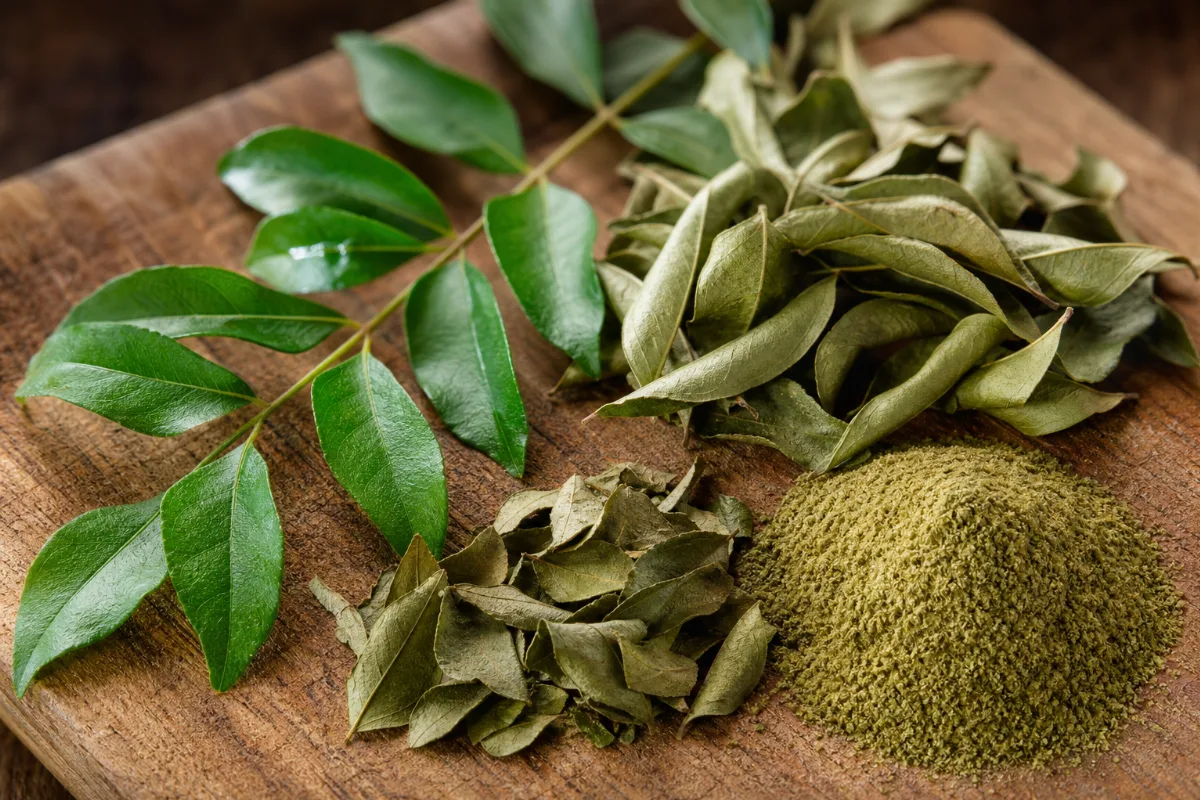
Curry leaf
Murraya koenigii · also called Curry tree leaf, sweet neem, kari patta, kadi patta, karuveppilai, hoja de curry (Spanish)
Curry leaf is the fragrant leaf of a small tropical tree, fried in oil at the start of many South Indian and Sri Lankan dishes. It is not the same as curry powder. Three small studies of leaf powder, extract or juice reported lower blood sugar in people with diabetes, but they were small, short and weakly described, and none tested curry leaf as a cooking spice. Most other research is in cells and animals. The main cautions are pesticide residues on fresh leaves and the lack of safety research on concentrated products.
General information, not medical advice. Last substantive update · Not medically reviewed. A named clinician has not signed off on this page. How this page is made
About Curry leaf
Curry leaf is a fragrant cooking leaf, not a proven remedy. It adds a citrus-like, slightly bitter flavor when fried in oil. The small amount of human research used powders, extracts, juices or a manufactured product, and no study tested the cooking leaf.
What it is
Curry leaf comes from Murraya koenigii (also written Bergera koenigii), a small tropical tree in the citrus family. Wikipedia says it is native to the Indian subcontinent, southern China and mainland Southeast Asia. GBIF lists Murraya koenigii as the accepted name.
The leaves are used fresh, dried or ground to powder. Wikipedia describes the fresh leaf flavor as mild, aromatic and slightly bitter, and says the aroma and flavor of dried leaves are greatly inferior. The fruit is a small black berry with an edible pulp, but the seed may be toxic.
Curry leaf is not curry powder, which is a blend of other spices. It is also not neem, although it is sometimes called sweet neem.
Flavor and cooking
Wikipedia says the fresh leaves are most widely used in southern and west coast Indian cooking, usually fried in vegetable oil with mustard seeds and chopped onions at the start of a dish. They go into thoran, vada, rasam and kadhi, and are dry-roasted and ground into masalas such as sambar masala. They are also used in Sri Lanka, Bangladesh, Cambodia and Java.
Wikipedia lists sulfury (1-phenylethanethiol) and citrusy (linalool) smell compounds among the main aroma compounds in the leaves.
Nutrition
We found no USDA FoodData Central entry for curry leaf, and our re-check was blocked by a rate limit, so we give no per-portion figures. Wikipedia describes the leaves as a rich source of carotenoids, beta-carotene, calcium and iron, without figures.
A few leaves weigh very little, so food amounts add little of any nutrient.
What the research shows
Three small studies reported lower blood sugar in people with type 2 diabetes: 12 g of leaf powder a day for a month (30 adults, 1990), an encapsulated extract for 45 days (45 women, 2023), and a gooseberry, ginger and curry leaf juice added to diabetes tablets for 4 weeks (120 adults, 2026). The 1990 and 2023 abstracts do not say whether there was a control group. The 2026 result was no longer significant after adjustment.
The 1990 study found no change in blood fats. A 2025 manufacturer-funded trial found a plant-based iron product from curry leaf raised haemoglobin versus placebo, but iron stores did not change significantly.
Claims for the liver, inflammation, antioxidant effects and cancer come from cell and animal studies only.
Food versus powders, extracts and products
The human studies used a powder, an extract, a mixed juice or a manufactured product. Their results do not carry over to a few fried leaves in a dish. Lab findings are mostly for extracts or single carbazole compounds.
Amounts
This page gives no amounts to eat. Ask a doctor, pharmacist or dietitian what is right for you, especially if you take diabetes medicines.
At a glance
Traditional uses history, not proof
- Fried in oil with mustard seeds at the start of cooking in South Indian and Sri Lankan dishes
- Used in Ayurvedic and Siddha medicine; Wikipedia notes there is no high-quality clinical evidence for these uses
- Long use as food is not proof that it treats any condition
Studied for research
- Blood sugar in type 2 diabetes, very low certainty (three small studies)
- Blood fats (cholesterol and triglycerides), insufficient evidence
- Iron-deficiency anaemia, very low certainty (one manufacturer-funded trial of a product)
- Liver protection, insufficient evidence (animal and lab only)
- Antioxidant, anti-inflammatory and anti-cancer activity, insufficient evidence (cell and animal only)
Main compounds
- Carbazole alkaloids (mahanimbine, girinimbine, mahanine)
- Linalool (aroma)
- Sulfur-containing aroma compounds
- Carotenoids, calcium and iron (named by Wikipedia without figures)
Common forms
- Fresh leaves as a cooking spice
- Dried leaves (milder in flavor)
- Leaf powder
- Extracts, juices and manufactured products (the research used these, not the cooking leaf)
Research links: 2026 trial: gooseberry, ginger and curry leaf juice in type 2 diabetes · 1990 study: curry leaf powder in diabetes · FDA: Selecting and Serving Produce Safely · Research Library · Genes & Biomarkers Library
What it is and its history
- Accepted scientific name
- Murraya koenigii
- Naming authority
- (L.) Spreng. (GBIF accepted)
- Synonyms
- Bergera koenigii L. (listed as a synonym by GBIF; Wikipedia and some sources use it as the current name)
- Common names
- Curry leaf (English); Curry tree (English); Sweet neem (English); Kari patta, kadi patta (Hindi); Karuveppilai (Tamil); Hoja de curry (Spanish)
- Family or group
- Rutaceae (the citrus family), as given by GBIF and Wikipedia.
- Classification
- Plantae > Tracheophyta > Magnoliopsida > Sapindales > Rutaceae > Murraya > Murraya koenigii
- Native range
- Wikipedia: the Indian subcontinent, southern China and mainland Southeast Asia, introduced elsewhere. Not confirmed by a second source.
- Habitat
- Wikipedia: grows best in well-drained soil that does not dry out, in full sun or partial shade, and in temperatures of at least 18 C. Not confirmed by a second source.
- What it looks like
- Roots: Not verified.; Stems: Wikipedia: a small to medium tropical tree, typically 4 to 6 metres tall, up to 8 to 10 metres.; Leaves: Wikipedia: aromatic, pinnate, with 11 to 21 leaflets, each 2 to 4 cm long. The leaves are the part used in cooking.; Flowers: Wikipedia: small, white, able to self-pollinate.; Fruit: Wikipedia: small shiny-black drupes (berries) with one large seed; the pulp is edible and sweet, but the seed may be toxic.
- Cultivation
- Wikipedia says commercial plantations exist in India, Australia and Spain, and that in India it is a fixture in almost every household. Because leaves are best used fresh, they are often traded through local networks of farmers and stall vendors. Not confirmed by a second source.
- Harvest and processing
- Used fresh, dried or ground to powder. Wikipedia says the dried leaf aroma and flavour are greatly inferior to fresh. The oil can be extracted and used to make scented soaps. The existing site summary also lists extracts and essential oil as product forms.
- Look-alikes and adulterants
- Name: Curry powder; Note: A blend of other spices, not made from curry leaf. The existing page says curry leaf and curry powder are different; this was not re-checked from a primary source.; Name: Neem (Azadirachta indica); Note: Curry leaf is sometimes called sweet neem but is a different tree. Not a reason to treat neem and curry leaf as the same.; Name: Other plants called curry leaf; Note: A 2021 review covers three different plants (Murraya koenigii, Micromelum minutum and Clausena indica) that it calls varieties of curry leaves. Only Murraya koenigii is the usual cooking leaf here, and the results for the others do not apply to it.
- Sustainability and conservation
- Not assessed. Wikipedia notes it is classed as an environmental weed in Queensland, Australia.
Photographs
Traditional use and history history, not clinical proof
| Tradition or era | Documented use | Source |
|---|---|---|
Traditional use shows how it was used. It does not show that it works or is safe today.
What is inside, and how it may work
What it contains and how those compounds act in cells and animals. Laboratory and animal mechanisms are not proven effects in people.
Main compounds
| Compound | Family | Where it is concentrated | Activity studied | Level of evidence |
|---|---|---|---|---|
| Mahanimbine PubChem 167963 | carbazole alkaloid | Leaf | Named by Wikipedia among carbazole alkaloids in the plant. Lab and animal studies only. 12 2 | Lab animal |
| Girinimbine PubChem 96943 | carbazole alkaloid | Leaf | Named by Wikipedia among carbazole alkaloids in the plant. Lab and animal studies only. 12 2 | Lab animal |
| Mahanine PubChem 36689305 | carbazole alkaloid | Leaf | Named by Wikipedia among carbazole alkaloids in the plant. Lab and animal studies only. 12 2 | Lab animal |
| Linalool PubChem 6549 | terpene (aroma compound) | Leaf | One of the aroma compounds Wikipedia lists for the leaves; gives the citrus-like smell. No health claim is made here. 12 | Chemistry only |
Mechanisms, receptors and pathways
| Target or pathway | Gene or receptor | What was found | Level |
|---|---|---|---|
| Carbazole alkaloids and blood sugar (animal) | Not specified | Reviews describe lower blood sugar and blood fats in rats and mice given leaf extracts or isolated carbazole alkaloids. Not shown in people. 6 2 | Lab animal |
| Cell-signalling molecules in lab models | Bcl-2, Bax, NF-kB, TNF-alpha (named in the 2021 review abstract) | The review says leading constituents act on these molecules in in vitro and in vivo models. Not shown in people. 1 | Lab animal |
Absorption, metabolism and elimination
- Absorption
- Not found.
- Distribution
- Not found.
- Metabolism
- Not found.
- Elimination
- Not found.
- Bioavailability
- The earlier site summary says reviews note low absorption of the leaf compounds and ask for bioavailability studies; the abstracts read this round do not say this, so it is not stated as fact.
Isolated compounds versus whole extracts
The human blood sugar studies used leaf powder, an encapsulated extract and a three-ingredient juice, and the iron trial used a manufactured product, so none tells us about curry leaf used as a cooking spice. Lab and animal findings are mostly for extracts or isolated carbazole compounds. A few fried leaves in a dish are a very different dose from any of these.
Nutritional composition
No USDA FoodData Central entry for curry leaf was found by the earlier site summary (SR Legacy has none; the 'curry powder' entry is a different product). We tried to re-check on 2026-10-26 but the USDA search was rate-limited, so this is not re-verified, and we give no per-portion figures. One lab analysis in the 2023 Pakistan diabetes study measured a curry leaf sample at moisture 24.1 percent, ash 17.82 percent, crude protein 8.32 percent, crude fibre 6.98 percent, crude fat 6.87 percent and nitrogen-free extract (mainly carbohydrate) 36.12 percent, with magnesium and calcium as the major minerals; the abstract does not say whether the leaves were fresh or dried (the moisture suggests partly dried). Wikipedia describes the leaves as a rich source of carotenoids, beta-carotene, calcium and iron, without figures. A few leaves weigh very little, so food amounts add little of any nutrient. No cooking amount or typical portion is stated by any source we read.
2 very low certainty3 not enough evidence
What was looked at
The 5 benefits and uses checked for Curry leaf, each with how strong the evidence is. Tap one to open it.
- Blood sugar in type 2 diabetesVery low certainty
- Blood fats (cholesterol and triglycerides)Not enough evidence
- Iron-deficiency anaemia (a plant-based iron product made from curry leaf)Very low certainty
- Liver protection (animal and lab studies only)Not enough evidence
- Antioxidant, anti-inflammatory and anti-cancer activity (cell and animal studies only)Not enough evidence
Lab markers tracked in the studies
Fasting blood glucose and HbA1cTotal cholesterol, lipoprotein cholesterol and triglyceridesHaemoglobin and iron markers
What is Curry leaf good for?
The main studied uses and how strong the human evidence is for each. Most results are for powders, extracts, juices or manufactured products, not for curry leaf used in cooking.
Benefits, one by one
Each card is a research question, not a promise. Tap a goal to filter. Open a card to see the studies, doses and limits.
Blood sugar in type 2 diabetes
Very low certaintyThree small human studies looked at curry leaf in people with type 2 diabetes: one of leaf powder (1990), one of a leaf extract in capsules (2023) and one of a juice that also contained gooseberry and ginger (2026). Each reported a drop in blood sugar, but the studies were small, short and weakly described, and none tested curry leaf used as a cooking spice. This is not a treatment for diabetes.
3 studiesLeaf powder (1990), encapsulated leaf extract (2023) and a mixed juic…
Studies, doses and limits
What the trials found
1990, India: 30 adults with non-insulin-dependent diabetes took curry leaf powder (12 g a day, providing 2.5 g fibre) for one month. The abstract reports a transient fall in fasting and after-meal blood sugar at day 15, and no appreciable change in glycated proteins, blood fats or other markers at day 15 or day 30. It does not say whether there was a control group. 2023, Pakistan: 45 women with type 2 diabetes took encapsulated leaf extract in two dose groups for 45 days; the abstract reports a significant fall (p<0.05) in fasting blood sugar, random blood sugar and HbA1c in both groups. The abstract gives no numbers for the size of the fall and does not describe a control group or blinding. 2026, India: in a one-month open-label trial of 120 adults already taking diabetes tablets, a juice of Indian gooseberry, ginger and curry leaves plus tablets was compared with tablets alone. Fasting blood glucose fell by 20.3 mg/dL with the juice versus 4.7 mg/dL with tablets alone (between-group p=0.012), but after adjusting for baseline glucose, age and sex the difference was no longer statistically significant (p=0.060).
Results
All three reported lower blood sugar, but each is small or weak: unclear controls (1990, 2023), a three-ingredient juice that cannot be credited to curry leaf alone (2026), a result that lost significance after adjustment (2026), and no follow-up beyond about six weeks.
Effect sizes as reported
Juice trial (combination): fasting glucose -20.3 mg/dL with juice plus tablets versus -4.7 mg/dL with tablets alone; adjusted p=0.060. The 1990 and 2023 abstracts give no effect sizes.
Why this rating
Very low. Small studies (30, 45 and 120 people), short (about 1 to 6 weeks), unclear or no blinding, one study tested a three-ingredient juice, and the best-designed one lost statistical significance after adjustment. Two of the three studies were of powder or extract, not culinary use. No large placebo-controlled trial was found.
Form and dose studied
Leaf powder (1990), encapsulated leaf extract (2023) and a mixed juice (2026). The study amounts were far above a cooking amount and are not advice.
Who was studied
Adults with type 2 diabetes in India and Pakistan. The 2023 study was in women only.
Limits
Abstracts only were read. Unclear whether the 1990 and 2023 studies had control groups. Combination product in 2026. No study of curry leaf as eaten in food. Authors of the 2026 trial call for larger placebo-controlled trials.
Why researchers looked
Curry leaf is used in Ayurvedic and Siddha tradition, and animal studies of leaf extracts reported lower blood sugar, so researchers tested it in people with diabetes.
Traditional use
Curry leaf is eaten as a cooking leaf across South Asia. It is also used in Ayurvedic and Siddha medicine, but Wikipedia notes there is no high-quality clinical evidence for those uses. Long use as food is not proof that it treats any condition.
Proposed mechanism Animal lab
Not established in people. Reviews describe lower blood sugar in diabetic rats and mice given leaf extracts or single compounds (carbazole alkaloids), and suggest the effect may involve the way the gut and body handle sugar. These are animal and lab findings.
A proposed mechanism does not show that the effect happens in people.
People who take diabetes medicines should not add concentrated curry leaf products without asking their clinic, because blood sugar could fall further. This is a general caution; no source read tested this combination for harm.
Blood fats (cholesterol and triglycerides)
Not enough evidenceThe only human study that measured blood fats after curry leaf powder (30 adults with diabetes, one month) found no appreciable change. Lower cholesterol is reported only in animal studies.
2 studiesLeaf powder in the human study. Not culinary use.
Studies, doses and limits
What the trials found
In the 1990 study of 30 adults with non-insulin-dependent diabetes taking 12 g of leaf powder a day, the abstract reports no appreciable change in serum total cholesterol, lipoprotein fractions or triglycerides at 15 or 30 days.
Results
No change in blood fats in the one human study found. Reviews describe lipid-lowering in animals only.
Why this rating
Insufficient. One small human study, with no change in blood fats, and animal findings that do not reliably carry over.
Form and dose studied
Leaf powder in the human study. Not culinary use.
Who was studied
Adults with type 2 diabetes (India, 1990).
Limits
Abstract only; one small study; no control group described.
Why researchers looked
Animal studies of leaf extracts reported lower cholesterol, so the 1990 diabetes study also measured blood fats.
Traditional use
Curry leaf is eaten as a cooking leaf. Long use as food is not proof that it treats any condition.
Proposed mechanism Animal lab
Not established. Animal studies reported lower cholesterol with leaf extracts; this is not shown in people.
A proposed mechanism does not show that the effect happens in people.
None specific.
Iron-deficiency anaemia (a plant-based iron product made from curry leaf)
Very low certaintyOne 2025 trial in 96 adults tested a company's iron supplement made from Murraya koenigii (curry leaf) alone or with vitamin C from amla, against placebo for 60 days. Haemoglobin rose more than with placebo. The supplement is a manufactured product, not curry leaf eaten in food, and the company that makes it paid for the study.
1 studiesA manufactured product (18 mg iron a day in the trial). Not culinary …
Studies, doses and limits
What the trials found
2025 randomised, double-blind, placebo-controlled trial of 96 adults aged 26 to 55 with iron-deficiency anaemia. For 60 days they received 18 mg of plant-based iron from Murraya koenigii (product name Orgen-I) plus 90 mg of vitamin C from amla (Orgen-C), 18 mg of the plant-based iron alone, or placebo. Both treatment groups had significantly better haemoglobin than placebo (p<0.001), more so in the combination group. Serum iron and ferritin rose but not significantly (p>0.05). Transferrin fell significantly (p<0.0001) and red cell count rose (p<0.05). No adverse events were reported.
Results
Haemoglobin improved versus placebo with a manufactured curry-leaf-derived iron product. Ferritin and serum iron did not change significantly, which is odd for an iron treatment and leaves the result hard to interpret.
Effect sizes as reported
Not given as numbers in the abstract; haemoglobin difference versus placebo p<0.001.
Why this rating
Very low. One small trial, 60 days, a branded product that is not curry leaf as food, vitamin C from amla in one arm, the manufacturer funded the study and one author is from its research department, and iron markers did not rise significantly.
Form and dose studied
A manufactured product (18 mg iron a day in the trial). Not culinary use and not advice.
Who was studied
Adults aged 26 to 55 with haemoglobin of 8 to 11 (units given as mg/dL in the abstract), not pregnant or breastfeeding.
Limits
Abstract only. Industry-funded. Result applies to this product only. Nobody has shown that eating curry leaves treats low iron.
Why researchers looked
Curry leaf contains iron and Wikipedia describes the leaves as a rich source of iron, so a manufacturer developed a plant-based iron product from it.
Traditional use
Curry leaf is eaten as a cooking leaf. Long use as food is not proof that it treats any condition.
Proposed mechanism Unknown
Not stated in the abstract. The product is described as a plant-based iron formulation.
A proposed mechanism does not show that the effect happens in people.
Low iron needs a diagnosis and treatment by a clinician.
Liver protection (animal and lab studies only)
Not enough evidenceA 2025 review of 149 articles says curry leaf extracts protected liver cells and animals from damage by heavy metals, drugs and other toxins. This is animal and lab work. No human trial of curry leaf for liver health was found.
1 studiesExtracts of various kinds in animals; not culinary use.
Studies, doses and limits
Results
Review of 149 mostly animal and lab studies, written by authors who conclude curry leaf has great potential as a natural liver-protective agent. This is a hypothesis, not a result in people.
Why this rating
Insufficient. Animal and lab evidence only; narrative review whose own conclusion is more enthusiastic than the evidence supports.
Form and dose studied
Extracts of various kinds in animals; not culinary use.
Limits
Abstract only. Narrative review; no assessment of study quality in the abstract.
Why researchers looked
Curry leaf is used in Ayurveda, and lab and animal studies reported liver-protective effects of leaf extracts.
Traditional use
Curry leaf is used in Ayurveda. Long use as food is not proof that it treats any condition.
Proposed mechanism Animal lab
The review says flavonoids, tannins and alkaloids in leaf extracts changed oxidative stress and inflammation signals and restored liver enzyme markers in animals and cells.
A proposed mechanism does not show that the effect happens in people.
Nobody should treat liver disease with curry leaf; see a clinician.
Antioxidant, anti-inflammatory and anti-cancer activity (cell and animal studies only)
Not enough evidenceReviews describe antioxidant, anti-inflammatory and anti-tumour effects of curry leaf extracts and carbazole compounds in cells and animals. No human trial was found for these uses.
2 studiesExtracts and isolated compounds; not culinary use.
Studies, doses and limits
Results
Lab and animal findings only. The reviews themselves call for more research to validate the claims.
Why this rating
Insufficient. Cell and animal research only; results in dishes and rodents often do not carry over to people, and the reviews note this.
Form and dose studied
Extracts and isolated compounds; not culinary use.
Limits
Abstracts only. Reviews by authors who call for further validation.
Why researchers looked
Curry leaf is rich in carbazole alkaloids and other plant compounds that show activity in lab tests.
Traditional use
Curry leaf is used in Ayurvedic and Siddha medicine. Long use as food is not proof that it treats any condition.
Proposed mechanism Animal lab
One 2021 review says compounds in curry leaves act on cell-signalling molecules including Bcl-2, Bax, NF-kB and TNF-alpha in cell and animal models. A 2020 review calls for more research on the molecular basis of these effects.
A proposed mechanism does not show that the effect happens in people.
None specific. Do not use curry leaf products as a treatment for cancer or any other disease.
Connections to the rest of health
How Curry leaf connects to the rest of our health knowledge graph. Every link says what kind of connection it is. A safety link (for example to the liver) is a warning, not a benefit. A study that merely mentions a topic never creates a benefit link.
Explore every connection: goals, body systems, organs, symptoms, genes
B. Body systems
| Connected to | Kind of connection | Evidence status | Context | Studies |
|---|---|---|---|---|
| Endocrine System | Biological association | Very low certainty | Studied for: Blood sugar in type 2 diabetes | 5 3 9 |
| Cardiovascular System | Biological association | Not enough evidence | Studied for: Blood fats (cholesterol and triglycerides) | 5 6 |
| Blood And Immune | Biological association | Very low certainty | Studied for: Iron-deficiency anaemia (a plant-based iron product made from curry leaf) | 8 |
| Hepatic System | Biological association | Not enough evidence | Studied for: Liver protection (animal and lab studies only) | 4 |
| Whole Body Balance | Biological association | Not enough evidence | Studied for: Antioxidant, anti-inflammatory and anti-cancer activity (cell and animal studies only) | 2 1 |
E. Health conditions
| Connected to | Kind of connection | Evidence status | Context | Studies |
|---|---|---|---|---|
| Type 2 diabetes | Drug or supplement interaction | Theoretical | Small studies report lower blood sugar; people on diabetes medicines should ask their clinic. Preparation or compound: Curry leaf powder, extract or juice |
5 3 9 |
| Type 2 diabetes | Very low certainty | Three small studies of leaf powder, extract or juice reported lower blood sugar. Preparation or compound: Leaf powder, extract or juice (not culinary use) |
5 3 9 |
I. Biomarkers
| Connected to | Kind of connection | Evidence status | Context | Studies |
|---|---|---|---|---|
| Fasting blood glucose and HbA1c | Biological association | Very low certainty | Measured in trials: lowered. A lab change is not the same as a health benefit. | 5 3 9 |
| Total cholesterol, lipoprotein cholesterol and triglycerides | Biological association | Not enough evidence | Measured in trials: no-change. A lab change is not the same as a health benefit. | 5 |
| Haemoglobin and iron markers | Biological association | Very low certainty | Measured in trials: raised. A lab change is not the same as a health benefit. | 8 |
K. Biological pathways
| Connected to | Kind of connection | Evidence status | Context | Studies |
|---|---|---|---|---|
| Iron | Preliminary mechanism | Human | Wikipedia describes curry leaves as a source of iron; a manufacturer-funded trial tested an iron product made from the plant. | 12 8 |
| Type 2 diabetes | Preliminary mechanism | Human | Three small studies of leaf powder, extract or juice reported lower blood sugar. | 5 3 9 |
L. Active compounds
| Connected to | Kind of connection | Evidence status | Context | Studies |
|---|---|---|---|---|
| Mahanimbine | Biological association | Lab animal | Named by Wikipedia among carbazole alkaloids in the plant. Lab and animal studies only. Preparation or compound: Leaf |
12 2 |
| Girinimbine | Biological association | Lab animal | Named by Wikipedia among carbazole alkaloids in the plant. Lab and animal studies only. Preparation or compound: Leaf |
12 2 |
| Mahanine | Biological association | Lab animal | Named by Wikipedia among carbazole alkaloids in the plant. Lab and animal studies only. Preparation or compound: Leaf |
12 2 |
| Linalool | Biological association | Chemistry only | One of the aroma compounds Wikipedia lists for the leaves; gives the citrus-like smell. No health claim is made here. Preparation or compound: Leaf |
12 |
Each connection is stored with the ingredient, the connected record, the kind of connection, the evidence status, the supporting studies, the preparation or compound involved, and a review date (last reviewed October 26, 2026).
Evidence at a glance: what changed in 3 lab markers
Tap a number to show only those markers. Counts are markers, not people.
The evidence
The research centre for Curry leaf. Every record here was checked against PubMed or the publisher's page; we never list a study we have not verified.
Evidence by outcome
Bars show how many studies we found for each outcome, not how well it works. People are added up across trials only (reviews are not added, to avoid double counting).
How we rate evidence
High certainty
Several well-run trials or reviews agree; further research is unlikely to change the picture much.
Moderate certainty
Good trials point the same way, but some doubt remains.
Low certainty
Small, short or inconsistent trials. The finding could change with better research.
Very low certainty
Very little or very weak human data. Treat as a possibility only.
Mixed findings
Trials or reviews disagree with each other.
Not enough evidence
Not enough human research to say either way.
Evidence against
Good research found no benefit, or found harm.
We take the reviewers' own risk-of-bias and GRADE statements where they exist, and otherwise judge from study size, design, consistency, directness and whether a product matches what is sold. Many publications do not make evidence high. Method note: We started from our existing curry leaf summary, then read PubMed abstracts for each study, the GBIF species record, PubChem entries, Wikipedia and the FDA produce page. Only abstracts were read for studies. Items we could not verify are flagged in the research gaps.
Study library: every study we checked 12
| Study | Design | People | Product, dose, length | Result |
|---|---|---|---|---|
| Abeysinghe 2021 Nutritive Importance and Therapeutics Uses of Three Different Varieties (Murraya koenigii, Micromelum minutum, and Clausena indica) of Curry Leaves: An Updated Review. Evid Based Complement Alternat Med · PMID 34754314 · DOI |
Narrative review lab-animal |
Mostly in vitro and in vivo models | Leaf extracts and constituents of three plants called curry leaf Leaf and other parts Varied Varied · vs Varied |
The review reports activity against signalling molecules including Bcl-2, Bax, NF-kB and TNF-alpha in in vitro and in vivo models, and stresses the need for comprehensive research to validate efficacy as herbal remedies. The three plants are different species. Not given in the abstract Methods, limits and fundingOutcomes: Antioxidant, anti-diabetic, anti-inflammatory and anti-tumour activities; clinical studies up to date Limitations: Narrative review; covers three different species under the name curry leaf. Funding and conflicts: The authors declare no conflicts of interest. Read: abstract |
| Balakrishnan 2020 Medicinal Profile, Phytochemistry, and Pharmacological Activities of Murraya koenigii and its Primary Bioactive Compounds. Antioxidants (Basel) · PMID 31991665 · DOI |
Narrative review lab-animal |
Cell and animal studies | Curry leaf extracts and carbazole alkaloids Leaves, roots and bark Varied Varied · vs Varied |
The review describes these activities for the plant's carbazole alkaloids and says more research is needed on the molecular basis in cellular and animal models to validate efficacy. Not given in the abstract Methods, limits and fundingOutcomes: Antioxidant, anti-diabetic, anti-inflammatory, anti-tumour and neuroprotective activities Limitations: Narrative review; abstract does not mention any human trial. Funding and conflicts: The authors declare no conflicts of interest. Read: abstract |
| Farooq 2023 Investigating the therapeutic potential of aqueous extraction of curry plant (Murraya koenigi) leaves supplementation for the regulation of blood glucose level in type 2 diabetes mellitus in female human subjects. Pak J Pharm Sci · PMID 37548196 |
Human study design unclear |
45 Adult women with type 2 diabetes |
Encapsulated curry leaf extract (aqueous) Leaf 5 mg per kg body weight (group I) and 10 mg per kg (group II) 45 days · vs Not described in the abstract |
Significant (p<0.05) reduction in fasting blood sugar, random blood sugar and glycated haemoglobin in both treatment groups. The abstract also reports a lab analysis of the leaves (see the identity file). No numbers in the abstract Methods, limits and fundingOutcomes: Random blood sugar, fasting blood sugar, HbA1c at day 0 and day 45 Limitations: Abstract only. No control group or blinding described; effect sizes not given; two-sample t-test; small sample. Funding and conflicts: Not stated in the abstract. Read: abstract |
| Gangawat 2025 Hepatoprotective Potential of Murraya koenigii (Curry Leaves) against Xenobiotics, Heavy Metals, and Hepatotoxic Agents: A Comprehensive Review. Curr Drug Discov Technol · PMID 38982918 · DOI |
Narrative review lab-animal |
Mostly animal and lab studies (149 articles) | Curry leaf extracts of various kinds Leaf Varied Varied · vs Varied |
The authors conclude that flavonoids, tannins and alkaloids in the extracts reversed liver toxicity by changing oxidative and ER stress, restoring liver markers and controlling inflammatory signals, and that the plant has great potential as a natural liver-protective agent. Not given in the abstract Methods, limits and fundingOutcomes: Liver damage markers after exposure to heavy metals, drugs and other toxins Limitations: Narrative review; the abstract does not describe study quality or any human trial. Funding and conflicts: Not stated in the abstract. Read: abstract |
| Iyer 1990 Studies on the effect of curry leaves supplementation (Murraya Koenigi) on lipid profile, glycated proteins and amino acids in non-insulin-dependent diabetic patients. Plant Foods Hum Nutr · PMID 2174154 · DOI |
Uncontrolled or unclear human study |
30 Adults with non-insulin-dependent diabetes |
Curry leaf powder Leaf 12 g a day (2.5 g fibre) 1 month (measured at days 1, 15 and 30) |
A transient reduction in fasting and after-meal blood sugar at 15 days. No appreciable change in glycated serum proteins, glycated LDL, serum lipids, lipoprotein cholesterol, uronic acid or total amino acids at 15 or 30 days. Not given in the abstract Methods, limits and fundingOutcomes: Fasting and 2-hour after-meal blood sugar, total cholesterol and fractions, triglycerides, amino acids, uronic acid, glycated proteins Limitations: Abstract only. Control group, randomisation and blinding not stated. Small and short. Powder amount far above a cooking amount. Funding and conflicts: Not stated in the abstract. Read: abstract |
| Jachak 2024 Murraya koenigii (L.) Spreng. as a Natural Intervention for Diabesity: A Review. Curr Pharm Des · PMID 39253925 · DOI |
Narrative review lab-animal |
Cell-line and animal studies | Curry leaf extracts and isolated carbazole alkaloids Leaf Varied Varied · vs Varied |
The review summarises in vitro and in vivo (cell and animal) studies, from crude extracts to isolated compounds, and says some studies need further in-depth analysis and validation. Not given in the abstract Methods, limits and fundingOutcomes: Anti-diabetic, anti-hyperglycaemic and anti-hyperlipidaemic activity Limitations: Narrative review of cell and animal work; no human trials in the abstract. Funding and conflicts: Not stated in the abstract. Read: abstract |
| Nair 2013 Monitoring and risk assessment of pesticide residues in agricultural / horticultural commodities Entomon 38(3) · Source |
Monitoring study n/a |
Methods, limits and fundingRead: abstract | ||
| Patel 2025 Efficacy of Plant-Based Iron and Vitamin C in Adults With Iron Deficiency Anemia: A Randomized, Double-Blind Clinical Study. Cureus · PMID 41287676 · DOI |
Randomised double blind placebo controlled trial |
96 Adults aged 26 to 55 with iron-deficiency anaemia (not pregnant or breastfeeding) |
Plant-based iron from Murraya koenigii (Orgen-I), alone or with vitamin C from Phyllanthus emblica (Orgen-C) Leaf (product source) 18 mg iron (with 90 mg vitamin C in group A) 60 days · vs Placebo |
Both treatment groups had significantly better haemoglobin than placebo (p<0.001), more so with vitamin C. Serum iron and ferritin rose without significance (p>0.05). Transferrin fell (p<0.0001), red cell count rose (p<0.05), superoxide dismutase improved without significance. No adverse events reported. Not given as numbers in the abstract Methods, limits and fundingOutcomes: Haemoglobin, serum iron, ferritin, transferrin, red cell count, superoxide dismutase Limitations: Manufacturer (Orgenetics Inc.) provided financial support, and one author lists Orgenetics research and development as their affiliation. Branded product, not food. Amla vitamin C in one arm. Abstract and funding statement only. Funding and conflicts: Industry-funded: Orgenetics Inc. provided financial support. The authors declare no other financial relationships. Read: abstract |
| Ravindran 2026 Effect of a polynutraceutical juice (Indian gooseberry, ginger and curry leaves) as an adjunct to oral antidiabetic drugs on fasting blood glucose in type 2 diabetes: A randomized controlled trial. Nutr Health · PMID 42924871 · DOI |
Open label randomised controlled trial |
120 Adults with type 2 diabetes attending a clinic in Puducherry, India (112 completed) |
Juice of Indian gooseberry, ginger and curry leaves (combination product) Fruit, rhizome and leaf Not given in the abstract 4 weeks · vs Oral antidiabetic drugs alone |
Juice group (n=55) fasting glucose fell by 20.3 mg/dL (p<0.001); drugs-alone group (n=57) fell by 4.7 mg/dL (p=0.068). Between-group difference significant after Bonferroni correction (p=0.012), but after adjusting for baseline glucose, age and sex it was not significant (ANCOVA p=0.060). Authors call for larger placebo-controlled trials with longer follow-up. -20.3 vs -4.7 mg/dL Methods, limits and fundingOutcomes: Fasting blood glucose at baseline and 4 weeks Limitations: Open-label (no blinding, no placebo). Three-ingredient juice, so effect cannot be credited to curry leaf. Adjusted result not significant. Only 4 weeks. Abstract only. Funding and conflicts: Not stated in the abstract. Read: abstract |
| s-fda-produce FDA: Selecting and Serving Produce Safely · Source |
Health agency n/a |
Methods, limits and fundingRead: full-text | ||
| s-gbif-murraya-koenigii GBIF Backbone: Murraya koenigii (L.) Spreng. (usageKey 5421333) · Source |
Reference database n/a |
Methods, limits and fundingRead: full-text | ||
| s-wikipedia-curry-tree Wikipedia: Curry tree (Bergera koenigii) · Source |
Encyclopedia n/a |
Methods, limits and fundingRead: full-text |
What we do not know yet
- No study of curry leaf eaten as a cooking spice was found for any health outcome.
- The human blood sugar studies were small and short; two did not describe a control group in their abstracts, and one used a three-ingredient juice.
- No safety study, pregnancy or breastfeeding guidance, allergy report or drug interaction study was found.
- No USDA nutrient entry or per-portion figures; the re-check was blocked by a rate limit.
- The pesticide study is from 2013 and covered few samples; heavy metals in curry leaf were not found from a source read.
- Native range, history and the berry-seed warning rest on Wikipedia alone.
How new research is added
New studies are found by a saved PubMed search and placed in a review queue before the page changes.
Lab markers
What changed in blood or saliva tests during trials. A changed number is not the same as feeling or being healthier, and we give no "normal ranges".
Other 3
Fasting blood glucose and HbA1c
Lowered in trials
Blood sugar after fasting, and HbA1c, a measure of average blood sugar over about three months.
Very low certaintyResults and what it means
Why it was measured
These are the standard measures of blood sugar control in diabetes.
Statistical vs. clinical meaning
Small, short studies with unclear controls; one used a three-ingredient juice and lost significance after adjustment.
Safety implication
Blood sugar could fall further in people on diabetes medicines; no source read tested this.
| Study | Result | People | Product |
|---|---|---|---|
| 5 | Transient fall in fasting and after-meal blood sugar at day 15 on leaf powder; no appreciable change in glycated serum proteins | 30 adults with non-insulin-dependent diabetes, India, 1990 | Curry leaf powder, 12 g a day for one month |
| 3 | Significant (p<0.05) fall in fasting blood sugar, random blood sugar and HbA1c in both extract groups at day 45; no numbers in the abstract | 45 women with type 2 diabetes, Pakistan, 2023 | Encapsulated curry leaf extract, two dose groups |
| 9 | Fasting glucose fell 20.3 mg/dL with juice plus tablets versus 4.7 mg/dL with tablets alone (p=0.012); adjusted analysis p=0.060, not significant | 120 adults with type 2 diabetes taking tablets, India, 2026 (112 completed) | Juice of Indian gooseberry, ginger and curry leaves (combination), open-label, 4 weeks |
Total cholesterol, lipoprotein cholesterol and triglycerides
No clear change in trials
Fats in the blood, including total, LDL and HDL cholesterol and triglycerides.
Not enough evidenceResults and what it means
Why it was measured
Blood fats are a risk marker for heart disease.
Statistical vs. clinical meaning
One small study with no change; lipid lowering is seen in animals only.
Safety implication
None specific.
| Study | Result | People | Product |
|---|---|---|---|
| 5 | No appreciable change in serum lipids or lipoprotein cholesterol at 15 or 30 days | 30 adults with non-insulin-dependent diabetes, India, 1990 | Curry leaf powder, 12 g a day for one month |
Haemoglobin and iron markers
Raised in trials
Haemoglobin is the oxygen-carrying protein in red blood cells. Serum iron, ferritin and transferrin show the body's iron stores and transport.
Very low certaintyResults and what it means
Why it was measured
These tell clinicians whether a person has iron-deficiency anaemia and whether treatment works.
Statistical vs. clinical meaning
One small industry-funded trial of a manufactured product, not of curry leaf as food.
Safety implication
No adverse events reported in the abstract.
| Study | Result | People | Product |
|---|---|---|---|
| 8 | Haemoglobin significantly better than placebo in both treatment groups (p<0.001); serum iron and ferritin rose but not significantly (p>0.05); transferrin fell (p<0.0001); red cell count rose (p<0.05) | 96 adults aged 26 to 55 with iron-deficiency anaemia | Plant-based iron product made from Murraya koenigii, alone or with amla vitamin C, 60 days (manufacturer-funded) |
Safety
What studies and official sources say about side effects, medicines and who should check first. Each point shows what kind of evidence it comes from.
Main points to know 4
- Very little safety research exists. No source we read gives safety data for curry leaf in cooking or as a concentrated product. Curry leaf has been eaten for a long time in South Asian cooking, but long use is not a safety study. The three small diabetes studies did not report side effects in their abstracts, and the iron product trial reported none. Absence of reports is not proof of safety. No data 5 3 9 8
- Pesticide residues on fresh leaves. An Indian monitoring study found curry leaf among the foods with the highest pesticide residues. Chlorpyriphos, profenophos and ethion in curry leaf exceeded 4 percent of the acceptable daily intake, a margin the authors treated as a long-term (chronic) concern. The same study found no acute risk. The study page shows 2013, so the findings may be old. Wash fresh leaves under running water. Monitoring study 7 10
- If you take diabetes medicines, concentrated curry leaf products are a question for your clinic. Three small studies reported lower blood sugar in people with diabetes taking leaf powder, extract or a leaf juice, and one of them was people already on diabetes tablets. No source we read tested whether this causes blood sugar to fall too low. Cooking amounts of the leaf are very different from the study amounts. Theoretical 5 3 9
- Do not eat the berry seed. Wikipedia says the berry pulp is edible but the seed may be toxic to humans. We did not find a second source that confirms this, so treat it as unverified, but it is a reason to leave the seeds alone. Encyclopedia only 12
Side effects 2
| Effect | How often | Severity and recovery | Evidence |
|---|---|---|---|
| No adverse events reported in the plant-based iron product trial Manufacturer-funded trial of a branded product, not curry leaf as food. Abstract only. | None reported among 96 adults over 60 days | not applicable Not applicable | Controlled trial 8 |
| No side effects described in the diabetes studies' abstracts Abstracts do not mention side effects either way. We cannot tell whether they were checked. | Not established | not stated Not stated | Human study 5 3 9 |
Liver
No case of liver injury from curry leaf was found in the sources read. A liver-safety source (such as LiverTox) was not searched for this page. Animal and lab studies suggest the leaf extracts protect the liver, but that is not evidence of safety in people. 4
How often. No frequency was found.
Monitoring. No agency monitoring advice was found.
This is a safety connection. It is not evidence that Curry leaf supports liver health.
Medicines and supplements 2
| With | Why it matters | Importance | Evidence | What to do |
|---|---|---|---|---|
| Diabetes medicines (tablets or insulin) prescription | Leaf powder, extract and a leaf juice lowered blood sugar in small studies of people with diabetes, so in theory they could add to the effect of medicines. | No interaction study was found. This is our reading of the blood-sugar studies, not a statement from any source. | Theoretical Very low certainty 5 3 9 | If you take diabetes medicines, ask your clinic or pharmacist before using curry leaf powder, extracts or juices. Normal cooking amounts have not been studied for this. |
| Blood-thinning, blood-pressure and other medicines prescription | No source we read mentions any interaction for curry leaf with these medicines. That does not show there is none. | No data Not enough evidence | Ask a pharmacist if you plan to use concentrated products. |
Who should check first 5
| Situation | Advice | Evidence |
|---|---|---|
| Taking diabetes medicines and considering curry leaf powder, extracts or juices | Ask your clinic first. Do not change a prescribed medicine on your own. | Theoretical 5 3 9 |
| Pregnancy or breastfeeding | No source we read gives guidance for curry leaf in pregnancy or breastfeeding, and we did not find any studies. We make no claim either way. Ask your doctor, especially about concentrated products. | No data |
| Infants and young children | No guidance or study was found. We make no claim. Ask a paediatrician before using anything beyond ordinary food. | No data |
| Known allergy to curry leaf or other plants in the citrus family | No allergy reports for curry leaf were found in our PubMed search, so we cannot say how common this is. If you get hives, swelling or trouble breathing after eating it, stop and seek help. | No data |
| Eating the berry seed | Wikipedia says the seed may be toxic. Do not eat it. | Encyclopedia only 12 |
Overdose, product quality and regulators
Summary. No toxicity from curry leaf as ordinary food was found in the sources read. No human toxicity study was found.
Animal. Not reviewed.
Human doses studied. The 1990 study used 12 g of leaf powder a day for a month; the 2023 study used encapsulated extract for 45 days. Neither abstract describes harm, and neither reports on safety.
Overdose response. Not found.
Genotoxicity. Not researched.
Toxic or hazardous parts. Berry seed may be toxic (Wikipedia only; not confirmed by a second source).
Fresh curry leaf is often bought as bunches of leaves and used without much cooking, and one monitoring study found pesticide residues on it. Heavy-metal levels in curry leaf were not found from a source read.
Pesticide residues. In an Indian monitoring study (33 samples had pesticides detected, among commodities including cardamom, cumin seed and curry leaf), chlorpyriphos, profenophos and ethion in curry leaf exceeded 4 percent of the acceptable daily intake, which the authors treated as a margin indicating chronic health risk. No detected pesticide in any commodity exceeded 50 percent of the acute reference dose, so no acute health risk was found. The page shows the article in the 2013 issue. 7
Washing and storing fresh produce. The FDA says to wash all produce thoroughly under running water before use, not to use soap, detergent or commercial produce wash, and to keep perishable produce in a refrigerator at 40 F (4 C) or below. It says children, older adults, pregnant women and people with weakened immune systems can be especially vulnerable to foodborne illness. 10
| Body | Action | Date |
|---|---|---|
| FDA (US Food and Drug Administration) (United States) | Produce safety page: wash produce under running water, do not use soap or produce wash, refrigerate perishable produce at 40 F or below; some groups are especially vulnerable to foodborne illness. The page does not mention curry leaf. source | 2024-03-05 |
When to get medical help
- Trouble breathing, swelling of the lips, face or throat, or widespread hives after eating curry leaf
- Signs of low blood sugar (shakiness, sweating, confusion) in someone taking diabetes medicines who has started a concentrated curry leaf product. This is general advice, not from a curry leaf source.
- Vomiting, diarrhoea, stomach pain or fever after eating raw fresh leaves
Stop using the product and contact a clinician or emergency service. In the US, Poison Control is 1-800-222-1222.
General information only, not medical advice. Ask a clinician or pharmacist before use, especially with medicines, in pregnancy or with a health condition. See the Natural Remedy Safety guide.
Frequently asked questions
What is curry leaf?
What does curry leaf taste like?
Wikipedia describes the fresh leaf as mild, aromatic and slightly bitter, with citrusy and sulfury aroma compounds. Dried leaves have a greatly inferior aroma and flavor.
Is curry leaf good for diabetes?
Not shown. Three small studies of leaf powder, an extract and a mixed juice reported lower blood sugar, but they were small and short, two had no described control group, and the 2026 result lost significance after adjustment. None tested curry leaf as a cooking spice. It does not replace diabetes care.
Does curry leaf lower cholesterol?
Is curry leaf a good source of iron?
Is curry leaf good for the liver?
Only animal and lab studies suggest it, according to a 2025 review. No human trial was found.
Is curry leaf safe?
Are there pesticides on curry leaf?
Is curry leaf safe in pregnancy or breastfeeding?
We found no guidance or studies, so we make no claim. Ask your doctor, especially about powders, extracts or supplements.
Can I take curry leaf with diabetes medicines?
Is the curry leaf berry safe to eat?
Wikipedia says the pulp is edible but the seed may be toxic. We did not find a second source, so do not eat the seed.
Is curry leaf the same as neem or curry powder?
No. Curry powder is a blend of other spices, and neem is a different tree, although curry leaf is sometimes called sweet neem.
Explore by health goal
Editorial transparency
- Written by
- AlternativeMed editorial team. Research compiled with AI assistance, then checked against the sources listed.
- Medical review
- None. This page has not been reviewed by a physician or pharmacist.
- First published
- 2026-10-26
- Last substantive update
- 2026-10-26
- How we research
- We started from our existing curry leaf summary, then read PubMed abstracts for each study, the GBIF species record, PubChem entries, Wikipedia and the FDA produce page. Only abstracts were read for studies. Items we could not verify are flagged in the research gaps.
- How we rate evidence
- See "How we rate evidence" in the Evidence tab.
- Independence
- No product is promoted on this page. No affiliate links are shown. The iron trial was funded by the maker of the product tested, and this is stated in the text.
Sources 12
Each source was opened and checked. Where we read only the abstract, it says so. The small numbers in the text point here.
- Abeysinghe DT, Alwis DDDH, Kumara KAH, Chandrika UG. Nutritive Importance and Therapeutics Uses of Three Different Varieties (Murraya koenigii, Micromelum minutum, and Clausena indica) of Curry Leaves: An Updated Review.. Evid Based Complement Alternat Med. 2021. PMID 34754314. DOI 10.1155/2021/5523252. (abstract)
- Balakrishnan R, Vijayraja D, Jo SH, et al.. Medicinal Profile, Phytochemistry, and Pharmacological Activities of Murraya koenigii and its Primary Bioactive Compounds.. Antioxidants (Basel). 2020. PMID 31991665. DOI 10.3390/antiox9020101. (abstract)
- Farooq M, Ul Ain I, Aysha Iftikhar Z, et al.. Investigating the therapeutic potential of aqueous extraction of curry plant (Murraya koenigi) leaves supplementation for the regulation of blood glucose level in type 2 diabetes mellitus in female human subjects.. Pak J Pharm Sci. 2023. PMID 37548196. (abstract)
- Gangawat R, Parashar R, Yadav RK. Hepatoprotective Potential of Murraya koenigii (Curry Leaves) against Xenobiotics, Heavy Metals, and Hepatotoxic Agents: A Comprehensive Review.. Curr Drug Discov Technol. 2025. PMID 38982918. DOI 10.2174/0115701638310869240628060001. (abstract)
- Iyer UM, Mani UV. Studies on the effect of curry leaves supplementation (Murraya Koenigi) on lipid profile, glycated proteins and amino acids in non-insulin-dependent diabetic patients.. Plant Foods Hum Nutr. 1990. PMID 2174154. DOI 10.1007/BF02193851. (abstract)
- Jachak SM, Thakur MS, Ahirrao P, Goyal A. Murraya koenigii (L.) Spreng. as a Natural Intervention for Diabesity: A Review.. Curr Pharm Des. 2024. PMID 39253925. DOI 10.2174/0113816128304471240801183021. (abstract)
- Nair KP, Mathew TB, Beevi SN, George T, Rajith R. Monitoring and risk assessment of pesticide residues in agricultural / horticultural commodities. Entomon 38(3). 2013. (abstract)
- Patel MN, Patel N, Maheshvari J. Efficacy of Plant-Based Iron and Vitamin C in Adults With Iron Deficiency Anemia: A Randomized, Double-Blind Clinical Study.. Cureus. 2025. PMID 41287676. DOI 10.7759/cureus.95268. (abstract)
- Ravindran R, Nagarajan BD, John Cecily HS, et al.. Effect of a polynutraceutical juice (Indian gooseberry, ginger and curry leaves) as an adjunct to oral antidiabetic drugs on fasting blood glucose in type 2 diabetes: A randomized controlled trial.. Nutr Health. 2026. PMID 42924871. DOI 10.1177/02601060261496364. (abstract)
- . FDA: Selecting and Serving Produce Safely. . . (full-text)
- . GBIF Backbone: Murraya koenigii (L.) Spreng. (usageKey 5421333). . . (full-text)
- . Wikipedia: Curry tree (Bergera koenigii). . . (full-text)
Where to buy
Check the label first. Whatever you buy, look for these:
- Whole or ground: whole spices keep their flavor longer
- The origin and a packed-on or best-by date for freshness
- Organic or non-irradiated labeling if that matters to you
- A resealable, airtight container
Talk to a pharmacist or doctor before you start any supplement, especially if you take medicines. See the Safety tab for interactions.
Support our free guides: as an Amazon Associate we earn from qualifying purchases. Full disclosure.


