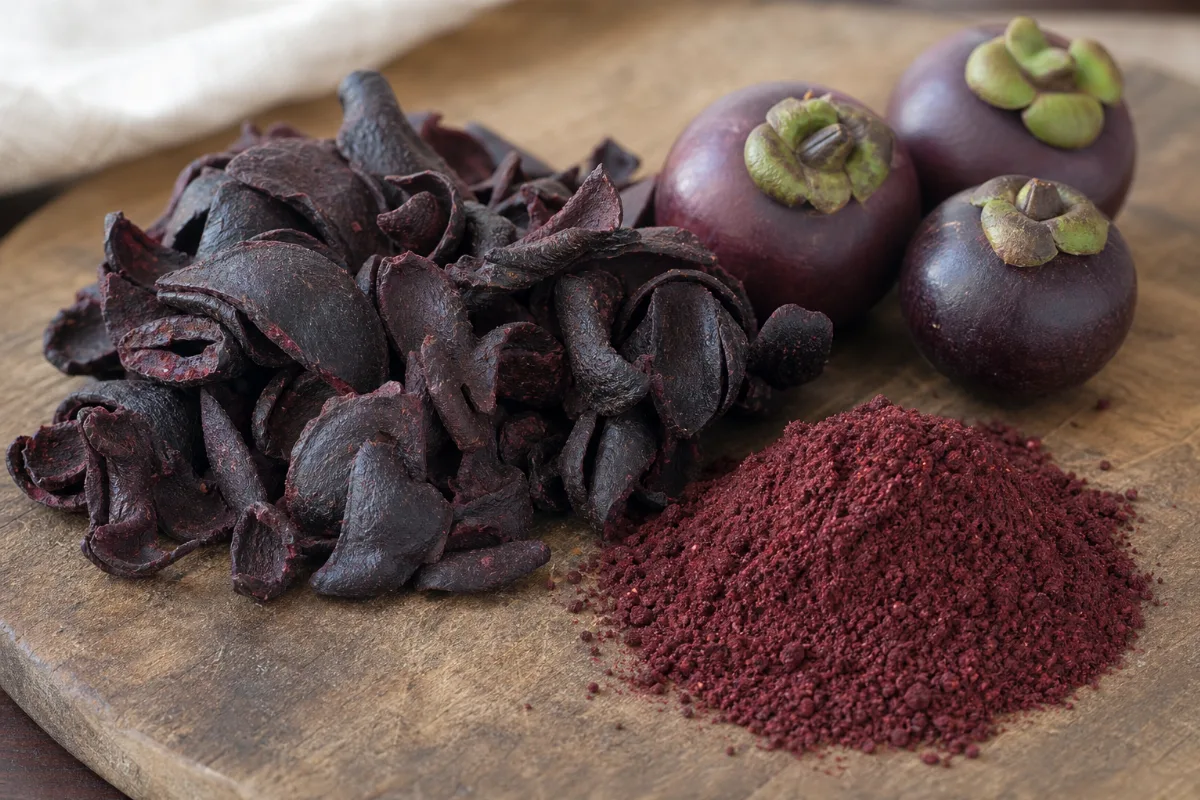
Spices · Sour fruit rind and seed butter
Kokum
Garcinia indica · also called Kokum, wild mangosteen, goa butter tree, kodampuli, amsul
Kokum is a tropical fruit from India. Its dried rind is a sour ingredient in curries and drinks, and its seeds give kokum butter. No human trial of the fruit itself was found, and most weight and blood-fat studies are on a related plant, Garcinia cambogia. The main caution: concentrated Garcinia weight-loss extracts have been linked to liver injury, so ask a doctor or pharmacist before using them.
General information, not medical advice. Last substantive update · Not medically reviewed. A named clinician has not signed off on this page. How this page is made
About Kokum
Kokum rind is a sour food ingredient with long use in Indian cooking. No human trial of the fruit or rind was found. Evidence for weight, blood fats and liver injury comes from the related plant Garcinia cambogia.
Safety first
Liver: numerous cases of liver toxicity, some severe, have been reported with Garcinia cambogia weight-loss products, and case reports describe liver failure needing transplant. Kokum shares the compound HCA, but we found no case naming kokum.
Food versus extract: cooking with kokum rind is very different from taking a concentrated weight-loss extract. No safety trial of kokum extract in people was found.
Pregnancy and breastfeeding: little is known for the related plant and nothing was found for kokum. Avoid concentrated products unless a doctor agrees.
Medicines: serotonin-affecting medicines, liver-affecting medicines and diabetes medicines may interact with concentrated Garcinia products. No information on blood thinners was found. Ask a doctor or pharmacist about amounts and your medicines.
Get urgent help for yellow skin or eyes, dark urine or upper right belly pain.
What it is
Kokum is the fruit of Garcinia indica, a tropical tree of India in the mangosteen family. The dried rind is called kodampuli or amsul. The seeds give kokum butter. Main compounds are garcinol, hydroxycitric acid (HCA) and red anthocyanin pigments.
It is not the same as Garcinia cambogia (also called Malabar tamarind), the plant behind most HCA weight-loss supplements.
What the research shows
Human evidence for kokum itself is missing. A 2023 trial of a garcinol, curcuminoids and piperine tablet in 72 adults with fatty liver found larger drops in liver enzymes than placebo (low certainty, funded by the maker, combination product).
A meta-analysis of Garcinia/HCA trials found a small weight loss, about 0.9 kg more than placebo, and another found small blood-fat changes. These used Garcinia cambogia.
Most other findings are from animals or cells: antioxidant, anti-inflammatory, mood, liver protection in alcohol-treated rats.
At a glance
Traditional uses history, not proof
- Souring agent in curries, pickles, drinks and wine
- Digestion and diarrhoea
- Inflammation and skin problems (dermatitis)
- Syrup or drink taken for cooling or after alcohol (tradition, not proven)
Studied for research
- Fatty liver (garcinol combination tablet): low
- Weight and body fat (kokum): insufficient; HCA from another plant: small effect
- Blood fats and sugar (HCA from another plant): insufficient for kokum
- Alcohol liver stress (rats): insufficient
- Inflammation, antioxidant, mood, cell studies (lab and animals): insufficient
Main compounds
- Garcinol
- Hydroxycitric acid (HCA)
- Cyanidin-3-sambubioside
- Cyanidin-3-glucoside
Common forms
- Dried rind (kodampuli, amsul)
- Rind extract
- Garcinol supplements
- Syrup or drink
- Kokum butter (seed fat)
Research links: Lim 2021: Kokum updated review (PubMed) · Majeed 2023: garcinol, curcuminoids, piperine and fatty liver (PubMed) · NCCIH: Garcinia cambogia usefulness and safety · Onakpoya 2011: Garcinia/HCA and weight loss (PubMed) · Research Library · Genes & Biomarkers Library
What it is and its history
- Accepted scientific name
- Garcinia indica (Thouars) Choisy
- Naming authority
- GBIF species match, read 2026-10-25: ACCEPTED species, key 3189566, family Clusiaceae.
- Common names
- Kokum (English); Wild mangosteen (English); Goa butter tree (English); Kodampuli, amsul (Indian names for the dried rind)
- Family or group
- Clusiaceae (mangosteen family; named in the 2021 review abstract and GBIF)
- Classification
- Plantae > Clusiaceae > Garcinia > Garcinia indica
- Native range
- A tropical evergreen tree 'distributed in certain regions of India' (2021 review); a food review calls it a fruit tree of the Western Ghats region.
- Habitat
- Tropical forest in India; further habitat detail not verified.
- What it looks like
- Roots: Not verified.; Stems: Not verified.; Leaves: Not verified.; Flowers: Not verified.; Fruit: The dried fruit rind (kodampuli, amsul) is the part used; the seeds give kokum butter. Fruit appearance not verified.
- Cultivation
- Not covered.
- Harvest and processing
- The rind is dried for use as a souring agent; processing details not verified.
- Look-alikes and adulterants
- Name: Garcinia cambogia (G. gummi-gutta); Note: A different species also called Malabar tamarind. NCCIH covers it, not kokum. Most weight-loss and liver-injury evidence is for this plant.; Name: Mangosteen (Garcinia mangostana); Note: Another Garcinia; 'wild mangosteen' is a common name for kokum but the fruits are different.
- Sustainability and conservation
- Not covered.
Photographs
Traditional use and history history, not clinical proof
| Tradition or era | Documented use | Source |
|---|---|---|
| Indian culinary and folk use | Dried rind as an acidulant in curries, pickles, health drinks and wine; seed fat as kokum butter; traditional medicine for inflammation, dermatitis and diarrhoea and to promote digestion. | p34959738 |
| Ayurveda (Vrikshamla) | NOT verified: web sources apply the name Vrikshamla to both G. indica and G. cambogia; no primary text was read. | s-livertox-lactmed-ema-kokum |
Traditional use shows how it was used. It does not show that it works or is safe today.
What is inside, and how it may work
What it contains and how those compounds act in cells and animals. Laboratory and animal mechanisms are not proven effects in people.
Main compounds
| Compound | Family | Where it is concentrated | Activity studied | Level of evidence |
|---|---|---|---|---|
| Garcinol PubChem 5281560 | polyisoprenylated benzophenone | Fruit rind About 2 to 3 percent of the rind (our earlier graph summary; not re-checked) | Antioxidant and anti-inflammatory in lab; slowed oral cancer cell growth in vitro; part of the three-ingredient fatty-liver tablet. 21 1 15 | Laboratory research |
| Hydroxycitric acid (HCA) PubChem 123908 | organic acid | Fruit rind | Animal work: less fat making, more fat burning, serotonin and glucose-uptake effects; small weight effect in G. cambogia trials. 21 5 19 | Human (other species) |
| Cyanidin-3-sambubioside PubChem 3084569 | anthocyanin | Fruit rind | Named bioactive pigment; antioxidant in lab work. 21 8 | Laboratory research |
| Cyanidin-3-glucoside PubChem 441667 | anthocyanin | Fruit rind | Named bioactive pigment; antioxidant in lab work. 21 8 | Laboratory research |
Mechanisms, receptors and pathways
| Target or pathway | Gene or receptor | What was found | Level |
|---|---|---|---|
| Fat making and burning, serotonin and glucose uptake | Not specified in the abstract | HCA reduced new fat making and raised fat oxidation in animals. 5 | Animal research |
| Liver antioxidants | GSH, SOD, catalase, GPx, GR; lipid peroxidation (MDA) | Kokum rind water extract restored antioxidants and lowered MDA in alcohol-treated rat liver. 20 | Animal research |
| NF-kB, COX-2, VEGF | NF-kB, COX-2, VEGF | Purified garcinol lowered these in oral cancer cell lines. 1 | Laboratory research |
Absorption, metabolism and elimination
- Absorption
- Not covered for kokum. The only human HCA study gave HCA directly into the intestine.
- Distribution
- Not covered.
- Metabolism
- Not covered.
- Elimination
- Not covered.
- Bioavailability
- Not covered.
Isolated compounds versus whole extracts
Weight and liver-injury evidence is for HCA extracts of Garcinia cambogia, not whole kokum rind. The only garcinol human trial used a three-ingredient tablet. Rind used as food has no human safety or benefit trial in the sources read, so results for isolated compounds should not be assumed for the whole food.
Nutritional composition
Kokum is mostly a culinary souring ingredient and drink base, not a nutrient source. Its anthocyanins and acids are plant compounds, not essential nutrients. Food composition data was not read.
1 low certainty11 not enough evidence
What was looked at
The 12 benefits and uses checked for Kokum, each with how strong the evidence is. Tap one to open it.
- Weight and body fatNot enough evidence
- Blood fats (cholesterol and triglycerides)Not enough evidence
- Blood sugarNot enough evidence
- Fatty liver (garcinol with curcuminoids and piperine)Low certainty
- Liver protection against alcohol (rats)Not enough evidence
- Digestion and diarrhoea (traditional)Not enough evidence
- Antioxidant activityNot enough evidence
- Inflammation and arthritis (animals)Not enough evidence
- Mood and anxiety (animals)Not enough evidence
- Protecting blood cells from radiation damage (lab)Not enough evidence
- Cancer cells (garcinol, lab only)Not enough evidence
- Food use and kokum butterNot enough evidence
Lab markers tracked in the studies
Body weightTotal cholesterol, triglycerides and HDLLiver enzymes (AST, ALT) and liver stiffnessBlood glucoseChromosomal aberrations and micronuclei
What is Kokum good for?
The studied uses and how strong the evidence is. For kokum itself the evidence is mostly traditional, lab or animal; human trials are for a related plant or a combination tablet.
Benefits, one by one
Each card is a research question, not a promise. Tap a goal to filter. Open a card to see the studies, doses and limits.
Weight and body fat
Not enough evidenceKokum extracts lowered body weight in animal studies. No human trial of kokum for weight was found. Human trials of a related plant (Garcinia cambogia, HCA) show a small short-term weight loss.
4 studiesKokum rind is eaten as a sour souring agent and made into syrup or dr…
Studies, doses and limits
What the trials found
No human trial of kokum for weight. For HCA from G. cambogia, a meta-analysis of randomised trials found a small extra loss over placebo.
Results
Kokum animal studies (reviewed); G. cambogia HCA meta-analysis (12 trials, 9 pooled).
Effect sizes as reported
HCA/G. cambogia: mean difference -0.88 kg (95% CI -1.75 to -0.00), small and of uncertain clinical relevance. Kokum: no human numbers.
Why this rating
Insufficient for kokum: animal evidence only. For G. cambogia HCA the reviewers call the effect small and the relevance uncertain (our reading: low certainty).
Form and dose studied
Kokum rind is eaten as a sour souring agent and made into syrup or drinks. Amounts used in studies of concentrated extracts or purified compounds are not given here; ask a doctor or pharmacist.
Who was studied
Adults wanting weight loss (G. cambogia trials).
Limits
Evidence is from a different plant; trials were short. Review authors call the clinical results both negative and positive.
Why researchers looked
Kokum rind contains hydroxycitric acid (HCA), the compound behind weight-loss products made from the related plant Garcinia cambogia.
Traditional use
Not a traditional weight-loss herb in the sources read; the rind is a food souring agent.
Proposed mechanism Animal evidence
In animals HCA acts through serotonin level and glucose uptake, more fat burning and less new fat making.
A proposed mechanism does not show that the effect happens in people.
Concentrated Garcinia weight-loss products have been linked to liver injury; see the safety file.
Blood fats (cholesterol and triglycerides)
Not enough evidenceNo kokum trial. Trials of Garcinia cambogia (HCA) lowered triglycerides and total cholesterol and raised HDL a little in short studies.
1 studiesKokum rind is eaten as a sour souring agent and made into syrup or dr…
Studies, doses and limits
What the trials found
No human trial of kokum. A 2024 meta-analysis of 14 trials (623 adults) tested G. cambogia.
Results
G. cambogia only.
Effect sizes as reported
Total cholesterol -6.76 mg/dL; triglycerides -24.21 mg/dL; HDL +2.95 mg/dL; LDL not clearly changed. Larger effects after more than 8 weeks.
Why this rating
Insufficient for kokum. For G. cambogia the meta-analysis found effects but the authors cite short trials and significant heterogeneity (our reading: low certainty).
Form and dose studied
Kokum rind is eaten as a sour souring agent and made into syrup or drinks. Amounts used in studies of concentrated extracts or purified compounds are not given here; ask a doctor or pharmacist.
Who was studied
Adults in 14 randomised trials.
Limits
Different species; short trials; heterogeneous.
Why researchers looked
Same HCA question as for weight, tested in trials of the related plant.
Proposed mechanism Preliminary mechanism
HCA is thought to reduce new fat making; the human mechanism is not established in the abstracts read.
A proposed mechanism does not show that the effect happens in people.
See liver safety notes for Garcinia supplements.
Blood sugar
Not enough evidenceNo kokum trial. A small gut-infusion study of HCA lowered blood sugar a little in healthy people and not at all in type 2 diabetes.
2 studiesNot applicable: given by intestinal tube in a lab study.
Studies, doses and limits
What the trials found
No trial of kokum. One crossover study gave HCA directly into the small intestine of 12 healthy people and 8 people with type 2 diabetes.
Results
HCA given by tube, not by mouth.
Effect sizes as reported
Healthy: modest lower blood glucose (P<0.05); type 2 diabetes: no effect.
Why this rating
Insufficient: one tiny single-dose study of an isolated compound, not kokum.
Who was studied
12 healthy adults and 8 adults with type 2 diabetes.
Limits
Very small; not a supplement or food trial.
Why researchers looked
Animal studies suggested HCA slows glucose absorption.
Traditional use
Kokum is listed in reviews as studied for diabetes in lab and animal work.
Proposed mechanism Preliminary mechanism
In rodents HCA lowers sugar absorption; the human tube study did not show changed glucose absorption.
A proposed mechanism does not show that the effect happens in people.
People taking diabetes medicines should ask a prescriber before using concentrated Garcinia products; see the safety file.
Fatty liver (garcinol with curcuminoids and piperine)
Low certaintyOne 90-day trial of 72 adults with mild to moderate fatty liver (NASH) found larger drops in liver enzymes and liver stiffness with a three-ingredient tablet than with placebo. Garcinol alone was not tested.
1 studiesCombination tablet; not available from eating kokum.
Studies, doses and limits
What the trials found
One randomised, double-blind, placebo-controlled trial of a combination tablet.
Results
Garcinol 50 mg + curcuminoids 250 mg + piperine 5 mg per tablet, twice a day for 90 days.
Effect sizes as reported
AST -9.53 vs -3.16 U/L (p<0.001); ALT -13.47 vs -7.43 U/L (p=0.002); liver stiffness -0.56 vs -0.064 kPa and CAP -12.38 vs -10.42 dB/m (p<0.05).
Why this rating
Low: one industry-funded trial, 72 people, a combination product so garcinol cannot be separated, and 90 days only.
Form and dose studied
Combination tablet; not available from eating kokum.
Who was studied
Adults with mild to moderate NASH.
Limits
Funded by the product maker; 9 of 72 did not finish; no biopsy.
Why researchers looked
Garcinol, from kokum rind, has antioxidant and anti-inflammatory properties in lab work; the tablet adds turmeric curcuminoids and black pepper piperine.
Traditional use
Not traditional.
Proposed mechanism Preliminary mechanism
Antioxidant and anti-inflammatory actions are proposed in the trial paper.
A proposed mechanism does not show that the effect happens in people.
The abstract reports good tolerance and no significant lab safety changes over 90 days.
Liver protection against alcohol (rats)
Not enough evidenceA water extract of kokum rind lowered liver enzymes and improved antioxidant measures in alcohol-treated rats. This has not been tested in people.
2 studiesKokum rind is eaten as a sour souring agent and made into syrup or dr…
Studies, doses and limits
Results
Rats, water extract of the rind, two doses plus silymarin comparison.
Effect sizes as reported
Direction only: AST, ALT, ALP, triglycerides and MDA down; GSH, SOD, catalase and albumin up in treated rats.
Why this rating
Insufficient: one rat study. Lab and animal only.
Form and dose studied
Kokum rind is eaten as a sour souring agent and made into syrup or drinks. Amounts used in studies of concentrated extracts or purified compounds are not given here; ask a doctor or pharmacist.
Who was studied
Rats.
Limits
Single study; extract given before and during alcohol; no safety testing reported.
Why researchers looked
Kokum syrup and drinks are traditionally taken after alcohol or heat.
Traditional use
Traditional protective use after alcohol is not proven.
Proposed mechanism Animal evidence
Raised liver antioxidants and less fat oxidation (MDA) in the rat liver.
A proposed mechanism does not show that the effect happens in people.
Do not treat rat findings as proof for people; Garcinia supplements have been linked to liver injury.
Digestion and diarrhoea (traditional)
Not enough evidenceKokum rind is traditionally used to help digestion and to settle diarrhoea. No human trial was found.
1 studiesKokum rind is eaten as a sour souring agent and made into syrup or dr…
Studies, doses and limits
Results
Traditional use only.
Why this rating
Insufficient: tradition only.
Form and dose studied
Kokum rind is eaten as a sour souring agent and made into syrup or drinks. Amounts used in studies of concentrated extracts or purified compounds are not given here; ask a doctor or pharmacist.
Who was studied
Adults (traditional).
Limits
No studies read.
Why researchers looked
Traditional use in India and as a sour kitchen ingredient.
Traditional use
The 2021 review says kokum has been used to treat inflammation, dermatitis and diarrhoea and to promote digestion.
Proposed mechanism Traditional use
Not established.
A proposed mechanism does not show that the effect happens in people.
Food use appears long-standing; no safety trials of concentrated extract in people.
Antioxidant activity
Not enough evidenceGarcinol and the red-purple anthocyanins in kokum act as antioxidants in the lab and in animals. Whether this helps people is not known.
2 studiesKokum rind is eaten as a sour souring agent and made into syrup or dr…
Studies, doses and limits
Results
Lab and animal reviews.
Why this rating
Insufficient: lab and animal only.
Form and dose studied
Kokum rind is eaten as a sour souring agent and made into syrup or drinks. Amounts used in studies of concentrated extracts or purified compounds are not given here; ask a doctor or pharmacist.
Limits
Antioxidant effects in a dish do not show health benefit in people.
Why researchers looked
Garcinol (about 2 to 3 percent of the rind in our summary), HCA and anthocyanins are antioxidant compounds.
Traditional use
Kokum is used as a food and drink for cooling.
Proposed mechanism Preliminary mechanism
Antioxidant chemistry in lab and animal studies.
A proposed mechanism does not show that the effect happens in people.
None specific.
Inflammation and arthritis (animals)
Not enough evidenceKokum extracts and garcinol reduced inflammation and arthritis signs in animal and cell studies. Not shown in people.
2 studiesKokum rind is eaten as a sour souring agent and made into syrup or dr…
Studies, doses and limits
Results
Reviews of animal and cell studies.
Why this rating
Insufficient: most work was in the lab or animals; the review calls for clinical studies.
Form and dose studied
Kokum rind is eaten as a sour souring agent and made into syrup or drinks. Amounts used in studies of concentrated extracts or purified compounds are not given here; ask a doctor or pharmacist.
Who was studied
Animals and cells.
Limits
Narrative reviews only; abstracts read.
Why researchers looked
Traditional use for inflammation.
Traditional use
Used for inflammation and dermatitis in traditional medicine.
Proposed mechanism Animal evidence
Reviews list anti-inflammatory and anti-arthritic effects in vitro and in vivo.
A proposed mechanism does not show that the effect happens in people.
None specific.
Mood and anxiety (animals)
Not enough evidenceThe kokum review lists antidepressant and anxiolytic effects in lab and animal studies. No human data.
1 studiesNot applicable
Studies, doses and limits
Results
Listed in the review abstract only; study details not read.
Why this rating
Insufficient: animal reports only; details not read.
Who was studied
Animals.
Limits
Only the review abstract was read.
Why researchers looked
Listed in the 2021 review.
Proposed mechanism Animal evidence
Not established.
A proposed mechanism does not show that the effect happens in people.
None specific.
Protecting blood cells from radiation damage (lab)
Not enough evidenceIn blood cells irradiated in a dish, a kokum rind extract reduced chromosomal damage. The authors call it a preliminary study.
1 studiesNot applicable
Studies, doses and limits
Results
Human blood cells in a dish, extract 1 to 25 ug/mL added after irradiation.
Effect sizes as reported
Direction only; numbers not in abstract.
Why this rating
Insufficient: lab cells only.
Who was studied
Human lymphocytes in a dish.
Limits
Preliminary; larger samples needed; not a treatment.
Why researchers looked
Interest in plant extracts that limit radiation damage.
Proposed mechanism Laboratory research
Not established.
A proposed mechanism does not show that the effect happens in people.
None.
Cancer cells (garcinol, lab only)
Not enough evidencePurified garcinol slowed growth and caused cell death in oral cancer cell lines in a dish. It has not been shown to treat or prevent cancer in people.
1 studiesNot applicable
Studies, doses and limits
Results
Three oral cancer cell lines.
Effect sizes as reported
Direction only.
Why this rating
Insufficient: lab only. A different garcinol paper in the same area was retracted and is not used.
Who was studied
Cell lines.
Limits
No animal or human data in this paper.
Why researchers looked
Garcinol is studied as a lab anti-cancer compound.
Proposed mechanism Laboratory research
NF-kB and COX-2 lowering in cancer cell lines.
A proposed mechanism does not show that the effect happens in people.
Do not use kokum or garcinol as a cancer treatment.
Food use and kokum butter
Not enough evidenceKokum rind is a sour ingredient in curries, pickles, drinks and wine, and the seed fat is sold as kokum butter. We did not find a human study of either for health.
1 studiesKokum rind is eaten as a sour souring agent and made into syrup or dr…
Studies, doses and limits
Results
Food use described in reviews; kokum butter composition and rules not verified in this build.
Why this rating
Not rated: culinary use.
Form and dose studied
Kokum rind is eaten as a sour souring agent and made into syrup or drinks. Amounts used in studies of concentrated extracts or purified compounds are not given here; ask a doctor or pharmacist.
Who was studied
Cooks and consumers.
Limits
Kokum butter data (fat profile, skin or cosmetic evidence) was not found in authoritative sources and is not claimed.
Why researchers looked
Culinary and industrial use.
Traditional use
Souring agent in curries, pickles, health drinks, wine and butter (2021 review abstract).
Proposed mechanism Traditional use
Not applicable.
A proposed mechanism does not show that the effect happens in people.
Food amounts are different from concentrated extracts.
Connections to the rest of health
How Kokum connects to the rest of our health knowledge graph. Every link says what kind of connection it is. A safety link (for example to the liver) is a warning, not a benefit. A study that merely mentions a topic never creates a benefit link.
Explore every connection: goals, body systems, organs, symptoms, genes
A. Wellness goals
| Connected to | Kind of connection | Evidence status | Context | Studies |
|---|---|---|---|---|
| Weight Management | Preliminary mechanism | Not enough evidence | Weight and body fat: Kokum extracts lowered body weight in animal studies. No human trial of kokum for weight was found. Human trials of a related plant (Garcinia cambogia, HCA) show a small short-term weight loss. | 11 5 19 3 |
| Metabolic Health | Not enough evidence | Blood fats (cholesterol and triglycerides): No kokum trial. Trials of Garcinia cambogia (HCA) lowered triglycerides and total cholesterol and raised HDL a little in short studies. Blood sugar: No kokum trial. A small gut-infusion study of HCA lowered blood sugar a little in healthy people and not at all in type 2 diabetes. | 2 22 8 | |
| Liver Support | Low certainty | Fatty liver (garcinol with curcuminoids and piperine): One 90-day trial of 72 adults with mild to moderate fatty liver (NASH) found larger drops in liver enzymes and liver stiffness with a three-ingredient tablet than with placebo. Garcinol alone was not tested. | 15 | |
| Liver Support | Preliminary mechanism | Not enough evidence | Liver protection against alcohol (rats): A water extract of kokum rind lowered liver enzymes and improved antioxidant measures in alcohol-treated rats. This has not been tested in people. | 20 11 |
| Digestive Support | Traditional use | Not enough evidence | Digestion and diarrhoea (traditional): Kokum rind is traditionally used to help digestion and to settle diarrhoea. No human trial was found. | 11 |
| Cellular Protection | Preliminary mechanism | Not enough evidence | Antioxidant activity: Garcinol and the red-purple anthocyanins in kokum act as antioxidants in the lab and in animals. Whether this helps people is not known. Protecting blood cells from radiation damage (lab): In blood cells irradiated in a dish, a kokum rind extract reduced chromosomal damage. The authors call it a preliminary study. | 11 8 4 |
| Inflammation Balance | Preliminary mechanism | Not enough evidence | Inflammation and arthritis (animals): Kokum extracts and garcinol reduced inflammation and arthritis signs in animal and cell studies. Not shown in people. | 11 8 |
B. Body systems
| Connected to | Kind of connection | Evidence status | Context | Studies |
|---|---|---|---|---|
| Liver | Adverse effect or risk | Documented risk | Case reports of liver failure with related plant; none found for kokum. Preparation or compound: Concentrated Garcinia cambogia / HCA products (not shown for kokum) |
17 7 |
| Metabolism Weight | Biological association | Not enough evidence | Studied for: Weight and body fat Studied for: Blood fats (cholesterol and triglycerides) | 11 5 19 3 2 22 8 |
| Liver Detox | Biological association | Low certainty | Studied for: Fatty liver (garcinol with curcuminoids and piperine) Studied for: Liver protection against alcohol (rats) | 15 20 11 |
| Hepatic System | Biological association | Low certainty | Studied for: Fatty liver (garcinol with curcuminoids and piperine) Studied for: Liver protection against alcohol (rats) | 15 20 11 |
| Digestive System | Biological association | Not enough evidence | Studied for: Digestion and diarrhoea (traditional) Studied for: Food use and kokum butter | 11 |
| Pain Inflammation | Biological association | Not enough evidence | Studied for: Antioxidant activity Studied for: Inflammation and arthritis (animals) | 11 8 |
| Nervous System | Biological association | Not enough evidence | Studied for: Mood and anxiety (animals) | 11 |
| Immune System | Biological association | Not enough evidence | Studied for: Protecting blood cells from radiation damage (lab) | 4 |
| Cellular Health | Biological association | Not enough evidence | Studied for: Cancer cells (garcinol, lab only) | 1 |
I. Biomarkers
| Connected to | Kind of connection | Evidence status | Context | Studies |
|---|---|---|---|---|
| Body weight | Biological association | Not enough evidence | Measured in trials: decreased. A lab change is not the same as a health benefit. | 19 |
| Total cholesterol, triglycerides and HDL | Biological association | Not enough evidence | Measured in trials: mixed. A lab change is not the same as a health benefit. | 2 |
| Liver enzymes (AST, ALT) and liver stiffness | Biological association | Low certainty | Measured in trials: decreased. A lab change is not the same as a health benefit. | 15 20 |
| Blood glucose | Biological association | Not enough evidence | Measured in trials: decreased. A lab change is not the same as a health benefit. | 22 |
| Chromosomal aberrations and micronuclei | Biological association | Not enough evidence | Measured in trials: decreased. A lab change is not the same as a health benefit. | 4 |
K. Biological pathways
| Connected to | Kind of connection | Evidence status | Context | Studies |
|---|---|---|---|---|
| NF-kB / COX-2 | Preliminary mechanism | In vitro | Lowered by garcinol in oral cancer cell lines. | 1 |
L. Active compounds
| Connected to | Kind of connection | Evidence status | Context | Studies |
|---|---|---|---|---|
| Garcinol | Biological association | In vitro | Antioxidant and anti-inflammatory in lab; slowed oral cancer cell growth in vitro; part of the three-ingredient fatty-liver tablet. Preparation or compound: Fruit rind |
21 1 15 |
| Hydroxycitric acid (HCA) | Biological association | Human (other species) | Animal work: less fat making, more fat burning, serotonin and glucose-uptake effects; small weight effect in G. cambogia trials. Preparation or compound: Fruit rind |
21 5 19 |
| Cyanidin-3-sambubioside | Biological association | In vitro | Named bioactive pigment; antioxidant in lab work. Preparation or compound: Fruit rind |
21 8 |
| Cyanidin-3-glucoside | Biological association | In vitro | Named bioactive pigment; antioxidant in lab work. Preparation or compound: Fruit rind |
21 8 |
Each connection is stored with the ingredient, the connected record, the kind of connection, the evidence status, the supporting studies, the preparation or compound involved, and a review date (last reviewed October 25, 2026).
Evidence at a glance: what changed in 1 lab markers
Tap a number to show only those markers. Counts are markers, not people.
The evidence
The research centre for Kokum. Every record here was checked against PubMed or the publisher's page; we never list a study we have not verified.
Evidence by outcome
Bars show how many studies we found for each outcome, not how well it works. People are added up across trials only (reviews are not added, to avoid double counting).
How we rate evidence
High certainty
Several well-run trials or reviews agree; further research is unlikely to change the picture much.
Moderate certainty
Good trials point the same way, but some doubt remains.
Low certainty
Small, short or inconsistent trials. The finding could change with better research.
Very low certainty
Very little or very weak human data. Treat as a possibility only.
Mixed findings
Trials or reviews disagree with each other.
Not enough evidence
Not enough human research to say either way.
Evidence against
Good research found no benefit, or found harm.
We take the reviewers' own risk-of-bias and GRADE statements where they exist, and otherwise judge from study size, design, consistency, directness and whether a product matches what is sold. Many publications do not make evidence high. Method note: We read our existing herb summary, searched PubMed, read the abstract of each PubMed record cited, read the NCCIH page, and checked names in GBIF and NCBI Taxonomy and compounds in PubChem. Regulator pages that could not be opened are marked not found or not verified.
Study library: every study we checked 23
| Study | Design | People | Product, dose, length | Result |
|---|---|---|---|---|
| Aggarwal 2016 Garcinol inhibits tumour cell proliferation, angiogenesis, cell cycle progression and induces apoptosis via NF-kB inhibition in oral cancer Tumour Biol · PMID 26662963 · DOI |
Laboratory research in-vitro |
Three oral squamous cell carcinoma cell lines | Garcinol (purified from G. indica rind) rind compound |
Garcinol reduced growth and colony formation, caused cell death and cut NF-kB, COX-2 and VEGF in the cancer cell lines, with no toxic effect on normal cells in this study. Direction only Methods, limits and fundingOutcomes: Cell growth, apoptosis, NF-kB, COX-2, VEGF Limitations: Cell lines only; no animal or human data in this paper. Funding and conflicts: Not stated in abstract. Read: abstract |
| Amini 2024 The effects of Garcinia cambogia (hydroxycitric acid) on lipid profile: A systematic review and meta-analysis of randomized controlled trials Phytother Res · PMID 38151892 · DOI |
Meta-analysis Not stated in abstract. |
623 14 randomised trials, 623 adults |
Garcinia cambogia (HCA) supplements (a different species from kokum) fruit rind extract |
Total cholesterol fell (WMD -6.76 mg/dL), triglycerides fell (-24.21 mg/dL) and HDL-C rose (+2.95 mg/dL). LDL-C did not change significantly (-1.15 mg/dL). Effects were larger for periods longer than 8 weeks. See results Methods, limits and fundingOutcomes: Total cholesterol, triglycerides, LDL-C, HDL-C Limitations: TC -12.39 to -0.59; TG -37.84 to -10.58; HDL 2.01 to 3.89; LDL -16.08 to 13.78 Funding and conflicts: Short interventions and significant heterogeneity, as the authors state. Not kokum. Read: human |
| Andueza 2021 Risks Associated with the Use of Garcinia as a Nutritional Complement to Lose Weight Nutrients · PMID 33572973 · DOI |
Narrative review |
Review of Garcinia (mainly G. cambogia) weight-loss supplements: effectiveness and harms | Garcinia-based supplements (HCA) fruit rind extract |
Contradictory weight results: some studies found significant loss and others none. Supplements were safe in most animal and human studies, but cases of hepatotoxicity, serotonin toxicity and mania have been reported. The authors say the data are not conclusive and safety should be studied further. Not applicable Methods, limits and fundingOutcomes: Weight loss; adverse events Limitations: Narrative review; abstract only. Funding and conflicts: No conflict of interest declared. Read: abstract |
| Baskaware 2024 Modulatory effect of the fruit rind extract of Garcinia indica Choisy against gamma radiation induced damage in human peripheral blood lymphocytes: a preliminary study Int J Radiat Biol · PMID 39058359 · DOI |
Laboratory research in-vitro |
Human blood lymphocytes irradiated in the lab (3 Gy) | Garcinia indica fruit rind extract (1 to 25 ug/mL) fruit rind extract |
Added after irradiation, the extract gave positive inhibition percentages for dicentrics, total chromosomal aberrations and micronuclei (except one instance) and did not affect the mitotic index. The authors call it preliminary. Direction only; numbers not in abstract Methods, limits and fundingOutcomes: Chromosomal aberrations and micronuclei Limitations: Cells in a dish, not people; preliminary; needs a larger sample. Funding and conflicts: Not stated in abstract. Read: abstract |
| Chuah 2013 Updates on Antiobesity Effect of Garcinia Origin (-)-HCA Evid Based Complement Alternat Med · PMID 23990846 · DOI |
Narrative review animal |
Narrative review of Garcinia HCA research | Garcinia (mostly G. cambogia) hydroxycitric acid extracts fruit rind |
Animal studies suggest HCA acts through serotonin level and glucose uptake, more fat burning and less new fat making. The abstract says clinical studies showed both negative and positive anti-obesity effects. Not applicable Methods, limits and fundingOutcomes: Chemistry, animal and clinical anti-obesity findings Limitations: Narrative review; mostly other Garcinia species; no kokum-specific human data in the abstract. Funding and conflicts: Not stated in abstract. Read: abstract |
| Corey 2016 Acute liver failure associated with Garcinia cambogia use Ann Hepatol · PMID 26626648 · DOI |
Case report |
1 One patient with acute liver failure requiring liver transplant |
Garcinia cambogia weight-loss supplement fruit rind extract |
Reports a case of acute liver failure requiring transplant associated with G. cambogia; advises asking about supplement use in unexplained hepatitis. Case report Methods, limits and fundingOutcomes: Liver failure Limitations: Single case. G. cambogia, not kokum. Funding and conflicts: Not stated in abstract. Read: abstract |
| Crescioli 2018 Acute liver injury following Garcinia cambogia weight-loss supplementation: case series and literature review Intern Emerg Med · PMID 29802521 · DOI |
Case series |
4 Four women with acute liver failure after taking G. cambogia extract for weight loss, plus a literature review |
Garcinia cambogia extract / products fruit rind extract |
Presents four cases of acute liver failure in women taking G. cambogia extract for weight loss and reviews the published evidence of liver toxicity. Case reports Methods, limits and fundingOutcomes: Liver injury Limitations: Cases cannot show how often it happens; products often have many ingredients. G. cambogia, not kokum. Funding and conflicts: Not stated in abstract. Read: abstract |
| Desai 2022 Bioactive compounds, bio-functional properties, and food applications of Garcinia indica: A review J Food Biochem · PMID 35933691 · DOI |
Narrative review animal |
Narrative review of kokum compounds and food uses | Garcinia indica fruit and fruit rind fruit, fruit rind |
Names garcinol, HCA and anthocyanins (cyanidin-3-glucoside, cyanidin-3-sambubioside) as the main bioactives. Reports uses in cancer, inflammation, diabetes, obesity, heart disease and nervous-system disorders from in vitro and in vivo work, and says information from human studies is limited. Not applicable Methods, limits and fundingOutcomes: Compounds, bio-functional properties, food use Limitations: Narrative review; abstract only. Funding and conflicts: Not stated in abstract. Read: abstract |
| GBIF 2026 GBIF species match: Garcinia indica GBIF API · Source |
Database record plant |
GBIF species match (read 2026-10-25): 'Garcinia indica (Thouars) Choisy', key 3189566, rank SPECIES, status ACCEPTED, family Clusiaceae, genus key 3189556. Methods, limits and fundingOutcomes: Name check Limitations: Name only. Read: API response | ||
| Gavric 2018 Fat burner-induced acute liver injury: Case series of four patients Nutrition · PMID 29310849 · DOI |
Case series |
4 Four patients, five episodes of liver injury, Slovenia |
Commercial "fat burners": green tea extract, Garcinia gummi-gutta, green coffee beans, spirulina (different products in different patients) mixed products |
Liver injury followed different fat burners; one patient needed a liver transplant, one had acute hepatitis that settled on its own. Case series Methods, limits and fundingOutcomes: Liver injury Limitations: Products differed, so Garcinia cannot be singled out. Funding and conflicts: Not stated in abstract. Read: abstract |
| Lim 2021 Pharmacological Activity of Garcinia indica (Kokum): An Updated Review Pharmaceuticals (Basel) · PMID 34959738 · DOI |
Narrative review animal |
Narrative review of kokum chemistry and pharmacology | Garcinia indica (kokum) fruit rind extracts and isolated compounds (garcinol, HCA, anthocyanins) fruit rind (and fruit) |
The abstract says kokum is a tropical evergreen tree of certain regions of India, used as a souring agent in curries, pickles, drinks, wine and butter, and traditionally for inflammation, dermatitis, diarrhoea and digestion. Garcinol, HCA, cyanidin-3-sambubioside and cyanidin-3-glucoside are the named compounds. Findings listed are from lab and animal work. Not applicable Methods, limits and fundingOutcomes: Antioxidant, anti-obesity, anti-arthritic, anti-inflammatory, antibacterial, hepatoprotective, cardioprotective, antidepressant and anxiolytic effects, in vitro and in vivo Limitations: Narrative review, no systematic search or risk rating. No human trial result is given in the abstract. Further details (for example a statement that kokum has no direct link to acute liver injury and needs more study, and a negative heart finding in one animal study) come from our earlier summary of the full text and were not re-checked. Funding and conflicts: Not stated in abstract. Read: abstract + summary-only for details |
| Lopez 2014 Serotonin toxicity associated with Garcinia cambogia over-the-counter supplement J Med Toxicol · PMID 24699886 · DOI |
Case report |
Case report of serotonin toxicity | Garcinia cambogia over-the-counter supplement fruit rind extract |
The PubMed record has no abstract, so only the title was read: it links a G. cambogia supplement to serotonin toxicity. Details such as other medicines taken are NOT verified. Case report (title only) Methods, limits and fundingOutcomes: Serotonin toxicity Limitations: Title only; details not read. Funding and conflicts: Not stated in abstract. Read: title only |
| Lunsford 2016 Dangerous dietary supplements: Garcinia cambogia-associated hepatic failure requiring transplantation World J Gastroenterol · PMID 28018115 · DOI |
Case report |
1 One patient with fulminant liver failure |
Garcinia cambogia extract-containing weight-loss supplement fruit rind extract |
Reports fulminant liver failure needing transplant linked to a G. cambogia supplement; notes HCA is also found in supplements. Case report Methods, limits and fundingOutcomes: Liver failure needing transplant Limitations: Single case; cause cannot be proven. G. cambogia, not kokum. Funding and conflicts: No conflicts reported. Read: abstract |
| Majeed 2018 Safety profile of 40% Garcinol from Garcinia indica in experimental rodents Toxicol Rep · PMID 29984188 · DOI |
Animal study animal |
Wistar rats; single-dose, 28-day, 90-day and reproductive/developmental tests under OECD guidelines | Standardised 40% garcinol from Garcinia indica garcinol-rich extract |
No abnormal signs, no change in body weight, blood counts or chemistry, no gross or tissue changes and no reproductive or developmental effects at up to 100 mg/kg (repeat dosing) and 2000 mg/kg (single dose). The authors call it low toxicity in rodents. No effects found in rats Methods, limits and fundingOutcomes: Toxicity, reproduction and development Limitations: Rats only; a purified, standardised extract, not whole rind or food. Funding and conflicts: Funding not stated in abstract; the first author is a Sabinsa-linked researcher (see the 2023 trial), so treat as possibly industry-linked. Read: abstract |
| Majeed 2023 A scientifically validated combination of garcinol, curcuminoids, and piperine for mild to moderate nonalcoholic steatohepatitis patients-results from a randomized, double-blind, placebo-controlled study Front Nutr · PMID 38170037 · DOI |
Controlled trial |
72 72 adults with mild to moderate NASH (non-alcoholic steatohepatitis), 63 finished (36 men, 27 women, mean age 48.3) |
Combination tablet (GCP): garcinol 50 mg, curcuminoids 250 mg, piperine 5 mg per 450 mg tablet garcinol from Garcinia indica rind plus turmeric and black pepper extracts 1 tablet (450 mg) twice a day 90 days · vs Placebo (microcrystalline cellulose) |
Mean AST fell 9.53 U/L with GCP vs 3.16 with placebo (p<0.001); ALT fell 13.47 vs 7.43 (p=0.002). Liver stiffness fell 0.56 vs 0.064 kPa and CAP fell 12.38 vs 10.42 dB/m (p<0.05). Body weight, lipids, hsCRP and IL-6 also fell. The abstract says the tablet was well tolerated with no significant changes in blood or lab safety measures over 90 days. Drops in AST and ALT larger than placebo; see results Methods, limits and fundingOutcomes: AST, ALT, liver stiffness (Fibroscan), CAP (liver fat), weight, lipids, IL-6, hsCRP, adiponectin, safety Limitations: Three-ingredient tablet, so garcinol alone cannot be judged; 72 people, 90 days, one trial; 9 dropouts; liver biopsy not used. Funding and conflicts: Industry-linked: funded by Sami-Sabinsa Group Limited; several authors are employed by Sabinsa/Sami-Sabinsa; one author reports many pharma consultancies and Sabinsa advisory work. Registration: CTRI/2019/11/022147 Read: abstract |
| NCBI 2026 NCBI Taxonomy search: Garcinia indica NCBI Taxonomy · Source |
Database record plant |
An esearch of the taxonomy database for "Garcinia indica" returned a single record, TaxID 547469. The record page itself was not opened. Methods, limits and fundingOutcomes: Name check Limitations: ID from a search only. Read: API response | ||
| NCCIH 2025 Garcinia Cambogia: Usefulness and Safety (NCCIH) NCCIH · Source |
Regulator page |
Page about Garcinia cambogia (Garcinia gummi-gutta), not G. indica | Garcinia cambogia products fruit rind |
Page read 2026-10-25. It says it is unclear whether G. cambogia helps weight loss (some evidence of a modest effect, other evidence of none); numerous reports of liver toxicity, some severe but apparently uncommon; other side effects include headache, nausea, diarrhoea and other stomach symptoms; interactions with some drugs affecting the liver and some affecting serotonin have been reported and others are theoretically possible; little is known about pregnancy or breastfeeding. It says it may be unsafe to consume G. cambogia products, including multi-ingredient products containing the extract. Not applicable Methods, limits and fundingOutcomes: Usefulness and safety summary Limitations: About G. cambogia only; kokum is not mentioned. The page lists LiverTox NBK548087 as a source. Funding and conflicts: US government agency; no product promoted. Read: full page text |
| NIH / NLM; 2026 LiverTox, LactMed and EMA/HMPC entries for kokum / Garcinia indica LiverTox; LactMed; EMA |
Not found |
unspecified |
NCBI Bookshelf pages (NBK548098, NBK501922) returned a reCAPTCHA check on 2026-10-25 and could not be read. No kokum or Garcinia indica entry was confirmed in LiverTox or LactMed, and no EMA/HMPC herbal monograph for Garcinia indica was checked or found. The LiverTox Garcinia cambogia entry (NBK548087) was not opened. Methods, limits and fundingLimitations: Not found / not opened, so NOT verified. Read: not opened | |
| Onakpoya 2011 The Use of Garcinia Extract (Hydroxycitric Acid) as a Weight loss Supplement: A Systematic Review and Meta-Analysis of Randomised Clinical Trials J Obes · PMID 21197150 · DOI |
Meta-analysis Not stated in abstract. |
12 randomised trials included (9 pooled) of Garcinia extract / HCA vs placebo, people wanting weight loss | Garcinia extract / HCA (mainly G. cambogia products) fruit rind extract |
Small, statistically significant extra weight loss with HCA over placebo (mean difference -0.88 kg). Gastrointestinal events were twice as common with HCA in one included study. The authors say the effect is small and its clinical relevance uncertain. MD -0.88 kg (-1.75 to -0.00) Methods, limits and fundingOutcomes: Body weight; adverse events Limitations: -1.75 to -0.00 Funding and conflicts: Short trials; the authors call for more rigorous, better reported trials. Not kokum. Read: human |
| Panda 2012 Antioxidant and hepatoprotective effect of Garcinia indica fruit rind in ethanol-induced hepatic damage in rodents Interdiscip Toxicol · PMID 23554565 · DOI |
Animal study animal |
Rats given ethanol for 21 days | Aqueous extract of Garcinia indica fruit rind (GIE) fruit rind (water extract) 400 and 800 mg/kg by mouth (rats) 28 days · vs Alcohol-only rats; silymarin 200 mg/kg as reference |
GIE (400 and 800 mg/kg) and silymarin lowered the alcohol-raised AST, ALT, ALP, triglycerides and MDA and restored depleted antioxidants, albumin and total protein. The higher GIE dose protected more. Direction only; numbers not in abstract Methods, limits and fundingOutcomes: Liver enzymes (AST, ALT, ALP), triglycerides, albumin, liver antioxidants and lipid peroxidation (MDA) Limitations: Rats only, one study; pre-treatment given before and during alcohol, so not a model of treating existing damage; no safety testing reported. Funding and conflicts: Not stated in abstract. Read: abstract |
| PubChem 2026 PubChem compound records: garcinol, hydroxycitric acid, cyanidin glycosides PubChem API · Source |
Database record chemical |
Read 2026-10-25: garcinol CID 5281560, C38H50O6; hydroxycitric acid (1,2-dihydroxypropane-1,2,3-tricarboxylic acid) CID 123908, C6H8O8 (stereochemistry not specified in that record; the (-)-HCA of Garcinia is one stereoisomer); cyanidin 3-O-glucoside (kuromanin) CID 441667; cyanidin-3-sambubioside chloride CID 3084569. Methods, limits and fundingOutcomes: Identifier check Limitations: Identifiers only. Read: API response | ||
| Thazhath 2016 Effects of intraduodenal hydroxycitrate on glucose absorption, incretin release, and glycemia in response to intraduodenal glucose infusion in health and type 2 diabetes: A randomised controlled trial Nutrition · PMID 26792024 · DOI |
Controlled trial |
20 12 healthy adults and 8 people with type 2 diabetes |
Hydroxycitrate (HCA) 2800 mg given straight into the small intestine (tube), from Garcinia cambogia source HCA (not whole fruit) 2800 mg HCA into the intestine over 60 min single session · vs Water |
In healthy people blood glucose was lower with HCA than control (P<0.05) and GIP was higher; there was no effect on GLP-1, insulin or glucose absorption. HCA had no effect on blood sugar in people with type 2 diabetes. Modest drop in healthy people; none in type 2 diabetes Methods, limits and fundingOutcomes: Blood glucose, glucose absorption, GIP, GLP-1, insulin, glucagon Limitations: Tiny single-dose crossover study given by tube, not by mouth; not kokum. Funding and conflicts: Not stated in abstract. Read: abstract |
| Yousaf 2019 Hepatotoxicity associated with Garcinia cambogia: A case report World J Hepatol · PMID 31772720 · DOI |
Case report |
1 A 21-year-old woman with obesity and acute liver failure |
Garcinia cambogia weight-loss supplement for 4 weeks fruit rind extract |
Acute liver failure after 4 weeks of a G. cambogia weight-loss supplement; other causes were ruled out. Case report Methods, limits and fundingOutcomes: Liver failure Limitations: Single case. G. cambogia, not kokum. Funding and conflicts: Not stated in abstract. Read: abstract |
What we do not know yet
- No human trial of kokum fruit, rind or rind extract for any use.
- Evidence for weight, blood fats and liver injury is from Garcinia cambogia.
- Only garcinol human trial is a maker-funded combination tablet.
- Pregnancy, breastfeeding, children and blood-thinner interactions are unstudied.
- LiverTox, LactMed and EMA could not be read: not verified.
How new research is added
New studies are found by a saved PubMed search and placed in a review queue. A person reads each one before it changes any rating or safety wording.
Lab markers
What changed in blood or saliva tests during trials. A changed number is not the same as feeling or being healthier, and we give no "normal ranges".
Metabolic 2
Body weight
Decreased in trials
The scale weight of a person.
Not enough evidenceResults and what it means
Why it was measured
Used to judge weight-loss products.
Statistical vs. clinical meaning
Statistically borderline and small; not tested with kokum.
Safety implication
Weight-loss supplements: see liver warnings.
| Study | Result | People | Product |
|---|---|---|---|
| 19 | Small extra loss with HCA vs placebo; MD -0.88 kg (95% CI -1.75 to -0.00) | 12 trials of Garcinia extract/HCA | Garcinia (mainly G. cambogia) extract / HCA |
Blood glucose
Decreased in trials
Sugar level in the blood.
Not enough evidenceResults and what it means
Why it was measured
Used in diabetes.
Statistical vs. clinical meaning
Modest, in a tiny lab study.
Safety implication
Possible extra effect with diabetes medicines (theory).
| Study | Result | People | Product |
|---|---|---|---|
| 22 | Lower blood glucose with HCA in healthy people (P<0.05); no effect in type 2 diabetes | 12 healthy, 8 type 2 diabetes | HCA 2800 mg into the intestine, single session |
Other 3
Total cholesterol, triglycerides and HDL
Mixed results in trials
Blood fats measured in a routine blood test.
Not enough evidenceResults and what it means
Why it was measured
Linked to heart risk.
Statistical vs. clinical meaning
Significant in pooled trials of a different species, with high heterogeneity.
Safety implication
See liver warnings.
| Study | Result | People | Product |
|---|---|---|---|
| 2 | TC -6.76 mg/dL, TG -24.21 mg/dL, HDL +2.95 mg/dL; LDL no clear change (-1.15 mg/dL, CI -16.08 to 13.78) | 14 trials, 623 adults | Garcinia cambogia (HCA) |
Liver enzymes (AST, ALT) and liver stiffness
Decreased in trials
Blood enzymes and a scan measure that rise with liver damage or fat.
Low certaintyResults and what it means
Why it was measured
Used to follow fatty liver.
Statistical vs. clinical meaning
Significant for the combination tablet; rat result is animal only.
Safety implication
Enzymes also rise in drug-induced liver injury; see safety file.
| Study | Result | People | Product |
|---|---|---|---|
| 15 | AST -9.53 vs -3.16 U/L; ALT -13.47 vs -7.43 U/L; stiffness -0.56 vs -0.064 kPa; CAP -12.38 vs -10.42 dB/m | 72 adults with NASH, 90 days | Garcinol + curcuminoids + piperine tablet vs placebo |
| 20 | AST, ALT, ALP lowered in alcohol-treated rats (numbers not in abstract) | Rats | Kokum rind water extract |
Chromosomal aberrations and micronuclei
Decreased in trials
Signs of DNA damage in blood cells in a dish.
Not enough evidenceResults and what it means
Why it was measured
Used in lab tests of radiation damage.
Statistical vs. clinical meaning
Lab cells only.
Safety implication
None.
| Study | Result | People | Product |
|---|---|---|---|
| 4 | Positive inhibition percentages for dicentrics, total chromosomal aberrations and micronuclei (except one instance); numbers not in abstract | Human blood lymphocytes in a dish | Kokum rind extract after 3 Gy gamma radiation |
Safety
What studies and official sources say about side effects, medicines and who should check first. Each point shows what kind of evidence it comes from.
Main points to know 4
- Liver: concentrated Garcinia weight-loss products have been linked to serious liver injury. Kokum itself has no such case in the sources read.. NCCIH reports numerous cases of liver toxicity with Garcinia cambogia products, some severe, but apparently uncommon. Case reports describe acute liver failure needing transplant. Kokum shares HCA with that plant, so the same caution is sensible for concentrated kokum or HCA extracts. No case report naming Garcinia indica was found. Case report 17 7 13 6
- Food is not the same as a concentrated extract.. Kokum rind is a long-standing souring ingredient in cooking. The safety signals come from concentrated weight-loss extracts of a related plant. No safety trial of kokum rind extract in people was found, so food use and supplement use should not be treated alike. Authoritative guidance 11 17
- Pregnancy and breastfeeding: not enough information.. NCCIH says little is known about Garcinia cambogia in pregnancy or breastfeeding. A rat study of purified garcinol found no reproductive or developmental effects, but that is not proof for people. Authoritative guidance 17 14
- Medicines: serotonin drugs, liver-affecting drugs, diabetes drugs, blood thinners.. NCCIH reports interactions of G. cambogia with some drugs affecting the liver or serotonin. A case report links a G. cambogia supplement to serotonin toxicity. Diabetes drug and blood thinner interactions are not studied for kokum. Authoritative guidance 17 12
Side effects 4
| Effect | How often | Severity and recovery | Evidence |
|---|---|---|---|
| Headache, nausea, diarrhoea and other stomach symptoms (Garcinia cambogia products) In one trial in the weight-loss meta-analysis, stomach side effects were twice as common with HCA as with placebo. | Not established | not stated Not stated | Authoritative guidance 17 |
| Liver injury, including acute liver failure (Garcinia cambogia products) Case reports; frequency unknown and said to be uncommon by NCCIH. | Not established | severe in some cases Not stated | Case report 7 23 |
| Serotonin toxicity and mania (case reports with G. cambogia) From case reports; details of the serotonin case were not read (title only). | Not established | not stated Not stated | Case report 12 3 |
| None found in rodents for purified 40% garcinol over 90 days Rats only; a standardised extract, not whole rind. | Not established | none Not applicable | Animal research 14 |
Liver
Liver injury has been reported with Garcinia cambogia weight-loss products: single case reports describe acute liver failure needing transplant (Lunsford 2016, Corey 2016), a 21-year-old woman with liver failure after 4 weeks (Yousaf 2019), a four-patient series of women taking G. cambogia extract (Crescioli 2018) and a four-patient series of different fat burners where G. gummi-gutta was one of several suspects (Gavric 2018). NCCIH says reports are numerous, some severe but apparently uncommon. Kokum (Garcinia indica) also contains HCA, but the sources read name no kokum case. Some commercial products are multi-ingredient, which makes the cause hard to pin down. LiverTox could not be opened (reCAPTCHA). 17 7 13 6 10 23
How often. Unknown; cannot be estimated from case reports.
Monitoring. No agency monitoring advice found. People with liver disease, or who drink alcohol heavily or take liver-affecting drugs, should ask a doctor before concentrated Garcinia products. Stop and seek care for yellow skin or eyes, dark urine or pain in the upper right belly.
This is a safety connection. It is not evidence that Kokum supports liver health.
Medicines and supplements 5
| With | Why it matters | Importance | Evidence | What to do |
|---|---|---|---|---|
| Antidepressants and other serotonin-raising medicines (SSRIs, SNRIs, MAOIs, tramadol, triptans) drug | NCCIH reports interactions with some drugs affecting serotonin; HCA is proposed to act on serotonin level in animals. A case report links a G. cambogia supplement to serotonin toxicity. | Possible serotonin toxicity (agitation, sweating, tremor, fast heartbeat). | Case report Very low certainty 17 12 5 | Do not combine concentrated Garcinia/HCA products with these medicines without a prescriber. Food amounts of kokum have not been studied for this. |
| Medicines that can harm the liver (for example paracetamol in high amounts, some statins, methotrexate, antifungals) drug | NCCIH reports interactions with some drugs affecting the liver; added liver stress is plausible given reports of liver injury. | Higher chance of liver injury. | Authoritative guidance Very low certainty 17 | Ask a doctor or pharmacist before combining; liver blood tests may be advised. |
| Diabetes medicines (insulin, metformin, sulfonylureas and others) drug | In animals HCA lowers sugar absorption; in a tiny tube-feeding study HCA lowered blood sugar modestly in healthy people but not in type 2 diabetes. No kokum study. | Possible extra blood-sugar lowering in theory; not shown in the diabetes group of the one human study. | Pharmacological theory Very low certainty 22 5 | People on diabetes medicines should tell their prescriber before using concentrated kokum, HCA or garcinol products and keep monitoring blood sugar. |
| Blood thinners and anti-platelet medicines (warfarin, apixaban, clopidogrel, aspirin) drug | No study of kokum, garcinol or HCA with blood thinners was found. | Unknown. | Insufficient Not enough evidence 18 | No evidence either way; ask a prescriber before using concentrated extracts. |
| Alcohol other | Kokum is traditionally taken after alcohol; one rat study showed lower liver enzyme rises. Liver injury reports with Garcinia products make combining them with heavy drinking unwise. | Not shown protective in people. | Animal research Not enough evidence 20 17 | Do not rely on kokum to protect the liver from alcohol. |
Who should check first 5
| Situation | Advice | Evidence |
|---|---|---|
| Liver disease, or a history of liver injury | Avoid concentrated Garcinia/HCA products unless a doctor agrees. | Authoritative guidance 17 |
| Pregnancy | Avoid medicinal amounts of concentrated extracts; there is no human safety data. Normal food use of kokum has not been studied for safety in pregnancy either. | Insufficient 17 14 |
| Breastfeeding | No LactMed entry could be read and no human data found; avoid concentrated extracts unless a doctor agrees. | Insufficient 18 17 |
| Children | No safety data for concentrated extracts; food use only. | Insufficient 18 |
| Taking serotonin-affecting or diabetes medicines | Ask your prescriber before using concentrated products. | Authoritative guidance 17 22 |
Overdose, product quality and regulators
Summary. In rats, a standardised 40% garcinol extract showed low toxicity in single-dose, 28-day, 90-day and reproductive tests. No toxicity study of kokum rind itself was read. Human toxicity data for concentrated Garcinia extracts come from case reports (liver injury).
Animal. Rats given 20, 50 or 100 mg/kg for up to 90 days (and 2000 mg/kg once) showed no abnormal findings in the abstract.
Human doses studied. Not reported here; the garcinol tablet trial reported good tolerance over 90 days.
High dose or long term signals. Liver injury cases with G. cambogia weight-loss products.
Overdose response. Not found. Seek urgent care for signs of liver failure or serotonin toxicity.
Genotoxicity. Not found in the sources read.
No kokum-specific contamination or adulteration studies were found. Product strength and HCA/garcinol content vary, and multi-ingredient fat-burner products make safety reports hard to read.
Multi-ingredient products. A case series of "fat burners" involved products containing green tea extract, Garcinia gummi-gutta, green coffee and spirulina in different patients. 10
| Body | Action | Date |
|---|---|---|
| NCCIH (US) (United States) | Page on Garcinia cambogia: unclear weight-loss benefit; numerous liver toxicity reports; may be unsafe; interaction and pregnancy cautions. Not about kokum. source | 2025 |
When to get medical help
- Yellow skin or eyes, dark urine, pale stools, severe tiredness or pain in the upper right belly after using a Garcinia or weight-loss product: stop and get urgent care.
- Agitation, sweating, shaking, fast heartbeat or fever while taking a serotonin medicine plus a Garcinia product: get urgent care.
- Severe vomiting or diarrhoea that does not settle.
Stop using the product and contact a clinician or emergency service. In the US, Poison Control is 1-800-222-1222.
General information only, not medical advice. Ask a clinician or pharmacist before use, especially with medicines, in pregnancy or with a health condition. See the Natural Remedy Safety guide.
Frequently asked questions
What is kokum?
Is kokum the same as Garcinia cambogia?
Does kokum help with weight loss?
Can kokum or Garcinia supplements hurt the liver?
Is kokum as food safe?
Kokum rind has long been eaten as a souring ingredient, but we found no formal safety study, so we cannot give a verified safety statement. Concentrated extracts are different from food.
Is it safe in pregnancy or while breastfeeding?
Does it interact with medicines?
Does kokum lower blood sugar or cholesterol?
Does it protect the liver after alcohol?
Only in rats, where a rind extract lowered liver enzymes. It is not proven in people, and you should not rely on it.
What about the garcinol fatty-liver tablet?
One maker-funded 90-day trial of 72 adults found larger drops in liver enzymes with a garcinol-curcuminoid-piperine tablet. Garcinol alone was not tested.
Does kokum fight cancer?
No. Garcinol slowed oral cancer cells in a dish only. Kokum is not a cancer treatment.
What is kokum butter?
The firm fat from kokum seeds. We found no authoritative data on its composition, skin effects or rules, so none are claimed.
Explore by health goal
Metabolic HealthLiver SupportCellular ProtectionWeight ManagementDigestive SupportInflammation Balance
Editorial transparency
- Written by
- AlternativeMed editorial team. Research compiled with AI assistance, then checked against PubMed records.
- Medical review
- None. This page has not been reviewed by a physician or pharmacist.
- First published
- 2026-10-25
- Last substantive update
- 2026-10-25
- How we research
- We read our existing herb summary, searched PubMed, read the abstract of each PubMed record cited, read the NCCIH page, and checked names in GBIF and NCBI Taxonomy and compounds in PubChem. Regulator pages that could not be opened are marked not found or not verified.
- How we rate evidence
- See "How we rate evidence" in the Evidence tab.
- Independence
- No product is promoted on this page. No affiliate links are shown.
Sources 23
Each source was opened and checked. Where we read only the abstract, it says so. The small numbers in the text point here.
- Aggarwal S, Das SN. Garcinol inhibits tumour cell proliferation, angiogenesis, cell cycle progression and induces apoptosis via NF-kB inhibition in oral cancer. Tumour Biol. 2016. PMID 26662963. DOI 10.1007/s13277-015-4583-8. (abstract)
- Amini MR, Rasaei N, Jalalzadeh M, Akhgarjand C, Hashemian M, Jalali P, Hekmatdoost A. The effects of Garcinia cambogia (hydroxycitric acid) on lipid profile: A systematic review and meta-analysis of randomized controlled trials. Phytother Res. 2024. PMID 38151892. DOI 10.1002/ptr.8102. (human)
- Andueza N, Giner RM, Portillo MP. Risks Associated with the Use of Garcinia as a Nutritional Complement to Lose Weight. Nutrients. 2021. PMID 33572973. DOI 10.3390/nu13020450. (abstract)
- Baskaware SV, Deodhar MA, Sharma NK. Modulatory effect of the fruit rind extract of Garcinia indica Choisy against gamma radiation induced damage in human peripheral blood lymphocytes: a preliminary study. Int J Radiat Biol. 2024. PMID 39058359. DOI 10.1080/09553002.2024.2381494. (abstract)
- Chuah LO, Ho WY, Beh BK, Yeap SK. Updates on Antiobesity Effect of Garcinia Origin (-)-HCA. Evid Based Complement Alternat Med. 2013. PMID 23990846. DOI 10.1155/2013/751658. (abstract)
- Corey R, Werner KT, Singer A, Moss A, Smith M, Noelting J, Rakela J. Acute liver failure associated with Garcinia cambogia use. Ann Hepatol. 2016. PMID 26626648. DOI 10.5604/16652681.1184287. (abstract)
- Crescioli G, Lombardi N, Bettiol A, Marconi E, Risaliti F, Bertoni M, Menniti Ippolito F, Maggini V, Gallo E, Firenzuoli F, Vannacci A. Acute liver injury following Garcinia cambogia weight-loss supplementation: case series and literature review. Intern Emerg Med. 2018. PMID 29802521. DOI 10.1007/s11739-018-1880-4. (abstract)
- Desai S, Sharma P, Kashyap P, Choudhary B, Kaur J. Bioactive compounds, bio-functional properties, and food applications of Garcinia indica: A review. J Food Biochem. 2022. PMID 35933691. DOI 10.1111/jfbc.14344. (abstract)
- GBIF. GBIF species match: Garcinia indica. GBIF API. 2026. (API response)
- Gavric A, Ribnikar M, Smid L, Luzar B, Stabuc B. Fat burner-induced acute liver injury: Case series of four patients. Nutrition. 2018. PMID 29310849. DOI 10.1016/j.nut.2017.10.002. (abstract)
- Lim SH, Lee HS, Lee CH, Choi CI. Pharmacological Activity of Garcinia indica (Kokum): An Updated Review. Pharmaceuticals (Basel). 2021. PMID 34959738. DOI 10.3390/ph14121338. (abstract + summary-only for details)
- Lopez AM, Kornegay J, Hendrickson RG. Serotonin toxicity associated with Garcinia cambogia over-the-counter supplement. J Med Toxicol. 2014. PMID 24699886. DOI 10.1007/s13181-014-0390-7. (title only)
- Lunsford KE, Bodzin AS, Reino DC, Wang HL, Busuttil RW. Dangerous dietary supplements: Garcinia cambogia-associated hepatic failure requiring transplantation. World J Gastroenterol. 2016. PMID 28018115. DOI 10.3748/wjg.v22.i45.10071. (abstract)
- Majeed M, Bani S, Bhat B, Pandey A, Mundkur L, Neupane P. Safety profile of 40% Garcinol from Garcinia indica in experimental rodents. Toxicol Rep. 2018. PMID 29984188. DOI 10.1016/j.toxrep.2018.06.009. (abstract)
- Majeed M, Nagabhushanam K, Noureddin M, Paulose S, Barik C, Saklecha S, Mundkur L. A scientifically validated combination of garcinol, curcuminoids, and piperine for mild to moderate nonalcoholic steatohepatitis patients-results from a randomized, double-blind, placebo-controlled study. Front Nutr. 2023. PMID 38170037. DOI 10.3389/fnut.2023.1201186. (abstract)
- NCBI. NCBI Taxonomy search: Garcinia indica. NCBI Taxonomy. 2026. (API response)
- NCCIH, NIH. Garcinia Cambogia: Usefulness and Safety (NCCIH). NCCIH. 2025. (full page text)
- NIH / NLM; EMA. LiverTox, LactMed and EMA/HMPC entries for kokum / Garcinia indica. LiverTox; LactMed; EMA. 2026. (not opened)
- Onakpoya I, Hung SK, Perry R, Wider B, Ernst E. The Use of Garcinia Extract (Hydroxycitric Acid) as a Weight loss Supplement: A Systematic Review and Meta-Analysis of Randomised Clinical Trials. J Obes. 2011. PMID 21197150. DOI 10.1155/2011/509038. (human)
- Panda V, Ashar H, Srinath S. Antioxidant and hepatoprotective effect of Garcinia indica fruit rind in ethanol-induced hepatic damage in rodents. Interdiscip Toxicol. 2012. PMID 23554565. DOI 10.2478/v10102-012-0034-1. (abstract)
- PubChem. PubChem compound records: garcinol, hydroxycitric acid, cyanidin glycosides. PubChem API. 2026. (API response)
- Thazhath SS, Wu T, Bound MJ, Checklin HL, Standfield S, Jones KL, Horowitz M, Rayner CK. Effects of intraduodenal hydroxycitrate on glucose absorption, incretin release, and glycemia in response to intraduodenal glucose infusion in health and type 2 diabetes: A randomised controlled trial. Nutrition. 2016. PMID 26792024. DOI 10.1016/j.nut.2015.11.004. (abstract)
- Yousaf MN, Chaudhary FS, Hodanazari SM, Sittambalam CD. Hepatotoxicity associated with Garcinia cambogia: A case report. World J Hepatol. 2019. PMID 31772720. DOI 10.4254/wjh.v11.i11.735. (abstract)
Where to buy
Check the label first. Whatever you buy, look for these:
- Whole or ground: whole spices keep their flavor longer
- The origin and a packed-on or best-by date for freshness
- Organic or non-irradiated labeling if that matters to you
- A resealable, airtight container
Talk to a pharmacist or doctor before you start any supplement, especially if you take medicines. See the Safety tab for interactions.
Support our free guides: as an Amazon Associate we earn from qualifying purchases. Full disclosure.


