Spices · Spice
Mahlab
Prunus mahaleb · also called Mahleb, mahlep, mahlepi, St Lucie cherry, cerezo de Santa Lucía (Spanish)
Mahlab is the soft kernel inside the stone of the mahaleb cherry, ground and used in sweet breads and pastries for a bitter-almond and cherry taste. We found no human study of it as food or supplement, so no health benefit can be claimed. The main caution is allergy: it reacts with almond antibodies, so people with almond or tree nut allergy should ask their doctor first.
General information, not medical advice. Last substantive update · Not medically reviewed. A named clinician has not signed off on this page. How this page is made
About Mahlab
Mahlab is a bitter-almond and cherry flavored baking spice from a cherry kernel. It is a flavoring, not a proven remedy, and no human study of it exists. The best-documented caution is cross-reaction with almond allergy.
What it is
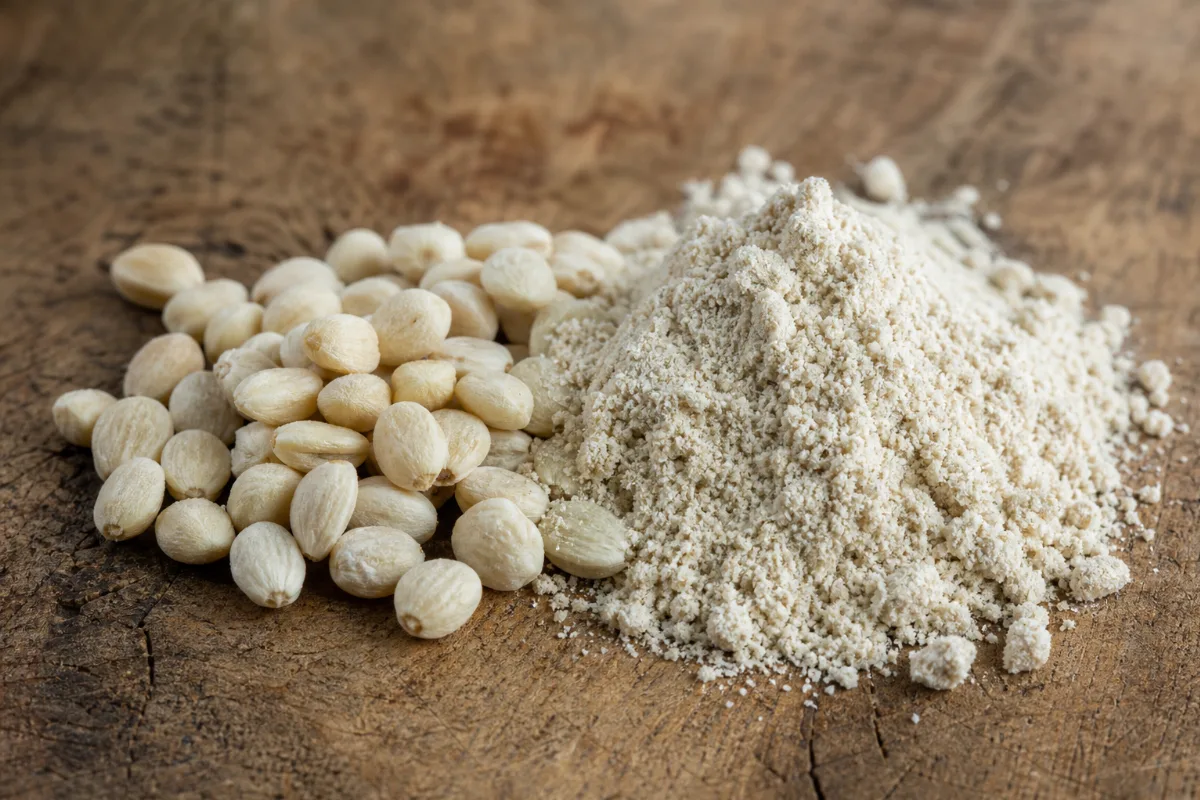
Mahlab (also mahleb or mahlep) is the kernel found inside the stone of the mahaleb or St Lucie cherry, Prunus mahaleb. The stones are cracked open and the soft kernel, about 5 mm long, is taken out and dried. The tree grows around the Mediterranean, in southeast Europe and in west Asia, and Syria is the main exporter.
No official nutrient numbers were found for mahlab. Literature values quoted in a 2023 paper put the kernel at about 31% protein and about 40% oil; another reference gives about 30% oil. The sources differ, and mahlab is used in small amounts, so it is a flavoring and not a source of nutrients.
In the kitchen
Mahlab tastes like a mix of bitter almond and cherry, a little like marzipan. Raw, the kernel is bitter and a tonka-bean or bitter-almond flavor appears after chewing. It is used finely ground, mostly in sweet breads and pastries.
Greece uses it in holiday breads such as vasilopita and tsoureki. Turkey uses it in poğaça. Lebanon and Syria use it in ma'amoul. Armenia uses it in choreg, and Cyprus in flaounes cheese pies. In Egypt it is mixed with honey, sesame and nuts into a paste eaten with bread. Grind whole kernels just before use: the powder spoils quickly because of its oil, and whole kernels may go rancid in a year or two unless frozen.
What the research shows
No human trial of mahlab was found. The research is seed chemistry, one mouse study of a seed extract and test-tube work on extracts of other plant parts. None of it shows a benefit in people.
A 2023 paper found 110 compounds in white, red and roasted seeds, including coumarin and herniarin, and says antioxidant and similar effects were reported earlier but not tested there.
At a glance
Traditional uses history, not proof
- Flavoring for sweet breads, pastries and cheese pies in Greece, Turkey, Armenia, Lebanon, Syria and Cyprus
- Fruits and seeds are reported in traditional use for diabetes and stomach and gut problems; long use is not proof from trials
Studied for research
- Mahlab eaten as a spice: no human trial found
- Antioxidant and anti-inflammatory effects: reported earlier, not tested, insufficient evidence
- Kidney stones in mice with a seed extract: animal only, very low certainty
Main compounds
- Coumarin (0.87 mg per gram in kernels, one Italian study)
- Herniarin (a coumarin, more in white seeds)
- Fatty oil (about 30 to 40% of the kernel, sources differ)
- An amygdalin-type compound (found only in red and roasted red seeds in one analysis)
Common forms
- Whole kernels, ground just before use
- Ground mahlab powder
- Honey, sesame and nut paste (Egyptian snack)
- Seed oil (cosmetic use, not a food)
Research links: Mahaleb cherry, Gernot Katzer's Spice Pages · Mahlab seed chemistry, PeerJ 2023 · Case report: allergy to mahaleb spice, 2020 · BfR: coumarin in cinnamon and other foods · Research Library · Genes & Biomarkers Library
What it is and its history
- Accepted scientific name
- Prunus mahaleb
- Naming authority
- L.
- Synonyms
- Cerasus mahaleb (given as a synonym in the existing summary; not re-verified)
- Common names
- Mahlab (English); Mahleb (English); Mahlep (Turkish); Mahlepi (Greek); St Lucie cherry (English); Cerezo de Santa Lucía (Spanish)
- Family or group
- Prunus is the cherry and almond genus. Almond (Prunus dulcis) is in the same genus (Noble 2017).
- Classification
- Plantae > Rosaceae (cherry genus Prunus; the family is not stated in the sources read) > Prunus > Prunus mahaleb
- Native range
- Mediterranean, southeast Europe and west Asia (Katzer).
- Habitat
- Not verified.
- What it looks like
- Roots: Not verified.; Stems: Not verified.; Leaves: Not verified.; Flowers: Not verified.; Fruit: The spice is the kernel inside the cherry stone. The kernel is beige to light ochre, drop-shaped, about 5 mm long and soft (Katzer).
- Cultivation
- The tree is also used as a rootstock for grafting sweet cherries (existing summary; many PubMed papers are on rootstocks). Syria is the main exporter (Katzer).
- Harvest and processing
- Stones are cracked and the soft kernel taken out and dried; ground just before use (Wikipedia, Katzer).
- Look-alikes and adulterants
- Name: Black mahlab (Monechma ciliatum); Note: A different plant, also sold as mahlab in some places and studied in separate papers. Not this spice.; Name: Almond and bitter almond; Note: Similar flavor note and a related genus; cross-reacts in allergy tests.
- Sustainability and conservation
- Not assessed.
Photographs
Traditional use and history history, not clinical proof
| Tradition or era | Documented use | Source |
|---|---|---|
Traditional use shows how it was used. It does not show that it works or is safe today.
What is inside, and how it may work
What it contains and how those compounds act in cells and animals. Laboratory and animal mechanisms are not proven effects in people.
Main compounds
| Compound | Family | Where it is concentrated | Activity studied | Level of evidence |
|---|---|---|---|---|
| Coumarin | coumarin | Kernel 0.87 mg per gram in kernels; 0.63 mg per gram in pitted berries (one Italian study) | Probably a main flavor compound (Katzer). General liver limit for coumarin from any food (BfR). 5 9 10 | Lab |
| Herniarin | coumarin | Kernel Detected; no amount (PeerJ 2023). More prominent in white than red seeds. | Flavor-related; no health effect established. 6 | Lab |
| Amygdalin-type compound | cyanogenic glycoside | Seed (red and roasted red only, in one analysis) No amount given. Katzer says earlier literature does not report it. | Cherry-family compounds of this type can release cyanide when broken down (Texas A&M, general Prunus statement). 6 10 11 | Lab |
| Oleic and alpha-linolenic acids (fats) | fatty acids | Kernel (white mahlab from Egypt) Rich in these, per the 2021 analysis; no figure read. | Nutritional components of the kernel oil. 4 | Lab |
Mechanisms, receptors and pathways
| Target or pathway | Gene or receptor | What was found | Level |
|---|---|---|---|
| Allergen cross-reaction with almond | IgE and IgG binding to kernel proteins | Antibodies against almond proteins, including IgE from almond-allergic serum, bound mahleb kernel protein. 7 3 | Lab |
Absorption, metabolism and elimination
- Absorption
- Not found.
- Distribution
- Not found.
- Metabolism
- Not found.
- Elimination
- Not found.
- Bioavailability
- Not established.
Isolated compounds versus whole extracts
All lab and animal work is on extracts or analyses of seeds, fruit, leaves or twigs. None tests the ground spice as eaten.
Nutritional composition
No USDA FoodData Central (SR Legacy) entry for mahlab was found in the earlier check, so there are no official per-teaspoon nutrient numbers; a re-check on 2026-10-26 was blocked by a rate limit and is NOT re-verified. Literature values cited in the 2023 PeerJ paper (from an older study) put the kernel at about 31% protein and about 40% oil; Katzer gives about 30% fixed oil, mostly oleic and linoleic acids. The two oil figures differ and come from different samples. One family cake recipe uses 2 teaspoons ground mahlab in a 9 by 13 inch pan, which is a small share per slice, so mahlab is a flavoring and not a source of nutrients.
1 very low certainty3 not enough evidence
What was looked at
The 4 benefits and uses checked for Mahlab, each with how strong the evidence is. Tap one to open it.
- Mahlab eaten as a spice (health effects of baking amounts)Not enough evidence
- Antioxidant and anti-inflammatory effects (reported earlier, not tested)Not enough evidence
- Kidney stones in mice (a seed extract, not the spice)Very low certainty
- Test-tube antioxidant, enzyme and germ-fighting results (fruit, leaf and twig extracts)Not enough evidence
What is Mahlab good for?
The studied uses and how strong the evidence is for each. There are no human studies of mahlab, so every row is weak.
Benefits, one by one
Each card is a research question, not a promise. Tap a goal to filter. Open a card to see the studies, doses and limits.
Mahlab eaten as a spice (health effects of baking amounts)
Not enough evidenceNo human trial of mahlab as food, extract or supplement was found. It is a flavoring for sweet breads and pastries, not a proven remedy.
2 studiesWhole kernels ground just before use, or ready-ground powder, in baki…
Studies, doses and limits
Results
No human trial.
Why this rating
No human study exists in the sources read, so nothing can be rated.
Form and dose studied
Whole kernels ground just before use, or ready-ground powder, in baking. A seed oil and a honey-sesame-nut paste are also mentioned.
Who was studied
Not studied.
Limits
Absence of studies is not proof of no effect and not proof of safety. See the Safety tab.
Why researchers looked
People ask whether a traditional baking spice does anything for health.
Traditional use
The 2023 PeerJ paper says the fruits and seeds are used traditionally for diabetes and stomach and gut problems (it cites an older paper). Long use is not proof that it works.
Proposed mechanism Unknown
Not established. Coumarins are probably the main flavor compounds (Katzer), but no source read shows what they do at baking amounts.
A proposed mechanism does not show that the effect happens in people.
Allergy to almond or other tree nuts is the best-documented concern. Coumarin and cyanide-forming compounds are discussed on the Safety tab.
Antioxidant and anti-inflammatory effects (reported earlier, not tested)
Not enough evidenceA 2023 paper says antioxidant, anti-inflammatory, antimicrobial and antifungal effects of mahlab were reported earlier. Its authors did not test these effects. No human study supports them.
2 studiesSeeds analysed in the lab: white and red kernels, raw and roasted.
Studies, doses and limits
Results
The 2023 paper analysed seed chemistry only (110 compounds detected). The statement about effects is a citation of earlier work.
Why this rating
The claim rests on a citation and on chemistry; no test in people and no test in this paper.
Form and dose studied
Seeds analysed in the lab: white and red kernels, raw and roasted.
Limits
Presence of a compound is not proof of a benefit in the body.
Why researchers looked
Seeds contain coumarins and phenolic compounds, which are linked to such effects in general.
Proposed mechanism Laboratory research
Plant compounds called coumarins are described in general literature as having antioxidant and anti-inflammatory activity. Not shown for mahlab as eaten.
A proposed mechanism does not show that the effect happens in people.
The same compound class includes coumarin, which has a liver limit. See the Safety tab.
Kidney stones in mice (a seed extract, not the spice)
Very low certaintyIn one mouse study, a seed extract was followed by less kidney damage in mice made to form stones. This is animal-only research and says nothing about eating mahlab.
1 studiesA seed extract by gavage. Not a food use.
Studies, doses and limits
Results
In 72 mice, the group given the highest extract level showed less kidney tissue damage and lower blood markers than stone-induced mice. The authors say an acute toxicity test showed the extract was safe in animals.
Effect sizes as reported
Not given in the abstract.
Why this rating
Mouse study, artificial stone model, extract rather than the spice, no human data, numbers not read.
Form and dose studied
A seed extract by gavage. Not a food use.
Who was studied
Male BALB/c mice.
Limits
Animal result; the abstract gives no numbers.
Why researchers looked
Researchers tested plant extracts for stone prevention in an artificial animal model.
Proposed mechanism Animal research
Not explained in the abstract.
A proposed mechanism does not show that the effect happens in people.
Animal safety statements do not carry over to people.
Test-tube antioxidant, enzyme and germ-fighting results (fruit, leaf and twig extracts)
Not enough evidenceLab tests of extracts from the fruit, leaves and twigs found antioxidant activity and some effect on bacteria in the dish. The kernel (the spice) was not the part tested, and nothing was tested in people.
1 studiesMethanol and other solvent extracts. Not a food.
Studies, doses and limits
Results
Twig extracts had the strongest antioxidant results; 40 compounds were found. The extracts were not mutagenic in the Ames test. Some slowed growth of some bacteria and a yeast in the dish.
Effect sizes as reported
Test-tube units only; not comparable to a human effect.
Why this rating
Laboratory work on non-spice parts; says nothing about eating mahlab.
Form and dose studied
Methanol and other solvent extracts. Not a food.
Limits
Test tube only; different plant parts.
Why researchers looked
Researchers screen plant parts for useful compounds.
Proposed mechanism Laboratory research
Mostly flavonoids and other phenolic compounds, which react in antioxidant test tubes.
A proposed mechanism does not show that the effect happens in people.
Not a safety study of the spice.
Connections to the rest of health
How Mahlab connects to the rest of our health knowledge graph. Every link says what kind of connection it is. A safety link (for example to the liver) is a warning, not a benefit. A study that merely mentions a topic never creates a benefit link.
Explore every connection: goals, body systems, organs, symptoms, genes
B. Body systems
| Connected to | Kind of connection | Evidence status | Context | Studies |
|---|---|---|---|---|
| Digestive System | Biological association | Not enough evidence | Studied for: Mahlab eaten as a spice (health effects of baking amounts) | 6 10 |
| Wellness Prevention | Biological association | Not enough evidence | Studied for: Antioxidant and anti-inflammatory effects (reported earlier, not tested) | 6 4 |
| Urinary System | Biological association | Very low certainty | Studied for: Kidney stones in mice (a seed extract, not the spice) | 1 |
E. Health conditions
| Connected to | Kind of connection | Evidence status | Context | Studies |
|---|---|---|---|---|
| Tree nut allergy | Case report | Cross-reacts with almond in lab tests and in one case report. Mahlab kernel protein cross-reacts with almond in lab tests and one case report. Preparation or compound: Mahlab kernel protein |
3 7 |
K. Biological pathways
L. Active compounds
| Connected to | Kind of connection | Evidence status | Context | Studies |
|---|---|---|---|---|
| Coumarin | Documented risk (general limit) | A general liver-based intake limit exists for coumarin; none for mahlab. Preparation or compound: Kernel |
5 9 | |
| Coumarin | Biological association | Lab | Probably a main flavor compound (Katzer). General liver limit for coumarin from any food (BfR). Preparation or compound: Kernel |
5 9 10 |
| Herniarin | Biological association | Lab | Flavor-related; no health effect established. Preparation or compound: Kernel |
6 |
| Amygdalin-type compound | Biological association | Lab | Cherry-family compounds of this type can release cyanide when broken down (Texas A&M, general Prunus statement). Preparation or compound: Seed (red and roasted red only, in one analysis) |
6 10 11 |
| Oleic and alpha-linolenic acids (fats) | Biological association | Lab | Nutritional components of the kernel oil. Preparation or compound: Kernel (white mahlab from Egypt) |
4 |
Each connection is stored with the ingredient, the connected record, the kind of connection, the evidence status, the supporting studies, the preparation or compound involved, and a review date (last reviewed October 26, 2026).
Evidence at a glance: what the research found for 4 outcomes
Each outcome below is one thing researchers measured. Certainty is how far the evidence can be trusted, not how well it works. The full studies are on the next tab.
The evidence
The research centre for Mahlab. Every record here was checked against PubMed or the publisher's page; we never list a study we have not verified.
Evidence by outcome
Bars show how many studies we found for each outcome, not how well it works. People are added up across trials only (reviews are not added, to avoid double counting).
How we rate evidence
High certainty
Several well-run trials or reviews agree; further research is unlikely to change the picture much.
Moderate certainty
Good trials point the same way, but some doubt remains.
Low certainty
Small, short or inconsistent trials. The finding could change with better research.
Very low certainty
Very little or very weak human data. Treat as a possibility only.
Mixed findings
Trials or reviews disagree with each other.
Not enough evidence
Not enough human research to say either way.
Evidence against
Good research found no benefit, or found harm.
We take the reviewers' own risk-of-bias and GRADE statements where they exist, and otherwise judge from study size, design, consistency, directness and whether a product matches what is sold. Many publications do not make evidence high. Method note: We started from our existing mahlab summary, read the 2023 PeerJ seed paper in full, read the BfR coumarin FAQ and spice references, and read PubMed abstracts. Only abstracts were read for the other studies. Items we could not verify are flagged in the research gaps. This is a short page because little research exists.
Study library: every study we checked 13
| Study | Design | People | Product, dose, length | Result |
|---|---|---|---|---|
| Akbari 2020 Effect of Prunus Mahaleb L. Seed Extract on Ethylene glycol- and Ammonium Chloride-Induced Urolithiasis in BALB/c Mice Iran J Med Sci · PMID 32210490 · DOI |
Animal study (mice) mouse |
72 72 male BALB/c mice in six groups of 12; kidney stones induced with ethylene glycol and ammonium chloride in drinking water for 21 days. |
The authors report less kidney damage and lower blood markers in the highest-extract group, and say an acute toxicity test showed the extract was safe in animals. Methods, limits and fundingOutcomes: Kidney tissue damage and blood markers. Limitations: Mice, an artificial stone model, an extract rather than the spice, no human data. The abstract gives no numbers. Funding and conflicts: Not stated in the abstract. Read: abstract | |
| Atasagun 2025 Exploring the Utility of Prunus mahaleb Extracts as a Source of Natural Bioactive Compounds for Functional Applications Food Sci Nutr · PMID 40161410 · DOI |
Laboratory study of extracts (fruit, leaves and twigs) in vitro |
Not a human study. Fruit, leaf and twig extracts; the kernel was not the part tested. | Twig extracts had the strongest antioxidant results in test tubes. 40 compounds were found, mainly flavonoids. The extracts were not mutagenic in the Ames test. Some extracts slowed growth of certain bacteria and a yeast in the dish. Methods, limits and fundingOutcomes: Antioxidant tests, enzyme inhibition, bacterial mutation (Ames) tests, antibacterial tests. Limitations: Test-tube work on parts other than the spice; says nothing about eating mahlab. Funding and conflicts: Authors declare no conflicts of interest. Read: abstract | |
| Benoit 2020 Case Report: Allergic Reactivity to Mahaleb (Prunus mahaleb) Spice in a Subject With Almond and Other Tree Nut Allergies Allergy Rhinol (Providence) · PMID 33117599 · DOI |
Case report |
1 A 40-year-old woman with a long history of tree nut allergies, including almond. |
She had moderate itching and swelling in the mouth and throat soon after eating the kernels. Skin-prick wheals were 8 mm (pistachio), 3 mm (almond) and 7 mm (mahaleb). Lab tests showed marked cross-reaction between almond and mahaleb proteins, but not pistachio. Methods, limits and fundingOutcomes: Symptoms, skin-prick tests, antibody tests. Limitations: One person. The authors call it the first documented acute allergy to mahaleb. Funding and conflicts: Authors work at allergy-testing and food-testing companies; the abstract states no funding. Read: abstract | |
| Farag 2021 Profiling of Primary Metabolites and Volatile Determinants in Mahlab Cherry (Prunus mahaleb L.) Seeds in the Context of Its Different Varieties and Roasting as Analyzed Using Chemometric Tools Foods · PMID 33808142 · DOI |
Lab chemical analysis plant material |
Not a human study. White and red mahlab seeds and roasted seeds. | About 65 primary-metabolite peaks and 135 aroma compounds were identified. White mahlab from Egypt was rich in fatty acids such as oleic and alpha-linolenic acids. Aldehydes shaped the aroma most. Roasting left its own marker compounds. Methods, limits and fundingOutcomes: Sugars, fatty acids, esters, organic acids and aroma compounds. Limitations: Chemistry only; no tests of health effects. Funding and conflicts: Authors report no conflict of interest. Read: abstract | |
| Ieri 2012 Simultaneous determination of anthocyanins, coumarins and phenolic acids in fruits, kernels and liqueur of Prunus mahaleb L. Food Chem · PMID 22980784 · DOI |
Laboratory measurement plant material |
Not a human study. Fruit, kernels and a traditional Italian liqueur. | Kernels held coumarin at 0.87 mg per gram, the main class of compound in that sample; pitted berries held 0.63 mg per gram. Kernel coumarin 0.87 mg/g; pitted berries 0.63 mg/g. Methods, limits and fundingOutcomes: Coumarin, phenolic acids, flavonoids and anthocyanins. Limitations: One set of samples from Italy; says nothing about how much ends up in a baked food. Funding and conflicts: Not stated in the abstract. Read: abstract | |
| Mostafa 2023 Profiling of primary and phytonutrients in edible mahlab cherry (Prunus mahaleb L.) seeds in the context of its different cultivars and roasting as analyzed using molecular networking and chemometric tools PeerJ · PMID 37663279 · DOI |
Lab chemical analysis (untargeted metabolomics) plant material |
Not a human study. Seeds: white (Athens, Greece; Cairo, Egypt), red (Cairo) and roasted red seeds, each run in triplicate. | Roasting (180 C, 15 to 20 minutes) and seed colour changed the chemical profile. Coumarin and herniarin were detected; herniarin was more prominent in white seeds. An amygdalin signal was found only in red and roasted red seeds. No amounts were given for these three. The paper says antioxidant, anti-inflammatory, antimicrobial and antifungal effects were reported earlier and were not tested here. Methods, limits and fundingOutcomes: 110 compounds detected, 39 of them reported for the first time in the plant; coumarin, herniarin and an amygdalin-type compound noted by their mass signals. Limitations: Detection by mass signal, not measured amounts; seeds from a few sources; no human or animal testing. Funding and conflicts: No funding received. One author is an Academic Editor of the journal. Read: full-text | |
| Noble 2017 A Cherry Seed-Derived Spice, Mahleb, is Recognized by Anti-Almond Antibodies Including Almond-Allergic Patient IgE J Food Sci · PMID 28627716 · DOI |
Laboratory immunology (blood serum tests) in vitro (human serum) |
Not a feeding study. Mahleb and almond kernel protein extracts tested with antibodies and serum from almond-allergic people. | Almond antibodies, including IgE from almond-allergic serum, reacted with mahleb kernel protein. The authors say this should concern almond-allergic patients. Methods, limits and fundingOutcomes: Cross-reaction between almond and mahleb proteins. Limitations: Lab test; does not show how many allergic people react to eating mahlab. Funding and conflicts: Not stated in the abstract. Read: abstract | |
| Walker 2018 Almond or Mahaleb? Orthogonal Allergen Analysis During a Live Incident Investigation by ELISA, Molecular Biology, and Protein Mass Spectrometry J AOAC Int · PMID 29202918 · DOI |
Food testing incident investigation n/a |
Two official UK samples (cumin and paprika) in 2015. | An incident of cumin alleged to be contaminated with almond in the UK in 2015 was caused by Prunus mahaleb. Almond tests cross-react with Prunus species, so confirming tests (DNA and mass spectrometry) were needed. New tests were developed for mahaleb. Methods, limits and fundingOutcomes: Which Prunus species caused an almond signal. Limitations: About testing methods, not about illness. Funding and conflicts: Government laboratory authors. Read: abstract | |
| s-bfr-coumarin BfR (Germany): Frequently asked questions on coumarin in cinnamon and other foods · Source |
Regulator FAQ n/a |
Methods, limits and fundingRead: full-text | ||
| s-katzer-mahaleb Gernot Katzer's Spice Pages: Mahaleb cherry (Prunus mahaleb) · Source |
Spice reference (single author) n/a |
Methods, limits and fundingRead: full-text | ||
| s-tamu-prunus Texas A&M AgriLife: Wild plum, cherry, peach (Prunus species) · Source |
Extension page n/a |
Methods, limits and fundingRead: full-text | ||
| s-usda-none USDA FoodData Central (SR Legacy): no entry for mahlab · Source |
Reference database n/a |
Methods, limits and fundingRead: not found | ||
| s-wiki-mahleb Wikipedia: Mahleb · Source |
Encyclopedia n/a |
Methods, limits and fundingRead: full-text |
What we do not know yet
- No human trial of mahlab as food, extract or supplement was found.
- No safe or unsafe amount of mahlab is stated by any source read.
- Cyanide-forming compounds in mahlab are unmeasured and the sources disagree.
- No data on pregnancy, breastfeeding, children or medicine interactions.
- No official nutrient values (a recheck of USDA was not possible).
How new research is added
New studies are found by a saved PubMed search and placed in a review queue before the page changes.
Lab markers
What changed in blood or saliva tests during trials. A changed number is not the same as feeling or being healthier, and we give no "normal ranges".
Safety
What studies and official sources say about side effects, medicines and who should check first. Each point shows what kind of evidence it comes from.
Main points to know 4
- Almond and other tree nut allergy: mahlab can react. Mahlab is a cherry-stone kernel from the same genus as almond. Lab tests found almond antibodies, including IgE from almond-allergic people, react with mahleb protein. One published case describes a woman with several tree nut allergies who had itching and swelling in the mouth and throat after eating mahaleb kernels. If you have a tree nut allergy, ask your allergy doctor before eating mahlab or foods that may contain it. Case report 3 7 8
- Coumarin: a liver limit exists for coumarin in general; none is set for mahlab. The kernels measured 0.87 mg coumarin per gram in one Italian analysis. Germany's BfR sets a tolerable daily intake for coumarin of 0.1 mg per kg of body weight (EFSA calculated the same value) because coumarin can harm the liver in a small group of especially sensitive people, usually reversibly. That limit is about coumarin from any source, mainly cassia cinnamon. No source read gives a safe amount for mahlab, and nobody measured coumarin in a finished baked food. Authoritative guidance 5 9
- Cyanide-forming compounds in cherry-family seeds: sources disagree, no mahlab amounts. Cherry-family (Prunus) seeds can contain compounds that release cyanide when broken down. A 2023 analysis found an amygdalin-type signal only in red and roasted red mahlab seeds. A spice reference says the older literature does not report amygdalin-type compounds in mahlab. A Texas A&M page says Prunus seeds and leaves contain such compounds, but it is about livestock and Prunus plants generally. No amount in mahlab and no human data were found. This is not a finding that baking amounts are harmful. Authoritative guidance 6 10 11
- Pregnancy, breastfeeding and children: no data. None of the sources read describes mahlab in pregnancy, breastfeeding or children. Absence of data is not proof of safety. Ask a midwife or doctor. Gap
Side effects 1
| Effect | How often | Severity and recovery | Evidence |
|---|---|---|---|
| Allergic reaction: mouth itching and throat swelling in a person allergic to almond and other tree nuts Lab cross-reaction with almond is shown in a separate study (p28627716). | One case report; no frequency known. | moderate in the case reported The abstract does not say. | Case report 3 |
Liver
The only liver-related finding is indirect: coumarin, present in the kernel, has a general tolerable-intake limit because of liver effects in sensitive people (BfR). No case of liver injury from mahlab was found in the sources read. LiverTox was not searched for mahlab. 9 5
How often. Not known for mahlab.
Monitoring. No advice found.
This is a safety connection. It is not evidence that Mahlab supports liver health.
Medicines and supplements 2
| With | Why it matters | Importance | Evidence | What to do |
|---|---|---|---|---|
| Any prescription or over-the-counter medicine prescription | No interaction study or report for mahlab was found in the sources read. | None found Not enough evidence 6 | If you take a regular medicine and eat mahlab often or in large amounts, ask a pharmacist. | |
| Blood thinners such as warfarin prescription | Not assessed in any source read. | None found Not enough evidence | Ask a pharmacist if you take a blood thinner and use mahlab often. |
Who should check first 1
Overdose, product quality and regulators
Summary. No toxicity study of mahlab as a spice was found.
Animal. A mouse paper on a seed extract states an acute toxicity test showed safety in animals; only the abstract was read and it gives no details.
Overdose response. Not described.
Genotoxicity. A 2025 test-tube paper found fruit, leaf and twig extracts not mutagenic in the Ames test; the kernel was not tested.
Toxic or hazardous parts. Not named for mahlab in the sources read. Prunus seeds and leaves in general contain cyanide-forming compounds according to a Texas A&M page.
Mahlab has turned up as an unexpected almond-like ingredient in other spices, and ground mahlab can go rancid.
Mixed into other spices. A UK incident in 2015, in which cumin was alleged to be contaminated with almond, was caused by Prunus mahaleb. Almond tests cross-react with mahaleb, so DNA and mass-spectrometry tests were needed to tell them apart. This matters to nut-allergic people. 8
Rancidity. A spice reference says ground mahlab spoils quickly because of its oil, and whole kernels may go rancid in one or two years unless frozen. 10
| Body | Action | Date |
|---|---|---|
| BfR (Germany), with EFSA value as quoted by BfR (Germany / European Union) | Tolerable daily intake of 0.1 mg coumarin per kg body weight per day, based on liver effects; short-term exceedance is not a health risk according to the FAQ. About coumarin in general, mainly cassia cinnamon. Does not mention mahlab. source | 2012-09-27 |
When to get medical help
- Swelling of the lips, tongue or throat, wheezing, trouble breathing or fainting after eating mahlab or a food containing it: call your local emergency number straight away.
Stop using the product and contact a clinician or emergency service. In the US, Poison Control is 1-800-222-1222.
General information only, not medical advice. Ask a clinician or pharmacist before use, especially with medicines, in pregnancy or with a health condition. See the Natural Remedy Safety guide.
Frequently asked questions
What is mahlab?
What does mahlab taste like?
What is mahlab used for in cooking?
Is mahlab healthy?
No human study of mahlab as food or supplement was found, so no health benefit can be claimed. It is a flavoring.
Is mahlab the same as almond?
No. Both are in the Prunus genus and share a flavor note. Mahlab is a cherry kernel.
Can people with almond allergy eat mahlab?
Does mahlab contain coumarin?
Does mahlab contain cyanide?
Is mahlab safe in pregnancy?
No source read covers pregnancy or breastfeeding. Ask a midwife or doctor.
Does mahlab interact with medicines?
No interaction report was found. Ask a pharmacist if you take a regular medicine and use mahlab often.
How do I keep mahlab fresh?
One reference says to grind whole kernels just before use because the powder spoils quickly, and that whole kernels may go rancid in one to two years unless frozen.
Is black mahlab the same thing?
No. Black mahlab is a different plant, Monechma ciliatum, and has its own papers.
Explore by health goal
Editorial transparency
- Written by
- AlternativeMed editorial team. Research compiled with AI assistance, then checked against the sources listed.
- Medical review
- None. This page has not been reviewed by a physician or pharmacist.
- First published
- 2026-10-26
- Last substantive update
- 2026-10-26
- How we research
- We started from our existing mahlab summary, read the 2023 PeerJ seed paper in full, read the BfR coumarin FAQ and spice references, and read PubMed abstracts. Only abstracts were read for the other studies. Items we could not verify are flagged in the research gaps. This is a short page because little research exists.
- How we rate evidence
- See "How we rate evidence" in the Evidence tab.
- Independence
- No product is promoted on this page. No affiliate links are shown.
Sources 13
Each source was opened and checked. Where we read only the abstract, it says so. The small numbers in the text point here.
- Akbari F, Azadbakht M, Dashti A, et al.. Effect of Prunus Mahaleb L. Seed Extract on Ethylene glycol- and Ammonium Chloride-Induced Urolithiasis in BALB/c Mice. Iran J Med Sci. 2020. PMID 32210490. DOI 10.30476/IJMS.2019.45774. (abstract)
- Atasagun B, Uysal A, Fathallah N, et al.. Exploring the Utility of Prunus mahaleb Extracts as a Source of Natural Bioactive Compounds for Functional Applications. Food Sci Nutr. 2025. PMID 40161410. DOI 10.1002/fsn3.70121. (abstract)
- Benoit L, Masiri J, Janagama H, et al.. Case Report: Allergic Reactivity to Mahaleb (Prunus mahaleb) Spice in a Subject With Almond and Other Tree Nut Allergies. Allergy Rhinol (Providence). 2020. PMID 33117599. DOI 10.1177/2152656720959083. (abstract)
- Farag MA, Khattab AR, Shamma S, et al.. Profiling of Primary Metabolites and Volatile Determinants in Mahlab Cherry (Prunus mahaleb L.) Seeds in the Context of Its Different Varieties and Roasting as Analyzed Using Chemometric Tools. Foods. 2021. PMID 33808142. DOI 10.3390/foods10040728. (abstract)
- Ieri F, Pinelli P, Romani A. Simultaneous determination of anthocyanins, coumarins and phenolic acids in fruits, kernels and liqueur of Prunus mahaleb L.. Food Chem. 2012. PMID 22980784. DOI 10.1016/j.foodchem.2012.07.083. (abstract)
- Mostafa MM, Farag MA. Profiling of primary and phytonutrients in edible mahlab cherry (Prunus mahaleb L.) seeds in the context of its different cultivars and roasting as analyzed using molecular networking and chemometric tools. PeerJ. 2023. PMID 37663279. DOI 10.7717/peerj.15908. (full-text)
- Noble KA, Liu C, Sathe SK, Roux KH. A Cherry Seed-Derived Spice, Mahleb, is Recognized by Anti-Almond Antibodies Including Almond-Allergic Patient IgE. J Food Sci. 2017. PMID 28627716. DOI 10.1111/1750-3841.13757. (abstract)
- Walker MJ, Burns M, Quaglia M, et al.. Almond or Mahaleb? Orthogonal Allergen Analysis During a Live Incident Investigation by ELISA, Molecular Biology, and Protein Mass Spectrometry. J AOAC Int. 2018. PMID 29202918. DOI 10.5740/jaoacint.17-0405. (abstract)
- . BfR (Germany): Frequently asked questions on coumarin in cinnamon and other foods. . . (full-text)
- . Gernot Katzer's Spice Pages: Mahaleb cherry (Prunus mahaleb). . . (full-text)
- . Texas A&M AgriLife: Wild plum, cherry, peach (Prunus species). . . (full-text)
- . USDA FoodData Central (SR Legacy): no entry for mahlab. . . (not found)
- . Wikipedia: Mahleb. . . (full-text)
Where to buy
Check the label first. Whatever you buy, look for these:
- Whole or ground: whole spices keep their flavor longer
- The origin and a packed-on or best-by date for freshness
- Organic or non-irradiated labeling if that matters to you
- A resealable, airtight container
Talk to a pharmacist or doctor before you start any supplement, especially if you take medicines. See the Safety tab for interactions.
Support our free guides: as an Amazon Associate we earn from qualifying purchases. Full disclosure.


