Spices · Spice
Anise
Pimpinella anisum · also called Aniseed, anise seed, anis (Spanish)
Anise, also called aniseed, is a small seed with a sweet, licorice-like taste used in baking, sweets, teas and drinks. It is not star anise, a different plant. The EU accepts aniseed tea for mild indigestion on long use only, and the few trials we found tested concentrated oil or capsules, not food. The main cautions are allergy (especially in people allergic to carrot-family plants), herbal teas for newborns and the star anise mix-up.
General information, not medical advice. Last substantive update · Not medically reviewed. A named clinician has not signed off on this page. How this page is made
About Anise
Anise is a sweet, licorice-flavored seed spice. It is a flavoring, not a proven remedy: the few trials tested concentrated oil, capsules or tea.
What it is
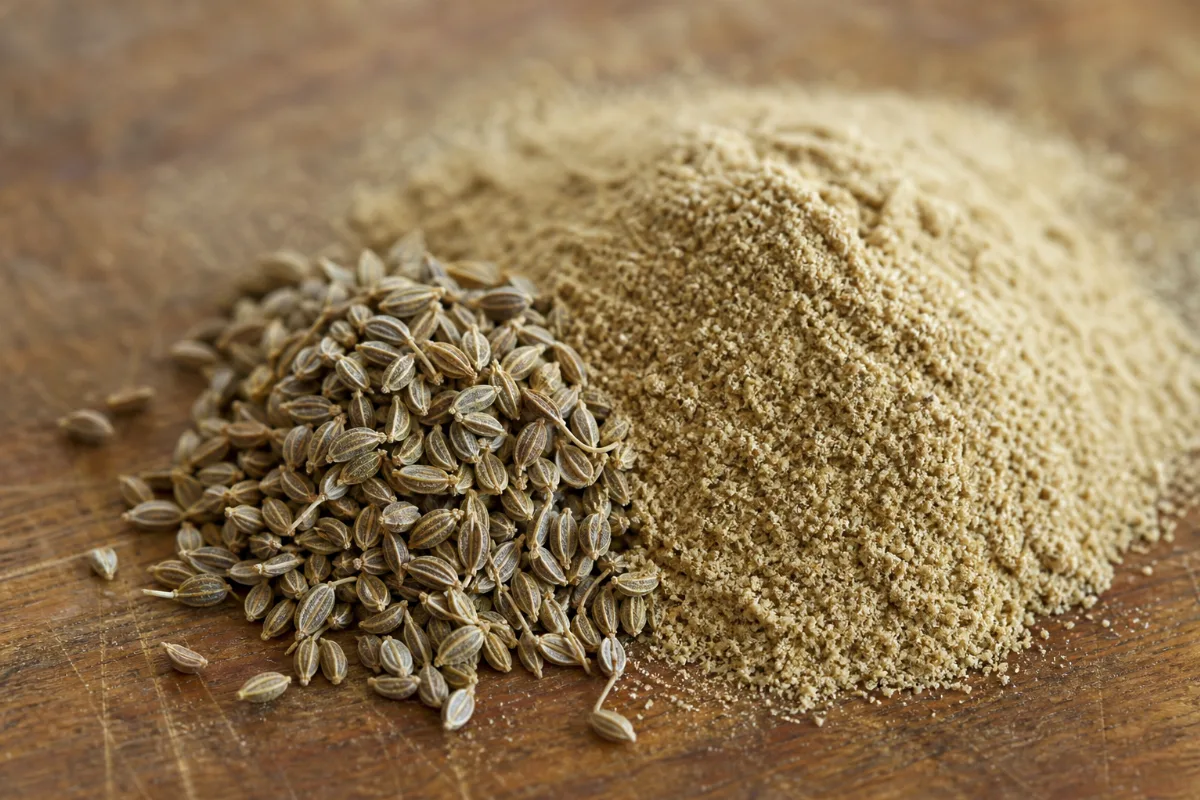
Anise (Pimpinella anisum), also called aniseed, is a small annual herb of the carrot family, native to the eastern Mediterranean and southwest Asia (Wikipedia). The spice is its small, curved fruit, usually called a seed, 4 to 6 mm long. Do not mix it up with star anise (Illicium verum), a tree fruit that shares the main flavor compound, anethole.
In cooking, the seeds are used whole or ground in baking and sweets (aniseed balls, biscotti, pizzelle), in teas, and in spirits such as ouzo, sambuca and pastis. In India and Pakistan the seeds are taken after meals as a digestive. These culinary facts come from Wikipedia, a general reference.
USDA data for anise seed: 337 kcal per 100 g. A teaspoon of whole seed is 2.1 g and holds about 7 kcal, 0.3 g fibre, 14 mg calcium, 0.8 mg iron, 4 mg magnesium and 30 mg potassium (our arithmetic from USDA values). A teaspoon is mostly flavor.
What the research shows
We found no trial of anise sprinkled on food. The EU herbal committee accepts aniseed tea for mild indigestion and for coughs with colds on long use only, and says the trial evidence is insufficient.
The anise trials we found are small and mostly from Iran. A 2016 trial of 120 people with IBS found 75% symptom-free with enteric-coated anise oil capsules versus 35% on placebo. A Cochrane review of herbs for functional dyspepsia included one anise study of 107 people (low certainty). Single small trials also report effects on low mood in IBS, premenstrual symptoms and breast milk volume.
None of these have been repeated by other teams in the sources we read.
Food versus oil, capsules and tea
The positive trials used oil capsules, powder capsules or a tea. Results for those products do not carry over to anise used as a seasoning.
Amounts
This page gives no amounts to eat or take. Ask a doctor, pharmacist or dietitian what is right for you, especially if you are pregnant, breastfeeding or allergic to carrot-family plants.
At a glance
Traditional uses history, not proof
- Flavoring for sweets, baking, teas and spirits
- Eaten after meals as a digestive in India and Pakistan
- Traditional tea for mild indigestion and cough in Europe
- Long use as food is not proof that it treats any condition
Studied for research
- Mild indigestion, bloating and gas (tea), insufficient evidence, traditional use only
- Functional dyspepsia, low certainty, one small study
- Irritable bowel syndrome (oil capsules), low certainty, one trial
- Low mood in people with IBS (oil), very low certainty
- Premenstrual symptoms (capsules), low certainty, one small trial
- Breast milk volume (tea), low certainty
- Period pain and cough, insufficient evidence
Main compounds
- Anethole
- Estragole
- Anisaldehyde
- Essential oil (2 to 7 percent of the seed)
Common forms
- Whole seed and ground seed as a spice
- Tea or infusion of the seed
- Enteric-coated oil capsules and powder capsules (used in trials)
- Essential oil and extract (not for swallowing without advice)
Research links: EMA: Aniseed (Anisi fructus) summary · Cochrane review: non-Chinese herbal medicines for functional dyspepsia · LactMed: Anise · Research Library · Genes & Biomarkers Library
What it is and its history
- Accepted scientific name
- Pimpinella anisum
- Naming authority
- L. (GBIF accepted)
- Common names
- Anise (English); Aniseed (English); Anise seed (English); Anis (Spanish)
- Family or group
- Apiaceae (the carrot family), as given by GBIF.
- Classification
- Plantae > Tracheophyta > Magnoliopsida > Apiales > Apiaceae > Pimpinella > Pimpinella anisum
- Native range
- Eastern Mediterranean and southwest Asia (Wikipedia, a general reference).
- Habitat
- Not verified from a source read.
- What it looks like
- Roots: Taproot (Wikipedia).; Stems: A herbaceous annual 60 to 90 cm tall (Wikipedia).; Leaves: Simple shallow-lobed leaves at the base, feathery divided leaves higher up (Wikipedia).; Flowers: White or yellow, about 3 mm, in dense umbels (Wikipedia).; Fruit: A dry curved fruit 4 to 6 mm long, usually called aniseed or anise seed (Wikipedia). This is the spice.
- Cultivation
- Wikipedia says anise grows best in light, fertile, well-drained soil. It does not transplant well because of its taproot.
- Harvest and processing
- Seed is used whole or ground, as tea, or distilled to an essential oil (Wikipedia and EMA).
- Look-alikes and adulterants
- Name: Star anise (Illicium verum); Note: A tree fruit from southern China that shares the main flavour compound anethole. It is a different plant, cheaper, and has largely replaced anise in Western cooking (Wikipedia). Star anise tea has harmed infants.; Name: Fennel, caraway and licorice; Note: Taste is similar to fennel, licorice and tarragon (Wikipedia). Fennel and caraway are carrot-family relatives.
- Sustainability and conservation
- Not assessed.
Photographs
Traditional use and history history, not clinical proof
| Tradition or era | Documented use | Source |
|---|---|---|
Traditional use shows how it was used. It does not show that it works or is safe today.
What is inside, and how it may work
What it contains and how those compounds act in cells and animals. Laboratory and animal mechanisms are not proven effects in people.
Main compounds
| Compound | Family | Where it is concentrated | Activity studied | Level of evidence |
|---|---|---|---|---|
| Anethole (trans-anethole) PubChem 637563 | phenylpropanoid | Fruit (seed) Not given in the sources read | The main flavour compound of anise and star anise. LactMed calls it a phytoestrogen and links newborn toxicity to excessive herbal tea use. Wikipedia puts it as the most powerful flavour component of the oil. 14 17 15 | Human data |
| Estragole (methyl chavicol) PubChem 8815 | phenylpropanoid | Fruit (seed) Not given | Listed among anise seed constituents by LactMed; its safety was not researched here. 14 15 | Not tested |
| Anisaldehyde (4-methoxybenzaldehyde) PubChem 31244 | aromatic aldehyde | Fruit (seed) Not given | Listed among anise seed constituents by LactMed; no health effect studied here. 14 15 | Not tested |
| Essential oil (volatile oil) | essential oil | Fruit (seed) About 2 to 7 percent of the seed (Wikipedia) | Carries the flavour and is the form used in the IBS and mood trials as enteric-coated capsules. 17 8 | Human data |
Mechanisms, receptors and pathways
| Target or pathway | Gene or receptor | What was found | Level |
|---|---|---|---|
| Gut and airway muscle | Not specified | The EU committee considered lab studies in which aniseed preparations relaxed gut and airway muscle. No human mechanism was shown. 12 | Laboratory research |
| Oestrogen-like activity | Not specified | LactMed describes anethole as a phytoestrogen. How strong this is at food amounts was not read. 14 | Hypothesis |
Absorption, metabolism and elimination
- Absorption
- Not found.
- Distribution
- LactMed says anethole is reportedly excreted into breast milk and that maternal anise intake reportedly gives the milk an odour.
- Metabolism
- Not found.
- Elimination
- Not found.
- Bioavailability
- Not established.
Isolated compounds versus whole extracts
The positive trials used enteric-coated anise oil capsules, powder capsules, or a tea made for new mothers. None tested anise sprinkled on food, and capsule or oil results do not carry over to seasoning. Anethole is also in star anise, a different plant.
Nutritional composition
Nutrition from USDA FoodData Central (Spices, anise seed, FDC 171316, SR Legacy, last updated 4/1/2019, read 2026-10-26). Per 100 g: 337 kcal, 17.6 g protein, 15.9 g fat, 50.0 g carbohydrate, 14.6 g fibre, 9.5 g water, 646 mg calcium, 37 mg iron, 170 mg magnesium, 1,440 mg potassium, 16 mg sodium. USDA household measures: 1 teaspoon of whole seed is 2.1 g and 1 tablespoon is 6.7 g. So one teaspoon (2.1 g) holds about 7 kcal, 0.3 g fibre, 14 mg calcium, 0.8 mg iron, 4 mg magnesium and 30 mg potassium (our arithmetic from the per-100 g values). A teaspoon is mostly flavour; real products vary.
4 low certainty1 very low certainty3 not enough evidence
What was looked at
The 8 benefits and uses checked for Anise, each with how strong the evidence is. Tap one to open it.
- Mild indigestion, bloating and gas (traditional tea use)Not enough evidence
- Functional dyspepsia (long-term indigestion without a clear cause)Low certainty
- Irritable bowel syndrome (anise oil capsules)Low certainty
- Low mood in people with IBS (anise oil)Very low certainty
- Premenstrual symptoms (anise capsules)Low certainty
- Period pain (primary dysmenorrhea)Not enough evidence
- Breast milk volume (anise tea)Low certainty
- Cough with colds (traditional expectorant)Not enough evidence
Lab markers tracked in the studies
Share of people free of IBS symptomsGlobal symptoms of dyspepsiaDepression score (Beck Depression Inventory-II)Premenstrual symptom score (PSST)Volume of pumped breast milk
What is Anise good for?
The main studied uses and how strong the human evidence is for each. Most results are for oil, capsules or tea, not for anise used in cooking.
Benefits, one by one
Each card is a research question, not a promise. Tap a goal to filter. Open a card to see the studies, doses and limits.
Mild indigestion, bloating and gas (traditional tea use)
Not enough evidenceThe EU accepts aniseed tea for mild indigestion, bloating and gas on long-standing use only. The EU's own summary says there is not enough clinical-trial evidence. This is about a medicinal tea for adults and adolescents over 12, for no more than two weeks.
1 studiesDried fruit and tea (EMA wording). Not cooking amounts.
Studies, doses and limits
What the trials found
The European Medicines Agency (EMA) says its committee concluded that, on the basis of long-standing use, aniseed medicines can be used for mild indigestion including bloating and flatulence, in adults and adolescents over 12, for no more than two weeks. It says clinical-trial evidence is insufficient and that effectiveness is plausible with at least 30 years of safe use (15 in the EU).
Results
Accepted as traditional use only. No trial of anise seed used as a food spice was read.
Why this rating
EMA itself calls the trial evidence insufficient and rests the conclusion on traditional use. Nothing here applies to the small amounts used in cooking.
Form and dose studied
Dried fruit and tea (EMA wording). Not cooking amounts.
Who was studied
Adults and adolescents over 12.
Limits
Traditional-use status is not proof of benefit. The tea is a medicinal use, not a spice amount.
Why researchers looked
Anise has long been used as a digestive after meals and as a tea.
Traditional use
Anise seed is used in cooking, sweets and teas. Long use as food is not proof that it treats any condition.
Proposed mechanism Laboratory research
The EU committee considered lab studies showing aniseed preparations relax gut and airway muscle. These are lab findings, not proof in people.
A proposed mechanism does not show that the effect happens in people.
Allergy to aniseed, to carrot-family plants or to anethole is a contraindication (EMA). See the Safety tab.
Functional dyspepsia (long-term indigestion without a clear cause)
Low certaintyA 2023 Cochrane review of herbal medicines listed Pimpinella anisum among those that may improve symptoms compared with placebo. That came from a single study of 107 people, and the reviewers rated the certainty low. We do not know the product or amount from the abstract.
1 studiesNot described in the abstract. Not food amounts.
Studies, doses and limits
What the trials found
The Cochrane review included 41 trials with 4,477 people testing 27 herbal medicines. For Pimpinella anisum it reports a standardised mean difference of -2.30 (95% CI -2.79 to -1.80) versus placebo from 1 study of 107 people, with low certainty of evidence. The review's overall conclusion is moderate to very-low certainty and a call for better trials.
Results
A single study favoured anise over placebo; the effect size is large but rests on one small study.
Effect sizes as reported
SMD -2.30 (95% CI -2.79 to -1.80), 1 study, 107 people, low certainty (reviewers' GRADE).
Why this rating
Rated low by the reviewers' own GRADE: one small study, form not described in the abstract.
Form and dose studied
Not described in the abstract. Not food amounts.
Who was studied
Adults with functional dyspepsia.
Limits
One study; no repeat by others read; the review's other herbs have far more data (for example peppermint with caraway oil).
Why researchers looked
People with ongoing upper-stomach discomfort try herbs, so Cochrane checked the trials.
Traditional use
Anise seed is used in cooking, sweets and teas. Long use as food is not proof that it treats any condition.
Proposed mechanism Unknown
Not stated in the abstract.
A proposed mechanism does not show that the effect happens in people.
Reviewers say most herbs showed little difference in side effects versus placebo; this was not reported for anise alone.
Irritable bowel syndrome (anise oil capsules)
Low certaintyIn one 2016 trial of 120 people, 75% of those taking enteric-coated anise oil capsules were free of IBS symptoms after 4 weeks, versus 35% on placebo. It is a single trial of a capsule product, not food, and has not been repeated in the sources we read.
1 studiesEnteric-coated anise oil capsules, 3 a day for 4 weeks (trial detail,…
Studies, doses and limits
What the trials found
120 people with IBS took 3 capsules a day for 4 weeks. By intention-to-treat, 75% in the anise oil group, 35% in the placebo group and 52.5% in the Colpermin (peppermint oil) group were free of IBS symptoms (P<0.001). Number needed to treat was 4.
Results
Anise oil capsules beat placebo and the peppermint oil product in this one trial.
Effect sizes as reported
75% vs 35% symptom-free (vs placebo); number needed to treat 4.
Why this rating
A single randomised, double-blind trial with a large gap against placebo, but small, from one group, with no repeat in the sources read. Capsules of oil are not the spice.
Form and dose studied
Enteric-coated anise oil capsules, 3 a day for 4 weeks (trial detail, not advice).
Who was studied
Adults with IBS in Iran.
Limits
Single trial; oil capsules, not the food; no harms are described in the abstract.
Why researchers looked
Anise oil is described in old Persian medical books as a remedy for bowel problems, so researchers in Iran tested it.
Traditional use
Anise seed is used in cooking, sweets and teas. Long use as food is not proof that it treats any condition.
Proposed mechanism Unknown
Not established. The authors ask for studies on how it might work.
A proposed mechanism does not show that the effect happens in people.
Concentrated oil is not the same as seasoning food. Ask a doctor or pharmacist before using anise oil.
Low mood in people with IBS (anise oil)
Very low certaintyA 2017 trial of 120 people who had IBS and mild to moderate depression reported better depression scores with anise oil than with placebo or an active comparison. The abstract gives no numbers, and the research group is the same as the IBS trial above.
1 studiesAnise oil, 4 weeks (trial detail, not advice).
Studies, doses and limits
What the trials found
In a double-blind trial, 120 people with mild to moderate depression (Beck Depression Inventory-II) and IBS received anise oil, Colpermin or placebo. The abstract says that at week 4 and week 6 the anise oil group did significantly better than the active and placebo groups.
Results
Better scores than placebo, but no figures are given in the abstract.
Why this rating
Very low: one trial, no numbers in the abstract, same group as the IBS trial, and an oil product that is not food.
Form and dose studied
Anise oil, 4 weeks (trial detail, not advice).
Who was studied
Adults with IBS and mild to moderate depression.
Limits
No effect sizes read. Does not show anise helps depression in people without IBS. Not a replacement for depression care.
Why researchers looked
Depression is common in people with IBS, so the same group tested anise oil on mood.
Traditional use
Anise seed is used in cooking, sweets and teas. Long use as food is not proof that it treats any condition.
Proposed mechanism Unknown
Unknown. The authors say the mechanism is not known.
A proposed mechanism does not show that the effect happens in people.
Anyone with depression should talk to a clinician.
Premenstrual symptoms (anise capsules)
Low certaintyA 2020 trial of 67 college students found lower symptom scores with anise capsules than with starch placebo over two cycles. It is a small trial of capsules, not food.
1 studies110 mg capsules, three a day, 10 days per cycle (trial detail, not ad…
Studies, doses and limits
What the trials found
Students aged 18 to 35 with PMS took 110 mg capsules three times a day (330 mg a day) or starch capsules for 10 days around each period, for two cycles. The abstract reports lower scores in the anise group after cycle 1 (13.9, 95% CI 16.5 to 11.4) and cycle 2 (9.8, 95% CI 12.4 to 7.3), both P<0.001 on the Premenstrual Symptoms Screening Tool.
Results
Lower symptom scores than placebo.
Effect sizes as reported
Cycle 1: 13.9 (95% CI 16.5 to 11.4); cycle 2: 9.8 (95% CI 12.4 to 7.3); P<0.001. Units and exact meaning are not given in the abstract.
Why this rating
One small, short, double-blind trial with a clear result but no repeat read. The abstract is unclear about the units.
Form and dose studied
110 mg capsules, three a day, 10 days per cycle (trial detail, not advice).
Who was studied
Women aged 18 to 35 with PMS.
Limits
Single-site, young sample; capsules, not food; the abstract does not say how the scores are compared.
Why researchers looked
Anise has a traditional reputation for women's complaints, so Iranian researchers tested it for PMS.
Traditional use
Anise seed is used in cooking, sweets and teas. Long use as food is not proof that it treats any condition.
Proposed mechanism Unknown
Not stated. The abstract gives no mechanism.
A proposed mechanism does not show that the effect happens in people.
Ask a clinician about PMS that disrupts daily life.
Period pain (primary dysmenorrhea)
Not enough evidenceA 2026 review of 14 trials of carrot-family herbs, including anise and fennel, called them potentially useful add-on treatments for period pain. The anise-only result is not shown in the abstract, and the subgroup results it names are for fennel and dill.
1 studiesNot stated in the abstract.
Studies, doses and limits
What the trials found
The review of 14 trials judged the anise and fennel placebo trials to have low risk of bias for randomisation and outcome measurement. The meta-analysis (7 studies) compared herbs as a group against standard pain medicines such as mefenamic acid or ibuprofen and found a significant effect with low heterogeneity. The named subgroup analyses were for fennel seed and dill seed.
Results
Group of herbs showed an effect against standard treatments; anise was not separated out in the abstract.
Why this rating
Insufficient for anise: the abstract does not report an anise-specific result, and the authors are from Ayurveda institutes.
Who was studied
Women with primary dysmenorrhea.
Limits
No anise-specific figures read; other herbs drive the named results.
Why researchers looked
Several Apiaceae seeds are used traditionally for period pain.
Traditional use
Anise seed is used in cooking, sweets and teas. Long use as food is not proof that it treats any condition.
Proposed mechanism Unknown
Not stated.
A proposed mechanism does not show that the effect happens in people.
Severe or new pelvic pain needs a doctor.
Breast milk volume (anise tea)
Low certaintyOne 2023 trial in mothers of preterm babies found more pumped milk with anise tea than with placebo tea or no tea on most days of one week. Baby weight did not differ. The US LactMed database says few well-run trials support this use.
2 studiesHerbal tea for 7 days (trial detail, not advice).
Studies, doses and limits
What the trials found
In a three-group trial (anise tea, placebo tea, no treatment) pumped milk volume was higher with anise tea on days 3 to 7 (P<0.05) and higher than the control on day 1 (P=0.008). Infant weight on days 0, 3 and 7 did not differ. LactMed says a meta-analysis found a small rise in milk volume on day 1 and low-certainty evidence of a rise on day 7, and that galactagogues should never replace help with modifiable factors affecting milk.
Results
More pumped milk in one trial; no weight gain difference.
Effect sizes as reported
P<0.05 on days 3 to 7; day 1 P=0.008 vs control; no infant weight difference.
Why this rating
One small trial plus a low-certainty meta-analysis cited by LactMed. Mothers of preterm babies only.
Form and dose studied
Herbal tea for 7 days (trial detail, not advice).
Who was studied
Mothers pumping milk for preterm infants.
Limits
Number of mothers not in the abstract; one week; only pumped milk was measured.
Why researchers looked
Anise is a traditional milk-boosting herb (a galactagogue) in some cultures.
Traditional use
Anise seed is used in cooking, sweets and teas. Long use as food is not proof that it treats any condition.
Proposed mechanism Unknown
Not established; animal studies are mentioned in the trial background.
A proposed mechanism does not show that the effect happens in people.
LactMed reports infant toxicity after excessive use of a herbal tea containing anise and other herbs. See the Safety tab. Ask a lactation consultant or doctor first.
Cough with colds (traditional expectorant)
Not enough evidenceThe EU accepts aniseed medicines as an expectorant for colds on long-standing use only, for adults and adolescents over 12 for no more than two weeks. No trial is read.
1 studiesDried fruit or tea (EMA wording), not cooking amounts.
Studies, doses and limits
What the trials found
EMA says the committee concluded aniseed medicines can be used as an expectorant for coughs associated with colds on the basis of long-standing use, with insufficient clinical-trial evidence.
Results
Traditional-use status only.
Why this rating
EMA calls trial evidence insufficient; no trial for cough was read.
Form and dose studied
Dried fruit or tea (EMA wording), not cooking amounts.
Who was studied
Adults and adolescents over 12.
Limits
No human trial read.
Why researchers looked
Anise has been used in cough remedies, and the EU committee looked at lab studies on airway muscle.
Traditional use
Anise seed is used in cooking, sweets and teas. Long use as food is not proof that it treats any condition.
Proposed mechanism Laboratory research
The EU committee considered lab studies showing relaxant effects on gut and airway muscle; not tested in people.
A proposed mechanism does not show that the effect happens in people.
See a doctor if a cough lasts or gets worse (EMA advice).
Connections to the rest of health
How Anise connects to the rest of our health knowledge graph. Every link says what kind of connection it is. A safety link (for example to the liver) is a warning, not a benefit. A study that merely mentions a topic never creates a benefit link.
Explore every connection: goals, body systems, organs, symptoms, genes
B. Body systems
| Connected to | Kind of connection | Evidence status | Context | Studies |
|---|---|---|---|---|
| Digestive System | Biological association | Not enough evidence | Studied for: Mild indigestion, bloating and gas (traditional tea use) Studied for: Functional dyspepsia (long-term indigestion without a clear cause) | 12 1 8 9 |
| Nervous System | Biological association | Very low certainty | Studied for: Low mood in people with IBS (anise oil) | 9 |
| Reproductive System | Biological association | Low certainty | Studied for: Premenstrual symptoms (anise capsules) Studied for: Period pain (primary dysmenorrhea) | 2 11 5 14 |
| Respiratory System | Biological association | Not enough evidence | Studied for: Cough with colds (traditional expectorant) | 12 |
E. Health conditions
| Connected to | Kind of connection | Evidence status | Context | Studies |
|---|---|---|---|---|
| Food allergy | Adverse effect or risk | Documented risk | Allergy to anise or to carrot-family plants is a contraindication in the EU summary. Preparation or compound: Anise seed |
12 6 |
I. Biomarkers
| Connected to | Kind of connection | Evidence status | Context | Studies |
|---|---|---|---|---|
| Share of people free of IBS symptoms | Biological association | Low certainty | Measured in trials: raised. A lab change is not the same as a health benefit. | 8 |
| Global symptoms of dyspepsia | Biological association | Low certainty | Measured in trials: lowered. A lab change is not the same as a health benefit. | 1 |
| Depression score (Beck Depression Inventory-II) | Biological association | Very low certainty | Measured in trials: lowered. A lab change is not the same as a health benefit. | 9 |
| Premenstrual symptom score (PSST) | Biological association | Low certainty | Measured in trials: lowered. A lab change is not the same as a health benefit. | 2 |
| Volume of pumped breast milk | Biological association | Low certainty | Measured in trials: raised. A lab change is not the same as a health benefit. | 5 14 |
K. Biological pathways
L. Active compounds
| Connected to | Kind of connection | Evidence status | Context | Studies |
|---|---|---|---|---|
| Anethole (trans-anethole) | Biological association | Human | The main flavour compound of anise and star anise. LactMed calls it a phytoestrogen and links newborn toxicity to excessive herbal tea use. Wikipedia puts it as the most powerful flavour component of the oil. Preparation or compound: Fruit (seed) |
14 17 15 |
| Estragole (methyl chavicol) | Biological association | Not tested | Listed among anise seed constituents by LactMed; its safety was not researched here. Preparation or compound: Fruit (seed) |
14 15 |
| Anisaldehyde (4-methoxybenzaldehyde) | Biological association | Not tested | Listed among anise seed constituents by LactMed; no health effect studied here. Preparation or compound: Fruit (seed) |
14 15 |
| Essential oil (volatile oil) | Biological association | Human | Carries the flavour and is the form used in the IBS and mood trials as enteric-coated capsules. Preparation or compound: Fruit (seed) |
17 8 |
Each connection is stored with the ingredient, the connected record, the kind of connection, the evidence status, the supporting studies, the preparation or compound involved, and a review date (last reviewed October 26, 2026).
Evidence at a glance: what changed in 5 lab markers
Tap a number to show only those markers. Counts are markers, not people.
The evidence
The research centre for Anise. Every record here was checked against PubMed or the publisher's page; we never list a study we have not verified.
Evidence by outcome
Bars show how many studies we found for each outcome, not how well it works. People are added up across trials only (reviews are not added, to avoid double counting).
How we rate evidence
High certainty
Several well-run trials or reviews agree; further research is unlikely to change the picture much.
Moderate certainty
Good trials point the same way, but some doubt remains.
Low certainty
Small, short or inconsistent trials. The finding could change with better research.
Very low certainty
Very little or very weak human data. Treat as a possibility only.
Mixed findings
Trials or reviews disagree with each other.
Not enough evidence
Not enough human research to say either way.
Evidence against
Good research found no benefit, or found harm.
We take the reviewers' own risk-of-bias and GRADE statements where they exist, and otherwise judge from study size, design, consistency, directness and whether a product matches what is sold. Many publications do not make evidence high. Method note: We started from our existing anise summary, re-checked nutrition at USDA FoodData Central, read the EU herbal summary, the LactMed record and PubMed abstracts for trials, reviews and case reports. Only abstracts were read for studies, and one allergy case report had no abstract. Culinary background comes from Wikipedia and is marked as a general reference. Items we could not verify are flagged in the research gaps.
Study library: every study we checked 17
| Study | Design | People | Product, dose, length | Result |
|---|---|---|---|---|
| Baez 2023 Non-Chinese herbal medicines for functional dyspepsia. Cochrane Database Syst Rev · PMID 37323050 · DOI |
Systematic review |
4477 People with functional dyspepsia; 41 trials, 4,477 people, 27 herbal medicines |
Many herbs; Pimpinella anisum was one, in a single study of 107 people Trial detail, not advice Mostly 4 weeks or more · vs Placebo |
For Pimpinella anisum the review reports a standardised mean difference of -2.30 (95% CI -2.79 to -1.80) versus placebo from 1 study of 107 people, with low certainty of evidence (the reviewers' own GRADE). The review's overall conclusion is moderate to very-low certainty and a call for better trials. SMD -2.30 vs placebo (1 study, 107 people), low certainty (95% CI -2.79 to -1.80) Methods, limits and fundingOutcomes: Global symptoms of dyspepsia, adverse events, quality of life Limitations: One small study; the abstract does not say which anise product or amount was used. Funding and conflicts: Research support from a non-US government source (PubMed record). Not industry-funded. Read: abstract |
| Farahmand 2020 Could Anise decrease the intensity of premenstrual syndrome symptoms in comparison to placebo? A double-blind randomized clinical trial. J Complement Integr Med · PMID 32692701 · DOI |
Controlled trial |
67 67 college students aged 18 to 35 with premenstrual syndrome (PMS) |
Anise capsules, 110 mg three times a day (330 mg a day) Trial detail, not advice 10 days around each period, over two cycles (starting 7 days before bleeding, ending 3 days after) · vs Starch capsules |
The abstract reports a lower symptom score in the anise group than in the placebo group after the first cycle (13.9, 95% CI 16.5 to 11.4) and the second (9.8, 95% CI 12.4 to 7.3), both P<0.001. It does not say in what units or whether these are differences between groups. Lower PSST score than placebo after cycles 1 and 2 (95% CI 16.5 to 11.4 and 12.4 to 7.3) Methods, limits and fundingOutcomes: Premenstrual Symptoms Screening Tool (PSST) score Limitations: Small, young, single-site sample; anise capsules, not food; short. Funding and conflicts: The abstract does not state funding or conflicts. Read: abstract |
| Hirschfeld 2008 Anaphylaxis after Oseltamivir (Tamiflu) therapy in a patient with sensitization to star anise and celery-carrot-mugwort-spice syndrome. Allergy · PMID 18186817 · DOI |
Case report |
1 One patient (case report) |
Oseltamivir in a person sensitised to star anise Trial detail, not advice |
Only the title was read (the PubMed record has no abstract). It reports anaphylaxis after oseltamivir in a patient sensitised to star anise and to the celery-carrot-mugwort-spice syndrome. Not available (Not available) Methods, limits and fundingOutcomes: Allergic reaction (anaphylaxis) Limitations: No abstract to read. Star anise is a different plant; one case shows it can happen, not how often. Funding and conflicts: Not stated. Read: abstract |
| Ize-Ludlow 2004 Neurotoxicities in infants seen with the consumption of star anise tea. Pediatrics · PMID 15492355 · DOI |
Case series |
7 7 infants with neurologic reactions after home star anise tea |
Star anise tea (Illicium verum, with evidence of contamination by Japanese star anise) Fruit Trial detail, not advice |
The authors report 7 cases of adverse neurologic reactions in infants after home star anise tea, and found evidence that Chinese star anise has been contaminated with Japanese star anise. They say star anise tea should no longer be given to infants. 7 infants (Not applicable) Methods, limits and fundingOutcomes: Neurologic reactions Limitations: Case series; the plant was star anise, not anise seed. Funding and conflicts: Not stated in the abstract. Read: abstract |
| Khalili 2023 The effect of Pimpinella Anisum herbal tea on human milk volume and weight gain in the preterm infant: a randomized controlled clinical trial. BMC Complement Med Ther · PMID 36681821 · DOI |
Controlled trial |
Mothers pumping milk for preterm babies (number not given in the abstract) | Pimpinella anisum herbal tea Fruit (seed), as a tea Trial detail, not advice 7 days · vs Placebo tea and a no-treatment control group |
Pumped milk volume was higher in the anise tea group than in the placebo and control groups on days 3 to 7 (P<0.05), and higher than control on day 1 (P=0.008). Infant weight did not differ between groups on days 0, 3 and 7. More pumped milk on most days; no weight difference (P<0.05; day 1 P=0.008) Methods, limits and fundingOutcomes: Volume of pumped milk; preterm infant weight Limitations: Number of mothers is not in the abstract; one week; the abstract's methods text repeats the background, so details are missing. Funding and conflicts: The authors declare no conflict of interest. Read: abstract |
| Lisiecka 2026 Allergic reactions to spices: a review of sensitivities to pepper, cumin, oregano, anise, mustard and other spices. Eur Ann Allergy Clin Immunol · PMID 40341008 · DOI |
Narrative review |
Narrative review of spice allergy papers published 2010 to 2023 | Spices including anise Seed Trial detail, not advice |
The review says allergies to anise are less common but can be a serious problem because of cross-reactivity with birch pollen. It also notes that cross-reactivity among spices and other plant allergens complicates diagnosis. Not a numeric study (Not applicable) Methods, limits and fundingOutcomes: Spice allergy and cross-reactivity Limitations: Narrative review with no numbers for anise; the abstract does not say how many anise cases were found. Funding and conflicts: Not stated in the abstract. Read: abstract |
| Madden 2012 A case of infantile star anise toxicity. Pediatr Emerg Care · PMID 22391927 · DOI |
Case report |
1 One 3-month-old infant |
Star anise (Illicium verum), possibly contaminated with Japanese star anise Fruit Trial detail, not advice |
A 3-month-old girl came to an emergency department with stomach, gut and nerve signs after star anise. The authors say contamination with Japanese star anise has been linked to toxicity in infants. One case (Not applicable) Methods, limits and fundingOutcomes: Toxicity signs Limitations: One case of star anise, not anise seed. Funding and conflicts: Not stated. Read: abstract |
| Mosaffa-Jahromi 2016 Efficacy and safety of enteric coated capsules of anise oil to treat irritable bowel syndrome. J Ethnopharmacol · PMID 27815079 · DOI |
Controlled trial |
120 120 adults with irritable bowel syndrome (IBS) |
Enteric-coated anise oil capsules (AnisEncap), 3 capsules a day Essential oil Trial detail, not advice 4 weeks plus 2-week follow-up · vs Placebo capsules and Colpermin (peppermint oil) |
75% of the anise oil group, 35% of the placebo group and 52.5% of the Colpermin group were free of IBS symptoms (intention-to-treat, P<0.001). Number needed to treat was 4. The authors call for more studies on how it works. 75% vs 35% symptom-free (anise oil vs placebo) (P<0.001) Methods, limits and fundingOutcomes: Symptom score on a visual analogue scale (VAS); IBS quality of life Limitations: Single trial from one research group in Iran; oil capsules, not food; the abstract does not describe how many dropped out or any harms. Funding and conflicts: The abstract does not state funding or conflicts. Read: abstract |
| Mosaffa-Jahromi 2017 Effectiveness of Anise Oil for Treatment of Mild to Moderate Depression in Patients With Irritable Bowel Syndrome: A Randomized Active and Placebo-Controlled Clinical Trial. J Evid Based Complementary Altern Med · PMID 26873392 · DOI |
Controlled trial |
120 120 people with IBS and mild to moderate depression (Beck Depression Inventory-II) |
Anise oil Essential oil Trial detail, not advice 4 weeks plus follow-up at week 6 · vs Colpermin (active) and placebo |
The abstract says results at week 4 and week 6 showed a significant advantage over the active and placebo groups. It gives no numbers. The mechanism is unknown. Better than placebo and Colpermin (numbers not in the abstract) (Not stated) Methods, limits and fundingOutcomes: Depression score (Beck Depression Inventory-II) Limitations: No numbers in the abstract; same research group as the IBS trial, so it is not independent confirmation; oil product, not food. Funding and conflicts: The authors declared no conflicts of interest. Read: abstract |
| Obando Pacheco 2016 Liver failure secondary to poisoning by a homemade product made of star and green anise in a 4-month-old infant. Rev Esp Enferm Dig · PMID 26875753 · DOI |
Case report |
1 One 4-month-old infant |
Homemade infusion of star anise and green anise, given daily for about two months Fruit Trial detail, not advice About 2 months |
The infant had raised liver enzymes, severe clotting problems, low blood sugar, acid in the blood, seizures and eye movements. Infection, metabolic and immune causes were ruled out and the family had given a daily infusion of star anise and green anise. The authors warn about homemade herb infusions for infants. The abstract text is cut off, so the outcome is not read. One case (Not applicable) Methods, limits and fundingOutcomes: Liver function, clotting, seizures Limitations: One case; two plants were mixed, so anise seed alone cannot be blamed; the abstract is truncated. Funding and conflicts: Not stated. Read: abstract |
| Thaliyil Poduval 2026 Efficacy of herbaceous Apiaceae plants in primary dysmenorrhea: A systematic review and meta-analysis of RCTs. Ann Pharm Fr · PMID 41653970 · DOI |
Systematic review |
Women with primary dysmenorrhea (period pain); 14 trials in the review, 7 in the meta-analysis | Apiaceae herbs including Pimpinella anisum, fennel and dill seed Seed or fruit Trial detail, not advice · vs Standard treatments such as mefenamic acid or ibuprofen; placebo in some trials |
The review says trials of anise and fennel against placebo had low risk of bias for randomisation and outcome measurement. The pooled analysis compared the herbs as a group against standard pain medicines and found a significant effect with low heterogeneity; the subgroup results named in the abstract are for fennel seed and dill seed, not anise. The authors call the herbs potentially effective add-on therapy and ask for better trials. Pooled group effect against standard treatments; no anise-only result in the abstract (Not stated in the abstract) Methods, limits and fundingOutcomes: Period pain Limitations: Anise is not separated out in the abstract; trial numbers and sizes are not given there; the authors are from Ayurveda institutes (traditional-medicine field). Funding and conflicts: The abstract does not state funding. Read: abstract |
| s-ema-anisi-fructus EMA: Anisi fructus (aniseed), herbal medicinal product, summary for the public · Source |
Regulator n/a |
Methods, limits and fundingRead: full-text | ||
| s-gbif-pimpinella-anisum GBIF Backbone: Pimpinella anisum L. (usageKey 8080300) · Source |
Reference database n/a |
Methods, limits and fundingRead: full-text | ||
| s-lactmed-anise LactMed (NIH): Anise · Source |
Health agency n/a |
Methods, limits and fundingRead: full-text | ||
| s-pubchem-anethole PubChem compound records: anethole (CID 637563), estragole (CID 8815), anisaldehyde / 4-methoxybenzaldehyde (CID 31244) · Source |
Reference database n/a |
Methods, limits and fundingRead: full-text | ||
| s-usda-fdc-171316 USDA FoodData Central: Spices, anise seed (FDC 171316) · Source |
Reference database n/a |
Methods, limits and fundingRead: full-text | ||
| s-wikipedia-anise Wikipedia: Anise · Source |
Reference database n/a |
Methods, limits and fundingRead: full-text |
What we do not know yet
- No trial of anise used as a seasoning was found for any outcome.
- Most anise trials are small, from Iran, and two come from one research group; none were repeated by others in the sources read.
- The abstract of the 2017 depression trial gives no numbers, and the 2026 period-pain review does not report an anise-only result.
- The full EU monograph was not opened, so pregnancy, interaction and anethole statements are not verified.
- Pesticide residues, heavy metals, adulteration of ground anise, LiverTox entries and a 2019 migraine trial (no abstract available) were not researched.
How new research is added
New studies are found by a saved PubMed search and placed in a review queue before the page changes.
Lab markers
What changed in blood or saliva tests during trials. A changed number is not the same as feeling or being healthier, and we give no "normal ranges".
Other 5
Share of people free of IBS symptoms
Raised in trials
The share of people in a trial who report no IBS symptoms at the end of treatment.
Low certaintyResults and what it means
Why it was measured
It shows whether an IBS treatment worked in the way patients notice.
Statistical vs. clinical meaning
A big difference in one small trial; not repeated in the sources read.
Safety implication
No harms are described in the abstract.
| Study | Result | People | Product |
|---|---|---|---|
| 8 | 75% symptom-free with anise oil capsules versus 35% with placebo and 52.5% with Colpermin (P<0.001) | 120 adults with IBS | Enteric-coated anise oil capsules, 3 a day for 4 weeks (not food) |
Global symptoms of dyspepsia
Lowered in trials
A score of overall upper-stomach complaints such as fullness, pain and nausea.
Low certaintyResults and what it means
Why it was measured
Trials of indigestion remedies usually score total symptoms.
Statistical vs. clinical meaning
One small study within a 41-trial review.
Safety implication
Not reported for anise alone.
| Study | Result | People | Product |
|---|---|---|---|
| 1 | Pimpinella anisum versus placebo: SMD -2.30 (95% CI -2.79 to -1.80), 1 study, 107 people, low certainty | Adults with functional dyspepsia | Anise product not described in the abstract |
Depression score (Beck Depression Inventory-II)
Lowered in trials
A 21-question self-report scale for the severity of depression.
Very low certaintyResults and what it means
Why it was measured
It is a standard way to track mood in trials.
Statistical vs. clinical meaning
Direction only; no figures read.
Safety implication
None reported in the abstract.
| Study | Result | People | Product |
|---|---|---|---|
| 9 | Better scores with anise oil than with placebo and Colpermin at weeks 4 and 6; numbers not in the abstract | 120 people with IBS and mild to moderate depression | Anise oil for 4 weeks (not food) |
Premenstrual symptom score (PSST)
Lowered in trials
A questionnaire that scores the severity of premenstrual symptoms.
Low certaintyResults and what it means
Why it was measured
It is a common way to track PMS in trials.
Statistical vs. clinical meaning
One small trial.
Safety implication
No harms are described in the abstract.
| Study | Result | People | Product |
|---|---|---|---|
| 2 | Lower scores than placebo after cycles 1 and 2 (13.9 and 9.8; both P<0.001); units not described in the abstract | 67 students aged 18 to 35 | Anise capsules 330 mg a day around the period (not food) |
Volume of pumped breast milk
Raised in trials
How much milk a mother produces and pumps for her baby.
Low certaintyResults and what it means
Why it was measured
Mothers of preterm babies often struggle to make enough.
Statistical vs. clinical meaning
Small, short trial.
Safety implication
No side effects reported in the abstract; see LactMed warnings on excessive herbal tea use.
| Study | Result | People | Product |
|---|---|---|---|
| 5 | Higher volume with anise tea than placebo and control on days 3 to 7 (P<0.05); infant weight did not differ | Mothers of preterm infants | Anise tea for 7 days (a tea, not seasoning) |
Safety
What studies and official sources say about side effects, medicines and who should check first. Each point shows what kind of evidence it comes from.
Main points to know 5
- Do not confuse anise with star anise: star anise tea has harmed infants. Anise (Pimpinella anisum) and star anise (Illicium verum) are different plants with a similar taste. A 2004 report describes 7 infants with nerve reactions after home star anise tea, and found evidence that Chinese star anise had been contaminated with toxic Japanese star anise. Other case reports describe a 3-month-old with toxicity after star anise and a 4-month-old with liver failure after a daily homemade infusion of star anise and green anise. The authors advise against star anise tea for infants. These cases are about star anise or a mix, not anise seed alone. Case report 4 7 10
- Allergy: anise, carrot-family plants and anethole. The EU summary says aniseed medicines must not be used by people allergic to aniseed, to plants of the carrot family (Apiaceae: caraway, celery, coriander, dill, fennel) or to anethole, and that skin or airway allergic reactions may occur. A 2026 review of spice allergy says anise allergy is less common but can be serious because of cross-reactivity with birch pollen. A case report links anaphylaxis to sensitisation to star anise and to the celery-carrot-mugwort-spice syndrome (title only read). Authoritative guidance 12 6 3
- Breastfeeding and herbal teas: too much can harm newborns. The US LactMed database says anise is generally recognised as safe (GRAS) as a flavouring by the FDA, but that excessive maternal use of an herbal tea containing anise and other herbs appeared to cause toxicity in two breastfed newborns, consistent with toxicity caused by anethole. It also reports raised liver enzymes in a woman taking a tea blend containing anise. It says few valid trials support anise for milk supply. Ask a lactation consultant or doctor before using medicinal amounts or herbal tea blends. Authoritative guidance 14
- Medicinal use has limits: adults and adolescents over 12, no longer than two weeks. The EU traditional-use conclusion covers dried aniseed and tea for adults and adolescents over 12, for no longer than two weeks, and says to see a doctor if symptoms last or get worse. This is about medicines, not seasoning food. Authoritative guidance 12
- Pregnancy. The EU public summary page we read does not mention pregnancy. Our existing herb guide (which summarises the full EU monograph) says safety in pregnancy is not established and medicinal use is not recommended; we did not read the monograph itself. We found no source that describes harm from small amounts used in cooking. Ask your midwife or doctor about teas, oils and capsules. Authoritative guidance 12
Side effects 4
| Effect | How often | Severity and recovery | Evidence |
|---|---|---|---|
| Allergic reactions: skin or airway symptoms, and in rare cases serious reactions with cross-reactivity (birch pollen, carrot family) No source read says how often anise allergy happens; the 2026 review calls it less common. | Not established | not stated Not stated | Authoritative guidance 12 6 |
| Nerve and gut toxicity in infants after star anise tea (not anise seed) Linked to star anise, with evidence of Japanese star anise contamination. Not shown for anise seed. | 7 infants in one case series | serious Not stated in the abstract | Case report 4 7 |
| Raised liver enzymes with a tea blend containing anise (one woman); toxicity in two breastfed newborns after excessive maternal herbal tea containing anise and other herbs Blends with many herbs, so anise cannot be singled out. LactMed says consistent with anethole toxicity. | Not established | not stated Not stated | Case report 14 |
| No side effects named in the anise oil capsule and tea trial abstracts read The abstracts do not list adverse events, so this is not proof of safety. The preterm milk trial authors say no specific side effects have been reported. | Not established | not stated Not applicable | Controlled trial 8 2 5 |
Liver
Eating anise seed as a spice has no liver injury report in the sources read. LactMed mentions raised liver enzymes in a woman taking a tea blend containing anise. One case report describes liver failure in a 4-month-old after a daily homemade infusion of star anise and green anise for about two months. A dedicated liver-safety source (LiverTox) was not searched. 10 14
How often. No frequency found. Cases involve infants or herbal blends, not seasoning.
Monitoring. No agency monitoring advice found.
- .
This is a safety connection. It is not evidence that Anise supports liver health.
Medicines and supplements 2
| With | Why it matters | Importance | Evidence | What to do |
|---|---|---|---|---|
| Medicines and supplements in general prescription | Not established. | No drug interaction study of anise was read. The EU monograph is reported by our herb guide to list none, but we did not read it. | None found Not enough evidence | Ask a pharmacist before taking anise oil capsules, extracts or strong teas, especially with hormone medicines. |
| Hormone-sensitive conditions and hormone medicines prescription | LactMed describes anethole, a compound in anise seed, as a phytoestrogen (a plant substance with weak oestrogen-like activity). | No trial of anise food amounts and hormone medicines was read, so the real-world importance is unknown. | Authoritative guidance Not enough evidence 14 | If you have a hormone-sensitive condition or take hormone medicines, ask your doctor about concentrated anise products. |
Who should check first 4
| Situation | Advice | Evidence |
|---|---|---|
| Allergy to anise, carrot-family plants (caraway, celery, coriander, dill, fennel) or anethole | The EU summary says aniseed medicines must not be used. Ask an allergist about the spice. | Authoritative guidance 12 6 |
| Birch-pollen allergy or celery-carrot-mugwort-spice syndrome | A 2026 review says anise allergy can be serious because of cross-reactivity with birch pollen. Ask an allergist. | Authoritative guidance 6 3 |
| Infants and young children | Never give star anise tea to infants. The EU medicinal conclusion covers only adults and adolescents over 12. | Case report 4 12 |
| Pregnancy and breastfeeding (medicinal use, teas, oils, capsules) | Safety is not established for medicinal amounts according to our herb guide (monograph not read); LactMed reports newborn toxicity after excessive herbal tea use. Ask your midwife or doctor. | Authoritative guidance 14 |
Overdose, product quality and regulators
Summary. No toxicity from anise seed as a seasoning was found in the sources read. Concerns are about concentrated products, herbal tea blends in newborns, and the star anise mix-up.
Animal. Not reviewed.
Human doses studied. Trials used oil capsules, powder capsules and tea; the abstracts report effects, not harm.
High dose or long term signals. LactMed links excessive maternal herbal tea containing anise and other herbs to toxicity in two newborns.
Overdose response. Not found.
Genotoxicity. Our herb guide says the EU monograph notes weak mutagenic potential of anethole in non-clinical studies. We did not read the monograph, so this is not verified.
The documented quality problem is in star anise, not anise seed. Pesticides, heavy metals and adulteration of ground anise were not researched.
Star anise contamination. Chinese star anise has been contaminated with toxic Japanese star anise, and star anise tea harmed infants. 4
Quality of the seed. Wikipedia says anise seed products should contain more than 0.2 mL of volatile oil per 100 g of spice. No official source for this was opened. 17
| Body | Action | Date |
|---|---|---|
| EMA (EU), herbal committee HMPC (European Union) | Aniseed (Anisi fructus): traditional use for mild indigestion, bloating and gas and as an expectorant; adults and adolescents over 12; not longer than two weeks; contraindicated in allergy to aniseed, Apiaceae plants or anethole source | 2016-10-06 |
| FDA via LactMed (United States) | Anise is generally recognised as safe (GRAS) as a flavouring (as reported by LactMed) source | 2026-10-15 |
When to get medical help
- Trouble breathing, swelling of the lips, face or throat, or widespread hives after eating or drinking anise
- Seizures, jerking eyes, repeated vomiting, unusual sleepiness or stiffness in an infant who has had any herbal tea, especially star anise
- Yellow skin or eyes, dark urine or severe stomach pain after herbal teas or concentrated anise products
Stop using the product and contact a clinician or emergency service. In the US, Poison Control is 1-800-222-1222.
General information only, not medical advice. Ask a clinician or pharmacist before use, especially with medicines, in pregnancy or with a health condition. See the Natural Remedy Safety guide.
Frequently asked questions
What is anise good for?
Is anise the same as star anise?
Does anise help digestion?
Does anise help irritable bowel syndrome?
One trial of 120 people found 75% symptom-free with anise oil capsules versus 35% with placebo. It was a single trial of capsules, not food, and was not repeated in the sources we read.
Can anise help with premenstrual symptoms or period pain?
Can anise increase breast milk?
Is anise safe in pregnancy?
Is anise safe while breastfeeding?
LactMed says anise is a flavoring generally recognized as safe, but excessive maternal use of an herbal tea containing anise and other herbs appeared to cause toxicity in two newborns. Ask a doctor before using teas or capsules.
Can I be allergic to anise?
Can I give anise or star anise tea to a baby?
Does anise interact with medicines?
We found no interaction study. LactMed describes anethole as a phytoestrogen, so ask a pharmacist about concentrated anise products if you take hormone medicines.
Explore by health goal
Editorial transparency
- Written by
- AlternativeMed editorial team. Research compiled with AI assistance, then checked against the sources listed.
- Medical review
- None. This page has not been reviewed by a physician or pharmacist.
- First published
- 2026-10-26
- Last substantive update
- 2026-10-26
- How we research
- We started from our existing anise summary, re-checked nutrition at USDA FoodData Central, read the EU herbal summary, the LactMed record and PubMed abstracts for trials, reviews and case reports. Only abstracts were read for studies, and one allergy case report had no abstract. Culinary background comes from Wikipedia and is marked as a general reference. Items we could not verify are flagged in the research gaps.
- How we rate evidence
- See "How we rate evidence" in the Evidence tab.
- Independence
- No product is promoted on this page. No affiliate links are shown.
Sources 17
Each source was opened and checked. Where we read only the abstract, it says so. The small numbers in the text point here.
- Baez G, Vargas C, Arancibia M, et al.. Non-Chinese herbal medicines for functional dyspepsia.. Cochrane Database Syst Rev. 2023. PMID 37323050. DOI 10.1002/14651858.CD013323.pub2. (abstract)
- Farahmand M, Khalili D, Ramezani Tehrani F, et al.. Could Anise decrease the intensity of premenstrual syndrome symptoms in comparison to placebo? A double-blind randomized clinical trial.. J Complement Integr Med. 2020. PMID 32692701. DOI 10.1515/jcim-2019-0077. (abstract)
- Hirschfeld G, Weber L, Renkl A, et al.. Anaphylaxis after Oseltamivir (Tamiflu) therapy in a patient with sensitization to star anise and celery-carrot-mugwort-spice syndrome.. Allergy. 2008. PMID 18186817. DOI 10.1111/j.1398-9995.2007.01572.x. (abstract)
- Ize-Ludlow D, Ragone S, Bruck IS, et al.. Neurotoxicities in infants seen with the consumption of star anise tea.. Pediatrics. 2004. PMID 15492355. DOI 10.1542/peds.2004-0058. (abstract)
- Khalili S, Amiri-Farahani L, Haghani S, et al.. The effect of Pimpinella Anisum herbal tea on human milk volume and weight gain in the preterm infant: a randomized controlled clinical trial.. BMC Complement Med Ther. 2023. PMID 36681821. DOI 10.1186/s12906-023-03848-6. (abstract)
- Lisiecka MF. Allergic reactions to spices: a review of sensitivities to pepper, cumin, oregano, anise, mustard and other spices.. Eur Ann Allergy Clin Immunol. 2026. PMID 40341008. DOI 10.23822/EurAnnACI.1764-1489.400. (abstract)
- Madden GR, Schmitz KH, Fullerton K. A case of infantile star anise toxicity.. Pediatr Emerg Care. 2012. PMID 22391927. DOI 10.1097/PEC.0b013e3182495ba7. (abstract)
- Mosaffa-Jahromi M, Lankarani KB, Pasalar M, et al.. Efficacy and safety of enteric coated capsules of anise oil to treat irritable bowel syndrome.. J Ethnopharmacol. 2016. PMID 27815079. DOI 10.1016/j.jep.2016.10.083. (abstract)
- Mosaffa-Jahromi M, Tamaddon AM, Afsharypuor S, et al.. Effectiveness of Anise Oil for Treatment of Mild to Moderate Depression in Patients With Irritable Bowel Syndrome: A Randomized Active and Placebo-Controlled Clinical Trial.. J Evid Based Complementary Altern Med. 2017. PMID 26873392. DOI 10.1177/2156587216628374. (abstract)
- Obando Pacheco P, Martinez-Martinez PL, Perez de Eulate Bazan Y, et al.. Liver failure secondary to poisoning by a homemade product made of star and green anise in a 4-month-old infant.. Rev Esp Enferm Dig. 2016. PMID 26875753. DOI 10.17235/reed.2016.3964/2015. (abstract)
- Thaliyil Poduval A, Ramalekshmi VL, Vijayan Sarangi N, et al.. Efficacy of herbaceous Apiaceae plants in primary dysmenorrhea: A systematic review and meta-analysis of RCTs.. Ann Pharm Fr. 2026. PMID 41653970. DOI 10.1016/j.pharma.2026.01.005. (abstract)
- . EMA: Anisi fructus (aniseed), herbal medicinal product, summary for the public. . . (full-text)
- . GBIF Backbone: Pimpinella anisum L. (usageKey 8080300). . . (full-text)
- . LactMed (NIH): Anise. . . (full-text)
- . PubChem compound records: anethole (CID 637563), estragole (CID 8815), anisaldehyde / 4-methoxybenzaldehyde (CID 31244). . . (full-text)
- . USDA FoodData Central: Spices, anise seed (FDC 171316). . . (full-text)
- . Wikipedia: Anise. . . (full-text)
Where to buy
Check the label first. Whatever you buy, look for these:
- Whole or ground: whole spices keep their flavor longer
- The origin and a packed-on or best-by date for freshness
- Organic or non-irradiated labeling if that matters to you
- A resealable, airtight container
Talk to a pharmacist or doctor before you start any supplement, especially if you take medicines. See the Safety tab for interactions.
Support our free guides: as an Amazon Associate we earn from qualifying purchases. Full disclosure.


