Spices · Spice
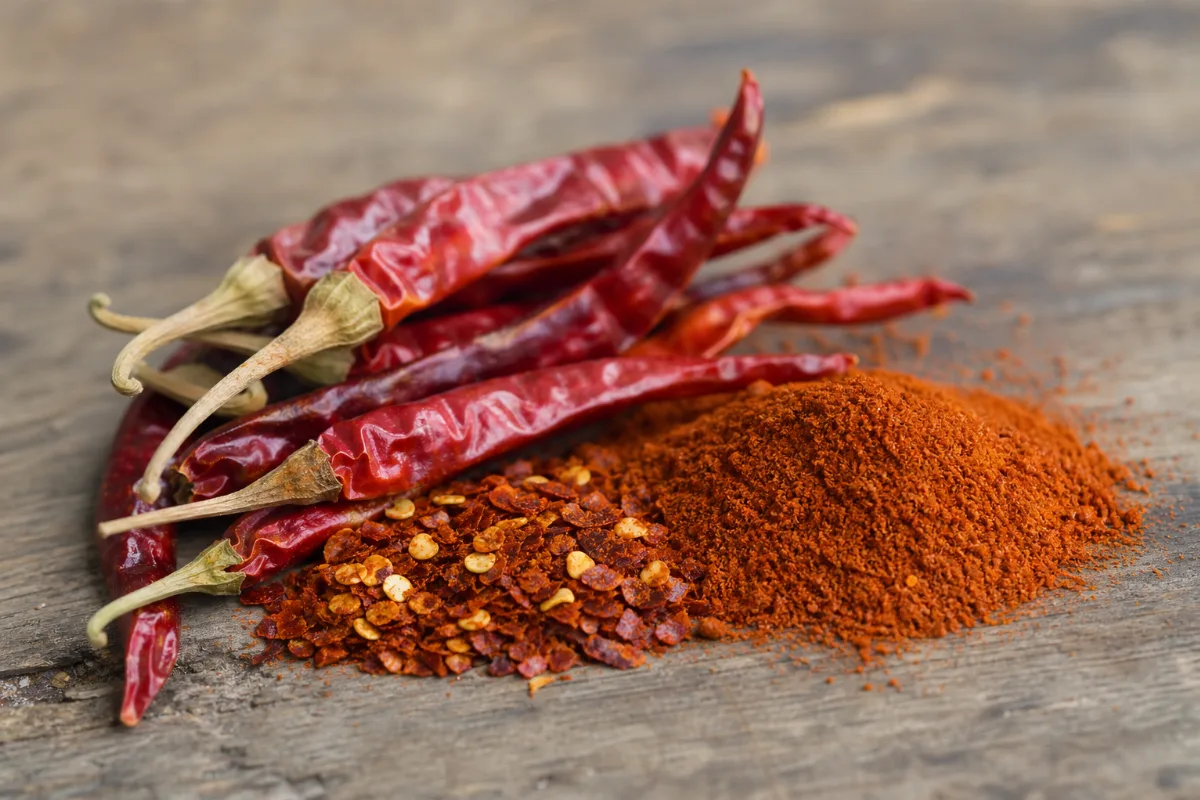
Cayenne and chili pepper
Capsicum annuum · also called cayenne pepper, chili, chilli, red pepper, crushed red pepper, Capsicum, piment de Cayenne (French)
Cayenne is the dried, ground fruit of a hot chili, used in sauces, stews and rubs. Large studies of people who eat chili often link it to fewer deaths, but those studies cannot show chili is the cause. Trials of capsaicin products show little effect on blood pressure and only small effects on cholesterol and calorie burning. The main caution is burning of the gut, skin and eyes, plus allergy and some medicine interactions with concentrated supplements.
General information, not medical advice. Last substantive update · Not medically reviewed. A named clinician has not signed off on this page. How this page is made
About Cayenne and chili pepper
Cayenne is a hot spice, not a remedy. It is the dried, ground fruit of a hot chili and gives heat to many dishes. Studies of people who eat chili are encouraging but cannot prove cause, and chili can burn the gut, skin and eyes.
What it is
Cayenne is a group of long, thin, mostly red hot chilies, dried and ground to make the spice. Wikipedia says they are types of Capsicum annuum, in the nightshade family; GBIF confirms the species and family. MSK names both Capsicum annuum and Capsicum frutescens for cayenne products.
Names overlap. Wikipedia notes cayenne powder may be a blend of pepper types and may contain no cayenne at all. Chili powder is a blend and is a different product. Wikipedia gives cayenne a heat of about 30,000 to 50,000 Scoville units; we did not check this against a primary source.
In the kitchen
Wikipedia lists cayenne used fresh or as a dried powder on seafood, eggs, meat, stews, casseroles, cheese dishes, curries and hot sauces. In North America it is the main chili in crushed red pepper flakes.
MSK says it is generally safe to add cayenne to vegetable or meat dishes, and to soups, curries and stews.
Nutrition in a typical portion
USDA lists 1 teaspoon of ground cayenne as 1.8 g. That portion gives about 6 kcal, 0.5 g fiber, 36 mg potassium, 1.4 mg vitamin C, 37 micrograms vitamin A (RAE) and 0.5 mg vitamin E (worked out from the USDA values per 100 g). These are small amounts, so cayenne is a flavoring, not a meaningful source of nutrients. USDA data are from 2018 and real products vary.
What the research shows
The strongest food evidence is observational. Cohorts of 16,179 US adults and 22,811 Italian adults, and a pooling of four cohorts with 564,748 adults, linked regular chili or spicy food with lower death risk. Chili eaters may differ in other ways, so this does not show cause.
Trials of capsaicin and pepper products found little effect on blood pressure and small, unstable effects on cholesterol. Effects on calorie burning and fullness were small.
Case-control studies linked a lot of chili to higher risk of esophageal cancer, and an umbrella review called the overall health effect of chili unclear.
Food versus supplements and skin products
Cayenne in food, capsaicin capsules and capsaicin plasters or patches are three different things. The EU regulator accepts defined plasters for muscle pain, and a Cochrane review found a prescription patch helped a modest extra share of people with nerve pain. Neither result applies to cayenne in food.
Amounts
This page gives no amounts to eat. Ask a doctor, pharmacist or dietitian about supplements, especially if you take medicines.
At a glance
Traditional uses history, not proof
- Cooking: sauces, stews, curries, rubs and hot sauces
- Folk medicine: for digestion and circulation, and as a gargle for a sore throat
- Long use is not proof that it treats any condition
Studied for research
- Death from any cause: low certainty, observational studies
- Heart disease death: low certainty, observational studies
- Blood pressure: low certainty, little or no effect
- Cholesterol and triglycerides: very low, mostly supplements, results unstable
- Calorie burning and fullness: low, small effects
- Reflux and indigestion: mixed; can make burning worse
- Digestive-tract cancer: mixed, a possible harm signal
Main compounds
- Capsaicin (main source of the burn)
- Dihydrocapsaicin
- Capsinoids (non-burning relatives)
Common forms
- Fresh chilies
- Dried chilies and flakes
- Ground cayenne
- Chili powder blends (not pure cayenne)
- Capsules and extracts (concentrated, not a kitchen product)
- Capsaicin creams and patches (skin products)
Research links: Review: spicy food and chili peppers and multiple health outcomes (2022) · EMA herbal monograph on Capsicum, skin products (2015) · Memorial Sloan Kettering: Cayenne · USDA FoodData Central: cayenne · Research Library · Genes & Biomarkers Library
What it is and its history
- Accepted scientific name
- Capsicum annuum
- Naming authority
- L. (GBIF accepted)
- Synonyms
- Capsicum frutescens (listed separately by GBIF; MSK and the EU monograph name it for cayenne supplements)
- Common names
- Cayenne pepper (English); Chili / chilli pepper (English); Red pepper (English); Crushed red pepper (flakes) (English); Capsicum (English); Piment de Cayenne (French)
- Family or group
- Solanaceae (the nightshade family), per GBIF.
- Classification
- Plantae > Tracheophyta > Magnoliopsida > Solanales > Solanaceae > Capsicum > Capsicum annuum
- Native range
- Not verified from a source read.
- Habitat
- Not verified from a source read.
- What it looks like
- Roots: Not verified.; Stems: Not verified.; Leaves: Not verified.; Flowers: Not verified.; Fruit: Wikipedia describes cayenne fruits as tapering, 10 to 25 cm long, skinny, mostly red, often with a curved tip and rippled skin (secondary source).
- Cultivation
- Not verified.
- Harvest and processing
- Wikipedia says the fruits are generally dried and ground to make the powder, which may be a blend of pepper types and may or may not contain seeds (secondary source).
- Look-alikes and adulterants
- Name: Chili powder (blend); Note: USDA lists chili powder separately; it is a blend, not pure cayenne.; Name: Paprika, Kashmiri chili, Aleppo pepper; Note: Other ground Capsicum products with different heat.; Name: Black pepper (Piper nigrum); Note: A different plant; the name "pepper" is borrowed.
- Sustainability and conservation
- Not assessed.
Photographs
Traditional use and history history, not clinical proof
| Tradition or era | Documented use | Source |
|---|---|---|
Traditional use shows how it was used. It does not show that it works or is safe today.
What is inside, and how it may work
What it contains and how those compounds act in cells and animals. Laboratory and animal mechanisms are not proven effects in people.
Main compounds
| Compound | Family | Where it is concentrated | Activity studied | Level of evidence |
|---|---|---|---|---|
| Capsaicin PubChem 1548943 | capsaicinoid | Fruit Not given in the sources read | The compound mainly responsible for the burning feel; activates TRPV1 receptors on nerve endings (MSK; gut review). 25 26 10 | Human data |
| Dihydrocapsaicin PubChem 107982 | capsaicinoid | Fruit Not given | A second major capsaicinoid measured with capsaicin in chili samples (Czech study). 11 27 | Chemical analysis |
| Capsinoids (for example capsiate) | capsinoid | Fruit of non-pungent peppers Not given | Non-pungent relatives of capsaicin that act in the gut but not in the mouth (MSK; 2012 review). 25 14 | Human data |
Mechanisms, receptors and pathways
| Target or pathway | Gene or receptor | What was found | Level |
|---|---|---|---|
| TRPV1 receptor (heat and pain sensing) | TRPV1 | Capsaicin activates TRPV1 on tongue neurons, causing the burning feel, and TRPV1 on gut nerves; in the gut review the burning is linked to TRPV1-expressing fibres, which are increased in functional gut disorders. 25 10 | Human data |
| Vessel widening via CGRP | CGRP | MSK attributes vessel-widening effects to release of calcitonin gene-related peptide; depletion leads to higher blood pressure. 25 | Authoritative guidance |
| Cyclosporin availability | CYP3A, P-gp | In animals, capsaicin raised cyclosporin bioavailability through CYP3A inhibition and P-gp effects (MSK). 25 | Animal research |
| Tumor cell pathways | EGFR/HER-2, Akt/mTOR, STAT-3, androgen receptor | Lab and animal studies show capsaicin both killing cancer cells and, at a low concentration, promoting colorectal cancer spread (MSK). 25 | Lab and animal |
Absorption, metabolism and elimination
- Absorption
- Not found for food. MSK says capsaicin causes mucosal vasodilation and may alter uptake of other drugs.
- Distribution
- The EU monograph says capsaicin crosses the placenta and may pass into breast milk.
- Metabolism
- Animal data suggest effects on CYP3A and P-gp (MSK).
- Elimination
- Not found.
- Bioavailability
- Not established.
Isolated compounds versus whole extracts
The large death studies are about eating chili and spicy food. Most trials of blood pressure, cholesterol and sugar used capsaicin, capsinoids or capsules. Skin plasters and patches are a third thing: defined capsaicin products with their own evidence and warnings. Findings in one group do not carry over to another.
Nutritional composition
Nutrition from USDA FoodData Central, SR Legacy: "Spices, pepper, red or cayenne" (FDC 170932; SR Legacy April 2018; read 2026-10-26 from the bulk download kept in the project). Per 100 g: 318 kcal, 12.0 g protein, 17.3 g fat, 56.6 g carbohydrate, 27.2 g fiber, 148 mg calcium, 7.8 mg iron, 152 mg magnesium, 2010 mg potassium, 30 mg sodium, 2.0 mg manganese, 76.4 mg vitamin C, 2080 micrograms vitamin A (RAE), 29.8 mg vitamin E, 80.3 micrograms vitamin K. USDA household portions: 1 teaspoon ground = 1.8 g and 1 tablespoon = 5.3 g. One teaspoon (1.8 g), worked out from the per-100 g values: about 6 kcal, 0.5 g fiber, 3 mg calcium, 36 mg potassium, 0.14 mg iron, 1.4 mg vitamin C, 37 micrograms vitamin A (RAE), 0.5 mg vitamin E and 1.4 micrograms vitamin K. These are small amounts, so cayenne is a flavouring, not a meaningful source of nutrients. Real products vary.
2 mixed findings6 low certainty2 very low certainty1 not enough evidence
What was looked at
The 11 benefits and uses checked for Cayenne and chili pepper, each with how strong the evidence is. Tap one to open it.
- Death from any cause (people who eat chili often)Low certainty
- Heart disease death (people who eat chili often)Low certainty
- Blood pressure and heart rate (trials)Low certainty
- Cholesterol and triglycerides (trials, mostly supplements)Very low certainty
- Calorie burning and fullness (capsaicin and red pepper trials)Low certainty
- Blood sugar and insulinLow certainty
- Reflux, indigestion and irritable bowel symptomsMixed findings
- Digestive-tract cancer risk (possible harm signal)Mixed findings
- Pain relief from capsaicin skin products (not the spice)Low certainty
- Tumor cells (lab and animal work)Very low certainty
- Digestion and circulation (traditional use)Not enough evidence
Lab markers tracked in the studies
Systolic blood pressureDiastolic blood pressureTotal cholesterolTriglyceridesRespiratory quotient (fat versus carbohydrate burning)
What is Cayenne and chili pepper good for?
The studied uses and how strong the human evidence is for each. Most of it is observational, or about capsaicin products rather than cayenne in cooking.
Benefits, one by one
Each card is a research question, not a promise. Tap a goal to filter. Open a card to see the studies, doses and limits.
Death from any cause (people who eat chili often)
Low certaintyLarge studies that followed people over years found that those who ate chili or spicy food regularly were less likely to die in the follow-up period. These are observational studies, so they cannot show that chili is the cause.
3 studiesHot red chili pepper, chili sauce or chili oil eaten as food; amounts…
Studies, doses and limits
What the trials found
Three kinds of human data: a US cohort (16,179 adults), an Italian cohort (22,811 adults) and a pooling of 4 cohorts (564,748 adults).
Results
US cohort: death 21.6% in chili eaters versus 33.6% in non-eaters; adjusted hazard ratio 0.87. Italian cohort: eating chili more than 4 times a week versus none or rare gave a hazard ratio of 0.77. Pooled cohorts of spicy food (chili pepper, sauce or oil): hazard ratio 0.88.
Effect sizes as reported
Hazard ratios 0.87 (95% CI 0.77 to 0.97), 0.77 (0.66 to 0.90) and 0.88 (0.86 to 0.90): roughly 12 to 23 percent lower death risk in regular eaters.
Why this rating
Observational studies in which chili eaters may differ in diet, income, smoking and other habits. The results point the same way in several countries, but cannot show cause.
Form and dose studied
Hot red chili pepper, chili sauce or chili oil eaten as food; amounts were reported as how often, not as grams.
Who was studied
Adults in the United States, Italy, China and Iran.
Limits
Frequency was reported by questionnaire. Spicy food in general, not only cayenne.
Why researchers looked
Chili and spicy food are eaten daily in many countries, so researchers asked whether regular eaters live longer.
Proposed mechanism Unknown
Not shown. The authors of one cohort found that known heart-risk blood markers explained only a small part of the link.
A proposed mechanism does not show that the effect happens in people.
See the safety section. Observational benefit does not mean more heat is safer.
Heart disease death (people who eat chili often)
Low certaintyThe same studies found fewer deaths from heart disease in regular chili eaters. Stroke death results were mixed. This is an association, not proof.
3 studiesChili, chili sauce or chili oil eaten as food.
Studies, doses and limits
What the trials found
Italian cohort and a pooling of 4 cohorts.
Results
Italian cohort, more than 4 times a week versus none or rare: cardiovascular death HR 0.66, ischemic heart disease death HR 0.56, cerebrovascular (stroke) death HR 0.39. Pooled cohorts: cardiac death HR 0.82 but stroke death not significantly different (HR 0.79, wide range 0.53 to 1.17, with very different results between studies).
Effect sizes as reported
HR 0.66 (0.50 to 0.86); 0.56 (0.35 to 0.87); 0.39 (0.20 to 0.75); pooled cardiac 0.82 (0.73 to 0.91).
Why this rating
Observational. The Italian cohort found a stroke link, but the pooling did not, so the stroke picture is mixed.
Form and dose studied
Chili, chili sauce or chili oil eaten as food.
Who was studied
Adults in Italy and in the pooled cohorts.
Limits
Observational. Diet questionnaires. Not a trial.
Why researchers looked
Capsaicin acts on nerve and blood-vessel receptors, so researchers looked at heart outcomes.
Proposed mechanism Unknown
Not shown in these studies. Capsaicin acts on TRPV1 receptors in lab work, but the cohorts did not test this.
A proposed mechanism does not show that the effect happens in people.
Chili does not replace blood pressure or cholesterol medicine.
Blood pressure and heart rate (trials)
Low certaintyPooled trials of chili and capsaicin products found little or no change in blood pressure. A 2026 pooling found a very small fall in diastolic pressure and heart rate in longer trials.
4 studiesWhole chili, red pepper powder, fermented paste, juice, capsaicin and…
Studies, doses and limits
What the trials found
Three systematic reviews of randomised trials: 2021 (Phytother Res), 2026 (Food Funct) and 2026 (Nutr Metab Cardiovasc Dis).
Results
2021 pooling: no significant effect on systolic, diastolic pressure or heart rate. 2026 pooling of 14 studies: systolic -0.34 mmHg and diastolic -0.38 mmHg, neither significant; diastolic -0.80 mmHg in trials of 12 weeks or longer; heart rate -1.53 beats per minute. The third review found a small diastolic fall that depended on one study.
Effect sizes as reported
Systolic -0.34 mmHg (95% CI -1.78 to 1.09); diastolic -0.38 (-0.97 to 0.20); long trials diastolic -0.80 (-1.48 to -0.12).
Why this rating
Little or no effect on systolic pressure across reviews; the small diastolic result is fragile. Trials mixed whole chili, powder, paste, juice and capsaicin products.
Form and dose studied
Whole chili, red pepper powder, fermented paste, juice, capsaicin and capsinoid products; amounts differ across trials.
Who was studied
Adults.
Limits
High heterogeneity. Many trials used supplements, not cooking amounts.
Why researchers looked
Capsaicin widens blood vessels in lab work, so it was tested for blood pressure.
Proposed mechanism Preliminary mechanism
Not shown. MSK says capsaicin releases a vessel-widening nerve chemical (CGRP); that is a mechanism, not a result in these trials.
A proposed mechanism does not show that the effect happens in people.
MSK says people with high blood pressure or heart conditions should talk to a clinician before taking cayenne (supplements); capsaicin may change how blood pressure medicines work.
Cholesterol and triglycerides (trials, mostly supplements)
Very low certaintyOne pooling of 12 trials in overweight or obese adults found lower total cholesterol and triglycerides with capsaicin or pepper products. Another pooling found the cholesterol result was unstable and depended on a single study.
2 studiesMostly capsaicin, capsinoids and pepper-based products in trials; not…
Studies, doses and limits
What the trials found
Two systematic reviews of randomised trials: 12 trials (2025) in overweight or obese adults, and 13 trials (821 adults, 2026).
Results
The 2025 pooling found triglycerides lower by about 14 mg/dL and total cholesterol by about 10 mg/dL; LDL and HDL did not change. The 2026 pooling found small, unstable falls in total cholesterol; triglycerides, LDL and HDL did not change significantly, and the authors graded certainty low to very low.
Effect sizes as reported
Triglycerides WMD -14.29 mg/dL (95% CI -27.01 to -1.58); total cholesterol -9.97 mg/dL (-17.41 to -2.52).
Why this rating
The two reviews disagree on triglycerides. The 2026 review says the cholesterol result disappeared when one study was removed and rated most evidence low to very low.
Form and dose studied
Mostly capsaicin, capsinoids and pepper-based products in trials; not cooking amounts of cayenne.
Who was studied
Overweight or obese adults (2025 review); adults (2026 review).
Limits
Not food-based. High heterogeneity. Small total numbers.
Why researchers looked
Capsaicin may affect fat handling in the body, so lipids were measured in trials.
Proposed mechanism Unknown
Not shown.
A proposed mechanism does not show that the effect happens in people.
None specific.
Calorie burning and fullness (capsaicin and red pepper trials)
Low certaintyPooled trials found that capsaicin may slightly increase fat burning and fullness, but changes in energy use were not statistically significant. The effects are small.
3 studiesCapsaicin and red pepper, some at culinary-range amounts and some in …
Studies, doses and limits
What the trials found
Two meta-analyses of human trials: 2012 (Chem Senses) and 2026 (Nutr Rev, 24 randomised studies).
Results
The 2012 review said capsaicin raised energy use and fat burning, especially at high amounts, with small effects. The 2026 update found changes in energy use not statistically significant, a consistently lower respiratory quotient in long-term trials (read by the authors as more fat burning), mixed results for appetite and intake, and less loss of fullness during a low-calorie diet.
Effect sizes as reported
Not given as one number in the abstracts. The authors call the effect small or modest.
Why this rating
Small effects, mixed appetite results, and the 2026 review has links to the spice industry. The trials measured body-process markers, not long-term weight loss.
Form and dose studied
Capsaicin and red pepper, some at culinary-range amounts and some in capsules.
Who was studied
Adults.
Limits
Designs vary; some trials may be too short or too long. Two authors of the 2026 review sit on a McCormick Science Institute committee.
Why researchers looked
The burning feel of chili is linked to a small, short rise in body heat, so researchers asked whether it helps weight management.
Traditional use
MSK lists weight control among the purposes people use cayenne for.
Proposed mechanism Preliminary mechanism
Capsaicin acts on TRPV1 receptors in the gut and may raise energy use and fat burning slightly (MSK; the 2026 review). The size of this effect is small.
A proposed mechanism does not show that the effect happens in people.
Burning and stomach irritation are common with capsaicin products (see safety).
Blood sugar and insulin
Low certaintyA pooling of 13 trials of red pepper or capsaicin supplements found no significant effect on blood sugar, insulin or HbA1c.
2 studiesRed pepper or capsaicin supplements.
Studies, doses and limits
What the trials found
One systematic review of 13 randomised trials (821 adults, 2026).
Results
No significant effects on glucose, insulin, HOMA-IR or HbA1c. The authors rated the certainty of most outcomes low to very low.
Effect sizes as reported
Not significant for any of these outcomes.
Why this rating
Supplements, high heterogeneity and small numbers. Absence of a significant result is not proof of no effect.
Form and dose studied
Red pepper or capsaicin supplements.
Who was studied
Adults.
Limits
Not food-based. Small trials.
Why researchers looked
MSK says capsaicin may increase insulin and lower blood sugar, so the question was tested.
Traditional use
MSK lists managing type 2 diabetes among purposes people use cayenne for.
Proposed mechanism Unknown
Not shown.
A proposed mechanism does not show that the effect happens in people.
People who take diabetes medicine should ask a pharmacist before using capsaicin supplements. We found no source that says chili in food changes diabetes medicine.
Reflux, indigestion and irritable bowel symptoms
Mixed findingsResults are mixed. A single serving of chili can bring on burning pain in people with reflux, indigestion or irritable bowel. Some small trials found that long-term chili eating eased indigestion and reflux symptoms.
2 studiesChili in capsules (trial); chili as food and capsaicin (review).
Studies, doses and limits
What the trials found
One small randomised crossover trial (30 people) and one narrative review.
Results
In 15 people with non-erosive reflux, a single chili challenge (in capsules) gave a larger stomach volume, less fullness, more abdominal burning and a trend to more heartburn than placebo. Healthy volunteers had similar symptoms after chili and placebo. A 2010 review says a single exposure can worsen pain and burning in dyspepsia and irritable bowel, while chronic eating of chili improved dyspepsia and reflux symptoms in small randomised studies.
Effect sizes as reported
No effect sizes in the abstracts beyond the stomach volumes (451 vs 375 mL in NERD patients).
Why this rating
One small acute trial points to harm in reflux; the review points to possible long-term benefit in small trials. The two are not the same exposure.
Form and dose studied
Chili in capsules (trial); chili as food and capsaicin (review).
Who was studied
Healthy volunteers and people with non-erosive reflux; people with functional gut disorders (review).
Limits
Small numbers. The long-term trials cited by the review were not read.
Why researchers looked
Capsaicin acts on pain nerves in the gut lining, so chili can both irritate and, with time, may dull them.
Traditional use
Traditionally used to aid digestion (MSK).
Proposed mechanism Preliminary mechanism
Capsaicin acts on TRPV1 nerve endings in the gut. Both a trial and a review attribute the burning to this pathway.
A proposed mechanism does not show that the effect happens in people.
If chili brings on burning or pain, a doctor can help work out why.
Digestive-tract cancer risk (possible harm signal)
Mixed findingsStudies that compared people who had cancer with people who did not found a link between eating a lot of chili and digestive-tract cancer, especially esophageal cancer. The link differed by region and cannot show cause.
3 studiesChili eaten as food.
Studies, doses and limits
What the trials found
One meta-analysis of 14 case-control studies (2022) and an umbrella review (2022).
Results
High chili intake was linked to higher risk of digestive-tract cancers overall (OR 1.64) and esophageal cancer (OR 2.71); no significant link for gastric or colorectal cancer. Higher risk was seen in Asian, African and North American studies, lower risk in South American and European studies. The umbrella review found direct links with esophageal, gastric and gallbladder cancer and called the overall health effect unclear.
Effect sizes as reported
Overall OR 1.64 (95% CI 1.00 to 2.70); esophageal cancer OR 2.71 (1.54 to 4.75).
Why this rating
Case-control studies cannot show cause and the results differ by region. This is evidence of possible harm, not a benefit.
Form and dose studied
Chili eaten as food.
Who was studied
Adults in many regions.
Limits
Case-control design relies on memory of past diet. Other risks such as smoking and very hot drinks may be mixed up with chili.
Why researchers looked
Hot food is suspected to irritate the digestive lining over years, so researchers checked cancer rates.
Proposed mechanism Lab and animal
MSK says lab and animal findings on capsaicin and tumor cells are mixed: some harmful, some protective.
A proposed mechanism does not show that the effect happens in people.
See the safety section. This does not show cayenne in normal cooking causes cancer, and it does not show it is free of risk.
Pain relief from capsaicin skin products (not the spice)
Low certaintyCapsaicin plasters and creams with a set capsaicin content are a different thing from cayenne in food. The EU medicines regulator accepts them for muscle pain, and a strong prescription patch helped a small extra share of people with nerve pain.
2 studiesPrescription 8% patch; EU-style plasters and semi-solid products with…
Studies, doses and limits
What the trials found
A Cochrane review (2017, 8 trials, 2,488 adults) of an 8% prescription patch, and the EU herbal monograph (2015).
Results
In post-shingles nerve pain, about 10% more people said they were much or very much improved with the 8% patch than with a low-dose comparison patch (moderate-quality evidence). Pain-reduction results were very low quality. Serious adverse events were 3.5% with capsaicin versus 3.2% with control. The EU monograph states plasters and semi-solid skin products are a well-established use for relief of muscle pain such as low back pain.
Effect sizes as reported
About 10 percentage points more people improved; the Cochrane authors call this "not large".
Why this rating
Cochrane rated one outcome moderate quality and others very low. The extra share who benefited is modest. This is a skin product, so it says nothing about food or capsules.
Form and dose studied
Prescription 8% patch; EU-style plasters and semi-solid products with defined capsaicinoid content.
Who was studied
Adults with nerve pain or muscle pain.
Limits
Skin products only. Strong patches must be applied under controlled conditions.
Why researchers looked
Capsaicin on the skin first stimulates and then dulls pain-sensing nerve endings.
Traditional use
MSK says capsaicin is marketed for skin use to relieve various types of pain; no older tradition was verified.
Proposed mechanism Human pharmacology
On the skin capsaicin makes pain nerves more sensitive and then less sensitive after repeated use (Cochrane review).
A proposed mechanism does not show that the effect happens in people.
Skin products burn and must not go on broken skin or near the eyes (EMA). Do not use leftover cooking cayenne as a skin remedy.
Tumor cells (lab and animal work)
Very low certaintyIn lab dishes and animals, capsaicin killed some cancer cells and, at some concentrations, promoted spread of others. This is not evidence about eating chili.
1 studiesPure capsaicin in dishes and animals.
Studies, doses and limits
What the trials found
No human trial. Source is a clinician information page that summarises lab work.
Results
MSK says there is continued debate about whether capsicum compounds cause, aid or block cancer, and that effects may depend on concentration.
Why this rating
Lab and animal results go both ways and do not carry over to people.
Form and dose studied
Pure capsaicin in dishes and animals.
Limits
Lab only. Concentrations in the lab are not what a person eats.
Why researchers looked
Capsaicin affects cell signalling pathways in lab work.
Proposed mechanism Lab and animal
MSK reports capsaicin causing cell death in breast, bladder and prostate cell lines in vitro and in animals, and a low concentration promoting colorectal cancer spread in a lab study.
A proposed mechanism does not show that the effect happens in people.
None specific.
Digestion and circulation (traditional use)
Not enough evidenceCayenne is traditionally used for digestion, circulation, gargling for sore throats and as a stomach stimulant. We found no good trial for these uses.
1 studiesCayenne as spice, capsules, powders and liquid extracts (traditional …
Studies, doses and limits
What the trials found
No trial of cayenne for these uses was found in the sources read.
Results
Nothing to report.
Why this rating
Tradition is not proof of benefit.
Form and dose studied
Cayenne as spice, capsules, powders and liquid extracts (traditional forms).
Limits
Absence of a study is not proof of no effect.
Why researchers looked
Long use in folk and herbal traditions.
Traditional use
MSK reports use as a gargle for laryngitis and orally as a gastrointestinal stimulant, and in products for digestive and circulatory problems, poor appetite and weight loss.
Proposed mechanism Unknown
Not established.
A proposed mechanism does not show that the effect happens in people.
Supplements are stronger than culinary cayenne and can interact with medicines (MSK).
Connections to the rest of health
How Cayenne and chili pepper connects to the rest of our health knowledge graph. Every link says what kind of connection it is. A safety link (for example to the liver) is a warning, not a benefit. A study that merely mentions a topic never creates a benefit link.
Explore every connection: goals, body systems, organs, symptoms, genes
A. Wellness goals
| Connected to | Kind of connection | Evidence status | Context | Studies |
|---|---|---|---|---|
| Preventive Wellness | Low certainty | Death from any cause (people who eat chili often): Large studies that followed people over years found that those who ate chili or spicy food regularly were less likely to die in the follow-up period. These are observational studies, so they cannot show that chili is the cause. | 6 3 17 | |
| Healthy Aging | Low certainty | Death from any cause (people who eat chili often): Large studies that followed people over years found that those who ate chili or spicy food regularly were less likely to die in the follow-up period. These are observational studies, so they cannot show that chili is the cause. | 6 3 17 | |
| Heart Health | Low certainty | Heart disease death (people who eat chili often): The same studies found fewer deaths from heart disease in regular chili eaters. Stroke death results were mixed. This is an association, not proof. | 3 17 1 | |
| Blood Pressure Support | Low certainty | Blood pressure and heart rate (trials): Pooled trials of chili and capsaicin products found little or no change in blood pressure. A 2026 pooling found a very small fall in diastolic pressure and heart rate in longer trials. | 20 5 9 25 | |
| Heart Health | Low certainty | Blood pressure and heart rate (trials): Pooled trials of chili and capsaicin products found little or no change in blood pressure. A 2026 pooling found a very small fall in diastolic pressure and heart rate in longer trials. Cholesterol and triglycerides (trials, mostly supplements): One pooling of 12 trials in overweight or obese adults found lower total cholesterol and triglycerides with capsaicin or pepper products. Another pooling found the cholesterol result was unstable and depended on a single study. | 20 5 9 25 22 | |
| Cholesterol Balance | Very low certainty | Cholesterol and triglycerides (trials, mostly supplements): One pooling of 12 trials in overweight or obese adults found lower total cholesterol and triglycerides with capsaicin or pepper products. Another pooling found the cholesterol result was unstable and depended on a single study. | 22 9 | |
| Weight Management | Low certainty | Calorie burning and fullness (capsaicin and red pepper trials): Pooled trials found that capsaicin may slightly increase fat burning and fullness, but changes in energy use were not statistically significant. The effects are small. | 14 15 25 | |
| Healthy Weight Metabolism | Low certainty | Calorie burning and fullness (capsaicin and red pepper trials): Pooled trials found that capsaicin may slightly increase fat burning and fullness, but changes in energy use were not statistically significant. The effects are small. | 14 15 25 | |
| Blood Sugar Balance | Low certainty | Blood sugar and insulin: A pooling of 13 trials of red pepper or capsaicin supplements found no significant effect on blood sugar, insulin or HbA1c. | 9 25 | |
| Metabolic Health | Low certainty | Blood sugar and insulin: A pooling of 13 trials of red pepper or capsaicin supplements found no significant effect on blood sugar, insulin or HbA1c. | 9 25 | |
| Digestive Support | Mixed findings | Reflux, indigestion and irritable bowel symptoms: Results are mixed. A single serving of chili can bring on burning pain in people with reflux, indigestion or irritable bowel. Some small trials found that long-term chili eating eased indigestion and reflux symptoms. | 18 10 | |
| Gut Health | Mixed findings | Reflux, indigestion and irritable bowel symptoms: Results are mixed. A single serving of chili can bring on burning pain in people with reflux, indigestion or irritable bowel. Some small trials found that long-term chili eating eased indigestion and reflux symptoms. | 18 10 | |
| Preventive Wellness | Mixed findings | Digestive-tract cancer risk (possible harm signal): Studies that compared people who had cancer with people who did not found a link between eating a lot of chili and digestive-tract cancer, especially esophageal cancer. The link differed by region and cannot show cause. | 4 1 25 | |
| Joint Support | Low certainty | Pain relief from capsaicin skin products (not the spice): Capsaicin plasters and creams with a set capsaicin content are a different thing from cayenne in food. The EU medicines regulator accepts them for muscle pain, and a strong prescription patch helped a small extra share of people with nerve pain. | 7 23 | |
| Muscle Recovery | Low certainty | Pain relief from capsaicin skin products (not the spice): Capsaicin plasters and creams with a set capsaicin content are a different thing from cayenne in food. The EU medicines regulator accepts them for muscle pain, and a strong prescription patch helped a small extra share of people with nerve pain. | 7 23 | |
| Cellular Protection | Very low certainty | Tumor cells (lab and animal work): In lab dishes and animals, capsaicin killed some cancer cells and, at some concentrations, promoted spread of others. This is not evidence about eating chili. | 25 | |
| Digestive Support | Traditional use | Not enough evidence | Digestion and circulation (traditional use): Cayenne is traditionally used for digestion, circulation, gargling for sore throats and as a stomach stimulant. We found no good trial for these uses. | 25 |
| Healthy Circulation | Traditional use | Not enough evidence | Digestion and circulation (traditional use): Cayenne is traditionally used for digestion, circulation, gargling for sore throats and as a stomach stimulant. We found no good trial for these uses. | 25 |
B. Body systems
| Connected to | Kind of connection | Evidence status | Context | Studies |
|---|---|---|---|---|
| Whole Body | Biological association | Low certainty | Studied for: Death from any cause (people who eat chili often) | 6 3 17 |
| Cardiovascular System | Biological association | Low certainty | Studied for: Heart disease death (people who eat chili often) Studied for: Blood pressure and heart rate (trials) | 3 17 1 20 5 9 25 22 |
| Metabolism Weight | Biological association | Very low certainty | Studied for: Cholesterol and triglycerides (trials, mostly supplements) Studied for: Calorie burning and fullness (capsaicin and red pepper trials) | 22 9 14 15 25 |
| Endocrine System | Biological association | Low certainty | Studied for: Blood sugar and insulin | 9 25 |
| Digestive System | Biological association | Mixed findings | Studied for: Reflux, indigestion and irritable bowel symptoms Studied for: Digestive-tract cancer risk (possible harm signal) | 18 10 4 1 25 |
| Pain Inflammation | Biological association | Low certainty | Studied for: Pain relief from capsaicin skin products (not the spice) | 7 23 |
| Musculoskeletal System | Biological association | Low certainty | Studied for: Pain relief from capsaicin skin products (not the spice) | 7 23 |
| Cellular | Biological association | Very low certainty | Studied for: Tumor cells (lab and animal work) | 25 |
C. Body parts and organs
| Connected to | Kind of connection | Evidence status | Context | Studies |
|---|---|---|---|---|
| Stomach | Adverse effect or risk | Documented risk | Caused more abdominal burning than placebo in a small trial of people with non-erosive reflux; MSK lists stomach irritation and pain. Chili caused more abdominal burning than placebo in people with non-erosive reflux. Preparation or compound: Chili powder in capsules; capsaicin |
18 25 |
| Skin | Adverse effect or risk | Documented risk | MSK reports a hand burn after preparing a meal with red chili peppers; the EU monograph says skin products must not go on broken skin. Preparation or compound: Fresh chilies and capsaicin products |
25 23 |
| Eyes | Adverse effect or risk | Documented risk | MSK lists eye irritation; skin products must not be applied near the eyes. Preparation or compound: Cayenne and capsaicin products |
25 23 |
| Blood vessels | Adverse effect or risk | Case report | One case report links an ultra-hot pepper to reversible cerebral vasoconstriction syndrome and stroke in a teenager. Preparation or compound: Carolina Reaper pepper (ultra-hot) |
21 |
I. Biomarkers
| Connected to | Kind of connection | Evidence status | Context | Studies |
|---|---|---|---|---|
| Systolic blood pressure | Biological association | Low certainty | Measured in trials: no clear change. A lab change is not the same as a health benefit. | 20 5 9 |
| Diastolic blood pressure | Biological association | Very low certainty | Measured in trials: small possible fall in longer trials. A lab change is not the same as a health benefit. | 5 9 |
| Total cholesterol | Biological association | Very low certainty | Measured in trials: possible small fall (unstable). A lab change is not the same as a health benefit. | 22 9 |
| Triglycerides | Biological association | Very low certainty | Measured in trials: mixed. A lab change is not the same as a health benefit. | 22 9 |
| Respiratory quotient (fat versus carbohydrate burning) | Biological association | Low certainty | Measured in trials: lowered (more fat burning). A lab change is not the same as a health benefit. | 15 |
J. Genes, receptors and enzymes
K. Biological pathways
L. Active compounds
| Connected to | Kind of connection | Evidence status | Context | Studies |
|---|---|---|---|---|
| Capsaicin | Biological association | Human | The compound mainly responsible for the burning feel; activates TRPV1 receptors on nerve endings (MSK; gut review). Preparation or compound: Fruit |
25 26 10 |
| Dihydrocapsaicin | Biological association | Chemical analysis | A second major capsaicinoid measured with capsaicin in chili samples (Czech study). Preparation or compound: Fruit |
11 27 |
| Capsinoids (for example capsiate) | Biological association | Human | Non-pungent relatives of capsaicin that act in the gut but not in the mouth (MSK; 2012 review). Preparation or compound: Fruit of non-pungent peppers |
25 14 |
Each connection is stored with the ingredient, the connected record, the kind of connection, the evidence status, the supporting studies, the preparation or compound involved, and a review date (last reviewed October 26, 2026).
Evidence at a glance: what changed in 1 lab markers
Tap a number to show only those markers. Counts are markers, not people.
The evidence
The research centre for Cayenne and chili pepper. Every record here was checked against PubMed or the publisher's page; we never list a study we have not verified.
Evidence by outcome
Bars show how many studies we found for each outcome, not how well it works. People are added up across trials only (reviews are not added, to avoid double counting).
How we rate evidence
High certainty
Several well-run trials or reviews agree; further research is unlikely to change the picture much.
Moderate certainty
Good trials point the same way, but some doubt remains.
Low certainty
Small, short or inconsistent trials. The finding could change with better research.
Very low certainty
Very little or very weak human data. Treat as a possibility only.
Mixed findings
Trials or reviews disagree with each other.
Not enough evidence
Not enough human research to say either way.
Evidence against
Good research found no benefit, or found harm.
We take the reviewers' own risk-of-bias and GRADE statements where they exist, and otherwise judge from study size, design, consistency, directness and whether a product matches what is sold. Many publications do not make evidence high. Method note: We started from our existing cayenne summary, re-checked nutrition at USDA FoodData Central, re-read the Memorial Sloan Kettering page and the EMA herbal monograph, and read PubMed abstracts for each study. Only abstracts were read for PubMed studies. Items we could not verify are flagged in the research gaps.
Study library: every study we checked 29
| Study | Design | People | Product, dose, length | Result |
|---|---|---|---|---|
| Ao 2022 Spicy Food and Chili Peppers and Multiple Health Outcomes: Umbrella Review. Mol Nutr Food Res · PMID 36111960 · DOI |
Umbrella review |
11 systematic reviews and meta-analyses, 27 findings | Spicy food and chili peppers eaten as food fruit Varies Varies · vs Lower or no intake |
The authors call the health effect of spicy food and chili peppers unclear. Direct links were found with esophageal, gastric and gallbladder cancer. Negative (lower-risk) links were reported for metabolism, death and cardiovascular disease. They found a nonlinear link between gastric cancer risk and capsaicin intake. They say spicy foods and chili peppers are typically safe but that high-quality proof is needed to confirm this. Methods, limits and fundingOutcomes: Many health outcomes Limitations: A review of mostly observational reviews. Funding and conflicts: Authors declared no conflict of interest. Read: abstract |
| Berghea 2025 Spices, herbs and allergic reactions in children: myth or reality - a narrative review with scoping elements. Front Allergy · PMID 41306764 · DOI |
Narrative review |
Narrative review of spice and herb allergy in children | Spices and herbs various |
Spice and herb allergies are increasingly recognised in children, with symptoms from mild mouth reactions to anaphylaxis. Mustard, celery, coriander, fennel, cumin, anise and pepper are among those most often implicated. Management relies on strict avoidance and being ready for emergencies. Methods, limits and fundingOutcomes: Allergic reactions Limitations: The abstract says "pepper" without saying whether black pepper or chili. Funding and conflicts: No commercial relationships declared. Read: abstract |
| Bonaccio 2019 Chili Pepper Consumption and Mortality in Italian Adults. J Am Coll Cardiol · PMID 31856971 · DOI |
Cohort study |
22811 Adults in the Moli-sani Study, Italy (enrolled 2005 to 2010), median follow-up 8.2 years |
Chili pepper eaten as food (food frequency questionnaire) fruit Categories of times per week Median 8.2 years |
1,236 deaths. Eating chili more than 4 times a week versus none or rare: all-cause death HR 0.77 (95% CI 0.66 to 0.90), cardiovascular death HR 0.66 (0.50 to 0.86), ischemic heart disease death HR 0.56 (0.35 to 0.87), cerebrovascular death HR 0.39 (0.20 to 0.75). The link with total death looked stronger in people without hypertension. Known heart-risk markers explained only a small part of the link. Methods, limits and fundingOutcomes: All-cause and cardiovascular death Limitations: Observational; cannot show cause. Funding and conflicts: Not stated in the abstract. Read: abstract |
| Chen 2022 Association between chili pepper consumption and risk of gastrointestinal-tract cancers: A meta-analysis. Front Nutr · PMID 36407551 · DOI |
Systematic review meta analysis |
11310 14 case-control studies, 5,009 digestive-tract cancers, 11,310 participants |
Chili pepper eaten as food fruit High versus low intake · vs Low intake |
High chili intake was linked to higher risk of digestive-tract cancers overall (OR 1.64, 95% CI 1.00 to 2.70) and esophageal cancer (OR 2.71, 1.54 to 4.75). Gastric and colorectal cancer showed no significant link. Higher risk was seen in Asian (OR 2.50), African (1.62) and North American (2.61) studies; lower risk in South American (0.50) and European (0.30) studies. Methods, limits and fundingOutcomes: Risk of gastric, esophageal and colorectal cancer Limitations: Case-control studies, which cannot show cause and rely on memory of past diet. Results differ by region. Funding and conflicts: Not stated in the abstract. Read: abstract |
| Cheng 2026 The influence of pepper-derived compounds on blood pressure and heart rate: a systematic review and meta-analysis of randomized controlled trials. Food Funct · PMID 42148967 · DOI |
Systematic review meta analysis |
14 studies (16 trial arms) in adults | Capsaicinoids, capsinoids and pepper-based interventions (whole chili, red pepper powder, fermented paste, pepper juice) fruit Varies Varies; some 12 weeks or longer · vs Control |
No significant effect on systolic blood pressure (WMD -0.34 mmHg, 95% CI -1.78 to 1.09) or diastolic (-0.38 mmHg, -0.97 to 0.20). A small fall in diastolic pressure (-0.80 mmHg) in trials of 12 weeks or longer, and a small fall in heart rate (-1.53 beats per minute). The authors say the effects are small and of uncertain clinical relevance. Methods, limits and fundingOutcomes: Blood pressure and heart rate Limitations: High heterogeneity for systolic pressure; designs and doses varied widely. Funding and conflicts: Not stated in the abstract. Read: abstract |
| Chopan 2017 The Association of Hot Red Chili Pepper Consumption and Mortality: A Large Population-Based Cohort Study. PLoS One · PMID 28068423 · DOI |
Cohort study |
16179 US adults in the NHANES III survey (1988-1994), followed a median of 18.9 years |
Hot red chili pepper eaten as food (frequency by questionnaire) fruit Not reported as a dose; eaters versus non-eaters Median follow-up 18.9 years · vs People who did not eat hot red chili |
4,946 deaths. Total death 21.6% in chili eaters versus 33.6% in non-eaters. After adjustment the hazard ratio was 0.87 (95% CI 0.77 to 0.97), a 13% lower hazard. Vascular death showed similar but not statistically significant trends; no link with other causes. Methods, limits and fundingOutcomes: Total and cause-specific death Limitations: Observational: chili eaters may differ in other ways. Frequency came from a questionnaire. Funding and conflicts: Authors declared no competing interests. Read: abstract |
| Derry 2017 Topical capsaicin (high concentration) for chronic neuropathic pain in adults. Cochrane Database Syst Rev · PMID 28085183 · DOI |
Systematic review meta analysis |
2488 8 randomised trials, 2,488 adults with chronic nerve pain |
8% capsaicin skin patch (prescription, single application) fruit extract, applied to skin Effects measured at 8 and 12 weeks · vs Placebo or 0.04% capsaicin patch |
In post-shingles nerve pain, about 10% more people said they were much or very much improved with the 8% patch than with the low-dose comparison patch (moderate-quality evidence). Pain-reduction results were rated very low quality. Local side effects were common. Serious adverse events were 3.5% with capsaicin and 3.2% with control. The authors call the extra proportion who benefited "not large". Methods, limits and fundingOutcomes: Pain relief and patient-rated improvement Limitations: Skin patch used under controlled conditions; says nothing about food or capsules. Funding and conflicts: Some authors disclose consultancy for drug companies (see paper); not a spice-industry link. Read: abstract |
| Dhanshetty 2022 Analysis of aflatoxins and ochratoxin a in chilli powder using ultrahigh performance liquid chromatography with fluorescence detection and tandem mass spectrometry. Mycotoxin Res · PMID 35834161 · DOI |
Laboratory method n/a (chilli powder samples) |
Chilli powder (laboratory testing) fruit powder |
A method paper. The authors state that chilli powder is predominantly contaminated with aflatoxins and ochratoxin A, and describe a validated test with limits well below European Commission maximum levels. It gives no contamination rates. Methods, limits and fundingOutcomes: Mould toxin measurement Limitations: Method validation, not a survey; no contamination percentage in the abstract. Funding and conflicts: Not stated. Read: abstract | |
| Ghoreishy 2026 The effect of red pepper/capsaicin on cardiovascular risk factors: a systematic review, meta-analysis, and GRADE assessment. Nutr Metab Cardiovasc Dis · PMID 41856833 · DOI |
Systematic review meta analysis |
821 13 randomised trials, 821 adults |
Red pepper or capsaicin supplements fruit Varies Varies · vs Placebo |
Small reductions in total cholesterol and diastolic blood pressure, but these were not robust: they depended on a single study. No significant effects on triglycerides, LDL, HDL, systolic blood pressure, glucose, insulin, HOMA-IR or HbA1c. GRADE certainty was low to very low for most outcomes; heterogeneity was high. Methods, limits and fundingOutcomes: Lipids, blood pressure, glucose, insulin, HOMA-IR, HbA1c Limitations: Supplements, not food. Small total sample. Results unstable. Funding and conflicts: Not stated in the abstract. Read: abstract |
| Gonlachanvit 2010 Are rice and spicy diet good for functional gastrointestinal disorders? J Neurogastroenterol Motil · PMID 20535343 · DOI |
Narrative review |
Review of rice and chili in functional gut disorders | Chili and capsaicin fruit |
The author says a single exposure to capsaicin or chili can aggravate abdominal pain and burning in people with dyspepsia and irritable bowel syndrome, while chronic eating of chili was found to improve dyspepsia and reflux symptoms in small randomised controlled studies. Capsaicin acts on TRPV1 nerve endings in the gut. Methods, limits and fundingOutcomes: Gut pain, burning, dyspepsia, reflux Limitations: A 2010 narrative review; the small trials it cites were not read here. Funding and conflicts: Author declared no conflicts. Read: abstract |
| Han 2025 Challenges in quality and safety analysis of fresh chili and powder thereof. J Chromatogr A · PMID 41066883 · DOI |
Cross sectional n/a (chili samples) |
Fresh chilies and chili powders from Czech retail fruit 2022 to 2024 |
Czech retail samples showed excessive pesticide residues, including three banned pesticides. Chili powder had mould toxins above maximum limits, particularly ochratoxin A and aflatoxin B1. Among imported fresh chili, pesticide residues above maximum limits were found in 63.2%, 84.2% and 11.2% of samples in the three years. Methods, limits and fundingOutcomes: Pesticides, mould toxins, capsaicinoids Limitations: One country; small, targeted retail sampling. Funding and conflicts: Authors declared no competing interests. Read: abstract | |
| Islam 2023 Heavy metals induced health risk assessment through consumption of selected commercially available spices in Noakhali district of Bangladesh. Heliyon · PMID 37954396 · DOI |
Cross sectional n/a (spice samples) |
Branded and non-branded spices from one district of Bangladesh (laboratory testing for metals) various |
The highest copper level was found in dried chili. The authors report that green chili and all kinds of chili powder had very high chromium hazard values, and that 37% of spices overall had combined hazard values above the standard range, suggesting possible adverse health effects. Methods, limits and fundingOutcomes: Heavy metals Limitations: One district; a calculated risk, not measured harm. Funding and conflicts: Authors declared no competing interests. Read: abstract | |
| Lisiecka 2026 Allergic reactions to spices: a review of sensitivities to pepper, cumin, oregano, anise, mustard and other spices. Eur Ann Allergy Clin Immunol · PMID 40341008 · DOI |
Narrative review |
Literature review 2010 to 2023 | Spices (pepper, cumin, oregano, anise, mustard and others) various |
Spice allergies are often under-recognised. The main pepper allergens named are PR-10 proteins, profilins and defensins, which can cross-react with pollen and other plant allergens. Diagnosis uses skin prick tests and specific IgE blood tests. Methods, limits and fundingOutcomes: Spice allergy Limitations: The abstract says "pepper" without saying whether black pepper or chili; it is a general spice review. Funding and conflicts: Not stated. Read: abstract |
| Ludy 2012 The effects of capsaicin and capsiate on energy balance: critical review and meta-analyses of studies in humans. Chem Senses · PMID 22038945 · DOI |
Systematic review meta analysis |
Human studies of capsaicin and capsiate (foods and supplements) | Capsaicin and capsiate from foods and supplements fruit Varies; effects described as clearer at high amounts Varies · vs Control |
The authors say both compounds raise energy expenditure and fat oxidation, especially at high doses, and that the balance of studies suggests they reduce hunger sensations. They say the size of these effects is small and that adding them to the diet might help weight management "modestly". Methods, limits and fundingOutcomes: Energy expenditure, fat oxidation, appetite Limitations: Small effects; mixed food and supplement forms. Funding and conflicts: NIH extramural support listed in PubMed; spice-industry links not stated in the abstract. Read: abstract |
| Ludy 2026 Attenuation of Adaptive Thermogenesis by a Culinary Dose of Red Pepper During 24-Hour Negative Energy Balance. Nutr Rev · PMID 42186269 · DOI |
Systematic review meta analysis |
22 publications describing 24 randomised controlled studies | Red pepper or capsaicin (culinary-range amounts discussed) fruit Varies Single meals to long-term, plus 24-hour respiratory chamber studies · vs Placebo |
Energy expenditure changes did not reach statistical significance in one-meal or long-term studies. Respiratory quotient was consistently lower in long-term studies, which the authors read as more fat burning. Appetite and food-intake findings were mixed. During a diet with fewer calories than needed, capsaicin lowered respiratory quotient and counteracted the drop in fullness. The authors conclude culinary red pepper may lessen, but does not fully prevent, the body slowing its energy use. Methods, limits and fundingOutcomes: Energy expenditure, respiratory quotient (fat burning), hunger, fullness Limitations: Designs varied a lot; some studies may be too short or too long. Surrogate outcomes, not weight loss itself. Funding and conflicts: INDUSTRY LINK: two authors are on the Scientific Advisory Committee of the McCormick Science Institute (spice industry); one has had past funding from it; one co-wrote an earlier McCormick-funded review. Read: abstract |
| Man 2016 Health Threats from Contamination of Spices Commercialized in Romania: Risks of Fungal and Bacterial Infections. Endocr Metab Immune Disord Drug Targets · PMID 27552982 · DOI |
Cross sectional n/a (spice samples) |
35 |
Sweet and hot chili powders, black and white pepper from Romanian markets powder |
35 sample types from 12 distributors. Fungi were found in 25% of hot chili products and 30% of sweet chili. Bacteria were found in 85.7% of all products tested. Aflatoxin B1 was present in all products tested (mean 126.3 ng/g in black pepper). Zearalenone averaged 604 ng/g in hot chili and ochratoxin A 328 ng/g in sweet chili. The authors conclude all spices had fungal contamination, mould-toxin contamination, or both. Methods, limits and fundingOutcomes: Mould, bacteria and mould toxins Limitations: One country, 2016, small sample; products may differ today. Funding and conflicts: Not stated. Read: abstract |
| Ofori-Asenso 2021 Association of Spicy Chilli Food Consumption With Cardiovascular and All-Cause Mortality: A Meta-Analysis of Prospective Cohort Studies. Angiology · PMID 33657876 · DOI |
Systematic review meta analysis |
564748 4 prospective cohorts (US, China, Italy, Iran), adults, median 9.7 years |
Spicy food (chili pepper, chili sauce or chili oil) fruit Regular versus none or under 1 day a week Median 9.7 years · vs Not regular spicy food eaters |
Regular spicy-food eaters had 12% lower all-cause death (pooled HR 0.88, 95% CI 0.86 to 0.90) and lower death from cardiac disease (HR 0.82, 0.73 to 0.91). Death from cerebrovascular disorders was not significantly different (HR 0.79, 0.53 to 1.17; heterogeneity I2 72.2%). The authors say more studies in other populations are needed. Methods, limits and fundingOutcomes: All-cause, cardiac and cerebrovascular death Limitations: Only 4 cohorts; observational; spicy food in general, not only cayenne. Funding and conflicts: Not stated in the abstract. Read: abstract |
| Patcharatrakul 2020 Acute Effects of Red Chili, a Natural Capsaicin Receptor Agonist, on Gastric Accommodation and Upper Gastrointestinal Symptoms in Healthy Volunteers and Gastroesophageal Reflux Disease Patients. Nutrients · PMID 33291700 · DOI |
Controlled trial |
30 15 healthy volunteers and 15 people with non-erosive reflux disease (NERD), Thailand |
Red chili powder in capsules versus placebo capsules fruit Single challenge (amount not repeated here) One test day per arm, one week apart · vs Placebo capsules |
In NERD patients chili gave a larger stomach volume than placebo (451 vs 375 mL, p<0.05), less fullness, and more severe abdominal burning (p<0.05) with a trend to more heartburn (p=0.06). In healthy volunteers, symptoms after chili and placebo were similar. Methods, limits and fundingOutcomes: Stomach filling (gastric accommodation) and upper-gut symptoms Limitations: Small, single-challenge, crossover study; chili in capsules, not a meal. Funding and conflicts: Authors declared no conflict of interest. Read: abstract |
| Ragab 2025 High-throughput LC-MS/MS method for the determination of 14 illegal dyes in complex food matrices and its application in a large-scale survey in Egypt. J Hazard Mater · PMID 40081050 · DOI |
Cross sectional n/a (food samples) |
2350 |
Chili powder, sauces, flavors and snacks (laboratory testing for illegal dyes) products 4 years of samples |
Of 2,350 samples tested over four years in Egypt, 18.62% of chili powders, 14.05% of sauces, 12.87% of flavors and 11.32% of snacks contained illegal dyes. Sudan IV and Red B were the most common dyes in chili powders (15.86% each). Methods, limits and fundingOutcomes: Illegal dyes Limitations: One country; samples may not represent other markets. Funding and conflicts: Authors declared no competing interests. Read: abstract |
| Shirani 2021 The effect of red pepper/capsaicin on blood pressure and heart rate: A systematic review and meta-analysis of clinical trials. Phytother Res · PMID 34676607 · DOI |
Systematic review meta analysis |
Clinical trials in adults, searched to August 2020 | Red pepper or capsaicin fruit Varies Varies · vs Control |
No significant effect on systolic pressure (0.43 mmHg, 95% CI -1.15 to 2.01), diastolic pressure (-0.45 mmHg, -2.14 to 1.24) or heart rate (-0.60 bpm, -1.97 to 0.78). High heterogeneity. Methods, limits and fundingOutcomes: Blood pressure and heart rate Limitations: High heterogeneity; the abstract gives no trial count. Funding and conflicts: Not stated in the abstract. Read: abstract |
| Taylor 2020 Fear the reaper: reversible cerebrovascular vasoconstriction syndrome after hot pepper ingestion. Radiol Case Rep · PMID 32280392 · DOI |
Case report |
1 A healthy 15-year-old boy |
One Carolina Reaper pepper (ultra-hot), eaten on a dare fruit One pepper Single event |
Two days after eating the pepper he developed a sudden headache and was diagnosed with a cerebellar infarct (a type of stroke) and reversible cerebral vasoconstriction syndrome. The authors say mouth burning, numbness and vomiting are the main risks of such peppers. Methods, limits and fundingOutcomes: Headache and stroke Limitations: One case; ultra-hot pepper, far hotter than cayenne powder; cause not proven. Funding and conflicts: Not stated. Read: abstract |
| Yang 2025 The effect of capsaicin, capsinoids, and pepper-based interventions on lipid profiles in overweight or obese individuals: a systematic review and meta-analysis of randomized controlled trials. Diabetes Res Clin Pract · PMID 40939866 · DOI |
Systematic review meta analysis |
12 randomised trials in overweight or obese adults | Capsaicin, capsinoids and pepper-based products (mostly concentrated or capsule forms) fruit Varies; stronger effects reported at higher daily amounts Varies; stronger effects at 12 weeks or more · vs Placebo or control |
Triglycerides fell by about 14 mg/dL (WMD -14.29, 95% CI -27.01 to -1.58) and total cholesterol by about 10 mg/dL (WMD -9.97, -17.41 to -2.52). LDL and HDL cholesterol did not change significantly. Methods, limits and fundingOutcomes: Blood lipids Limitations: Overweight or obese adults only; products were mostly not cooking amounts; abstract does not give a quality grade. Funding and conflicts: Authors declared no competing interests. Read: abstract |
| s-ema-capsicum-2015 EMA/HMPC: European Union herbal monograph on Capsicum annuum var. minimum and small-fruited Capsicum frutescens, fructus (final, 5 May 2015) · Source |
Health agency n/a |
Methods, limits and fundingRead: full-text | ||
| s-gbif-capsicum-annuum GBIF Backbone: Capsicum annuum L. (usageKey 2932944) · Source |
Reference database n/a |
Methods, limits and fundingRead: full-text | ||
| s-msk-cayenne Memorial Sloan Kettering Cancer Center: About Herbs, Cayenne · Source |
Health agency n/a |
Methods, limits and fundingRead: full-text | ||
| s-pubchem-capsaicin PubChem: Capsaicin (CID 1548943) · Source |
Reference database n/a |
Methods, limits and fundingRead: full-text | ||
| s-pubchem-dihydrocapsaicin PubChem: Dihydrocapsaicin (CID 107982) · Source |
Reference database n/a |
Methods, limits and fundingRead: full-text | ||
| s-usda-fdc-170932 USDA FoodData Central: Spices, pepper, red or cayenne (FDC 170932) · Source |
Reference database n/a |
Methods, limits and fundingRead: full-text | ||
| s-wiki-cayenne Wikipedia: Cayenne pepper · Source |
Secondary reference n/a |
Methods, limits and fundingRead: full-text |
What we do not know yet
- No trial tested cayenne as a cooking spice for death, heart disease or blood pressure.
- The death studies are observational and cover chili or spicy food in general.
- Most blood pressure and cholesterol trials used capsaicin or capsules, and results are unstable.
- The medicine interaction points come from a hospital information page and animal data.
- Contamination surveys come from a few countries and may not match products elsewhere.
- Heat range comes from Wikipedia only; history and native range were not verified.
- FDA, EFSA, WHO, NCCIH, LiverTox and LactMed statements on chili as food were not located.
How new research is added
New studies are found by a saved PubMed search and placed in a review queue before the page changes.
Lab markers
What changed in blood or saliva tests during trials. A changed number is not the same as feeling or being healthier, and we give no "normal ranges".
Metabolic 2
Total cholesterol
Possible small fall (unstable) in trials
The total amount of cholesterol carried in the blood.
Very low certaintyResults and what it means
Why it was measured
A common blood marker of heart risk.
Statistical vs. clinical meaning
Unstable across reviews.
Safety implication
None reported in the abstracts.
Triglycerides
Mixed results in trials
Fats carried in the blood after meals.
Very low certaintyResults and what it means
Why it was measured
Linked with heart and metabolic risk.
Statistical vs. clinical meaning
The two reviews disagree.
Safety implication
None reported in the abstracts.
Other 3
Systolic blood pressure
No clear change in trials
The upper number in a blood pressure reading, when the heart beats.
Low certaintyResults and what it means
Why it was measured
A main marker of heart and stroke risk.
Statistical vs. clinical meaning
Little or no effect; reviews differ in how many trials they pooled.
Safety implication
None reported in the abstracts.
Diastolic blood pressure
Small possible fall in longer trials in trials
The lower number in a blood pressure reading, between beats.
Very low certaintyResults and what it means
Why it was measured
A marker of vessel pressure.
Statistical vs. clinical meaning
Very small and unstable; the authors call it of uncertain clinical relevance.
Safety implication
None reported in the abstracts.
Respiratory quotient (fat versus carbohydrate burning)
Lowered (more fat burning) in trials
A breath test ratio showing whether the body is burning more fat or more carbohydrate.
Low certaintyResults and what it means
Why it was measured
Used in energy studies to see whether capsaicin shifts fuel use.
Statistical vs. clinical meaning
A body-process marker, not weight loss. The review has spice-industry links.
Safety implication
None reported in the abstract.
| Study | Result | People | Product |
|---|---|---|---|
| 15 | Consistently lower in long-term studies; lower during low-calorie diets and with high protein | Adults in randomised studies | Capsaicin or red pepper versus placebo |
Safety
What studies and official sources say about side effects, medicines and who should check first. Each point shows what kind of evidence it comes from.
Main points to know 6
- Cayenne burns: mouth, gut, skin and eyes. Capsaicin causes the burning feel. MSK lists sweating, eye or nose irritation, stomach irritation and stomach pain as side effects of cayenne. In a small trial, chili in capsules caused more abdominal burning than placebo in people with non-erosive reflux. MSK also reports a hand burn (contact dermatitis) after preparing a meal with red chili peppers. Wash hands after handling hot chilies and keep them away from your eyes. This is a practical tip, not from a trial. Authoritative guidance 25 18
- Reflux, indigestion and irritable bowel can flare. A 2010 review says a single exposure to chili can make abdominal pain and burning worse in people with dyspepsia or irritable bowel syndrome. If chili reliably brings on symptoms, a doctor can help. Narrative review 10 18
- Concentrated cayenne products are not the same as the spice, and can interact with medicines. MSK says herbal supplements are stronger than the herbs used in cooking and can interact with medicines. It says transplant patients should avoid capsaicin with cyclosporin, that capsaicin may affect blood pressure medicines or add to the cough caused by ACE inhibitors, and that animal studies suggest effects on antiplatelet drugs, theophylline and drugs handled by CYP3A or P-gp (relevance in people not known). The sources we read do not state these points for chili in food. Authoritative guidance 25
- Allergy is possible. Reviews list pepper among spices that can cause allergy, from mild mouth reactions to anaphylaxis, with cross-reactions to pollen. The abstracts do not say whether they mean chili or black pepper. MSK reports anaphylaxis in one man after a meal with pepperoncini, a chili. The EU monograph lists allergy to capsaicin sources such as chili as a reason not to use skin products. Narrative review 13 2 25 23
- Quality: mould toxins, illegal dyes, pesticides and metals have been found in some chili products. Surveys in several countries found mould toxins in chili powder, illegal dyes in 18.62% of chili powders tested in an Egyptian survey of 2,350 chili products, pesticide residues above limits in Czech retail chili, and high calculated chromium risk from chili powders in one Bangladeshi district. These are local surveys, not a rate for every product, but they are reasons to buy carefully. Cross sectional 8 16 19 11 12
- Very hot peppers have caused serious rare events. A case report describes a healthy teenager who developed a stroke-type brain event two days after eating one Carolina Reaper, an ultra-hot pepper, on a dare. That is one case and not cayenne powder, but it is a reason to avoid dares and extreme heat. Case report 21
Side effects 9
| Effect | How often | Severity and recovery | Evidence |
|---|---|---|---|
| Burning in the mouth and throat, sweating, runny nose MSK lists sweating, eye or nose irritation among side effects of cayenne. | Not established | Usually mild and temporary Usually settles | Authoritative guidance 25 |
| Stomach irritation and pain MSK lists stomach irritation and pain; "common (oral)" GI irritation for supplements. | Not established | Mild to moderate Not stated | Authoritative guidance 25 |
| More abdominal burning (and a trend to more heartburn) after chili in people with non-erosive reflux Chili given in capsules; healthy volunteers had similar symptoms with chili and placebo. | 15 patients in a crossover trial | Not stated Single-challenge study | Controlled trial 18 |
| Stomach lining cell loss and bleeding in healthy volunteers who ate dietary capsicum MSK reports this as a case-report-level finding; the underlying study was not read. | Not established | Not stated Not stated | Authoritative guidance 25 |
| Skin burn or contact dermatitis from handling chilies A 34-year-old woman after preparing a meal with red chili peppers (reported by MSK). | One reported case | Burn that resolved on its own Resolved | Case report 25 |
| Rash in nursing infants after the mother ate food flavored with red pepper Reported by MSK; underlying report not read. | Two infants | Not stated Not stated | Case report 25 |
| High blood pressure after eating large amounts of chili peppers Reported by MSK; underlying reports not read. | Two men | Not stated Not stated | Case report 25 |
| Allergic reaction (anaphylaxis) after a meal with pepperoncini A 30-year-old with asthma and hay fever (reported by MSK). | One man | Severe; resolved with antihistamines Resolved with treatment | Case report 25 |
| Stroke-type brain event (cerebellar infarct and reversible cerebral vasoconstriction syndrome) after an ultra-hot pepper Carolina Reaper pepper, far hotter than cayenne powder. | One teenager | Serious Not stated | Case report 21 |
Liver
No liver injury from chili or cayenne as food was found in the sources read. MSK says cyclosporin plus capsaicin should be avoided to limit kidney or liver toxicity in transplant patients; that is a drug interaction, not liver injury from chili. A liver-safety source such as LiverTox was not checked. 25
How often. No frequency was found.
Monitoring. No monitoring advice was found.
This is a safety connection. It is not evidence that Cayenne and chili pepper supports liver health.
Medicines and supplements 7
| With | Why it matters | Importance | Evidence | What to do |
|---|---|---|---|---|
| Cyclosporin (transplant medicine) prescription | In animal models, long-term high-dose capsaicin raised cyclosporin availability (MSK). | MSK says capsaicin should be avoided in transplant patients to lower risk of kidney or liver toxicity and nerve toxicity. | Authoritative guidance Low certainty 25 | Ask the transplant team before using cayenne supplements. The source does not set a rule for chili in food. |
| Blood pressure medicines prescription | MSK says capsaicin may affect their actions. | Possible change in blood pressure control with concentrated capsaicin; pooled trials found little effect on blood pressure. | Authoritative guidance Low certainty 25 20 5 | Ask a pharmacist before using cayenne supplements. |
| ACE inhibitors prescription | MSK says capsaicin may increase the incidence of cough linked to ACE inhibitors. | More cough possible. | Authoritative guidance Low certainty 25 | Mention a persistent cough to your doctor; do not stop the medicine on your own. |
| Antiplatelet drugs prescription | Animal models indicate capsaicin has antiplatelet effects (MSK). | Clinical relevance has yet to be determined. | Animal research Very low certainty 25 | Ask a pharmacist before using cayenne supplements. |
| Drugs handled by CYP3A or P-glycoprotein, and theophylline prescription | Animal models indicate capsaicin may change how such drugs are absorbed and broken down; with theophylline, absorption may increase (MSK). | Clinical relevance has yet to be determined. | Animal research Very low certainty 25 | Ask a pharmacist before using cayenne supplements. |
| Other oral drugs (uptake) prescription | MSK says capsaicin causes mucosal vasodilation and may thereby change how other drugs are taken up. | Not established. | Pharmacological theory Very low certainty 25 | Tell your pharmacist about all supplements. |
| Foods food | No food interactions were described in the sources read. | None found Not enough evidence | None needed. |
Who should check first 5
| Situation | Advice | Evidence |
|---|---|---|
| Allergy to chili or pepper plants | Avoid chili and skin products made from it (EMA lists hypersensitivity to capsaicin sources such as pepper plants or chili as a contraindication for skin products). See an allergist. | Authoritative guidance 23 25 |
| Transplant medicine (cyclosporin) | MSK says avoid capsaicin; ask the transplant team about supplements. | Authoritative guidance 25 |
| High blood pressure or heart conditions, with cayenne supplements | MSK says talk to a clinician before taking cayenne supplements, as it may worsen these. | Authoritative guidance 25 |
| Pregnancy or breastfeeding, with cayenne supplements | MSK says cayenne should be avoided in pregnancy and breastfeeding. It gives no limit for chili in food. Ask your midwife or doctor. | Authoritative guidance 25 |
| Broken skin, wounds, eczema, eyes and mucous membranes (skin products) | Do not apply capsaicin products there (EMA). | Authoritative guidance 23 |
Overdose, product quality and regulators
Summary. No toxicity from cayenne used as a spice was found in the sources read. The documented harms are burning, stomach irritation, allergy, and rare events after very hot peppers.
Animal. The EU monograph reports reproductive toxicity in animals after high subcutaneous doses of capsaicin. It describes capsaicin crossing the placenta in rats.
Human doses studied. Not given here.
High dose or long term signals. MSK reports high blood pressure in two men after large amounts of chili and stomach lining damage with bleeding in volunteers who ate dietary capsicum (underlying reports not read). A review of reviews calls spicy food typically safe but notes high-quality proof is lacking.
Overdose response. Not found.
Genotoxicity. Not researched.
Dried chili and chili powder have been found with mould toxins, illegal dyes, pesticide residues and heavy metals in surveys from several countries. These are local studies, not a rate for all products.
Mould toxins (aflatoxins, ochratoxin A, zearalenone). One paper states chilli powder is predominantly contaminated with aflatoxins and ochratoxin A (a method paper, no rates). A Romanian market study found aflatoxin B1 in all spices tested, with zearalenone averaging 604 ng/g in hot chili. Czech retail chili powder had mould toxins above maximum limits, particularly ochratoxin A and aflatoxin B1. 8 16 11
Illegal dyes. In an Egyptian survey of 2,350 samples over four years, 18.62% of chili powders had illegal dyes such as Sudan IV and Red B. 19
Pesticides. Czech retail samples showed pesticide residues above limits, including three banned pesticides; imported fresh chili exceeded limits in 63.2%, 84.2% and 11.2% of samples in three years. 11
Heavy metals. In one Bangladeshi district, dried chili had the highest copper level of the spices tested and chili powders had high calculated chromium risk. 12
Blends and mix-ups. Cayenne powder may be a blend of pepper types and may not contain cayenne peppers at all (Wikipedia, a secondary source). 29
| Body | Action | Date |
|---|---|---|
| EMA/HMPC (EU) (European Union) | Herbal monograph (final, 5 May 2015): skin plasters and semi-solid products made from chili fruit are a well-established use for relief of muscle pain such as low back pain. Contraindications: hypersensitivity to capsaicin sources such as pepper plants or chili; broken skin, wounds, eczema. Not recommended under 18; not for eyes or mucous membranes. No pregnancy data. source | 2015-05-05 |
| Memorial Sloan Kettering Cancer Center (US hospital) (United States) | Information page on cayenne: generally safe to add to food; talk to your healthcare provider before supplements, which are stronger than cooking herbs and can interact with medicines; avoid in pregnancy and breastfeeding; lists side effects and drug interactions. source | 2026-07-15 |
When to get medical help
- Trouble breathing, swelling of the lips, face or throat, or widespread hives after eating chili
- A sudden, severe "thunderclap" headache, especially after eating an ultra-hot pepper
- Vomiting blood or black stools after very spicy food or cayenne supplements (MSK reports stomach bleeding in volunteers)
- Severe burning pain in the chest or stomach that does not settle
- Chili in the eye that is still painful after rinsing with water
Stop using the product and contact a clinician or emergency service. In the US, Poison Control is 1-800-222-1222.
General information only, not medical advice. Ask a clinician or pharmacist before use, especially with medicines, in pregnancy or with a health condition. See the Natural Remedy Safety guide.
Frequently asked questions
How hot is cayenne?
Hot. Wikipedia gives most cayenne a heat of about 30,000 to 50,000 Scoville units, but we did not check this against a primary source. Heat varies by product.
Is cayenne the same as chili powder?
No. Chili powder is a blend, and cayenne powder itself may be a mix of pepper types.
Does eating chili help you live longer?
Does cayenne lower blood pressure?
Does cayenne help weight loss?
Can chili cause cancer?
Is cayenne bad for reflux or ulcers?
Can cayenne interact with medicines?
MSK says supplements can, including with cyclosporin and blood pressure medicines. It does not state these for food. Ask a pharmacist.
Is cayenne safe in pregnancy?
Can you be allergic to chili?
Is cayenne powder always pure?
How much nutrition does cayenne have?
Very little in a normal portion. One teaspoon (1.8 g) has about 6 kcal and 0.5 g fiber, so it is a flavoring, not a source of nutrients.
Explore by health goal
Heart HealthPreventive WellnessDigestive SupportHealthy AgingBlood Pressure SupportCholesterol BalanceWeight ManagementHealthy Weight MetabolismBlood Sugar BalanceMetabolic HealthGut HealthJoint SupportMuscle RecoveryCellular ProtectionHealthy Circulation
Editorial transparency
- Written by
- AlternativeMed editorial team. Research compiled with AI assistance, then checked against the sources listed.
- Medical review
- None. This page has not been reviewed by a physician or pharmacist.
- First published
- 2026-10-26
- Last substantive update
- 2026-10-26
- How we research
- We started from our existing cayenne summary, re-checked nutrition at USDA FoodData Central, re-read the Memorial Sloan Kettering page and the EMA herbal monograph, and read PubMed abstracts for each study. Only abstracts were read for PubMed studies. Items we could not verify are flagged in the research gaps.
- How we rate evidence
- See "How we rate evidence" in the Evidence tab.
- Independence
- No product is promoted on this page. No affiliate links are shown.
Sources 29
Each source was opened and checked. Where we read only the abstract, it says so. The small numbers in the text point here.
- Ao Z, Huang Z, Liu H. Spicy Food and Chili Peppers and Multiple Health Outcomes: Umbrella Review.. Mol Nutr Food Res. 2022. PMID 36111960. DOI 10.1002/mnfr.202200167. (abstract)
- Berghea EC, Feketea G, Cosoreanu MT et al.. Spices, herbs and allergic reactions in children: myth or reality - a narrative review with scoping elements.. Front Allergy. 2025. PMID 41306764. DOI 10.3389/falgy.2025.1698559. (abstract)
- Bonaccio M, Di Castelnuovo A, Costanzo S et al.. Chili Pepper Consumption and Mortality in Italian Adults.. J Am Coll Cardiol. 2019. PMID 31856971. DOI 10.1016/j.jacc.2019.09.068. (abstract)
- Chen C, Zhang M, Zheng X et al.. Association between chili pepper consumption and risk of gastrointestinal-tract cancers: A meta-analysis.. Front Nutr. 2022. PMID 36407551. DOI 10.3389/fnut.2022.935865. (abstract)
- Cheng P, Liang T, Prabahar K et al.. The influence of pepper-derived compounds on blood pressure and heart rate: a systematic review and meta-analysis of randomized controlled trials.. Food Funct. 2026. PMID 42148967. DOI 10.1039/d6fo00419a. (abstract)
- Chopan M, Littenberg B. The Association of Hot Red Chili Pepper Consumption and Mortality: A Large Population-Based Cohort Study.. PLoS One. 2017. PMID 28068423. DOI 10.1371/journal.pone.0169876. (abstract)
- Derry S, Rice AS, Cole P et al.. Topical capsaicin (high concentration) for chronic neuropathic pain in adults.. Cochrane Database Syst Rev. 2017. PMID 28085183. DOI 10.1002/14651858.CD007393.pub4. (abstract)
- Dhanshetty M, Shinde R, Goon A et al.. Analysis of aflatoxins and ochratoxin a in chilli powder using ultrahigh performance liquid chromatography with fluorescence detection and tandem mass spectrometry.. Mycotoxin Res. 2022. PMID 35834161. DOI 10.1007/s12550-022-00460-4. (abstract)
- Ghoreishy SM, Zeydi M, Hadi V et al.. The effect of red pepper/capsaicin on cardiovascular risk factors: a systematic review, meta-analysis, and GRADE assessment.. Nutr Metab Cardiovasc Dis. 2026. PMID 41856833. DOI 10.1016/j.numecd.2026.104616. (abstract)
- Gonlachanvit S. Are rice and spicy diet good for functional gastrointestinal disorders?. J Neurogastroenterol Motil. 2010. PMID 20535343. DOI 10.5056/jnm.2010.16.2.131. (abstract)
- Han J, Schusterova D, Binova Z et al.. Challenges in quality and safety analysis of fresh chili and powder thereof.. J Chromatogr A. 2025. PMID 41066883. DOI 10.1016/j.chroma.2025.466423. (abstract)
- Islam MS, Chowdhury AI, Shill LC et al.. Heavy metals induced health risk assessment through consumption of selected commercially available spices in Noakhali district of Bangladesh.. Heliyon. 2023. PMID 37954396. DOI 10.1016/j.heliyon.2023.e21746. (abstract)
- Lisiecka MF. Allergic reactions to spices: a review of sensitivities to pepper, cumin, oregano, anise, mustard and other spices.. Eur Ann Allergy Clin Immunol. 2026. PMID 40341008. DOI 10.23822/EurAnnACI.1764-1489.400. (abstract)
- Ludy MJ, Moore GE, Mattes RD. The effects of capsaicin and capsiate on energy balance: critical review and meta-analyses of studies in humans.. Chem Senses. 2012. PMID 22038945. DOI 10.1093/chemse/bjr100. (abstract)
- Ludy MJ, Moore GE, Mattes RD et al.. Attenuation of Adaptive Thermogenesis by a Culinary Dose of Red Pepper During 24-Hour Negative Energy Balance.. Nutr Rev. 2026. PMID 42186269. DOI 10.1093/nutrit/nuaf300. (abstract)
- Man A, Mare A, Toma F et al.. Health Threats from Contamination of Spices Commercialized in Romania: Risks of Fungal and Bacterial Infections.. Endocr Metab Immune Disord Drug Targets. 2016. PMID 27552982. DOI 10.2174/1871530316666160823145817. (abstract)
- Ofori-Asenso R, Mohsenpour MA, Nouri M et al.. Association of Spicy Chilli Food Consumption With Cardiovascular and All-Cause Mortality: A Meta-Analysis of Prospective Cohort Studies.. Angiology. 2021. PMID 33657876. DOI 10.1177/0003319721995666. (abstract)
- Patcharatrakul T, Kriengkirakul C, Chaiwatanarat T et al.. Acute Effects of Red Chili, a Natural Capsaicin Receptor Agonist, on Gastric Accommodation and Upper Gastrointestinal Symptoms in Healthy Volunteers and Gastroesophageal Reflux Disease Patients.. Nutrients. 2020. PMID 33291700. DOI 10.3390/nu12123740. (abstract)
- Ragab M, Khaled O, Elgendy N et al.. High-throughput LC-MS/MS method for the determination of 14 illegal dyes in complex food matrices and its application in a large-scale survey in Egypt.. J Hazard Mater. 2025. PMID 40081050. DOI 10.1016/j.jhazmat.2025.137905. (abstract)
- Shirani F, Foshati S, Tavassoly M et al.. The effect of red pepper/capsaicin on blood pressure and heart rate: A systematic review and meta-analysis of clinical trials.. Phytother Res. 2021. PMID 34676607. DOI 10.1002/ptr.7217. (abstract)
- Taylor CS, Kelly BM, Nichols TA. Fear the reaper: reversible cerebrovascular vasoconstriction syndrome after hot pepper ingestion.. Radiol Case Rep. 2020. PMID 32280392. DOI 10.1016/j.radcr.2020.02.025. (abstract)
- Yang Q, La C, Prabahar K et al.. The effect of capsaicin, capsinoids, and pepper-based interventions on lipid profiles in overweight or obese individuals: a systematic review and meta-analysis of randomized controlled trials.. Diabetes Res Clin Pract. 2025. PMID 40939866. DOI 10.1016/j.diabres.2025.112478. (abstract)
- . EMA/HMPC: European Union herbal monograph on Capsicum annuum var. minimum and small-fruited Capsicum frutescens, fructus (final, 5 May 2015). . . (full-text)
- . GBIF Backbone: Capsicum annuum L. (usageKey 2932944). . . (full-text)
- . Memorial Sloan Kettering Cancer Center: About Herbs, Cayenne. . . (full-text)
- . PubChem: Capsaicin (CID 1548943). . . (full-text)
- . PubChem: Dihydrocapsaicin (CID 107982). . . (full-text)
- . USDA FoodData Central: Spices, pepper, red or cayenne (FDC 170932). . . (full-text)
- . Wikipedia: Cayenne pepper. . . (full-text)
Where to buy
Check the label first. Whatever you buy, look for these:
- Whole or ground: whole spices keep their flavor longer
- The origin and a packed-on or best-by date for freshness
- Organic or non-irradiated labeling if that matters to you
- A resealable, airtight container
Talk to a pharmacist or doctor before you start any supplement, especially if you take medicines. See the Safety tab for interactions.
Support our free guides: as an Amazon Associate we earn from qualifying purchases. Full disclosure.


