Spices · Spice
Filé powder
Sassafras albidum · also called Gumbo filé, sassafras leaf powder
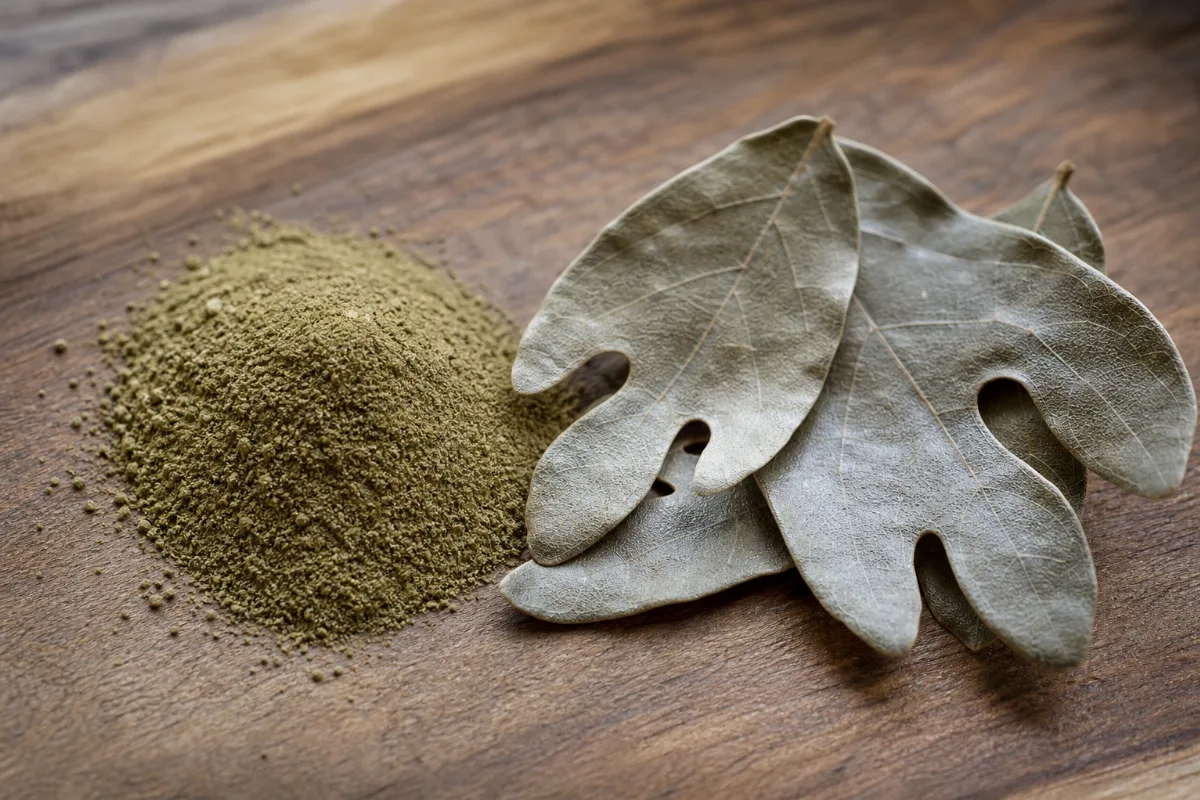
Filé powder is the dried, ground leaf of the sassafras tree. Cooks stir it into gumbo to thicken it. We found no study of filé for any health use. Sassafras root bark and oil contain safrole, which caused liver cancer in animals, and US rules do not allow added safrole in food. The leaf is a different part, and one FDA test found safrole below detection in most leaf samples.
General information, not medical advice. Last substantive update · Not medically reviewed. A named clinician has not signed off on this page. How this page is made
About Filé powder
Filé is a flavouring and thickener for gumbo, not a health food. The one real issue is safrole, found mostly in sassafras root bark and oil. The leaf appears to hold far less, but the evidence is thin.
What it is
Filé powder (gumbo filé) is dried, ground leaves of the sassafras tree, Sassafras albidum, a member of the laurel family. The tree is native to the eastern United States (MSK).
Cooks use it in Louisiana gumbo, stirred in off the heat because boiling makes it stringy. This cooking information comes from our earlier summary and was not re-checked against a primary source.
We give no nutrient numbers. Our earlier summary says USDA has no entry for filé, and a recheck was not possible. As a sprinkle on a bowl, it is a seasoning, not a source of nutrients.
What the research shows
We found no clinical study of filé. MSK says studies of sassafras are limited and have only been done in lab dishes or animals, and that the claimed uses (detox, arthritis, inflammation and others) have no scientific evidence.
So this page cannot say filé helps with anything. A smaller, honest page is better than padding.
Leaf powder versus root and oil
Root bark, tea, tinctures and sassafras oil are different products from filé and carry far more safrole. Do not use them as food or remedies. Results about one part of the tree do not describe the other.
Amounts
This page gives no amounts. Ask a doctor, pharmacist or dietitian what is right for you, especially if you are pregnant, have liver disease or take prescription medicines.
At a glance
Traditional uses history, not proof
- Used as a seasoning and thickener in gumbo (from the existing summary, not re-verified)
- Long use as food is not proof that it is safe or that it treats any condition
Studied for research
- Any health use of filé powder: insufficient evidence, no human study found
Main compounds
- Safrole (mainly root bark and oil)
Common forms
- Ground leaf powder as a seasoning
- Root bark, tea, tincture and oil are different products, not filé
Research links: MSK: Sassafras · 21 CFR 189.180 Safrole · 1997 FDA safrole test in sassafras products · Research Library · Genes & Biomarkers Library
What it is and its history
- Accepted scientific name
- Sassafras albidum
- Naming authority
- (Nutt.) Nees (GBIF accepted)
- Common names
- Filé powder (English); Gumbo filé (English); Sassafras leaf powder (English)
- Family or group
- Lauraceae (the laurel family), per GBIF.
- Classification
- Plantae > Tracheophyta > Magnoliopsida > Laurales > Lauraceae > Sassafras > Sassafras albidum
- Native range
- MSK: native to the eastern United States.
- Habitat
- Not verified from a source read.
- What it looks like
- Roots: Root bark is a separate product with more safrole (see Safety).; Stems: Not verified.; Leaves: The dried, ground leaves are filé powder.; Flowers: Not verified.; Fruit: Not verified.
- Cultivation
- Not verified from a source read.
- Harvest and processing
- Dried, ground leaves (existing summary; not re-verified).
- Look-alikes and adulterants
- Name: Sassafras root bark, tea, tincture and oil; Note: Same tree, but different products with far more safrole. Not the same as filé.; Name: Blends sold as 'filé'; Note: We could not verify what retail jars contain. The FDA method paper mentions thymol, a component of thyme, only as a substance its test had to tell apart from safrole. Read the label.
- Sustainability and conservation
- Not assessed.
What is inside, and how it may work
What it contains and how those compounds act in cells and animals. Laboratory and animal mechanisms are not proven effects in people.
Main compounds
| Compound | Family | Where it is concentrated | Activity studied | Level of evidence |
|---|---|---|---|---|
| Safrole PubChem 5144 | alkenylbenzene | Root bark and oil (most); leaf samples mostly below detection in one FDA test FDA 1997: below detection limit for most leaf samples; up to 92.4% in one oil; 0.09 to 4.66 mg per cup of brewed root-bark tea | Carcinogen in animals; genotoxic per BfR reviews; blocked human liver enzymes CYP1A2, CYP2A6 and CYP2E1 in lab tests (MSK). 7 4 1 8 | Animal research |
Mechanisms, receptors and pathways
| Target or pathway | Gene or receptor | What was found | Level |
|---|---|---|---|
| Liver enzymes | CYP1A2, CYP2A6, CYP2E1 | Safrole inhibited these human enzymes in lab tests. 7 | Lab |
| Cancer cell death | Not specified | MSK lists lab studies where safrole killed cancer cells. This is not a treatment and is outweighed by safrole's carcinogen classification. 7 | Lab |
Absorption, metabolism and elimination
- Absorption
- Not found.
- Distribution
- Not found.
- Metabolism
- Not found.
- Elimination
- Not found.
- Bioavailability
- Not found.
Isolated compounds versus whole extracts
Leaf powder, root bark, tea, tincture and oil are very different products with very different safrole levels. Findings on root bark or oil do not describe the leaf powder, and the reverse.
Nutritional composition
No nutrient figures are given. The existing summary says USDA SR Legacy has no entry for filé powder; we could not re-check because the USDA service was rate-limited when we tried, and no other source with numbers was read. A seasoning sprinkle is not a nutrient source.
1 not enough evidence
What was looked at
The 1 benefits and uses checked for Filé powder, each with how strong the evidence is. Tap one to open it.
What is Filé powder good for?
We found no human study of filé powder, so there is nothing to list as a proven benefit. The one row below says so.
Benefits, one by one
Each card is a research question, not a promise. Tap a goal to filter. Open a card to see the studies, doses and limits.
Any health benefit of filé powder
Not enough evidenceWe found no study of filé powder, eaten or taken, for any health use. Filé is a seasoning, used to thicken gumbo. Using a food for a long time is not proof that it treats anything. MSK says sassafras should not be used to treat medical conditions.
1 studiesGround leaf as a seasoning. Root bark, tea, tinctures and oil are dif…
Studies, doses and limits
Results
No human results.
Why this rating
No human study of filé was found. Lab and animal findings on sassafras are not evidence for people.
Form and dose studied
Ground leaf as a seasoning. Root bark, tea, tinctures and oil are different products.
Limits
Only one health-agency page and one chemistry paper on safrole were read. A wider search of PubMed for sassafras and for filé found no clinical study.
Why researchers looked
People ask whether sassafras products have health uses because the root bark was used in folk remedies.
Traditional use
MSK says Native Americans made infusions from the root bark for fevers, diarrhea and rheumatism. That is the root bark, not the leaf powder used in cooking.
Proposed mechanism None
No mechanism for a benefit of filé is described in the sources read.
A proposed mechanism does not show that the effect happens in people.
See the Safety tab: the main issue is safrole, found mostly in root bark and oil.
Connections to the rest of health
How Filé powder connects to the rest of our health knowledge graph. Every link says what kind of connection it is. A safety link (for example to the liver) is a warning, not a benefit. A study that merely mentions a topic never creates a benefit link.
Explore every connection: goals, body systems, organs, symptoms, genes
C. Body parts and organs
| Connected to | Kind of connection | Evidence status | Context | Studies |
|---|---|---|---|---|
| Liver | Adverse effect or risk | Documented risk | Safrole caused liver cancer in animals; the concern is not shown for filé eaten as food. Safrole in sassafras root bark and oil caused liver cancer in animals; not shown for filé eaten as food. Preparation or compound: Safrole in sassafras root bark and oil |
7 4 |
J. Genes, receptors and enzymes
| Connected to | Kind of connection | Evidence status | Context | Studies |
|---|---|---|---|---|
| CYP1A2, CYP2A6, CYP2E1 | Preliminary mechanism | Lab | Human liver enzymes blocked by safrole in lab tests. | 7 |
L. Active compounds
| Connected to | Kind of connection | Evidence status | Context | Studies |
|---|---|---|---|---|
| Safrole | Biological association | Animal | Carcinogen in animals; genotoxic per BfR reviews; blocked human liver enzymes CYP1A2, CYP2A6 and CYP2E1 in lab tests (MSK). Preparation or compound: Root bark and oil (most); leaf samples mostly below detection in one FDA test |
7 4 1 8 |
Each connection is stored with the ingredient, the connected record, the kind of connection, the evidence status, the supporting studies, the preparation or compound involved, and a review date (last reviewed October 26, 2026).
Evidence at a glance: what the research found for 1 outcome
Each outcome below is one thing researchers measured. Certainty is how far the evidence can be trusted, not how well it works. The full studies are on the next tab.
The evidence
The research centre for Filé powder. Every record here was checked against PubMed or the publisher's page; we never list a study we have not verified.
Evidence by outcome
Bars show how many studies we found for each outcome, not how well it works. People are added up across trials only (reviews are not added, to avoid double counting).
How we rate evidence
High certainty
Several well-run trials or reviews agree; further research is unlikely to change the picture much.
Moderate certainty
Good trials point the same way, but some doubt remains.
Low certainty
Small, short or inconsistent trials. The finding could change with better research.
Very low certainty
Very little or very weak human data. Treat as a possibility only.
Mixed findings
Trials or reviews disagree with each other.
Not enough evidence
Not enough human research to say either way.
Evidence against
Good research found no benefit, or found harm.
We take the reviewers' own risk-of-bias and GRADE statements where they exist, and otherwise judge from study size, design, consistency, directness and whether a product matches what is sold. Many publications do not make evidence high. Method note: We started from our existing filé summary and re-read the MSK sassafras page, the US food rule on safrole, GBIF and PubChem records, and PubMed abstracts including the 1997 FDA safrole test. A PubMed search found no clinical study of filé. Items we could not verify are flagged in the research gaps.
Study library: every study we checked 8
| Study | Design | People | Product, dose, length | Result |
|---|---|---|---|---|
| p34574258 Alkenylbenzenes in Foods: Aspects Impeding the Evaluation of Adverse Health Effects (Eisenreich et al., Foods 2021) · Source |
Narrative review n/a |
Methods, limits and fundingRead: abstract | ||
| p37299054 Occurrence of Alkenylbenzenes in Plants: Flavours and Possibly Toxic Plant Metabolites (Gotz et al., Plants 2023) · Source |
Narrative review n/a |
Methods, limits and fundingRead: abstract | ||
| p39456132 15th Report on Carcinogens (National Toxicology Program, 2021) · Source |
Government report n/a |
Methods, limits and fundingRead: abstract | ||
| p9325580 Liquid chromatographic determination of safrole in sassafras-derived herbal products (Carlson and Thompson, J AOAC Int 1997) · Source |
Laboratory analysis Sassafras albidum |
Methods, limits and fundingRead: abstract | ||
| s-ecfr-189-180 U.S. eCFR, 21 CFR 189.180 Safrole · Source |
Regulation n/a |
Methods, limits and fundingRead: full-text | ||
| s-gbif-sassafras-albidum GBIF Backbone: Sassafras albidum (Nutt.) Nees (usageKey 3034002) · Source |
Reference database Sassafras albidum |
Methods, limits and fundingRead: full-text | ||
| s-msk-sassafras Memorial Sloan Kettering Cancer Center: Sassafras (About Herbs) · Source |
Health agency Sassafras albidum |
Methods, limits and fundingRead: full-text | ||
| s-pubchem-safrole PubChem: Safrole (CID 5144) · Source |
Reference database n/a |
Methods, limits and fundingRead: full-text |
What we do not know yet
- No human study of filé powder for any health use was found.
- No study of safrole in retail filé today; the only measurement read is a small 1997 FDA test.
- Pregnancy, breastfeeding, children, allergy and heavy metals such as lead in filé were not found.
- Culinary and history facts come from our earlier summary and were not re-verified here.
- Nutrient data were not available: the USDA lookup was rate-limited.
How new research is added
New studies are found by a saved PubMed search and placed in a review queue before the page changes.
Lab markers
What changed in blood or saliva tests during trials. A changed number is not the same as feeling or being healthier, and we give no "normal ranges".
Safety
What studies and official sources say about side effects, medicines and who should check first. Each point shows what kind of evidence it comes from.
Main points to know 4
- Safrole: the concern is mainly root bark and oil, not the leaf powder. Sassafras contains safrole, which caused liver cancer in lab animals. MSK says it is classified as a likely human carcinogen, and that the risk rises with the amount and length of use. The US government's carcinogen report lists safrole. Safrole is found mostly in the root bark and oil. Filé is made from leaves. In an FDA lab test of 26 sassafras products, safrole was below the detection limit in most leaf samples, but that was a chemistry test, not a health study, and it did not test retail filé specifically. Authoritative guidance 7 4 3 1
- US rule: no added safrole, oil of sassafras or sassafras tea in food. US food law says food with added safrole or oil of sassafras, or sassafras bark sold to flavour another food (for example sassafras tea), counts as adulterated. The rule text we read does not mention leaves or filé. We did not find a specific FDA statement on filé powder. Regulation 5
- Do not use sassafras root bark, tea, tincture or oil. A 1997 FDA test found 0.09 to 4.66 mg of safrole per cup of brewed root-bark tea, and up to 92.4 percent safrole in one oil. MSK lists hot flashes and heavy sweating as side effects, from one case report of sassafras tea. These are different products from filé. Laboratory analysis 4 7
- No safety data for pregnancy, breastfeeding or children. We found no source on filé in pregnancy, breastfeeding or childhood. Missing information is not proof of safety. Ask a doctor or pharmacist. None 7
Side effects 2
| Effect | How often | Severity and recovery | Evidence |
|---|---|---|---|
| Liver tumours in laboratory animals (safrole) Animal finding about safrole. It has not been shown for filé eaten as food. | Not established | serious Not applicable | Animal research 7 1 |
| Hot flashes and heavy sweating MSK lists these after drinking sassafras tea (a root product). | Not established | not stated Not stated | Case report 7 |
Liver
Safrole caused liver cancer in animals (MSK). Nothing was found on liver injury from eating filé. LiverTox was not searched. 7
How often. No frequency found.
Monitoring. No agency monitoring advice found.
This is a safety connection. It is not evidence that Filé powder supports liver health.
Medicines and supplements 1
| With | Why it matters | Importance | Evidence | What to do |
|---|---|---|---|---|
| Medicines broken down by liver enzymes CYP1A2, CYP2A6 or CYP2E1 prescription | In lab tests safrole blocked these human liver enzymes (MSK, citing a 2005 study). | Lab finding only. MSK does not describe an effect in people, and no data exist for filé. | Laboratory research Very low certainty 7 | If you take prescription medicines, ask a pharmacist before using any sassafras product other than a small seasoning. |
Who should check first 3
| Situation | Advice | Evidence |
|---|---|---|
| Sassafras root bark, tea, tincture or oil | MSK says do not use. US rules treat added safrole and oil of sassafras as adulterating food. | Authoritative guidance 7 5 |
| Pregnancy and breastfeeding | No guidance found for filé. Ask a doctor or pharmacist. | None 7 |
| Liver disease or taking medicines cleared by the liver | No data on filé. Ask a pharmacist. | None 7 |
Overdose, product quality and regulators
Summary. Safrole is the toxic compound of concern. It is mostly in root bark and oil. Safrole caused liver cancer in animals at high doses.
Animal. MSK says sassafras and safrole caused liver cancer in lab animals. Details were not opened.
High dose or long term signals. MSK says risk rises with amount consumed and length of exposure (about safrole and sassafras generally).
Overdose response. Not found.
Genotoxicity. The German risk-assessment institute (BfR) reviews say safrole is genotoxic and carcinogenic.
Toxic or hazardous parts. Root bark and oil carry the most safrole (the FDA test found it highest in an oil, 92.4 percent, and in root-bark teas). Leaves were mostly below the detection limit.
Whether a retail filé powder is made only from leaves, and how much safrole a given jar holds, cannot be told from the label. Lead, other metals and microbes in filé were not researched.
Safrole content varies. Safrole in 26 sassafras products ranged from below the detection limit (most leaf samples) to 92.4 percent (an oil). Only a small number of products were tested in 1997 and batches may differ. 4
Label claims. We could not check seller claims such as 'safrole-free'.
| Body | Action | Date |
|---|---|---|
| U.S. eCFR, 21 CFR 189.180 (FDA) (United States) | Food with added safrole or oil of sassafras, or sassafras bark sold to flavour another food such as sassafras tea, is deemed adulterated source | 2016-07-29 |
| Memorial Sloan Kettering Cancer Center (United States) | Sassafras page: safrole is a carcinogen in animals and a likely human carcinogen; banned as a food additive; no evidence for the claimed uses source | 2023-06-20 |
| U.S. National Toxicology Program, 15th Report on Carcinogens (United States) | Safrole appears in the list of substances known or reasonably anticipated to cause cancer in humans source | 2021-12-21 |
When to get medical help
- Swelling of the lips, face or throat, trouble breathing or widespread hives after eating (any food allergy)
- Yellow skin or eyes, dark urine or severe stomach pain after repeated use of sassafras root products (general liver warning signs; no case of this from filé was found)
Stop using the product and contact a clinician or emergency service. In the US, Poison Control is 1-800-222-1222.
General information only, not medical advice. Ask a clinician or pharmacist before use, especially with medicines, in pregnancy or with a health condition. See the Natural Remedy Safety guide.
Frequently asked questions
What is filé powder?
Is filé powder safe to eat?
What is safrole?
Does filé contain safrole?
In a 1997 FDA test of 26 sassafras products, most leaf samples had safrole below the detection limit. Root-bark tea and oils had much more. Retail filé today was not tested in that study.
Is filé banned in the US?
The rule we read bans food with added safrole, oil of sassafras or sassafras bark used as a flavour vehicle, such as sassafras tea. It does not mention leaves or filé, and we found no FDA statement on filé specifically.
Is sassafras tea the same thing?
Does filé have any health benefits?
No human study of filé for any health use was found. MSK says sassafras should not be used to treat medical conditions.
Is filé safe in pregnancy or breastfeeding?
No source on this was found. Missing information is not proof of safety. Ask a doctor or pharmacist.
Does filé interact with medicines?
In lab tests safrole blocked the human liver enzymes CYP1A2, CYP2A6 and CYP2E1 (MSK). No effect in people was described and nothing was found for filé. A pharmacist can advise if you take prescription medicines.
Can I check a jar of filé for safrole?
No. We could not verify seller claims such as 'safrole-free'. Look for a powder labelled as ground leaf only, with no root bark.
Is filé a source of nutrients?
We give no nutrient numbers. Our earlier summary says USDA has no entry for it, and a recheck was not possible. A sprinkle on a bowl is a seasoning.
Explore by health goal
Editorial transparency
- Written by
- AlternativeMed editorial team. Research compiled with AI assistance, then checked against the sources listed.
- Medical review
- None. This page has not been reviewed by a physician or pharmacist.
- First published
- 2026-10-26
- Last substantive update
- 2026-10-26
- How we research
- We started from our existing filé summary and re-read the MSK sassafras page, the US food rule on safrole, GBIF and PubChem records, and PubMed abstracts including the 1997 FDA safrole test. A PubMed search found no clinical study of filé. Items we could not verify are flagged in the research gaps.
- How we rate evidence
- See "How we rate evidence" in the Evidence tab.
- Independence
- No product is promoted on this page. No affiliate links are shown.
Sources 8
Each source was opened and checked. Where we read only the abstract, it says so. The small numbers in the text point here.
- . Alkenylbenzenes in Foods: Aspects Impeding the Evaluation of Adverse Health Effects (Eisenreich et al., Foods 2021). . . (abstract)
- . Occurrence of Alkenylbenzenes in Plants: Flavours and Possibly Toxic Plant Metabolites (Gotz et al., Plants 2023). . . (abstract)
- . 15th Report on Carcinogens (National Toxicology Program, 2021). . . (abstract)
- . Liquid chromatographic determination of safrole in sassafras-derived herbal products (Carlson and Thompson, J AOAC Int 1997). . . (abstract)
- . U.S. eCFR, 21 CFR 189.180 Safrole. . . (full-text)
- . GBIF Backbone: Sassafras albidum (Nutt.) Nees (usageKey 3034002). . . (full-text)
- . Memorial Sloan Kettering Cancer Center: Sassafras (About Herbs). . . (full-text)
- . PubChem: Safrole (CID 5144). . . (full-text)
Where to buy
Check the label first. Whatever you buy, look for these:
- Whole or ground: whole spices keep their flavor longer
- The origin and a packed-on or best-by date for freshness
- Organic or non-irradiated labeling if that matters to you
- A resealable, airtight container
Talk to a pharmacist or doctor before you start any supplement, especially if you take medicines. See the Safety tab for interactions.
Support our free guides: as an Amazon Associate we earn from qualifying purchases. Full disclosure.


