Spices · Spice
Chipotle
Capsicum annuum · also called smoked jalapeno, chilpotle, chili ahumado, morita, meco, chipotle in adobo
Chipotle is a ripe red jalapeno that has been smoke-dried, with a smoky, earthy flavor and medium heat. Large studies of people who eat chili often link it to fewer deaths, but those studies cannot show chili is the cause, and none looked at chipotle itself. The main caution is burning of the gut, skin and eyes, plus allergy.
General information, not medical advice. Last substantive update · Not medically reviewed. A named clinician has not signed off on this page. How this page is made
About Chipotle
Chipotle is a smoky spice, not a remedy. It is a ripe red jalapeno that has been smoke-dried, and it adds flavor and medium heat to many dishes. Studies of people who eat chili are encouraging but cannot prove cause, and chili can burn the gut, skin and eyes.
What it is
Chipotle is a smoke-dried ripe jalapeno chili, used mainly in Mexican and Mexican-inspired cooking. Wikipedia says the jalapeno is a cultivar of Capsicum annuum, and the name comes from the Nahuatl word for 'smoked chili'.
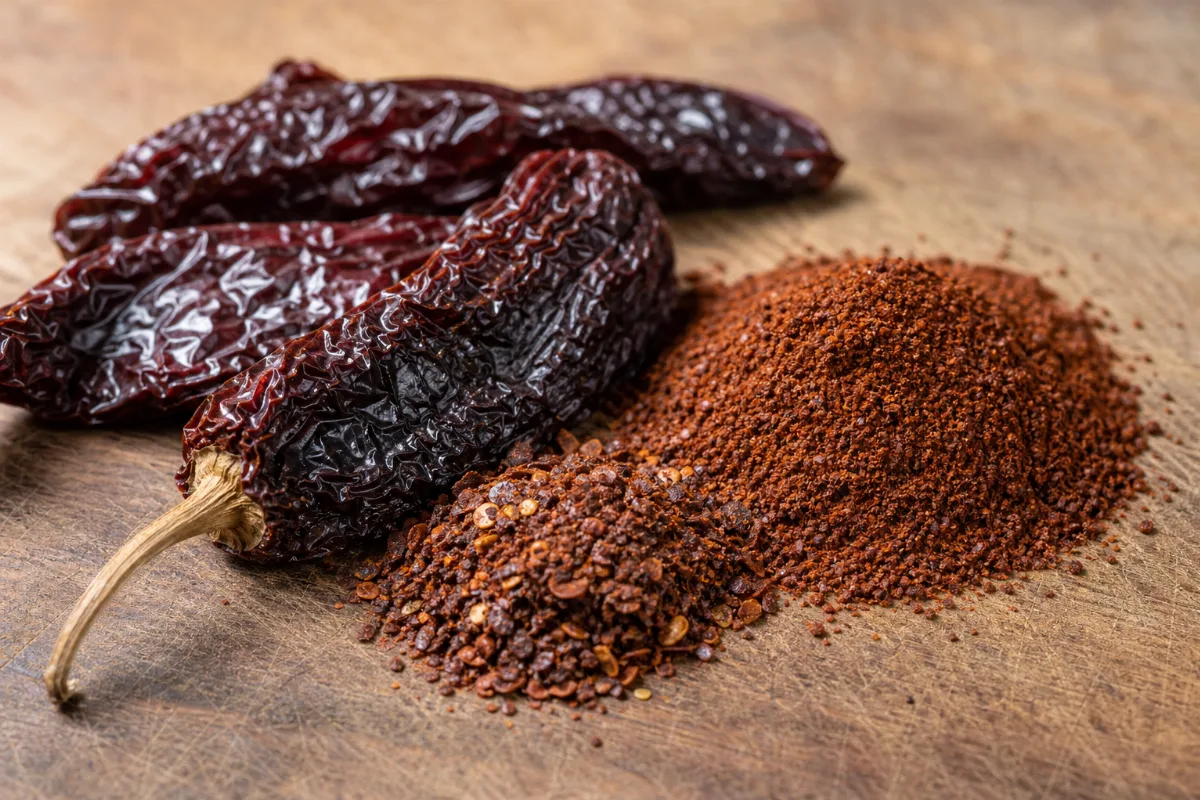
Two kinds are common. Morita are smaller, darker and the type found most often in the United States. Meco, also called chili ahumado, are larger, grayish tan and smokier. These come from Wikipedia, a secondary source.
How it is made
Wikipedia says traditional chipotle is made by leaving jalapenos on the plant until they are deep red and partly dried, then smoking them for about six days over a wood fire, mainly pecan wood, until they are dried and shriveled. About ten pounds of fresh jalapenos make one pound of chipotle. Some commercial makers use gas dryers and added smoke flavoring, which is faster but gives less flavor.
In the kitchen
Chipotle is used whole, as flakes or powder, and canned in adobo sauce, a form called chipotles en adobo. Wikipedia says it is often paired with annatto, cumin, ginger, oregano and tomato powder. Wikipedia gives the fresh jalapeno about 4,000 to 8,500 Scoville units; we did not find a source we re-read for the dried chipotle range.
The heat compound stays on skin. Wash hands after handling pods and keep them away from your eyes.
Nutrition in a typical portion
USDA FoodData Central has no entry for chipotle, so we do not give nutrient numbers. For a loose guide, USDA lists 1 teaspoon of ground cayenne as 1.8 g and about 6 kcal, and 1 teaspoon of chili powder blend as 2.7 g, about 8 kcal and about 77 mg of sodium. Spices are used in small portions, so chipotle is a flavoring, not a meaningful source of nutrients. Canned chipotle in adobo includes sauce, so check its label for salt.
What the research shows
The strongest food evidence is observational. Cohorts of 16,179 US adults and 22,811 Italian adults, and a pooling of four cohorts with 564,748 adults, linked regular chili or spicy food with lower death risk. Chili eaters may differ in other ways, so this does not show cause.
Case-control studies linked high chili intake to higher risk of esophageal cancer, and a review of reviews called the overall health effect of spicy food unclear. We found no study of chipotle itself, so we cannot say whether smoking changes any effect.
At a glance
Traditional uses history, not proof
- Cooking: salsas, adobo marinades, barbecue, stews and sauces
- Preserving ripe jalapenos by smoke-drying
- Long use is not proof that it treats any condition
Studied for research
- Death from any cause: low certainty, observational studies of chili in general
- Heart disease death: low certainty, observational studies of chili in general
- Reflux and indigestion: mixed; can make burning worse
- Digestive-tract cancer: mixed, a possible harm signal
- Nerve pain: a prescription capsaicin patch, not food
Main compounds
- Capsaicin (main source of the burn)
Common forms
- Whole dried pods (morita, meco)
- Ground powder or flakes
- Canned in adobo sauce
- Pastes and bases
- Capsules and extracts (concentrated, not a kitchen product)
Research links: Review: spicy food and chili peppers and multiple health outcomes (2022) · Pooling of cohorts: spicy chilli food and death (2021) · Memorial Sloan Kettering: Cayenne · Wikipedia: Chipotle · Research Library · Genes & Biomarkers Library
What it is and its history
- Accepted scientific name
- Capsicum annuum
- Naming authority
- L.
- Common names
- Chipotle (English); Smoked jalapeno (English); Chilpotle (English); Chili ahumado (the meco kind) (Spanish)
- Family or group
- Solanaceae (nightshade family) is the usual family for Capsicum, but it was not checked in a source read for this page.
- Classification
- Plantae > Capsicum > Capsicum annuum
- Native range
- Wikipedia says chipotles are mostly sourced from Mexico; the morita type is grown mainly in Chihuahua.
- Habitat
- Not verified.
- What it looks like
- Fruit: Wikipedia: dried and shriveled like prunes or raisins; morita is darker with a reddish-purple surface; meco is grayish tan and dusty-looking.
- Cultivation
- Wikipedia says red ripe jalapenos are left on the plant until deep red and partly dried before being picked for chipotle.
- Harvest and processing
- Wikipedia says traditional chipotle is smoked for about six days at 65 to 75 degrees C, mainly over pecan wood, until moisture falls to about 6%. About ten pounds of jalapenos make one pound of chipotle. Some commercial makers use gas dryers and added smoke flavoring. Secondary source.
- Look-alikes and adulterants
- Name: Smoked paprika; Note: Smoked ground pepper, usually much milder.; Name: Cayenne; Note: Hot but not smoked.; Name: Chili powder (blend); Note: A spice blend, not pure chipotle.
- Sustainability and conservation
- Not assessed.
Photographs
Traditional use and history history, not clinical proof
| Tradition or era | Documented use | Source |
|---|---|---|
Traditional use shows how it was used. It does not show that it works or is safe today.
What is inside, and how it may work
What it contains and how those compounds act in cells and animals. Laboratory and animal mechanisms are not proven effects in people.
Main compounds
| Compound | Family | Where it is concentrated | Activity studied | Level of evidence |
|---|---|---|---|---|
| Capsaicin PubChem 1548943 | capsaicinoid | Fruit Not given for chipotle in the sources read | The compound mainly responsible for the burning feel; activates the TRPV1 receptor (MSK; gut review). Chipotle content was not found, and smoking may change it; no source states how. 10 6 | Human data |
Mechanisms, receptors and pathways
| Target or pathway | Gene or receptor | What was found | Level |
|---|---|---|---|
| TRPV1 receptor (heat and pain sensing) | TRPV1 | Capsaicin activates TRPV1 on tongue neurons, causing the burning feel, and TRPV1 on gut nerves; the gut review links the burning to TRPV1-expressing fibres, which are increased in functional gut disorders. 10 6 | Human data |
| Cyclosporin availability | CYP3A, P-gp | In animals, capsaicin raised cyclosporin bioavailability through CYP3A inhibition (MSK). 10 | Animal research |
Absorption, metabolism and elimination
- Absorption
- Not found for chipotle. MSK says capsaicin causes mucosal vasodilation and may alter uptake of other drugs.
- Distribution
- Not found.
- Metabolism
- Animal data suggest effects on CYP3A and P-gp (MSK).
- Elimination
- Not found.
- Bioavailability
- Not established.
Isolated compounds versus whole extracts
The large death studies are about eating chili or spicy food in general. Capsaicin skin patches are a defined prescription product with their own evidence. Chipotle is smoke-dried, and no source we read says whether smoking changes any health effect. Findings in one group do not carry over to another.
Nutritional composition
No USDA entry for chipotle was found: FoodData Central SR Legacy (April 2018, read 2026-10-26 from the bulk download kept in the project) lists ground cayenne (FDC 170932) and chili powder blend (FDC 171319) but not chipotle, so we give no nutrient numbers for chipotle. For a loose guide only: USDA lists 1 teaspoon of ground cayenne as 1.8 g, about 6 kcal and 0.5 g fiber (worked out from 318 kcal and 27.2 g fiber per 100 g), and 1 teaspoon of chili powder blend as 2.7 g, about 8 kcal and about 77 mg sodium (282 kcal and 2,870 mg sodium per 100 g). Dried ground chipotle is mostly dried pepper, so it likely resembles other ground chilies, but no source we read confirms this. Small spice portions give small amounts of nutrients, so chipotle is a flavoring, not a meaningful source of nutrients. Canned chipotle in adobo includes sauce, and its salt and other ingredients vary by maker. Real products vary.
2 mixed findings3 low certainty2 not enough evidence
What was looked at
The 7 benefits and uses checked for Chipotle, each with how strong the evidence is. Tap one to open it.
- Death from any cause (people who eat chili often)Low certainty
- Heart disease death (people who eat chili often)Low certainty
- Reflux, indigestion and irritable bowelMixed findings
- Digestive-tract cancer (a possible harm signal)Mixed findings
- Nerve pain (prescription capsaicin skin patch, not food)Low certainty
- Cancer cells in the lab and in animals (not food)Not enough evidence
- Digestion and circulation (traditional use of capsicum)Not enough evidence
What is Chipotle good for?
The studied uses and how strong the human evidence is for each. All of it is about chili in general or about capsaicin products, not about chipotle itself.
Benefits, one by one
Each card is a research question, not a promise. Tap a goal to filter. Open a card to see the studies, doses and limits.
Death from any cause (people who eat chili often)
Low certaintyLarge studies that followed people for years found that those who ate chili or spicy food regularly were less likely to die in the follow-up period. These are observational studies, so they cannot show that chili is the cause. None looked at chipotle on its own.
3 studiesHot red chili pepper, chili sauce or chili oil eaten as food; amounts…
Studies, doses and limits
What the trials found
Three kinds of human data: a US cohort (16,179 adults), an Italian cohort (22,811 adults) and a pooling of 4 cohorts (564,748 adults).
Results
US cohort: death 21.6% in chili eaters versus 33.6% in non-eaters; adjusted hazard ratio 0.87. Italian cohort: chili more than 4 times a week versus none or rare gave a hazard ratio of 0.77. Pooled cohorts of spicy food (chilli pepper, sauce or oil): hazard ratio 0.88.
Effect sizes as reported
Hazard ratios 0.87 (95% CI 0.77 to 0.97), 0.77 (0.66 to 0.90) and 0.88 (0.86 to 0.90): roughly 12 to 23 percent lower death risk in regular eaters.
Why this rating
Observational studies in which chili eaters may differ in diet, income, smoking and other habits. The results point the same way in several countries, but cannot show cause, and none tested chipotle or smoked chili.
Form and dose studied
Hot red chili pepper, chili sauce or chili oil eaten as food; amounts were reported as how often, not as grams.
Who was studied
Adults in the United States, Italy, China and Iran.
Limits
Frequency was reported by questionnaire. Spicy food in general, not smoke-dried jalapeno. No study of chipotle itself was found. The studies look at chili or spicy food in general.
Why researchers looked
Chili and spicy food are eaten daily in many countries, so researchers asked whether regular eaters live longer.
Proposed mechanism Unknown
Not shown. The authors of the Italian cohort found that known heart-risk blood markers explained only a small part of the link.
A proposed mechanism does not show that the effect happens in people.
See the safety tab. Observational benefit does not mean more heat is safer.
Heart disease death (people who eat chili often)
Low certaintyThe same studies found fewer deaths from heart disease in regular chili eaters. Stroke death results were mixed. This is an association, not proof.
2 studiesChili or spicy food eaten as food.
Studies, doses and limits
What the trials found
Italian cohort and a pooling of 4 cohorts.
Results
Italian cohort, more than 4 times a week versus none or rare: cardiovascular death HR 0.66, ischemic heart disease death HR 0.56, cerebrovascular death HR 0.39. Pooling of 4 cohorts: heart disease death HR 0.82; cerebrovascular death HR 0.79 and not statistically significant.
Effect sizes as reported
Italian cohort cardiovascular death HR 0.66 (95% CI 0.50 to 0.86); pooled cardiac death HR 0.82 (0.73 to 0.91).
Why this rating
Observational; the pooling found no clear link for stroke death and the studies disagreed on it (I2 72%). Cause is not shown.
Form and dose studied
Chili or spicy food eaten as food.
Who was studied
Adults in four countries.
Limits
Spicy food in general, not chipotle. No study of chipotle itself was found. The studies look at chili or spicy food in general.
Why researchers looked
Capsaicin acts on nerve and blood-vessel receptors in lab work, so researchers looked at heart outcomes.
Proposed mechanism Unknown
Not shown in these studies.
A proposed mechanism does not show that the effect happens in people.
See the safety tab.
Reflux, indigestion and irritable bowel
Mixed findingsA single serving of chili can make burning and pain worse in people with reflux, indigestion or irritable bowel syndrome. One review also reports that eating chili regularly over time eased indigestion and reflux symptoms in small trials. The picture is mixed.
2 studiesChili powder in capsules (trial); chili as food (review).
Studies, doses and limits
What the trials found
A 2010 narrative review and a small crossover trial in 15 reflux patients and 15 healthy volunteers.
Results
In the trial, 2 g of red chili in capsules gave reflux patients less fullness, more abdominal burning and a trend to more heartburn than placebo; healthy volunteers had similar symptoms with chili and placebo. The review says regular chili intake eased dyspepsia and reflux symptoms in small randomized studies.
Effect sizes as reported
Not given as effect sizes in the abstracts.
Why this rating
Short-term worsening in one small trial; long-term benefit rests on small studies summarised in one review. Neither is about chipotle.
Form and dose studied
Chili powder in capsules (trial); chili as food (review).
Who was studied
People with reflux, dyspepsia or irritable bowel syndrome.
Limits
Small, single-dose trial; capsules are not food.
Why researchers looked
Capsaicin activates pain-sensing nerves in the gut.
Proposed mechanism Human data
Capsaicin activates the TRPV1 receptor on gut nerve fibres, which are increased in people with functional gut disorders (review).
A proposed mechanism does not show that the effect happens in people.
If chili reliably brings on symptoms, a doctor can help.
Digestive-tract cancer (a possible harm signal)
Mixed findingsStudies comparing people with and without cancer linked high chili intake to higher risk of cancer of the food pipe (esophagus), with big differences between regions. These studies cannot show chili is the cause, and a review of reviews called the overall effect unclear.
2 studiesChili pepper eaten as food.
Studies, doses and limits
What the trials found
A pooling of 14 case-control studies (5,009 cancers among 11,310 people) and an umbrella review of 11 reviews.
Results
High chili intake: gastrointestinal cancers overall OR 1.64; esophageal cancer OR 2.71; no significant link for gastric or colorectal cancer. Positive in Asian, African and North American studies; inverse in South American and European studies. The umbrella review found direct links with esophageal, gastric and gallbladder cancer and called the overall health effect unclear.
Effect sizes as reported
OR 1.64 (95% CI 1.00 to 2.70) for gastrointestinal cancers; OR 2.71 (1.54 to 4.75) for esophageal cancer.
Why this rating
Case-control studies rely on memory of diet and cannot show cause. Results flip between regions, which points to other factors.
Form and dose studied
Chili pepper eaten as food.
Who was studied
Adults in many countries.
Limits
Chili in general, not chipotle. No study of chipotle itself was found. The studies look at chili or spicy food in general.
Why researchers looked
Researchers asked whether a hot, irritating food could raise gut cancer risk.
Proposed mechanism Unknown
Not shown.
A proposed mechanism does not show that the effect happens in people.
Mentioned plainly so readers can see both directions of the evidence.
Nerve pain (prescription capsaicin skin patch, not food)
Low certaintyA Cochrane review found that a high-strength 8% capsaicin skin patch helped about 10% more people than a comparison patch for some kinds of nerve pain. This is a prescription skin product applied under controlled conditions. It says nothing about eating chipotle.
1 studies8% capsaicin patch, single application by a clinician.
Studies, doses and limits
What the trials found
A Cochrane review of 8 studies with 2,488 adults.
Results
About 10% more participants were much or very much improved with the 8% patch than with a low-strength comparison patch.
Effect sizes as reported
About 10% more people improved; numbers needed to treat 8.8 (95% CI 5.3 to 26) versus 7.0 with the comparison patch for postherpetic neuralgia.
Why this rating
Evidence quality is moderate to very low and the extra benefit was not large. It applies only to the patch.
Form and dose studied
8% capsaicin patch, single application by a clinician.
Who was studied
Adults with postherpetic neuralgia, HIV-neuropathy or painful diabetic neuropathy.
Limits
A skin product, not a spice; the review has authors with drug-company consulting ties.
Why researchers looked
Capsaicin first stimulates then numbs pain-sensing nerves in the skin.
Proposed mechanism Human data
Capsaicin overstimulates and then desensitises pain nerve endings in the skin (review background).
A proposed mechanism does not show that the effect happens in people.
Local burning at the patch site was common.
Cancer cells in the lab and in animals (not food)
Not enough evidenceIn dishes and animals, capsaicin has both killed cancer cells and, at a certain concentration, helped colorectal cancer spread. These lab results do not show what eating chipotle does.
1 studiesPure capsaicin in cells and animals.
Studies, doses and limits
What the trials found
MSK lists lab and animal findings; the underlying papers were not opened.
Results
MSK reports cell-killing effects in several cancer cell lines, and, in contrast, possible promotion of colorectal spread at certain concentrations. MSK says it remains controversial whether capsicum acts as a carcinogen, co-carcinogen or anti-carcinogen.
Why this rating
Lab and animal only; concentrations in cells are not those of food.
Form and dose studied
Pure capsaicin in cells and animals.
Who was studied
Cell lines and animals.
Limits
Not human data.
Why researchers looked
Capsaicin is the compound that makes chili hot, so labs test it on cells.
Proposed mechanism Lab and animal
Capsaicin affects several cell-growth pathways in lab work (MSK).
A proposed mechanism does not show that the effect happens in people.
None for food.
Digestion and circulation (traditional use of capsicum)
Not enough evidenceCapsicum is traditionally used to stimulate digestion and circulation. We found no trial of this for chipotle.
1 studiesTraditional uses of capsicum.
Studies, doses and limits
What the trials found
No human trial found.
Why this rating
No testing found.
Form and dose studied
Traditional uses of capsicum.
Limits
Long use does not prove benefit.
Why researchers looked
Long folk use of hot peppers.
Traditional use
MSK says capsicum is traditionally used as a gargle for laryngitis and orally as a gastrointestinal stimulant.
Proposed mechanism Unknown
Not studied.
A proposed mechanism does not show that the effect happens in people.
See the safety tab.
Connections to the rest of health
How Chipotle connects to the rest of our health knowledge graph. Every link says what kind of connection it is. A safety link (for example to the liver) is a warning, not a benefit. A study that merely mentions a topic never creates a benefit link.
Explore every connection: goals, body systems, organs, symptoms, genes
A. Wellness goals
| Connected to | Kind of connection | Evidence status | Context | Studies |
|---|---|---|---|---|
| Preventive Wellness | Low certainty | Death from any cause (people who eat chili often): Large studies that followed people for years found that those who ate chili or spicy food regularly were less likely to die in the follow-up period. These are observational studies, so they cannot show that chili is the cause. None looked at chipotle on its own. | 4 2 8 | |
| Healthy Aging | Low certainty | Death from any cause (people who eat chili often): Large studies that followed people for years found that those who ate chili or spicy food regularly were less likely to die in the follow-up period. These are observational studies, so they cannot show that chili is the cause. None looked at chipotle on its own. | 4 2 8 | |
| Heart Health | Low certainty | Heart disease death (people who eat chili often): The same studies found fewer deaths from heart disease in regular chili eaters. Stroke death results were mixed. This is an association, not proof. | 2 8 | |
| Digestive Health | Mixed findings | Reflux, indigestion and irritable bowel: A single serving of chili can make burning and pain worse in people with reflux, indigestion or irritable bowel syndrome. One review also reports that eating chili regularly over time eased indigestion and reflux symptoms in small trials. The picture is mixed. | 6 9 | |
| Cancer Risk | Mixed findings | Digestive-tract cancer (a possible harm signal): Studies comparing people with and without cancer linked high chili intake to higher risk of cancer of the food pipe (esophagus), with big differences between regions. These studies cannot show chili is the cause, and a review of reviews called the overall effect unclear. | 3 1 | |
| Pain Relief | Low certainty | Nerve pain (prescription capsaicin skin patch, not food): A Cochrane review found that a high-strength 8% capsaicin skin patch helped about 10% more people than a comparison patch for some kinds of nerve pain. This is a prescription skin product applied under controlled conditions. It says nothing about eating chipotle. | 5 | |
| Cancer Risk | Not enough evidence | Cancer cells in the lab and in animals (not food): In dishes and animals, capsaicin has both killed cancer cells and, at a certain concentration, helped colorectal cancer spread. These lab results do not show what eating chipotle does. | 10 | |
| Digestive Health | Not enough evidence | Digestion and circulation (traditional use of capsicum): Capsicum is traditionally used to stimulate digestion and circulation. We found no trial of this for chipotle. | 10 |
B. Body systems
| Connected to | Kind of connection | Evidence status | Context | Studies |
|---|---|---|---|---|
| Whole Body | Biological association | Low certainty | Studied for: Death from any cause (people who eat chili often) Studied for: Cancer cells in the lab and in animals (not food) | 4 2 8 10 |
| Cardiovascular System | Biological association | Low certainty | Studied for: Heart disease death (people who eat chili often) | 2 8 |
| Digestive System | Biological association | Mixed findings | Studied for: Reflux, indigestion and irritable bowel Studied for: Digestive-tract cancer (a possible harm signal) | 6 9 3 1 10 |
| Nervous System | Biological association | Low certainty | Studied for: Nerve pain (prescription capsaicin skin patch, not food) | 5 |
C. Body parts and organs
| Connected to | Kind of connection | Evidence status | Context | Studies |
|---|---|---|---|---|
| Stomach | Adverse effect or risk | Documented risk | Caused more abdominal burning than placebo in a small trial of people with non-erosive reflux; MSK lists stomach irritation and pain. Chili caused more abdominal burning than placebo in people with non-erosive reflux. Preparation or compound: Chili powder in capsules; capsaicin |
9 10 |
| Skin | Adverse effect or risk | Documented risk | MSK reports a hand burn after preparing a meal with red chili peppers. Preparation or compound: Fresh and dried chilies |
10 |
| Eyes | Adverse effect or risk | Documented risk | MSK lists eye irritation among side effects. Preparation or compound: Chili and capsaicin |
10 |
J. Genes, receptors and enzymes
L. Active compounds
| Connected to | Kind of connection | Evidence status | Context | Studies |
|---|---|---|---|---|
| Capsaicin | Biological association | Human | The compound mainly responsible for the burning feel; activates the TRPV1 receptor (MSK; gut review). Chipotle content was not found, and smoking may change it; no source states how. Preparation or compound: Fruit |
10 6 |
Each connection is stored with the ingredient, the connected record, the kind of connection, the evidence status, the supporting studies, the preparation or compound involved, and a review date (last reviewed October 26, 2026).
Evidence at a glance: what the research found for 7 outcomes
Each outcome below is one thing researchers measured. Certainty is how far the evidence can be trusted, not how well it works. The full studies are on the next tab.
The evidence
The research centre for Chipotle. Every record here was checked against PubMed or the publisher's page; we never list a study we have not verified.
Evidence by outcome
Bars show how many studies we found for each outcome, not how well it works. People are added up across trials only (reviews are not added, to avoid double counting).
How we rate evidence
High certainty
Several well-run trials or reviews agree; further research is unlikely to change the picture much.
Moderate certainty
Good trials point the same way, but some doubt remains.
Low certainty
Small, short or inconsistent trials. The finding could change with better research.
Very low certainty
Very little or very weak human data. Treat as a possibility only.
Mixed findings
Trials or reviews disagree with each other.
Not enough evidence
Not enough human research to say either way.
Evidence against
Good research found no benefit, or found harm.
We take the reviewers' own risk-of-bias and GRADE statements where they exist, and otherwise judge from study size, design, consistency, directness and whether a product matches what is sold. Many publications do not make evidence high. Method note: A smaller page than most: little research exists on chipotle itself. We started from our existing chipotle summary, re-read the Wikipedia and Memorial Sloan Kettering pages, re-checked USDA FoodData Central, and read PubMed abstracts for each study. Only abstracts were read for PubMed studies. Items we could not verify are flagged in the research gaps.
Study library: every study we checked 14
| Study | Design | People | Product, dose, length | Result |
|---|---|---|---|---|
| Ao Z et al. 2022 Spicy Food and Chili Peppers and Multiple Health Outcomes: Umbrella Review. Mol Nutr Food Res · PMID 36111960 · DOI |
Umbrella review |
Humans; 11 systematic reviews and meta-analyses with 27 findings | Spicy food and chili pepper eaten as food fruit Not reported |
The overall health effect of spicy food and chili peppers is unclear. Direct links were found with esophageal, gastric and gallbladder cancer. Negative (lower-risk) links were reported for metabolism, death and cardiovascular disease. The authors call spicy food and chili peppers typically safe, but say high-quality proof is lacking. Methods, limits and fundingOutcomes: Many outcomes: cancers, death, heart disease, metabolism Limitations: A review of observational reviews; regional differences. Funding and conflicts: Authors declared no conflict of interest. Read: abstract |
| Bonaccio M et al. 2019 Chili Pepper Consumption and Mortality in Italian Adults. J Am Coll Cardiol · PMID 31856971 · DOI |
Cohort study |
22811 Adults in the Moli-sani Study, Italy (enrolled 2005 to 2010), median follow-up 8.2 years |
Chili pepper eaten as food (food frequency questionnaire) fruit Categories of times per week Median 8.2 years |
1,236 deaths. More than 4 times a week versus none or rare: all-cause death HR 0.77 (95% CI 0.66 to 0.90), cardiovascular death HR 0.66 (0.50 to 0.86), ischemic heart disease death HR 0.56 (0.35 to 0.87), cerebrovascular death HR 0.39 (0.20 to 0.75). The link with total death looked stronger in people without hypertension. Known heart-risk markers explained only a small part of the link. Methods, limits and fundingOutcomes: All-cause and cardiovascular death Limitations: Observational; cannot show cause. Chili in general, not chipotle. Funding and conflicts: Not stated in the abstract. Read: abstract |
| Chen C et al. 2022 Association between chili pepper consumption and risk of gastrointestinal-tract cancers: A meta-analysis. Front Nutr · PMID 36407551 · DOI |
Meta-analysis |
11310 Adults in 14 case-control studies (5,009 gastrointestinal cancers among 11,310 participants) |
High versus low chili pepper intake fruit Not reported as a dose · vs Low or no chili pepper intake |
High intake was linked to higher risk of gastrointestinal cancers overall (OR 1.64, 95% CI 1.00 to 2.70) and esophageal cancer (OR 2.71, 1.54 to 4.75), with no significant link for gastric or colorectal cancer. The link was positive in Asian, African and North American studies and inverse in South American (OR 0.50) and European (OR 0.30) studies. Methods, limits and fundingOutcomes: Gastric, esophageal and colorectal cancer Limitations: Case-control studies rely on memory of past diet and cannot show cause; large differences by region. Funding and conflicts: Authors declared no commercial or financial relationships. Read: abstract |
| Chopan 2017 The Association of Hot Red Chili Pepper Consumption and Mortality: A Large Population-Based Cohort Study. PLoS One · PMID 28068423 · DOI |
Cohort study |
16179 US adults in the NHANES III survey (1988 to 1994), median follow-up 18.9 years |
Hot red chili pepper eaten as food (frequency by survey) fruit Not reported as a dose; eaters versus non-eaters Median 18.9 years · vs People who did not eat hot red chili pepper |
4,946 deaths. Total death 21.6% in chili eaters versus 33.6% in non-eaters. After adjustment the hazard ratio was 0.87 (95% CI 0.77 to 0.97), a 13% lower hazard. Vascular death showed similar but not statistically significant trends; no link with other causes. Methods, limits and fundingOutcomes: Total and cause-specific death Limitations: Observational: chili eaters may differ in other ways. Hot red chili in general, not chipotle. Funding and conflicts: Authors declared no competing interests. Read: abstract |
| Derry S et al. 2017 Topical capsaicin (high concentration) for chronic neuropathic pain in adults. Cochrane Database Syst Rev · PMID 28085183 · DOI |
Systematic review |
2488 Adults with postherpetic neuralgia, HIV-neuropathy or painful diabetic neuropathy (8 studies) |
8% capsaicin skin patch (prescription product) fruit Single patch application Studies of at least 6 weeks · vs Low-concentration (0.04%) capsaicin patch or placebo |
About 10% more people were much or very much improved with the 8% patch than with a comparison patch (moderate to very low quality evidence). Serious adverse events were similar (3.5% versus 3.2%). Local reactions were common. Methods, limits and fundingOutcomes: Patient-reported improvement and pain reduction Limitations: Applied under controlled conditions, often after local anaesthetic. A skin product, not food. Funding and conflicts: Some review authors declared consulting ties to drug companies; see the paper. Read: abstract |
| Gonlachanvit 2010 Are rice and spicy diet good for functional gastrointestinal disorders? J Neurogastroenterol Motil · PMID 20535343 · DOI |
Narrative review |
People with functional gut disorders (dyspepsia, irritable bowel syndrome, reflux) | Chili or capsaicin as food fruit Not reported Acute versus chronic intake |
One exposure to chili or capsaicin can worsen abdominal pain and burning in people with dyspepsia or irritable bowel syndrome. Eating chili regularly over time was found to ease dyspepsia and reflux symptoms in small randomized controlled studies. Methods, limits and fundingOutcomes: Abdominal pain, burning, dyspepsia and reflux symptoms Limitations: Narrative review; the small trials were not appraised in the abstract. Funding and conflicts: Conflicts of interest: none. Read: abstract |
| Lisiecka MF et al. 2026 Allergic reactions to spices: a review of sensitivities to pepper, cumin, oregano, anise, mustard and other spices. Eur Ann Allergy Clin Immunol · PMID 40341008 · DOI |
Narrative review |
People with spice allergy (literature 2010 to 2023) | Spices eaten as food fruit |
Spice allergies are often under-recognised. The main pepper allergens are PR-10 proteins, profilins and defensins, which can cross-react with pollen and other plant allergens. Mustard is described as one of the most allergenic spices. The abstract does not say whether "pepper" means chili or black pepper. Methods, limits and fundingOutcomes: Allergens and cross-reactions Limitations: Narrative review; the abstract does not separate chili from black pepper. Funding and conflicts: No statement in the abstract. Read: abstract |
| Ofori-Asenso R et al. 2021 Association of Spicy Chilli Food Consumption With Cardiovascular and All-Cause Mortality: A Meta-Analysis of Prospective Cohort Studies. Angiology · PMID 33657876 · DOI |
Meta-analysis |
564748 Adults in 4 cohort studies (United States, China, Italy, Iran), median follow-up 9.7 years |
Spicy food (chilli pepper, chilli sauce or chilli oil) eaten regularly fruit Not reported as a dose; regular eaters versus none or less than 1 day a week Median 9.7 years · vs People who ate spicy food none or less than 1 day a week |
Regular eaters had 12% lower all-cause death (pooled HR 0.88, 95% CI 0.86 to 0.90) and lower death from cardiac disease (pooled HR 0.82, 0.73 to 0.91), but no clear link with cerebrovascular death (pooled HR 0.79, 0.53 to 1.17; I2 72.2%). Methods, limits and fundingOutcomes: All-cause, heart disease and cerebrovascular death Limitations: Observational; only 4 studies; spicy food in general, not chipotle. Cannot show cause. Funding and conflicts: No funding or conflict statement in the abstract. Read: abstract |
| Patcharatrakul T et al. 2020 Acute Effects of Red Chili, a Natural Capsaicin Receptor Agonist, on Gastric Accommodation and Upper Gastrointestinal Symptoms in Healthy Volunteers and Gastroesophageal Reflux Disease Patients. Nutrients · PMID 33291700 · DOI |
Controlled trial |
30 15 healthy volunteers and 15 patients with non-erosive reflux disease |
Red chili powder in capsules (2 g) versus placebo fruit 2 g single dose Single test day, one-week washout (crossover) · vs Placebo capsules |
In reflux patients, chili was linked to less fullness, more severe abdominal burning (p < 0.05) and a trend to more heartburn (p = 0.06) than placebo. Healthy volunteers had similar symptoms after chili and placebo. Methods, limits and fundingOutcomes: Stomach capacity after a meal and upper gut symptoms Limitations: Small single-dose crossover trial; chili given in capsules, not as food; not chipotle. Funding and conflicts: Authors declared no conflict of interest. Read: abstract |
| s-msk-cayenne Memorial Sloan Kettering Cancer Center: About Herbs, Cayenne · Source |
Health agency n/a |
Methods, limits and fundingRead: full-text | ||
| s-usda-fdc-170932 USDA FoodData Central: Spices, pepper, red or cayenne (FDC 170932), a related product · Source |
Reference database n/a |
Methods, limits and fundingRead: full-text | ||
| s-usda-fdc-171319 USDA FoodData Central: Spices, chili powder (FDC 171319), a related product · Source |
Reference database n/a |
Methods, limits and fundingRead: full-text | ||
| s-wiki-chipotle Wikipedia: Chipotle · Source |
Secondary reference n/a |
Methods, limits and fundingRead: full-text | ||
| s-wiki-jalapeno Wikipedia: Jalapeno · Source |
Secondary reference n/a |
Methods, limits and fundingRead: full-text |
What we do not know yet
- No study looked at chipotle or smoke-dried jalapeno; chili and spicy food in general were studied.
- The death studies are observational and cannot show cause.
- No USDA nutrition entry exists for chipotle, so no nutrient numbers are given.
- History, making and heat come from Wikipedia, a secondary source.
- No contamination study of chipotle was found.
- The medicine interaction points come from a hospital information page about cayenne and animal data.
- FDA, EFSA, WHO, NCCIH, LiverTox and LactMed statements on chili as food were not located.
How new research is added
New studies are found by a saved PubMed search and placed in a review queue before the page changes.
Lab markers
What changed in blood or saliva tests during trials. A changed number is not the same as feeling or being healthier, and we give no "normal ranges".
Safety
What studies and official sources say about side effects, medicines and who should check first. Each point shows what kind of evidence it comes from.
Main points to know 4
- Chipotle burns: mouth, gut, skin and eyes. Chipotle carries the same heat compound as other chilies. Capsaicin causes the burning feel. MSK lists sweating, eye or nose irritation, stomach irritation and stomach pain as side effects of cayenne, the same species. MSK also reports a hand burn (contact dermatitis) after preparing a meal with red chili peppers. Wash hands after handling whole pods and keep them away from your eyes. This handling tip is practical advice, not from a trial. Authoritative guidance 10
- Reflux, indigestion and irritable bowel can flare. A 2010 review says a single exposure to chili can make abdominal pain and burning worse in people with dyspepsia or irritable bowel syndrome. In a small trial, chili in capsules caused more abdominal burning than placebo in people with non-erosive reflux. If chili reliably brings on symptoms, a doctor can help. Controlled trial 6 9
- Canned chipotle in adobo is a different food from the dried spice. The sauce adds salt, acid and other ingredients that vary by maker. Read the label if you watch salt or have a food allergy. We found no source that states what is in a typical can. Secondary reference 13
- Concentrated chili supplements are not the same as the spice and can interact with medicines. MSK says herbal supplements are stronger than the herbs used in cooking and can interact with medicines. Its warnings (transplant medicine cyclosporin, blood pressure medicines, ACE-inhibitor cough) are about concentrated capsaicin and are not stated for chili in food. This page is about the spice. Authoritative guidance 10
Side effects 6
| Effect | How often | Severity and recovery | Evidence |
|---|---|---|---|
| Burning in the mouth and throat, sweating, runny nose MSK lists sweating and eye or nose irritation among side effects of cayenne. | Not established | Usually mild and temporary Usually settles | Authoritative guidance 10 |
| Stomach irritation and pain MSK lists GI irritation and referred gastric pain as common with oral capsicum supplements. | Not established | Mild to moderate Not stated | Authoritative guidance 10 |
| More abdominal burning (and a trend to more heartburn) after chili in people with non-erosive reflux Chili given in capsules; healthy volunteers had similar symptoms with chili and placebo. | 15 patients in a crossover trial | Not stated Single-challenge study | Controlled trial 9 |
| Hand or skin burn from handling chilies MSK reports contact dermatitis in a 34-year-old woman after preparing a meal with red chili peppers. | One case report | Resolved by itself Resolved | Case report 10 |
| Stomach lining cell loss and bleeding in healthy volunteers who ate dietary capsicum Reported by MSK; the underlying report was not opened. | Not established | Not stated Not stated | Authoritative guidance 10 |
| Allergic reactions, including anaphylaxis MSK reports anaphylaxis in a 30-year-old man after a meal with pepperoncini, a chili pepper. A 2026 review says spice allergy is under-recognised but does not say whether its 'pepper' means chili. | One case report for pepperoncini | Serious Resolved with antihistamines in the case | Case report 10 7 |
Liver
No liver injury from chili as food was found in the sources read. MSK says cyclosporin plus capsaicin should be avoided to limit kidney or liver toxicity in transplant patients; that is a drug interaction, not liver injury from chili. A liver-safety source such as LiverTox was not checked. 10
How often. No frequency was found.
Monitoring. No monitoring advice was found.
This is a safety connection. It is not evidence that Chipotle supports liver health.
Medicines and supplements 4
| With | Why it matters | Importance | Evidence | What to do |
|---|---|---|---|---|
| Cyclosporin (transplant medicine) prescription | In animal models, long-term high-dose capsaicin raised cyclosporin availability (MSK). | MSK says capsaicin should be avoided in transplant patients to lower risk of kidney or liver toxicity and nerve toxicity. | Authoritative guidance Low certainty 10 | Ask the transplant team before using chili supplements. The source does not set a rule for chili in food. |
| Blood pressure medicines prescription | MSK says capsaicin may affect their actions. | Possible change in blood pressure control with concentrated capsaicin. | Authoritative guidance Low certainty 10 | Ask a pharmacist before using chili supplements. |
| ACE inhibitors prescription | MSK says capsaicin may increase the incidence of cough linked to ACE inhibitors. | More cough possible. | Authoritative guidance Low certainty 10 | Ask a pharmacist if cough appears. |
| Antiplatelet drugs, CYP3A and P-gp substrates, theophylline prescription | MSK reports animal models showing antiplatelet effects and changes in drug absorption and metabolism. | MSK says clinical relevance has yet to be determined. | Animal research Very low certainty 10 | Animal data only; ask a pharmacist if you take these and use chili supplements. |
Who should check first 3
| Situation | Advice | Evidence |
|---|---|---|
| Allergy to chili or pepper plants | Avoid chipotle and see an allergist. Cases of chili allergy are reported (MSK). | Authoritative guidance 10 7 |
| Transplant medicine (cyclosporin) | MSK says avoid capsaicin; ask the transplant team about supplements. | Authoritative guidance 10 |
| Pregnancy or breastfeeding, with cayenne supplements | MSK says cayenne should be avoided in pregnancy and breastfeeding. It gives no limit for chili in food. Ask your midwife or doctor. | Authoritative guidance 10 |
Overdose, product quality and regulators
Summary. No toxicity from chipotle or chili used as a spice was found in the sources read. The documented harms are burning, stomach irritation, allergy and skin or eye burns.
Animal. Not researched for this page.
Human doses studied. Not given here.
High dose or long term signals. MSK reports high blood pressure in two men after large amounts of chili and stomach lining damage with bleeding in volunteers who ate dietary capsicum (underlying reports not read). A review of reviews calls spicy food typically safe but notes that high-quality proof is lacking.
Overdose response. Not found.
Genotoxicity. Not researched.
We found no study of contamination of chipotle specifically (for example mould toxins, pesticide residues or smoke compounds), so we make no claim about it.
Smoke-drying versus added smoke flavor. Wikipedia says some commercial makers use gas dryers and added smoke flavoring instead of wood smoke. It does not describe any safety difference. 13
| Body | Action | Date |
|---|---|---|
| Memorial Sloan Kettering Cancer Center (US hospital) (United States) | Information page on cayenne (the same species): cayenne is among the most widely consumed culinary spices; avoid in pregnancy and breastfeeding; lists side effects and herb-drug interactions. source | 2026-07-15 |
When to get medical help
- Trouble breathing, swelling of the lips, face or throat, or widespread hives after eating chili
- Vomiting blood or black stools after very spicy food
- Severe burning pain in the chest or stomach that does not settle
- Chili in the eye that is still painful after rinsing with water
Stop using the product and contact a clinician or emergency service. In the US, Poison Control is 1-800-222-1222.
General information only, not medical advice. Ask a clinician or pharmacist before use, especially with medicines, in pregnancy or with a health condition. See the Natural Remedy Safety guide.
Frequently asked questions
What is chipotle?
A ripe red jalapeno that has been smoke-dried. It is used whole, as flakes or powder, or canned in adobo sauce.
How hot is chipotle?
Medium. Wikipedia gives the fresh jalapeno about 4,000 to 8,500 Scoville units. We did not find a source we re-read for the dried chipotle range, so heat varies by product.
What is the difference between morita and meco chipotle?
Wikipedia says morita is smaller, darker and the type most often found in the United States. Meco is larger, grayish tan and smokier.
Is canned chipotle in adobo the same as the dried spice?
Not quite. The sauce adds salt, acid and other ingredients that vary by maker, so read the label.
Does eating chili help you live longer?
Is chipotle good for the heart?
Can chipotle cause heartburn or stomach pain?
Can chili cause cancer?
Can you be allergic to chipotle?
Is chipotle safe in pregnancy?
MSK says to avoid cayenne in pregnancy and breastfeeding, a supplement-level statement. It gives no limit for chili in cooking, so ask your midwife or doctor.
Can chipotle interact with medicines?
MSK says concentrated capsaicin can interact with medicines such as cyclosporin and blood pressure drugs. It does not state this for food. Ask a pharmacist.
Explore by health goal
Digestive HealthCancer RiskPreventive WellnessHealthy AgingHeart HealthPain Relief
Editorial transparency
- Written by
- AlternativeMed editorial team. Research compiled with AI assistance, then checked against the sources listed.
- Medical review
- None. This page has not been reviewed by a physician or pharmacist.
- First published
- 2026-10-26
- Last substantive update
- 2026-10-26
- How we research
- A smaller page than most: little research exists on chipotle itself. We started from our existing chipotle summary, re-read the Wikipedia and Memorial Sloan Kettering pages, re-checked USDA FoodData Central, and read PubMed abstracts for each study. Only abstracts were read for PubMed studies. Items we could not verify are flagged in the research gaps.
- How we rate evidence
- See "How we rate evidence" in the Evidence tab.
- Independence
- No product is promoted on this page. No affiliate links are shown.
Sources 14
Each source was opened and checked. Where we read only the abstract, it says so. The small numbers in the text point here.
- Ao Z et al.. Spicy Food and Chili Peppers and Multiple Health Outcomes: Umbrella Review.. Mol Nutr Food Res. 2022. PMID 36111960. DOI 10.1002/mnfr.202200167. (abstract)
- Bonaccio M et al.. Chili Pepper Consumption and Mortality in Italian Adults.. J Am Coll Cardiol. 2019. PMID 31856971. DOI 10.1016/j.jacc.2019.09.068. (abstract)
- Chen C et al.. Association between chili pepper consumption and risk of gastrointestinal-tract cancers: A meta-analysis.. Front Nutr. 2022. PMID 36407551. DOI 10.3389/fnut.2022.935865. (abstract)
- Chopan M, Littenberg B. The Association of Hot Red Chili Pepper Consumption and Mortality: A Large Population-Based Cohort Study.. PLoS One. 2017. PMID 28068423. DOI 10.1371/journal.pone.0169876. (abstract)
- Derry S et al.. Topical capsaicin (high concentration) for chronic neuropathic pain in adults.. Cochrane Database Syst Rev. 2017. PMID 28085183. DOI 10.1002/14651858.CD007393.pub4. (abstract)
- Gonlachanvit S. Are rice and spicy diet good for functional gastrointestinal disorders?. J Neurogastroenterol Motil. 2010. PMID 20535343. DOI 10.5056/jnm.2010.16.2.131. (abstract)
- Lisiecka MF et al.. Allergic reactions to spices: a review of sensitivities to pepper, cumin, oregano, anise, mustard and other spices.. Eur Ann Allergy Clin Immunol. 2026. PMID 40341008. DOI 10.23822/EurAnnACI.1764-1489.400. (abstract)
- Ofori-Asenso R et al.. Association of Spicy Chilli Food Consumption With Cardiovascular and All-Cause Mortality: A Meta-Analysis of Prospective Cohort Studies.. Angiology. 2021. PMID 33657876. DOI 10.1177/0003319721995666. (abstract)
- Patcharatrakul T et al.. Acute Effects of Red Chili, a Natural Capsaicin Receptor Agonist, on Gastric Accommodation and Upper Gastrointestinal Symptoms in Healthy Volunteers and Gastroesophageal Reflux Disease Patients.. Nutrients. 2020. PMID 33291700. DOI 10.3390/nu12123740. (abstract)
- . Memorial Sloan Kettering Cancer Center: About Herbs, Cayenne. . . (full-text)
- . USDA FoodData Central: Spices, pepper, red or cayenne (FDC 170932), a related product. . . (full-text)
- . USDA FoodData Central: Spices, chili powder (FDC 171319), a related product. . . (full-text)
- . Wikipedia: Chipotle. . . (full-text)
- . Wikipedia: Jalapeno. . . (full-text)
Where to buy
Check the label first. Whatever you buy, look for these:
- Whole or ground: whole spices keep their flavor longer
- The origin and a packed-on or best-by date for freshness
- Organic or non-irradiated labeling if that matters to you
- A resealable, airtight container
Talk to a pharmacist or doctor before you start any supplement, especially if you take medicines. See the Safety tab for interactions.
Support our free guides: as an Amazon Associate we earn from qualifying purchases. Full disclosure.


