Skin & Hair
Itchy, Red and Sensitive Skin
Skin that itches, flushes or stings can often be calmed by gentler products, cooler water and a short list of trigger checks, and the NHS says itchy skin is not usually a sign of anything serious. This page is about caring for reactive, sensitive skin day to day; dry skin, the skin barrier, sun protection and a basic routine have their own pages.
General information, not medical advice. Last updated October 31, 2026. Written by the AlternativeMed editorial team. Not medically reviewed.
Start here
- Swap perfumed soaps, shower gels, deodorants and moisturisers for unperfumed ones, and use a leave-on emollient in place of soap on skin that is dry or itchy.
- Keep washing short and use cool or lukewarm water; pat or tap itchy skin instead of scratching, and hold something cool on it.
- Change one product at a time and note what you used when skin flares, so a trigger can be traced; see a GP if the problem is severe, widespread, has a new rash, or keeps coming back.
Be careful with
- Burning, stinging or itching that comes with a visible rash, blisters, crusting or weeping is not just 'sensitive skin' and deserves a medical check.
- 'Natural' does not mean gentle: nearly 80 essential oils have caused contact allergy, so plant-based products can still trigger reactions.
- Do not stop a prescribed skin treatment because of anything on this page, and do not try to diagnose a rash yourself.
Get help when
- Itching that affects daily life, does not improve with self-care or keeps coming back (NHS wording).
- Itching that is severe, covers the whole body or comes with a new rash, lump or swelling.
- Itching during pregnancy: see a GP or midwife, because it can sometimes be caused by a liver condition.
- Skin that is painful, hot and swollen (possible infection such as cellulitis): ask for an urgent GP appointment or call NHS 111; confusion, fast breathing, a very high temperature or feeling faint need emergency care (999 in the UK, per the NHS).
- Swelling of the lips, face or throat, wheezing or trouble breathing after using a product is an emergency.
- For people with rosacea: eye pain, blurred vision, light sensitivity, a red eye or a gritty feeling in the eye need an urgent appointment or NHS 111.
About Itchy, Red and Sensitive Skin
What this goal means
This goal is about caring for skin that easily itches, flushes red or stings. Itching, redness and stinging are symptoms, not diagnoses, and this page gives general self-care rather than an examination.
An international expert group defined sensitive skin as a syndrome of unpleasant sensations such as stinging, burning, pain, itching and tingling in response to stimuli that normally should not cause them, which cannot be explained by lesions attributable to a skin disease. The skin can look normal or red, and it can affect any part of the body, especially the face.
1What it can feel like
People describe a face that stings or burns when it meets water, a new cream or a change in weather, a warm and tight feeling, patchy redness that comes and goes, or an itch that is hard to leave alone. The NHS notes that burning or stinging when using water or skincare products can also be an early sign of rosacea.
Redness can be harder to see on brown or black skin, so how the skin feels matters as much as how it looks.
2,3What can make it worse
Reviews describe overactive sensory nerves as a main mechanism, with stress, anxiety, pollution and ultraviolet exposure making symptoms worse. Everyday triggers include soaps and detergents, regular contact with water, cosmetics and fragrance, hot or cold weather, sunlight, and for people with rosacea alcohol, spicy food, hot drinks and hard exercise.
A 2025 systematic review found sensitive skin is not more common in one ethnic group than another, but that reported rates have risen sharply over two decades, which the authors link to greater exposure to known triggers.
4,2,5,6Conditions that can be behind it
Because the definition of sensitive skin requires that no skin disease explains the symptoms, a rash points elsewhere. The NHS lists allergies, hives, heat rash, dandruff, eczema, psoriasis, fungal infections, scabies and lice among causes of itch; less commonly thyroid, liver or kidney problems. Rosacea can look like acne, contact dermatitis or seborrheic dermatitis.
Contact dermatitis has two forms: irritant (more common, from soaps, detergents, solvents and water) and allergic (from substances such as nickel, fragrances and some cosmetics).
7,2,8,5Realistic expectations
The NHS says itchy skin often goes away within a few weeks. Sensitive skin is a long-term tendency for many people, so the aim is fewer and milder flare-ups rather than a cure.
Reviews call diagnosis difficult because the problem is subjective, and they stress individual care. We did not find large trials showing that any particular product makes sensitive skin permanently less reactive.
7,4Who this applies to
Adults and older children whose skin stings, itches or reddens without an obvious rash. Babies, pregnant people and anyone with a diagnosed skin condition should check changes with a clinician or pharmacist. Itching is common after menopause and usually improves over time, according to the NHS.
7Related conditions and symptoms
Rosacea → Contact dermatitis and skin allergy → Eczema (atopic dermatitis) → Psoriasis →
A manageable starting plan
An educational starting point, not a personal prescription. Adjust it to your own situation and any advice from your clinician.
Your first actions
- Move to unperfumed soap substitutes, moisturiser and laundry products, one change at a time.
- Keep washing short and lukewarm, then moisturise.
- Use SPF 30 or higher with shade and a hat on sunny days.
- Keep a 2 to 4 week trigger diary of products, weather, food, stress and skin.
Optional additions
- Try plain colloidal oatmeal products if you tolerate oats.
- Wear loose cotton layers and gloves for wet work.
- Cover the face in cold weather.
What to track
- Which products you used and how your skin felt within a day.
- Flushing, stinging and itch on a simple 0 to 10 scale.
- Any new rash, swelling or sore that does not heal.
When to reassess
Give gentler habits several weeks. If itching or stinging is severe, widespread, keeps returning or comes with a rash, see a GP or pharmacist.
When to seek professional support
- Ask a pharmacist about a different product if a wash or cream stings.
- See a GP if you suspect rosacea, eczema, contact dermatitis or infection, or if itch occurs in pregnancy.
What helps
Ordered by how well the research supports each step. Evidence strength is shown on every card; precautions sit next to the advice.
Start here
Switch to unperfumed products and emollient soap substitutes
Moderate certaintyAddresses: Fewer stinging and itching reactions from everyday products
Why it may help: The NHS advises unperfumed moisturiser, avoiding perfumed soaps and deodorants, and laundry products made for sensitive skin. MedlinePlus lists fragrances among common allergens and shampoos, soaps and hair dyes among common irritants, and the NHS says an emollient can replace soap on dry or itchy skin.
How to apply it: Replace one product category at a time, starting with whatever stays on the skin longest (leave-ons, laundry detergent). Check ingredient lists and choose products made for sensitive skin.
Who it may suit: Almost everyone with reactive skin.
Precautions: Unperfumed does not mean allergen-free; stop a product that stings or itches and ask a pharmacist for an alternative.
7,5,9,8Use a plain moisturiser or emollient regularly
Low certaintyAddresses: Less dryness, tightness and itch
Why it may help: The NHS recommends regular unperfumed moisturiser for itchy skin and advises smoothing emollients on gently, reapplying when skin feels dry or tight, ideally 3 or 4 times a day on hands and face. The Cochrane review of 77 trials (6,603 people) was in eczema, not sensitive skin, but found moisturisers gave lower disease scores than none; adverse events included smarting and stinging.
How to apply it: Smooth on a plain product after washing and whenever skin feels tight. Use a pump or spoon rather than dipping fingers into a pot.
Who it may suit: People whose reactive skin is also dry.
Precautions: The trials were in eczema, so benefit for sensitive skin without disease is an extension, not a proven result. If stinging lasts beyond a few days, talk to a pharmacist, nurse or GP. Emollients make fabrics more flammable: keep away from flames and cigarettes.
7,9,10,11Wash briefly in cool or lukewarm water
Moderate certaintyAddresses: Less irritation from heat and water contact
Why it may help: The NHS advises cool or lukewarm, short baths and showers for itchy skin and lists hot and cold temperatures among rosacea triggers. NHS contact dermatitis advice includes that regular contact with water can irritate the skin.
How to apply it: Keep showers short, avoid very hot water, pat dry rather than rubbing, then moisturise.
Who it may suit: Itchy, flushed or stinging skin.
Precautions: Wet tubs are slippery; take care getting in and out.
7,2,8Find and avoid your own triggers
Low certaintyAddresses: Fewer flare-ups
Why it may help: Reviews describe heat, cold, sunlight, stress, pollution and cosmetics as common aggravators, and the NHS lists rosacea triggers such as alcohol, spicy food, hot drinks and hard aerobic exercise. Triggers differ by person.
How to apply it: Keep a simple diary for 2 to 4 weeks: products used, weather, foods and drinks, stress, and how the skin felt. Look for repeating patterns, then change one thing at a time.
Who it may suit: People whose flare-ups seem random.
Precautions: A diary cannot diagnose the cause. Do not cut out whole food groups without a clinician's advice; the NHS says not to change diet for eczema unless a doctor tells you to.
2,4,5,11Wear sunscreen and use shade
Moderate certaintyAddresses: Less sun-triggered redness and stinging
Why it may help: The NHS advises daily SPF 30 or higher for rosacea-prone skin, and for everyone at least SPF 30 with at least 4-star UVA protection, reapplied every 2 hours and after swimming or sweating. The FDA advises broad spectrum SPF 15 or higher used as directed and reapplied at least every two hours.
How to apply it: Use shade when the sun is strongest, wear a hat and sunglasses, and pick a sunscreen made for sensitive skin. Full sun-protection advice is on the sun page.
Who it may suit: Anyone whose redness or stinging worsens in sunlight.
Precautions: MedlinePlus notes some sunscreens, shaving lotions and perfumes can cause reactions only with sun exposure. Keep babies under 6 months out of direct sun; the FDA does not recommend sunscreen for them.
2,12,13,5Wear loose cotton or silk and protect hands
Low certaintyAddresses: Less friction and sweat irritation
Why it may help: The NHS suggests loose cotton or silk and avoiding tight clothes, wool and synthetic fabrics for itchy skin. For hand irritation it suggests gloves, taken off now and then because sweating can worsen symptoms, with cotton gloves under rubber ones if rubber irritates.
How to apply it: Choose soft, loose layers next to the skin and wash new clothes before wearing. Use gloves for wet work and cleaning.
Who it may suit: People whose itch is worse with clothing or hand-washing.
Precautions: Gloves can themselves cause reactions (for example latex); switch type if hands worsen.
7,8,5Additional options
Cover your face in cold weather and avoid heat extremes
Low certaintyAddresses: Fewer weather-triggered flushes
Why it may help: The NHS lists hot and cold temperatures, sunlight and humid conditions as rosacea triggers and advises covering the face in cold weather and avoiding heat where possible.
How to apply it: Use a soft scarf in cold wind, avoid hot rooms and saunas if they flare your skin.
Who it may suit: Skin that flushes with temperature change.
Precautions: Does not replace medical care if rosacea is suspected.
2Look after stress and pacing
Very low certaintyAddresses: May ease stress-linked flares
Why it may help: A 2025 review lists stress and anxiety among factors that worsen sensitive skin, and the NHS lists stress as a rosacea trigger and advises managing it. We did not find trials showing that stress management reduces sensitive-skin symptoms specifically.
How to apply it: Choose stress habits you can keep, such as walks, regular sleep or relaxation practices.
Who it may suit: People who notice flare-ups in busy periods.
Precautions: Low mood or constant worry needs professional support, not just skin care.
4,2Use laundry products made for sensitive skin
Low certaintyAddresses: Less residue-related itch
Why it may help: The NHS advises laundry products for sensitive skin as part of self-care for itchy skin and lists washing detergent among eczema triggers.
How to apply it: Choose fragrance-free detergent and rinse well.
Who it may suit: Skin that itches under clothing or bedding.
Precautions: Change one laundry product at a time so the effect is clear.
7,11Keep nails short and avoid scratching
Moderate certaintyAddresses: Less skin damage and infection risk
Why it may help: The NHS advises patting or tapping rather than scratching, and keeping nails clean, short and smooth. For eczema it suggests gently rubbing with a finger instead of scratching.
How to apply it: Cool a damp towel on the area; trim nails; keep hands busy at night.
Who it may suit: Anyone with an itch they cannot leave alone.
Precautions: Broken skin can become infected; see urgent-care signs above.
7,11,3Still being studied
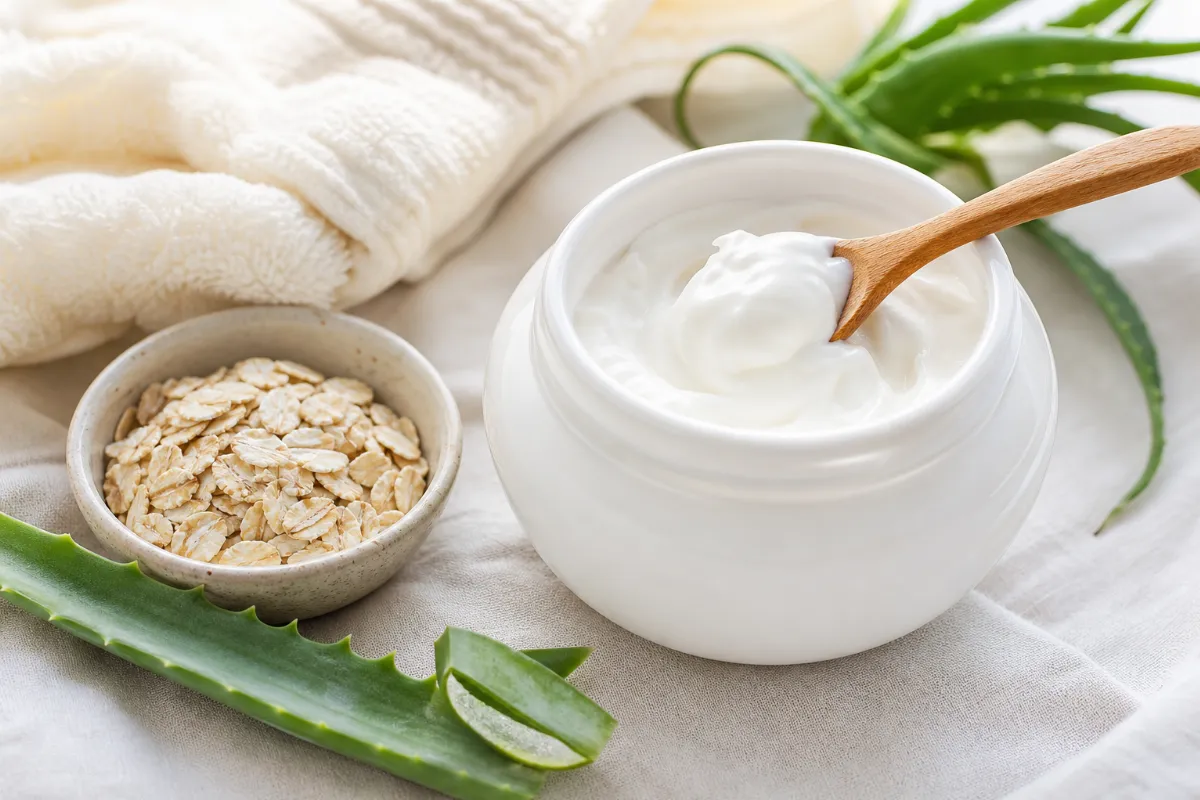
Colloidal oatmeal creams and cleansers
Low certaintyAddresses: Soothing of dry, itchy skin
Why it may help: A review of studies in mild to moderate atopic dermatitis (ages 3 months to 60 years) reported that daily colloidal oatmeal moisturisers or cleansers improved investigator ratings, itch, dryness and quality of life, and were well tolerated. These were eczema studies; none were in sensitive skin without disease, and the review does not report a comparison with other moisturisers.
How to apply it: Products are sold as lotions, cleansers and bath additives; follow the label.
Who it may suit: People with dry, itchy skin who tolerate oats.
Precautions: Oat allergy can occur, mostly reported in children with eczema; stop if skin worsens. Bath products can make tubs slippery.
14Aloe vera gel
Not enough evidenceAddresses: Possible soothing effect
Why it may help: NCCIH says topical aloe gel is generally well tolerated but occasional burning, itching, rash and eczema have been reported, and that there is not enough reliable information to judge whether it helps eczema. We found no source showing it helps sensitive skin.
How to apply it: If you try it, use a small amount of plain gel on a small area first.
Who it may suit: Curious adults with no known plant allergy.
Precautions: Allergy is possible. Oral aloe may be unsafe in pregnancy and breastfeeding according to NCCIH; that warning concerns swallowing, not gel on skin.
15Food & nutrition
Food and drink triggers
For people with rosacea the NHS lists alcohol, spicy food and hot drinks as triggers. Triggers vary, so the aim is to notice whether they affect you rather than to avoid them all.
We did not find a diet shown to cure sensitive skin. For eczema the NHS advises not to change your diet unless a doctor tells you to, including when breastfeeding.
2,11Water, fluids and general eating
We did not find agency guidance linking a particular food or fluid amount to sensitive skin. A balanced diet supports general health; see the linked skin pages for nutrition.
7Remedies & supplements
Traditional use, laboratory findings and human trials are kept apart. "Natural" does not mean safe.
Colloidal oatmeal
Low certaintyStudied form and route: Lotions, cleansers and bath additives
Intended outcome: Soothing of dry, itchy skin
Human evidence: A review of studies in mild to moderate atopic dermatitis reported improvements in investigator ratings, itch, dryness and quality of life with daily colloidal oatmeal products, which were well tolerated.
Traditional use: Described as used for decades for itchy and dry skin conditions.
Laboratory findings: Laboratory and some human studies have reported anti-inflammatory, barrier-repair and moisturising properties.
Limits: Studies were in eczema, not sensitive skin; the abstract does not give effect sizes or funding.
Interactions and precautions: Oat allergy is possible, mostly reported in children with eczema. Stop if skin worsens.
14Aloe vera gel
Not enough evidenceStudied form and route: Clear gel applied to the skin
Intended outcome: Possible soothing
Human evidence: NCCIH says there is not enough reliable information to judge whether aloe helps eczema, and that gel is generally well tolerated apart from occasional burning, itching, rash and eczema.
Traditional use: Widely used as a household skin remedy.
Laboratory findings: We did not read lab data for this page.
Limits: No source we read tested it in sensitive skin.
Interactions and precautions: Patch-test a small area first. Oral aloe may be unsafe in pregnancy and breastfeeding.
15Essential oils
Evidence againstStudied form and route: Oils and blends applied to the skin
Intended outcome: None established for sensitive skin
Human evidence: A review found nearly 80 essential oils have caused contact allergy; nine, including tea tree, orange, ylang-ylang and clove, gave more than 2% positive patch tests in people suspected of contact dermatitis.
Traditional use: Common in aromatherapy and folk skin care.
Laboratory findings: Not covered here.
Limits: Relevance data are generally missing or inadequate.
Interactions and precautions: Most reactions came from pure oils or high-concentration products. Avoid on reactive skin.
16Therapies & care
Established professional care starts with working out what is behind the symptoms. A GP, pharmacist or dermatologist can check for eczema, rosacea, contact dermatitis, infection or other causes and decide on treatment. This page does not recommend medicines or doses, and you should not stop a prescribed treatment on your own.
Pharmacist advice
Moderate certaintyFirst-line professional help The NHS suggests a pharmacist can recommend products for itch and advise on emollients, and can suggest a different product if an emollient wash stings and does not settle.
Who it may suit: Mild, short-lived itch or stinging.
Precautions: See a GP if it does not improve, keeps coming back or is severe.
7,9GP or dermatologist assessment
Moderate certaintyMedical evaluation The NHS advises seeing a GP for itch that affects daily life, persists, comes with a new rash, covers the whole body or occurs in pregnancy, and for suspected rosacea. Persistent, recurrent or severe contact dermatitis can lead to referral to a dermatologist.
Who it may suit: Anyone with the warning signs above.
Precautions: Bring a list of products and any medicines you use.
7,2,8Patch testing
Moderate certaintyAllergy test for contact dermatitis A dermatologist may recommend patch testing if skin keeps itching and developing rashes and an allergy is suspected. Patches stay on for 48 hours with return visits to 4 to 7 days; expanded testing finds about 80% of allergens.
Who it may suit: Repeated rashes with a suspected product or workplace cause.
Precautions: Patches can irritate or change skin colour; swelling or trouble breathing needs immediate care.
17What to avoid
Habits, products and claims that can get in the way. Never stop a prescribed medicine without talking to the professional who prescribed it.
Risks that apply to most people
Perfumed soaps, deodorants, shower gels and moisturisers
Moderate certaintyWhy: The NHS says to avoid perfumed soaps, deodorants and moisturisers for itchy skin, and MedlinePlus lists fragrance among common contact allergens.
Who it applies to: Most people with reactive skin.
Try instead: Choose unperfumed versions or an emollient in place of soap.
7,5Long, hot baths and showers
Moderate certaintyWhy: The NHS recommends cool or lukewarm, short washing for itchy skin, and heat is a listed rosacea trigger.
Who it applies to: Itchy or flushed skin.
Try instead: Keep it short, lukewarm, then moisturise.
7,2Scratching and rubbing
Moderate certaintyWhy: Scratching damages skin and can lead to infection; the NHS advises patting or tapping.
Who it applies to: Itchy skin.
Try instead: Pat, cool the area, keep nails short.
7,3Frequent contact with harsh soaps, detergents and solvents
Moderate certaintyWhy: The NHS says irritant contact dermatitis is the more common type and is caused by substances such as soaps, detergents, solvents and water.
Who it applies to: Hands and faces in wet or cleaning work.
Try instead: Use gloves and emollient soap substitutes.
8,5Personal triggers to check
Alcohol, spicy food and hot drinks if you have rosacea
Moderate certaintyWhy: The NHS lists these as rosacea triggers.
Who it applies to: People with rosacea or flushing.
Try instead: Notice your own pattern and avoid known triggers.
2Strong sun, wind, cold and heat
Low certaintyWhy: The NHS lists sunlight and hot or cold temperatures as rosacea triggers; reviews list UV and pollution as aggravating sensitive skin.
Who it applies to: Skin that flushes or stings outdoors.
Try instead: Sunscreen, shade, a scarf in cold weather.
2,4Stress spikes and hard exercise (if rosacea)
Low certaintyWhy: The NHS lists stress and aerobic exercise such as running as rosacea triggers.
Who it applies to: Rosacea-type flushing.
Try instead: Keep exercise gentler and cool; do not stop exercising altogether without advice.
2Products that need caution
Aqueous cream as a moisturiser
Moderate certaintyWhy: The NHS says aqueous cream is no longer recommended as an emollient because it contains sodium lauryl sulphate, which can cause burning, stinging, itching and redness.
Who it applies to: Anyone choosing an emollient.
Try instead: Use a different emollient; ask a pharmacist.
9Pure essential oils on the skin
Moderate certaintyWhy: A review found nearly 80 essential oils have caused contact allergy, and most reactions followed pure oils or high-concentration products.
Who it applies to: Anyone using aromatherapy or oils on the skin.
Try instead: Leave them off reactive skin.
16Fragrance, preservatives and hair-dye products near the face
Low certaintyWhy: MedlinePlus lists fragrances, preservatives and hair dyes among common allergens or irritants, with hair products, cosmetics and perfume affecting the face, head and neck.
Who it applies to: People with facial or scalp reactions.
Try instead: Choose fragrance-free formulas; if reactions continue, ask about patch testing.
5,17Unsupported claims
"Natural means gentle"
Moderate certaintyWhy: Plant products, including essential oils, are a documented cause of contact allergy.
Who it applies to: Product labels and social media.
Try instead: Judge a product by how your skin reacts, not the label.
16"Stinging means my skin is just sensitive"
Moderate certaintyWhy: The consensus definition requires that no skin disease explains the symptoms; stinging with a rash or flushing can be rosacea, contact dermatitis or another condition.
Who it applies to: Anyone with burning or stinging plus visible changes.
Try instead: Get the skin checked before assuming it is sensitivity.
1,2Common mistakes
Changing many products at once
Low certaintyWhy: If a reaction happens, there is no way to tell which product caused it.
Who it applies to: Anyone starting a new routine.
Try instead: Change one thing at a time and note it.
5,16Trying to diagnose a rash yourself
Moderate certaintyWhy: The NHS advises not to try to diagnose itch yourself because causes range from dry skin to thyroid, liver or kidney problems.
Who it applies to: Persistent or widespread itch.
Try instead: See a GP or pharmacist.
7Ignoring a sting that does not settle
Moderate certaintyWhy: The NHS says burning or stinging beyond a few days after an emollient, or a rash that worsens, is a reason to talk to a GP, nurse or pharmacist.
Who it applies to: Anyone using a new product.
Try instead: Stop the product and ask for advice.
9Evidence & safety
What the research shows
Agency advice (NHS, MedlinePlus) agrees on the basics: unperfumed products, short lukewarm washing, regular moisturiser, sun protection and checking persistent symptoms. Sensitive skin is defined by consensus as a symptom syndrome, and reviews describe it as hard to measure. Direct trials of products in sensitive skin were not found among the sources read; moisturiser and oatmeal evidence comes from eczema.
Limits of the evidence
- No large trials of any skin-care routine in people with sensitive skin without a skin disease were found in the sources read.
- Moisturiser and colloidal oatmeal evidence is from eczema studies, many at high risk of bias, with a mean follow-up of under 7 weeks in the Cochrane review.
- Sensitive skin is self-reported and subjective, which makes studies hard to compare.
- Review articles on sensitive skin were read as abstracts only.
Precautions and interactions
- Stop any product that burns, stings or itches beyond a few days and ask a pharmacist.
- Patch-test new plant or essential oil products and avoid them on reactive skin.
- Do not stop a prescribed skin treatment without speaking to your prescriber.
- Emollients make fabrics flammable; keep away from flames and cigarettes.
Life-stage considerations
- Pregnancy: itching needs a check because it can sometimes be caused by a liver condition (NHS); oral aloe may be unsafe.
- Babies and children: children's skin is more sensitive and needs extra sun protection; keep babies under 6 months out of direct sun.
- Older adults and menopause: itching is common after menopause and usually improves over time (NHS); new itch in older adults is still worth mentioning to a GP.
Warning signs
- Skin that is painful, hot and swollen (urgent GP or NHS 111); confusion, fast breathing, purple patches or a very high temperature need emergency care.
- Blistering, crusting, weeping, pus or a rash that suddenly spreads.
- Swelling of the lips, face or throat, or trouble breathing after a product.
- Eye pain, blurred vision or a red, gritty eye in someone with rosacea.
Claim checks
Sensitive skin is a real medical syndrome
Moderate certaintyExperts define it as a syndrome of unpleasant sensations (stinging, burning, itching, tingling) to stimuli that should not cause them, not explained by skin disease. It is a symptom pattern, not a rash diagnosis.
1Natural or plant-based products are always gentle
Evidence againstNot supported. Nearly 80 essential oils have caused contact allergy.
16Aqueous cream is a good moisturiser
Evidence againstThe NHS says it is no longer recommended as an emollient because it can cause burning, stinging, itching and redness.
9Moisturisers help dry, reactive skin
Low certaintyIn eczema trials moisturisers gave lower disease scores than none, but trials were mostly short with high risk of bias, and sensitive skin was not the tested condition.
10,7Colloidal oatmeal soothes itchy skin
Low certaintyReviewed eczema studies reported improvement in itch and dryness; sensitive skin was not studied.
14Aloe gel treats sensitive skin or eczema
Not enough evidenceNCCIH says there is not enough reliable information for eczema, and occasional reactions have been reported.
15Questions people ask
Is itchy skin usually serious?
Not usually. The NHS says itchy skin is not normally a sign of anything serious and often goes away within a few weeks. See a GP if it is severe, widespread, affects daily life, keeps coming back or comes with a new rash, lump or swelling.
What is sensitive skin?
An international expert group defined it as unpleasant sensations such as stinging, burning, pain, itching and tingling in response to things that normally should not cause them, not explained by a skin disease. The skin can look normal or red and the face is most affected.
Why does my face sting when I use skin products?
There are many possible reasons, including irritation or allergy to an ingredient. The NHS notes burning or stinging with water or skincare products can be an early sign of rosacea, so persistent stinging is worth a check.
Which products are best for sensitive skin?
The NHS advises unperfumed moisturisers, avoiding perfumed soaps and deodorants, and laundry products made for sensitive skin. We did not find trials proving one brand or ingredient best.
Is aqueous cream good for sensitive skin?
The NHS says it is no longer recommended as an emollient because it contains sodium lauryl sulphate, which can cause burning, stinging, itching and redness.
Are essential oils safe on sensitive skin?
A review found nearly 80 essential oils have caused contact allergy, mostly from pure oils or strong products. They are best avoided on reactive skin.
What can make redness worse?
For rosacea the NHS lists alcohol, spicy food, hot drinks, sunlight, heat or cold, hard exercise and stress. Triggers differ by person.
Do I need sunscreen if my skin is sensitive?
Yes, the NHS advises SPF 30 or higher every day for rosacea-prone skin and at least SPF 30 with 4-star UVA protection generally. Choose one made for sensitive skin and test how it feels.
Can stress make sensitive skin worse?
Reviews list stress and anxiety among factors that worsen sensitive skin, and the NHS lists stress as a rosacea trigger. We did not find trials proving stress management clears symptoms.
What is patch testing?
A medical test in which small amounts of allergens are placed under patches on your back for 48 hours to find the cause of an allergic skin reaction. A dermatologist may suggest it for repeated unexplained rashes.
When is itchy or red skin an emergency?
Swelling of the lips, face or throat or trouble breathing after using a product is an emergency. Hot, painful, swollen skin with fever, confusion, fast breathing or faintness also needs emergency care (999 in the UK, per the NHS).
Is itch in pregnancy normal?
Itching is common in pregnancy, but the NHS advises seeing a GP or midwife because it can sometimes be caused by a liver condition.
References
- Misery L, et al. Definition of sensitive skin: an expert position paper from the Special Interest Group on Sensitive Skin of the International Forum for the Study of Itch. Acta Derm Venereol 2017. PMID 26939643. Read 2026-10-31. source
- NHS. Rosacea. Read 2026-10-31. source
- NHS. Cellulitis. Read 2026-10-31. source
- Kim HO, et al. Comprehensive approaches to diagnosis and treatment of sensitive skin. Ann Dermatol 2025 (review). PMID 40736518. Abstract read 2026-10-31. source
- MedlinePlus. Contact dermatitis. Read 2026-10-31. source
- Jaenicke T, et al. Sensitive skin syndrome in the Chinese population: a critical discussion of current knowledge, clinical implications and research needs. Exp Dermatol 2025 (systematic review). PMID 40518919. Abstract read 2026-10-31. source
- NHS. Itchy skin. Read 2026-10-31. source
- NHS. Contact dermatitis. Read 2026-10-31. source
- NHS. Emollients. Read 2026-10-31. source
- van Zuuren EJ, et al. Emollients and moisturisers for eczema. Cochrane Database Syst Rev 2017. PMID 28166390. Abstract read 2026-10-31. source
- NHS. Atopic eczema: treatment and self-care. Read 2026-10-31. source
- NHS. Sunscreen and sun safety. Read 2026-10-31. source
- US FDA. Sunscreen: how to help protect your skin from the sun. Read 2026-10-31. source
- Fowler JF, et al. Colloidal oatmeal formulations as adjunct treatments in atopic dermatitis. J Drugs Dermatol 2012. PMID 22777219. Abstract read 2026-10-31. source
- NCCIH. Aloe vera. Read 2026-10-31. source
- de Groot AC, Schmidt E. Essential oils, part IV: contact allergy. Dermatitis 2016. PMID 27427818. Abstract read 2026-10-31. source
- American Academy of Dermatology. Patch testing can find what's causing your rash. Read 2026-10-31. source
Related on AlternativeMed
Related goals
Manage Itchy Skin → Reduce Skin Irritation → Support Your Skin Barrier → Relieve Dry Skin → Protect Your Skin From Sun Damage → Build a Simple Skin-Care Routine →
Ingredients, foods and supplements
Colloidal oatmeal → Aloe vera → Natural skin-care ingredients →
Research, safety and claim-check resources
Skin and hair safety: when to see a doctor → Skin and hair research and evidence → Acne →