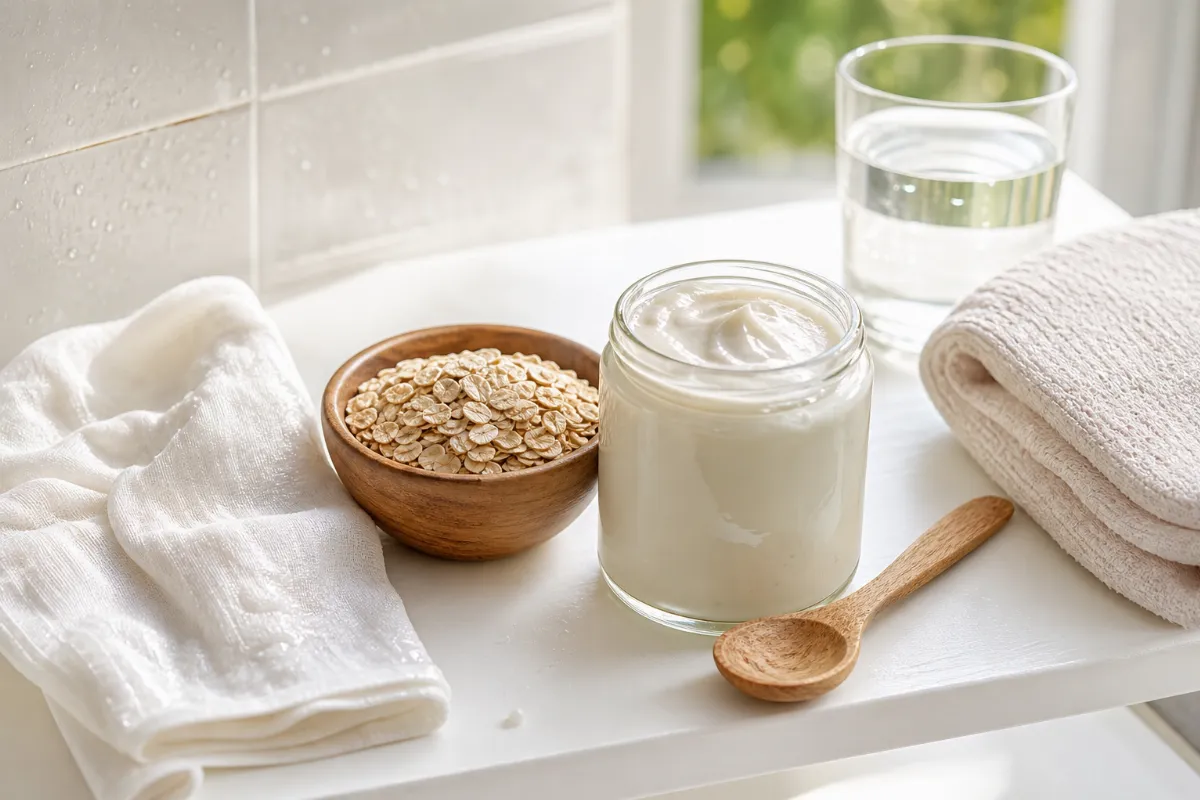
Skin & Hair
Manage Itchy Skin
Itchy skin is very common, and for most people it settles with cooling, gentle moisturising and a few changes to washing, clothing and heat. This page is about easing the itch itself and working out when it needs a closer look; dry skin, irritation, sensitive skin and breakouts have their own goal pages.
General information, not medical advice. Last updated October 31, 2026. Written by the AlternativeMed editorial team. Not medically reviewed.
Start here
- Cool the itch instead of scratching: hold a cool damp towel on the spot, or pat or tap the skin, and keep your nails short and smooth.
- Moisturise regularly with an unperfumed emollient, and use cool or lukewarm water for short baths and showers.
- Note how long the itch has lasted and whether there is a rash, then see a doctor if it is all over your body, severe, keeps coming back or has not improved after a few weeks.
Be careful with
- Itch is not always dry skin. The NHS lists allergies, hives, eczema, psoriasis, fungal infections, scabies, lice, pregnancy and, less commonly, thyroid, liver or kidney problems as causes, and says not to try to diagnose yourself.
- Essential oils, herbal creams and perfumed products can cause allergic reactions on already irritated skin. Do not put undiluted essential oils on itchy skin.
- Pharmacy itch medicines such as antihistamines can cause drowsiness and interact with other medicines, so ask a pharmacist first, especially in pregnancy, breastfeeding, older age or for young children. Do not stop a prescribed medicine because it may be causing itch; ask the prescriber.
Get help when
- Itching that is severe, is all over your body, affects daily life, keeps coming back or has not improved with self-care after a few weeks (the NHS and MedlinePlus use this kind of wording).
- Itching in pregnancy: the NHS says to check with a GP or midwife because it can sometimes be caused by a liver condition called intrahepatic cholestasis of pregnancy.
- Itchy skin with blistering, crusting, leaking fluid, pus, pain, swelling or warmth, or with a high temperature or feeling generally unwell: the NHS says to ask for an urgent GP appointment or get help from NHS 111 (the UK service), because the skin may be infected.
- Intense itching, especially at night, with a rash between the fingers or around the wrists, waist or groin, or when several people in the household are itchy: this can be scabies, which needs treatment.
- Itchy rash that comes with swelling of the lips, mouth, throat or tongue, trouble breathing or swallowing, dizziness or fainting: call emergency services at once (the NHS names 999 in the UK; use your local emergency number elsewhere).
- Itching with a new rash, lump or swelling that you are worried about, or itching that wakes you at night and leaves you exhausted.
About Manage Itchy Skin
What this goal means
Itch (also called pruritus) is an irritating sensation that makes you want to scratch. MedlinePlus says it can feel a little like pain but is different, and that it may affect one area or the whole body, with or without a rash or hives.
This goal is about relieving the itch, breaking the itch-and-scratch cycle and recognising when itching points to something that needs medical attention. It is not about diagnosing the cause yourself.
1,2What it can feel like
People describe prickling, crawling, burning or a deep need to scratch, often worse at night or after a hot shower. Scratching gives brief relief but can damage the skin, and the NHS says that damaged skin from scratching can make itch worse and let infection in. In atopic eczema, the NHS says scratching can make the eczema worse.
Itch that wakes you can wear you down. A systematic review of adults with atopic dermatitis found that sleep disturbance is common and that itching and scratching are major contributors.
2,3,4What can set it off or make it worse
The NHS lists dry, cracked or irritated skin as a common reason. Heat, sweating, tight clothing or fabrics such as wool, perfumed soaps, deodorants and moisturisers, soap and washing detergent, and long hot baths can all aggravate itch. Stress is listed by the NHS as something that can make atopic eczema worse.
MedlinePlus lists allergic reactions (to food, insect bites, pollen and medicines), irritating chemicals and cosmetics, parasites such as pinworms, scabies and lice, pregnancy, and liver, kidney or thyroid disease. Diseases that affect the nervous system, such as diabetes and shingles, can also cause itch, and so can some cancers or cancer treatments.
2,3,1,5Conditions that can be behind it
A 2024 JAMA review of chronic pruritus (itch lasting 6 weeks or longer) says it is due to inflammation in about 60% of patients (for example eczema, psoriasis or seborrheic dermatitis), to nerve-related or mixed causes in about 25%, and to other causes in about 15%, including systemic disease such as kidney or liver disease, medicines and infections such as scabies and ringworm.
The NHS groups common causes as reactions to heat or allergens (allergies, hives, heat rash), long-term skin conditions (dandruff, eczema, psoriasis), fungal infections and parasites. It also notes that itchy skin is common after menopause and usually improves over time.
6,2,7Realistic expectations
The NHS says itchy skin is not usually a sign of anything serious and will usually go away after a few weeks. Hives usually get better within a few days. Even when scabies is treated, the NHS says itching can carry on for a few weeks.
Chronic itch is not rare: the JAMA review estimates that about 22% of people have it at some point, and the European guideline says one in five has had chronic pruritus at least once. If it lasts beyond about 6 weeks, a doctor will usually look for a cause, which can include simple blood tests.
2,5,8,6,9Who this applies to
Adults and children with everyday itch, with or without a known skin condition. Babies and young children, pregnant people, older adults and people with long-term illness have extra cautions, covered below. If your main problem is dry skin, a reactive or irritated skin barrier, or breakouts, see the linked goals instead of repeating them here.
2Related conditions and symptoms
Eczema (atopic dermatitis) → Psoriasis → Contact dermatitis and skin allergy → Rosacea → Dandruff, dry scalp and seborrheic dermatitis → Acne →
A manageable starting plan
An educational starting point, not a personal prescription. Adjust it to your own situation and any advice from your clinician.
Your first actions
- This week: cool damp cloth and pat-or-tap instead of scratching; short lukewarm washes; unperfumed emollient several times a day; short nails; loose cotton clothing.
- Swap perfumed soaps, deodorants and moisturisers for unperfumed ones, and use a laundry product made for sensitive skin.
- Look for a pattern: is there a rash, is it at night, is anyone else at home itchy, did it start with a new product or medicine?
Optional additions
- Ask a pharmacist about cooling creams or antihistamines, saying where it itches and any other symptoms.
- Try a colloidal oatmeal product if you like the idea of a plant-based soother.
- If you have eczema, ask about an education or psychological programme.
What to track
- Itch level each day (0 to 10) and how well you slept.
- What you wore, washed with, ate or touched, and the weather, before itchy spells.
- How long it has lasted, whether it is spreading, and any new rash, lump or swelling.
When to reassess
The NHS says itchy skin usually goes away after a few weeks. If it is no better after 2 to 3 weeks of careful self-care, keeps coming back, is all over your body or is severe, see a doctor. Hives that do not improve after 2 days, or an infected look, need prompt advice.
When to seek professional support
- Pharmacist: itch products, cooling creams, antihistamine suitability, scabies treatment, checking supplements and medicines.
- GP or midwife: persistent, widespread, severe or night itch, itching in pregnancy, suspected infection, repeated hives.
- Dermatologist: referral via your doctor when the cause is unclear or itch does not respond.
What helps
Ordered by how well the research supports each step. Evidence strength is shown on every card; precautions sit next to the advice.
Start here
Cool the skin and pat or tap instead of scratching
Low certaintyAddresses: Takes the edge off the urge to scratch and protects the skin from damage
Why it may help: The NHS advises patting or tapping the skin instead of scratching and holding something cool, such as a damp towel, on it. MedlinePlus also lists cold compresses and avoiding scratching. For atopic eczema, the NHS suggests gently rubbing the area with a finger instead of scratching. We did not find trials of cool compresses, so this rests on agency advice.
How to apply it: Hold a cool, damp cloth on the itchy area for a few minutes, or press and tap the skin with your fingertips. Keep nails clean, short and smooth. For babies, the NHS suggests anti-scratch mittens in eczema.
Who it may suit: Almost everyone with itch.
Precautions: Do not use ice directly on the skin. If scratching has broken the skin or it looks infected, see a doctor.
2,1,3Moisturise regularly with an unperfumed emollient
Low certaintyAddresses: Keeps dry skin from itching and may reduce eczema flare-ups
Why it may help: The NHS says to use an unperfumed moisturiser or emollient regularly, and says emollients help manage dry, itchy or scaly skin conditions and help prevent flare-ups. A Cochrane review of 77 trials (6,603 people with eczema) found fewer flares with moisturisers than with none (low-quality evidence) and longer time to flare. In older adults with dry skin and itch, a small crossover trial of an oat-extract emollient (30 people) found more itch relief than no treatment.
How to apply it: The NHS says emollients can be used as often as you like, ideally at least 3 or 4 times a day on dry skin, and are best applied just after bathing when the skin is still damp (patted dry). Ointments suit very dry skin and night-time; creams suit daytime. If a steroid cream is also prescribed, leave 20 to 30 minutes between them.
Who it may suit: People whose itch comes with dry, tight or scaly skin, and those with eczema.
Precautions: Stop and ask a pharmacist if an emollient stings or burns for more than a few days. Emollients on fabrics can catch fire more easily: keep away from flames and cigarettes. Use a spoon or pump for pots. The NHS says aqueous cream is no longer recommended.
2,10,11,12Relieve Dry Skin (dry skin and the skin barrier) → Support Your Skin Barrier →
Short, cool or lukewarm baths and showers; a soap substitute
Low certaintyAddresses: Reduces the dryness and heat that can make itch worse
Why it may help: The NHS recommends cool or lukewarm baths or showers and says not to spend a long time in the bath or shower. It says everyday soaps, shampoos and shower gels usually dry out the skin, and suggests a leave-on emollient as a soap substitute for dry or itchy skin. MedlinePlus also suggests lukewarm or oatmeal baths. A trial in 482 children with eczema found that adding emollient bath additives gave no clear extra benefit over standard care, so extra bath products are not essential.
How to apply it: Keep water comfortably cool or lukewarm, keep it brief, pat dry gently and moisturise straight away.
Who it may suit: Anyone with itch, especially dry or eczema-prone skin.
Precautions: Wet floors are slippery when emollients are in the bath: use a non-slip mat (NHS). Do not use perfumed bath products.
2,1,10,13Loose, soft clothing, short nails and a gentle laundry product
Low certaintyAddresses: Fewer friction and irritation triggers on the skin
Why it may help: The NHS advises loose cotton or silk clothing, a laundry liquid or powder made for sensitive skin, and avoiding tight clothes and wool or synthetic fabrics. Expensive silk garments are a separate question: a trial in 300 children with moderate to severe eczema found no clinically important extra benefit from silk garments.
How to apply it: Choose soft, loose layers you can remove if you get hot, wash new clothes before wearing them where practical, and rinse laundry well.
Who it may suit: People whose itch is worse under clothing or at night.
Precautions: If a fabric clearly triggers a rash, avoid it and see the irritation page.
2,14Additional options
Menthol or other cooling creams
Low certaintyAddresses: A cooling sensation that may calm itch for a short time
Why it may help: The NHS says a pharmacist can recommend lotions and creams, such as menthol creams that help by cooling the skin. A 2024 JAMA review lists menthol among topical options for nerve-related itch. A small randomised trial in 30 healthy volunteers found that a gel containing a research cooling compound (a TRPM8 agonist, not menthol itself) reduced experimentally induced itch compared with a vehicle gel; this does not show that shop products work for everyday itch.
How to apply it: Ask a pharmacist which product suits the area and your age. Try a small patch first.
Who it may suit: Adults and older children with localised itch.
Precautions: Stop if it stings, burns or the skin becomes red. Check with a pharmacist before use in pregnancy, breastfeeding or on babies and young children.
2,6,15Colloidal oatmeal baths and creams
Low certaintyAddresses: Soothing of dry, itchy skin
Why it may help: MedlinePlus lists oatmeal baths among home measures for itching. In a trial of 90 children aged 6 months to 18 years with mild to moderate eczema, a 1% colloidal oatmeal cream improved itch and skin scores and was non-inferior to a prescription barrier cream over 3 weeks. In the small crossover study of 30 adults aged 60 and over, an oat-extract emollient relieved itch from dry skin more than no treatment.
How to apply it: Use products made for skin (colloidal oatmeal), not breakfast oats poured into the bath, which can leave a slippery tub.
Who it may suit: People with dry or eczema-prone itchy skin who want a plant-based option.
Precautions: The trials were short and some were open-label. Stop if itching or redness worsens, since any product can cause a reaction. Make the tub safe with a non-slip mat.
1,16,12Find your triggers with a simple itch diary
Low certaintyAddresses: Lets you avoid what makes your own itch worse
Why it may help: The NHS lists common eczema triggers (soap, washing detergent, some fabrics, pets, heat, infection, stress, hormonal changes) and says hives can be set off by foods, plants, chemicals, cold, heat and sweating, medicines, insect bites, scratching or pressing on the skin, infection and some other causes. It advises trying to find your own triggers.
How to apply it: For two weeks, note when itch is worse, what you wore, washed with, ate, touched, the weather and your stress and sleep. Bring the notes to an appointment if you need one.
Who it may suit: Anyone with itch that keeps returning.
Precautions: Do not cut out whole food groups on your own: the NHS says not to change your diet for eczema unless a doctor tells you to.
3,5Talk to a pharmacist about antihistamines
Mixed findingsAddresses: May help itch that comes from an allergy or hives
Why it may help: The NHS says a pharmacist can advise on medicines called antihistamines, which may help with some causes of itching, and that antihistamines are often used for allergy symptoms such as hives and reactions to insect bites. For eczema, however, a Cochrane review found no randomised trials meeting its criteria and so no high-level evidence for oral antihistamines used alone. The NHS notes that drowsy types may suit people whose itch stops them sleeping, while non-drowsy types are generally the first choice.
How to apply it: Describe where it itches and any other symptoms; the pharmacist will say whether an antihistamine fits and which type.
Who it may suit: Itch linked to allergy, hives or insect bites, decided with a pharmacist.
Precautions: Drowsy types affect driving and machinery, and alcohol adds to sleepiness. Check with a pharmacist or GP first if pregnant, breastfeeding, older, on other medicines, giving to a young child, or if you have heart, liver, kidney disease or epilepsy.
2,17,18Still being studied
Eczema education programmes and habit-reversal training for the itch-scratch cycle
Moderate certaintyAddresses: Better eczema control, which also eases itch, in people with atopic dermatitis
Why it may help: A 2024 Cochrane review of 37 trials (6,170 people) found that group education programmes probably reduce eczema signs in the short and long term and reduce long-term patient-reported symptoms (moderate-certainty evidence). Habit-reversal treatment, a method for noticing and replacing scratching, may reduce short-term eczema signs, but this came from a single trial of 33 people (low-certainty). The review measured eczema severity, not itch alone.
How to apply it: Ask a dermatology or eczema nurse whether a group eczema education or psychological programme is offered locally.
Who it may suit: People with eczema who feel stuck in a scratch cycle.
Precautions: Programmes support, not replace, regular skin care and medical treatment.
19Acupuncture for itch
Low certaintyAddresses: Possible reduction in itch scores in atopic dermatitis
Why it may help: A 2024 meta-analysis of 8 trials (463 people) with atopic dermatitis found lower itch scores on a visual analogue scale (mean difference -14.7) and lower eczema severity scores after acupuncture, with no serious adverse events reported. The authors say the number and quality of studies are limited.
How to apply it: Seen only with a qualified practitioner who knows your skin condition.
Who it may suit: Adults with eczema who want to try a complementary option alongside usual care.
Precautions: Skin infection or open sores near needle sites, bleeding disorders and blood thinners need discussion first. It is not a substitute for finding the cause of itch.
20Food & nutrition
Food, drink and itch
For most itch, no food change is needed. The NHS says not to change your diet for eczema unless a doctor tells you to, including when breastfeeding a baby with eczema.
Some itch is food-related. The NHS lists certain foods as one possible trigger of hives, an itchy rash that usually settles in a few days; if hives keep coming back it may be an allergy, and the NHS says to ask for an urgent GP appointment or call 111 (UK). We did not find good evidence that supplements such as probiotics or evening primrose oil relieve eczema itch (see Natural remedies).
- Keep an itch diary that includes foods only if itch or hives seem to follow a particular food.
- Do not remove foods from a child's diet because of itch without medical advice.
- Swelling of the lips or tongue or trouble breathing after eating is an emergency (see Get help).
Remedies & supplements
Traditional use, laboratory findings and human trials are kept apart. "Natural" does not mean safe.
Colloidal oatmeal (bath or cream)
Low certaintyStudied form and route: Finely milled oat powder in baths, or creams containing colloidal oatmeal
Intended outcome: Soothing of dry, itchy skin
Human evidence: A trial in 90 children (6 months to 18 years) with mild to moderate eczema found a 1% colloidal oatmeal cream non-inferior to a prescription barrier cream on eczema and itch scores at 3 weeks. A small open-label crossover study in 30 adults aged 60 and over found that an oat-extract emollient relieved itch from dry skin more than no treatment over 2 weeks.
Traditional use: MedlinePlus lists lukewarm or oatmeal baths among self-care measures for itching.
Laboratory findings: We did not read laboratory studies for this page.
Limits: Few trials, short follow-up, small samples, and the larger trial compared the oat cream with another barrier cream, not with a placebo.
Interactions and precautions: Stop if it stings, burns or the rash worsens. Patting dry and non-slip mats help avoid falls after oat baths.
1,16,12Colloidal oatmeal → Natural skin-care ingredients: aloe, oatmeal, fixed oils and essential oils →
Menthol and other cooling topical products
Low certaintyStudied form and route: Creams or lotions with menthol or similar cooling agents
Intended outcome: Short-term cooling that may distract from itch
Human evidence: The NHS says a pharmacist can recommend menthol creams that help by cooling the skin. A JAMA review lists menthol as a topical option for nerve-related itch. In a 30-person trial in healthy volunteers, a gel with a research cooling compound reduced itch triggered by skin-prick tests; this was not a menthol product and not people with everyday itch.
Traditional use: We did not read a traditional-use source for this page.
Laboratory findings: The same trial checked in cell experiments that the cooling compound did not act on the histamine receptor.
Limits: We did not find randomised trials of shop menthol creams for everyday itch.
Interactions and precautions: Stop if stinging, burning or redness occurs, and ask a pharmacist about use in pregnancy, breastfeeding or for children.
2,6,15Tea tree oil
Not enough evidenceStudied form and route: Essential oil or products containing it
Intended outcome: Sometimes promoted for skin complaints
Human evidence: We did not find trials showing it relieves itch. A review of allergy reports found it is a leading cause of essential-oil contact allergy.
Traditional use: Popular as a home remedy for many skin diseases, according to the review.
Laboratory findings: The review describes its chemical composition, with oxidised components acting as the main sensitisers.
Limits: The evidence we read is about allergy risk, not benefit.
Interactions and precautions: Do not apply neat oil to itchy or broken skin; allergy can mimic or worsen itch. Patch testing is done by clinicians with an oxidised oil preparation.
23Oral evening primrose oil or borage oil
Evidence againstStudied form and route: Capsules taken by mouth
Intended outcome: Proposed to ease eczema symptoms
Human evidence: A Cochrane review of 27 studies (1,596 participants) found no better effect than placebo for eczema symptoms.
Traditional use: Promoted for eczema because of its gamma-linolenic acid content, according to the review.
Laboratory findings: We did not read laboratory studies for this page.
Limits: Short-term studies; long-term safety was not examined.
Interactions and precautions: Mild digestive upset occurred about as often as with placebo. Check with a pharmacist if pregnant, breastfeeding or on medicines.
22Probiotics
Low certaintyStudied form and route: Capsules, powders or fermented foods
Intended outcome: Proposed to calm eczema and its itch
Human evidence: A Cochrane review of 39 trials (2,599 people aged up to 55) found that probiotics probably make little or no difference to participant- or parent-rated eczema symptoms.
Traditional use: We did not read a traditional-use source for this page.
Laboratory findings: We did not read laboratory studies for this page.
Limits: Many strains and doses were used, and the trials mostly involved children.
Interactions and precautions: Ask a doctor or pharmacist before use, particularly if you are seriously ill.
21Therapies & care
A doctor looks at your skin, asks about symptoms and medicines, and may arrange blood tests or refer you to a dermatologist (NHS). Treatment depends on the cause: creams, lotions or tablets (NHS), or, for itch that does not settle, other medicines or light therapy (MedlinePlus). Never stop a prescribed medicine on your own because of itch; ask the prescriber.
Medical assessment and treatment of the cause
Moderate certaintyEstablished medical care A 2024 JAMA review and the European guideline describe chronic itch as needing a history, an examination and, when few skin changes are present, blood tests such as a blood count, metabolic panel and thyroid tests, then step-wise treatment of the underlying cause with topical and, if needed, other therapies. Treating an underlying disease may itself relieve itch, says MedlinePlus.
Who it may suit: Itch lasting more than a few weeks, widespread, severe, nocturnal or with other symptoms.
Precautions: Treatments are chosen by a clinician; the page does not recommend any medicines.
6,9,2,1Eczema education and psychological support
Moderate certaintyEducation and behavioural therapy Group education programmes probably reduce eczema signs and long-term symptoms in people with atopic dermatitis; habit-reversal training may help in the short term (low-certainty).
Who it may suit: People with eczema and an itch-scratch cycle.
Precautions: Complements, not replaces, usual skin care.
19Acupuncture
Low certaintyTraditional Chinese medicine technique A 2024 meta-analysis of 8 trials in atopic dermatitis found lower itch scores, but with limited quantity and quality of studies.
Who it may suit: Adults with eczema who want a complementary option alongside usual care.
Precautions: Use a qualified practitioner; tell them about bleeding disorders, blood thinners and skin infections.
20Stress and sleep support
Not enough evidenceMind-body and lifestyle Stress is listed by the NHS as something that can make atopic eczema worse, and itch commonly disturbs sleep. Relaxation and sleep habits can support coping; we did not find trials showing they reduce itch itself.
Who it may suit: People whose itch is worse at night or when stressed.
Precautions: Persistent low mood or anxiety needs care from a clinician.
3,4Relaxation for sleep → Improve Your Sleep Quality → Meditation →
What to avoid
Habits, products and claims that can get in the way. Never stop a prescribed medicine without talking to the professional who prescribed it.
Risks that apply to most people
Scratching hard or for a long time
Low certaintyWhy: The NHS advises patting or tapping instead, to avoid skin damage from scratching, and says scratching can make eczema worse. Broken skin can become infected.
Who it applies to: Everyone with itch.
Try instead: Cool the area, pat or tap, keep nails short, and moisturise.
2,3Long, hot baths and showers
Low certaintyWhy: The NHS says not to spend a long time in the bath or shower, recommends cool or lukewarm water, and notes that being hot can make eczema more itchy.
Who it applies to: People with dry, eczema-prone or generally itchy skin.
Try instead: Short lukewarm washes, then pat dry and moisturise.
2,3Personal triggers to check
Perfumed soaps, deodorants and moisturisers; harsh soap and detergent
Moderate certaintyWhy: The NHS says not to use perfumed soaps, deodorants or moisturisers on itchy skin, and says everyday soaps, shampoos and shower gels usually dry out the skin. Soap and washing detergent are listed as eczema triggers.
Who it applies to: Anyone with itchy or eczema-prone skin.
Try instead: Use unperfumed emollients as a soap substitute and a laundry product made for sensitive skin.
2,10,3Tight clothing, wool and synthetic fabrics; overheating
Low certaintyWhy: The NHS says not to wear tight clothes or clothes made of wool or synthetic fabrics. For hives it lists hot, sweaty skin from exercise, stress or spicy food, and tight or itchy clothing, as triggers.
Who it applies to: Itch that is worse under clothes, in heat or after exercise.
Try instead: Loose cotton or silk layers; cool down and rinse after sweating.
2,5Products that need caution
Aqueous cream as a moisturiser
Moderate certaintyWhy: The NHS says aqueous cream is no longer recommended as an emollient: it contains an ingredient that can cause burning, stinging, itching and redness, and says not to use it in eczema.
Who it applies to: Anyone with itchy or eczema-prone skin.
Try instead: Ask a pharmacist for a plain emollient; some people can still use aqueous cream as a soap substitute, per the NHS.
10,3Undiluted tea tree oil and other essential oils on itchy skin
Moderate certaintyWhy: A review found tea tree oil has caused the most published allergic reactions of any essential oil; patch-test positives ranged from 0.1% to 3.5% in routine testing, most reactions came from pure oil, and oxidised oil is more likely to sensitise. Allergic contact dermatitis is itself itchy. We did not find trials showing it relieves itch.
Who it applies to: People applying essential oils to irritated, itchy or broken skin.
Try instead: Stay with simple, unperfumed products. If you do try an oil product, patch-test first and stop at any sign of redness or more itching.
23Oral evening primrose or borage oil capsules for eczema itch
Moderate certaintyWhy: A Cochrane review of 27 studies (1,596 people) found that oral evening primrose oil and borage oil were no better than placebo for eczema symptoms. Side effects were mild and mainly digestive, the same as with placebo.
Who it applies to: People with eczema who are tempted by these supplements.
Try instead: Put the effort into emollients, trigger avoidance and medical care instead.
22Unsupported claims
"Itching is just dry skin"
Moderate certaintyWhy: Dry skin is a frequent cause, but the NHS says less commonly itch can be a sign of thyroid, liver or kidney problems, and a JAMA review says about 15% of chronic pruritus is due to causes such as systemic disease, medicines and infections. Itch that does not settle needs checking.
Who it applies to: Itch that lasts, is all over the body or has no rash.
Try instead: Try simple self-care for a few weeks; if it persists, ask a doctor, who may order simple blood tests.
2,6"Probiotics will cure eczema itch"
Moderate certaintyWhy: A Cochrane review of 39 trials (2,599 people) concluded that probiotics probably make little or no difference to participant- or parent-rated eczema symptoms.
Who it applies to: Marketing of probiotic supplements and foods for eczema.
Try instead: Keep to proven basics such as emollients and trigger avoidance.
21"Silk clothing will stop the itch"
Moderate certaintyWhy: In a trial of 300 children with moderate to severe eczema, silk garments plus standard care did no better than standard care alone on eczema severity, and skin infections were about as common. Soft loose clothing is still sensible.
Who it applies to: Claims for silk garments and special clothing.
Try instead: Choose comfortable loose fabrics you tolerate; do not expect a cure from clothing.
14,2Common mistakes
Assuming night-time itching with a rash is dry skin
Moderate certaintyWhy: The NHS describes scabies as intense itching, especially at night, with a rash that is often between the fingers and around the wrists, waist and groin. The rash can take up to 8 weeks to appear, it is very infectious and has nothing to do with poor hygiene.
Who it applies to: Itch that is worse at night, with household members also itching.
Try instead: See a pharmacist or doctor. Everyone in the home needs treatment at the same time, per the NHS.
8Taking drowsy antihistamines before driving or with alcohol
Moderate certaintyWhy: The NHS says drowsy antihistamines can reduce coordination, reaction speed and judgement, and that alcohol adds to sleepiness.
Who it applies to: Anyone using sedating itch medicines.
Try instead: Ask a pharmacist about timing and about non-drowsy options.
17Waiting months with itch that is severe, widespread or unexplained
Moderate certaintyWhy: The NHS says to see a GP if itch is severe, all over your body, keeps coming back or does not improve with self-care; MedlinePlus says to get help if it does not go away after a few weeks or has no apparent cause.
Who it applies to: Anyone whose itch persists.
Try instead: Book an appointment and bring your itch diary.
2,1Evidence & safety
What the research shows
Agencies agree on the basics: cool the skin, avoid scratching, use unperfumed emollients, avoid irritants and heat, and see a doctor when itch is severe, widespread, long-lasting or comes with other symptoms. Trial evidence is thinner than the advice suggests. Moisturisers reduce eczema flares in low-quality evidence; oat-based products have small trials; menthol and cooling creams, acupuncture and group education have limited or mixed support. Oral evening primrose oil, borage oil and probiotics look unhelpful for eczema, and tea tree oil carries an allergy risk. Chronic itch (6 weeks or more) affects roughly one in five people at some point and often has a treatable cause.
Limits of the evidence
- Most trials of itch relief are small, short or open-label, and many measure eczema severity rather than itch alone.
- We did not find randomised trials of cool compresses, lukewarm bathing or loose clothing for itch; those tips rest on health-agency advice.
- Evidence mostly comes from people with atopic dermatitis; results may not apply to itch from other causes.
- We did not read the full New England Journal of Medicine review on chronic pruritus and did not use it as a source.
Precautions and interactions
- Itch with a rash that is blistered, crusty, leaking, painful, swollen, warm or with fever may be infected and needs urgent advice (NHS).
- Essential oils, herbal creams and fragranced products can cause allergic contact dermatitis.
- Do not stop prescribed medicines or skip prescribed creams because of itch; talk to your prescriber.
- Pharmacy antihistamines and itch creams are not suitable for everyone; check with a pharmacist.
- This site is not a substitute for care, and we do not diagnose skin conditions.
Life-stage considerations
- Babies and children: the NHS suggests anti-scratch mittens for babies with eczema; pharmacy scabies treatments should not be used under 2 years, who need a GP. Ask before giving any itch medicine or product to a child.
- Pregnancy: itchy skin is common but should be checked with a GP or midwife because it can sometimes be caused by a liver condition (NHS). Ask a pharmacist before any itch medicine or essential oil.
- Breastfeeding: ask a pharmacist or GP before oral itch medicines; the NHS says some antihistamines suit breastfeeding and others do not.
- Menopause and older adults: itchy skin is common after menopause and usually improves over time (NHS); dry skin with chronic itch is frequent in older age, and a small trial found an oat-based emollient helped.
- People with kidney, liver or thyroid disease, diabetes, or on cancer treatment: itch can be a symptom of the condition or treatment, so tell your care team.
Warning signs
- Swelling of lips, mouth, throat or tongue, trouble breathing or swallowing, faintness: emergency (NHS: 999 in the UK).
- Itchy rash with fever, pus, crusting, blisters, heat or spreading pain: urgent advice.
- Severe or all-over itch, itch for more than a few weeks, itch with a new lump or rash, or itch that wakes you nightly.
- Intense night itch with burrow-like lines between fingers or itch in several household members (possible scabies).
- Itch during pregnancy.
Claim checks
Cool compresses and lukewarm baths relieve itch
Low certaintySupported by agency advice; we found no trials.
2,1Moisturisers reduce eczema itch and flares
Low certaintyPartly supported. Fewer flares in low-quality trials; itch-specific data are limited.
11,10,12Emollient bath additives help children's eczema
Moderate certaintyNot supported in a 482-child trial; no clinical benefit over standard care.
13Silk clothing treats eczema itch
Moderate certaintyNot supported in children with moderate to severe eczema.
14Evening primrose or borage oil helps eczema
Evidence againstNot supported; no better than placebo.
22Probiotics relieve eczema
Low certaintyProbably little or no difference in symptoms.
21Antihistamines stop eczema itch
Mixed findingsNo high-level evidence for oral antihistamines alone in eczema; they may help allergy-type itch.
18,17Capsaicin cream treats itch
Not enough evidenceNo convincing evidence.
24Acupuncture reduces itch in eczema
Low certaintyPossibly, from limited trials.
20Tea tree oil is a safe natural itch remedy
Not enough evidenceNo benefit trials found; known allergen.
23Questions people ask
Why is my skin itchy but there is no rash?
Dry skin is a common reason, but the NHS and MedlinePlus list many causes, including allergies, pregnancy, menopause, and thyroid, liver or kidney problems. If itch with no rash is all over your body, severe or lasts more than a few weeks, see a doctor, who may order blood tests.
What is the fastest way to stop an itch?
There is no instant cure. The NHS suggests holding something cool, such as a damp towel, on the skin and patting or tapping instead of scratching. A pharmacist can suggest cooling creams or antihistamines for some causes.
Does scratching make itching worse?
It can. The NHS says patting or tapping avoids skin damage from scratching and notes that scratching can make eczema worse. Keep nails short and smooth.
Why is itching worse at night?
Many people notice it more when there are no distractions, and in atopic eczema itch and scratching are major contributors to poor sleep. Intense night itch with a rash can also be a sign of scabies, which needs treatment, so ask a pharmacist or doctor.
How often should I moisturise?
The NHS says emollients are very safe and cannot be overused, and ideally should be applied at least 3 or 4 times a day on dry skin, straight after bathing and patting dry.
Is oatmeal good for itchy skin?
Small trials suggest colloidal oatmeal creams can help dry, eczema-prone skin and MedlinePlus lists oatmeal baths as home care. The evidence is limited and low-certainty.
Are essential oils or tea tree oil safe for itchy skin?
Not reliably. Tea tree oil is a known cause of contact allergy, especially undiluted or oxidised oil, and we found no trials showing it relieves itch. Patch-test and stop if skin gets redder or itchier.
Does itchy skin mean something is wrong with my liver or kidneys?
Usually not. The NHS says itchy skin is not usually a sign of anything serious, but less commonly it can be a sign of liver, kidney or thyroid problems. Itch that is severe, widespread or lasts more than a few weeks should be checked.
Is itching in pregnancy normal?
It is common, but the NHS says to check with a GP or midwife because it can sometimes be caused by a liver condition called intrahepatic cholestasis of pregnancy.
When should I see a doctor about itchy skin?
See a GP if itch affects daily life, does not improve with self-care, keeps returning, is all over the body, is severe, or comes with a new rash, lump or swelling. Seek urgent help for signs of infection, and emergency help for lip, tongue or throat swelling or trouble breathing.
References
- MedlinePlus (US National Library of Medicine). Itching. Read 2026-10-31. source
- NHS. Itchy skin. Page last reviewed 19 July 2023. Read 2026-10-31. source
- NHS. Atopic eczema. Page last reviewed 6 September 2024. Read 2026-10-31. source
- Jeon C, et al. Frequency and management of sleep disturbance in adults with atopic dermatitis: a systematic review. Dermatol Ther (Heidelb). 2017. PMID 28707054. source
- NHS. Hives. Page last reviewed 26 April 2024. Read 2026-10-31. source
- Butler DC, et al. Chronic Pruritus: A Review. JAMA. 2024. PMID 38809527. source
- NHS. Symptoms of menopause and perimenopause. Page last reviewed 19 May 2026. Read 2026-10-31. source
- NHS. Scabies. Page last reviewed 21 November 2023. Read 2026-10-31. source
- Weisshaar E, et al. European S2k Guideline on Chronic Pruritus. Acta Derm Venereol. 2025. PMID 40843597 (abstract read). source
- NHS. Emollients. Page last reviewed 24 October 2023. Read 2026-10-31. source
- van Zuuren EJ, et al. Emollients and moisturisers for eczema. Cochrane Database Syst Rev. 2017. PMID 28166390. source
- Theunis J, et al. Efficacy of a Rhealba oat extract-based emollient on chronic pruritus in elderly French outpatients. J Eur Acad Dermatol Venereol. 2017. PMID 28120350. source
- Santer M, et al. Emollient bath additives for the treatment of childhood eczema (BATHE): multicentre pragmatic randomised controlled trial. BMJ. 2018. PMID 29724749. source
- Thomas KS, et al. Silk garments plus standard care compared with standard care for treating eczema in children: a randomised, controlled, observer-blind, pragmatic trial (CLOTHES). PLoS Med. 2017. PMID 28399154. source
- Lee S, et al. Histamine- and pruritogen-induced itch is inhibited by a TRPM8 agonist: a randomized vehicle-controlled human trial. Br J Dermatol. 2024. PMID 38345103. source
- Lisante TA, et al. Efficacy and safety of an over-the-counter 1% colloidal oatmeal cream in the management of mild to moderate atopic dermatitis in children: a double-blind, randomized, active-controlled study. J Dermatolog Treat. 2017. PMID 28366039. source
- NHS. Antihistamines. Page last reviewed 16 May 2023. Read 2026-10-31. source
- Apfelbacher CJ, et al. Oral H1 antihistamines as monotherapy for eczema. Cochrane Database Syst Rev. 2013. PMID 23450580. source
- Singleton H, et al. Educational and psychological interventions for managing atopic dermatitis (eczema). Cochrane Database Syst Rev. 2024. PMID 39132734. source
- Liang S, et al. Acupuncture for atopic dermatitis: a systematic review and meta-analysis. BMJ Open. 2024. PMID 39638592. source
- Makrgeorgou A, et al. Probiotics for treating eczema. Cochrane Database Syst Rev. 2018. PMID 30480774. source
- Bamford JT, et al. Oral evening primrose oil and borage oil for eczema. Cochrane Database Syst Rev. 2013. PMID 23633319. source
- de Groot AC, Schmidt E. Tea tree oil: contact allergy and chemical composition. Contact Dermatitis. 2016. PMID 27173437. source
- Gooding SM, et al. Systematic review of topical capsaicin in the treatment of pruritus. Int J Dermatol. 2010. PMID 21128913. source
Related on AlternativeMed
Related goals
Relieve Dry Skin → Support Your Skin Barrier → Care for Sensitive Skin → Reduce Skin Irritation → Build a Simple Skin-Care Routine → Improve Your Sleep Quality → Calm a Busy Mind →
Ingredients, foods and supplements
Colloidal oatmeal → Aloe vera (herb profile) → Tea tree oil → Evening primrose, borage and GLA oils → Probiotics and prebiotics for gut health →
Research, safety and claim-check resources
Natural skin-care ingredients: aloe, oatmeal, fixed oils and essential oils → Skin and hair safety: when to see a doctor → Skin and hair research and evidence → Skin & hair → Pregnancy, postpartum and breastfeeding: wellness and supplements → Perimenopause and menopause → Acupuncture → Relaxation for sleep →