MUSHROOMS · GUIDE
Chaga Tea, Powder and Extracts: What Differs
Chaga (Inonotus obliquus) is sold as tea, powder, capsules and extracts. What the sources say differs between them, the kidney warning, and what has not been studied in people.
Content last updated . This page has not been medically reviewed.
Back to ChagaSafety first. Supplements can cause side effects and interact with medicines. Read mushroom safety and interactions before you use any mushroom product.
What chaga is, and what is in a "chaga" product
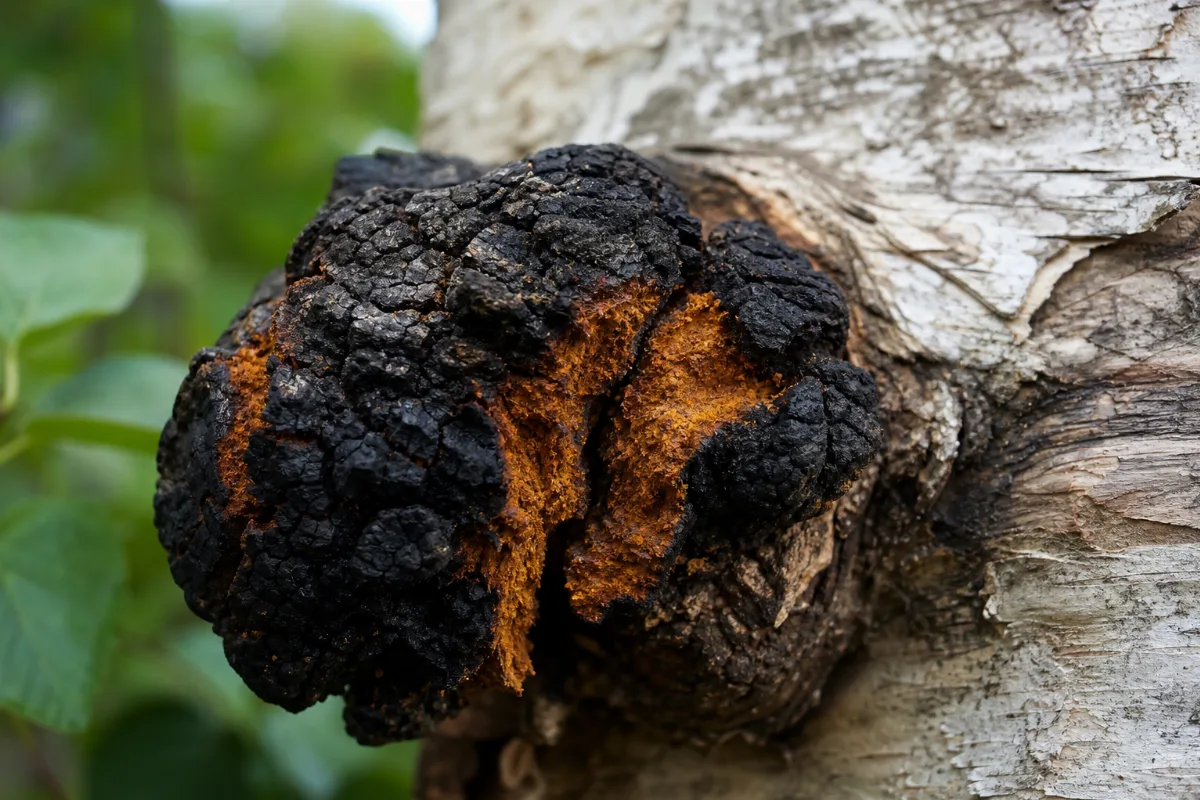
Chaga is the common name for Inonotus obliquus; GBIF lists it as an accepted species in the family Hymenochaetaceae. [4] The part sold is not a typical mushroom cap. A cancer-center monograph says the conk used medicinally "comprises wood from the substrate tree and mycelium" of the fungus. [5] A laboratory study of chaga conks noted that the amount of Inonotus obliquus itself in them is limited. [6] So a label that says "chaga" can describe a lot of different material. The full profile is on the chaga guide.Traditional use
The same monograph says chaga is used as a folk remedy in Russia and other northern European countries for various ailments, including cancer. [7] That is traditional use. It is not evidence that chaga works.The forms, and what is documented about each
Tea
Traditional use only; no human trial of chaga tea foundChaga is edible, but the monograph says it is not commonly eaten because of its bitter nature and that tea made from the whole mushroom is what is consumed. [8]
Powder
Evidence of harm (case reports)Supplements come as tablets, capsules or powders. [9] All three kidney case reports above involved powder. [1] [2] [3]
Extracts (water or alcohol)
Preclinical (laboratory chemistry)In a laboratory comparison of aqueous and ethanol extracts from Finland, Russia and Thailand, oxalic acid was the main organic acid, highest in the water extract from Russia. [10]
Coffee blends
Marketing claim onlyProper evidence not found: we searched PubMed and the cancer-center monograph for chaga coffee or blends and read nothing on them. See mushroom coffee.
One of the case reports measured oxalate in the chaga it came from and found "extremely high oxalate content (14.2/100 g)". [11] We did not read a source that compares the oxalate in tea, powder and extract products side by side, so we cannot say that one form is safer than another. Proper evidence not found (searched PubMed for chaga and oxalate).
What research shows
The monograph's summary: in preclinical studies chaga showed many effects (for example antitumor and anti-inflammatory activity), but "the safety and efficacy of chaga have yet to be evaluated in clinical studies". [12] Our own PubMed searches for chaga trials in people found no usable human trial. Proper evidence not found. Results in cells and animals do not show that a tea or capsule helps a person; see human studies versus animal and laboratory research.Supply and quality
The monograph says natural reserves of the fungus have nearly been exhausted and scientists are seeking cultivated substitutes. [18] That is one reason what is in a product can differ from wild chaga. Quality and substitution questions are covered in quality testing and certifications.Frequently asked questions
Is chaga tea safe?
Not established. Chaga is described as edible, with tea the usual form, [8] but kidney injury has been reported with chaga powder. [1] We did not read a trial or a safety study of chaga tea in people. People with kidney problems should ask a clinician first.
Does chaga damage the kidneys?
Case reports describe oxalate nephropathy or end-stage kidney disease after long use of chaga powder. [2] [3] These are single cases, so how common it is is not known.
Is chaga extract better than chaga powder?
Proper evidence not found. We read no study comparing extract and powder in people. A laboratory comparison found oxalic acid in water and alcohol extracts alike. [10]
Can chaga treat cancer?
No trial we read shows that. The monograph says chaga's safety and efficacy have yet to be evaluated in clinical studies. [12] Turkey tail and shiitake extracts have a different story; see turkey tail, PSK and cancer care.
Does chaga interact with medicines?
Possibly. The cancer-center monograph flags blood thinners and blood sugar medicines, with unknown clinical relevance. [13] [14] Ask a pharmacist.
More details: evidence, limits and cautions
The details behind this page: cautions, limits of the evidence and where sources disagree. Open any note to read it.
Safety first: kidney damage from chaga powder has been reported
Medicines, pregnancy, children and surgery
- Blood thinners and blood sugar medicines: the monograph says chaga extract inhibited platelet aggregation in mice and may add to anticoagulant or antiplatelet drugs, but clinical relevance is not known. [13] In laboratory work chaga lowered blood sugar additively, and its clinical significance is unknown. [14] Its patient section advises talking to your provider if you take blood thinners such as warfarin. [15] See how interactions work.
- Surgery: because of the bleeding question, tell the surgical team about any chaga product. See mushroom supplements before surgery.
- Pregnancy, breastfeeding and children: not described in the sources we read for chaga.
- Cancer care: the case reports above include a person with liver cancer. Tell the oncology team about every product; see mushroom supplements and cancer care.
- Mixed messages: the monograph's patient section says there are no reports of side effects from chaga, [16] while its professional section lists the kidney reports. [17] Read the kidney reports as the more specific information.
References
- Kikuchi Y, et al. Chaga mushroom-induced oxalate nephropathy. Clinical Nephrology, 2014 (case report). Read 2026-10-23.
- Chaga mushroom-induced oxalate nephropathy that clinically manifested as nephrotic syndrome: a case report. Medicine (Baltimore), 2022. Read 2026-10-23.
- Development of end stage renal disease after long-term ingestion of Chaga mushroom: case report and review of literature. Journal of Korean Medical Science, 2020. Read 2026-10-23.
- Global Biodiversity Information Facility (GBIF), species match for Inonotus obliquus, usage key 2521089. GBIF species page. Read 2026-10-23 through the GBIF species-match service.
- Memorial Sloan Kettering Cancer Center, Chaga Mushroom (About Herbs), page dated February 20, 2023. Read 2026-10-23.
- Glamoclija J, et al. Chemical characterization and biological activity of Chaga (Inonotus obliquus), a medicinal mushroom. Journal of Ethnopharmacology, 2015 (laboratory study). Read 2026-10-23.
- Memorial Sloan Kettering Cancer Center, Chaga Mushroom (About Herbs), page dated February 20, 2023. Read 2026-10-23.
- Memorial Sloan Kettering Cancer Center, Chaga Mushroom (About Herbs), page dated February 20, 2023. Read 2026-10-23.
- Memorial Sloan Kettering Cancer Center, Chaga Mushroom (About Herbs), page dated February 20, 2023. Read 2026-10-23.
- Glamoclija J, et al. Chemical characterization and biological activity of Chaga (Inonotus obliquus), a medicinal mushroom. Journal of Ethnopharmacology, 2015 (laboratory study). Read 2026-10-23.
- Development of end stage renal disease after long-term ingestion of Chaga mushroom: case report and review of literature. Journal of Korean Medical Science, 2020. Read 2026-10-23.
- Memorial Sloan Kettering Cancer Center, Chaga Mushroom (About Herbs), page dated February 20, 2023. Read 2026-10-23.
- Memorial Sloan Kettering Cancer Center, Chaga Mushroom (About Herbs), page dated February 20, 2023. Read 2026-10-23.
- Memorial Sloan Kettering Cancer Center, Chaga Mushroom (About Herbs), page dated February 20, 2023. Read 2026-10-23.
- Memorial Sloan Kettering Cancer Center, Chaga Mushroom (About Herbs), page dated February 20, 2023. Read 2026-10-23.
- Memorial Sloan Kettering Cancer Center, Chaga Mushroom (About Herbs), page dated February 20, 2023. Read 2026-10-23.
- Memorial Sloan Kettering Cancer Center, Chaga Mushroom (About Herbs), page dated February 20, 2023. Read 2026-10-23.
- Memorial Sloan Kettering Cancer Center, Chaga Mushroom (About Herbs), page dated February 20, 2023. Read 2026-10-23.