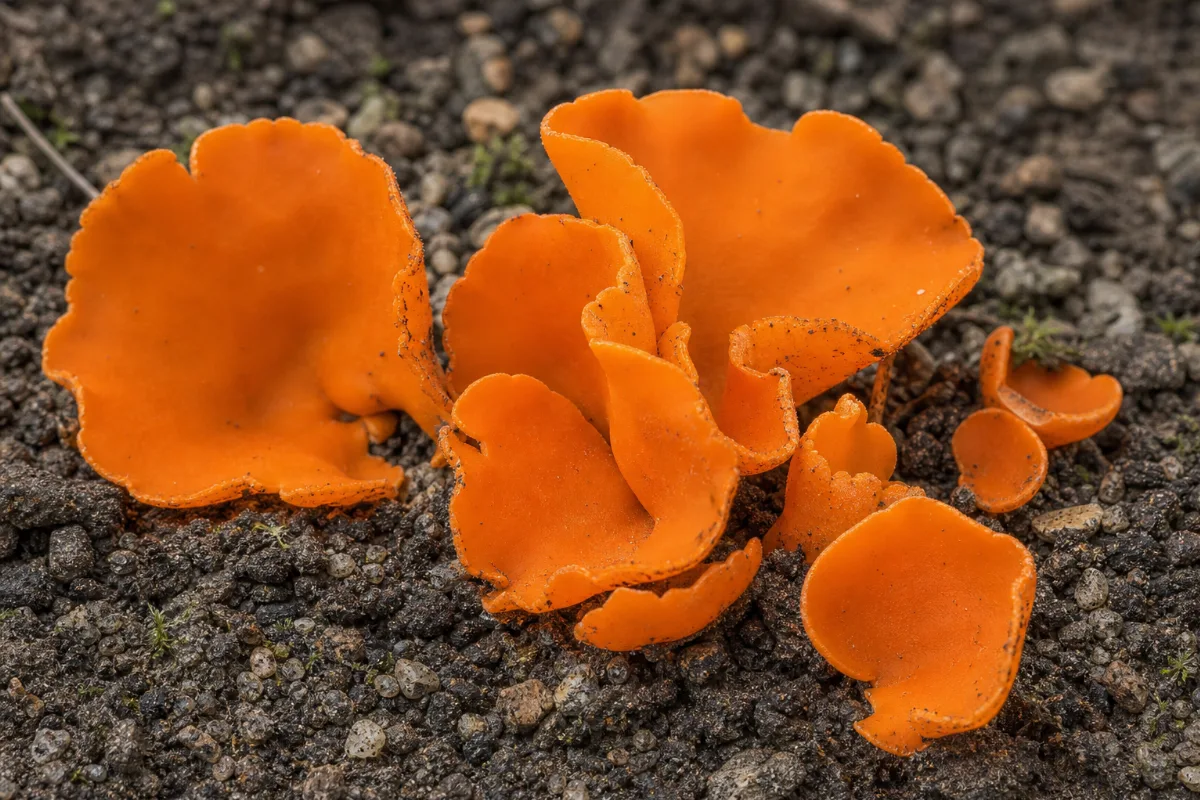
Mushrooms · Wild cup fungus
Orange Peel Fungus
Aleuria aurantia (old name Peziza aurantia) · also called Orange peel mushroom, orange cup
Orange peel fungus (Aleuria aurantia) is a bright orange cup fungus that grows on bare soil. Guide sources call it edible but plain, and it is not a medicinal mushroom. We found no human trial. Its best-known feature is a protein called AAL that laboratories use as a tool and that has been tested on cells in dishes. Never eat a wild fungus unless an expert has identified it, and ask a doctor or pharmacist if you have health conditions or take medicines.
General information, not medical advice. Last substantive update · Not medically reviewed. A named clinician has not signed off on this page. How this page is made
About Orange Peel Fungus
Orange peel fungus (Aleuria aurantia) is a bright orange cup fungus that guide sources call edible but plain. No human trial or case report was found. The health-related research is on a purified protein called AAL, tested in dishes and not in people.
What it is
It is a fungus, not a plant. GBIF accepts the name Aleuria aurantia (Pers.) Fuckel in the family Pyronemataceae; Peziza aurantia is the older name. MykoWeb describes irregular orange cups 3 to 7 cm across that grow on bare soil along trails, banks and dirt roads.
Food use and traditions
Guide sources call it edible but of little consequence. A natural-history site says it is rarely used except for colour in salads, and an encyclopedia article says it can be sliced thin and dried. We found no traditional medicinal use.
What the research shows
The best-known research is on AAL, a protein that sticks to the sugar fucose. Labs use it as a tool, and it was purified from fruiting bodies in 1991. In dishes it slowed a mould, slowed or killed cancer cells, blocked worm larvae and slowed airway cell repair.
A 2024 Polish survey of ten dried fruiting bodies found polyphenols, minerals and antioxidant activity in tube tests, and reported no lead or cadmium above permitted levels. The authors say toxicological and clinical studies are needed.
None of this has been tested in a person. A 2026 review says fungal lectins need more testing in living animals and systematic safety evaluation.
Rules and regulators
We found no statement on orange peel fungus from the regulators we looked for and did not search every agency. No product standard exists that we could verify.
At a glance
Traditional uses history, not proof
- Eaten in small amounts as a garnish or for colour in salads, according to a natural-history site; guide sources call it edible but of little consequence.
- No traditional medicinal use was found in the sources read.
Studied for research
- Purified AAL lectin and cancer cells in dishes, insufficient
- Antifungal action of AAL, insufficient
- Antioxidant activity in tube tests, insufficient
- Immune cells in a dish, insufficient
- Airway cell repair slowed in a dish (a possible harm signal), insufficient
- Laboratory reagent use, not a health effect
Main compounds
- AAL, a fucose-binding lectin (protein)
- Polyphenols, fatty acids and minerals (one small survey)
Common forms
- Fresh fruiting body, wild-collected (described as edible)
- Dried or thinly sliced (as described in an encyclopedia article)
- Freeze-dried powder and extracts used in laboratory tests
- Purified or recombinant AAL protein (a laboratory reagent, not food)
Research links: Antifungal action of AAL (abstract) · Fungal lectins and cancer cell lines (abstract) · Airway cell repair and AAL (abstract) · Mineral and antioxidant survey (abstract) · GBIF name record · Research Library · Genes & Biomarkers Library
What it is and its history
- Accepted scientific name
- Aleuria aurantia
- Naming authority
- (Pers.) Fuckel (GBIF)
- Synonyms
- Peziza aurantia Pers.
- Common names
- Orange peel fungus (English); Orange peel mushroom (English); Orange cup (English)
- Family or group
- Pyronemataceae (a fungus family, not a plant)
- Classification
- Fungi > Ascomycota > Pezizomycetes > Pezizales > Pyronemataceae > Aleuria > Aleuria aurantia
- Native range
- Wikipedia says North America, Europe and south Chile (not independently verified).
- Habitat
- MykoWeb: bare soil, typically along trails, banks and dirt roads; fruits from late fall to early spring in California. Wikipedia gives different season windows by region.
- What it looks like
- Fruiting body: MykoWeb describes irregular cups 3 to 7 cm across, with a thin brittle context and an orange inner surface and paler outer surface. Wikipedia says the flesh is fragile.
- Cultivation
- Not covered by the sources read; described as wild-collected.
- Harvest and processing
- Wikipedia says it can be served in thin slices and preserved by drying; not independently verified.
- Look-alikes and adulterants
- Name: Other orange cup fungi (genera named by an encyclopedia); Note: Wikipedia says in Europe it may be confused with Otidea or Caloscypha species that are poisonous or of unknown edibility. We did not verify this in a second source. This page gives no identification help; ask a local expert or a mycological society.
- Sustainability and conservation
- Not checked.
Traditional use and history history, not clinical proof
| Tradition or era | Documented use | Source |
|---|---|---|
| Guide literature | Guide sources describe it as edible but of little consequence and used for colour in salads or thin slices. No traditional medicinal use was found in the sources read. | s-firstnature |
| Laboratory use (from 1991 onward) | The lectin AAL was purified from fruiting bodies in 1991 and has since become a common laboratory tool for detecting fucose. | p1998719 |
Traditional use shows how it was used. It does not show that it works or is safe today.
What is inside, and how it may work
What it contains and how those compounds act in cells and animals. Laboratory and animal mechanisms are not proven effects in people.
Main compounds
| Compound | Family | Where it is concentrated | Activity studied | Level of evidence |
|---|---|---|---|---|
| Aleuria aurantia lectin (AAL) | fucose-binding lectin (protein) | Fruiting body and mycelium 145 mg of pure lectin from 100 g of fruiting bodies in a 1991 purification (fresh or dry weight not stated) | Binds fucose sugars; antifungal toward a mould, antiproliferative against cancer cell lines, toxic to worm larvae and slowed airway cell repair in the lab. 12 2 16 1 6 | Laboratory research |
| Polyphenols and fatty acids (GC-MS profile) | mixed small molecules | Fruiting body | The 2024 survey lists fatty acids, oleamide, adenine and other compounds, and polyphenols with antioxidant activity in tube tests. We do not quote amounts because the paper has internal inconsistencies. 3 | Laboratory research |
Mechanisms, receptors and pathways
| Target or pathway | Gene or receptor | What was found | Level |
|---|---|---|---|
| Fucose-bearing glycans (alpha-1,6 and other fucose linkages) | FUT8 products (core fucose); not tested in these papers | AAL binds fucose on cell surfaces, including airway cells and cancer cells, and mould cell walls. 1 2 | Laboratory research |
| Autophagy-dependent, caspase-independent cell death | Not specified | In mouse MC-38 cells, AAL and two other lectins triggered death pathways that relied on autophagy machinery without caspase activation. 13 | Laboratory research |
| Cytokine release by immune cells | IL2, IFNG, IL10, IL5 | Blood cells from allergic volunteers multiplied and released these cytokines on exposure to AAL. 15 | Laboratory research |
Absorption, metabolism and elimination
- Absorption
- Not studied for the mushroom. In a gut-lining cell model AAL-coated particles crossed the epithelium.
- Distribution
- Not found in the sources read.
- Metabolism
- Not found. Whether active lectin survives cooking or digestion is not shown in the sources read.
- Elimination
- Not found.
- Bioavailability
- Not established.
Isolated compounds versus whole extracts
Nearly all health-related findings are for the purified lectin protein in dishes. They do not describe the whole mushroom, which may behave differently after cooking and digestion.
Nutritional composition
Guide sources call it edible but plain in taste, used for colour in salads or thin slices. A 2024 Polish survey of ten dried fruiting bodies lists potassium (about 27.3 mg per g dry weight) and phosphorus (about 14.0 mg per g) as the largest of the minerals measured; this is one collection and says nothing about eating benefits. There is no USDA entry.
8 not enough evidence
What was looked at
The 8 benefits and uses checked for Orange Peel Fungus, each with how strong the evidence is. Tap one to open it.
- Purified AAL lectin and cancer cells (lab)Not enough evidence
- Antifungal action of the AAL lectin (lab)Not enough evidence
- Antioxidant activity in laboratory testsNot enough evidence
- Immune cells in a dishNot enough evidence
- Airway cell wound repair (lab, a possible harm signal)Not enough evidence
- Toxicity to parasitic worm larvae (lab)Not enough evidence
- Laboratory reagent for sugar detection and a blood testNot enough evidence
- Minerals in the fruiting body (one survey)Not enough evidence
Lab markers tracked in the studies
Cancer cell growth and survival in cultureAntioxidant capacity in DPPH and ABTS testsCytokines IL-2, IFN-gamma, IL-10 and IL-5 from blood cellsEpithelial repair rate (scratch assay)Hemoglobin A1c measured by lectin assay
What is Orange Peel Fungus good for?
The uses people ask about and how strong the human evidence is for each. For every one, there is no human evidence. Read this together with the Safety tab.
Benefits, one by one
Each card is a research question, not a promise. Tap a goal to filter. Open a card to see the studies, doses and limits.
Purified AAL lectin and cancer cells (lab)
Not enough evidenceA protein from orange peel fungus, the AAL lectin, slowed or killed cancer cells in culture. This is protein work in dishes, not a result from eating the mushroom.
4 studiesPurified AAL protein, sometimes in a drug-delivery carrier. Not the m…
Studies, doses and limits
What the trials found
No human study of this was found.
Results
In the largest comparison, AAL had the strongest effect among fucose-binding fungal lectins against nine cancer cell lines. In pancreatic cancer cells, AAL triggered cell-death signals and a carrier system improved the effect in culture. In mouse cancer cells, AAL, wheat germ lectin and another plant lectin killed cells by several pathways. A 2026 review says too little testing in living animals has been done and safety must be evaluated.
Effect sizes as reported
Cell growth slowed or cells killed in culture; no figures in the abstracts
Why this rating
Only cells in dishes, using a purified protein. No animal or human data were read for AAL as a treatment.
Form and dose studied
Purified AAL protein, sometimes in a drug-delivery carrier. Not the mushroom, a powder or an extract.
Who was studied
Human and mouse cancer cell lines
Limits
A lectin that kills cancer cells in a dish may also harm healthy cells (one study shows it slows airway cell repair). Digestion would likely break down a protein eaten as food; whether active lectin survives in the gut is not shown. Cancer cell results rarely carry over to people.
Why researchers looked
Cancer cells carry unusual sugars on their surface, including fucose. AAL sticks to fucose, so researchers use it to probe those sugars and have tested whether it harms the cells.
Traditional use
No traditional medicinal use of this fungus was found in the sources read.
Proposed mechanism Laboratory research
AAL binds fucose-carrying sugars on the cell surface. In one study it triggered cell-death pathways that did not depend on caspases and relied on autophagy machinery.
A proposed mechanism does not show that the effect happens in people.
Orange peel fungus is not a cancer treatment. Anyone with cancer should not replace treatment with it and should talk to their cancer team.
Antifungal action of the AAL lectin (lab)
Not enough evidenceThe AAL protein slowed the growth of a mould in a dish. Researchers think the fungus makes it as natural defence.
1 studiesPurified AAL.
Studies, doses and limits
What the trials found
No human study of this was found.
Results
AAL inhibited growth of the mould Mucor racemosus at 1 micromolar and visibly disrupted its cells at 7.5 micromolar; two other fucose-binding lectins did not.
Effect sizes as reported
Growth inhibited at 1 micromolar
Why this rating
One mould in a dish. The paper concerns the fungus own biology, not human use.
Form and dose studied
Purified AAL.
Who was studied
Mould culture (Mucor racemosus)
Limits
Not tested against human infections or in animals or people.
Why researchers looked
AAL is widely used in the lab, but no one knew what it does for the fungus. Researchers tested it against a mould that has fucose in its cell wall.
Proposed mechanism Laboratory research
AAL binds fucose on the mould cell wall and disrupts the cells.
A proposed mechanism does not show that the effect happens in people.
This is not a reason to use the mushroom against any infection.
Antioxidant activity in laboratory tests
Not enough evidenceExtracts of dried orange peel fungus showed antioxidant activity in test-tube chemistry tests.
1 studiesFreeze-dried fruiting body extracts.
Studies, doses and limits
What the trials found
No human study of this was found.
Results
All four species, including orange peel fungus, contained polyphenols and showed antioxidant activity of varying strength. The authors say toxicological and clinical studies are needed before use.
Effect sizes as reported
Activity shown in tube tests; no figure used here because the paper has internal inconsistencies
Why this rating
Tube chemistry from one preliminary study; the paper has text and table mismatches on some numbers.
Form and dose studied
Freeze-dried fruiting body extracts.
Limits
Antioxidant tube tests do not show a benefit in the body.
Why researchers looked
Researchers screened four unstudied wild fungi for polyphenols and antioxidant activity.
Proposed mechanism Laboratory research
Chemical tests (DPPH and ABTS) measure how well an extract neutralises a test radical in a tube.
A proposed mechanism does not show that the effect happens in people.
Antioxidant tests are not evidence of safety.
Immune cells in a dish
Not enough evidenceIn one study the AAL protein made blood cells from allergic volunteers multiply and release immune signals. This is a dish test only.
2 studiesPurified AAL on microparticles.
Studies, doses and limits
What the trials found
No study of volunteers eating the lectin or the mushroom was found.
Results
More AAL-coated particles crossed a human gut-lining cell model. High concentrations did not visibly harm two intestinal cell lines. Blood cells from allergic volunteers proliferated and released IL-2, IFN-gamma, IL-10 and IL-5 when exposed to AAL.
Effect sizes as reported
Concentration-dependent cytokine release; no figures in the abstract
Why this rating
Cell cultures and blood cells in a dish only.
Form and dose studied
Purified AAL on microparticles.
Who was studied
Human cell lines and blood cells from allergic volunteers
Limits
Dish study from 2005. Shows the protein can stimulate immune cells, not that eating the mushroom does.
Why researchers looked
Researchers looked at whether AAL could carry vaccine or allergy medicines across the gut lining.
Proposed mechanism Laboratory research
AAL is structurally similar to a bacterial enzyme (neuraminidase) and may help particles cross gut M-cells. It stimulated immune-cell growth and cytokines in cell culture.
A proposed mechanism does not show that the effect happens in people.
A possible reason for caution in people with immune or allergic conditions. This has not been tested with the mushroom.
Airway cell wound repair (lab, a possible harm signal)
Not enough evidenceAdding AAL to airway cells in a dish slowed their repair to about a third of normal, without killing them. This is a caution signal, not a benefit.
1 studiesPurified AAL added to cell culture.
Studies, doses and limits
What the trials found
No human study of this was found.
Results
AAL reduced the repair rate to about one third of control values while cell viability was maintained; fucose reversed the effect up to 7 hours after the lectin was removed.
Effect sizes as reported
About one third of the normal repair rate
Why this rating
One cell line study.
Form and dose studied
Purified AAL added to cell culture.
Who was studied
Human airway epithelial cell line
Limits
Direct addition to cells. Whether eating the mushroom reaches airway or gut cells with active lectin is unknown.
Why researchers looked
Researchers used AAL to test whether fucose sugars matter for repair of the airway lining.
Proposed mechanism Laboratory research
AAL binds alpha(1,6)-fucose on the apical (outer) surface of airway cells and was taken up into the cells.
A proposed mechanism does not show that the effect happens in people.
Shows that the lectin can interfere with cell behaviour in the lab.
Toxicity to parasitic worm larvae (lab)
Not enough evidenceAAL stopped larvae of a sheep worm from developing in a dish. It points to the lectin acting as a natural defence against small animals.
1 studiesPurified AAL.
Studies, doses and limits
What the trials found
No human study of this was found.
Results
AAL was one of four lectins (of six tested) that blocked larval development in a dose-dependent way; as little as 5 micrograms per millilitre caused over 95 percent inhibition.
Effect sizes as reported
Over 95 percent inhibition of larval development at 5 micrograms per mL
Why this rating
One worm-larva culture study.
Form and dose studied
Purified AAL.
Who was studied
Haemonchus contortus larvae
Limits
Not a human or livestock treatment; not tested in living animals in this paper.
Why researchers looked
Fungi make lectins partly to resist fungus-eating worms and other pests, and researchers looked for new drug and vaccine targets in parasites.
Proposed mechanism Laboratory research
AAL binds glycans in the larval gut lining; toxicity matched binding.
A proposed mechanism does not show that the effect happens in people.
Not a treatment for worm infections.
Laboratory reagent for sugar detection and a blood test
Not enough evidenceAAL is mainly valuable as a lab tool, for finding fucose sugars on cells and blood proteins and for a research HbA1c test. This is not a health effect of the mushroom.
3 studiesPurified or recombinant protein used as a lab reagent.
Studies, doses and limits
Results
Purified from fruiting bodies at 145 mg per 100 g (fresh or dry weight not stated). One study built a lectin ELISA for HbA1c using AAL. Structure work showed two equally populated positions of a tryptophan side chain bound to a fucose ligand.
Why this rating
Not a health outcome; rated insufficient so it is not mistaken for a benefit.
Form and dose studied
Purified or recombinant protein used as a lab reagent.
Limits
A lab tool does not mean the mushroom helps diabetes or any other condition.
Why researchers looked
AAL binds fucose very specifically, so labs use it as a probe.
Proposed mechanism Laboratory research
Fucose-specific binding; X-ray structure shows how a tryptophan side chain stacks against the sugar.
A proposed mechanism does not show that the effect happens in people.
The protein is not a supplement.
Minerals in the fruiting body (one survey)
Not enough evidenceA Polish survey measured minerals in ten dried fruiting bodies. The mushroom is not used as a significant food, so these numbers are information, not a benefit.
1 studiesFreeze-dried fruiting body.
Studies, doses and limits
What the trials found
No human study of this was found.
Results
The authors report polyphenols and minerals including calcium, magnesium, iron, zinc, potassium, phosphorus, sodium, copper, silicon and manganese, and no lead or cadmium above the permitted levels. Per the paper table, potassium was about 27.3 mg per g of dry weight and phosphorus about 14.0 mg per g.
Effect sizes as reported
Composition values from one collection
Why this rating
One site, one season; the paper has text-table inconsistencies on some numbers.
Form and dose studied
Freeze-dried fruiting body.
Limits
Values vary by soil, site and season. There is no USDA entry. Nobody eats enough of this mushroom for the minerals to matter.
Why researchers looked
Researchers wanted a first chemical profile of four wild fungi.
Traditional use
Edible but unremarkable according to guide sources.
Proposed mechanism Laboratory research
ICP-OES mineral measurement after acid digestion.
A proposed mechanism does not show that the effect happens in people.
Wild fungi take up soil metals, so where it grew matters.
Connections to the rest of health
How Orange Peel Fungus connects to the rest of our health knowledge graph. Every link says what kind of connection it is. A safety link (for example to the liver) is a warning, not a benefit. A study that merely mentions a topic never creates a benefit link.
Explore every connection: goals, body systems, organs, symptoms, genes
B. Body systems
| Connected to | Kind of connection | Evidence status | Context | Studies |
|---|---|---|---|---|
| Immune system | Drug or supplement interaction | Not enough evidence | Stimulated blood cells from allergic volunteers in a dish; untested with the mushroom. Preparation or compound: AAL lectin (purified) |
15 |
| Respiratory system | Not enough evidence | Slowed airway cell repair in a dish. Preparation or compound: AAL lectin (purified) |
1 |
I. Biomarkers
| Connected to | Kind of connection | Evidence status | Context | Studies |
|---|---|---|---|---|
| Cancer cell growth and survival in culture | Biological association | Not enough evidence | Measured in trials: lowered. A lab change is not the same as a health benefit. | 16 10 13 |
| Antioxidant capacity in DPPH and ABTS tests | Biological association | Not enough evidence | Measured in trials: raised. A lab change is not the same as a health benefit. | 3 |
| Cytokines IL-2, IFN-gamma, IL-10 and IL-5 from blood cells | Biological association | Not enough evidence | Measured in trials: raised. A lab change is not the same as a health benefit. | 15 |
| Epithelial repair rate (scratch assay) | Biological association | Not enough evidence | Measured in trials: lowered. A lab change is not the same as a health benefit. | 1 |
| Hemoglobin A1c measured by lectin assay | Biological association | Not enough evidence | Measured in trials: unchanged. A lab change is not the same as a health benefit. | 9 |
K. Biological pathways
| Connected to | Kind of connection | Evidence status | Context | Studies |
|---|---|---|---|---|
| Autophagy-related cell death | Preliminary mechanism | In vitro | Triggered in mouse cancer cells by AAL and other lectins. | 13 |
L. Active compounds
| Connected to | Kind of connection | Evidence status | Context | Studies |
|---|---|---|---|---|
| Aleuria aurantia lectin (AAL) | Biological association | In vitro | Binds fucose sugars; antifungal toward a mould, antiproliferative against cancer cell lines, toxic to worm larvae and slowed airway cell repair in the lab. Preparation or compound: Fruiting body and mycelium |
12 2 16 1 6 |
| Polyphenols and fatty acids (GC-MS profile) | Biological association | In vitro | The 2024 survey lists fatty acids, oleamide, adenine and other compounds, and polyphenols with antioxidant activity in tube tests. We do not quote amounts because the paper has internal inconsistencies. Preparation or compound: Fruiting body |
3 |
Each connection is stored with the ingredient, the connected record, the kind of connection, the evidence status, the supporting studies, the preparation or compound involved, and a review date (last reviewed October 25, 2026).
Evidence at a glance: what changed in 4 lab markers
Tap a number to show only those markers. Counts are markers, not people.
The evidence
The research centre for Orange Peel Fungus. Every record here was checked against PubMed or the publisher's page; we never list a study we have not verified.
Evidence by outcome
Bars show how many studies we found for each outcome, not how well it works. People are added up across trials only (reviews are not added, to avoid double counting).
How we rate evidence
High certainty
Several well-run trials or reviews agree; further research is unlikely to change the picture much.
Moderate certainty
Good trials point the same way, but some doubt remains.
Low certainty
Small, short or inconsistent trials. The finding could change with better research.
Very low certainty
Very little or very weak human data. Treat as a possibility only.
Mixed findings
Trials or reviews disagree with each other.
Not enough evidence
Not enough human research to say either way.
Evidence against
Good research found no benefit, or found harm.
We take the reviewers' own risk-of-bias and GRADE statements where they exist, and otherwise judge from study size, design, consistency, directness and whether a product matches what is sold. Many publications do not make evidence high. Method note: We searched PubMed for Aleuria aurantia (310 records, most using the lectin as a laboratory tool), screened the titles of narrower safety, edibility, antifungal, cancer-cell and composition searches, and read the PubMed records and abstracts of 12 papers (a review, nine cell or lab studies including one structure paper and one assay paper, and a composition survey). We read three guide pages and one encyclopedia article, and checked the name in GBIF. EMA, FDA, LiverTox and LactMed were not read. Certainty ratings are the compiler's own reading.
Study library: every study we checked 17
| Study | Design | People | Product, dose, length | Result |
|---|---|---|---|---|
| Adam 2007 Epithelial repair is inhibited by an alpha(1,6)-fucose binding lectin. American Journal of Physiology. Lung Cellular and Molecular Physiology · PMID 17028261 · DOI |
Laboratory research Human airway cell line |
Human airway epithelial cell line 16HBE 14o(-) in a wound-repair model | Aleuria aurantia lectin (AAL), plain and fluorescent-labelled Purified lectin Not shown here Not shown here |
Adding AAL cut the rate of repair to about one third of control values while the cells stayed alive. The effect could be reversed by adding fucose after the lectin was removed. Another fucose-binding lectin did not slow repair. Repair rate about one third of control Methods, limits and fundingOutcomes: Speed of repair of a scratch wound in a layer of airway cells. Limitations: A cell line, lectin added directly to cells. It is not known whether eating the mushroom exposes any tissue to active lectin. Funding and conflicts: Not read Read: abstract |
| Amano 2012 Aleuria aurantia lectin exhibits antifungal activity against Mucor racemosus. Bioscience, Biotechnology, and Biochemistry · PMID 22738968 · DOI |
Laboratory research Mucor racemosus (mould) |
Cultured mould Mucor racemosus | Purified Aleuria aurantia lectin (AAL) Fruiting body lectin Not shown here Not shown here |
AAL bound to the hyphae of the mould, and binding was blocked by L-fucose. It inhibited the mould at 1 micromolar and visibly disrupted the cells at 7.5 micromolar. Two other fucose-binding lectins did not inhibit the mould. The authors suggest AAL could act as an antifungal protein in nature. Mould growth inhibited at 1 micromolar; cells disrupted at 7.5 micromolar Methods, limits and fundingOutcomes: Binding of AAL to the mould and effect on its growth. Limitations: A mould in a dish. Not tested in animals or people. A purified protein, not the mushroom. Funding and conflicts: Not read Read: abstract |
| Boleslawska 2024 Wild Mushrooms as a Source of Bioactive Compounds and Their Antioxidant Properties-Preliminary Studies. Foods · PMID 39200539 · DOI |
Laboratory analysis Aleuria aurantia (and three other fungi) |
Fruiting bodies of four wild mushroom species from Poland, including Aleuria aurantia | Freeze-dried fruiting body (extracts and whole material) Fruiting body Not shown here Not shown here |
All four species contained polyphenols and minerals (calcium, magnesium, iron, zinc, potassium, phosphorus, sodium, copper, silicon, manganese) and showed antioxidant activity of varying strength. The authors report no lead or cadmium above the permitted level in any of them. They say use of the fruiting bodies needs toxicological and clinical studies first. Antioxidant activity in test tubes; minerals and metals measured in one collection Methods, limits and fundingOutcomes: Bioactive compounds (GC-MS), polyphenols, antioxidant tests (DPPH, ABTS), minerals and heavy metals (ICP-OES). Limitations: One site, one season, small preliminary survey. Test-tube antioxidant results say nothing about effects in people. Our earlier reading of the full text found internal inconsistencies between text and tables (for example cadmium), so only mineral table values are used. Funding and conflicts: No conflict of interest declared Read: full text (partial) and abstract |
| First Nature 2026 Aleuria aurantia, Orange Peel Fungus (Culinary Notes) First Nature · Source |
Reference source n/a |
n/a | n/a |
A natural-history site citing a field guide. It calls this one of very few common cup fungi that are edible, says most other cup fungi are poisonous to some degree and some become edible if thoroughly cooked, and says this species is not especially tasty and is rarely used except perhaps for colour in salads. Methods, limits and fundingOutcomes: n/a Limitations: Popular-source claim. It does not state that eating it raw is tested or safe, and does not name look-alikes. Funding and conflicts: Not read Read: page read |
| GBIF 2026 GBIF Backbone Taxonomy: Aleuria aurantia (Pers.) Fuckel GBIF · Source |
Database record n/a |
n/a | n/a |
GBIF API checked 2026-10-25: Aleuria aurantia (Pers.) Fuckel is ACCEPTED (key 5258678), family Pyronemataceae, order Pezizales, class Pezizomycetes, phylum Ascomycota. Peziza aurantia Pers. (key 5953149) is a SYNONYM of it. Methods, limits and fundingOutcomes: n/a Limitations: Index Fungorum was not checked. Funding and conflicts: Not read Read: API record |
| Heim 2015 Inhibition of Haemonchus contortus larval development by fungal lectins. Parasites & Vectors · PMID 26283415 · DOI |
Laboratory research Haemonchus contortus larvae |
Larvae of the sheep parasitic worm Haemonchus contortus in culture | Six fungal lectins, including Aleuria aurantia lectin (AAL) Purified lectins Not shown here Not shown here |
AAL was one of four lectins that blocked larval development in a dose-dependent way; doses as low as 5 micrograms per millilitre caused more than 95 percent inhibition. Toxicity went with binding to glycans in the larval gut. Over 95 percent inhibition of worm larval development at 5 micrograms per mL Methods, limits and fundingOutcomes: Whether larvae developed to the third larval stage. Limitations: Worm larvae in a dish. It suggests the lectin is toxic to some small animals, which fits the idea that fungi make lectins as defence. It does not show any effect in people. Funding and conflicts: Several authors work at a biotech firm (Malcisbo AG); funding not read. Read: abstract |
| Hiremath 2026 Fungal lectins: emerging glyco-immune checkpoint modulators for cancer diagnosis, prognosis, and therapy. Glycobiology · PMID 42708334 · DOI |
Narrative review review |
Review of fungal lectins, including Aleuria aurantia lectin (AAL) | Fungal lectins Purified proteins Not shown here Not shown here |
The review says fungal lectins such as AAL change cytokine production, act on immune cells and can trigger cell death in lab work. It says clinical use is limited by too little testing in living animals, and that safety, specificity and therapeutic potential need systematic evaluation. Narrative review; no pooled estimate Methods, limits and fundingOutcomes: Overview of immune and cancer-related activity of fungal lectins. Limitations: Narrative review that depends mostly on cell studies. Not about eating mushrooms. Funding and conflicts: Not read Read: abstract |
| Houser 2017 Influence of Trp flipping on carbohydrate binding in lectins. An example on Aleuria aurantia lectin AAL. PLoS One · PMID 29232414 · DOI |
Laboratory analysis Aleuria aurantia lectin (protein) |
AAL protein crystal structure and computer models | Purified AAL with a fucose ligand Purified protein Not shown here Not shown here |
A high-resolution X-ray structure of AAL bound to a fucose compound showed a tryptophan side chain in two possible positions, and computer work found that the position did not change the binding energy. Structural result Methods, limits and fundingOutcomes: How the lectin binds fucose at atomic level. Limitations: Protein structure work with no health outcome. Funding and conflicts: No competing interests declared Read: abstract |
| Kabata 2016 Assay of hemoglobin A(1c) using lectin from Aleuria aurantia. AMB Express · PMID 27878569 · DOI |
Laboratory analysis Laboratory reagent |
Lab blood-test assay development | Purified AAL used as a test reagent Purified lectin Not shown here Not shown here |
Of 29 lectin sources screened, AAL bound HbA1c more strongly than plain hemoglobin, and the authors built a lectin-based ELISA test with it. Results were more reproducible at 4 degrees C than at 25 or 37 degrees C. Used as a laboratory test ingredient Methods, limits and fundingOutcomes: Whether AAL could be used to measure HbA1c (a diabetes blood marker). Limitations: A diagnostic tool, not a treatment. It does not mean the mushroom affects blood sugar. Some authors work in a food-oil company; funding not read. Funding and conflicts: Not read Read: abstract |
| Kim 2022 Coacervate-mediated novel pancreatic cancer drug Aleuria Aurantia lectin delivery for augmented anticancer therapy. Biomaterials Research · PMID 35869562 · DOI |
Laboratory research Human pancreatic cancer cell line (PANC-1) |
PANC-1 human pancreatic cancer cells in culture | Purified AAL, alone and in a drug-delivery carrier Purified lectin Not shown here Not shown here |
AAL triggered cell-death signals in the pancreatic cancer cell line and was compared with concanavalin A. The authors then built a carrier that released AAL in acidic conditions and say this improved the effect in cultured cells. They call AAL a potential drug. Cell-death signals in cultured cells; no figures in the abstract Methods, limits and fundingOutcomes: Cell death markers (caspase-3, apoptosis) and delivery system release. Limitations: A cell line in a dish. This is drug-delivery engineering with a purified protein, not eating the mushroom. Funding and conflicts: No competing interests declared Read: abstract |
| MykoWeb 2025 The Fungi of California: Aleuria aurantia MykoWeb · Source |
Reference source n/a |
n/a | n/a |
A mushroom-guide page. It describes the orange cups on bare soil along trails and roads, and rates the species edible but of little consequence. It says nothing about raw versus cooked. Methods, limits and fundingOutcomes: n/a Limitations: A short guide entry; does not discuss safety evidence, look-alikes or preparation. Funding and conflicts: Not read Read: page read |
| Nagata 1991 Crystallization and characterization of a lectin obtained from a mushroom, Aleuria aurantia. Biochimica et Biophysica Acta · PMID 1998719 · DOI |
Laboratory analysis Aleuria aurantia (laboratory) |
Purified lectin from Aleuria aurantia fruiting bodies | Purified lectin (AAL) Fruiting body Not shown here Not shown here |
A fucose-specific lectin was purified from the orange peel mushroom. From 100 g of fruiting bodies, 145 mg of pure lectin was obtained. The lectin was crystallised, and its structure and sugar binding were described. 145 mg of lectin from 100 g of fruiting bodies (fresh or dry weight not stated in the abstract) Methods, limits and fundingOutcomes: Purification yield and structure of the fucose-binding lectin. Limitations: Protein chemistry only. Says nothing about eating the mushroom. Funding and conflicts: Not read Read: abstract |
| Parshenkov 2022 Glycosylation-Dependent Induction of Programmed Cell Death in Murine Adenocarcinoma Cells. Frontiers in Immunology · PMID 35222379 · DOI |
Laboratory research Mouse cell line |
Mouse adenocarcinoma MC-38 cells in culture | Wheat germ agglutinin, Maackia amurensis lectin I and Aleuria aurantia lectin Purified lectins Not shown here Not shown here |
The three lectins, including AAL, killed the cancer cells through several pathways that relied on autophagy machinery but not on caspase activation. Blocking new protein production greatly reduced the effect. Lectin-induced death of mouse cancer cells in culture Methods, limits and fundingOutcomes: Which cell-death pathways the lectins trigger. Limitations: Mouse cells in a dish. Shows the proteins can be toxic to cells in the lab; not a treatment and not tested in animals here. Funding and conflicts: No conflicts declared Read: abstract |
| PubMed search record 2026 Our PubMed searches for Aleuria aurantia (run 2026-10-25) PubMed search record · Source |
Database record n/a |
n/a | n/a |
A search for Aleuria aurantia in title or abstract returned 310 records. Most use the AAL lectin as a laboratory tool for detecting fucose-bearing sugars on cells, antibodies and blood proteins. We screened the titles of narrower searches (safety or edibility words, 18 records; antifungal, antioxidant or cancer-cell words, 16 records; name in title, 39 records) and read abstracts for the 12 papers cited. We found no human trial of eating the mushroom, no case report of poisoning or liver injury, and no toxicity study of the whole mushroom. Methods, limits and fundingOutcomes: n/a Limitations: Title screen only for most records; absence from this search is not proof that no report exists. Funding and conflicts: Not read Read: search record |
| Roth-Walter 2005 Targeting antigens to murine and human M-cells with Aleuria aurantia lectin-functionalized microparticles. Immunology Letters · PMID 15913790 · DOI |
Laboratory research Human cell lines and blood cells |
Human gut-lining cell co-culture model and blood cells (PBMCs) from allergic volunteers | Aleuria aurantia lectin (AAL) on microparticles Purified lectin Not shown here Not shown here |
More AAL-coated particles crossed the gut-lining model than uncoated ones. High AAL concentrations caused no detectable cytotoxic effect on two intestinal cell lines. Blood cells from allergic volunteers multiplied and released immune signals (IL-2, IFN-gamma, IL-10, IL-5) when exposed to AAL, which the authors read as immune-stimulating. Immune-stimulating response of human blood cells to AAL in a dish Methods, limits and fundingOutcomes: Particle transport across a gut-lining model, cell toxicity and immune-cell response. Limitations: Cell cultures and blood cells in a dish, not volunteers eating the lectin. The blood cells came from allergic people. It is the main hint that AAL can stimulate immune cells, so people with immune conditions have a reason to be careful. Funding and conflicts: Not read Read: abstract |
| Sabotic 2025 Fungal lectins show differential antiproliferative activity against cancer cell lines. International Journal of Biological Macromolecules · PMID 39732261 · DOI |
Laboratory research Human cancer cell lines |
Nine human cancer cell lines in culture | 22 purified fungal proteins, including Aleuria aurantia lectin (AAL) Purified proteins Not shown here Not shown here |
Eight of the 22 fungal lectins slowed cancer cell growth, and the effect depended on sugar binding. Among the fucose-binding lectins, AAL had the strongest effect. AAL had the strongest effect among fucose-binding lectins tested; no figures in the abstract Methods, limits and fundingOutcomes: Growth of cancer cells and cell appearance by live-cell imaging. Limitations: Cells in dishes only. A purified protein tested on cancer cells says nothing about eating the mushroom. The same type of protein might also affect healthy cells; the abstract does not report healthy-cell controls. Funding and conflicts: No competing interests declared Read: abstract |
| Wikipedia 2026 Aleuria aurantia (encyclopedia article) Wikipedia · Source |
Encyclopedia n/a |
n/a | n/a |
A general encyclopedia article. It says the fungus is generally regarded as edible, though hard to collect whole and not necessarily choice, and can be served in thin slices and dried. It lists look-alikes, and says in Europe it may be confused with Otidea or Caloscypha species that are poisonous or of unknown edibility. Methods, limits and fundingOutcomes: n/a Limitations: Wikipedia is a secondary, editable source. We use it only for the look-alike genera and general edibility wording, marked as not independently verified. Funding and conflicts: Not read Read: page read |
What we do not know yet
- No human trial, case report or safety study.
- No toxicity test of the whole mushroom.
- No source tested raw versus cooked, or whether cooking affects the lectin.
- No source tested raw versus cooked eating.
- Whether the AAL lectin survives cooking or digestion is unknown.
How new research is added
New studies are found by a saved PubMed search and placed in a review queue. A person reads each one before it changes any evidence rating or safety wording. New publications never change ratings automatically.
Lab markers
What changed in blood or saliva tests during trials. A changed number is not the same as feeling or being healthier, and we give no "normal ranges".
Other 5
Cancer cell growth and survival in culture
Lowered in trials
How fast cultured cancer cells grow or how many die after a treatment.
Not enough evidenceResults and what it means
Antioxidant capacity in DPPH and ABTS tests
Raised in trials
Chemical tests that show how well an extract neutralises a coloured test radical.
Not enough evidenceResults and what it means
Why it was measured
A quick lab screen for antioxidant chemistry.
Statistical vs. clinical meaning
Tube chemistry only.
Safety implication
Not applicable to people.
| Study | Result | People | Product |
|---|---|---|---|
Cytokines IL-2, IFN-gamma, IL-10 and IL-5 from blood cells
Raised in trials
Signalling proteins released by immune cells.
Not enough evidenceResults and what it means
Why it was measured
Used in the lab to see whether a substance activates immune cells.
Statistical vs. clinical meaning
Dish result for the lectin only.
Safety implication
A raised cytokine signal in a dish does not mean a benefit or a harm in a person.
| Study | Result | People | Product |
|---|---|---|---|
Epithelial repair rate (scratch assay)
Lowered in trials
How quickly a layer of cultured cells closes a scratch.
Not enough evidenceResults and what it means
Why it was measured
A lab model of how fast a tissue lining heals.
Statistical vs. clinical meaning
A potential harm signal in a dish.
Safety implication
Shows the lectin can interfere with cell behaviour in the lab.
| Study | Result | People | Product |
|---|---|---|---|
Hemoglobin A1c measured by lectin assay
Unchanged in trials
HbA1c is a blood marker of average blood sugar. Here AAL was used as part of the test.
Not enough evidenceResults and what it means
Why it was measured
To build a test, not to test an effect.
Statistical vs. clinical meaning
A diagnostic tool; says nothing about the mushroom changing blood sugar.
Safety implication
Not applicable.
| Study | Result | People | Product |
|---|---|---|---|
Safety
What studies and official sources say about side effects, medicines and who should check first. Each point shows what kind of evidence it comes from.
Main points to know 4
- Wild fungus: never eat one you have not had identified by an expert. Orange peel fungus grows wild on bare soil. Several cup fungi are poisonous or of unknown edibility, and guide sources and an encyclopedia article name possible look-alike genera. Do not use a photo, an app or this page to identify a wild fungus. This page gives no identification instructions. If you feel sick after eating a wild fungus, get medical help or call a poison centre and keep a sample. Reference source 17 4
- Edible, but nobody has tested safety in people. Guide sources call it edible, though plain in taste and rarely used. We found no safety study, trial or poisoning report in people, and no toxicity test of the whole mushroom. Edible in a guide is not the same as proven safe. Absence of evidence 11 4 14
- Raw or cooked: the sources we read do not settle it. One source says it is rarely used except for colour in salads and notes that some other cup fungi become edible only if thoroughly cooked. Another general article says it can be served in thin slices and dried. None of the sources we read tested whether raw eating is safe or whether cooking changes the lectin. Reference source 4 17
- The AAL lectin is toxic to some cells and small animals in the lab. The fungus makes a protein called AAL. In dishes it slowed or killed cancer cells, slowed airway-cell repair, disrupted a mould and blocked worm larvae. Whether the protein survives cooking or digestion, and whether it matters when eating the mushroom, has not been studied. Purified AAL is a lab reagent and is not a supplement. Laboratory research 16 1 2 6
Side effects 3
| Effect | How often | Severity and recovery | Evidence |
|---|---|---|---|
| No adverse effects in people have been reported No human use was studied, so this is not a finding of safety. | Not established | unknown Not applicable | Absence of evidence 14 |
| Airway cell repair slowed by AAL in a dish Purified lectin added directly to cultured cells; no link to eating the mushroom is shown. | Not established | lab signal only Reversed with fucose in the dish | Laboratory research 1 |
| Immune-cell stimulation by AAL in a dish Blood cells from allergic volunteers released cytokines when exposed to the lectin. | Not established | lab signal only Not applicable | Laboratory research 15 |
Liver
We found no case report or trial linking orange peel fungus to liver injury, and no human liver study of any kind. 14
How often. No reports found; this is not proof of liver safety.
Monitoring. No agency monitoring advice was read. People with liver disease should ask a doctor before eating wild fungi or using mushroom products.
This is a safety connection. It is not evidence that Orange Peel Fungus supports liver health.
Medicines and supplements 2
| With | Why it matters | Importance | Evidence | What to do |
|---|---|---|---|---|
| Immune-suppressing medicines, and autoimmune or allergic conditions prescription | In a dish, the AAL lectin made blood cells from allergic volunteers multiply and release immune signals. | A theoretical concern from one 2005 dish study of the purified protein. Nothing is known about eating the mushroom. | Laboratory research Not enough evidence 15 7 | If you take medicines that change the immune system, ask your prescriber or pharmacist before eating wild fungi or using fungus products. |
| Blood thinners, diabetes medicines and other prescription medicines prescription | No interaction has been described. | No interaction study was found; unknown, not proven absent. | Absence of evidence Not enough evidence 14 | Ask a pharmacist if you take regular medicines and are thinking of eating wild fungi. |
Who should check first 4
| Situation | Advice | Evidence |
|---|---|---|
| Pregnancy and breastfeeding | No data. Avoid unless a doctor advises otherwise. | Absence of evidence 14 |
| Children | No data. Do not give wild fungi to children. | Absence of evidence 14 |
| Immune conditions, allergies, or airway disease | Lab signals on immune cells and airway cells exist for the purified lectin only. Ask a doctor first. | Laboratory research 15 1 |
| Anyone unsure of identification | Do not eat it. Wild cup fungi include poisonous species. | Reference source 17 4 |
Overdose, product quality and regulators
Summary. No toxicity study of the whole mushroom was found. The purified lectin is toxic to some cultured cells and to worm larvae.
Animal. No animal feeding study of the mushroom was read. The lectin blocked worm larval development in culture.
Human doses studied. No human use was studied.
High dose or long term signals. Not studied.
Overdose response. No overdose description was found.
Genotoxicity. Not read.
Toxic or hazardous parts. Fungus, fruiting body. Guide sources describe it as edible. We found no preparation requirements stated for it, so none are claimed here.
Wild fungi can take up metals from soil, and this species grows on disturbed bare soil. One small survey found no lead or cadmium above permitted levels.
Metals in one Polish collection. Ten fruiting bodies from one forest site were analysed. The authors report no lead or cadmium above the permitted level. The paper text and table disagree on the cadmium figure, so we do not quote a number. 3
Habitat. A guide source says it grows on bare soil along trails, banks and dirt roads, the kinds of places where soil can be disturbed or contaminated. This is a general caution that comes from the habitat description, not a measured finding. 11
No products to judge. We found no supplement or standard for this fungus. No product quality data exist. 14
| Body | Action | Date |
|---|
When to get medical help
- Swelling of the face or throat, wheeze or trouble breathing after eating any wild fungus: call emergency services.
- Vomiting, severe diarrhoea or stomach pain after eating a wild mushroom: get medical help or call a poison centre and keep a sample.
- Yellow skin or eyes, dark urine or pale stools after eating a wild mushroom: get medical help.
- Passing much less urine than usual after a wild mushroom meal: get medical help.
If someone may be poisoned or in a crisis, contact a clinician or emergency service straight away. In the US, Poison Control is 1-800-222-1222.
General information only, not medical advice. Ask a clinician or pharmacist before use, especially with medicines, in pregnancy or with a health condition. See the Natural Remedy Safety guide.
Frequently asked questions
What is orange peel fungus?
Is orange peel fungus edible?
Can you eat it raw or must it be cooked?
The sources we read do not settle this. One says it is rarely used except for colour in salads, and notes that some other cup fungi are edible only if thoroughly cooked. Another general article says it can be sliced thin and dried. None tested whether raw eating is safe. Ask a local expert or a mycological society.
What is the AAL lectin?
Does it fight cancer?
Does eating it have any proven health benefit?
Is it safe?
Does the lectin survive cooking or digestion?
Does it contain heavy metals?
Is it a medicinal mushroom like reishi?
Is it safe in pregnancy, breastfeeding or for children?
No data exist. Avoid wild fungi in these situations unless a doctor advises otherwise.
Explore by health goal
Editorial transparency
- Written by
- AlternativeMed editorial team. Research compiled with AI assistance, then checked against PubMed records.
- Medical review
- None. This page has not been reviewed by a physician or pharmacist.
- First published
- 2026-10-25
- Last substantive update
- 2026-10-25
- How we research
- We searched PubMed for Aleuria aurantia (310 records, most using the lectin as a laboratory tool), screened the titles of narrower safety, edibility, antifungal, cancer-cell and composition searches, and read the PubMed records and abstracts of 12 papers (a review, nine cell or lab studies including one structure paper and one assay paper, and a composition survey). We read three guide pages and one encyclopedia article, and checked the name in GBIF. EMA, FDA, LiverTox and LactMed were not read. Certainty ratings are the compiler's own reading.
- How we rate evidence
- See "How we rate evidence" in the Evidence tab.
- Independence
- No product is promoted on this page. No affiliate links are shown. This page is information, not a recommendation to eat or use orange peel fungus.
Sources 17
Each source was opened and checked. Where we read only the abstract, it says so. The small numbers in the text point here.
- Adam EC, Holgate ST, Lackie PM. Epithelial repair is inhibited by an alpha(1,6)-fucose binding lectin.. American Journal of Physiology. Lung Cellular and Molecular Physiology. 2007. PMID 17028261. DOI 10.1152/ajplung.00292.2006. (abstract)
- Amano K, Katayama H, Saito A, et al. Aleuria aurantia lectin exhibits antifungal activity against Mucor racemosus.. Bioscience, Biotechnology, and Biochemistry. 2012. PMID 22738968. DOI 10.1271/bbb.110982. (abstract)
- Boleslawska I, Gorna I, Sobota M, et al. Wild Mushrooms as a Source of Bioactive Compounds and Their Antioxidant Properties-Preliminary Studies.. Foods. 2024. PMID 39200539. DOI 10.3390/foods13162612. (full text (partial) and abstract)
- First Nature. Aleuria aurantia, Orange Peel Fungus (Culinary Notes). First Nature. 2026. (page read)
- GBIF. GBIF Backbone Taxonomy: Aleuria aurantia (Pers.) Fuckel. GBIF. 2026. (API record)
- Heim C, Hertzberg H, Butschi A, et al. Inhibition of Haemonchus contortus larval development by fungal lectins.. Parasites & Vectors. 2015. PMID 26283415. DOI 10.1186/s13071-015-1032-x. (abstract)
- Hiremath KY, Gupta D, Gurav MJ, et al. Fungal lectins: emerging glyco-immune checkpoint modulators for cancer diagnosis, prognosis, and therapy.. Glycobiology. 2026. PMID 42708334. DOI 10.1093/glycob/cwag072. (abstract)
- Houser J, Kozmon S, Mishra D, et al. Influence of Trp flipping on carbohydrate binding in lectins. An example on Aleuria aurantia lectin AAL.. PLoS One. 2017. PMID 29232414. DOI 10.1371/journal.pone.0189375. (abstract)
- Kabata M, Hase E, Kimura K, et al. Assay of hemoglobin A(1c) using lectin from Aleuria aurantia.. AMB Express. 2016. PMID 27878569. DOI 10.1186/s13568-016-0288-7. (abstract)
- Kim S, Choi Y, Kim K. Coacervate-mediated novel pancreatic cancer drug Aleuria Aurantia lectin delivery for augmented anticancer therapy.. Biomaterials Research. 2022. PMID 35869562. DOI 10.1186/s40824-022-00282-6. (abstract)
- MykoWeb. The Fungi of California: Aleuria aurantia. MykoWeb. 2025. (page read)
- Nagata Y, Fukumori F, Sakai H, et al. Crystallization and characterization of a lectin obtained from a mushroom, Aleuria aurantia.. Biochimica et Biophysica Acta. 1991. PMID 1998719. DOI 10.1016/0167-4838(91)90264-z. (abstract)
- Parshenkov A, Hennet T. Glycosylation-Dependent Induction of Programmed Cell Death in Murine Adenocarcinoma Cells.. Frontiers in Immunology. 2022. PMID 35222379. DOI 10.3389/fimmu.2022.797759. (abstract)
- PubMed search record. Our PubMed searches for Aleuria aurantia (run 2026-10-25). PubMed search record. 2026. (search record)
- Roth-Walter F, Bohle B, Scholl I, et al. Targeting antigens to murine and human M-cells with Aleuria aurantia lectin-functionalized microparticles.. Immunology Letters. 2005. PMID 15913790. DOI 10.1016/j.imlet.2005.03.020. (abstract)
- Sabotic J, Puerta A, Gonzalez-Bakker A, et al. Fungal lectins show differential antiproliferative activity against cancer cell lines.. International Journal of Biological Macromolecules. 2025. PMID 39732261. DOI 10.1016/j.ijbiomac.2024.139220. (abstract)
- Wikipedia. Aleuria aurantia (encyclopedia article). Wikipedia. 2026. (page read)


