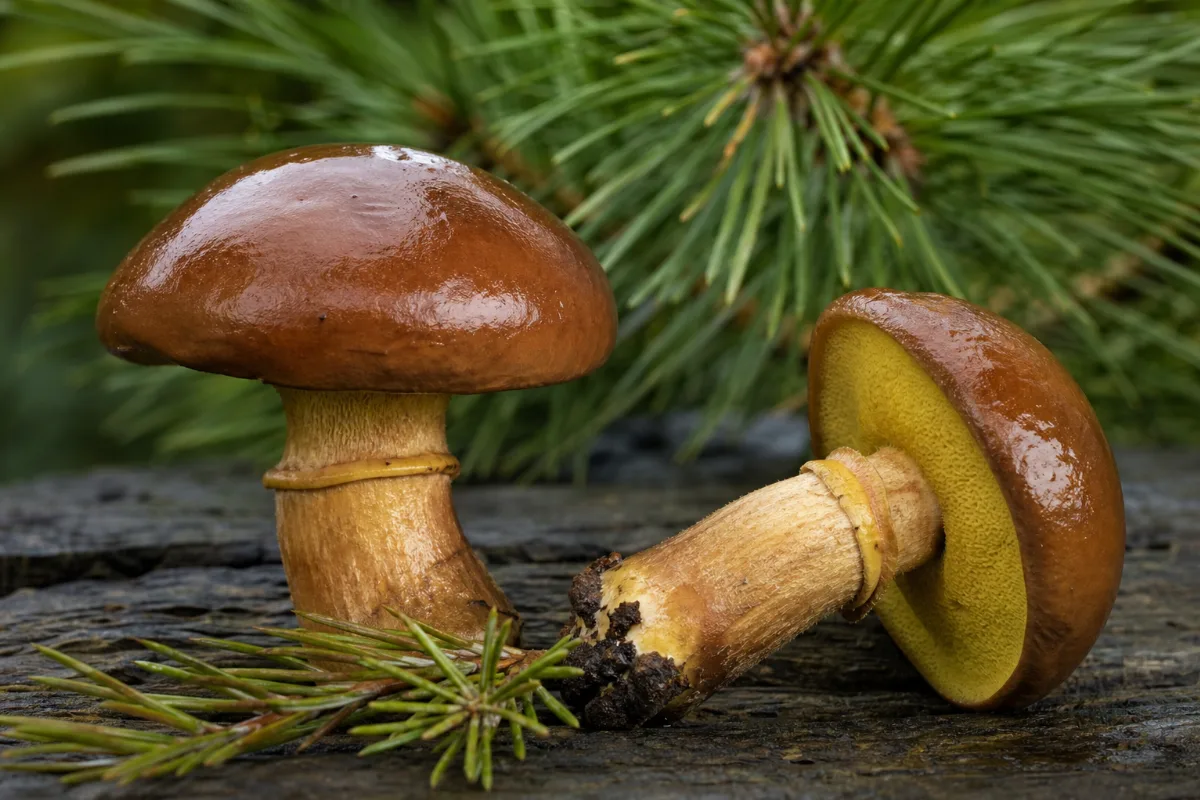
Mushrooms · Wild culinary mushroom
Slippery Jack
Suillus luteus · also called Slippery jack, Kallampa (Ecuador)
Slippery jack is a wild mushroom that grows with pine trees and is eaten in many places. A case report says it can make some people ill, and its authors suggest removing the cap skin. We found no human trial of any health benefit. Wild and dried mushrooms can also carry arsenic and radioactive caesium, depending on where they grew.
General information, not medical advice. Last substantive update · Not medically reviewed. A named clinician has not signed off on this page. How this page is made
About Slippery Jack
Slippery jack is a wild edible mushroom that grows with pine trees. The research is mostly about what it carries and about lab and mouse tests, not about what it does for people. A case report says it can cause illness, and its authors suggest removing the slimy cap skin. We found no human trial of any health benefit. The practical cautions are mistaken identity, arsenic in dried products and radioactive caesium in some regions.
What it is
Slippery jack is a fungus, Suillus luteus, in the family Suillaceae. GBIF lists the name as accepted. It is an ectomycorrhizal fungus: it lives with the roots of pines and forms the mushroom above ground, so it is collected wild. A 2026 genomics paper says it has spread to new regions together with introduced pines.
Food use and traditional use
A 2025 abstract calls it a highly prized edible fungus. A 2022 paper says the Saraguro people of Loja province, Ecuador, call it Kallampa and use it in traditional medicine for stomach disorders and headaches. Traditional use is not evidence of benefit.
What the research shows
All the health research we found is from test tubes, cells or mice. In a four-species comparison, extracts of slippery jack scavenged test radicals. Three mouse studies of purified polysaccharides report changes in gut bacteria and immune cells and smaller tumours. A flavonoid extract lowered blood sugar in diabetic mice. Compounds slowed melanoma and liver cancer cells in dishes, and suillin blocked an enzyme in a test tube. We found no human trial. Mouse and dish results often fail in people.
We found no supplement, capsule or mycelium product of slippery jack.
Arsenic, other metals and radioactive caesium
In a 2026 survey of 164 dried commercial mushrooms in Poland, slippery jack had the highest arsenic of six species: median 5.364 mg/kg dry weight in 15 products. At the authors' assumed 3.6 g of dried mushroom a day, the hazard index was 0.9359, just under 1. The authors did not know which forms of arsenic were present. Cadmium, mercury and lead were low. Mercury in slippery jack from background areas was also modest in two other studies.
Caesium-137 depends on place. In north-eastern Poland, 22 wild samples had median 38.4 Bq/kg fresh mass, and none of 230 mushrooms from 19 species exceeded the 1250 Bq/kg limit the paper cites. In a 1990 study, slippery jack was among the lowest in caesium and boiling removed up to 85 percent in that study. Dried mushroom is concentrated, so always check whether a figure is per fresh or per dried weight.
At a glance
Traditional uses history, not proof
- Eaten as a wild food (2025 and 1984 abstracts).
- The Saraguro people of southern Ecuador use it, called Kallampa, for stomach disorders and headaches (2022 paper). Traditional use is not evidence of benefit.
Studied for research
- Nutrition as a food, insufficient (no nutrient table found, no health trial)
- Antioxidant activity in test tubes, insufficient (lab only)
- Polysaccharide, gut bacteria and immune cells in tumour-bearing mice, insufficient (animal only)
- Blood sugar in diabetic mice, insufficient (animal only)
- Cancer cell lines and enzyme blocking, insufficient (dishes and test tubes only)
Main compounds
- Suillin, which blocked an enzyme in a test tube
- Polysaccharides (long sugar chains) studied in mice
- Ceramide (suillumide), iso-suillin, sterols, phenolics
- Arsenic and caesium-137 taken up from the environment
Common forms
- Fresh, cooked mushroom (cap skin removed, as the authors of a 1984 case report suggest)
- Dried slices sold in some markets
- Lab extracts and purified polysaccharides (research materials, no product found)
Research links: Case report: mushroom poisoning from Suillus luteus (abstract) · Penn State Extension: Preparing and preserving mushrooms · Dried commercial mushrooms: toxic elements (abstract) · Radiocaesium in wild mushrooms, north-eastern Poland (abstract) · Mercury in Suillus luteus (abstract) · Suillin and acetylcholinesterase (abstract) · Research Library · Genes & Biomarkers Library
What it is and its history
- Accepted scientific name
- Suillus luteus
- Naming authority
- (L.) Roussel (GBIF)
- Synonyms
- Boletus luteus L. (GBIF synonym); Boletus annularius Bull. (GBIF synonym); Boletus volvatus Batsch (GBIF synonym); Ixocomus luteus (L.) Quel. (GBIF synonym)
- Common names
- Slippery jack (English); Kallampa (Local name in Loja province, Ecuador (Saraguro people))
- Family or group
- Suillaceae (a fungus family), not a plant
- Classification
- Fungi > Basidiomycota > Agaricomycetes > Boletales > Suillaceae > Suillus > Suillus luteus
- Native range
- A 2026 genomics paper says the fungus has spread beyond the original northern boreal range of pines along with introduced pines, and that all introduced populations trace back to Europe.
- Habitat
- An ectomycorrhizal fungus: it lives on the roots of pines and forms the mushroom above ground (2026 genomics paper; 2009 cadmium paper).
- What it looks like
- Fruiting body: Not described here. Identification of wild mushrooms must be done in person by an expert, so no field description is given.
- Cultivation
- Wild-collected in all the sources read. No cultivation source was read.
- Harvest and processing
- Sold fresh or as dried slices in some markets (Polish survey). A 1984 case report authors suggest removing the cap skin before eating.
- Sustainability and conservation
- Not checked.
Traditional use and history history, not clinical proof
| Tradition or era | Documented use | Source |
|---|---|---|
| Traditional medicine, southern Ecuador | The Saraguro people of Loja province use it, as Kallampa, for gastrointestinal disorders and headaches (2022 abstract). | p35576219 |
| Food use | A 2025 abstract calls it a highly prized edible fungus. A 1984 case report abstract says it is often eaten. | p41597524 |
Traditional use shows how it was used. It does not show that it works or is safe today.
What is inside, and how it may work
What it contains and how those compounds act in cells and animals. Laboratory and animal mechanisms are not proven effects in people.
Main compounds
| Compound | Family | Where it is concentrated | Activity studied | Level of evidence |
|---|---|---|---|---|
| Suillin | prenylated compound | Fruiting body (ethyl-acetate extract) 200 mg were isolated in the 2022 study; the abstract gives no percentage. | Blocked acetylcholinesterase in a test tube (IC50 31.50 micromolar). 1 | Laboratory research |
| Suillumide and iso-suillin | ceramide and related compound | Fruiting body (ethanol extract) Not given in the abstracts. | Slowed melanoma and liver cancer cells in dishes. 11 9 | Laboratory research |
| Ergosterol, ergosterol peroxide and linoleic acid | sterols and a fatty acid | Fruiting body Not given in the abstracts. | Isolated alongside suillin; no activity was reported for them in the abstracts read. 1 11 | Compositional analysis |
| Polysaccharides (glucomannan-type, with fucose, xylose or galactose) | polysaccharide | Fruiting body (hot-water, acid or alkali extraction) Not given in the abstracts. | Changed gut bacteria and immune measures in tumour-bearing mice. 8 6 7 | Animal research |
| Flavonoid fraction and phenolic compounds | mixed groups | Fruiting body Total phenolics in ethyl-acetate extract: 105 mg gallic-acid equivalents per 100 g dry weight. | Antioxidant in the lab; flavonoid extract lowered blood sugar in diabetic mice. 10 20 19 | Laboratory research |
| Arsenic (contaminant) | toxic element | Fruiting body Median 5.364 mg/kg dry weight in 15 dried commercial products, Poland. | Contaminant taken up from the environment; form not measured. 4 | Compositional analysis |
| Caesium-137 (contaminant) | radionuclide | Fruiting body Median 38.4 Bq/kg fresh mass in 22 wild samples, north-eastern Poland. | Contaminant from old fallout. 13 18 | Compositional analysis |
Mechanisms, receptors and pathways
| Target or pathway | Gene or receptor | What was found | Level |
|---|---|---|---|
| Acetylcholinesterase (enzyme) | AChE | Suillin was a non-competitive mixed inhibitor in a test tube. No animal or human test was read. 1 | Laboratory research |
| Gut bacteria and T-cell immunity | CD4+ and CD8+ T cells (mice) | Polysaccharides raised Lactobacillus and T-cell measures in tumour-bearing mice. No human data. 8 6 7 | Animal research |
| Tyrosinase (enzyme) and free radicals | not specified | Isolated compounds blocked tyrosinase and scavenged DPPH radicals in test tubes. 19 | Laboratory research |
| Cell cycle and cell death in cancer cell lines | G1-phase proteins (not named in the abstract) | Iso-suillin caused G1 arrest and apoptosis in a hepatoma cell line in dishes. 9 | Laboratory research |
Absorption, metabolism and elimination
- Absorption
- Not found.
- Distribution
- Not found.
- Metabolism
- Not found.
- Elimination
- Not found.
- Bioavailability
- Not established.
Isolated compounds versus whole extracts
Slippery jack is eaten whole as a food. All the lab and mouse findings come from purified polysaccharides, flavonoid fractions or isolated compounds, which are not the same as a cooked mushroom. We found no supplement, capsule or mycelium-on-grain product and no study of one.
Nutritional composition
We found no open table of protein, fibre, vitamins or minerals for slippery jack in the records read, so no nutrient figures are given.
7 not enough evidence
What was looked at
The 7 benefits and uses checked for Slippery Jack, each with how strong the evidence is. Tap one to open it.
- Nutrition as a foodNot enough evidence
- Antioxidant activity in the labNot enough evidence
- Polysaccharide, gut bacteria and immune cells (mice)Not enough evidence
- Blood sugar (mice and cells)Not enough evidence
- Cancer cell lines (dishes only)Not enough evidence
- Enzyme blocking in a test tube (memory-disease research)Not enough evidence
- Traditional use for stomach disorders and headachesNot enough evidence
What is Slippery Jack good for?
The uses people ask about and how strong the human evidence is for each. None is proven for slippery jack. Read this together with the Safety tab.
Benefits, one by one
Each card is a research question, not a promise. Tap a goal to filter. Open a card to see the studies, doses and limits.
Nutrition as a food
Not enough evidenceSlippery jack is eaten as a wild food. We found no open table of its protein, fibre, vitamins or minerals, so we do not give a nutrient picture. No trial shows a health benefit from eating it.
0 studiesFresh or cooked; dried slices are sold in some countries (see Safety)…
Studies, doses and limits
What the trials found
No human trial of eating slippery jack was found.
Results
No nutrient figures were read for this species. One 2025 paper compares its extract chemistry with other Suillus species, but that is not a nutrient table.
Why this rating
No nutrient table and no health-outcome study were found for slippery jack in the sources read.
Form and dose studied
Fresh or cooked; dried slices are sold in some countries (see Safety). Drying concentrates what is in the mushroom per gram.
Who was studied
General food use
Limits
A claim in a Polish review that it is a good source of B vitamins rests on references we could not open, so it is not repeated as fact.
Why researchers looked
Mostly a food. Research we found measures contaminants and lab activities rather than what it does in people.
Proposed mechanism Compositional analysis
Not applicable: no nutrient mechanism was studied.
A proposed mechanism does not show that the effect happens in people.
Wild-grown mushrooms can carry arsenic and radioactive caesium; see the Safety tab.
Antioxidant activity in the lab
Not enough evidenceIn test tubes, extracts of slippery jack mop up test radicals. In a four-species comparison its ethyl-acetate extract was the strongest of the Suillus species, even though it had the lowest phenolic total. This is a lab measure, not evidence that eating it helps anyone.
2 studiesSolvent extracts of dried fruiting bodies in the lab. No supplement w…
Studies, doses and limits
Results
S. luteus ethyl-acetate extract: EC50 0.15 percent (DPPH) and 0.23 percent (ABTS); total phenolics 105 mg GAE per 100 g dry weight. Isolated compounds: DPPH IC50 1.55 to 19.89 micromolar.
Why this rating
Test-tube evidence only; extracts use solvents that are not the same as eating or cooking the mushroom.
Form and dose studied
Solvent extracts of dried fruiting bodies in the lab. No supplement was assessed.
Limits
Lab antioxidant tests do not show an effect in the body. The most active extract had the lowest phenolic total, so the two measures did not agree.
Why researchers looked
Researchers screen wild mushroom extracts for antioxidant behaviour.
Proposed mechanism Laboratory research
Radical scavenging in DPPH and ABTS test-tube assays by solvent extracts; seven isolated compounds also scavenged DPPH radicals (Yao 2022).
A proposed mechanism does not show that the effect happens in people.
Nothing here supports using slippery jack as an antioxidant.
Polysaccharide, gut bacteria and immune cells (mice)
Not enough evidenceThree research groups extracted polysaccharides (long sugar chains) from slippery jack and fed them to tumour-bearing mice. The mice had changes in gut bacteria and immune cells and smaller tumours. Nothing was tested in people.
3 studiesPurified polysaccharides made in a lab. No supplement product was fou…
Studies, doses and limits
Results
Hot-water extract at 200 mg/kg: tumour suppression 53.14 percent in mice (Ji 2025). Acid-extracted at 100 mg/kg per day: 61.14 percent (Gao 2024). Alkali-extracted, high dose: 40.28 percent (Han 2026).
Effect sizes as reported
Tumour inhibition rates in mice, as reported in the abstracts
Why this rating
Animal evidence only, from three mouse studies on purified extracts.
Form and dose studied
Purified polysaccharides made in a lab. No supplement product was found.
Who was studied
Tumour-bearing mice
Limits
Purified extracts given to mice are not a food portion of mushroom. Abstracts only were read, and they do not give mouse group sizes.
Why researchers looked
Fungal polysaccharides are studied for immune effects, so researchers tried a slippery jack extract in mice.
Proposed mechanism Animal research
Mouse studies report more Lactobacillus in the gut, changes in metabolism and higher CD4+ (and in one study CD8+) T-cell activity. These are animal observations, not shown in people.
A proposed mechanism does not show that the effect happens in people.
Nothing here suggests slippery jack treats cancer.
Blood sugar (mice and cells)
Not enough evidenceA flavonoid extract of slippery jack lowered blood sugar in diabetic mice and helped liver cells use glucose in dishes. No people were tested.
1 studiesTotal flavonoid extract made in a lab.
Studies, doses and limits
Results
The abstract says blood sugar, cholesterol, triglycerides and liver enzymes fell in streptozotocin-induced diabetic mice; no figures are given.
Why this rating
One cell and mouse study, abstract only.
Form and dose studied
Total flavonoid extract made in a lab.
Who was studied
Diabetic mice and a liver cell line
Limits
Abstract has no numbers; mice are not people.
Why researchers looked
Researchers tested a flavonoid fraction for blood-sugar effects.
Proposed mechanism Animal research
Not described in the abstract beyond the glucose-use and insulin-resistance cell models.
A proposed mechanism does not show that the effect happens in people.
Do not use any mushroom to replace diabetes treatment.
Cancer cell lines (dishes only)
Not enough evidenceCompounds from slippery jack slowed the growth of cancer cells in dishes. Suillumide acted on melanoma cells and iso-suillin on liver cancer cells. These are early lab leads, not treatments.
2 studiesIsolated compounds from ethanol extracts. No product.
Studies, doses and limits
Results
Suillumide and its derivative: IC50 about 10 micromolar (SK-MEL-1 melanoma cells, 72 h). Iso-suillin: reduced viability and caused apoptosis in SMMC-7721 cells with no apparent toxicity in normal human lymphocytes (no figures in the abstract).
Why this rating
Cell-line work on isolated compounds; no animal or human data in these two papers.
Form and dose studied
Isolated compounds from ethanol extracts. No product.
Who was studied
Cell lines
Limits
Many compounds kill cells in a dish and fail in people.
Why researchers looked
Mushroom compounds are screened for effects on cancer cells.
Proposed mechanism Laboratory research
Iso-suillin caused G1-phase arrest and cell death (apoptosis) in a hepatoma cell line; suillumide had IC50 of about 10 micromolar on a melanoma line after 72 hours.
A proposed mechanism does not show that the effect happens in people.
Nothing here supports eating slippery jack to treat cancer.
Enzyme blocking in a test tube (memory-disease research)
Not enough evidenceA compound called suillin blocked the enzyme acetylcholinesterase with moderate strength in a test tube. The same enzyme is a target of some Alzheimer's drugs. No animals or people were tested, so this says nothing about eating slippery jack.
2 studiesIsolated compound and solvent extracts.
Studies, doses and limits
Results
Suillin IC50 31.50 micromolar, Ki 17.25 micromolar; extracts moderate (IC50 above 200 micrograms per mL). Tyrosinase IC50 21.97 to 66.26 micromolar for compounds 1 to 7.
Why this rating
Enzyme assays only.
Form and dose studied
Isolated compound and solvent extracts.
Limits
Moderate potency compared with the reference drug donepezil used in the assay.
Why researchers looked
Acetylcholinesterase is a target in memory-disease research, and the Saraguro people in Ecuador use the mushroom traditionally.
Traditional use
The authors link the study to Saraguro traditional use for stomach disorders and headaches, not to memory.
Proposed mechanism Laboratory research
Non-competitive mixed inhibition of acetylcholinesterase by suillin; a separate study found tyrosinase blocking by isolated compounds.
A proposed mechanism does not show that the effect happens in people.
No memory or cognitive benefit has been shown.
Traditional use for stomach disorders and headaches
Not enough evidenceA 2022 paper says the Saraguro people of Loja province, Ecuador, use slippery jack (called Kallampa) in traditional medicine for stomach disorders and headaches. No trial tested this.
1 studiesNot described.
Studies, doses and limits
Results
No result: this is a statement of use.
Why this rating
Traditional use is not evidence of benefit. No study tested it.
Form and dose studied
Not described.
Who was studied
Saraguro communities (traditional)
Limits
The abstract does not say how the mushroom is prepared or used.
Why researchers looked
Traditional use is why researchers looked at the mushroom's chemistry.
Traditional use
The Saraguro people of southern Ecuador (2022 paper).
Proposed mechanism Traditional use
Not applicable.
A proposed mechanism does not show that the effect happens in people.
A 1984 case report shows it can also upset some people; see the Safety tab.
Connections to the rest of health
How Slippery Jack connects to the rest of our health knowledge graph. Every link says what kind of connection it is. A safety link (for example to the liver) is a warning, not a benefit. A study that merely mentions a topic never creates a benefit link.
Explore every connection: goals, body systems, organs, symptoms, genes
E. Health conditions
| Connected to | Kind of connection | Evidence status | Context | Studies |
|---|---|---|---|---|
| Mushroom poisoning | Adverse effect or risk | Low certainty | A 1984 case report of illness; details not in the abstract. Preparation or compound: Slippery jack |
15 |
G. Root causes and contributing factors
| Connected to | Kind of connection | Evidence status | Context | Studies |
|---|---|---|---|---|
| Heavy metal exposure | Moderate certainty | Arsenic highest of six species in one dried-product survey; mercury and cadmium low. Preparation or compound: Wild and dried slippery jack |
4 17 16 | |
| Environmental toxins | Moderate certainty | Caesium-137 depends on region and year. Preparation or compound: Wild slippery jack (radiocaesium) |
13 18 |
J. Genes, receptors and enzymes
| Connected to | Kind of connection | Evidence status | Context | Studies |
|---|---|---|---|---|
| Acetylcholinesterase (AChE) | Preliminary mechanism | In vitro | Blocked by suillin in a test tube. | 1 |
L. Active compounds
| Connected to | Kind of connection | Evidence status | Context | Studies |
|---|---|---|---|---|
| Suillin | Biological association | In vitro | Blocked acetylcholinesterase in a test tube (IC50 31.50 micromolar). Preparation or compound: Fruiting body (ethyl-acetate extract) |
1 |
| Suillumide and iso-suillin | Biological association | In vitro | Slowed melanoma and liver cancer cells in dishes. Preparation or compound: Fruiting body (ethanol extract) |
11 9 |
| Ergosterol, ergosterol peroxide and linoleic acid | Biological association | Compositional analysis | Isolated alongside suillin; no activity was reported for them in the abstracts read. Preparation or compound: Fruiting body |
1 11 |
| Polysaccharides (glucomannan-type, with fucose, xylose or galactose) | Biological association | Animal | Changed gut bacteria and immune measures in tumour-bearing mice. Preparation or compound: Fruiting body (hot-water, acid or alkali extraction) |
8 6 7 |
| Flavonoid fraction and phenolic compounds | Biological association | In vitro | Antioxidant in the lab; flavonoid extract lowered blood sugar in diabetic mice. Preparation or compound: Fruiting body |
10 20 19 |
| Arsenic (contaminant) | Biological association | Compositional analysis | Contaminant taken up from the environment; form not measured. Preparation or compound: Fruiting body |
4 |
| Caesium-137 (contaminant) | Biological association | Compositional analysis | Contaminant from old fallout. Preparation or compound: Fruiting body |
13 18 |
Each connection is stored with the ingredient, the connected record, the kind of connection, the evidence status, the supporting studies, the preparation or compound involved, and a review date (last reviewed October 25, 2026).
Evidence at a glance: what the research found for 7 outcomes
Each outcome below is one thing researchers measured. Certainty is how far the evidence can be trusted, not how well it works. The full studies are on the next tab.
The evidence
The research centre for Slippery Jack. Every record here was checked against PubMed or the publisher's page; we never list a study we have not verified.
Evidence by outcome
Bars show how many studies we found for each outcome, not how well it works. People are added up across trials only (reviews are not added, to avoid double counting).
How we rate evidence
High certainty
Several well-run trials or reviews agree; further research is unlikely to change the picture much.
Moderate certainty
Good trials point the same way, but some doubt remains.
Low certainty
Small, short or inconsistent trials. The finding could change with better research.
Very low certainty
Very little or very weak human data. Treat as a possibility only.
Mixed findings
Trials or reviews disagree with each other.
Not enough evidence
Not enough human research to say either way.
Evidence against
Good research found no benefit, or found harm.
We take the reviewers' own risk-of-bias and GRADE statements where they exist, and otherwise judge from study size, design, consistency, directness and whether a product matches what is sold. Many publications do not make evidence high. Method note: We read PubMed records for 18 papers by abstract: a 1984 case report, six contamination surveys or cooking studies, three mouse studies of polysaccharides, two cell-line studies, one test-tube enzyme study, one test-tube extract comparison, one flavonoid study in mice, one chemistry study, and two fungus ecology papers. The 2025 and 2026 Polish surveys were also read in full text for the tables quoted. We also read the Penn State Extension page and checked the name in GBIF. Index Fungorum, EFSA, FDA, LiverTox and poison-centre statements were not read. Most numbers come from abstracts. Certainty ratings are the compiler's own reading.
Study library: every study we checked 20
| Study | Design | People | Product, dose, length | Result |
|---|---|---|---|---|
| Andrade 2022 Suillin: A mixed-type acetylcholinesterase inhibitor from Suillus luteus which is used by Saraguros indigenous, southern Ecuador. PLoS One · PMID 35576219 · DOI |
Laboratory study enzyme assay |
Test-tube enzyme assay | Ethanol and ethyl-acetate extracts of Suillus luteus and the compound suillin fruiting body Not shown here |
The abstract says S. luteus is known as slippery jack or Kallampa in Loja province and is used in traditional medicine for gastrointestinal disorders and headaches. Suillin, the main compound in the ethyl-acetate extract, blocked acetylcholinesterase with an IC50 of 31.50 micromolar and a Ki of 17.25 micromolar, a moderate potency; the extracts had a moderate effect (IC50 above 200 micrograms per mL). Donepezil was the comparison drug. Suillin, linoleic acid, ergosterol peroxide and ergosterol were isolated. Moderate enzyme blocking in a test tube Methods, limits and fundingOutcomes: Acetylcholinesterase inhibition; traditional use Limitations: Test-tube study; abstract read. The authors propose suillin as a promising agent, but nothing was tested in animals or people. Funding and conflicts: Funding not stated in the abstract Read: abstract |
| Authors listed in the PubMed record 2009 Cd-tolerant Suillus luteus: a fungal insurance for pines exposed to Cd. Environmental Pollution · PMID 19211178 |
Laboratory study fungus |
Scots pine seedlings and S. luteus isolates in the lab | Suillus luteus isolates mycelium (lab culture) Not shown here |
The abstract calls Suillus luteus an ectomycorrhizal fungus of pine trees and reports that populations from contaminated sites were adapted to cadmium and protected pine seedlings better. Methods, limits and fundingOutcomes: Cadmium tolerance of the fungus and its pine hosts Limitations: A tree-and-fungus experiment; it does not measure what fruiting bodies you could eat contain. Funding and conflicts: Funding not stated in the abstract Read: abstract |
| Authors listed in the PubMed record 2026 Global population structures and demographic history of Suillus luteus, a pine co-introduced ectomycorrhizal fungus associated with exotic forestry and invasion. New Phytologist · PMID 42351270 |
Genomic study fungus |
208 208 genomes of Suillus luteus from native and introduced ranges |
Suillus luteus (the fungus, not a food study) Not shown here |
The abstract describes S. luteus as an ectomycorrhizal fungus living with pines, whose spread beyond the original northern boreal range followed pine introductions by people. All introductions traced to Europe. Methods, limits and fundingOutcomes: Population genomics and introduction history Limitations: A genetics paper about where the fungus lives; it says nothing about eating it. Funding and conflicts: Funding not stated in the abstract Read: abstract |
| Domagalska 2026 Evaluation of Toxic Elements in Commercial Dried Mushrooms from the Polish Market: Exposure Assessment and Health Risk Characterization. Molecules · PMID 42280168 · DOI |
Laboratory survey fungus (survey) |
164 164 samples of commercial dried mushrooms from the Polish market (six species; 15 were Suillus luteus) |
Dried Suillus luteus slices (commercial products) fruiting body (dried) Not shown here |
The abstract says Suillus spp. showed the highest arsenic of the six species, and Boletus edulis the highest cadmium. In the full-text tables, the 15 S. luteus samples had median total arsenic of 5.364 mg/kg dry weight (middle half 4.412 to 8.260; maximum 11.014), cadmium 0.09, mercury 0.064 and lead at the 0.05 detection floor (maximum 0.317). At the authors' assumed intake of 3.6 g of dried mushroom per day, the mean hazard index for S. luteus was 0.9359, the highest of the species and just under 1. The authors had no data on which forms of arsenic were present and used a cautious worst-case approach. Separately, one bay bolete sample had an extreme arsenic value (369 mg/kg) and a hazard index of 63.57. Highest arsenic of six species; hazard index just under 1 at the assumed intake Methods, limits and fundingOutcomes: Cd, Pb, Hg and As in dried mushrooms and hazard indices Limitations: Survey of one market; 15 samples of this species; arsenic form (organic or inorganic) not measured; a hazard index under 1 is the authors' reading, not a guarantee. Abstract and full-text tables read. Funding and conflicts: Funding not stated in the abstract Read: abstract and full-text tables |
| GBIF 2026 GBIF Backbone Taxonomy: Suillus luteus (L.) Roussel (species match, key 7777157), checked 2026-10-25 GBIF API · Source |
Taxonomy record n/a |
n/a | n/a |
GBIF returns Suillus luteus (L.) Roussel as ACCEPTED (key 7777157), kingdom Fungi, phylum Basidiomycota, class Agaricomycetes, order Boletales, family Suillaceae, genus Suillus. Its synonyms include Boletus luteus L., Boletus annularius Bull., Boletus volvatus Batsch and Ixocomus luteus (L.) Quel. Methods, limits and fundingOutcomes: Accepted name and classification Limitations: A database record; Index Fungorum was not checked. It does not describe how to tell the species apart. Funding and conflicts: Public database Read: full record |
| Gao 2024 Structural characterization of an acid-extracted polysaccharide from Suillus luteus and the regulatory effects on intestinal flora metabolism in tumor-bearing mice. International Journal of Biological Macromolecules · PMID 39349083 · DOI |
Animal study mouse |
Tumour-bearing mice | Acid-extracted polysaccharide of Suillus luteus (SLAP) fruiting body 100 mg/kg per day in mice (animal dose) |
The abstract describes a glucomannan of about 17.6 million Da. In tumour-bearing mice it raised CD4+ and CD8+ T-cell activity, increased intestinal lactobacilli and promoted primary bile acid biosynthesis, and suppressed solid tumour growth with an inhibitory rate of 61.14% at 100 mg/kg per day. Immune and gut-flora changes and smaller tumours in mice Methods, limits and fundingOutcomes: Immune cells, gut flora and tumour growth in mice Limitations: Mouse study only; abstract read. No human data. Funding and conflicts: Funding not stated in the abstract Read: abstract |
| Han 2026 Extraction Process Optimization, Structural Characteristics and Gut Microbiota Metabolism Regulatory Effect of Suillus luteus Alkali-Extracted Polysaccharide. Foods · PMID 42737400 · DOI |
Animal study mouse |
Tumour-bearing mice | Alkali-extracted (pH 9) polysaccharide of Suillus luteus (SLP9) fruiting body Not shown here |
The abstract says high-dose SLP9 gave a tumour inhibitory rate of 40.28% in mice, with restored gut microbial diversity and enrichment of Lactobacillus. The authors present it as a candidate to support tumour therapy; this was a mouse experiment. Smaller tumours and gut-flora changes in mice Methods, limits and fundingOutcomes: Tumour inhibition and gut microbes in mice Limitations: Mouse study; abstract read. The abstract does not give the dose used. Funding and conflicts: Funding not stated in the abstract Read: abstract |
| Ji 2025 Study on the Enrichment Effect of Suillus luteus Polysaccharide on Intestinal Probiotics and the Immunomodulatory Activity. Microorganisms · PMID 41597524 · DOI |
Animal study mouse |
Tumour-bearing mice | Hot-water polysaccharide of Suillus luteus (SLP), purified fruiting body 200 mg/kg in mice (animal dose; not a human amount) |
The abstract says the polysaccharide had an average molecular weight of about 1.90 million Da and a backbone of mannose with fucose, glucose and galactose side chains. In tumour-bearing mice given 200 mg/kg, it enriched gut bacteria such as Lactobacillus and Odoribacter, was linked to changes in glyoxylate and dicarboxylic acid metabolism, increased CD4+ T-cell immunity, and gave a tumour suppression rate of 53.14%. Gut bacteria and immune changes and smaller tumours in mice Methods, limits and fundingOutcomes: Gut bacteria, T-cell immunity and tumour size in mice Limitations: Mouse study only; abstract read. A purified extract given to mice is not the same as eating the mushroom, and nothing here was tested in people. Funding and conflicts: Funding not stated in the abstract Read: abstract |
| Jia 2014 Iso-suillin isolated from Suillus luteus, induces G1 phase arrest and apoptosis in human hepatoma SMMC-7721 cells. Asian Pacific Journal of Cancer Prevention · PMID 24606477 · DOI |
Laboratory study cell line |
Human hepatoma cell line SMMC-7721 in dishes; normal human lymphocytes | Iso-suillin isolated from Suillus luteus fruiting body Not shown here |
The abstract says iso-suillin reduced viability of the liver cancer cell line, caused G1-phase arrest and triggered apoptosis, with no apparent toxicity in normal human lymphocytes. Cancer-cell effects in dishes Methods, limits and fundingOutcomes: Viability, cell cycle and apoptosis in a hepatoma cell line Limitations: Cell-line study only; abstract read. The abstract gives no figures. Funding and conflicts: Funding not stated in the abstract Read: abstract |
| Judžentienė 2025 Comparative Research of Antioxidant, Antimicrobial, Antiprotozoal and Cytotoxic Activities of Edible Suillus sp. Fruiting Body Extracts. Foods · PMID 40238251 · DOI |
Laboratory study fungus extract (lab) |
Solvent extracts of four Suillus species and some other fungi, tested in test-tube and cell assays | Methanol and ethyl-acetate extracts of Suillus luteus (and S. variegatus, S. bovinus, S. granulatus) fruiting body Not shown here |
In ethyl-acetate extracts the lowest phenolic content was in S. luteus (105 +/- 3.55 mg gallic-acid equivalents per 100 g dry weight), yet S. luteus extracts had the strongest radical-scavenging effect of the Suillus species (EC50 0.15 +/- 0.05 percent in the DPPH test and 0.23 +/- 0.05 percent in the ABTS test). Methanol extracts of most Suillus species were not active enough against the parasites tested. The authors say the work is important for finding new antioxidants and other agents. Test-tube antioxidant activity of an extract Methods, limits and fundingOutcomes: Phenolics, antioxidant, antimicrobial, antiprotozoal and cell toxicity assays Limitations: Test-tube study; abstract read. The extract with the strongest radical scavenging had the lowest phenolic total, so the two measures did not move together. Not a study of eating the mushroom. Funding and conflicts: Funding not stated in the abstract Read: abstract |
| Leon 2008 A new ceramide from Suillus luteus and its cytotoxic activity against human melanoma cells. Chemistry and Biodiversity · PMID 18205114 · DOI |
Laboratory study cell line |
Human melanoma cell line SK-MEL-1 in dishes | Suillumide (a ceramide) isolated from an ethanol extract of Suillus luteus, and a synthetic derivative fruiting body Not shown here |
The abstract reports a new phytosphingosine-type ceramide, suillumide, plus ten known compounds. Both suillumide and its synthetic diacetyl derivative had IC50 values of about 10 micromolar against SK-MEL-1 melanoma cells after 72 hours. Slowed growth of melanoma cells in dishes Methods, limits and fundingOutcomes: Cytotoxic activity against a melanoma cell line Limitations: Cell-line study only; abstract read. Funding and conflicts: Funding not stated in the abstract Read: abstract |
| Mielewska 2008 [Mercury in three species of Suillus mushroom from some sites in Poland]. Roczniki Panstwowego Zakladu Higieny · PMID 18807912 |
Laboratory survey fungus (survey) |
Three Suillus species from sites in Poland | Wild Suillus luteus (slippery jack), S. bovinus and S. variegatus fruiting body Not shown here |
The English abstract says all three Suillus species had a small mercury content. For slippery jack, mean mercury was 0.095 to 0.17 micrograms per gram dry weight in caps and 0.045 to 0.070 in stipes. All three species concentrated mercury (BCF above 1). Small mercury content in slippery jack caps and stems Methods, limits and fundingOutcomes: Mercury in fruiting bodies and soil Limitations: English abstract only; older Polish study; low-pollution sites. Funding and conflicts: Funding not stated in the abstract Read: abstract |
| Mironczuk-Chodakowska 2025 Forty Years After Chernobyl: Radiocaesium in Wild Edible Mushrooms from North-Eastern Poland and Its Relevance for Dietary Exposure and Food Safety. Toxics · PMID 40711045 · DOI |
Laboratory survey fungus (survey) |
230 230 wild mushroom samples of 19 species, north-eastern Poland (22 were Suillus luteus) |
Wild Suillus luteus fruiting bodies fruiting body Not shown here |
The abstract says caesium-137 across all samples ranged from 0.94 to 159.0 Bq/kg fresh mass and none exceeded the regulatory limit of 1250 Bq/kg. In Table 2, the 22 S. luteus samples had median caesium-137 of 38.4 Bq/kg fresh mass (middle half 25.8 to 58.1) and 501.0 Bq/kg dry mass (297.0 to 723.1), with potassium-40 of 74.9 Bq/kg fresh mass. The paper explains that the limit applies to dried products after reconstitution. Below the legal limit in all samples; lower than some other species Methods, limits and fundingOutcomes: Caesium-137 and potassium-40 activity Limitations: One region and year; levels vary by place and soil. Abstract and tables read. Funding and conflicts: Funding not stated in the abstract Read: abstract and full-text tables |
| Penn State Extension 2024 Penn State Extension: Preparing and Preserving Mushrooms (updated November 22, 2024), read 2026-10-25 Penn State Extension web page · Source |
Authoritative guidance n/a |
General public | n/a |
The page says only an expert can tell poisonous from edible mushrooms, that unless you are an expert you should not forage your own, and that no amount of cooking or drying destroys their toxins. General rule for wild mushrooms Methods, limits and fundingOutcomes: Wild mushroom safety Limitations: University extension guidance, not a regulator statement and not about slippery jack. Funding and conflicts: University extension service Read: full page text |
| Prager 1984 A case of mushroom poisoning from Suillus luteus. Mycopathologia · PMID 6539853 · DOI |
Case report |
A case of illness after eating Suillus luteus (details not in the abstract) | Suillus luteus eaten as food fruiting body Not shown here |
The whole abstract says that Suillus luteus, although often eaten, can cause illness, that the authors describe the sickness, and that they suggest removing the cuticle (the skin) before eating. Illness after eating this mushroom is documented Methods, limits and fundingOutcomes: Illness after eating; advice to remove the cuticle Limitations: Abstract is two sentences long: it does not give the symptoms, number of people, timing or outcome. The full paper was not read. Funding and conflicts: Funding not stated in the abstract Read: abstract |
| Rusin 2025 Spatial Variation in Cd, Pb, Hg, and Zn Accumulation in Edible Wild-Growing Mushroom Species from Different Environmentally Loaded Areas in Southern Poland: Risk Assessment and Implications for Consumer Safety. Toxics · PMID 41600585 · DOI |
Laboratory survey fungus (survey) |
200 200 wild edible mushroom samples from industrial and non-industrial areas of southern Poland |
Wild Suillus luteus and S. grevillei (grouped) among other species fruiting body Not shown here |
The abstract says 51 percent of all samples exceeded EU limits for Cd, Pb or Hg, that two Xerocomellus species accumulated the most, and that cadmium in those was up to 20 times higher than in Suillus species. Slippery jack and larch bolete were analysed together as one group, so there are no slippery jack figures alone. Suillus species held much less cadmium than the species with the highest levels Methods, limits and fundingOutcomes: Cd, Pb, Hg and Zn levels by area and species Limitations: The two Suillus species were grouped, so a slippery jack figure cannot be separated. Industrial and non-industrial areas differed. Abstract and parts of the full text read. Funding and conflicts: Funding not stated in the abstract Read: abstract and full-text excerpts |
| Saba 2016 Accumulation and distribution of mercury in fruiting bodies by fungus Suillus luteus foraged in Poland, Belarus and Sweden. Environmental Science and Pollution Research · PMID 26446731 · DOI |
Laboratory survey fungus (survey) |
Suillus luteus from background (unpolluted) areas in Poland, Belarus and Sweden | Wild Suillus luteus caps and stems fruiting body Not shown here |
Mercury ranged from 0.13 to 0.33 mg/kg dry matter in caps and from 0.038 to 0.095 in stems; caps held 1.8 to 5.3 times more than stems. The authors say moderate ability to accumulate mercury, and that eating up to 300 g of fresh mushroom a week from such background areas would not exceed the provisional weekly tolerable limit (assuming no mercury from other foods). Mercury moderate; weekly intake below the tolerable limit in background areas Methods, limits and fundingOutcomes: Mercury in caps and stems Limitations: Background areas only; the authors' intake statement assumes no other mercury in the diet. Abstract read. Funding and conflicts: Funding not stated in the abstract Read: abstract |
| Skibniewska 1999 [The influence of cooking on radiocaesium contamination of edible mushrooms]. Roczniki Panstwowego Zakladu Higieny · PMID 10523934 |
Laboratory study fungus (lab) |
Mushrooms collected in October 1990 (5 years after Chernobyl) | Several wild edible species including Suillus luteus fruiting body Not shown here |
The English abstract says slippery jack was among the lowest in radiocaesium (52.0 Bq/kg fresh weight) of the species tested. It says parboiling and boiling of mushrooms led to high losses of radiocaesium in the product, even up to 85 percent. Low caesium in slippery jack in 1990; boiling removes caesium into the water Methods, limits and fundingOutcomes: Radiocaesium before and after cooking Limitations: Old data (1990 harvest, 1999 paper); species-level cooking figures are not in the abstract. English abstract only. Funding and conflicts: Funding not stated in the abstract Read: abstract |
| Yao 2022 Chemical Constituents from Mushroom Suillus luteus (Agaricomycetes) and Their Bioactivities. International Journal of Medicinal Mushrooms · PMID 36374949 · DOI |
Laboratory study enzyme and radical assays |
Test-tube assays | Nine compounds isolated from Suillus luteus, including a new polyprenylphenol derivative fruiting body Not shown here |
The abstract reports a new compound, 2-geranylgeranyl-1,4-benzenediol 1-O-acetate, plus eight known compounds. Compounds 1 to 7 scavenged DPPH free radicals (IC50 1.55 to 19.89 micromolar) and inhibited tyrosinase (IC50 21.97 to 66.26 micromolar). Antioxidant and tyrosinase-blocking activity of isolated compounds in test tubes Methods, limits and fundingOutcomes: Compounds isolated and their radical scavenging and tyrosinase inhibition Limitations: Test-tube study of isolated compounds; abstract read. Funding and conflicts: Funding not stated in the abstract Read: abstract |
| Zhang 2021 Hypoglycemic Activity of Total Flavonoids from Slippery Jack Mushroom, Suillus luteus (Agaricomycetes), In Vitro and In Vivo. International Journal of Medicinal Mushrooms · PMID 34936305 · DOI |
Animal study mouse (and cell line) |
HepG2 liver cells and streptozotocin-induced diabetic mice | Total flavonoid extract of Suillus luteus (SLFLA) fruiting body Not shown here |
The abstract says the flavonoid extract increased glucose consumption in HepG2 cells and improved insulin resistance in a cell model. In diabetic mice it lowered blood sugar, cholesterol, triglyceride, ALT and AST, and reduced damage to the liver, kidney and pancreas. No numbers are given in the abstract. Lower blood sugar in diabetic mice Methods, limits and fundingOutcomes: Blood sugar, lipids and organ damage in mice Limitations: Cell and mouse study; abstract only, no figures in the abstract. Authors suggest promise as a functional food or medicine; that has not been tested in people. Funding and conflicts: Funding not stated in the abstract Read: abstract |
What we do not know yet
- No human trial of slippery jack for any health outcome was found.
- The 1984 poisoning case report is known only by a two-sentence abstract: symptoms and numbers are unknown.
- No source naming poisonous look-alikes was read.
- No nutrient table, allergy, pregnancy, breastfeeding or medicine-interaction data were found.
- Arsenic forms in slippery jack were not measured, and survey figures are for particular places and years.
How new research is added
New studies are found by a saved PubMed search and placed in a review queue. A person reads each one before it changes any evidence rating or safety wording. New publications never change ratings automatically.
Lab markers
What changed in blood or saliva tests during trials. A changed number is not the same as feeling or being healthier, and we give no "normal ranges".
Safety
What studies and official sources say about side effects, medicines and who should check first. Each point shows what kind of evidence it comes from.
Main points to know 4
- People have been made ill by slippery jack, and the cap skin is blamed. A 1984 case report begins by saying that Suillus luteus, although often eaten, can cause illness. Its authors suggest removing the cuticle (the skin of the cap) before eating. The abstract does not describe the symptoms or how many people were affected, so we cannot say how common this is. Case report 15
- Never eat a wild mushroom unless an expert has identified it in person. Penn State Extension says only an expert can tell poisonous from edible mushrooms, and that cooking or drying will not destroy their toxins. We read no source naming poisonous look-alikes of slippery jack, so none is named here. This page gives no way to identify it. Authoritative guidance 14
- Dried slippery jack had the highest arsenic of six species in one survey. In 15 dried slippery jack products from the Polish market, median total arsenic was 5.364 mg/kg dry weight. The authors' hazard index at an assumed 3.6 g of dried mushroom a day was 0.9359, just under 1, the highest of the species. They did not know which forms of arsenic were present. This is one market and one survey. Laboratory survey 4
- Wild mushrooms can hold radioactive caesium from old fallout. In north-eastern Poland, 22 wild slippery jack samples had median caesium-137 of 38.4 Bq/kg fresh mass. None of 230 mushroom samples of 19 species exceeded the 1250 Bq/kg limit the paper cites. Levels depend heavily on place and year. Laboratory survey 13
Side effects 2
| Effect | How often | Severity and recovery | Evidence |
|---|---|---|---|
| Illness after eating (details not given in the abstract); stomach upset is also described in some foraging guides we could not source The 1984 case report abstract gives no symptoms. Foraging guides that mention stomach upset were not cited because we found no research source for them. | Not found | unknown unknown | Case report 15 |
| Allergic reaction to mushrooms We read no report of allergy to slippery jack. Mushroom allergy exists in general, but we did not read a source on it for this page. | Not found for slippery jack | unknown unknown | None found |
Liver
No liver injury from slippery jack was found in the records read. LiverTox was not checked for this species.
Monitoring. No routine monitoring is suggested by the sources read. Get medical care for any poisoning signs.
This is a safety connection. It is not evidence that Slippery Jack supports liver health.
Medicines and supplements 2
| With | Why it matters | Importance | Evidence | What to do |
|---|---|---|---|---|
| Prescription and over-the-counter medicines prescription | No interaction report for slippery jack was found in the sources read. This is absence of evidence, not proof of safety. | None found Not enough evidence | Ask a pharmacist if you take regular medicines and plan to eat a lot of any wild mushroom. | |
| Supplements or extracts of slippery jack supplement | We found no supplement and no human study of an extract, so interactions are unknown. | None found Not enough evidence | Ask a pharmacist before using any mushroom extract. |
Who should check first 3
| Situation | Advice | Evidence |
|---|---|---|
| Anyone who cannot be sure of the mushroom's identity | Do not eat it. Only an expert can separate poisonous from edible mushrooms, and cooking or drying does not destroy toxins (Penn State Extension). | Authoritative guidance 14 |
| Anyone who has become unwell after eating this mushroom before | Do not eat it again without speaking to a doctor. A case report documents illness from this species. | Case report 15 |
| Pregnancy, breastfeeding and young children | No data on slippery jack were found for these groups. Ask a clinician before eating wild mushrooms, especially dried ones. | None found |
Overdose, product quality and regulators
Summary. Slippery jack is eaten as food in many places, yet a case report shows it can cause illness. The other hazards in the sources read are mistaken identity of any wild mushroom, arsenic, mercury and radiocaesium taken up from the environment.
Animal. Not reviewed for the whole mushroom. Mouse studies used purified extracts and did not report poisoning in their abstracts.
Human doses studied. No dose studies in people. No amounts are advised here.
High dose or long term signals. The arsenic hazard index of 0.9359 at 3.6 g of dried mushroom a day leaves little margin, so larger or more frequent servings of the same products could exceed 1 on the authors' own assumptions. This is a model, not a measured harm.
Genotoxicity. Not read.
Toxic or hazardous parts. Fungus: the cap and stalk are eaten. In mercury studies caps held more than stems. The case report advises removing the cap skin.
Slippery jack is wild-collected, so what it carries depends on soil and year. Dried products are concentrated: drying removes water, so a result per kg of dried mushroom is much higher than per kg of fresh.
Arsenic in dried commercial slippery jack. Median total arsenic 5.364 mg/kg dry weight in 15 Polish products, the highest of six species. The paper's calculation gave a hazard index of 0.9359 at 3.6 g a day. Arsenic forms were not measured. In the same survey, one bay bolete sample was an extreme arsenic outlier. 4
Cadmium, lead and mercury. In the same dried products, median cadmium was 0.09, mercury 0.064 and lead at the 0.05 detection floor (maximum 0.317) mg/kg dry weight. In wild mushrooms in southern Poland, cadmium in the highest species was up to 20 times that in Suillus species (grouped). 4 16
Mercury in slippery jack from background areas. 0.13 to 0.33 mg/kg dry matter in caps and 0.038 to 0.095 in stems (Poland, Belarus, Sweden). The authors say up to 300 g of fresh mushroom a week would not exceed the provisional weekly tolerable limit, assuming no other mercury. 17 12
Radiocaesium and cooking. Slippery jack was among the lowest of the species tested in a 1990 Polish study, and parboiling and boiling removed up to 85 percent of caesium in that study. This is a research finding, not cooking advice. 18 13
| Body | Action | Date |
|---|---|---|
| Penn State Extension (United States (university)) | Says only an expert can differentiate poisonous from edible mushrooms, not to forage unless you are an expert, and that cooking or drying will not destroy toxins. Not a regulator statement about slippery jack. source | 2024-11-22 |
When to get medical help
- Severe or repeated vomiting, diarrhoea or belly pain, dizziness, confusion or heavy sweating after eating a wild mushroom: get emergency medical help and keep a sample of what was eaten if you can. In the US, Poison Help is 1-800-222-1222.
- Unusual bleeding, easy bruising, passing very little urine, yellow skin or eyes, or dark urine after eating wild mushrooms: get medical help now.
- Wheezing, swelling of the face or throat, or hives after eating any mushroom: this is an emergency.
If someone may be poisoned or in a crisis, contact a clinician or emergency service straight away. In the US, Poison Control is 1-800-222-1222.
General information only, not medical advice. Ask a clinician or pharmacist before use, especially with medicines, in pregnancy or with a health condition. See the Natural Remedy Safety guide.
Frequently asked questions
What is slippery jack?
Can slippery jack make you ill?
A 1984 case report says that although often eaten, it can cause illness, and suggests removing the cap skin. The abstract does not give symptoms or how common this is.
Do you have to peel slippery jack?
The authors of the 1984 case report suggest removing the cuticle, the skin of the cap, before eating. We found no study of what happens if you do not. This is a source's suggestion, not a promise of safety.
Is slippery jack good for you?
Does slippery jack have medicinal benefits?
The Saraguro people of southern Ecuador use it traditionally for stomach disorders and headaches. Lab studies found antioxidant, enzyme-blocking and cell-slowing effects of extracts and compounds, and mouse studies of polysaccharides. No human trial exists in the records we read, so it is not a treatment for any condition.
What mushrooms look like slippery jack?
We read no source naming look-alikes, so we name none. Only an expert, in person, can identify a wild mushroom, and cooking or drying will not destroy toxins.
Does slippery jack contain heavy metals?
Is slippery jack radioactive?
Does cooking remove caesium or metals?
A 1990 Polish study found parboiling and boiling removed up to 85 percent of radiocaesium in the product. We found no study showing cooking removes arsenic. This is a research finding, not cooking advice.
Is there a slippery jack supplement?
We found no supplement, capsule or extract product and no human study of one. The extracts in the research are lab materials.
Is slippery jack safe in pregnancy, breastfeeding or for children?
No slippery jack data were found for these groups. Ask a clinician before eating wild or dried mushrooms.
Does slippery jack interact with medicines?
No interaction report was found in the sources we read, which is not proof of safety. Ask a pharmacist if you take regular medicines.
Explore by health goal
Editorial transparency
- Written by
- AlternativeMed editorial team. Research compiled with AI assistance, then checked against PubMed records.
- Medical review
- None. This page has not been reviewed by a physician or pharmacist.
- First published
- 2026-10-25
- Last substantive update
- 2026-10-25
- How we research
- We read PubMed records for 18 papers by abstract: a 1984 case report, six contamination surveys or cooking studies, three mouse studies of polysaccharides, two cell-line studies, one test-tube enzyme study, one test-tube extract comparison, one flavonoid study in mice, one chemistry study, and two fungus ecology papers. The 2025 and 2026 Polish surveys were also read in full text for the tables quoted. We also read the Penn State Extension page and checked the name in GBIF. Index Fungorum, EFSA, FDA, LiverTox and poison-centre statements were not read. Most numbers come from abstracts. Certainty ratings are the compiler's own reading.
- How we rate evidence
- See "How we rate evidence" in the Evidence tab.
- Independence
- No product is promoted on this page. No affiliate links are shown. This page is information, not a recommendation to eat wild mushrooms.
Sources 20
Each source was opened and checked. Where we read only the abstract, it says so. The small numbers in the text point here.
- Andrade JM, Pachar P, Trujillo L, et al. Suillin: A mixed-type acetylcholinesterase inhibitor from Suillus luteus which is used by Saraguros indigenous, southern Ecuador.. PLoS One. 2022. PMID 35576219. DOI 10.1371/journal.pone.0268292. (abstract)
- Authors listed in the PubMed record. Cd-tolerant Suillus luteus: a fungal insurance for pines exposed to Cd.. Environmental Pollution. 2009. PMID 19211178. (abstract)
- Authors listed in the PubMed record. Global population structures and demographic history of Suillus luteus, a pine co-introduced ectomycorrhizal fungus associated with exotic forestry and invasion.. New Phytologist. 2026. PMID 42351270. (abstract)
- Domagalska J, Rusin M, Rogala D, Gut-Pietrasz K, Buczkowska M. Evaluation of Toxic Elements in Commercial Dried Mushrooms from the Polish Market: Exposure Assessment and Health Risk Characterization.. Molecules. 2026. PMID 42280168. DOI 10.3390/molecules31111865. (abstract and full-text tables)
- GBIF. GBIF Backbone Taxonomy: Suillus luteus (L.) Roussel (species match, key 7777157), checked 2026-10-25. GBIF API. 2026. (full record)
- Gao X, Fan Y, Dai K, et al. Structural characterization of an acid-extracted polysaccharide from Suillus luteus and the regulatory effects on intestinal flora metabolism in tumor-bearing mice.. International Journal of Biological Macromolecules. 2024. PMID 39349083. DOI 10.1016/j.ijbiomac.2024.136137. (abstract)
- Han X, Sun Z, Mao D, et al. Extraction Process Optimization, Structural Characteristics and Gut Microbiota Metabolism Regulatory Effect of Suillus luteus Alkali-Extracted Polysaccharide.. Foods. 2026. PMID 42737400. DOI 10.3390/foods15173157. (abstract)
- Ji H, Li M, Wang R, et al. Study on the Enrichment Effect of Suillus luteus Polysaccharide on Intestinal Probiotics and the Immunomodulatory Activity.. Microorganisms. 2025. PMID 41597524. DOI 10.3390/microorganisms14010004. (abstract)
- Jia ZQ, Chen Y, Yan YX, et al. Iso-suillin isolated from Suillus luteus, induces G1 phase arrest and apoptosis in human hepatoma SMMC-7721 cells.. Asian Pacific Journal of Cancer Prevention. 2014. PMID 24606477. DOI 10.7314/apjcp.2014.15.3.1423. (abstract)
- Judžentienė A, Šarlauskas J. Comparative Research of Antioxidant, Antimicrobial, Antiprotozoal and Cytotoxic Activities of Edible Suillus sp. Fruiting Body Extracts.. Foods. 2025. PMID 40238251. DOI 10.3390/foods14071130. (abstract)
- Leon F, Brouard I, Torres F, et al. A new ceramide from Suillus luteus and its cytotoxic activity against human melanoma cells.. Chemistry and Biodiversity. 2008. PMID 18205114. DOI 10.1002/cbdv.200890002. (abstract)
- Mielewska D, Stefanska A, Wenta J, et al. [Mercury in three species of Suillus mushroom from some sites in Poland].. Roczniki Panstwowego Zakladu Higieny. 2008. PMID 18807912. (abstract)
- Mironczuk-Chodakowska I, Kapala J, Kujawowicz K, et al. Forty Years After Chernobyl: Radiocaesium in Wild Edible Mushrooms from North-Eastern Poland and Its Relevance for Dietary Exposure and Food Safety.. Toxics. 2025. PMID 40711045. DOI 10.3390/toxics13070601. (abstract and full-text tables)
- Penn State Extension. Penn State Extension: Preparing and Preserving Mushrooms (updated November 22, 2024), read 2026-10-25. Penn State Extension web page. 2024. (full page text)
- Prager MH, Goos RD. A case of mushroom poisoning from Suillus luteus.. Mycopathologia. 1984. PMID 6539853. DOI 10.1007/BF00440949. (abstract)
- Rusin M, Domagalska J, Czendlik A, et al. Spatial Variation in Cd, Pb, Hg, and Zn Accumulation in Edible Wild-Growing Mushroom Species from Different Environmentally Loaded Areas in Southern Poland: Risk Assessment and Implications for Consumer Safety.. Toxics. 2025. PMID 41600585. DOI 10.3390/toxics14010036. (abstract and full-text excerpts)
- Saba M, Falandysz J, Nnorom IC. Accumulation and distribution of mercury in fruiting bodies by fungus Suillus luteus foraged in Poland, Belarus and Sweden.. Environmental Science and Pollution Research. 2016. PMID 26446731. DOI 10.1007/s11356-015-5513-4. (abstract)
- Skibniewska KA, Smoczynski SS. [The influence of cooking on radiocaesium contamination of edible mushrooms].. Roczniki Panstwowego Zakladu Higieny. 1999. PMID 10523934. (abstract)
- Yao L, Lv JH, Li JP, et al. Chemical Constituents from Mushroom Suillus luteus (Agaricomycetes) and Their Bioactivities.. International Journal of Medicinal Mushrooms. 2022. PMID 36374949. DOI 10.1615/IntJMedMushrooms.2022045041. (abstract)
- Zhang J, Lu Y, Zhao L, et al. Hypoglycemic Activity of Total Flavonoids from Slippery Jack Mushroom, Suillus luteus (Agaricomycetes), In Vitro and In Vivo.. International Journal of Medicinal Mushrooms. 2021. PMID 34936305. DOI 10.1615/IntJMedMushrooms.2021040384. (abstract)


