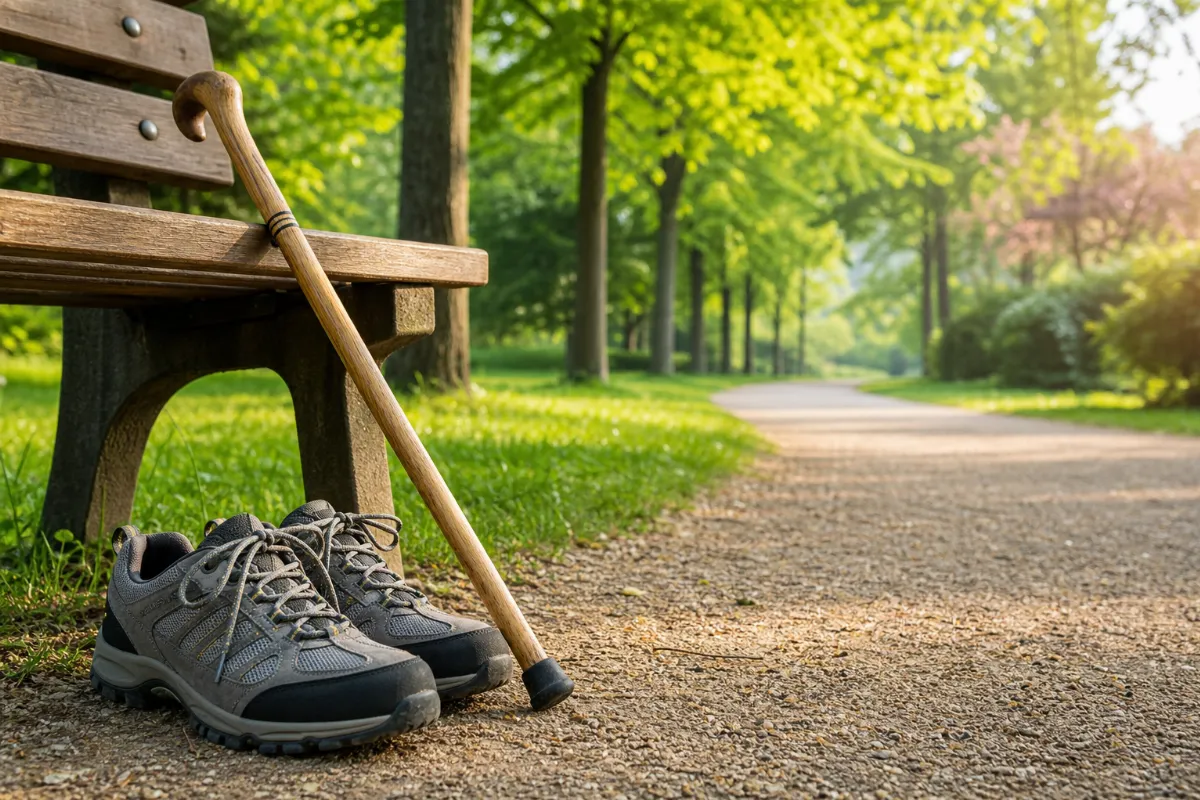
Move Better & Support Your Joints
Walk More Comfortably
This goal is about making everyday walking easier and less painful, so you can keep going for longer and enjoy getting around. It brings together what we found on building up gradually, footwear, strengthening, walking aids and knowing when walking discomfort needs a professional look.
General information, not medical advice. Last updated October 31, 2026. Written by the AlternativeMed editorial team. Not medically reviewed.
Start here
- Walk a little every day at a pace and distance that feels manageable, even if that is only 10 minutes, then add a little more each week. The NHS says a brisk 10-minute daily walk already has health benefits and that you can increase distance slowly if you are not very active.
- Check your shoes: comfortable, supportive and not rubbing, with a cushioned sole and a grip that suits the surface. Loose slippers and worn-out soles are worth replacing.
- Add leg-strengthening exercises on two or more days a week. In Cochrane reviews, exercise reduced pain and improved function in people with knee and hip osteoarthritis.
Be careful with
- Doing too much too quickly, or the wrong type of exercise, may damage joints, according to the NHS. Increase distance gradually and ask a physiotherapist if you are unsure.
- Leg pain that comes on with walking and eases after a few minutes of rest is not simply part of ageing and is worth mentioning to a doctor, because it can be a circulation problem.
- Walking aids, insoles and braces work best when they fit you. Ask a physiotherapist or occupational therapist rather than guessing, and do not stop or change prescribed medicines because walking feels better.
Get help when
- Walking pain in one or both legs that eases after a few minutes of rest. The NHS says to see a GP about recurring leg pain on exercise; it is not just a normal part of ageing.
- Severe burning pain in the legs or feet at rest, skin that turns pale, shiny or dry, sores on the feet or legs that do not heal, or toes that become cold, numb or dark. The NHS says to contact a GP immediately, or call NHS 111 if you cannot reach one.
- A knee that is very painful, cannot move or take weight, is badly swollen or has changed shape, locks, or gives way, or with a high temperature and redness or heat around the joint. The NHS says to call NHS 111 now.
- A fall, or worry about your balance or mobility. The NHS says to see a GP, who may refer you to a specialist falls service.
- Numbness or tingling in the foot, heel pain that has not improved after two weeks of home care, or any foot problem when you have diabetes. Book a GP appointment.
- Sudden severe back pain after a fall or injury, numbness around the groin or saddle area, new loss of bladder or bowel control, new leg weakness, or pain at rest or at night that keeps you awake. These need prompt medical care.
- Suspected fracture or recent injury where you cannot walk or put weight on the leg. Get urgent medical help.
About Walk More Comfortably
What this goal means
Walking more comfortably means being able to walk with less pain, tiredness or worry about stumbling. It is about the walking itself: pace, distance, shoes, strength in the legs, aids that take some weight, and pacing yourself over the day.
It is different from the neighbouring goals in this group. General joint aches are covered in Improve Joint Comfort, stiffness after rest in Manage Joint Stiffness, balance training in Improve Your Balance, and fear of movement in Feel More Confident Moving. This page stays with the practical side of putting one foot in front of the other.
1,2Common experiences
People describe aching hips or knees after a few minutes on their feet, sore heels or feet, legs that feel heavy or cramp, a slower pace than before, or avoiding walks because they expect pain. Some notice pain that eases when they stop for a rest; others find it eases once they get going and warm up.
The pattern of discomfort can help a health professional work out the cause, so it is worth noticing where it is, when it starts and what eases it.
2,3What contributes to walking discomfort
Joint wear, muscle weakness, being overweight, previous joint injury, unsupportive footwear, and low activity levels can all contribute. The NHS notes that being overweight often worsens osteoarthritis because it strains weight-bearing joints.
Circulation can also matter: a painful ache in the legs on walking that settles with rest is the typical sign of intermittent claudication from peripheral arterial disease. Foot problems such as heel pain, and conditions that affect feeling in the feet, can change how comfortable walking is.
2,3,4Conditions that can be behind it
Osteoarthritis of the hips, knees or feet, peripheral arterial disease, heel pain, loss of muscle with age, low bone density, nerve problems and balance problems can all affect walking. We do not diagnose here; the point is to know which pattern to describe to a doctor.
Related pages in this site cover osteoporosis and bone health, falls and balance, and muscle loss with age. Back and joint goals in the same group are linked below.
2,3,5Realistic expectations
In the trials we read, exercise brought moderate, meaningful reductions in pain and improvements in function for knee osteoarthritis, small but real gains from water-based exercise, and clear improvements in walking distance for people with claudication. These are average effects: some people improve a lot, others a little.
Benefits depend on keeping going. In the knee review, benefits were still present 2 to 6 months after formal treatment stopped, but were smaller than immediately after treatment.
6,7,8Who this applies to
Adults of any age who find walking uncomfortable, including people with osteoarthritis, those returning to activity after illness or inactivity, and older adults who want to stay mobile. People recovering from a recent injury or surgery, with unstable heart or lung conditions, or with diabetes-related foot problems should follow their own clinician's advice first.
9,2Related conditions and symptoms
Osteoporosis and Bone Health → Falls and Balance Problems → Sarcopenia and Muscle Loss With Age → Obesity and weight-related health → Prediabetes, type 2 diabetes and metabolic syndrome →
A manageable starting plan
An educational starting point, not a personal prescription. Adjust it to your own situation and any advice from your clinician.
Your first actions
- Week 1: note how far or how long you can walk comfortably, where it hurts, and what eases it. Make no changes yet except checking your shoes.
- Walk most days at a comfortable pace, starting with the distance you noted, and add a few minutes each week.
- Add leg-strengthening exercises on two days a week, ideally from a physiotherapist.
Optional additions
- Try a water-based exercise class.
- Ask a physiotherapist or occupational therapist about a stick, insoles or footwear.
- Add balance practice (see Improve Your Balance).
- Join a walking group for company and routine.
What to track
- Comfortable walking time or distance and how you feel the next day.
- Where and when the pain happens, and whether it eases with rest.
- Any numbness, swelling, sores or falls, to report to your doctor.
When to reassess
After about four weeks, compare your notes. If walking is easier, add a little more. If pain is the same or worse, or you need to stop more often, ask a physiotherapist or GP before pushing harder.
When to seek professional support
- Speak to a GP before increasing activity if you have a heart or lung condition, diabetes, joint problems, or have not been active for some time.
- See a GP for leg pain on walking that eases with rest, foot numbness, or a fall.
- Seek urgent help for the warning signs listed above.
What helps
Ordered by how well the research supports each step. Evidence strength is shown on every card; precautions sit next to the advice.
Start here
Build walking up gradually
Moderate certaintyAddresses: Makes walking more tolerable and lowers the chance of a pain flare from doing too much
Why it may help: The NHS says a brisk 10-minute walk each day already has health benefits, and that if you are not very active you can increase distance slowly. Its osteoarthritis page warns that doing too much too quickly may damage joints.
How to apply it: Start with a distance that leaves you comfortable the next day. Add a few minutes or a little distance each week. Use the talk test: you can talk but not sing at a moderate pace. Split walking into shorter outings through the day if one long walk is too much.
Who it may suit: Most adults, including those starting from very little activity.
Precautions: If you have a heart or lung condition, joint problems or have not been active for some time, speak to a GP before increasing. Stop and get help for chest pain, dizziness or unusual breathlessness.
1,10,9Strengthen the legs and hips on two or more days a week
High certaintyAddresses: Can reduce knee and hip pain and make everyday walking and stairs easier
Why it may help: A Cochrane-based review of 54 trials found land-based exercise reduced knee pain by about 12 points out of 100 and improved physical function by about 10 points straight after treatment, with smaller benefits 2 to 6 months later. A Cochrane review of 10 trials in hip osteoarthritis found exercise reduced pain by about 8 points and improved function by about 7 points. The NHS recommends strength exercises for the major muscle groups on at least two days a week.
How to apply it: Ask a physiotherapist for a set of exercises that fit your joints. Common examples are sitting down and standing up from a chair and gentle leg raises, but a professional can tailor them. Increase gradually.
Who it may suit: Adults with knee or hip osteoarthritis, and most adults wanting steadier legs.
Precautions: The trials were of supervised programmes and the results rely on self-reported pain. Check with a doctor or physiotherapist after surgery, a recent injury or with an unstable condition.
6,11,2,9Physical Activity, Strength and Keeping Muscle → Strength Training and Protein for Older Adults →
Wear comfortable, supportive shoes that suit the surface
Low certaintyAddresses: Reduces rubbing and heel or foot discomfort, and gives better grip
Why it may help: The NHS advises comfortable shoes or trainers with adequate support that do not cause blisters. For heel pain it advises broad, roomy shoes with a low-profile heel and cushioned sole, soft insoles or heel cushions, and avoiding high heels and narrow, pointed shoes. These are practical NHS recommendations; we did not find trials on the effect of shoe choice on walking comfort.
How to apply it: Try shoes on late in the day, when feet are slightly larger, and walk around in them. Check the sole is not worn smooth. A pharmacist can advise on insoles and pads.
Who it may suit: Anyone who walks regularly, especially people with heel or foot pain.
Precautions: If you have diabetes or lose feeling in your feet, ask a health professional about footwear and daily foot checks. Persistent heel pain after two weeks of home care needs a GP visit.
1,4Pace yourself and break walks into shorter segments
Low certaintyAddresses: Lets you cover the same distance with less pain
Why it may help: The NHS notes that short walks count and that you do not need long walks to benefit. Its older adult guidance advises matching activity and intensity to your fitness level. For leg pain from claudication, supervised programmes in the Cochrane review used repeated walking and resting.
How to apply it: Plan rest stops or seats on your route. Walk shorter distances more than once a day. Slow down on hills and uneven ground.
Who it may suit: People who get tired or sore on longer walks.
Precautions: If you must stop because of pain that is new, worsening or happens at rest, see a doctor rather than pushing through.
1,9,8Additional options
Try water-based exercise when walking on land hurts
Moderate certaintyAddresses: Small reductions in pain and disability with less joint loading
Why it may help: A Cochrane review of 13 trials (1,190 people, average age 68) found aquatic exercise gave a small short-term improvement in pain and disability in knee and hip osteoarthritis, equal to roughly 5 points out of 100, with no serious adverse events reported. The NHS suggests water-based classes when joint problems make walking difficult.
How to apply it: Look for supervised pool classes. Start with the shallow end and a gentle pace.
Who it may suit: People with knee or hip osteoarthritis or very sore joints on land.
Precautions: Effects were small and short-term, and the trials averaged 12 weeks. Take care with wet floors and with changing rooms if balance is poor.
7,1Use a walking stick or cane if hip or knee osteoarthritis limits you
Low certaintyAddresses: Takes some of the weight off the painful side
Why it may help: The NHS says a stick or cane may help if hip or knee osteoarthritis affects mobility, and should be held on the side opposite the affected leg so it takes some of your weight. The NHS falls page also says to consider a walking aid. We did not find a trial summary that gives the size of the pain benefit.
How to apply it: Ask a physiotherapist or occupational therapist to check the stick is the right length and that you are using it on the correct side.
Who it may suit: People with one painful hip or knee, or who feel unsteady.
Precautions: A badly fitted stick can strain wrists and shoulders or make balance worse. Rubber tips wear out; replace them.
10,5Ask about cushioned footwear or insoles
Low certaintyAddresses: May spread load more evenly and reduce impact
Why it may help: The NHS says a physiotherapist or occupational therapist may suggest special footwear or insoles for osteoarthritis of the hips, knees or feet, and that shock-absorbing soles can reduce pressure on joints while walking. For heel pain it suggests soft insoles or heel cushions. We did not find high-quality trial results in the sources we read.
How to apply it: Get advice before buying expensive custom products. Start with well-fitting supportive shoes and a simple insole recommended by a pharmacist or clinician.
Who it may suit: People with foot, knee or hip pain related to osteoarthritis, and people with heel pain.
Precautions: Insoles can feel odd at first; build up wearing time. If you have diabetes or numb feet, ask a professional first.
10,4Aim for a healthy weight if extra weight loads your joints
Low certaintyAddresses: Eases strain on the knees and hips when walking
Why it may help: The NHS says being overweight or obese often worsens osteoarthritis because it strains joints, and that losing weight through more activity and a healthier diet can help. It advises discussing slow, safe weight loss with a GP or practice nurse.
How to apply it: Small, steady changes are more realistic than quick fixes. See the weight pages linked below, and ask a clinician if you are unsure.
Who it may suit: Adults with overweight or obesity and joint pain on walking.
Precautions: Avoid crash diets. Anyone with an eating-disorder history, diabetes, or pregnancy needs clinician guidance. Unexplained weight loss needs a medical check.
10Obesity and weight-related health → Weight safety and when to get help →
Use heat or cold for sore joints
Low certaintyAddresses: Short-term relief of pain and stiffness that can make a walk easier
Why it may help: The NHS says hot or cold packs can relieve pain and symptoms for some people with osteoarthritis. For knee pain it suggests an ice pack for up to 20 minutes every 2 to 3 hours.
How to apply it: Wrap a cold or hot pack in a towel; never place ice directly on skin. Try warmth before a walk and cold afterwards if sore.
Who it may suit: People with sore knees, hips or feet.
Precautions: Take care if you have reduced feeling in your skin or poor circulation, to avoid burns or frostbite.
10,12Still being studied
Supervised walking programmes for leg pain from poor circulation
High certaintyAddresses: Longer pain-free and maximum walking distance in people with claudication
Why it may help: A Cochrane review of 32 randomised trials with 1,835 people found exercise programmes improved pain-free walking distance by about 82 metres and maximum walking distance by about 120 metres compared with no exercise, with benefits for up to two years. Exercise did not improve the ankle brachial index, and the trials found no effect on mortality or amputation.
How to apply it: This is for people whose doctor has diagnosed intermittent claudication. Programmes were usually supervised and held at least twice a week. Ask your doctor about a supervised exercise programme.
Who it may suit: People with a diagnosis of leg pain from peripheral arterial disease who are fit for exercise.
Precautions: Most trials excluded people with other conditions limiting exercise. Do not self-diagnose: leg pain on walking needs a medical assessment first. Stopping smoking and managing blood pressure, cholesterol and diabetes are part of NHS self-help advice.
8,3Daily step counts as a target
Moderate certaintyAddresses: Motivation and a rough guide; the evidence concerns long-term health, not walking comfort
Why it may help: A meta-analysis of 15 cohorts (47,471 adults) found that more daily steps were associated with a lower risk of death from any cause, levelling off at around 6,000 to 8,000 steps a day in adults aged 60 and over and 8,000 to 10,000 in younger adults. This is an association from observational studies. It does not show that steps make walking itself less painful.
How to apply it: Use a phone or watch to see your average, then add a modest amount each week. Count what you can do comfortably.
Who it may suit: Adults who like numbers as motivation.
Precautions: Do not chase a number through pain. Lower counts still count: the lowest quarter in the pooled data averaged about 3,500 steps.
13Footwear and walking aids to reduce falls risk
Low certaintyAddresses: Fewer slips and trips when walking
Why it may help: The NHS advises wearing shoes or slippers that fit well and do not slip off, with good grip, keeping floors clear of clutter and loose wires or rugs, and considering a walking aid. It also says to see a GP if you are worried about your balance or mobility or have had a fall.
How to apply it: Check shoes, slippers and floors at home. See Improve Your Balance for training.
Who it may suit: Older adults and anyone who feels unsteady.
Precautions: Walking aids should be fitted by a professional.
5Food & nutrition
Food and drink for this goal
We did not find trials showing that a particular food or drink makes walking more comfortable. The most consistent link between eating and walking in the sources we read is body weight: the NHS says extra weight strains weight-bearing joints and that losing weight gradually through activity and a healthier diet can help.
Take water on longer walks, as the NHS suggests, and eat regularly so you have energy for the walk.
10,1Bones and muscles that carry you
Strong bones and muscles matter for walking. Food and supplement advice on bone health, including calcium and vitamin D, is covered in Build Stronger Bones, and on keeping muscle in Preserve Muscle: Activity, Strength and Keeping Muscle. We have not repeated those details here.
Remedies & supplements
Traditional use, laboratory findings and human trials are kept apart. "Natural" does not mean safe.
Glucosamine and chondroitin
Not enough evidenceStudied form and route: Capsules and tablets, often combined
Intended outcome: Claimed to ease joint pain so you can walk with less discomfort
Human evidence: The NHS says there is no strong evidence that they work, and NICE recommends they should not routinely be offered on the NHS. We did not find trial figures to quote here.
Traditional use: Popular as joint supplements; this is common use rather than evidence of benefit for walking.
Limits: Without strong evidence, they are not a substitute for walking, strengthening and fitting shoes. Product quality and content vary.
Interactions and precautions: Some glucosamine products are made from shellfish; check the label if you are allergic. Ask a pharmacist about interactions, especially with blood-thinning medicines, and talk to a clinician before use if pregnant, breastfeeding, diabetic, or with kidney or liver disease.
10Hot and cold packs
Low certaintyStudied form and route: Reusable packs, hot-water bottle, wrapped ice pack
Intended outcome: Short-term pain relief before or after walking
Human evidence: The NHS says hot or cold packs can relieve pain and symptoms for some people with osteoarthritis, and suggests a wrapped ice pack for up to 20 minutes every 2 to 3 hours for knee pain.
Traditional use: Long-standing home use.
Limits: Relief is temporary and does not change the underlying cause. We did not find trial data in the sources we read.
Interactions and precautions: Never apply ice directly to skin. Take extra care with reduced skin feeling or poor circulation.
10,12Herbal and other supplements marketed for walking comfort or circulation
Not enough evidenceStudied form and route: Capsules, powders, creams
Intended outcome: Claimed to ease leg and joint discomfort or improve circulation
Human evidence: We did not find trials in the sources we read showing that these products make walking more comfortable. The exercise trials we reviewed tested movement, not supplements.
Traditional use: Many herbs have traditional uses for joints or circulation. Traditional use is not evidence of benefit.
Limits: Strength and quality vary, and claims for pain or circulation are rarely backed by human trials.
Interactions and precautions: Some products affect blood clotting or interact with blood-thinning medicines. Ask a pharmacist or doctor first, and mention pregnancy, breastfeeding or chronic conditions.
10,3Therapies & care
Established professional care is available for walking problems, and it is the right first step if walking is painful, your legs ache with walking, or you have fallen. Do not stop or change prescribed medicines because walking feels better.
Physiotherapy
High certaintyProfessional care A physiotherapist can assess how you walk, set up a strengthening and walking plan, and advise on aids and footwear. The NHS says that for more severe osteoarthritis symptoms a structured exercise plan with a physiotherapist may help. In many areas of England you can self-refer to NHS community musculoskeletal services.
Who it may suit: People with joint pain, weakness, balance concerns or recovery from injury or surgery.
Precautions: Tell them about heart or lung conditions, dizziness and any new numbness.
10,12,6,11Occupational therapy and walking aids
Low certaintyProfessional care An occupational therapist can advise on a stick or frame, footwear and insoles, and making your home easier and safer to move around. The NHS says a physiotherapist or occupational therapist may suggest special footwear or insoles for osteoarthritis.
Who it may suit: People whose mobility is limited by hip or knee osteoarthritis, or who feel unsteady.
Precautions: Ask for the aid to be fitted to you.
10,5Supervised exercise for claudication
High certaintyProfessional care Doctors can refer people with leg pain from peripheral arterial disease to supervised exercise programmes. In the Cochrane review, supervised sessions were generally held at least twice a week and improved walking distances.
Who it may suit: People with a diagnosis of claudication who are fit for exercise.
Precautions: This needs a medical assessment first. The NHS also stresses stopping smoking and treating high blood pressure, high cholesterol and diabetes.
8,3Water-based exercise classes
Moderate certaintyExercise therapy Supervised pool exercise reduces load on the joints and gave small short-term benefits for knee and hip osteoarthritis in a Cochrane review.
Who it may suit: People for whom land-based walking is too painful.
Precautions: Ask the instructor about your condition and take care on wet surfaces.
7,1Falls service
Low certaintyProfessional care The NHS says a GP will usually check your balance by asking you to get up and move around, and may refer you to a specialist falls service.
Who it may suit: Anyone who has fallen or is worried about balance or mobility.
Precautions: Do not wait for a second fall.
5What to avoid
Habits, products and claims that can get in the way. Never stop a prescribed medicine without talking to the professional who prescribed it.
Risks that apply to most people
Stopping walking to protect painful joints
High certaintyWhy: The NHS says exercise is one of the most important treatments for osteoarthritis and usually helps to improve symptoms. In the Cochrane-based review of land-based exercise for knee osteoarthritis, pain fell and function improved compared with no exercise.
Who it applies to: People with osteoarthritis or sore joints who have cut back their walking.
Try instead: Keep moving at a comfortable level, shorten the route rather than stop, and ask a physiotherapist for a plan.
10,6Doing too much, too quickly
Low certaintyWhy: The NHS warns that doing too much too quickly, or the wrong type of exercise, may damage joints, and advises following the plan from your GP or physiotherapist.
Who it applies to: People restarting after a break, or who feel good one day and overdo it.
Try instead: Increase time or distance gradually, and keep rest days in your week.
10,1High heels, narrow or pointed shoes, and long barefoot walking when you have heel pain
Low certaintyWhy: The NHS heel pain advice says to avoid long periods of standing or walking, especially barefoot, and to skip high heels and narrow, pointed shoes, choosing broad roomy shoes with a cushioned sole.
Who it applies to: People with heel or foot pain.
Try instead: Choose broad, supportive shoes with a low-profile heel.
4Personal triggers to check
Loose slippers, worn soles and slippery floors
Low certaintyWhy: The NHS advises shoes or slippers that fit well, do not slip off, and have good grip, and advises avoiding clutter and loose rugs or wires that can be tripped on.
Who it applies to: Older adults and anyone unsteady.
Try instead: Wear fitted shoes indoors, clear walkways and use non-slip mats.
5Long periods on your feet when a joint or heel is sore
Low certaintyWhy: The NHS suggests taking a break from load-bearing activity when you have heel pain, and putting as little weight as possible on a painful knee, for example by avoiding long periods of standing.
Who it applies to: People in a flare of knee or heel pain.
Try instead: Take seated breaks and spread activity through the day.
4,12Products that need caution
Relying on glucosamine or chondroitin to make walking easier
Not enough evidenceWhy: The NHS says GPs no longer prescribe glucosamine or chondroitin because there is no strong evidence they work, and that NICE recommends they should not routinely be offered on the NHS.
Who it applies to: People with osteoarthritis tempted by joint supplements.
Try instead: Put effort into walking, strengthening and well-fitted shoes first. If you still want to try a supplement, ask a pharmacist, especially if you take medicines or are allergic to shellfish.
10Buying expensive specialist insoles or braces without an assessment
Not enough evidenceWhy: The NHS describes insoles and supports as options suggested by a physiotherapist or occupational therapist. We did not find high-quality evidence in the sources we read that a particular product will fix walking pain.
Who it applies to: People shopping for quick fixes for knee or foot pain.
Try instead: Start with an assessment and well-fitting, supportive shoes.
10Unsupported claims
'Walking wears out your joints'
Evidence againstWhy: The NHS says regular exercise usually improves osteoarthritis symptoms. The Cochrane-based knee review found exercise reduced pain and improved function. Risk factors for osteoarthritis listed by the NHS include previous joint injury and overuse of a joint before it healed, and heavy repeated strain from some work or exercise.
Who it applies to: People who avoid walking from fear of damaging their knees or hips.
Try instead: Walk at a comfortable level, build up gradually and strengthen the muscles around the joint.
2,10,6'Leg pain when walking is just getting older'
Evidence againstWhy: The NHS says recurring leg pain on exercise is not just a normal part of ageing and describes a painful ache that eases with rest as a typical symptom of peripheral arterial disease.
Who it applies to: Anyone with calf, thigh or buttock pain that starts with walking and eases with rest.
Try instead: Mention it to a GP.
3'You must walk 10,000 steps a day'
Moderate certaintyWhy: In the pooled cohort data, the risk of death kept falling as steps rose but levelled off at roughly 6,000 to 8,000 steps for adults aged 60 and over. No fixed number is required.
Who it applies to: People discouraged by a high step target.
Try instead: Choose a target you can reach comfortably and nudge it up.
13Common mistakes
Using a stick on the wrong side
Low certaintyWhy: The NHS says a stick or cane should be held on the side opposite the affected leg so it takes some of your weight.
Who it applies to: People who have just started using a walking stick.
Try instead: Ask a physiotherapist or occupational therapist to check your technique and the stick's height.
10Ignoring new numbness, tingling or sores on the feet
Low certaintyWhy: The NHS advises seeing a GP for tingling or numbness in the foot, for foot problems when you have diabetes, and for sores on the feet or legs that do not heal.
Who it applies to: People with diabetes, circulation problems or nerve changes.
Try instead: Check your feet regularly and book a GP visit if anything changes.
4,3Skipping strengthening and balance work and only walking
Moderate certaintyWhy: The NHS guidance for older adults advises strength, balance and flexibility activities on at least two days a week in addition to aerobic activity, and says they can help you feel steadier and more confident after a fall or if you are worried about falling.
Who it applies to: Regular walkers who have never added strength work.
Try instead: Add two short sessions a week of leg strengthening and balance practice.
9,14Evidence & safety
What the research shows
The strongest evidence is for exercise. Cochrane reviews found that exercise reduces pain and improves function in knee and hip osteoarthritis, aquatic exercise gives small short-term benefits, and exercise programmes lengthen walking distance in claudication. The NHS advice on footwear, walking sticks, insoles and heat or cold is practical guidance for which we did not find trial data in the sources we read, so we rate it low. Glucosamine and chondroitin are not routinely offered on the NHS because there is no strong evidence they work. Step-count data are observational.
Limits of the evidence
- Most exercise trials relied on self-reported pain, and participants could not be blinded to treatment, so results may be affected by bias.
- The knee review noted that research results may be vulnerable to selection, attrition and detection bias, and that only about a third of studies had low risk of bias.
- The claudication trials mostly excluded people with other conditions limiting exercise and were mostly small.
- Step-count studies are observational and measure risk of death, not walking comfort.
- We did not find trial figures for footwear, insoles or walking sticks in the sources we read.
Precautions and interactions
- Do not stop or change prescribed medicines because walking feels better.
- Check with a doctor or physiotherapist before increasing activity after surgery, injury or with an unstable condition.
- Supplements and herbs can interact with blood-thinning medicines; ask a pharmacist.
Life-stage considerations
- Pregnancy and breastfeeding: walking is generally part of activity guidance, but ask your midwife or doctor about what suits you, and about any supplement.
- Older adults: the NHS recommends strength, balance and flexibility activities on at least two days a week, and seeing a GP if you have fallen or are worried about balance. Step benefits levelled off at lower counts in adults aged 60 and over.
- Children and teens: this page is written for adults. Persistent limping or walking pain in a child needs a doctor.
- Chronic conditions: heart or lung disease, diabetes, kidney problems and osteoporosis may change what is safe; ask your clinician.
Warning signs
- Leg pain on walking that eases with rest: see a GP.
- Rest pain, pale shiny skin, sores that do not heal or cold numb toes: contact a GP immediately, or NHS 111.
- A knee that is very painful, locked, badly swollen, will not take weight, or is hot and red with a fever: call NHS 111 now.
- Sudden severe back pain after a fall, saddle numbness, loss of bladder or bowel control, new leg weakness: prompt medical care.
- A fall, or new worry about your balance or mobility: see a GP.
Claim checks
Walking wears out your joints
Evidence againstNot supported. The NHS says regular exercise usually improves osteoarthritis symptoms and the Cochrane-based knee review found exercise reduced pain.
10,6Leg pain on walking is a normal part of ageing
Evidence againstNot supported. The NHS says recurring leg pain on exercise is not just a normal part of ageing and should be checked.
3Exercise improves walking distance in people with leg pain from poor circulation
High certaintySupported by high-quality evidence in a Cochrane review: about 82 metres more pain-free walking distance and 120 metres more maximum walking distance, in people considered fit for exercise.
8Glucosamine and chondroitin make walking easier
Not enough evidenceNot established. The NHS says there is no strong evidence they work and they are not routinely offered.
10You need 10,000 steps a day
Moderate certaintyNot supported as a fixed number. Benefit levelled off at roughly 6,000 to 8,000 steps for adults aged 60 and over and 8,000 to 10,000 for younger adults in pooled cohorts.
13Water-based exercise helps knee and hip osteoarthritis
Moderate certaintySmall, short-term benefits in pain, disability and quality of life in a Cochrane review, with no serious adverse events reported.
7Questions people ask
Is it OK to walk if my knees or hips hurt?
In most cases, yes. The NHS says exercise is one of the most important treatments for osteoarthritis and usually helps symptoms, but doing too much too quickly may damage joints. Start gently, build up gradually and ask a physiotherapist or GP for advice. Seek urgent help for a very painful, swollen, locked or hot knee, or if you cannot put weight on the leg.
How much should I walk?
The NHS says a brisk 10-minute daily walk has benefits and that adults aged 19 to 64 should aim for 150 minutes of moderate activity a week; for adults over 65 the NHS guidance is also 150 minutes a week, plus strength and balance activities on at least two days. You do not have to start there; build up from what you can manage.
What shoes are best for walking?
The NHS advises comfortable shoes or trainers with adequate support that do not cause blisters. For heel pain it suggests broad, roomy shoes with a low-profile heel and cushioned sole, and soft insoles or heel cushions. We did not find trials ranking particular shoe types. If you have diabetes or numb feet, ask a health professional.
Should I use a walking stick?
The NHS says a stick may help if hip or knee osteoarthritis affects your mobility, held on the side opposite the affected leg. Ask a physiotherapist or occupational therapist to check the fit.
Do insoles help?
The NHS says special insoles may spread weight more evenly and that a physiotherapist or occupational therapist may suggest them for osteoarthritis. We did not find trial figures to quote. Soft insoles or heel cushions are suggested for heel pain.
Why do my legs hurt when I walk but feel better when I rest?
The NHS describes a painful ache in one or both legs when walking that usually eases after a few minutes of rest as the typical symptom of intermittent claudication from peripheral arterial disease. It is not a diagnosis you can make yourself, so see a GP.
Do glucosamine or chondroitin help me walk more comfortably?
The NHS says there is no strong evidence that they work and that they are not routinely offered. If you want to try them, talk to a pharmacist first, especially if you take blood thinners or have a shellfish allergy.
Is swimming or water exercise worth trying?
A Cochrane review found small short-term improvements in pain, disability and quality of life from water-based exercise in knee and hip osteoarthritis, and the NHS suggests it when joint problems make walking difficult.
How many steps should I aim for?
There is no magic number. In pooled studies, benefits for longevity levelled off around 6,000 to 8,000 steps for adults aged 60 and over, and 8,000 to 10,000 for younger adults. Those figures are about long-term health, not about walking comfort, so choose a goal you can reach without pain.
When should I see a doctor about walking problems?
See a GP for leg pain on walking that eases with rest, foot numbness or tingling, heel pain not improving after two weeks of home care, a fall, or worry about balance. Get urgent help for rest pain with skin changes or sores that do not heal, a knee you cannot move or put weight on, or the other signs listed above.
References
- NHS. Walking for health. Read 2026-10-31. source
- NHS. Osteoarthritis. Read 2026-10-31. source
- NHS. Peripheral arterial disease (PAD). Read 2026-10-31. source
- NHS. Heel pain. Read 2026-10-31. source
- NHS. Falls. Read 2026-10-31. source
- Fransen M, et al. Exercise for osteoarthritis of the knee: a Cochrane systematic review. Br J Sports Med. 2015 Dec. PMID 26405113. source
- Bartels EM, et al. Aquatic exercise for the treatment of knee and hip osteoarthritis. Cochrane Database Syst Rev. 2016 Mar 23. PMID 27007113. source
- Lane R, Harwood A, Watson L, Leng GC. Exercise for intermittent claudication. Cochrane Database Syst Rev. 2017;12:CD000990. PMID 29278423. source
- NHS. Physical activity guidelines for older adults. Read 2026-10-31. source
- NHS. Osteoarthritis: treatment. Read 2026-10-31. source
- Fransen M, et al. Exercise for osteoarthritis of the hip. Cochrane Database Syst Rev. 2014 Apr 22. PMID 24756895. source
- NHS. Knee pain. Read 2026-10-31. source
- Paluch AE, et al. Daily steps and all-cause mortality: a meta-analysis of 15 international cohorts. Lancet Public Health. 2022 Mar. PMID 35247352. source
- CDC. Physical Activity Guidelines for Older Adults. Read 2026-10-31. source
Related on AlternativeMed
Related goals
Improve Joint Comfort → Manage Joint Stiffness → Improve Your Flexibility → Maintain Your Range of Motion → Improve Your Balance → Build Stronger Bones → Support Your Back During Everyday Activities → Improve Your Posture & Movement Habits → Feel More Confident Moving → Sit Less & Move More → Support Healthy Circulation →
Ingredients, foods and supplements
Collagen, Biotin and Beauty Supplement Claims →
Research, safety and claim-check resources
Physical Activity, Strength and Keeping Muscle → Strength Training and Protein for Older Adults → Recovery after exercise → Weight safety and when to get help →