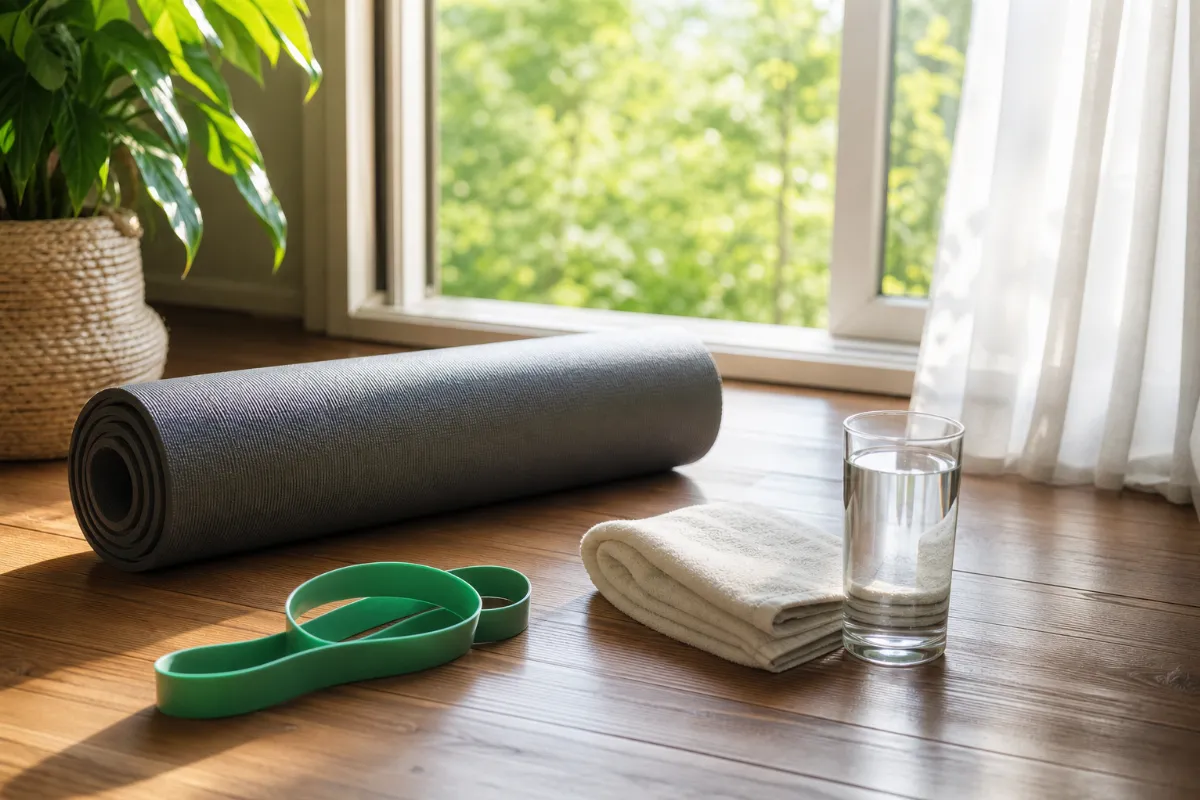
Move Better & Support Your Joints
Maintain Your Range of Motion
Joints stay easier to move when they are moved, so the aim of this goal is to keep every major joint going through its comfortable range as the years pass. It is about keeping what you have, such as reaching up to a shelf, turning to look behind you or getting up from a low chair, rather than becoming extremely bendy.
General information, not medical advice. Last updated October 31, 2026. Written by the AlternativeMed editorial team. Not medically reviewed.
Start here
- Move each major joint (neck, shoulders, spine, hips, knees, ankles) gently through its comfortable range every day, for example with the NHS flexibility routine, and build up slowly.
- Combine strength and flexibility activities on at least 2 days a week, and break up long spells of sitting with a few minutes of movement.
- Stay within comfort: a mild stretch is fine, but stop if a movement causes sharp or worsening pain, and ask a GP or physiotherapist for a plan if a joint has become stiff, painful or limited.
Be careful with
- Do not force a joint into a painful position or push through sharp pain. If a movement makes pain worse, stop and ask a clinician.
- Increase movement gradually. The NHS warns that doing too much too quickly, or the wrong sort of exercise, can damage joints that already have arthritis.
- Speak to a doctor first if you have not exercised for some time, have a medical condition, have had recent surgery or a fracture, or have an unstable joint. Never stop a prescribed medicine on your own because of joint stiffness.
Get help when
- A joint that has become steadily stiffer or harder to move over weeks, such as a shoulder that is painful at night and will not lift (the NHS describes frozen shoulder this way), or any stiffness and pain that does not go away.
- A joint that locks, catches or gives way, or that is hot, red and swollen, especially with a fever.
- Pain, tingling, weakness or numbness in both legs, loss of feeling around the genitals or anus, or changes in bladder or bowel control with back pain: the NHS lists these as reasons to call 999 or go to A&E.
- Back pain that started after a serious accident or a fall, comes with chest pain, is severe and sudden, is worse at night or after rest, or comes with unexplained weight loss.
- Loss of movement after an injury, or suspected fracture.
About Maintain Your Range of Motion
What this goal means
Range of motion is how far a joint can move in each direction: how high your arm lifts, how far you can turn your head, how deeply your hip and knee bend. This goal is about keeping that everyday range through life, so that dressing, reaching, bending, climbing stairs and getting in and out of a car stay easy.
It is separate from stretching for extra flexibility (see Improve Your Flexibility), easing morning stiffness (Manage Joint Stiffness) and joint aches (Improve Joint Comfort). Here the focus is on keeping normal movement in the big joints such as the shoulders, hips and knees.
1,2What it can feel like
People often notice it first through small tasks: it becomes harder to reach behind the back or up to a high shelf, to turn the head when reversing, to put on socks and shoes, or to rise from a deep seat. Joints can feel tight or stiff after sitting, and a movement that used to be easy may stop short.
Because the change is usually gradual, many people adapt by avoiding the movement, which can make the loss worse over time.
3,4What can make it harder
Ageing is one factor. In a cross-sectional study of 436 adults aged 55 to 86, shoulder and hip movement was lower in older groups, with an average decline of roughly 5 to 7 degrees per decade. In that study, age explained the difference more than recorded physical activity did, so this is not something activity can fully prevent.
Other common factors are long periods of sitting, joint injury or surgery, osteoarthritis (NIAMS lists pain, swelling and loss of joint motion among its effects), being overweight, which strains weight-bearing joints, and conditions such as diabetes, which the NHS lists as a possible cause of frozen shoulder. Muscle weakness around a painful joint can also add to the problem.
5,3,4,6,7Conditions that can be behind it
Osteoarthritis, frozen shoulder, inflammatory arthritis such as rheumatoid arthritis, tendon problems, old injuries and some back conditions can all limit movement. The NHS notes that prolonged morning stiffness can point to rheumatoid arthritis rather than osteoarthritis, which is a reason to see a GP rather than self-treat.
This page does not diagnose the cause. We did not find a reliable way to tell these apart without an examination, so a joint that is losing movement over weeks should be checked.
4,6,3Realistic expectations
Regular movement helps people keep and sometimes regain range, but gains take weeks of consistent practice and fade if you stop. Stretching alone gives short-lived changes: a systematic review found that range-of-motion improvements after a stretching session typically last under 30 minutes, so the lasting effect comes from regular training.
Some age-related loss is normal. The goal is to slow it and keep useful movement, not to return to the range of your twenties.
8,9,5Who this applies to
Adults of any age who want to keep moving freely, and especially people over 50, people who sit for much of the day, and people with mild joint stiffness. If you have an injury, recent surgery, osteoporosis, an inflammatory joint condition, or pain that limits movement, get advice on which movements are safe before you start. Pregnancy, children and teenagers have different needs that this page does not cover.
1Related conditions and symptoms
A manageable starting plan
An educational starting point, not a personal prescription. Adjust it to your own situation and any advice from your clinician.
Your first actions
- Do a 5 to 10 minute gentle routine through the neck, shoulders, spine, hips and legs at least twice a week, ideally daily, building up slowly.
- Add strength activities and balance work on at least 2 days a week, and keep up your usual walking or other activity.
- Break up long sitting with a minute or two of movement.
- If a joint feels stuck, painful or is getting worse, book a GP or physiotherapy visit rather than pushing through.
Optional additions
- Join a beginner tai chi or gentle yoga class.
- Use a wrapped heat pack on a stiff joint for up to 20 minutes before moving.
- Do a short warm-up before walks, sport or the gym.
What to track
- Simple everyday tests: can you reach a high shelf, put on socks, turn your head to check over your shoulder or rise from a chair without using your hands?
- How stiff or sore you feel after sitting and after exercise.
- Any joint that is losing movement, locking or giving way.
When to reassess
Give a regular routine about 4 to 6 weeks, then check your everyday tests. If a joint is no better, is worse, or any red flag appears, speak to a clinician.
When to seek professional support
- See a GP for shoulder pain and stiffness that does not go away, for joints that are steadily losing movement, or for any red flag listed above.
- Ask about NHS or local physiotherapy services; in many areas you can refer yourself for back or joint help.
What helps
Ordered by how well the research supports each step. Evidence strength is shown on every card; precautions sit next to the advice.
Start here
A short daily routine that moves each joint through its comfortable range
Low certaintyAddresses: Helps keep everyday movement in the neck, shoulders, spine, hips and legs
Why it may help: The NHS flexibility routine includes simple moves such as neck rotation, neck stretch, sideways bend and a calf stretch, and describes them as gentle exercises to improve health and mobility that people who have not exercised in a while can follow.
How to apply it: Follow the NHS routine: for example hold each neck stretch for 5 seconds and repeat 3 times on each side, and do 3 sideways bends on each side. Do the routine at least twice a week, wear loose clothing and build up the repetitions slowly. Move only as far as is comfortable.
Who it may suit: Most adults who have not been told to avoid movement.
Precautions: The NHS routine is a general guide, not a proven treatment for every joint. Stop if a movement causes sharp or increasing pain, and ask a clinician if you have had surgery or a fracture.
2Activities that improve strength, balance and flexibility on at least 2 days a week
Moderate certaintyAddresses: Supports mobility, strength and confidence on your feet
Why it may help: The NHS guideline for adults 65 and over says to do activities that improve strength, balance and flexibility on at least 2 days a week, to be physically active every day, and to aim for at least 150 minutes of moderate activity a week. It adds that these exercises help people who have fallen or fear falling feel stronger and more confident.
How to apply it: Pick a mix you enjoy: yoga, pilates, tai chi, resistance bands or body-weight exercises all count as strength activities in NHS guidance. Add them to your walking or other activity.
Who it may suit: Adults of all ages; the guideline is written for those 65 and over, and adults 19 to 64 have a similar target.
Precautions: Speak to a GP first if you have not exercised for some time or have medical conditions. Match the intensity to your fitness.
1Break up long periods of sitting
Low certaintyAddresses: Gives stiff hips, back and shoulders regular movement
Why it may help: The NHS advises reducing time spent sitting or lying down and breaking up long periods of not moving with some activity. We did not find a trial in the sources read that tested this specifically for range of motion, so the link to joint movement is common sense rather than proven.
How to apply it: Stand, walk a few steps or do one or two stretches every 30 minutes or so; use ordinary tasks such as making a drink as a reminder.
Who it may suit: Desk workers, people who watch a lot of television and older adults.
Precautions: If standing or walking is painful or unsafe, ask a clinician about seated alternatives.
1,7Strength training through a comfortable full range
Moderate certaintyAddresses: Can improve range of motion about as much as stretching
Why it may help: A systematic review and meta-analysis of 11 supervised randomized trials (452 participants) found no difference between strength training and stretching for improving range of motion. The trials varied a lot in design and populations, so the authors called for more research.
How to apply it: Choose exercises that use the joint's whole comfortable range with a light, controlled load, such as sit-to-stands, wall or incline push-ups, or resistance-band rows. Increase gradually.
Who it may suit: Adults who prefer strengthening over stretching, or who want both benefits in one session.
Precautions: Technique matters; consider a few sessions with a qualified instructor or physiotherapist, especially after surgery, with osteoporosis or with an unstable joint.
9,1Keep using a stiff or arthritic joint (within comfort)
High certaintyAddresses: Helps keep a joint moving and supports the muscles around it
Why it may help: The NHS says regular exercise that keeps you active and builds muscle usually helps osteoarthritis symptoms, and calls exercise one of the most important treatments. A Cochrane review of 54 trials in knee osteoarthritis found high-quality evidence that exercise reduced pain and moderate-quality evidence that it improved physical function. It did not primarily measure range of motion.
How to apply it: Do a gentle exercise plan from your GP or physiotherapist, build up slowly, and keep it going: benefits in the review were smaller by 2 to 6 months after treatment ended.
Who it may suit: People with osteoarthritis, especially of the knee, once a clinician has confirmed the diagnosis.
Precautions: Eight studies in the review reported temporary increases in knee or low back pain from the exercise; none reported serious adverse events. Doing too much too soon can aggravate joints.
10,11,4Additional options
A short warm-up with dynamic stretches before activity
Moderate certaintyAddresses: Temporarily increases joint range before exercise
Why it may help: A systematic review of static, dynamic and PNF stretching found all forms produce range-of-motion gains that typically last under 30 minutes, and recommended stretching within a warm-up that also includes dynamic movement. Long static stretches (60 seconds or more per muscle) were linked to small drops in performance immediately afterwards.
How to apply it: Do 5 to 10 minutes of easy movement and gentle controlled swings or reaches before a walk, gym session or sport, then start the main activity.
Who it may suit: Active adults and people starting a new activity.
Precautions: The review studied healthy active people, so it may not apply to people with joint disease or injury.
8Tai chi
Moderate certaintyAddresses: May improve pain, stiffness and function in knee osteoarthritis
Why it may help: NCCIH reports that several studies showed short-term improvements in pain, stiffness and physical function in people with knee osteoarthritis, and that in a 2016 trial tai chi and physical therapy both improved pain for a year. It also notes some people had temporarily increased knee pain.
How to apply it: Join a beginner class led by a qualified teacher and tell them about any joint problems.
Who it may suit: Adults wanting slow, low-impact movement, including older adults and those with knee osteoarthritis.
Precautions: Movements may need adapting if you have joint disease, recent surgery or balance problems.
12Yoga
Not enough evidenceAddresses: Combines stretching and strengthening; evidence for joint movement is limited
Why it may help: NCCIH says yoga includes strength and flexibility elements that may benefit arthritis, but very little research has been done on yoga for osteoarthritis, so it is uncertain whether it helps. NHS guidance counts yoga as a muscle-strengthening activity.
How to apply it: Choose a gentle or beginner class, tell the instructor about your joints and use props such as blocks and straps to stay in a comfortable range.
Who it may suit: Adults who enjoy a guided class and have no restrictions on movement.
Precautions: Deep or extreme positions may not be suitable with arthritis, osteoporosis or after surgery.
12,1Gentle warmth on a stiff joint before moving
Not enough evidenceAddresses: May ease stiffness enough to move more comfortably
Why it may help: For back pain the NHS suggests a heat pack or hot water bottle wrapped in a tea towel to relieve joint stiffness or muscle spasms, and for a frozen shoulder it suggests a wrapped heat pack on the shoulder for up to 20 minutes at a time. These are comfort measures from the NHS; we did not find trial evidence for them in the sources read.
How to apply it: Always wrap the heat pack, keep it on for no more than 20 minutes, and then do gentle movements.
Who it may suit: Adults with stiff muscles or joints without numb or damaged skin.
Precautions: Avoid heat on skin with reduced sensation, on a hot, red or swollen joint, or while falling asleep.
13,6Still being studied
Massage therapy
Very low certaintyAddresses: Small studies suggest it may reduce symptoms in knee osteoarthritis
Why it may help: NCCIH says very few studies have evaluated massage for osteoarthritis, and the small amount of evidence suggests it may reduce symptoms in knee osteoarthritis. We did not find evidence that it improves range of motion on its own.
How to apply it: If you try it, choose a trained therapist and tell them about your joints.
Who it may suit: Adults with sore knees who want a hands-on option alongside exercise.
Precautions: Tell the therapist about arthritis, blood-clotting problems, recent surgery or injury.
12Acupuncture
Low certaintyAddresses: May help osteoarthritis pain, which may make movement easier
Why it may help: NCCIH reports that analyses suggest acupuncture may help relieve osteoarthritis pain, but studies show it is consistently better than no treatment and not necessarily better than sham acupuncture, so expectation may play a large role.
How to apply it: If you choose it, use a trained practitioner who uses sterile needles.
Who it may suit: Adults with osteoarthritis pain who want an additional option.
Precautions: Improperly performed acupuncture can cause serious side effects; tell the practitioner about blood thinners or other conditions.
12Food & nutrition
What food can and cannot do for movement
We did not find evidence that any single food or diet improves range of motion in people with healthy joints. Movement, muscle strength and avoiding long inactivity are what the agency sources emphasise.
Nutrition for muscles and bones is covered in other goals rather than repeated here.
1Healthy weight and joint strain
The NHS says being overweight or obese often makes osteoarthritis worse because of extra strain on joints, particularly the knees and hips, and advises losing weight slowly and safely through more activity and a healthier diet. NIAMS also lists being overweight as a factor that makes osteoarthritis more likely.
Weight is a sensitive topic, and the aim is easier movement, not a number. If eating or weight worries you, speak to a GP; restriction, bingeing or fear of eating need professional support.
11,4,3Bones and muscles that support your joints
Strong muscles and bones help joints work well. Bone health, calcium and vitamin D have their own pages, and amounts should come from your doctor or an official source rather than from this page.
See Build Stronger Bones and the sarcopenia page for details.
1Remedies & supplements
Traditional use, laboratory findings and human trials are kept apart. "Natural" does not mean safe.
Glucosamine and chondroitin
Mixed findingsStudied form and route: Oral supplements, alone or combined
Intended outcome: Not shown to improve joint movement; studied for osteoarthritis pain
Human evidence: NCCIH reports conflicting results for glucosamine in knee osteoarthritis pain, including a major NIH-sponsored study that found little or no benefit. For chondroitin, results were inconsistent and the largest, highest-quality studies did not show an effect. Evidence that either changes joint structure is small. We did not find studies testing range of motion in the source read.
Limits: Evidence for any effect on pain is mixed and the possible benefit is small. They are not a substitute for movement.
Interactions and precautions: NCCIH notes glucosamine and chondroitin may interact with the blood-thinner warfarin. Check labels if you have a shellfish allergy, and ask a pharmacist or doctor if you are pregnant, breastfeeding, have diabetes or take other medicines.
12Boswellia serrata
Low certaintyStudied form and route: Oral herbal extract used in Ayurvedic medicine
Intended outcome: Possible slight improvement in osteoarthritis pain and function
Human evidence: NCCIH cites a 2014 evaluation of oral herbal remedies that found enough evidence to conclude Boswellia serrata and avocado-soybean unsaponifiables may produce slight improvements in pain and function, but small enough that patients might not find them meaningful. NCCIH also says little is known about their safety.
Traditional use: Used in Ayurvedic medicine.
Limits: The effect is small. We did not find studies on range of motion.
Interactions and precautions: Herbs can interact with medicines; ask a pharmacist, especially if you take blood thinners, and avoid in pregnancy and breastfeeding unless a clinician advises.
12MSM and DMSO
Not enough evidenceStudied form and route: MSM as a dietary supplement; DMSO applied to the skin
Intended outcome: Unclear whether either helps osteoarthritis symptoms
Human evidence: NCCIH says very little research has been done on MSM and DMSO, so it is uncertain whether they help with osteoarthritis symptoms.
Limits: Too little research to judge any effect on movement.
Interactions and precautions: NCCIH reports MSM can cause allergic reactions, digestive upset and skin rashes, and DMSO can cause digestive upset, skin irritation and a garlic-like taste, breath and body odour.
12Arnica or comfrey gel applied to the skin
Low certaintyStudied form and route: Topical herbal gels
Intended outcome: May ease osteoarthritis pain; little evidence on movement
Human evidence: NCCIH cites a 2013 evaluation which concluded that arnica gel and comfrey extract gel might be helpful for osteoarthritis, and capsicum extract gel probably is not. Evidence on other products was insufficient.
Limits: Evidence is limited and from one older evaluation. Pain relief is not the same as better range of motion.
Interactions and precautions: NCCIH says there is not much safety information on topical herbal therapies and some, such as capsicum gels, can irritate skin. Do not apply to broken skin; stop if a rash appears.
12Therapies & care
Established care for a joint that is losing movement usually starts with a GP or physiotherapist, who can find the cause and give you exercises suited to the joint. This page does not recommend medicines or doses, and you should not stop a prescribed medicine on your own.
Physiotherapy
Moderate certaintyProfessional exercise and movement care For frozen shoulder, the NHS says a physiotherapist checks how much movement you have, then uses stretching and strength exercises, posture advice and pain relief, usually over at least 6 weeks. In many areas you can refer yourself to NHS community musculoskeletal services for back or joint help without seeing a GP first.
Who it may suit: Anyone with a joint that is stiff, painful, limited, or recovering from injury or surgery.
Precautions: Tell the physiotherapist about all conditions, medicines, osteoporosis and any recent surgery. Follow the home exercises you are given.
6,13,11Structured exercise therapy for osteoarthritis
High certaintySupervised or home exercise programme A Cochrane review of 54 trials found exercise reduced pain and improved physical function in knee osteoarthritis, with benefits that were smaller but still present 2 to 6 months after treatment ended. The NHS describes exercise as one of the most important treatments for osteoarthritis.
Who it may suit: Adults with knee, hip or other osteoarthritis diagnosed by a clinician.
Precautions: Programmes should be adapted to the person; a few studies reported temporary increases in pain.
10,11Tai chi and gentle movement classes
Moderate certaintyMind-body movement practice NCCIH reports short-term improvements in pain, stiffness and function with tai chi in knee osteoarthritis, and that yoga has too little research for a conclusion. Classes also give structure and social support.
Who it may suit: Adults who like group activity.
Precautions: Tell the teacher about joint problems; temporary knee pain was reported by some people.
12Massage and acupuncture
Low certaintyComplementary hands-on and needle therapies NCCIH says small studies suggest massage may reduce knee osteoarthritis symptoms and that acupuncture may help osteoarthritis pain, though acupuncture is not clearly better than sham treatment. Neither is proven to restore range of motion.
Who it may suit: Adults seeking symptom relief alongside, not instead of, exercise.
Precautions: Use trained practitioners and tell them about blood thinners, recent surgery or other conditions.
12What to avoid
Habits, products and claims that can get in the way. Never stop a prescribed medicine without talking to the professional who prescribed it.
Risks that apply to most people
Sitting for long unbroken stretches
Low certaintyWhy: The NHS advises breaking up long periods of not moving, and lists a lower risk of osteoarthritis and falls among the benefits of regular activity. Long sitting also leaves hips and back unmoved for hours.
Who it applies to: Desk workers, drivers, people recovering from illness and older adults.
Try instead: Stand and move for a minute or two every half hour or so.
7,1Keeping a stiff or painful joint completely still
Moderate certaintyWhy: For frozen shoulder the NHS says to move the shoulder because keeping it still will make the pain worse, and to avoid only the movements that cause pain. For back pain it advises staying active and not staying in bed for long periods.
Who it applies to: Anyone with a sore shoulder, back or other joint without a recent fracture or an instruction to rest.
Try instead: Move gently within comfort and get a clinician's plan if it is not improving.
6,13Personal triggers to check
Doing too much, too fast
Moderate certaintyWhy: The NHS warns that doing too much exercise too quickly, or the wrong sort of exercise, may damage joints in people with osteoarthritis. Sudden increases can also leave you sore enough to stop altogether.
Who it applies to: People returning to activity after a break or starting a new class.
Try instead: Add a little at a time, and build repetitions gradually as the NHS routine suggests.
11,2Pushing into sharp or worsening pain
Low certaintyWhy: The NHS says to stop back exercises and stretches if pain gets worse and see a GP. Pain that increases with a movement is a signal to stop and check, not to push harder.
Who it applies to: Everyone, particularly those with arthritis, injuries or recent surgery.
Try instead: Stay within a mild stretch and reduce the range or repetitions; ask a physiotherapist to adapt the movement.
13Products that need caution
Magnetic bracelets, insoles and wraps promoted for joint pain
Evidence againstWhy: NCCIH states that the available scientific evidence does not support static magnets for pain relief. Magnetic devices of any kind can also be hazardous with some implanted devices such as pacemakers.
Who it applies to: Anyone considering magnets, especially people with pacemakers or other implants.
Try instead: Spend the effort on regular movement and, if needed, a physiotherapist's plan.
12Arthritis and pain supplements bought online that promise fast results
Moderate certaintyWhy: NCCIH reports that the US FDA has warned about several arthritis or pain supplements that were tainted with prescription drugs, which could cause side effects or interact with medicines.
Who it applies to: Anyone buying joint supplements from unfamiliar sellers.
Try instead: Talk to a pharmacist or doctor before using any supplement, especially with prescribed medicines.
12Unsupported claims
"Regrow cartilage" or "cure arthritis" claims
Evidence againstWhy: The NHS states there is no cure for osteoarthritis, and NIAMS says researchers do not know what triggers the breakdown of joint tissue. For glucosamine and chondroitin, NCCIH says it is still uncertain whether they have a meaningful effect on symptoms or joint structure.
Who it applies to: Anyone reading supplement, device or exercise-programme marketing.
Try instead: Look for realistic goals such as less pain, easier movement and better daily function.
11,3,12"Stretch for a minute and your range is permanently fixed"
Moderate certaintyWhy: A systematic review found range-of-motion improvements after stretching typically last under 30 minutes. Lasting change comes from regular practice over time.
Who it applies to: People expecting a single session to change stiffness.
Try instead: Make movement a daily or twice-weekly habit.
8Common mistakes
Using gym machines or heavy loads to "free up" a frozen shoulder
Low certaintyWhy: The NHS advises against making up your own strenuous exercises for frozen shoulder because gym equipment can make the pain worse; it recommends gentle exercises from a GP or physiotherapist.
Who it applies to: People with a painful, stiff shoulder.
Try instead: See a GP; ask for a physiotherapy referral and follow the exercises you are given.
6Assuming stiffness is just age and ignoring it
Low certaintyWhy: Some loss of movement is expected with age, but a joint that steadily loses movement over weeks may reflect frozen shoulder, arthritis or another treatable condition. The NHS says to see a GP for shoulder pain and stiffness that does not go away.
Who it applies to: Anyone who notices a clear change in one joint.
Try instead: Mention it to a GP or physiotherapist, particularly if it is one-sided or comes with pain.
6,5Evidence & safety
What the research shows
Health agencies agree that regular activity, strength and flexibility work on at least 2 days a week, and less unbroken sitting are the foundations for keeping movement. Exercise has high-quality evidence for pain in knee osteoarthritis, and strength training and stretching appear comparable for improving range of motion, though the trials were varied. Stretching effects are short-lived on their own. Supplements, devices and complementary therapies have weak or mixed evidence and none has been shown to restore range of motion.
Limits of the evidence
- Most range-of-motion trials are small and vary in methods and populations; the strength versus stretching review itself called for more research.
- The age-decline figures come from one cross-sectional study, which cannot show that individuals will change at the same rate.
- Osteoarthritis trials mainly measure pain and function, not range of motion.
- We did not search for trials on every joint or on every supplement; turmeric, collagen, omega-3, devil's claw and willow bark are covered in Improve Joint Comfort rather than rated here.
- Sources are agency pages read on 2026-10-31 plus a small number of reviews.
Precautions and interactions
- Check supplements and herbs with a pharmacist if you take any medicine, especially blood thinners.
- Exercise after surgery, fracture or with unstable conditions should follow a clinician's plan.
- Never stop or change a prescribed medicine, including osteoporosis or arthritis medicines, because of stiffness.
- Osteoporosis and bone-density testing are medical matters; ask your doctor before starting vigorous bending or twisting if you have been told you are at risk of fracture.
Life-stage considerations
- Older adults: the NHS guideline for those 65 and over asks for strength, balance and flexibility activities on at least 2 days a week; speak to a GP first if you have not exercised for some time.
- Pregnancy and breastfeeding: we did not find guidance on range-of-motion routines for these stages in the sources read; ask a midwife or physiotherapist before starting a new routine, and avoid herbal supplements unless a clinician advises.
- Children and teenagers: this page is written for adults; speak to a paediatric clinician about stiffness or limited movement in a child.
Warning signs
- Back pain with numbness or weakness in both legs, loss of feeling around the genitals or anus, or bladder or bowel changes: the NHS says to call 999 or go to A&E.
- Back pain that is severe and sudden, comes with feeling hot, cold or unwell, or started after a serious accident: the NHS lists urgent care or 999 depending on the signs.
- A hot, swollen joint with fever; a joint that locks or gives way; pain at night or at rest; unexplained weight loss; suspected fracture.
Claim checks
Stretching permanently increases your flexibility after one session
Not supported. Gains after a session typically last under 30 minutes; lasting change needs regular practice.
8You must stretch to improve range of motion; strength exercises do not help
Not supported. A meta-analysis found no difference between strength training and stretching for range of motion, though trials varied.
9Rest is best for a stiff or arthritic joint
Mostly not supported. The NHS says regular exercise usually helps osteoarthritis and that keeping a frozen shoulder still makes pain worse, unless a clinician has told you to rest.
11,6,10Glucosamine or magnets will restore joint movement
Not supported. Evidence for glucosamine is mixed for pain, and static magnets are not supported for pain relief.
12Questions people ask
What does range of motion mean?
It is how far a joint can move in each direction, such as how high you can lift your arm or how far you can bend your knee. Keeping a useful range makes daily tasks easier.
Does range of motion always shrink with age?
On average it does. In a study of 436 adults aged 55 to 86, shoulder and hip movement fell by roughly 5 to 7 degrees per decade, and recorded physical activity did not explain the difference in that study. Staying active still supports function and independence, but you cannot completely stop the change.
How often should I do flexibility exercises?
The NHS suggests its flexibility exercises at least twice a week, and for adults 65 and over it advises strength, balance and flexibility activities on at least 2 days a week. Many people find a short daily routine easier to keep.
Is stretching or strength training better?
A meta-analysis of 11 trials found no difference between them for range of motion, so you can choose what you will do regularly, or combine both.
Should I exercise if my joints hurt?
For osteoarthritis the NHS says exercise is one of the most important treatments and usually helps symptoms, but you should build up slowly and follow a plan from your GP or physiotherapist. Stop if pain gets worse, and get advice about sharp or unexplained pain.
What should I do about a stiff shoulder that will not lift?
The NHS says to see a GP if shoulder pain and stiffness do not go away. For frozen shoulder it recommends gentle movement, a physiotherapist if needed, and not inventing strenuous gym exercises.
Do supplements like glucosamine help me move better?
NCCIH says it remains uncertain whether glucosamine and chondroitin meaningfully help osteoarthritis symptoms or joint structure, and we did not find evidence that they improve range of motion. They may interact with warfarin.
Is yoga or tai chi good for joints?
NCCIH reports short-term improvements in pain, stiffness and function from tai chi in knee osteoarthritis, while there is very little research on yoga for osteoarthritis. Gentle classes with a qualified teacher who knows about your joints are a reasonable choice.
When should I see a doctor about stiffness?
See a GP if stiffness or pain does not go away, a joint is steadily losing movement, or it is stopping you doing daily tasks. Hot, swollen joints with fever, locking or giving way, and the back-pain emergency signs listed above need prompt care.
Can this page replace physiotherapy?
No. It gives general information and is not medical advice. A physiotherapist can assess your joints and give a programme suited to you.
References
- NHS. Physical activity guidelines for older adults. Page last reviewed 15 August 2024. Read 2026-10-31. source
- NHS. Flexibility exercises. Page last reviewed 20 November 2023. Read 2026-10-31. source
- NIAMS (NIH). Osteoarthritis. Last reviewed September 2023. Read 2026-10-31. source
- NHS. Osteoarthritis. Read 2026-10-31. source
- Stathokostas L, et al. Flexibility of older adults aged 55-86 years and the influence of physical activity. J Aging Res. 2013. PMID 23862064. source
- NHS. Frozen shoulder. Page last reviewed 24 June 2024. Read 2026-10-31. source
- NHS. Why sitting too much is bad for us. Read 2026-10-31. source
- Behm DG, et al. Acute effects of muscle stretching on physical performance, range of motion, and injury incidence in healthy active individuals: a systematic review. Appl Physiol Nutr Metab. 2016. PMID 26642915. source
- Afonso J, et al. Strength Training versus Stretching for Improving Range of Motion: A Systematic Review and Meta-Analysis. Healthcare (Basel). 2021. PMID 33917036. source
- Fransen M, et al. Exercise for osteoarthritis of the knee. Cochrane Database Syst Rev. 2015. PMID 25569281. source
- NHS. Osteoarthritis: Treatment and support. Read 2026-10-31. source
- NCCIH (NIH). Osteoarthritis: In Depth. Read 2026-10-31. source
- NHS. Back pain. Read 2026-10-31. source
Related on AlternativeMed
Related goals
Improve Joint Comfort → Manage Joint Stiffness → Improve Your Flexibility → Walk More Comfortably → Improve Your Balance → Support Your Back During Everyday Activities → Improve Your Posture & Movement Habits → Feel More Confident Moving →
Ingredients, foods and supplements
Boswellia → Turmeric → Collagen → Vitamin D → Magnesium →
Research, safety and claim-check resources
Falls and balance → Sit Less & Move More → Activity, strength and muscle → Recovery after exercise → Tai chi → Yoga → Massage → Acupuncture →