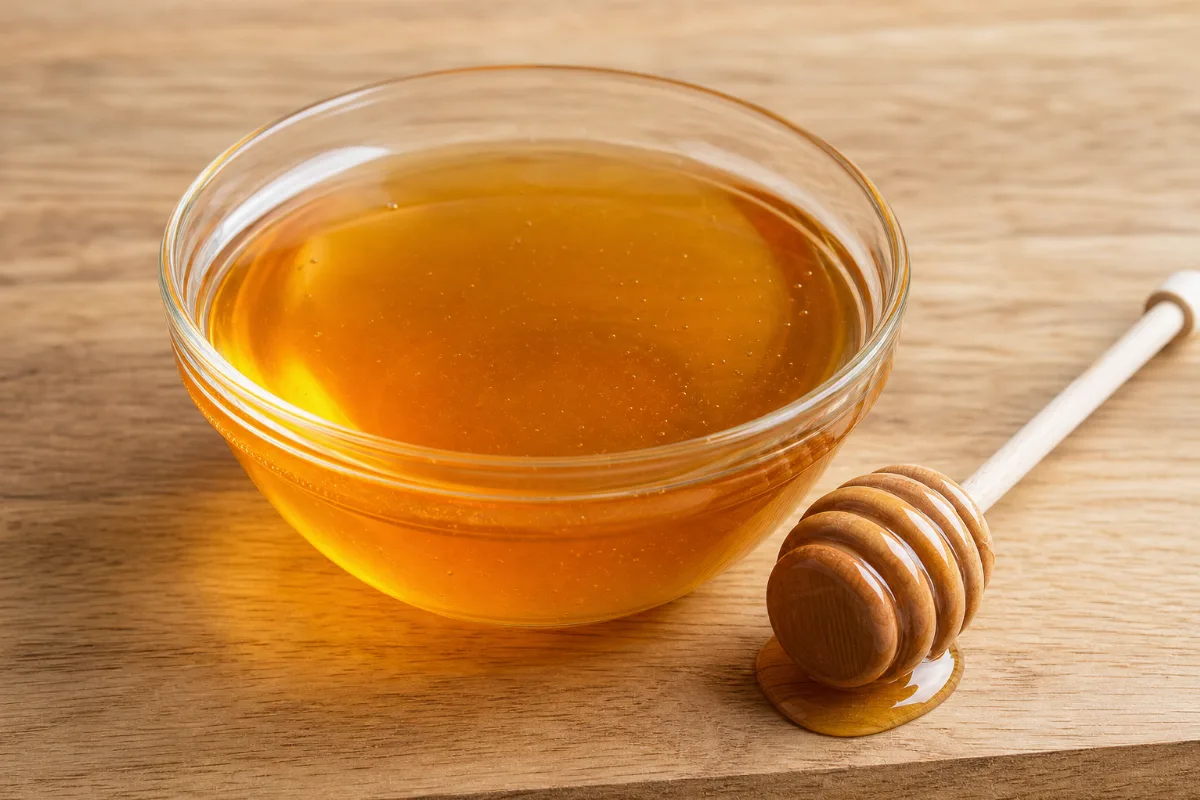
Honey & Bee Products · Honey
Clover Honey
Honey from clover (Trifolium) nectar, chiefly white clover, Trifolium repens · also called White clover honey, Trifolium honey
Clover honey is a common table honey that bees make mostly from the nectar of clover flowers. Never give any honey, clover honey included, to a baby under 12 months: it can cause infant botulism. Honey is a sugar food. No trial has tested clover honey for cough, and the one small trial in people compared it with table sugar. Most other evidence is about honey in general or comes from the lab.
General information, not medical advice. Last substantive update · Not medically reviewed. A named clinician has not signed off on this page. How this page is made
About Clover Honey
Clover honey is a common table honey made by bees mostly from clover nectar. Safety first: never give any honey to a baby under 12 months because of infant botulism. Honey is a sugar food, it can cause allergy in some people, and it is not a wound dressing. No trial has tested clover honey for cough. The one human trial of clover honey was a small comparison with table sugar in healthy adults. Most other findings are about honey in general or come from the lab.
What it is
Clover honey is honey that honey bees (Apis mellifera) make mostly from the nectar of clover flowers. White clover, Trifolium repens, is the usual example, and the plant name is accepted in GBIF. Red, alsike and other clovers are also used. The name describes the nectar source, not one fixed recipe, so two jars can differ.
In the United States the FDA allows a label such as Clover Honey if there is information to support that clover is the chief floral source. The Codex honey standard says a plant-source name needs honey from wholly or mainly that source, and the country of production must be declared. A 2022 review says only a limited number of studies exist on clover honeys.
What the research shows
One randomised cross-over trial used clover honey: 37 healthy adults ate clover honey or table sugar for four weeks each. Insulin and cholesterol did not change with either. Triglycerides rose after one week with both.
The cough research is about other honeys. A Cochrane review found a small benefit for a few days in children, but the authors say there was no strong evidence for or against. No cough trial used clover honey.
Reviews of honey and blood sugar or cholesterol give mixed results, and name clover honey as one subgroup that did better. Antibacterial findings come from lab dishes only.
Quality and buying
Honey can be mixed with cheaper sweeteners. FDA guidance says a product made of honey and another sweetener cannot be labelled as only honey. A lab paper showed that a laser method could tell some added materials, such as water, sugar solution or starch, from pure clover honey. It was a test on prepared samples, so it gives no rate of fraud.
A jar cannot show this. Words like raw or natural are not safety claims. No source we read tested clover honey for pesticides, antibiotics or metals.
At a glance
Traditional uses history, not proof
- Honey in general has been a home remedy for cough and wounds in many places; the sources read describe no traditional medical use specific to clover honey.
- The NHS lists hot lemon and honey among home remedies for a cough and says the evidence for such remedies is limited.
Studied for research
- Night-time cough in children (honey in general, not clover): mixed
- Cough or colds with clover honey itself: insufficient, no trial
- Blood fats and insulin, clover honey versus table sugar (37 healthy adults): low
- Blood sugar and cholesterol markers in pooled honey trials (clover subgroup named): mixed
- Burns and wounds (honey dressings in general): mixed
- Antibacterial activity (lab dishes only): very low
- Isoflavones from clover in the honey: not measured, insufficient
Main compounds
- Fructose and glucose, the main sugars
- Phenolic acids and flavonoids, measured in some clover honeys in the lab
- Isoflavones are found in clover plants; whether the honey has any is unmeasured
Common forms
- Liquid honey
- Crystallised, set or creamed honey
- Filtered or strained honey, and raw or unfiltered honey (not safer for babies)
- Comb honey
- Sterile honey dressings (a separate medical product)
Research links: WHO: Botulism · NHS: Botulism · WHO: Healthy diet (free sugars) · Clover honey versus sugar, blood fats trial (abstract) · Cochrane: honey for cough in children (abstract) · Cochrane: honey for wounds (abstract) · Research Library · Genes & Biomarkers Library
What it is and its history
- Accepted scientific name
- Clover honey (honey made mainly from clover nectar, Trifolium spp.)
- Naming authority
- Plant: Trifolium repens L. (white clover), GBIF accepted name
- Synonyms
- Trifolium honey; White clover honey
- Common names
- Clover honey (English); White clover honey (English)
- Family or group
- Source plant: Fabaceae (pea family). The honey is made by honey bees (Apis mellifera, GBIF key 1341976), not by the plant.
- Classification
- Plantae (source plant) > Tracheophyta > Magnoliopsida > Fabales > Fabaceae > Trifolium > Trifolium repens
- Native range
- Not checked in the sources read.
- Habitat
- Not checked.
- What it looks like
- Flowers: Nectar from clover flowers is the main source (by definition of the honey).
- Cultivation
- Not checked.
- Harvest and processing
- Sold as liquid, crystallised or creamed honey, strained or filtered honey, raw or unfiltered honey, and comb honey. "Raw" has no standard meaning in the sources read. Sterile honey dressings are a separate medical product.
- Look-alikes and adulterants
- Name: Other honeys, or honey blends, sold as "clover"; Note: A label does not prove origin. FDA guidance says a plant name on the label should be supported by information that it is the chief floral source.; Name: Clover herb, red clover tea and supplements; Note: These are plant products, not honey. Their effects and risks cannot be assumed for clover honey.
Photographs
Traditional use and history history, not clinical proof
| Tradition or era | Documented use | Source |
|---|---|---|
| Honey in general, many places | The NHS lists hot lemon and honey among home remedies for a cough and says evidence is limited. The Cochrane wound review says honey has been used as a wound remedy since ancient times. No source read describes a traditional medical use specific to clover honey. | s-nhs-cough |
| Food standards, 1981 onward | The Codex honey standard was adopted in 1981 and revised in 1987 and 2001. It allows honey to be named by plant source when it comes wholly or mainly from that plant. | s-codex-honey |
Traditional use shows how it was used. It does not show that it works or is safe today.
What is inside, and how it may work
What it contains and how those compounds act in cells and animals. Laboratory and animal mechanisms are not proven effects in people.
Main compounds
| Compound | Family | Where it is concentrated | Activity studied | Level of evidence |
|---|---|---|---|---|
| Fructose and glucose | sugars | Honey Codex requires at least 60 g of fructose plus glucose per 100 g for honeys not listed as exceptions. | The main sugars; they make honey sweet and caloric. 19 | Authoritative guidance |
| Phenolic acids and flavonoids | polyphenols | Honey An Egyptian clover honey (Trifolium alexandrinum) was reported by one study, as summarised in the 2022 review, to contain total phenolics of 18.574 to 53.314 mg gallic acid equivalent per g and flavonoids of 26.604 mg catechin per kg. This is one study of a different clover species; not typical of all clover honey. | Measured as a broad indicator of antioxidant activity in the lab. No effect in people was shown. 16 | Lab analysis |
| Isoflavonoids (formononetin, biochanin A, genistein, daidzein, glycitein) | isoflavones | Red clover plants Not measured in clover honeys; the 2022 review found no comparative data. | Present in clover plants. Their presence in clover honey is a question for future research. 16 | Insufficient |
Mechanisms, receptors and pathways
| Target or pathway | Gene or receptor | What was found | Level |
|---|---|---|---|
| Growth slowing of bacteria in dishes | Clover honey slowed four bacteria less than manuka and kanuka honeys. Hydrogen peroxide contributed to the activity of manuka and kanuka honeys but was never essential for complete inhibition. 9 | Laboratory research | |
| Cough relief | Not established in the sources read. 12 | Insufficient |
Absorption, metabolism and elimination
- Absorption
- Not studied for clover honey in the sources read.
- Distribution
- Not studied.
- Metabolism
- Not studied.
- Elimination
- Not studied.
- Bioavailability
- Not studied.
Isolated compounds versus whole extracts
Honey is a whole food, mostly sugar. Findings for clover plants or isolated isoflavones do not show what clover honey does. Findings for other honeys, or for sterile medical honey dressings, do not carry over to jar clover honey.
Nutritional composition
Honey is mostly sugar. WHO counts sugars naturally present in honey as free sugars to be limited. Codex requires at least 60 g of fructose plus glucose per 100 g in most honeys.
3 mixed findings2 low certainty1 very low certainty2 not enough evidence
What was looked at
The 8 benefits and uses checked for Clover Honey, each with how strong the evidence is. Tap one to open it.
- Night-time cough in children with a cold (honey in general, not clover honey)Mixed findings
- Cough or colds with clover honey itselfNot enough evidence
- Blood fats and insulin when clover honey replaces sugar (small trial in healthy adults)Low certainty
- Blood sugar and cholesterol markers in pooled honey trials (a subgroup named clover honey)Mixed findings
- Blood sugar and uric acid in short trials of honey versus other sugars (honey in general)Low certainty
- Wound and burn healing (honey dressings in general, not jar clover honey)Mixed findings
- Antibacterial activity (lab dishes only)Very low certainty
- Plant compounds such as isoflavones in clover honey (not measured)Not enough evidence
Lab markers tracked in the studies
Cough frequency scoreTriglyceridesFasting blood glucoseTotal cholesterolHbA1cUric acidTime to heal a partial-thickness burn
What is Clover Honey good for?
What people ask about, and how strong the human evidence is. Where a result is about honey in general, not clover honey, it says so. None of it is proof, and all of it should be read with the safety section.
Benefits, one by one
Each card is a research question, not a promise. Tap a goal to filter. Open a card to see the studies, doses and limits.
Night-time cough in children with a cold (honey in general, not clover honey)
Mixed findingsSeveral small trials in children gave honey before bed and parents rated the cough as better than with no treatment or a placebo syrup. A Cochrane review says honey probably eases cough a little for a few days, but there is no strong evidence either way. These trials used buckwheat, eucalyptus, citrus and other honeys. None named clover honey.
7 studiesAmounts are not given as advice here.
Studies, doses and limits
What the trials found
Cochrane review of 6 trials (899 children), a 2026 meta-analysis of 7 trials (576 children), and three trials: 105 children (buckwheat honey), 139 children (honey, type not named) and 300 children (eucalyptus, citrus and labiatae honeys).
Results
In the Cochrane review honey probably reduced cough frequency more than no treatment (-1.05 on a 7-point scale, 95% CI -1.48 to -0.62) and more than placebo (-1.62, 95% CI -3.02 to -0.22); both rated moderate certainty. Compared with dextromethorphan the difference was small and uncertain. Beyond three days honey had no advantage over placebo or salbutamol. A 2026 meta-analysis found no clear difference from cough medicines in its main analysis, with a possible honey advantage only after post-hoc analysis that the authors call hypothesis-generating.
Effect sizes as reported
About 1 point on a 7-point parent-rated scale versus no treatment or placebo.
Why this rating
Moderate certainty against no treatment or placebo for up to three days (the Cochrane reviewers' own rating), but mostly one-night trials rated by parents, with different honeys, and the authors say there was no strong evidence for or against. Nothing was tested with clover honey.
Form and dose studied
Amounts are not given as advice here.
Who was studied
Children aged 1 to 18 with a cold cough, treated outside hospital. Never for babies under 12 months.
Limits
Short trials, parent-rated scores, high heterogeneity; honey type differed and clover was not named.
Why researchers looked
Honey is an old home remedy for cough, and cough medicines carry risks in young children.
Traditional use
The NHS lists hot lemon and honey among home remedies for a cough and says the evidence for such remedies is limited.
Proposed mechanism Authoritative guidance
Not established in the sources read. Honey may coat the throat, but no source read shows how it works.
A proposed mechanism does not show that the effect happens in people.
Honey is a sugar food. In the Cochrane review stomach symptoms were reported by 12% on honey and 11% on placebo (RR 1.91, 95% CI 1.12 to 3.24). Never give honey to a baby under 12 months.
Cough or colds with clover honey itself
Not enough evidenceNo trial of clover honey for cough or colds was found in the sources read.
2 studiesNot applicable.
Studies, doses and limits
Results
No clover honey cough trial was found. The cough findings above come from other honeys and cannot be assumed for clover honey.
Why this rating
No study to rate.
Limits
No trial exists in what we read.
Why researchers looked
Clover honey is a common table honey, so people ask whether the cough findings apply to it.
Proposed mechanism Insufficient
Not studied.
A proposed mechanism does not show that the effect happens in people.
Never give honey to babies under 12 months.
Blood fats and insulin when clover honey replaces sugar (small trial in healthy adults)
Low certaintyIn one small trial of 37 healthy adults, clover honey and table sugar were each eaten for four weeks. Insulin and cholesterol did not change with either. Blood triglycerides were higher after one week with both, and stayed higher at four weeks only with sugar. This does not show clover honey helps anyone, and it does not test people with diabetes.
2 studiesCarbohydrate given at 1.2 g per kg of body weight a day in the trial;…
Studies, doses and limits
What the trials found
One randomised cross-over trial of clover honey versus sucrose in 37 healthy adults.
Results
Triglycerides rose at 1 week with both clover honey and sucrose (P < .05) and stayed up at 4 weeks only with sucrose. The early rise on honey went with a short-lived increase in body weight. No change was detected in insulin, total cholesterol, LDL or HDL. People ate less energy, carbohydrate, sugars and saturated fat during the honey period.
Effect sizes as reported
P values only in the abstract; no effect sizes given.
Why this rating
One small trial of healthy adults, four weeks per period, free-living diets, no outcome in people with disease.
Form and dose studied
Carbohydrate given at 1.2 g per kg of body weight a day in the trial; this is a research amount, not advice.
Who was studied
Healthy adults aged 24 to 57.
Limits
37 people; short; the authors' view that honey may replace sucrose is their reading; honey is still a sugar.
Why researchers looked
People ask whether honey is a gentler sweetener than table sugar.
Proposed mechanism Authoritative guidance
Not established.
A proposed mechanism does not show that the effect happens in people.
Clover honey is a free sugar. People who manage blood sugar should ask a doctor or pharmacist.
Blood sugar and cholesterol markers in pooled honey trials (a subgroup named clover honey)
Mixed findingsA review of 18 trials found small changes in blood sugar and blood fats with honey, mostly low certainty. In its subgroup analysis the reviewers say robinia honey, clover honey and raw honey did better for fasting glucose and total cholesterol. A larger 2025 overview was more mixed. Neither shows clover honey helps people with diabetes or heart disease.
3 studiesHoney amounts in trials are not given as advice here.
Studies, doses and limits
What the trials found
Meta-analysis of 18 controlled trials (33 comparisons, 1,105 people) and an overview of 69 randomised trials (3,544 people).
Results
Pooled across all honeys the 2023 meta-analysis found lower fasting glucose (-0.20 mmol/L, 95% CI -0.37 to -0.04), total cholesterol (-0.18 mmol/L), LDL (-0.16 mmol/L), triglycerides (-0.13 mmol/L) and ALT (-9.75 U/L), all low certainty, and higher HDL (+0.07 mmol/L, high certainty). Subgroups by floral source differed, and robinia, clover and raw honey were named as showing beneficial effects on fasting glucose and total cholesterol. The 2025 overview of honey (types not separated) found about 10 g a day may lower HbA1c but may worsen systolic blood pressure, AST, triglycerides, fasting glucose and hs-CRP.
Effect sizes as reported
Small mean differences; clover subgroup numbers are not in the abstract.
Why this rating
The two reviews point in different directions, most results are low certainty, and the clover subgroup is not described in detail in the abstract.
Form and dose studied
Honey amounts in trials are not given as advice here.
Who was studied
Adults in trials of mixed health status.
Limits
Abstract-level reading only; the number of clover honey trials is not stated in the abstract.
Why researchers looked
Honey is a free sugar, but some trials suggest it may behave differently from table sugar.
Proposed mechanism Authoritative guidance
Not established.
A proposed mechanism does not show that the effect happens in people.
Honey is a free sugar. People who manage blood sugar should ask a doctor or pharmacist.
Blood sugar and uric acid in short trials of honey versus other sugars (honey in general)
Low certaintyA meta-analysis of seven short trials (7 hours to 49 days) found honey had no significant effect on fasting glucose or insulin. Honey pooled with fructose and fructose-glucose mixtures raised uric acid. Honey types were not named, and nothing was tested on clover honey.
2 studiesNot given as advice.
Studies, doses and limits
What the trials found
Meta-analysis of seven clinical trials (17 study codes) of fructose, fructose-glucose mixtures, honey and sucrose.
Results
Honey showed no significant effect on fasting blood glucose or insulin. Pooled fructose, fructose-glucose and honey raised uric acid (Hedges g 0.550, P = 0.028).
Effect sizes as reported
Hedges g 0.550 for uric acid (pooled sugars including honey).
Why this rating
Short trials, honey types and numbers of honey trials not given in the abstract, and the uric acid result pools honey with other sugars.
Form and dose studied
Not given as advice.
Who was studied
Adults in short trials.
Limits
Abstract-level reading; honey type unknown.
Why researchers looked
People ask whether honey affects blood sugar differently from other sugars.
Proposed mechanism Authoritative guidance
Not established.
A proposed mechanism does not show that the effect happens in people.
Honey is a free sugar. People who manage blood sugar should ask a doctor or pharmacist.
Wound and burn healing (honey dressings in general, not jar clover honey)
Mixed findingsA Cochrane review found honey dressings healed partial-thickness burns about 4 to 5 days faster than conventional dressings. For most other wounds the results were unclear. The review does not name clover honey, and jar honey is not the same as a sterile medical dressing.
1 studiesHoney dressings or topical honey; the abstract does not separate medi…
Studies, doses and limits
What the trials found
Cochrane review of 26 trials (3,011 people) of honey in acute wounds, burns and chronic wounds.
Results
High-quality evidence (2 trials, 992 people) that honey dressings healed partial-thickness burns faster than conventional dressings (about 4.68 days, 95% CI -5.09 to -4.28). High-quality evidence of no difference from silver sulfadiazine in healing within 6 weeks (RR 1.00, 95% CI 0.98 to 1.02). Infected post-operative wounds healed faster than with antiseptic washes plus gauze (moderate quality). The authors say overall conclusions are hard to draw and most other comparisons are low or very low quality.
Effect sizes as reported
About 4.7 days faster for partial-thickness burns versus conventional dressings.
Why this rating
High quality for one burn comparison, but low or very low quality for most others, and the honey types and grades are not given in the abstract.
Form and dose studied
Honey dressings or topical honey; the abstract does not separate medical-grade from other honey.
Who was studied
People with burns, acute wounds and chronic wounds.
Limits
Review published 2015; honey type not specified; mixed comparators.
Why researchers looked
Honey has been used on wounds since ancient times, and some honey dressings are made as medical products.
Traditional use
The review says honey has been used as a wound remedy since ancient times.
Proposed mechanism Authoritative guidance
Not established in the review abstract.
A proposed mechanism does not show that the effect happens in people.
Do not swap jar honey for medical wound care. See a clinician for wounds and burns.
Antibacterial activity (lab dishes only)
Very low certaintyIn lab dishes, clover honey slowed the growth of four types of bacteria, but less than manuka and kanuka honeys. This is lab work only and does not show clover honey treats infections in people.
1 studiesNot applicable.
Studies, doses and limits
Results
A New Zealand clover honey and manuka and kanuka honeys were tested on Bacillus subtilis, Escherichia coli, Staphylococcus aureus and Pseudomonas aeruginosa. Growth inhibition was greatest for manuka, then manuka-kanuka blend, kanuka, and clover least. Pseudomonas aeruginosa was equally sensitive to all the honeys, clover included, and least sensitive overall.
Effect sizes as reported
Not given as numbers in the abstract.
Why this rating
Lab dishes only; no human trial of clover honey for infection was found.
Limits
In vitro; one clover honey sample set.
Why researchers looked
Antibiotic resistance has renewed interest in honey as a complementary option.
Traditional use
The authors describe honey as a candidate alternative for hard-to-treat chronic wounds.
Proposed mechanism Laboratory research
Hydrogen peroxide contributed to the activity of manuka and kanuka honeys in this study; for clover honey the abstract does not say.
A proposed mechanism does not show that the effect happens in people.
Do not use food honey in place of treatment for an infection.
Plant compounds such as isoflavones in clover honey (not measured)
Not enough evidenceRed clover plants are rich in isoflavones, compounds with a weak oestrogen-like action. A 2022 review found no comparative data on the amounts of these compounds in clover honeys. So it is not known whether clover honey has any meaningful amount or any effect from them.
1 studiesNot applicable.
Studies, doses and limits
Results
The reviewers say whether clover honeys contain phytoestrogenic isoflavonoids should be investigated. No measurement or health outcome was found.
Why this rating
Nothing has been measured, so there is nothing to rate.
Limits
Review-level reading only.
Why researchers looked
Clover plants contain bioactive isoflavonoids, so people wonder whether the honey does.
Proposed mechanism Insufficient
Not studied for the honey.
A proposed mechanism does not show that the effect happens in people.
No safety signal can be assessed from the sources read.
Connections to the rest of health
How Clover Honey connects to the rest of our health knowledge graph. Every link says what kind of connection it is. A safety link (for example to the liver) is a warning, not a benefit. A study that merely mentions a topic never creates a benefit link.
Explore every connection: goals, body systems, organs, symptoms, genes
B. Body systems
| Connected to | Kind of connection | Evidence status | Context | Studies |
|---|---|---|---|---|
| Immune system | Adverse effect or risk | Low certainty | Allergic reactions, rare but can be severe. Preparation or compound: Honey and bee products |
10 14 5 |
| Respiratory System | Biological association | Mixed findings | Studied for: Night-time cough in children with a cold (honey in general, not clover honey) Studied for: Cough or colds with clover honey itself | 12 17 13 15 4 18 21 |
| Cardiovascular System | Biological association | Low certainty | Studied for: Blood fats and insulin when clover honey replaces sugar (small trial in healthy adults) Studied for: Blood sugar and cholesterol markers in pooled honey trials (a subgroup named clover honey) | 2 22 1 11 |
| Endocrine System | Biological association | Low certainty | Studied for: Blood fats and insulin when clover honey replaces sugar (small trial in healthy adults) Studied for: Blood sugar and cholesterol markers in pooled honey trials (a subgroup named clover honey) | 2 22 1 11 7 16 |
| Integumentary System | Biological association | Mixed findings | Studied for: Wound and burn healing (honey dressings in general, not jar clover honey) | 8 |
| Immune System | Biological association | Very low certainty | Studied for: Antibacterial activity (lab dishes only) | 9 |
C. Body parts and organs
I. Biomarkers
| Connected to | Kind of connection | Evidence status | Context | Studies |
|---|---|---|---|---|
| Triglycerides | Low certainty | Higher after one week in a clover honey trial; slightly lower in pooled trials. Preparation or compound: Clover honey and pooled honey |
2 1 | |
| Cough frequency score | Biological association | Mixed findings | Measured in trials: lowered. A lab change is not the same as a health benefit. | 12 |
| Triglycerides | Biological association | Low certainty | Measured in trials: mixed. A lab change is not the same as a health benefit. | 2 1 |
| Fasting blood glucose | Biological association | Mixed findings | Measured in trials: mixed. A lab change is not the same as a health benefit. | 1 11 |
| Total cholesterol | Biological association | Low certainty | Measured in trials: unchanged. A lab change is not the same as a health benefit. | 2 1 |
| HbA1c | Biological association | Mixed findings | Measured in trials: lowered. A lab change is not the same as a health benefit. | 11 |
| Uric acid | Biological association | Low certainty | Measured in trials: raised. A lab change is not the same as a health benefit. | 7 |
| Time to heal a partial-thickness burn | Biological association | High certainty | Measured in trials: shortened. A lab change is not the same as a health benefit. | 8 |
L. Active compounds
| Connected to | Kind of connection | Evidence status | Context | Studies |
|---|---|---|---|---|
| Fructose and glucose | Biological association | Authoritative guidance | The main sugars; they make honey sweet and caloric. Preparation or compound: Honey |
19 |
| Phenolic acids and flavonoids | Biological association | Lab analysis | Measured as a broad indicator of antioxidant activity in the lab. No effect in people was shown. Preparation or compound: Honey |
16 |
| Isoflavonoids (formononetin, biochanin A, genistein, daidzein, glycitein) | Biological association | Not enough evidence | Present in clover plants. Their presence in clover honey is a question for future research. Preparation or compound: Red clover plants |
16 |
Each connection is stored with the ingredient, the connected record, the kind of connection, the evidence status, the supporting studies, the preparation or compound involved, and a review date (last reviewed October 25, 2026).
The evidence
The research centre for Clover Honey. Every record here was checked against PubMed or the publisher's page; we never list a study we have not verified.
Evidence by outcome
Bars show how many studies we found for each outcome, not how well it works. People are added up across trials only (reviews are not added, to avoid double counting).
How we rate evidence
High certainty
Several well-run trials or reviews agree; further research is unlikely to change the picture much.
Moderate certainty
Good trials point the same way, but some doubt remains.
Low certainty
Small, short or inconsistent trials. The finding could change with better research.
Very low certainty
Very little or very weak human data. Treat as a possibility only.
Mixed findings
Trials or reviews disagree with each other.
Not enough evidence
Not enough human research to say either way.
Evidence against
Good research found no benefit, or found harm.
We take the reviewers' own risk-of-bias and GRADE statements where they exist, and otherwise judge from study size, design, consistency, directness and whether a product matches what is sold. Many publications do not make evidence high. Method note: We read the abstracts of 17 PubMed papers, the WHO botulism and healthy-diet fact sheets, the NHS botulism and cough pages, the FDA honey labelling guidance and the Codex honey standard in full, and the full text of a 2022 clover honey review. We checked the plant and bee names in GBIF. Certainty ratings are the compiler's own reading unless a review gives its own. The EU honey directive, CDC and MedlinePlus pages and the USDA honey grade standard were not read and are not cited as checked.
Study library: every study we checked 25
| Study | Design | People | Product, dose, length | Result |
|---|---|---|---|---|
| Ahmed 2023 Effect of honey on cardiometabolic risk factors: a systematic review and meta-analysis. Nutrition reviews · PMID 36379223 · DOI |
Systematic review |
1105 18 controlled trials of at least 1 week (33 comparisons), 1,105 people |
Oral honey of various floral sources and processing; subgroups for clover, robinia and raw honey honey Not given as advice here 1 week or longer · vs Controls (various) |
Overall honey lowered fasting glucose (mean difference -0.20 mmol/L, 95% CI -0.37 to -0.04; low certainty), total cholesterol (-0.18 mmol/L; low), LDL (-0.16 mmol/L; low), triglycerides (-0.13 mmol/L; low) and ALT (-9.75 U/L; low) and raised HDL (+0.07 mmol/L; high certainty). Subgroups by floral source and processing differed: robinia honey, clover honey and raw honey showed beneficial effects on fasting glucose and total cholesterol. Small changes in blood markers, mostly low certainty; the reviewers name clover honey as a subgroup that did better Methods, limits and fundingOutcomes: Fasting glucose, cholesterol, triglycerides, liver enzyme ALT, HDL, blood pressure, weight, inflammation markers Limitations: Mostly low-certainty evidence; the abstract does not give the clover subgroup numbers or how many trials used clover honey; honey is still a free sugar. The abstract does not name a funder. Funding and conflicts: Not stated in the abstract. Registration: CRD42015023580 Read: abstract |
| Al-Tamimi 2020 Honey does not adversely impact blood lipids of adult men and women: a randomized cross-over trial. Nutrition research (New York, N.Y.) · PMID 31958656 · DOI |
Controlled trial |
37 37 apparently healthy adults (21 men, 16 women), aged 24 to 57, BMI 17.6 to 37.2; completed both 4-week periods |
Clover honey versus sucrose (table sugar), each giving carbohydrate at 1.2 g per kg of body weight a day clover honey Carbohydrate 1.2 g/kg/day (research amount, not advice) Two 4-week periods, washout of at least 4 weeks, random order (cross-over) · vs Sucrose |
Triglycerides were higher after 1 week with both honey and sucrose, and stayed higher at 4 weeks only with sucrose. The rise on honey went with a short-lived increase in body weight. Insulin, total, LDL and HDL cholesterol did not change with either. People ate less energy, carbohydrate, sugars and saturated fat in the honey period. Clover honey did not worsen cholesterol compared with sugar; triglycerides rose early with both Methods, limits and fundingOutcomes: Serum triglycerides, insulin, total, LDL and HDL cholesterol, body weight, food intake Limitations: Small healthy group; free-living diets; 4 weeks; the authors conclude honey may replace sucrose with less energy intake, which is their reading. The record lists NIH extramural support; the abstract does not name a funder or honey industry link. Funding and conflicts: Not stated in the abstract (record lists NIH extramural research support). Read: abstract |
| Aricò 2026 Infant Botulism and Honey Exposure: Global Epidemiology, Prevention Policies, and Communication Strategies. Acta paediatrica (Oslo, Norway : 1992) · PMID 41964486 · DOI |
Narrative review |
Narrative review of surveillance reports and literature from 1976 to 2024 | Honey exposure and infant botulism any honey |
Cases were rare, but honey was the only consistently confirmed dietary source of infant botulism. Median age at onset was 3 to 4 months. Mortality was below 1% with intensive care and specific therapy with human botulism immune globulin. A global review (2007 to 2021) reported about 130 cases a year in the USA. Health authorities uniformly advise against honey before 12 months, but warning labels remained voluntary in many regions. Honey is the only consistently confirmed food source of infant botulism Methods, limits and fundingOutcomes: Cases, deaths, prevention policies Limitations: Narrative review; not specific to clover honey. Funding and conflicts: Not stated in the abstract. Read: abstract |
| Cohen 2012 Effect of honey on nocturnal cough and sleep quality: a double-blind, randomized, placebo-controlled study. Pediatrics · PMID 22869830 · DOI |
Controlled trial |
300 300 children aged 1 to 5 with a cold, night cough, illness for 7 days or less; six community clinics (Israel) |
Eucalyptus honey, citrus honey or labiatae honey versus placebo (silan date extract) honey A single dose of 10 g, 30 minutes before bed One night · vs Silan date extract placebo |
All groups improved, including placebo. Parents rated the honey products higher than the date-extract placebo for relief of night cough and sleep difficulty. Parents rated eucalyptus, citrus and labiatae honeys above placebo after one night Methods, limits and fundingOutcomes: Parent-rated cough frequency, severity, bothersome cough, child and parent sleep Limitations: Not clover honey; one night; parent ratings. The abstract does not name a funder. Funding and conflicts: Not stated in the abstract. Read: abstract |
| Di Costanzo 2021 Anaphylaxis caused by artisanal honey in a child: a case report. Journal of medical case reports · PMID 33985563 · DOI |
Case report |
1 One 5-year-old boy sensitised to ragweed and mugwort pollen (Compositae) |
A meal with salmon and artisanal honey (honey type not given as clover) artisanal honey Single event · vs Commercial honeys and salmon tested as comparators |
Hives and breathing difficulty about 30 minutes after the meal. A skin prick-by-prick test with the artisanal honey was positive; several commercial honeys and the salmon tested negative. The authors suggest pollen cross-reaction, since commercial honey is filtered and pasteurised and has less pollen. One child had anaphylaxis after artisanal honey; commercial honeys tested negative Methods, limits and fundingOutcomes: Anaphylaxis Limitations: A single case; not clover honey; shows a possible risk, not how common it is. Funding and conflicts: Not stated in the abstract. Read: abstract |
| El-Raie 2018 A laser optical method for predicting adulteration of clover honey. Journal of the science of food and agriculture · PMID 29352470 · DOI |
Lab analysis lab |
Clover honey samples tested in a lab (Egypt) | Pure clover honey with added water, sugar solution, glucose honey, starch or black honey clover honey Lab · vs Pure clover honey |
Pure clover honey transmitted 3520 lx. Adding water or sugar solution raised transmission (4720 to 6980 lx); adding starch or black honey lowered it. The authors say the method can predict the type of adulteration quickly and accurately. A laser method could tell some added materials from pure clover honey in the lab Methods, limits and fundingOutcomes: Laser light transmission through honey Limitations: One lab method on prepared samples; not a market survey; says nothing about how often clover honey is adulterated. Funding and conflicts: Not stated in the abstract. Read: abstract |
| Guntari 2025 Fructose-containing sugars and metabolic risk: a systematic review and meta-analysis. Food & nutrition research · PMID 41323133 · DOI |
Systematic review |
Seven clinical trials (17 study codes), 7 hours to 49 days | Fructose, fructose-glucose mixtures, honey or sucrose honey Not given as advice here 7 hours to 49 days · vs Unsweetened drinks, sweeteners or habitual diets |
Honey showed no significant effect on fasting blood glucose or insulin. Fructose, honey and fructose-glucose mixtures pooled together raised uric acid (Hedges g 0.550, P = 0.028). No significant change in fasting glucose or insulin from honey in short trials Methods, limits and fundingOutcomes: Fasting glucose, insulin, cholesterol, uric acid Limitations: Short trials; honey types not named; abstract does not say how many trials tested honey. Funding and conflicts: Not stated in the abstract. Read: abstract |
| Jull 2015 Honey as a topical treatment for wounds. The Cochrane database of systematic reviews · PMID 25742878 · DOI |
Systematic review (Cochrane) |
3011 26 trials, 3,011 people with acute wounds, burns and chronic wounds |
Honey as a topical treatment (type and grade not separated in the abstract) honey Various · vs Conventional dressings, silver sulfadiazine, antiseptic washes and others |
High-quality evidence (2 trials, 992 people) that honey dressings healed partial-thickness burns faster than conventional dressings (about 4.68 days, 95% CI 4.28 to 5.09 days faster). Against silver sulfadiazine, high-quality evidence of no difference in healing within 6 weeks (RR 1.00, 95% CI 0.98 to 1.02). Honey healed infected post-operative wounds faster than antiseptic washes plus gauze (moderate quality). The authors say overall conclusions are hard to draw and most other evidence is low or very low quality. Faster healing of partial-thickness burns versus conventional dressings; unclear for most other wounds (95% CI -5.09 to -4.28 days) Methods, limits and fundingOutcomes: Wound healing time and rates, adverse events, infection Limitations: Review published 2015; honey types and sterility not separated in the abstract; mixed comparators. Funding and conflicts: Not stated in the abstract. Read: abstract |
| Lu 2013 The effect of New Zealand kanuka, manuka and clover honeys on bacterial growth dynamics and cellular morphology varies according to the species. PloS one · PMID 23418472 · DOI |
Laboratory research lab (bacteria) |
Lab cultures of four bacteria (Bacillus subtilis, Escherichia coli, Staphylococcus aureus, Pseudomonas aeruginosa) | Clover honey and a set of New Zealand manuka and kanuka honeys clover honey Range of honey concentrations Lab growth assays · vs Manuka, manuka-kanuka blend, kanuka honeys |
The general order of growth inhibition was manuka > manuka-kanuka blend > kanuka > clover. Each bacterium responded differently. P. aeruginosa was equally sensitive to all honeys, clover included, and least sensitive overall. Clover honey slowed growth of some bacteria in dishes, less than manuka Methods, limits and fundingOutcomes: Bacterial growth and cell shape Limitations: Laboratory dishes only; a New Zealand clover honey; no people studied. Funding and conflicts: Not stated in the abstract. Read: abstract |
| Matuszewska-Mach 2025 Ensuring the Safe Use of Bee Products: A Review of Allergic Risks and Management. International journal of molecular sciences · PMID 41465502 · DOI |
Narrative review |
Narrative review of allergy to honeybee products | Honey, bee pollen, bee bread, royal jelly, propolis, beeswax bee products |
Bee products can rarely cause allergic reactions from local dermatitis to life-threatening anaphylaxis, through both direct sensitisation and cross-reactivity. People with atopy and beekeepers are at heightened risk. Management centres on avoiding the product and better labelling. Allergy is rare but can be severe; atopic people and beekeepers are at higher risk Methods, limits and fundingOutcomes: Allergic reactions to bee products Limitations: Narrative review; not specific to clover honey. Funding and conflicts: Not stated in the abstract. Read: abstract |
| Norouzzadeh 2025 Dosage exploration of the effects of honey and its derivatives on cardiometabolic outcomes: an overview of systematic reviews and GRADE-assessed updated meta-analysis. Nutrition & diabetes · PMID 41261111 · DOI |
Umbrella review |
3544 Overview of systematic reviews plus 69 randomised trials, 3,544 people, of honey, royal jelly and propolis |
Honey (types not separated in the abstract), royal jelly, propolis honey About 10 g of honey a day in the dose analysis (research amount, not advice) Various · vs Controls (various) |
10 g of honey a day may lower HbA1c but may worsen systolic blood pressure, AST, triglycerides, fasting blood glucose and hs-CRP. The authors say long-term or high-dose honey in people with health concerns warrants caution. Mixed: one marker may improve, several may worsen Methods, limits and fundingOutcomes: HbA1c, systolic blood pressure, AST, triglycerides, fasting glucose, hs-CRP Limitations: Honey types not separated in the abstract; effect sizes not in the abstract. No funder stated in the abstract. Funding and conflicts: Not stated in the abstract. Read: abstract |
| Oduwole 2018 Honey for acute cough in children. The Cochrane database of systematic reviews · PMID 29633783 · DOI |
Systematic review (Cochrane) |
899 Six randomised trials in 899 children aged 12 months to 18 years with acute cough treated outside hospital |
Honey of several types (buckwheat, eucalyptus, citrus, labiatae and others); clover honey was not named in the abstract honey Not given as advice here Mostly one night; some up to 3 days · vs No treatment, placebo, dextromethorphan, diphenhydramine, salbutamol, bromelin with honey |
On a 7-point scale honey probably reduced cough frequency more than no treatment (mean difference -1.05, 95% CI -1.48 to -0.62; 154 children; moderate certainty) and more than placebo (-1.62, 95% CI -3.02 to -0.22; 402 children; moderate certainty). Honey may be similar to dextromethorphan (-0.07, 95% CI -1.07 to 0.94; low certainty) and better than diphenhydramine (-0.57; low certainty). Beyond three days honey probably had no advantage over salbutamol or placebo. Stomach symptoms were reported by 12% on honey and 11% on placebo (RR 1.91, 95% CI 1.12 to 3.24; moderate certainty). Nervousness, insomnia or hyperactivity: 9.3% on honey and 2.7% on dextromethorphan (RR 2.94, 95% CI 0.74 to 11.71; low certainty). Honey probably eases cough a little more than no treatment or placebo; the authors say there was no strong evidence for or against (Mean difference -1.05 vs no treatment; -1.62 vs placebo (7-point scale)) Methods, limits and fundingOutcomes: Cough frequency, severity, bothersome cough, sleep of children and parents; side effects Limitations: Most children were treated for one night; two trials at high risk of bias for performance and detection; honey types differed and the abstract does not name clover honey. Funding and conflicts: Not stated in the abstract. Read: abstract |
| Paul 2007 Effect of honey, dextromethorphan, and no treatment on nocturnal cough and sleep quality for coughing children and their parents. Archives of pediatrics & adolescent medicine · PMID 18056558 · DOI |
Controlled trial |
105 105 children aged 2 to 18 with a cold (upper respiratory infection), night cough, illness for 7 days or less; one US outpatient practice |
Buckwheat honey, or honey-flavoured dextromethorphan, or no treatment honey A single dose 30 minutes before bed (amount not given as advice here) One night · vs No treatment; honey-flavoured dextromethorphan |
Honey scored best and no treatment worst. In paired comparisons honey was better than no treatment for cough frequency and the combined score. Dextromethorphan was not better than no treatment on any outcome. Honey and dextromethorphan did not differ significantly. Parents rated buckwheat honey better than no treatment for night cough after one night Methods, limits and fundingOutcomes: Parent-rated cough frequency, severity, bothersome cough, child and parent sleep Limitations: Buckwheat honey, not clover; one night; parent ratings; only partly blinded. The abstract does not name a funder, though the record lists US government research support. Funding and conflicts: Not stated in the abstract. Registration: NCT00127686 Read: abstract |
| Rocha Filho 2026 Pharmacovigilance and toxicological risks associated with apitherapeutic products: a systematic overview. Archives of toxicology · PMID 41071287 · DOI |
Systematic review |
Integrative review of literature and pharmacovigilance databases for bee products | Honey, bee venom, propolis, royal jelly, bee pollen, beeswax bee products |
Reported cases included infant botulism and grayanotoxin poisoning linked to honey. Allergic reactions were the most common adverse events, particularly in atopic people. Honey-linked problems include infant botulism, grayanotoxin poisoning and allergy Methods, limits and fundingOutcomes: Adverse effects and toxicity Limitations: Overview; not specific to clover honey; no rates in the abstract. Funding and conflicts: Not stated in the abstract. Read: abstract |
| Shadkam 2010 A comparison of the effect of honey, dextromethorphan, and diphenhydramine on nightly cough and sleep quality in children and their parents. Journal of alternative and complementary medicine (New York, N.Y.) · PMID 20618098 · DOI |
Controlled trial |
139 139 children aged 24 to 60 months with cough from a cold (Iran) |
Honey (type not named in the abstract), dextromethorphan, diphenhydramine, or supportive care honey 2.5 mL of honey before sleep About 24 hours · vs Dextromethorphan, diphenhydramine, supportive treatment |
Cough frequency score on honey fell from 4.09 to 1.93; in the supportive-care group from 4.11 to 3.11. The authors report honey scored better than the other groups on all variables. Honey scored better than the two medicines and supportive care after about one day Methods, limits and fundingOutcomes: Cough frequency, severity and sleep quality (Likert questionnaire) Limitations: Honey type not named in the abstract; roughly one day; questionnaire scores only. Funding and conflicts: Not stated in the abstract. Read: abstract |
| Sultana 2022 A Review of the Phytochemistry and Bioactivity of Clover Honeys (Trifolium spp.). Foods (Basel, Switzerland) · PMID 35804717 · DOI |
Narrative review lab and chemistry |
Review of the research on honeys made from clover (Trifolium) species and on the clover plants | Clover honeys (Trifolium spp.) clover honey |
The authors say only a limited number of studies on clover honeys exist. They found no comparative data on flavonoids or isoflavonoids across clover honeys, although isoflavonoids are a main group of bioactive compounds in red clover plants. They say whether clover honeys contain phytoestrogenic isoflavonoids should be investigated. Reported findings include antioxidant and antimicrobial activity in lab tests. A thin research base; the isoflavone question is open Methods, limits and fundingOutcomes: Composition and bioactivity of clover honeys Limitations: Narrative review; mostly lab and composition work; many studies are of red, white and alsike clover honeys from different countries. Full text read via Europe PMC. Funding and conflicts: Not stated in the abstract. Read: full-text |
| Timm Brun 2026 Honey vs. pharmacological treatment for acute cough in children: a systematic review and meta-analysis of randomized controlled trials. European journal of pediatrics · PMID 42671586 · DOI |
Systematic review |
576 Seven trials in the review (six in the pooled analysis), 576 children, mean ages 3 to 5, follow-up up to 3 days |
Honey (types vary; clover not named in the abstract) versus cough medicines honey Not given as advice here Up to 3 days · vs Pharmacological cough treatments such as dextromethorphan |
The main analysis found high variation and no significant difference on most outcomes; child sleep disturbance was lower with honey (mean difference -0.73, 95% CI -1.45 to -0.01, p = 0.05). After a post-hoc sensitivity analysis honey was better on all outcomes. The authors call this hypothesis-generating, not definitive. No clear difference from medicines in the main analysis; a possible honey advantage only after post-hoc analysis Methods, limits and fundingOutcomes: Cough frequency, severity, bothersome cough, sleep of children and caregivers Limitations: Post-hoc analysis; high heterogeneity; short follow-up; honey types not separated in the abstract. Funding and conflicts: Not stated in the abstract. Registration: CRD420261356244 Read: abstract |
| n/a NHS: Cough n/a · Source |
Authoritative guidance n/a |
n/a | n/a |
The NHS lists hot lemon and honey as having a similar effect to cough syrup, not suitable for babies under 1 year, and says there is limited evidence for such remedies. Methods, limits and fundingOutcomes: Home remedies for a cough Limitations: A health service page; the date was not recorded when read. It does not name clover honey. Read: full-text |
| n/a 2001 Codex Alimentarius: Standard for Honey, CODEX STAN 12-1981 (revisions 1987, 2001) n/a · Source |
Authoritative guidance n/a |
n/a | n/a |
Honey may be named by plant source if it comes wholly or mainly from that source and has matching properties. The country of production must be declared. Honeys not listed as exceptions must have no more than 20% moisture and no more than 5 g sucrose per 100 g, and fructose plus glucose of at least 60 g per 100 g. Methods, limits and fundingOutcomes: Definition and composition rules for honey Limitations: A food standard; says nothing about health effects. Read: full-text |
| n/a 2018 FDA: Guidance for Industry, Proper Labeling of Honey and Honey Products (content current as of 2 March 2018) n/a · Source |
Authoritative guidance n/a |
n/a | n/a |
A food that contains only honey must be named "honey". The name may include the source, such as "Clover Honey", if there is information to support that the plant is the chief floral source. A product of honey and another sweetener cannot be labelled as only "honey". Methods, limits and fundingOutcomes: How honey and honey products may be named on a label Limitations: Non-binding guidance for industry, not law. It says nothing about health effects. Read: full-text |
| n/a 2023 WHO: Botulism (fact sheet, 25 September 2023) n/a · Source |
Authoritative guidance n/a |
n/a | n/a |
Infant botulism mostly affects young infants. Symptoms include constipation, loss of appetite, weakness, an altered cry and a striking loss of head control. Spore-contaminated honey has been associated with a number of cases, so parents and caregivers are warned not to feed honey to infants before the age of 1 year. The spores are heat-resistant. Methods, limits and fundingOutcomes: Describes infant botulism and honey Limitations: A regulator's fact sheet. It does not mention clover honey. Read: full-text |
| n/a 2026 WHO: Healthy diet (fact sheet, 26 January 2026) n/a · Source |
Authoritative guidance n/a |
n/a | n/a |
Free sugars include sugars naturally present in honey, syrups, fruit juices and juice concentrates. WHO advises limiting free sugars, to less than 10% of daily energy intake, and ideally under 5%. Methods, limits and fundingOutcomes: Free sugars Limitations: A general diet fact sheet, not about clover honey. Read: full-text |
| n/a 2026 NHS: Botulism (page last reviewed 4 March 2026) n/a · Source |
Authoritative guidance n/a |
n/a | n/a |
Do not give honey to babies younger than 12 months old, as honey can contain the bacteria that cause botulism. Signs include constipation, being constantly sleepy, and a limp or floppy head, neck, arms or legs. Methods, limits and fundingOutcomes: Advice on honey and babies Limitations: A health service page. It does not mention clover honey. Read: full-text |
| n/a 2026 GBIF species match: Trifolium repens L. (key 5358748) n/a · Source |
Database record n/a |
n/a | n/a |
Trifolium repens L., ACCEPTED, family Fabaceae, order Fabales, genus Trifolium. Checked in the GBIF API on 2026-10-25. Methods, limits and fundingOutcomes: Accepted name of the white clover plant Limitations: A name record, not a study. Read: api-record |
| n/a 2026 GBIF species match: Apis mellifera Linnaeus, 1758 (key 1341976) n/a · Source |
Database record n/a |
n/a | n/a |
Apis mellifera Linnaeus, 1758, ACCEPTED, family Apidae, order Hymenoptera. Checked in the GBIF API on 2026-10-25. Methods, limits and fundingOutcomes: Accepted name of the honey bee Limitations: A name record, not a study. Read: api-record |
What we do not know yet
- No trial has tested clover honey for cough or colds.
- Only one trial of clover honey in people was found (37 healthy adults, blood fats, four weeks).
- The abstracts of the honey reviews do not say how many trials used clover honey, or give the clover subgroup numbers.
- No information on clover honey in pregnancy, breastfeeding or with medicines was found.
- No source tested clover honey for pesticides, antibiotics or metals, and no rate of fraud was found.
- Nobody has compared the isoflavone content of clover honeys.
How new research is added
New studies are found by a saved PubMed search and are placed in a review queue. A person reads each one before it is added.
Lab markers
What changed in blood or saliva tests during trials. A changed number is not the same as feeling or being healthier, and we give no "normal ranges".
Metabolic 3
Triglycerides
Mixed results in trials
A type of fat in the blood.
Low certaintyResults and what it means
Why it was measured
High levels are linked to heart risk.
Statistical vs. clinical meaning
Results point in different directions.
Safety implication
Honey is a free sugar.
Total cholesterol
Unchanged in trials
The total amount of cholesterol in the blood.
Low certaintyResults and what it means
Why it was measured
High levels are linked to heart risk.
Statistical vs. clinical meaning
The clover trial found no change; the pooled trials found a small fall.
Safety implication
None specific.
HbA1c
Lowered in trials
Average blood sugar over about three months.
Mixed findingsResults and what it means
Why it was measured
Used to follow blood sugar control.
Statistical vs. clinical meaning
Possible lower HbA1c alongside possibly worse other markers.
Safety implication
People who manage blood sugar should ask a doctor or pharmacist.
| Study | Result | People | Product |
|---|---|---|---|
| 11 | About 10 g of honey a day may lower HbA1c in the overview of 69 trials; other markers may worsen. | 3,544 people in 69 trials | Honey, types not separated |
Other 4
Cough frequency score
Lowered in trials
How often the child coughs, parent-rated on a 7-point scale where lower is better.
Mixed findingsResults and what it means
Why it was measured
To see whether honey changes how much a child coughs.
Statistical vs. clinical meaning
A small short-term difference; the authors say there was no strong evidence.
Safety implication
Never for babies under 12 months.
| Study | Result | People | Product |
|---|---|---|---|
| 12 | Lower with honey than no treatment (-1.05, 95% CI -1.48 to -0.62) and than placebo (-1.62, 95% CI -3.02 to -0.22). | Children aged 12 months to 18 years | Honey of several types (clover not named), mostly one night |
Fasting blood glucose
Mixed results in trials
Blood sugar after not eating overnight.
Mixed findingsResults and what it means
Why it was measured
Raised levels are a marker for diabetes risk.
Statistical vs. clinical meaning
A small change; a 2025 overview says fasting glucose may worsen with about 10 g of honey a day.
Safety implication
Honey is a free sugar. People who manage blood sugar should ask a doctor or pharmacist.
| Study | Result | People | Product |
|---|---|---|---|
| 1 | Pooled honey trials: lower by 0.20 mmol/L (95% CI 0.04 to 0.37), low certainty; robinia, clover and raw honey subgroups named as beneficial. | 1,105 people in 18 trials | Honey of various types |
Uric acid
Raised in trials
A waste product in the blood; high levels are linked to gout.
Low certaintyResults and what it means
Why it was measured
Fructose can raise uric acid.
Statistical vs. clinical meaning
Honey was pooled with other sugars, so the effect of honey alone is not separated.
Safety implication
People with gout should ask a doctor.
| Study | Result | People | Product |
|---|---|---|---|
| 7 | Pooled fructose, fructose-glucose mixtures and honey raised uric acid (Hedges g 0.550, P = 0.028). | Adults in seven short trials | Honey pooled with other fructose sugars |
Time to heal a partial-thickness burn
Shortened in trials
Days until the burn has healed.
High certaintyResults and what it means
Why it was measured
A direct measure of healing.
Statistical vs. clinical meaning
Rated high quality by the Cochrane authors for this one comparison; the evidence for most other wounds is weaker.
Safety implication
Burns need a clinician. Jar honey is not a sterile dressing.
| Study | Result | People | Product |
|---|---|---|---|
| 8 | About 4.68 days shorter with honey dressings than conventional dressings (95% CI -5.09 to -4.28). | 992 people in 2 trials | Honey dressings (type not separated) |
Safety
What studies and official sources say about side effects, medicines and who should check first. Each point shows what kind of evidence it comes from.
Main points to know 6
- Never give honey to a baby under 12 months (infant botulism). WHO and the NHS say not to give honey to babies before 12 months. Honey can carry spores of the bacterium that causes botulism. In a baby the spores can grow in the gut and release a toxin that weakens the muscles. This is rare, but it is serious. A 2026 review found honey was the only consistently confirmed food source of infant botulism, and that deaths were below 1% when babies got intensive care and specific treatment. This applies to clover honey and every other honey. Raw, filtered, creamed or "natural" does not change it: WHO says the spores are heat-resistant. Authoritative guidance 21 23 3
- Honey is a sugar food. WHO counts the sugars naturally present in honey as free sugars, which it advises limiting. Trials of honey in general give mixed blood-sugar results. In the one clover honey trial in healthy adults, triglycerides rose after one week, as they did with table sugar. Clover honey has not been tested in people with diabetes. People who manage blood sugar should ask a doctor or pharmacist. Authoritative guidance 22 2 11 7
- Allergic reactions are rare but can be severe. Honey and other bee products can trigger reactions from skin rashes to life-threatening anaphylaxis. People with an allergic tendency, and beekeepers, are at higher risk. One case report describes anaphylaxis in a 5-year-old boy sensitised to ragweed and mugwort pollen after eating artisanal honey; several commercial honeys tested negative, which the authors link to the lower pollen content of filtered honey. That was not clover honey. Case report 10 14 5
- Jar honey is not a wound dressing. The wound-care evidence is for honey dressings in trials, and the review does not name clover honey. Do not use kitchen honey in place of medical care for a wound or burn. See a clinician. Systematic review 8
- A label cannot tell you what is in the jar. Honey can be mixed with cheaper sweeteners. FDA guidance says a product of honey and another sweetener cannot be labelled as only honey. A lab paper tested a laser method that could tell some added materials from pure clover honey. No survey of how often clover honey is adulterated was found. Authoritative guidance 20 6
- Evidence of benefit is thin. No trial tested clover honey for cough. The one human trial of clover honey (37 healthy adults) looked at blood fats against table sugar. Most other findings are about honey in general or come from the lab. Systematic review 12 2
Side effects 5
| Effect | How often | Severity and recovery | Evidence |
|---|---|---|---|
| Infant botulism (babies under 12 months) Honey is the only consistently confirmed food source. Applies to every honey. | Rare; about 130 cases a year in the USA in one global review | severe Mortality below 1% with intensive care and specific treatment; hospital care is needed | Review 3 |
| Allergic reactions, rare, from rash to anaphylaxis Higher risk with atopy, pollen allergy and beekeeping. | Rare; no rate for clover honey | can be severe Needs urgent care if breathing or swelling is affected | Review 10 14 5 |
| Stomach symptoms in children given honey for cough Honey types differed; clover not named. | 12% on honey versus 11% on placebo (RR 1.91, 95% CI 1.12 to 3.24) | mild Not described in the abstract | Systematic review 12 |
| Nervousness, insomnia or hyperactivity in children given honey for cough Two trials; clover not named. | 9.3% on honey versus 2.7% on dextromethorphan (RR 2.94, 95% CI 0.74 to 11.71; low certainty, not statistically significant) | mild Not described | Systematic review 12 |
| Higher triglycerides after a week, with a short-lived rise in body weight Honey is a free sugar and adds energy. | Seen in 37 healthy adults eating clover honey, and also with table sugar | mild Triglycerides stayed up at 4 weeks only with sugar | Controlled trial 2 |
Liver
No report of liver injury from clover honey was found in the sources read. A 2025 overview of trials reported that about 10 g of honey a day may adversely affect AST, a liver enzyme (honey types not stated), while a 2023 meta-analysis reported a small fall in ALT (low certainty). The two do not agree. 11 1
How often. No rate could be found.
Monitoring. No agency monitoring advice was read.
This is a safety connection. It is not evidence that Clover Honey supports liver health.
Medicines and supplements 2
| With | Why it matters | Importance | Evidence | What to do |
|---|---|---|---|---|
| Glucose-lowering medicines and insulin prescription | Honey is a sugar food and may change blood sugar. | Honey trials give mixed blood-sugar results; no interaction study with diabetes medicines was read. | Pharmacological theory Not enough evidence 11 7 | Ask a doctor or pharmacist before adding honey regularly if you take glucose-lowering medicines. |
| Other sources of free sugar in the diet food | Honey adds to total free sugars. | WHO says free sugars include honey and should be limited. | Authoritative guidance High certainty 22 | Count it as sugar. |
Who should check first 6
| Situation | Advice | Evidence |
|---|---|---|
| Babies under 12 months | Do not give honey in any form. | Authoritative guidance 21 23 3 |
| Known allergy to honey, bee products or pollen, or an allergic tendency with a history of severe reactions | Avoid unless an allergy specialist advises otherwise. Seek urgent care for breathing trouble or swelling. | Review 10 14 5 |
| Diabetes or other blood sugar problems | Ask a doctor or pharmacist first. Honey is a free sugar and trial results are mixed. | Systematic review 22 11 7 |
| Pregnancy | No source read describes clover honey in pregnancy. Lack of information is not proof of safety. Ask a doctor or midwife. | Insufficient |
| Breastfeeding | No source read describes clover honey while breastfeeding. Ask a doctor or pharmacist. Never give honey to the baby. | Insufficient 21 |
| Wounds and burns | See a clinician; do not use jar honey in place of medical care. | Systematic review 8 |
Overdose, product quality and regulators
Summary. Honey is a food. No source read reports toxicity from clover honey. Honey poisoning with a plant toxin (grayanotoxin) is described for honey in general in one safety overview; nothing links it to clover honey in the sources read.
Animal. No animal toxicity study of clover honey was read.
Human doses studied. Not given as advice here.
High dose or long term signals. A 2025 overview says long-term or high-dose honey in people with health concerns warrants caution.
Overdose response. Not described in the sources read.
Genotoxicity. Not studied in the sources read.
The documented quality issue is adulteration with cheaper sweeteners. No source read tested clover honey for pesticides, antibiotics or metals.
Adulteration. A lab paper tested a laser light method on clover honey mixed with water, sugar solution, glucose honey, starch or black honey; the method changed readings in different directions for different additions. It was a lab test on prepared samples, not a market survey, so it gives no rate of fraud. 6
Labels. FDA guidance says honey plus another sweetener cannot be labelled just as honey, and a floral-source name such as "Clover Honey" should be supported by information that clover is the chief source. Codex says a plant-source name needs honey from wholly or mainly that source, and the country of production must be declared. Both are guidance or standards for producers, not proof for a buyer. 20 19
Spores of Clostridium botulinum. Spores are heat-resistant (WHO), so raw, filtered or heated honey is not safer for babies. 21
Pesticides, antibiotics and heavy metals. No source read tests clover honey for these.
| Body | Action | Date |
|---|---|---|
| World Health Organization (International) | Botulism fact sheet: parents and caregivers are warned not to feed honey to infants before 1 year; spores are heat-resistant. source | 2023-09-25 |
| NHS (England) (United Kingdom) | Do not give honey to babies younger than 12 months. Get medical help if a child is limp or floppy. source | 2026-03-04 |
| World Health Organization (International) | Healthy diet fact sheet: free sugars include sugars naturally present in honey; limit free sugars. source | 2026-01-26 |
| US Food and Drug Administration (United States) | Labelling guidance: honey plus another sweetener cannot be labelled only "honey"; a floral name such as "Clover Honey" is acceptable if information supports that clover is the chief floral source. Non-binding guidance. source | 2018-03-02 |
| Codex Alimentarius (International) | Standard for Honey: a plant-source name needs honey from wholly or mainly that source; country of production must be declared; composition limits such as moisture and sucrose. source | 2001 |
When to get medical help
- A baby under 12 months who has had honey and has constipation, a weak cry, poor feeding, is unusually sleepy, or has a floppy head, neck, arms or legs: get emergency medical help now.
- Anyone with trouble breathing, swelling of the face or throat, hives or fainting after eating honey: call emergency services.
- A wound or burn with spreading redness, heat, swelling, pus, or fever: see a clinician, do not rely on honey.
Stop using the product and contact a clinician or emergency service. In the US, Poison Control is 1-800-222-1222.
General information only, not medical advice. Ask a clinician or pharmacist before use, especially with medicines, in pregnancy or with a health condition. See the Natural Remedy Safety guide.
Frequently asked questions
Is clover honey safe for babies?
What is clover honey?
Does clover honey help a cough?
Is clover honey good for people with diabetes?
Is clover honey healthier than sugar?
Can I put clover honey on a wound or burn?
Do not use jar honey instead of medical care. In trials, honey dressings healed partial-thickness burns faster than conventional dressings, but the review does not name clover honey and honey dressings are medical products. See a clinician for wounds and burns.
Is clover honey antibacterial?
In lab dishes clover honey slowed several bacteria, but less than manuka and kanuka honeys. That is lab work only. No human trial of clover honey for infection was found.
Does clover honey contain the isoflavones found in red clover?
Not known. Clover plants contain isoflavones, but a 2022 review found no comparative data on how much clover honeys hold. So nothing can be said about any effect from them.
Can clover honey cause an allergic reaction?
Is raw clover honey safer or better?
Not for babies: the spores that cause infant botulism are heat-resistant, so raw and heated honey carry the same risk. We found no trial comparing raw and processed clover honey, and raw has no standard meaning in the sources we read.
Is the clover honey in the shop real?
Is clover honey safe in pregnancy or while breastfeeding?
No source we read describes clover honey in pregnancy or breastfeeding, and lack of information is not proof of safety. Ask a doctor, midwife or pharmacist. Never give honey to the baby.
Explore by health goal
Editorial transparency
- Written by
- AlternativeMed editorial team. Research compiled with AI assistance, then checked against PubMed records.
- Medical review
- None. This page has not been reviewed by a physician or pharmacist.
- First published
- 2026-10-25
- Last substantive update
- 2026-10-25
- How we research
- We read the abstracts of 17 PubMed papers, the WHO botulism and healthy-diet fact sheets, the NHS botulism and cough pages, the FDA honey labelling guidance and the Codex honey standard in full, and the full text of a 2022 clover honey review. We checked the plant and bee names in GBIF. Certainty ratings are the compiler's own reading unless a review gives its own. The EU honey directive, CDC and MedlinePlus pages and the USDA honey grade standard were not read and are not cited as checked.
- How we rate evidence
- See "How we rate evidence" in the Evidence tab.
- Independence
- No product is promoted on this page. No affiliate links are shown.
Sources 25
Each source was opened and checked. Where we read only the abstract, it says so. The small numbers in the text point here.
- Ahmed A, Tul-Noor Z, Lee D, et al. Effect of honey on cardiometabolic risk factors: a systematic review and meta-analysis.. Nutrition reviews. 2023. PMID 36379223. DOI 10.1093/nutrit/nuac086. (abstract)
- Al-Tamimi AM, Petrisko M, Hong MY, et al. Honey does not adversely impact blood lipids of adult men and women: a randomized cross-over trial.. Nutrition research (New York, N.Y.). 2020. PMID 31958656. DOI 10.1016/j.nutres.2019.11.012. (abstract)
- Aricò MO, Caselli D, Stefanizzi P, et al. Infant Botulism and Honey Exposure: Global Epidemiology, Prevention Policies, and Communication Strategies.. Acta paediatrica (Oslo, Norway : 1992). 2026. PMID 41964486. DOI 10.1111/apa.70538. (abstract)
- Cohen HA, Rozen J, Kristal H, et al. Effect of honey on nocturnal cough and sleep quality: a double-blind, randomized, placebo-controlled study.. Pediatrics. 2012. PMID 22869830. DOI 10.1542/peds.2011-3075. (abstract)
- Di Costanzo M, De Paulis N, Peveri S, et al. Anaphylaxis caused by artisanal honey in a child: a case report.. Journal of medical case reports. 2021. PMID 33985563. DOI 10.1186/s13256-021-02823-4. (abstract)
- El-Raie AE, Hassan HE, Abdel-Raouf AR, et al. A laser optical method for predicting adulteration of clover honey.. Journal of the science of food and agriculture. 2018. PMID 29352470. DOI 10.1002/jsfa.8896. (abstract)
- Guntari P, Junaida A, Eny P, et al. Fructose-containing sugars and metabolic risk: a systematic review and meta-analysis.. Food & nutrition research. 2025. PMID 41323133. DOI 10.29219/fnr.v69.11062. (abstract)
- Jull AB, Cullum N, Dumville JC, et al. Honey as a topical treatment for wounds.. The Cochrane database of systematic reviews. 2015. PMID 25742878. DOI 10.1002/14651858.CD005083.pub4. (abstract)
- Lu J, Carter DA, Turnbull L, et al. The effect of New Zealand kanuka, manuka and clover honeys on bacterial growth dynamics and cellular morphology varies according to the species.. PloS one. 2013. PMID 23418472. DOI 10.1371/journal.pone.0055898. (abstract)
- Matuszewska-Mach E, Borysewicz P, Królak J, et al. Ensuring the Safe Use of Bee Products: A Review of Allergic Risks and Management.. International journal of molecular sciences. 2025. PMID 41465502. DOI 10.3390/ijms262412074. (abstract)
- Norouzzadeh M, Barazandeh S, Hasan Rashedi M, et al. Dosage exploration of the effects of honey and its derivatives on cardiometabolic outcomes: an overview of systematic reviews and GRADE-assessed updated meta-analysis.. Nutrition & diabetes. 2025. PMID 41261111. DOI 10.1038/s41387-025-00403-9. (abstract)
- Oduwole O, Udoh EE, Oyo-Ita A, et al. Honey for acute cough in children.. The Cochrane database of systematic reviews. 2018. PMID 29633783. DOI 10.1002/14651858.CD007094.pub5. (abstract)
- Paul IM, Beiler J, McMonagle A, et al. Effect of honey, dextromethorphan, and no treatment on nocturnal cough and sleep quality for coughing children and their parents.. Archives of pediatrics & adolescent medicine. 2007. PMID 18056558. DOI 10.1001/archpedi.161.12.1140. (abstract)
- Rocha Filho LKA, Silva GI, Silva MS. Pharmacovigilance and toxicological risks associated with apitherapeutic products: a systematic overview.. Archives of toxicology. 2026. PMID 41071287. DOI 10.1007/s00204-025-04218-6. (abstract)
- Shadkam MN, Mozaffari-Khosravi H, Mozayan MR. A comparison of the effect of honey, dextromethorphan, and diphenhydramine on nightly cough and sleep quality in children and their parents.. Journal of alternative and complementary medicine (New York, N.Y.). 2010. PMID 20618098. DOI 10.1089/acm.2009.0311. (abstract)
- Sultana S, Foster K, Lim LY, et al. A Review of the Phytochemistry and Bioactivity of Clover Honeys (Trifolium spp.).. Foods (Basel, Switzerland). 2022. PMID 35804717. DOI 10.3390/foods11131901. (full-text)
- Timm Brun M, Abreu Vianna Braga MC, Teixeira Ferraz Grunewald S. Honey vs. pharmacological treatment for acute cough in children: a systematic review and meta-analysis of randomized controlled trials.. European journal of pediatrics. 2026. PMID 42671586. DOI 10.1007/s00431-026-07348-w. (abstract)
- n/a. NHS: Cough. n/a. . (full-text)
- n/a. Codex Alimentarius: Standard for Honey, CODEX STAN 12-1981 (revisions 1987, 2001). n/a. 2001. (full-text)
- n/a. FDA: Guidance for Industry, Proper Labeling of Honey and Honey Products (content current as of 2 March 2018). n/a. 2018. (full-text)
- n/a. WHO: Botulism (fact sheet, 25 September 2023). n/a. 2023. (full-text)
- n/a. WHO: Healthy diet (fact sheet, 26 January 2026). n/a. 2026. (full-text)
- n/a. NHS: Botulism (page last reviewed 4 March 2026). n/a. 2026. (full-text)
- n/a. GBIF species match: Trifolium repens L. (key 5358748). n/a. 2026. (api-record)
- n/a. GBIF species match: Apis mellifera Linnaeus, 1758 (key 1341976). n/a. 2026. (api-record)
Where to buy
Check the label first. Whatever you buy, look for these:
- Raw or pasteurized, and the single flower source if stated
- Origin and any lab testing the seller shares
- Not for infants under 12 months
- A sealed jar with a packed-on date
Talk to a pharmacist or doctor before you start any supplement, especially if you take medicines. See the Safety tab for interactions.
Support our free guides: as an Amazon Associate we earn from qualifying purchases. Full disclosure.


