Honey & Bee Products · Honey
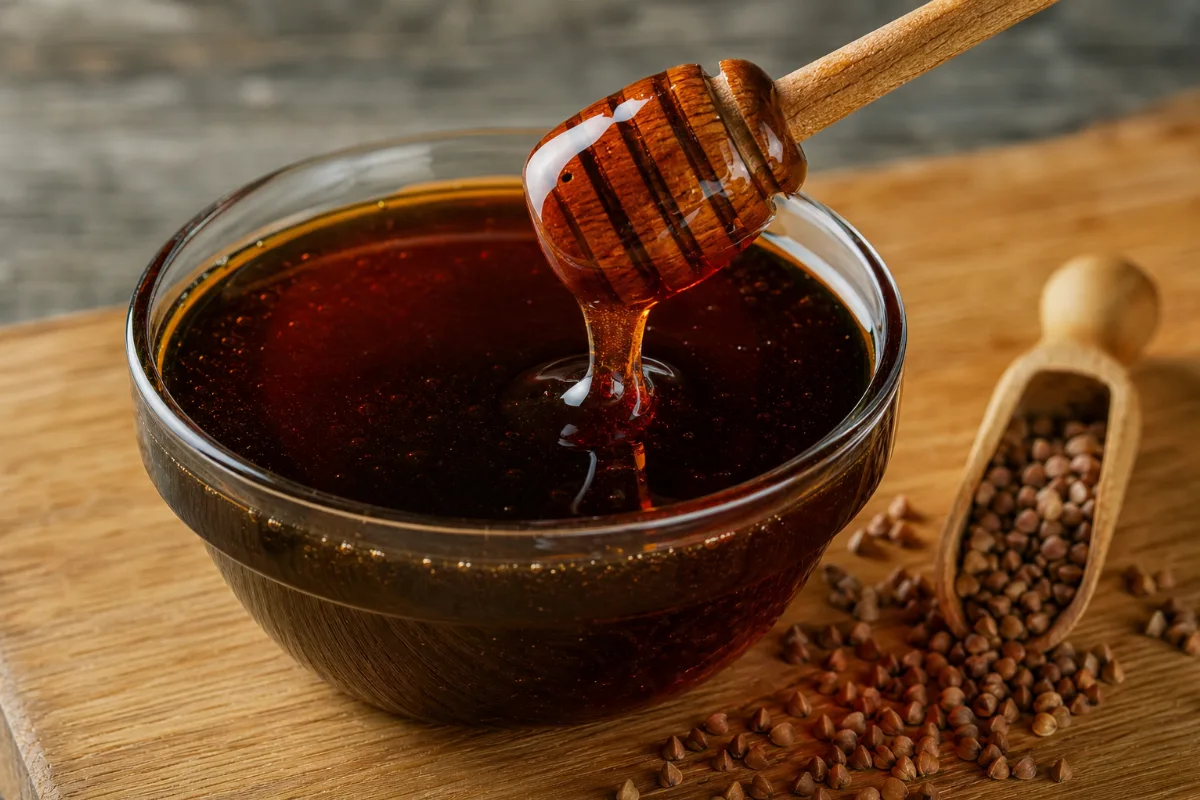
Buckwheat Honey
Honey from Fagopyrum esculentum (common buckwheat) nectar · also called Buckwheat flower honey
Buckwheat honey is a dark, strong, malty honey that bees make mostly from the nectar of buckwheat flowers. Never give any honey, buckwheat honey included, to a baby under 12 months: it can cause infant botulism. Honey is a sugar food. One small trial in coughing children found parents rated it better than no treatment, but most other findings come from the lab and animals.
General information, not medical advice. Last substantive update · Not medically reviewed. A named clinician has not signed off on this page. How this page is made
About Buckwheat Honey
Buckwheat honey is a dark, malty honey made by bees mostly from buckwheat flower nectar. Safety first: never give any honey to a baby under 12 months because of infant botulism. Honey is a sugar food, it can cause allergy in some people, and it is not a wound dressing. One small trial found parents rated buckwheat honey better than no treatment for children's night-time cough. Most other findings are about honey in general or come from lab and animal work.
What it is
Buckwheat honey is honey that bees make mostly from the nectar of common buckwheat (Fagopyrum esculentum, accepted by GBIF). Buckwheat is not a wheat or a grass. It belongs to the knotweed family, and the honey is a different food from buckwheat flour.
It is a dark honey with a strong, malty smell. In a flavour study, a compound called 3-methylbutanal was mainly responsible for that malty aroma. In lab tests the darkest honeys, buckwheat among them, had the highest antioxidant values, and total phenolic compounds in buckwheat honeys ranged from 774 to 1694 mg per kg in one study.
Its minerals are small in amount. In Polish honeys buckwheat honey had the most zinc and manganese of six types, but a large 100 g portion still met only a small share of needs for most minerals.
What the research shows
One randomised trial used buckwheat honey for cough. In 105 children aged 2 to 18 with a cold, parents rated a single bedtime dose of honey better than no treatment for cough frequency. The trial had one night and no placebo group, and the honey did not differ significantly from a cough medicine.
The wider honey research is about honey in general. A Cochrane review found a small cough benefit for a few days in children, and a meta-analysis found honey better than usual care for cold symptoms, but the authors call the evidence not strong and the honey types were not separated.
Two small trials in healthy adults found blood antioxidant tests rose after buckwheat honey. These are lab numbers in the blood, not proof of a health benefit.
Everything else is from the lab, cells or animals: killing bacteria in dishes, protecting DNA and the liver in mice, and effects on gut bacteria and enzymes in tubes. It shows no effect in people.
Quality and buying
Honey fraud is documented, and a label cannot prove what is inside. In a survey of ten honeys sold as buckwheat honey, some did not fit the buckwheat type on routine tests. Researchers have built mass-spectrometry methods that can pick out genuine buckwheat honey, but those are lab tools, not something a shopper can use.
Words like raw or natural are not safety claims. A named producer and a lot number are a better sign than a front-of-jar word.
At a glance
Traditional uses history, not proof
- Honey in general has been a home remedy for cough and wounds in many places; the sources read describe no traditional medical use specific to buckwheat honey.
- A 2015 mouse study describes buckwheat honey as widely consumed in China, where it is known for its dark colour.
Studied for research
- Night-time cough and sleep in children with colds (buckwheat honey): low
- Cough and cold symptoms (honey in general): mixed
- Blood antioxidant markers in healthy adults (buckwheat honey): low
- Blood sugar and heart markers (honey in general): mixed
- Burns and wounds (honey dressings in general): mixed
- Antibacterial activity (lab only): very low
- Antioxidant, DNA and liver protection (test tubes, mouse cells and mice): very low
- Gut bacteria in culture and enzyme tests (lab only): very low
Main compounds
- Fructose and glucose, the main sugars
- Phenolic acids such as p-coumaric and p-hydroxybenzoic acid, and rutin named in one study
- 4-Hydroxybenzaldehyde, proposed as a marker of buckwheat honey
- Malty aroma compounds such as 3-methylbutanal
- Small amounts of minerals, with the most manganese and zinc of six honey types in one Polish study
Common forms
- Liquid strained honey, the usual jar product
- Raw or less-heated honey (not safer for babies)
- Creamed honey and comb
- Sterile honey dressings (a separate medical product)
Research links: WHO: Botulism · NHS: Botulism · WHO: Healthy diet (free sugars) · Buckwheat honey cough trial in children (abstract) · Cochrane: honey for cough in children (abstract) · Cochrane: honey for wounds (abstract) · Research Library · Genes & Biomarkers Library
What it is and its history
- Accepted scientific name
- Buckwheat honey (honey made mainly from common buckwheat nectar)
- Naming authority
- Plant: Fagopyrum esculentum Moench (GBIF accepted name)
- Synonyms
- Buckwheat honey; Honey from Fagopyrum esculentum
- Common names
- Buckwheat honey (English)
- Family or group
- Source plant: Polygonaceae (knotweed family). The honey is made by bees, not by the plant.
- Classification
- Plantae (source plant) > Tracheophyta > Magnoliopsida > Caryophyllales > Polygonaceae > Fagopyrum > Fagopyrum esculentum
- Native range
- Not checked in the sources read.
- Habitat
- Not checked.
- What it looks like
- Flowers: Nectar from buckwheat flowers is the main source (by definition of the honey).
- Cultivation
- Not checked.
- Harvest and processing
- Usually sold as liquid strained honey; also raw (less heated), creamed or in comb; sterile honey dressings are a separate medical product (existing AlternativeMed summary; not re-checked).
- Look-alikes and adulterants
- Name: Other dark honeys sold as buckwheat honey; Note: A survey of 10 honeys sold as buckwheat honey found some that did not fit the type on routine tests.; Name: Honeys with other dark colours; Note: Colour alone does not prove origin; pollen counts and chemical markers are used to check it.
Photographs
Traditional use and history history, not clinical proof
| Tradition or era | Documented use | Source |
|---|---|---|
| China, recent use | A 2015 mouse study describes buckwheat honey as widely consumed in China, with a characteristic dark colour. | p26508989 |
| Wound care, recent | A New York buckwheat honey was chosen for wound-healing products in a 2008 lab study because of its antioxidant activity. A Cochrane review notes honey in general has been used in wound care since ancient times. No source read describes a traditional medical use specific to buckwheat honey. | p18494436 |
Traditional use shows how it was used. It does not show that it works or is safe today.
What is inside, and how it may work
What it contains and how those compounds act in cells and animals. Laboratory and animal mechanisms are not proven effects in people.
Main compounds
| Compound | Family | Where it is concentrated | Activity studied | Level of evidence |
|---|---|---|---|---|
| Fructose and glucose | sugars | Honey Buckwheat honey had higher sugars than manuka honey in one Chinese comparison. | Make honey sweet; WHO counts honey sugars as free sugars. 6 28 | Lab analysis |
| p-Coumaric acid PubChem 637542 | phenolic acid | Honey A main phenolic acid in buckwheat honeys in several studies; amounts not repeated here. | Linked by the authors to antioxidant activity in the lab. 18 25 17 29 | Laboratory research |
| p-Hydroxybenzoic acid (4-hydroxybenzoic acid) PubChem 135 | phenolic acid | Honey A main phenolic acid in buckwheat honeys; total phenolics ranged from 774 to 1694 mg per kg in one study. | Antioxidant in lab tests. 25 18 30 | Laboratory research |
| 4-Hydroxybenzaldehyde PubChem 126 | phenolic aldehyde | Honey Not given in the abstracts. | Proposed as a marker of buckwheat honey and confirmed as a threshold marker in an authentication study; not a health effect. 11 23 31 | Lab analysis |
| Rutin PubChem 5280805 | flavonoid glycoside | Honey (named as a main phenolic in a Chinese buckwheat honey) Not given in the abstract. | Antioxidant in lab tests. 4 32 | Laboratory research |
| Aroma compounds (3-methylbutanal, sotolon, damascenone) | volatile compounds | Honey 3-Methylbutanal was mainly responsible for the malty aroma. | Give the strong, malty smell; flavour only. 18 | Lab analysis |
| Minerals (zinc, manganese, iron, sodium) | minerals | Honey In Polish honeys buckwheat honey had the most zinc and manganese (3.97 and 4.96 mg per kg); a large 100 g portion met 16.5 to 27.6% of manganese needs and little of other minerals. | Mineral content is small except manganese; not a health claim. 13 6 | Lab analysis |
Mechanisms, receptors and pathways
| Target or pathway | Gene or receptor | What was found | Level |
|---|---|---|---|
| Antioxidant activity in tubes and cells | Phenolic compounds scavenge free radicals; the darkest honeys, such as buckwheat, had the highest antioxidant values in lab tests. 7 25 5 | Laboratory research | |
| Antibacterial effect in dishes | Buckwheat honey killed bacteria that artificial honey did not, so sugar alone does not explain it. The cause was not identified in the abstract. 10 6 | Laboratory research | |
| Gut microbes in culture | Honey phenolics and oligosaccharides favoured Bifidobacteria in a lab culture (authors' interpretation). 11 | Laboratory research | |
| Cholinesterase enzymes in a tube | Buckwheat honey inhibited acetylcholinesterase by 39.51% in a colour test. 3 | Laboratory research |
Absorption, metabolism and elimination
- Absorption
- One human trial found plasma phenolic content rose after buckwheat honey, which the authors read as phenolic antioxidants being absorbed.
- Distribution
- Not studied.
- Metabolism
- Not studied.
- Elimination
- Not studied.
- Bioavailability
- Not quantified in the abstracts read.
Isolated compounds versus whole extracts
Honey is a whole food. In one mouse-cell study phenolic extracts of honey protected DNA more than whole honey, and no isolated compound has been tested in people for the uses on this page.
Nutritional composition
Honey is mostly sugar. WHO counts sugars naturally present in honey as free sugars to be limited. Buckwheat honey is darker and more strongly flavoured than light honeys and has more phenolics in lab tests, but its minerals are small except manganese.
4 mixed findings2 low certainty4 very low certainty
What was looked at
The 10 benefits and uses checked for Buckwheat Honey, each with how strong the evidence is. Tap one to open it.
- Night-time cough and sleep in children with colds (buckwheat honey)Low certainty
- Cough in children (honey in general)Mixed findings
- Symptoms of colds and upper respiratory infections (honey in general)Mixed findings
- Blood antioxidant markers in healthy people (buckwheat honey)Low certainty
- Blood sugar and heart markers (honey in general)Mixed findings
- Wounds and burns (honey dressings in general; buckwheat honey in the lab)Mixed findings
- Antibacterial activity (lab dishes only)Very low certainty
- Antioxidant, DNA and liver protection (test tubes, mouse cells and mice)Very low certainty
- Gut bacteria in culture (lab only)Very low certainty
- Enzymes linked to Alzheimer's disease (test tube only)Very low certainty
Lab markers tracked in the studies
Night-time cough frequency (parent-rated)Sleep quality of the child and parents (parent-rated)Blood antioxidant capacity (ORAC)HbA1c (average blood sugar)Liver enzymes (AST and ALT)
What is Buckwheat Honey good for?
What people ask about, and how strong the human evidence is. Where a result is about honey in general, not buckwheat honey, it says so. None of it is proof, and all of it should be read with the safety section.
Benefits, one by one
Each card is a research question, not a promise. Tap a goal to filter. Open a card to see the studies, doses and limits.
Night-time cough and sleep in children with colds (buckwheat honey)
Low certaintyOne small trial gave buckwheat honey to 105 coughing children aged 2 to 18. Parents rated it better than no treatment for cough frequency. It did not differ from a cough medicine that did no better than nothing. There was no placebo group.
1 studiesA single bedtime dose of buckwheat honey 30 minutes before sleep; the…
Studies, doses and limits
What the trials found
One randomised, partly blinded trial in one outpatient paediatric practice: 105 children aged 2 to 18 with a cold, night-time symptoms and illness of 7 days or less.
Results
Symptoms improved most with honey and least with no treatment. Honey was significantly better than no treatment for cough frequency and the combined score. The cough medicine (dextromethorphan) was not better than no treatment, and honey and the medicine did not differ significantly. The abstract gives no numbers.
Effect sizes as reported
Honey rated better than no treatment on parent-rated cough frequency; no numbers in the abstract.
Why this rating
One small single-night trial with parent-rated outcomes and no placebo group. The result points the same way as the wider honey reviews but cannot show that buckwheat honey is special.
Form and dose studied
A single bedtime dose of buckwheat honey 30 minutes before sleep; the amount is not in the abstract.
Who was studied
Children aged 2 to 18 with a cold, USA outpatient practice.
Limits
One night; parent-rated; no placebo group; partly blinded; funder and honey supplier not stated in the abstract.
Why researchers looked
Parents often reach for honey for a cold cough. This trial asked whether a single bedtime dose of buckwheat honey changes night-time cough and sleep.
Traditional use
Honey is a long-standing home remedy for cough in many places. The sources read describe no traditional use specific to buckwheat honey.
Proposed mechanism Pharmacological theory
Honey is thought to soothe the throat. The trial did not test how it might work, so no mechanism is supported here.
A proposed mechanism does not show that the effect happens in people.
Never give honey to babies under 12 months. This trial included children aged 2 and older only.
Cough in children (honey in general)
Mixed findingsA Cochrane review of 6 small trials in 899 children found honey probably eases cough a little more than no treatment or placebo for up to three days. The authors say there is no strong evidence either way, and the honey types were mixed.
1 studiesHoney types and amounts not given in the abstract.
Studies, doses and limits
What the trials found
Cochrane systematic review (searched to February 2018): 6 randomised trials, 899 children aged 12 months to 18 years, treated as outpatients.
Results
Versus no treatment, cough frequency score was lower with honey (mean difference -1.05, 95% CI -1.48 to -0.62; moderate certainty). Versus placebo -1.62 (95% CI -3.02 to -0.22; moderate certainty). Similar to dextromethorphan and better than diphenhydramine (both low certainty). Up to three days honey was probably better than placebo; beyond three days probably no advantage. Authors: no strong evidence for or against honey.
Effect sizes as reported
About 1 to 1.6 points on a 7-point cough scale.
Why this rating
The reviewers rated some comparisons moderate and others low and conclude the evidence is not strong either way. Trials were small, mostly one night, and used mixed honey types.
Form and dose studied
Honey types and amounts not given in the abstract.
Who was studied
Children aged 12 months to 18 years with acute cough.
Limits
Few small trials; two at high risk of bias; most children treated for one night; honey types not separated.
Why researchers looked
Honey is widely suggested for children's cough as an alternative to cough medicines.
Traditional use
Long-standing home remedy; the review tested honey of mixed types.
Proposed mechanism Pharmacological theory
Not established in the review abstract.
A proposed mechanism does not show that the effect happens in people.
Stomach symptoms 12% with honey vs 11% with placebo (risk ratio 1.91). Nervousness, insomnia or hyperactivity 9.3% with honey vs 2.7% with dextromethorphan (not significant). Never give honey to babies under 12 months.
Symptoms of colds and upper respiratory infections (honey in general)
Mixed findingsA 2021 meta-analysis of 14 studies found honey eased cold symptoms and cough compared with usual care. Against placebo only 2 studies were pooled and the result could include no effect.
1 studiesTypes and amounts of honey not stated in the abstract.
Studies, doses and limits
What the trials found
Systematic review and meta-analysis: 14 studies of people with upper respiratory tract infections; overall risk of bias moderate.
Results
Versus usual care honey improved the combined symptom score (mean difference -3.96, 95% CI -5.42 to -2.51), cough frequency (SMD -0.36, 95% CI -0.50 to -0.21) and cough severity (SMD -0.44, 95% CI -0.64 to -0.25). Versus placebo, 2 studies: SMD -0.63, 95% CI -1.44 to 0.18, with high inconsistency (I2 91%).
Effect sizes as reported
Small to moderate improvement over usual care; no clear difference from placebo.
Why this rating
Usual care is not a placebo, so some benefit may come from expectation. The placebo comparison is only 2 studies and very inconsistent. The authors call for more placebo-controlled trials.
Form and dose studied
Types and amounts of honey not stated in the abstract.
Who was studied
People with upper respiratory tract infections.
Limits
Moderate risk of bias; honey types not separated.
Why researchers looked
Honey is a cheap home remedy; reviewers asked whether it could be an alternative to antibiotics for colds.
Traditional use
Honey as a home remedy for colds and cough is widely described.
Proposed mechanism Pharmacological theory
Not established in the abstract.
A proposed mechanism does not show that the effect happens in people.
Never give honey to babies under 12 months.
Blood antioxidant markers in healthy people (buckwheat honey)
Low certaintyTwo small trials in healthy adults found that after eating buckwheat honey, blood antioxidant tests rose. One found a 7% rise in one test and no change in two others. These are lab numbers in the blood, not health outcomes.
2 studiesBuckwheat honey drunk once; amounts not repeated here.
Studies, doses and limits
What the trials found
Two small human trials: 25 healthy men (single drink of buckwheat honey in water vs other drinks) and a randomised trial in healthy adults (buckwheat honey vs corn syrup; number not in the abstract).
Results
Serum ORAC rose significantly by 7% after buckwheat honey in water, with no change after the other drinks; lipoprotein oxidation and TBARS did not change. In the second trial plasma total phenolics, antioxidant and reducing capacity rose after buckwheat honey versus corn syrup.
Effect sizes as reported
ORAC +7% (one test); other markers unchanged in the first trial.
Why this rating
Two small, single-occasion trials in healthy people measuring blood tests rather than health outcomes. One of three markers moved in the first trial. Whether this protects health is unknown.
Form and dose studied
Buckwheat honey drunk once; amounts not repeated here.
Who was studied
Healthy adults.
Limits
Single dose; blood antioxidant tests are surrogate markers; funders not named in the abstracts.
Why researchers looked
Dark honeys are rich in phenolic compounds, so researchers asked whether those compounds reach the blood and change its antioxidant tests.
Traditional use
No traditional use specific to this finding in the sources read.
Proposed mechanism Pharmacological theory
Phenolic compounds in the honey may be absorbed and raise the blood's measured antioxidant capacity (authors' interpretation).
A proposed mechanism does not show that the effect happens in people.
Honey is a sugar food; see the safety notes. Never give honey to babies under 12 months.
Blood sugar and heart markers (honey in general)
Mixed findingsHoney is sugar. A 2025 overview of 69 trials found honey may lower HbA1c but may also worsen fasting glucose, blood pressure, triglycerides, a liver enzyme and an inflammation marker. Buckwheat honey was not analysed on its own.
2 studiesTypes and amounts of honey not repeated here.
Studies, doses and limits
What the trials found
Umbrella review with updated meta-analysis: 69 randomised trials, 3544 participants (honey, royal jelly and propolis analysed separately). A second meta-analysis of 7 trials with honey among fructose-containing sugars.
Results
Honey may lower HbA1c but adversely affect systolic blood pressure, AST, triglycerides, fasting glucose and hs-CRP. In the second analysis honey showed no significant effect on fasting glucose or insulin, and a pooled group including honey raised uric acid (Hedges' g = 0.550, P = 0.028).
Effect sizes as reported
Mixed; effect sizes not in the abstracts.
Why this rating
Results point in different directions across markers and reviews, and honey types are not separated. The authors advise caution with long-term or high-dose honey in people with health concerns.
Form and dose studied
Types and amounts of honey not repeated here.
Who was studied
Adults in trials; mixed health status.
Limits
Honey types not separated; short trials; not specific to buckwheat honey.
Why researchers looked
People ask whether honey is a better sweetener than sugar for blood sugar and the heart.
Traditional use
Honey has long been used as a sweetener and home remedy.
Proposed mechanism Pharmacological theory
Not established; honey is mostly fructose and glucose.
A proposed mechanism does not show that the effect happens in people.
Ask a doctor or pharmacist before adding honey regularly if you manage blood sugar. WHO counts the sugar in honey as free sugar to be limited.
Wounds and burns (honey dressings in general; buckwheat honey in the lab)
Mixed findingsA Cochrane review found honey dressings healed partial-thickness burns about 4.7 days faster than conventional dressings. For most other wounds the results were unclear. Buckwheat honey was tested only in the lab, where it reduced oxidant levels from white blood cells.
2 studiesMedical honey dressings, not jar honey.
Studies, doses and limits
What the trials found
Cochrane review of 26 trials (3011 people) of honey dressings; separate lab study of buckwheat honey.
Results
Partial-thickness burns healed faster with honey dressings than conventional dressings (WMD -4.68 days, 95% CI -5.09 to -4.28; high quality, 2 trials). Other wound types: unclear, mostly low or very low quality. Lab: American buckwheat honey from New York was the most active of the honeys tested, and was chosen for use in wound-healing products.
Effect sizes as reported
-4.68 days for partial-thickness burns (honey dressings).
Why this rating
The burn result is high quality for medical honey dressings in general, but other wounds are unclear and the review does not name buckwheat honey. The buckwheat result is cells in a dish.
Form and dose studied
Medical honey dressings, not jar honey.
Who was studied
People with burns and wounds (review); lab cells.
Limits
Mixed products; not buckwheat-specific; no human trial of buckwheat honey on wounds was found.
Why researchers looked
Honey has been used on wounds since ancient times, and researchers have looked for honeys that calm inflammation in wounds.
Traditional use
The Cochrane review notes honey has been used in wound care since ancient times.
Proposed mechanism Laboratory research
Lab: phenolic compounds in buckwheat honey scavenged reactive oxygen species and reduced oxidant production by activated human white blood cells.
A proposed mechanism does not show that the effect happens in people.
Do not use jar honey in place of medical care for a wound or burn. See a clinician.
Antibacterial activity (lab dishes only)
Very low certaintyIn lab dishes, buckwheat honey killed or slowed several bacteria, including antibiotic-resistant hospital strains, and sugar alone did not explain it. It was comparable with manuka honey against two bacteria in one comparison. No trial in people was found.
2 studiesNot applicable (lab).
Studies, doses and limits
What the trials found
Two lab studies: 13 hospital bacterial isolates exposed to Wisconsin buckwheat honey, and a lab comparison with manuka honey. No human trial.
Results
Buckwheat honey was mostly bactericidal against the isolates tested; C. difficile isolates were more sensitive; artificial honey killed none. Buckwheat honey showed antibacterial activity against Staphylococcus aureus and Pseudomonas aeruginosa comparable with manuka honey.
Effect sizes as reported
Lab minimum inhibitory and bactericidal concentrations.
Why this rating
Dishes of bacteria are not infections in people. No clinical study of buckwheat honey for infection was found.
Who was studied
Bacteria in lab dishes.
Limits
No infection outcome; honey concentrations in dishes are not what happens in the body.
Why researchers looked
Researchers look for honeys that could help with antibiotic-resistant germs.
Traditional use
No traditional use specific to buckwheat honey in the sources read.
Proposed mechanism Laboratory research
The authors say the high sugar content is not the only factor; phenolic compounds and acidity are proposed but not proven.
A proposed mechanism does not show that the effect happens in people.
Do not treat infections with honey. Ask a doctor.
Antioxidant, DNA and liver protection (test tubes, mouse cells and mice)
Very low certaintyBuckwheat honey is dark and high in phenolic compounds. In test tubes it protected DNA from damage, and it scored highest of five honeys in mouse cells. In mice poisoned with a liver toxin it reduced liver enzyme rises. None of this has been shown in people.
3 studiesBuckwheat honey in lab and mouse feeding studies.
Studies, doses and limits
What the trials found
Two test-tube or cell studies and one 10-week mouse study; no human study.
Results
DNA breaks from hydroxyl radicals fell by 21-78% in one test-tube system and 5-31% in another. In mouse white blood cells buckwheat honey protected most of five honeys. In mice given carbon tetrachloride, buckwheat honey blunted the rise in AST and ALT, raised liver antioxidant enzymes and reduced DNA damage.
Effect sizes as reported
Test-tube and mouse results only.
Why this rating
Test-tube, cell and mouse results usually do not carry over to people, and the toxin model is not a real-life exposure.
Form and dose studied
Buckwheat honey in lab and mouse feeding studies.
Who was studied
Test tubes, mouse cells and mice.
Limits
No human outcome.
Why researchers looked
Dark honeys score high on antioxidant tests, so researchers asked whether that protects cells or organs.
Traditional use
No traditional use specific to this in the sources read.
Proposed mechanism Laboratory research
Phenolic compounds scavenge free radicals in the lab (authors' interpretation).
A proposed mechanism does not show that the effect happens in people.
Do not use honey to protect the liver; ask a doctor about any liver concern.
Gut bacteria in culture (lab only)
Very low certaintyWhen added to cultures of human gut microbes, buckwheat honey increased Bifidobacteria and held back a harmful gut bacterium, according to the authors. This was a lab culture, not a trial in people.
1 studiesNot applicable (lab).
Studies, doses and limits
What the trials found
One lab culture study of 8 buckwheat honey samples with human gut microbes.
Results
The authors report selective support for indigenous Bifidobacteria and restraint of a pathogenic bacterium, compared with fructooligosaccharides.
Effect sizes as reported
Lab sequencing data; no numbers in the abstract.
Why this rating
A cultured gut sample is not a gut in a living person, and no health outcome was measured.
Who was studied
Cultured human gut microbes.
Limits
No human outcome.
Why researchers looked
Researchers asked whether honey sugars and phenolics could feed helpful gut bacteria.
Traditional use
No traditional use specific to this in the sources read.
Proposed mechanism Laboratory research
Oligosaccharides and phenolics in the honey may favour some bacteria (authors' interpretation).
A proposed mechanism does not show that the effect happens in people.
Honey is a sugar food.
Enzymes linked to Alzheimer's disease (test tube only)
Very low certaintyIn a test-tube screen of 47 Polish honeys, buckwheat honey blocked one brain-related enzyme the most (about 39.5%). This does not show any effect on memory or Alzheimer's disease.
1 studiesNot applicable (lab).
Studies, doses and limits
What the trials found
One lab screen of 47 honeys; no animal or human test.
Results
Buckwheat honey had the highest acetylcholinesterase inhibition (39.51%); multifloral honey the highest butyrylcholinesterase inhibition (39.76%).
Effect sizes as reported
39.51% inhibition in a tube.
Why this rating
A chemical test in a tube says nothing about the brain.
Who was studied
Test tube.
Limits
No living-system test.
Why researchers looked
Drugs for Alzheimer's disease block these enzymes, so researchers screened foods.
Traditional use
No traditional use specific to this in the sources read.
Proposed mechanism Laboratory research
Enzyme inhibition in a colour-change test.
A proposed mechanism does not show that the effect happens in people.
Not a treatment for any memory problem; ask a doctor.
Connections to the rest of health
How Buckwheat Honey connects to the rest of our health knowledge graph. Every link says what kind of connection it is. A safety link (for example to the liver) is a warning, not a benefit. A study that merely mentions a topic never creates a benefit link.
Explore every connection: goals, body systems, organs, symptoms, genes
B. Body systems
| Connected to | Kind of connection | Evidence status | Context | Studies |
|---|---|---|---|---|
| Immune system | Adverse effect or risk | Low certainty | Allergic reactions, rare but can be severe. Preparation or compound: Honey and bee products |
14 20 |
| Respiratory System | Biological association | Low certainty | Studied for: Night-time cough and sleep in children with colds (buckwheat honey) Studied for: Cough in children (honey in general) | 19 16 1 |
| Cardiovascular System | Biological association | Low certainty | Studied for: Blood antioxidant markers in healthy people (buckwheat honey) Studied for: Blood sugar and heart markers (honey in general) | 8 22 15 9 |
| Endocrine System | Biological association | Mixed findings | Studied for: Blood sugar and heart markers (honey in general) | 15 9 |
| Integumentary System | Biological association | Mixed findings | Studied for: Wounds and burns (honey dressings in general; buckwheat honey in the lab) | 12 34 |
| Immune System | Biological association | Very low certainty | Studied for: Antibacterial activity (lab dishes only) | 10 6 |
| Hepatic System | Biological association | Very low certainty | Studied for: Antioxidant, DNA and liver protection (test tubes, mouse cells and mice) | 25 5 4 |
| Digestive System | Biological association | Very low certainty | Studied for: Antioxidant, DNA and liver protection (test tubes, mouse cells and mice) Studied for: Gut bacteria in culture (lab only) | 25 5 4 11 |
| Nervous System | Biological association | Very low certainty | Studied for: Enzymes linked to Alzheimer's disease (test tube only) | 3 |
C. Body parts and organs
I. Biomarkers
| Connected to | Kind of connection | Evidence status | Context | Studies |
|---|---|---|---|---|
| HbA1c | Mixed findings | Possible lower HbA1c, other measures may worsen. Preparation or compound: Honey of mixed types |
15 | |
| Night-time cough frequency (parent-rated) | Biological association | Low certainty | Measured in trials: lowered. A lab change is not the same as a health benefit. | 19 |
| Sleep quality of the child and parents (parent-rated) | Biological association | Low certainty | Measured in trials: raised. A lab change is not the same as a health benefit. | 19 |
| Blood antioxidant capacity (ORAC) | Biological association | Low certainty | Measured in trials: raised. A lab change is not the same as a health benefit. | 8 22 |
| HbA1c (average blood sugar) | Biological association | Mixed findings | Measured in trials: mixed. A lab change is not the same as a health benefit. | 15 |
| Liver enzymes (AST and ALT) | Biological association | Very low certainty | Measured in trials: mixed. A lab change is not the same as a health benefit. | 4 15 |
L. Active compounds
| Connected to | Kind of connection | Evidence status | Context | Studies |
|---|---|---|---|---|
| Fructose and glucose | Biological association | Lab analysis | Make honey sweet; WHO counts honey sugars as free sugars. Preparation or compound: Honey |
6 28 |
| p-Coumaric acid | Biological association | In vitro | Linked by the authors to antioxidant activity in the lab. Preparation or compound: Honey |
18 25 17 29 |
| p-Hydroxybenzoic acid (4-hydroxybenzoic acid) | Biological association | In vitro | Antioxidant in lab tests. Preparation or compound: Honey |
25 18 30 |
| 4-Hydroxybenzaldehyde | Biological association | Lab analysis | Proposed as a marker of buckwheat honey and confirmed as a threshold marker in an authentication study; not a health effect. Preparation or compound: Honey |
11 23 31 |
| Rutin | Biological association | In vitro | Antioxidant in lab tests. Preparation or compound: Honey (named as a main phenolic in a Chinese buckwheat honey) |
4 32 |
| Aroma compounds (3-methylbutanal, sotolon, damascenone) | Biological association | Lab analysis | Give the strong, malty smell; flavour only. Preparation or compound: Honey |
18 |
| Minerals (zinc, manganese, iron, sodium) | Biological association | Lab analysis | Mineral content is small except manganese; not a health claim. Preparation or compound: Honey |
13 6 |
Each connection is stored with the ingredient, the connected record, the kind of connection, the evidence status, the supporting studies, the preparation or compound involved, and a review date (last reviewed October 25, 2026).
The evidence
The research centre for Buckwheat Honey. Every record here was checked against PubMed or the publisher's page; we never list a study we have not verified.
Evidence by outcome
Bars show how many studies we found for each outcome, not how well it works. People are added up across trials only (reviews are not added, to avoid double counting).
How we rate evidence
High certainty
Several well-run trials or reviews agree; further research is unlikely to change the picture much.
Moderate certainty
Good trials point the same way, but some doubt remains.
Low certainty
Small, short or inconsistent trials. The finding could change with better research.
Very low certainty
Very little or very weak human data. Treat as a possibility only.
Mixed findings
Trials or reviews disagree with each other.
Not enough evidence
Not enough human research to say either way.
Evidence against
Good research found no benefit, or found harm.
We take the reviewers' own risk-of-bias and GRADE statements where they exist, and otherwise judge from study size, design, consistency, directness and whether a product matches what is sold. Many publications do not make evidence high. Method note: We read the abstracts of 27 PubMed papers, the WHO botulism and healthy-diet fact sheets and the NHS botulism page in full, checked the plant and bee names in GBIF and four compounds in PubChem. Certainty ratings are the compiler's own reading unless a review gives its own. Funders of the 2007 cough trial and the 2003 antioxidant trials are not named in the abstracts, so honey-industry involvement could not be ruled out.
Study library: every study we checked 34
| Study | Design | People | Product, dose, length | Result |
|---|---|---|---|---|
| Abuelgasim 2021 Effectiveness of honey for symptomatic relief in upper respiratory tract infections: a systematic review and meta-analysis. BMJ Evidence-Based Medicine · PMID 32817011 · DOI |
Meta-analysis |
14 studies in people with upper respiratory tract infections (ages and honey types not stated in the abstract) | Honey (types not stated) versus usual care or placebo honey (types not stated in the abstract) · vs Usual care; placebo in 2 studies |
Versus usual care, honey improved the combined symptom score (3 studies, mean difference -3.96, 95% CI -5.42 to -2.51), cough frequency (8 studies, SMD -0.36, 95% CI -0.50 to -0.21) and cough severity (5 studies, SMD -0.44, 95% CI -0.64 to -0.25). Two studies against placebo for combined symptoms: SMD -0.63, 95% CI -1.44 to 0.18, a range that includes no effect, with high inconsistency (I2 91%). The authors say further high-quality placebo-controlled trials are needed. Better than usual care; against placebo the range includes no effect (Cough frequency SMD -0.36 (-0.50 to -0.21); versus placebo SMD -0.63 (-1.44 to 0.18)) Methods, limits and fundingOutcomes: Combined symptom score, cough frequency, cough severity Limitations: Moderate overall risk of bias; usual care is not a placebo; the placebo comparison rests on 2 studies and is very inconsistent; honey in general, not buckwheat. Funding and conflicts: Not read in the abstract. Read: abstract |
| Arico 2026 Infant Botulism and Honey Exposure: Global Epidemiology, Prevention Policies, and Communication Strategies. Acta Paediatrica · PMID 41964486 · DOI |
Review |
Narrative review of surveillance reports and literature 1976 to 2024 | Honey exposure and infant botulism honey (any) Review |
Cases were rare, but honey was the only consistently confirmed dietary source of infant botulism. Median age at onset was 3-4 months. Mortality was below 1% with intensive care and specific therapy. The USA had about 130 cases a year in 2007-2021. Health authorities uniformly advised against honey before 12 months, but warning labels remained voluntary in many regions. Rare, serious, preventable Methods, limits and fundingOutcomes: Epidemiology, mortality, prevention policy Limitations: Narrative review; not specific to buckwheat honey. Funding and conflicts: Not read in the abstract. Read: abstract |
| Baranowska-Wojcik 2020 Honey as the Potential Natural Source of Cholinesterase Inhibitors in Alzheimer's Disease. Plant Foods for Human Nutrition · PMID 31925635 · DOI |
Laboratory research lab |
47 47 types of Polish honey tested in a colour-change lab test |
Polish honeys honey (buckwheat honey among 47 types) Lab · vs Other honeys |
Buckwheat honey showed the highest acetylcholinesterase inhibition (39.51%); multifloral honey showed the highest butyrylcholinesterase inhibition (39.76%). The authors suggest honeys may play a role in Alzheimer's disease; no brain, animal or human test was done. Test-tube enzyme inhibition only Methods, limits and fundingOutcomes: Inhibition of acetylcholinesterase and butyrylcholinesterase in a test tube Limitations: Chemical test only; enzyme inhibition in a tube does not show any effect on memory or Alzheimer's disease. Funding and conflicts: Not stated in the abstract. Read: abstract |
| Cheng 2015 Buckwheat Honey Attenuates Carbon Tetrachloride-Induced Liver and DNA Damage in Mice. Evidence-Based Complementary and Alternative Medicine · PMID 26508989 · DOI |
Animal research animal |
Mice given carbon tetrachloride, a liver poison, with or without buckwheat honey for 10 weeks | Buckwheat honey (widely eaten in China) honey (buckwheat honey) Not repeated here 10 weeks · vs Mice without honey |
Buckwheat honey significantly inhibited the rise in AST and ALT caused by carbon tetrachloride, lowered liver malondialdehyde, raised liver antioxidant enzymes, raised serum ORAC and reduced lymphocyte DNA damage. The authors conclude it has a hepatoprotective effect in mice, which they attribute to antioxidant capacity. Less liver injury in poisoned mice Methods, limits and fundingOutcomes: Liver enzymes (AST, ALT), liver malondialdehyde and antioxidant enzymes, blood antioxidant capacity, lymphocyte DNA damage Limitations: Mouse study; the authors' 'hepatoprotective' claim applies to mice and a chemical poison, not to people. Funding and conflicts: Not stated in the abstract. Read: abstract |
| Cheng 2017 The Protective Effect of Whole Honey and Phenolic Extract on Oxidative DNA Damage in Mice Lymphocytes Using Comet Assay. Plant Foods for Human Nutrition · PMID 28929426 · DOI |
Laboratory research lab |
Five honeys of different flower origin tested on mouse white blood cells (lymphocytes) damaged with hydrogen peroxide | Whole honeys and their phenolic extracts (buckwheat, longan, jujube, vitex, locust) honey (buckwheat honey among five) Lab · vs Control without honey |
Buckwheat honey had the highest total phenolic content and antioxidant activity; locust honey the lowest. All honeys significantly reduced hydrogen peroxide DNA damage (P < 0.05), and buckwheat honey protected most. Phenolic extracts protected more than whole honey. A dose-effect pattern was seen. Highest antioxidant and DNA protection of five honeys, in mouse cells Methods, limits and fundingOutcomes: Total phenolics, antioxidant activity, DNA damage in the comet assay, 8-OHdG Limitations: Mouse cells in a dish; no human outcome. Funding and conflicts: Not stated in the abstract. Read: abstract |
| Deng 2018 Biochemical properties, antibacterial and cellular antioxidant activities of buckwheat honey in comparison to manuka honey. Food Chemistry · PMID 29478537 · DOI |
Laboratory research lab |
Buckwheat honey compared with manuka honey in lab tests | Buckwheat honey versus manuka honey honey (buckwheat honey) Lab · vs Manuka honey |
Buckwheat honey had higher sugars, proteins and total phenols than manuka honey but lower MGO. It had higher iron, manganese and zinc. Its main phenolic compounds were p-hydroxybenzoic acid, chlorogenic acid and p-coumaric acid. It was antibacterial against Staphylococcus aureus and Pseudomonas aeruginosa, comparable with manuka honey in the lab, and its cellular antioxidant activity was higher. Lab comparison; antibacterial activity comparable with manuka in dishes Methods, limits and fundingOutcomes: Sugars, proteins, phenols, methylglyoxal (MGO), minerals, antibacterial and cellular antioxidant activity Limitations: Lab only; no human outcome; the authors' claim of commercial potential is not evidence of benefit. Funding and conflicts: Not stated in the abstract. Read: abstract |
| Gheldof 2002 Antioxidant capacity of honeys from various floral sources based on the determination of oxygen radical absorbance capacity and inhibition of in vitro lipoprotein oxidation in human serum samples. Journal of Agricultural and Food Chemistry · PMID 11982440 · DOI |
Laboratory research lab |
Honeys from seven flower sources tested in the lab | Honey antioxidant tests honey (seven floral sources including buckwheat) Lab · vs Other honeys |
The darkest honeys, such as buckwheat honey, had the highest ORAC values. ORAC correlated closely with phenolic content (R2 = 0.9497). The authors suggest honey may be a healthy alternative to sugar in some products; that was not tested here. Dark honeys scored highest in the lab antioxidant test Methods, limits and fundingOutcomes: ORAC and inhibition of serum lipoprotein oxidation in a dish Limitations: Lab test, not a human outcome. Funding and conflicts: Not stated in the abstract (PubMed lists non-U.S. government support). Read: abstract |
| Gheldof 2003 Buckwheat honey increases serum antioxidant capacity in humans. Journal of Agricultural and Food Chemistry · PMID 12590505 · DOI |
Clinical trial |
25 25 healthy men |
Buckwheat honey in water, versus water, black tea, black tea with sugar, black tea with buckwheat honey honey (buckwheat honey) Amount not given here Single acute drink, blood tested afterwards · vs Water, black tea, tea with sugar |
Serum ORAC rose significantly (p < 0.05) by 7% after buckwheat honey in water. No significant change after any of the other drinks. Ex vivo lipoprotein oxidation and TBARS did not change significantly after any of the five drinks. The authors call this primary evidence and say long-term studies are needed. ORAC up 7% after buckwheat honey in water; other markers unchanged Methods, limits and fundingOutcomes: Serum antioxidant capacity (ORAC), ex vivo lipoprotein oxidation, TBARS Limitations: Single dose; healthy men only; a blood antioxidant test, not a health outcome; two of three markers unchanged. Funding and conflicts: Funder not named in the abstract (PubMed lists non-U.S. government support). Industry links not stated. Read: abstract |
| Guntari 2025 Fructose-containing sugars and metabolic risk: a systematic review and meta-analysis. Food & Nutrition Research · PMID 41323133 · DOI |
Meta-analysis |
17 study codes from 7 clinical trials lasting 7 hours to 49 days | Fructose, fructose-glucose mixtures, honey or sucrose honey (types not separated) Not repeated here 7 hours to 49 days · vs Unsweetened drinks, artificial sweeteners, habitual diets |
Fructose-glucose mixtures raised fasting glucose and insulin; fructose, honey and sucrose showed no significant effects on those. Pooled fructose, fructose-glucose and honey together raised uric acid (Hedges' g = 0.550, P = 0.028). The authors suggest regular intake of added sugars may raise cardiometabolic risk. Honey: no significant change in fasting glucose or insulin; uric acid rose in a pooled group that included honey Methods, limits and fundingOutcomes: Fasting glucose, insulin, cholesterol, uric acid Limitations: Very few honey trials; short; honey not analysed alone for uric acid; types not separated. Funding and conflicts: Not read in the abstract. Read: abstract |
| Hammond 2016 Effect of United States buckwheat honey on antibiotic-resistant hospital acquired pathogens. Pan African Medical Journal · PMID 28292167 · DOI |
Laboratory research lab |
13 hospital bacterial isolates (including C. difficile, MRSA, Pseudomonas, vancomycin-resistant Enterococcus, Klebsiella) exposed in lab dishes to four Wisconsin honeys | Wisconsin buckwheat honey and other honeys versus artificial honey honey (buckwheat honey) Lab · vs Artificial honey (sugar solution) |
Buckwheat honey mostly killed the bacteria tested, and effects varied by pathogen. C. difficile isolates were more sensitive. Artificial honey failed to kill any pathogen, so sugar alone did not explain the effect. The authors say it should be investigated further. Lab killing of bacteria not explained by sugar alone Methods, limits and fundingOutcomes: Minimum inhibitory and bactericidal concentrations Limitations: Broth dilution in dishes; no infection or treatment outcome in people. Funding and conflicts: Not stated in the abstract. Read: abstract |
| Jiang 2020 Phenolics and Carbohydrates in Buckwheat Honey Regulate the Human Intestinal Microbiota. Evidence-Based Complementary and Alternative Medicine · PMID 32184894 · DOI |
Laboratory research lab |
8 Eight buckwheat honey samples added to cultures of human gut microbes in the lab |
Buckwheat honey versus fructooligosaccharides honey (buckwheat honey) Lab culture · vs Fructooligosaccharides |
Twelve phenolics and four oligosaccharides were found in almost all samples, and 4-hydroxybenzaldehyde was reported for the first time in buckwheat honey and proposed as a marker. The authors conclude honey selectively supported Bifidobacteria and restrained a harmful gut bacterium in culture, and infer it may be an intestinal-health product. That inference is theirs; it was not tested in people. Lab culture finding only Methods, limits and fundingOutcomes: Phenolic and sugar composition; gut bacteria by 16S sequencing Limitations: Cultured microbes in the lab, not a human gut; no health outcome. Funding and conflicts: Not stated in the abstract. Read: abstract |
| Jull 2015 Honey as a topical treatment for wounds. Cochrane Database of Systematic Reviews · PMID 25742878 · DOI |
Systematic review |
3011 26 randomised or quasi-randomised trials, 3011 participants, with burns, chronic wounds and other wounds |
Honey dressings versus other dressings and topical treatments honey (topical dressings; types not separated in the abstract) Varied · vs Conventional dressings, silver sulfadiazine, antiseptics and others |
High-quality evidence (2 trials, n=992) that honey dressings heal partial-thickness burns more quickly than conventional dressings (weighted mean difference -4.68 days, 95% CI -5.09 to -4.28). Effects were unclear for venous leg ulcers, minor acute wounds and diabetic foot ulcers. The authors say it is difficult to draw overall conclusions because patients and comparators varied and most evidence is low quality. Faster healing of partial-thickness burns than conventional dressings; unclear for most other wounds (WMD -4.68 days (-5.09 to -4.28)) Methods, limits and fundingOutcomes: Healing time, adverse events, infection Limitations: Mixed honey types and products; several comparisons are low or very low quality; not specific to buckwheat honey; jar honey is not a medical dressing. Funding and conflicts: Cochrane review; funding not read in the abstract. Read: abstract |
| Kedzierska-Matysek 2018 Concentration of Minerals in Nectar Honeys from Direct Sale and Retail in Poland. Biological Trace Element Research · PMID 29619631 · DOI |
Lab analysis lab |
68 34 artisanal and 34 retail nectar honeys (acacia, buckwheat, raspberry, linden, rapeseed, multifloral) in Poland |
Mineral analysis honey (buckwheat honey among six types) Lab · vs Other honeys |
Buckwheat honey contained the most zinc and manganese (3.97 and 4.96 mg per kg), and with linden the most sodium (79.1 and 80.0 mg per kg). For manganese it met the most of the recommended intake of the types studied (16.5 to 27.6% for a 100 g portion), and other minerals met only small shares. Mineral amounts are small except manganese Methods, limits and fundingOutcomes: Content of eight minerals and how much of adult needs a 100 g portion would meet Limitations: Polish honeys only; mineral content is not a health benefit; the portion used in the calculation is large. Funding and conflicts: Not stated in the abstract. Read: abstract |
| Matuszewska-Mach 2025 Ensuring the Safe Use of Bee Products: A Review of Allergic Risks and Management. International Journal of Molecular Sciences · PMID 41465502 · DOI |
Review |
Narrative review of allergic reactions to honeybee products | Honey, bee pollen, bee bread, royal jelly, propolis, beeswax and bee brood honey and other bee products Review |
Bee products can provoke allergic reactions from local dermatitis to life-threatening anaphylaxis, although relatively rarely. Both IgE-mediated and T-cell-mediated reactions occur. People with atopy and beekeepers are at heightened risk. Management is avoidance, education and clearer labelling. Allergy is possible and rarely severe Methods, limits and fundingOutcomes: Allergic reactions, mechanisms, at-risk groups Limitations: Narrative review; no rates; not specific to buckwheat honey. Funding and conflicts: Not read in the abstract. Read: abstract |
| Norouzzadeh 2025 Dosage exploration of the effects of honey and its derivatives on cardiometabolic outcomes: an overview of systematic reviews and GRADE-assessed updated meta-analysis. Nutrition & Diabetes · PMID 41261111 · DOI |
Meta-analysis |
3544 69 randomised trials, 3544 participants (honey, royal jelly and propolis analysed separately) |
Honey (types not separated in the abstract) and other bee products honey (types not separated) Not repeated here Varied · vs Varied comparators |
Honey may lower HbA1c but adversely affect systolic blood pressure, AST, triglycerides, fasting blood glucose and high-sensitivity C-reactive protein. The authors say long-term or high-dose honey in people with health concerns warrants caution. Mixed: possible lower HbA1c, possible worse other markers Methods, limits and fundingOutcomes: Cardiometabolic markers: HbA1c, blood pressure, AST, triglycerides, fasting glucose, hs-CRP Limitations: Honey types not separated, so not specific to buckwheat honey; effect sizes are not in the abstract. Funding and conflicts: Not read in the abstract. Read: abstract |
| Oduwole 2018 Honey for acute cough in children. Cochrane Database of Systematic Reviews · PMID 29633783 · DOI |
Systematic review |
899 6 randomised trials in 899 children aged 12 months to 18 years treated as outpatients for acute cough |
Honey of mixed types versus no treatment, placebo, dextromethorphan, diphenhydramine, salbutamol or bromelin honey (types not separated in the abstract) Most children were treated for one night · vs No treatment, placebo, cough medicines |
Honey probably reduced cough frequency more than no treatment (mean difference -1.05, 95% CI -1.48 to -0.62; 2 studies, 154 children; moderate certainty) and more than placebo (-1.62, 95% CI -3.02 to -0.22; 2 studies, 402 children; moderate certainty). Similar to dextromethorphan (low certainty); better than diphenhydramine (low certainty). Up to three days honey was probably better than placebo or salbutamol; beyond three days probably no advantage. The authors conclude there was no strong evidence for or against honey. Stomach symptoms: 12% with honey vs 11% with placebo (risk ratio 1.91, 95% CI 1.12 to 3.24; moderate certainty). Nervousness, insomnia or hyperactivity: 9.3% with honey vs 2.7% with dextromethorphan (not significant; low certainty). Small cough-score benefit over no treatment and placebo for a few days; no strong evidence either way (MD -1.05 (-1.48 to -0.62) vs no treatment; MD -1.62 (-3.02 to -0.22) vs placebo) Methods, limits and fundingOutcomes: Cough frequency and severity on 7-point scales; adverse events Limitations: Few, small trials; two rated at high risk of bias; most children treated for one night; honey types not separated in the abstract, so this is honey in general. The abstract does not say whether the buckwheat honey trial is among the six. Funding and conflicts: Cochrane review; funding and conflicts not read in the abstract. Read: abstract |
| Ongalbek 2024 Classification of buckwheat honey produced in Kazakhstan according to their biochemical ingredients and bioactivities by chemometric approach. Food Chemistry · PMID 38692236 · DOI |
Lab analysis lab |
19 19 buckwheat honey samples from different areas of Kazakhstan |
Chemical and lab-activity testing honey (buckwheat honey) Lab |
Twelve phenolic compounds and fumaric acid were identified; fumaric, p-hydroxybenzoic, p-coumaric and trans-2-hydroxycinnamic acids and chrysin were in every sample. Antioxidant and enzyme-inhibition results differed by region. Lab description; composition varies by region Methods, limits and fundingOutcomes: Pollen, composition, antioxidant, enzyme-inhibition activities Limitations: Lab tests only. Funding and conflicts: Not stated in the abstract. Read: abstract |
| Pasini 2013 Buckwheat honeys: screening of composition and properties. Food Chemistry · PMID 23871027 · DOI |
Lab analysis lab |
10 10 honeys sold as buckwheat honey by Italian and eastern European beekeepers |
Chemical and pollen testing honey (buckwheat honey) Lab |
Traditional tests (electrical conductivity, optical rotation, pH, sugar composition) showed some poorly pure samples that did not fit the buckwheat type. Over 100 volatile compounds were found; 3-methylbutanoic acid was the main one in most samples, and 2- and 3-methylbutanal and phenylacetaldehyde matched the typical buckwheat aroma in some. p-Hydroxybenzoic and p-coumaric acids were the main phenolic components. Lab description; some samples labelled buckwheat did not fit Methods, limits and fundingOutcomes: Pollen, physicochemical, phenolic and volatile composition Limitations: Ten samples only; a small regional survey. Funding and conflicts: Not stated in the abstract. Read: abstract |
| Paul 2007 Effect of honey, dextromethorphan, and no treatment on nocturnal cough and sleep quality for coughing children and their parents. Archives of Pediatrics & Adolescent Medicine · PMID 18056558 · DOI |
Controlled trial |
105 105 children aged 2 to 18 with an upper respiratory tract infection, night-time symptoms and illness of 7 days or less, one outpatient paediatric practice |
Buckwheat honey versus honey-flavoured dextromethorphan (a cough medicine) versus no treatment honey (buckwheat honey) Amount not stated in the abstract A single dose given 30 minutes before bed, parent survey next day · vs Honey-flavoured dextromethorphan; no treatment (no placebo group) |
Symptoms improved most with honey and least with no treatment. In paired comparisons honey was significantly better than no treatment for cough frequency and the combined score. Dextromethorphan was not better than no treatment for any outcome. Honey and dextromethorphan did not differ significantly. The abstract gives no numbers. Honey rated better than no treatment by parents; no significant difference from dextromethorphan Methods, limits and fundingOutcomes: Cough frequency, cough severity, bothersome cough, child and parent sleep quality (parent-rated) Limitations: Single night; parent-rated; no placebo group and only partly blinded; one practice; honey amount and funder not stated in the abstract. Funding and conflicts: Funder not named in the abstract (PubMed lists U.S. government, non-PHS research support). Whether the honey was supplied by industry is not stated in the abstract and was not checked. Registration: NCT00127686 Read: abstract |
| Rocha Filho 2026 Pharmacovigilance and toxicological risks associated with apitherapeutic products: a systematic overview. Archives of Toxicology · PMID 41071287 · DOI |
Systematic review |
Literature and pharmacovigilance databases on honey, bee venom, propolis, royal jelly, bee pollen and beeswax | Bee products honey and other bee products Review |
Reported cases included infant botulism and grayanotoxin poisoning linked to honey, as well as anaphylaxis with bee venom and reactions to propolis, royal jelly and beeswax. Allergic responses were the most prevalent adverse event, particularly in atopic people. The authors call for better labelling and surveillance. Honey is not risk-free Methods, limits and fundingOutcomes: Adverse effects and toxicological risks Limitations: Overview of reports, no rates; not specific to buckwheat honey. Funding and conflicts: Not read in the abstract. Read: abstract |
| Schoder 2026 Honey Fraud as a Moving Analytical Target: Omics-Informed Authentication Within a Multi-Layer Analytical Framework. Foods · PMID 41750904 · DOI |
Review n/a |
Narrative review of honey fraud and authentication methods | Honey adulteration honey (any) Review |
Honey fraud is a persistent, hard-to-detect form of food adulteration driven by supply chains and economic incentives. The review separates demonstrated vulnerabilities, feasible scenarios and fraud practices documented in enforcement. It gives no fraud rates in the abstract. Fraud is a documented, changing problem Methods, limits and fundingOutcomes: Fraud types, detection methods Limitations: Narrative review; no rates; not specific to buckwheat honey. Funding and conflicts: Not read in the abstract. Read: abstract |
| Schramm 2003 Honey with high levels of antioxidants can provide protection to healthy human subjects. Journal of Agricultural and Food Chemistry · PMID 12617614 · DOI |
Controlled trial |
Healthy human adults (number not stated in the abstract) | Buckwheat honey (two phenolic strengths) versus corn syrup honey (buckwheat honey) Given by body weight; not repeated here Single occasion, blood tested afterwards · vs Corn syrup |
After both buckwheat honey treatments, plasma total phenolic content rose (P < 0.05), as did plasma antioxidant and reducing capacities (P < 0.05). The authors say phenolic antioxidants from processed honey are bioavailable. Their suggestion that swapping sweeteners could help is speculation. Plasma antioxidant markers rose after buckwheat honey versus corn syrup Methods, limits and fundingOutcomes: Plasma total phenolics, plasma antioxidant and reducing capacity Limitations: Blood antioxidant tests, not health outcomes; single occasion; healthy adults; the number of people and the amount are not in the abstract. Funding and conflicts: Funder not named in the abstract (PubMed lists U.S. public health service and non-U.S. government support). Industry links not stated. Read: abstract |
| Tian 2025 Identification of botanical marker candidates for buckwheat honey using a non-targeted approach based on liquid chromatography coupled with high resolution mass spectrometry. Food Research International · PMID 40263876 · DOI |
Lab analysis lab |
147 147 honeys whose type was checked by pollen analysis |
Mass spectrometry authentication model honey (buckwheat honey) Lab · vs 13 other honey types |
A model told buckwheat honeys apart from 13 other types with 100% sensitivity. Thirteen candidate markers were found, including three confirmed threshold markers: 4-hydroxybenzaldehyde, 2-hydroxypyridine and hydroxyquinoline-3-carbonitrile. Lab authentication method Methods, limits and fundingOutcomes: Markers that tell buckwheat honey apart from other honeys Limitations: A research method, not a consumer test; funding and author affiliations were not read. Funding and conflicts: Not read in the abstract. Read: abstract |
| Zhou 2002 Identification and quantification of aroma-active components that contribute to the distinct malty flavor of buckwheat honey. Journal of Agricultural and Food Chemistry · PMID 11902950 · DOI |
Lab analysis lab |
Buckwheat honey aroma tested by smell and instrument analysis | Aroma analysis honey (buckwheat honey) Lab |
3-Methylbutanal, sotolon and (E)-beta-damascenone were the most potent odorants, and 3-methylbutanal was mainly responsible for the malty aroma. Lab description of flavour; not a health effect Methods, limits and fundingOutcomes: Aroma-active components Limitations: Flavour chemistry only. Funding and conflicts: Not stated in the abstract. Read: abstract |
| Zhou 2012 Protective effects of buckwheat honey on DNA damage induced by hydroxyl radicals. Food and Chemical Toxicology · PMID 22683488 · DOI |
Laboratory research lab |
Buckwheat honey samples tested on DNA in test-tube systems | Buckwheat honeys honey (buckwheat honey) Lab · vs Control without honey |
Total phenolic content of the buckwheat honeys ranged from 774 to 1694 mg per kg. p-Hydroxybenzoic and p-coumaric acids were the main phenolic acids. Honeys prevented hydroxyl-radical DNA breaks by 21-78% in one test system and 5-31% in the other, over control. Test-tube DNA protection Methods, limits and fundingOutcomes: DNA breaks caused by hydroxyl radicals; antioxidant assays; phenolics Limitations: Test-tube chemistry; not cells in a body. Funding and conflicts: Not stated in the abstract. Read: abstract |
| n/a 2023 WHO: Botulism (fact sheet, 25 September 2023) n/a · Source |
Authoritative guidance n/a |
n/a | n/a |
No honey for infants under 1 year. Methods, limits and fundingOutcomes: Describes infant botulism: spores germinate in the gut and release toxin; signs include constipation, loss of appetite, weakness, an altered cry and a striking loss of head control. Says spore-contaminated honey has been associated with a number of cases and that parents and caregivers are warned not to feed honey to infants before the age of 1 year. Says the spores are heat-resistant. Limitations: A fact sheet, not a trial. It does not mention buckwheat honey. Read: full-text |
| n/a 2026 NHS: Botulism (page last reviewed 4 March 2026) n/a · Source |
Authoritative guidance n/a |
n/a | n/a |
Advice: no honey under 12 months; urgent help for a limp or floppy child. Methods, limits and fundingOutcomes: Says not to give honey to babies younger than 12 months because honey can contain the bacteria that cause botulism. Says to call 999 if a child may have botulism symptoms or is limp or floppy. Limitations: UK health service page, not a trial. Read: full-text |
| n/a 2026 WHO: Healthy diet (fact sheet, updated 26 January 2026) n/a · Source |
Authoritative guidance n/a |
n/a | n/a |
Honey counts as a free sugar to be limited. Methods, limits and fundingOutcomes: Defines free sugars to include sugars naturally present in honey, syrups, fruit juices and concentrates, and says free sugar intake should be limited throughout the life course. Limitations: A general diet fact sheet; does not discuss buckwheat honey. Read: full-text |
| n/a 2026 PubChem compound record: P-Coumaric Acid (CID 637542, retrieved 2026-10-25) n/a · Source |
Database n/a |
n/a | n/a |
P-Coumaric Acid, formula C9H8O3, CID 637542. Methods, limits and fundingOutcomes: Identity of p-coumaric acid, named in buckwheat honey studies. Limitations: Database record only. Read: api-record |
| n/a 2026 PubChem compound record: 4-Hydroxybenzoic Acid (CID 135, retrieved 2026-10-25) n/a · Source |
Database n/a |
n/a | n/a |
4-Hydroxybenzoic Acid, formula C7H6O3, CID 135. Methods, limits and fundingOutcomes: Identity of 4-hydroxybenzoic acid, named in buckwheat honey studies. Limitations: Database record only. Read: api-record |
| n/a 2026 PubChem compound record: 4-Hydroxybenzaldehyde (CID 126, retrieved 2026-10-25) n/a · Source |
Database n/a |
n/a | n/a |
4-Hydroxybenzaldehyde, formula C7H6O2, CID 126. Methods, limits and fundingOutcomes: Identity of 4-hydroxybenzaldehyde, named in buckwheat honey studies. Limitations: Database record only. Read: api-record |
| n/a 2026 PubChem compound record: Rutin (CID 5280805, retrieved 2026-10-25) n/a · Source |
Database n/a |
n/a | n/a |
Rutin, formula C27H30O16, CID 5280805. Methods, limits and fundingOutcomes: Identity of rutin, named in buckwheat honey studies. Limitations: Database record only. Read: api-record |
| n/a 2026 GBIF Backbone Taxonomy: Fagopyrum esculentum Moench (match API, retrieved 2026-10-25) n/a · Source |
Database n/a |
n/a | n/a |
Fagopyrum esculentum Moench, status ACCEPTED, family Polygonaceae, order Caryophyllales, GBIF key 2889373. Methods, limits and fundingOutcomes: Accepted species name, family and order for the plant whose nectar gives buckwheat honey. Limitations: Database record for the plant only; it says nothing about the honey. Read: api-record |
| van den Berg 2008 An in vitro examination of the antioxidant and anti-inflammatory properties of buckwheat honey. Journal of Wound Care · PMID 18494436 · DOI |
Laboratory research lab |
Honey samples tested in lab assays with activated human white blood cells and a cell-free system | Honeys compared in assays; buckwheat honey from New York, US, was the most active honey (buckwheat honey) Lab · vs Other honeys |
Most honeys were active, but the best exceeded the weakest by factors of 4 to 30. The most pronounced activities were found for American buckwheat honey from New York. The authors link the antioxidant activity to its phenolic compounds and chose it for use in wound-healing products. Lab activity only; selected for a wound product Methods, limits and fundingOutcomes: Reactive oxygen species levels from activated neutrophils, superoxide scavenging, inhibition of complement Limitations: Cell and chemical assays only; no healing outcome in people. Funding and conflicts: Not stated in the abstract (PubMed lists non-U.S. government support). Authors chose the honey for a wound product, so a commercial interest is possible but not stated. Read: abstract |
What we do not know yet
- Only one trial has used buckwheat honey for cough in people (one night, 105 children, parent-rated, no placebo group).
- No buckwheat honey trial for blood sugar, wounds, infection or any other use was found; the two antioxidant trials measured blood tests only.
- General honey reviews do not separate honey types in their abstracts.
- No information on buckwheat honey in pregnancy, breastfeeding, buckwheat allergy or with medicines was found.
- No source tested buckwheat honey for pesticides, antibiotics or metals, and no rate of mislabelling was found.
How new research is added
New studies are found by a saved PubMed search and are placed in a review queue. A person reads each one before it is added.
Lab markers
What changed in blood or saliva tests during trials. A changed number is not the same as feeling or being healthier, and we give no "normal ranges".
Metabolic 1
HbA1c (average blood sugar)
Mixed results in trials
A blood test that reflects average blood sugar over 2 to 3 months.
Mixed findingsResults and what it means
Why it was measured
To see whether honey changes long-term blood sugar.
Statistical vs. clinical meaning
Possible lower HbA1c but possible worse other markers; honey types not separated.
Safety implication
Ask a doctor if you manage blood sugar.
| Study | Result | People | Product |
|---|---|---|---|
| 15 | Honey may lower HbA1c but adversely affect fasting glucose and other markers. | 69 trials, 3544 participants | Honey in general vs comparators |
Other 4
Night-time cough frequency (parent-rated)
Lowered in trials
How often the child coughed during the night, rated by a parent on a scale.
Low certaintyResults and what it means
Why it was measured
To see whether honey changes how much a child coughs at night.
Statistical vs. clinical meaning
Better than no treatment in one small trial with no placebo group.
Safety implication
Children aged 2 and over only; never babies under 12 months.
| Study | Result | People | Product |
|---|---|---|---|
| 19 | Honey scored significantly better than no treatment for cough frequency; honey and dextromethorphan did not differ significantly. | 105 children aged 2 to 18 with a cold | Buckwheat honey vs honey-flavoured dextromethorphan vs no treatment, one night |
Sleep quality of the child and parents (parent-rated)
Raised in trials
A parent's rating of how well the child, and the parent, slept.
Low certaintyResults and what it means
Why it was measured
Night cough disturbs sleep for the whole family.
Statistical vs. clinical meaning
Reported as part of the combined score; details not in the abstract.
Safety implication
Same as above.
| Study | Result | People | Product |
|---|---|---|---|
| 19 | Parents rated honey most favourably overall for cough and sleep difficulty; the abstract gives no separate sleep numbers. | 105 children aged 2 to 18 with a cold | Buckwheat honey vs dextromethorphan vs no treatment, one night |
Blood antioxidant capacity (ORAC)
Raised in trials
A lab test of how well a blood sample neutralises free radicals.
Low certaintyResults and what it means
Why it was measured
To see whether honey phenolics raise the blood's measured antioxidant power.
Statistical vs. clinical meaning
A blood test that rose briefly; not shown to affect health.
Safety implication
Honey is a sugar food.
| Study | Result | People | Product |
|---|---|---|---|
| 8 | ORAC rose significantly by 7% after buckwheat honey in water; other markers did not change. | 25 healthy men | Buckwheat honey in water vs other drinks, single occasion |
| 22 | Plasma antioxidant and reducing capacity rose after buckwheat honey versus corn syrup. | Healthy adults | Buckwheat honey vs corn syrup, single occasion |
Liver enzymes (AST and ALT)
Mixed results in trials
Blood tests that rise when liver cells are damaged.
Very low certaintyResults and what it means
Why it was measured
To see whether honey protects the liver (mice) or affects it (people).
Statistical vs. clinical meaning
Mouse benefit and a possible human AST worsening point in different directions.
Safety implication
Ask a doctor about liver concerns.
Safety
What studies and official sources say about side effects, medicines and who should check first. Each point shows what kind of evidence it comes from.
Main points to know 6
- Never give honey to a baby under 12 months (infant botulism). WHO and the NHS say not to give honey to babies before 12 months. Honey can carry spores of the bacterium that causes botulism, and in a baby the spores can grow in the gut and release a toxin. This applies to buckwheat honey like any other honey. Raw, filtered or creamed honey is not safer: WHO says the spores are heat-resistant. Authoritative guidance 26 27 2
- Honey is a sugar food. WHO counts sugars naturally present in honey as free sugars, and says free sugar intake should be limited throughout life. Honey trials give mixed results for blood sugar and heart markers. People who manage blood sugar should ask a doctor or pharmacist. Authoritative guidance 28 15 9
- Allergy to honey and bee products is rare but can be severe. A 2025 review says bee products can cause reactions from skin rashes to life-threatening anaphylaxis, mostly in people with an allergic tendency (atopy) and in beekeepers. Review 14 20
- Jar honey is not a wound dressing. Honey dressings sold for medical use were studied in trials. Jar honey is not the same product. Do not use it in place of care for a burn or wound. Systematic review 12
- Labels do not prove what is in the jar. A study of ten honeys sold as buckwheat honey found some that did not fit the buckwheat type on routine tests. Honey fraud is a documented, changing problem. The words raw or natural are not safety claims. Lab analysis 18 21
- Not for treating infections, liver problems or memory loss. The lab and mouse findings (germ killing, liver protection, enzyme tests) have not been shown in people. Ask a doctor about infection, liver or memory concerns. Lab analysis 10 4 3
Side effects 5
| Effect | How often | Severity and recovery | Evidence |
|---|---|---|---|
| Infant botulism (babies under 12 months) Honey is the only consistently confirmed food source. Applies to every honey. | Rare; about 130 cases a year in the USA in one global review | severe Mortality below 1% with intensive care and specific treatment; hospital care is needed | Review 26 2 |
| Allergic reactions (rash, swelling, wheeze, anaphylaxis) Higher risk in people with atopy and in beekeepers. No source read tested buckwheat honey specifically. | Relatively rare; no rate in the abstracts | mild to severe Varies; anaphylaxis is an emergency | Review 14 20 |
| Stomach symptoms in children over 12 months From a Cochrane review of honey in general for cough. | 12% with honey vs 11% with placebo (risk ratio 1.91, 95% CI 1.12 to 3.24) | mild Not stated | Systematic review 16 |
| Nervousness, insomnia or hyperactivity in children Low-certainty evidence; honey types not separated. | 9.3% with honey vs 2.7% with dextromethorphan (risk ratio 2.94, 95% CI 0.74 to 11.71; not significant) | mild Not stated | Systematic review 16 |
| Higher blood sugar, blood pressure, triglycerides, AST or inflammation marker with regular honey The reviewers say long-term or high-dose honey in people with health concerns warrants caution. | Possible; effect sizes not in the abstract | unclear Not stated | Meta-analysis 15 |
Liver
No report of liver injury from buckwheat honey was found in the sources read. A 2025 overview of trials reported that daily honey may adversely affect AST, a liver enzyme (honey in general). In mice poisoned with carbon tetrachloride, buckwheat honey lowered the enzyme rise, but that is a mouse study. 15 4
How often. No rate could be found.
Monitoring. No agency monitoring advice was read.
This is a safety connection. It is not evidence that Buckwheat Honey supports liver health.
Medicines and supplements 2
| With | Why it matters | Importance | Evidence | What to do |
|---|---|---|---|---|
| Glucose-lowering medicines and insulin prescription | Honey is a sugar food and may change blood sugar. | Honey trials give mixed blood-sugar results; no interaction study with buckwheat honey was found. | Pharmacological theory Not enough evidence 15 9 | Ask a doctor or pharmacist before adding honey regularly if you take diabetes medicines. |
| Other medicines, herbs and supplements general | Not studied. | No interaction with buckwheat honey was found in the sources read. Lack of information is not proof of safety. | Insufficient Not enough evidence | Tell a pharmacist about any regular use of bee products. |
Who should check first 7
| Situation | Advice | Evidence |
|---|---|---|
| Babies under 12 months | Do not give honey in any form. | Authoritative guidance 26 27 2 |
| Known allergy to honey, bee products or pollen, or atopy with a history of severe reactions | Avoid unless an allergy specialist advises otherwise. Seek urgent care for breathing trouble or swelling. | Review 14 20 |
| Diabetes or other blood sugar problems | Ask a doctor or pharmacist first. Honey is a free sugar and trial results are mixed. | Systematic review 28 15 9 |
| Pregnancy | No source read describes buckwheat honey in pregnancy. Lack of information is not proof of safety. Ask a doctor or midwife. | Insufficient |
| Breastfeeding | No source read describes buckwheat honey while breastfeeding. Ask a doctor or pharmacist. Never give honey to the baby. | Insufficient 26 |
| Children over 12 months | Honey was given to children aged 2 and older in the one buckwheat honey trial. Stomach upset was more common than with placebo in a Cochrane review. Honey is a sugar, so it also counts toward the sugar limit. Ask a doctor for a child with a persistent cough. | Systematic review 19 16 |
| Wounds and burns | See a clinician; do not use jar honey in place of medical care. | Systematic review 12 |
Overdose, product quality and regulators
Summary. Honey is a food. No source read reports toxicity from buckwheat honey. Reports of poisoning from a plant toxin (grayanotoxin) are described for some honeys in one safety overview; buckwheat is not named in its abstract.
Animal. A 10-week mouse study with buckwheat honey reported benefits, not toxicity, in poisoned mice; it is not a safety study.
Human doses studied. Not given as advice here.
High dose or long term signals. A 2025 overview says long-term or high-dose honey in people with health concerns warrants caution (honey in general).
Overdose response. Not described in the sources read.
Genotoxicity. Not assessed in the sources read; the DNA studies measured protection in the lab.
The documented quality problem is mislabelling and adulteration. No source read tested buckwheat honey for pesticides, antibiotics or metals.
Samples sold as buckwheat honey that did not fit the type. In a survey of 10 honeys sold as buckwheat honey from Italian and eastern European beekeepers, routine tests (conductivity, optical rotation, pH, sugars) showed some poorly pure samples that did not fit the buckwheat type. 18
Honey fraud in general. A 2026 review calls honey fraud a persistent and analytically challenging problem and gives no rates. A 2025 study built a mass-spectrometry model that told buckwheat honey from 13 other types in 147 honeys. 21 23
| Body | Action | Date |
|---|---|---|
| World Health Organization (International) | Botulism fact sheet: parents and caregivers are warned not to feed honey to infants before 1 year; spores are heat-resistant. source | 2023-09-25 |
| NHS (England) (United Kingdom) | Do not give honey to babies younger than 12 months. Call 999 if a child is limp or floppy. source | 2026-03-04 |
| World Health Organization (International) | Healthy diet fact sheet: free sugars include sugars naturally present in honey and should be limited throughout life. source | 2026-01-26 |
When to get medical help
- A baby under 12 months who has had honey and has constipation, weak cry, poor feeding, floppiness or loss of head control: call emergency services now.
- Swelling of the lips, face or throat, wheeze, trouble breathing, widespread hives or collapse after eating honey: this can be anaphylaxis. Call emergency services.
- A wound or burn that is spreading, hot, very painful or has fever: see a clinician; do not rely on honey.
Stop using the product and contact a clinician or emergency service. In the US, Poison Control is 1-800-222-1222.
General information only, not medical advice. Ask a clinician or pharmacist before use, especially with medicines, in pregnancy or with a health condition. See the Natural Remedy Safety guide.
Frequently asked questions
Is buckwheat honey safe for babies?
What is buckwheat honey?
Does buckwheat honey help a cough?
One small trial in 105 children aged 2 to 18 found parents rated a single bedtime dose of buckwheat honey better than no treatment for cough frequency, but there was no placebo group. For honey in general, a Cochrane review says it probably eases cough a little for up to three days, but the evidence is not strong. Never give honey to a baby under 12 months.
Does buckwheat honey have more antioxidants than other honeys?
Is buckwheat honey good for people with diabetes?
Is buckwheat honey healthier than sugar?
Can I put buckwheat honey on a wound or burn?
Do not use jar honey instead of medical care. In trials, honey dressings healed partial-thickness burns faster than conventional dressings, but the review does not name buckwheat honey and honey dressings are medical products. A buckwheat honey from New York was chosen for a wound product after a lab test. See a clinician for wounds and burns.
Is buckwheat honey antibacterial like manuka honey?
In lab dishes, buckwheat honey was comparable with manuka honey against two bacteria, and a Wisconsin buckwheat honey killed several antibiotic-resistant hospital strains. That is lab work only. No human trial of buckwheat honey for infection was found, and honey should not be used to treat an infection.
Does buckwheat honey protect the liver or the gut?
Is buckwheat honey safe in pregnancy or while breastfeeding?
No source read describes buckwheat honey in pregnancy or breastfeeding. Lack of information is not proof of safety. Ask a doctor, midwife or pharmacist. Never give honey to the baby.
Can buckwheat honey cause an allergic reaction?
How do I know the honey is really buckwheat honey?
Explore by health goal
Editorial transparency
- Written by
- AlternativeMed editorial team. Research compiled with AI assistance, then checked against PubMed records.
- Medical review
- None. This page has not been reviewed by a physician or pharmacist.
- First published
- 2026-10-25
- Last substantive update
- 2026-10-25
- How we research
- We read the abstracts of 27 PubMed papers, the WHO botulism and healthy-diet fact sheets and the NHS botulism page in full, checked the plant and bee names in GBIF and four compounds in PubChem. Certainty ratings are the compiler's own reading unless a review gives its own. Funders of the 2007 cough trial and the 2003 antioxidant trials are not named in the abstracts, so honey-industry involvement could not be ruled out.
- How we rate evidence
- See "How we rate evidence" in the Evidence tab.
- Independence
- No product is promoted on this page. No affiliate links are shown.
Sources 34
Each source was opened and checked. Where we read only the abstract, it says so. The small numbers in the text point here.
- Abuelgasim H, Albury C, Lee J. Effectiveness of honey for symptomatic relief in upper respiratory tract infections: a systematic review and meta-analysis.. BMJ Evidence-Based Medicine. 2021. PMID 32817011. DOI 10.1136/bmjebm-2020-111336. (abstract)
- Arico MO, Caselli D, Stefanizzi P, Tafuri S. Infant Botulism and Honey Exposure: Global Epidemiology, Prevention Policies, and Communication Strategies.. Acta Paediatrica. 2026. PMID 41964486. DOI 10.1111/apa.70538. (abstract)
- Baranowska-Wojcik E, Szwajgier D, Winiarska-Mieczan A. Honey as the Potential Natural Source of Cholinesterase Inhibitors in Alzheimer's Disease.. Plant Foods for Human Nutrition. 2020. PMID 31925635. DOI 10.1007/s11130-019-00791-1. (abstract)
- Cheng N, Wu L, Zheng J, Cao W. Buckwheat Honey Attenuates Carbon Tetrachloride-Induced Liver and DNA Damage in Mice.. Evidence-Based Complementary and Alternative Medicine. 2015. PMID 26508989. DOI 10.1155/2015/987385. (abstract)
- Cheng N, Wang Y, Cao W. The Protective Effect of Whole Honey and Phenolic Extract on Oxidative DNA Damage in Mice Lymphocytes Using Comet Assay.. Plant Foods for Human Nutrition. 2017. PMID 28929426. DOI 10.1007/s11130-017-0634-1. (abstract)
- Deng J, Liu R, Lu Q, Hao P. Biochemical properties, antibacterial and cellular antioxidant activities of buckwheat honey in comparison to manuka honey.. Food Chemistry. 2018. PMID 29478537. DOI 10.1016/j.foodchem.2018.01.115. (abstract)
- Gheldof N, Engeseth NJ. Antioxidant capacity of honeys from various floral sources based on the determination of oxygen radical absorbance capacity and inhibition of in vitro lipoprotein oxidation in human serum samples.. Journal of Agricultural and Food Chemistry. 2002. PMID 11982440. DOI 10.1021/jf0114637. (abstract)
- Gheldof N, Wang XH, Engeseth NJ. Buckwheat honey increases serum antioxidant capacity in humans.. Journal of Agricultural and Food Chemistry. 2003. PMID 12590505. DOI 10.1021/jf025897t. (abstract)
- Guntari P, Junaida A, Eny P, Pichamon N. Fructose-containing sugars and metabolic risk: a systematic review and meta-analysis.. Food & Nutrition Research. 2025. PMID 41323133. DOI 10.29219/fnr.v69.11062. (abstract)
- Hammond EN, Duster M, Musuuza JS, Safdar N. Effect of United States buckwheat honey on antibiotic-resistant hospital acquired pathogens.. Pan African Medical Journal. 2016. PMID 28292167. DOI 10.11604/pamj.2016.25.212.10414. (abstract)
- Jiang L, Xie M, Chen G, Qiao J. Phenolics and Carbohydrates in Buckwheat Honey Regulate the Human Intestinal Microbiota.. Evidence-Based Complementary and Alternative Medicine. 2020. PMID 32184894. DOI 10.1155/2020/6432942. (abstract)
- Jull AB, Cullum N, Dumville JC, Westby MJ. Honey as a topical treatment for wounds.. Cochrane Database of Systematic Reviews. 2015. PMID 25742878. DOI 10.1002/14651858.CD005083.pub4. (abstract)
- Kedzierska-Matysek M, Florek M, Wolanciuk A, Barlowska J. Concentration of Minerals in Nectar Honeys from Direct Sale and Retail in Poland.. Biological Trace Element Research. 2018. PMID 29619631. DOI 10.1007/s12011-018-1315-0. (abstract)
- Matuszewska-Mach E, Borysewicz P, Krolak J, Juzwa-Sobieraj M. Ensuring the Safe Use of Bee Products: A Review of Allergic Risks and Management.. International Journal of Molecular Sciences. 2025. PMID 41465502. DOI 10.3390/ijms262412074. (abstract)
- Norouzzadeh M, Barazandeh S, Hasan Rashedi M, Jamshidi S. Dosage exploration of the effects of honey and its derivatives on cardiometabolic outcomes: an overview of systematic reviews and GRADE-assessed updated meta-analysis.. Nutrition & Diabetes. 2025. PMID 41261111. DOI 10.1038/s41387-025-00403-9. (abstract)
- Oduwole O, Udoh EE, Oyo-Ita A, Meremikwu MM. Honey for acute cough in children.. Cochrane Database of Systematic Reviews. 2018. PMID 29633783. DOI 10.1002/14651858.CD007094.pub5. (abstract)
- Ongalbek D, Tokul-Olmez O, Sahin B, Kucukaydin S. Classification of buckwheat honey produced in Kazakhstan according to their biochemical ingredients and bioactivities by chemometric approach.. Food Chemistry. 2024. PMID 38692236. DOI 10.1016/j.foodchem.2024.139409. (abstract)
- Pasini F, Gardini S, Marcazzan GL, Caboni MF. Buckwheat honeys: screening of composition and properties.. Food Chemistry. 2013. PMID 23871027. DOI 10.1016/j.foodchem.2013.05.102. (abstract)
- Paul IM, Beiler J, McMonagle A, Shaffer ML. Effect of honey, dextromethorphan, and no treatment on nocturnal cough and sleep quality for coughing children and their parents.. Archives of Pediatrics & Adolescent Medicine. 2007. PMID 18056558. DOI 10.1001/archpedi.161.12.1140. (abstract)
- Rocha Filho LKA, Silva GI, Silva MS. Pharmacovigilance and toxicological risks associated with apitherapeutic products: a systematic overview.. Archives of Toxicology. 2026. PMID 41071287. DOI 10.1007/s00204-025-04218-6. (abstract)
- Schoder D. Honey Fraud as a Moving Analytical Target: Omics-Informed Authentication Within a Multi-Layer Analytical Framework.. Foods. 2026. PMID 41750904. DOI 10.3390/foods15040712. (abstract)
- Schramm DD, Karim M, Schrader HR, Holt RR. Honey with high levels of antioxidants can provide protection to healthy human subjects.. Journal of Agricultural and Food Chemistry. 2003. PMID 12617614. DOI 10.1021/jf025928k. (abstract)
- Tian L, Bilamjian S, Cuthbertson D, De Leoz L. Identification of botanical marker candidates for buckwheat honey using a non-targeted approach based on liquid chromatography coupled with high resolution mass spectrometry.. Food Research International. 2025. PMID 40263876. DOI 10.1016/j.foodres.2025.116080. (abstract)
- Zhou Q, Wintersteen CL, Cadwallader KR. Identification and quantification of aroma-active components that contribute to the distinct malty flavor of buckwheat honey.. Journal of Agricultural and Food Chemistry. 2002. PMID 11902950. DOI 10.1021/jf011436g. (abstract)
- Zhou J, Li P, Cheng N, Gao H. Protective effects of buckwheat honey on DNA damage induced by hydroxyl radicals.. Food and Chemical Toxicology. 2012. PMID 22683488. DOI 10.1016/j.fct.2012.05.046. (abstract)
- n/a. WHO: Botulism (fact sheet, 25 September 2023). n/a. 2023. (full-text)
- n/a. NHS: Botulism (page last reviewed 4 March 2026). n/a. 2026. (full-text)
- n/a. WHO: Healthy diet (fact sheet, updated 26 January 2026). n/a. 2026. (full-text)
- n/a. PubChem compound record: P-Coumaric Acid (CID 637542, retrieved 2026-10-25). n/a. 2026. (api-record)
- n/a. PubChem compound record: 4-Hydroxybenzoic Acid (CID 135, retrieved 2026-10-25). n/a. 2026. (api-record)
- n/a. PubChem compound record: 4-Hydroxybenzaldehyde (CID 126, retrieved 2026-10-25). n/a. 2026. (api-record)
- n/a. PubChem compound record: Rutin (CID 5280805, retrieved 2026-10-25). n/a. 2026. (api-record)
- n/a. GBIF Backbone Taxonomy: Fagopyrum esculentum Moench (match API, retrieved 2026-10-25). n/a. 2026. (api-record)
- van den Berg AJ, van den Worm E, van Ufford HC, Halkes SB. An in vitro examination of the antioxidant and anti-inflammatory properties of buckwheat honey.. Journal of Wound Care. 2008. PMID 18494436. DOI 10.12968/jowc.2008.17.4.28839. (abstract)
Where to buy
Check the label first. Whatever you buy, look for these:
- Raw or pasteurized, and the single flower source if stated
- Origin and any lab testing the seller shares
- Not for infants under 12 months
- A sealed jar with a packed-on date
Talk to a pharmacist or doctor before you start any supplement, especially if you take medicines. See the Safety tab for interactions.
Support our free guides: as an Amazon Associate we earn from qualifying purchases. Full disclosure.


