Honey & Bee Products · Honey
Jarrah Honey
Honey from Eucalyptus marginata (jarrah) nectar, Western Australia · also called Western Australian jarrah honey, Eucalyptus marginata honey
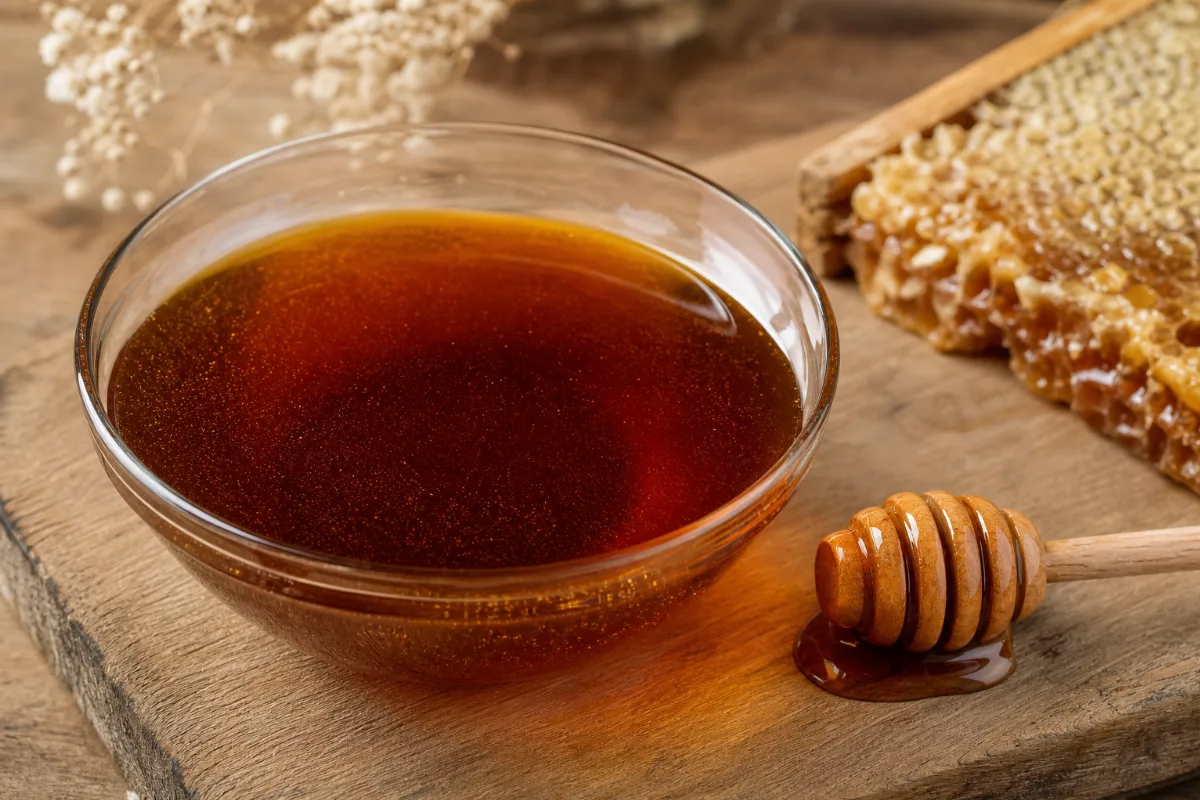
Jarrah honey is a dark honey that bees make mostly from the nectar of the jarrah tree in Western Australia. Never give any honey, jarrah included, to a baby under 12 months: it can cause infant botulism. Jar honey is a food and a sugar, not a sterile wound dressing. Everything found about jarrah honey itself comes from lab dishes, and no trial in people was found.
General information, not medical advice. Last substantive update · Not medically reviewed. A named clinician has not signed off on this page. How this page is made
About Jarrah Honey
Jarrah honey is a dark honey made by bees mostly from jarrah tree nectar in Western Australia. Safety first: never give any honey to a baby under 12 months because of infant botulism. Honey is a sugar food, it can cause allergy in some people, and jar honey is not medical-grade wound honey. Everything found on jarrah honey itself is lab-dish work, and no trial in people was found.
Food honey versus medical-grade wound honey
Jar honey is a food. Medical-grade honey is a separate, sterile product used by clinicians on wounds. They are not the same thing, even when the honey type is the same.
In one lab study of 29 honey products, bacteria or fungi grew from 18, and the authors say non-sterile honeys may not be suitable for wound treatment. That study used horse wound bacteria and did not name jarrah honey.
The wound trials we found tested honey dressings in general. A Cochrane review found honey dressings healed partial-thickness burns about 4.7 days faster than conventional dressings, and a 2026 review found better healing in diabetic foot ulcers. Jarrah honey was not named, and we found no trial of a jarrah honey wound product. Do not use jar honey instead of medical care for a wound or burn.
What it is
Jarrah honey is honey that bees (the western honey bee, Apis mellifera) make mostly from the nectar of the jarrah tree (Eucalyptus marginata, accepted by GBIF). The tree grows in the south-west of Western Australia. The honey is dark and has been picked out in lab surveys for strong germ-slowing activity.
In a survey of 477 Australian honeys, jarrah was one of the honeys with exceptional activity, and most of it came from hydrogen peroxide made by a bee enzyme. That activity can fade on long storage: honeys kept for over 10 years lost up to 54% of it in another study.
A label may not tell you the floral source. In one study 5 of 11 honeys sold as jarrah were re-classified as blackbutt honey by pollen counts, yet they did not differ on the chemical measures tested.
What the research shows
All results for jarrah honey itself come from dishes, with honey diluted in water. Jarrah honey stopped skin fungi at 1.5 to 3.5% in water, and Western Australian honeys including jarrah slowed bacteria behind impetigo at 4 to 8% for staphylococci. In one comparison manuka honey needed less honey than jarrah to stop two bacteria.
These dish results do not show that jar honey treats an infection. The authors of the impetigo study say clinical trials would be appropriate, and none for jarrah honey was found.
In lab tests jarrah honey also had phenols and antioxidant activity. Reviews of honey trials in general give mixed results for blood sugar and heart markers.
At a glance
Traditional uses history, not proof
- Honey in general has been used since ancient times as a wound remedy, a Cochrane abstract says; the sources read describe no traditional medical use specific to jarrah honey.
Studied for research
- Germ-slowing activity against bacteria (lab dishes only): very low
- Skin fungi and yeasts (lab dishes only): very low
- Wounds and infections (jarrah honey in people): insufficient
- Burns and wound dressings (honey in general): mixed
- Antioxidant chemistry (lab only): very low
- Blood sugar and heart markers (honey in general): mixed
Main compounds
- Hydrogen peroxide, made in honey by a bee enzyme
- Phenols, including kojic acid and epigallocatechin gallate found in Western Australian honeys
- Fructose and glucose, the main sugars
Common forms
- Liquid or set jar honey, a food
- Diluted honey used in lab dishes, not the same as jar honey
- Sterile medical honey dressings, a separate medical product (none based on jarrah honey was found in the sources read)
Research links: WHO: Botulism · NHS: Botulism · WHO: Healthy diet (free sugars) · Jarrah honey and skin fungi (abstract) · Western Australian honeys and impetigo bacteria (abstract) · Cochrane: honey for wounds (abstract) · Research Library · Genes & Biomarkers Library
What it is and its history
- Accepted scientific name
- Jarrah honey (honey made mainly from jarrah nectar)
- Naming authority
- Tree: Eucalyptus marginata Sm. (GBIF accepted name)
- Synonyms
- Eucalyptus marginata honey; Western Australian jarrah honey
- Common names
- Jarrah honey (English); Western Australian jarrah honey (English)
- Family or group
- Source tree: Myrtaceae (myrtle family). The honey is made by bees, not a plant.
- Classification
- Plantae (source plant) > Tracheophyta > Magnoliopsida > Myrtales > Myrtaceae > Eucalyptus > Eucalyptus marginata
- Native range
- South-west corner of Western Australia, as described in a 2019 abstract (honeys from endemic flora).
- Habitat
- Not checked.
- What it looks like
- Flowers: Nectar from jarrah flowers is the main source (by definition of the honey).
- Cultivation
- Not checked.
- Harvest and processing
- Usually sold as a liquid or set jar honey (existing AlternativeMed summary; not re-checked). Sterile medical honey dressings are a separate product; none based on jarrah honey was found in the sources read.
- Look-alikes and adulterants
- Name: Blackbutt (Eucalyptus patens) honey; Note: In one study 5 of 11 honeys sold as jarrah were re-classified as blackbutt by pollen counts, with no significant chemical difference between the groups.; Name: Other Western Australian honeys (marri, karri, red bell); Note: Studied alongside jarrah in the same lab papers; activity differs by honey.
Photographs
Traditional use and history history, not clinical proof
| Tradition or era | Documented use | Source |
|---|---|---|
| Honey in general | A Cochrane abstract says honey has been used since ancient times as a wound remedy. No source read describes a traditional medical use specific to jarrah honey. | p25742878 |
Traditional use shows how it was used. It does not show that it works or is safe today.
What is inside, and how it may work
What it contains and how those compounds act in cells and animals. Laboratory and animal mechanisms are not proven effects in people.
Main compounds
| Compound | Family | Where it is concentrated | Activity studied | Level of evidence |
|---|---|---|---|---|
| Hydrogen peroxide PubChem 784 | small molecule made in honey by the bee enzyme glucose oxidase | Honey Varies a lot between honeys; not given for jarrah alone in the abstracts. | Explains much of the germ-slowing activity of jarrah honey in dishes (activity fell sharply when the enzyme catalase was added), but not all of it: activity persisted without peroxide in antifungal tests. 17 6 7 22 | Laboratory research |
| Kojic acid PubChem 3840 | organic acid | Honey (found in all four Western Australian honeys tested, jarrah included) Not given in the abstract. | Identified in the honeys; its activity was not described in the abstract. 12 22 | Lab analysis |
| Epigallocatechin gallate PubChem 65064 | polyphenol (catechin) | Honey (found in all four Western Australian honeys tested) Not given in the abstract. | Identified in the honeys; DPPH bioautography showed most identified compounds have antioxidant activity in the lab. 12 22 | Lab analysis |
| Gallic acid and other phenols (taxifolin, luteolin, hesperetin, syringic acid and others) PubChem 370 | phenolic compounds | Honey (found in some, not all, of the four honeys tested; which honey is not stated in the abstract) Total phenols in jarrah honey: 50.58 +/- 3.76 mg GAE/100 g. | Antioxidant activity in lab tests. 12 22 | Lab analysis |
| Sugars (fructose and glucose) | sugars | Honey Not given for jarrah alone in the abstracts. | Make up most of honey; the high sugar concentration slows microbes in dishes. WHO counts honey sugars as free sugars. 20 10 | Authoritative guidance |
Mechanisms, receptors and pathways
| Target or pathway | Gene or receptor | What was found | Level |
|---|---|---|---|
| Hydrogen peroxide from glucose oxidase | Peroxide explains much of the antibacterial activity of jarrah and marri honeys in dishes. Peroxide explained only 47% of the variation in activity across Australian honeys, so other components also act. 17 7 9 | Laboratory research | |
| Antifungal action on the fungal surface | Jarrah honey damaged the surface of dermatophyte threads without detectable inside oxidative stress; activity persisted when peroxide was removed. 6 | Laboratory research | |
| Bacterial membrane and biofilm | Honey was more active after the outer membrane of Gram-negative bacteria was destabilised. Biofilm and pigment reduction tracked general growth inhibition. 17 | Laboratory research | |
| Bacterial gene expression | Genes of P. aeruginosa and S. pyogenes (not named in the abstract) | All honeys tested, jarrah included, lowered expression of essential genes in both bacteria in dishes. 1 | Laboratory research |
Absorption, metabolism and elimination
- Absorption
- Not studied for jarrah honey in the sources read.
- Distribution
- Not studied.
- Metabolism
- Not studied.
- Elimination
- Not studied.
- Bioavailability
- Not studied.
Isolated compounds versus whole extracts
Honey is a whole food. Lab findings for diluted honey, or for single compounds, do not show what honey does on skin or in people. Findings for other honeys, or for sterile medical honey dressings, do not carry over to jar jarrah honey.
Nutritional composition
Honey is mostly sugar. WHO counts sugars naturally present in honey as free sugars to be limited. Jarrah honey's phenol content was 50.58 +/- 3.76 mg GAE/100 g in one lab study, which is a chemistry measure and not a nutrition claim.
2 mixed findings5 very low certainty1 not enough evidence
What was looked at
The 8 benefits and uses checked for Jarrah Honey, each with how strong the evidence is. Tap one to open it.
- Germ-slowing activity against bacteria (lab dishes only)Very low certainty
- Biofilms and bacterial signalling (lab dishes only)Very low certainty
- Skin fungi that cause tinea (lab dishes only)Very low certainty
- Yeasts such as those behind thrush (lab dishes only)Very low certainty
- Wounds and infections: jarrah honey in peopleNot enough evidence
- Wound and burn dressings made with honey (honey in general, not jarrah)Mixed findings
- Antioxidant and phenolic content (lab tests only)Very low certainty
- Blood sugar and heart markers (honey in general, not jarrah)Mixed findings
Lab markers tracked in the studies
Minimum inhibitory concentration (MIC) in lab dishesHydrogen peroxide activity of honey (lab)Healing time of partial-thickness burns (honey dressings in general)HbA1cTotal phenolic content of honey (lab)
What is Jarrah Honey good for?
What people ask about, and how strong the evidence is. Where a result is about honey in general, not jarrah honey, it says so. None of it is proof, and all of it should be read with the safety section.
Benefits, one by one
Each card is a research question, not a promise. Tap a goal to filter. Open a card to see the studies, doses and limits.
Germ-slowing activity against bacteria (lab dishes only)
Very low certaintyIn lab dishes, jarrah honey and other Western Australian honeys slowed the growth of many bacteria, including bacteria that cause skin infections. This was done with diluted honey in dishes. It does not show an effect in people.
4 studiesNot given as advice. The lab studies used honey diluted in water; tha…
Studies, doses and limits
What the trials found
No trial of jarrah honey in people was found.
Results
Western Australian honeys including jarrah had MICs of 6.7 to 28.0% (w/v) against Gram-positive and Gram-negative bacteria. Against impetigo-related bacteria, jarrah, marri, red bell, banksia and manuka honeys had MIC50 values of 4 to 8% for S. aureus and coagulase-negative staphylococci, and 8 to 29% for S. pyogenes. In a 477-sample survey, jarrah was among the honeys with exceptional activity, and most activity came from hydrogen peroxide. In one comparison, jarrah honey needed 20 to 25% against P. aeruginosa and S. pyogenes where manuka honey needed 12.5%.
Effect sizes as reported
MIC values in % w/v of honey in water; lower means more active.
Why this rating
Dish studies only; no human trial of jarrah honey. Activity at 4 to 29% honey in water does not show what happens in a wound or on skin.
Form and dose studied
Not given as advice. The lab studies used honey diluted in water; that is not the same as honey from a jar.
Who was studied
Bacteria from lab collections and clinical isolates in dishes.
Limits
Several abstracts pool jarrah with other honeys. Some honeys stored for years lost activity. Jar honey is not sterile.
Why researchers looked
Interest in honey for infected wounds and skin infections, and in alternatives as antibiotic resistance grows.
Traditional use
No source read describes a traditional medical use specific to jarrah honey.
Proposed mechanism Laboratory research
Much of the activity is linked to hydrogen peroxide made by an enzyme from the bee (glucose oxidase). Honey's sugar and acidity also play a part.
A proposed mechanism does not show that the effect happens in people.
Never give honey to a baby under 12 months. Jar honey is not a wound dressing.
Biofilms and bacterial signalling (lab dishes only)
Very low certaintyWestern Australian honeys, jarrah included, reduced the build-up of bacterial biofilm in dishes. The authors say this closely followed general growth slowing, so it may not be a special effect.
1 studiesNot given as advice. The lab studies used honey diluted in water; tha…
Studies, doses and limits
What the trials found
No trial of jarrah honey in people was found.
Results
Honeys reduced the formation of biofilm and bacterial pigments. Honey applied to existing biofilm lowered metabolic activity with only minor falls in viability.
Effect sizes as reported
No effect sizes for jarrah alone in the abstract.
Why this rating
One lab study; results pool several Western Australian honeys.
Form and dose studied
Not given as advice. The lab studies used honey diluted in water; that is not the same as honey from a jar.
Who was studied
Bacteria in dishes.
Limits
Not a test in people. Not separated by honey type in the abstract.
Why researchers looked
Biofilms make wound infections harder to clear, so researchers test whether honey affects them.
Traditional use
No source read describes a traditional medical use specific to jarrah honey.
Proposed mechanism Laboratory research
Honeys reduced biofilm and pigment formation, both controlled by bacterial signalling, but the reductions tracked overall growth inhibition.
A proposed mechanism does not show that the effect happens in people.
Never give honey to a baby under 12 months. Jar honey is not a wound dressing.
Skin fungi that cause tinea (lab dishes only)
Very low certaintyJarrah honey stopped skin-fungus species growing in dishes at low concentrations. No trial in people with athlete's foot or ringworm was found.
1 studiesNot given as advice. The lab studies used honey diluted in water; tha…
Studies, doses and limits
What the trials found
No trial of jarrah honey in people was found.
Results
Jarrah honey inhibited dermatophytes at 1.5 to 3.5% (w/v); with catalase added the MIC rose to 25% or more. It blocked germination of Trichophyton rubrum spores and damaged the surface of mature fungal threads.
Effect sizes as reported
MIC 1.5 to 3.5% w/v (lab).
Why this rating
Single lab study of the fungi in dishes. No clinical test.
Form and dose studied
Not given as advice. The lab studies used honey diluted in water; that is not the same as honey from a jar.
Who was studied
Fungal species in dishes.
Limits
Dish study; how much honey reaches skin and what it does there was not tested.
Why researchers looked
Tinea (ringworm, athlete's foot) is common and some people look for natural alternatives.
Traditional use
No source read describes a traditional medical use specific to jarrah honey.
Proposed mechanism Laboratory research
Hydrogen peroxide looks important, but the effect continued when peroxide was removed and could not be copied with synthetic honey spiked with peroxide, so other agents in jarrah honey seem to help.
A proposed mechanism does not show that the effect happens in people.
Never give honey to a baby under 12 months. Jar honey is not a wound dressing.
Yeasts such as those behind thrush (lab dishes only)
Very low certaintyJarrah was one of the three most active of 12 Western Australian honeys against yeasts in dishes. At low concentrations the honeys actually helped the yeasts grow.
1 studiesNot given as advice. The lab studies used honey diluted in water; tha…
Studies, doses and limits
What the trials found
No trial of jarrah honey in people was found.
Results
MICs ranged from 8% to over 44% w/v. The most active honeys were blackbutt, jarrah and karri. At low concentrations growth of all yeasts was enhanced; at about 12% w/v and above honey slowed growth. All eight natural honeys killed more yeast than artificial honey in time-kill tests.
Effect sizes as reported
MIC 8% to over 44% w/v.
Why this rating
Dish study; low honey concentrations helped yeasts grow, which is a reason for caution.
Form and dose studied
Not given as advice. The lab studies used honey diluted in water; that is not the same as honey from a jar.
Who was studied
Ten yeast isolates in dishes.
Limits
Not a human trial; jarrah-only values are not in the abstract.
Why researchers looked
Antifungal drug resistance is rising, so honeys were screened for activity against yeasts.
Traditional use
No source read describes a traditional medical use specific to jarrah honey.
Proposed mechanism Laboratory research
Activity was linked to a mix of sugar concentration, hydrogen peroxide and plant-derived compounds.
A proposed mechanism does not show that the effect happens in people.
Never give honey to a baby under 12 months. Jar honey is not a wound dressing.
Wounds and infections: jarrah honey in people
Not enough evidenceNo trial of jarrah honey on wounds, skin infections or any other condition in people was found. Lab results do not fill that gap.
2 studiesNot given as advice. The lab studies used honey diluted in water; tha…
Studies, doses and limits
Results
No human result for jarrah honey. The impetigo-bacteria authors write that clinical trials would be appropriate.
Why this rating
No human trial found, so no rating of benefit is possible.
Form and dose studied
Not given as advice. The lab studies used honey diluted in water; that is not the same as honey from a jar.
Limits
Only abstracts were read.
Why researchers looked
Lab results led authors to say that honeys like jarrah may deserve clinical trials.
Traditional use
No source read describes a traditional medical use specific to jarrah honey.
Proposed mechanism Pharmacological theory
Not applicable: no human study.
A proposed mechanism does not show that the effect happens in people.
Jar honey is not a medical wound product. See a clinician for wounds, burns and infections.
Wound and burn dressings made with honey (honey in general, not jarrah)
Mixed findingsA Cochrane review found that honey dressings healed partial-thickness burns about 4.7 days faster than conventional dressings. For most other wounds the results were unclear. The reviews do not name jarrah honey.
2 studiesNot given as advice. The lab studies used honey diluted in water; tha…
Studies, doses and limits
What the trials found
Cochrane review (searched to October 2014): 26 trials, 3,011 people (burns, chronic wounds and minor wounds). A 2026 meta-analysis of 16 randomised trials in 1,423 people with diabetic foot ulcers.
Results
High-quality evidence (2 trials, n=992) that honey heals partial-thickness burns faster than conventional dressings (WMD -4.68 days, 95% CI -5.09 to -4.28); unclear differences for adverse events and infection. Effects were unclear for venous leg ulcers, diabetic foot ulcers and minor wounds in the Cochrane review. The 2026 diabetic foot ulcer meta-analysis found a higher complete healing rate (OR 2.28, 95% CI 1.76 to 2.95; moderate certainty) and a shorter time to healing (MD -4.38 days, 95% CI -8.06 to -0.71; low certainty).
Effect sizes as reported
Burns: about 4.7 days faster than conventional dressings. Diabetic foot ulcers: OR 2.28 for healing.
Why this rating
Strong for partial-thickness burns, but the Cochrane authors call the evidence for most other wounds low or very low quality, and the 2026 review rates time-to-healing as low certainty. Honey types are not separated and jarrah is not named.
Form and dose studied
Not given as advice. The lab studies used honey diluted in water; that is not the same as honey from a jar.
Who was studied
People with burns, chronic wounds and diabetic foot ulcers treated by clinicians.
Limits
Results do not transfer to jarrah honey or to honey from a jar. The products in the trials are not named in the abstracts.
Why researchers looked
Honey is an old wound remedy, and medical-grade honey dressings are used in clinics.
Traditional use
Honey has been used in wound care since ancient times, the Cochrane abstract says.
Proposed mechanism Pharmacological theory
Not established in the abstracts.
A proposed mechanism does not show that the effect happens in people.
Never put jar honey on a wound or burn in place of medical care. Non-sterile honey can carry live microbes.
Antioxidant and phenolic content (lab tests only)
Very low certaintyJarrah honey contains phenolic compounds and showed antioxidant activity in lab tests. This is a measurement of chemistry, not a health result.
1 studiesNot given as advice. The lab studies used honey diluted in water; tha…
Studies, doses and limits
What the trials found
No trial of jarrah honey in people was found.
Results
Jarrah honey had a total phenolic content of 50.58 +/- 3.76 mg GAE/100 g, second to red bell honey (59.4). Kojic acid and epigallocatechin gallate were found in all four Western Australian honeys tested; other compounds in some only.
Effect sizes as reported
Total phenols 50.58 mg GAE/100 g.
Why this rating
Chemistry in a lab, with no study of antioxidant effects in people.
Form and dose studied
Not given as advice. The lab studies used honey diluted in water; that is not the same as honey from a jar.
Limits
A small number of samples; FRAP value for jarrah is not given in the abstract.
Why researchers looked
Phenols are often studied because they can neutralise free radicals in test tubes.
Traditional use
No source read describes a traditional medical use specific to jarrah honey.
Proposed mechanism Laboratory research
Antioxidant activity measured by FRAP and DPPH lab tests; most identified phenols had activity in a DPPH test.
A proposed mechanism does not show that the effect happens in people.
Not applicable.
Blood sugar and heart markers (honey in general, not jarrah)
Mixed findingsHoney is sugar. Reviews of trials of honey of mixed types give mixed results: a possible lower HbA1c but possibly worse blood pressure, triglycerides, fasting glucose and other markers. Jarrah honey was not tested.
3 studiesNot given as advice. The lab studies used honey diluted in water; tha…
Studies, doses and limits
What the trials found
An umbrella review of 69 trials (3,544 people) of honey, royal jelly and propolis; a meta-analysis of 7 trials of fructose-containing sugars (honey included).
Results
Daily honey may lower HbA1c but adversely affect systolic blood pressure, AST (a liver enzyme), triglycerides, fasting blood glucose and hs-CRP; the authors say long-term or high-dose honey in people with health concerns warrants caution. A short-term meta-analysis found no significant effect of honey on fasting glucose or insulin, but uric acid rose when fructose, fructose-glucose and honey were pooled (Hedges g 0.550, P = 0.028).
Effect sizes as reported
Effect sizes for honey are not in the abstracts.
Why this rating
Two reviews point in different directions on several markers. Honey types are not separated and jarrah is not named.
Form and dose studied
Not given as advice. The lab studies used honey diluted in water; that is not the same as honey from a jar.
Who was studied
Adults in trials of honey, various health states.
Limits
Only abstracts were read. Short trials; mixed honey types.
Why researchers looked
People ask whether honey is a better choice than sugar.
Traditional use
No source read describes a traditional medical use specific to jarrah honey.
Proposed mechanism Pharmacological theory
Not established in the abstracts.
A proposed mechanism does not show that the effect happens in people.
Honey is a free sugar (WHO). People managing blood sugar should ask a doctor or pharmacist.
Connections to the rest of health
How Jarrah Honey connects to the rest of our health knowledge graph. Every link says what kind of connection it is. A safety link (for example to the liver) is a warning, not a benefit. A study that merely mentions a topic never creates a benefit link.
Explore every connection: goals, body systems, organs, symptoms, genes
B. Body systems
| Connected to | Kind of connection | Evidence status | Context | Studies |
|---|---|---|---|---|
| Immune system | Adverse effect or risk | Low certainty | Allergic reactions, rare but can be severe. Preparation or compound: Honey and bee products |
14 16 |
| Integumentary System | Biological association | Very low certainty | Studied for: Germ-slowing activity against bacteria (lab dishes only) Studied for: Biofilms and bacterial signalling (lab dishes only) | 17 4 9 1 6 8 13 11 18 |
| Immune System | Biological association | Very low certainty | Studied for: Germ-slowing activity against bacteria (lab dishes only) Studied for: Yeasts such as those behind thrush (lab dishes only) | 17 4 9 1 8 |
| Whole Body | Biological association | Very low certainty | Studied for: Antioxidant and phenolic content (lab tests only) | 12 |
| Endocrine System | Biological association | Mixed findings | Studied for: Blood sugar and heart markers (honey in general, not jarrah) | 15 5 20 |
| Cardiovascular System | Biological association | Mixed findings | Studied for: Blood sugar and heart markers (honey in general, not jarrah) | 15 5 20 |
C. Body parts and organs
I. Biomarkers
| Connected to | Kind of connection | Evidence status | Context | Studies |
|---|---|---|---|---|
| HbA1c | Mixed findings | Possible lower HbA1c, other measures may worsen. Preparation or compound: Honey of mixed types |
15 | |
| Minimum inhibitory concentration (MIC) in lab dishes | Biological association | Very low certainty | Measured in trials: lowered. A lab change is not the same as a health benefit. | 6 4 1 |
| Hydrogen peroxide activity of honey (lab) | Biological association | Very low certainty | Measured in trials: raised. A lab change is not the same as a health benefit. | 17 7 |
| Healing time of partial-thickness burns (honey dressings in general) | Biological association | Mixed findings | Measured in trials: lowered. A lab change is not the same as a health benefit. | 11 |
| HbA1c | Biological association | Mixed findings | Measured in trials: lowered. A lab change is not the same as a health benefit. | 15 |
| Total phenolic content of honey (lab) | Biological association | Very low certainty | Measured in trials: raised. A lab change is not the same as a health benefit. | 12 |
L. Active compounds
| Connected to | Kind of connection | Evidence status | Context | Studies |
|---|---|---|---|---|
| Hydrogen peroxide | Biological association | In vitro | Explains much of the germ-slowing activity of jarrah honey in dishes (activity fell sharply when the enzyme catalase was added), but not all of it: activity persisted without peroxide in antifungal tests. Preparation or compound: Honey |
17 6 7 22 |
| Kojic acid | Biological association | Lab analysis | Identified in the honeys; its activity was not described in the abstract. Preparation or compound: Honey (found in all four Western Australian honeys tested, jarrah included) |
12 22 |
| Epigallocatechin gallate | Biological association | Lab analysis | Identified in the honeys; DPPH bioautography showed most identified compounds have antioxidant activity in the lab. Preparation or compound: Honey (found in all four Western Australian honeys tested) |
12 22 |
| Gallic acid and other phenols (taxifolin, luteolin, hesperetin, syringic acid and others) | Biological association | Lab analysis | Antioxidant activity in lab tests. Preparation or compound: Honey (found in some, not all, of the four honeys tested; which honey is not stated in the abstract) |
12 22 |
| Sugars (fructose and glucose) | Biological association | Authoritative guidance | Make up most of honey; the high sugar concentration slows microbes in dishes. WHO counts honey sugars as free sugars. Preparation or compound: Honey |
20 10 |
Each connection is stored with the ingredient, the connected record, the kind of connection, the evidence status, the supporting studies, the preparation or compound involved, and a review date (last reviewed October 25, 2026).
The evidence
The research centre for Jarrah Honey. Every record here was checked against PubMed or the publisher's page; we never list a study we have not verified.
Evidence by outcome
Bars show how many studies we found for each outcome, not how well it works. People are added up across trials only (reviews are not added, to avoid double counting).
How we rate evidence
High certainty
Several well-run trials or reviews agree; further research is unlikely to change the picture much.
Moderate certainty
Good trials point the same way, but some doubt remains.
Low certainty
Small, short or inconsistent trials. The finding could change with better research.
Very low certainty
Very little or very weak human data. Treat as a possibility only.
Mixed findings
Trials or reviews disagree with each other.
Not enough evidence
Not enough human research to say either way.
Evidence against
Good research found no benefit, or found harm.
We take the reviewers' own risk-of-bias and GRADE statements where they exist, and otherwise judge from study size, design, consistency, directness and whether a product matches what is sold. Many publications do not make evidence high. Method note: We read the abstracts of 19 PubMed papers, the WHO botulism and healthy-diet fact sheets and the NHS botulism page in full, checked the tree and bee names in GBIF and four compounds in PubChem. Certainty ratings are the compiler's own reading unless a review gives its own. Funders of the lab studies were not read. Australian regulator pages were not read.
Study library: every study we checked 24
| Study | Design | People | Product, dose, length | Result |
|---|---|---|---|---|
| Al-Kafaween 2022 A comparative study of antibacterial and antivirulence activities of four selected honeys to Manuka honey. Iran J Microbiol · PMID 35765547 · DOI |
Lab in vitro lab |
Pseudomonas aeruginosa and Streptococcus pyogenes in lab dishes | Four honeys (Jarrah, Kelulut Madu, Gelam and Acacia) compared with manuka honey honey Dilutions of honey Lab (time-kill 9 hours at 2x MIC) · vs Manuka honey |
MICs of jarrah, kelulut, gelam and acacia honeys ranged from 20% to 25%, against 12.5% for manuka honey. MBCs were 20 to 50% against 20% for manuka. All honeys lowered bacterial counts and changed gene expression. Manuka honey showed the highest antibacterial and antivirulence activity. Jarrah honey was less active than manuka honey in this dish study Methods, limits and fundingOutcomes: MIC, MBC, time-kill, scanning electron microscopy, gene expression Limitations: Lab study; two bacterial species; not a trial. Funding and conflicts: Not stated in the abstract. Read: abstract |
| Aricò 2026 Infant Botulism and Honey Exposure: Global Epidemiology, Prevention Policies, and Communication Strategies. Acta Paediatr · PMID 41964486 · DOI |
Narrative review |
Infants under 12 months; surveillance data 1976 to 2024 | Honey exposure and infant botulism honey |
Cases were rare, but honey was the only consistently confirmed dietary source of infant botulism. Median age at onset was 3 to 4 months. Mortality was below 1% with intensive care and specific botulism immune globulin. The USA had about 130 cases a year in a 2007 to 2021 review; Europe, Canada, Japan and Australia reported markedly lower incidence. Health authorities uniformly advise against honey before 12 months. Honey is the only consistently confirmed food source Methods, limits and fundingOutcomes: Epidemiology and prevention policies Limitations: Narrative review; it does not break results down by honey type. Funding and conflicts: Not stated in the abstract. Read: abstract |
| Carnwath 2014 The antimicrobial activity of honey against common equine wound bacterial isolates. Vet J · PMID 23962613 · DOI |
Lab analysis lab |
29 29 honey products (medical-grade irradiated and non-irradiated, supermarket, local beekeeper) tested against horse wound bacteria |
Medical-grade, supermarket and local honeys honey Dilutions of honey Lab · vs Other honeys in the same study |
All honeys were cultured first. Aerobic bacteria or fungi were recovered from 18 of the 29 products, so only 11 were tested further. Eight of those 11 were effective against all 10 wound bacteria (honey at under 2% to 16% v/v). The authors conclude that some honeys were contaminated and non-sterile honeys may not be suitable for wound treatment. Many jar-type honeys carried live microbes; non-sterile honey may be unsuitable for wounds Methods, limits and fundingOutcomes: Contamination of honeys and antimicrobial activity against 10 wound bacteria Limitations: Horse wound bacteria and a veterinary journal; jarrah honey is not named. The finding about contamination is the reason it is cited here. Funding and conflicts: Not stated in the abstract. Read: abstract |
| Chhawchharia 2022 In vitro antibacterial activity of Western Australian honeys, and manuka honey, against bacteria implicated in impetigo. Complement Ther Clin Pract · PMID 35868137 · DOI |
Lab in vitro lab |
30 clinical bacterial isolates (S. aureus n=10, S. pyogenes n=10, coagulase-negative staphylococci n=10) tested in 96-well trays | Six single-flower honeys (jarrah, marri, red bell, banksia, wandoo, manuka), a multifloral honey and artificial honey honey Dilutions up to about 30% w/v Lab (overnight incubation) · vs Artificial honey; multifloral honey |
Jarrah, marri, red bell, banksia and manuka honeys were highly effective against S. aureus and coagulase-negative staphylococci (MIC50 4 to 8% w/v). S. pyogenes was inhibited at higher concentrations (8 to 29% w/v). Wandoo and multifloral honeys were weakest (MIC above 30%). The authors say clinical trials would be appropriate. Dish activity against impetigo-related bacteria Methods, limits and fundingOutcomes: MIC against bacteria that cause impetigo Limitations: Lab study, not a trial. Jarrah-only values are not separated in the abstract. Results in dishes do not show that honey treats impetigo in people. Funding and conflicts: Not stated in the abstract. PubMed lists it as Research Support, Non-U.S. Gov't. Read: abstract |
| Guntari 2025 Fructose-containing sugars and metabolic risk: a systematic review and meta-analysis. Food Nutr Res · PMID 41323133 · DOI |
Meta-analysis |
Seven clinical trials (17 study codes) of fructose-containing sugars in adults | Fructose, fructose-glucose mixtures, honey or sucrose honey (types not stated in the abstract) 7 hours to 49 days · vs Unsweetened drinks, artificial sweeteners, habitual diets |
Fructose-glucose mixtures raised fasting glucose and insulin; fructose, honey and sucrose showed no significant effect on those two. Pooled fructose, fructose-glucose and honey together raised uric acid (Hedges g 0.550, P = 0.028). The authors say regular intake of added sugars may raise cardiometabolic risk. Honey did not clearly change glucose or insulin in short trials; uric acid rose in a pooled group that included honey Methods, limits and fundingOutcomes: Fasting glucose, insulin, cholesterol, uric acid Limitations: Few honey trials, short duration. Jarrah honey is not named. Funding and conflicts: Not stated in the abstract. Read: abstract |
| Guttentag 2021 Inhibition of Dermatophyte Fungi by Australian Jarrah Honey. Pathogens · PMID 33670403 · DOI |
Lab in vitro lab |
Dermatophyte fungi (including Trichophyton rubrum) grown in lab dishes | Jarrah (Eucalyptus marginata) honey honey Dilutions in water Lab · vs Jarrah honey with catalase added; synthetic honey spiked with hydrogen peroxide |
Jarrah honey inhibited dermatophytes at 1.5 to 3.5% (w/v); with catalase added the MIC rose to 25% or more. It inhibited germination of T. rubrum spores and damaged the surface of mature hyphae. The effects persisted when hydrogen peroxide was removed and could not be copied with synthetic honey spiked with hydrogen peroxide, so jarrah honey seems to contain other active agents. Lab antifungal activity Methods, limits and fundingOutcomes: MIC against dermatophytes, spore germination, microscopy of fungal hyphae Limitations: Dish study of fungi, not a trial in people with tinea (ringworm or athlete's foot). Amount of honey that reaches skin was not tested. Funding and conflicts: Not stated in the abstract. PubMed lists it as Research Support, Non-U.S. Gov't. Read: abstract |
| Guttentag 2021 Factors affecting the production and measurement of hydrogen peroxide in honey samples. Access Microbiol · PMID 34151153 · DOI |
Lab analysis lab |
Highly active Australian honeys in lab tests (honey types not named in the abstract) | Australian honeys with high hydrogen peroxide activity honey Honeys stored for more than 10 years |
Honeys stored for over 10 years lost up to 54% of antibacterial activity, though nearly all stayed active enough to be considered potentially therapeutically useful. Peroxide explained only 47% of the variation in activity, so other honey components also matter. Lab storage and mechanism findings Methods, limits and fundingOutcomes: Hydrogen peroxide production and antibacterial activity Limitations: Abstract does not name jarrah. Used here only for what it says about Australian peroxide-active honeys in general. Funding and conflicts: Not stated in the abstract. PubMed lists it as Research Support, Non-U.S. Gov't. Read: abstract |
| Haines 2024 In vitro activity of Western Australian honeys and Manuka honey against clinically important yeasts. Yeast · PMID 39032089 · DOI |
Lab in vitro lab |
10 yeast isolates (clinical and reference strains) tested in lab dishes | 12 Western Australian honeys (including jarrah, blackbutt, karri), two manuka honeys and artificial honey honey Dilutions up to about 44% w/v Lab; time-kill tests with 64% w/v honey · vs Artificial honey |
MICs ranged from 8% to over 44% w/v. The most active honeys came from blackbutt (Eucalyptus patens), jarrah (E. marginata) and karri (E. diversicolor). At low concentrations the growth of all yeasts was enhanced; at about 12% w/v and above honey slowed growth. In time-kill tests all eight natural honeys killed more yeast than artificial honey. Dish activity against yeasts; low honey concentrations helped yeast grow Methods, limits and fundingOutcomes: MIC against yeasts, growth curves, time-kill Limitations: Lab study; jarrah-only figures are not in the abstract. Not a human trial. Funding and conflicts: Not stated in the abstract. PubMed lists it as Research Support, Non-U.S. Gov't. Read: abstract |
| Irish 2011 The antibacterial activity of honey derived from Australian flora. PLoS One · PMID 21464891 · DOI |
Lab analysis lab |
477 477 Australian honey samples from native and exotic plants |
Honeys from Australian flora screened with a standard test of antibacterial activity honey Lab; storage tests over time · vs Standard screening protocol |
274 of 477 honeys (57%) had activity considered potentially therapeutically useful. Exceptional activity was seen in samples from marri, jarrah (Eucalyptus marginata) and jellybush. Most activity was due to hydrogen peroxide made by an enzyme from the bee. Non-peroxide activity was found in 80 samples (16.8%), most often in Leptospermum (manuka-type) honey. Peroxide activity fell over time, sometimes by 100%, and was more stable at 4 degrees C than 25 degrees C. Survey of lab activity; peroxide-based activity can fade on storage Methods, limits and fundingOutcomes: Share of honeys with antibacterial activity; stability on storage Limitations: Lab survey, not a trial. The abstract does not give a figure for jarrah alone. Funding and conflicts: Not stated in the abstract. PubMed lists it as Research Support, Non-U.S. Gov't. Read: abstract |
| Islam 2022 An investigation of the suitability of melissopalynology to authenticate Jarrah honey. Curr Res Food Sci · PMID 35281336 · DOI |
Lab analysis lab |
11 Eleven honeys sold as jarrah (Eucalyptus marginata) |
Pollen counts (melissopalynology) and chemical measures of the honeys honey Lab · vs Comparison of the two pollen-based groups |
Nearly half (5 of 11) of the honeys sold as jarrah were re-classified as blackbutt (E. patens) honey on pollen counts. Across pH, conductivity, sugars, phenolic content and antioxidant activity there was no statistically significant difference between the two groups. The authors question whether pollen analysis can authenticate jarrah honey. Labelling of jarrah honey is hard to check Methods, limits and fundingOutcomes: Whether pollen analysis can authenticate jarrah honey Limitations: Eleven samples only. Says nothing about sugar-syrup adulteration. Funding and conflicts: Not stated in the abstract. PubMed lists it as Research Support, Non-U.S. Gov't. Read: abstract |
| Jull 2015 Honey as a topical treatment for wounds. Cochrane Database Syst Rev · PMID 25742878 · DOI |
Systematic review |
3011 26 trials in people with acute or chronic wounds (3 minor acute wounds, 11 burns, 10 chronic wounds, 2 mixed) |
Honey dressings of various types compared with other dressings and topical treatments honey (honeybee, Apis mellifera; honey types not separated in the abstract) Varied · vs Conventional dressings, silver sulfadiazine, antiseptics and others |
High quality evidence (2 trials, n=992) that honey dressings heal partial-thickness burns faster than conventional dressings (about 4.7 days; WMD -4.68, 95% CI -5.09 to -4.28). Honey healed infected post-operative wounds faster than antiseptic washes plus gauze (1 trial, n=50, moderate quality). Effects were unclear for venous leg ulcers, diabetic foot ulcers, minor acute wounds and mixed chronic wounds (low or very low quality). The authors say the evidence is mostly low quality and does not form a robust basis for decisions. Faster healing of partial-thickness burns; unclear for most other wounds (WMD -4.68 days (95% CI -5.09 to -4.28) for partial-thickness burns) Methods, limits and fundingOutcomes: Wound healing Limitations: Honey types and products are not separated in the abstract, and jarrah honey is not named. Review searched to October 2014. Funding and conflicts: Not stated in the abstract. Read: abstract |
| Lawag 2023 Antioxidant Activity and Phenolic Compound Identification and Quantification in Western Australian Honeys. Antioxidants (Basel) · PMID 36671051 · DOI |
Lab analysis lab |
Western Australian honeys: Calothamnus (red bell, n=8), coastal peppermint, marri and jarrah (Eucalyptus marginata) | Four Western Australian honeys measured for phenols and antioxidant activity honey Lab · vs Other honeys in the same study |
Jarrah honey had a total phenolic content of 50.58 +/- 3.76 mg GAE/100 g, second to red bell honey (59.4). In the DPPH test jarrah, coastal peppermint and marri honeys had comparable activity. Kojic acid and epigallocatechin gallate were found in all four honeys; other compounds (for example gallic acid, taxifolin, luteolin, hesperetin) were found in only some. Antioxidant activity in lab tests; no health outcome Methods, limits and fundingOutcomes: Total phenolic content, FRAP and DPPH antioxidant tests, phenolic compounds Limitations: Lab chemistry on a small number of samples; not a test in people. Funding and conflicts: Not stated in the abstract. Read: abstract |
| Lutsenko 2026 Medicinal Honeys from Oceania: An Updated Review on Their Bioactive Constituents and Health Applications. BioTech (Basel) · PMID 41562695 · DOI |
Narrative review n/a |
Review of Oceania medicinal honeys, including manuka, jarrah and Agastache honeys | Narrative review of honey chemistry and health uses honey |
The review says these honeys contain small molecules such as methylglyoxal and hydrogen peroxide, plus phenolic compounds and terpenes, and that bioactivity varies with floral source, place and processing. It describes antioxidant, antimicrobial, anti-inflammatory and wound-healing properties and refers to emerging clinical and preclinical evidence. The abstract does not say which results are for jarrah. Background review; no jarrah-specific human result in the abstract Methods, limits and fundingOutcomes: Chemical profiles and bioactivities of honeys from New Zealand and Australia Limitations: Only the abstract was read. It does not separate jarrah from the other honeys. Funding and conflicts: Not stated in the abstract. Read: abstract |
| Matuszewska-Mach 2025 Ensuring the Safe Use of Bee Products: A Review of Allergic Risks and Management. Int J Mol Sci · PMID 41465502 · DOI |
Narrative review |
People using bee products, including honey | Honeybee products honey and other bee products |
Honeybee products can trigger allergic reactions from local dermatitis to life-threatening anaphylaxis, though relatively rarely. Both IgE-mediated (type I) and T-cell-mediated (type IV) reactions occur. People with atopy and beekeepers are at heightened risk. Allergy is rare but can be severe Methods, limits and fundingOutcomes: Allergic reactions to bee products Limitations: Narrative review of several bee products; not specific to jarrah honey. Funding and conflicts: Not stated in the abstract. Read: abstract |
| Norouzzadeh 2025 Dosage exploration of the effects of honey and its derivatives on cardiometabolic outcomes: an overview of systematic reviews and GRADE-assessed updated meta-analysis. Nutr Diabetes · PMID 41261111 · DOI |
Meta-analysis |
3544 69 randomised trials (3,544 people) of honey, royal jelly or propolis for heart and metabolic outcomes |
Honey (types not stated in the abstract), royal jelly and propolis honey Amounts are in the paper and are not given as advice here Varied · vs Various |
The overview found that daily honey may lower HbA1c but adversely affect systolic blood pressure, AST, triglycerides, fasting blood glucose and high-sensitivity C-reactive protein. The authors say long-term or high-dose honey in people with health concerns warrants caution. Mixed: one marker may improve while several others may worsen Methods, limits and fundingOutcomes: HbA1c, blood pressure, AST, triglycerides, fasting glucose, hs-CRP Limitations: Honey types are not separated in the abstract; jarrah is not named. Effect sizes are not in the abstract. Funding and conflicts: Not stated in the abstract. Read: abstract |
| Rocha Filho 2026 Pharmacovigilance and toxicological risks associated with apitherapeutic products: a systematic overview. Arch Toxicol · PMID 41071287 · DOI |
Systematic review |
Reports from literature and pharmacovigilance databases on honey, bee venom, propolis, royal jelly, pollen and beeswax | Apitherapy products honey and other bee products |
Reported cases included infant botulism and grayanotoxin poisoning linked to honey. Allergic responses were the most prevalent adverse event, particularly among atopic people. The authors call for better labelling and surveillance. Honey and other bee products are not free of risk Methods, limits and fundingOutcomes: Adverse effects and toxicological risks Limitations: Overview of mixed products; honey types are not separated. Funding and conflicts: Not stated in the abstract. Read: abstract |
| Sindi 2019 Anti-biofilm effects and characterisation of the hydrogen peroxide activity of a range of Western Australian honeys compared to Manuka and multifloral honeys. Sci Rep · PMID 31776432 · DOI |
Lab in vitro lab |
Honeys from the south-west of Western Australia, including jarrah (Eucalyptus marginata) and marri, tested against Gram-positive and Gram-negative bacteria in lab dishes | Western Australian honeys including jarrah, compared with manuka and multifloral honey honey (floral sources named in the abstract) Dilutions of honey in water Lab · vs Manuka and multifloral honey; catalase-treated honey |
MICs of 6.7 to 28.0% (w/v) across the Western Australian honeys. Activity rose when hydrogen peroxide was allowed to build up (mean MIC 14.3% vs 17.4%) and fell with the enzyme catalase (29.4% vs 15.2%). Honeys reduced biofilm and pigment formation, but these reductions closely tracked overall growth inhibition. Honey applied to existing biofilm lowered metabolic activity and gave only minor falls in viability. Lab activity only; results are for the group of honeys, not jarrah alone Methods, limits and fundingOutcomes: Minimum inhibitory concentration (MIC), effect of hydrogen peroxide, biofilm and pigment formation Limitations: Dish study. The abstract pools the Western Australian honeys and does not give jarrah-only figures. Not a test in people. Funding and conflicts: Not stated in the abstract. PubMed lists it as Research Support, Non-U.S. Gov't. Read: abstract |
| Yao 2026 Honey dressing for diabetic foot ulcers: a systematic review and meta-analysis of randomized controlled trials. Front Endocrinol (Lausanne) · PMID 41928876 · DOI |
Meta-analysis |
1423 16 randomised trials in people with diabetic foot ulcers (23 to 348 participants each; 4 to 24 weeks) |
Honey dressing compared with conventional dressings honey (types not stated in the abstract) 4 to 24 weeks · vs Conventional dressings |
Honey dressing improved the complete healing rate (OR 2.28, 95% CI 1.76 to 2.95) and shortened time to complete healing (MD -4.38, 95% CI -8.06 to -0.71). GRADE certainty was moderate for healing rate and low for time to healing. Better healing in diabetic foot ulcers with honey dressings (moderate and low certainty) (OR 2.28 (95% CI 1.76 to 2.95); MD -4.38 (95% CI -8.06 to -0.71)) Methods, limits and fundingOutcomes: Complete healing rate and time to complete healing Limitations: Honey types are not separated in the abstract; jarrah is not named. Only the abstract was read. Funding and conflicts: Not stated in the abstract. Registration: PROSPERO CRD420251244450 Read: abstract |
| n/a 2023 WHO: Botulism (fact sheet, 25 September 2023) n/a · Source |
Authoritative guidance n/a |
n/a | n/a |
Infant botulism signs listed include constipation, loss of appetite, weakness, an altered cry and a striking loss of head control. Methods, limits and fundingOutcomes: Spores of Clostridium botulinum are heat-resistant. Spore-contaminated honey has been associated with a number of infant botulism cases, and parents and caregivers are warned not to feed honey to infants before the age of 1 year. Limitations: A fact sheet, not a trial. It does not mention jarrah honey. Read: full-text |
| n/a 2026 WHO: Healthy diet (fact sheet, 26 January 2026) n/a · Source |
Authoritative guidance n/a |
n/a | n/a |
Honey counts as a free sugar in WHO's advice. Methods, limits and fundingOutcomes: Free sugars include sugars naturally present in honey, syrups and fruit juices, and consumption of free sugars should be limited throughout life. Limitations: General dietary guidance, not about jarrah honey. Read: full-text |
| n/a 2026 NHS: Botulism (page reviewed 4 March 2026) n/a · Source |
Authoritative guidance n/a |
n/a | n/a |
The page says to call emergency services if a child is limp or floppy. Methods, limits and fundingOutcomes: Do not give honey to babies younger than 12 months old; honey can contain the bacteria that cause botulism. Limitations: A health-service page, not a trial. It does not mention jarrah honey. Read: full-text |
| n/a 2026 PubChem compound records (retrieved 2026-10-25) n/a · Source |
Database n/a |
n/a | n/a |
Hydrogen peroxide CID 784 (H2O2); kojic acid CID 3840 (C6H6O4); epigallocatechin gallate CID 65064 (C22H18O11); gallic acid CID 370 (C7H6O5). Methods, limits and fundingOutcomes: Compound identity check. Limitations: Identity only; no activity data. Read: api-record |
| n/a 2026 GBIF Backbone Taxonomy: Eucalyptus marginata Sm. (match API, retrieved 2026-10-25) n/a · Source |
Database n/a |
n/a | n/a |
Eucalyptus marginata Sm., status ACCEPTED, family Myrtaceae, order Myrtales, GBIF key 3177295. Methods, limits and fundingOutcomes: Accepted species name, family and order of the tree whose nectar gives jarrah honey. Limitations: Database record for the tree only; it says nothing about the honey. Read: api-record |
| n/a 2026 GBIF Backbone Taxonomy: Apis mellifera Linnaeus, 1758 (match API, retrieved 2026-10-25) n/a · Source |
Database n/a |
n/a | n/a |
Apis mellifera Linnaeus, 1758, status ACCEPTED, family Apidae, GBIF key 1341976. Methods, limits and fundingOutcomes: Accepted name of the western honey bee. Limitations: Database record only. Which bee species made the honey in each study is not stated in the abstracts. Read: api-record |
What we do not know yet
- No trial of jarrah honey in people, for wounds, infection, blood sugar or anything else, was found.
- Lab studies often pool jarrah with other Western Australian honeys, and abstracts do not always give jarrah-only numbers.
- Dish concentrations (honey diluted in water) cannot be compared with honey on skin or in the gut.
- No information on jarrah honey in pregnancy, breastfeeding or with medicines was found.
- No source tested jarrah honey for pesticides, antibiotics or metals, and no rate of sugar-syrup fraud was found.
- Australian regulation of honey wound products was not read.
How new research is added
New studies are found by a saved PubMed search and are placed in a review queue. A person reads each one before it is added.
Lab markers
What changed in blood or saliva tests during trials. A changed number is not the same as feeling or being healthier, and we give no "normal ranges".
Metabolic 1
HbA1c
Lowered in trials
A blood test showing average blood sugar over about 3 months.
Mixed findingsResults and what it means
Why it was measured
To see whether honey changes long-term blood sugar.
Statistical vs. clinical meaning
A possible fall in HbA1c, but other blood measures may worsen. Not shown to help people with diabetes.
Safety implication
People who manage blood sugar should ask a doctor or pharmacist.
| Study | Result | People | Product |
|---|---|---|---|
| 15 | Daily honey may lower HbA1c (overview of 69 trials; honey types not stated). | 3,544 people in 69 trials | Honey of mixed types |
Other 4
Minimum inhibitory concentration (MIC) in lab dishes
Lowered in trials
The lowest strength of honey, as a percentage of honey in water, that stops a germ growing in a dish. A lower number means a stronger effect.
Very low certaintyResults and what it means
Why it was measured
To compare how strongly different honeys slow bacteria and fungi in the lab.
Statistical vs. clinical meaning
A lab measure only. It does not predict effects in people.
Safety implication
None.
| Study | Result | People | Product |
|---|---|---|---|
| 6 | Jarrah honey MIC 1.5 to 3.5% (w/v) against dermatophyte fungi. | Fungal species in dishes | Jarrah honey |
| 4 | MIC50 4 to 8% w/v for S. aureus and coagulase-negative staphylococci with jarrah, marri, red bell, banksia and manuka honeys. | 30 bacterial isolates in dishes | Six single-flower honeys |
| 1 | MIC 20 to 25% for jarrah, kelulut, gelam and acacia honeys, against 12.5% for manuka honey. | P. aeruginosa and S. pyogenes in dishes | Five honeys |
Hydrogen peroxide activity of honey (lab)
Raised in trials
Many Australian honeys make hydrogen peroxide when a bee enzyme acts on glucose. This is a lab measure of how much.
Very low certaintyResults and what it means
Why it was measured
Because peroxide explains much of the germ-slowing action.
Statistical vs. clinical meaning
Shows how the honey acts in dishes and that activity can fade on storage.
Safety implication
None.
| Study | Result | People | Product |
|---|---|---|---|
| 17 | Mean MIC fell from 17.4% to 14.3% after peroxide built up, and rose from 15.2% to 29.4% with catalase. | Western Australian honeys in dishes | Honeys with and without catalase |
| 7 | Peroxide explained 47% of the variation in activity; honeys stored over 10 years lost up to 54% of activity. | Highly active Australian honeys | Storage and assay tests |
Healing time of partial-thickness burns (honey dressings in general)
Lowered in trials
How many days a burn that goes into but not through the skin takes to heal.
Mixed findingsResults and what it means
Why it was measured
To see whether honey dressings heal burns faster than usual dressings.
Statistical vs. clinical meaning
Applies to honey dressings in general. Jarrah honey was not tested.
Safety implication
Burns need care from a clinician.
| Study | Result | People | Product |
|---|---|---|---|
| 11 | Honey dressings healed partial-thickness burns about 4.7 days faster than conventional dressings (WMD -4.68, 95% CI -5.09 to -4.28; high quality, 2 trials, n=992). | 992 people with burns | Honey dressings of various types |
Total phenolic content of honey (lab)
Raised in trials
A lab measure of how many plant phenols a honey contains.
Very low certaintyResults and what it means
Why it was measured
Phenols are linked to antioxidant activity in the lab.
Statistical vs. clinical meaning
A chemistry measure, not a health result.
Safety implication
None.
| Study | Result | People | Product |
|---|---|---|---|
| 12 | Jarrah honey: 50.58 +/- 3.76 mg GAE/100 g, second to red bell honey (59.4). | Four Western Australian honey types | Folin-Ciocalteu assay |
Safety
What studies and official sources say about side effects, medicines and who should check first. Each point shows what kind of evidence it comes from.
Main points to know 6
- Never give honey to a baby under 12 months (infant botulism). WHO and the NHS say not to give honey to babies before 12 months. Honey can carry spores of the bacterium that causes botulism. In a baby the spores can grow in the gut and release a toxin that weakens the muscles. It is rare but serious. A 2026 review found honey was the only consistently confirmed food source of infant botulism, and that deaths were below 1% when babies got intensive care and specific treatment. This applies to jarrah honey and every other honey. Raw, filtered or "natural" does not change it: WHO says the spores are heat-resistant. We found no source that says jarrah honey is safer or riskier than other honeys. Authoritative guidance 19 21 2
- Food honey is not medical-grade wound honey. Medical-grade honey for wounds is a separate, sterile medical product. Jar honey is a food. In one lab study of 29 honey products (including supermarket and local honeys), live bacteria or fungi were found in 18, and the authors say non-sterile honeys may not be suitable for wound treatment. The wound trials we found tested honey dressings in general, not jarrah honey. We found no trial of a jarrah honey wound product in people. Do not put jar honey on a wound or burn in place of medical care. Lab analysis 3 11 18
- Honey is a sugar food. WHO counts the sugars naturally present in honey as free sugars, which it says should be limited throughout life. Reviews of trials of honey in general give mixed blood-sugar results: a possible lower HbA1c but possibly worse fasting glucose, blood pressure, triglycerides, a liver enzyme (AST) and an inflammation marker. Jarrah honey has not been tested. People who manage blood sugar should ask a doctor or pharmacist. Authoritative guidance 20 15 5
- Allergic reactions are rare but can be severe. Bee products, honey included, can trigger reactions from skin rashes to life-threatening anaphylaxis. People with atopy (an allergic tendency) and beekeepers are at higher risk. Allergy was the most common adverse event reported for bee products in a 2026 safety overview. Not specific to jarrah honey. Review 14 16
- Jarrah honey on the label may not be jarrah. In one study, 5 of 11 honeys sold as jarrah were re-classified as blackbutt honey by pollen counts, yet the two groups did not differ on the chemical measures tested. The authors question whether pollen analysis can authenticate jarrah honey. This is about floral source, not sugar-syrup fraud. No rate of syrup adulteration for jarrah honey was found. Lab analysis 10
- Evidence of benefit is thin. Everything found on jarrah honey specifically comes from lab dishes. No trial in people was found. Wound results in people are for honey dressings in general. Laboratory research 17 4 6
Side effects 4
| Effect | How often | Severity and recovery | Evidence |
|---|---|---|---|
| Infant botulism (babies under 12 months) Honey is the only consistently confirmed food source. Applies to every honey. | Rare; about 130 cases a year in the USA in one global review | severe Mortality below 1% with intensive care and specific treatment; hospital care is needed | Review 19 2 |
| Allergic reactions (rash, swelling, wheeze, anaphylaxis) Higher risk in people with atopy and in beekeepers. | Relatively rare; no rate in the abstracts | mild to severe Varies; anaphylaxis is an emergency | Review 14 16 |
| Higher blood sugar, blood pressure, triglycerides, AST or inflammation marker with regular honey The reviewers say long-term or high-dose honey in people with health concerns warrants caution. Honey types not separated. | Possible; effect sizes not in the abstract | unclear Not stated | Meta-analysis 15 |
| Contaminated honey applied to a wound Lab culture of products, horse wound study; no harm in people was measured. It is why jar honey is not used as a wound dressing. | 18 of 29 honey products grew bacteria or fungi in one lab study | unclear Not stated | Lab analysis 3 |
Liver
No report of liver injury from jarrah honey was found in the sources read. A 2025 overview of trials reported that daily honey may adversely affect AST, a liver enzyme (honey types not stated). 15
How often. No rate could be found.
Monitoring. No agency monitoring advice was read.
This is a safety connection. It is not evidence that Jarrah Honey supports liver health.
Medicines and supplements 2
| With | Why it matters | Importance | Evidence | What to do |
|---|---|---|---|---|
| Glucose-lowering medicines and insulin prescription | Honey is a sugar food and may change blood sugar. | Honey trials give mixed blood-sugar results; no interaction study with diabetes medicines was read. | Pharmacological theory Not enough evidence 15 5 | Ask a doctor or pharmacist before adding honey regularly if you take glucose-lowering medicines. |
| Other sources of free sugar in the diet food | Honey adds to total free sugars. | WHO says free sugars include honey and should be limited. | Authoritative guidance High certainty 20 | Count it as sugar. |
Who should check first 6
| Situation | Advice | Evidence |
|---|---|---|
| Babies under 12 months | Do not give honey in any form. | Authoritative guidance 19 21 2 |
| Known allergy to honey, bee products or pollen, or atopy with a history of severe reactions | Avoid unless an allergy specialist advises otherwise. Seek urgent care for breathing trouble or swelling. | Review 14 16 |
| Diabetes or other blood sugar problems | Ask a doctor or pharmacist first. Honey is a free sugar and trial results are mixed. | Systematic review 20 15 5 |
| Open wounds, burns or infected skin | See a clinician. Jar honey is a food, not a sterile wound product. | Lab analysis 3 11 |
| Pregnancy | No source read describes jarrah honey in pregnancy. Lack of information is not proof of safety. Ask a doctor or midwife. | Insufficient |
| Breastfeeding | No source read describes jarrah honey while breastfeeding. Ask a doctor or pharmacist. Never give honey to the baby. | Insufficient 19 |
Overdose, product quality and regulators
Summary. Honey is a food. No source read reports toxicity from jarrah honey. Poisoning from a plant toxin (grayanotoxin) in some honeys is described in one safety overview; nothing links it to jarrah honey in the sources read.
Animal. No animal toxicity study of jarrah honey was read.
Human doses studied. Not given as advice here.
High dose or long term signals. A 2025 overview says long-term or high-dose honey in people with health concerns warrants caution.
Overdose response. Not described in the sources read.
Genotoxicity. Not studied in the sources read.
Two quality points were found: live microbes in some non-sterile honeys, and uncertain floral labelling. No source read tested jarrah honey for pesticides, antibiotics or metals.
Live bacteria or fungi in jar-type honey. In a lab study of 29 honey products, aerobic bacteria or fungi were recovered from 18. The authors say non-sterile honeys may not be suitable for wound treatment. 3
Floral labelling. 5 of 11 honeys sold as jarrah were re-classified as blackbutt by pollen counts, and the two groups did not differ chemically on the measures tested. 10
Storage. Peroxide-based antibacterial activity of Australian honeys can fall with long storage: up to 54% lost after more than 10 years in one study. This is about lab activity, not safety. 7 9
Spores of Clostridium botulinum. Spores are heat-resistant (WHO), so raw, filtered or heated honey is not safer for babies. 19
Pesticides, antibiotics, heavy metals and sugar-syrup adulteration. No source read tests jarrah honey for these.
| Body | Action | Date |
|---|---|---|
| World Health Organization (International) | Botulism fact sheet: parents and caregivers are warned not to feed honey to infants before 1 year; spores are heat-resistant. source | 2023-09-25 |
| NHS (England) (United Kingdom) | Do not give honey to babies younger than 12 months. Call emergency services if a child is limp or floppy. source | 2026-03-04 |
| World Health Organization (International) | Healthy diet fact sheet: free sugars include sugars naturally present in honey and should be limited throughout life. source | 2026-01-26 |
When to get medical help
- A baby under 12 months who has had honey and has constipation, a weak cry, poor feeding, is unusually sleepy, or has a floppy head, neck, arms or legs: get emergency medical help now.
- Anyone with trouble breathing, swelling of the face or throat, hives or fainting after eating honey: call emergency services.
- A wound or burn with spreading redness, heat, swelling, pus or fever: see a clinician, do not rely on honey.
Stop using the product and contact a clinician or emergency service. In the US, Poison Control is 1-800-222-1222.
General information only, not medical advice. Ask a clinician or pharmacist before use, especially with medicines, in pregnancy or with a health condition. See the Natural Remedy Safety guide.
Frequently asked questions
Is jarrah honey safe for babies?
What is jarrah honey?
Is jarrah honey the same as medical-grade honey?
No. Jar honey is a food. Medical-grade honey is a separate, sterile product used by clinicians on wounds. In one lab study of 29 honey products, 18 grew live bacteria or fungi, and the authors say non-sterile honeys may not be suitable for wounds. We found no trial of a jarrah honey wound product in people.
Can I put jarrah honey on a wound or burn?
Is jarrah honey antibacterial?
Does jarrah honey work against fungus or yeast?
Is jarrah honey good for people with diabetes?
Is jarrah honey healthier than sugar?
Does jarrah honey have antioxidants?
In lab tests, yes. One study measured 50.58 mg GAE/100 g of phenols in jarrah honey, second to red bell honey in the same study. That is chemistry, not a health result.
Can jarrah honey cause an allergic reaction?
Is jarrah honey the same as manuka honey?
Is the jarrah honey in the shop real?
It may not be what the label says. In one study 5 of 11 honeys sold as jarrah were re-classified as blackbutt by pollen counts, though they did not differ on the chemical measures tested. No rate of sugar-syrup fraud for jarrah honey was found. A named producer and place is a better sign than the word jarrah alone.
Explore by health goal
Editorial transparency
- Written by
- AlternativeMed editorial team. Research compiled with AI assistance, then checked against PubMed records.
- Medical review
- None. This page has not been reviewed by a physician or pharmacist.
- First published
- 2026-10-25
- Last substantive update
- 2026-10-25
- How we research
- We read the abstracts of 19 PubMed papers, the WHO botulism and healthy-diet fact sheets and the NHS botulism page in full, checked the tree and bee names in GBIF and four compounds in PubChem. Certainty ratings are the compiler's own reading unless a review gives its own. Funders of the lab studies were not read. Australian regulator pages were not read.
- How we rate evidence
- See "How we rate evidence" in the Evidence tab.
- Independence
- No product is promoted on this page. No affiliate links are shown.
Sources 24
Each source was opened and checked. Where we read only the abstract, it says so. The small numbers in the text point here.
- Al-Kafaween MA, Nagi Al-Jamal HA. A comparative study of antibacterial and antivirulence activities of four selected honeys to Manuka honey.. Iran J Microbiol. 2022. PMID 35765547. DOI 10.18502/ijm.v14i2.9193. (abstract)
- Aricò MO, Caselli D, Stefanizzi P, et al. Infant Botulism and Honey Exposure: Global Epidemiology, Prevention Policies, and Communication Strategies.. Acta Paediatr. 2026. PMID 41964486. DOI 10.1111/apa.70538. (abstract)
- Carnwath R, Graham EM, Reynolds K, et al. The antimicrobial activity of honey against common equine wound bacterial isolates.. Vet J. 2014. PMID 23962613. DOI 10.1016/j.tvjl.2013.07.003. (abstract)
- Chhawchharia A, Haines RR, Green KJ, et al. In vitro antibacterial activity of Western Australian honeys, and manuka honey, against bacteria implicated in impetigo.. Complement Ther Clin Pract. 2022. PMID 35868137. DOI 10.1016/j.ctcp.2022.101640. (abstract)
- Guntari P, Junaida A, Eny P, et al. Fructose-containing sugars and metabolic risk: a systematic review and meta-analysis.. Food Nutr Res. 2025. PMID 41323133. DOI 10.29219/fnr.v69.11062. (abstract)
- Guttentag A, Krishnakumar K, Cokcetin N, et al. Inhibition of Dermatophyte Fungi by Australian Jarrah Honey.. Pathogens. 2021. PMID 33670403. DOI 10.3390/pathogens10020194. (abstract)
- Guttentag A, Krishnakumar K, Cokcetin N, et al. Factors affecting the production and measurement of hydrogen peroxide in honey samples.. Access Microbiol. 2021. PMID 34151153. DOI 10.1099/acmi.0.000198. (abstract)
- Haines RR, Xi S, Green KJ, et al. In vitro activity of Western Australian honeys and Manuka honey against clinically important yeasts.. Yeast. 2024. PMID 39032089. DOI 10.1002/yea.3974. (abstract)
- Irish J, Blair S, Carter DA. The antibacterial activity of honey derived from Australian flora.. PLoS One. 2011. PMID 21464891. DOI 10.1371/journal.pone.0018229. (abstract)
- Islam MK, Lawag IL, Green KJ, et al. An investigation of the suitability of melissopalynology to authenticate Jarrah honey.. Curr Res Food Sci. 2022. PMID 35281336. DOI 10.1016/j.crfs.2022.02.014. (abstract)
- Jull AB, Cullum N, Dumville JC, et al. Honey as a topical treatment for wounds.. Cochrane Database Syst Rev. 2015. PMID 25742878. DOI 10.1002/14651858.CD005083.pub4. (abstract)
- Lawag IL, Islam MK, Sostaric T, et al. Antioxidant Activity and Phenolic Compound Identification and Quantification in Western Australian Honeys.. Antioxidants (Basel). 2023. PMID 36671051. DOI 10.3390/antiox12010189. (abstract)
- Lutsenko M, Ravelli M, Peron G. Medicinal Honeys from Oceania: An Updated Review on Their Bioactive Constituents and Health Applications.. BioTech (Basel). 2026. PMID 41562695. DOI 10.3390/biotech15010005. (abstract)
- Matuszewska-Mach E, Borysewicz P, Królak J, et al. Ensuring the Safe Use of Bee Products: A Review of Allergic Risks and Management.. Int J Mol Sci. 2025. PMID 41465502. DOI 10.3390/ijms262412074. (abstract)
- Norouzzadeh M, Barazandeh S, Hasan Rashedi M, et al. Dosage exploration of the effects of honey and its derivatives on cardiometabolic outcomes: an overview of systematic reviews and GRADE-assessed updated meta-analysis.. Nutr Diabetes. 2025. PMID 41261111. DOI 10.1038/s41387-025-00403-9. (abstract)
- Rocha Filho LKA, Silva GI, Silva MS. Pharmacovigilance and toxicological risks associated with apitherapeutic products: a systematic overview.. Arch Toxicol. 2026. PMID 41071287. DOI 10.1007/s00204-025-04218-6. (abstract)
- Sindi A, Chawn MVB, Hernandez ME, et al. Anti-biofilm effects and characterisation of the hydrogen peroxide activity of a range of Western Australian honeys compared to Manuka and multifloral honeys.. Sci Rep. 2019. PMID 31776432. DOI 10.1038/s41598-019-54217-8. (abstract)
- Yao L, Dai J, Mei S. Honey dressing for diabetic foot ulcers: a systematic review and meta-analysis of randomized controlled trials.. Front Endocrinol (Lausanne). 2026. PMID 41928876. DOI 10.3389/fendo.2026.1759703. (abstract)
- n/a. WHO: Botulism (fact sheet, 25 September 2023). n/a. 2023. (full-text)
- n/a. WHO: Healthy diet (fact sheet, 26 January 2026). n/a. 2026. (full-text)
- n/a. NHS: Botulism (page reviewed 4 March 2026). n/a. 2026. (full-text)
- n/a. PubChem compound records (retrieved 2026-10-25). n/a. 2026. (api-record)
- n/a. GBIF Backbone Taxonomy: Eucalyptus marginata Sm. (match API, retrieved 2026-10-25). n/a. 2026. (api-record)
- n/a. GBIF Backbone Taxonomy: Apis mellifera Linnaeus, 1758 (match API, retrieved 2026-10-25). n/a. 2026. (api-record)
Where to buy
Check the label first. Whatever you buy, look for these:
- Raw or pasteurized, and the single flower source if stated
- Origin and any lab testing the seller shares
- Not for infants under 12 months
- A sealed jar with a packed-on date
Talk to a pharmacist or doctor before you start any supplement, especially if you take medicines. See the Safety tab for interactions.
Support our free guides: as an Amazon Associate we earn from qualifying purchases. Full disclosure.


