Honey & Bee Products · Honey
Manuka Honey
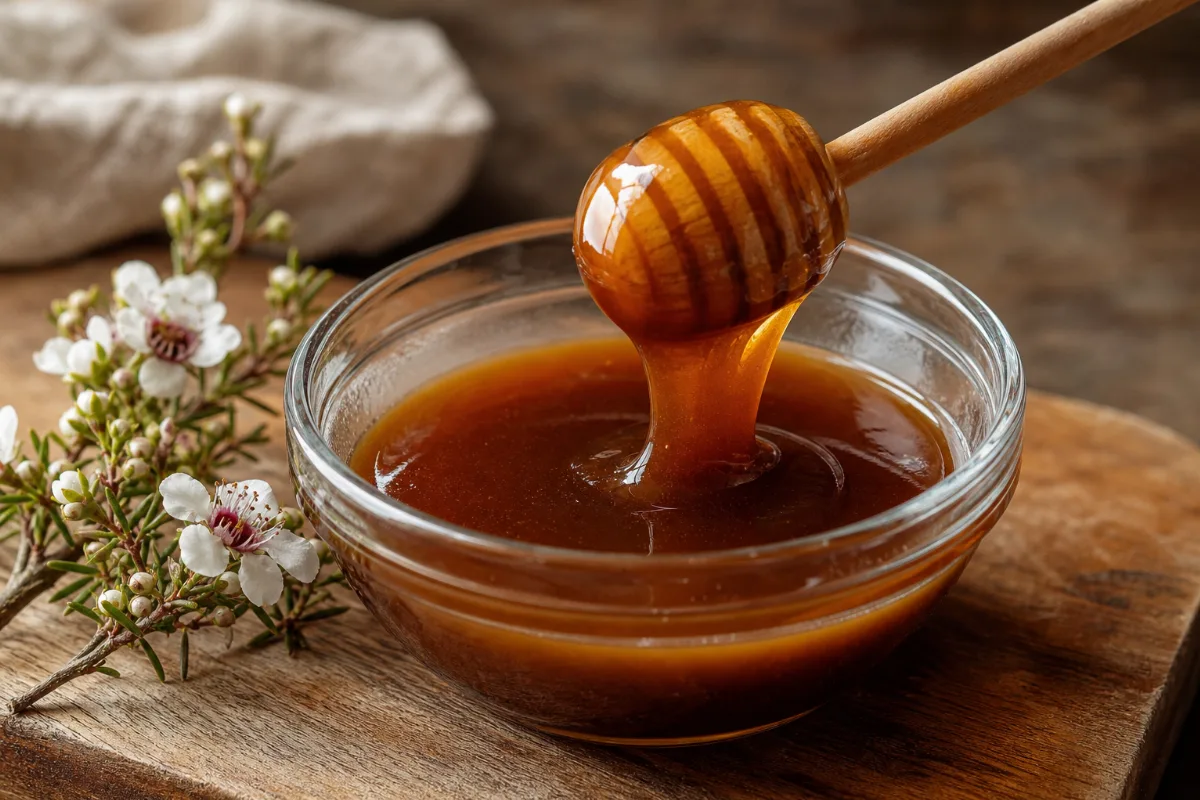
Honey from Leptospermum scoparium (manuka) nectar, New Zealand · also called Mānuka honey, Leptospermum honey
Manuka honey is made by bees from the nectar of the manuka tree. Never give it, or any honey, to a baby under 12 months. Medical honey dressings help burns heal faster in trials, but most trials mixed honey types and a large leg ulcer trial found no benefit. Grades like UMF and MGO are not proof it works better.
General information, not medical advice. Last substantive update · Not medically reviewed. A named clinician has not signed off on this page. How this page is made
About Manuka Honey
Manuka honey is made by honey bees from the nectar of the manuka tree, Leptospermum scoparium. Most of the studies here tested New Zealand manuka honey. Never give it to a baby under 12 months. In trials, honey dressings helped burns heal faster, but most trials mixed honey types and a large leg ulcer trial found no clear benefit. Lab studies show germ-slowing in dishes, not in people. UMF and MGO grades are printed on jars, but no human trial shows a higher grade works better.
Medical-grade honey versus food honey
Jar honey is a food. Medical-grade honey is a separate product made and labelled as a wound dressing or gel and used under a clinician's supervision. They are not the same, even when the honey type is the same.
The FDA summary for one Leptospermum honey wound gel says it helps maintain a moist wound environment, may be used over the counter for minor cuts, scrapes and burns, and is used under healthcare supervision for non-draining to moderately exuding wounds. That is a clearance for one product. It does not say honey works for every wound. The same summary says the gel was gamma-irradiated but not considered sterile, so details differ even between medical products.
In one lab study of 29 honey products, live bacteria or fungi were found in 18, and the authors said non-sterile honeys may not suit wound care. Do not put jar honey on a serious, infected or worrying wound. See a clinician.
What manuka honey is
Manuka honey is made by bees from the nectar of the manuka tree. GBIF, the biodiversity database, lists the tree as Leptospermum scoparium, accepted name, in the myrtle family. The part used is the honey, not the plant.
Manuka honey contains a lot of methylglyoxal (MGO). In a 2008 study of six New Zealand manuka honeys, MGO ranged from 38 to 761 mg/kg, up to 100 times higher than in conventional honeys, and the authors concluded it was the dominant antibacterial constituent in dish tests. A 2026 study found MGO alone, or sugar alone, did not fully explain the activity.
A result for one honey product does not carry over to another honey or to a jar from a shop.
UMF and MGO grades, and what the research shows
MGO is a compound measured in manuka honey. UMF (Unique Manuka Factor) is a grading system that, according to one paper, reflects the MGO concentration of commercial manuka honey.
A lab study of three UMF grades from one maker found lower grades slowed staphylococci at least as well as higher ones, and the authors said UMF alone may not be a reliable indicator of antibacterial effect. A 2026 lab study of five grades found activity rose with grade; two authors work for a manuka company that supplied the honey. No human trial compared grades.
For wounds, the Cochrane review found high-quality evidence for partial thickness burns but mostly low quality elsewhere, and trials mixed honey types. A large trial of manuka-honey dressings on venous leg ulcers found no significant benefit. A 2026 narrative review calls manuka honey a promising adjunct and asks for better trials. For dry eye, a 2023 meta-analysis of eye products reported promising results with reliability limits.
Price rises steeply with grade, and a review says fraud has risen with demand. Labs can tell genuine New Zealand manuka honey using chemical and DNA markers. We name no brands and rank none.
At a glance
Traditional uses history, not proof
- Honey in general has been used since ancient times as a wound remedy, a Cochrane abstract says; the sources read describe no traditional medical use specific to manuka honey.
Studied for research
- Burns and wounds (honey dressings, mostly mixed types): mixed
- Venous leg ulcers (manuka dressing): evidence against
- Germ-slowing activity in lab dishes: very low
- Does a higher UMF or MGO grade work better?: mixed
- Dry eye and eyelid products: low
- Radiotherapy mouth sores: evidence against
- Nose and sinus use: insufficient
Main compounds
- Methylglyoxal (MGO), the main antibacterial compound in manuka honey in dish tests
- Fructose and glucose, the main sugars
Common forms
- Jar honey, a food
- Medical-grade honey dressings and gels, used under clinical care
- Eye, sinus and lab preparations made for research or clinical use, not jar honey
Research links: WHO: Botulism · NHS: Botulism · WHO: Healthy diet (free sugars) · Cochrane: honey for wounds (abstract) · Manuka honey for dry eye (abstract) · UMF-graded manuka honeys in the lab (abstract) · Research Library · Genes & Biomarkers Library
What it is and its history
- Accepted scientific name
- Manuka honey (honey made mainly from manuka nectar)
- Naming authority
- Tree: Leptospermum scoparium Forst. (GBIF accepted name)
- Synonyms
- Mānuka honey; Leptospermum honey (used in the FDA document)
- Common names
- Manuka honey (English); Mānuka honey (English (Māori spelling)); Miel de manuka (Spanish)
- Family or group
- Source tree: Myrtaceae (myrtle family). The honey is made by honey bees (Apis mellifera, GBIF accepted name), not by the plant.
- Classification
- Plantae (source plant) > Tracheophyta > Magnoliopsida > Myrtales > Myrtaceae > Leptospermum > Leptospermum scoparium
- Native range
- Not checked in a source read beyond the honey papers, which describe New Zealand manuka honey.
- Habitat
- Not checked.
- What it looks like
- Flowers: Nectar from manuka flowers is the main source (by definition of the honey).
- Cultivation
- Not checked.
- Harvest and processing
- Sold as liquid or creamy jar honey; medical-grade honey is made into dressings and gels. Gamma irradiation of one medical gel is described in the FDA document.
- Look-alikes and adulterants
- Name: Non-manuka honey sold under a manuka-style label; Note: A review says fraud has appeared as prices rose, and that chemical and DNA markers can identify New Zealand manuka honey.
Photographs
Traditional use and history history, not clinical proof
| Tradition or era | Documented use | Source |
|---|---|---|
| Honey in general | A Cochrane abstract says honey has been used since ancient times as a wound remedy. No source read describes a traditional medical use specific to manuka honey. | p25742878 |
Traditional use shows how it was used. It does not show that it works or is safe today.
What is inside, and how it may work
What it contains and how those compounds act in cells and animals. Laboratory and animal mechanisms are not proven effects in people.
Main compounds
| Compound | Family | Where it is concentrated | Activity studied | Level of evidence |
|---|---|---|---|---|
| Methylglyoxal (MGO) PubChem 880 | small reactive carbonyl compound | Honey 38 to 761 mg/kg in six New Zealand manuka honeys, up to 100 times conventional honeys (Mavric 2008). | Dominant antibacterial constituent of New Zealand manuka honey in dish tests; later work finds it does not explain all of the activity. 14 2 24 | Laboratory research |
| Sugars (mainly fructose and glucose) | sugars | Honey Not given in the abstracts read. | High sugar gives an osmotic effect, but a matched sugar solution slowed bacteria less than whole manuka honey in a 2026 study. 2 | Laboratory research |
Mechanisms, receptors and pathways
| Target or pathway | Gene or receptor | What was found | Level |
|---|---|---|---|
| Methylglyoxal plus other honey components | Whole manuka honey slowed bacteria more strongly than a matched sugar solution and than MGO-matched solutions, so the authors suggest MGO and other components act together. 2 14 | Laboratory research | |
| Wound bed effects (antibacterial, antibiofilm, anti-inflammatory, debriding) | A 2026 narrative review describes these effects; the abstract does not give mechanisms tested directly in people. 1 | Review |
Absorption, metabolism and elimination
- Absorption
- Not studied for manuka honey in the sources read.
- Distribution
- Not studied.
- Metabolism
- Not studied.
- Elimination
- Not studied.
- Bioavailability
- Not studied.
Isolated compounds versus whole extracts
Honey is a whole food. Dish results for diluted honey, or for MGO alone, do not show the same effect in people. In a 2026 study MGO-matched solutions were less potent than whole honey.
Nutritional composition
Honey is mostly sugar. WHO counts the sugars naturally present in honey as free sugars to be limited.
2 mixed findings1 low certainty1 very low certainty1 not enough evidence2 evidence against
What was looked at
The 7 benefits and uses checked for Manuka Honey, each with how strong the evidence is. Tap one to open it.
- Burns and wounds (honey dressings, mostly mixed honey types)Mixed findings
- Venous leg ulcers (manuka honey dressing)Evidence against
- Germ-slowing activity against bacteria (lab dishes only)Very low certainty
- Does a higher UMF or MGO grade work better?Mixed findings
- Dry eye and eyelid inflammation (eye products made with manuka honey)Low certainty
- Mouth sores from radiotherapy (manuka honey swished and swallowed)Evidence against
- Nose and sinus infections (medical honey preparations)Not enough evidence
Lab markers tracked in the studies
Minimum inhibitory concentration (MIC) in lab dishesVenous ulcer healed at 12 weeksMRSA cleared from the noseDry eye and eyelid symptom scores (OSDI, SPEED, SANDE)
What is Manuka Honey good for?
What people ask about, and how strong the evidence is. Where a result is about honey in general, not manuka honey, it says so. None of it is proof, and all of it should be read with the safety section.
Benefits, one by one
Each card is a research question, not a promise. Tap a goal to filter. Open a card to see the studies, doses and limits.
Burns and wounds (honey dressings, mostly mixed honey types)
Mixed findingsMedical honey dressings have been tested on burns and wounds. The best evidence is that honey dressings heal partial thickness burns faster than ordinary dressings. For most other wounds the evidence is weak or mixed. Most trials did not test manuka alone.
4 studiesNot given as advice. Trials used honey dressings applied by clinician…
Studies, doses and limits
What the trials found
Cochrane review of 26 trials (3,011 people); 2024 meta-analysis of 8 chronic wound studies (906 people); 2026 meta-analysis of 16 diabetic foot ulcer trials (1,423 people); a 2026 narrative review of manuka honey.
Results
Cochrane: high-quality evidence (2 trials, n=992) that honey dressings heal partial thickness burns about 4.7 days sooner than conventional dressings; moderate-quality evidence of faster healing of infected post-operative wounds (1 trial, n=50); unclear for venous leg ulcers, minor acute wounds and diabetic foot ulcers. Beyond those comparisons the authors called the evidence low or very low quality. 2024 meta-analysis of chronic wounds: faster healing time but very low quality evidence, and possibly more painful discomfort. 2026 meta-analysis of diabetic foot ulcers: higher complete healing rate (OR 2.28) with moderate quality, shorter time to healing with low quality. 2026 narrative review of manuka honey: a promising adjunct, with standard protocols and high-quality surgical trials urgently needed.
Effect sizes as reported
Partial thickness burns: about 4.7 days sooner (WMD -4.68 days, 95% CI -5.09 to -4.28). Diabetic foot ulcers: OR 2.28 (95% CI 1.76 to 2.95) for complete healing.
Why this rating
High-quality evidence for partial thickness burns in the Cochrane review, but low or very low for most other wounds, and the trials mixed honey types. The review did not compare manuka with other honeys.
Form and dose studied
Not given as advice. Trials used honey dressings applied by clinicians, which are different from jar honey.
Who was studied
Adults and children with burns, surgical wounds and chronic wounds, including diabetic foot ulcers.
Limits
Mixed honey types; mostly low-quality trials; the diabetic foot meta-analysis does not name the honey types in its abstract; one Cochrane author team disclosed a small contribution from a dressing maker to a trial unit.
Why researchers looked
Honey has been used on wounds since ancient times, and clinicians look for dressings that cope with infection as antibiotic resistance grows.
Traditional use
A Cochrane abstract says honey has been used since ancient times as a wound remedy. No source read describes a traditional medical use specific to manuka honey.
Proposed mechanism Laboratory research
Reviews credit honey's high sugar, low pH and, for manuka, methylglyoxal and other compounds. These are proposed mechanisms, mostly from lab work.
A proposed mechanism does not show that the effect happens in people.
Do not put jar honey on a serious, infected or worrying wound. Seek a clinician. Possible painful discomfort and, in one trial, more adverse events with honey dressings.
Venous leg ulcers (manuka honey dressing)
Evidence againstA large trial of dressings soaked in manuka honey found no clear gain in ulcer healing over usual care, and more side effects. A small trial found more MRSA cleared from honey-treated ulcers than from gel-treated ones.
2 studiesNot given as advice. Trials used honey-impregnated dressings applied …
Studies, doses and limits
What the trials found
Two randomized trials of manuka honey dressings (368 and 108 people).
Results
In the larger trial 55.6% of ulcers healed at 12 weeks with manuka-honey alginate dressings and 49.7% with usual care, a difference that was not statistically significant (P=0.258); honey was probably more expensive and linked to more adverse events (relative risk 1.3). In the smaller trial of sloughy ulcers, MRSA was cleared from 7 of 10 honey-treated wounds and 1 of 6 hydrogel-treated wounds after 4 weeks; this was a secondary bacterial outcome in very small groups.
Effect sizes as reported
Healed at 12 weeks: 55.6% versus 49.7% (difference 5.9 points, 95% CI -4.3 to 15.7).
Why this rating
The one large randomized trial found no significant healing benefit and more adverse events. The small trial reports a bacterial result only, in open-label design.
Form and dose studied
Not given as advice. Trials used honey-impregnated dressings applied with compression bandaging under clinical care.
Who was studied
Adults with venous leg ulcers, living at home or attending clinics.
Limits
Both trials were open-label. The abstracts do not say which adverse events occurred.
Why researchers looked
Leg ulcers are slow to heal and often carry bacteria, so honey dressings were tried alongside compression bandaging.
Traditional use
No source read describes a traditional use for leg ulcers.
Proposed mechanism Hypothesis
Antibacterial and wound-bed cleaning effects have been proposed. Not tested directly in these trials.
A proposed mechanism does not show that the effect happens in people.
Leg ulcers need clinical care. Do not treat them at home with jar honey.
Germ-slowing activity against bacteria (lab dishes only)
Very low certaintyIn lab dishes, manuka honey slowed the growth of many bacteria, including drug-resistant ones. Its high methylglyoxal (MGO) content explains a lot of this, but not all. This is not proof of an effect in people.
3 studiesNot given as advice. Lab studies used honey diluted in water.
Studies, doses and limits
What the trials found
The dish studies here are not human studies. The clinical trials are listed under other headings.
Results
Six New Zealand manuka honeys held 38 to 761 mg/kg of MGO (up to 100 times conventional honeys) and slowed E. coli and S. aureus at 15 to 30% dilution, while most other honeys did not at 80% or below. Against 128 wound isolates, manuka honey slowed staphylococci at MIC50 6 to 15% and Gram-negatives at 21 to 27%, more strongly against Gram-positive bacteria. A 2026 study found whole honey beat a matched sugar solution and MGO-matched solutions.
Effect sizes as reported
MIC values as % honey in water; lower means more active.
Why this rating
Dish studies only. Dilutions of 6 to 30% honey in water do not match what happens on a wound or in the body.
Form and dose studied
Not given as advice. Lab studies used honey diluted in water.
Who was studied
Bacteria in dishes (lab strains and clinical isolates).
Limits
Small sample numbers of honeys; one study is industry-linked (honey samples supplied by a manuka company employing two authors).
Why researchers looked
Interest in honey as an alternative to antibiotics for skin and wound infections.
Traditional use
No source read describes a traditional medical use.
Proposed mechanism Laboratory research
Methylglyoxal (MGO) is the dominant antibacterial compound in New Zealand manuka honey according to a 2008 study; a 2026 study found MGO alone and sugar alone did not fully explain whole-honey activity.
A proposed mechanism does not show that the effect happens in people.
Do not read a dish result as a reason to treat an infection with honey.
Does a higher UMF or MGO grade work better?
Mixed findingsUMF and MGO are grades printed on jars. Two lab studies disagree: one found higher grades slowed bacteria more, the other found the lowest grade worked at least as well. No human trial compared grades.
3 studiesNot given as advice.
Studies, doses and limits
What the trials found
No human trial comparing grades was found.
Results
Girma 2019 (UMF 5+, 10+, 15+ from one maker, 128 isolates): lower MICs with the lower grades for staphylococci and Pseudomonas, and the authors say UMF alone may not be a reliable indicator of antibacterial effect. Allcott 2026 (UMF 5+ to 20+, four respiratory bacteria): MIC fell as grade rose; two authors work for a manuka company that supplied the honey.
Effect sizes as reported
Staphylococci MIC50: 6% (UMF 5+), 7% (10+), 15% (15+) in Girma 2019.
Why this rating
Two lab studies point in opposite directions and there are no human data.
Form and dose studied
Not given as advice.
Who was studied
Bacteria in dishes.
Limits
Different manufacturers and honey ages; honey storage is not controlled in the abstracts.
Why researchers looked
Price rises steeply with grade, so buyers ask whether the grade predicts an effect.
Proposed mechanism Laboratory research
UMF is said to reflect the MGO concentration of commercial manuka honey (Girma 2019 abstract). Girma and colleagues suggest MGO content may change over time.
A proposed mechanism does not show that the effect happens in people.
A higher grade is not a safety grade. It does not make honey safe for babies.
Dry eye and eyelid inflammation (eye products made with manuka honey)
Low certaintyEye products made for the eye, with manuka honey in them, improved dry eye and eyelid symptoms in small trials. Reviewers say the trials are limited. This is not about putting jar honey in the eye, which is not safe.
2 studiesNot given as advice. The trials used eye preparations made for the ey…
Studies, doses and limits
What the trials found
2023 meta-analysis of 5 randomized trials (288 adults with dry eye); 2020 randomized trial of an eyelid cream in 53 adults with blepharitis.
Results
Dry eye meta-analysis: improvement over control on symptom scores, tear evaporation, MMP-9 and surface staining, with temporary stinging and redness; the authors said limitations affect reliability. Blepharitis trial: symptom scores and tear film measures improved in the treated eye over 3 months compared with the untreated eye, with fewer Demodex mites and bacteria, and no major adverse events.
Effect sizes as reported
No single effect size is given in the abstracts.
Why this rating
Small trials, limited methods, product-specific; the dry eye reviewers themselves question reliability.
Form and dose studied
Not given as advice. The trials used eye preparations made for the eye.
Who was studied
Adults with dry eye or blepharitis.
Limits
Eye preparations from specific makers; blepharitis trial compared with the other eye of the same person.
Why researchers looked
Manuka honey is thought to calm inflammation and microbes, which are involved in dry eye and blepharitis.
Traditional use
No source read describes a traditional eye use.
Proposed mechanism Hypothesis
Anti-inflammatory and antimicrobial effects have been proposed; the abstracts do not test them directly.
A proposed mechanism does not show that the effect happens in people.
Do not put honey from a jar in your eyes. Ask an eye doctor. Temporary stinging and redness were reported.
Mouth sores from radiotherapy (manuka honey swished and swallowed)
Evidence againstIn a placebo-controlled trial of head and neck cancer patients, manuka honey did not reduce mouth sores caused by radiotherapy, and many people stopped taking it, mostly because of nausea.
1 studiesNot given as advice.
Studies, doses and limits
What the trials found
One randomized placebo-controlled trial (106 people, 81 analysed).
Results
No statistically significant difference between honey and placebo gel on any measure. Dropout was 57% with honey and 52% with placebo. The authors said honey was not tolerated well.
Effect sizes as reported
Grade 3 or worse mucositis: 35% (honey) versus 43% (placebo), not significant.
Why this rating
One randomized placebo-controlled trial found no benefit, with high dropout.
Form and dose studied
Not given as advice.
Who was studied
Adults with head and neck cancer having radiotherapy.
Limits
High dropout and loss to assessment.
Why researchers looked
Small earlier studies had suggested honey might help.
Proposed mechanism Hypothesis
Not tested in the trial.
A proposed mechanism does not show that the effect happens in people.
People having cancer treatment should ask their care team before using any honey product.
Nose and sinus infections (medical honey preparations)
Not enough evidenceTwo small trials tested honey preparations against bacteria in the nose and sinuses. Neither beat the standard treatment. Rinses were safe in the small sinus trial.
2 studiesNot given as advice. These were hospital preparations.
Studies, doses and limits
What the trials found
A randomized trial of medical-grade honey versus mupirocin (86 people) and a phase I randomized trial of manuka honey sinus rinses (25 people who completed).
Results
MRSA was cleared from the nose in 42.8% (18 of 42) with medical-grade honey and 56.8% (25 of 44) with mupirocin, not significantly different. In the sinus trial, rinses with 16.5% manuka honey plus added MGO had no major adverse events and no smell change, but were not superior to antibiotics plus saline rinses.
Effect sizes as reported
MRSA cleared: 42.8% (95% CI 27.7 to 59.0) versus 56.8% (95% CI 41.0 to 71.7).
Why this rating
Two small trials, one phase I; neither showed an advantage over standard treatment.
Form and dose studied
Not given as advice. These were hospital preparations.
Who was studied
Adults with nasal MRSA; adults with persistent sinus infection after surgery.
Limits
The nasal MRSA abstract does not state the honey type used. The sinus rinse had added MGO and is not jar honey.
Why researchers looked
Interest in non-antibiotic options for stubborn MRSA and sinus infections.
Proposed mechanism Laboratory research
Antibacterial and anti-biofilm activity from dish studies has been proposed; not shown in these trials.
A proposed mechanism does not show that the effect happens in people.
Do not put jar honey in the nose or sinuses.
Connections to the rest of health
How Manuka Honey connects to the rest of our health knowledge graph. Every link says what kind of connection it is. A safety link (for example to the liver) is a warning, not a benefit. A study that merely mentions a topic never creates a benefit link.
Explore every connection: goals, body systems, organs, symptoms, genes
B. Body systems
| Connected to | Kind of connection | Evidence status | Context | Studies |
|---|---|---|---|---|
| Integumentary System | Biological association | Mixed findings | Studied for: Burns and wounds (honey dressings, mostly mixed honey types) Studied for: Venous leg ulcers (manuka honey dressing) | 12 18 19 1 11 6 14 7 2 |
| Cardiovascular System | Biological association | Evidence against | Studied for: Venous leg ulcers (manuka honey dressing) | 11 6 |
| Immune System | Biological association | Very low certainty | Studied for: Germ-slowing activity against bacteria (lab dishes only) Studied for: Does a higher UMF or MGO grade work better? | 14 7 2 17 16 |
| Sensory System | Biological association | Low certainty | Studied for: Dry eye and eyelid inflammation (eye products made with manuka honey) | 10 5 |
| Digestive System | Biological association | Evidence against | Studied for: Mouth sores from radiotherapy (manuka honey swished and swallowed) | 8 |
| Respiratory System | Biological association | Not enough evidence | Studied for: Nose and sinus infections (medical honey preparations) | 17 16 |
C. Body parts and organs
I. Biomarkers
| Connected to | Kind of connection | Evidence status | Context | Studies |
|---|---|---|---|---|
| Minimum inhibitory concentration (MIC) in lab dishes | Biological association | Very low certainty | Measured in trials: lowered. A lab change is not the same as a health benefit. | 7 2 |
| Venous ulcer healed at 12 weeks | Biological association | Evidence against | Measured in trials: no-change. A lab change is not the same as a health benefit. | 11 |
| MRSA cleared from the nose | Biological association | Not enough evidence | Measured in trials: no-change. A lab change is not the same as a health benefit. | 17 |
| Dry eye and eyelid symptom scores (OSDI, SPEED, SANDE) | Biological association | Low certainty | Measured in trials: lowered. A lab change is not the same as a health benefit. | 10 5 |
L. Active compounds
| Connected to | Kind of connection | Evidence status | Context | Studies |
|---|---|---|---|---|
| Methylglyoxal (MGO) | Biological association | In vitro | Dominant antibacterial constituent of New Zealand manuka honey in dish tests; later work finds it does not explain all of the activity. Preparation or compound: Honey |
14 2 24 |
| Sugars (mainly fructose and glucose) | Biological association | In vitro | High sugar gives an osmotic effect, but a matched sugar solution slowed bacteria less than whole manuka honey in a 2026 study. Preparation or compound: Honey |
2 |
Each connection is stored with the ingredient, the connected record, the kind of connection, the evidence status, the supporting studies, the preparation or compound involved, and a review date (last reviewed October 30, 2026).
Evidence at a glance: what changed in 4 lab markers
Tap a number to show only those markers. Counts are markers, not people.
The evidence
The research centre for Manuka Honey. Every record here was checked against PubMed or the publisher's page; we never list a study we have not verified.
Evidence by outcome
Bars show how many studies we found for each outcome, not how well it works. People are added up across trials only (reviews are not added, to avoid double counting).
How we rate evidence
High certainty
Several well-run trials or reviews agree; further research is unlikely to change the picture much.
Moderate certainty
Good trials point the same way, but some doubt remains.
Low certainty
Small, short or inconsistent trials. The finding could change with better research.
Very low certainty
Very little or very weak human data. Treat as a possibility only.
Mixed findings
Trials or reviews disagree with each other.
Not enough evidence
Not enough human research to say either way.
Evidence against
Good research found no benefit, or found harm.
We take the reviewers' own risk-of-bias and GRADE statements where they exist, and otherwise judge from study size, design, consistency, directness and whether a product matches what is sold. Many publications do not make evidence high. Method note: We read the abstracts of 16 PubMed papers, the WHO botulism and healthy-diet fact sheets and the NHS botulism page, extracted the text of the FDA clearance summary, checked the tree and bee names in GBIF and methylglyoxal in PubChem. Certainty ratings are the compiler's own reading unless a review gives its own. Funders of most lab studies were not read. The New Zealand MPI page could not be read.
Study library: every study we checked 26
| Study | Design | People | Product, dose, length | Result |
|---|---|---|---|---|
| Alhabsi 2026 Clinical and Postoperative Applications of Manuka Honey in Wound Healing: An Evidence-Based Review. Int Wound J · PMID 42117760 · DOI |
Narrative review |
Studies of manuka honey in surgical, graft bed and chronic wounds | Manuka honey products used by clinicians honey Not given as advice · vs Various |
A narrative review. It reports broad antibacterial and antibiofilm effects and says clinical studies show reduced bacterial load, faster healing and better comfort in surgical and chronic wounds. It calls manuka honey a promising adjunct and says standardised protocols and high-quality surgical trials are urgently needed. Promising adjunct; the authors ask for better trials Methods, limits and fundingOutcomes: Mechanisms, clinical outcomes and applications Limitations: Narrative review, not a systematic search with pooled results; the abstract gives no numbers. Funding and conflicts: No conflicts declared. Read: abstract |
| Allcott 2026 Unique Manuka Factor (UMF)-dependent antimicrobial activity of Manuka honey against respiratory pathogens cannot be explained by sugar and methylglyoxal alone. Microbiology (Reading) · PMID 42578632 · DOI |
Lab analysis lab |
MSSA, MRSA, Klebsiella pneumoniae and Pseudomonas aeruginosa in dishes | Manuka honey of five UMF grades (5+, 10+, 12+, 15+, 20+), a matched sugar solution and MGO-matched solutions honey Not given as advice Lab · vs Sugar control and MGO-matched solutions |
All manuka samples slowed bacterial growth and MIC values fell as UMF grade rose. Staphylococci were most sensitive; the Gram-negative species needed higher concentrations. Whole honey beat a matched sugar solution, and MGO-matched solutions were generally less potent than whole honey, so the authors suggest MGO plus other components in honey act together. Higher grades more active in this study; MGO alone does not explain it Methods, limits and fundingOutcomes: MIC by broth microdilution Limitations: Dish test. Industry-linked: two authors are employees of Comvita Ltd., which co-funded a studentship, supplied the honey and did the MGO analysis. Funding and conflicts: Disclosed: Comvita employees among the authors; company supplied samples and MGO analysis. Read: abstract |
| Aricò 2026 Infant Botulism and Honey Exposure: Global Epidemiology, Prevention Policies, and Communication Strategies. Acta Paediatr · PMID 41964486 · DOI |
Narrative review |
Surveillance reports and literature 1976 to 2024 | Honey exposure in infants honey Not given as advice |
Cases were rare, but honey was the only consistently confirmed dietary source of infant botulism. Median age at onset was 3 to 4 months, and mortality was below 1% with intensive care and specific therapy. The USA had about 130 cases a year in a 2007 to 2021 review. Health authorities uniformly advise against honey before 12 months, but warning labels were voluntary in many regions. Honey is the only consistently confirmed food source Methods, limits and fundingOutcomes: Epidemiology and prevention policies for infant botulism Limitations: Narrative review. Funding and conflicts: No funding or conflict details were read in the abstract. Read: abstract |
| Carnwath 2014 The antimicrobial activity of honey against common equine wound bacterial isolates. Vet J · PMID 23962613 · DOI |
Lab analysis lab |
29 29 honey products (gamma-irradiated and non-irradiated medical-grade honeys, supermarket honeys, local beekeeper honeys) |
Honeys cultured for contamination, then tested against 10 horse wound bacteria honey Not given as advice Lab · vs Other honeys in the study |
Aerobic bacteria or fungi were recovered from 18 of the 29 products. The remaining 11 were tested; eight stopped all 10 bacteria at concentrations from under 2% to 16%. The authors said manuka is the most studied honey but other honeys may also have valuable activity. Many jar-type honeys carried live microbes Methods, limits and fundingOutcomes: Contamination of honeys; antimicrobial activity Limitations: Horse wound bacteria in a veterinary journal; the abstract does not say which of the 18 were medical-grade. Funding and conflicts: Not stated in the abstract. Read: abstract |
| Craig 2020 Randomized masked trial of the clinical efficacy of MGO Manuka Honey microemulsion eye cream for the treatment of blepharitis. Ocul Surf · PMID 31759183 · DOI |
Controlled trial |
53 53 adults with blepharitis (eyelid inflammation), paired-eye design |
Manuka honey microemulsion eye cream applied to closed eyelids overnight honey Not given as advice 3 months · vs The untreated fellow eye |
Symptom scores fell in treated eyes at day 30 and day 90, tear film stability and lipid layer thickness improved at day 90, and Demodex mites and some bacteria decreased in treated eyes. Visual acuity did not change and no major adverse events were reported. Symptoms and lid measures improved vs the untreated eye Methods, limits and fundingOutcomes: Symptom scores (SANDE, SPEED), tear film measures, eyelid microbiology Limitations: Investigator-masked but the person could tell which eye was treated; one product from one maker (Manuka Health New Zealand); an eye cream, not jar honey. Funding and conflicts: Authors state no commercial or proprietary interest. PubMed lists Research Support, Non-U.S. Gov't. Registration ACTRN12616000539437. Read: abstract |
| Gethin 2008 Bacteriological changes in sloughy venous leg ulcers treated with manuka honey or hydrogel: an RCT. J Wound Care · PMID 18666717 · DOI |
Controlled trial |
108 108 adults with venous leg ulcers with at least half slough |
Manuka honey dressing honey Not given as advice 4 weeks · vs Hydrogel dressing |
After 4 weeks MRSA was cleared from 7 of 10 honey-treated wounds (70%) and 1 of 6 hydrogel-treated wounds (16%). For Pseudomonas aeruginosa, 2 of 6 (33%) honey-treated and 5 of 10 (50%) hydrogel-treated wounds cleared it. The authors concluded manuka honey was effective in clearing MRSA from chronic venous ulcers. MRSA cleared in 7 of 10 versus 1 of 6 wounds (very small groups) Methods, limits and fundingOutcomes: Bacteria found on wound swabs at start and after 4 weeks Limitations: This is a secondary outcome of a trial on removing slough; the MRSA groups were very small and the trial was open label. The abstract does not report ulcer healing. Funding and conflicts: Not stated in the abstract. Read: abstract |
| Girma 2019 Antibacterial activity of varying UMF-graded Manuka honeys. PLoS One · PMID 31652284 · DOI |
Lab analysis lab |
128 128 bacterial isolates from wound cultures |
Manuka honey graded UMF 5+, 10+ and 15+ from one manufacturer honey Not given as advice Lab · vs Other UMF grades |
Against staphylococci (73 isolates) MIC50 was 6% for UMF 5+, 7% for UMF 10+ and 15% for UMF 15+; lower grades were more active, not less. For Enterobacteriaceae MIC50 was 21%, 21% and 27%. For Pseudomonas aeruginosa MIC50 was 21% for all three. The authors said the lower-UMF honey paradoxically showed more activity in their limited sampling, perhaps because MGO changes over time, and that UMF alone may not be a reliable indicator of antibacterial effect. Lower grades were as or more active in this sample Methods, limits and fundingOutcomes: Minimum inhibitory concentration (MIC) of honey Limitations: One manufacturer and three grades; honey age and storage were not controlled in the abstract. Dish test only. Funding and conflicts: No competing interests declared. Read: abstract |
| Hawley 2014 A randomized placebo-controlled trial of manuka honey for radiation-induced oral mucositis. Support Care Cancer · PMID 24221577 · DOI |
Controlled trial |
106 106 head and neck cancer patients having radiotherapy (81 analysed) |
5 ml of irradiated organic manuka honey swished, held and swallowed four times a day honey Not given as advice Throughout radiotherapy plus 7 days · vs Placebo gel |
There was no statistically significant difference between honey and placebo on any outcome. Dropout was 57% with honey and 52% with placebo, mostly because of nausea. Grade 3 or worse mucositis occurred in 35% of the honey group and 43% of the placebo group. The authors concluded manuka honey was not tolerated well and did not significantly affect severity. No significant difference Methods, limits and fundingOutcomes: Severity of oral mucositis (RTOG, WHO and OMAS scales), weight, symptoms, quality of life Limitations: High dropout; 24 people did not attend any assessment. Funding and conflicts: Investigator-initiated; no funder stated in the abstract. PubMed lists Research Support, Non-U.S. Gov't. Read: abstract |
| Hegazi 2022 The super-food Manuka honey, a comprehensive review of its analysis and authenticity approaches. J Food Sci Technol · PMID 35734106 · DOI |
Narrative review |
Literature 2010 to mid-2021 on manuka honey analysis | Manuka honey honey Not given as advice |
The review says manuka honey costs 6 to 25 times more than other honeys and that fraud has increased with demand. It describes chemical and fluorescence methods (GC-MS, LC-MS, NMR) that can tell manuka from other honeys. Fraud exists; lab methods can detect it Methods, limits and fundingOutcomes: Authenticity and quality methods Limitations: Narrative review; the abstract gives no rate of fraud. Funding and conflicts: No conflicts declared. Read: abstract |
| Hu 2023 Efficacy and safety of manuka honey for dry eye. Clin Exp Optom · PMID 35950413 · DOI |
Meta-analysis |
288 288 adults with dry eye in 5 randomized trials |
Manuka honey eye preparations honey Not given as advice Not given in the abstract · vs Control treatments |
Compared with control, manuka honey improved the Ocular Surface Disease Index, SPEED symptom score, tear evaporation rate, MMP-9 negative conversion, ocular surface staining and daily lubricant use. No serious adverse events were reported except temporary stinging and redness. The authors said limitations of the included studies and methods affect the reliability of the conclusion and more high-quality trials are needed. Promising results on several measures, reliability limited Methods, limits and fundingOutcomes: Symptom scores (OSDI, SPEED), tear evaporation, MMP-9, ocular surface staining, lubricant use, adverse events Limitations: Five small trials of eye preparations made for eye use; not jar honey. Funding and conflicts: Not stated in the abstract. Read: abstract |
| Jull 2008 Randomized clinical trial of honey-impregnated dressings for venous leg ulcers. Br J Surg · PMID 18161896 · DOI |
Controlled trial |
368 368 people with venous leg ulcers in the community |
Calcium alginate dressings impregnated with manuka honey, plus compression bandaging honey Not given as advice 12 weeks · vs Usual care plus compression bandaging |
104 of 187 ulcers (55.6%) healed with honey and 90 of 181 (49.7%) with usual care (difference 5.9 percentage points, 95% CI -4.3 to 15.7; P=0.258). Honey was probably more expensive and linked to more adverse events (relative risk 1.3, 95% CI 1.1 to 1.6). The authors concluded honey-impregnated dressings did not significantly improve healing at 12 weeks. No significant benefit; more adverse events Methods, limits and fundingOutcomes: Proportion of ulcers healed at 12 weeks; infection; cost; adverse events Limitations: Open-label (people knew which treatment they had). The abstract does not say which adverse events. Funding and conflicts: Not stated in the abstract. PubMed lists it as Research Support, Non-U.S. Gov't. Registration ISRCTN 06161544. Read: abstract |
| Jull 2015 Honey as a topical treatment for wounds. Cochrane Database Syst Rev · PMID 25742878 · DOI |
Systematic review |
3011 26 trials, 3,011 people with burns, minor acute wounds and chronic wounds |
Honey dressings of mixed types versus usual dressings and other treatments honey Not given as advice Trial durations vary · vs Conventional dressings, silver sulfadiazine, antiseptics and others |
High-quality evidence (2 trials, n=992) that honey dressings heal partial thickness burns more quickly than conventional dressings (about 4.7 days sooner). Honey healed infected post-operative wounds more quickly than antiseptic washes and gauze (1 trial, n=50, moderate quality). Effects were unclear for venous leg ulcers (2 trials, n=476, low quality), minor acute wounds and diabetic foot ulcers. The authors said overall conclusions are difficult because the trials were mixed and mostly low quality. Faster healing of partial thickness burns; unclear for most other wounds Methods, limits and fundingOutcomes: Wound healing time and rate; adverse events; infection Limitations: Honey types were mixed and manuka was not compared with other honeys in the abstract. Several authors were investigators in an included trial (HALT) that received a small unconditional contribution from a honey dressing maker. Funding and conflicts: Disclosed: HALT trial investigators among the authors; small unconditional cash contribution from a honey dressing manufacturer to their unit. Grant: Department of Health. Read: abstract |
| Matuszewska-Mach 2025 Ensuring the Safe Use of Bee Products: A Review of Allergic Risks and Management. Int J Mol Sci · PMID 41465502 · DOI |
Narrative review |
Literature on allergy to honey, pollen, royal jelly, propolis and other bee products | Bee products honey Not given as advice |
Bee products can, relatively rarely, provoke allergic reactions from local dermatitis to life-threatening anaphylaxis, through IgE-mediated and T-cell-mediated routes. People with atopy and beekeepers are at heightened risk. Management is to avoid the product. Rare but possibly severe allergy Methods, limits and fundingOutcomes: Allergic reactions, allergens, at-risk groups Limitations: Narrative review; the abstract does not give figures for manuka honey. Funding and conflicts: No conflicts declared. Read: abstract |
| Mavric 2008 Identification and quantification of methylglyoxal as the dominant antibacterial constituent of Manuka (Leptospermum scoparium) honeys from New Zealand. Mol Nutr Food Res · PMID 18210383 · DOI |
Lab analysis lab |
Commercial honey samples including six New Zealand manuka honeys | Honey and solutions of methylglyoxal, glyoxal and 3-deoxyglucosulose honey Not given as advice Lab · vs Other honeys and pure compounds |
Six New Zealand manuka honeys contained 38 to 761 mg/kg of methylglyoxal (MGO), up to 100 times more than conventional honeys. Manuka honeys slowed bacteria when diluted to 15 to 30%, matching MGO levels of 1.1 to 1.8 mM; most other honeys showed no effect at 80% dilution or below. The authors concluded the antibacterial activity of New Zealand manuka honey originates directly from MGO. MGO level matched antibacterial activity in dishes Methods, limits and fundingOutcomes: Compound amounts by HPLC; antibacterial activity against E. coli and S. aureus Limitations: Six manuka samples; dish test, not a test in people. The authors' statement is their conclusion; a later study found MGO alone does not fully explain activity. Funding and conflicts: Not stated in the abstract. PubMed lists Research Support, Non-U.S. Gov't. Read: abstract |
| McDonald 2018 Using chemical and DNA marker analysis to authenticate a high-value food, manuka honey. NPJ Sci Food · PMID 31304259 · DOI |
Lab analysis lab |
New Zealand honeys, chemical markers from nectar and DNA markers from pollen | Manuka and other honeys honey Not given as advice Lab · vs Non-manuka honeys |
The authors combined nectar chemicals and pollen DNA with classification modelling to produce criteria that consistently identify manuka honey from New Zealand, for use in a regulatory setting. They note rising risk of mislabelling, fraud and adulteration of high-value foods. Authenticity criteria are possible Methods, limits and fundingOutcomes: Criteria to identify manuka honey from New Zealand Limitations: The abstract gives no numbers. Funding and conflicts: Authors declare no competing financial interests. Read: abstract |
| Ooi 2019 Manuka honey sinus irrigations in recalcitrant chronic rhinosinusitis: phase I randomized, single-blinded, placebo-controlled trial. Int Forum Allergy Rhinol · PMID 31461581 · DOI |
Controlled trial |
25 25 people who completed treatment; chronic sinus infection after sinus surgery |
Twice-daily rinses with 16.5% manuka honey plus added methylglyoxal for 14 days, with placebo tablets honey Not given as advice 14 days · vs Saline rinses plus 10 days of culture-directed antibiotics |
There were no major adverse events and no change in the smell test. Culture rates fell in 6 of 10 honey patients (1 of 10 became culture-negative) versus 12 of 15 controls (7 of 15 culture-negative). The authors concluded the honey rinse was safe but not superior to antibiotics plus saline rinses. Safe in this small trial; not better than antibiotics Methods, limits and fundingOutcomes: Safety (smell test, adverse events); bacterial cultures; sinus scores Limitations: Phase I with 25 people; single-blinded; rinse with added MGO, not plain honey. Funding and conflicts: Not stated in the abstract. PubMed lists Research Support, Non-U.S. Gov't. Read: abstract |
| Poovelikunnel 2018 Randomized controlled trial of honey versus mupirocin to decolonize patients with nasal colonization of meticillin-resistant Staphylococcus aureus. J Hosp Infect · PMID 29107078 · DOI |
Controlled trial |
86 Adults carrying MRSA in the nose (42 given honey, 44 mupirocin) |
Medical-grade honey, three times a day for five days, one or two courses honey Not given as advice 5 days per course · vs Mupirocin 2% |
MRSA was cleared in 18 of 42 (42.8%) given medical-grade honey and 25 of 44 (56.8%) given mupirocin; the difference was not significant. The authors called the honey rate impressive and asked for larger studies. Not significantly different from mupirocin; honey cleared fewer Methods, limits and fundingOutcomes: Proportion with MRSA cleared from the nose Limitations: The abstract names the product as medical-grade honey and mentions manuka honey in the background but does not state the honey type used. Small trial. Funding and conflicts: Not stated in the abstract. Read: abstract |
| Tang 2024 Efficacy and Safety of Honey Dressings in the Management of Chronic Wounds: An Updated Systematic Review and Meta-Analysis. Nutrients · PMID 39125335 · DOI |
Meta-analysis |
906 8 studies, 906 people with chronic wounds |
Honey dressings (mixed types) honey Not given as advice Not given in the abstract · vs Conventional care |
Honey dressings shortened healing time (mean difference -17.13, 95% CI -26.37 to -7.89) and raised the percentage of wound healed. There was no significant difference in healing rate, bacteria clearance time or hospital stay. Honey may lower pain scores but may increase painful discomfort during treatment. The authors rated the quality of evidence very low. Faster healing time, very low quality evidence Methods, limits and fundingOutcomes: Healing time, percentage healed, healing rate, bacteria clearance time, pain, hospital stay Limitations: Risk of bias, inconsistency and publication bias; honey types not specified in the abstract. Funding and conflicts: No conflicts declared. Grants from Sichuan and West China Hospital funds. Read: abstract |
| Yao 2026 Honey dressing for diabetic foot ulcers: a systematic review and meta-analysis of randomized controlled trials. Front Endocrinol (Lausanne) · PMID 41928876 · DOI |
Meta-analysis |
1423 16 randomized trials, 1,423 people with diabetic foot ulcers |
Honey dressings (types not stated in the abstract) honey Not given as advice 4 to 24 weeks · vs Conventional dressings |
Honey dressings raised the complete healing rate (OR 2.28, 95% CI 1.76 to 2.95) and cut time to complete healing (mean difference -4.38, 95% CI -8.06 to -0.71) compared with conventional dressings. GRADE quality was moderate for healing rate and low for time to healing. Better healing rate and time than conventional dressings, moderate to low quality Methods, limits and fundingOutcomes: Complete healing rate and time to complete healing Limitations: Honey type not named in the abstract, so it cannot be applied to manuka alone. Funding and conflicts: No conflicts declared. Read: abstract |
| n/a 2015 U.S. FDA 510(k) summary and clearance letter K150985 (letter dated October 15, 2015): a honey-based wound gel n/a · Source |
Regulator n/a |
n/a | n/a |
The summary describes a wound gel whose primary component is active Leptospermum honey, found substantially equivalent to earlier devices. Its stated use is to help maintain a moist wound environment; over the counter for minor abrasions, cuts, scalds and burns, and under the supervision of a healthcare professional for non-draining to moderately exuding wounds. The summary says the gel was gamma-irradiated but, because the jar lid is not hermetically sealed, is considered non-sterile, and that a preservative (sodium benzoate) was added. Methods, limits and fundingOutcomes: Medical device status of a Leptospermum honey wound gel Limitations: Device clearance for one product, not a statement that honey works for every wound. The PDF text was extracted by machine; read on 2026-10-30. Read: full-text |
| n/a 2023 WHO: Botulism (fact sheet, 25 September 2023) n/a · Source |
Regulator n/a |
n/a | n/a |
The fact sheet says that although there are several possible sources of infant botulism, spore-contaminated honey has been associated with a number of cases, and parents and caregivers are warned not to feed honey to infants before the age of 1 year. Methods, limits and fundingOutcomes: Infant botulism and honey Limitations: Page text read 2026-10-30; it does not mention manuka honey specifically. Read: full-text |
| n/a 2026 NHS: Botulism (page reviewed 4 March 2026) n/a · Source |
Regulator n/a |
n/a | n/a |
The page lists honey as a source of the bacteria for infant botulism and says do not give honey to babies younger than 12 months old. Methods, limits and fundingOutcomes: Infant botulism and honey Limitations: Page text read 2026-10-30; it does not mention manuka honey specifically. Read: full-text |
| n/a 2026 WHO: Healthy diet (fact sheet, 26 January 2026) n/a · Source |
Regulator n/a |
n/a | n/a |
The fact sheet says intake of free sugars should be limited and that free sugars include sugars naturally present in honey, syrups, fruit juices and fruit juice concentrates. Methods, limits and fundingOutcomes: Free sugars Limitations: Page text read 2026-10-30; general diet advice, not specific to manuka honey. Read: full-text |
| n/a 2026 PubChem compound record: methylglyoxal (retrieved 2026-10-30) n/a · Source |
Database n/a |
n/a | n/a |
Methylglyoxal, CID 880, formula C3H4O2, IUPAC name 2-oxopropanal. Methods, limits and fundingOutcomes: Identity of methylglyoxal Limitations: Identity only. Read: api-record |
| n/a 2026 GBIF Backbone Taxonomy: Leptospermum scoparium Forst. (match API, retrieved 2026-10-30) n/a · Source |
Database n/a |
n/a | n/a |
Leptospermum scoparium Forst., rank species, status ACCEPTED, family Myrtaceae, order Myrtales, GBIF key 3181762. GBIF lists vernacular names including manuka, mānuka, kahikatoa, New Zealand tea tree and broom tea-tree. Methods, limits and fundingOutcomes: Accepted name, family and order of the tree Limitations: Database record for the tree only; it says nothing about the honey. Read: api-record |
| n/a 2026 GBIF Backbone Taxonomy: Apis mellifera Linnaeus, 1758 (match API, retrieved 2026-10-30) n/a · Source |
Database n/a |
n/a | n/a |
Apis mellifera Linnaeus, 1758, status ACCEPTED, family Apidae, order Hymenoptera, GBIF key 1341976. Methods, limits and fundingOutcomes: Accepted name of the honey bee Limitations: Database record only. Read: api-record |
What we do not know yet
- No human trial compared different UMF or MGO grades.
- No trial of eating manuka honey as a food for any health outcome was found.
- Many wound trials mixed honey types or did not name the type in the abstract.
- No information on manuka honey in pregnancy, breastfeeding or with medicines was found.
- No source tested manuka honey for pesticides, antibiotics or metals.
- The New Zealand MPI definition page could not be read.
How new research is added
New studies are found by a saved PubMed search and are placed in a review queue. A person reads each one before it is added.
Lab markers
What changed in blood or saliva tests during trials. A changed number is not the same as feeling or being healthier, and we give no "normal ranges".
Other 4
Minimum inhibitory concentration (MIC) in lab dishes
Lowered in trials
The lowest strength of honey, as a percentage of honey in water, that stops a germ growing in a dish. Lower means more active.
Very low certaintyResults and what it means
Why it was measured
To compare how strongly honeys, or grades of one honey, slow bacteria in the lab.
Statistical vs. clinical meaning
A lab measure only. It does not predict effects in people.
Safety implication
None.
| Study | Result | People | Product |
|---|---|---|---|
| 7 | Staphylococci MIC50 was 6% (UMF 5+), 7% (UMF 10+) and 15% (UMF 15+). | 73 staphylococcal wound isolates | Manuka honey, three UMF grades |
| 2 | MIC fell as UMF grade rose across five grades; staphylococci were the most sensitive. | MSSA, MRSA, Klebsiella, Pseudomonas in dishes | Manuka honey UMF 5+ to 20+ |
Venous ulcer healed at 12 weeks
No clear change in trials
Whether the ulcer skin had fully closed 12 weeks after the trial began.
Evidence againstResults and what it means
Why it was measured
It is the main goal of treating a leg ulcer.
Statistical vs. clinical meaning
A real clinical outcome; no benefit shown in this trial.
Safety implication
More adverse events with honey (relative risk 1.3).
| Study | Result | People | Product |
|---|---|---|---|
| 11 | 55.6% healed with manuka-honey dressings versus 49.7% with usual care; not statistically significant. | 368 people with venous leg ulcers | Manuka-honey alginate dressing plus compression |
MRSA cleared from the nose
No clear change in trials
A nose swab that no longer grows MRSA after treatment.
Not enough evidenceResults and what it means
Why it was measured
To see whether a treatment removes carriage of MRSA.
Statistical vs. clinical meaning
A clinical-lab outcome in a small trial.
Safety implication
None reported in the abstract.
| Study | Result | People | Product |
|---|---|---|---|
| 17 | 42.8% with medical-grade honey versus 56.8% with mupirocin; not significantly different. | 86 adults with nasal MRSA | Medical-grade honey (type not stated in abstract) |
Dry eye and eyelid symptom scores (OSDI, SPEED, SANDE)
Lowered in trials
Questionnaires on eye discomfort, dryness and irritation.
Low certaintyResults and what it means
Why it was measured
They show how much the eye symptoms bother the person.
Statistical vs. clinical meaning
Self-reported scores in small trials with some risk of bias.
Safety implication
Temporary stinging and redness.
Safety
What studies and official sources say about side effects, medicines and who should check first. Each point shows what kind of evidence it comes from.
Main points to know 6
- Never give honey to a baby under 12 months (infant botulism). WHO and the NHS say not to give honey to babies under 12 months. Honey can carry spores of the bacterium that causes botulism, and in a baby the spores can grow in the gut and release a toxin that weakens the muscles. It is rare but serious. A 2026 review found honey was the only consistently confirmed food source of infant botulism, and that deaths were below 1% when babies got intensive care and specific treatment. This applies to manuka honey and every other honey. We found no source that says manuka honey, or any particular UMF or MGO grade, is safer for babies. Authoritative guidance 21 22 3
- Medical-grade wound honey is not the same as food honey. Honey-based wound products are sold as medical devices and used under a clinician's supervision. The FDA summary for one Leptospermum honey wound gel says it helps maintain a moist wound environment and may be used over the counter for minor cuts, scrapes and burns, and under healthcare supervision for non-draining to moderately exuding wounds. The same summary says that product was gamma-irradiated but not considered sterile, with a preservative added; so even among medical products, details differ. Jar honey is a food. In one lab study of 29 honey products, live bacteria or fungi were found in 18, and the authors said such honeys may not suit wound care. Do not put jar honey on a serious, infected or worrying wound. See a clinician. Regulatory document 20 4 12
- Allergy to honey and bee products. Bee products can cause allergic reactions, from skin reactions to rare but life-threatening anaphylaxis. People with allergic tendencies, and beekeepers, are at higher risk. A review says management is to avoid the product. We found no source describing manuka honey allergy rates. Review 13
- Honey is a sugar food. WHO counts the sugars naturally present in honey as free sugars, which should be limited. Manuka honey is no exception. People who manage blood sugar should ask a doctor or pharmacist before eating honey regularly. Authoritative guidance 23
- Never put jar honey in the eyes, nose or on serious wounds. Eye, sinus and wound products in the trials were made and tested for that use. Temporary stinging and redness were reported in eye trials, a mouth-rinse trial found people did not tolerate swishing and swallowing honey well, and one wound dressing trial found more adverse events than usual care. Randomized trial 10 8 11
- Grade labels and authenticity. Manuka honey costs several times more than other honeys, and a review says fraud has risen with demand. Labs can tell manuka from other honeys using chemical and DNA markers. A UMF or MGO number is a grade, not a safety or effectiveness guarantee. Review 9 15 7
Side effects 5
| Effect | How often | Severity and recovery | Evidence |
|---|---|---|---|
| Infant botulism (babies under 12 months) Applies to every honey. | Rare; about 130 cases a year in the USA in one global review | severe Mortality below 1% with intensive care and specific treatment; hospital care is needed | Review 3 21 |
| Allergic reaction to honey or bee products Higher risk in atopic people and beekeepers. | Rare (no rate for manuka honey found) | variable, can be severe Stops when the product is avoided; anaphylaxis needs emergency care | Review 13 |
| Stinging and redness in the eye With eye preparations made for the eye. | Not given in the abstract | mild Temporary | Meta-analysis 10 |
| Painful discomfort and more adverse events with honey wound dressings The abstracts do not say which events occurred. | Relative risk 1.3 for adverse events in one venous ulcer trial | mild to moderate (not specified) Not stated in the abstracts | Randomized trial 18 11 |
| Poor tolerance when swished and swallowed (nausea, dropout) In people having radiotherapy. | 57% dropout on honey versus 52% on placebo in one trial | mild Not stated | Randomized trial 8 |
Liver
No report of liver injury from manuka honey was found in the sources read.
How often. No rate could be found.
Monitoring. No agency monitoring advice was read.
This is a safety connection. It is not evidence that Manuka Honey supports liver health.
Medicines and supplements 2
| With | Why it matters | Importance | Evidence | What to do |
|---|---|---|---|---|
| Glucose-lowering medicines and insulin prescription | Honey is a sugar food and may change blood sugar. | No interaction study of manuka honey with diabetes medicines was found. | Pharmacological theory Not enough evidence 23 | Ask a doctor or pharmacist before adding honey regularly if you take glucose-lowering medicines or insulin. |
| Cancer treatment and other medicines (general) prescription | Not described for manuka honey in the sources read. | No interaction study of manuka honey with medicines was found. Lack of evidence is not proof of safety. | No data Not enough evidence 8 | Tell the care team or pharmacist about any honey product you use, especially during radiotherapy or when taking several medicines. |
Who should check first 5
| Situation | Advice | Evidence |
|---|---|---|
| Babies under 12 months | Do not give honey in any form, including manuka honey and honey products. | Authoritative guidance 21 22 3 |
| Known allergy to honey, bee products or pollen, or atopy with a history of severe reactions | Avoid unless an allergy specialist advises otherwise. Seek urgent care for breathing trouble or swelling. | Review 13 |
| Serious, infected, deep or slow-healing wounds, burns, and leg or foot ulcers | Do not treat with jar honey. A clinician decides whether a medical honey dressing suits the wound. | Regulatory document 20 12 |
| Eyes, nose and sinuses | Do not use jar honey. Eye and sinus preparations in trials were made for that use. | Randomized trial 10 16 |
| People managing blood sugar | Ask a doctor or pharmacist before eating honey regularly. | Authoritative guidance 23 |
Overdose, product quality and regulators
Summary. Honey is a food. No source read reports toxicity from manuka honey. The serious risk is infant botulism.
Animal. No animal toxicity study of manuka honey was read.
Human doses studied. Not given as advice here.
High dose or long term signals. Not studied in the sources read. Honey is mostly sugar.
Overdose response. Not described in the sources read.
Genotoxicity. Not studied in the sources read.
Two quality points were found: live microbes in some non-sterile honeys, and fraud or mislabelling of manuka honey.
Live bacteria or fungi in jar-type honey. In a lab study of 29 honey products, aerobic bacteria or fungi were recovered from 18. The authors said non-sterile honeys may not be suitable for wound treatment. 4
Mislabelling and adulteration of manuka honey. A review says manuka honey is priced 6 to 25 times higher than other honeys and fraudulent products have appeared. Chemical and DNA markers can identify genuine New Zealand manuka honey. 9 15
Gamma irradiation and sterility of a medical honey gel. The FDA summary says one cleared gel was gamma-irradiated but considered non-sterile because of its jar lid, with preservative added. 20
| Body | Action | Date |
|---|---|---|
| World Health Organization (International) | Botulism fact sheet: parents and caregivers are warned not to feed honey to infants before the age of 1 year. source | 2023-09-25 |
| NHS (UK) (United Kingdom) | Botulism page: do not give honey to babies younger than 12 months old. source | 2026-03-04 |
| U.S. Food and Drug Administration (United States) | 510(k) clearance letter K150985 (dated October 15, 2015) for a Leptospermum honey wound gel found substantially equivalent to earlier devices; helps maintain a moist wound environment; healthcare supervision for some wounds. source | 2015-10-15 |
When to get medical help
- A baby under 12 months who has had honey and has constipation, a weak cry, poor feeding, is unusually sleepy, or has a floppy head, neck, arms or legs: get emergency medical help now.
- Anyone with trouble breathing, swelling of the face or throat, hives or fainting after eating honey: call emergency services.
- A wound or burn with spreading redness, heat, swelling, pus or fever: see a clinician, do not rely on honey.
- Eye pain, loss of vision or a very red eye: see an eye doctor urgently.
Stop using the product and contact a clinician or emergency service. In the US, Poison Control is 1-800-222-1222.
General information only, not medical advice. Ask a clinician or pharmacist before use, especially with medicines, in pregnancy or with a health condition. See the Natural Remedy Safety guide.
Frequently asked questions
Is manuka honey safe for babies?
What is manuka honey?
What is medical-grade manuka honey?
A honey product made and labelled as a wound dressing or gel, used under a clinician's supervision. The FDA summary we read for one such gel describes a clearance for that product only. It is not the same as jar honey.
Is medical honey different from food honey?
What do UMF and MGO mean?
Does a higher UMF number mean it works better?
Does manuka honey heal wounds?
Is manuka honey better than other honey?
Can I use manuka honey for dry eye?
Can people with diabetes eat manuka honey?
Honey is a sugar food and WHO counts its sugars as free sugars to be limited. Ask a doctor or pharmacist.
Can manuka honey cause allergy?
Bee products can cause allergic reactions, rarely severe, and people with allergic tendencies and beekeepers are at higher risk. Get urgent help for breathing trouble or swelling.
Explore by health goal
Editorial transparency
- Written by
- AlternativeMed editorial team. Research compiled with AI assistance, then checked against PubMed records.
- Medical review
- None. This page has not been reviewed by a physician or pharmacist.
- First published
- 2026-10-30
- Last substantive update
- 2026-10-30
- How we research
- We read the abstracts of 16 PubMed papers, the WHO botulism and healthy-diet fact sheets and the NHS botulism page, extracted the text of the FDA clearance summary, checked the tree and bee names in GBIF and methylglyoxal in PubChem. Certainty ratings are the compiler's own reading unless a review gives its own. Funders of most lab studies were not read. The New Zealand MPI page could not be read.
- How we rate evidence
- See "How we rate evidence" in the Evidence tab.
- Independence
- No product is promoted on this page. No affiliate links are shown.
Sources 26
Each source was opened and checked. Where we read only the abstract, it says so. The small numbers in the text point here.
- Alhabsi AN, Al Lawati A, Al Hashmi L, Al-Isaii F, Alghammari A, Das S. Clinical and Postoperative Applications of Manuka Honey in Wound Healing: An Evidence-Based Review.. Int Wound J. 2026. PMID 42117760. DOI 10.1111/iwj.70939. (abstract)
- Allcott GJ, Evans J, Merry TL, Cox JAG. Unique Manuka Factor (UMF)-dependent antimicrobial activity of Manuka honey against respiratory pathogens cannot be explained by sugar and methylglyoxal alone.. Microbiology (Reading). 2026. PMID 42578632. DOI 10.1099/mic.0.001746. (abstract)
- Aricò MO, Caselli D, Stefanizzi P, Tafuri S, Aricò M. Infant Botulism and Honey Exposure: Global Epidemiology, Prevention Policies, and Communication Strategies.. Acta Paediatr. 2026. PMID 41964486. DOI 10.1111/apa.70538. (abstract)
- Carnwath R, Graham EM, Reynolds K, Pollock PJ. The antimicrobial activity of honey against common equine wound bacterial isolates.. Vet J. 2014. PMID 23962613. DOI 10.1016/j.tvjl.2013.07.003. (abstract)
- Craig JP, Cruzat A, Cheung IMY, Watters GA, Wang MTM. Randomized masked trial of the clinical efficacy of MGO Manuka Honey microemulsion eye cream for the treatment of blepharitis.. Ocul Surf. 2020. PMID 31759183. DOI 10.1016/j.jtos.2019.11.009. (abstract)
- Gethin G, Cowman S. Bacteriological changes in sloughy venous leg ulcers treated with manuka honey or hydrogel: an RCT.. J Wound Care. 2008. PMID 18666717. DOI 10.12968/jowc.2008.17.6.29583. (abstract)
- Girma A, Seo W, She RC. Antibacterial activity of varying UMF-graded Manuka honeys.. PLoS One. 2019. PMID 31652284. DOI 10.1371/journal.pone.0224495. (abstract)
- Hawley P, Hovan A, McGahan CE, Saunders D. A randomized placebo-controlled trial of manuka honey for radiation-induced oral mucositis.. Support Care Cancer. 2014. PMID 24221577. DOI 10.1007/s00520-013-2031-0. (abstract)
- Hegazi NM, Elghani GEA, Farag MA. The super-food Manuka honey, a comprehensive review of its analysis and authenticity approaches.. J Food Sci Technol. 2022. PMID 35734106. DOI 10.1007/s13197-021-05181-7. (abstract)
- Hu J, Kong L, Zhu S, Ju M, Zhang Q. Efficacy and safety of manuka honey for dry eye.. Clin Exp Optom. 2023. PMID 35950413. DOI 10.1080/08164622.2022.2106779. (abstract)
- Jull A, Walker N, Parag V, Molan P, Rodgers A. Randomized clinical trial of honey-impregnated dressings for venous leg ulcers.. Br J Surg. 2008. PMID 18161896. DOI 10.1002/bjs.6059. (abstract)
- Jull AB, Cullum N, Dumville JC, Westby MJ, Deshpande S, Walker N. Honey as a topical treatment for wounds.. Cochrane Database Syst Rev. 2015. PMID 25742878. DOI 10.1002/14651858.CD005083.pub4. (abstract)
- Matuszewska-Mach E, Borysewicz P, Królak J, Juzwa-Sobieraj M, Matysiak J. Ensuring the Safe Use of Bee Products: A Review of Allergic Risks and Management.. Int J Mol Sci. 2025. PMID 41465502. DOI 10.3390/ijms262412074. (abstract)
- Mavric E, Wittmann S, Barth G, Henle T. Identification and quantification of methylglyoxal as the dominant antibacterial constituent of Manuka (Leptospermum scoparium) honeys from New Zealand.. Mol Nutr Food Res. 2008. PMID 18210383. DOI 10.1002/mnfr.200700282. (abstract)
- McDonald CM, Keeling SE, Brewer MJ, Hathaway SC. Using chemical and DNA marker analysis to authenticate a high-value food, manuka honey.. NPJ Sci Food. 2018. PMID 31304259. DOI 10.1038/s41538-018-0016-6. (abstract)
- Ooi ML, Jothin A, Bennett C, Ooi EH, Vreugde S, Psaltis AJ. Manuka honey sinus irrigations in recalcitrant chronic rhinosinusitis: phase I randomized, single-blinded, placebo-controlled trial.. Int Forum Allergy Rhinol. 2019. PMID 31461581. DOI 10.1002/alr.22423. (abstract)
- Poovelikunnel TT, Gethin G, Solanki D, McFadden E, Codd M, Humphreys H. Randomized controlled trial of honey versus mupirocin to decolonize patients with nasal colonization of meticillin-resistant Staphylococcus aureus.. J Hosp Infect. 2018. PMID 29107078. DOI 10.1016/j.jhin.2017.10.016. (abstract)
- Tang Y, Chen L, Ran X. Efficacy and Safety of Honey Dressings in the Management of Chronic Wounds: An Updated Systematic Review and Meta-Analysis.. Nutrients. 2024. PMID 39125335. DOI 10.3390/nu16152455. (abstract)
- Yao L, Dai J, Mei S. Honey dressing for diabetic foot ulcers: a systematic review and meta-analysis of randomized controlled trials.. Front Endocrinol (Lausanne). 2026. PMID 41928876. DOI 10.3389/fendo.2026.1759703. (abstract)
- n/a. U.S. FDA 510(k) summary and clearance letter K150985 (letter dated October 15, 2015): a honey-based wound gel. n/a. 2015. (full-text)
- n/a. WHO: Botulism (fact sheet, 25 September 2023). n/a. 2023. (full-text)
- n/a. NHS: Botulism (page reviewed 4 March 2026). n/a. 2026. (full-text)
- n/a. WHO: Healthy diet (fact sheet, 26 January 2026). n/a. 2026. (full-text)
- n/a. PubChem compound record: methylglyoxal (retrieved 2026-10-30). n/a. 2026. (api-record)
- n/a. GBIF Backbone Taxonomy: Leptospermum scoparium Forst. (match API, retrieved 2026-10-30). n/a. 2026. (api-record)
- n/a. GBIF Backbone Taxonomy: Apis mellifera Linnaeus, 1758 (match API, retrieved 2026-10-30). n/a. 2026. (api-record)
Where to buy
Check the label first. Whatever you buy, look for these:
- Raw or pasteurized, and the single flower source if stated
- Origin and any lab testing the seller shares
- Not for infants under 12 months
- A sealed jar with a packed-on date
Talk to a pharmacist or doctor before you start any supplement, especially if you take medicines. See the Safety tab for interactions.
Support our free guides: as an Amazon Associate we earn from qualifying purchases. Full disclosure.


