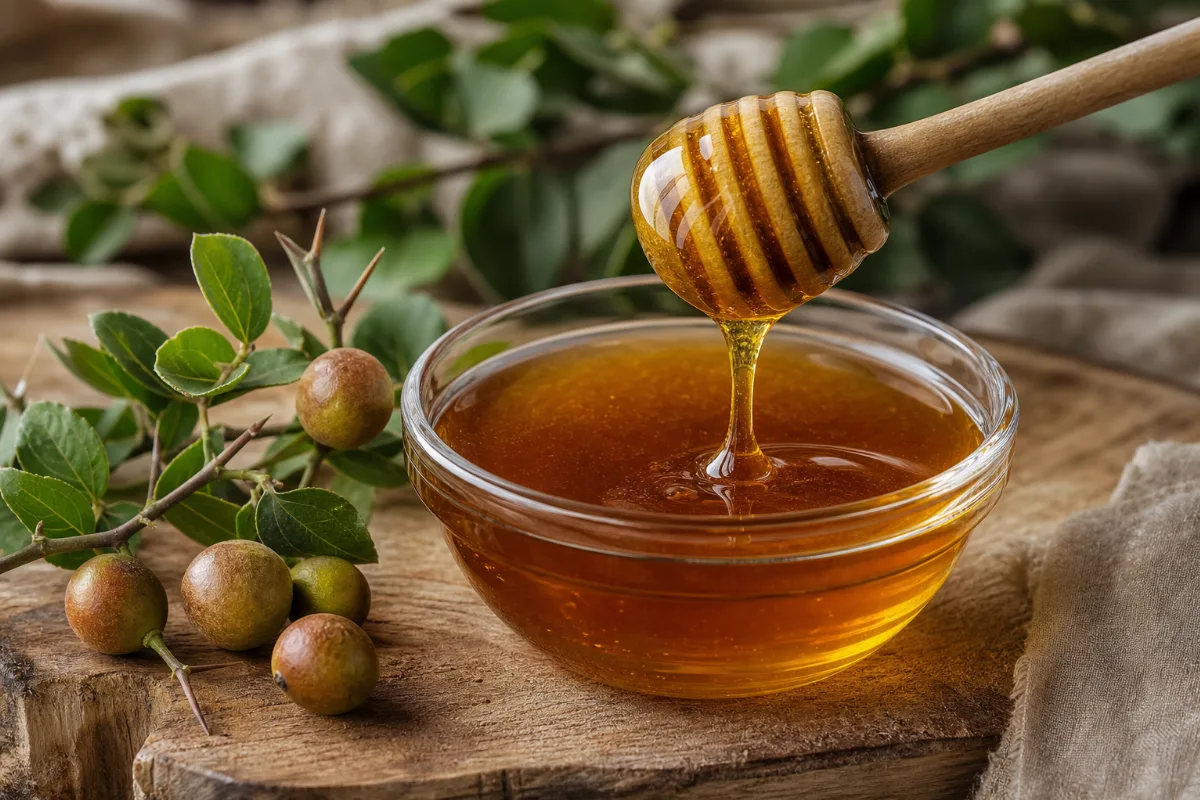
Honey & Bee Products · Honey
Sidr Honey
Honey from Ziziphus spina-christi (sidr tree) flowers · also called Sidr tree honey, Christ's thorn jujube honey, Ziziphus honey, Yemeni sidr honey
Sidr honey is honey that bees make mostly from the nectar of the sidr tree, Ziziphus spina-christi. Never give any honey, sidr honey included, to a baby under 12 months: it can cause infant botulism. Honey is a sugar food. In people, only two small dental studies exist; everything else is from the lab or rats. Added sugar syrups in sidr honey are a documented problem.
General information, not medical advice. Last substantive update · Not medically reviewed. A named clinician has not signed off on this page. How this page is made
About Sidr Honey
Sidr honey is honey that bees make mostly from the nectar of the sidr tree, Ziziphus spina-christi. Safety first: never give any honey to a baby under 12 months because of infant botulism. Honey is a sugar food, it can cause allergy in some people, and it is not a wound dressing. Only two small dental studies of sidr honey in people exist. Most other findings come from the lab or from rats. Added sugar syrups are a documented problem, so a label does not prove what is in the jar.
What it is
Sidr honey is made by bees mostly from the nectar of the sidr tree, Ziziphus spina-christi, also called Christ's thorn jujube. Papers describe it from Yemen, Saudi Arabia, Kuwait, the United Arab Emirates, Pakistan, Egypt and Algeria. Because it is sold by a tree name, its pollen mix can differ from one batch to the next, and a 2023 abstract notes that sidr honey may come from more than one Ziziphus species.
It is first of all a food and a sweetener. Medical-grade honey is a different product: it is sterilized and made into dressings under medical rules. A result for one does not carry over to the other.
Many people prize sidr honey for tradition and taste. A 2025 review says the tree is part of Emirati culture and has a legacy of medicinal use. Long use does not show that a food causes a health effect.
What the research shows
Two small randomised dental studies used sidr or Ziziphus honey. In one, adults with gum inflammation had honey massaged on the gums after a dental cleaning and had better plaque and gum scores at 30 days than with cleaning alone (low certainty). In the other, 30 adults had 1 mL of honey placed in the tooth socket and had a higher saliva marker of healing on days 3 and 7 (very low certainty, because the marker is a stand-in). Those are the amounts tested, not advice.
We found no trial of sidr honey for wounds, cough, diabetes or any other condition. A Cochrane review of honey dressings in general found the evidence too uncertain for most wounds, and a Cochrane review of honey for children's cough found a small benefit for a few days, but neither singled out sidr honey.
In dishes, sidr honey slowed or killed several bacteria and cut biofilm. Manuka honey was stronger in two head-to-head tests and talh honey was stronger in a Saudi comparison. After repeated exposure in dishes some bacteria became more sensitive to antibiotics, but one strain needed more honey to be stopped. Sidr honey also showed antioxidant activity in chemical tests and slowed some cancer cell lines in dishes, but one study found it made another cell line grow. In rats, sidr honey lowered blood glucose in diabetic animals and protected the stomach lining. Lab and animal results do not show what happens in people.
Quality and buying
The abstract of a 2026 study says high market demand makes sidr honey open to adulteration with sugar syrups. In that study, honey mixed in the lab with corn, date or agave syrup at 5 to 35% could be told apart from pure honey using sugar measurements. A second study told cane-sugar-syrup mixtures from pure sidr honey with a fluorescence method. These were mixtures made in labs, so they do not tell how much fake honey is on sale, and we found no source that does.
A Saudi check of 306 honey labels, where natural honey and sidr honey were the most common types, found only 4 of 10 labelling items at least 90% compliant, and half of the few written health claims were prohibited.
You cannot tell by looking whether honey is pure. Words like raw or natural are not safety claims. Be careful with health claims, and ask a doctor or pharmacist about anything you take for a medical reason.
At a glance
Traditional uses history, not proof
- A 2025 review says the sidr tree is part of Emirati culture and has a legacy of medicinal use.
- Papers describe sidr honey as a food and medicine in many countries. Long use is not proof that it works.
Studied for research
- Gum inflammation after a dental cleaning: low
- Healing after tooth removal (marker only): very-low
- Wounds and burns: insufficient
- Cough and colds: insufficient
- Killing bacteria in dishes: very-low
- Antioxidant tests: very-low
- Cancer cell lines in dishes: very-low
- Blood sugar and stomach lining in rats: very-low
Main compounds
- Fructose and glucose, the main sugars
- Phenols and flavonoids, which give antioxidant results in lab tests
- Many other compounds seen by mass spectrometry, not individually verified
Common forms
- Liquid or set jar honey
- Honey in the comb
- Raw or lightly filtered honey (not safer for babies)
- Sterile medical-grade honey dressings (a separate product)
Research links: WHO: Botulism · NHS: Foods to avoid giving babies and young children · WHO: Healthy diet (free sugars) · Sidr honey gum massage trial (abstract) · Ziziphus honey tooth-socket trial (abstract) · Sugar-syrup detection in sidr honey (abstract) · Research Library · Genes & Biomarkers Library
What it is and its history
- Accepted scientific name
- Sidr honey (honey made mainly from the nectar of Ziziphus spina-christi)
- Naming authority
- Tree: Ziziphus spina-christi (L.) Desf. (GBIF accepted name)
- Synonyms
- Sidr tree honey; Christ's thorn jujube honey; Sider honey; Yemeni sidr honey; Ziziphus honey
- Common names
- Sidr honey (English); Ziziphus honey (English); Christ's thorn jujube honey (English)
- Family or group
- Source tree: Rhamnaceae (buckthorn family). The honey is made by bees, not the tree.
- Classification
- Plantae (source tree) > Tracheophyta > Magnoliopsida > Rosales > Rhamnaceae > Ziziphus > Ziziphus spina-christi
- Native range
- Not checked in the sources read.
- Habitat
- A 2025 review places the tree in the arid ecosystems of the United Arab Emirates.
- What it looks like
- Flowers: Nectar from sidr flowers is the main source, by definition of the honey.
- Cultivation
- Not checked.
- Harvest and processing
- Sold as liquid or set jar honey, in the comb, or described as raw or lightly filtered; 'raw' has no standard meaning on labels. Sterile medical-grade honey dressings are a separate product (existing AlternativeMed summary; not re-checked).
- Look-alikes and adulterants
- Name: Talh honey (Acacia gerrardii); Note: A different Saudi honey; in one comparison it was stronger than sidr against bacteria in dishes.; Name: Other honeys sold as 'sidr'; Note: Lab papers say sidr honey is vulnerable to adulteration with sugar syrups, so a label does not prove origin.
Photographs
Traditional use and history history, not clinical proof
| Tradition or era | Documented use | Source |
|---|---|---|
| United Arab Emirates | A 2025 review says the sidr tree and a second desert tree are integral to Emirati culture, have a legacy of medicinal uses, and that honey is part of the country's heritage. | p40870770 |
| Honey in general, many places | A 2020 abstract says sidr honey is used as food and medicine in many countries, and a 2023 abstract says it is used in a wide range of traditional medicine practices. The sources read do not describe Yemeni or Islamic practice in detail, so we do not. | p31993170 |
Traditional use shows how it was used. It does not show that it works or is safe today.
What is inside, and how it may work
What it contains and how those compounds act in cells and animals. Laboratory and animal mechanisms are not proven effects in people.
Main compounds
| Compound | Family | Where it is concentrated | Activity studied | Level of evidence |
|---|---|---|---|---|
| Phenols and flavonoids (total) | polyphenols | Honey Algerian honey: total phenols 47.35 mg GAE per 100 g and flavonoids 2.13 mg QE per 100 g. | Linked by the authors to antioxidant activity in lab tests. 11 | Lab analysis |
| Fructose and glucose | sugars | Honey Pure Kuwaiti sidr honey: fructose-to-glucose ratio 1.10 to 1.35. | The main sugars. Corn, date and agave syrups shifted these sugar values in mixed samples, which is how adulteration was detected. 1 | Lab analysis |
| Miraxanthin-III and other compounds found by mass spectrometry | mixed (not individually verified) | Honey 10 compounds and one tripeptide in Ziziphus honey from Hail; 23 components in Saudi sidr honey. | Computer docking picked out Miraxanthin-III in one study. This is a prediction, not a measured effect. 10 21 | In silico |
Mechanisms, receptors and pathways
| Target or pathway | Gene or receptor | What was found | Level |
|---|---|---|---|
| Bacterial membrane leakage (E. coli) | Sidr honey made the bacterial membrane more permeable and increased potassium and protein leakage; manuka honey blocked protein making instead. 3 | Laboratory research | |
| Staphylococcus aureus virulence genes and biofilm | Selected virulence genes were turned down after exposure to honeys; biofilm was inhibited at 20% honey. 2 | Laboratory research | |
| Cancer cell cycle and cell death (HCT-116) | Cells piled up in the G1 phase with more early and late cell death. 21 | Laboratory research | |
| Oxidative stress and cell-death proteins in diabetic rats | Bax, Caspase-3, Bcl2 | Lower Caspase-3 and Bax, higher Bcl2, adjusted antioxidant enzymes (rat tissue). 12 | Animal research |
| Inflammation signals in rats with stomach ulcers | TNF-alpha, IL-6, PGE2 | Lower blood levels in honey-treated rats. 11 | Animal research |
Absorption, metabolism and elimination
- Absorption
- Not studied for sidr honey in the sources read.
- Distribution
- Not studied.
- Metabolism
- Not studied.
- Elimination
- Not studied.
- Bioavailability
- Not studied.
Isolated compounds versus whole extracts
Honey is a whole food. Findings about single compounds from computer docking do not describe what the honey does.
Nutritional composition
Honey is mostly sugar. WHO counts the sugars naturally present in honey as free sugars. No vitamin or mineral values for sidr honey were read, so none are claimed.
1 low certainty6 very low certainty2 not enough evidence
What was looked at
The 9 benefits and uses checked for Sidr Honey, each with how strong the evidence is. Tap one to open it.
- Gum inflammation after a dental cleaning (sidr honey massaged on the gums)Low certainty
- Healing after a tooth is pulled (Ziziphus honey in the socket)Very low certainty
- Wounds and burns (sidr honey)Not enough evidence
- Cough and colds (sidr honey)Not enough evidence
- Killing or slowing bacteria in dishes (sidr honey)Very low certainty
- Antioxidant tests (sidr honey)Very low certainty
- Cancer cell lines in dishes (sidr honey)Very low certainty
- Blood sugar in diabetic rats (Egyptian sidr honey)Very low certainty
- Stomach lining in rats (Algerian sidr honey)Very low certainty
Lab markers tracked in the studies
Salivary osteopontinPlaque indexGingival indexBleeding on probingBlood glucose (in rats)Fructosamine (in rats)
What is Sidr Honey good for?
What people ask about, and how strong the evidence is. Only the first two rows come from studies in people, and both are small. Where a result is about honey in general, not sidr honey, it says so. None of it is proof, and all of it should be read with the safety section.
Benefits, one by one
Each card is a research question, not a promise. Tap a goal to filter. Open a card to see the studies, doses and limits.
Gum inflammation after a dental cleaning (sidr honey massaged on the gums)
Low certaintyOne randomised trial in adults with gingivitis found that rubbing sidr honey into the gums after a dental cleaning gave better plaque and gum scores at 30 days than cleaning alone. It is one small study and the number of people is not given in the abstract.
2 studiesHoney massaged on the gums after professional cleaning, as tested. Th…
Studies, doses and limits
What the trials found
One randomised clinical trial (ClinicalTrials.gov NCT05231096) in adults with gingivitis, three groups: cleaning plus aloe vera gel massage, cleaning plus sidr honey massage, and cleaning alone.
Results
At 30 days, honey versus cleaning alone: plaque index -0.68 and gingival index -0.63. Aloe vera versus cleaning alone: -0.57 and -0.32. Bleeding on probing fell in all three groups. The authors say the honey group did better than both others.
Effect sizes as reported
Plaque index -0.68 and gingival index -0.63 versus cleaning alone (no confidence intervals in the abstract).
Why this rating
One small trial with no stated sample size, no placebo massage and a 30-day follow-up. It points the right way but cannot be relied on.
Form and dose studied
Honey massaged on the gums after professional cleaning, as tested. This is not advice to treat gum disease at home.
Who was studied
Adults with gingivitis (country not stated in the abstract).
Limits
Sample size, blinding, honey source and funding not given in the abstract; only 30 days; only one honey.
Why researchers looked
Gum disease is common, and honey is sometimes used as a natural add-on to dental care.
Traditional use
No source read describes a traditional dental use of sidr honey.
Proposed mechanism Pharmacological theory
Not established. The abstract does not offer a mechanism.
A proposed mechanism does not show that the effect happens in people.
Honey is a sugar and the NHS notes that avoiding it helps prevent tooth decay. See a dentist for gum disease.
Healing after a tooth is pulled (Ziziphus honey in the socket)
Very low certaintyIn 30 adults having a back tooth removed, honey placed in the socket was followed by higher levels of a bone-healing protein (osteopontin) in saliva after 3 and 7 days. The protein is a stand-in marker, not proof that the tooth socket healed better.
1 studies1 mL of Ziziphus honey in the socket in the trial; that is what was t…
Studies, doses and limits
What the trials found
One randomised controlled trial in Lahore, Pakistan: 30 adults, honey in the socket versus no treatment.
Results
Salivary osteopontin, control versus honey: day 3, 30.95 vs 53.29 (p = 0.001); day 7, 55.33 vs 81.90 (p = 0.001). The abstract does not report the X-ray results.
Effect sizes as reported
Higher marker levels with honey on days 3 and 7.
Why this rating
A tiny trial, 7 days, a lab marker instead of real healing, and no placebo.
Form and dose studied
1 mL of Ziziphus honey in the socket in the trial; that is what was tested, not advice.
Who was studied
Adults aged about 35 having a permanent molar removed.
Limits
No placebo; stand-in marker; X-ray outcome not reported in the abstract; funding not stated.
Why researchers looked
Researchers wanted to know if honey could speed bone repair after a tooth is removed.
Traditional use
No source read describes a traditional use for this.
Proposed mechanism Pharmacological theory
Not established; the authors suggest higher osteopontin means better bone healing, but this was not shown directly.
A proposed mechanism does not show that the effect happens in people.
A tooth socket is an open wound. Ask a dentist before putting anything in it.
Wounds and burns (sidr honey)
Not enough evidenceNo trial of sidr honey on wounds in people was found. A short review says Saudi honeys including sidr stopped wound bacteria in the lab. A Cochrane review of honey dressings in general found the evidence too uncertain for most wounds. Jar honey is not a medical dressing.
2 studiesSterile medical-grade honey dressings are a different product from ja…
Studies, doses and limits
What the trials found
No human trial of sidr honey on wounds. Cochrane review of honey in general: 25 trials, 2,987 people, mixed honey types.
Results
Cochrane: in some partial-thickness burns honey might shorten healing against some dressings, but it delayed healing against early excision and grafting, did not clearly help venous leg ulcers (RR 1.15, 95% CI 0.96 to 1.38), and evidence for other wounds was insufficient.
Why this rating
No sidr honey trial exists. The general honey review is mixed and mostly at high or unclear risk of bias.
Form and dose studied
Sterile medical-grade honey dressings are a different product from jar honey.
Who was studied
Not studied for sidr honey.
Limits
Honey types are not separated in the review. Lab results do not carry over to people.
Why researchers looked
Honey has been used on wounds for a very long time, and manuka and medical-grade honeys are used in clinics.
Traditional use
Honey in general has been used in wound care since ancient times (stated in the Cochrane review abstract). No source read describes a sidr-specific wound tradition.
Proposed mechanism Laboratory research
Lab studies suggest sidr honey damages bacteria. This has not been shown to help wounds heal.
A proposed mechanism does not show that the effect happens in people.
Do not put jar honey on a wound or burn instead of medical care.
Cough and colds (sidr honey)
Not enough evidenceNo trial of sidr honey for cough was found. A Cochrane review of honey in general found it probably eases cough a little in children over 12 months for a few days, but the authors say the evidence is not strong and honey types were mixed.
1 studiesNot stated in the abstract.
Studies, doses and limits
What the trials found
No sidr honey trial. Cochrane review of honey in general: 6 trials, 899 children aged 12 months to 18 years.
Results
Versus no treatment cough scores were lower with honey (mean difference -1.05, 95% CI -1.48 to -0.62); versus placebo -1.62 (95% CI -3.02 to -0.22). The authors conclude there was no strong evidence for or against honey. Stomach symptoms were more common with honey than placebo (12% vs 11%).
Effect sizes as reported
About 1 to 1.6 points on a 7-point cough scale (honey in general).
Why this rating
Not studied for sidr honey; the general review is of mixed honeys and small trials.
Who was studied
Children 12 months and older (general honey).
Limits
Honey types not separated; mostly one night of treatment.
Why researchers looked
Honey is a popular home remedy for cough.
Traditional use
Honey in general is a long-standing cough remedy; nothing read is specific to sidr honey.
Proposed mechanism Pharmacological theory
Not established.
A proposed mechanism does not show that the effect happens in people.
Never give honey to babies under 12 months. Honey is a sugar.
Killing or slowing bacteria in dishes (sidr honey)
Very low certaintyIn laboratory dishes sidr honey slowed or killed several bacteria and cut biofilm. Manuka honey did better than sidr in two head-to-head tests, and talh honey did better than sidr in a Saudi comparison. This has not been tested in people.
5 studiesLab concentrations only; no advice on amounts.
Studies, doses and limits
What the trials found
Laboratory studies only: Staphylococcus aureus, Escherichia coli, Bacillus cereus, Salmonella, Acinetobacter baumannii and a skin fungus.
Results
S. aureus: inhibition zone 22.2 mm for sidr vs 25.1 mm for manuka; lowest inhibiting concentration 25% vs 12.5%. E. coli: manuka killed better (30% vs 50%). Talh honey beat sidr against all bacteria tested. Antibacterial concentrations for Saudi sidr honey were 50 to 400 mg/mL. After ten exposures bacteria became more antibiotic-sensitive, though one A. baumannii strain needed 4 times more honey to be stopped.
Effect sizes as reported
Honey concentrations of 20% to 50% or more were needed in dishes.
Why this rating
Laboratory dishes only, with very high honey concentrations. Cannot show any effect in the body.
Form and dose studied
Lab concentrations only; no advice on amounts.
Who was studied
Bacteria and fungi in dishes.
Limits
No human data; strengths used are far above what anyone eats; funding not stated.
Why researchers looked
Researchers want to know if local honeys could help with infections that resist antibiotics.
Traditional use
A 2022 abstract says honey has been used as traditional therapy for skin infections; this is not proof.
Proposed mechanism Laboratory research
In E. coli, sidr honey made the cell membrane leakier; in S. aureus several virulence genes were turned down. Both are lab findings.
A proposed mechanism does not show that the effect happens in people.
Do not treat an infection or a wound with jar honey instead of medical care.
Antioxidant tests (sidr honey)
Very low certaintyIn chemical tests sidr honey showed antioxidant activity. This describes a test tube, not the body.
3 studiesNot applicable.
Studies, doses and limits
What the trials found
Chemical antioxidant assays on Saudi and Algerian sidr honeys.
Results
Saudi sidr honey: DPPH IC50 7.70 mg/mL and ABTS 5.41 mg/mL. Ziziphus honey from Hail: DPPH IC50 0.670 mg/mL, ABTS 3.554 mg/mL. Algerian honey: total phenols 47.35 mg GAE per 100 g, flavonoids 2.13 mg QE per 100 g.
Effect sizes as reported
Lab values only.
Why this rating
Chemical assays only. They do not show an effect in people.
Limits
Different honeys and methods; no human data.
Why researchers looked
Honey contains phenols and flavonoids, which show antioxidant activity in lab tests.
Proposed mechanism Laboratory research
Chemical test results; the abstracts do not claim a body mechanism.
A proposed mechanism does not show that the effect happens in people.
None specific.
Cancer cell lines in dishes (sidr honey)
Very low certaintyIn dishes, sidr honey slowed the growth of several human cancer cell lines. One study found it made another cell line grow faster. No human cancer data exist, and this is not a treatment.
3 studiesNot applicable.
Studies, doses and limits
What the trials found
Cell-line studies: colon HCT-116, breast MCF-7, lung A549, liver HepG2, cervical HeLa.
Results
Ziziphus honey IC50 5.203% (lung), 6.02% (breast), 7.257% (colon). Saudi sidr honey IC50 61.89 micrograms/mL (colon), 78.79 (breast), 94.99 (lung). In another study honey acted against HepG2 liver cells but not HeLa cells and stimulated the growth of some lines.
Effect sizes as reported
Lab values only.
Why this rating
Cells in dishes only; one study saw the honey make some cell lines grow.
Limits
No normal-cell comparison in most abstracts; no human data.
Why researchers looked
Natural products are often screened for effects on cancer cells.
Traditional use
A 2023 abstract says sidr honey is used in a wide range of traditional medicine practices; that is not evidence for cancer.
Proposed mechanism Laboratory research
In colon cancer cells the honey caused cells to pile up in the G1 phase and raised cell death (lab).
A proposed mechanism does not show that the effect happens in people.
Do not use honey in place of cancer care.
Blood sugar in diabetic rats (Egyptian sidr honey)
Very low certaintyIn rats made diabetic, sidr honey given daily for 4 weeks lowered blood glucose and some stress markers. There is no human trial. Honey is a sugar.
2 studiesNot applicable.
Studies, doses and limits
What the trials found
One rat study (streptozotocin-induced diabetes), 4 weeks.
Results
Honey lowered the raised blood glucose and fructosamine and lowered nitric oxide and malondialdehyde.
Effect sizes as reported
Not given in the abstract.
Why this rating
Rats only; amount and animal numbers not in the abstract.
Who was studied
Rats.
Limits
No human trial; says nothing about whether honey is safe or useful for people with diabetes.
Why researchers looked
Researchers tested whether sidr honey changes blood sugar in an animal model.
Proposed mechanism Animal study
In the rats, antioxidant enzymes were adjusted and cell-death proteins changed (lower Caspase-3 and Bax, higher Bcl2).
A proposed mechanism does not show that the effect happens in people.
Honey is a free sugar (WHO). People who manage blood sugar should ask a doctor or pharmacist.
Stomach lining in rats (Algerian sidr honey)
Very low certaintyIn rats given an acid and ethanol insult, honey given first gave less ulcer damage and lower inflammation markers. No human data.
1 studiesRat amount 1.2 g per kg; not advice.
Studies, doses and limits
What the trials found
One rat study of honey from Apis mellifera intermissa in the Algerian Sahara, labelled sidr honey by the authors.
Results
Honey-treated rats had lower ulcer scores, less stomach acid and juice, and lower TNF-alpha, PGE2 and IL-6.
Effect sizes as reported
Not given in the abstract.
Why this rating
Rats only; honey origin label comes from the authors.
Form and dose studied
Rat amount 1.2 g per kg; not advice.
Who was studied
Rats.
Limits
No human data.
Why researchers looked
Researchers tested whether honey protects the stomach lining.
Proposed mechanism Animal study
Lower TNF-alpha, IL-6 and PGE2 in the blood of treated rats.
A proposed mechanism does not show that the effect happens in people.
Stomach pain or bleeding needs a doctor.
Connections to the rest of health
How Sidr Honey connects to the rest of our health knowledge graph. Every link says what kind of connection it is. A safety link (for example to the liver) is a warning, not a benefit. A study that merely mentions a topic never creates a benefit link.
Explore every connection: goals, body systems, organs, symptoms, genes
B. Body systems
| Connected to | Kind of connection | Evidence status | Context | Studies |
|---|---|---|---|---|
| Immune system | Adverse effect or risk | Moderate certainty | Allergic reactions, rarely severe. Preparation or compound: Honey and bee products |
17 22 |
| Digestive System | Biological association | Low certainty | Studied for: Gum inflammation after a dental cleaning (sidr honey massaged on the gums) Studied for: Stomach lining in rats (Algerian sidr honey) | 16 24 11 |
| Musculoskeletal System | Biological association | Very low certainty | Studied for: Healing after a tooth is pulled (Ziziphus honey in the socket) | 15 |
| Integumentary System | Biological association | Not enough evidence | Studied for: Wounds and burns (sidr honey) | 8 14 |
| Respiratory System | Biological association | Not enough evidence | Studied for: Cough and colds (sidr honey) | 19 |
| Immune System | Biological association | Very low certainty | Studied for: Killing or slowing bacteria in dishes (sidr honey) | 2 3 9 20 4 |
| Endocrine System | Biological association | Very low certainty | Studied for: Blood sugar in diabetic rats (Egyptian sidr honey) | 12 25 |
C. Body parts and organs
I. Biomarkers
| Connected to | Kind of connection | Evidence status | Context | Studies |
|---|---|---|---|---|
| Salivary osteopontin | Biological association | Very low certainty | Measured in trials: raised. A lab change is not the same as a health benefit. | 15 |
| Plaque index | Biological association | Low certainty | Measured in trials: lowered. A lab change is not the same as a health benefit. | 16 |
| Gingival index | Biological association | Low certainty | Measured in trials: lowered. A lab change is not the same as a health benefit. | 16 |
| Bleeding on probing | Biological association | Low certainty | Measured in trials: lowered. A lab change is not the same as a health benefit. | 16 |
| Blood glucose (in rats) | Biological association | Very low certainty | Measured in trials: lowered. A lab change is not the same as a health benefit. | 12 |
| Fructosamine (in rats) | Biological association | Very low certainty | Measured in trials: lowered. A lab change is not the same as a health benefit. | 12 |
J. Genes, receptors and enzymes
| Connected to | Kind of connection | Evidence status | Context | Studies |
|---|---|---|---|---|
| Bax, Caspase-3, Bcl2 (rat tissue) | Preliminary mechanism | Animal | Changed in diabetic rats given sidr honey. | 12 |
L. Active compounds
| Connected to | Kind of connection | Evidence status | Context | Studies |
|---|---|---|---|---|
| Phenols and flavonoids (total) | Biological association | Lab analysis | Linked by the authors to antioxidant activity in lab tests. Preparation or compound: Honey |
11 |
| Fructose and glucose | Biological association | Lab analysis | The main sugars. Corn, date and agave syrups shifted these sugar values in mixed samples, which is how adulteration was detected. Preparation or compound: Honey |
1 |
| Miraxanthin-III and other compounds found by mass spectrometry | Biological association | In silico | Computer docking picked out Miraxanthin-III in one study. This is a prediction, not a measured effect. Preparation or compound: Honey |
10 21 |
Each connection is stored with the ingredient, the connected record, the kind of connection, the evidence status, the supporting studies, the preparation or compound involved, and a review date (last reviewed October 25, 2026).
Evidence at a glance: what changed in 6 lab markers
Tap a number to show only those markers. Counts are markers, not people.
The evidence
The research centre for Sidr Honey. Every record here was checked against PubMed or the publisher's page; we never list a study we have not verified.
Evidence by outcome
Bars show how many studies we found for each outcome, not how well it works. People are added up across trials only (reviews are not added, to avoid double counting).
How we rate evidence
High certainty
Several well-run trials or reviews agree; further research is unlikely to change the picture much.
Moderate certainty
Good trials point the same way, but some doubt remains.
Low certainty
Small, short or inconsistent trials. The finding could change with better research.
Very low certainty
Very little or very weak human data. Treat as a possibility only.
Mixed findings
Trials or reviews disagree with each other.
Not enough evidence
Not enough human research to say either way.
Evidence against
Good research found no benefit, or found harm.
We take the reviewers' own risk-of-bias and GRADE statements where they exist, and otherwise judge from study size, design, consistency, directness and whether a product matches what is sold. Many publications do not make evidence high. Method note: We read the abstracts of 22 PubMed papers, the WHO botulism and healthy-diet fact sheets and the NHS foods-to-avoid page in full, and checked the tree name in GBIF. Certainty ratings are the compiler's own reading unless a review gives its own. The NCCIH and CDC pages could not be read and are not cited as checked.
Study library: every study we checked 26
| Study | Design | People | Product, dose, length | Result |
|---|---|---|---|---|
| Al-Hetlani 2026 Evaluating Honey Adulteration Through Physicochemical Characterization and Liquid Chromatography-Mass Spectrometry-Based Sugar Profiling. Foods · PMID 41897760 · DOI |
Lab study lab |
Kuwaiti Ziziphus spina-christi (sidr) honey samples spiked with corn, date or agave syrup at 5 to 35% | Authentic sidr honey versus sidr honey mixed with corn, date or agave syrup honey 5 to 35% syrup (lab) Lab · vs Pure sidr honey |
The abstract says high market demand makes sidr honey susceptible to adulteration with sugar syrups. In pure samples the fructose-to-glucose ratio was 1.10 to 1.35. Corn syrup lowered the sugar totals and the ratio, date syrup raised the sugar totals, and agave syrup raised both strongly. pH and moisture did not change; acidity changed only with corn syrup; conductivity changed with syrup type. The authors say the combined approach detects syrup adulteration. Spiked samples could be detected in the lab (n/a) Methods, limits and fundingOutcomes: pH, acidity, moisture, electrical conductivity, fructose and glucose by LC-MS Limitations: Samples were mixed in the lab; the study did not measure how much fake honey is on sale. Funding and conflicts: Not stated in the abstract. Read: abstract |
| Al-Kafaween 2023 Comparison of the antimicrobial and antivirulence activities of Sidr and Tualang honeys with Manuka honey against Staphylococcus aureus. Iranian Journal of Microbiology · PMID 37069905 · DOI |
Lab study lab |
Staphylococcus aureus in the lab | Sidr, Tualang and Manuka honey honey Lab concentrations (lowest concentration that stopped growth 25% for sidr) Lab · vs Manuka honey |
Manuka honey was strongest: inhibition zone 25.1 mm versus 22.2 mm for sidr and 21.3 mm for Tualang. Lowest inhibiting concentration was 12.5% for manuka and 25% for sidr and Tualang. At 20% all three inhibited biofilm. Virulence-related genes in S. aureus were turned down by all three honeys. Manuka stronger than sidr against S. aureus in dishes (n/a) Methods, limits and fundingOutcomes: Inhibition zones, minimum inhibitory and bactericidal concentrations, time-kill, biofilm, gene expression Limitations: Lab only; high honey concentrations; one bacterium. Funding and conflicts: Not stated in the abstract. Read: abstract |
| Al-Sayaghi 2022 Antibacterial Mechanism of Action of Two Types of Honey against Escherichia coli through Interfering with Bacterial Membrane Permeability, Inhibiting Proteins, and Inducing Bacterial DNA Damage. Antibiotics · PMID 36139961 · DOI |
Lab study lab |
Escherichia coli in the lab | Yemeni sidr honey and manuka honey honey 700 mg per disc in disc tests (lab) Lab · vs Manuka honey |
Both honeys stopped E. coli growth at similar concentrations. Manuka honey had the better killing effect (30% versus 50% for sidr). Sidr honey made the bacterial membrane leakier; manuka blocked protein making; both damaged bacterial DNA. The authors suggest both could be developed as skin-infection remedies or dressings. Lab antibacterial effect; manuka somewhat stronger (n/a) Methods, limits and fundingOutcomes: Inhibition, minimum inhibitory and bactericidal concentrations, leakage of potassium and protein, protein synthesis, DNA damage Limitations: Lab only; the authors' suggestion about dressings is a hope, not a result in people. Funding and conflicts: Not stated in the abstract. Read: abstract |
| Aldarhami 2023 Effects of Repeated in-vitro Exposure to Saudi Honey on Bacterial Resistance to Antibiotics and Biofilm Formation. Infection and Drug Resistance · PMID 37424668 · DOI |
Lab study lab |
S. aureus, E. coli and Acinetobacter baumannii exposed to honey 10 times in dishes | Sumra and sidr Saudi honeys honey Lab Ten passages · vs Untreated bacteria |
After ten exposures the bacteria were more sensitive to several antibiotics (gentamicin, ceftazidime, ampicillin, amoxicillin/clavulanic acid, ceftriaxone). One A. baumannii strain adapted to sidr honey needed 4 times more honey to be stopped. Biofilm formation was lower in some strains. The authors say this suggests potential for wound infections. Lab: bacteria became more antibiotic-sensitive; one strain became less sensitive to the honey (n/a) Methods, limits and fundingOutcomes: Antibiotic sensitivity, biofilm formation Limitations: Lab only; the authors' suggestion about treating wound infections is not tested in people. Funding and conflicts: Not stated in the abstract. Read: abstract |
| Ali 2022 Classification of Sidr honey and detection of sugar adulteration using right angle fluorescence spectroscopy and chemometrics. European Food Research and Technology · PMID 35431646 · DOI |
Lab study lab |
Sidr, acacia and multifloral honey samples; cane sugar syrup added to sidr honey in the lab | Sidr honey with added cane sugar syrup at different levels honey Various (lab) Lab · vs Pure sidr honey |
The abstract says sidr honey is vulnerable to adulteration with low-grade honey and sugar syrups. Sidr honey had a different fluorescence signature from acacia and multifloral honey, and a classification method told pure honey, syrup and mixtures apart with sensitivity and specificity close to 1. Lab method told pure sidr honey from sugar-syrup mixtures (n/a) Methods, limits and fundingOutcomes: Fluorescence signature, machine classification Limitations: Lab method on prepared samples; not a market survey. Funding and conflicts: Not stated in the abstract. Read: abstract |
| Almutairi 2025 Compliance Investigation of Honey-Packaged Food Labels and Claims in Saudi Arabia. International Journal of Food Science · PMID 41234777 · DOI |
Observational observational |
306 306 honey products on sale in Saudi Arabia; natural honey and sidr honey were the most common types |
Checklist review of package labels against Saudi Food and Drug Authority rules honey |
Only 4 of 10 compliance components reached 90% or more. Brand name was 100% compliant. Only 1.96% of products carried health or nutrition claims; nutritional claims were 100% compliant and 50% of the written health claims were prohibited claims. The authors point to problems with health claims and batch numbering. Many labels fell short of the rules; this is about labels, not honey purity (n/a) Methods, limits and fundingOutcomes: Compliance with 10 labelling items; health and nutrition claims Limitations: Label check only; it did not test what was inside the jars. Funding and conflicts: Not stated in the abstract. Read: abstract |
| Aricò 2026 Infant Botulism and Honey Exposure: Global Epidemiology, Prevention Policies, and Communication Strategies. Acta Paediatrica · PMID 41964486 · DOI |
Narrative review review |
Surveillance data and documents on infant botulism from 1976 to 2024 | Honey exposure in infants honey |
Cases were rare, but honey was the only consistently confirmed dietary source. Median age at onset was 3 to 4 months. Mortality was below 1% with intensive care and specific treatment. The USA had about 130 cases a year in a 2007 to 2021 review. Health authorities uniformly advise against honey before 12 months. Honey is the only consistently confirmed food source (n/a) Methods, limits and fundingOutcomes: Cases, deaths, policies Limitations: Narrative review of surveillance data; not about sidr honey specifically. Funding and conflicts: Not stated in the abstract. Read: abstract |
| Bazaid 2021 Saudi Honey: A Promising Therapeutic Agent for Treating Wound Infections. Cureus · PMID 34804730 · DOI |
Narrative review review |
Short review of studies on Saudi honeys (including sidr and talh) and wound bacteria | Saudi honeys in wound-infection studies honey |
The review says several types of Saudi honey (for example sidr and talh) showed promising in vitro and in vivo antimicrobial activity against wound pathogens. The abstract names no human trial of sidr honey on wounds. Narrative summary; no human wound trial named in the abstract (n/a) Methods, limits and fundingOutcomes: Narrative summary of antimicrobial studies and clinical usefulness Limitations: Short narrative review; the abstract does not say how studies were chosen; most evidence described is lab or animal work. Funding and conflicts: Not stated in the abstract. Read: abstract |
| Bazaid 2023 Antibiofilm, Antimicrobial, Anti-Quorum Sensing, and Antioxidant Activities of Saudi Sidr Honey: In Vitro and Molecular Docking Studies. Pharmaceutics · PMID 37765148 · DOI |
Lab study lab |
Saudi sidr honey tested in the lab; compounds modelled on a computer | Saudi sidr honey honey Lab concentrations (50 to 400 mg/mL to stop bacteria) Lab |
Bacteria were stopped at 50 to 400 mg/mL and killed at 50 to over 450 mg/mL; two Candida fungi at about 500 mg/mL. Antioxidant tests: ABTS IC50 5.41 mg/mL, DPPH 7.70 mg/mL. At half the inhibiting concentration biofilm was reduced by 56.64% to 77.11% depending on the bacterium. Computer modelling picked out five compounds as drug-like. Lab antibacterial, antibiofilm and antioxidant activity; computer-modelled compounds (n/a) Methods, limits and fundingOutcomes: Antibacterial and antifungal concentrations, antioxidant tests, biofilm and quorum-sensing assays, GC-MS compounds, docking Limitations: Lab and computer modelling only; the concentrations are very high; docking predicts nothing about the body. Funding and conflicts: Not stated in the abstract. Read: abstract |
| Bouali 2022 Phytochemical Composition, Antioxidant, and Anticancer Activities of Sidr Honey: In Vitro and In Silico Computational Investigation. Life · PMID 36675984 · DOI |
Lab study lab |
Ziziphus honey from Hail, Saudi Arabia; three human cancer cell lines (lung A549, breast MCF-7, colon HCT-116); computer docking | Ziziphus honey honey Lab concentrations Lab |
10 compounds and one tripeptide found. Antioxidant tests: DPPH IC50 0.670 mg/mL, ABTS 3.554 mg/mL. Honey was toxic to the cancer cells in a dose-dependent way: IC50 5.203% (lung), 6.02% (breast), 7.257% (colon). Computer docking supported the lab findings. Lab cell-killing and antioxidant activity (n/a) Methods, limits and fundingOutcomes: Compounds, antioxidant tests, cell killing, docking Limitations: Cells in dishes and computer models only; no normal-cell or human data in the abstract. Funding and conflicts: Not stated in the abstract. Read: abstract |
| Djebli 2021 Anti-Ulcerogenic and Cytoprotective Effects of Saharian (Sidr) Honey from Algeria. Combinatorial Chemistry & High Throughput Screening · PMID 33208062 · DOI |
Animal research animal |
Rats with stomach ulcers caused by acid and ethanol | Algerian Sahara (sidr) honey from Apis mellifera intermissa, given by mouth before the ulcer honey 1.2 g per kg body weight in rats Given at 2-day intervals · vs Untreated ulcer rats |
Honey-treated rats had lower ulcer scores, less stomach juice and acid, higher pH and lower blood TNF-alpha, PGE2 and IL-6. The honey had total phenols 47.35 mg GAE per 100 g and total flavonoids 2.13 mg QE per 100 g. Less ulcer damage in rats (n/a) Methods, limits and fundingOutcomes: Ulcer score, stomach juice volume and acidity, tissue slides, blood TNF-alpha, IL-6, PGE2 Limitations: Rats only; number of animals not in the abstract; the honey is labelled sidr by the authors. Funding and conflicts: Not stated in the abstract. Read: abstract |
| El-Aarag 2024 Regulation of Oxidative Stress and Apoptosis in Streptozotocin-Induced Diabetic Rats by Egyptian Sidr Honey. Chemistry & Biodiversity · PMID 38717108 · DOI |
Animal research animal |
Rats made diabetic with streptozotocin | Egyptian sidr honey given daily honey 4 weeks |
Sidr honey lowered the raised blood glucose and fructosamine, lowered nitric oxide and malondialdehyde, adjusted antioxidant enzymes, and changed cell-death proteins (lower Caspase-3 and Bax, higher Bcl2). Lower blood glucose in diabetic rats (n/a) Methods, limits and fundingOutcomes: Blood glucose, fructosamine, oxidative stress markers, antioxidant enzymes, cell-death proteins in liver and pancreas Limitations: Rats only; the number of animals and the amount given are not in the abstract; says nothing about people. Funding and conflicts: Not stated in the abstract. Read: abstract |
| Ghramh 2020 Study of anticancer, antimicrobial, immunomodulatory, and silver nanoparticles production by Sidr honey from three different sources. Food Science & Nutrition · PMID 31993170 · DOI |
Lab study lab |
Sidr honey from three sources (two Saudi, one Pakistani) at 20% in cell and bacterial tests | Sidr honey diluted to 20% honey 20% in the lab Lab |
Honey made silver nanoparticles, changed the growth of normal spleen cells and had antimicrobial activity. It had anticancer activity against HepG2 liver cancer cells but not HeLa cells. It stimulated the growth of some cell lines (for example HeLa) and inhibited another (HepG2), so the authors say it should be used as an anticancer agent only with care. Mixed in cells: slowed one cancer cell line, stimulated another (n/a) Methods, limits and fundingOutcomes: Cancer cell growth, normal spleen cell growth, antimicrobial activity, silver nanoparticle production Limitations: Lab only; the honey made some cell lines grow. Funding and conflicts: Not stated in the abstract. Read: abstract |
| Jull 2013 Honey as a topical treatment for wounds. Cochrane Database of Systematic Reviews · PMID 23450557 · DOI |
Systematic review |
2987 25 trials, 2,987 people with acute wounds (lacerations, burns) or chronic wounds (ulcers, infected surgical wounds and others) |
Honey dressings of mixed types versus conventional dressings and other treatments honey (types not separated in the abstract) Varies · vs Conventional dressings; early excision and grafting; other treatments |
Most trials were at high or unclear risk of bias. In partial-thickness burns honey might shorten healing compared with some conventional dressings (weighted mean difference -4.68 days). Compared with early excision and grafting, honey delayed healing in partial- and full-thickness burns (13.6 days longer). In venous leg ulcers honey did not significantly increase healing (RR 1.15, 95% CI 0.96 to 1.38). The authors say there is insufficient evidence to guide practice in other wounds and that purchasers should refrain from providing honey dressings for routine use until sufficient evidence exists. Mixed: possible benefit in some burns, delayed healing in others, no clear gain in leg ulcers (Venous leg ulcers RR 1.15 (0.96 to 1.38); burn comparisons as in results) Methods, limits and fundingOutcomes: Time to wound healing Limitations: Search ended June 2012; mostly high or unclear risk of bias; honey types not separated, so this is not about sidr honey. Funding and conflicts: Cochrane review; funding not stated in the abstract. Read: abstract |
| Khalid 2024 Effects of Ziziphus Honey on Bone Healing of the Extracted Tooth Socket by Evaluating Osteopontin Levels. Journal of the College of Physicians and Surgeons Pakistan · PMID 38840353 · DOI |
Controlled trial |
30 30 adults (mean age 35) having a permanent molar removed, Lahore, Pakistan; 16 women, 14 men |
1 mL of Ziziphus honey placed in the tooth socket after extraction Ziziphus honey 1 mL (as tested; not advice) Saliva tested on days 0, 3 and 7 · vs No intervention |
Osteopontin, control versus honey group: day 0 22.55 vs 23.31 (p = 0.4); day 3 30.95 vs 53.29 (p = 0.001); day 7 55.33 vs 81.90 (p = 0.001). The authors say this suggests better bone healing. The abstract does not report the X-ray results. Higher salivary osteopontin with honey on days 3 and 7 (Group means with spread only) Methods, limits and fundingOutcomes: Salivary osteopontin (a protein marker linked by the authors to bone healing) on days 0, 3 and 7; X-ray measurements were also done Limitations: Two groups with no placebo; a saliva marker is a stand-in, not healing itself; 7 days; the X-ray results are not reported in the abstract; funding not stated. Funding and conflicts: Not stated in the abstract. Read: abstract |
| Khalid 2026 Clinical Assessment of the Efficacy of Natural Nutraceuticals in Gingival Massage Therapy: A Randomized Clinical Study. International Journal of Dental Hygiene · PMID 41373073 · DOI |
Controlled trial |
Adults with gingivitis, randomised to three groups (number not stated in the abstract) | Sidr honey massaged on the gums after scaling and root cleaning (Group B); aloe vera gel massage (Group A); cleaning alone (Group C) sidr honey 30 days to re-check · vs Scaling and root cleaning only; aloe vera gel |
All three groups improved. Honey versus cleaning alone: plaque index -0.68 and gingival index -0.63. Aloe vera versus cleaning alone: -0.57 and -0.32. Bleeding on probing fell in all groups. The authors say the honey group was more effective than both the aloe vera group and the cleaning-only group. Better plaque and gum scores with honey massage than with cleaning alone at 30 days (Index differences only (-0.68 plaque, -0.63 gingival); no confidence intervals in the abstract) Methods, limits and fundingOutcomes: Plaque index, gingival index, bleeding on probing at day 30 Limitations: Number of participants, blinding, honey source and funding are not given in the abstract; 30-day follow-up; the control group had no placebo massage. Funding and conflicts: Not stated in the abstract. Registration: NCT05231096 Read: abstract |
| Matuszewska-Mach 2025 Ensuring the Safe Use of Bee Products: A Review of Allergic Risks and Management. International Journal of Molecular Sciences · PMID 41465502 · DOI |
Narrative review review |
Review of allergy to honey, pollen, bee bread, royal jelly, propolis, beeswax and bee brood | Bee products including honey honey and other bee products |
Bee products can, although relatively rarely, cause allergic reactions from local skin reactions to life-threatening anaphylaxis (types I and IV). People with atopy and beekeepers are at heightened risk. Management centres on avoiding the product and better labelling of allergen content. Rare but possibly severe allergy; higher risk in atopic people and beekeepers (n/a) Methods, limits and fundingOutcomes: Clinical forms of allergy, allergens, risk groups Limitations: Narrative review; about bee products in general, not sidr honey. Funding and conflicts: Not stated in the abstract. Read: abstract |
| Mokhtar 2025 Ecological, Apicultural, and Therapeutic Value of Vachellia tortilis and Ziziphus spina-christi Honeys in the United Arab Emirates: A Model for Sustainable Use in Arid Ecosystems. Foods · PMID 40870770 · DOI |
Narrative review review |
Review of two desert trees and their honeys in the United Arab Emirates | Honey from Vachellia tortilis and Ziziphus spina-christi honey |
The review says both trees are part of Emirati culture and have a history of medicinal use, and that honey from them contains compounds with antimicrobial, antioxidant and anti-inflammatory properties in laboratory work. It also discusses honey authenticity. Narrative review; mostly lab-based claims (n/a) Methods, limits and fundingOutcomes: Cultural, ecological and pharmacological summary Limitations: Narrative review; not a systematic search; therapeutic claims rest on lab work. Funding and conflicts: Not stated in the abstract. Read: abstract |
| Oduwole 2018 Honey for acute cough in children. Cochrane Database of Systematic Reviews · PMID 29633783 · DOI |
Systematic review |
899 6 randomised trials in 899 children aged 12 months to 18 years treated as outpatients for acute cough |
Honey of mixed types versus no treatment, placebo, dextromethorphan, diphenhydramine and others honey (types not separated in the abstract) Most children were treated for one night · vs No treatment, placebo, cough medicines |
Honey probably reduced cough frequency more than no treatment (mean difference -1.05, 95% CI -1.48 to -0.62; moderate certainty) and more than placebo (-1.62, 95% CI -3.02 to -0.22; moderate certainty). Up to three days honey was probably better than placebo; beyond three days probably no advantage. The authors conclude there was no strong evidence for or against honey. Stomach symptoms: 12% with honey vs 11% with placebo (risk ratio 1.91, 95% CI 1.12 to 3.24; moderate certainty). Small cough-score benefit for a few days in children; no strong evidence either way (MD -1.05 (-1.48 to -0.62) vs no treatment; MD -1.62 (-3.02 to -0.22) vs placebo) Methods, limits and fundingOutcomes: Cough frequency and severity on 7-point scales; adverse events Limitations: Few small trials; honey types not separated, so this is honey in general and does not single out sidr honey. Funding and conflicts: Cochrane review; funding not stated in the abstract. Read: abstract |
| Owayss 2020 In vitro antimicrobial activities of Saudi honeys originating from Ziziphus spina-christi L. and Acacia gerrardii Benth. trees. Food Science & Nutrition · PMID 31993165 · DOI |
Lab study lab |
Saudi sidr and talh honeys tested in dishes against two Gram-positive bacteria, two Gram-negative bacteria and a skin fungus | Sidr honey (Ziziphus spina-christi) and talh honey (Acacia gerrardii), undiluted and diluted to 33% in water honey Undiluted and 33% w/v in the lab Lab · vs Antibiotics and antifungal drugs |
Both honeys had substantial antimicrobial activity. Talh honey was significantly stronger than sidr against all the bacteria tested. Activity against the skin fungus was similar. Diluted honey (33%) was more active than undiluted honey. Diluted honeys beat two antibiotics against the bacteria but were less potent than the antifungal drugs against the fungus. The authors say use as medical-grade honey needs further investigation. Lab activity; talh honey stronger than sidr (n/a) Methods, limits and fundingOutcomes: Zones of growth inhibition Limitations: Laboratory dishes only; honey concentrations far above what anyone swallows; says nothing about treatment in people. Funding and conflicts: Not stated in the abstract. Read: abstract |
| Qanash 2023 In Vitro Antiproliferative Apoptosis Induction and Cell Cycle Arrest Potential of Saudi Sidr Honey against Colorectal Cancer Cells. Nutrients · PMID 37571386 · DOI |
Lab study lab |
Three human cancer cell lines (colon HCT-116, breast MCF-7, lung A-549) in dishes | Saudi sidr honey honey Lab concentrations Lab |
23 chemical components identified. Honey was more effective on colon cancer cells (IC50 61.89 micrograms/mL) than breast (78.79) or lung (94.99). In colon cells it caused cells to pile up in the G1 phase and increased cell death. The authors call for more work to isolate the active compounds. Lab antiproliferative effect (n/a) Methods, limits and fundingOutcomes: Cell growth, colony formation, cell death, cell cycle Limitations: Cell lines only; no human data. Funding and conflicts: Not stated in the abstract. Read: abstract |
| Rocha Filho 2026 Pharmacovigilance and toxicological risks associated with apitherapeutic products: a systematic overview. Archives of Toxicology · PMID 41071287 · DOI |
Systematic review review |
Literature and drug-safety databases on honey, bee venom, propolis, royal jelly, bee pollen and beeswax | Bee products including honey honey and other bee products |
Reported cases included infant botulism and grayanotoxin poisoning linked to honey, anaphylaxis with bee venom, contact dermatitis with propolis, asthma with royal jelly and adulterated pollen supplements. Allergic reactions were the most common adverse event, especially in atopic people. The authors say these products must be used with caution. Allergy most common; rare serious poisonings (n/a) Methods, limits and fundingOutcomes: Adverse effects and toxicological risks Limitations: About bee products in general. Grayanotoxin poisoning is linked in the abstract to honey in general; it is not tied to sidr honey. Funding and conflicts: Not stated in the abstract. Read: abstract |
| n/a 2023 WHO: Botulism (fact sheet, 25 September 2023) n/a · Source |
Authoritative guidance n/a |
n/a | n/a |
Infant botulism occurs mostly under 6 months; spores germinate in the gut and release toxin. Signs: constipation, loss of appetite, weakness, an altered cry and a striking loss of head control. Spore-contaminated honey has been associated with a number of cases; parents and caregivers are warned not to feed honey to infants before the age of 1 year. Methods, limits and fundingOutcomes: Infant botulism and honey Limitations: A regulator's fact sheet, not a trial. It does not mention sidr honey. Read: full-text |
| n/a 2026 NHS: Foods to avoid giving babies and young children (page dated 18 February 2026) n/a · Source |
Authoritative guidance n/a |
n/a | n/a |
Occasionally honey contains bacteria that can produce toxins in a baby's intestines, causing infant botulism. Do not give a child honey until over 1 year old. Honey is a sugar, so avoiding it also helps prevent tooth decay. Methods, limits and fundingOutcomes: Honey in the diet of babies and young children Limitations: Guidance page, not a trial. It does not mention sidr honey. Read: full-text |
| n/a 2026 WHO: Healthy diet (fact sheet, 26 January 2026) n/a · Source |
Authoritative guidance n/a |
n/a | n/a |
Free sugars include sugars naturally present in honey, syrups, fruit juices and fruit juice concentrates. Methods, limits and fundingOutcomes: Free sugars Limitations: Guidance page; the honey statement is one line in a general fact sheet. Read: full-text |
| n/a 2026 GBIF Backbone Taxonomy: Ziziphus spina-christi (L.) Desf. (match API, retrieved 2026-10-25) n/a · Source |
Database n/a |
n/a | n/a |
Ziziphus spina-christi (L.) Desf., status ACCEPTED, family Rhamnaceae, order Rosales, GBIF key 8228089. Methods, limits and fundingOutcomes: Accepted name of the tree whose nectar gives sidr honey Limitations: Database record for the tree only; it says nothing about the honey. Read: api-record |
What we do not know yet
- Only two small human trials of sidr honey exist, both in dental care, and neither states who paid for it.
- No sidr honey trial for wounds, cough, blood sugar or any other condition was found.
- No information on sidr honey in pregnancy, breastfeeding or with medicines was found.
- No source tested sidr honey for pesticides, antibiotics or metals, and no rate of fraud or price data were found.
- Which pollen mix counts as sidr honey, and from which Ziziphus species, is not settled in the sources read.
How new research is added
New studies are found by a saved PubMed search and are placed in a review queue. A person reads each one before it is added.
Lab markers
What changed in blood or saliva tests during trials. A changed number is not the same as feeling or being healthier, and we give no "normal ranges".
Other 6
Salivary osteopontin
Raised in trials
A protein in saliva that the study authors link to bone healing after tooth removal.
Very low certaintyResults and what it means
Why it was measured
Used as a stand-in sign of healing in the tooth-socket trial.
Statistical vs. clinical meaning
A rise in a stand-in marker; it does not show that the bone healed better.
Safety implication
None found.
| Study | Result | People | Product |
|---|---|---|---|
| 15 | Higher on day 3 (53.29 vs 30.95) and day 7 (81.90 vs 55.33) in the honey group. | 30 adults after molar extraction | Ziziphus honey in the socket |
Plaque index
Lowered in trials
A dentist's score for how much plaque covers the teeth.
Low certaintyResults and what it means
Why it was measured
To see whether gum massage with honey changed plaque.
Statistical vs. clinical meaning
A better score in one small trial.
Safety implication
Honey is a sugar; see a dentist.
| Study | Result | People | Product |
|---|---|---|---|
| 16 | Honey versus cleaning alone: -0.68 at 30 days. | Adults with gingivitis | Sidr honey gum massage after scaling |
Gingival index
Lowered in trials
A dentist's score for how inflamed the gums look.
Low certaintyResults and what it means
Why it was measured
To see whether honey massage changed gum inflammation.
Statistical vs. clinical meaning
A better score in one small trial.
Safety implication
None found.
| Study | Result | People | Product |
|---|---|---|---|
| 16 | Honey versus cleaning alone: -0.63 at 30 days. | Adults with gingivitis | Sidr honey gum massage after scaling |
Bleeding on probing
Lowered in trials
Whether the gums bleed when a dentist gently probes them.
Low certaintyResults and what it means
Why it was measured
A common sign of gum inflammation.
Statistical vs. clinical meaning
Improved in every group, so the honey-specific part is unclear.
Safety implication
None found.
| Study | Result | People | Product |
|---|---|---|---|
| 16 | Fell in all three groups, including cleaning alone; the abstract gives no numbers. | Adults with gingivitis | Sidr honey, aloe vera or cleaning alone |
Blood glucose (in rats)
Lowered in trials
The amount of sugar in the blood.
Very low certaintyResults and what it means
Why it was measured
To see whether sidr honey changed blood sugar in diabetic rats.
Statistical vs. clinical meaning
Animal result only.
Safety implication
People who manage blood sugar should ask a doctor or pharmacist.
| Study | Result | People | Product |
|---|---|---|---|
| 12 | Lowered in diabetic rats after 4 weeks (numbers not in the abstract). | Streptozotocin-diabetic rats | Egyptian sidr honey daily |
Fructosamine (in rats)
Lowered in trials
A blood test of average blood sugar over about 2 to 3 weeks.
Very low certaintyResults and what it means
Safety
What studies and official sources say about side effects, medicines and who should check first. Each point shows what kind of evidence it comes from.
Main points to know 6
- Never give honey to a baby under 12 months (infant botulism). WHO and the NHS say not to give honey to babies before 12 months. Honey can carry spores of the bacterium that causes botulism, which can grow in a baby's gut and release a toxin. A 2026 review found honey was the only consistently confirmed food source, and deaths were below 1% when babies got intensive care and specific treatment. This applies to sidr honey and every other honey. Raw, comb or 'natural' honey is not safer. Authoritative guidance 23 24 7
- Honey is a sugar, and sugar affects teeth. WHO counts the sugars naturally present in honey as free sugars. The NHS notes that honey is a sugar and that avoiding it helps prevent tooth decay. The only blood sugar data for sidr honey are in rats. People who manage blood sugar should ask a doctor or pharmacist. Authoritative guidance 25 24 12
- Allergic reactions are rare but can be severe. A 2025 review says bee products, honey included, can cause reactions from local skin problems to anaphylaxis, though relatively rarely. People with atopy and beekeepers are at higher risk. No allergy data specific to sidr honey were found. Review 17 22
- Sidr honey is a food, not a wound dressing. No trial of sidr honey on wounds in people was found. The sidr wound work read is lab work. Cochrane found honey dressings in general too uncertain for most wounds and said honey delayed healing in some burns. Medical-grade honey is a sterile product made under medical rules; jar honey is not the same. Systematic review 14 8
- Labels may not tell you what is in the jar. Lab papers name sidr honey as vulnerable to added sugar syrups, and a Saudi label check found most packaging fell short on several labelling points. No source says how much sidr honey on sale is fake. Lab analysis 1 5 6
- Pregnancy, breastfeeding, medicines, pesticides and metals are not described. We found no source on sidr honey in pregnancy or breastfeeding, with medicines, or tested for pesticides, antibiotics or heavy metals. Not being studied is not proof of safety. Insufficient
Side effects 5
| Effect | How often | Severity and recovery | Evidence |
|---|---|---|---|
| Infant botulism (babies under 12 months) Applies to every honey. | Rare; about 130 cases a year in the USA in one global review | severe Mortality below 1% with intensive care and specific treatment; hospital care needed | Review 23 7 |
| Allergic reactions (skin, swelling, wheeze, anaphylaxis) Higher risk in people with atopy and in beekeepers. Not studied for sidr honey. | Relatively rare; no rate in the abstracts | mild to severe Varies; anaphylaxis is an emergency | Review 17 22 |
| Stomach symptoms in children over 12 months From a Cochrane review of honey in general for cough. | 12% with honey vs 11% with placebo (risk ratio 1.91, 95% CI 1.12 to 3.24) | mild Not stated | Systematic review 19 |
| Tooth decay The NHS says honey is a sugar and avoiding it helps prevent tooth decay. | Not quantified | mild to moderate Not stated | Authoritative guidance 24 |
| Grayanotoxin poisoning (honey in general) A review lists grayanotoxin poisoning linked to honey in general. It is not linked to sidr honey in anything read. | Reported cases; no rate | not stated in the abstract Not stated in the abstract | Systematic review 22 |
Liver
No report of liver injury from sidr honey was found in the sources read. 22
How often. No rate could be found.
Monitoring. No agency monitoring advice was read.
This is a safety connection. It is not evidence that Sidr Honey supports liver health.
Medicines and supplements 3
| With | Why it matters | Importance | Evidence | What to do |
|---|---|---|---|---|
| Glucose-lowering medicines and insulin prescription | Honey is a sugar food and may change blood sugar. | No interaction study of sidr honey with diabetes medicines was found; the sidr blood sugar data are in rats. | Pharmacological theory Not enough evidence 12 25 | Ask a doctor or pharmacist before adding honey regularly if you take glucose-lowering medicines. |
| Other sources of free sugar in the diet food | Honey adds to total free sugars. | WHO says free sugars include sugars naturally present in honey. | Authoritative guidance High certainty 25 | Count it as sugar. |
| Antibiotics prescription | In lab dishes, bacteria exposed repeatedly to Saudi honey became more sensitive to several antibiotics. | Dish result only; no effect in people has been shown and nothing suggests honey should replace an antibiotic. | Laboratory research Not enough evidence 4 | Take antibiotics as prescribed; ask a doctor or pharmacist about anything else. |
Who should check first 6
| Situation | Advice | Evidence |
|---|---|---|
| Babies under 12 months | Do not give honey in any form. | Authoritative guidance 23 24 7 |
| Known allergy to honey, bee products or pollen, or a history of severe allergic reactions | Avoid unless an allergy specialist advises otherwise. Seek urgent care for breathing trouble or swelling. | Review 17 22 |
| Diabetes or other blood sugar problems | Ask a doctor or pharmacist first. Honey is a free sugar. | Authoritative guidance 25 |
| Pregnancy | No source read describes sidr honey in pregnancy. Not being studied is not proof of safety. Ask a doctor or midwife. | Insufficient |
| Breastfeeding | No source read describes sidr honey while breastfeeding. Ask a doctor or pharmacist. Never give honey to the baby. | Insufficient 23 |
| Wounds and burns | See a clinician; do not use jar honey in place of medical care. | Systematic review 14 |
Overdose, product quality and regulators
Summary. Honey is a food. No source read reports toxicity from sidr honey. The rat-study abstracts report benefits and no harm, and say nothing more about safety.
Animal. Rat studies gave honey daily for 4 weeks (diabetes model) or at 1.2 g per kg (ulcer model).
Human doses studied. Not given as advice here.
Overdose response. Not described in the sources read.
Genotoxicity. Not studied in the sources read.
The documented quality problem is added sugar syrup, and labels that fall short of rules. No source read tested sidr honey for pesticides, antibiotics or metals.
Adulteration with sugar syrups. Lab studies say sidr honey is vulnerable to adulteration with sugar syrups and low-grade honey, and show that corn, date, agave and cane-sugar syrups added to sidr honey can be detected with laboratory methods. These were samples mixed in the lab, so they do not tell how much fake honey is sold. 1 5
Labels. A check of 306 honey products in Saudi Arabia, where natural honey and sidr honey were the most common, found only 4 of 10 labelling items at least 90% compliant, and half of the few written health claims were prohibited. It did not test the honey. 6
Price and fakes. Sidr honey is often described as costly. No source read gives prices or how common fake sidr honey is, so we cannot say.
Pesticides, antibiotics and heavy metals. No source read tests sidr honey for these.
Spores of Clostridium botulinum. Spore-contaminated honey has been linked to infant botulism cases, so raw or comb honey is not safer for babies. 23
| Body | Action | Date |
|---|---|---|
| World Health Organization (International) | Botulism fact sheet: parents and caregivers are warned not to feed honey to infants before 1 year. source | 2023-09-25 |
| NHS (England) (United Kingdom) | Do not give a child honey until they are over 1 year old; honey is a sugar, so avoiding it helps prevent tooth decay. source | 2026-02-18 |
| World Health Organization (International) | Healthy diet fact sheet: free sugars include sugars naturally present in honey. source | 2026-01-26 |
When to get medical help
- A baby under 12 months who has had honey and has constipation, poor feeding, a weak cry, floppiness or loss of head control: get emergency care.
- Swelling of the lips, face or throat, wheeze, trouble breathing, widespread hives or faintness after eating honey: call emergency services.
- A wound that is red, hot, swollen, leaking pus or comes with fever: see a clinician; do not rely on honey.
Stop using the product and contact a clinician or emergency service. In the US, Poison Control is 1-800-222-1222.
General information only, not medical advice. Ask a clinician or pharmacist before use, especially with medicines, in pregnancy or with a health condition. See the Natural Remedy Safety guide.
Frequently asked questions
Is sidr honey safe for babies?
What is sidr honey?
Does sidr honey heal wounds?
Is sidr honey better than manuka honey?
Is there proof sidr honey treats any disease?
Is sidr honey good for gums?
Is sidr honey good for people with diabetes?
Is sidr honey healthier than sugar?
No trial compared sidr honey with sugar. WHO counts the sugar in honey as free sugar, to be limited.
Can sidr honey cause an allergy?
How do I know my sidr honey is real?
Is sidr honey safe in pregnancy or while breastfeeding?
No source we read describes sidr honey in pregnancy or breastfeeding. Not being studied is not proof of safety. Ask a doctor, midwife or pharmacist, and never give honey to the baby.
Does sidr honey help a cough?
Sidr honey was not tested for cough. A Cochrane review of honey in general found a small benefit for a few days in children over 12 months, but the authors say the evidence is not strong.
Explore by health goal
Editorial transparency
- Written by
- AlternativeMed editorial team. Research compiled with AI assistance, then checked against PubMed records.
- Medical review
- None. This page has not been reviewed by a physician or pharmacist.
- First published
- 2026-10-25
- Last substantive update
- 2026-10-25
- How we research
- We read the abstracts of 22 PubMed papers, the WHO botulism and healthy-diet fact sheets and the NHS foods-to-avoid page in full, and checked the tree name in GBIF. Certainty ratings are the compiler's own reading unless a review gives its own. The NCCIH and CDC pages could not be read and are not cited as checked.
- How we rate evidence
- See "How we rate evidence" in the Evidence tab.
- Independence
- No product is promoted on this page. No affiliate links are shown.
Sources 26
Each source was opened and checked. Where we read only the abstract, it says so. The small numbers in the text point here.
- Al-Hetlani E, D'Cruz B, Hayssam M, Mandekar B, Amin MO. Evaluating Honey Adulteration Through Physicochemical Characterization and Liquid Chromatography-Mass Spectrometry-Based Sugar Profiling.. Foods. 2026. PMID 41897760. DOI 10.3390/foods15061038. (abstract)
- Al-Kafaween MA, Al-Groom RM, Hilmi ABM. Comparison of the antimicrobial and antivirulence activities of Sidr and Tualang honeys with Manuka honey against Staphylococcus aureus.. Iranian Journal of Microbiology. 2023. PMID 37069905. DOI 10.18502/ijm.v15i1.11923. (abstract)
- Al-Sayaghi AM, Al-Kabsi AM, Abduh MS, Saghir SAM, Alshawsh MA. Antibacterial Mechanism of Action of Two Types of Honey against Escherichia coli through Interfering with Bacterial Membrane Permeability, Inhibiting Proteins, and Inducing Bacterial DNA Damage.. Antibiotics. 2022. PMID 36139961. DOI 10.3390/antibiotics11091182. (abstract)
- Aldarhami A, Bazaid AS, Qanash H, et al. Effects of Repeated in-vitro Exposure to Saudi Honey on Bacterial Resistance to Antibiotics and Biofilm Formation.. Infection and Drug Resistance. 2023. PMID 37424668. DOI 10.2147/IDR.S410159. (abstract)
- Ali H, Rafique K, Ullah R, Saleem M, Ahmad I. Classification of Sidr honey and detection of sugar adulteration using right angle fluorescence spectroscopy and chemometrics.. European Food Research and Technology. 2022. PMID 35431646. DOI 10.1007/s00217-022-04008-9. (abstract)
- Almutairi LA, Alqahtani AS. Compliance Investigation of Honey-Packaged Food Labels and Claims in Saudi Arabia.. International Journal of Food Science. 2025. PMID 41234777. DOI 10.1155/ijfo/7113620. (abstract)
- Aricò MO, Caselli D, Stefanizzi P, et al. Infant Botulism and Honey Exposure: Global Epidemiology, Prevention Policies, and Communication Strategies.. Acta Paediatrica. 2026. PMID 41964486. DOI 10.1111/apa.70538. (abstract)
- Bazaid AS, Aldarhami A, Gattan H, Aljuhani B. Saudi Honey: A Promising Therapeutic Agent for Treating Wound Infections.. Cureus. 2021. PMID 34804730. DOI 10.7759/cureus.18882. (abstract)
- Bazaid AS, Alsolami A, Patel M, et al. Antibiofilm, Antimicrobial, Anti-Quorum Sensing, and Antioxidant Activities of Saudi Sidr Honey: In Vitro and Molecular Docking Studies.. Pharmaceutics. 2023. PMID 37765148. DOI 10.3390/pharmaceutics15092177. (abstract)
- Bouali N, Hamadou WS, Badraoui R, et al. Phytochemical Composition, Antioxidant, and Anticancer Activities of Sidr Honey: In Vitro and In Silico Computational Investigation.. Life. 2022. PMID 36675984. DOI 10.3390/life13010035. (abstract)
- Djebli N, Mustafa MR, Keskin M, Kolayli S. Anti-Ulcerogenic and Cytoprotective Effects of Saharian (Sidr) Honey from Algeria.. Combinatorial Chemistry & High Throughput Screening. 2021. PMID 33208062. DOI 10.2174/1386207323999201117114008. (abstract)
- El-Aarag B, Shehata SB, El-Garawani IM, El-Seedi HR, Nofal AE. Regulation of Oxidative Stress and Apoptosis in Streptozotocin-Induced Diabetic Rats by Egyptian Sidr Honey.. Chemistry & Biodiversity. 2024. PMID 38717108. DOI 10.1002/cbdv.202400351. (abstract)
- Ghramh HA, Ibrahim EH, Kilany M. Study of anticancer, antimicrobial, immunomodulatory, and silver nanoparticles production by Sidr honey from three different sources.. Food Science & Nutrition. 2020. PMID 31993170. DOI 10.1002/fsn3.1328. (abstract)
- Jull AB, Walker N, Deshpande S. Honey as a topical treatment for wounds.. Cochrane Database of Systematic Reviews. 2013. PMID 23450557. DOI 10.1002/14651858.CD005083.pub3. (abstract)
- Khalid M, Zaffar S, Ikram F, et al. Effects of Ziziphus Honey on Bone Healing of the Extracted Tooth Socket by Evaluating Osteopontin Levels.. Journal of the College of Physicians and Surgeons Pakistan. 2024. PMID 38840353. DOI 10.29271/jcpsp.2024.06.693. (abstract)
- Khalid F, Ahmed S, Farooqui WA, et al. Clinical Assessment of the Efficacy of Natural Nutraceuticals in Gingival Massage Therapy: A Randomized Clinical Study.. International Journal of Dental Hygiene. 2026. PMID 41373073. DOI 10.1111/idh.70014. (abstract)
- Matuszewska-Mach E, Borysewicz P, Krolak J, et al. Ensuring the Safe Use of Bee Products: A Review of Allergic Risks and Management.. International Journal of Molecular Sciences. 2025. PMID 41465502. DOI 10.3390/ijms262412074. (abstract)
- Mokhtar FA, Elhawary SS, Fakhry AM, et al. Ecological, Apicultural, and Therapeutic Value of Vachellia tortilis and Ziziphus spina-christi Honeys in the United Arab Emirates: A Model for Sustainable Use in Arid Ecosystems.. Foods. 2025. PMID 40870770. DOI 10.3390/foods14162859. (abstract)
- Oduwole O, Udoh EE, Oyo-Ita A, Meremikwu MM. Honey for acute cough in children.. Cochrane Database of Systematic Reviews. 2018. PMID 29633783. DOI 10.1002/14651858.CD007094.pub5. (abstract)
- Owayss AA, Elbanna K, Iqbal J, et al. In vitro antimicrobial activities of Saudi honeys originating from Ziziphus spina-christi L. and Acacia gerrardii Benth. trees.. Food Science & Nutrition. 2020. PMID 31993165. DOI 10.1002/fsn3.1320. (abstract)
- Qanash H, Bazaid AS, Binsaleh NK, et al. In Vitro Antiproliferative Apoptosis Induction and Cell Cycle Arrest Potential of Saudi Sidr Honey against Colorectal Cancer Cells.. Nutrients. 2023. PMID 37571386. DOI 10.3390/nu15153448. (abstract)
- Rocha Filho LKA, Silva GI, Silva MS, et al. Pharmacovigilance and toxicological risks associated with apitherapeutic products: a systematic overview.. Archives of Toxicology. 2026. PMID 41071287. DOI 10.1007/s00204-025-04218-6. (abstract)
- n/a. WHO: Botulism (fact sheet, 25 September 2023). n/a. 2023. (full-text)
- n/a. NHS: Foods to avoid giving babies and young children (page dated 18 February 2026). n/a. 2026. (full-text)
- n/a. WHO: Healthy diet (fact sheet, 26 January 2026). n/a. 2026. (full-text)
- n/a. GBIF Backbone Taxonomy: Ziziphus spina-christi (L.) Desf. (match API, retrieved 2026-10-25). n/a. 2026. (api-record)
Where to buy
Check the label first. Whatever you buy, look for these:
- Raw or pasteurized, and the single flower source if stated
- Origin and any lab testing the seller shares
- Not for infants under 12 months
- A sealed jar with a packed-on date
Talk to a pharmacist or doctor before you start any supplement, especially if you take medicines. See the Safety tab for interactions.
Support our free guides: as an Amazon Associate we earn from qualifying purchases. Full disclosure.


