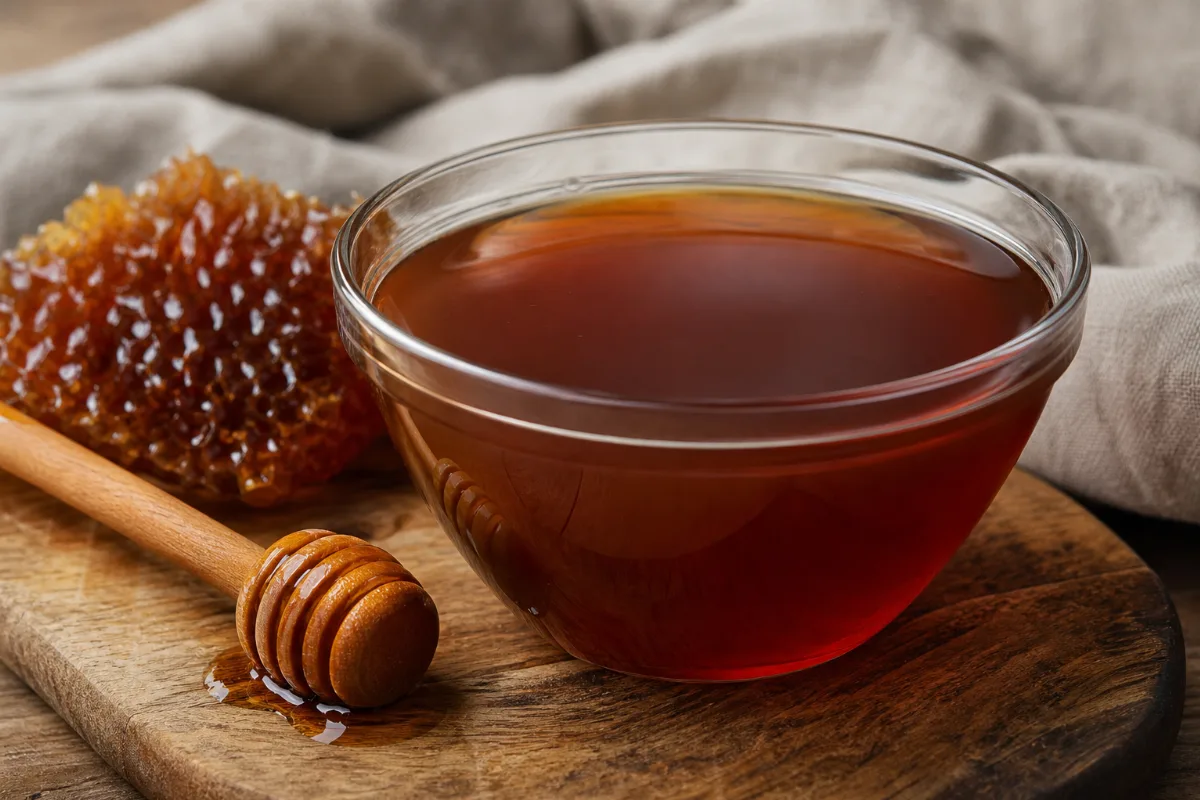
Honey & Bee Products · Honey
Tualang Honey
Honey of the giant rock bee (Apis dorsata) from Tualang trees (Koompassia excelsa), Malaysia · also called Madu tualang, Malaysian jungle honey, rock bee honey
Tualang honey is a dark amber wild honey from the giant rock bee in Malaysia. Never give any honey to a baby under 12 months: it can cause infant botulism. Honey is a sugar food. There are many small human trials, but most were open label with no placebo, so they cannot show that it treats anything, and most other findings come from the lab and animals.
General information, not medical advice. Last substantive update · Not medically reviewed. A named clinician has not signed off on this page. How this page is made
About Tualang Honey
Tualang honey is a dark wild honey made by the giant rock bee (Apis dorsata) in Malaysia. Safety first: never give any honey to a baby under 12 months because of infant botulism. Honey is a sugar food and can cause allergy in some people. Human trials of Tualang honey exist but are small, most are open label with no placebo, and none of the abstracts states who paid. They are low or very low certainty. In one trial it worked less well than a steroid dressing. Lab and animal findings do not show effects in people.
What it is
Tualang honey is honey made by the giant rock bee, Apis dorsata. A 2024 review abstract says it comes from the nectar of Tualang trees (Koompassia excelsa), and a 2013 lab paper describes it as amber coloured. The names of the bee and the tree were checked in GBIF.
In a 2013 lab comparison of four Malaysian honeys, Tualang honey had the highest phenol, flavonoid and protein levels and the strongest antioxidant results in dish tests. That describes the food. It does not show a health effect. Other detail on where the bees nest and feed was not in the sources read.
What the research shows, and how good it is
The human research is a set of small Malaysian trials. The biggest has 102 people, others have 20 to 100, and one has only 34. Most were open label, so everyone knew who got the honey. Many had no placebo group and compared honey with no treatment, a vitamin C tablet, another bee-product mix or a herbal product, which cannot show that honey itself helps. Authors such as Zakaria and Othman appear on several of the papers, so the work comes mostly from a few research groups. None of the abstracts states who paid, and one trial was registered after it began.
Results are mixed. Memory test scores were better than no treatment in healthy postmenopausal women, but not delayed recall. Healing scores after tonsil removal in children were better with honey added to an antibiotic. Honey did worse than a steroid dressing after sinus surgery. Blood pressure and sugar were lower than with a bee-product mix, but honey in general gives mixed results. Small trials in lung disease, HIV, breast cancer scans and sperm counts used surrogate or questionnaire measures.
A review of 123 lab and animal papers reports many activities, and a review of 28 brain-related papers does the same. The abstracts do not show these effects in people.
Wounds, honey type and buying
No Tualang honey burn trial in people was found. In a dish test, a Tualang honey dressing was less active than silver or manuka honey dressings against some bacteria. A 2026 review of 22 trials says honey dressings in general may speed healing, but jar honey is not a sterile dressing.
No trial compared Tualang honey with ordinary honey, so nothing shows it is better than another honey. Adulteration of Apis dorsata honey with sugar is a concern in a 2025 lab paper, which gives no market rates. The word Tualang on a label does not prove what is inside, and words like raw or wild are not safety claims.
At a glance
Traditional uses history, not proof
- A 2024 review abstract says Tualang honey has a long history of traditional use for its therapeutic properties; the sources read give no detail.
- A 2010 abstract says honey has been applied to burns for centuries in many cultures.
Studied for research
- Memory test scores in postmenopausal women: low
- Verbal learning in schizophrenia: very low
- Tiredness after cancer treatment: very low
- Healing after tonsil removal in children: very low
- Sinus surgery dressing: against (worse than a steroid dressing)
- Blood pressure and blood sugar: mixed
- Quality of life in COPD: very low
- CD4 counts in HIV, breast scans, sperm measures: very low
- Lab and animal activity: very low
Main compounds
- Sugars, mostly fructose and glucose
- Phenols and flavonoids (highest of four Malaysian honeys in one 2013 lab paper)
- Small amounts of protein and a freshness marker, HMF
Common forms
- Raw or lightly strained honey as a food
- Honey-soaked dressings used in small surgical studies (not the same as medical-grade dressings)
- Capsules or blends seen in shops, not the form tested in the trials
Research links: WHO: Botulism · NHS: Botulism · WHO: Healthy diet (free sugars) · Tualang honey and memory in postmenopausal women (abstract) · Tualang honey versus steroid dressing after sinus surgery (abstract) · Medicinal activities of Tualang honey: systematic review (abstract) · Research Library · Genes & Biomarkers Library
What it is and its history
- Accepted scientific name
- Tualang honey (honey made by the giant rock bee, Apis dorsata)
- Naming authority
- Bee: Apis dorsata Fabricius, 1793 (GBIF accepted). Tree named in the abstracts: Koompassia excelsa (Becc.) Taub. (GBIF accepted)
- Synonyms
- Madu tualang; Malaysian jungle honey; Rock bee honey
- Common names
- Tualang honey (English); Madu tualang (Malay); Rock bee honey (English)
- Family or group
- The honey is made by a bee (family Apidae). The tree named in the sources, Koompassia excelsa, is in the pea family (Fabaceae) per GBIF.
- Classification
- Animalia (bee); Plantae (tree) > Arthropoda (bee) > Insecta (bee) > Hymenoptera (bee) > Apidae (bee); Fabaceae (tree) > Apis > Apis dorsata
- Native range
- Malaysia, in the sources read.
- Habitat
- Not described in the abstracts read.
- What it looks like
- Flowers: Not described in the abstracts read.
- Cultivation
- Not described. The honey is described as wild-harvested only in the existing summary (summary-only); not verified.
- Harvest and processing
- Not described in the abstracts read. A 2013 lab paper describes the honey as amber coloured. The trial abstracts do not describe processing.
- Look-alikes and adulterants
- Name: Other honeys sold as Tualang or jungle honey; Note: A label does not prove origin. A 2025 lab paper deals with sugar adulteration of Apis dorsata honey.; Name: Stingless-bee honey; Note: Another Malaysian tropical honey with its own page; not the same product.
- Sustainability and conservation
- No Tualang-specific source was read.
Photographs
Traditional use and history history, not clinical proof
| Tradition or era | Documented use | Source |
|---|---|---|
| Malaysia (traditional use) | A 2024 review abstract says Tualang honey has a long history of traditional use for its therapeutic properties. No source read gives dates or details. | p39367403 |
| Honey in burn care | A 2010 abstract says honey of Apis species has been widely applied for burns for centuries. | p20576085 |
Traditional use shows how it was used. It does not show that it works or is safe today.
What is inside, and how it may work
What it contains and how those compounds act in cells and animals. Laboratory and animal mechanisms are not proven effects in people.
Main compounds
| Compound | Family | Where it is concentrated | Activity studied | Level of evidence |
|---|---|---|---|---|
| Fructose and glucose (and other sugars) | sugars | Honey Total sugar was lower in Tualang honey than in the Malaysian acacia honey in a 2013 lab paper (exact figures not in the abstract). | Make up most of honey. WHO counts sugars in honey as free sugars. 15 26 | Lab analysis |
| Phenolic compounds | phenolics | Honey 352.73 mg gallic acid equivalents per kg in one Tualang sample, the highest of four Malaysian honeys. | Antioxidant in dish tests. A short rise in blood phenols and antioxidant activity was seen after eating Tualang honey in 20 athletes. 15 3 | Lab analysis |
| Flavonoids | flavonoids | Honey 65.65 mg catechin equivalents per kg in one Tualang sample. | Antioxidant in dish tests. 15 | Lab analysis |
| Protein, amino acids, vitamins, minerals and enzymes | minor components | Honey Protein 4.83 g per kg in one sample. A trial abstract says the honey is rich in amino acids, vitamins, minerals and enzymes; that is the authors' statement, not tested here. | Not tested for health effects. 15 20 | Lab analysis |
| Hydroxymethylfurfural (HMF) | freshness marker | Honey Averaged 35.98 mg per kg across the Malaysian honeys studied (not given for Tualang alone in the abstract). | A marker of heating or age. 15 | Lab analysis |
Mechanisms, receptors and pathways
| Target or pathway | Gene or receptor | What was found | Level |
|---|---|---|---|
| Antioxidant action | Tualang honey scored highest among four Malaysian honeys on antioxidant tests in dishes. In people, blood antioxidant measures rose briefly after a serving. 15 3 | Laboratory research | |
| Antibacterial action on burn-wound bacteria | A Tualang honey dressing killed or slowed bacteria in dishes but was less active than silver or manuka honey dressings against Gram-positive bacteria. 17 | Laboratory research | |
| Effects on the brain, inflammation and tumours in animals and cells | A review of 123 papers reports many activities in lab and animal work; the abstract does not show these in people. 7 6 | In vitro and animal |
Absorption, metabolism and elimination
- Absorption
- Phenols and antioxidant activity rose in blood within 1 to 2 hours after a serving of Tualang honey in 20 female athletes and came back toward baseline by 3 hours.
- Distribution
- Not studied.
- Metabolism
- Not studied.
- Elimination
- Not studied.
- Bioavailability
- Not studied.
Isolated compounds versus whole extracts
Honey is a whole food; the trials used whole honey. No isolated compound has been tested as the active part.
Nutritional composition
Honey is mostly sugar. WHO counts sugars naturally present in honey as free sugars. A moisture of 17.53% and pH of 3.80 are given for one Tualang sample.
2 mixed findings1 low certainty10 very low certainty1 not enough evidence1 evidence against
What was looked at
The 15 benefits and uses checked for Tualang Honey, each with how strong the evidence is. Tap one to open it.
- Memory test scores in healthy postmenopausal womenLow certainty
- Verbal learning in people with schizophreniaVery low certainty
- Memory, mood, pain and stress (lab and animal work)Not enough evidence
- Tiredness (fatigue) after cancer treatmentVery low certainty
- Healing and pain after tonsil removal in childrenVery low certainty
- Honey dressing after sinus surgeryEvidence against
- Blood pressure, blood sugar and blood fatsMixed findings
- Quality of life in chronic lung disease (COPD)Very low certainty
- CD4 counts and quality of life in HIVVery low certainty
- Breast MRI background enhancement with anastrozoleVery low certainty
- Sperm measures and erectile functionVery low certainty
- Inflammation blood markers in smokersMixed findings
- Antioxidant levels in the blood after eating honeyVery low certainty
- Burns and wounds (dish tests; honey dressings in general)Very low certainty
- Antibacterial, antioxidant, anticancer and anti-inflammatory activity (cells and animals)Very low certainty
Lab markers tracked in the studies
Verbal learning score (Auditory Verbal Learning Test)Fatigue score (FACIT-Fatigue)Diastolic blood pressureFasting blood glucoseCD4 cell counths-CRP and TNF-alphaTonsil healing scoreSt George questionnaire score
What is Tualang Honey good for?
What people ask about, and how strong the human evidence is. Every Tualang honey trial is small, and most had no placebo. Where a result is about honey in general, it says so. None of it is proof, and all of it should be read with the safety section.
Benefits, one by one
Each card is a research question, not a promise. Tap a goal to filter. Open a card to see the studies, doses and limits.
Memory test scores in healthy postmenopausal women
Low certaintyOne 16-week trial in 102 healthy postmenopausal women found better immediate memory scores with Tualang honey than with no treatment. Delayed recall did not improve. It was compared with hormone therapy, not with a placebo.
1 studiesAmounts differed between trials and are not given as advice. Brand pr…
Studies, doses and limits
What the trials found
A three-group trial in Malaysia: Tualang honey (Agro Mas brand), estrogen plus progestin, or no treatment, for 16 weeks (102 women).
Results
Total learning and the first-trial score were better in the honey group than in untreated women, similar to the hormone group. Scores after an interruption and delayed recall improved only with hormone therapy.
Effect sizes as reported
Differences are described as significant, sizes not given in the abstract.
Why this rating
One trial, no placebo (untreated control), one brand, healthy women, test scores only. Other results (delayed recall) were not better.
Form and dose studied
Amounts differed between trials and are not given as advice. Brand products were used; the abstracts do not describe processing.
Who was studied
Healthy postmenopausal women in Malaysia.
Limits
Participants knew which group they were in; one team; no replication found.
Why researchers looked
Malaysian researchers asked whether honey, which contains antioxidant plant chemicals, could help the ageing brain after menopause.
Traditional use
Honey has a long history of traditional use in many places. A 2024 review abstract says Tualang honey has a long history of traditional use for its therapeutic properties, but the sources read give no detail.
Proposed mechanism Pharmacological theory
Not tested in this trial. Researchers suggest antioxidant and anti-inflammatory actions, which are lab ideas, not shown in these women.
A proposed mechanism does not show that the effect happens in people.
Honey is sugar; Never give honey to a baby under 12 months.
Verbal learning in people with schizophrenia
Very low certaintyAn 8-week study in 80 people with schizophrenia reported better total learning scores with Tualang honey. The study is described as cross-sectional, so it is unclear how strong the design was.
1 studiesAmounts differed between trials and are not given as advice. Brand pr…
Studies, doses and limits
What the trials found
One study in 80 people, with a comparison group the abstract does not describe.
Results
Total learning at 8 weeks favoured the honey group. Effect size is not given.
Effect sizes as reported
Not given in the abstract.
Why this rating
A single study with an unclear design and no effect size.
Form and dose studied
Amounts differed between trials and are not given as advice. Brand products were used; the abstracts do not describe processing.
Who was studied
People with a schizophrenia diagnosis.
Limits
Design unclear; no effect size.
Why researchers looked
Memory problems are common in schizophrenia, so the same research group tested honey there.
Traditional use
Honey has a long history of traditional use in many places. A 2024 review abstract says Tualang honey has a long history of traditional use for its therapeutic properties, but the sources read give no detail.
Proposed mechanism Pharmacological theory
Not tested.
A proposed mechanism does not show that the effect happens in people.
People taking medicines for schizophrenia should ask their doctor before adding any supplement.
Memory, mood, pain and stress (lab and animal work)
Not enough evidenceA review of 28 papers describes memory, pain-relief, stress-relief, antidepressant-like and anxiety-reducing effects of Tualang honey. The abstract does not separate people from animal and cell work, so it cannot be read as proof in people.
1 studiesNot applicable.
Studies, doses and limits
What the trials found
No human trial is added by this review beyond the two trials above.
Results
The review sorts findings into five groups and says a large part of the research lacks systematisation.
Effect sizes as reported
No pooled effect.
Why this rating
The abstract does not split human from animal work and gives no certainty rating.
Limits
Narrative review; authors are Tualang honey researchers.
Why researchers looked
Researchers wanted to know how honey might act on the brain.
Traditional use
Honey has a long history of traditional use in many places. A 2024 review abstract says Tualang honey has a long history of traditional use for its therapeutic properties, but the sources read give no detail.
Proposed mechanism Preclinical
The review proposes mechanisms; the abstract does not say which were tested in people.
A proposed mechanism does not show that the effect happens in people.
No safety message beyond the honey cautions on the Safety tab.
Tiredness (fatigue) after cancer treatment
Very low certaintyA 40-person trial in head and neck cancer survivors found less tiredness with Tualang honey than with a vitamin C tablet after 4 and 8 weeks. It was open label and had no placebo.
1 studiesAmounts differed between trials and are not given as advice. Brand pr…
Studies, doses and limits
What the trials found
An open-label randomised trial in two Malaysian hospitals: Tualang honey versus a vitamin C tablet for 8 weeks.
Results
Fatigue scores were better in the honey group at weeks 4 and 8, and quality of life was better at week 8. White cell count and C-reactive protein did not differ.
Effect sizes as reported
Differences reported as significant (p below 0.05); sizes not given in the abstract.
Why this rating
Only 40 people, open label, a weak vitamin C comparison, self-rated tiredness, and blood tests that did not move.
Form and dose studied
Amounts differed between trials and are not given as advice. Brand products were used; the abstracts do not describe processing.
Who was studied
Adults aged 18 to 65 who had finished cancer treatment.
Limits
Small; open label; vitamin C is not an inert placebo.
Why researchers looked
Fatigue can last for years after chemotherapy or radiotherapy, and people ask about natural options.
Traditional use
Honey has a long history of traditional use in many places. A 2024 review abstract says Tualang honey has a long history of traditional use for its therapeutic properties, but the sources read give no detail.
Proposed mechanism Pharmacological theory
The authors link fatigue to inflammation, but their blood tests (white cell count, C-reactive protein) did not change.
A proposed mechanism does not show that the effect happens in people.
People who have had cancer should ask their cancer team before adding supplements or foods taken for health reasons. Honey is not a cancer treatment.
Healing and pain after tonsil removal in children
Very low certaintyTwo open-label trials from one group (63 children, possibly the same children) found faster scored healing when Tualang honey was added to an antibiotic. Early pain eased slightly faster, but the difference was not significant.
2 studiesAmounts differed between trials and are not given as advice. Brand pr…
Studies, doses and limits
What the trials found
Open-label randomised trials: honey in the wound during surgery then by mouth for 7 days plus antibiotic versus antibiotic alone.
Results
Healing from endoscopic photographs was significantly faster in the honey group (p below 0.001). Early pain relief was not significantly different. Night waking and extra pain medicine were lower with honey, with no tests given in the abstract.
Effect sizes as reported
Not given beyond p values.
Why this rating
Open label, scored from photographs, small, one team, and the two papers appear to report the same children.
Form and dose studied
Amounts differed between trials and are not given as advice. Brand products were used; the abstracts do not describe processing.
Who was studied
Children and teenagers aged 3 to 18 having tonsils removed.
Limits
Not blinded; no placebo; same group of authors.
Why researchers looked
Tonsil removal leaves a wound, and honey is a long-standing home remedy for sore throats and wounds.
Traditional use
Honey has a long history of traditional use in many places. A 2024 review abstract says Tualang honey has a long history of traditional use for its therapeutic properties, but the sources read give no detail.
Proposed mechanism Pharmacological theory
Honey's sugar and acid are thought to soothe and limit bacteria; this was not tested here.
A proposed mechanism does not show that the effect happens in people.
Surgical aftercare should follow the surgical team. Honey is a sugar food. Never give honey to a baby under 12 months. The children in these trials were aged 3 and older.
Honey dressing after sinus surgery
Evidence againstIn 32 adults after sinus surgery, a Tualang honey nasal dressing worked less well than a steroid dressing at 3 months. This is a result against using honey as a replacement.
1 studiesA honey-soaked nasal dressing, a medical setting. Not a food use.
Studies, doses and limits
What the trials found
A randomised trial in two hospitals comparing a honey dressing with a steroid (triamcinolone) dressing.
Results
No differences up to day 28. At 3 months the steroid group had fewer symptoms and better endoscopy scores.
Effect sizes as reported
Differences reported as significant (p below 0.05); sizes not given in the abstract.
Why this rating
A small randomised trial where honey did worse than the standard steroid dressing; the authors say honey is not suitable as a substitute.
Form and dose studied
A honey-soaked nasal dressing, a medical setting. Not a food use.
Who was studied
Adults with chronic rhinosinusitis after endoscopic sinus surgery.
Limits
Only 32 people; no placebo group.
Why researchers looked
Researchers hoped honey might heal the sinus lining without a steroid.
Traditional use
Honey has a long history of traditional use in many places. A 2024 review abstract says Tualang honey has a long history of traditional use for its therapeutic properties, but the sources read give no detail.
Proposed mechanism Pharmacological theory
Not tested.
A proposed mechanism does not show that the effect happens in people.
Do not put honey in the nose or replace prescribed treatment.
Blood pressure, blood sugar and blood fats
Mixed findingsOne 12-month trial in 100 postmenopausal women found lower diastolic pressure and fasting sugar with Tualang honey than with a honey-bee bread-royal jelly mix. It had no placebo group, so it cannot show honey itself helps. Reviews of honey in general are mixed.
3 studiesAmounts differed between trials and are not given as advice. Brand pr…
Studies, doses and limits
What the trials found
One randomised Tualang trial; plus two reviews of honey of many types (Tualang honey not named in either abstract).
Results
In the trial, diastolic pressure fell from 77.92 to 73.45 mmHg and fasting sugar from 6.11 to 5.71 mmol/L over 12 months in the Tualang group, a better result than in the mix group (p 0.047 and 0.021). A 2023 review of 18 trials found small improvements in some markers for honey in general (low certainty). A 2025 overview of 69 trials found about 10 g a day may lower HbA1c but may worsen blood pressure, AST, triglycerides, fasting glucose and hs-CRP.
Effect sizes as reported
Not given for the overview; the 2023 review gives mean differences.
Why this rating
Only the Tualang trial is about Tualang honey and it has no placebo; the reviews do not separate honey types well and point in different directions.
Form and dose studied
Amounts differed between trials and are not given as advice. Brand products were used; the abstracts do not describe processing.
Who was studied
Postmenopausal women (trial); mixed adults (reviews).
Limits
No placebo group; reviews cover other honeys.
Why researchers looked
Honey is a sugar, and people ask whether it is a better choice than sugar for the heart and blood sugar.
Traditional use
Honey has a long history of traditional use in many places. A 2024 review abstract says Tualang honey has a long history of traditional use for its therapeutic properties, but the sources read give no detail.
Proposed mechanism Pharmacological theory
Not tested. Honey is mostly fructose and glucose.
A proposed mechanism does not show that the effect happens in people.
Honey is a free sugar (WHO). People who manage blood sugar or take glucose-lowering medicines should ask a doctor or pharmacist.
Quality of life in chronic lung disease (COPD)
Very low certaintyA 34-person trial found better quality-of-life scores at 4 and 6 months with Tualang honey added to standard care than with standard care alone. It was single blind, tiny and had no placebo.
1 studiesAmounts differed between trials and are not given as advice. Brand pr…
Studies, doses and limits
What the trials found
A single-blind randomised trial: honey plus standard care (22 people) versus standard care alone (12).
Results
Lower (better) total scores on the St George's Respiratory Questionnaire in the honey group at 4 months (28.89 vs 42.38) and 6 months (22.91 vs 41.95). No breathing tests are reported in the abstract.
Effect sizes as reported
Group means with confidence intervals in the abstract.
Why this rating
Very small, uneven groups, no placebo, questionnaire only.
Form and dose studied
Amounts differed between trials and are not given as advice. Brand products were used; the abstracts do not describe processing.
Who was studied
People with COPD.
Limits
No lung function result; no placebo.
Why researchers looked
COPD lowers quality of life and people look for added help.
Traditional use
Honey has a long history of traditional use in many places. A 2024 review abstract says Tualang honey has a long history of traditional use for its therapeutic properties, but the sources read give no detail.
Proposed mechanism Pharmacological theory
Not tested.
A proposed mechanism does not show that the effect happens in people.
Honey does not replace COPD medicines. Ask the lung doctor.
CD4 counts and quality of life in HIV
Very low certaintyA 95-person open-label trial in people with HIV not taking HIV medicines reported that CD4 counts fell in the lowest-amount honey group and the no-treatment group but not in the two higher-amount groups. The viral load results are described confusingly. It does not show Tualang honey treats HIV.
1 studiesAmounts differed between trials and are not given as advice. Brand pr…
Studies, doses and limits
What the trials found
A randomised, open-label trial of three honey amounts versus no treatment for 6 months.
Results
CD4 counts fell significantly in the lowest-amount honey group and the no-treatment group, not significantly in the other two. Quality of life improved in honey groups. The viral load text in the abstract is unclear.
Effect sizes as reported
Not given in a usable form.
Why this rating
Open label, no placebo, small groups, and unclear viral load reporting.
Form and dose studied
Amounts differed between trials and are not given as advice. Brand products were used; the abstracts do not describe processing.
Who was studied
Adults with HIV and no symptoms, CD4 250 to 600, not on antiretrovirals.
Limits
Not on antiretrovirals, so it says nothing about use with HIV medicines.
Why researchers looked
Researchers asked whether honey might support the immune system.
Traditional use
Honey has a long history of traditional use in many places. A 2024 review abstract says Tualang honey has a long history of traditional use for its therapeutic properties, but the sources read give no detail.
Proposed mechanism Pharmacological theory
Not tested.
A proposed mechanism does not show that the effect happens in people.
Never replace HIV medicines with honey. Ask the HIV clinic.
Breast MRI background enhancement with anastrozole
Very low certaintyIn 30 women with breast cancer on anastrozole, background enhancement on breast MRI fell in more women who also took Tualang honey. This is a scan feature, not a cancer outcome.
1 studiesAmounts differed between trials and are not given as advice. Brand pr…
Studies, doses and limits
What the trials found
A randomised trial: anastrozole alone versus anastrozole plus honey for 6 months in 30 women.
Results
Enhancement decreased in 42% of the honey-plus-anastrozole women (p 0.034) and 10% of those on anastrozole alone (p 0.317).
Effect sizes as reported
Percentages only.
Why this rating
A tiny trial with a surrogate scan marker and no cancer outcomes.
Form and dose studied
Amounts differed between trials and are not given as advice. Brand products were used; the abstracts do not describe processing.
Who was studied
Postmenopausal women with breast cancer.
Limits
30 women; no cancer outcomes.
Why researchers looked
Researchers looked for a signal that honey might add to cancer hormone treatment.
Traditional use
Honey has a long history of traditional use in many places. A 2024 review abstract says Tualang honey has a long history of traditional use for its therapeutic properties, but the sources read give no detail.
Proposed mechanism Pharmacological theory
Not tested.
A proposed mechanism does not show that the effect happens in people.
Do not change cancer treatment. Ask the oncology team before adding anything to a cancer medicine.
Sperm measures and erectile function
Very low certaintyA 66-man trial in men with low sperm counts found improved sperm measures with Tualang honey, similar to a comparison product (Tribestan), with no placebo group. No adverse events were reported.
1 studiesAmounts differed between trials and are not given as advice. Brand pr…
Studies, doses and limits
What the trials found
A randomised trial of honey versus Tribestan for 12 weeks.
Results
Sperm concentration, motility and shape improved in the honey group. There was no difference between honey and Tribestan, and erectile function and hormones also did not differ. The abstract says no adverse events were reported.
Effect sizes as reported
p values only.
Why this rating
No placebo, so natural change cannot be ruled out; 12 weeks; small.
Form and dose studied
Amounts differed between trials and are not given as advice. Brand products were used; the abstracts do not describe processing.
Who was studied
Men with oligospermia.
Limits
No placebo; no pregnancy outcomes.
Why researchers looked
Honey is traditionally thought of as a tonic.
Traditional use
Honey has a long history of traditional use in many places. A 2024 review abstract says Tualang honey has a long history of traditional use for its therapeutic properties, but the sources read give no detail.
Proposed mechanism Pharmacological theory
Not tested.
A proposed mechanism does not show that the effect happens in people.
Men with fertility concerns should see a doctor.
Inflammation blood markers in smokers
Mixed findingsIn 64 chronic smokers, Tualang honey for 12 weeks lowered one inflammation marker (hs-CRP) but raised another (TNF-alpha). The authors call the result inconclusive.
1 studiesAmounts differed between trials and are not given as advice. Brand pr…
Studies, doses and limits
What the trials found
An open-label randomised trial: smokers with honey versus smokers without honey for 12 weeks.
Results
hs-CRP fell and TNF-alpha rose in the honey group.
Effect sizes as reported
Not given in the abstract.
Why this rating
One marker down and one up; open label; registered after the trial began.
Form and dose studied
Amounts differed between trials and are not given as advice. Brand products were used; the abstracts do not describe processing.
Who was studied
Chronic smokers.
Limits
Open label; no placebo.
Why researchers looked
Smoking causes inflammation; researchers tested whether honey's antioxidants would help.
Traditional use
Honey has a long history of traditional use in many places. A 2024 review abstract says Tualang honey has a long history of traditional use for its therapeutic properties, but the sources read give no detail.
Proposed mechanism Pharmacological theory
Not tested.
A proposed mechanism does not show that the effect happens in people.
Honey does not undo the harm from smoking. A doctor can help with stopping.
Antioxidant levels in the blood after eating honey
Very low certaintyA pilot study in 20 female athletes found that blood phenol and antioxidant levels rose for a few hours after a serving of Tualang honey. This is a short-lived blood marker, not a health result.
1 studiesAmounts differed between trials and are not given as advice. Brand pr…
Studies, doses and limits
What the trials found
A one-serving pilot comparing a higher and a lower serving.
Results
Plasma phenols and antioxidant activity rose and returned toward baseline by 3 hours. Oxidative stress marker results were mixed between servings.
Effect sizes as reported
Not given beyond area-under-curve differences.
Why this rating
20 people, one serving, no placebo, blood markers only.
Form and dose studied
Amounts differed between trials and are not given as advice. Brand products were used; the abstracts do not describe processing.
Who was studied
Female athletes, mean age 21.
Limits
Pilot; no health outcome.
Why researchers looked
Honey contains phenols, so researchers measured whether they reach the blood.
Traditional use
Honey has a long history of traditional use in many places. A 2024 review abstract says Tualang honey has a long history of traditional use for its therapeutic properties, but the sources read give no detail.
Proposed mechanism Human biomarker
Honey phenols may raise antioxidant measures in blood for hours; the study did not test any effect on health.
A proposed mechanism does not show that the effect happens in people.
No safety issue beyond sugar content.
Burns and wounds (dish tests; honey dressings in general)
Very low certaintyNo Tualang honey burn or wound trial in people was found. In dish tests, a Tualang honey dressing was less active than silver or manuka honey dressings against some bacteria. A review of 22 trials says honey dressings in general may speed healing, especially in burns. Jar honey is not a dressing.
2 studiesSterile medical dressings are a different product from jar honey.
Studies, doses and limits
What the trials found
A dish test of dressings made with bacteria from burn wounds, plus a review of trials of honey dressings in general.
Results
Against Gram-positive bacteria silver and manuka honey dressings did better than Tualang honey. Against Gram-negative bacteria Tualang and manuka were comparable. The 2026 review reports faster healing with honey dressings in general.
Effect sizes as reported
No numbers in the abstracts.
Why this rating
The dish test is not a treatment trial and the review is about dressings in general (honey types not named).
Form and dose studied
Sterile medical dressings are a different product from jar honey.
Limits
Different product from food honey.
Why researchers looked
Honey has been used on wounds for centuries.
Traditional use
Honey has a long history of traditional use in many places. A 2024 review abstract says Tualang honey has a long history of traditional use for its therapeutic properties, but the sources read give no detail.
Proposed mechanism Laboratory research
Lab tests show some antibacterial action. Not shown to work in burns for Tualang honey.
A proposed mechanism does not show that the effect happens in people.
Do not use jar honey instead of medical care for a burn or wound.
Antibacterial, antioxidant, anticancer and anti-inflammatory activity (cells and animals)
Very low certaintyA review of 123 lab and animal papers describes many activities of Tualang honey. These findings do not show effects in people.
1 studiesNot applicable.
Studies, doses and limits
What the trials found
No human data in this review.
Results
Many effects reported in cells and animals.
Effect sizes as reported
Not given.
Why this rating
The abstract describes only in vitro and in vivo studies.
Limits
Lab and animal work does not show effects in people.
Why researchers looked
Researchers screen honey for activity in dishes and animals.
Traditional use
Honey has a long history of traditional use in many places. A 2024 review abstract says Tualang honey has a long history of traditional use for its therapeutic properties, but the sources read give no detail.
Proposed mechanism Laboratory research
The review lists antimicrobial, anticancer, anti-inflammatory, antioxidant, pain-blocking and nerve-protective actions seen in cells and animals.
A proposed mechanism does not show that the effect happens in people.
Do not read lab results as treatment advice.
Connections to the rest of health
How Tualang Honey connects to the rest of our health knowledge graph. Every link says what kind of connection it is. A safety link (for example to the liver) is a warning, not a benefit. A study that merely mentions a topic never creates a benefit link.
Explore every connection: goals, body systems, organs, symptoms, genes
B. Body systems
| Connected to | Kind of connection | Evidence status | Context | Studies |
|---|---|---|---|---|
| Immune system | Adverse effect or risk | Low certainty | Allergic reactions, rare but can be severe. Preparation or compound: Honey and bee products |
14 |
| Nervous System | Biological association | Low certainty | Studied for: Memory test scores in healthy postmenopausal women Studied for: Verbal learning in people with schizophrenia | 19 23 |
| Immune System | Biological association | Very low certainty | Studied for: Tiredness (fatigue) after cancer treatment Studied for: Healing and pain after tonsil removal in children | 20 13 2 22 8 |
| Respiratory System | Biological association | Evidence against | Studied for: Honey dressing after sinus surgery Studied for: Quality of life in chronic lung disease (COPD) | 12 16 |
| Endocrine System | Biological association | Mixed findings | Studied for: Blood pressure, blood sugar and blood fats | 1 4 18 |
| Reproductive System | Biological association | Very low certainty | Studied for: Breast MRI background enhancement with anastrozole Studied for: Sperm measures and erectile function | 10 11 |
| Cardiovascular System | Biological association | Very low certainty | Studied for: Antioxidant levels in the blood after eating honey | 3 |
| Integumentary System | Biological association | Very low certainty | Studied for: Burns and wounds (dish tests; honey dressings in general) | 17 21 |
C. Body parts and organs
I. Biomarkers
| Connected to | Kind of connection | Evidence status | Context | Studies |
|---|---|---|---|---|
| Verbal learning score (Auditory Verbal Learning Test) | Biological association | Low certainty | Measured in trials: raised. A lab change is not the same as a health benefit. | 19 23 |
| Fatigue score (FACIT-Fatigue) | Biological association | Very low certainty | Measured in trials: lowered. A lab change is not the same as a health benefit. | 20 |
| Diastolic blood pressure | Biological association | Very low certainty | Measured in trials: lowered. A lab change is not the same as a health benefit. | 1 |
| Fasting blood glucose | Biological association | Mixed findings | Measured in trials: lowered. A lab change is not the same as a health benefit. | 1 18 4 |
| CD4 cell count | Biological association | Very low certainty | Measured in trials: raised. A lab change is not the same as a health benefit. | 22 |
| hs-CRP and TNF-alpha | Biological association | Mixed findings | Measured in trials: mixed. A lab change is not the same as a health benefit. | 8 |
| Tonsil healing score | Biological association | Very low certainty | Measured in trials: raised. A lab change is not the same as a health benefit. | 13 |
| St George questionnaire score | Biological association | Very low certainty | Measured in trials: lowered. A lab change is not the same as a health benefit. | 16 |
L. Active compounds
| Connected to | Kind of connection | Evidence status | Context | Studies |
|---|---|---|---|---|
| Fructose and glucose (and other sugars) | Biological association | Lab analysis | Make up most of honey. WHO counts sugars in honey as free sugars. Preparation or compound: Honey |
15 26 |
| Phenolic compounds | Biological association | Lab analysis | Antioxidant in dish tests. A short rise in blood phenols and antioxidant activity was seen after eating Tualang honey in 20 athletes. Preparation or compound: Honey |
15 3 |
| Flavonoids | Biological association | Lab analysis | Antioxidant in dish tests. Preparation or compound: Honey |
15 |
| Protein, amino acids, vitamins, minerals and enzymes | Biological association | Lab analysis | Not tested for health effects. Preparation or compound: Honey |
15 20 |
| Hydroxymethylfurfural (HMF) | Biological association | Lab analysis | A marker of heating or age. Preparation or compound: Honey |
15 |
Each connection is stored with the ingredient, the connected record, the kind of connection, the evidence status, the supporting studies, the preparation or compound involved, and a review date (last reviewed October 25, 2026).
Evidence at a glance: what changed in 8 lab markers
Tap a number to show only those markers. Counts are markers, not people.
The evidence
The research centre for Tualang Honey. Every record here was checked against PubMed or the publisher's page; we never list a study we have not verified.
Evidence by outcome
Bars show how many studies we found for each outcome, not how well it works. People are added up across trials only (reviews are not added, to avoid double counting).
How we rate evidence
High certainty
Several well-run trials or reviews agree; further research is unlikely to change the picture much.
Moderate certainty
Good trials point the same way, but some doubt remains.
Low certainty
Small, short or inconsistent trials. The finding could change with better research.
Very low certainty
Very little or very weak human data. Treat as a possibility only.
Mixed findings
Trials or reviews disagree with each other.
Not enough evidence
Not enough human research to say either way.
Evidence against
Good research found no benefit, or found harm.
We take the reviewers' own risk-of-bias and GRADE statements where they exist, and otherwise judge from study size, design, consistency, directness and whether a product matches what is sold. Many publications do not make evidence high. Method note: We read the PubMed abstracts of 23 papers, the WHO botulism and healthy-diet fact sheets and the NHS botulism page as text, and checked the bee and tree names in GBIF. Trial funding is not in the abstracts, so it is not stated. Certainty ratings are the compiler's own reading unless a review gives its own. Full texts were not read.
Study library: every study we checked 28
| Study | Design | People | Product, dose, length | Result |
|---|---|---|---|---|
| Ab Wahab 2018 Long-term effects of honey on cardiovascular parameters and anthropometric measurements of postmenopausal women Complementary Therapies in Medicine · PMID 30477832 · DOI |
Controlled trial |
100 100 postmenopausal women aged 45 to 65 |
Tualang honey versus a "honey cocktail" (honey, bee bread and royal jelly) honey (Tualang honey, honey of Apis dorsata) Abstract states 20 g a day of each 12 months · vs Honey cocktail (no placebo and no no-honey group) |
Diastolic blood pressure fell from 77.92 to 73.45 mmHg and fasting blood sugar from 6.11 to 5.71 mmol/L over 12 months in the Tualang honey group, a better result than in the honey cocktail group. Body mass index stayed unchanged in the honey cocktail group. Lower diastolic pressure and fasting sugar than the honey cocktail (p 0.047 and 0.021) Methods, limits and fundingOutcomes: Blood pressure, fasting blood sugar, body mass index Limitations: Compared with another bee-product mix, not with placebo or no treatment, so it cannot show that honey itself lowers anything; the p values are close to the cut-off. Funding and conflicts: Not stated in the abstract. Read: abstract |
| Abdullah 2015 The effectiveness of Tualang honey in reducing post-tonsillectomy pain Kulak Burun Bogaz Ihtisas Dergisi · PMID 26050853 · DOI |
Controlled trial |
63 63 people aged 3 to 18 (mean age about 10) having tonsils removed |
Tualang honey in the wound during surgery then by mouth three times a day for 7 days, plus the antibiotic sultamicillin honey (Tualang honey, honey of Apis dorsata) 7 days · vs Antibiotic alone |
Early pain eased slightly faster with honey, but the difference between groups was not statistically significant. On day 7 everyone in the honey group had no pain, and night waking and use of extra pain medicine were lower in the honey group. No significant difference in early pain; lower night waking and pain-medicine use (no test results in the abstract) Methods, limits and fundingOutcomes: Pain (visual analogue scale), night waking from pain, extra pain medicine Limitations: Open label; the same 63 patients and team as the healing trial may be involved (same group size, not confirmed in the abstracts); no significance values given for the later outcomes. Funding and conflicts: Not stated in the abstract. Read: abstract |
| Ahmad 2017 Dose-Response Effect of Tualang Honey on Postprandial Antioxidant Activity and Oxidative Stress in Female Athletes: A Pilot Study Journal of Alternative and Complementary Medicine · PMID 28708420 · DOI |
Controlled trial |
20 20 female athletes, mean age 21 |
Tualang honey, high versus low amount, once honey (Tualang honey, honey of Apis dorsata) 1.5 g per kg of body weight versus 0.75 g per kg (as stated in the abstract) 3 hours after one serving · vs The other amount (no placebo, no honey-free group) |
Phenol and antioxidant levels in blood rose after the honey and came back toward baseline by 3 hours with both amounts. Results for oxidative stress markers were mixed; the lower amount gave a lower MDA area under the curve. Short-lived rise in blood antioxidant measures; no health outcome Methods, limits and fundingOutcomes: Blood antioxidant activity (FRAP), total phenols and oxidative stress markers (MDA, ROS) Limitations: A pilot of 20 people with no placebo; a single serving; blood markers only. Funding and conflicts: Not stated in the abstract. Read: abstract |
| Ahmed 2023 Effect of honey on cardiometabolic risk factors: a systematic review and meta-analysis Nutrition Reviews · PMID 36379223 · DOI |
Meta-analysis |
1105 18 controlled trials (33 comparisons) with 1,105 people; honey of many kinds |
Honey in general (floral source and processing compared in subgroups) honey (Tualang honey, honey of Apis dorsata) At least 1 week per trial · vs Various |
Honey lowered fasting glucose by 0.20 mmol/L, total cholesterol by 0.18, LDL by 0.16 and triglycerides by 0.13 mmol/L, and raised HDL by 0.07 mmol/L, mostly with low certainty (HDL high certainty). The authors say robinia, clover and raw honey did best. Tualang honey is not named in the abstract. Small improvements in some markers, low certainty for most (e.g. fasting glucose -0.37 to -0.04 mmol/L) Methods, limits and fundingOutcomes: Fasting glucose, blood fats, ALT, HDL and other cardiometabolic markers Limitations: Not specific to Tualang honey; the review dates the search to January 2021; results differ by honey type. The abstract states a PROSPERO registration (CRD42015023580); funding not stated. Funding and conflicts: Not stated in the abstract. Registration: PROSPERO CRD42015023580 Read: abstract |
| Aricò 2026 Infant Botulism and Honey Exposure: Global Epidemiology, Prevention Policies, and Communication Strategies Acta Paediatrica · PMID 41964486 · DOI |
Review human (surveillance) |
Surveillance reports and literature 1976 to 2024 | Honey as a source of infant botulism honey (Tualang honey, honey of Apis dorsata) |
The review says cases were rare, honey was the only consistently confirmed dietary source, median age at onset was 3 to 4 months, mortality was below 1% with intensive care and specific therapy, the USA had about 130 cases a year in a 2007 to 2021 review, and health authorities uniformly advise against honey before 12 months. Public health overview Methods, limits and fundingOutcomes: Cases, honey as a source, prevention policies Limitations: A narrative review; it does not mention Tualang honey. Funding and conflicts: Not stated in the abstract. Read: abstract |
| Azman 2021 Tualang Honey: A Decade of Neurological Research Molecules · PMID 34500857 · DOI |
Systematic review mixed (human and non-human; not split in the abstract) |
28 28 original articles from 2011 to 2020 on effects of Tualang honey on the central nervous system (the abstract does not say how many were in people) |
Tualang honey honey (Tualang honey, honey of Apis dorsata) |
The review sorts the articles into five groups (memory, pain relief, stress relief, antidepressant-like and anxiety-reducing effects) and proposes mechanisms. The abstract says a large part of this research lacks systematisation and that studies tend to start anew each time. Narrative sorting of studies; no pooled effect Methods, limits and fundingOutcomes: Memory and learning, pain relief, stress, low mood and anxiety effects, and proposed mechanisms Limitations: The abstract does not separate human from animal and cell work; no certainty rating given; authors include Tualang honey researchers (Zakaria R is also an author of two of the trials). Funding and conflicts: Not stated in the abstract. Read: abstract |
| Azman ANSS 2024 Medicinal activities of Tualang honey: a systematic review BMC Complementary Medicine and Therapies · PMID 39367403 · DOI |
Systematic review lab and animal |
123 123 articles on cells, bacteria and animals (in vitro and in vivo) searched to December 2022 |
Tualang honey honey (Tualang honey, honey of Apis dorsata) Various · vs Various |
The review reports many activities in lab and animal work. It describes the honey as having a long history of traditional use. Lab and animal activity; not shown in people Methods, limits and fundingOutcomes: Antimicrobial, anticancer, anti-inflammatory, antioxidant, pain-blocking and nerve-protective effects Limitations: The abstract says the reviewed studies were in vitro and in vivo; it does not say they show effects in people. Funding and conflicts: Not stated in the abstract. Read: abstract |
| Ghazali 2017 Effects of honey supplementation on inflammatory markers among chronic smokers: a randomized controlled trial BMC Complementary and Alternative Medicine · PMID 28351393 · DOI |
Controlled trial |
96 64 chronic smokers (and 32 non-smokers as a comparison) at a Malaysian university |
Tualang honey for smokers versus smokers without honey honey (Tualang honey, honey of Apis dorsata) Abstract states 20 g a day 12 weeks · vs Smokers without honey (no placebo) |
In smokers taking honey, hs-CRP fell but TNF-alpha rose. The authors call the effect on inflammation inconclusive. Mixed: one marker down, another up Methods, limits and fundingOutcomes: Blood inflammation markers (hs-CRP, IL-6, TNF-alpha) Limitations: Open label; only some markers moved; the abstract says the trial was registered after it began (retrospectively). Funding not stated in the abstract. Funding and conflicts: Not stated in the abstract. Registration: ACTRN12615001236583 (registered retrospectively) Read: abstract |
| Hassan 2025 Identification and adulteration detection of Heterotrigona itama and Apis dorsata honey using differential scanning calorimetry and convolutional neural networks with data augmentation Food Chemistry · PMID 40311574 · DOI |
Lab analysis lab |
Stingless-bee (Heterotrigona itama) and Apis dorsata honeys, sugar adulterants and adulterated mixtures | A lab method to detect sugar added to honey honey (Tualang honey, honey of Apis dorsata) Lab |
Glass-transition shifts appeared in adulterated honey. The computer model reached 24 to 67% accuracy on the original data and 60 to 91% after data augmentation. Method study for detecting fraud; says nothing about how common fraud is Methods, limits and fundingOutcomes: How well a heat-scan plus computer model detects honey mixed with sugar Limitations: A lab method paper. It shows that adulteration of Apis dorsata honey is a concern for researchers but gives no market rates. Funding and conflicts: Not stated in the abstract. Read: abstract |
| Hizan 2018 Tualang honey adjunct with anastrozole improve parenchyma enhancement of breast tissue in breast cancer patients: A randomized controlled trial Integrative Medicine Research · PMID 30591885 · DOI |
Controlled trial |
30 30 postmenopausal women with breast cancer taking anastrozole |
Tualang honey added to anastrozole honey (Tualang honey, honey of Apis dorsata) Abstract states 20 g a day 6 months · vs Anastrozole alone |
Enhancement fell in 42% of women taking honey plus anastrozole (p 0.034) and in 10% of women on anastrozole alone (p 0.317). Scan change in a surrogate measure Methods, limits and fundingOutcomes: Background enhancement of breast tissue on MRI (a scan feature, not tumour outcome) Limitations: 30 women; a scan marker rather than cancer outcomes; no blinding is described. Funding and conflicts: Not stated in the abstract. Read: abstract |
| Ismail 2014 Comparison on the Effects and Safety of Tualang Honey and Tribestan in Sperm Parameters, Erectile Function, and Hormonal Profiles among Oligospermic Males Evidence-Based Complementary and Alternative Medicine · PMID 25505918 · DOI |
Controlled trial |
66 66 men with low sperm counts (oligospermia) |
Tualang honey versus Tribestan (a comparison product) honey (Tualang honey, honey of Apis dorsata) Abstract states 20 g of honey for 12 weeks (Tribestan 750 mg) 12 weeks · vs Tribestan (no placebo) |
Sperm concentration, motility and shape improved in the honey group, and the honey and Tribestan groups did not differ from each other. The abstract says all safety checks were normal and no adverse events were reported. Similar to Tribestan; no placebo group Methods, limits and fundingOutcomes: Sperm concentration, motility, shape, erectile function (IIEF-5), hormones, safety checks Limitations: No placebo; sperm counts vary naturally; only 12 weeks. Funding and conflicts: Not stated in the abstract. Read: abstract |
| Kumarasamy 2020 Tualang honey versus steroid impregnated nasal dressing following endoscopic sinus surgery: a randomized controlled trial Journal of Complementary and Integrative Medicine · PMID 34187130 · DOI |
Controlled trial |
32 32 adults with chronic rhinosinusitis after endoscopic sinus surgery (two hospitals) |
Nasal dressing soaked in Tualang honey versus a dressing with the steroid triamcinolone honey (Tualang honey, honey of Apis dorsata) 2 ml of honey on a 2 cm nasal dressing, once after surgery Followed to 3 months · vs Steroid-impregnated dressing (active comparator) |
No differences at days 7, 14 and 28. At 3 months the steroid group had fewer symptoms and better scores on endoscopy. Honey dressing worse than steroid dressing at 3 months Methods, limits and fundingOutcomes: Sinus symptom score (SNOT-22) and healing score (modified Lund-Kennedy) Limitations: Only 32 people; no no-treatment or placebo group; the abstract does not say whether anyone was blinded. Funding and conflicts: Not stated in the abstract. Read: abstract |
| Mat Lazim 2013 The effect of Tualang honey in enhancing post tonsillectomy healing process. An open labelled prospective clinical trial International Journal of Pediatric Otorhinolaryngology · PMID 23273638 · DOI |
Controlled trial |
63 63 children (average age 9 and 11 in the two groups) having tonsils removed |
Tualang honey used in the wound during surgery and then taken by mouth for 7 days, plus the antibiotic sultamicillin honey (Tualang honey, honey of Apis dorsata) Abstract states 3 ml in surgery then 4 ml three times a day 7 days (healing checked to day 14) · vs Antibiotic alone (35 honey group, 28 antibiotic-only group) |
Healing was significantly faster in the honey group in both tonsil areas (p below 0.001). Faster scored healing than antibiotic alone Methods, limits and fundingOutcomes: Healing of the tonsil area, scored from endoscopic photographs Limitations: Open label; healing scored from photographs by a semi-quantitative method; groups of unequal size; one team. Funding and conflicts: Not stated in the abstract. Read: abstract |
| Matuszewska-Mach 2025 Ensuring the Safe Use of Bee Products: A Review of Allergic Risks and Management International Journal of Molecular Sciences · PMID 41465502 · DOI |
Review |
Narrative review of allergy to honey, bee pollen, bee bread, royal jelly, propolis, beeswax and bee brood | Bee products honey (Tualang honey, honey of Apis dorsata) |
The review says bee products rarely cause allergic reactions, from skin reactions to life-threatening anaphylaxis, by IgE and T-cell routes, and that people with atopy and beekeepers are at higher risk. Narrative review Methods, limits and fundingOutcomes: Allergic reactions Limitations: A narrative review; Tualang honey is not named in the abstract. Funding and conflicts: Not stated in the abstract. Read: abstract |
| Moniruzzaman 2013 Physicochemical and antioxidant properties of Malaysian honeys produced by Apis cerana, Apis dorsata and Apis mellifera BMC Complementary and Alternative Medicine · PMID 23433009 · DOI |
Lab analysis lab |
4 Four Malaysian honeys (acacia, pineapple, Borneo and Tualang) |
Chemical tests of honey honey (Tualang honey, honey of Apis dorsata) Lab · vs Other Malaysian honeys |
Tualang honey (amber, made by Apis dorsata) had pH 3.80 and 17.53% moisture. It had the highest phenols (352.73 mg gallic acid per kg), flavonoids (65.65 mg catechin per kg), protein (4.83 g per kg) and antioxidant tests of the four honeys. HMF averaged 35.98 mg per kg across the Malaysian honeys (not given for Tualang alone in the abstract). Lab description of the food; not a health effect Methods, limits and fundingOutcomes: Acidity, moisture, sugars, HMF, phenols, flavonoids and antioxidant tests Limitations: Few samples; antioxidant tests in a dish do not show effects in people. Funding and conflicts: Not stated in the abstract. Read: abstract |
| Muhamad 2018 The effect of Tualang honey on the quality of life of patients with chronic obstructive pulmonary disease: A randomized controlled trial Journal of Taibah University Medical Sciences · PMID 31435301 · DOI |
Controlled trial |
34 34 people with COPD (22 honey, 12 standard care) |
Tualang honey on top of standard care honey (Tualang honey, honey of Apis dorsata) 6 months · vs Standard care alone (no placebo) |
The honey group had a lower total score (better quality of life) than the standard care group at 4 months (28.89 vs 42.38) and 6 months (22.91 vs 41.95). The abstract gives confidence intervals but no breathing tests. Better questionnaire scores than standard care alone (4 months: honey 21.19 to 36.59 vs standard care 31.95 to 52.81) Methods, limits and fundingOutcomes: Quality of life (St. George's Respiratory Questionnaire, lower score is better) Limitations: Single blind; only 34 people with uneven groups; no placebo; the abstract reports no lung function results. Funding and conflicts: Not stated in the abstract. Read: abstract |
| Nasir 2010 Antibacterial properties of tualang honey and its effect in burn wound management: a comparative study BMC Complementary and Alternative Medicine · PMID 20576085 · DOI |
Lab analysis lab (bacteria from patients, dishes) |
Bacteria swabbed from burn wounds, tested in dishes against dressings | Dressings containing Tualang honey, manuka honey, silver or plain honey (Tualang honey, honey of Apis dorsata) Lab · vs Plain dressing and silver dressing |
Against Gram-positive bacteria, silver and manuka honey dressings worked better than the Tualang honey dressing. Against Gram-negative bacteria, Tualang and manuka honey dressings were comparable. The authors say Tualang honey is easier to apply and less sticky than manuka honey but is not as effective as silver or medical-grade honey dressings against Gram-positive bacteria. Lab activity only; no healing trial in people Methods, limits and fundingOutcomes: Bacterial counts and zones of inhibition Limitations: A dish test, not a treatment trial in burns; the abstract does not give numbers. Funding and conflicts: Not stated in the abstract. Read: abstract |
| Norouzzadeh 2025 Dosage exploration of the effects of honey and its derivatives on cardiometabolic outcomes: an overview of systematic reviews and GRADE-assessed updated meta-analysis Nutrition & Diabetes · PMID 41261111 · DOI |
Meta-analysis |
3544 69 randomised trials with 3,544 people (health status not given in the abstract) |
Honey (types not stated); the review also covered royal jelly and propolis honey (Tualang honey, honey of Apis dorsata) The abstract reports that about 10 g of honey a day was the level analysed · vs Various |
The abstract says about 10 g of honey a day may lower HbA1c but may worsen systolic blood pressure, AST, triglycerides, fasting glucose and hs-CRP. Mixed: possible lower HbA1c, possible worse other markers Methods, limits and fundingOutcomes: HbA1c, systolic blood pressure, AST, triglycerides, fasting glucose, hs-CRP Limitations: Honey types are not separated and Tualang honey is not named; effect sizes are not in the abstract. The abstract does not state funding. Funding and conflicts: Not stated in the abstract. Read: abstract |
| Othman 2011 Improvement in immediate memory after 16 weeks of tualang honey (Agro Mas) supplement in healthy postmenopausal women Menopause · PMID 21926932 · DOI |
Controlled trial |
102 102 healthy postmenopausal women in Malaysia |
Tualang honey (Agro Mas brand) versus estrogen plus progestin therapy versus untreated control honey (Tualang honey, honey of Apis dorsata) Abstract states 20 g a day (marked [corrected] in the abstract) 16 weeks · vs Untreated control group (no placebo) and a hormone therapy group |
Total learning and the first trial score were better in the honey group and the hormone group than in untreated women. Scores after an interruption and for delayed recall improved only with hormone therapy, not with honey. The authors call the honey result comparable with hormone therapy. Better immediate memory than no treatment; no change in delayed recall Methods, limits and fundingOutcomes: Verbal learning and memory (Malay version of the Auditory Verbal Learning Test) Limitations: Participants knew their group (untreated control, no placebo); one brand; healthy women only; test scores not daily function. Funding and conflicts: Not stated in the abstract. Read: abstract |
| Ramasamy 2019 Effects of Tualang Honey on Cancer Related Fatigue: A Multicenter Open-label Trial of H&N Cancer Patients Gulf Journal of Oncology · PMID 31242981 |
Controlled trial |
40 40 adults aged 18 to 65 with head and neck cancer who had finished chemotherapy and/or radiotherapy (two Malaysian hospitals) |
Tualang honey versus a vitamin C tablet honey (Tualang honey, honey of Apis dorsata) The abstract says "20mg", which is almost certainly a typo for grams; not relied on here 8 weeks · vs Vitamin C tablet (100 mg) |
Fatigue was lower in the honey group than in the vitamin C group at 4 and 8 weeks, and quality of life was better at week 8. White cell count and C-reactive protein did not differ. Less fatigue than vitamin C at 4 and 8 weeks (size not given in the abstract) Methods, limits and fundingOutcomes: Fatigue (FACIT-Fatigue), quality of life (FACT H&N), white cell count and C-reactive protein Limitations: Open label (no blinding, no placebo); only 40 people; vitamin C is a weak comparison; self-rated fatigue. Funding and conflicts: Not stated in the abstract. Read: abstract |
| Schils 2026 Application of Honey Dressing in the Management of Postoperative Wounds, Ulcers, and Burns: A Systematic Review Cureus · PMID 42099328 · DOI |
Systematic review |
22 22 randomised trials of honey dressings for burns, ulcers and surgical wounds |
Honey dressings (honey types not named in the abstract) honey (Tualang honey, honey of Apis dorsata) Various · vs Various |
The authors report that honey dressings shortened wound healing, especially for burns, with limited evidence for deodorising, debridement and pain-reducing effects. Healing faster with honey dressings in general Methods, limits and fundingOutcomes: Wound healing, infection, pain Limitations: Not specific to Tualang honey; the abstract gives no numbers or certainty ratings and calls support for some properties limited; this is about dressings, not jar honey. Funding and conflicts: Not stated in the abstract. Read: abstract |
| Wan Yusuf 2019 Tualang honey ameliorates viral load, CD4 counts and improves quality of life in asymptomatic human immunodeficiency virus infected patients Journal of Traditional and Complementary Medicine · PMID 31453119 · DOI |
Controlled trial |
95 95 adults with HIV, no symptoms, CD4 count 250 to 600 and not taking antiretroviral medicines |
Tualang honey at three amounts versus no treatment honey (Tualang honey, honey of Apis dorsata) The abstract gives three daily amounts (20 g, 40 g, 60 g) 6 months · vs No treatment (open label) |
CD4 counts fell significantly in the lowest-amount honey group and in the no-treatment group, and did not fall significantly in the two higher-amount groups. The abstract describes viral load changes confusingly (including a 130% "improvement" in the no-treatment group). Quality of life improved in the honey groups. Mixed, hard to interpret; the authors call it a trend Methods, limits and fundingOutcomes: CD4 count, viral load, quality of life Limitations: Open label, no placebo, small groups, people not on HIV medicines; viral load results are unclear in the abstract and cannot support a claim. Funding and conflicts: Not stated in the abstract. Read: abstract |
| Yahaya 2020 Tualang honey supplementation as cognitive enhancer in patients with schizophrenia Heliyon · PMID 32426546 · DOI |
Other |
80 80 people with a diagnosis of schizophrenia |
Tualang honey supplement versus a comparison group (details not in the abstract) honey (Tualang honey, honey of Apis dorsata) 8 weeks · vs Not described in the abstract |
The abstract says total learning at 8 weeks favoured the honey group. It describes the study as cross-sectional, which does not fit a supplement trial, so the design is unclear. Better total learning score in the honey group (size not given) Methods, limits and fundingOutcomes: Verbal learning (Malay version of the Auditory Verbal Learning Test) Limitations: The abstract calls the design cross-sectional, so how people were assigned and whether anyone was blinded is unclear; effect size not given. Funding and conflicts: Not stated in the abstract. Read: abstract |
| n/a 2023 WHO: Botulism (fact sheet, 25 September 2023) n/a · Source |
Authoritative guidance n/a |
n/a | n/a |
The fact sheet says spore-contaminated honey has been associated with a number of infant botulism cases and that parents and caregivers are warned not to feed honey to infants before the age of 1 year. Methods, limits and fundingOutcomes: n/a Limitations: A regulator's fact sheet, not a trial. It does not mention Tualang honey. Read: full-text |
| n/a 2026 NHS: Botulism (page last reviewed 4 March 2026) n/a · Source |
Authoritative guidance n/a |
n/a | n/a |
The page lists infants eating the bacteria in things like honey as a way infant botulism happens. Methods, limits and fundingOutcomes: n/a Limitations: A health service page, not a trial. The text read does not mention Tualang honey and the part read does not give an age figure. Read: full-text |
| n/a 2026 WHO: Healthy diet (fact sheet) n/a · Source |
Authoritative guidance n/a |
n/a | n/a |
The fact sheet defines free sugars as including sugars naturally present in honey, syrups, fruit juices and fruit juice concentrates. Methods, limits and fundingOutcomes: n/a Limitations: A general diet fact sheet; it says nothing about Tualang honey. The page date could not be told apart from other dates in the text, so no date is claimed. Read: full-text |
| n/a 2026 GBIF: Apis dorsata Fabricius, 1793 n/a · Source |
Database record n/a |
n/a | n/a |
GBIF API match on 2026-10-25: Apis dorsata Fabricius, 1793, ACCEPTED, family Apidae, key 1341978. Methods, limits and fundingOutcomes: n/a Limitations: A name-database record, not a study. Read: full-text |
| n/a 2026 GBIF: Koompassia excelsa (Becc.) Taub. n/a · Source |
Database record n/a |
n/a | n/a |
GBIF API match on 2026-10-25: Koompassia excelsa (Becc.) Taub., ACCEPTED, family Fabaceae, key 2952891. Methods, limits and fundingOutcomes: n/a Limitations: A name-database record, not a study. Read: full-text |
What we do not know yet
- No placebo-controlled trial of Tualang honey was found for any use.
- No trial compared Tualang honey with ordinary honey or with manuka honey in people.
- No Tualang honey burn trial in people was found.
- The abstracts do not state who paid for the trials, and most come from a few Malaysian groups.
- No safety data in pregnancy, breastfeeding, kidney or liver disease, or with medicines were found.
- No source tested Tualang honey for pesticides, antibiotics or metals.
How new research is added
New studies are found by a saved PubMed search and are placed in a review queue. A person reads each one before it is added.
Lab markers
What changed in blood or saliva tests during trials. A changed number is not the same as feeling or being healthier, and we give no "normal ranges".
Other 8
Verbal learning score (Auditory Verbal Learning Test)
Raised in trials
A word-list memory test that measures how many words a person learns and recalls.
Low certaintyResults and what it means
Why it was measured
To see whether honey changes memory test performance.
Statistical vs. clinical meaning
Higher test scores in short trials; not shown to change daily life.
Safety implication
No safety issue specific to the test.
| Study | Result | People | Product |
|---|---|---|---|
| 19 | Higher total learning and first-trial score than untreated women; no gain in delayed recall. | 102 healthy postmenopausal women | Tualang honey vs hormone therapy vs no treatment, 16 weeks |
| 23 | Total learning at 8 weeks favoured the honey group; size not given. | 80 people with schizophrenia | Tualang honey vs comparison, 8 weeks |
Fatigue score (FACIT-Fatigue)
Lowered in trials
A questionnaire where people rate how tired they feel.
Very low certaintyResults and what it means
Why it was measured
To see whether honey changes tiredness after cancer treatment.
Statistical vs. clinical meaning
Self-rated; open label.
Safety implication
Ask the cancer team before adding supplements.
| Study | Result | People | Product |
|---|---|---|---|
| 20 | Less fatigue than the vitamin C group at weeks 4 and 8. | 40 head and neck cancer survivors | Tualang honey vs vitamin C, 8 weeks |
Diastolic blood pressure
Lowered in trials
The lower blood pressure number, measured between heartbeats.
Very low certaintyResults and what it means
Why it was measured
To see whether honey changes blood pressure.
Statistical vs. clinical meaning
Compared with another bee-product mix, not with placebo.
Safety implication
People on blood pressure medicines should not change them.
| Study | Result | People | Product |
|---|---|---|---|
| 1 | Fell from 77.92 to 73.45 mmHg over 12 months in the Tualang group, a better result than the honey cocktail group. | 100 postmenopausal women | Tualang honey vs honey cocktail, 12 months |
Fasting blood glucose
Lowered in trials
Blood sugar after not eating overnight.
Mixed findingsResults and what it means
Why it was measured
To see whether honey changes blood sugar.
Statistical vs. clinical meaning
Results disagree.
Safety implication
People who manage blood sugar should ask a doctor or pharmacist.
| Study | Result | People | Product |
|---|---|---|---|
| 1 | Fell from 6.11 to 5.71 mmol/L over 12 months in the Tualang group compared with the honey cocktail group. | 100 postmenopausal women | Tualang honey vs honey cocktail, 12 months |
| 18 | Honey in general may worsen fasting glucose at about 10 g a day (overview of 69 trials). | 3,544 people in 69 trials | Honey of mixed types |
CD4 cell count
Raised in trials
A blood count of immune cells that HIV attacks.
Very low certaintyResults and what it means
Why it was measured
To see whether honey supports immune cells in HIV.
Statistical vs. clinical meaning
Open label, no placebo.
Safety implication
Never replace HIV medicines.
| Study | Result | People | Product |
|---|---|---|---|
| 22 | CD4 fell significantly in the lowest-amount honey group and the no-treatment group; not significantly in the two higher-amount groups. | 95 adults with HIV not on antiretrovirals | Tualang honey at three amounts vs none, 6 months |
hs-CRP and TNF-alpha
Mixed results in trials
Blood markers of inflammation.
Mixed findingsResults and what it means
Tonsil healing score
Raised in trials
A score of tonsil wound healing from endoscopic photographs.
Very low certaintyResults and what it means
Why it was measured
To see whether honey speeds wound healing.
Statistical vs. clinical meaning
Open label; photograph scoring.
Safety implication
Follow the surgical team.
| Study | Result | People | Product |
|---|---|---|---|
| 13 | Healing was significantly faster in both tonsil areas with honey plus antibiotic. | 63 children | Tualang honey plus antibiotic vs antibiotic alone, 7 days |
St George questionnaire score
Lowered in trials
A quality-of-life questionnaire for lung disease; a lower score is better.
Very low certaintyResults and what it means
Why it was measured
To see whether honey changes how people feel with COPD.
Statistical vs. clinical meaning
Small, no placebo.
Safety implication
Honey does not replace COPD medicines.
| Study | Result | People | Product |
|---|---|---|---|
| 16 | Lower in the honey group than the standard care group at 4 and 6 months. | 34 people with COPD | Tualang honey plus standard care vs standard care, 6 months |
Safety
What studies and official sources say about side effects, medicines and who should check first. Each point shows what kind of evidence it comes from.
Main points to know 6
- Never give honey to a baby under 12 months (infant botulism). WHO says honey contaminated with spores has been linked to infant botulism cases and warns parents not to feed honey to infants under 1 year. A 2026 review says honey was the only consistently confirmed food source and health authorities uniformly advise against it before 12 months. This applies to Tualang honey like any other honey. Wild, raw or untreated honey is not safer. Babies with botulism may be constipated, feed poorly, have a weak cry and go floppy: this is an emergency. Authoritative guidance 24 25 5
- Honey is a sugar food. WHO counts the sugars naturally present in honey as free sugars. Trials of honey in general give mixed results for blood sugar and heart markers, and none of the Tualang trials has a placebo group. People who manage blood sugar, or take glucose-lowering medicines, should ask a doctor or pharmacist before eating honey regularly. Authoritative guidance 26 18 4 1
- Allergy to honey and other bee products. Bee products can cause allergic reactions from skin rashes to anaphylaxis, rarely. People with atopy (a tendency to allergies) and beekeepers are at higher risk. The abstract does not name Tualang honey. Review 14
- Not a replacement for medical treatment. Trials of Tualang honey in cancer survivors, breast cancer, HIV, COPD and after sinus surgery were small and had no placebo, and in the sinus surgery trial honey worked less well than a steroid dressing at 3 months. Do not stop or delay treatment for any illness. Controlled trial 12 22 16 20 10
- Safety data are thin and short. The Tualang trials ran for 1 week to 12 months in small groups. Only one abstract (66 men, 12 weeks) states adverse events were checked and none were reported. No study of long-term use, pregnancy, breastfeeding, kidney or liver disease, or medicine interactions was found. Controlled trial 11 1
- Quality is hard to judge from a jar. Adulteration of Apis dorsata honey with sugar is a concern in a 2025 lab study of a detection method, and a jar label cannot show purity. No source read tested Tualang honey for pesticides, antibiotics or metals. Lab analysis 9
Side effects 5
| Effect | How often | Severity and recovery | Evidence |
|---|---|---|---|
| Infant botulism (babies under 12 months) Applies to every honey. | Rare; about 130 cases a year in the USA in one global review | severe Mortality below 1% with intensive care and specific treatment; hospital care is needed | Review 5 24 |
| Allergic reactions (rash, swelling, wheeze, anaphylaxis) Higher risk in people with atopy and in beekeepers. | Relatively rare; no rate in the abstract | mild to severe Varies; anaphylaxis is an emergency | Review 14 |
| Raised blood sugar or other metabolic effects A 2025 overview of honey in general says about 10 g a day may worsen fasting glucose, blood pressure, AST, triglycerides and hs-CRP while possibly lowering HbA1c. Tualang honey is not named. | Not given | unknown Not described | Review 18 |
| Higher TNF-alpha (an inflammation marker) in smokers hs-CRP fell in the same people; the authors call it inconclusive. | Seen in one small trial | unknown Not described | Controlled trial 8 |
| No adverse events reported in one small trial One abstract; other trial abstracts do not report adverse events either way. | 0 reported in 66 men over 12 weeks | none reported Not applicable | Controlled trial 11 |
Liver
No report of liver injury from Tualang honey was found in the sources read. A 2025 overview of honey in general reported that about 10 g a day may adversely affect AST (a liver enzyme), while a 2023 review reported lower ALT with honey; honey types were not separated and Tualang honey was not named. 18 4
How often. No rate could be found.
Monitoring. No agency monitoring advice was read.
This is a safety connection. It is not evidence that Tualang Honey supports liver health.
Medicines and supplements 3
| With | Why it matters | Importance | Evidence | What to do |
|---|---|---|---|---|
| Glucose-lowering medicines and insulin prescription | Honey is a sugar food and may change blood sugar. | Honey trials give mixed blood-sugar results; no interaction study with diabetes medicines was found. | Pharmacological theory Not enough evidence 18 1 | Ask a doctor or pharmacist before adding honey regularly if you take glucose-lowering medicines or insulin. |
| Anastrozole (breast cancer hormone treatment) prescription | One small trial gave honey with anastrozole and reported scan changes; the abstract describes no interaction check. | Clinical trial Not enough evidence 10 | Ask the cancer team before adding any supplement to cancer medicines. | |
| HIV medicines (antiretrovirals) prescription | Not studied. | The HIV trial enrolled people not taking antiretrovirals, so it says nothing about use alongside them. | Clinical trial Not enough evidence 22 | Ask the HIV clinic before adding any supplement. |
Who should check first 6
| Situation | Advice | Evidence |
|---|---|---|
| Babies under 12 months | Do not give honey in any form. | Authoritative guidance 24 25 5 |
| Known allergy to honey, bee products or pollen, or atopy with a history of severe reactions | Avoid unless an allergy specialist advises otherwise. Seek urgent care for breathing trouble or swelling. | Review 14 |
| Diabetes or blood-sugar problems | Honey is a sugar food. Ask a doctor or pharmacist before eating it regularly. | Authoritative guidance 26 18 |
| Instead of a prescribed treatment for cancer, HIV, lung disease or wounds | Do not replace treatment with honey. | Controlled trial 12 22 16 |
| Pregnancy and breastfeeding | No source read describes Tualang honey in pregnancy or breastfeeding, and lack of information is not proof of safety. Ask a doctor, midwife or pharmacist. Never give honey to the baby. | Authoritative guidance 24 |
| Children aged 1 to 18 | The tonsil trials used Tualang honey in children aged 3 and older under medical supervision. Nothing else was found; ask a doctor. | Controlled trial 2 13 |
Overdose, product quality and regulators
Summary. Honey is a food. No source read reports toxicity from Tualang honey. Honey in general can carry botulism spores for babies.
Animal. Many animal studies exist (123 lab and animal articles in one review); the abstract reports activities, not toxicity.
Human doses studied. Not given as advice here.
High dose or long term signals. A 2025 overview says long-term or high-dose honey in people with health concerns warrants caution (honey in general).
Overdose response. Not described in the sources read.
Genotoxicity. Not described in the sources read.
Documented quality concern is sugar adulteration. No source read gave pesticide, antibiotic or metal results for Tualang honey.
Adulteration with sugar. A 2025 lab paper on Apis dorsata and stingless-bee honey tested a heat-scan plus computer method for finding added sugar and reports accuracy of 60 to 91% after data augmentation. It gives no rate of adulteration on the market. 9
Wild-harvested and heat-treated honey. The trial abstracts do not describe how the Tualang honey was harvested, stored or processed (one names the Agro Mas brand). Moisture and acidity of a Tualang sample are given in a 2013 lab paper (17.53% moisture, pH 3.80). 15 19
| Body | Action | Date |
|---|---|---|
| World Health Organization (International) | Botulism fact sheet: spore-contaminated honey has been associated with infant botulism cases and parents and caregivers are warned not to feed honey to infants before the age of 1 year. source | 2023-09-25 |
| NHS (England) (United Kingdom) | Botulism page: lists infants eating the bacteria in things like honey as a cause of infant botulism. source | 2026-03-04 |
| World Health Organization (International) | Healthy diet fact sheet: defines free sugars to include sugars naturally present in honey, syrups and fruit juices. source |
When to get medical help
- A baby under 12 months who has had honey and has constipation, a weak cry, poor feeding, is unusually sleepy, or has a floppy head, neck, arms or legs: get emergency medical help now.
- Anyone with trouble breathing, swelling of the face or throat, hives or fainting after eating honey: call emergency services.
- A wound, burn or surgical site with spreading redness, heat, swelling, pus or fever: see a clinician, do not rely on honey.
Stop using the product and contact a clinician or emergency service. In the US, Poison Control is 1-800-222-1222.
General information only, not medical advice. Ask a clinician or pharmacist before use, especially with medicines, in pregnancy or with a health condition. See the Natural Remedy Safety guide.
Frequently asked questions
Is Tualang honey safe for babies?
What is Tualang honey?
Does Tualang honey improve memory?
Does Tualang honey heal wounds or burns?
No Tualang honey burn trial in people was found. After tonsil removal, children given honey plus an antibiotic had faster scored healing in open-label trials, but after sinus surgery a steroid dressing did better than a honey dressing at 3 months. Jar honey is not a sterile medical dressing.
Is Tualang honey good for diabetes or blood pressure?
Can Tualang honey treat cancer, HIV or COPD?
Is Tualang honey better than manuka honey?
No trial was found that compares them in people. In a dish test on burn-wound bacteria, a Tualang dressing was less active than silver or manuka honey dressings against Gram-positive bacteria, and the two honeys were comparable against Gram-negative bacteria.
How reliable are the Tualang honey studies?
Can Tualang honey cause an allergy?
Bee products can cause allergic reactions, from rashes to rare anaphylaxis. People with allergies and beekeepers are at higher risk. Seek urgent care for breathing trouble or swelling.
Is Tualang honey safe in pregnancy or while breastfeeding?
No source we read describes Tualang honey in pregnancy or breastfeeding, and lack of information is not proof of safety. Ask a doctor, midwife or pharmacist. Never give honey to the baby.
Does Tualang honey interact with medicines?
Is real Tualang honey hard to find?
A 2025 lab paper on Apis dorsata honey tests a way to detect added sugar, which shows that adulteration is a concern. It gives no market rates. A label cannot prove purity, and raw or wild are not safety claims.
Explore by health goal
Editorial transparency
- Written by
- AlternativeMed editorial team. Research compiled with AI assistance, then checked against PubMed records.
- Medical review
- None. This page has not been reviewed by a physician or pharmacist.
- First published
- 2026-10-25
- Last substantive update
- 2026-10-25
- How we research
- We read the PubMed abstracts of 23 papers, the WHO botulism and healthy-diet fact sheets and the NHS botulism page as text, and checked the bee and tree names in GBIF. Trial funding is not in the abstracts, so it is not stated. Certainty ratings are the compiler's own reading unless a review gives its own. Full texts were not read.
- How we rate evidence
- See "How we rate evidence" in the Evidence tab.
- Independence
- No product is promoted on this page. No affiliate links are shown.
Sources 28
Each source was opened and checked. Where we read only the abstract, it says so. The small numbers in the text point here.
- Ab Wahab SZ, Nik Hussain NH, Zakaria R, et al. Long-term effects of honey on cardiovascular parameters and anthropometric measurements of postmenopausal women. Complementary Therapies in Medicine. 2018. PMID 30477832. DOI 10.1016/j.ctim.2018.08.015. (abstract)
- Abdullah B, Lazim NM, Salim R. The effectiveness of Tualang honey in reducing post-tonsillectomy pain. Kulak Burun Bogaz Ihtisas Dergisi. 2015. PMID 26050853. DOI 10.5606/kbbihtisas.2015.00008. (abstract)
- Ahmad NS, Abdul Aziz A, Kong KW, et al. Dose-Response Effect of Tualang Honey on Postprandial Antioxidant Activity and Oxidative Stress in Female Athletes: A Pilot Study. Journal of Alternative and Complementary Medicine. 2017. PMID 28708420. DOI 10.1089/acm.2017.0129. (abstract)
- Ahmed A, Tul-Noor Z, Lee D, et al. Effect of honey on cardiometabolic risk factors: a systematic review and meta-analysis. Nutrition Reviews. 2023. PMID 36379223. DOI 10.1093/nutrit/nuac086. (abstract)
- Aricò MO, Caselli D, Stefanizzi P, et al. Infant Botulism and Honey Exposure: Global Epidemiology, Prevention Policies, and Communication Strategies. Acta Paediatrica. 2026. PMID 41964486. DOI 10.1111/apa.70538. (abstract)
- Azman KF, Aziz CBA, Zakaria R, et al. Tualang Honey: A Decade of Neurological Research. Molecules. 2021. PMID 34500857. DOI 10.3390/molecules26175424. (abstract)
- Azman ANSS, Tan JJ, Abdullah MNH, et al. Medicinal activities of Tualang honey: a systematic review. BMC Complementary Medicine and Therapies. 2024. PMID 39367403. DOI 10.1186/s12906-024-04664-2. (abstract)
- Ghazali WS, Romli AC, Mohamed M. Effects of honey supplementation on inflammatory markers among chronic smokers: a randomized controlled trial. BMC Complementary and Alternative Medicine. 2017. PMID 28351393. DOI 10.1186/s12906-017-1703-6. (abstract)
- Hassan NH, Chong NS, Yoon TL, et al. Identification and adulteration detection of Heterotrigona itama and Apis dorsata honey using differential scanning calorimetry and convolutional neural networks with data augmentation. Food Chemistry. 2025. PMID 40311574. DOI 10.1016/j.foodchem.2025.144398. (abstract)
- Hizan NS, Hassan NHM, Haron J, et al. Tualang honey adjunct with anastrozole improve parenchyma enhancement of breast tissue in breast cancer patients: A randomized controlled trial. Integrative Medicine Research. 2018. PMID 30591885. DOI 10.1016/j.imr.2018.07.002. (abstract)
- Ismail SB, Bakar MB, Nik Hussain NH, et al. Comparison on the Effects and Safety of Tualang Honey and Tribestan in Sperm Parameters, Erectile Function, and Hormonal Profiles among Oligospermic Males. Evidence-Based Complementary and Alternative Medicine. 2014. PMID 25505918. DOI 10.1155/2014/126138. (abstract)
- Kumarasamy G, Ramli RR, Singh H, et al. Tualang honey versus steroid impregnated nasal dressing following endoscopic sinus surgery: a randomized controlled trial. Journal of Complementary and Integrative Medicine. 2020. PMID 34187130. DOI 10.1515/jcim-2020-0001. (abstract)
- Mat Lazim N, Abdullah B, Salim R. The effect of Tualang honey in enhancing post tonsillectomy healing process. An open labelled prospective clinical trial. International Journal of Pediatric Otorhinolaryngology. 2013. PMID 23273638. DOI 10.1016/j.ijporl.2012.11.036. (abstract)
- Matuszewska-Mach E, Borysewicz P, Królak J, et al. Ensuring the Safe Use of Bee Products: A Review of Allergic Risks and Management. International Journal of Molecular Sciences. 2025. PMID 41465502. DOI 10.3390/ijms262412074. (abstract)
- Moniruzzaman M, Khalil MI, Sulaiman SA, et al. Physicochemical and antioxidant properties of Malaysian honeys produced by Apis cerana, Apis dorsata and Apis mellifera. BMC Complementary and Alternative Medicine. 2013. PMID 23433009. DOI 10.1186/1472-6882-13-43. (abstract)
- Muhamad R, Draman N, Aziz AA, et al. The effect of Tualang honey on the quality of life of patients with chronic obstructive pulmonary disease: A randomized controlled trial. Journal of Taibah University Medical Sciences. 2018. PMID 31435301. DOI 10.1016/j.jtumed.2017.05.014. (abstract)
- Nasir NA, Halim AS, Singh KK, et al. Antibacterial properties of tualang honey and its effect in burn wound management: a comparative study. BMC Complementary and Alternative Medicine. 2010. PMID 20576085. DOI 10.1186/1472-6882-10-31. (abstract)
- Norouzzadeh M, Barazandeh S, Hasan Rashedi M, et al. Dosage exploration of the effects of honey and its derivatives on cardiometabolic outcomes: an overview of systematic reviews and GRADE-assessed updated meta-analysis. Nutrition & Diabetes. 2025. PMID 41261111. DOI 10.1038/s41387-025-00403-9. (abstract)
- Othman Z, Shafin N, Zakaria R, et al. Improvement in immediate memory after 16 weeks of tualang honey (Agro Mas) supplement in healthy postmenopausal women. Menopause. 2011. PMID 21926932. DOI 10.1097/gme.0b013e31821e2044. (abstract)
- Ramasamy V, Binti Mat Lazim N, Abdullah B, et al. Effects of Tualang Honey on Cancer Related Fatigue: A Multicenter Open-label Trial of H&N Cancer Patients. Gulf Journal of Oncology. 2019. PMID 31242981. (abstract)
- Schils M, Duveau C, Van Doornick G, et al. Application of Honey Dressing in the Management of Postoperative Wounds, Ulcers, and Burns: A Systematic Review. Cureus. 2026. PMID 42099328. DOI 10.7759/cureus.106501. (abstract)
- Wan Yusuf WN, Wan Mohammad WMZ, Gan SH, et al. Tualang honey ameliorates viral load, CD4 counts and improves quality of life in asymptomatic human immunodeficiency virus infected patients. Journal of Traditional and Complementary Medicine. 2019. PMID 31453119. DOI 10.1016/j.jtcme.2018.05.003. (abstract)
- Yahaya R, Zahary MN, Othman Z, et al. Tualang honey supplementation as cognitive enhancer in patients with schizophrenia. Heliyon. 2020. PMID 32426546. DOI 10.1016/j.heliyon.2020.e03948. (abstract)
- n/a. WHO: Botulism (fact sheet, 25 September 2023). n/a. 2023. (full-text)
- n/a. NHS: Botulism (page last reviewed 4 March 2026). n/a. 2026. (full-text)
- n/a. WHO: Healthy diet (fact sheet). n/a. 2026. (full-text)
- n/a. GBIF: Apis dorsata Fabricius, 1793. n/a. 2026. (full-text)
- n/a. GBIF: Koompassia excelsa (Becc.) Taub.. n/a. 2026. (full-text)
Where to buy
Check the label first. Whatever you buy, look for these:
- Raw or pasteurized, and the single flower source if stated
- Origin and any lab testing the seller shares
- Not for infants under 12 months
- A sealed jar with a packed-on date
Talk to a pharmacist or doctor before you start any supplement, especially if you take medicines. See the Safety tab for interactions.
Support our free guides: as an Amazon Associate we earn from qualifying purchases. Full disclosure.


