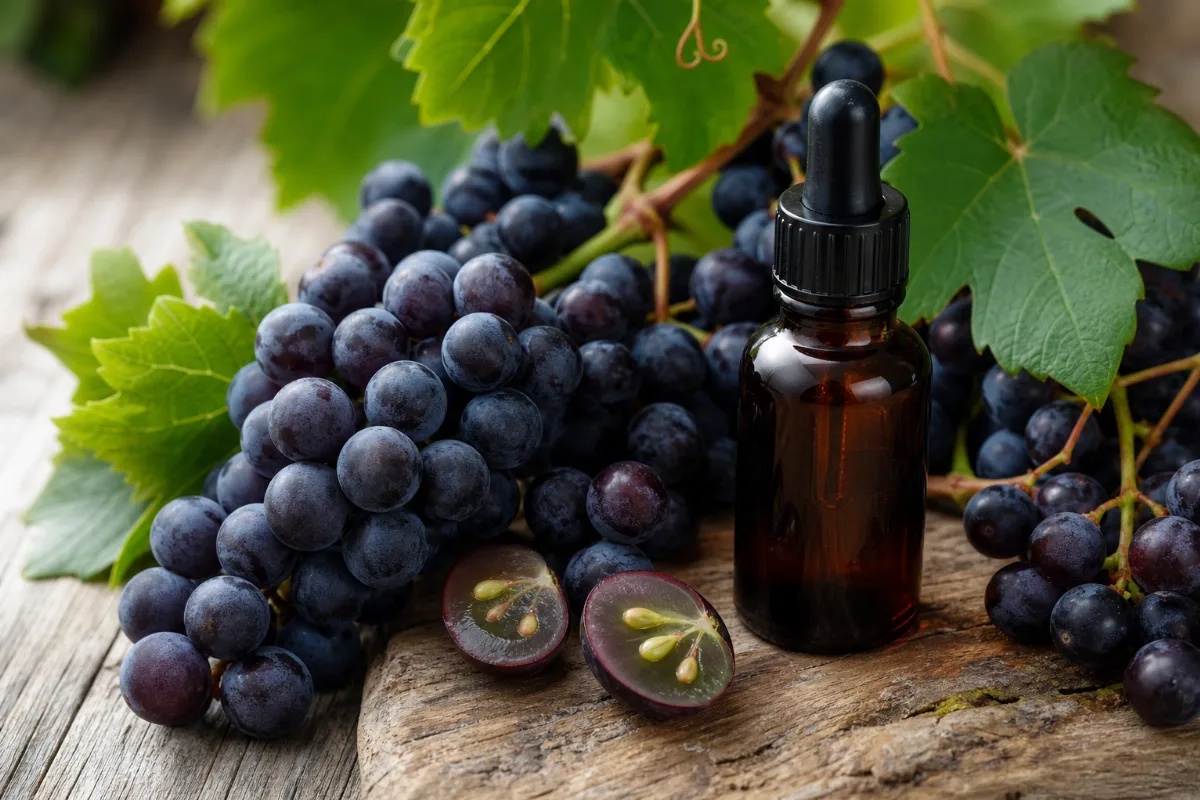
Essential Oils & Aromatherapy · Carrier oil
Grapeseed Oil
Vitis vinifera L. (seed oil) · also called Grape seed oil. Not the same as grape seed extract.
Grapeseed oil is pressed from the seeds of wine grapes. It is used as a light carrier oil on skin and as a cooking oil. It is not grape seed extract, which is a supplement. Research on the oil itself is small: one 15-person facial gel trial, one 44-woman eating trial and lab work. Refined oil can carry PAH contaminants, and it is high in linoleic acid, so it oxidises easily when heated.
General information, not medical advice. Last substantive update · Not medically reviewed. A named clinician has not signed off on this page. How this page is made
About Grapeseed Oil
Grapeseed oil is a pale, light oil from wine grape seeds, used on skin and in cooking. It is mostly linoleic acid. The human research is small and mostly tests gels or mixed products, so it is best seen as a plain oil with some early signals, not a treatment.
What it is
Grapeseed oil comes from the seeds of Vitis vinifera L., the wine grape (GBIF accepts this name). Linoleic acid made up 53.68 to 67.06% of the fatty acids in seeds of 12 varieties, followed by oleic acid.
It also holds small amounts of vitamin E and plant sterols. Cold-pressed oils contain far fewer polyphenols than the seed flour.
How it is used
It is sold as a cooking oil, a massage oil, a carrier oil for essential oils and an ingredient in skin products. Studies cover gels, an engineered emulsion, eaten oil and foot massage.
Many products mix the oil with other ingredients, so their results are not results for plain oil.
What the research shows
The best-controlled skin result is a 15-person split-face trial of a lab-made gel: moisture and elasticity up, oiliness and pores down versus placebo. It is small and the gel is not plain oil.
A 44-woman trial found lower hs-CRP with grape seed oil than sunflower oil after 8 weeks. Reviews say other benefits are seen mainly in lab studies.
The heart advice about swapping saturated fat for unsaturated oils is general and no grapeseed oil heart trial was found.
Oil versus grape seed extract
Meta-analyses of the extract (19 trials for blood pressure, 50 for cholesterol and glucose) show small changes, for example diastolic pressure down 2.20 mmHg. Those trials tested a supplement, not the oil, so they are not counted here.
Rules and labels
In the EU, oils and fats for food have limits for PAHs (Regulation 835/2011). That is a food rule, not a cosmetic one. We did not read FDA, EFSA or cosmetic-ingredient reviews for the oil.
Look for the plant name Vitis vinifera and a clear food or cosmetic grade on the label.
At a glance
Traditional uses history, not proof
- No traditional use of the oil is described in the sources read. It is a modern by-product of winemaking.
Studied for research
- Facial skin moisture and oiliness (special gel), very low
- Eczema-type skin in children (mixed gel), very low
- Inflammation markers when eaten, very low
- Foot swelling in pregnancy with massage, very low
- Heart health, insufficient
- Sun protection (lab), insufficient
Main compounds
- Linoleic acid (omega-6), the main fat
- Oleic acid
- Vitamin E (alpha-tocopherol) in small amounts
- Plant sterols such as beta-sitosterol
Common forms
- Cold-pressed seed oil
- Refined seed oil
- Culinary bottled oil
- Cosmetic carrier oil
- Gels and emulsions that contain the oil (check other ingredients)
Research links: Eating trial of grape seed oil (abstract) · Facial skin gel trial (abstract) · Heating test of grape seed oil (abstract) · PAH in grapeseed oil, Moret 2000 (abstract page) · NCCIH: grape seed extract (a different product) · Research Library · Genes & Biomarkers Library
What it is and its history
- Accepted scientific name
- Vitis vinifera
- Naming authority
- L.
- Common names
- Grapeseed oil (English); Grape seed oil (English)
- Family or group
- Vitaceae (the grape family)
- Classification
- Plantae > Tracheophyta > Magnoliopsida > Vitales > Vitaceae > Vitis > Vitis vinifera
- Native range
- Not checked in the sources read.
- Habitat
- Not checked.
- What it looks like
- Roots: Not checked.; Stems: Not checked.; Leaves: Not checked.; Flowers: Not checked.; Fruit: The seeds of the grape are pressed or extracted for the oil; seeds are a by-product of winemaking and grape juice (the reviews describe the seeds as a byproduct).
- Cultivation
- Not checked.
- Harvest and processing
- Seeds are separated from pomace, dried and pressed or solvent-extracted; drying and refining steps affect quality (Moret 2000; Mihai 2024).
- Look-alikes and adulterants
- Name: Grape seed extract; Note: A different product: a supplement rich in proanthocyanidins.
- Sustainability and conservation
- Not checked.
Traditional use and history history, not clinical proof
| Tradition or era | Documented use | Source |
|---|---|---|
| Modern by-product oil | The sources read describe grape seed oil as a product from wine and grape processing; no traditional use is described. | p36676127 |
Traditional use shows how it was used. It does not show that it works or is safe today.
What is inside, and how it may work
What it contains and how those compounds act in cells and animals. Laboratory and animal mechanisms are not proven effects in people.
Main compounds
| Compound | Family | Where it is concentrated | Activity studied | Level of evidence |
|---|---|---|---|---|
| Linoleic acid PubChem 5280450 | omega-6 polyunsaturated fatty acid | Seed oil 53.68 to 67.06% of fatty acids in seeds of 12 grape varieties; 66.0 to 75.3 g per 100 g in four cold-pressed oils. | Main fatty acid; makes the oil prone to oxidation. 16 12 | Chemistry |
| Oleic acid PubChem 445639 | omega-9 monounsaturated fatty acid | Seed oil 13.80 to 27.32% in seeds of 12 varieties. | Second main fatty acid. 16 | Chemistry |
| Alpha-tocopherol (vitamin E) PubChem 14985 | tocopherol | Seed 1.597 to 4.703 mg per kg in seeds of 12 varieties. | Main tocopherol form in the seeds. 16 | Chemistry |
| Beta-sitosterol PubChem 222284 | plant sterol | Seed 915.67 to 3340.42 micrograms per g in seeds. | Main sterol in the seeds. 16 | Chemistry |
Mechanisms, receptors and pathways
| Target or pathway | Gene or receptor | What was found | Level |
|---|---|---|---|
| Oxidation of unsaturated fat | n/a | Heating grape seed oil at 180 C for 90 minutes raised volatile compounds about 30-fold, mostly aldehydes. 2 | Lab |
| Skin penetration and barrier (proposed) | n/a | An engineered emulsion raised skin penetration 4.63-fold over an ordinary oil emulsion in lab tests; not shown for plain oil. 20 | Laboratory research |
Absorption, metabolism and elimination
- Absorption
- Not described in the sources read for plain oil.
- Distribution
- Not described.
- Metabolism
- Not described.
- Elimination
- Not described.
- Bioavailability
- Not described.
Isolated compounds versus whole extracts
Grapeseed oil (fats, tocopherols, sterols) differs from grape seed extract (proanthocyanidins). Extract meta-analyses of 19 and 50 trials do not describe the oil.
Nutritional composition
Per 100 g, one USDA entry (SR Legacy, FDC 171028) lists about 884 kcal, 69.9 g polyunsaturated fat, 9.6 g saturated fat and 28.8 mg vitamin E. These figures come from an earlier nutrient summary and were not re-opened in this round.
4 very low certainty4 not enough evidence
What was looked at
The 8 benefits and uses checked for Grapeseed Oil, each with how strong the evidence is. Tap one to open it.
- Facial skin feel and appearance (moisture, oiliness, pores)Very low certainty
- Eczema (atopic dermatitis) skin barrier in children, mixed gelVery low certainty
- Fine lines and skin firmness, engineered emulsionNot enough evidence
- Sun protection (lab tests only)Not enough evidence
- Inflammation markers and insulin resistance (eaten oil)Very low certainty
- Heart health when oil replaces saturated fatNot enough evidence
- Swollen feet in late pregnancy, foot massageVery low certainty
- Antioxidant, anti-inflammatory and other claims (lab work)Not enough evidence
Lab markers tracked in the studies
Skin water loss (TEWL)Skin oiliness (sebum) and pore sizehs-CRP (inflammation marker)Insulin resistance (HOMA-IR)
What is Grapeseed Oil good for?
What the human research shows for each use, and how strong it is. None of it is proven. Read the Safety tab too.
Benefits, one by one
Each card is a research question, not a promise. Tap a goal to filter. Open a card to see the studies, doses and limits.
Facial skin feel and appearance (moisture, oiliness, pores)
Very low certaintyOne small split-face trial in 15 healthy people tested a lab-made gel with grapeseed oil against a placebo gel for 12 weeks. Moisture and elasticity rose, and oiliness, redness and pores fell. It was a special gel, not plain oil, and it is the only trial of its kind found.
1 studiesA lab-made grapeseed oil nanoemulgel on the cheek. Amounts are in the…
Studies, doses and limits
What the trials found
One split-face, blinded, placebo-controlled trial (15 healthy volunteers, weekly measurements for 12 weeks) of a grapeseed oil nanoemulgel.
Results
Against the placebo gel, the oil gel lowered melanin, redness, sebum and fine and large pores, and raised moisture and elasticity (all p<0.05). It also scored better on feel and spreadability.
Effect sizes as reported
p-values only in the abstract.
Why this rating
Only 15 healthy people, a special nanoemulgel instead of plain oil, a single author and no repeat trial.
Form and dose studied
A lab-made grapeseed oil nanoemulgel on the cheek. Amounts are in the paper and not given here.
Who was studied
Healthy adult volunteers.
Limits
Not plain oil. Small. No second trial found. Funding not stated in the abstract.
Why researchers looked
Grapeseed oil is light and rich in linoleic acid, so makers add it to skin products. Researchers asked if a gel with it changes measurable skin traits.
Traditional use
No traditional use of the seed oil is described in the sources read.
Proposed mechanism Pharmacological theory
Not established. The author suggests the oil's fats and antioxidants may help; this was not tested.
A proposed mechanism does not show that the effect happens in people.
Grapeseed oil is not grape seed extract. Extract trials do not carry over to the oil. Oil from refined or cooked use has its own cautions. See the Safety tab.
Eczema (atopic dermatitis) skin barrier in children, mixed gel
Very low certaintyIn 57 children with atopic dermatitis, a gel with seven ingredients (grape seed oil was one) used for 10 days left treated skin less red and better hydrated than the untreated arm. The oil cannot be credited because it was only one ingredient.
1 studiesA mixed emulgel (hyaluronic acid, glycerol, grape seed oil, calendula…
Studies, doses and limits
What the trials found
One randomised, self-controlled trial (57 children aged 2 to 14). One forearm got the emulgel twice a day; the other did not.
Results
Treated skin had less redness (p=0.007), lower water loss (p=0.002) and higher hydration (p<0.001). The quality-of-life score improved by about 3.5 points. The authors report no adverse effects.
Effect sizes as reported
p-values only; no effect for the oil alone.
Why this rating
Seven ingredients including a synthetic growth-factor peptide, only 10 days, blinding not stated, no plain-oil comparison.
Form and dose studied
A mixed emulgel (hyaluronic acid, glycerol, grape seed oil, calendula, aloe, peptide).
Who was studied
Children aged 2 to 14 with atopic dermatitis.
Limits
Cannot separate the oil from the other ingredients. Short. Funding not stated in the abstract.
Why researchers looked
A weak skin barrier loses water in eczema. Moisturising oils are a common ingredient in creams made for it.
Traditional use
No traditional use of the seed oil is described in the sources read.
Proposed mechanism Pharmacological theory
Not established. No trial tested why it might work.
A proposed mechanism does not show that the effect happens in people.
Grapeseed oil is not grape seed extract. Extract trials do not carry over to the oil. Oil from refined or cooked use has its own cautions. See the Safety tab.
Fine lines and skin firmness, engineered emulsion
Not enough evidenceA 2024 paper tested a grapeseed oil emulsion made with a special menthol-CoQ10 liquid for 28 days. It reported better skin moisture, firmness and fewer wrinkles. The number of people is not in the abstract, and this is an engineered product, not plain oil.
1 studiesAn emulsion with an added ionic liquid, not plain oil.
Studies, doses and limits
What the trials found
Skin-penetration, cell and chemistry tests plus a 28-day use test on the face. The abstract does not give the number of participants.
Results
After 28 days the emulsion improved water content and water loss of the skin, firmness and elasticity, and the number and length of wrinkles. Cell tests showed less melanin and MMP-1 and more type I collagen.
Effect sizes as reported
No numbers in the abstract.
Why this rating
Participant number and design not stated; an engineered product; part lab, part human.
Form and dose studied
An emulsion with an added ionic liquid, not plain oil.
Limits
Cannot tell how many people or how it was controlled. Not plain oil.
Why researchers looked
Plain grapeseed oil sinks into the skin poorly, so researchers built an emulsion to push it deeper.
Traditional use
No traditional use of the seed oil is described in the sources read.
Proposed mechanism Laboratory research
The authors suggest the ionic liquid carries the oil deeper into the skin. Shown in the lab, not proven as the cause of the skin changes.
A proposed mechanism does not show that the effect happens in people.
Grapeseed oil is not grape seed extract. Extract trials do not carry over to the oil. Oil from refined or cooked use has its own cautions. See the Safety tab.
Sun protection (lab tests only)
Not enough evidenceA 2025 review of lab studies found oils such as grape absorbed UVB light, but oils on their own gave low sun protection numbers and safety checks were lacking. This is not a replacement for sunscreen.
1 studiesTest products with 1 to 15% oil.
Studies, doses and limits
What the trials found
A scoping review of 14 lab studies of seed oils; grape was named among the oils that absorbed UVB well. No human sunburn trial of grapeseed oil was found.
Results
Isolated oils had sun protection factors from 0.22 to 22 across all oils reviewed. The review says phototoxicity and safety were insufficiently assessed.
Effect sizes as reported
SPF 0.22 to 22 across oils (not grape alone).
Why this rating
Lab tests only, grape-only numbers not given, safety not assessed.
Form and dose studied
Test products with 1 to 15% oil.
Who was studied
Lab samples.
Limits
No human evidence. A low SPF cannot protect skin.
Why researchers looked
Oils with antioxidants were tested as natural sun-care ingredients.
Traditional use
No traditional use of the seed oil is described in the sources read.
Proposed mechanism Laboratory research
Unsaturated fats and antioxidants absorb some light in the lab. No human protection was shown.
A proposed mechanism does not show that the effect happens in people.
Grapeseed oil is not grape seed extract. Extract trials do not carry over to the oil. Oil from refined or cooked use has its own cautions. See the Safety tab.
Inflammation markers and insulin resistance (eaten oil)
Very low certaintyIn one 8-week trial in 44 overweight or obese women on a weight-loss diet, eating grape seed oil as 15% of energy lowered blood markers of inflammation and insulin resistance. The control group ate sunflower oil. It is one small trial of blood markers, not illness.
1 studiesGrape seed oil eaten as 15% of daily energy (the food amount is in th…
Studies, doses and limits
What the trials found
One randomised trial, 44 women, 8 weeks, grape seed oil versus sunflower oil in a weight-loss diet.
Results
HOMA-IR (insulin resistance), hs-CRP and TNF-alpha fell in the grape seed oil group. hs-CRP was lower than in the sunflower group (p<0.03).
Effect sizes as reported
p<0.03 for hs-CRP between groups.
Why this rating
One small, short trial from 2013, blood markers only, funding not stated, no repeat.
Form and dose studied
Grape seed oil eaten as 15% of daily energy (the food amount is in the paper).
Who was studied
Overweight or obese women on a weight-loss diet.
Limits
Small. Markers, not disease. Sunflower oil as comparison.
Why researchers looked
Researchers asked whether the oil's fats and plant compounds ease inflammation or insulin resistance, since lab work had suggested it.
Traditional use
No traditional use of the seed oil is described in the sources read.
Proposed mechanism Pharmacological theory
Not established. The oil replaced other fats, so the trial cannot say which part of the oil mattered.
A proposed mechanism does not show that the effect happens in people.
Grapeseed oil is not grape seed extract. Extract trials do not carry over to the oil. Oil from refined or cooked use has its own cautions. See the Safety tab.
Heart health when oil replaces saturated fat
Not enough evidenceThe American Heart Association says swapping saturated fat for unsaturated oils lowers heart disease. Grapeseed oil is mostly unsaturated, but no trial of grapeseed oil itself on heart disease or cholesterol in people was found.
2 studiesFood use as a replacement for saturated fat.
Studies, doses and limits
What the trials found
AHA advisory on dietary fats (a review). It does not mention grapeseed oil. Separate animal work reported higher HDL with grape seed oil at high doses.
Results
In trials of the swap to polyunsaturated vegetable oil, heart disease fell by about 30%. Nothing is specific to grapeseed oil.
Effect sizes as reported
About 30% in the swap trials (not grapeseed-specific).
Why this rating
The evidence is for the swap in general, not for grapeseed oil. Animal data do not show effects in people.
Form and dose studied
Food use as a replacement for saturated fat.
Who was studied
General adults (advisory).
Limits
No grapeseed oil heart trial. Grape seed EXTRACT trials are a different product.
Why researchers looked
Grapeseed oil is high in polyunsaturated fat, which is the type the heart advice favours.
Traditional use
No traditional use of the seed oil is described in the sources read.
Proposed mechanism Authoritative guidance
Replacing saturated with unsaturated fat lowers LDL cholesterol, per the AHA advisory. This is general to such oils.
A proposed mechanism does not show that the effect happens in people.
Grapeseed oil is not grape seed extract. Extract trials do not carry over to the oil. Oil from refined or cooked use has its own cautions. See the Safety tab.
Swollen feet in late pregnancy, foot massage
Very low certaintyA trial of 90 first-time pregnant women found foot massage with grape seed oil reduced foot swelling compared with no massage, but sweet almond oil did the same. The massage may explain it, not the oil.
1 studiesGrape seed oil used as a massage oil.
Studies, doses and limits
What the trials found
One randomised clinical trial in Zahedan, Iran: 90 women at 30 to 40 weeks, 20-minute foot massage over 5 days with grape seed oil, sweet almond oil or nothing.
Results
Foot circumference fell more in both oil groups than in the no-treatment group (P=0.001). The two oils did not differ (P=0.865).
Effect sizes as reported
P-values only.
Why this rating
No plain-massage or inert-oil comparison, blinding unclear, 5 days, side effects not reported in the abstract.
Form and dose studied
Grape seed oil used as a massage oil.
Who was studied
90 first-time pregnant women at 30 to 40 weeks.
Limits
Cannot separate oil from touch. Short. Ask a midwife or doctor before using any oil in pregnancy.
Why researchers looked
Foot massage with a light oil is a common comfort measure in pregnancy.
Traditional use
No traditional use of the seed oil is described in the sources read.
Proposed mechanism Pharmacological theory
Not established. No trial tested why it might work.
A proposed mechanism does not show that the effect happens in people.
Grapeseed oil is not grape seed extract. Extract trials do not carry over to the oil. Oil from refined or cooked use has its own cautions. See the Safety tab.
Antioxidant, anti-inflammatory and other claims (lab work)
Not enough evidenceReviews say grape seed oil shows anti-inflammatory, heart-protective, antimicrobial and anticancer effects mainly in lab studies. The oil holds far fewer antioxidant compounds than seed flour or the extract. These results do not show effects in people.
2 studiesCold-pressed and other oils in lab tests.
Studies, doses and limits
What the trials found
No human trial. A 2016 review and a 2011 lab study of cold-pressed oils.
Results
A 2016 review says benefits are mainly found in in-vitro studies. A 2011 study found total phenols were up to 100 times lower in the oils than in the seed flours.
Effect sizes as reported
No human effect sizes.
Why this rating
Lab and animal studies only.
Form and dose studied
Cold-pressed and other oils in lab tests.
Who was studied
Cells and animals.
Limits
Does not show a benefit in people.
Why researchers looked
Grape seeds hold vitamin E, plant sterols and polyphenols, so researchers tested the oil in cells and animals.
Traditional use
No traditional use of the seed oil is described in the sources read.
Proposed mechanism Laboratory research
Proposed mechanisms in the reviews: tocopherol, linoleic acid and sterols acting in cell pathways. Lab only.
A proposed mechanism does not show that the effect happens in people.
Grapeseed oil is not grape seed extract. Extract trials do not carry over to the oil. Oil from refined or cooked use has its own cautions. See the Safety tab.
Connections to the rest of health
How Grapeseed Oil connects to the rest of our health knowledge graph. Every link says what kind of connection it is. A safety link (for example to the liver) is a warning, not a benefit. A study that merely mentions a topic never creates a benefit link.
Explore every connection: goals, body systems, organs, symptoms, genes
A. Wellness goals
| Connected to | Kind of connection | Evidence status | Context | Studies |
|---|---|---|---|---|
| Healthy Skin | Very low certainty | Facial skin feel and appearance (moisture, oiliness, pores): One small split-face trial in 15 healthy people tested a lab-made gel with grapeseed oil against a placebo gel for 12 weeks. Moisture and elasticity rose, and oiliness, redness and pores fell. It was a special gel, not plain oil, and it is the only trial of its kind found. Eczema (atopic dermatitis) skin barrier in children, mixed gel: In 57 children with atopic dermatitis, a gel with seven ingredients (grape seed oil was one) used for 10 days left treated skin less red and better hydrated than the untreated arm. The oil cannot be credited because it was only one ingredient. | 19 9 20 | |
| Healthy Skin | Preliminary mechanism | Not enough evidence | Sun protection (lab tests only): A 2025 review of lab studies found oils such as grape absorbed UVB light, but oils on their own gave low sun protection numbers and safety checks were lacking. This is not a replacement for sunscreen. | 17 |
| Inflammation Balance | Very low certainty | Inflammation markers and insulin resistance (eaten oil): In one 8-week trial in 44 overweight or obese women on a weight-loss diet, eating grape seed oil as 15% of energy lowered blood markers of inflammation and insulin resistance. The control group ate sunflower oil. It is one small trial of blood markers, not illness. | 10 | |
| Blood Sugar Balance | Very low certainty | Inflammation markers and insulin resistance (eaten oil): In one 8-week trial in 44 overweight or obese women on a weight-loss diet, eating grape seed oil as 15% of energy lowered blood markers of inflammation and insulin resistance. The control group ate sunflower oil. It is one small trial of blood markers, not illness. | 10 | |
| Heart Health | Preliminary mechanism | Not enough evidence | Heart health when oil replaces saturated fat: The American Heart Association says swapping saturated fat for unsaturated oils lowers heart disease. Grapeseed oil is mostly unsaturated, but no trial of grapeseed oil itself on heart disease or cholesterol in people was found. | 18 5 |
| Cholesterol Balance | Preliminary mechanism | Not enough evidence | Heart health when oil replaces saturated fat: The American Heart Association says swapping saturated fat for unsaturated oils lowers heart disease. Grapeseed oil is mostly unsaturated, but no trial of grapeseed oil itself on heart disease or cholesterol in people was found. | 18 5 |
| Womens Wellness | Very low certainty | Swollen feet in late pregnancy, foot massage: A trial of 90 first-time pregnant women found foot massage with grape seed oil reduced foot swelling compared with no massage, but sweet almond oil did the same. The massage may explain it, not the oil. | 15 | |
| Cellular Protection | Preliminary mechanism | Not enough evidence | Antioxidant, anti-inflammatory and other claims (lab work): Reviews say grape seed oil shows anti-inflammatory, heart-protective, antimicrobial and anticancer effects mainly in lab studies. The oil holds far fewer antioxidant compounds than seed flour or the extract. These results do not show effects in people. | 7 12 |
B. Body systems
| Connected to | Kind of connection | Evidence status | Context | Studies |
|---|---|---|---|---|
| Skin Hair Beauty | Biological association | Very low certainty | Studied for: Facial skin feel and appearance (moisture, oiliness, pores) Studied for: Eczema (atopic dermatitis) skin barrier in children, mixed gel | 19 9 20 17 |
| Metabolism Weight | Biological association | Very low certainty | Studied for: Inflammation markers and insulin resistance (eaten oil) | 10 |
| Cardiovascular System | Biological association | Not enough evidence | Studied for: Heart health when oil replaces saturated fat Studied for: Swollen feet in late pregnancy, foot massage | 18 5 15 |
| Longevity Aging | Biological association | Not enough evidence | Studied for: Antioxidant, anti-inflammatory and other claims (lab work) | 7 12 |
C. Body parts and organs
| Connected to | Kind of connection | Evidence status | Context | Studies |
|---|---|---|---|---|
| Skin | Adverse effect or risk | Not enough evidence | No plain-oil allergy study found; one case report title only. Preparation or compound: Seed oil on skin |
11 |
| Skin | Biological association | Very low certainty | Small gel studies. Preparation or compound: Grapeseed oil in gels |
19 9 |
I. Biomarkers
| Connected to | Kind of connection | Evidence status | Context | Studies |
|---|---|---|---|---|
| Skin water loss (TEWL) | Biological association | Very low certainty | Measured in trials: lowered. A lab change is not the same as a health benefit. | 9 20 |
| Skin oiliness (sebum) and pore size | Biological association | Very low certainty | Measured in trials: lowered. A lab change is not the same as a health benefit. | 19 |
| hs-CRP (inflammation marker) | Biological association | Very low certainty | Measured in trials: lowered. A lab change is not the same as a health benefit. | 10 |
| Insulin resistance (HOMA-IR) | Biological association | Very low certainty | Measured in trials: lowered. A lab change is not the same as a health benefit. | 10 |
L. Active compounds
| Connected to | Kind of connection | Evidence status | Context | Studies |
|---|---|---|---|---|
| Linoleic acid | Biological association | Chemistry | Main fatty acid; makes the oil prone to oxidation. Preparation or compound: Seed oil |
16 12 |
| Oleic acid | Biological association | Chemistry | Second main fatty acid. Preparation or compound: Seed oil |
16 |
| Alpha-tocopherol (vitamin E) | Biological association | Chemistry | Main tocopherol form in the seeds. Preparation or compound: Seed |
16 |
| Beta-sitosterol | Biological association | Chemistry | Main sterol in the seeds. Preparation or compound: Seed |
16 |
Each connection is stored with the ingredient, the connected record, the kind of connection, the evidence status, the supporting studies, the preparation or compound involved, and a review date (last reviewed October 25, 2026).
Evidence at a glance: what changed in 4 lab markers
Tap a number to show only those markers. Counts are markers, not people.
The evidence
The research centre for Grapeseed Oil. Every record here was checked against PubMed or the publisher's page; we never list a study we have not verified.
Evidence by outcome
Bars show how many studies we found for each outcome, not how well it works. People are added up across trials only (reviews are not added, to avoid double counting).
How we rate evidence
High certainty
Several well-run trials or reviews agree; further research is unlikely to change the picture much.
Moderate certainty
Good trials point the same way, but some doubt remains.
Low certainty
Small, short or inconsistent trials. The finding could change with better research.
Very low certainty
Very little or very weak human data. Treat as a possibility only.
Mixed findings
Trials or reviews disagree with each other.
Not enough evidence
Not enough human research to say either way.
Evidence against
Good research found no benefit, or found harm.
We take the reviewers' own risk-of-bias and GRADE statements where they exist, and otherwise judge from study size, design, consistency, directness and whether a product matches what is sold. Many publications do not make evidence high. Method note: We read PubMed abstracts of 18 papers, the NCCIH extract page, the EU 835/2011 annex, the Moret 2000 abstract page and a GBIF record. One case-report title was seen without its abstract. Certainty ratings are the compiler's own reading. Funding is not stated in most abstracts.
Study library: every study we checked 23
| Study | Design | People | Product, dose, length | Result |
|---|---|---|---|---|
| Abrante-Pascual 2024 Vegetable Oils and Their Use for Frying: A Review of Their Compositional Differences and Degradation. Foods · PMID 39767128 · DOI |
Review review |
n/a | Review of frying oils vegetable oils |
Says oil composition, including degree of unsaturation, affects how fast frying oil degrades; heat causes oxidation, polymerisation and other changes. Grapeseed oil is not in its list of oils. No numbers in the abstract Methods, limits and fundingOutcomes: Oil degradation in frying Limitations: Does not cover grapeseed oil. Funding and conflicts: Funding and conflicts of interest are not stated in the abstract. Read: abstract |
| Ansorena 2023 Oxidative Stability and Genotoxic Activity of Vegetable Oils Subjected to Accelerated Oxidation and Cooking Conditions. Foods · PMID 37297430 · DOI |
Lab analysis lab |
Coconut, rapeseed and grape seed oils | Heating tests seed oil 90 min at 180 C · vs Unheated oil |
Volatile compounds rose 30-fold in grape seed oil after 90 minutes at 180 C, mostly aldehydes (82% of the total area). No mutagenicity was detected in any of the oils, and the authors say they were not compromised from the safety perspective. 30-fold rise in volatiles Methods, limits and fundingOutcomes: Oxidation products, volatile compounds, Ames mutagenicity test Limitations: Lab heating test, not people. Only one temperature and time. Funding and conflicts: Funding and conflicts of interest are not stated in the abstract. Read: abstract |
| Asbaghi 2020 The effects of grape seed extract on glycemic control, serum lipoproteins, inflammation, and body weight: a systematic review and meta-analysis of randomized controlled trials. Phytother Res · PMID 31880030 · DOI |
Meta-analysis |
50 trials | Grape SEED EXTRACT (not oil) extract of seeds varied varied · vs Control |
Extract lowered fasting glucose, total and LDL cholesterol, triglycerides and CRP slightly; no change in HbA1c or HDL cholesterol. TC -6.03, LDL -4.97 (units as in paper) Methods, limits and fundingOutcomes: Glucose, cholesterol, CRP Limitations: About the extract, not the oil. Funding and conflicts: Funding and conflicts of interest are not stated in the abstract. Read: abstract |
| Dash 2026 Cold pressed oils: a systematic review on physicochemical properties, nutritional composition and pharmacological activities. Front Nutr · PMID 42459801 · DOI |
Systematic review review |
n/a | Review of cold-pressed oils cold-pressed oils · vs Refined oils |
Says cold-pressed oils keep more polyunsaturated fat and antioxidants than refined oils, and that oils rich in unsaturated fat oxidise easily. Quality and shelf life depend on raw material, harvest, moisture and storage. No numbers in the abstract Methods, limits and fundingOutcomes: Oil quality and nutrition Limitations: Covers many oils, not grapeseed specifically. Funding and conflicts: Funding and conflicts of interest are not stated in the abstract. Read: abstract |
| Fernandes 2024 Comparative Analysis of Grape Seed Oil, Linseed Oil, and a Blend: In Vivo Effects of Supplementation. Foods · PMID 39063367 · DOI |
Animal and chemistry animal |
Laboratory animals | Grape seed oil, linseed oil and a blend seed oil 1000 and 2000 mg/kg/day in animals · vs Other oils |
In animals, the 2000 mg/kg/day grape seed oil group had among the highest HDL cholesterol and lower MCP-1 and TNF-alpha. Animal data only Methods, limits and fundingOutcomes: Blood fats, inflammation markers, weight Limitations: Animal study; does not show effects in people. Funding and conflicts: Funding and conflicts of interest are not stated in the abstract. Read: abstract |
| Foshati 2022 The effect of grape (Vitis vinifera) seed extract supplementation on flow-mediated dilation, blood pressure, and heart rate: a systematic review and meta-analysis. Pharmacol Res · PMID 34798267 · DOI |
Meta-analysis |
19 trials in adults | Grape SEED EXTRACT (not oil) extract of seeds varied varied · vs Control |
Extract lowered diastolic pressure (-2.20 mmHg, 95% CI -3.79 to -0.60) and heart rate (-1.25 bpm) but not systolic pressure or blood vessel function. Heterogeneity was high (I2 up to 97%). DBP -2.20 mmHg Methods, limits and fundingOutcomes: Blood pressure, heart rate, blood vessel function Limitations: About the extract, not the oil. Funding and conflicts: Funding and conflicts of interest are not stated in the abstract. Read: abstract |
| Garavaglia 2016 Grape Seed Oil Compounds: Biological and Chemical Actions for Health. Nutr Metab Insights · PMID 27559299 · DOI |
Review review |
n/a | Brief review of grape seed oil seed oil |
Says benefits are mainly seen in in-vitro studies (anti-inflammatory, heart-protective, antimicrobial, anticancer). No numbers in the abstract Methods, limits and fundingOutcomes: Composition and possible health effects Limitations: Narrative review; mostly lab studies. Funding and conflicts: Funding and conflicts of interest are not stated in the abstract. Read: abstract |
| Gitea 2023 Evaluation of the Phytochemistry-Therapeutic Activity Relationship for Grape Seeds Oil. Life (Basel) · PMID 36676127 · DOI |
Review review |
n/a | Review of grape seed oil composition, extraction and health claims seed oil |
Most papers it covers focus on the oil's fatty acids, tocopherols and phytosterols. It calls for better, cheaper extraction methods. No numbers in the abstract Methods, limits and fundingOutcomes: Fatty acids, tocopherols, phytosterols, extraction methods Limitations: A narrative review; no trial results in the abstract. Funding and conflicts: Funding and conflicts of interest are not stated in the abstract. Read: abstract |
| Gomez-Farto 2025 Update on the Research of an Emulgel for the Effective Treatment of Atopic Dermatitis: Clinical Investigation in Children. Gels · PMID 41294565 · DOI |
Controlled trial |
57 57 children aged 2 to 14 with atopic dermatitis |
Emulgel with hyaluronic acid, glycerol, grape seed oil, calendula, aloe vera and a synthetic growth-factor peptide seed oil as one ingredient of a mixed gel Not given here 10 days, twice daily · vs Untreated other forearm (self-controlled) |
Treated lesional skin had less redness (p=0.007), lower TEWL (p=0.002) and higher hydration (p<0.001). Quality-of-life score improved by about 3.5 points. No adverse effects reported. p-values only; no effect for the oil alone Methods, limits and fundingOutcomes: Redness, water loss (TEWL), skin hydration, SCORAD, EASI, quality of life Limitations: Seven ingredients, so the oil cannot be credited. Only 10 days. Blinding is not stated in the abstract. Authors call it adjunctive therapy. Funding and conflicts: Funding and conflicts of interest are not stated in the abstract. Read: abstract |
| Irandoost 2013 Does grape seed oil improve inflammation and insulin resistance in overweight or obese women? Int J Food Sci Nutr · PMID 23506314 · DOI |
Controlled trial |
44 44 overweight or obese women on a weight-loss diet |
Grape seed oil as 15% of energy versus sunflower oil as 15% of energy seed oil eaten as food 15% of energy (the food amount is in the paper) 8 weeks · vs Sunflower oil |
HOMA-IR, hs-CRP and TNF-alpha fell in the grape seed oil group. hs-CRP was lower than with sunflower oil (p<0.03). p<0.03 for hs-CRP between groups Methods, limits and fundingOutcomes: Insulin resistance (HOMA-IR), hs-CRP, TNF-alpha Limitations: Small, short, 44 women. Blood markers only, not illness. Funding not stated in the abstract. Funding and conflicts: Funding and conflicts of interest are not stated in the abstract. Read: abstract |
| Krogsrud 1992 Grapeseed oil as a safe and efficient hand cleansing agent. Contact Dermatitis · PMID 1505191 · DOI |
Case report |
Not available | Not available seed oil |
The abstract is not on PubMed. Only the title is known, so no finding is stated here. Not available Methods, limits and fundingOutcomes: Not available Limitations: Title only. Funding and conflicts: Funding and conflicts of interest are not stated in the abstract. Read: title-only |
| Lutterodt 2011 Fatty acid composition, oxidative stability, antioxidant and antiproliferative properties of selected cold-pressed grape seed oils and flours. Food Chem · PMID 25212146 · DOI |
Lab analysis chemistry |
Cold-pressed oils from four US grape types | Cold-pressed grape seed oils seed oil |
Linoleic acid ranged from 66.0 to 75.3 g per 100 g of fatty acids. Oxidative stability varied; the best oil lasted 40 h in the accelerated test. Antioxidants were far lower in the oils than in the seed flours. Ranges across oils Methods, limits and fundingOutcomes: Fatty acids, oxidative stability Limitations: Lab work. Cancer-cell work is not human evidence. Funding and conflicts: Funding and conflicts of interest are not stated in the abstract. Read: abstract |
| Mihai 2024 Polycyclic Aromatic Hydrocarbons in Oilseeds, Oils and Derived Processed Products: A Review Current Trends in Natural Sciences 13(26):93-105 · Source |
Review n/a |
n/a | n/a |
Review page states the EU limits of 2 and 10 micrograms per kg and that seed drying, refining and cooking affect PAH levels. It does not mention grapeseed oil. Methods, limits and fundingOutcomes: PAHs in oils Limitations: Page summary read, not the full text. Read: abstract |
| Moret 2000 Processing effect on the polyaromatic content of grapeseed oil J Am Oil Chem Soc (journal named in a search result; the page read gave only a Springer DOI) · Source |
Lab analysis n/a |
n/a | n/a |
Authors say grapeseed oil can occasionally have dangerous levels of PAHs, linked to drying seeds in contact with combustion gases. Benzo(a)pyrene averaged 1.4 ppb (range 0.9 to 2.4) before drying and 20.2 ppb after. They blame in part compacting pomace with bulldozers before storage. Methods, limits and fundingOutcomes: PAH levels before and after drying of grape seeds Limitations: Italian pilot study from 2000; not a market survey; abstract page read, not the full paper. Refining effect not stated in what was read. Read: abstract |
| Navaee 2020 Comparing the Effect of Foot Massage with Grape Seed Oil and Sweet Almond Oil on Physiological Leg Edema in Primigravidae: A Randomized Clinical Trial. Evid Based Complement Alternat Med · PMID 32419817 · DOI |
Controlled trial |
90 90 first-time pregnant women, 30 to 40 weeks, Zahedan, Iran |
Foot massage with grape seed oil, with sweet almond oil, or no intervention seed oil rubbed on the feet (massage) Not given here 20-minute massage over 5 days · vs No-intervention group |
Foot size fell more in both oil groups than in the no-intervention group (P=0.001). The two oils did not differ (P=0.865). P-values only Methods, limits and fundingOutcomes: Foot circumference on day 5 Limitations: The massage may explain the effect, not the oil. Not clear who was blinded. Side effects not reported in the abstract. Funding and conflicts: Funding and conflicts of interest are not stated in the abstract. Read: abstract |
| Odabasioglu 2026 Comprehensive Analysis of Phytochemical Compounds in Seeds of Indigenous Grape Varieties Cultivated in Southeastern Anatolia. Molecules · PMID 42796457 · DOI |
Lab analysis chemistry |
Seeds of 12 local grape varieties, Turkey | Seed analysis seeds (not pressed oil) |
Linoleic acid was the main fatty acid in every variety (53.68 to 67.06%), then oleic acid (13.80 to 27.32%). Alpha-tocopherol was the main tocopherol (1.597 to 4.703 mg/kg) and beta-sitosterol the main sterol. Ranges across varieties Methods, limits and fundingOutcomes: Fatty acids, tocopherols, sterols Limitations: Whole seeds, not commercial oil. Funding and conflicts: Funding and conflicts of interest are not stated in the abstract. Read: abstract |
| Pereira 2025 Photoprotective efficacy of seed oils from fruits of Brazilian flora: a scoping review. Photochem Photobiol Sci · PMID 40627247 · DOI |
Scoping review lab |
14 lab studies, 2014 to 2024 | Seed oils in sun-protection tests, 1 to 15% oil in the test products seed oils |
Isolated oils had SPF between 0.22 and 22. Grape was named with pomegranate and prickly pear as oils that absorbed UVB well. The authors found insufficient safety assessment. SPF 0.22 to 22 across oils (not grape alone) Methods, limits and fundingOutcomes: Sun protection factor (SPF) in lab tests Limitations: Lab tests, not people. Grape-only results are not in the abstract. Funding and conflicts: Funding and conflicts of interest are not stated in the abstract. Read: abstract |
| Sacks 2017 Dietary Fats and Cardiovascular Disease: A Presidential Advisory From the American Heart Association. Circulation · PMID 28620111 · DOI |
Authoritative guidance review |
General population | Replacing saturated fat with polyunsaturated vegetable oil polyunsaturated oils in general |
Trials that replaced saturated fat with polyunsaturated vegetable oil cut cardiovascular disease by about 30%. It concludes that replacing saturated with unsaturated fat will lower CVD. About 30% in trials of the swap Methods, limits and fundingOutcomes: Cardiovascular disease Limitations: Not about grapeseed oil. The abstract does not name it. Funding and conflicts: Funding and conflicts of interest are not stated in the abstract. Read: abstract |
| Shawahna 2022 Effects of a grapeseed oil (Vitis vinifera L.) loaded dermocosmetic nanoemulgel on biophysical parameters of facial skin: A split-face, blinded, placebo-controlled study. J Cosmet Dermatol · PMID 35713012 · DOI |
Controlled trial |
15 15 healthy volunteers |
Grapeseed oil nanoemulgel (a lab-made gel) versus placebo gel on each cheek seed oil in a nanoemulgel Not given here 12 weeks, weekly measurements · vs Placebo gel on the other cheek |
Versus placebo the gel gave higher sensory scores, and lowered melanin, redness, sebum and fine and large pores, and raised moisture and elasticity (all p<0.05). p-values only in the abstract Methods, limits and fundingOutcomes: Melanin, redness, sebum, pores, moisture, elasticity Limitations: Only 15 healthy people. A special gel, not plain oil. A single author. Funding and conflicts: Funding and conflicts of interest are not stated in the abstract. Read: abstract |
| Yang 2024 Ionic Liquid-Based Grapeseed Oil Emulsion for Enhanced Anti-Wrinkle Treatment. Pharmaceuticals (Basel) · PMID 39458914 · DOI |
Lab and human human and in-vitro |
Number of people not stated in the abstract | Grapeseed oil emulsion made with a menthol-CoQ10 ionic liquid seed oil in an engineered emulsion Not given here 28 days of continuous use · vs Ordinary grape seed oil emulsion (for penetration tests) |
After 28 days the emulsion improved skin water content and water loss, firmness and elasticity, and wrinkle counts and length. Cell tests showed less melanin and MMP-1 and more type I collagen. No numbers in the abstract Methods, limits and fundingOutcomes: Skin moisture, water loss, firmness, elasticity, wrinkles; cell and chemistry tests Limitations: An engineered product, not plain oil. Number of people not stated. Lab and human work mixed. Funding and conflicts: Funding and conflicts of interest are not stated in the abstract. Read: abstract |
| n/a 2011 Commission Regulation (EU) No 835/2011 amending Regulation (EC) No 1881/2006 as regards maximum levels for polycyclic aromatic hydrocarbons in foodstuffs EU law (legislation.gov.uk copy) · Source |
Authoritative guidance n/a |
n/a | n/a |
Annex text read: oils and fats (excluding cocoa butter and coconut oil) for direct consumption or as an ingredient: benzo(a)pyrene 2.0 and the sum of four PAHs 10.0 micrograms per kg. Methods, limits and fundingOutcomes: PAH limits in food Limitations: The 2011 text; later consolidated rules were not checked. A food rule; it does not set limits for cosmetics. Read: full-text |
| n/a 2025 NCCIH: Grape Seed Extract NCCIH (US National Center for Complementary and Integrative Health) · Source |
Authoritative guidance n/a |
n/a | n/a |
Says the extract is sold as a supplement, is generally well tolerated by mouth or on the skin, and that little is known about its use in pregnancy and breastfeeding. It does not mention grape seed oil. Methods, limits and fundingOutcomes: Grape seed extract evidence and safety Limitations: Covers the extract only. Read: full-text |
| n/a 2026 GBIF species match: Vitis vinifera GBIF API · Source |
Database record n/a |
n/a | n/a |
Vitis vinifera L., status ACCEPTED, family Vitaceae, GBIF key 5372392. Methods, limits and fundingOutcomes: Accepted plant name Limitations: Name check only. Read: full-text |
What we do not know yet
- What the evidence supports: very low certainty for the skin, eating and massage uses, insufficient for heart health, sun protection and lab claims.
- No trial of plain grapeseed oil on skin and no repeat of the facial gel trial.
- No allergy, comedogenicity, pregnancy, baby, pet or drug-interaction data for the oil.
- No current survey of PAHs in grapeseed oil; smoke point and shelf life not measured in a source read.
How new research is added
New studies are found by a saved PubMed search and placed in a review queue. A person reads each one before it changes any rating or safety wording.
Lab markers
What changed in blood or saliva tests during trials. A changed number is not the same as feeling or being healthier, and we give no "normal ranges".
Other 4
Skin water loss (TEWL)
Lowered in trials
How much water leaves the skin surface. Higher means a weaker skin barrier.
Very low certaintyResults and what it means
Why it was measured
A common way to check how well the skin holds water.
Statistical vs. clinical meaning
Seen in short studies of mixed or engineered products, not plain oil.
Safety implication
No adverse effects reported in the eczema trial abstract.
| Study | Result | People | Product |
|---|---|---|---|
| 9 | Lower water loss (p=0.002) on treated forearms of children with eczema, using a seven-ingredient gel. | 57 children with atopic dermatitis | Mixed emulgel containing grape seed oil, 10 days |
| 20 | Improved water loss and skin water content after 28 days; numbers not in the abstract. | Not stated | Engineered grapeseed oil emulsion |
Skin oiliness (sebum) and pore size
Lowered in trials
How much oil the skin makes and how visible the pores are.
Very low certaintyResults and what it means
Why it was measured
Oiliness and large pores are common cosmetic concerns.
Statistical vs. clinical meaning
One small trial of a special gel.
Safety implication
Not reported in the abstract.
| Study | Result | People | Product |
|---|---|---|---|
| 19 | Sebum and fine and large pores fell versus the placebo gel (p<0.05). | 15 healthy volunteers | Grapeseed oil nanoemulgel, 12 weeks |
hs-CRP (inflammation marker)
Lowered in trials
A blood protein that rises with inflammation.
Very low certaintyResults and what it means
Why it was measured
A common blood marker of inflammation.
Statistical vs. clinical meaning
One small trial.
Safety implication
None reported in the abstract.
| Study | Result | People | Product |
|---|---|---|---|
| 10 | Fell in the grape seed oil group and was lower than with sunflower oil (p<0.03). | 44 overweight or obese women | Grape seed oil as 15% of energy for 8 weeks |
Insulin resistance (HOMA-IR)
Lowered in trials
A calculated score from fasting glucose and insulin; higher means more insulin resistance.
Very low certaintyResults and what it means
Why it was measured
Used to track how well the body responds to insulin.
Statistical vs. clinical meaning
One small trial.
Safety implication
None reported in the abstract.
| Study | Result | People | Product |
|---|---|---|---|
| 10 | HOMA-IR decreased in the grape seed oil group; the abstract gives no between-group figure. | 44 overweight or obese women | Grape seed oil as 15% of energy for 8 weeks |
Safety
What studies and official sources say about side effects, medicines and who should check first. Each point shows what kind of evidence it comes from.
Main points to know 6
- Grapeseed oil is not grape seed extract. The oil is pressed from the seeds. The extract is a concentrated supplement rich in proanthocyanidins. NCCIH's extract page does not mention the oil. Trial results and cautions for the extract do not carry over to the oil. Authoritative guidance 22
- Refined oil can carry PAH contamination. A 2000 Italian study says grapeseed oil can occasionally have dangerous levels of PAHs, tied to drying the seeds over combustion gases. Benzo(a)pyrene averaged 1.4 ppb before drying and 20.2 ppb after. The EU limit for oils sold as food is 2.0 micrograms per kg for benzo(a)pyrene (10.0 for four PAHs together). That study is old; no current grapeseed survey was read. Product analysis 14 21
- Heating makes lots of aldehydes. In a lab test, 90 minutes at 180 C raised the volatile compounds in grape seed oil about 30-fold, mostly aldehydes. No mutagenicity was found in that test. High-linoleic oils oxidise more readily. Lab 2 4
- It can go rancid. Grapeseed oil is mostly linoleic acid (53.7 to 67.1% in seeds of 12 varieties; 66.0 to 75.3 g per 100 g of fatty acids in four cold-pressed oils). Oils rich in unsaturated fat oxidise easily. If it smells off, do not use it on skin or food. Lab 16 12 4
- Little safety research on skin use. No patch-test, allergy or sensitisation study of plain grapeseed oil was found. A 1992 case report in Contact Dermatitis has the oil in its title; its abstract could not be read. Stop using it and wash it off if a rash, itch or swelling appears. Insufficient 11
- Pregnancy, babies, pets, medicines: not studied. No source read covers pregnancy and breastfeeding for the oil, babies, cats or dogs, or interactions with medicines. This is not the same as safe. Ask a doctor, pharmacist or vet. Insufficient
Side effects 2
| Effect | How often | Severity and recovery | Evidence |
|---|---|---|---|
| Skin reaction (rash, itch, redness) The 57-child mixed-gel trial reported no adverse effects, but that gel had seven ingredients. No plain-oil allergy study was found. | Not known | mild to moderate (general for plant oils) Not stated | Insufficient 9 |
| Oxidation products from overheated or old oil Lab heating test; no human harm shown. | Not known | Not stated Not stated | Lab 2 |
Liver
No source read describes liver injury from grapeseed oil. LiverTox was not read for this page. Grape seed extract is a different product and is not assessed here.
How often. Not known.
This is a safety connection. It is not evidence that Grapeseed Oil supports liver health.
Medicines and supplements 2
| With | Why it matters | Importance | Evidence | What to do |
|---|---|---|---|---|
| Prescription and over-the-counter medicines prescription | No mechanism was described in the sources read. | None documented in the sources read for the oil. | Insufficient Not enough evidence | Tell your pharmacist you use it, as for any product. Grape seed extract is a separate question for a pharmacist. |
| Sun exposure other | A scoping review says safety and phototoxicity of seed oils for sun-care were insufficiently assessed. | No phototoxicity was reported for grapeseed oil in the abstract read. | Lab Not enough evidence 17 | Do not use oil as sunscreen. |
Who should check first 3
| Situation | Advice | Evidence |
|---|---|---|
| Earlier skin reaction to a plant oil, or very sensitive or eczema-prone skin | Do a small patch test on the inner arm and wait before wider use. Ask a doctor first for broken skin. | Insufficient |
| Babies and young children | No source covers the oil for babies. Ask a clinician before using it. The only child trial used a mixed gel on children aged 2 to 14. | Insufficient 9 |
| Pregnancy and breastfeeding | One massage trial in pregnant women did not report side effects in its abstract. Safety is not established. Ask a midwife or doctor first. | Insufficient 15 |
Overdose, product quality and regulators
Summary. No poisoning from grapeseed oil is described in the sources read. This page gives no advice on swallowing oils meant for skin. In an emergency call a poison centre or emergency number.
Animal. One animal study of grape seed oil at 1000 and 2000 mg/kg/day did not report harm in its abstract; it was not a safety study and is not proof of safety.
Human doses studied. Eaten as 15% of energy for 8 weeks in 44 women; massage on the feet for 5 days in 90 women; gels on the skin for 10 days to 12 weeks.
High dose or long term signals. Not found in the sources read.
Overdose response. Not described.
Genotoxicity. A lab heating test found no mutagenicity in grape seed oil, fresh or heated (Ames test).
Toxic or hazardous parts. Not described for the oil.
Quality varies. PAH contamination, rancidity and mixed products are the main points found.
PAHs from seed drying. Benzo(a)pyrene averaged 1.4 ppb before drying and 20.2 ppb after in a 2000 Italian study. Authors blame combustion-gas drying and pomace handling. 14
EU limits. Regulation 835/2011 sets 2.0 micrograms per kg benzo(a)pyrene and 10.0 for four PAHs in oils for food. A 2024 review says seed drying, refining and cooking affect PAH levels. No EU monitoring result for grapeseed oil was read. 21 13
Cold-pressed versus refined. A 2026 review says cold-pressed oils keep more polyunsaturated fat and antioxidants than refined oils but oxidise easily; quality depends on raw material, harvest, moisture and storage. 4
Cosmetic products. Many skin products tested use gels or emulsions that mix grape seed oil with other ingredients, so a safety result for them is not a result for plain oil. 9 19
| Body | Action | Date |
|---|---|---|
| European Union (EU) | Commission Regulation (EU) No 835/2011 sets maximum levels for PAHs in oils and fats for food: 2.0 micrograms per kg benzo(a)pyrene and 10.0 for four PAHs. source | 2011-08-19 |
| NCCIH (United States) | Page on grape seed extract: generally well tolerated; little known in pregnancy and breastfeeding. It does not cover the oil. source | 2025 |
When to get medical help
- Trouble breathing, swelling of the face or throat, or a spreading hives rash after eating or using the oil: call emergency services.
- Anyone who swallows an oil by accident, or a child who chokes or coughs after swallowing: call a poison centre or emergency number.
- A rash that blisters, spreads or does not clear after stopping the oil: see a doctor.
Stop using the product and contact a clinician or emergency service. In the US, Poison Control is 1-800-222-1222.
General information only, not medical advice. Ask a clinician or pharmacist before use, especially with medicines, in pregnancy or with a health condition. See the Natural Remedy Safety guide.
Frequently asked questions
Is grapeseed oil the same as grape seed extract?
Does grapeseed oil help skin?
Does it clog pores or help acne?
No trial on acne was found, and no pore-clogging rating from a source we read is given here. The one facial trial of a grapeseed oil gel reported fewer large and fine pores, but it was a special gel and only 15 people.
Is it good for eczema?
Not shown. A mixed gel that contained grape seed oil improved redness and water loss in children over 10 days, but the oil cannot be credited. Eczema needs a doctor's care.
Does it work as a sunscreen?
No. Lab tests show some oils absorb UVB, but alone they gave low sun protection numbers, and safety was not assessed. Use a proper sunscreen.
Is it safe to cook with at high heat?
In a lab test, heating grape seed oil at 180 C for 90 minutes raised volatile compounds about 30-fold, mostly aldehydes. No mutagenicity was found in the same test. The oil is mostly linoleic acid, which oxidises easily. Review sources on frying do not list grapeseed oil, so no safe-temperature claim is made.
Does refined grapeseed oil contain contaminants?
It can. A 2000 Italian study said grapeseed oil can occasionally have dangerous PAH levels, tied to drying seeds over combustion gases: benzo(a)pyrene averaged 1.4 ppb before drying and 20.2 ppb after. The EU limit for oils sold as food is 2.0 micrograms per kg. No current grapeseed market survey was read.
Does it lower cholesterol or help the heart?
Does eating it lower inflammation?
One 8-week trial in 44 overweight women found lower hs-CRP than with sunflower oil. It is one small trial of blood markers and is not proof.
Can I use it for massage in pregnancy?
A trial of 90 first-time pregnant women found foot massage with grape seed oil reduced swelling, but sweet almond oil did the same and the massage itself may explain it. Safety was not reported in the abstract. Ask a midwife or doctor first.
Can I be allergic to it?
It is possible with any plant oil. We found no allergy study of plain grapeseed oil, only a 1992 case report whose abstract we could not read. Do a patch test and stop if a rash appears.
Explore by health goal
Healthy SkinInflammation BalanceBlood Sugar BalanceHeart HealthCholesterol BalanceWomens WellnessCellular Protection
Editorial transparency
- Written by
- AlternativeMed editorial team. Research compiled with AI assistance, then checked against PubMed records.
- Medical review
- None. This page has not been reviewed by a physician or pharmacist.
- First published
- 2026-10-25
- Last substantive update
- 2026-10-25
- How we research
- We read PubMed abstracts of 18 papers, the NCCIH extract page, the EU 835/2011 annex, the Moret 2000 abstract page and a GBIF record. One case-report title was seen without its abstract. Certainty ratings are the compiler's own reading. Funding is not stated in most abstracts.
- How we rate evidence
- See "How we rate evidence" in the Evidence tab.
- Independence
- No product is promoted on this page. No affiliate links are shown.
Sources 23
Each source was opened and checked. Where we read only the abstract, it says so. The small numbers in the text point here.
- Abrante-Pascual S, Nieva-Echevarria B, Goicoechea-Oses E. Vegetable Oils and Their Use for Frying: A Review of Their Compositional Differences and Degradation.. Foods. 2024. PMID 39767128. DOI 10.3390/foods13244186. (abstract)
- Ansorena D, Ramirez R, Lopez de Cerain A, Azqueta A. Oxidative Stability and Genotoxic Activity of Vegetable Oils Subjected to Accelerated Oxidation and Cooking Conditions.. Foods. 2023. PMID 37297430. DOI 10.3390/foods12112186. (abstract)
- Asbaghi O, Nazarian B, Reiner Z, Amirani E. The effects of grape seed extract on glycemic control, serum lipoproteins, inflammation, and body weight: a systematic review and meta-analysis of randomized controlled trials.. Phytother Res. 2020. PMID 31880030. DOI 10.1002/ptr.6518. (abstract)
- Dash B, Sarangi A, Nayak A, Das BS. Cold pressed oils: a systematic review on physicochemical properties, nutritional composition and pharmacological activities.. Front Nutr. 2026. PMID 42459801. DOI 10.3389/fnut.2026.1747029. (abstract)
- Fernandes CDP, Pott A, Hiane PA et al. Comparative Analysis of Grape Seed Oil, Linseed Oil, and a Blend: In Vivo Effects of Supplementation.. Foods. 2024. PMID 39063367. DOI 10.3390/foods13142283. (abstract)
- Foshati S, Nouripour F, Sadeghi E, Amani R. The effect of grape (Vitis vinifera) seed extract supplementation on flow-mediated dilation, blood pressure, and heart rate: a systematic review and meta-analysis.. Pharmacol Res. 2022. PMID 34798267. DOI 10.1016/j.phrs.2021.105905. (abstract)
- Garavaglia J, Markoski MM, Oliveira A, Marcadenti A. Grape Seed Oil Compounds: Biological and Chemical Actions for Health.. Nutr Metab Insights. 2016. PMID 27559299. DOI 10.4137/NMI.S32910. (abstract)
- Gitea MA, Bungau SG, Gitea D et al. Evaluation of the Phytochemistry-Therapeutic Activity Relationship for Grape Seeds Oil.. Life (Basel). 2023. PMID 36676127. DOI 10.3390/life13010178. (abstract)
- Gomez-Farto A, Jimenez-Escobar AL, Perez-Gonzalez N et al. Update on the Research of an Emulgel for the Effective Treatment of Atopic Dermatitis: Clinical Investigation in Children.. Gels. 2025. PMID 41294565. DOI 10.3390/gels11110880. (abstract)
- Irandoost P, Ebrahimi-Mameghani M, Pirouzpanah S. Does grape seed oil improve inflammation and insulin resistance in overweight or obese women?. Int J Food Sci Nutr. 2013. PMID 23506314. DOI 10.3109/09637486.2013.775228. (abstract)
- Krogsrud NE, Larsen AI. Grapeseed oil as a safe and efficient hand cleansing agent.. Contact Dermatitis. 1992. PMID 1505191. DOI 10.1111/j.1600-0536.1992.tb00305.x. (title-only)
- Lutterodt H, Slavin M, Whent M, Turner E. Fatty acid composition, oxidative stability, antioxidant and antiproliferative properties of selected cold-pressed grape seed oils and flours.. Food Chem. 2011. PMID 25212146. DOI 10.1016/j.foodchem.2011.03.040. (abstract)
- Mihai AL, Adascalului AC, Negoita M, Palade LM. Polycyclic Aromatic Hydrocarbons in Oilseeds, Oils and Derived Processed Products: A Review. Current Trends in Natural Sciences 13(26):93-105. 2024. (abstract)
- Moret S, Dudine A, Conte LS. Processing effect on the polyaromatic content of grapeseed oil. J Am Oil Chem Soc (journal named in a search result; the page read gave only a Springer DOI). 2000. (abstract)
- Navaee M, Rakhshkhorshid M. Comparing the Effect of Foot Massage with Grape Seed Oil and Sweet Almond Oil on Physiological Leg Edema in Primigravidae: A Randomized Clinical Trial.. Evid Based Complement Alternat Med. 2020. PMID 32419817. DOI 10.1155/2020/6835814. (abstract)
- Odabasioglu MI, Cakir A, Karaca Sanyurek N, Islek F. Comprehensive Analysis of Phytochemical Compounds in Seeds of Indigenous Grape Varieties Cultivated in Southeastern Anatolia.. Molecules. 2026. PMID 42796457. DOI 10.3390/molecules31183168. (abstract)
- Pereira MD, Mota MD, Paula Pereira N. Photoprotective efficacy of seed oils from fruits of Brazilian flora: a scoping review.. Photochem Photobiol Sci. 2025. PMID 40627247. DOI 10.1007/s43630-025-00760-5. (abstract)
- Sacks FM, Lichtenstein AH, Wu JHY, Appel LJ. Dietary Fats and Cardiovascular Disease: A Presidential Advisory From the American Heart Association.. Circulation. 2017. PMID 28620111. DOI 10.1161/CIR.0000000000000510. (abstract)
- Shawahna R. Effects of a grapeseed oil (Vitis vinifera L.) loaded dermocosmetic nanoemulgel on biophysical parameters of facial skin: A split-face, blinded, placebo-controlled study.. J Cosmet Dermatol. 2022. PMID 35713012. DOI 10.1111/jocd.15161. (abstract)
- Yang B, Zhang X, Zhang L et al. Ionic Liquid-Based Grapeseed Oil Emulsion for Enhanced Anti-Wrinkle Treatment.. Pharmaceuticals (Basel). 2024. PMID 39458914. DOI 10.3390/ph17101273. (abstract)
- n/a. Commission Regulation (EU) No 835/2011 amending Regulation (EC) No 1881/2006 as regards maximum levels for polycyclic aromatic hydrocarbons in foodstuffs. EU law (legislation.gov.uk copy). 2011. (full-text)
- n/a. NCCIH: Grape Seed Extract. NCCIH (US National Center for Complementary and Integrative Health). 2025. (full-text)
- n/a. GBIF species match: Vitis vinifera. GBIF API. 2026. (full-text)
Where to buy
Check the label first. Whatever you buy, look for these:
- The botanical (Latin) name on the label and 100% pure oil
- A dark glass bottle and a batch number
- Essential oils are strong: dilute for skin, and do not swallow unless a qualified professional directs it
- Keep away from children and pets
Talk to a pharmacist or doctor before you start any supplement, especially if you take medicines. See the Safety tab for interactions.
Support our free guides: as an Amazon Associate we earn from qualifying purchases. Full disclosure.


