Natural Oils & Butters · Carrier oil
Hemp Seed Oil
Cannabis sativa L. (seed oil) · also called Hempseed oil, Cannabis sativa seed oil. Not the same as CBD oil.
Hemp seed oil is pressed from the seeds of the hemp plant. It is not CBD oil, and FDA says the seeds do not naturally contain THC or CBD, only trace amounts picked up in processing. Research is small: one early trial of swallowed oil in eczema, one knee trial of oil rubbed on the skin, and cell tests. None of it proves the oil treats anything. Check labels, because "hemp oil" can mean a CBD product, and the oil can go rancid.
General information, not medical advice. Last substantive update · Not medically reviewed. A named clinician has not signed off on this page. How this page is made
About Hemp Seed Oil
Hemp seed oil is a food and skin-care oil from the seeds of Cannabis sativa. It is not CBD oil. FDA says the seeds do not naturally contain THC or CBD. The human research is small and mixed, so it is best seen as a plain oil with some early signals, not a treatment.
What it is
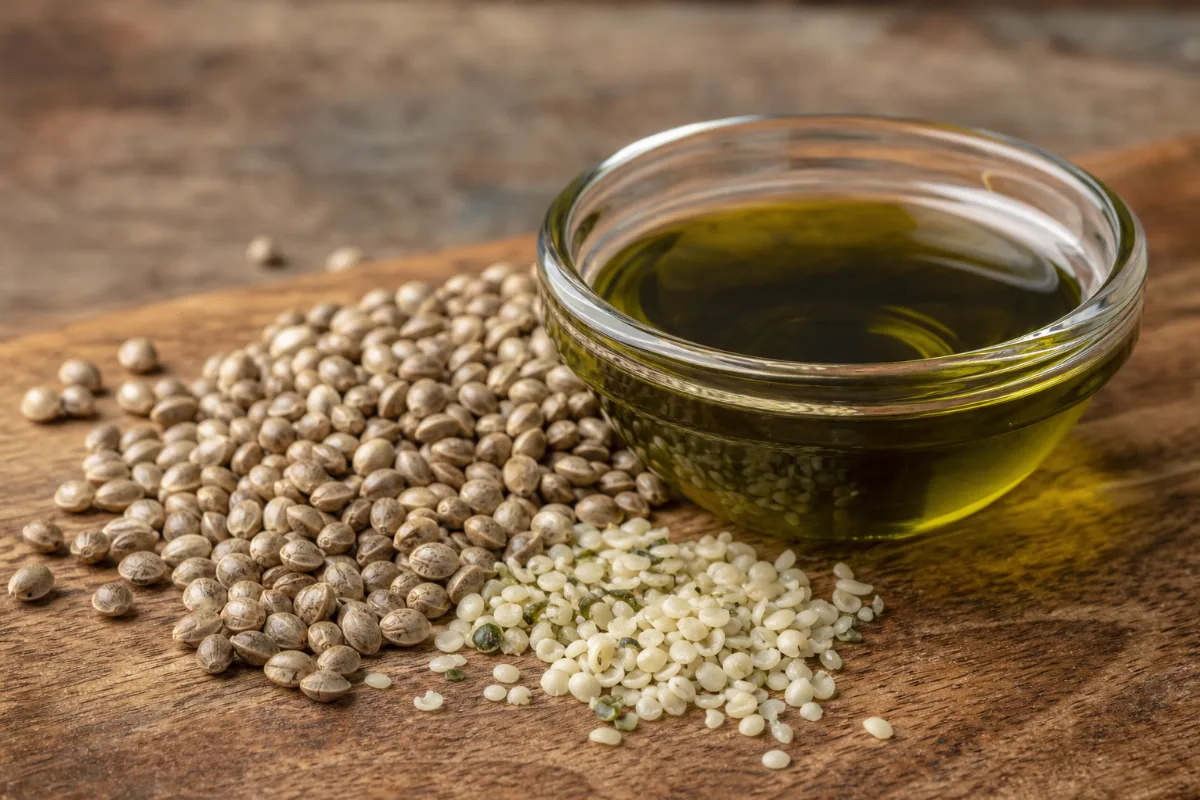
Hemp seed oil is pressed from the seeds of Cannabis sativa L. (GBIF accepts this name). It is a liquid oil, mostly linoleic and alpha-linolenic acid, with gamma-linolenic and stearidonic acid in amounts that vary a lot between samples.
Cold-pressed oil is made without added heat and keeps more unsaturated fats than refined oil, but it oxidises more easily.
How it is used
It is sold as a food oil, in capsules, and in lotions, gels and balms. Studies cover swallowed oil, oil rubbed on the knee and lab gels. Many creams also contain CBD or other additives, so results for them are not results for the seed oil.
No trial was found for hair, scalp or anti-ageing use.
What the research shows
The best human result is a 90-patient knee trial: better pain and WOMAC scores than placebo, and not different from diclofenac gel. It is one trial and the abstract does not report side effects.
The eczema trial of swallowed oil was single-blind and small. A 2023 review found weak evidence for any single supplement for eczema and does not mention hemp seed oil.
A children's trial raised the omega-3 index but did not change standard blood fats. Cell tests do not show effects in people.
Seed oil versus CBD and "hemp extract"
A 2025 meta-analysis of 3,359 people found cannabinoid products gave a small reduction in itch and no clear effect on dryness, redness or eczema scores. It was about CBD-type products and does not name seed oil.
No topical cannabis-based medicine is approved by EMA, FDA or TGA, according to a 2025 review.
Rules and labels
FDA completed reviews in December 2018 of hemp seed oil, hulled seed and seed protein as human food ingredients. It has received no notices for animal food. Cosmetics are not approved before sale, except colour additives.
Look for "hemp seed oil" and the plant name rather than "hemp oil". Rules in other countries were not read for this page.
At a glance
Traditional uses history, not proof
- Food oil from a long-used crop. Trial authors say it has been used as food or medicine since ancient times; this was not independently verified.
Studied for research
- Eczema-type dry, itchy skin (swallowed oil), very low
- Skin water loss in lab-made gels, very low
- Knee osteoarthritis pain (oil rubbed on the knee), low
- Omega-3 level in red blood cells in children with high blood fats, low
- Skin cells in a dish, insufficient
- Acne-prone skin, insufficient
Main compounds
- Linoleic acid (omega-6)
- Alpha-linolenic acid (omega-3)
- Gamma-linolenic acid (GLA) and stearidonic acid, amounts vary
- Plant sterols such as beta-sitosterol
- Trace THC in some market oils
Common forms
- Cold-pressed seed oil
- Refined or extracted seed oil
- Skin lotions, gels and balms with seed oil (check for CBD or other additives)
- Food-grade bottled oil and capsules
Research links: FDA: cannabis and CBD questions and answers (hemp seed section) · Eczema trial of dietary hempseed oil (abstract) · Knee osteoarthritis trial (abstract) · THC and fatty acids in hempseed oils (abstract) · CBD, hemp oil and drug tests, review (abstract) · Research Library · Genes & Biomarkers Library
What it is and its history
- Accepted scientific name
- Cannabis sativa
- Naming authority
- L.
- Common names
- Hemp seed oil (English); Hempseed oil (English); Cannabis sativa seed oil (English (label name))
- Family or group
- Cannabaceae (the hemp family)
- Classification
- Plantae > Tracheophyta > Magnoliopsida > Rosales > Cannabaceae > Cannabis > Cannabis sativa
- Native range
- Not checked in the sources read.
- Habitat
- Not checked.
- What it looks like
- Roots: Not checked.; Stems: Not checked.; Leaves: Not checked.; Flowers: Not checked.; Fruit: The seeds are the part pressed for the oil (FDA: hemp seeds are the seeds of the Cannabis sativa plant).
- Cultivation
- Industrial hemp cultivars are used (Romanian fibre-type cultivars in one lab study).
- Harvest and processing
- Cold-pressed (no added heat) and extracted oils are both studied (Cold-pressed oil review; Soxhlet and microwave extraction in a lab study). How oils are refined was not described in the sources read.
- Look-alikes and adulterants
- Name: CBD oil / hemp extract; Note: A different product made from other plant parts. Seeds do not naturally contain CBD or THC (FDA).; Name: Hemp seed oil mixed products; Note: Some creams and ointments contain CBD or other additives along with the seed oil.
- Sustainability and conservation
- Not checked.
Traditional use and history history, not clinical proof
| Tradition or era | Documented use | Source |
|---|---|---|
| Food and drug use, as stated by trial authors | The knee osteoarthritis trial authors state that hemp seed oil has been used as a food or drug since ancient times because of anti-inflammatory and painkilling properties. This is their claim and was not independently verified here. | p39256070 |
| Modern food regulation (United States) | FDA completed its review of three hemp seed GRAS notices, including hemp seed oil, in December 2018. | s-fda-cannabis |
Traditional use shows how it was used. It does not show that it works or is safe today.
What is inside, and how it may work
What it contains and how those compounds act in cells and animals. Laboratory and animal mechanisms are not proven effects in people.
Main compounds
| Compound | Family | Where it is concentrated | Activity studied | Level of evidence |
|---|---|---|---|---|
| Linoleic acid PubChem 5280450 | omega-6 polyunsaturated fatty acid | Seed oil One of the two dominant fatty acids in the oils tested. | Supply of an essential fat; blood levels rose in an eczema trial. 12 3 6 | Human data |
| Alpha-linolenic acid PubChem 5280934 | omega-3 polyunsaturated fatty acid | Seed oil The other dominant fatty acid in the oils tested. | Supply of an essential omega-3 fat; omega-3 index rose in a children's trial. 12 6 | Human data |
| Gamma-linolenic acid (GLA) PubChem 5280933 | omega-6 polyunsaturated fatty acid | Seed oil Amounts vary a lot from sample to sample. | Blood levels rose after hempseed oil in an eczema trial. 15 3 | Human data |
| Stearidonic acid PubChem 5312508 | omega-3 polyunsaturated fatty acid | Seed oil Amounts vary a lot from sample to sample. | Measured in oils; no human outcome tied to it. 15 | Laboratory |
| Beta-sitosterol PubChem 222284 | plant sterol | Cold-pressed seed oil Described in the abstract as the dominant sterol fraction (62.10 %) of one cold-pressed oil. | Listed as part of the oil's make-up; no human outcome tied to it. 8 | Laboratory |
| THC (trace) | cannabinoid | Not a natural seed component; traces from processing 3.23 to 69.5 mg per kg in oils bought in Croatia. | Not psychoactive at the amounts FDA reviewed; can matter for drug tests. 20 15 | Authoritative guidance |
Mechanisms, receptors and pathways
| Target or pathway | Gene or receptor | What was found | Level |
|---|---|---|---|
| Fatty-acid supply | n/a | Swallowed hempseed oil changed fatty acid levels in blood and red blood cells in two small trials. The eczema trial authors suggest this explains symptom changes; this was not tested. 3 6 | Human data |
| Skin barrier proteins in cells | CLDN1, NRF2 (NFE2L2), CXCL9, CXCL10 | In dog skin cells under eczema-like stress, hemp oil restored CLDN1 and changed these genes and signals. Cell study. 17 | Laboratory research |
| Wound-closure in fibroblasts | n/a | Cold-pressed hemp seed oil closed a scratch faster in human skin cells in a dish. 8 | Laboratory research |
Absorption, metabolism and elimination
- Absorption
- Not described in the sources read.
- Distribution
- Blood and red blood cell fat levels changed after swallowing the oil (two trials).
- Metabolism
- Not described.
- Elimination
- Not described.
- Bioavailability
- Not described.
Isolated compounds versus whole extracts
Plain seed oil, lab-made gels, supplements with terpenes and ginger, and CBD ointments with some seed oil are different products. Results for one should not be carried over to another. Cannabinoid trials are about CBD-type products and not about the seed oil.
Nutritional composition
Hemp seed oil is a food oil that provides unsaturated fats, mainly linoleic and alpha-linolenic acid. FDA reviewed it as a food ingredient. Its fat make-up varies between samples.
2 low certainty2 very low certainty2 not enough evidence
What was looked at
The 6 benefits and uses checked for Hemp Seed Oil, each with how strong the evidence is. Tap one to open it.
- Eczema (atopic dermatitis), swallowed oilVery low certainty
- Skin barrier and water loss, applied to the skinVery low certainty
- Skin cells in a dish (lab only)Not enough evidence
- Acne-prone skin and clogged poresNot enough evidence
- Knee osteoarthritis painLow certainty
- Blood fats and omega-3 level in the bloodLow certainty
Lab markers tracked in the studies
Skin water loss (TEWL)Dryness and itch (patient questionnaire)Knee pain (VAS) and WOMAC scoreOmega-3 index (red blood cells)Standard blood fat panel
What is Hemp Seed Oil good for?
What the human research shows for each use, and how strong it is. None of it is proven. Read the Safety tab too.
Benefits, one by one
Each card is a research question, not a promise. Tap a goal to filter. Open a card to see the studies, doses and limits.
Eczema (atopic dermatitis), swallowed oil
Very low certaintyOne small 20-week crossover trial in people with atopic dermatitis found less dry skin, less itch and less use of skin medicines after hempseed oil than after olive oil. It tested swallowed oil, not oil on the skin. A 2023 review of supplements for eczema found weak evidence for any single supplement and does not mention hemp seed oil.
2 studiesHempseed oil taken by mouth as a food oil; the amount is in the paper…
Studies, doses and limits
What the trials found
A 20-week randomised, single-blind crossover trial compared dietary hempseed oil with olive oil in people with atopic dermatitis. The number of people is not given in the abstract. A 2023 systematic review of 18 supplement studies (881 patients) found weak evidence for any single nutritional supplement; the abstract does not name hemp seed oil.
Results
After hempseed oil, blood levels of linoleic, alpha-linolenic and gamma-linolenic acid rose. Dryness and itch improved (p=0.027) and use of skin medicines fell (p=0.024). Skin water loss fell but not significantly (p=0.074).
Effect sizes as reported
No effect sizes in the abstract; p-values only.
Why this rating
One small single-blind trial from 2005 with the number of people not stated, self-reported symptoms, no repeat study found.
Form and dose studied
Hempseed oil taken by mouth as a food oil; the amount is in the paper and is not given here.
Who was studied
Adults and/or children with atopic dermatitis (not stated in the abstract).
Limits
Single-blind. Swallowed oil is not the same as a skin product. Compared with olive oil, not with a do-nothing group.
Why researchers looked
Hempseed oil holds linoleic, alpha-linolenic and gamma-linolenic acid. Researchers asked if these fats ease eczema symptoms, after reports from patients.
Traditional use
No traditional use of the seed oil is described in the sources read.
Proposed mechanism Pharmacological theory
Proposed by the trial authors: the balanced supply of omega-6 and omega-3 fats raised blood levels of these fats. This is a suggestion, not shown as the cause.
A proposed mechanism does not show that the effect happens in people.
Hemp seed oil is not CBD oil. Allergy to hemp seed is reported, so people with seed or nut allergy should ask a clinician first. The oil goes rancid easily. See the Safety tab.
Skin barrier and water loss, applied to the skin
Very low certaintyIn healthy adults, lab-made gels with a lot of hempseed or flaxseed oil cut water loss through the skin by about half and lowered redness, compared with the same people before treatment. There was no untreated group and the gels were a special design, not plain oil.
2 studiesLab-made gels with hempseed or flaxseed oil; and a CBD/CBG ointment c…
Studies, doses and limits
What the trials found
One before-after trial in healthy adults of eight gels made with hempseed or flaxseed oil, twice a day. A separate nine-person eczema pilot used an ointment that held hemp seed oil plus 30% CBD and 5% CBG; the effect of the seed oil cannot be separated there.
Results
The best gels (most oil, lecithin/Tween 80 mixture) gave about a 2-fold drop in skin water loss and the largest fall in redness versus baseline. In the nine-person eczema pilot of the CBD/CBG ointment, hydration, oil level and water loss improved and redness fell on the forearms.
Effect sizes as reported
About a 2-fold reduction in water loss for the best gels.
Why this rating
Before-after studies without a placebo group, healthy volunteers or nine patients, special formulas, seed oil mixed with other ingredients.
Form and dose studied
Lab-made gels with hempseed or flaxseed oil; and a CBD/CBG ointment containing hemp seed oil. Neither is plain oil.
Who was studied
Healthy adults; nine adults aged 20 to 67 with atopic dermatitis.
Limits
No control groups. Hemp and flax results are not separated in the abstract. The ointment held 30% CBD and 5% CBG, so it is a different product.
Why researchers looked
A weak skin barrier loses water and is a feature of eczema. Oils rich in unsaturated fats are tested in gels to see if they help.
Traditional use
No traditional use of the seed oil is described in the sources read.
Proposed mechanism Pharmacological theory
Not established. The authors point to skin-regenerating ingredients and a layered gel structure.
A proposed mechanism does not show that the effect happens in people.
Hemp seed oil is not CBD oil. Allergy to hemp seed is reported, so people with seed or nut allergy should ask a clinician first. The oil goes rancid easily. See the Safety tab.
Skin cells in a dish (lab only)
Not enough evidenceIn dishes, hemp oil helped dog skin cells under eczema-like stress restore a barrier protein, and cold-pressed hemp seed oil helped human skin cells close a scratch faster. These are cell tests only. They do not show the oil heals skin in people.
2 studiesOil added to cells; not a way people use it.
Studies, doses and limits
Results
Dog cells: barrier protein restored, some inflammation signals lowered; vitamin D3 was the stronger anti-inflammatory. Human fibroblasts: a lab scratch closed faster and cell growth rose by 72 percent with plain cold-pressed hemp seed oil; the capsule form worked less well.
Why this rating
Cell work only. The dog-cell abstract says "hemp oil" without naming seed oil.
Form and dose studied
Oil added to cells; not a way people use it.
Limits
Cells in a dish do not behave like skin on a person. No human result.
Why researchers looked
Cell tests are a first step to see whether an oil affects skin barrier and healing.
Traditional use
No traditional use of the seed oil is described in the sources read.
Proposed mechanism Laboratory research
In the dog-cell study, hemp oil raised a tight-junction protein (CLDN1) and NRF2 gene activity and lowered two inflammation chemicals (CXCL9, CXCL10).
A proposed mechanism does not show that the effect happens in people.
Hemp seed oil is not CBD oil. Allergy to hemp seed is reported, so people with seed or nut allergy should ask a clinician first. The oil goes rancid easily. See the Safety tab.
Acne-prone skin and clogged pores
Not enough evidenceNo trial of hemp seed oil for acne or clogged pores was found. Lists that rate oils as "pore-clogging" come from older animal tests, and a small 2006 human study found finished products with such ingredients are not necessarily pore-clogging. So the oil is neither shown safe nor shown harmful for acne-prone skin.
1 studiesNot applicable.
Studies, doses and limits
What the trials found
A 2006 study of six people tested finished cosmetic products under patches for four weeks. The abstract does not name hemp seed oil.
Results
Concluded that finished products using comedogenic ingredients are not necessarily comedogenic. No result for hemp seed oil.
Why this rating
No study of hemp seed oil on acne found; the one human study is six people and a different product type.
Who was studied
Six people with large follicle openings.
Limits
Does not test hemp seed oil.
Why researchers looked
People with acne ask whether a facial oil will clog pores.
Traditional use
No traditional use of the seed oil is described in the sources read.
Proposed mechanism Pharmacological theory
Not established for hemp seed oil.
A proposed mechanism does not show that the effect happens in people.
Hemp seed oil is not CBD oil. Allergy to hemp seed is reported, so people with seed or nut allergy should ask a clinician first. The oil goes rancid easily. See the Safety tab.
Knee osteoarthritis pain
Low certaintyOne 90-patient trial found hemp seed oil rubbed on the knee gave better pain and WOMAC scores than placebo, and did not differ from diclofenac gel. A second small study of supplements that held hemp seed oil plus terpenes and ginger cannot say anything about the oil alone. No repeat trial was found.
2 studiesPlain hemp seed oil applied to the knee (trial one). Oral supplements…
Studies, doses and limits
What the trials found
A double-blind trial of 90 patients with knee osteoarthritis compared hemp seed oil, diclofenac gel and placebo, applied daily for two months. A 38-patient study compared two supplements that both contained hemp seed oil for 45 days; one also had beta-caryophyllene, myrcene and ginger extract.
Results
Pain (VAS) and WOMAC scores improved more with hemp seed oil than with placebo; there was no difference between oil and diclofenac gel; knee-bend distance did not differ between groups. In the supplement study both groups improved, and pain and two knee scores improved more in the group that also took terpenes and ginger.
Effect sizes as reported
No effect sizes in the abstracts.
Why this rating
One randomised double-blind trial of 90 people, not repeated; the abstract does not report side effects. The supplement study is a combination without a placebo group.
Form and dose studied
Plain hemp seed oil applied to the knee (trial one). Oral supplements with other ingredients (study two). The amounts are in the papers and not given here.
Who was studied
Adults with knee osteoarthritis.
Limits
Single trial; no side-effect data in the abstract; the second study cannot separate the oil from the added ingredients.
Why researchers looked
Hemp seed oil has been described as having anti-inflammatory and analgesic properties, and people rub oils on sore joints.
Traditional use
No traditional use of the seed oil is described in the sources read.
Proposed mechanism Pharmacological theory
Not established. The trial authors say the oil has been used as food or medicine since ancient times for these properties; that is their statement, not shown by the trial.
A proposed mechanism does not show that the effect happens in people.
Hemp seed oil is not CBD oil. Allergy to hemp seed is reported, so people with seed or nut allergy should ask a clinician first. The oil goes rancid easily. See the Safety tab.
Blood fats and omega-3 level in the blood
Low certaintyIn a small trial of 36 children and teens with high blood fats, eight weeks of swallowed hempseed oil raised omega-3 and omega-6 fats in red blood cells and the omega-3 index. It did not change standard blood fat levels compared with diet advice alone.
1 studiesHempseed oil swallowed daily; the amount is in the paper and not give…
Studies, doses and limits
What the trials found
A randomised, 8-week parallel pilot study in 36 children and teenagers aged 6 to 16 with primary hyperlipidemia on diet therapy.
Results
Red cell saturated fats fell (-5.02 +/- 7.94%) and monounsaturated fats fell (-2.12 +/- 2.23%); total n-3 rose (+1.57 +/- 1.96%), n-6 rose (+5.39 +/- 7.18%), and the omega-3 index rose (+1.18 +/- 1.42%). The serum lipid profile did not change compared with the control group.
Effect sizes as reported
Changes in red cell fat percentages; no change in cholesterol panel.
Why this rating
Small randomised pilot with a measured biomarker but no clinical outcome; the usual blood fat panel did not change.
Form and dose studied
Hempseed oil swallowed daily; the amount is in the paper and not given here.
Who was studied
Children and teens aged 6 to 16 with high blood fats.
Limits
A pilot. Only children with a lipid disorder. Does not show any effect on heart disease.
Why researchers looked
Hempseed oil is high in linoleic and alpha-linolenic acids, which have been linked to better blood-fat markers in other studies.
Traditional use
No traditional use of the seed oil is described in the sources read.
Proposed mechanism Human biomarker
Direct supply of these fats changes the fat make-up of red blood cells (shown in the trial).
A proposed mechanism does not show that the effect happens in people.
Hemp seed oil is not CBD oil. Allergy to hemp seed is reported, so people with seed or nut allergy should ask a clinician first. The oil goes rancid easily. See the Safety tab.
Connections to the rest of health
How Hemp Seed Oil connects to the rest of our health knowledge graph. Every link says what kind of connection it is. A safety link (for example to the liver) is a warning, not a benefit. A study that merely mentions a topic never creates a benefit link.
Explore every connection: goals, body systems, organs, symptoms, genes
A. Wellness goals
| Connected to | Kind of connection | Evidence status | Context | Studies |
|---|---|---|---|---|
| Healthy Skin | Preliminary mechanism | Very low certainty | Eczema (atopic dermatitis), swallowed oil: One small 20-week crossover trial in people with atopic dermatitis found less dry skin, less itch and less use of skin medicines after hempseed oil than after olive oil. It tested swallowed oil, not oil on the skin. A 2023 review of supplements for eczema found weak evidence for any single supplement and does not mention hemp seed oil. Skin barrier and water loss, applied to the skin: In healthy adults, lab-made gels with a lot of hempseed or flaxseed oil cut water loss through the skin by about half and lowered redness, compared with the same people before treatment. There was no untreated group and the gels were a special design, not plain oil. | 3 19 18 2 17 8 7 |
| Joint Support | Preliminary mechanism | Low certainty | Knee osteoarthritis pain: One 90-patient trial found hemp seed oil rubbed on the knee gave better pain and WOMAC scores than placebo, and did not differ from diclofenac gel. A second small study of supplements that held hemp seed oil plus terpenes and ginger cannot say anything about the oil alone. No repeat trial was found. | 1 9 |
| Cholesterol Balance | Preliminary mechanism | Low certainty | Blood fats and omega-3 level in the blood: In a small trial of 36 children and teens with high blood fats, eight weeks of swallowed hempseed oil raised omega-3 and omega-6 fats in red blood cells and the omega-3 index. It did not change standard blood fat levels compared with diet advice alone. | 6 |
B. Body systems
| Connected to | Kind of connection | Evidence status | Context | Studies |
|---|---|---|---|---|
| Skin Hair Beauty | Biological association | Very low certainty | Studied for: Eczema (atopic dermatitis), swallowed oil Studied for: Skin barrier and water loss, applied to the skin | 3 19 18 2 17 8 7 |
| Musculoskeletal System | Biological association | Low certainty | Studied for: Knee osteoarthritis pain | 1 9 |
| Cardiovascular System | Biological association | Low certainty | Studied for: Blood fats and omega-3 level in the blood | 6 |
C. Body parts and organs
| Connected to | Kind of connection | Evidence status | Context | Studies |
|---|---|---|---|---|
| Skin | Adverse effect or risk | Not enough evidence | One case report (title only) of allergic contact dermatitis. Preparation or compound: Seed oil on skin |
4 |
| Skin | Biological association | Very low certainty | Small eczema and skin-barrier studies. Preparation or compound: Seed oil, swallowed or applied |
3 18 |
| Joints (knee) | Biological association | Low certainty | One 90-patient trial. Preparation or compound: Seed oil applied to the knee |
1 |
E. Health conditions
| Connected to | Kind of connection | Evidence status | Context | Studies |
|---|---|---|---|---|
| Food allergy | Adverse effect or risk | Very low certainty | Named by 33% of 127 experts as an emerging allergy food. Preparation or compound: Hemp seed |
10 |
I. Biomarkers
| Connected to | Kind of connection | Evidence status | Context | Studies |
|---|---|---|---|---|
| Skin water loss (TEWL) | Biological association | Very low certainty | Measured in trials: lowered. A lab change is not the same as a health benefit. | 18 3 |
| Dryness and itch (patient questionnaire) | Biological association | Very low certainty | Measured in trials: improved. A lab change is not the same as a health benefit. | 3 |
| Knee pain (VAS) and WOMAC score | Biological association | Low certainty | Measured in trials: improved. A lab change is not the same as a health benefit. | 1 |
| Omega-3 index (red blood cells) | Biological association | Low certainty | Measured in trials: raised. A lab change is not the same as a health benefit. | 6 |
| Standard blood fat panel | Biological association | Low certainty | Measured in trials: no change. A lab change is not the same as a health benefit. | 6 |
J. Genes, receptors and enzymes
| Connected to | Kind of connection | Evidence status | Context | Studies |
|---|---|---|---|---|
| CLDN1 (claudin 1) | Preliminary mechanism | In vitro | Skin-barrier protein restored in dog skin cells treated with hemp oil. | 17 |
L. Active compounds
| Connected to | Kind of connection | Evidence status | Context | Studies |
|---|---|---|---|---|
| Linoleic acid | Biological association | Human | Supply of an essential fat; blood levels rose in an eczema trial. Preparation or compound: Seed oil |
12 3 6 |
| Alpha-linolenic acid | Biological association | Human | Supply of an essential omega-3 fat; omega-3 index rose in a children's trial. Preparation or compound: Seed oil |
12 6 |
| Gamma-linolenic acid (GLA) | Biological association | Human | Blood levels rose after hempseed oil in an eczema trial. Preparation or compound: Seed oil |
15 3 |
| Stearidonic acid | Biological association | Laboratory | Measured in oils; no human outcome tied to it. Preparation or compound: Seed oil |
15 |
| Beta-sitosterol | Biological association | Laboratory | Listed as part of the oil's make-up; no human outcome tied to it. Preparation or compound: Cold-pressed seed oil |
8 |
| THC (trace) | Biological association | Authoritative guidance | Not psychoactive at the amounts FDA reviewed; can matter for drug tests. Preparation or compound: Not a natural seed component; traces from processing |
20 15 |
Each connection is stored with the ingredient, the connected record, the kind of connection, the evidence status, the supporting studies, the preparation or compound involved, and a review date (last reviewed October 25, 2026).
Evidence at a glance: what changed in 2 lab markers
Tap a number to show only those markers. Counts are markers, not people.
The evidence
The research centre for Hemp Seed Oil. Every record here was checked against PubMed or the publisher's page; we never list a study we have not verified.
Evidence by outcome
Bars show how many studies we found for each outcome, not how well it works. People are added up across trials only (reviews are not added, to avoid double counting).
How we rate evidence
High certainty
Several well-run trials or reviews agree; further research is unlikely to change the picture much.
Moderate certainty
Good trials point the same way, but some doubt remains.
Low certainty
Small, short or inconsistent trials. The finding could change with better research.
Very low certainty
Very little or very weak human data. Treat as a possibility only.
Mixed findings
Trials or reviews disagree with each other.
Not enough evidence
Not enough human research to say either way.
Evidence against
Good research found no benefit, or found harm.
We take the reviewers' own risk-of-bias and GRADE statements where they exist, and otherwise judge from study size, design, consistency, directness and whether a product matches what is sold. Many publications do not make evidence high. Method note: We read PubMed abstracts of 18 papers, one case-report title, and the FDA hemp section in full text, checked the plant name in GBIF and NCBI Taxonomy and compounds in PubChem. Only abstracts were read for papers. Certainty ratings are the compiler's own reading. Funding is not stated in most abstracts. No study is cited that we could not verify.
Study library: every study we checked 21
| Study | Design | People | Product, dose, length | Result |
|---|---|---|---|---|
| Abbasifard 2025 Effect of Topical Hemp (Cannabis sativa L.) Seed Oil on Knee Osteoarthritis: A Randomized Double-Blind Controlled Trial. Pain Manag Nurs · PMID 39256070 |
Controlled trial |
90 90 patients with knee osteoarthritis |
Hemp seed oil applied to the knee, daily seed oil (applied to skin) Not given here 2 months · vs Diclofenac gel and placebo |
Pain (VAS) and WOMAC scores improved more with hemp seed oil than with placebo. Hemp seed oil and diclofenac gel did not differ. Heel-to-thigh distance did not differ between the three groups. Better pain and WOMAC scores than placebo; no difference from diclofenac gel Methods, limits and fundingOutcomes: Pain (VAS), WOMAC score, heel-to-thigh distance (knee bend) Limitations: The abstract does not report side effects or how many people dropped out, and gives no effect sizes. One trial; no repeat in another group. Funding and conflicts: Funding and conflicts of interest are not stated in the abstract. Read: abstract |
| Burczyk 2025 Evaluation of Biophysical Parameters of the Skin of Patients With Atopic Dermatitis After Application of an Ointment Containing 30% Cannabidiol and 5% Cannabigerol. Clin Cosmet Investig Dermatol · PMID 40124934 |
Before after |
9 9 adults aged 20 to 67 with atopic dermatitis |
Ointment made with cholesterol ointment, 30% CBD, 5% CBG and hemp seed oil, on the forearms seed oil in a CBD/CBG ointment Not given here Several weeks (May to July 2022) · vs No control group described |
Hydration, sebum level and water loss improved and redness fell on the forearms. Improvement in skin measures with the combined ointment Methods, limits and fundingOutcomes: Skin hydration, oil level, skin water loss, pH, redness Limitations: Pilot with 9 people and no control group. The ointment held 30% CBD and 5% CBG, so the effect of the seed oil cannot be told apart. Funding and conflicts: Funding and conflicts of interest are not stated in the abstract. Read: abstract |
| Callaway 2005 Efficacy of dietary hempseed oil in patients with atopic dermatitis. J Dermatolog Treat · PMID 16019622 |
Controlled trial |
People with atopic dermatitis (number not given in the abstract) | Hempseed oil swallowed daily versus olive oil seed oil (food oil, swallowed) Not given here 20 weeks, crossover · vs Olive oil |
Blood levels of linoleic, alpha-linolenic and gamma-linolenic acid rose after hempseed oil. Dry skin and itch improved (p=0.027) and use of skin medicines fell (p=0.024). Skin water loss fell within the group but was not significant (p=0.074). Small improvements in self-reported dryness and itch after hempseed oil Methods, limits and fundingOutcomes: Blood fatty acids; patient questionnaire on dry skin, itch and use of skin medicines; skin water loss (TEWL) Limitations: Single-blind, so not fully masked. Number of people not in the abstract. Symptoms were self-reported. It tested swallowed oil, not oil on the skin. Compared with olive oil, not with a do-nothing group. Funding and conflicts: Funding and conflicts of interest are not stated in the abstract. Read: abstract |
| Clark 2022 Allergic contact dermatitis from Cannabis sativa (hemp) seed oil. Contact Dermatitis · PMID 35514096 |
Case report |
1 A patient with skin allergy (details not available: the PubMed record has no abstract) |
Cannabis sativa (hemp) seed oil on the skin seed oil |
The title reports allergic contact dermatitis from hemp seed oil. No abstract was available, so nothing more is stated. n/a Methods, limits and fundingOutcomes: Allergic contact dermatitis Limitations: Title only. Case report. Funding and conflicts: n/a Read: title-only |
| Dash 2026 Cold pressed oils: a systematic review on physicochemical properties, nutritional composition and pharmacological activities. Front Nutr · PMID 42459801 |
Systematic review n/a |
Literature on cold-pressed oils (all types) | Cold-pressed oils in general (hemp not singled out in the abstract) seeds, kernels, fruits · vs Refined oils |
Cold-pressed oils keep more polyunsaturated fats and bioactive compounds than refined oils. Oils rich in unsaturated fats oxidise easily, and quality and shelf life depend on raw material, harvest time, moisture and storage. n/a Methods, limits and fundingOutcomes: Nutrition, stability and activity of cold-pressed oils Limitations: General review of many oils; hemp is not named in the abstract. Funding and conflicts: Funding and conflicts of interest are not stated in the abstract. Read: abstract |
| Del Bo' 2019 Eight-week hempseed oil intervention improves the fatty acid composition of erythrocyte phospholipids and the omega-3 index, but does not affect the lipid profile in children and adolescents with primary hyperlipidemia. Food Res Int · PMID 30884679 |
Controlled trial |
36 36 children and teenagers aged 6 to 16 with high blood fats (primary hyperlipidemia), all on diet therapy |
Hempseed oil swallowed daily, added to diet advice seed oil (swallowed) Not given here 8 weeks, parallel groups · vs Diet advice only |
Red blood cell saturated and monounsaturated fats fell, total omega-3 and omega-6 rose, and the omega-3 index rose by about 1.18 percentage points. The standard blood fat panel did not change versus the control group. Changes in red cell fatty acids; no change in blood lipids Methods, limits and fundingOutcomes: Blood fats; fatty acids in red blood cells; omega-3 index Limitations: Pilot study, small. Describes itself as a pilot. Only children with a lipid disorder. Not a test of skin or joints. Funding and conflicts: Funding and conflicts of interest are not stated in the abstract. Read: abstract |
| Draelos 2006 A re-evaluation of the comedogenicity concept. J Am Acad Dermatol · PMID 16488305 |
Laboratory human |
6 6 people with large follicle openings, patches on the upper back |
Finished cosmetic products containing so-called comedogenic ingredients, under patches 4 weeks |
Concluded that finished products containing comedogenic ingredients are not necessarily comedogenic. n/a Methods, limits and fundingOutcomes: Number of follicles and tiny comedones (pore plugs) on skin samples Limitations: Six people only, and hemp seed oil was not named in the abstract. Used to explain why lists of "pore-clogging" oils should be read with care. Funding and conflicts: Funding and conflicts of interest are not stated in the abstract. Read: abstract |
| Duman 2026 Physicochemical Characterization, Microencapsulation, and In-vitro Wound Healing Potential of Cold-Pressed Industrial Hemp Seed Oil. J Oleo Sci · PMID 42686591 |
Laboratory research cells |
Normal human skin fibroblast cells in a dish | Cold-pressed industrial hemp seed oil (plain and microencapsulated) cold-pressed seed oil 48 to 72 hours · vs Untreated cells |
Plain oil sped up closure and raised cell growth by 72 percent in the lab. The capsule form worked less well. The oil was easily oxidised (iodine value 157). Faster scratch closure in cells Methods, limits and fundingOutcomes: Wound closure and cell growth in a lab "scratch" test; oil quality measures Limitations: Cell test only. Does not show healing in people. Funding and conflicts: Funding and conflicts of interest are not stated in the abstract. Read: abstract |
| Farì 2023 Hemp Seed Oil in Association with β-Caryophyllene, Myrcene and Ginger Extract as a Nutraceutical Integration in Knee Osteoarthritis: A Double-Blind Prospective Case-Control Study. Medicina (Kaunas) · PMID 36837393 |
Case control |
38 38 patients with knee osteoarthritis |
Two food supplements that both contained hemp seed oil; one also had beta-caryophyllene, myrcene and ginger extract seed oil plus other ingredients (combination products) Not given here 45 days · vs Hemp seed oil supplement without terpenes |
Both groups improved. Pain and two knee scores improved more in the group that also took terpenes and ginger. The extra ingredients, not the oil alone, gave the larger gain Methods, limits and fundingOutcomes: Pain scale (NRS), disability and knee scores Limitations: There is no group on placebo, and the supplements are combinations, so this cannot show anything about hemp seed oil alone. Small. A different product from plain oil. Funding and conflicts: Funding and conflicts of interest are not stated in the abstract. Read: abstract |
| Faust 2026 Experts' perspectives on allergic reactions to emerging food sources, pollen and insects. Allergol Select · PMID 41884648 |
Survey |
127 127 European allergy experts |
n/a Not given here |
After legumes (83%), hemp was named next most often (33%). Hempseeds/cannabis were rated among the most clinically relevant for future practice. n/a Methods, limits and fundingOutcomes: Which new foods experts see causing allergic reactions Limitations: Opinions of experts, not rates in the public. About food allergy, not about oil on the skin. Funding and conflicts: Funding and conflicts of interest are not stated in the abstract. Read: abstract |
| Ferracane 2026 Reliable LC-MS/MS method integrated with a linear retention index approach for multiresidue pesticide analysis in hemp seed oil. Anal Bioanal Chem · PMID 41692855 |
Laboratory analysis n/a |
12 12 commercial hemp seed oil samples |
Commercial hemp seed oils tested for 148 pesticides seed oil |
21 different pesticides were found across the 12 samples. Malathion and proquinazid were above Canadian maximum limits in two samples. Residues found in commercial oils Methods, limits and fundingOutcomes: Pesticide residues Limitations: Small sample. A method paper. Does not say which brands or where sold. Funding and conflicts: Funding and conflicts of interest are not stated in the abstract. Read: abstract |
| Floares Oarga 2026 Method-Dependent Variability in Hempseed Lipidomics: Combined Influence of Extraction, Derivatisation, and Genotype on Fatty Acid Composition and Stability. Molecules · PMID 42513159 |
Laboratory analysis n/a |
Romanian fibre-type hempseed cultivars | Hempseed oil extracted two ways seed oil |
Oils were dominated by linoleic and alpha-linolenic acids. Extraction method changed the measured fatty acids. Oxidative stability related moderately to fatty acid make-up. n/a Methods, limits and fundingOutcomes: Fatty acid composition; oxidative stability Limitations: Lab methods study. Funding and conflicts: Funding and conflicts of interest are not stated in the abstract. Read: abstract |
| Jardim 2025 The Regulatory Environment Surrounding Cannabis Medicines in the EU, the USA, and Australia. Pharmaceutics · PMID 40430926 |
Narrative review n/a |
Regulator records (EMA, FDA, TGA) and trial registers | Cannabis-based medicines (no seed oil focus) Not given here |
Only Epidyolex is approved by all three agencies. No topical cannabis-based medicine is approved by regulators, though several have been trialled. Evidence for consumer products is very limited. n/a Methods, limits and fundingOutcomes: Which cannabis medicines are approved and how consumer products are regulated Limitations: Looks at cannabis medicines in general, not at hemp seed oil. Funding and conflicts: Funding and conflicts of interest are not stated in the abstract. Read: abstract |
| Ovat 2026 Impact of CBD and hemp oil use on drug test results: a systematic review. Int J Legal Med · PMID 41942676 |
Systematic review |
12 studies (2014 to 2024) on CBD oil and hemp oil and drug tests | CBD oils and hemp oils (seed oil not separated) |
Five of eight human studies found no result above the test cut-off. Positives mainly came from the product: undeclared or too much THC, wrong labels or contamination. Traces near detection limits were seen. n/a Methods, limits and fundingOutcomes: Positive THC results on drug tests Limitations: Did not look at seed oil on its own. Funding and conflicts: Funding and conflicts of interest are not stated in the abstract. Read: abstract |
| Petrović 2015 Relationship between cannabinoids content and composition of fatty acids in hempseed oils. Food Chem · PMID 25306338 |
Laboratory analysis n/a |
Hempseed oils bought on the Croatian market (number not given in the abstract) | Commercial hempseed oils seed oil |
THC ranged from 3.23 to 69.5 mg per kg of oil. The authors say some samples were probably not made from industrial hemp. The oils are rich in polyunsaturated fats, especially gamma-linolenic and stearidonic acid, with large differences between samples. n/a Methods, limits and fundingOutcomes: THC and other cannabinoid content; fatty acids Limitations: One market, a decade ago. Does not show what is on shelves today elsewhere. Funding and conflicts: Funding and conflicts of interest are not stated in the abstract. Read: abstract |
| Sermsaksasithorn 2025 Cannabis and cannabinoids in dermatology: a systematic review and meta-analysis of quantitative outcomes. Front Pharmacol · PMID 41181596 |
Meta-analysis |
3359 3,359 people in 11 randomised trials, 3 quasi-experimental and 3 observational studies of skin conditions |
Cannabinoid products on the skin: cannabis extract ointments, cannabidiol (CBD), PEA, alkylamides, HU-210 (hemp seed oil is not named) cannabinoid products (not seed oil) · vs Various |
Itch fell a little (SMD -0.29, 95% CI -0.52 to -0.06). No significant effect on dryness, redness, quality of life, eczema scores or skin water loss. Small effect on itch only Methods, limits and fundingOutcomes: Itch, dryness, redness, quality of life, eczema scores, skin water loss Limitations: About cannabinoids such as CBD, which hemp seed oil does not naturally contain. Not evidence about seed oil. Funding and conflicts: Funding and conflicts of interest are not stated in the abstract. Registration: CRD42023397189 Read: abstract |
| Tortolani 2026 Differential Modulation of Keratinocyte Proliferation, Differentiation, and Barrier Function by Hemp Oil, Blackcurrant Seed Oil, and Vitamin D(3) Under Atopic-Associated Cytokine Stimulation. Biofactors · PMID 42576281 |
Laboratory research cells |
Dog skin cells (canine epidermal keratinocytes) under cytokine stress that mimics eczema | "Hemp oil" (the abstract does not say seed oil), blackcurrant seed oil, vitamin D3, or combination, added to cells hemp oil (type not specified) 24 hours of treatment · vs Untreated stressed cells |
Hemp oil restored a barrier protein (CLDN1), raised NRF2 gene activity, lowered two inflammation chemicals (CXCL9, CXCL10) and helped cell wound closure. Vitamin D3 was the stronger anti-inflammatory. Changes in cell markers Methods, limits and fundingOutcomes: Cell growth, skin-barrier proteins, inflammation signals Limitations: Dog cells in a dish. Does not show anything about human skin. Funding and conflicts: Funding and conflicts of interest are not stated in the abstract. Read: abstract |
| Vitek 2024 Clinical application of hempseed or flaxseed oil-based lyotropic liquid crystals: Evaluation of their impact on skin barrier function. Acta Pharm · PMID 38815204 |
Before after |
Healthy adults (number not given in the abstract) | Eight lab-made gels (lyotropic liquid crystals) made with hempseed or flaxseed oil, applied to skin seed oil in a designed gel Not given here Short and long term, twice-daily application · vs Baseline (before-after, single group) |
The gels with the most oil and a lecithin/Tween 80 mixture roughly halved water loss (about 2-fold reduction) and lowered redness most, in the short and long term, compared with baseline. About 2-fold lower water loss versus baseline with the best gels Methods, limits and fundingOutcomes: Skin water loss (TEWL), skin hydration, redness, pigment, tolerability Limitations: Healthy people, not eczema patients. No separate untreated group. Special lab-made gels, not plain oil. The abstract does not separate hemp from flax results. Funding and conflicts: Funding and conflicts of interest are not stated in the abstract. Read: abstract |
| Weber 2023 Clinical Efficacy of Nutritional Supplements in Atopic Dermatitis: Systematic Review. JMIR Dermatol · PMID 38019566 |
Systematic review |
881 Patients with atopic dermatitis in 18 studies of supplements (vitamins, herbal compounds, single-ingredient supplements, pre- and probiotics) |
Oral supplements for atopic dermatitis (the abstract does not name hemp seed oil) Not given here |
Concluded there is weak evidence for any single nutritional supplement for eczema. Probiotics had the most evidence. Larger trials are needed. Weak evidence overall Methods, limits and fundingOutcomes: Atopic dermatitis symptoms and course Limitations: Used here only as background on supplements for eczema. The abstract does not mention hemp seed oil, so it says nothing about it directly. Funding and conflicts: Funding and conflicts of interest are not stated in the abstract. Registration: PROSPERO CRD42023470596 Read: abstract |
| n/a 2024 FDA: Regulation of Cannabis and Cannabis-Derived Products, Including CBD: Questions and Answers (content current as of 16 Jul 2024) n/a · Source |
Authoritative guidance n/a |
n/a | n/a |
Seeds do not naturally contain THC or CBD. The hemp seed-derived ingredients hold only trace amounts of THC and CBD picked up in harvesting and processing. They are not capable of making consumers high. The GRAS notices covered human food only. FDA says cosmetics are not subject to premarket approval except colour additives. Methods, limits and fundingOutcomes: States that FDA completed its review of three GRAS notices in December 2018 (hulled hemp seed, hemp seed protein powder, hemp seed oil) for human food; seeds do not naturally contain THC or CBD; ingredients hold only trace amounts picked up in harvesting and processing; they cannot make consumers high; no GRAS notices received for animal food. Limitations: A regulator's Q&A, not a trial. Food review only, not a review of use on skin. Read: full-text |
| n/a 2026 GBIF Backbone Taxonomy: Cannabis sativa L. (accepted name) n/a · Source |
Authoritative guidance n/a |
n/a | n/a |
Accepted: Cannabis sativa L., key 5361880, family Cannabaceae. Methods, limits and fundingOutcomes: Accepted scientific name and family. Limitations: A database record. Read: api |
What we do not know yet
- What the evidence supports: low certainty for knee pain and omega-3 level, very low for eczema symptoms and skin water loss, insufficient for cell work and acne.
- No repeat of the knee trial and no trial of plain oil on eczema-affected skin.
- No data on pregnancy, breastfeeding, babies, pets or drug interactions.
- Foreign rules (Health Canada, EU), LiverTox and shelf life were not checked.
How new research is added
New studies are found by a saved PubMed search and placed in a review queue. A person reads each one before it changes any rating or safety wording.
Lab markers
What changed in blood or saliva tests during trials. A changed number is not the same as feeling or being healthier, and we give no "normal ranges".
Other 5
Skin water loss (TEWL)
Lowered in trials
How much water leaves the skin surface. Higher means a weaker skin barrier.
Very low certaintyResults and what it means
Why it was measured
A common way to check how well the skin barrier holds water.
Statistical vs. clinical meaning
Shown in small studies without placebo groups, or not significant.
Safety implication
None reported in the abstracts.
| Study | Result | People | Product |
|---|---|---|---|
| 18 | About a 2-fold fall in water loss with the best gels versus baseline. | Healthy adults | Hempseed or flaxseed oil gels, twice daily |
| 3 | Fell within the group after swallowed hempseed oil, but not significantly (p=0.074). | People with atopic dermatitis | Swallowed hempseed oil versus olive oil, 20 weeks |
Dryness and itch (patient questionnaire)
Improved in trials
How dry and itchy the person says their skin feels.
Very low certaintyResults and what it means
Why it was measured
Dryness and itch are the symptoms eczema patients notice most.
Statistical vs. clinical meaning
Self-reported in one small single-blind trial.
Safety implication
Not reported in the abstract.
| Study | Result | People | Product |
|---|---|---|---|
| 3 | Dryness and itch improved (p=0.027) after hempseed oil; use of skin medicines fell (p=0.024). | People with atopic dermatitis | Swallowed hempseed oil versus olive oil, 20 weeks |
Knee pain (VAS) and WOMAC score
Improved in trials
Questionnaires and a rating line on which a patient scores knee pain, stiffness and function.
Low certaintyResults and what it means
Why it was measured
Standard way to judge osteoarthritis symptoms.
Statistical vs. clinical meaning
Statistically better than placebo in one trial.
Safety implication
Side effects not reported in the abstract.
| Study | Result | People | Product |
|---|---|---|---|
| 1 | Better than placebo; not different from diclofenac gel. No numbers in the abstract. | 90 patients with knee osteoarthritis | Hemp seed oil on the knee versus diclofenac gel versus placebo, 2 months |
Omega-3 index (red blood cells)
Raised in trials
The share of omega-3 fats in red blood cell membranes.
Low certaintyResults and what it means
Why it was measured
A longer-term marker of omega-3 intake.
Statistical vs. clinical meaning
Biomarker change in a small pilot.
Safety implication
Not reported in the abstract.
| Study | Result | People | Product |
|---|---|---|---|
| 6 | Rose by about 1.18 +/- 1.42 percentage points after 8 weeks. | 36 children and teens with high blood fats | Swallowed hempseed oil, 8 weeks |
Standard blood fat panel
No change in trials
Total, LDL and HDL cholesterol and triglycerides.
Low certaintyResults and what it means
Safety
What studies and official sources say about side effects, medicines and who should check first. Each point shows what kind of evidence it comes from.
Main points to know 6
- Hemp seed oil is not CBD oil. FDA says the seeds of the hemp plant do not naturally contain THC or CBD, and that hemp seed oil, hulled seed and seed protein reviewed for human food hold only trace amounts picked up during harvesting and processing. FDA says these ingredients are not capable of making consumers high. CBD oil is a different product, made from other parts of the plant. Results from studies of CBD or "hemp extract" products do not apply to the seed oil, and the word "hemp oil" on a label can mean either one. Authoritative guidance 20 16 13
- Trace THC can still turn up, so check the batch. A study of hempseed oils bought in Croatia measured THC from 3.23 to 69.5 mg per kg of oil, and the authors said not all samples seemed to be made from industrial hemp. A 2026 review of CBD and hemp oils and drug tests found that five of eight human studies had no result above the cut-off, and that positives mainly came from the product (undeclared or too much THC, wrong labels, contamination). That review did not look at seed oil alone. If drug testing matters to you, ask the testing body or a clinician. Product analysis 15 14
- Allergy: to hemp seed and, rarely reported, to the oil on skin. In a 2026 survey of 127 European allergy experts, hemp was the second most often named new food for allergic reactions (33%), after legumes (83%). A 2022 case report in Contact Dermatitis has a title reporting allergic contact dermatitis from hemp seed oil; no abstract was available, so nothing more is stated. If you react to seeds or nuts, or have had a skin reaction to oils, ask an allergist before using it. Mixed 10 4
- It goes rancid easily. Oils rich in unsaturated fats oxidise more easily, and shelf life depends on the raw material, harvest time, moisture and storage. A lab study of cold-pressed hemp seed oil reported an iodine value of 157, a sign of many double bonds and easy oxidation. Oxidised oil smells off; do not use it. Laboratory 5 12 8
- Pesticide residues have been found in commercial oils. A 2026 method paper tested 12 commercial hemp seed oils for 148 pesticides and found 21 different ones. Malathion and proquinazid were above Canadian limits in two samples. This is a small sample and does not say which products. Product analysis 11
- Little is known about pregnancy, breastfeeding, babies, pets and medicines. The sources read do not describe hemp seed oil in pregnancy, breastfeeding or babies. FDA has received no GRAS notices for hemp-derived ingredients in animal food. No drug interaction was found in the sources read. Absence of reports is not proof of safety. Insufficient 20
Side effects 3
| Effect | How often | Severity and recovery | Evidence |
|---|---|---|---|
| Allergic contact dermatitis (skin allergy to the oil) Only the title of the report was available. | Not known; one case report found by title only | mild to moderate Not stated | Case report 4 |
| Allergic reactions to hemp seed as a food An expert opinion survey about food allergy. | 33% of 127 experts named hemp among new foods causing reactions; no rate in the public | varies Not stated | Expert survey 10 |
| Side effects in the trials of oil on the knee or swallowed The abstracts do not list side effects, which is not the same as none. | Not reported in the abstracts | not stated not stated | Controlled trial 1 3 6 |
Liver
No source read describes liver injury from hemp seed oil. LiverTox was not searched for this page. Liver warnings in the news usually concern CBD products, which are different.
How often. Not known.
This is a safety connection. It is not evidence that Hemp Seed Oil supports liver health.
Medicines and supplements 2
| With | Why it matters | Importance | Evidence | What to do |
|---|---|---|---|---|
| Prescription and over-the-counter medicines prescription | No interaction mechanism was described in the sources read. | None documented in the sources read. | Insufficient Not enough evidence | Tell your pharmacist you use it, as for any supplement. |
| Workplace or sports drug tests (THC) testing | Trace THC in some oils or mislabelled products. | Five of eight human studies of CBD and hemp oils found no result above cut-off; positives came mainly from products with undeclared or excess THC, wrong labels or contamination. Seed oil alone was not examined. | Systematic review Low certainty 14 15 | Ask the testing body or a clinician if it matters. A label saying "seed oil" does not guarantee no THC. |
Who should check first 6
| Situation | Advice | Evidence |
|---|---|---|
| Allergy to hemp, cannabis, seeds or nuts, or earlier skin reaction to oils | Ask an allergist first. Test a small skin patch and stop if there is rash, swelling or itching. | Expert survey 10 4 |
| Pregnancy | Not described in the sources read. Ask a clinician before swallowing it as a supplement. | Insufficient |
| Breastfeeding | Not described in the sources read. Ask a clinician. | Insufficient |
| Babies and children | One pilot trial gave swallowed hempseed oil to children aged 6 to 16 with high blood fats under medical diet therapy; the abstract does not report side effects. Ask a paediatrician before using it on babies or giving it to children. | Controlled trial 6 |
| Rancid or off-smelling oil | Throw it away rather than use it. | Laboratory 5 12 |
| Pets | FDA has no GRAS notices for hemp-derived animal food. Use on pets is not described in the sources read; ask a vet. | Authoritative guidance 20 |
Overdose, product quality and regulators
Summary. No toxic dose or poisoning from hemp seed oil is described in the sources read. FDA has reviewed it as a food ingredient (GRAS notices, 2018).
Animal. Not reviewed.
Human doses studied. Trials of swallowed oil (children and adults) and oil applied to the knee are listed; the amounts are in the papers and are not repeated here.
High dose or long term signals. Not found in the sources read.
Overdose response. Not described.
Genotoxicity. Not read.
Toxic or hazardous parts. Seeds are the part used for the oil. FDA says seeds do not naturally contain THC or CBD; other parts of the plant do, and seed products can pick up traces from them.
Quality is not guaranteed by the word "hemp" on a label. Traces of THC, pesticides and oxidised oil have all been reported in market samples.
THC traces and possible non-industrial hemp. THC ranged from 3.23 to 69.5 mg per kg across hempseed oils bought in Croatia. 15
Pesticides. 21 pesticides found in 12 commercial oils; malathion and proquinazid above Canadian limits in two. 11
Oxidation (rancidity). Quality and shelf life depend on source, harvest time, moisture and storage; oils rich in unsaturated fats oxidise easily. 5 12
Label confusion with CBD oil. Consumer topical cannabis products are widely sold and the evidence behind their claims is very limited; no topical cannabis medicine is approved by EMA, FDA or TGA. 13
| Body | Action | Date |
|---|---|---|
| US Food and Drug Administration (United States) | Completed review of three GRAS notices in December 2018: hulled hemp seed, hemp seed protein powder and hemp seed oil can be legally marketed in human food for the uses described. Seeds do not naturally contain THC or CBD; ingredients hold trace amounts; not capable of making consumers high. No GRAS notices received for animal food. Cosmetics are not subject to premarket approval except colour additives. source | 2024-07-16 |
| EMA, FDA and TGA (review of approved cannabis medicines) (EU, US, Australia) | A 2025 review of agency records found only Epidyolex approved by all three, and no topical cannabis-based medicine approved. source | 2025-05-10 |
When to get medical help
- Swelling of the lips, tongue or face, wheezing, or trouble breathing after eating or using hemp seed oil: call emergency services now.
- Spreading rash, hives or blistering on skin after using it: stop and get medical advice.
- Dizziness, fast heartbeat or very strong drowsiness after a product sold as "hemp oil": it may be a CBD or THC product. Stop and ask a clinician or poison centre.
Stop using the product and contact a clinician or emergency service. In the US, Poison Control is 1-800-222-1222.
General information only, not medical advice. Ask a clinician or pharmacist before use, especially with medicines, in pregnancy or with a health condition. See the Natural Remedy Safety guide.
Frequently asked questions
Is hemp seed oil the same as CBD oil?
No. FDA says hemp seeds do not naturally contain THC or CBD, and seed oil holds only traces picked up in processing. CBD oil is made from other parts of the plant. The word "hemp oil" on a label can mean either, so look for "seed oil".
Will it get me high?
FDA says the hemp seed ingredients it reviewed (including the oil) are not capable of making consumers high.
Does it contain THC?
Only traces, if any. One study of oils from Croatia measured 3.23 to 69.5 mg of THC per kg, and the authors thought some were not from industrial hemp. Check the label and batch report.
Can it make me fail a drug test?
A 2026 review of CBD and hemp oils found five of eight human studies had no result above the cut-off. Positives mainly came from products with undeclared or extra THC, wrong labels or contamination. It did not study seed oil alone. If it matters, ask the testing body or a clinician.
Does it help eczema?
One small single-blind crossover trial of swallowed hempseed oil versus olive oil reported less dryness and itch and less use of skin medicines. The number of people is not in the abstract. It is not a cure, and it does not show a skin cream works. A 2023 review found weak evidence for any single supplement.
Does it help knee pain?
In one 90-patient trial, oil rubbed on the knee for two months gave better pain and WOMAC scores than placebo and did not differ from diclofenac gel. Side effects were not reported in the abstract and no second trial was found.
Will it clog my pores or help acne?
No trial on hemp seed oil and acne was found. Pore-clogging lists come from older animal tests, and a small 2006 human study found finished products with such ingredients are not necessarily pore-clogging.
Can I be allergic to it?
Why does it go off, and how do I tell?
Is it safe in pregnancy, for babies or for pets?
The sources read do not cover pregnancy, breastfeeding or babies, and FDA has no notices for animal food. Ask a doctor, pharmacist or vet.
Does it interact with medicines?
No interaction was found in the sources read, which is not proof there is none. Tell your pharmacist you use it.
Does cold-pressed oil work better?
Cold-pressed oils keep more unsaturated fats and bioactive compounds than refined ones, but no trial compared them for any health result, and they oxidise more easily.
Explore by health goal
Editorial transparency
- Written by
- AlternativeMed editorial team. Research compiled with AI assistance, then checked against PubMed records.
- Medical review
- None. This page has not been reviewed by a physician or pharmacist.
- First published
- 2026-10-25
- Last substantive update
- 2026-10-25
- How we research
- We read PubMed abstracts of 18 papers, one case-report title, and the FDA hemp section in full text, checked the plant name in GBIF and NCBI Taxonomy and compounds in PubChem. Only abstracts were read for papers. Certainty ratings are the compiler's own reading. Funding is not stated in most abstracts. No study is cited that we could not verify.
- How we rate evidence
- See "How we rate evidence" in the Evidence tab.
- Independence
- No product is promoted on this page. No affiliate links are shown.
Sources 21
Each source was opened and checked. Where we read only the abstract, it says so. The small numbers in the text point here.
- Abbasifard M, Moosavi Z, Azimi M et al. Effect of Topical Hemp (Cannabis sativa L.) Seed Oil on Knee Osteoarthritis: A Randomized Double-Blind Controlled Trial.. Pain Manag Nurs. 2025. PMID 39256070. (abstract)
- Burczyk DD, Wcisło-Dziadecka D, Olczyk P et al. Evaluation of Biophysical Parameters of the Skin of Patients With Atopic Dermatitis After Application of an Ointment Containing 30% Cannabidiol and 5% Cannabigerol.. Clin Cosmet Investig Dermatol. 2025. PMID 40124934. (abstract)
- Callaway J, Schwab U, Harvima I et al. Efficacy of dietary hempseed oil in patients with atopic dermatitis.. J Dermatolog Treat. 2005. PMID 16019622. (abstract)
- Clark E, Nilsson U, Samaran Q et al. Allergic contact dermatitis from Cannabis sativa (hemp) seed oil.. Contact Dermatitis. 2022. PMID 35514096. (title-only)
- Dash B, Sarangi A, Nayak A et al. Cold pressed oils: a systematic review on physicochemical properties, nutritional composition and pharmacological activities.. Front Nutr. 2026. PMID 42459801. (abstract)
- Del Bo' C, Deon V, Abello F et al. Eight-week hempseed oil intervention improves the fatty acid composition of erythrocyte phospholipids and the omega-3 index, but does not affect the lipid profile in children and adolescents with primary hyperlipidemia.. Food Res Int. 2019. PMID 30884679. (abstract)
- Draelos ZD, DiNardo JC. A re-evaluation of the comedogenicity concept.. J Am Acad Dermatol. 2006. PMID 16488305. (abstract)
- Duman E, Evcin A, Duman S et al. Physicochemical Characterization, Microencapsulation, and In-vitro Wound Healing Potential of Cold-Pressed Industrial Hemp Seed Oil.. J Oleo Sci. 2026. PMID 42686591. (abstract)
- Farì G, Megna M, Scacco S et al. Hemp Seed Oil in Association with β-Caryophyllene, Myrcene and Ginger Extract as a Nutraceutical Integration in Knee Osteoarthritis: A Double-Blind Prospective Case-Control Study.. Medicina (Kaunas). 2023. PMID 36837393. (abstract)
- Faust L, Dölle-Bierke S, Höfer V et al. Experts' perspectives on allergic reactions to emerging food sources, pollen and insects.. Allergol Select. 2026. PMID 41884648. (abstract)
- Ferracane A, Laganà Vinci R, Rigano F et al. Reliable LC-MS/MS method integrated with a linear retention index approach for multiresidue pesticide analysis in hemp seed oil.. Anal Bioanal Chem. 2026. PMID 41692855. (abstract)
- Floares Oarga D, Popescu I, Obistioiu D et al. Method-Dependent Variability in Hempseed Lipidomics: Combined Influence of Extraction, Derivatisation, and Genotype on Fatty Acid Composition and Stability.. Molecules. 2026. PMID 42513159. (abstract)
- Jardim C, Delgado-Charro MB. The Regulatory Environment Surrounding Cannabis Medicines in the EU, the USA, and Australia.. Pharmaceutics. 2025. PMID 40430926. (abstract)
- Ovat DY, Bezci E, Balıca K et al. Impact of CBD and hemp oil use on drug test results: a systematic review.. Int J Legal Med. 2026. PMID 41942676. (abstract)
- Petrović M, Debeljak Ž, Kezić N et al. Relationship between cannabinoids content and composition of fatty acids in hempseed oils.. Food Chem. 2015. PMID 25306338. (abstract)
- Sermsaksasithorn P, Nopsopon T, Samuthpongtorn C et al. Cannabis and cannabinoids in dermatology: a systematic review and meta-analysis of quantitative outcomes.. Front Pharmacol. 2025. PMID 41181596. (abstract)
- Tortolani D, Scipioni L, Anselmucci A et al. Differential Modulation of Keratinocyte Proliferation, Differentiation, and Barrier Function by Hemp Oil, Blackcurrant Seed Oil, and Vitamin D(3) Under Atopic-Associated Cytokine Stimulation.. Biofactors. 2026. PMID 42576281. (abstract)
- Vitek M, Matjaž MG. Clinical application of hempseed or flaxseed oil-based lyotropic liquid crystals: Evaluation of their impact on skin barrier function.. Acta Pharm. 2024. PMID 38815204. (abstract)
- Weber I, Woolhiser E, Keime N et al. Clinical Efficacy of Nutritional Supplements in Atopic Dermatitis: Systematic Review.. JMIR Dermatol. 2023. PMID 38019566. (abstract)
- n/a. FDA: Regulation of Cannabis and Cannabis-Derived Products, Including CBD: Questions and Answers (content current as of 16 Jul 2024). n/a. 2024. (full-text)
- n/a. GBIF Backbone Taxonomy: Cannabis sativa L. (accepted name). n/a. 2026. (api)
Where to buy
Check the label first. Whatever you buy, look for these:
- 100% pure with no added fragrance or fillers
- Cold-pressed or unrefined if you want the most natural form
- For skin use, do a small patch test first
- Cosmetic or food grade, matched to how you will use it
Talk to a pharmacist or doctor before you start any supplement, especially if you take medicines. See the Safety tab for interactions.
Support our free guides: as an Amazon Associate we earn from qualifying purchases. Full disclosure.


