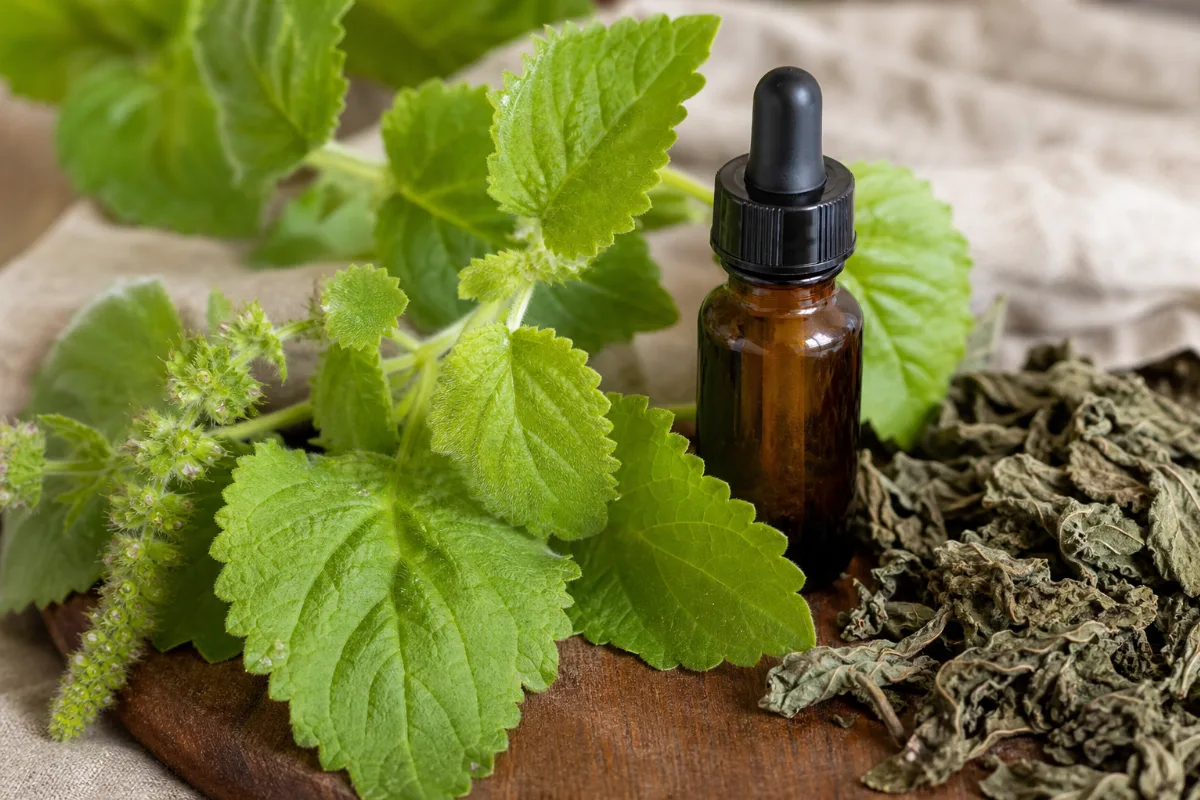
Essential Oils & Aromatherapy · Essential oil
Patchouli Oil
Pogostemon cablin (Blanco) Benth. · also called Patchouli, guang huo xiang
Patchouli oil is the earthy, long-lasting oil distilled from the leaves of a tropical plant in the mint family. It is used mostly in perfumes and aromatherapy, and people try it for stress. There is one small trial in nurses and a few lab and animal studies, so no benefit is proven. The main cautions: it can irritate skin and cause allergy, it must not be swallowed, and bottles are sometimes mixed with cheaper oils.
General information, not medical advice. Last substantive update · Not medically reviewed. A named clinician has not signed off on this page. How this page is made
About Patchouli Oil
Patchouli oil is an earthy leaf oil used in perfume and aromatherapy. One small trial found lower self-rated stress in emergency nurses who sniffed it, but blood pressure and heart rate did not change, and the other findings are tiny, old or from test tubes and rats. Safety comes first: it can irritate skin and eyes, allergy is possible, it is not for swallowing, and it is sometimes mixed with cheaper oils.
What patchouli oil is
The oil comes from the leaves of Pogostemon cablin, a plant in the mint family (Lamiaceae, per GBIF). It is made by distilling the leaves.
The oil is a mixture of many compounds. A review counts more than 140 compounds in the plant. Papers name patchouli alcohol, alpha-bulnesene, alpha-guaiene and seychellene among the main ones in the oil, and the mix changes with where the plant is grown and when it is harvested.
It is not a food or a nutrient. EFSA notes that the leaves and preparations are recognised to flavour food, which is not the same as swallowing the concentrated oil.
What people use it for, and how strong the evidence is
For stress, one trial of 50 emergency nurses found lower self-rated stress and higher compassion satisfaction after sniffing patchouli in almond oil, compared with almond oil alone. Blood pressure and heart rate did not differ. A small 2002 experiment found a lower sympathetic-nerve marker in healthy adults, and a children's dental trial reported falling anxiety with patchouli or lavender (lavender slightly better, no numbers in the abstract).
Everything else is in test tubes, cage tests or animals: acne bacteria, skin markers, mosquito repellent, and weight and anxiety-like behaviour in rats. Patchouli oil was far weaker than clove oil as a repellent. No trial for depression, sleep or appetite was found.
The research in one view
Only four small studies in people were found, and none is large or confirmed by a second trial. A scent is hard to hide from a comparison group. Reviews that list many activities for patchouli and patchouli alcohol rely on lab and animal work, and their authors say more testing is needed.
Oils, extracts and bottles are different things
Results for patchouli alcohol alone, for a herb extract, or for the herb's volatile oil do not describe the commercial essential oil. The skin-soothing paper tested an extract, and the rat anxiety study gave the oil by mouth.
Lab authors say patchouli oil is frequently adulterated, even today. Gurjun and copaiba balsams are named as hard-to-spot additions; GC-MS detected all volatile adulterants in one study, while a simple refractive-index test caught only 8 of 17. Poison Control says it can be hard to know the species, strength and contaminants in an essential oil bottle.
What regulators say
EFSA's 2025 animal-feed opinion found patchouli oil safe in feed at stated low levels for all animal species, saw no concern for consumers at those levels, and said users should treat the oil as an irritant to skin and eyes and a respiratory sensitiser. That is about feed, not diffusers or skin products.
We did not find or read a statement from IFRA, the EU cosmetics regulator, FDA, NCCIH or EMA about this oil.
At a glance
Traditional uses history, not proof
- Plant used traditionally for colds, headaches, fever, nausea, vomiting, diarrhea, abdominal pain, and insect and snake bites (2015 review).
- Oil used in aromatherapy for depression, stress, calming the nerves, appetite control and sexual interest (2015 review; use, not proof).
- Raw material for perfumes; leaves and preparations recognised by EFSA as food flavouring.
Studied for research
- Work stress in nurses, smelled, low
- Children's dental anxiety, very-low
- The body's stress-response marker, very-low
- Mosquito repellent in cage tests, very-low
- Acne bacteria, skin soothing, dog skin bacteria: test tube only
- Anxiety, weight and cholesterol markers: rats only
Main compounds
- Patchouli alcohol, the best-known compound
- Alpha-bulnesene
- Alpha-guaiene
- Seychellene
- Pogostone, in some plants
Common forms
- Essential oil (distilled from leaves)
- Scent in the air or on cotton
- Perfumes, cosmetics and skin-care products
- Herb extracts (a different thing from the oil)
Research links: Poison Control: Essential oils · EFSA opinion on patchouli oil (abstract) · Patchouli inhaled by emergency nurses (abstract) · Fragrance allergy review (abstract) · Patchouli oil adulteration, NMR and GC-MS (abstract) · GBIF: Pogostemon cablin · Research Library · Genes & Biomarkers Library
What it is and its history
- Accepted scientific name
- Pogostemon cablin
- Naming authority
- (Blanco) Benth.
- Common names
- Patchouli (English); Patchouli oil (English); Guang huo xiang (guanghuoxiang) (Chinese (pinyin))
- Family or group
- Lamiaceae (the mint family), per GBIF.
- Classification
- Plantae > Tracheophyta > Magnoliopsida > Lamiales > Lamiaceae > Pogostemon > Pogostemon cablin
- Native range
- Not checked in a source read for this page.
- Habitat
- Not described in the sources read.
- What it looks like
- Part used: EFSA describes the oil as derived from the leaves of P. cablin; the 2017 review says patchouli alcohol is isolated mainly from the aerial part. This page does not describe how to recognise the plant.
- Look-alikes and adulterants
- Name: Other plants called huo xiang; Note: Some other plants are sold under similar herb names. No source naming a look-alike for the oil was read, so none is claimed.
- Sustainability and conservation
- Not checked (no IUCN or CITES source read).
Traditional use and history history, not clinical proof
| Tradition or era | Documented use | Source |
|---|---|---|
| Traditional medicine | A 2015 review says patchouli is traditionally used for colds, headaches, fever, nausea, vomiting, diarrhea, abdominal pain, and insect and snake bites, and that some traditional uses need to be verified. | Swamy and Sinniah 2015 (abstract) |
| Aromatherapy and perfume | The same review says patchouli is widely used in the fragrance industry, and that in aromatherapy the oil is used for depression, stress, calming the nerves, appetite control and sexual interest. These are descriptions of use, not proof. | Swamy and Sinniah 2015 (abstract) |
| Food flavour | EFSA says leaves of P. cablin and its preparations are recognised to flavour food. | EFSA 2025 (abstract) |
Traditional use shows how it was used. It does not show that it works or is safe today.
What is inside, and how it may work
What it contains and how those compounds act in cells and animals. Laboratory and animal mechanisms are not proven effects in people.
Main compounds
| Compound | Family | Where it is concentrated | Activity studied | Level of evidence |
|---|---|---|---|---|
| Patchouli alcohol (patchoulol) PubChem 10955174 | tricyclic sesquiterpene alcohol | Distilled leaf oil More than 30% in one commercial oil tested (2023 cage-test paper). | The best-studied compound; reviews list many lab activities. Reviews say its toxicology and mechanisms need more study. 22 8 2 | Laboratory |
| Alpha-bulnesene PubChem 94275 | sesquiterpene | Distilled leaf oil About 10.96% in one oil tested. | Named as a main component; no activity of its own was read. 22 2 1 | Laboratory |
| Alpha-guaiene PubChem 5317844 | sesquiterpene | Distilled leaf oil About 9.23% in one oil tested. | Named as a main component; no activity of its own was read. 22 2 1 | Laboratory |
| Seychellene PubChem 22211634 | sesquiterpene | Distilled leaf oil About 7.57% in one oil tested. | Named as a main component; no activity of its own was read. 22 2 | Laboratory |
| Pogostone PubChem 54695756 | ketone | Herb volatile oil (pogostone-type plants) Varies by chemotype; no typical value given. | Named among the main compounds in a review; rich in one chemotype of the herb. 22 17 11 | Laboratory |
Mechanisms, receptors and pathways
| Target or pathway | Gene or receptor | What was found | Level |
|---|---|---|---|
| Body's stress response in healthy adults | Not applicable | Smelling patchouli lowered a blood-pressure-based marker of sympathetic activity by about 40% compared with an odorless solvent. The abstract does not say how. 6 | Human correlational |
| Smell centres of the brain (people) | Not applicable | Patchouli activated the orbitofrontal cortex, insula, parahippocampal gyrus, occipital cortex and corpus callosum on MRI in 10 volunteers. 12 | Human correlational |
| Gut bacteria, short-chain fatty acids and serotonin-related markers (rats) | Not specified | Oil given by mouth to stressed rats shifted gut bacteria and some brain serotonin-related measures alongside behaviour changes. 13 | In vivo animal |
| Leptin and cholesterol (rats) | Not specified | Rats breathing the oil had lower leptin and higher HDL cholesterol in an obesity model. 7 | In vivo animal |
| Bacterial membranes and inflammatory cytokines (cells) | TNF-alpha, IL-1beta, IL-6 | The oil damaged skin bacteria's membranes and reduced cytokine release in two cell models. 1 | Laboratory research |
| Skin CB2 receptor and beta-endorphin (skin model) | CB2, IL1R1, IL6ST, TRPV1 | A patchouli extract raised CB2 and beta-endorphin and lowered inflammation-related markers in stressed skin material. 10 | Laboratory research |
Absorption, metabolism and elimination
- Absorption
- Not established for the oil. A 2017 review says patchouli alcohol fits a two-compartment open model with first-order elimination; the abstract does not say the species or route.
- Distribution
- Not established.
- Metabolism
- The review mentions biometabolism and biotransformation of patchouli alcohol but the abstract gives no details.
- Elimination
- First-order elimination for patchouli alcohol (2017 review abstract).
- Bioavailability
- Not established.
Isolated compounds versus whole extracts
Patchouli oil is a mixture of many compounds, and its makeup changes with chemotype, growing region and harvest time. Results for patchouli alcohol alone, for the herb's volatile oil, or for an extract do not describe the commercial essential oil. Lab results from cells and rats do not describe smelling the oil.
Nutritional composition
Patchouli oil is not a nutrient and not a food ingredient to take for health. EFSA notes that leaves and preparations are recognised to flavour food, which is not the same as swallowing the concentrated oil.
1 low certainty3 very low certainty8 not enough evidence
What was looked at
The 12 benefits and uses checked for Patchouli Oil, each with how strong the evidence is. Tap one to open it.
- Work stress in emergency nurses (smelling 5% patchouli oil)Low certainty
- Children's dental anxiety (patchouli or lavender scent)Very low certainty
- The body's stress-response marker (smelling patchouli oil)Very low certainty
- Brain response to the smell (healthy volunteers)Not enough evidence
- Anxiety-like and depression-like behaviour in stressed rats (animal work)Not enough evidence
- Aromatherapy claims (depression, stress, "calming the nerves")Not enough evidence
- Acne-related bacteria and skin inflammation (test tube)Not enough evidence
- Skin soothing (patchouli extract, lab)Not enough evidence
- Mosquito repellent (cage tests)Very low certainty
- Bacteria from dogs with skin infections (test tube)Not enough evidence
- Body weight, cholesterol and blood pressure markers in obese rats (animal work)Not enough evidence
- Patchouli alcohol: lab claims (immune, tumour, microbe)Not enough evidence
Lab markers tracked in the studies
Self-rated stress and compassion satisfaction scoresBlood pressure and heart rateRelative sympathetic activity (SBP-LF amplitude)Child anxiety scale and pulse rate before dental careLeptin and HDL cholesterol (rat study)TNF-alpha, IL-1beta and IL-6 (cell study)
What is Patchouli Oil good for?
The uses people ask about and how strong the evidence is. Read the certainty label first: nothing here is better than low, and several findings come only from test tubes or animals.
Benefits, one by one
Each card is a research question, not a promise. Tap a goal to filter. Open a card to see the studies, doses and limits.
Work stress in emergency nurses (smelling 5% patchouli oil)
Low certaintyIn one trial of 50 emergency nurses, those who sniffed patchouli oil in almond oil twice, a day apart, rated their stress lower and their compassion satisfaction higher than nurses who sniffed almond oil alone. Blood pressure and heart rate did not differ.
1 studiesNot covered. This page gives no amounts and no way to use the oil.
Studies, doses and limits
What the trials found
One randomized trial, 50 emergency nurses (25 per group), registered KCT0004615.
Results
Stress was lower and compassion satisfaction higher with patchouli than with almond oil alone (both p < 0.001). Compassion fatigue and burnout did not differ between groups; blood pressure and heart rate did not differ.
Effect sizes as reported
Stress 0.06 vs 1.19; compassion satisfaction 0.56 vs -2.84 (patchouli vs control). The abstract does not give confidence intervals.
Why this rating
One small, short trial with self-rated outcomes. A scent cannot be hidden from the person smelling it, so people may guess which group they are in. No second trial was found.
Form and dose studied
Not covered. This page gives no amounts and no way to use the oil.
Who was studied
Emergency nurses at one hospital in South Korea.
Limits
25 nurses per group, two sniffs one day apart, no follow-up. One author works at a company research institute; funding was not in the abstract.
Why researchers looked
Emergency nursing is stressful, and scent is a low-cost thing to try.
Traditional use
A plant review says patchouli oil is used in aromatherapy to relieve depression and stress and to calm the nerves (this describes use, not proof).
Proposed mechanism Preliminary mechanism
Not established. The authors suggest the scent may improve the nurses' professional quality of life; no mechanism was tested in the abstract.
A proposed mechanism does not show that the effect happens in people.
Patchouli oil can irritate skin and eyes and is a respiratory sensitiser for people handling it (EFSA). See Safety.
Children's dental anxiety (patchouli or lavender scent)
Very low certaintyA 2023 trial of 60 children aged 6 to 12 compared lavender and patchouli scent before dental treatment. Anxiety scores and pulse rate fell over time with both, and lavender did slightly better. The abstract gives no numbers and does not clearly compare patchouli with no scent.
1 studiesNot covered. This page gives no amounts and no way to use the oil.
Studies, doses and limits
What the trials found
One randomized comparison, 60 children aged 6 to 12 in India.
Results
Significant reductions in anxiety score and pulse rate between time points; lavender did slightly better than patchouli. No figures are given in the abstract.
Effect sizes as reported
No effect sizes in the abstract.
Why this rating
The abstract does not say how groups were set up or give numbers, and a fall in anxiety over a visit can happen without any scent.
Form and dose studied
Not covered. This page gives no amounts and no way to use the oil.
Who was studied
Children aged 6 to 12 before dental treatment.
Limits
Unclear groups, no numbers, scent hard to hide, single report.
Why researchers looked
Dental fear is common in children, and a calming scent is a drug-free idea.
Proposed mechanism Preliminary mechanism
Not established.
A proposed mechanism does not show that the effect happens in people.
Children may be more susceptible to essential oils (Poison Control). Keep bottles out of reach.
The body's stress-response marker (smelling patchouli oil)
Very low certaintyIn a small experiment in healthy adults, smelling patchouli oil (or rose oil) lowered a blood-pressure-based marker of sympathetic nervous activity by about 40% compared with an odorless solvent. Some other oils, such as pepper and grapefruit, raised it.
1 studiesNot covered. This page gives no amounts and no way to use the oil.
Studies, doses and limits
What the trials found
One experiment in normal adult volunteers (number not given in the abstract), 2002, from a cosmetics company laboratory.
Results
Patchouli and rose oil each cut relative sympathetic activity by 40% (P < 0.01) compared with the odorless solvent.
Effect sizes as reported
About 40% lower relative sympathetic activity.
Why this rating
One old, small experiment with a lab marker, no symptoms measured, and an author at a cosmetics company.
Form and dose studied
Not covered. This page gives no amounts and no way to use the oil.
Who was studied
Healthy adults.
Limits
Sample size not in the abstract; a short-term marker, not a symptom or a condition.
Why researchers looked
Researchers wanted to know whether different scents calm or stir up the body's "fight or flight" side.
Proposed mechanism Preliminary mechanism
Not established. The marker was measured; the abstract does not say how the scent produces it.
A proposed mechanism does not show that the effect happens in people.
A short-term lab marker only; it does not mean the oil treats stress.
Brain response to the smell (healthy volunteers)
Not enough evidenceIn 10 healthy volunteers, patchouli scent switched on several smell-related brain regions on MRI. This shows the smell registers; it says nothing about stress, mood or health.
1 studiesNot covered. This page gives no amounts and no way to use the oil.
Studies, doses and limits
What the trials found
Ten healthy volunteers aged 22 to 36, functional MRI (article in Polish; English abstract read).
Results
Activation in the regions listed above during 30-second patchouli exposures.
Effect sizes as reported
Descriptive only.
Why this rating
No health outcome was measured.
Form and dose studied
Not covered. This page gives no amounts and no way to use the oil.
Who was studied
Healthy adults.
Limits
Ten people; the aim was to test the imaging method.
Why researchers looked
To map where the brain responds to odours.
Proposed mechanism Preliminary mechanism
Patchouli activated the orbitofrontal cortex, insula, parahippocampal gyrus, occipital cortex and corpus callosum.
A proposed mechanism does not show that the effect happens in people.
None specific.
Anxiety-like and depression-like behaviour in stressed rats (animal work)
Not enough evidenceIn rats put under chronic mild stress, patchouli oil reversed anxiety-like behaviour and eased depression-like behaviour, and shifted the gut bacteria. This is animal work and does not show an effect in people.
1 studiesNot covered. This page gives no amounts and no way to use the oil.
Studies, doses and limits
Results
Reversal of anxiety-like behaviour in the open-field test; less depression-like behaviour in the forced-swim test; shifts in several gut bacteria.
Effect sizes as reported
No effect sizes in the abstract.
Why this rating
Animal study only; animal behaviour tests do not translate directly to people.
Form and dose studied
Not covered. This page gives no amounts and no way to use the oil.
Who was studied
Rats.
Limits
Given by mouth, which is not how aromatherapy is used and not something to copy.
Why researchers looked
Patchouli oil is used in aromatherapy for stress relief; researchers wanted to look for a gut-brain link.
Traditional use
The herb is used in traditional Chinese medicine for stomach and gut symptoms (as described by the authors).
Proposed mechanism Preliminary mechanism
Changes in gut bacteria, short-chain fatty acids and brain serotonin-related measures in rats.
A proposed mechanism does not show that the effect happens in people.
The rats were given the oil by mouth. Do not swallow essential oil (see Safety).
Aromatherapy claims (depression, stress, "calming the nerves")
Not enough evidenceA plant review says that in aromatherapy patchouli oil is used for depression, stress, calming the nerves, controlling appetite and sexual interest. The same review says some traditional uses still need to be verified.
1 studiesNot covered. This page gives no amounts and no way to use the oil.
Studies, doses and limits
Results
A statement about use, not a result.
Why this rating
Descriptions of use are not tests.
Form and dose studied
Not covered. This page gives no amounts and no way to use the oil.
Limits
We did not find a trial of patchouli oil for depression, appetite or sexual interest.
Why researchers looked
Long history as a perfume and herb.
Traditional use
Aromatherapy practice described in a 2015 review (abstract read).
Proposed mechanism Preliminary mechanism
Not established.
A proposed mechanism does not show that the effect happens in people.
None specific.
Acne-related bacteria and skin inflammation (test tube)
Not enough evidenceIn test tubes and cell cultures, patchouli oil stopped acne-related bacteria growing and lowered inflammation signals. Nobody has tested it on people with acne.
1 studiesNot covered. This page gives no amounts and no way to use the oil.
Studies, doses and limits
Results
MIC 0.50 mg/mL; lower cytokines in two cell models.
Effect sizes as reported
MIC 0.50 mg/mL.
Why this rating
Test tubes and cell lines only.
Form and dose studied
Not covered. This page gives no amounts and no way to use the oil.
Limits
No human skin was treated.
Why researchers looked
Skin-care companies look for natural ingredients with antibacterial action.
Proposed mechanism Preliminary mechanism
The oil damaged bacterial membranes and reduced TNF-alpha, IL-1beta and IL-6 release in cell models.
A proposed mechanism does not show that the effect happens in people.
Patchouli oil can irritate skin and has been linked to allergic contact dermatitis (see Safety). Lab results do not show that putting it on skin helps.
Skin soothing (patchouli extract, lab)
Not enough evidenceA cosmetics-science paper reported that a patchouli extract raised skin markers linked to comfort and lowered inflammation markers after UVB or LPS exposure. The abstract does not describe the skin model or say it was the essential oil.
1 studiesNot covered. This page gives no amounts and no way to use the oil.
Studies, doses and limits
Results
Marker changes at 48 hours.
Why this rating
Lab skin work with an extract, and no numbers or funding in the abstract.
Form and dose studied
Not covered. This page gives no amounts and no way to use the oil.
Limits
Not shown in people; extract is not the same as the oil.
Why researchers looked
Cosmetic ingredient screening.
Proposed mechanism Preliminary mechanism
Increased CB2 receptor and beta-endorphin; lower IL1R1, IL6ST and TRPV1 in stressed skin.
A proposed mechanism does not show that the effect happens in people.
Patchouli is a recorded cause of allergic skin reactions (see Safety).
Mosquito repellent (cage tests)
Very low certaintyIn cage tests with a human hand, patchouli oil was one of the two best of seven oils against Aedes mosquitoes, but it was much weaker than clove bud oil.
1 studiesNot covered. This page gives no amounts and no way to use the oil.
Studies, doses and limits
What the trials found
Cage tests with a human hand, no field trial.
Results
Patchouli ED50 about 1248 times higher than clove bud oil; clove gave longer protection.
Effect sizes as reported
ED50 2.496 ug/cm2 (patchouli) vs 0.002 ug/cm2 (clove).
Why this rating
One lab-style test, and patchouli oil was far weaker than the best oil. Repellents are for disease protection, so a weak one gives false comfort.
Form and dose studied
Not covered. This page gives no amounts and no way to use the oil.
Limits
Cage tests only.
Why researchers looked
People look for plant-based alternatives to synthetic repellents.
Proposed mechanism Preliminary mechanism
Not studied.
A proposed mechanism does not show that the effect happens in people.
Mosquito repellent claims do not make a bottle safe on children's skin.
Bacteria from dogs with skin infections (test tube)
Not enough evidenceIn a dish, patchouli oil stopped the growth of staphylococci taken from dogs with skin infections and worked with one antibiotic. No dog was treated.
1 studiesNot covered. This page gives no amounts and no way to use the oil.
Studies, doses and limits
Results
MIC 0.125 to 0.5% v/v; additive with gentamicin in most cases.
Effect sizes as reported
MIC 1.2 to 4.8 mg/mL.
Why this rating
Bacteria in dishes only.
Form and dose studied
Not covered. This page gives no amounts and no way to use the oil.
Limits
Does not show safety or benefit on an animal.
Why researchers looked
Antibiotic-resistant skin infections in dogs.
Proposed mechanism Preliminary mechanism
Not studied.
A proposed mechanism does not show that the effect happens in people.
Nothing here is advice to treat a pet. Ask a vet.
Body weight, cholesterol and blood pressure markers in obese rats (animal work)
Not enough evidenceIn obesity-model rats, breathing patchouli oil was linked to less eating, lower weight, higher HDL cholesterol, lower leptin and relatively lower blood pressure. This is animal work.
2 studiesNot covered. This page gives no amounts and no way to use the oil.
Studies, doses and limits
Results
See above; organ weights did not differ.
Why this rating
Rats only.
Form and dose studied
Not covered. This page gives no amounts and no way to use the oil.
Who was studied
Rats.
Limits
No human trial for weight, cholesterol or blood pressure was found.
Why researchers looked
To find out whether the smell alone changes metabolism.
Traditional use
Aromatherapy use for controlling appetite is mentioned in a plant review (use, not proof).
Proposed mechanism Preliminary mechanism
Lower leptin was suggested by the authors to explain the differences in food intake and weight.
A proposed mechanism does not show that the effect happens in people.
None specific.
Patchouli alcohol: lab claims (immune, tumour, microbe)
Not enough evidenceReviews list many lab activities for patchouli alcohol, the main compound in the oil: immune, anti-inflammatory, antioxidant, anti-tumour, antimicrobial and others. The reviews say proper testing of how it works and its safety is still needed.
2 studiesNot covered. This page gives no amounts and no way to use the oil.
Studies, doses and limits
Results
A 2017 review calls it "maybe a low toxic drug" and says toxicology, pharmacokinetics and mechanisms need further study before clinical use.
Why this rating
Lab and animal reviews only.
Form and dose studied
Not covered. This page gives no amounts and no way to use the oil.
Limits
Only abstracts of the reviews were read.
Why researchers looked
It is the most abundant named compound in the oil.
Proposed mechanism Preliminary mechanism
Reported in cells and animals in reviews; not tested here.
A proposed mechanism does not show that the effect happens in people.
Lab claims are not treatment claims.
Connections to the rest of health
How Patchouli Oil connects to the rest of our health knowledge graph. Every link says what kind of connection it is. A safety link (for example to the liver) is a warning, not a benefit. A study that merely mentions a topic never creates a benefit link.
Explore every connection: goals, body systems, organs, symptoms, genes
A. Wellness goals
| Connected to | Kind of connection | Evidence status | Context | Studies |
|---|---|---|---|---|
| Stress Reduction | Low certainty | Work stress in emergency nurses (smelling 5% patchouli oil): In one trial of 50 emergency nurses, those who sniffed patchouli oil in almond oil twice, a day apart, rated their stress lower and their compassion satisfaction higher than nurses who sniffed almond oil alone. Blood pressure and heart rate did not differ. The body's stress-response marker (smelling patchouli oil): In a small experiment in healthy adults, smelling patchouli oil (or rose oil) lowered a blood-pressure-based marker of sympathetic nervous activity by about 40% compared with an odorless solvent. Some other oils, such as pepper and grapefruit, raised it. | 15 6 | |
| Calm Relaxation | Low certainty | Work stress in emergency nurses (smelling 5% patchouli oil): In one trial of 50 emergency nurses, those who sniffed patchouli oil in almond oil twice, a day apart, rated their stress lower and their compassion satisfaction higher than nurses who sniffed almond oil alone. Blood pressure and heart rate did not differ. | 15 | |
| Anxiety Support | Very low certainty | Children's dental anxiety (patchouli or lavender scent): A 2023 trial of 60 children aged 6 to 12 compared lavender and patchouli scent before dental treatment. Anxiety scores and pulse rate fell over time with both, and lavender did slightly better. The abstract gives no numbers and does not clearly compare patchouli with no scent. | 19 | |
| Mental Wellbeing | Not enough evidence | Brain response to the smell (healthy volunteers): In 10 healthy volunteers, patchouli scent switched on several smell-related brain regions on MRI. This shows the smell registers; it says nothing about stress, mood or health. | 12 | |
| Anxiety Support | Not enough evidence | Anxiety-like and depression-like behaviour in stressed rats (animal work): In rats put under chronic mild stress, patchouli oil reversed anxiety-like behaviour and eased depression-like behaviour, and shifted the gut bacteria. This is animal work and does not show an effect in people. | 13 | |
| Mood Balance | Not enough evidence | Anxiety-like and depression-like behaviour in stressed rats (animal work): In rats put under chronic mild stress, patchouli oil reversed anxiety-like behaviour and eased depression-like behaviour, and shifted the gut bacteria. This is animal work and does not show an effect in people. | 13 | |
| Mood Balance | Traditional use | Not enough evidence | Aromatherapy claims (depression, stress, "calming the nerves"): A plant review says that in aromatherapy patchouli oil is used for depression, stress, calming the nerves, controlling appetite and sexual interest. The same review says some traditional uses still need to be verified. | 17 |
| Stress Reduction | Traditional use | Not enough evidence | Aromatherapy claims (depression, stress, "calming the nerves"): A plant review says that in aromatherapy patchouli oil is used for depression, stress, calming the nerves, controlling appetite and sexual interest. The same review says some traditional uses still need to be verified. | 17 |
| Healthy Skin | Not enough evidence | Acne-related bacteria and skin inflammation (test tube): In test tubes and cell cultures, patchouli oil stopped acne-related bacteria growing and lowered inflammation signals. Nobody has tested it on people with acne. Skin soothing (patchouli extract, lab): A cosmetics-science paper reported that a patchouli extract raised skin markers linked to comfort and lowered inflammation markers after UVB or LPS exposure. The abstract does not describe the skin model or say it was the essential oil. | 1 10 | |
| Inflammation Balance | Not enough evidence | Skin soothing (patchouli extract, lab): A cosmetics-science paper reported that a patchouli extract raised skin markers linked to comfort and lowered inflammation markers after UVB or LPS exposure. The abstract does not describe the skin model or say it was the essential oil. Bacteria from dogs with skin infections (test tube): In a dish, patchouli oil stopped the growth of staphylococci taken from dogs with skin infections and worked with one antibiotic. No dog was treated. | 10 18 8 17 | |
| Inflammation Balance | Very low certainty | Mosquito repellent (cage tests): In cage tests with a human hand, patchouli oil was one of the two best of seven oils against Aedes mosquitoes, but it was much weaker than clove bud oil. | 2 | |
| Healthy Weight | Not enough evidence | Body weight, cholesterol and blood pressure markers in obese rats (animal work): In obesity-model rats, breathing patchouli oil was linked to less eating, lower weight, higher HDL cholesterol, lower leptin and relatively lower blood pressure. This is animal work. | 7 17 | |
| Cellular Protection | Not enough evidence | Patchouli alcohol: lab claims (immune, tumour, microbe): Reviews list many lab activities for patchouli alcohol, the main compound in the oil: immune, anti-inflammatory, antioxidant, anti-tumour, antimicrobial and others. The reviews say proper testing of how it works and its safety is still needed. | 8 17 |
B. Body systems
| Connected to | Kind of connection | Evidence status | Context | Studies |
|---|---|---|---|---|
| Stress Mood | Biological association | Low certainty | Studied for: Work stress in emergency nurses (smelling 5% patchouli oil) Studied for: The body's stress-response marker (smelling patchouli oil) | 15 6 17 |
| Nervous System | Biological association | Very low certainty | Studied for: Children's dental anxiety (patchouli or lavender scent) Studied for: Brain response to the smell (healthy volunteers) | 19 12 13 |
| Skin | Biological association | Not enough evidence | Studied for: Acne-related bacteria and skin inflammation (test tube) Studied for: Skin soothing (patchouli extract, lab) | 1 10 2 18 |
| Whole Body | Biological association | Not enough evidence | Studied for: Body weight, cholesterol and blood pressure markers in obese rats (animal work) | 7 17 |
| Cells | Biological association | Not enough evidence | Studied for: Patchouli alcohol: lab claims (immune, tumour, microbe) | 8 17 |
E. Health conditions
| Connected to | Kind of connection | Evidence status | Context | Studies |
|---|---|---|---|---|
| Contact dermatitis | Adverse effect or risk | Documented risk | Listed as a less frequent fragrance sensitizer in a 2015 review; a 2026 case report (title only). Preparation or compound: Patchouli oil or products containing it, on the skin |
4 14 |
| Emotional stress | Preliminary | One trial in 50 emergency nurses found lower self-rated stress; small and short. Preparation or compound: Patchouli oil, smelled |
15 |
I. Biomarkers
| Connected to | Kind of connection | Evidence status | Context | Studies |
|---|---|---|---|---|
| Self-rated stress and compassion satisfaction scores | Biological association | Low certainty | Measured in trials: decrease. A lab change is not the same as a health benefit. | 15 |
| Blood pressure and heart rate | Biological association | Low certainty | Measured in trials: no-change. A lab change is not the same as a health benefit. | 15 |
| Relative sympathetic activity (SBP-LF amplitude) | Biological association | Very low certainty | Measured in trials: decrease. A lab change is not the same as a health benefit. | 6 |
| Child anxiety scale and pulse rate before dental care | Biological association | Very low certainty | Measured in trials: decrease. A lab change is not the same as a health benefit. | 19 |
| Leptin and HDL cholesterol (rat study) | Biological association | Not enough evidence | Measured in trials: mixed. A lab change is not the same as a health benefit. | 7 |
| TNF-alpha, IL-1beta and IL-6 (cell study) | Biological association | Not enough evidence | Measured in trials: decrease. A lab change is not the same as a health benefit. | 1 |
J. Genes, receptors and enzymes
| Connected to | Kind of connection | Evidence status | Context | Studies |
|---|---|---|---|---|
| Cannabinoid receptor 2 (CB2) | Preliminary mechanism | In vitro | Raised in skin material treated with a patchouli extract. | 10 |
K. Biological pathways
| Connected to | Kind of connection | Evidence status | Context | Studies |
|---|---|---|---|---|
| Leptin | Preliminary mechanism | In vivo animal | Lower in obesity-model rats that breathed the oil. | 7 |
L. Active compounds
| Connected to | Kind of connection | Evidence status | Context | Studies |
|---|---|---|---|---|
| Patchouli alcohol (patchoulol) | Biological association | Laboratory | The best-studied compound; reviews list many lab activities. Reviews say its toxicology and mechanisms need more study. Preparation or compound: Distilled leaf oil |
22 8 2 |
| Alpha-bulnesene | Biological association | Laboratory | Named as a main component; no activity of its own was read. Preparation or compound: Distilled leaf oil |
22 2 1 |
| Alpha-guaiene | Biological association | Laboratory | Named as a main component; no activity of its own was read. Preparation or compound: Distilled leaf oil |
22 2 1 |
| Seychellene | Biological association | Laboratory | Named as a main component; no activity of its own was read. Preparation or compound: Distilled leaf oil |
22 2 |
| Pogostone | Biological association | Laboratory | Named among the main compounds in a review; rich in one chemotype of the herb. Preparation or compound: Herb volatile oil (pogostone-type plants) |
22 17 11 |
Each connection is stored with the ingredient, the connected record, the kind of connection, the evidence status, the supporting studies, the preparation or compound involved, and a review date (last reviewed October 25, 2026).
Evidence at a glance: what changed in 2 lab markers
Tap a number to show only those markers. Counts are markers, not people.
The evidence
The research centre for Patchouli Oil. Every record here was checked against PubMed or the publisher's page; we never list a study we have not verified.
Evidence by outcome
Bars show how many studies we found for each outcome, not how well it works. People are added up across trials only (reviews are not added, to avoid double counting).
How we rate evidence
High certainty
Several well-run trials or reviews agree; further research is unlikely to change the picture much.
Moderate certainty
Good trials point the same way, but some doubt remains.
Low certainty
Small, short or inconsistent trials. The finding could change with better research.
Very low certainty
Very little or very weak human data. Treat as a possibility only.
Mixed findings
Trials or reviews disagree with each other.
Not enough evidence
Not enough human research to say either way.
Evidence against
Good research found no benefit, or found harm.
We take the reviewers' own risk-of-bias and GRADE statements where they exist, and otherwise judge from study size, design, consistency, directness and whether a product matches what is sold. Many publications do not make evidence high. Method note: We read the abstracts of 18 PubMed papers and the title of one more and the Poison Control page, checked the plant name in GBIF and the compounds in PubChem. We did not find or read a LiverTox, LactMed, IFRA or FDA statement.
Study library: every study we checked 22
| Study | Design | People | Product, dose, length | Result |
|---|---|---|---|---|
| Cui 2026 Antibacterial, In Vitro Anti-Inflammatory and Anti-Acne Activities of Patchouli Essential Oil Pharmaceuticals (Basel) · PMID 42356504 · DOI |
Laboratory study (bacteria and cell lines) in vitro |
Skin bacteria (C. acnes, S. epidermidis); mouse immune cells; human keratinocyte cell line | Patchouli essential oil in dishes essential oil Not reported here · vs untreated cells |
The oil mainly contained alpha-guaiene, patchouli alcohol and alpha-bulnesene. It stopped the growth of the bacteria (MIC 0.50 mg/mL), damaged their membranes, and reduced TNF-alpha, IL-1beta and IL-6 release and keratinocyte over-growth in two cell models. MIC 0.50 mg/mL Methods, limits and fundingOutcomes: Minimum inhibitory concentration, membrane leakage, inflammatory cytokines Limitations: Test tubes and cell lines only; nothing was put on a person's skin. Funding and conflicts: Authors declared no conflicts of interest. Read: abstract |
| Deng 2023 Repellent Screening of Selected Plant Essential Oils Against Dengue Fever Mosquitoes Using Behavior Bioassays Neotrop Entomol · PMID 36928838 · DOI |
Cage tests with a human hand and mosquitoes human + insects |
Aedes mosquitoes in cages; seven essential oils compared | Patchouli oil and clove bud oil on skin in cage tests essential oil Not reported here minutes of protection · vs other oils |
Clove bud oil and patchouli oil were the two most effective of seven oils. The ED50 of patchouli oil (2.496 ug/cm2) was 1248 times higher than that of clove bud oil (0.002 ug/cm2), and clove oil gave longer complete protection. Patchouli oil was more than 30% patchouli alcohol, with alpha-bulnesene about 10.96%, alpha-guaiene about 9.23% and seychellene about 7.57%. Patchouli ED50 about 1248 times higher than clove oil Methods, limits and fundingOutcomes: Complete protection time and ED50 against Aedes aegypti Limitations: Cage tests with mosquitoes, not field trials against disease. The abstract's own safety remark is not tested here. Funding and conflicts: Authors declared no competing interests. Read: abstract |
| EFSA Panel on Additives and Products or Substances used in Animal Feed (FEEDAP); Villa 2025 Safety and efficacy of a feed additive consisting of an essential oil derived from the leaves of Pogostemon cablin Benth. (patchouli oil) for use in all animal species (FEFANA asbl) EFSA J · PMID 40248049 · DOI |
Regulatory scientific opinion (animal feed additive) regulatory |
All animal species (feed and drinking water additive) | Patchouli oil from leaves of P. cablin as a feed flavouring leaf essential oil Not reported here |
EFSA concluded the oil is safe in complete feed up to stated maximum use levels, listed separately for chickens, pigs, horses, rabbits, dogs, cats and other groups (the same low level applies to dogs and cats). No concerns for consumers were identified at the highest proposed feed level. For user safety the oil should be considered an irritant to skin and eyes and a respiratory sensitiser. No environmental risk was expected. Leaves of P. cablin and preparations are recognised to flavour food, so no further efficacy proof was needed. Regulatory opinion Methods, limits and fundingOutcomes: Safety for animals, consumers, users and the environment; efficacy Limitations: This is about a feed additive, not about diffusers, skin products or the oil swallowed by people. Only the abstract was read. Funding and conflicts: EFSA is an independent EU agency. Read: abstract |
| Geier 2015 Diagnostic workup of fragrance allergy (article in German; English abstract read) Hautarzt · PMID 26253114 · DOI |
Expert review |
People with suspected fragrance allergy | n/a Not reported here |
Frequently sensitizing fragrance materials include the 14 components of the two fragrance mixes, tree moss, ylang ylang oil (I + II), lemongrass oil, sandalwood oil and jasmine absolute, and, less frequently, clove oil, cedarwood oil, neroli oil, salicylaldehyde, narcissus absolute and patchouli oil (Pogostemon cablin). Patchouli listed among the less frequent sensitizers Methods, limits and fundingOutcomes: Which fragrance materials commonly cause contact allergy Limitations: Short expert review; the abstract gives no rates for patchouli. Funding and conflicts: Not stated in the abstract. Read: abstract |
| Geier 2022 Contact sensitization to essential oils: IVDK data of the years 2010-2019 Contact Dermatitis · PMID 35417610 · DOI |
Retrospective analysis of a dermatology clinic network database |
10930 Dermatitis patients in German-speaking skin clinics patch-tested with 12 essential oils |
Twelve essential oils patch tested essential oils Not reported here |
Of 10,930 patients tested, 908 (8.3%) reacted to at least one oil. Only six oils gave more than 1% positive reactions: ylang ylang (I + II) 3.9%, lemongrass 2.6%, jasmine absolute 1.8%, sandalwood 1.8%, clove 1.6% and neroli 1.1%. Concomitant reactions among oils or to oils and fragrances were frequent. Masseurs and cosmeticians were over-represented among those who reacted. Patchouli is not among the six oils named above 1% Methods, limits and fundingOutcomes: Share with a positive patch test Limitations: The abstract does not say whether patchouli was one of the 12 oils tested, so the absence of a patchouli figure is not a finding. Clinic patients are not the general public. Funding and conflicts: Not stated in the abstract. Read: abstract |
| Haze 2002 Effects of fragrance inhalation on sympathetic activity in normal adults Jpn J Pharmacol · PMID 12499579 · DOI |
Small experimental study in healthy adults |
Normal adult volunteers (number not given in the abstract) | Patchouli oil and other essential oils, inhaled essential oil Not reported here single inhalation · vs odorless solvent (triethyl citrate) |
Inhaling rose oil or patchouli oil caused a 40% decrease in relative sympathetic activity compared with the odorless solvent (P < 0.01 each). Pepper, estragon, fennel and grapefruit oils raised it 1.5- to 2.5-fold. Adrenaline was measured for pepper and rose oils, not reported for patchouli. About 40% lower relative sympathetic activity (P < 0.01) Methods, limits and fundingOutcomes: Relative sympathetic activity from blood-pressure fluctuations (SBP-LF amplitude); plasma adrenaline for some oils Limitations: Sample size is not in the abstract. A short-term lab marker in healthy people, not a symptom or a disease. Funding and conflicts: Not stated in the abstract. The author address is Shiseido Co., Ltd., a cosmetics company. Read: abstract |
| Hong 2020 Inhalation of Patchouli (Pogostemon Cablin Benth.) Essential Oil Improved Metabolic Parameters in Obesity-Induced Sprague Dawley Rats Nutrients · PMID 32668680 · DOI |
Animal study (rats) rat |
Obesity-induced Sprague Dawley rats | Patchouli essential oil, inhaled essential oil Not reported here · vs rats without the oil |
Rats breathing the oil ate less and weighed less in the obesity model. Organ weights did not differ. HDL cholesterol was higher and leptin lower with the oil; systolic blood pressure was relatively lower. Animal markers only Methods, limits and fundingOutcomes: Food intake, body weight, organ weights, cholesterol, leptin, systolic blood pressure Limitations: Rats; no human data. The authors call it basic data for future research. Funding and conflicts: Authors declared no conflict of interest. Read: abstract |
| Hu 2017 Availability, Pharmaceutics, Security, Pharmacokinetics, and Pharmacological Activities of Patchouli Alcohol Evid Based Complement Alternat Med · PMID 28421121 · DOI |
Narrative review review of lab and animal work |
Patchouli alcohol (a compound) in cells, animals and chemistry | Patchouli alcohol compound from P. cablin Not reported here |
The authors found that patchouli alcohol "maybe was a low toxic drug", with a two-compartment open pharmacokinetic model and first-order elimination, and reported immunomodulatory, anti-inflammatory, antioxidative, antitumor, antimicrobial, insecticidal, antiatherogenic, antiemetic, whitening and sedative activity. They say preparation, toxicology, pharmacokinetics and mechanisms need systematic evaluation before clinical use. Narrative review Methods, limits and fundingOutcomes: Security (toxicity), pharmacokinetics and activities of patchouli alcohol Limitations: About the single compound, not the whole oil. The abstract does not say which species the pharmacokinetics came from. Funding and conflicts: Not stated in the abstract. Read: abstract |
| Krause 2018 Is Low-field NMR a Complementary Tool to GC-MS in Quality Control of Essential Oils? A Case Study: Patchouli Essential Oil Planta Med · PMID 29689585 · DOI |
Laboratory method study lab |
75 genuine patchouli oils, 10 commercial patchouli oils, 10 other oils, 17 adulterants | Patchouli oil and 17 adulterants (one oil spiked at 20%) essential oil Not reported here |
The authors say patchouli oil is frequently adulterated, even today. Visual NMR inspection detected 14 of 17 adulterants easily; gurjun and copaiba balsams were difficult and one adulterant could not be detected. Chemometric NMR recognised good-quality patchouli oils and 15 of 17 deliberate adulterations. GC-MS detected all volatile adulterants. Refractive index detected only 8 of 17. NMR chemometrics caught 15 of 17 adulterations; refractive index 8 of 17 Methods, limits and fundingOutcomes: Detection of adulteration by 60 MHz NMR, GC-MS and refractive index Limitations: Lab-made adulterations. The abstract does not give how many shop oils were adulterated. Funding and conflicts: Two authors work for the company that makes the chemometric software used. Read: abstract |
| Labarrade 2020 Soothing Effect of Pogostemon cablin Extract (Patchouli), via Cannabinoid Receptor 2 Modulation in Human Skin J Cosmet Sci · PMID 33413786 |
Laboratory skin study (model not described in the abstract) in vitro |
Human skin material (the abstract does not describe the model) | Pogostemon cablin extract (the abstract does not say it is the essential oil) extract Not reported here about 48 hours · vs untreated skin |
After the extract, CB2 receptor and beta-endorphin expression rose at 48 hours, and IL1R1, IL6ST and TRPV1 were lower in skin exposed to UVB or LPS. The authors conclude it may reduce skin discomfort. Marker changes only Methods, limits and fundingOutcomes: CB2 receptor, beta-endorphin and inflammation markers after UVB or LPS Limitations: Skin model of unclear type, an extract rather than the oil, and the abstract does not give funding or numbers. Funding and conflicts: Not stated in the abstract. Read: abstract |
| Luo 2003 Two chemotypes of Pogostemon cablin and influence of region of cultivation and harvesting time on volatile oil composition (article in Chinese; English abstract read) Yao Xue Xue Bao · PMID 12889135 |
Laboratory comparison (GC MS) lab |
Herba Pogostemonis (P. cablin herb) from several regions in Guangdong and Hainan | Volatile oil of the herb herb Not reported here |
Composition differed by region and harvest time. The plant fell into two chemotypes: a pogostone-type (Guangzhou and Gaoyao, "Shipai Huoxiang") and a patchouliol-type ("Hainan Huoxiang"). Yields of pogostone and volatile oil were higher in July in the pogostone-type. Two chemotypes Methods, limits and fundingOutcomes: Volatile oil composition by region and harvest time Limitations: Old Chinese study of the herb, not of commercial oil. Funding and conflicts: Not stated. Read: abstract |
| Marchwicka-Wasiak 2004 The application of functional magnetic resonance imaging for the assessment of localisation and activation of cortex smell centers depending on stimulus used in normal volunteers Otolaryngol Pol · PMID 15732770 |
Brain imaging in healthy volunteers (article in Polish; English abstract read) |
10 Healthy right-handed non-smokers aged 22 to 36 |
Patchouli and geraniol odour, 30 seconds odorant (not described as an oil in the abstract) Not reported here 30 seconds on, 30 seconds off · vs room air |
Patchouli activated the orbitofrontal cortex, insula, parahippocampal gyrus, occipital cortex and corpus callosum. Geraniol gave the biggest activation in the orbitofrontal region, cingulate gyrus and insula. Descriptive; no health outcome Methods, limits and fundingOutcomes: Brain regions activated on functional MRI Limitations: Ten people, no health outcome, no comparison of effects. Shows that smell reaches the brain, not that it helps. Funding and conflicts: Not stated in the abstract. Read: abstract |
| Ouyang 2024 Pogostemon cablin essential oil affects anxiety- and depressive-like behaviors and the gut microbiota in chronic unpredictable mild stress model rats Front Nutr · PMID 38419848 · DOI |
Animal study (rats) rat |
Rats given chronic unpredictable mild stress | Patchouli essential oil given by mouth to rats essential oil Not reported here · vs untreated stressed rats |
In the stressed rats the oil reversed the anxiety-like behaviour in the open-field test and reduced depression-like behaviour in the forced-swim test. It shifted gut bacteria and some short-chain fatty acids and restored some brain serotonin-related measures. Animal behaviour tests only Methods, limits and fundingOutcomes: Open-field and forced-swim behaviour, gut bacteria, short-chain fatty acids, serotonin-related markers Limitations: Rats, given by mouth. It does not show an effect in people, and it is not a reason to swallow the oil. Funding and conflicts: Authors declared no commercial or financial relationships. Read: abstract |
| Rosato 2026 Allergic Contact Dermatitis to a Product Containing Patchouli Essential Oil in a Non-Occupational Setting Contact Dermatitis · PMID 41461377 · DOI |
Case report (title and authors only; no abstract on PubMed) |
1 Not available (no abstract) |
A product containing patchouli essential oil essential oil Not reported here |
Only the title and authors were available. The title reports allergic contact dermatitis to a product containing patchouli essential oil in a non-occupational setting. We cannot describe the case, its test results or the product. Not available Methods, limits and fundingOutcomes: Not available Limitations: No abstract was available, so only the title is used. Funding and conflicts: Not stated. Read: title-only |
| Shin 2020 Effects of Short-Term Inhalation of Patchouli Oil on Professional Quality of Life and Stress Levels in Emergency Nurses: A Randomized Controlled Trial J Altern Complement Med · PMID 32907352 · DOI |
Randomized controlled trial |
50 Emergency nurses at a university hospital in Incheon, South Korea |
5% patchouli oil in sweet almond oil, inhaled essential oil (leaf) Not reported here two inhalations 24 hours apart · vs pure sweet almond oil, inhaled |
No significant differences in blood pressure, heart rate, compassion fatigue or burnout. Stress was lower (0.06 +/- 0.48 vs 1.19 +/- 1.19, p < 0.001) and compassion satisfaction higher (0.56 +/- 2.50 vs -2.84 +/- 2.43, p < 0.001) in the patchouli group than in the control group. Compared with their own starting point, compassion fatigue was lower in the patchouli group (26.72 +/- 4.98 vs 25.88 +/- 4.63, p = 0.016). Stress 0.06 vs 1.19 and compassion satisfaction 0.56 vs -2.84 (patchouli vs almond oil) Methods, limits and fundingOutcomes: Blood pressure, heart rate, stress, compassion satisfaction, compassion fatigue, burnout Limitations: 25 nurses per group, two sniffs a day apart, self-rated scales, and the scent cannot be hidden from the person smelling it. The abstract does not say whether the stress numbers are changes from baseline. Funding and conflicts: Funding not stated in the abstract. One author works at KT&G Central Research Institute, a company research centre. Registration: KCT0004615 Read: abstract |
| Sufriadi 2023 Partial Least Squares-Discriminant Analysis Classification for Patchouli Oil Adulteration Detection by Fourier Transform Infrared Spectroscopy in Combination with Chemometrics ACS Omega · PMID 37033846 · DOI |
Laboratory method study lab |
Patchouli oil, gurjun balsam oil and lab-made mixtures | Patchouli oil deliberately mixed with gurjun balsam oil essential oil Not reported here |
Even at the lowest mixing ratio tested (0.5% gurjun balsam oil), the model detected the added oil, with accuracy above 99% in validation. Detected from 0.5% mixing Methods, limits and fundingOutcomes: Whether infrared spectroscopy can detect the mix Limitations: The adulterated samples were made in the laboratory; how common this is in shops was not studied. Funding and conflicts: Authors declared no competing financial interest. Read: abstract |
| Swamy 2015 A Comprehensive Review on the Phytochemical Constituents and Pharmacological Activities of Pogostemon cablin Benth.: An Aromatic Medicinal Plant of Industrial Importance Molecules · PMID 25985355 · DOI |
Narrative review review |
Patchouli (P. cablin) essential oil and extracts | Patchouli oil and extracts leaves and aerial parts Not reported here |
Patchouli is widely used in the fragrance industry. Traditionally it is used for colds, headaches, fever, nausea, vomiting, diarrhea, abdominal pain, and insect and snake bites. In aromatherapy the oil is used to relieve depression and stress, calm nerves, control appetite and improve sexual interest. More than 140 compounds have been identified; the main ones are patchouli alcohol, alpha-patchoulene, beta-patchoulene, alpha-bulnesene, seychellene, norpatchoulenol, pogostone, eugenol and pogostol. Reported lab activities include antioxidant, analgesic, anti-inflammatory, antiplatelet, antithrombotic, antidepressant, antiemetic, fibrinolytic and cytotoxic. The authors say some traditional uses need to be verified. Narrative review Methods, limits and fundingOutcomes: Constituents, traditional use and reported activities Limitations: Review of lab and traditional sources; only the abstract was read. Funding and conflicts: Authors declared no conflict of interest. Read: abstract |
| Szewczuk 2023 Activity of Patchouli and Tea Tree Essential Oils against Staphylococci Isolated from Pyoderma in Dogs and Their Synergistic Potential with Gentamicin and Enrofloxacin Animals (Basel) · PMID 37106842 · DOI |
Laboratory study on bacteria from dogs in vitro |
21 Staphylococcus strains (13 S. pseudintermedius, 8 S. aureus) from dogs with skin infection |
Patchouli oil and tea tree oil with two antibiotics in dishes essential oil Not reported here · vs antibiotics alone |
Patchouli oil stopped growth at 0.125 to 0.5% v/v (1.2 to 4.8 mg/mL), at a lower level than tea tree oil. With gentamicin, patchouli oil was additive in most cases; with enrofloxacin there was usually no interaction. The authors state both commercial oils were of natural composition without artificial adulteration. MIC 0.125 to 0.5% v/v Methods, limits and fundingOutcomes: Minimum inhibitory concentration and antibiotic synergy Limitations: Bacteria in dishes only; no dog was treated. The authors' suggestion about treating dogs is not tested here. Funding and conflicts: Authors declared no conflict of interest. Read: abstract |
| Tripathy 2023 Comparative Evaluation between Lavender Essential Oil and Patchouli Essential Oil in Aromatherapy and Its Effect on Dental Anxiety in Children Int J Clin Pediatr Dent · PMID 38162239 · DOI |
Randomized comparison of two oils (abstract unclear on groups) |
60 Children aged 6 to 12 before dental treatment (India) |
Patchouli essential oil and lavender essential oil as aromatherapy essential oil (leaf) Not reported here before dental treatment · vs lavender oil; the abstract also mentions a control group but does not describe it |
The abstract reports a significant reduction in anxiety score and pulse rate between the time points, and says lavender did slightly better than patchouli. It gives no numbers and does not report a clear comparison with a no-oil group. No numbers in the abstract Methods, limits and fundingOutcomes: Child anxiety (Chotta Bheem-Chutki scale) and pulse rate Limitations: Abstract unclear about group design and gives no numbers. Child-rated and observer-rated scales; a scent is hard to hide. Funding and conflicts: Authors declared no conflict of interest; source of support listed as nil. Read: abstract |
| n/a 2026 Poison Control (National Capital Poison Center): Essential oils: Poisonous when misused (page read 2026-10-25) n/a · Source |
Poison centre education page n/a |
n/a | n/a Not reported here |
General essential-oil page (not about patchouli). Says misuse can cause serious poisoning; many oils can cause rashes and some are poisonous if absorbed through the skin or swallowed; aspirating an oil can cause pneumonia; children have thin skin and immature livers and may be more susceptible; oils may interact with medications; bottles must be locked up out of the sight and reach of children and pets (or discarded if young children are in the home); it can be hard to know the species, concentration or contaminants in a bottle; stop using an oil and wash it off if a rash occurs; pure oils are potent and not all are appropriate for skin; do not use on damaged skin. Describes an 18-month-old who swallowed a small amount of lavender extract and became extremely drowsy and confused for about 6 hours. Gives no patchouli case. Methods, limits and fundingOutcomes: Safety statements for essential oils in general Limitations: Not specific to patchouli. Read: full-text |
| n/a 2026 GBIF Backbone Taxonomy: Pogostemon cablin (Blanco) Benth. (match API read 2026-10-25) n/a · Source |
Registry or database n/a |
n/a | n/a Not reported here |
Accepted species name Pogostemon cablin (Blanco) Benth., rank species, status ACCEPTED, family Lamiaceae, order Lamiales, genus Pogostemon, species key 2926672, match confidence 100, exact match. Methods, limits and fundingOutcomes: Accepted name and family Read: full-text |
| n/a 2026 PubChem compound records: patchouli alcohol, alpha-bulnesene, seychellene, alpha-guaiene, pogostone (PUG REST read 2026-10-25) n/a · Source |
Registry or database n/a |
n/a | n/a Not reported here |
Patchouli alcohol CID 10955174 (C15H26O); alpha-bulnesene CID 94275 (C15H24); seychellene CID 22211634 (C15H24); alpha-guaiene CID 5317844 (C15H24); pogostone CID 54695756 (C12H16O4). Methods, limits and fundingOutcomes: Compound identifiers and formulae Read: full-text |
What we do not know yet
- What the evidence supports: stress in nurses is low certainty; children's dental anxiety and a stress-response marker are very-low; the rest is test tube or animal work.
- No trial of patchouli oil in people with an anxiety disorder, depression, poor sleep or acne was found.
- No patchouli-specific source for pregnancy, breastfeeding, pets, asthma, epilepsy or sun sensitivity.
- The 2026 allergy case report was seen as a title only; allergy rates for patchouli are not known.
- No LiverTox, LactMed, IFRA, SCCS, FDA or NCCIH statement was read.
How new research is added
New studies are found by a saved PubMed search and are placed in a review queue. A person reads each one before it is added.
Lab markers
What changed in blood or saliva tests during trials. A changed number is not the same as feeling or being healthier, and we give no "normal ranges".
Other 6
Self-rated stress and compassion satisfaction scores
Decrease in trials
Questionnaire scores for how stressed or professionally fulfilled someone feels.
Low certaintyResults and what it means
Why it was measured
Main outcomes of the emergency nurse trial.
Statistical vs. clinical meaning
Self-rated after a scent people can identify; one small trial.
Safety implication
A better score does not make the oil safe or a treatment for stress.
| Study | Result | People | Product |
|---|---|---|---|
| 15 | Stress 0.06 vs 1.19 (lower with patchouli) and compassion satisfaction 0.56 vs -2.84 (higher with patchouli), both p < 0.001. |
Blood pressure and heart rate
No clear change in trials
Basic body measures that rise with stress.
Low certaintyResults and what it means
Why it was measured
Measured in the nurse trial as a body sign of stress.
Statistical vs. clinical meaning
A null result against a body-sign benefit in this trial.
Safety implication
None.
| Study | Result | People | Product |
|---|---|---|---|
| 15 | No significant difference in blood pressure or heart rate between patchouli and almond-oil groups. |
Relative sympathetic activity (SBP-LF amplitude)
Decrease in trials
A number worked out from small swings in blood pressure that reflects how active the "fight or flight" nerves are.
Very low certaintyResults and what it means
Child anxiety scale and pulse rate before dental care
Decrease in trials
A picture-based anxiety scale for children and a pulse count.
Very low certaintyResults and what it means
Why it was measured
Main outcomes of the children's dental trial.
Statistical vs. clinical meaning
Anxiety often falls over a visit without any scent.
Safety implication
None.
| Study | Result | People | Product |
|---|---|---|---|
| 19 | Scores and pulse fell between time points with lavender and patchouli; lavender did slightly better. No numbers in the abstract. |
Leptin and HDL cholesterol (rat study)
Mixed results in trials
Leptin is a hormone linked to hunger; HDL is the "good" cholesterol.
Not enough evidenceTNF-alpha, IL-1beta and IL-6 (cell study)
Decrease in trials
Signal molecules cells release during inflammation.
Not enough evidenceSafety
What studies and official sources say about side effects, medicines and who should check first. Each point shows what kind of evidence it comes from.
Main points to know 5
- Do not swallow essential oil. No patchouli poisoning case was found, but poison centres warn about all oils.. Poison Control says some essential oils are poisonous if swallowed or absorbed through the skin, and that oil entering the lungs can cause pneumonia. It describes a toddler who became extremely drowsy and confused after swallowing a small amount of lavender extract. We found no case report or toxic amount for patchouli oil, and this page gives none. Do not take it by mouth. Authoritative guidance 20
- Patchouli oil is an irritant to skin and eyes and a respiratory sensitiser for people who handle it (EFSA).. EFSA, assessing patchouli oil as an animal-feed additive, said the oil should be considered an irritant to skin and eyes and a respiratory sensitiser. That statement is about handling the concentrated oil. We found no study of diffusing patchouli oil, so people with asthma or lung problems should ask a doctor first. Regulatory opinion 3
- It can cause allergic skin reactions, though it is listed among the less frequent fragrance allergens.. A 2015 expert review lists patchouli oil among the "less frequently" sensitizing fragrance materials, behind ylang ylang, lemongrass, sandalwood and jasmine. A 2026 case report describes allergic contact dermatitis to a product containing patchouli essential oil; only its title was available to us. In a large German clinic study of 12 oils, patchouli was not among the six oils that gave more than 1% positive patch tests, but the abstract does not say whether it was tested. Stop at once and wash off if a rash appears. Case report 4 14 5 20
- Keep bottles away from children and pets. Pregnancy and breastfeeding have not been studied for this oil.. Poison Control says bottles must be locked up out of sight and reach of children and pets, and that children have thin skin and immature livers. We found no source on patchouli oil in pregnancy, breastfeeding or pets. Not finding a source is not proof of safety. Authoritative guidance 20
- What is in a bottle can differ from the label. Patchouli oil is a known target for mixing with cheaper oils.. Lab authors describe patchouli oil as frequently adulterated, even today. Cheaper balsam oils such as gurjun or copaiba are named as mixing oils. Poison Control says it can be hard to know the species, strength or contaminants in an essential oil bottle. Laboratory 9 16 20
Side effects 5
| Effect | How often | Severity and recovery | Evidence |
|---|---|---|---|
| Allergic skin reaction (contact dermatitis) Listed as a less frequent sensitizer in a 2015 review; the 2026 case report was seen as a title only. | Not established | Not described in the sources available to us. Usually settles when exposure stops; the allergy itself can persist (inference from how contact allergy works). | Case report 4 14 |
| Skin and eye irritation EFSA user-safety statement for the concentrated oil. | Not established | Not graded. Not described. | Regulatory opinion 3 |
| Breathing-tract sensitisation EFSA calls the oil a respiratory sensitiser for people handling it. No diffuser study was found. | Not established | Not graded. Not described. | Regulatory opinion 3 |
| Poisoning if swallowed; lung inflammation if oil is breathed into the lungs while swallowing General to essential oils; no patchouli case found. | Not established | Serious for essential oils in general. Not described for patchouli. | Authoritative guidance 20 |
| Side effects in the two trials that tested patchouli scent in people Neither abstract mentions side effects, which is not proof there were none. | Not established | Not reported in the abstracts. Not applicable. | Clinical trial 15 19 |
Liver
No liver injury linked to patchouli oil was described in the sources we read. LiverTox was not checked for this oil. 20
How often. Not established.
This is a safety connection. It is not evidence that Patchouli Oil supports liver health.
Medicines and supplements 4
| With | Why it matters | Importance | Evidence | What to do |
|---|---|---|---|---|
| Other fragrance materials and essential oils allergy | Patch-test clinics see reactions to several fragrance materials at once. | In a German network, combined reactions among oils or between oils and fragrances were frequent. The abstract does not break this out for patchouli. | Case series Low certainty 5 | If you have reacted to a perfume or oil, tell a pharmacist or dermatologist before using another. |
| Medicines in general medicines-general | Poison Control says essential oils may interact with medications. No interaction was described for patchouli oil. | Authoritative guidance Not enough evidence 20 | Ask a pharmacist if you take regular medicines. | |
| Blood thinners or antiplatelet medicines blood-thinners | A 2015 review lists antiplatelet, antithrombotic and fibrinolytic activities for patchouli in lab work. | Theoretical only. No human interaction was found. | Theoretical Not enough evidence 17 | If you take a blood thinner, ask a pharmacist before using patchouli products. |
| Sleep or calming medicines sedatives | A 2017 review lists sedative activity for patchouli alcohol in lab and animal work. | Theoretical only. No human interaction was found. | Theoretical Not enough evidence 8 | Ask a pharmacist if you take sedatives. |
Who should check first 4
| Situation | Advice | Evidence |
|---|---|---|
| Known allergy to patchouli, perfumes or other essential oils; a history of reacting to fragrance | Avoid. Cross-reactions among fragrance materials are common in patch-test clinics. | Case series 5 4 |
| Broken, rashy or damaged skin | Poison Control says not to use essential oils on damaged skin. | Authoritative guidance 20 |
| Asthma or other breathing problems | EFSA calls the oil a respiratory sensitiser for people handling it, and no diffuser study was found. Ask your doctor first. | Regulatory opinion 3 |
| Swallowing the oil, for any reason | Do not. Poison centres warn about all essential oils. | Authoritative guidance 20 |
Overdose, product quality and regulators
Summary. No toxic or lethal amount for patchouli oil is described in the sources we read, and none is stated here.
Amounts. No safe amount is established, and this page gives none.
Onset and course. Not described for patchouli.
Repeated use. Repeated skin exposure is the route linked to contact allergy in general; no patchouli-specific data were found.
Animal data. EFSA's feed opinion sets stated low maximum levels in feed for animal species, including dogs and cats, and notes the oil as a skin and eye irritant and a respiratory sensitiser for handlers. A 2017 review calls patchouli alcohol 'maybe a low toxic drug' but says toxicology needs more study. No study of patchouli oil in pets at home was found.
Toxic parts. The oil is the concentrated distillate from the leaves. Which components cause allergy was not found in the abstracts read.
Not read. The full EFSA opinion, the full reviews, LiverTox, LactMed, IFRA and EU cosmetic allergen lists, veterinary papers and any asthma study were not read.
Patchouli oil is described by lab authors as frequently adulterated. Quality control methods exist, but how common mixed oils are on shelves was not reported.
Unknown species, strength and contaminants. Poison Control says it can be hard to know what species, concentration or contaminants are in an essential oil bottle. 20
Adulteration. Authors of a 2018 study say patchouli oil is frequently adulterated even today. In a set of 75 genuine oils, 10 commercial oils and 17 adulterants, GC-MS found every volatile adulterant; gurjun and copaiba balsams were hard to spot by quick NMR inspection; refractive index caught only 8 of 17. 9
Gurjun balsam oil. A 2023 infrared study detected lab-made mixtures with as little as 0.5% gurjun balsam oil added. 16
Plant chemistry varies. Volatile oil from P. cablin herb sorted into two chemotypes (pogostone-type and patchouliol-type) depending on where it was grown; harvest month also changed the oil. 11
| Body | Action | Date |
|---|---|---|
| European Food Safety Authority (EFSA), FEEDAP Panel (European Union) | Opinion on patchouli oil as a flavouring in animal feed: safe up to stated feed levels for all animal species; no consumer concern at those levels; the oil should be treated as an irritant to skin and eyes and a respiratory sensitiser for users. source | 2025-04-17 |
When to get medical help
- If a child or pet may have swallowed any essential oil, call poison control (US: 1-800-222-1222) or your local emergency number right away.
- Swelling of the face or throat, trouble breathing, or a spreading rash after contact with an oil needs urgent medical care.
- Choking or coughing after oil is swallowed can mean it has entered the lungs: seek emergency care.
- A rash that appears after use: stop and wash the oil off, and see a doctor if it does not clear.
Stop using the product and contact a clinician or emergency service. In the US, Poison Control is 1-800-222-1222.
General information only, not medical advice. Ask a clinician or pharmacist before use, especially with medicines, in pregnancy or with a health condition. See the Natural Remedy Safety guide.
Frequently asked questions
Is patchouli oil safe to swallow?
No. Do not swallow essential oil. Poison Control warns that some oils are poisonous if swallowed or absorbed through the skin, and that oil entering the lungs can cause pneumonia. We found no patchouli case and no safe amount. If a child or pet may have swallowed any essential oil, call poison control (US: 1-800-222-1222) or your emergency number.
Can patchouli oil cause an allergic reaction?
Yes, it can. A 2015 expert review lists patchouli oil among the less frequent fragrance allergens, behind ylang ylang, lemongrass, sandalwood and jasmine, and a 2026 case report describes allergic contact dermatitis to a patchouli-containing product (we saw its title only). Stop at once and wash off if a rash appears.
Can I put patchouli oil on my skin?
We do not advise it. EFSA says the oil should be treated as an irritant to skin and eyes, and Poison Control says pure oils are potent and should not go on damaged skin. If you use a finished product with patchouli in it, follow its label and stop if a rash appears. A pharmacist or skin doctor can advise you.
Does patchouli oil reduce stress?
Possibly a little, but the proof is thin. One trial of 50 emergency nurses found lower self-rated stress after sniffing patchouli in almond oil than after almond oil alone, but blood pressure and heart rate did not differ. A scent cannot be hidden, and no second trial confirms it.
Does patchouli oil help anxiety, depression or sleep?
Not proven. A children's dental trial reported falling anxiety with patchouli or lavender, with lavender slightly better and no numbers in the abstract. Anxiety-like behaviour improved in stressed rats given the oil by mouth, which does not show an effect in people. We found no trial for depression or sleep.
Is patchouli oil safe in pregnancy or when breastfeeding?
Not shown to be safe. We found no source on patchouli oil in pregnancy or breastfeeding. Ask your midwife or doctor before using any essential oil.
Is patchouli oil safe for children?
Ask a children's doctor first. Poison Control says children have thin skin and immature livers and may be more susceptible. A trial in 60 children aged 6 to 12 used patchouli or lavender scent before dental care; its abstract reports no side effects either way, but it is too limited to prove safety.
Is patchouli oil safe for cats and dogs?
Unknown. We found no study of patchouli oil in pets at home. Poison Control says to keep bottles locked away from children and pets. EFSA's opinion on feed sets very low limits for dogs and cats and is about food additives, not diffusers. The only dog paper tested bacteria in dishes. Ask a vet.
Is it safe to diffuse patchouli oil if I have asthma?
We cannot say. EFSA calls the oil a respiratory sensitiser for people who handle it, and we found no study of diffusing patchouli. If you have asthma or other breathing problems, ask your doctor first, and stop if you cough or wheeze.
Can patchouli oil be fake or mixed with other oils?
Does patchouli oil interact with medicines?
Does patchouli oil treat acne or repel mosquitoes?
Explore by health goal
Inflammation BalanceStress ReductionAnxiety SupportMood BalanceHealthy SkinCalm RelaxationMental WellbeingHealthy WeightCellular Protection
Editorial transparency
- Written by
- AlternativeMed editorial team. Research compiled with AI assistance, then checked against PubMed records.
- Medical review
- None. This page has not been reviewed by a physician or pharmacist.
- First published
- 2026-10-25
- Last substantive update
- 2026-10-25
- How we research
- We read the abstracts of 18 PubMed papers and the title of one more and the Poison Control page, checked the plant name in GBIF and the compounds in PubChem. We did not find or read a LiverTox, LactMed, IFRA or FDA statement.
- How we rate evidence
- See "How we rate evidence" in the Evidence tab.
- Independence
- No product is promoted on this page. No affiliate links are shown. Industry links are labelled where the abstract gave them.
Sources 22
Each source was opened and checked. Where we read only the abstract, it says so. The small numbers in the text point here.
- Cui J, Yang H, Wang C, et al. Antibacterial, In Vitro Anti-Inflammatory and Anti-Acne Activities of Patchouli Essential Oil. Pharmaceuticals (Basel). 2026. PMID 42356504. DOI 10.3390/ph19060886. (abstract)
- Deng W, Li M, Liu S, et al. Repellent Screening of Selected Plant Essential Oils Against Dengue Fever Mosquitoes Using Behavior Bioassays. Neotrop Entomol. 2023. PMID 36928838. DOI 10.1007/s13744-023-01039-z. (abstract)
- EFSA Panel on Additives and Products or Substances used in Animal Feed (FEEDAP); Villa RE, Azimonti G, et al. Safety and efficacy of a feed additive consisting of an essential oil derived from the leaves of Pogostemon cablin Benth. (patchouli oil) for use in all animal species (FEFANA asbl). EFSA J. 2025. PMID 40248049. DOI 10.2903/j.efsa.2025.9357. (abstract)
- Geier J, Uter W. Diagnostic workup of fragrance allergy (article in German; English abstract read). Hautarzt. 2015. PMID 26253114. DOI 10.1007/s00105-015-3658-1. (abstract)
- Geier J, Schubert S, Reich K, et al. Contact sensitization to essential oils: IVDK data of the years 2010-2019. Contact Dermatitis. 2022. PMID 35417610. DOI 10.1111/cod.14126. (abstract)
- Haze S, Sakai K, Gozu Y. Effects of fragrance inhalation on sympathetic activity in normal adults. Jpn J Pharmacol. 2002. PMID 12499579. DOI 10.1254/jjp.90.247. (abstract)
- Hong SJ, Cho J, Boo CG, et al. Inhalation of Patchouli (Pogostemon Cablin Benth.) Essential Oil Improved Metabolic Parameters in Obesity-Induced Sprague Dawley Rats. Nutrients. 2020. PMID 32668680. DOI 10.3390/nu12072077. (abstract)
- Hu G, Peng C, Xie X, et al. Availability, Pharmaceutics, Security, Pharmacokinetics, and Pharmacological Activities of Patchouli Alcohol. Evid Based Complement Alternat Med. 2017. PMID 28421121. DOI 10.1155/2017/4850612. (abstract)
- Krause A, Wu Y, Tian R, et al. Is Low-field NMR a Complementary Tool to GC-MS in Quality Control of Essential Oils? A Case Study: Patchouli Essential Oil. Planta Med. 2018. PMID 29689585. DOI 10.1055/a-0605-3967. (abstract)
- Labarrade F, Perrin A, Ferreira Y, et al. Soothing Effect of Pogostemon cablin Extract (Patchouli), via Cannabinoid Receptor 2 Modulation in Human Skin. J Cosmet Sci. 2020. PMID 33413786. (abstract)
- Luo JP, Liu YP, Feng YF, et al. Two chemotypes of Pogostemon cablin and influence of region of cultivation and harvesting time on volatile oil composition (article in Chinese; English abstract read). Yao Xue Xue Bao. 2003. PMID 12889135. (abstract)
- Marchwicka-Wasiak M, Stefanczyk L, Goraj B. The application of functional magnetic resonance imaging for the assessment of localisation and activation of cortex smell centers depending on stimulus used in normal volunteers. Otolaryngol Pol. 2004. PMID 15732770. (abstract)
- Ouyang P, Kang D, You W, et al. Pogostemon cablin essential oil affects anxiety- and depressive-like behaviors and the gut microbiota in chronic unpredictable mild stress model rats. Front Nutr. 2024. PMID 38419848. DOI 10.3389/fnut.2024.1303002. (abstract)
- Rosato WA, Danza P, Ciccarese G, et al. Allergic Contact Dermatitis to a Product Containing Patchouli Essential Oil in a Non-Occupational Setting. Contact Dermatitis. 2026. PMID 41461377. DOI 10.1111/cod.70081. (title-only)
- Shin YK, Lee SY, Lee JM, et al. Effects of Short-Term Inhalation of Patchouli Oil on Professional Quality of Life and Stress Levels in Emergency Nurses: A Randomized Controlled Trial. J Altern Complement Med. 2020. PMID 32907352. DOI 10.1089/acm.2020.0206. (abstract)
- Sufriadi E, Idroes R, Meilina H, et al. Partial Least Squares-Discriminant Analysis Classification for Patchouli Oil Adulteration Detection by Fourier Transform Infrared Spectroscopy in Combination with Chemometrics. ACS Omega. 2023. PMID 37033846. DOI 10.1021/acsomega.3c00080. (abstract)
- Swamy MK, Sinniah UR. A Comprehensive Review on the Phytochemical Constituents and Pharmacological Activities of Pogostemon cablin Benth.: An Aromatic Medicinal Plant of Industrial Importance. Molecules. 2015. PMID 25985355. DOI 10.3390/molecules20058521. (abstract)
- Szewczuk MA, Zych S, Oster N, et al. Activity of Patchouli and Tea Tree Essential Oils against Staphylococci Isolated from Pyoderma in Dogs and Their Synergistic Potential with Gentamicin and Enrofloxacin. Animals (Basel). 2023. PMID 37106842. DOI 10.3390/ani13081279. (abstract)
- Tripathy S, Kohli A, Sharma K, et al. Comparative Evaluation between Lavender Essential Oil and Patchouli Essential Oil in Aromatherapy and Its Effect on Dental Anxiety in Children. Int J Clin Pediatr Dent. 2023. PMID 38162239. DOI 10.5005/jp-journals-10005-2674. (abstract)
- n/a. Poison Control (National Capital Poison Center): Essential oils: Poisonous when misused (page read 2026-10-25). n/a. 2026. (full-text)
- n/a. GBIF Backbone Taxonomy: Pogostemon cablin (Blanco) Benth. (match API read 2026-10-25). n/a. 2026. (full-text)
- n/a. PubChem compound records: patchouli alcohol, alpha-bulnesene, seychellene, alpha-guaiene, pogostone (PUG REST read 2026-10-25). n/a. 2026. (full-text)
Where to buy
Check the label first. Whatever you buy, look for these:
- The botanical (Latin) name on the label and 100% pure oil
- A dark glass bottle and a batch number
- Essential oils are strong: dilute for skin, and do not swallow unless a qualified professional directs it
- Keep away from children and pets
Talk to a pharmacist or doctor before you start any supplement, especially if you take medicines. See the Safety tab for interactions.
Support our free guides: as an Amazon Associate we earn from qualifying purchases. Full disclosure.


