Lassi & Ayran: Nutrients, What Research Shows and Safety
Lassi and ayran, two yogurt drinks: what we could verify about their salt and sugar, one small gum-health trial, and lactose, pregnancy, sodium and milk allergy cautions.
Content last updated . This page has not been medically reviewed.
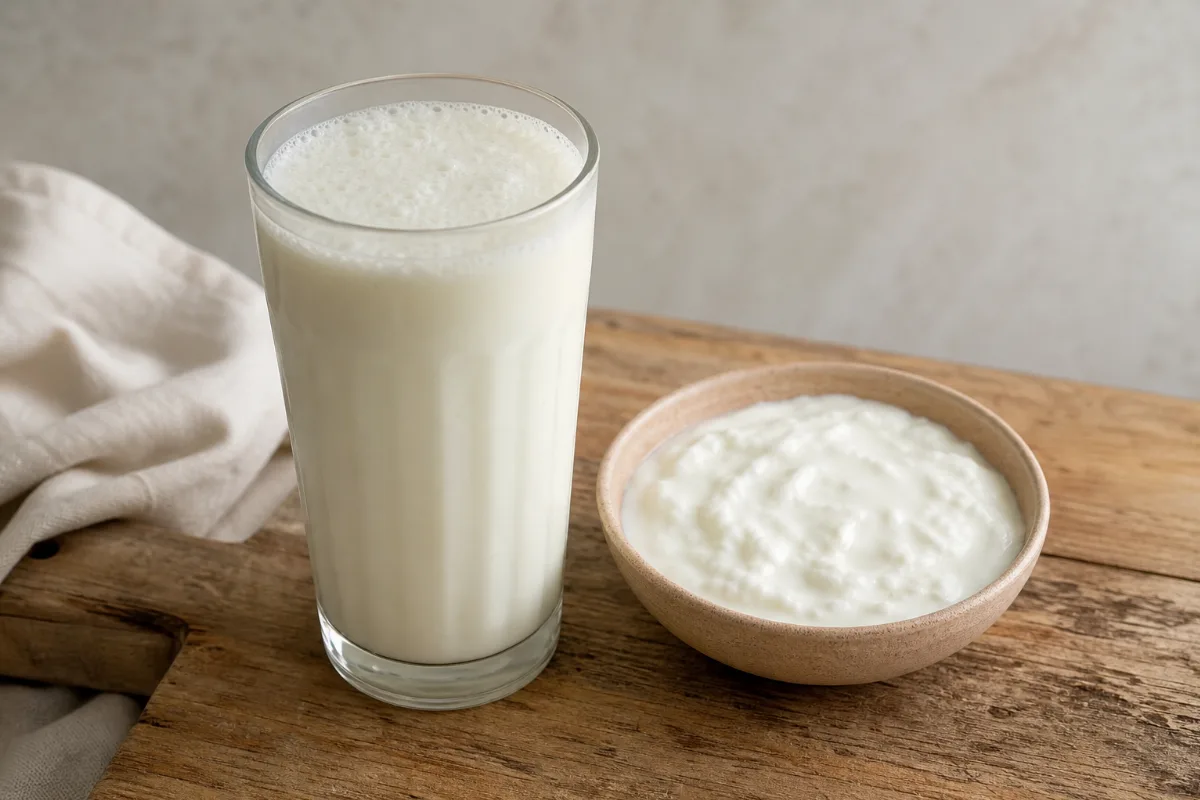
Lassi and ayran are drinks made from yogurt. Lassi is a South Asian yogurt drink, served sweet, salted or with fruit such as mango. Ayran is a Turkish yogurt drink, traditionally made by mixing yogurt with water and salt. [2] [1] This page covers both as foods. It separates what studies found from hopeful claims, and it says clearly where we could not find numbers.
Read this first
- Little human research. A 2026 review of Indian lassi says research is concentrated on how it is made, its quality and safety, with few human health studies. It presents possible gut, immune and heart benefits as ideas drawn from yogurt and buttermilk research, not confirmed lassi results. [1]
- Salt and sugar depend on the recipe. Ayran is made with salt, and lassi can be sweet or salty. Our USDA data file has no entry for either, and we did not find a peer-reviewed table of their salt or sugar, so check the label or ask how a drink was made. [2]
- It is milk. These drinks are not safe for a cow's milk allergy. For trouble breathing or swelling of the face, lips or throat, call 911 (or your local emergency number). [12]
- Pregnancy. The NHS says to avoid unpasteurized dairy, including yogurt; pasteurized versions are fine. [10]
- Evidence in one line: one small trial of probiotic-enriched ayran found less gum inflammation, and nothing else we read shows a health effect for lassi or ayran themselves. [3] [1]
What is in it (what we could verify)
We have no USDA nutrient values for lassi or ayran, so there is no per-serving table or % Daily Value here. Both drinks are yogurt-based, so they are likely to contain milk protein, calcium and milk sugar, but we did not read a source with their amounts. What we did read is how much salt researchers add to ayran in experiments.
| Study setup (ayran made in a lab) | Water added | Salt added | What the authors found |
|---|---|---|---|
| Köksoy and Kılıç, 2003 [2] | 30 or 50 g per 100 g | 0, 0.5 or 1 g per 100 g | More water and salt made the drink thinner and caused more liquid to separate. They concluded water and salt must be carefully balanced. |
For scale, 1 g of salt per 100 g of drink would be 1 g of salt in each 100 g glass, or one fifth of the 5 g a day the WHO advises as a limit for adults. [9] That is arithmetic from the experiment's setup, not a measurement of any product on sale. Sweetened and fruit lassis can also contain added sugar. The WHO advises keeping free sugars under 10% of daily energy. [9] We did not find lassi sugar values in the sources we read.
Plant compounds are not part of this story. These are yogurt drinks; any added fruit, spice or sweetener changes the picture.
What research says
| Health goal | What the sources found | Strength of evidence | What was studied |
|---|---|---|---|
| Gum inflammation | In 54 students, ayran enriched with two probiotic bacteria (Lactobacillus acidophilus and Bifidobacterium bifidum) twice a day for 42 days led to lower plaque, gum redness, bleeding and a gum enzyme marker after 5 days without brushing, compared with regular ayran. Probing depth did not differ. [3] | Promising but limited (one small trial; probiotic-enriched ayran, not ordinary ayran) | Young adults, experimental gingivitis |
| Gut, immune and heart benefits of lassi | The 2026 review presents these as hypotheses inferred from yogurt and buttermilk research, not confirmed lassi trials. [1] | Insufficient evidence | Review of lab and product studies |
| Lactose tolerance | A review of 108 yogurt studies concluded yogurt eating is causally linked to better lactose digestion and tolerance. [5] Lassi and ayran were not tested there. | Established for yogurt; Insufficient evidence for lassi and ayran themselves | Yogurt |
| Blood fats | A 2025 systematic review judged the evidence for fermented dairy and blood lipids insufficient; most controlled trials showed no significant change. [6] | Insufficient evidence | Fermented dairy overall |
| General nutrition claims | A 2025 review of Turkish yoghurts presents ayran as a sustainable, nutritious option; its abstract gives no numbers. [4] | Insufficient evidence (authors' view) | Review |
| Probiotic effect | ISAPP says fermented foods are different from probiotics, which need a shown health benefit for the strains used. [7] | See note | Not applicable |
Eaten as food vs taken as a probiotic product. The gum trial used ayran with added probiotic bacteria, [3] which is not the same as ordinary ayran or lassi from a shop. Not every yogurt drink is a probiotic, and the sources we read do not show that ordinary lassi or ayran meet the probiotic definition. [7]
How much is a normal serving
We did not find an official portion or USDA household measure for lassi or ayran. A bottle's Nutrition Facts serving or a standard glass is the practical guide. That is information, not a prescription. For limits, the WHO advises under 5 g of salt (2 g of sodium) and free sugars under 10% of daily energy for adults. [9] The FDA says the 2020-2025 Dietary Guidelines advise people 14 and older to keep sodium to 2,300 mg a day. [11] We could not open the MyPlate dairy page, so we do not quote its serving rule.
Safety, allergy and medicines
- Milk allergy. Cow's milk is one of the most common food allergens. A milk allergy is an immune reaction; anaphylaxis is a medical emergency, so call 911 for trouble breathing, throat swelling or fainting. [12] One review found limited, weak evidence that some fermented foods lower allergenicity, so do not treat these drinks as safe for milk allergy. [14]
- Lactose. NIDDK says many people with lactose intolerance tolerate about 12 g of lactose at a time and that yogurt is easier than other dairy foods. [8] It does not name lassi or ayran, which are diluted yogurt. Try a small amount.
- Salt. Ayran is traditionally made with salt. [2] People told to limit sodium (for high blood pressure or kidney disease) should read the label. See kidney disease: potassium and oxalates.
- Sugar. Sweet lassi and fruit lassi may be high in added sugar. We did not read composition data, so check the label, especially for diabetes. [9]
- Pregnancy. The NHS says to avoid unpasteurized milk, yogurt and other dairy; pasteurized products are fine. [10] The CDC says raw milk can carry Listeria, Salmonella and E. coli, with higher risk for children under 5, adults over 65, pregnant women and people with weakened immune systems. [13] Street and homemade drinks may use raw-milk yogurt; ask.
- Weakened immune system. NCCIH says harm from probiotics is more likely in people with severe illness or weakened immunity and that some products contain organisms not listed on the label. [15] It does not discuss lassi or ayran. Ask a clinician.
- Medicines and children. We did not find a lassi- or ayran-specific medicine interaction or a source on use in young children. A pharmacist can check; see foods and medicine interactions.
Choosing, storing and food safety
- Look for "pasteurized" on packaged drinks, especially in pregnancy. [10] [13]
- Compare labels for sugar and sodium; recipes differ. [2]
- We did not read a source on keeping times for home-made drinks; see fermented foods safety and home fermentation risks.
Related pages
Health connections for Lassi & Ayran
What research links to eating or drinking this food, and how strong the evidence is. Many studies are observational or use juice, powder, oil or extracts rather than the food as eaten; each card says which.
Lassi health claims
Not enough evidenceA 2026 review of Indian lassi found research concentrated on formulation, quality and safety, with sparse human and mechanistic health studies. Possible gut, immune and heart benefits are presented as hypotheses inferred from yogurt and buttermilk research.
Supplements: No confirmed lassi trials in the sources read.
Probiotic ayran and gum inflammation
Preliminary or mixedIn 54 students, ayran enriched with Lactobacillus acidophilus and Bifidobacterium bifidum twice a day for 42 days led to lower plaque, gum redness, bleeding and a gum enzyme marker after 5 days without brushing, compared with regular ayran. Probing depth did not differ.
Supplements: One small trial.
Yogurt, lactose digestion and these drinks
Not enough evidenceA review of 108 studies concluded yogurt eating is causally linked to better lactose digestion and tolerance. Lassi and ayran were not tested in that evidence.
Supplements: Evidence is for yogurt, not for lassi or ayran.
Fermented dairy and blood fats
Not enough evidenceA 2025 systematic review judged the evidence for fermented dairy and blood lipids insufficient; most controlled trials showed no significant change.
Supplements: Not shown for these drinks.
Added sugar in sweet and fruit lassi
Not enough evidenceSweet and fruit lassis can contain added sugar. We found no composition data for lassi in the sources read. WHO advises keeping free sugars under 10% of daily energy.
Supplements: Read the label, especially for diabetes.
Connected topics
Open a group to see how each topic connects and how strong the evidence is.
Conditions & symptoms (4)
- Cow Milk AllergyDocumented risk
Lassi and ayran are milk-based and are not safe for cow's milk allergy.
- Lactose IntoleranceDocumented risk
Yogurt is easier to tolerate than milk for many people; lassi and ayran were not tested, so tolerance differs.
- ListeriosisDocumented risk
Unpasteurized dairy carries Listeria risk in pregnancy and for other at-risk groups.
- GingivitisPreliminary or mixed
One small trial found less gum inflammation with probiotic-enriched ayran than with regular ayran.
Documented risks and interactions (5)
- Salt in ayran. Ayran is traditionally made with salt; a lab study varied salt at 0, 0.5 and 1 g per 100 g. WHO advises adults to keep salt under 5 g a day, so 1 g per 100 g would be one fifth of that in a 100 g glass.
- Lactose in this dairy food. NIDDK says many people with lactose intolerance tolerate about 12 g of lactose at a time and that yogurt and hard cheeses are easier than other dairy foods. The sources read do not name lassi or ayran.
- Unpasteurized yogurt drinks and pregnancy. The NHS says to avoid unpasteurized milk, yogurt and other dairy in pregnancy. The CDC says raw milk can carry Listeria, Salmonella and E. coli, with higher risk for children under 5, adults over 65, pregnant people and people with weakened immune systems.
- Weakened immunity and live-culture products. NCCIH says harm from probiotics is more likely in people with severe illness or weakened immune systems, and that some products contain organisms not listed on the label. ISAPP says fermented foods are not automatically probiotics.
- Milk allergy is a different problem from lactose intolerance. Milk is one of the most common food allergens, and an allergy is an immune reaction that can cause anaphylaxis. Lactose intolerance is a digestive problem and not an allergy. For trouble breathing or swelling of the face or throat, call 911 (or your local emergency number).
Frequently asked questions
Is lassi good for digestion?
Yogurt has good evidence for easing lactose digestion, [5] but lassi was not tested in that research. A 2026 review calls lassi's gut benefits hypotheses. [1]
Is ayran high in salt?
It is traditionally made with salt. In lab experiments researchers added 0, 0.5 or 1 g of salt per 100 g. [2] Commercial amounts vary, so read the label.
Can I drink lassi if I am lactose intolerant?
It depends on the person. NIDDK says many people tolerate about 12 g of lactose and that yogurt is easier than other dairy. [8] Lassi was not named. Start small.
Does probiotic ayran help gums?
One small trial in 54 students found less gum inflammation with probiotic-enriched ayran than with regular ayran. [3] More research is needed.
Is lassi safe in pregnancy?
Pasteurized dairy is acceptable per the NHS; unpasteurized dairy should be avoided. [10] Ask how the yogurt was made.
References
- Prasad H et al. A multidisciplinary review of the microbial, functional, and consumer advancement of Indian lassi. Probiotics Antimicrob Proteins 2026 (abstract read via Europe PMC). Read 2026-10-24.
- Koksoy A, Kilic M. Effects of water and salt level on rheological properties of ayran, a Turkish yoghurt drink00103-1). Int Dairy J 2003;13:835-839 (abstract read via the Istanbul Technical University record). Read 2026-10-24.
- Alkaya B et al. Daily probiotic ayran intake reduces gingival inflammation: an experimental gingivitis study. Oral Health Prev Dent 2024 (abstract read via Europe PMC). Read 2026-10-24.
- Ozbek C, Esen MK. Exploring Turkish yoghurts: a comprehensive study on product characteristics. J Dairy Res 2025 (abstract read via Europe PMC). Read 2026-10-24.
- Savaiano DA, Hutkins RW. Yogurt, cultured fermented milk, and health: a systematic review. Nutr Rev 2021 (abstract read via Europe PMC; the funder listed in the record is Danone North America). Read 2026-10-24.
- Yilmaz B et al. Fermented dairy product consumption and blood lipid levels in healthy adults: a systematic review. Front Nutr 2025 (abstract read via Europe PMC). Read 2026-10-24.
- Marco ML et al. The International Scientific Association for Probiotics and Prebiotics (ISAPP) consensus statement on fermented foods. Nat Rev Gastroenterol Hepatol 2021 (abstract read via Europe PMC). Read 2026-10-24.
- National Institute of Diabetes and Digestive and Kidney Diseases (NIDDK). Eating, diet, and nutrition for lactose intolerance. Last reviewed February 2018. Read 2026-10-24.
- World Health Organization. Healthy diet fact sheet. Dated 26 January 2026. Read 2026-10-24.
- NHS. Foods to avoid in pregnancy. Read 2026-10-24.
- U.S. Food and Drug Administration. Sodium reduction in the food supply. Content current as of 2024-11-01. Read 2026-10-24.
- MedlinePlus. Food allergy. Read 2026-10-24.
- CDC. Raw milk. Page dated 2025-01-31. Read 2026-10-24.
- Hyseni B et al. The role of fermented foods in managing food allergies in children and adults: a systematic review. Front Nutr 2025 (abstract read via Europe PMC). Read 2026-10-24.
- National Center for Complementary and Integrative Health (NCCIH). Probiotics: usefulness and safety. Read 2026-10-24.