Herbs & Botanicals · Chinese headache and sinus root
Bai Zhi
Angelica dahurica · also called bai zhi, baizhi, Dahurian angelica
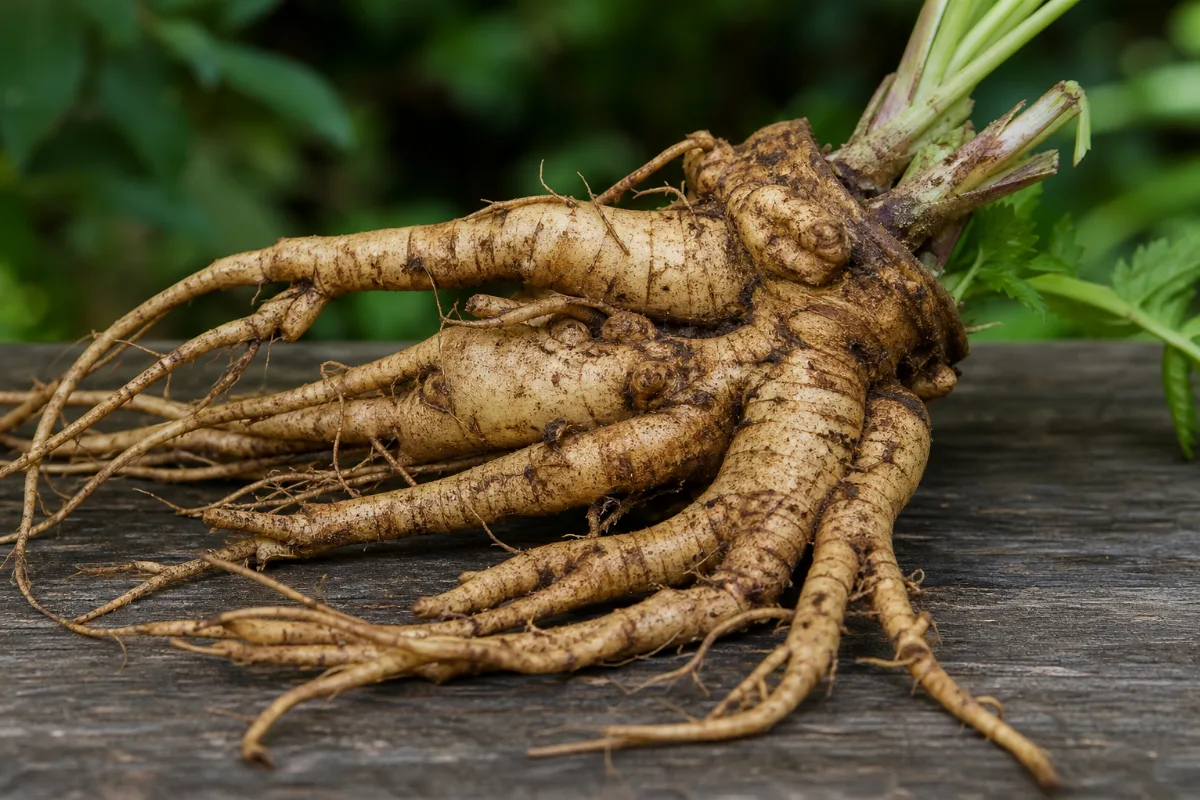
Bai zhi is the dried root of a Chinese plant in the carrot family. It is traditionally used for headache, sinus trouble and colds, and sometimes on the skin. We found no trial in people, only tradition plus lab and animal studies. The key caution: its furanocoumarins can make skin react to sunlight and can slow how the body clears some medicines.
General information, not medical advice. Last substantive update · Not medically reviewed. A named clinician has not signed off on this page. How this page is made
About Bai Zhi
Bai zhi is the dried root of Angelica dahurica, a Chinese herb for headache, sinus trouble and colds. Evidence in people is missing. Its furanocoumarins can cause sun-triggered skin reactions and block drug-clearing enzymes.
What it is
Bai zhi is the root of Angelica dahurica, a plant of the carrot family (Apiaceae). A variety called formosana is also recognised. It is a different plant from dong quai, European angelica, du huo and qiang huo, which have their own pages.
What makes it distinctive
The root holds many coumarins, especially furanocoumarins such as imperatorin, oxypeucedanin and byakangelicin. A 2022 review counts more than 300 compounds. These same compounds explain the safety questions: they can react with sunlight and block drug-clearing enzymes.
Imperatorin content ranged from 0.093% to 0.392% across Chinese samples, so products can differ.
What people use it for
In Chinese medicine it is used for headache, sinus trouble and colds, often with other herbs such as chuanxiong. It is also traditionally applied to boils and swellings. Long use is not proof that it works.
What the research shows
We found no trial in people. In rats given nitroglycerin to cause migraine-like behaviour, a root water extract reduced head-scratching and lowered pain-related chemicals. In mice with allergic rhinitis, imperatorin eased signs. In cells, extracts blocked an inflammation enzyme and imperatorin lowered melanin.
These are early lab and animal results. They do not show that the herb works in people.
At a glance
Traditional uses history, not proof
- Headache and forehead pain
- Blocked or painful sinuses and nasal inflammation
- Colds
- External use for boils and swellings
Studied for research
- Headache and migraine: traditional use; rat studies only
- Sinus and nasal problems: traditional use; one mouse study of a single compound
- Pain and inflammation: lab and animal findings
- Skin pigment: cell studies
- Cancer: lab findings only, not a treatment
Main compounds
- Imperatorin, a furanocoumarin
- Oxypeucedanin, a furanocoumarin
- Byakangelicin and byakangelicol, furanocoumarins
- Isoimperatorin
Common forms
- Dried sliced root
- Decoction (water preparation) or tea
- Extracts used in lab studies
- External preparations (traditional; not studied)
Research links: Review: traditional uses, chemistry and pharmacology (2022) · Rat migraine study (2025) · Byakangelicol and liver enzymes, lab (2026) · Formula with theophylline, Taiwan (2024) · Imperatorin and gut drug pump, lab (2024) · Sun-triggered plant skin reactions, review (2024) · Research Library · Genes & Biomarkers Library
The plant and its history
- Accepted scientific name
- Angelica dahurica (Hoffm.) Benth. & Hook.fil. ex Franch. & Sav.
- Naming authority
- (Hoffm.) Benth. & Hook.fil. ex Franch. & Sav.
- Common names
- Bai zhi (Chinese (pinyin)); Baizhi (Chinese (pinyin)); Dahurian angelica (English); Radix Angelicae Dahuricae (Latin pharmacy name)
- Botanical family
- Apiaceae (carrot family)
- Classification
- Plantae > Apiales > Apiaceae > Angelica > Angelica dahurica
- Native range
- Eastern, northern and southeastern Asia (as stated in the 2022 review; not checked against a plant database).
- Habitat
- Not described in the sources read.
- What the plant looks like
- Roots: The dried sliced root is the medicinal part.; Stems: Not described.; Leaves: Not described.; Flowers: Not described.; Fruit: Not described.
- Cultivation
- Not verified.
- Harvest and processing
- Dried sliced root; some roots are sulfur-fumigated (see Safety).
- Look-alikes and adulterants
- Name: Du huo (Angelica pubescens); Note: A different Chinese Angelica root with its own page.; Name: Qiang huo (Notopterygium); Note: A different root used for similar aches; own page.; Name: European angelica (Angelica archangelica); Note: A different species; do not assume findings carry over.; Name: Dong quai (Angelica sinensis); Note: A different species used for women's health; own page.
- Sustainability and conservation
- Not assessed here.
Traditional use and history history, not clinical proof
| Tradition or era | Documented use | Source |
|---|---|---|
| Traditional Chinese medicine | Dried root for colds, headache, forehead pain and nasal sinus inflammation; external use for boils and swellings. Often paired with other herbs such as chuanxiong in headache formulas. | p35847034 |
| Shennong Bencao Jing (classic text) | Described as an ancient treatment for migraine, as stated in a 2026 rat paper's introduction. | p41619552 |
Traditional use shows how a plant was used. It does not show that a supplement works or is safe today.
What is inside, and how it may work
What the plant contains and how those compounds act in cells and animals. Laboratory and animal mechanisms are not proven effects in people.
Main compounds
| Compound | Family | Where it is concentrated | Activity studied | Level of evidence |
|---|---|---|---|---|
| Imperatorin PubChem 10212 | furanocoumarin | root | Main studied compound; blocks CYP1A2 and CYP3A4 and P-glycoprotein in the lab; eased allergic rhinitis in mice; lowered melanin in skin cells. 6 15 19 5 13 | Laboratory research |
| Isoimperatorin PubChem 68081 | furanocoumarin | root | Measured in rat blood alongside imperatorin. 17 13 | Laboratory research |
| Oxypeucedanin PubChem 33306 | furanocoumarin | root | Mechanism-based inactivator of CYP2B6 and CYP2D6 in the lab. 18 13 | Laboratory research |
| Byakangelicol PubChem 3055167 | furanocoumarin | root | Blocks CYP1A2, CYP2A6 and CYP3A4 in human liver microsomes. 10 13 | Laboratory research |
| Byakangelicin PubChem 10211 | furanocoumarin | root | Its sulfur-containing derivative formed during sulfur fumigation of the root. 1 13 | Laboratory research |
Mechanisms, receptors and pathways
| Target or pathway | Gene or receptor | What was found | Level |
|---|---|---|---|
| Drug-clearing enzymes (CYP1A2, 2A6, 3A4, 2B6, 2D6) | CYP1A2, CYP2A6, CYP3A4, CYP2B6, CYP2D6 | Furanocoumarins block several CYPs in human liver preparations; some act by permanent (mechanism-based) inactivation. 10 18 6 | Laboratory research |
| P-glycoprotein gut pump | ABCB1 | Imperatorin reduced efflux and expression in Caco-2 cells and loosened tight junctions. 15 | Laboratory research |
| Gut-brain axis in migraine models | 5-HT, CGRP, TNF-alpha | Root extract changed gut bacteria, strengthened the gut barrier and lowered pain-related chemicals in rats. 8 9 | Animal research |
| Nasal epithelial barrier and inflammation | Gucy2c, Chac1 (as named in the abstract) | Imperatorin reversed changed gene expression and eased allergic rhinitis signs in mice. 19 | Animal research |
| Autophagy and PI3K/Akt in skin cells | PI3K/Akt | Imperatorin lowered melanin through increased autophagy. 5 | Laboratory research |
Absorption, metabolism and elimination
- Absorption
- Not studied in people. In rats the herb pair with chuanxiong changed blood levels of imperatorin (lower) and ligustilide (higher).
- Distribution
- Not studied.
- Metabolism
- CYP3A4 turns oxypeucedanin into reactive forms in the lab. A gut-bacteria metabolite of imperatorin, xanthotoxol, inhibited CYP1A2 less strongly.
- Elimination
- Not studied in people.
- Bioavailability
- Not established. Imperatorin and isoimperatorin blood levels were lower when given as a herb pair with chuanxiong in rats.
Isolated compounds versus whole extracts
Most mechanism and interaction findings use isolated compounds (imperatorin, oxypeucedanin, byakangelicol), not the whole root or a tea. Rat migraine work used root water extracts. Do not carry a compound result over to a root product, or the reverse.
Nutritional composition
Bai zhi is a medicinal herb, not a nutrient.
5 very low certainty2 not enough evidence
What is Bai Zhi good for?
What bai zhi has been studied for and how strong the evidence is. Nothing here is proven in people.
Benefits, one by one
Each card is a research question, not a promise. Tap a goal to filter. Open a card to see the studies, doses and limits.
Headache and migraine (traditional use; rat studies)
Very low certaintyIn Chinese medicine bai zhi root is a classic remedy for headache and forehead pain. Two recent rat studies found less migraine-like behaviour. No trial in people was found.
3 studiesRat studies used root water extracts. No tested product or amount for…
Studies, doses and limits
What the trials found
No human trial of bai zhi for headache or migraine was found in our searches. The rat papers say it is used clinically, but cite no trial that we could read.
Results
In two rat studies, a root water extract reduced head-scratching (a migraine-like behaviour) and lowered 5-HT, CGRP and TNF-alpha in blood and brain.
Effect sizes as reported
Not applicable to people; no effect sizes in the abstracts we read.
Why this rating
Animal findings only; a rat migraine model is a poor stand-in for human migraine.
Form and dose studied
Rat studies used root water extracts. No tested product or amount for people.
Who was studied
No data in people.
Limits
Rat model only; some chemical changes in rats may not happen in people.
Why researchers looked
Headache is the best-known traditional use, so researchers tested a root extract in a rat migraine model.
Traditional use
Used for thousands of years in China for headache, often in formulas with other herbs such as chuanxiong.
Proposed mechanism Animal research
Not established. In rats the extract changed gut bacteria, strengthened the gut lining and lowered pain-related chemicals (5-HT, CGRP, TNF-alpha). Whether this happens in people is unknown.
A proposed mechanism does not show that the effect happens in people.
Do not use it to replace migraine treatment. Frequent or sudden severe headache needs a doctor.
Sinus and nasal complaints (traditional use; mouse study of one compound)
Very low certaintyBai zhi is traditionally used for blocked, painful sinuses and runny nose. Evidence in people is missing; one mouse study of its compound imperatorin eased allergic rhinitis signs.
3 studiesAnimal study of the compound imperatorin, not a tea or powder.
Studies, doses and limits
What the trials found
No trial of bai zhi alone for sinusitis or rhinitis in people was found.
Results
In mice with allergic rhinitis, imperatorin eased nose signs and calmed inflammation in the nasal lining.
Effect sizes as reported
No effect sizes available from the abstract.
Why this rating
One isolated compound in mice; not the whole root.
Form and dose studied
Animal study of the compound imperatorin, not a tea or powder.
Who was studied
No data in people.
Limits
Mouse model; imperatorin alone is not the same as the whole root.
Why researchers looked
Sinus and nasal symptoms are one of its main traditional uses, so researchers tested its main compound in an allergic rhinitis mouse model.
Traditional use
Traditionally used for nasal sinus inflammation and in nasal formulas. A Taiwanese retrospective study of the multi-herb formula Xin-yi-san (used for allergic rhinitis, and containing bai zhi) is described under Safety.
Proposed mechanism Animal research
Not established. In mice imperatorin lowered inflammatory signals and helped restore the nasal lining barrier.
A proposed mechanism does not show that the effect happens in people.
Imperatorin and relatives also slow drug-clearing enzymes (see Safety).
Colds and wind-cold type complaints (traditional use)
Not enough evidenceIn Chinese medicine the root is used for colds with headache and nasal blockage. This is tradition; no trial in people was found.
1 studiesTraditionally a dried sliced root in a decoction or formula; no teste…
Studies, doses and limits
What the trials found
No trial in people found.
Results
No human results exist.
Effect sizes as reported
None available.
Why this rating
Tradition only.
Form and dose studied
Traditionally a dried sliced root in a decoction or formula; no tested product.
Who was studied
Unknown.
Limits
Long use is not proof that it works.
Why researchers looked
Colds are part of the classical description of the herb.
Traditional use
Traditional Chinese formulas for colds with headache and stuffy nose.
Proposed mechanism None
Not established.
A proposed mechanism does not show that the effect happens in people.
Same cautions as the rest of this page.
General pain and inflammation (lab and animal)
Very low certaintyLab and animal work reports pain-relieving and anti-inflammatory effects of bai zhi and its compounds. People have not been tested.
3 studiesWater and solvent extracts and isolated compounds in the lab.
Studies, doses and limits
What the trials found
No human trial found.
Results
An extract inhibited elastase, an inflammation enzyme, in white blood cells in the lab.
Effect sizes as reported
Elastase IC50 68 micrograms per mL in one lab test.
Why this rating
Cell and animal findings only.
Form and dose studied
Water and solvent extracts and isolated compounds in the lab.
Who was studied
No data in people.
Limits
Cell studies often use amounts that people may never reach.
Why researchers looked
Traditional use for pain led to lab testing of the root and its coumarins.
Traditional use
Pain relief and swelling relief are classic traditional uses.
Proposed mechanism Laboratory research
Reported in cells and animals; the review lists several pathways. Not shown in people.
A proposed mechanism does not show that the effect happens in people.
See Safety for enzyme and skin cautions.
Skin pigment and skin care (cell studies)
Very low certaintyIn cultured skin cells the compound imperatorin lowered melanin, the pigment. Nothing is known about creams or eating the root in people.
2 studiesIsolated imperatorin in cell culture.
Studies, doses and limits
What the trials found
No human trial found.
Results
Lower melanin in HaCaT skin cells without killing them.
Effect sizes as reported
Dose-dependent; no numbers in our summary.
Why this rating
Cell line only.
Form and dose studied
Isolated imperatorin in cell culture.
Who was studied
No data in people.
Limits
Because the same compounds can cause sun-triggered skin reactions, skin use is not risk-free.
Why researchers looked
Bai zhi has been traditionally used for skin complaints, so skin-cell effects were tested.
Traditional use
Used traditionally for skin conditions such as boils and swellings (external use).
Proposed mechanism Laboratory research
Imperatorin increased autophagy and lowered melanin in skin cell lines.
A proposed mechanism does not show that the effect happens in people.
Furanocoumarins can make skin react to sunlight. See the Safety tab.
Helping other herbs be absorbed (lab and rat)
Very low certaintyImperatorin increased uptake of other plant compounds in gut cells, but in rats pairing with chuanxiong lowered imperatorin itself. This is about how herbs combine, not about a health benefit.
2 studiesIsolated imperatorin; extracts in rats.
Studies, doses and limits
What the trials found
No human data.
Results
Higher uptake of four other compounds in Caco-2 cells; in rats, the herb pair raised ligustilide and lowered imperatorin and isoimperatorin.
Effect sizes as reported
No numbers used here.
Why this rating
Cell and rat only.
Form and dose studied
Isolated imperatorin; extracts in rats.
Who was studied
No data in people.
Limits
The same effect is the reason for a medicine caution.
Why researchers looked
Traditional formulas combine herbs, so researchers test how combinations change absorption.
Traditional use
Bai zhi is often paired with other herbs such as chuanxiong.
Proposed mechanism Laboratory research
Imperatorin lowered P-glycoprotein efflux and loosened tight junctions in gut cells.
A proposed mechanism does not show that the effect happens in people.
See the interaction notes on the Safety tab.
Anticancer findings in cells and animals
Not enough evidenceThe review lists anti-tumour effects in the lab and says clinical data are lacking. This is not a cancer treatment.
2 studiesNot applicable.
Studies, doses and limits
What the trials found
No human data.
Results
Lab effects only.
Effect sizes as reported
None.
Why this rating
Lab only.
Form and dose studied
Not applicable.
Who was studied
None.
Limits
Do not use it in place of cancer treatment.
Why researchers looked
Natural coumarins are often screened for anti-tumour activity.
Traditional use
Not a traditional use in the sources read.
Proposed mechanism Laboratory research
Reported in cells and animals.
A proposed mechanism does not show that the effect happens in people.
Do not use it in place of cancer care.
Connections to the rest of health
How Bai Zhi connects to the rest of our health knowledge graph. Every link says what kind of connection it is. A safety link (for example to the liver) is a warning, not a benefit. A study that merely mentions a topic never creates a benefit link.
Explore every connection: goals, body systems, organs, symptoms, genes
A. Wellness goals
| Connected to | Kind of connection | Evidence status | Context | Studies |
|---|---|---|---|---|
| Pain Relief | Very low certainty | Headache and migraine (traditional use; rat studies): In Chinese medicine bai zhi root is a classic remedy for headache and forehead pain. Two recent rat studies found less migraine-like behaviour. No trial in people was found. | 8 9 20 | |
| Brain Health | Very low certainty | Headache and migraine (traditional use; rat studies): In Chinese medicine bai zhi root is a classic remedy for headache and forehead pain. Two recent rat studies found less migraine-like behaviour. No trial in people was found. | 8 9 20 | |
| Breathing Support | Very low certainty | Sinus and nasal complaints (traditional use; mouse study of one compound): Bai zhi is traditionally used for blocked, painful sinuses and runny nose. Evidence in people is missing; one mouse study of its compound imperatorin eased allergic rhinitis signs. | 19 20 6 | |
| Immune Support | Very low certainty | Sinus and nasal complaints (traditional use; mouse study of one compound): Bai zhi is traditionally used for blocked, painful sinuses and runny nose. Evidence in people is missing; one mouse study of its compound imperatorin eased allergic rhinitis signs. | 19 20 6 | |
| Immune Support | Traditional use | Not enough evidence | Colds and wind-cold type complaints (traditional use): In Chinese medicine the root is used for colds with headache and nasal blockage. This is tradition; no trial in people was found. | 20 |
| Inflammation Balance | Preliminary mechanism | Very low certainty | General pain and inflammation (lab and animal): Lab and animal work reports pain-relieving and anti-inflammatory effects of bai zhi and its compounds. People have not been tested. | 20 12 7 |
| Pain Relief | Preliminary mechanism | Very low certainty | General pain and inflammation (lab and animal): Lab and animal work reports pain-relieving and anti-inflammatory effects of bai zhi and its compounds. People have not been tested. | 20 12 7 |
| Healthy Skin | Preliminary mechanism | Very low certainty | Skin pigment and skin care (cell studies): In cultured skin cells the compound imperatorin lowered melanin, the pigment. Nothing is known about creams or eating the root in people. | 5 20 |
| Cellular Protection | Preliminary mechanism | Not enough evidence | Anticancer findings in cells and animals: The review lists anti-tumour effects in the lab and says clinical data are lacking. This is not a cancer treatment. | 20 7 |
B. Body systems
| Connected to | Kind of connection | Evidence status | Context | Studies |
|---|---|---|---|---|
| Pain Inflammation | Biological association | Very low certainty | Studied for: Headache and migraine (traditional use; rat studies) Studied for: General pain and inflammation (lab and animal) | 8 9 20 12 7 |
| Nervous System | Biological association | Very low certainty | Studied for: Headache and migraine (traditional use; rat studies) | 8 9 20 |
| Respiratory Health | Biological association | Very low certainty | Studied for: Sinus and nasal complaints (traditional use; mouse study of one compound) Studied for: Colds and wind-cold type complaints (traditional use) | 19 20 6 |
| Immune System | Biological association | Not enough evidence | Studied for: Colds and wind-cold type complaints (traditional use) | 20 |
| Integumentary System | Biological association | Very low certainty | Studied for: Skin pigment and skin care (cell studies) | 5 20 |
| Digestive System | Biological association | Very low certainty | Studied for: Helping other herbs be absorbed (lab and rat) | 15 17 |
| Cells | Biological association | Not enough evidence | Studied for: Anticancer findings in cells and animals | 20 7 |
I. Biomarkers
| Connected to | Kind of connection | Evidence status | Context | Studies |
|---|---|---|---|---|
| Migraine-like behaviour (head-scratching) in rats | Biological association | Very low certainty | Measured in trials: lowered. A lab change is not the same as a health benefit. | 8 9 |
| 5-HT, CGRP and TNF-alpha in rat blood and brain | Biological association | Very low certainty | Measured in trials: lowered. A lab change is not the same as a health benefit. | 8 9 |
| Nasal inflammatory signals in allergic rhinitis mice | Biological association | Very low certainty | Measured in trials: improved. A lab change is not the same as a health benefit. | 19 |
| Melanin content in cultured skin cells | Biological association | Very low certainty | Measured in trials: lowered. A lab change is not the same as a health benefit. | 5 |
| Elastase activity in white blood cells | Biological association | Very low certainty | Measured in trials: lowered. A lab change is not the same as a health benefit. | 12 |
J. Genes, receptors and enzymes
K. Biological pathways
| Connected to | Kind of connection | Evidence status | Context | Studies |
|---|---|---|---|---|
| P-glycoprotein | Preliminary mechanism | In vitro | Reduced by imperatorin in gut cells. | 15 |
L. Active compounds
| Connected to | Kind of connection | Evidence status | Context | Studies |
|---|---|---|---|---|
| Imperatorin | Biological association | In vitro | Main studied compound; blocks CYP1A2 and CYP3A4 and P-glycoprotein in the lab; eased allergic rhinitis in mice; lowered melanin in skin cells. Preparation or compound: root |
6 15 19 5 13 |
| Isoimperatorin | Biological association | In vitro | Measured in rat blood alongside imperatorin. Preparation or compound: root |
17 13 |
| Oxypeucedanin | Biological association | In vitro | Mechanism-based inactivator of CYP2B6 and CYP2D6 in the lab. Preparation or compound: root |
18 13 |
| Byakangelicol | Biological association | In vitro | Blocks CYP1A2, CYP2A6 and CYP3A4 in human liver microsomes. Preparation or compound: root |
10 13 |
| Byakangelicin | Biological association | In vitro | Its sulfur-containing derivative formed during sulfur fumigation of the root. Preparation or compound: root |
1 13 |
Each connection is stored with the ingredient, the connected record, the kind of connection, the evidence status, the supporting studies, the preparation or compound involved, and a review date (last reviewed October 25, 2026).
Evidence at a glance: what changed in 4 lab markers
Tap a number to show only those markers. Counts are markers, not people.
The evidence
The research centre for Bai Zhi. Every record here was checked against PubMed or the publisher's page; we never list a study we have not verified.
Evidence by outcome
Bars show how many studies we found for each outcome, not how well it works. People are added up across trials only (reviews are not added, to avoid double counting).
How we rate evidence
High certainty
Several well-run trials or reviews agree; further research is unlikely to change the picture much.
Moderate certainty
Good trials point the same way, but some doubt remains.
Low certainty
Small, short or inconsistent trials. The finding could change with better research.
Very low certainty
Very little or very weak human data. Treat as a possibility only.
Mixed findings
Trials or reviews disagree with each other.
Not enough evidence
Not enough human research to say either way.
Evidence against
Good research found no benefit, or found harm.
We take the reviewers' own risk-of-bias and GRADE statements where they exist, and otherwise judge from study size, design, consistency, directness and whether a product matches what is sold. Many publications do not make evidence high. Method note: We built on our existing summary, read PubMed abstracts, and checked GBIF and PubChem. Details from the 2022 review's full text were carried over from that summary and not re-opened. Most studies were read as abstracts only.
Study library: every study we checked 20
| Study | Design | People | Product, dose, length | Result |
|---|---|---|---|---|
| Deng 2021 Practical Protocol for Comprehensively Evaluating Sulfur-Fumigation of Baizhi Based on Metabolomics, Pharmacology, and Cytotoxicity Front Pharmacol · PMID 35145404 · DOI |
Laboratory research plant |
Laboratory chemistry and cell tests | Sulfur-fumigated vs unsulfured Baizhi water extracts root not given here not given here · vs none |
Sulfur fumigation turned some furanocoumarins into sulfur-containing compounds. In cell tests the sulfured extract was less toxic and its anti-inflammatory activity was not different. Chemical profile changes with sulfur fumigation Methods, limits and fundingOutcomes: Chemical change, cell toxicity, anti-inflammatory activity Limitations: Cell tests; shows the product can be altered in processing. Funding and conflicts: Not stated in abstract Read: abstract |
| GBIF 2026 GBIF species match: Angelica dahurica (key 5537813) GBIF · Source |
Registry or database plant |
not applicable | Angelica dahurica root not given here not given here · vs none |
GBIF API on 2026-10-25: Angelica dahurica (Hoffm.) Benth. & Hook.fil. ex Franch. & Sav. is ACCEPTED (exact match), family Apiaceae, order Apiales. not applicable Methods, limits and fundingOutcomes: see results Limitations: Database record, not a study of health effects. Funding and conflicts: not applicable Read: full-text |
| GBIF 2026 GBIF species match: Angelica dahurica var. formosana (key 5733712) GBIF · Source |
Registry or database plant |
not applicable | Angelica dahurica var. formosana root not given here not given here · vs none |
GBIF API on 2026-10-25: Angelica dahurica var. formosana (H.Boissieu) Yen is ACCEPTED (exact match, rank variety). not applicable Methods, limits and fundingOutcomes: see results Limitations: Database record, not a study of health effects. Funding and conflicts: not applicable Read: full-text |
| Grosu Dumitrescu 2024 New Insights Concerning Phytophotodermatitis Induced by Phototoxic Plants Life (Basel) · PMID 39202761 · DOI |
Review |
Review of plant-triggered skin reactions with sunlight | Phototoxic plants in general, mainly Apiaceae, Rutaceae and Moraceae various not given here not given here · vs none |
Furanocoumarins and psoralens in these plant families plus sunlight (UV) cause a non-allergic skin reaction: redness, fluid blisters, swelling and later darkening of the skin. Advice includes covering skin and avoiding sun after contact. Descriptive Methods, limits and fundingOutcomes: Mechanism, plant families, diagnosis, prevention Limitations: General review; it does not report reactions to Angelica dahurica specifically (as far as the abstract shows). Funding and conflicts: Not stated in abstract Read: abstract |
| Huang 2024 Imperatorin promotes melanin degradation in keratinocytes through facilitating autophagy via the PI3K/Akt signaling pathway Arch Dermatol Res · PMID 39636461 · DOI |
Laboratory research human cell line |
HaCaT skin cell line | Imperatorin isolated compound not given here not given here · vs none |
Imperatorin lowered melanin in the cells in a dose-dependent way without killing them, through increased autophagy. Lower melanin in cultured skin cells Methods, limits and fundingOutcomes: Melanin content; autophagy markers Limitations: Cell line only. Funding and conflicts: Not stated in abstract Read: abstract |
| Kao 2024 Xin-yi-san contains potent human CYP1A2 inhibitors and its combined use with theophylline in treatment increases adverse risks in patients Phytomedicine · PMID 38797029 · DOI |
Other observational |
201093 Enzyme tests plus a retrospective review of 201,093 theophylline users in Taiwan (2017-2018), 2.6% of whom also used the herbal decoction Xin-yi-san |
Xin-yi-san decoction (a multi-herb formula that includes A. dahurica root) and imperatorin root (within a formula) not given here not given here · vs theophylline users not taking Xin-yi-san |
Angelicae Dahuricae Radix contained potent inhibitors of theophylline oxidation (CYP1A2), and imperatorin was abundant in it. After weighting, Xin-yi-san users had more undesired effects: headache odds ratio 2.14 (95% CI 1.99 to 2.30) and tachycardia 1.83 (1.21 to 2.77). Higher odds of headache and tachycardia in theophylline users who also took the formula Methods, limits and fundingOutcomes: CYP1A2 inhibition; adverse effects in theophylline users Limitations: Retrospective database study of a multi-herb formula; it cannot isolate the effect of bai zhi alone. Funding and conflicts: Not stated in abstract Read: abstract |
| Li 2025 Research Progress of Coumarins in the Genus Angelica Chem Biodivers · PMID 40802895 · DOI |
Review plant |
Review of Angelica coumarins | Coumarins from Angelica species (including A. dahurica) root not given here not given here · vs none |
Review stating that coumarins are the main source of the medicinal properties of Angelica plants (pain relief, anti-inflammatory, antitumour and others as reported). Descriptive Methods, limits and fundingOutcomes: Chemistry and pharmacology Limitations: Abstract only; narrative review of a whole genus. Funding and conflicts: Not stated in abstract Read: abstract |
| Lian 2025 Multi-omics analysis reveals Angelica dahurica radix extract alleviates migraine in rats via gut microbiota-metabolome-gut-brain axis regulation Front Pharmacol · PMID 41132525 · DOI |
Animal research rat |
Rats with nitroglycerin-induced migraine-like behaviour | Angelica dahurica radix (baizhi) extract root not given here not given here · vs none |
Baizhi reduced head-scratching and lowered 5-HT, CGRP1 and TNF-alpha in plasma and brain compared with the untreated model. It raised gut barrier proteins (Occludin, ZO-1) and shifted gut bacteria (more Firmicutes, Lactobacillus). Improved migraine-like behaviour in rats Methods, limits and fundingOutcomes: Head-scratching behaviour; blood and brain 5-HT, CGRP1, TNF-alpha; gut barrier proteins; gut bacteria Limitations: Rat model of migraine; says nothing about people. The abstract calls baizhi clinically effective in migraine without giving a source. Funding and conflicts: Not stated in abstract Read: abstract |
| Lian 2026 Spatial metabolomics combined with MALDI-MSI unveils gut-brain axis mechanisms of angelica dahurica radix in migraine rats Phytomedicine · PMID 41619552 · DOI |
Animal research rat |
48 48 male rats in four groups (n=12 each): control, migraine model, sumatriptan, baizhi water extract |
Angelica dahurica radix (baizhi) aqueous extract root not given here not given here · vs none |
The water extract reduced head-scratching and normalised 5-HT, CGRP and TNF-alpha in plasma and brain, and repaired the gut barrier in the NTG migraine rat model over 22 days. Improved migraine-like behaviour in rats Methods, limits and fundingOutcomes: Migraine-like behaviour; pain markers 5-HT, CGRP, TNF-alpha; gut barrier; brain metabolism Limitations: Rats only; rat doses cannot be turned into a human amount. Funding and conflicts: Not stated in abstract Read: abstract |
| Lin 2026 Inhibitory Effects and Characteristics of Byakangelicol on the Activity of Multiple Cytochrome P450 Isoforms Int J Toxicol · PMID 41145164 · DOI |
Laboratory research human liver microsomes |
Human liver microsomes (lab) | Byakangelicol (furanocoumarin from A. dahurica) isolated compound not given here not given here · vs none |
Byakangelicol blocked CYP1A2, CYP2A6 and CYP3A4 in human liver microsomes (IC50 19.42, 10.11 and 12.80 micromolar). Block of CYP3A4 grew with time (time-dependent). The authors say this suggests potential drug-drug interactions. Enzyme inhibition in the lab Methods, limits and fundingOutcomes: Activity of CYP1A2, 2A6, 3A4 Limitations: Lab test with one isolated compound; it is unknown whether people reach such levels after eating the root. Funding and conflicts: Not stated in abstract Read: abstract |
| Nan 2026 Temporal and Tissue-specific Accumulation and Chemical Fractionation of Heavy Metal(loid)s in Angelica dahurica during Growth: Implications for Health Risk Assessment Biol Trace Elem Res · PMID 42627486 · DOI |
Other observational plant |
A. dahurica plants sampled monthly April to August | Angelica dahurica root, stem and leaf root, stem, leaf not given here not given here · vs none |
Metal levels were highest in leaves and fell over the growing season. Modelled risk from eating roots harvested in April exceeded non-cancer and cadmium-related cancer safety thresholds for adults and children (children about four times more susceptible), and risks fell later in the season. Metal content depends on harvest time Methods, limits and fundingOutcomes: Lead, cadmium, arsenic, mercury and copper Limitations: A modelled risk assessment on plants from one study; it does not test any product. Funding and conflicts: Not stated in abstract Read: abstract |
| Prieto 2002 Influence of traditional Chinese anti-inflammatory medicinal plants on leukocyte and platelet functions J Pharm Pharmacol · PMID 14604471 · DOI |
Laboratory research human cells |
Intact white blood cells and platelets (lab) | Extracts of 15 Chinese plants, including A. dahurica root not given here not given here · vs none |
A. dahurica extract inhibited elastase (IC50 68 micrograms per mL). Other plants (not A. dahurica) inhibited 5-lipoxygenase or cyclooxygenase marker production. Elastase inhibition in cells Methods, limits and fundingOutcomes: 5-lipoxygenase, cyclooxygenase and elastase activity Limitations: Lab only; the abstract does not report a platelet result for A. dahurica. Funding and conflicts: Not stated in abstract Read: abstract |
| PubChem 2026 PubChem compound lookups: imperatorin 10212, isoimperatorin 68081, byakangelicin 10211, oxypeucedanin 33306, byakangelicol 3055167 PubChem · Source |
Registry or database plant |
not applicable | five furanocoumarins root not given here not given here · vs none |
PubChem PUG REST on 2026-10-25 returned these CIDs and formulas: imperatorin C16H14O4, isoimperatorin C16H14O4, byakangelicin C17H18O7, oxypeucedanin C16H14O5, byakangelicol C17H16O6. not applicable Methods, limits and fundingOutcomes: see results Limitations: Database record, not a study of health effects. Funding and conflicts: not applicable Read: full-text |
| Rachmaini 2025 Teratogenic effect of unregistered traditional Chinese medicine containing Atractylodis lancea radix, Glycyrrhiza glabra radix, Rheum officinale rhizome, and Angelica dahurica radix on fetal morphology of BALB/c mice J Complement Integr Med · PMID 40839075 · DOI |
Animal research mouse |
80 80 pregnant mice in four groups |
Unregistered four-herb product containing A. dahurica root root (within a mixture) not given here not given here · vs none |
In treated groups the number and weight of fetuses and maternal weight differed from controls, with skeletal ossification changes and (at the highest dose) fetal haemorrhages. The abstract's final sentence says no maternal toxicity or teratogenesis, so its conclusions are internally inconsistent. Mixed or unclear Methods, limits and fundingOutcomes: Maternal and fetal weight, fetal number, skeletal changes Limitations: Four-herb mixture, so the effect of bai zhi alone cannot be separated; the abstract contradicts itself. Funding and conflicts: Not stated in abstract Read: abstract |
| Ta 2024 Elucidation the mechanism of the active ingredient imperatorin promoting drug absorption in cell model J Pharm Pharmacol · PMID 38215001 · DOI |
Laboratory research human cell line |
Caco-2 intestinal cell model | Imperatorin isolated compound not given here not given here · vs none |
Imperatorin increased the uptake of osthole, daidzein, ferulic acid and puerarin in the cells, partly by reducing P-glycoprotein efflux and loosening tight junctions. Raised uptake of other compounds in cells Methods, limits and fundingOutcomes: Uptake and transport of other compounds; P-glycoprotein efflux Limitations: Cell model only. Funding and conflicts: Not stated in abstract Read: abstract |
| Wu 2025 Drug Interactions of Imperatorin and Curcumin on Macitentan in vitro and in vivo Drug Des Devel Ther · PMID 40322036 · DOI |
Animal research rat |
Rat and human liver microsomes; rats given macitentan | Imperatorin (isolated compound), with curcumin isolated compound not given here not given here · vs none |
Imperatorin slowed macitentan metabolism in rat and human liver microsomes (IC50 about 6.6 and 7.0 micromolar), and in rats it raised macitentan exposure (AUC, Cmax) and slowed clearance. Docking suggested binding at CYP3A4. Higher drug exposure in rats Methods, limits and fundingOutcomes: Macitentan metabolism and blood levels Limitations: Rat study plus microsomes; one drug and one compound. Funding and conflicts: Not stated in abstract Read: abstract |
| Xu 2026 Pharmacokinetics of three main components of Angelicae Dahuricae Radix and Chuanxiong Rhizoma herb pair compatibility in rats Zhongguo Zhong Yao Za Zhi · PMID 42869814 · DOI |
Animal research rat |
Rats given single-herb extracts or the herb pair | Angelicae Dahuricae Radix extract, Chuanxiong extract, and the pair root not given here not given here · vs none |
With the pair, ligustilide (from chuanxiong) rose in the blood, while imperatorin and isoimperatorin fell. The reasons are unknown. Herb pairing changed absorption of key compounds in rats Methods, limits and fundingOutcomes: Plasma levels of ligustilide, imperatorin, isoimperatorin Limitations: Rats; two-herb combination. Funding and conflicts: Not stated in abstract Read: abstract |
| Zhang 2021 Oxypeucedanin is a Mechanism-based Inactivator of CYP2B6 and CYP2D6 Curr Drug Metab · PMID 34191696 · DOI |
Laboratory research human liver microsomes |
Human liver microsomes and recombinant enzymes (lab) | Oxypeucedanin (main furanocoumarin in A. dahurica) isolated compound not given here not given here · vs none |
Oxypeucedanin inactivated CYP2B6 and CYP2D6 in a time-, concentration- and NADPH-dependent way. CYP3A4 was the main enzyme that turned it into the reactive form. Mechanism-based enzyme inactivation in the lab Methods, limits and fundingOutcomes: CYP2B6 and CYP2D6 activity; reactive metabolites Limitations: Lab only; one compound. Funding and conflicts: Not stated in abstract Read: abstract |
| Zhang 2026 Therapeutic mechanism of imperatorin in allergic rhinitis via anti-inflammatory action and restoration of nasal epithelial barrier integrity Toxicol Appl Pharmacol · PMID 42219115 · DOI |
Animal research mouse |
Mice with ovalbumin-induced allergic rhinitis, plus nasal cell experiments | Imperatorin (single compound from bai zhi) isolated compound not given here not given here · vs none |
Imperatorin eased allergic rhinitis signs in mice, lowered inflammatory signals and helped restore the nasal lining barrier. Improved allergic rhinitis signs in mice Methods, limits and fundingOutcomes: Nasal tissue damage, allergy-type behaviour, cytokines in nasal fluid, nasal barrier integrity Limitations: One isolated compound in mice; not the whole root or a tea; no human data. Funding and conflicts: Not stated in abstract Read: abstract |
| Zhao 2022 The Angelica dahurica: A Review of Traditional Uses, Phytochemistry and Pharmacology Front Pharmacol · PMID 35847034 · DOI |
Review plant |
Published research on A. dahurica (lab, animal; no clinical trials identified in our summary) | Angelica dahurica root and its isolated compounds root not given here not given here · vs none |
Narrative review. Over 300 compounds found; coumarins and volatile oils are the main active groups. Reported activities (anti-inflammatory, analgesic, anti-tumour, antiviral, neuroprotective, liver-protective, skin effects) come from cell and animal work. Our existing summary records that the review found no human clinical trials, that it advises pregnant women not to use the root, that it warns excess use may cause spasm and paralysis, and that imperatorin content ranged from 0.093% to 0.392% across Chinese samples (these specifics carried over from the summary and not re-checked in the full text). Descriptive; no pooled effect Methods, limits and fundingOutcomes: Traditional uses, chemistry and reported activities Limitations: Narrative review, not systematic; mostly lab and animal findings. Funding and conflicts: Not stated in abstract Read: abstract |
What we do not know yet
- No trial in people for headache, sinus problems, colds or skin.
- No human test of drug interactions with the root alone.
- No reported case of sun reaction, liver injury or bleeding found for bai zhi itself.
- Pregnancy and breastfeeding data are very limited.
- No EMA, LiverTox, NCCIH or LactMed record could be read.
How new research is added
New studies are found by a saved PubMed search and are placed in a review queue. A person reads each one before it changes any evidence rating or safety wording.
Lab markers
What changed in blood or saliva tests during trials. A changed number is not the same as feeling or being healthier, and we give no "normal ranges".
Other 5
Migraine-like behaviour (head-scratching) in rats
Lowered in trials
Head-scratching frequency after a migraine-triggering drug in rats.
Very low certaintyResults and what it means
Why it was measured
Used as a stand-in for headache pain in animals.
Statistical vs. clinical meaning
Animal behaviour test only.
Safety implication
None for people from this test.
5-HT, CGRP and TNF-alpha in rat blood and brain
Lowered in trials
Chemical messengers linked to pain and inflammation.
Very low certaintyResults and what it means
Nasal inflammatory signals in allergic rhinitis mice
Improved in trials
Cytokines in nasal lavage fluid and nasal lining damage.
Very low certaintyResults and what it means
Why it was measured
To see whether the compound calms an allergic reaction in the nose.
Statistical vs. clinical meaning
Mouse model, single compound.
Safety implication
None established.
| Study | Result | People | Product |
|---|---|---|---|
| 19 | Imperatorin reduced inflammatory signals and helped restore the nasal barrier. | Mice with allergic rhinitis | Imperatorin |
Melanin content in cultured skin cells
Lowered in trials
Amount of pigment in lab cells.
Very low certaintyElastase activity in white blood cells
Lowered in trials
An enzyme involved in tissue inflammation.
Very low certaintyResults and what it means
Safety
What studies and official sources say about side effects, medicines and who should check first. Each point shows what kind of evidence it comes from.
Main points to know 4
- Sun-triggered skin reaction is possible (furanocoumarins). Bai zhi root contains furanocoumarins such as imperatorin and oxypeucedanin. Plants rich in furanocoumarins in the carrot family can cause painful blistering and dark patches when skin that touched them is exposed to sunlight. We did not find a reported case from bai zhi itself, so this is a possible risk, not a confirmed one. Be careful with the fresh plant, powders and skin products, and keep skin covered from sun after contact. Other 4 20
- It may slow how the body clears some medicines. In lab tests with human liver preparations, compounds from bai zhi blocked several drug-clearing enzymes (CYP1A2, CYP2A6, CYP3A4, CYP2B6 and CYP2D6) and reduced gut drug-pump (P-glycoprotein) activity. In rats imperatorin raised blood levels of a heart-lung medicine. In Taiwan, people taking theophylline who also used a bai zhi-containing formula reported more headache and fast heartbeat. Tell your pharmacist before using it with prescription medicines. Other observational 10 18 15 16 6
- Avoid in pregnancy. A 2022 review says pregnant women should not use the root. A mouse study of a four-herb product that contained bai zhi found changes in fetal development, but it cannot show what bai zhi alone does. No data on breastfeeding were found. Animal research 20 14
- Safety data are thin. No human safety trial was found. Toxicity data are described as relatively lacking, and the review warns that excessive use may cause spasm and paralysis. Strength varies a lot between samples. Review 20
Side effects 3
| Effect | How often | Severity and recovery | Evidence |
|---|---|---|---|
| Sun-triggered skin redness, blisters or darkening (phytophotodermatitis) Described for furanocoumarin plants in general. No report for bai zhi specifically was found in our searches. | Not established | moderate Usually settles, but dark marks can last | Other 4 |
| Headache and fast heartbeat (in theophylline users who also took a bai zhi-containing formula) Retrospective database study of a multi-herb formula; the odds were about twice as high for headache and 1.8 times for tachycardia. It cannot show the effect of bai zhi alone. | Not established | moderate Unknown | Other observational 6 |
| Spasm or paralysis with excessive use A warning in a review (carried over from our existing summary); no case details were read. | Not established | potentially serious Unknown | Review 20 |
Liver
No human case of liver injury from bai zhi was found in our PubMed search, and LiverTox was not read for this herb. Some papers report liver-protective effects in animals, but that is not proof of safety. Because compounds from the root block liver drug-processing enzymes in the lab, a liver question stays open. 20 10
How often. Unknown.
Monitoring. No official monitoring advice found. Yellow skin or eyes, dark urine or severe tiredness need prompt medical care.
This is a safety connection. It is not evidence that Bai Zhi supports liver health.
Medicines and supplements 6
| With | Why it matters | Importance | Evidence | What to do |
|---|---|---|---|---|
| Theophylline (asthma medicine with a narrow safety margin) prescription | Imperatorin from bai zhi strongly blocked CYP1A2, the enzyme that clears theophylline, in recombinant enzyme tests. | Human database study of a bai zhi-containing formula: more headache (odds ratio 2.14) and tachycardia (1.83) among theophylline users. Formula, not the herb alone. | Other observational Low certainty 6 | Do not combine without a doctor or pharmacist. Do not stop or change theophylline on your own. |
| Medicines cleared by CYP3A4 (for example macitentan; many others) prescription | Byakangelicol blocked CYP3A4 in human liver microsomes, time-dependently. Imperatorin slowed macitentan clearance and raised its levels in rats. | Unknown in people; rat exposure rose noticeably. | Laboratory research Very low certainty 10 16 18 | Ask a pharmacist before combining with prescription medicines. |
| Medicines cleared by CYP2B6, CYP2D6 or CYP2A6 prescription | Oxypeucedanin inactivated CYP2B6 and CYP2D6 in the lab; byakangelicol blocked CYP2A6. | Unknown in people. | Laboratory research Very low certainty 18 10 | Ask a pharmacist. |
| Medicines moved by the gut pump P-glycoprotein (for example digoxin) prescription | Imperatorin reduced P-glycoprotein efflux and expression in gut cells, which raised uptake of other compounds. | Unknown in people. Digoxin is an example from general pharmacology and was not tested with this herb. | Pharmacological theory Very low certainty 15 | Ask a pharmacist, especially if your medicine has a narrow safety margin. |
| Blood thinners (warfarin, apixaban, rivaroxaban and others) prescription | No bleeding or clotting study of bai zhi was found. Several blood thinners are cleared by enzymes (such as CYP1A2 and CYP3A4) that this root's compounds block in the lab. | Unknown; a theoretical concern based on enzyme blocking, not on a reported case. | Pharmacological theory Very low certainty 10 6 | Tell your doctor or pharmacist if you take any blood thinner. Do not change the medicine yourself. |
| Sun-sensitising medicines and light therapy (psoralen/PUVA, some antibiotics, retinoids) prescription | Furanocoumarin plants plus sunlight can cause skin reactions; added sensitising medicines could add to this in theory. | Unknown; no study of bai zhi with these. | Pharmacological theory Very low certainty 4 | Ask your doctor, and keep skin covered from sun. |
Who should check first 6
| Situation | Advice | Evidence |
|---|---|---|
| Pregnancy | Avoid it. A review says pregnant women should not use the root, and a mouse study of a four-herb product containing it showed fetal changes. | Other 20 14 |
| Breastfeeding | Avoid it. No data were found and LactMed was not read for this herb. | Other 20 |
| Children | No safety data in children were found. Do not give it without medical advice. | Other 20 |
| Taking theophylline or other narrow-margin medicines | Avoid unless a doctor or pharmacist agrees. | Other observational 6 |
| Very sun-sensitive skin, or planned sun exposure or light therapy | Avoid handling the fresh root or applying it to skin, and keep skin covered. | Other 4 |
| Liver disease | Avoid unless your doctor agrees. No human liver data exist, and the root blocks liver enzymes in the lab. | Pharmacological theory 10 |
Overdose, product quality and regulators
Summary. Toxicity data are relatively lacking. The main concerns are sun-triggered skin reactions from furanocoumarins, medicine interactions through liver enzymes and gut pumps, and pregnancy.
Animal. A four-herb product containing bai zhi given to pregnant mice changed fetal weight, number and skeletal ossification (and caused haemorrhages at the highest dose), but the abstract's own conclusion is inconsistent.
Human doses studied. Not given here.
High dose or long term signals. A review warns excessive use may cause spasm and paralysis. No long-term human data.
Overdose response. Not described in the sources read.
Genotoxicity. Not found in the sources read.
Toxic plant parts. The root is the medicinal part. In a field study the leaves held the most metals, and furanocoumarin levels in other parts were not read, so do not use leaves or stems as a substitute.
Quality varies. Furanocoumarin content differs by sample, roots can carry metals depending on harvest time, and some roots are sulfur-fumigated in processing.
Varying strength. Imperatorin content ranged from 0.093% to 0.392% across Chinese samples (carried over from our existing summary of the 2022 review). 20
Heavy metals. In field-grown plants, lead, cadmium, arsenic, mercury and copper fell over the growing season. Modelled risk from roots harvested in April exceeded safety thresholds for adults and children (children about four times more susceptible), and fell later. 11
Sulfur fumigation. Sulfur fumigation turned some furanocoumarins into sulfur-containing compounds. The sulfured extract was less toxic to cells and no different in anti-inflammatory activity in the lab. 1
Look-alike roots. Related roots such as du huo (Angelica pubescens) and qiang huo (notopterygium) are separate herbs with their own pages. No study of mix-ups was read. 2
| Body | Action | Date |
|---|
When to get medical help
- Blistering, painful redness or dark marks on skin after contact and sun
- Yellow skin or eyes, dark urine, or severe tiredness
- Racing or irregular heartbeat, new severe headache, or shaking if you also take theophylline
- Muscle spasm, weakness or inability to move after using it
- Any unusual bleeding or bruising while on a blood thinner
Stop the supplement and contact a clinician or emergency service. In the US, Poison Control is 1-800-222-1222.
General information only, not medical advice. Ask a clinician or pharmacist before use, especially with medicines, in pregnancy or with a health condition. See the Natural Remedy Safety guide.
Frequently asked questions
What is bai zhi?
Does bai zhi help headaches or migraine?
Does it help sinus problems?
Is bai zhi the same as dong quai?
Can it make skin sensitive to sun?
Does it interact with medicines?
In lab tests, compounds from the root blocked several drug-clearing liver enzymes and a gut drug pump. In rats imperatorin raised blood levels of a heart-lung medicine. In people on theophylline, a bai zhi-containing formula was linked to more headache and fast heartbeat. Ask a pharmacist.
Is it safe with blood thinners?
Is it safe in pregnancy or breastfeeding?
Can it harm the liver?
Is it safe to put on the skin?
Skin use is not risk-free because of the sun-reaction risk. We found no safety trial of skin products. Ask a doctor or pharmacist before applying it.
Are products all the same?
How much should I take?
We cannot give amounts because no tested dose for people exists. Ask a doctor or pharmacist before using it.
Explore by health goal
Pain ReliefImmune SupportBrain HealthBreathing SupportInflammation BalanceHealthy SkinCellular Protection
Editorial transparency
- Written by
- AlternativeMed editorial team. Research compiled with AI assistance, then checked against PubMed records.
- Medical review
- None. This page has not been reviewed by a physician or pharmacist.
- First published
- 2026-10-25
- Last substantive update
- 2026-10-25
- How we research
- We built on our existing summary, read PubMed abstracts, and checked GBIF and PubChem. Details from the 2022 review's full text were carried over from that summary and not re-opened. Most studies were read as abstracts only.
- How we rate evidence
- See "How we rate evidence" in the Evidence tab.
- Independence
- No product is promoted on this page. No affiliate links are shown. If one is added later it will be labelled and kept apart from the evidence.
Sources 20
Each source was opened and checked. Where we read only the abstract, it says so. The small numbers in the text point here.
- Deng AP, Kang CZ, Kang LP, et al.. Practical Protocol for Comprehensively Evaluating Sulfur-Fumigation of Baizhi Based on Metabolomics, Pharmacology, and Cytotoxicity. Front Pharmacol. 2021. PMID 35145404. DOI 10.3389/fphar.2021.799504. (abstract)
- GBIF. GBIF species match: Angelica dahurica (key 5537813). GBIF. 2026. (full-text)
- GBIF. GBIF species match: Angelica dahurica var. formosana (key 5733712). GBIF. 2026. (full-text)
- Grosu Dumitrescu C, Jijie AR, Manea HC, et al.. New Insights Concerning Phytophotodermatitis Induced by Phototoxic Plants. Life (Basel). 2024. PMID 39202761. DOI 10.3390/life14081019. (abstract)
- Huang P, Yang Z, Wang H, et al.. Imperatorin promotes melanin degradation in keratinocytes through facilitating autophagy via the PI3K/Akt signaling pathway. Arch Dermatol Res. 2024. PMID 39636461. DOI 10.1007/s00403-024-03559-z. (abstract)
- Kao LT, Chen AC, Wang HJ, et al.. Xin-yi-san contains potent human CYP1A2 inhibitors and its combined use with theophylline in treatment increases adverse risks in patients. Phytomedicine. 2024. PMID 38797029. DOI 10.1016/j.phymed.2024.155760. (abstract)
- Li XZ, Xu MM, Xu HN, et al.. Research Progress of Coumarins in the Genus Angelica. Chem Biodivers. 2025. PMID 40802895. DOI 10.1002/cbdv.202500751. (abstract)
- Lian Y, Gan Z, Sun J, et al.. Multi-omics analysis reveals Angelica dahurica radix extract alleviates migraine in rats via gut microbiota-metabolome-gut-brain axis regulation. Front Pharmacol. 2025. PMID 41132525. DOI 10.3389/fphar.2025.1650296. (abstract)
- Lian Y, Chen X, Shen X, et al.. Spatial metabolomics combined with MALDI-MSI unveils gut-brain axis mechanisms of angelica dahurica radix in migraine rats. Phytomedicine. 2026. PMID 41619552. DOI 10.1016/j.phymed.2026.157815. (abstract)
- Lin T, He X, Lin P, et al.. Inhibitory Effects and Characteristics of Byakangelicol on the Activity of Multiple Cytochrome P450 Isoforms. Int J Toxicol. 2026. PMID 41145164. DOI 10.1177/10915818251382082. (abstract)
- Nan G, Zhou X, Li Y, et al.. Temporal and Tissue-specific Accumulation and Chemical Fractionation of Heavy Metal(loid)s in Angelica dahurica during Growth: Implications for Health Risk Assessment. Biol Trace Elem Res. 2026. PMID 42627486. DOI 10.1007/s12011-026-05307-y. (abstract)
- Prieto JM, Recio MC, Giner RM, et al.. Influence of traditional Chinese anti-inflammatory medicinal plants on leukocyte and platelet functions. J Pharm Pharmacol. 2002. PMID 14604471. DOI 10.1211/0022357021620. (abstract)
- PubChem. PubChem compound lookups: imperatorin 10212, isoimperatorin 68081, byakangelicin 10211, oxypeucedanin 33306, byakangelicol 3055167. PubChem. 2026. (full-text)
- Rachmaini F, Ahmadin A, Abdillah R, et al.. Teratogenic effect of unregistered traditional Chinese medicine containing Atractylodis lancea radix, Glycyrrhiza glabra radix, Rheum officinale rhizome, and Angelica dahurica radix on fetal morphology of BALB/c mice. J Complement Integr Med. 2025. PMID 40839075. DOI 10.1515/jcim-2025-0073. (abstract)
- Ta W, Wang J, Song J, et al.. Elucidation the mechanism of the active ingredient imperatorin promoting drug absorption in cell model. J Pharm Pharmacol. 2024. PMID 38215001. DOI 10.1093/jpp/rgad127. (abstract)
- Wu H, Liu Q, Shen Y, et al.. Drug Interactions of Imperatorin and Curcumin on Macitentan in vitro and in vivo. Drug Des Devel Ther. 2025. PMID 40322036. DOI 10.2147/DDDT.S505960. (abstract)
- Xu TT, He J, Liu YH, et al.. Pharmacokinetics of three main components of Angelicae Dahuricae Radix and Chuanxiong Rhizoma herb pair compatibility in rats. Zhongguo Zhong Yao Za Zhi. 2026. PMID 42869814. DOI 10.19540/j.cnki.cjcmm.20260530.201. (abstract)
- Zhang K, Li Y, Fu Y, et al.. Oxypeucedanin is a Mechanism-based Inactivator of CYP2B6 and CYP2D6. Curr Drug Metab. 2021. PMID 34191696. DOI 10.2174/1389200222666210629114830. (abstract)
- Zhang Y, Wang J, Li S, et al.. Therapeutic mechanism of imperatorin in allergic rhinitis via anti-inflammatory action and restoration of nasal epithelial barrier integrity. Toxicol Appl Pharmacol. 2026. PMID 42219115. DOI 10.1016/j.taap.2026.117895. (abstract)
- Zhao H, Feng YL, Wang M, et al.. The Angelica dahurica: A Review of Traditional Uses, Phytochemistry and Pharmacology. Front Pharmacol. 2022. PMID 35847034. DOI 10.3389/fphar.2022.896637. (abstract)