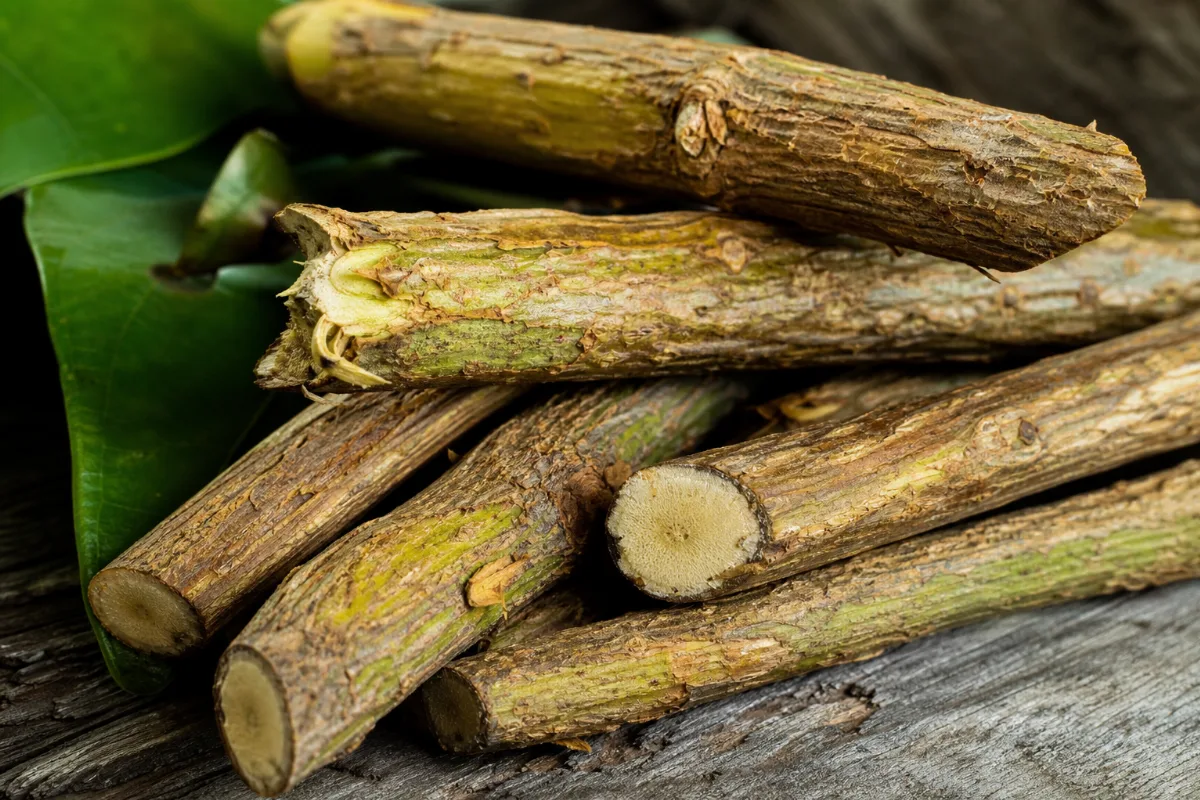
Psychedelic Therapy · Plant
Ayahuasca vine
Banisteriopsis caapi · also called Caapi; yagé vine; not the same as ayahuasca, the brew
The ayahuasca vine is an Amazon liana whose stems contain harmine, harmaline and tetrahydroharmine. These block an enzyme called MAO and can interact dangerously with antidepressants, cough medicines and other drugs, including a severe case of serotonin syndrome with breathing failure. The vine does not contain DMT; the brew called ayahuasca adds a DMT plant. No trial has shown the vine on its own helps any condition. It is central to the living traditions of Amazonian peoples.
General information, not medical advice. Last substantive update · Not medically reviewed. A named clinician has not signed off on this page. Needs Indigenous and cultural review. How this page is made
About Ayahuasca vine
The ayahuasca vine (Banisteriopsis caapi) is a woody Amazon vine. Its main compounds, harmine, harmaline and tetrahydroharmine, block the enzyme MAO and can cause dangerous interactions. The vine is not the same as ayahuasca, a brew that also contains a DMT plant. No trial shows the vine helps any condition. It belongs to the living traditions of Amazonian peoples.
Danger first: an MAO-blocking plant
The vine's alkaloids block MAO-A strongly in the test tube. Prescription MAO inhibitors are known to cause dangerous blood-pressure spikes and serotonin syndrome in rare cases when combined with certain foods and with serotonin-raising or stimulant drugs.
A 2026 case report describes a 46-year-old man who took ayahuasca over three days and then cough medicine (dextromethorphan) and diphenhydramine. He developed severe serotonin syndrome with breathing failure, needed a breathing tube and intensive care, and recovered. A 1998 paper had already warned about antidepressants (SSRIs).
Nobody has measured how strongly the vine alone does this in people, so no amount can be called safe with any medicine. Do not stop or change prescribed medicines on your own; ask a doctor or pharmacist. If someone is very unwell, call emergency services.
What the vine is, and what it is not
Banisteriopsis caapi is a liana (woody vine) of the Amazon basin in the family Malpighiaceae. GBIF lists it as an accepted species. Its stems hold harmine, harmaline and tetrahydroharmine.
The vine does not contain DMT. Ayahuasca is a brew made from the vine and a DMT-containing plant such as chacruna (Psychotria viridis). Almost all human research is on the brew, not on the vine alone.
Why no figure applies to "the vine"
In 159 Brazilian vines, the main alkaloids varied enormously between samples. Native vines had more harmine than cultivated ones. Commercial dried stems had lower amounts of key compounds than bark of a large branch, so one sample cannot stand for another.
What research shows
For Parkinson disease there are old reports from the 1920s-1930s and a marmoset study with a mild effect. For depression there is a mouse study of harmine and one small trial of the whole brew. For insulin-producing cells there is lab and mouse work on isolated harmine. None of this is proof that the vine helps people.
Where human numbers exist they come from the brew. In a placebo-controlled trial of 29 people with treatment-resistant depression, a single session of the brew lowered depression scores at day 7 compared with placebo. The trial was small and short, and the brew has its own risks.
Tradition belongs to the peoples who keep it
The vine has a long place in the healing and ritual practices of Amazonian peoples. In Peru, the Awajún and other peoples use a vine-only decoction called purgahuasca. Among the Piaroa in Venezuela, shamans use only the inner bark and stress its role in heightening empathy. We describe only what the sources say and do not speak for any people.
Reviewers say global popularity and shamanic tourism have distanced the brew from its traditional meanings. Tradition is not clinical evidence, and clinical research does not replace tradition.
Law differs by country and changes
In the US federal Schedule I text we read, DMT is listed and we found no entry for the vine or for harmine or harmaline. Brazil regulates religious use of ayahuasca through a 2010 resolution. Other countries differ and some may control the plant. This is not legal advice; always check current law where you live.
At a glance
Traditional uses history, not proof
- Core plant of ayahuasca, used for healing and ritual by Indigenous groups of north-western Amazonian countries (Dos Santos & Hallak 2024).
- Used alone as a decoction called purgahuasca among the Awajún and other peoples in Peru (Politi 2021).
- Used by Piaroa shamans in Venezuela, who value it for heightening empathy (Rodd 2008).
Studied for research
- Parkinson disease: animal and old reports only, not enough evidence
- Depression: mouse data for harmine; one small trial of the whole brew, not the vine
- Substance use: one clinic's descriptions of experiences, no outcome data
- Insulin-producing cells: lab and mouse work on isolated harmine, very low certainty
- Traditional purging: cultural, not a proven benefit
Main compounds
- Harmine (blocks MAO-A)
- Harmaline (blocks MAO-A)
- Tetrahydroharmine (weakly affects serotonin uptake)
Common forms
- The raw vine (strength varies hugely)
- Vine alone as a traditional decoction (purgahuasca)
- Vine combined with a DMT plant as the brew ayahuasca
Research links: Case report: serotonin syndrome after ayahuasca and cough medicine (abstract) · Ayahuasca and SSRI antidepressants: warning paper (abstract) · Adverse effects in the Global Ayahuasca Survey (abstract) · Vine and MAO inhibition in the lab (abstract) · Poison Control (US): call 1-800-222-1222 · US eCFR: 21 CFR 1308.11 Schedule I · Research Library · Genes & Biomarkers Library
The plant and its history
- Accepted scientific name
- Banisteriopsis caapi
- Naming authority
- (Spruce ex Griseb.) C.V.Morton
- Synonyms
- Banisteria caapi Spruce; Banisteria caapi Spruce ex Griseb.; Banisteriopsis inebrians C.V.Morton; Banisteria inebrians (C.V.Morton) J.F.Macbr.; Banisteria quitensis Nied.; Banisteriopsis quitensis (Nied.) C.V.Morton
- Common names
- Ayahuasca vine (English); Caapi (Spanish (GBIF vernacular record)); Yagé / yaje (Spanish (GBIF vernacular records; the same word also names the brew)); Mariri (English (GBIF vernacular record)); Soga de muerto (Spanish (GBIF vernacular record))
- Botanical family
- Malpighiaceae. The part used is the stem or bark of the woody vine (liana); the Piaroa, for example, use only the cambium (inner bark), according to a review.
- Classification
- Plantae > Tracheophyta > Magnoliopsida > Malpighiales > Malpighiaceae > Banisteriopsis > Banisteriopsis caapi
- Native range
- A liana indigenous to the Amazon basin (Djamshidian 2016 abstract). Country-by-country native range was not checked in Plants of the World Online.
- Habitat
- Not checked beyond the above.
- What the plant looks like
- Part used: Stems and bark of the vine. This page does not describe how to recognise the plant on purpose.
- Look-alikes and adulterants
- Name: Other Banisteriopsis and Malpighiaceae lianas; Note: In the Brazilian sample study, other Malpighiaceae samples did not contain beta-carbolines apart from one. A name or photo is never proof of what a plant contains.; Name: The ayahuasca brew; Note: The vine is one plant; ayahuasca usually names a brew made from the vine with a DMT-containing plant such as Psychotria viridis (chacruna) or Diplopterys cabrerana.
- Sustainability and conservation
- Not checked (no IUCN or CITES source read).
Traditional use and history history, not clinical proof
| Tradition or era | Documented use | Source |
|---|---|---|
| Amazonian peoples (long-standing) | Reviews describe ayahuasca as traditionally used for therapeutic and ritual purposes by Indigenous groups of north-western Amazonian countries such as Brazil, Peru, Colombia and Ecuador. The vine is a core part of it. We do not describe particular peoples' practices. | Dos Santos & Hallak 2024 |
| Awajún and other peoples in Peru; Takiwasi community | A vine-only decoction called purgahuasca is traditional among the Awajún and other ethnic groups in Peru, used for example as an initiation rite. A therapeutic community in Peru also uses it in addiction treatment. | Politi 2021 |
| Piaroa of southern Venezuela | Shamans use only the cambium of the vine, recognise at least five varieties, and emphasise its importance for heightening empathy. This is used among snuff-using peoples who do not prepare DMT-containing brews. | Rodd 2008 |
| 1920s-1930s | Extracts of the vine and of Peganum harmala were tried in parkinsonism; the approach was abandoned because it seemed weaker than other drugs of the time. | Djamshidian 2016 |
| 1984 | A laboratory study showed that harmine, harmaline and tetrahydroharmine in the vine are highly active reversible MAO inhibitors, which is thought to protect DMT from breakdown in the gut so that the brew works by mouth. The authors said this was proposed but not yet confirmed. | McKenna 1984 |
| Late 20th century to today | Global popularity and shamanic tourism have led to a cultural distancing from the traditional meanings, including the role of purging. Brazil adopted national rules for religious use of ayahuasca (CONAD, 2010), and religions such as Santo Daime and the UDV have congregations worldwide. | Politi 2022; Labate & Feeney 2012 |
Traditional use shows how a plant was used. It does not show that a supplement works or is safe today.
What is inside, and how it may work
What the plant contains and how those compounds act in cells and animals. Laboratory and animal mechanisms are not proven effects in people.
Main compounds
| Compound | Family | Where it is concentrated | Activity studied | Level of evidence |
|---|---|---|---|---|
| Harmine PubChem 5280953 | beta-carboline alkaloid | Stems; most abundant beta-carboline in 159 Brazilian vines Mean 4.79 mg/g in 159 Brazilian vines with very high variability (relative standard deviation 78.9 to 170%). This is one study's average, not a typical value for any piece of vine. | Reversible MAO-A inhibitor; also a DYRK1A inhibitor in the lab. 32 24 23 14 4 | Laboratory |
| Harmaline PubChem 3564 | beta-carboline alkaloid | Stems Mean 0.451 mg/g in the same Brazilian vine study (very variable). | Potent MAO-A inhibitor in the test tube; raised the most toxicity concern among harmala alkaloids in animal models (review). 33 24 23 25 | Laboratory |
| Tetrahydroharmine (THH) PubChem 442118 | beta-carboline alkaloid | Stems Mean 2.18 mg/g in the same Brazilian vine study (very variable). | Weakly inhibits serotonin uptake (per a 1999 pharmacokinetics paper); behaves relatively independently of harmine in blood. 34 24 3 | Laboratory |
| Harmol PubChem 68094 | beta-carboline alkaloid | Stems; also a metabolite Not given. | Found in the stem extract and as a conjugate in urine after ayahuasca. 35 23 20 | Laboratory |
| Epicatechin and procyanidin B2 | flavan-3-ols (antioxidants) | Stems Not given. | Antioxidant and moderately MAO-B inhibiting in the lab. 23 | Laboratory |
| DMT (not in the vine) PubChem 6089 | tryptamine | Found in the admixture plants of the brew, not in the vine n/a | A serotonin-receptor psychedelic that breaks down quickly in the gut unless MAO is blocked; it comes from other plants such as Psychotria viridis or Diplopterys cabrerana. 36 14 7 | Review |
Mechanisms, receptors and pathways
| Target or pathway | Gene or receptor | What was found | Level |
|---|---|---|---|
| MAO-A and MAO-B enzymes | MAOA / MAOB | Harmaline and harmine strongly inhibited recombinant human MAO-A (nanomolar range) and far less strongly MAO-B (micromolar range) in the test tube. Ayahuasca samples inhibited MAO in proportion to their beta-carboline content, and mixtures acted additively. This explains the drug-interaction risk, but it is lab evidence. 23 14 | Laboratory research |
| Peripheral MAO inhibition in people | MAO-A in gut and liver | In a human trial of the brew, harmine blood levels were negligible and deaminated metabolites in urine were not decreased, which the authors read as mainly peripheral (gut and liver) MAO inhibition, enough to protect DMT from first-pass breakdown. 19 | Human data |
| Serotonin uptake | Serotonin transporter | Tetrahydroharmine weakly inhibits serotonin uptake, so together with MAO-A inhibition the brew raises serotonin activity (1999 paper). This is the basis for serotonin syndrome warnings. 3 2 | Review |
| DYRK1A kinase | DYRK1A | Harmine is a natural DYRK1A inhibitor; inhibiting it made human beta cells divide in the lab and in mice. 4 22 | Laboratory research |
| Astrocyte function and BDNF | GLT-1, BDNF | In stressed mice harmine reduced depression-like behaviour and restored astrocyte markers and BDNF. 13 | Animal research |
Absorption, metabolism and elimination
- Absorption
- Studied only for the brew. After a ceremonial tea, DMT peaked at about 107.5 minutes on average in 15 volunteers; harmine blood levels were negligible in a separate trial of freeze-dried brew.
- Distribution
- Not established.
- Metabolism
- Less than 1% of DMT was excreted unchanged; harmol, harmalol and tetrahydroharmol conjugates were abundant in urine, and recovery of each harmala alkaloid plus its O-demethylated metabolite varied between 9 and 65% in 10 men. During brewing, harmine is partly reduced to harmaline and THH.
- Elimination
- Not fully established.
- Bioavailability
- Not established. Saliva levels tracked serum levels in a study of 14 religious-group members, with large variation between people.
Isolated compounds versus whole extracts
The vine, the brew made with it and the isolated compounds are different things. Test-tube and mouse work uses isolated harmine or harmaline. Human trials and pharmacokinetics use the brew, which also contains DMT. Only one study read (a clinic in Peru) describes the vine-only decoction, and it measured experiences, not outcomes. Nothing from one can be assumed for another.
Nutritional composition
The ayahuasca vine is not a food or a nutrient.
1 very low certainty4 not enough evidence
What was looked at
The 5 benefits and uses checked for Ayahuasca vine, each with how strong the evidence is. Tap one to open it.
- Parkinson diseaseNot enough evidence
- Depression and moodNot enough evidence
- Substance use disordersNot enough evidence
- Diabetes and insulin-producing cells (harmine, lab and mouse work)Very low certainty
- Traditional purging and cleansingNot enough evidence
Lab markers tracked in the studies
Depression rating scale score (MADRS)Motor disability score in MPTP-treated marmosetsHuman beta-cell mass in mouse grafts
What is Ayahuasca vine good for?
The uses people ask about and how strong the evidence is. None is proven for the vine. Read every row together with the Safety tab.
Benefits, one by one
Each card is a research question, not a promise. Tap a goal to filter. Open a card to see the studies, doses and limits.
Parkinson disease
Not enough evidenceIn the 1920s and 1930s doctors tried vine and related extracts for parkinsonism. Today there is only animal and lab work. In marmosets the extract mildly eased movement problems but did not add to the standard drug L-DOPA. There is no modern trial in people.
3 studiesNot covered. This page gives no amounts or ways of using the vine.
Studies, doses and limits
Results
Animal result: mild improvement in motor disability. Human result: none measured in a trial.
Effect sizes as reported
No effect sizes reported in the abstracts.
Why this rating
Only animal work, test-tube work and old uncontrolled reports. Nothing here shows the vine helps people with Parkinson disease, and MAO-blocking carries real drug-interaction risks (see Safety).
Form and dose studied
Not covered. This page gives no amounts or ways of using the vine.
Who was studied
Marmosets; test-tube enzymes; historical patient reports.
Limits
Animal model, extracts of unstated strength, historical reports without controls. Commercial dried stems had lower amounts of key compounds than bark of a large branch, so lab results do not transfer to any product.
Why researchers looked
The vine's harmine and harmaline block the enzyme MAO, and some MAO blockers are used in Parkinson disease. The stems also contain antioxidant compounds.
Traditional use
The vine has a long history in Amazonian peoples' own medicine and ceremony. We do not describe their practices here; they are not evidence about Parkinson disease.
Proposed mechanism Laboratory research
Harmine and harmaline strongly block MAO-A in the test tube, and MAO-B much less. Epicatechin and procyanidin B2 from the stems were antioxidant in the lab.
A proposed mechanism does not show that the effect happens in people.
The vine blocks an enzyme (MAO) and can interact dangerously with antidepressants, cough medicines and other drugs. See the Safety tab first.
Depression and mood
Not enough evidenceNo trial has tested the vine on its own for depression. Harmine reduced depression-like behaviour in stressed mice. The one controlled trial in people tested the whole ayahuasca brew (vine plus a DMT plant) once, in 29 people with treatment-resistant depression, and found lower depression scores than placebo after a week. That trial cannot be assigned to the vine.
5 studiesNot covered. This page gives no amounts or ways of using the vine.
Studies, doses and limits
What the trials found
For the vine alone: none. For the whole brew: one randomized, double-blind, placebo-controlled trial of 29 people with treatment-resistant depression, one session, followed for 7 days (Brazil).
Results
In the brew trial, depression scores (MADRS) were lower than placebo at day 1, 2 and 7. Response at day 7 was 64% vs 27%; remission 36% vs 7% (a trend, p = 0.054). A 2024 review says controlled studies are few, small, single-dose and short.
Effect sizes as reported
Between-group effect size 0.84 on day 1 and 1.49 on day 7 (brew, 29 patients).
Why this rating
For the vine on its own there is no human evidence at all (mouse data only). The brew trial gives low-certainty evidence for the brew, and is small, short and hard to blind.
Form and dose studied
Not covered. This page gives no amounts or ways of using the vine.
Who was studied
29 adults with treatment-resistant depression (brew); mice (harmine).
Limits
Single small trial of a different product (the brew); vivid effects make blinding hard; short follow-up; the brew has its own risks. Mouse results used isolated harmine.
Why researchers looked
The vine's harmala alkaloids affect serotonin and other chemical messengers, and the brew is being studied in depression.
Traditional use
Among the Piaroa of Venezuela, a review reports that shamans use the vine alone and stress its importance for empathy; some also attribute stimulant uses to it. This is tradition, not clinical evidence.
Proposed mechanism Animal research
In mice, harmine's effect was linked to astrocyte function and BDNF (animal evidence). In people the brew's MAO-blocking mainly happens in the gut and liver, and the DMT in the brew is thought to drive its mental effects.
A proposed mechanism does not show that the effect happens in people.
The vine blocks an enzyme (MAO) and can interact dangerously with antidepressants, cough medicines and other drugs. See the Safety tab first.
Substance use disorders
Not enough evidenceA clinic in Peru that treats addiction uses a drink made from the vine alone (called purgahuasca), following Awajún tradition. A 2021 study describes what patients reported feeling, not whether they got better. It is not evidence that it treats addiction.
1 studiesNot covered. This page gives no amounts or ways of using the vine.
Studies, doses and limits
What the trials found
One observational and interview study. In 359 clinic patients' records, 92.1% reported dizziness, 76.7% physical sensations and 53.3% visions after drinking it.
Results
Experiences were counted. No change in substance use was measured against a comparison group.
Why this rating
No trial, no control group and no outcome comparison. The authors only suggest potential benefit.
Form and dose studied
Not covered. This page gives no amounts or ways of using the vine.
Who was studied
People in one residential addiction-treatment programme in Peru.
Limits
A single clinic, internal records, interviews; the drink is combined with other therapy and cultural settings, so any change could not be credited to the vine.
Why researchers looked
Traditional Amazonian medicine uses the vine as a purgative and as part of healing and initiation. The clinic combines it with psychotherapy.
Traditional use
The Awajún and other peoples in Peru traditionally use the vine-only decoction, for example as an initiation rite. This belongs to those peoples and needs respectful, community-led description; the study is the only source we read.
Proposed mechanism Pharmacological theory
Not established. The authors link the experiences to the beta-carboline alkaloids.
A proposed mechanism does not show that the effect happens in people.
The vine blocks an enzyme (MAO) and can interact dangerously with antidepressants, cough medicines and other drugs. See the Safety tab first.
Diabetes and insulin-producing cells (harmine, lab and mouse work)
Very low certaintyHarmine, one compound from the vine, can make human insulin-producing cells multiply in the lab and in mice. This is chemistry research on the isolated compound, often with a diabetes drug. It does not mean the vine treats diabetes.
2 studiesNot covered. This page gives no amounts or ways of using the vine.
Studies, doses and limits
Results
In human islets in the test tube and grafted in mice, DYRK1A inhibition increased beta-cell division. A 2024 mouse study of a DYRK1A inhibitor with exendin-4 raised human beta-cell mass and reversed diabetes in the mice.
Effect sizes as reported
Mouse result: four- to sevenfold increase in human beta-cell mass (inhibitor plus exendin-4).
Why this rating
Cells and mice only, with isolated compounds. Not tested in people or with the vine.
Form and dose studied
Not covered. This page gives no amounts or ways of using the vine.
Who was studied
Human islet cells in dishes; mice with human islet grafts.
Limits
The 2024 study used a DYRK1A inhibitor with exendin-4 and the 2016 study used harmine only as a comparator. Neither tested vine, tea or any supplement.
Why researchers looked
Harmine blocks an enzyme called DYRK1A that holds back beta-cell division.
Traditional use
No traditional use for diabetes is described in the sources we read.
Proposed mechanism Laboratory research
Harmine inhibits DYRK1A (laboratory evidence); in mice with human islet grafts, a DYRK1A inhibitor plus exendin-4 raised human beta-cell mass four- to sevenfold over three months.
A proposed mechanism does not show that the effect happens in people.
This is lab and animal research on an isolated compound. Do not treat diabetes with the vine. The vine blocks an enzyme (MAO) and can interact dangerously with antidepressants, cough medicines and other drugs. See the Safety tab first.
Traditional purging and cleansing
Not enough evidenceIn Amazonian traditions, vomiting and purging with the brew or the vine are seen as meaningful parts of healing, not only side effects. This is cultural knowledge, not a medical benefit.
2 studiesNot covered. This page gives no amounts or ways of using the vine.
Studies, doses and limits
Results
Vomiting is common after the brew and is not shown to cause any health benefit.
Why this rating
Cultural and descriptive sources only; no study tests whether purging helps health.
Form and dose studied
Not covered. This page gives no amounts or ways of using the vine.
Who was studied
People who use the brew in traditional or ceremonial settings.
Limits
Narrative review and self-report survey; vomiting also carries risks such as dehydration, which these sources do not measure.
Why researchers looked
A 2022 review notes that science has mostly studied the mental effects and overlooked the cultural and pharmacological role of purging.
Traditional use
Amazonian peoples regard emesis and purging as meaningful in ritual and healing practice. We describe only what the review says and do not speak for any people; it needs Indigenous/cultural review.
Proposed mechanism Pharmacological theory
Not established; the review evaluates the known compounds' emetic and purging properties.
A proposed mechanism does not show that the effect happens in people.
The vine blocks an enzyme (MAO) and can interact dangerously with antidepressants, cough medicines and other drugs. See the Safety tab first.
Connections to the rest of health
How Ayahuasca vine connects to the rest of our health knowledge graph. Every link says what kind of connection it is. A safety link (for example to the liver) is a warning, not a benefit. A study that merely mentions a topic never creates a benefit link.
Explore every connection: goals, body systems, organs, symptoms, genes
B. Body systems
| Connected to | Kind of connection | Evidence status | Context | Studies |
|---|---|---|---|---|
| Nervous system | Adverse effect or risk | Low certainty | Serotonin syndrome, psychotic episodes, challenging mental effects. Preparation or compound: Ayahuasca / vine |
15 6 1 |
| Nervous System | Biological association | Not enough evidence | Studied for: Parkinson disease Studied for: Depression and mood | 8 5 23 13 16 7 21 19 17 |
| Endocrine System | Biological association | Very low certainty | Studied for: Diabetes and insulin-producing cells (harmine, lab and mouse work) | 4 22 |
| Digestive System | Biological association | Not enough evidence | Studied for: Traditional purging and cleansing | 18 1 |
I. Biomarkers
| Connected to | Kind of connection | Evidence status | Context | Studies |
|---|---|---|---|---|
| Depression rating scale score (MADRS) | Biological association | Low certainty | Measured in trials: decrease. A lab change is not the same as a health benefit. | 16 |
| Motor disability score in MPTP-treated marmosets | Biological association | Very low certainty | Measured in trials: decrease. A lab change is not the same as a health benefit. | 8 |
| Human beta-cell mass in mouse grafts | Biological association | Very low certainty | Measured in trials: increase. A lab change is not the same as a health benefit. | 22 |
J. Genes, receptors and enzymes
K. Biological pathways
| Connected to | Kind of connection | Evidence status | Context | Studies |
|---|---|---|---|---|
| DYRK1A | Preliminary mechanism | In vitro | Inhibited by harmine; relevant to beta-cell research. | 4 |
L. Active compounds
| Connected to | Kind of connection | Evidence status | Context | Studies |
|---|---|---|---|---|
| Harmine | Biological association | Laboratory | Reversible MAO-A inhibitor; also a DYRK1A inhibitor in the lab. Preparation or compound: Stems; most abundant beta-carboline in 159 Brazilian vines |
32 24 23 14 4 |
| Harmaline | Biological association | Laboratory | Potent MAO-A inhibitor in the test tube; raised the most toxicity concern among harmala alkaloids in animal models (review). Preparation or compound: Stems |
33 24 23 25 |
| Tetrahydroharmine (THH) | Biological association | Laboratory | Weakly inhibits serotonin uptake (per a 1999 pharmacokinetics paper); behaves relatively independently of harmine in blood. Preparation or compound: Stems |
34 24 3 |
| Harmol | Biological association | Laboratory | Found in the stem extract and as a conjugate in urine after ayahuasca. Preparation or compound: Stems; also a metabolite |
35 23 20 |
| Epicatechin and procyanidin B2 | Biological association | Laboratory | Antioxidant and moderately MAO-B inhibiting in the lab. Preparation or compound: Stems |
23 |
| DMT (not in the vine) | Biological association | Review | A serotonin-receptor psychedelic that breaks down quickly in the gut unless MAO is blocked; it comes from other plants such as Psychotria viridis or Diplopterys cabrerana. Preparation or compound: Found in the admixture plants of the brew, not in the vine |
36 14 7 |
Each connection is stored with the ingredient, the connected record, the kind of connection, the evidence status, the supporting studies, the preparation or compound involved, and a review date (last reviewed October 25, 2026).
Evidence at a glance: what the research found for 5 outcomes
Each outcome below is one thing researchers measured. Certainty is how far the evidence can be trusted, not how well it works. The full studies are on the next tab.
The evidence
The research centre for Ayahuasca vine. Every record here was checked against PubMed or the publisher's page; we never list a study we have not verified.
Evidence by outcome
Bars show how many studies we found for each outcome, not how well it works. People are added up across trials only (reviews are not added, to avoid double counting).
How we rate evidence
High certainty
Several well-run trials or reviews agree; further research is unlikely to change the picture much.
Moderate certainty
Good trials point the same way, but some doubt remains.
Low certainty
Small, short or inconsistent trials. The finding could change with better research.
Very low certainty
Very little or very weak human data. Treat as a possibility only.
Mixed findings
Trials or reviews disagree with each other.
Not enough evidence
Not enough human research to say either way.
Evidence against
Good research found no benefit, or found harm.
We take the reviewers' own risk-of-bias and GRADE statements where they exist, and otherwise judge from study size, design, consistency, directness and whether a product matches what is sold. Many publications do not make evidence high. Method note: We searched PubMed and read the abstracts of 26 papers, read the US eCFR Schedule I text and poison-help pages from the US and UK, and checked the plant name and chemical identifiers in GBIF and PubChem. Statements we could not verify are marked as such and left out of the legal table's verified entries.
Study library: every study we checked 36
| Study | Design | People | Product, dose, length | Result |
|---|---|---|---|---|
| Bouso 2022 Adverse effects of ayahuasca: Results from the Global Ayahuasca Survey. PLOS Glob Public Health · PMID 36962494 · DOI |
Cross sectional survey |
10836 10,836 people in 50+ countries who had used ayahuasca (online survey 2017-2019) |
Ayahuasca brew in ceremonial or other settings (self-reported) stem/bark (as stated) Not reported here |
Physical adverse effects, mainly vomiting, were reported by 69.9%, and 2.3% reported needing medical attention. Mental health adverse effects in the weeks or months after were reported by 55.9%; about 88% saw them as part of a positive process, and about 12% sought professional support. Physical effects were linked with older age at first use, a physical health condition, more lifetime use, a past substance use disorder and unsupervised settings. Mental effects were linked with anxiety disorders and physical conditions. Methods, limits and fundingOutcomes: Self-reported physical and mental health adverse effects Limitations: Online self-selected sample of people who chose to use ayahuasca; self-report; the brew, not the vine alone. Funding and conflicts: Not stated in the abstract. Read: abstract |
| Callaway 1998 Ayahuasca preparations and serotonin reuptake inhibitors: a potential combination for severe adverse interactions. J Psychoactive Drugs · PMID 9924842 · DOI |
Review |
Narrative warning paper | Ayahuasca preparations with SSRI antidepressants (theory and reports) stem/bark (as stated) Not reported here |
The authors warn that the MAO-inhibiting harmala alkaloids in ayahuasca and SSRI antidepressants may cause serotonin syndrome with a potentially grave outcome, and advise caution when combining ayahuasca with certain medicines. Methods, limits and fundingOutcomes: Interaction risk Limitations: A 1998 short paper; the abstract gives no case counts. Funding and conflicts: Not stated in the abstract. Read: abstract |
| Callaway 1999 Pharmacokinetics of Hoasca alkaloids in healthy humans. J Ethnopharmacol · PMID 10404423 · DOI |
Pharmacokinetic study |
15 15 healthy volunteers in a ceremonial context |
Hoasca (ayahuasca) tea stem/bark (as stated) Not reported here |
All four alkaloids were measured in the tea and in blood. Peak psychoactivity coincided with high alkaloid levels, especially DMT (average time to peak about 107.5 minutes). DMT levels tracked those of harmine, while THH behaved relatively independently. Methods, limits and fundingOutcomes: Blood levels of DMT, harmine, harmaline and THH Limitations: Small group of experienced users in a religious setting; the tea, not the vine alone. Funding and conflicts: Research support (non-US government) declared. Read: abstract |
| Dirice 2016 Inhibition of DYRK1A Stimulates Human β-Cell Proliferation. Diabetes · PMID 26953159 · DOI |
Laboratory and mouse study in vitro / mouse |
Human islet cells in vitro and grafted in mice | 5-iodotubercidin; harmine as comparator isolated compounds Not reported here |
Both a DYRK1A-inhibiting compound and harmine, a natural DYRK1A inhibitor, increased human beta-cell proliferation in the test tube; the authors point to DYRK1A inhibition as a strategy. Methods, limits and fundingOutcomes: Human beta-cell proliferation Limitations: Lab study; harmine was a comparator, not the main test. Funding and conflicts: Not stated in the abstract. Read: abstract |
| Djamshidian 2016 Banisteriopsis caapi, a Forgotten Potential Therapy for Parkinson's Disease? Mov Disord Clin Pract · PMID 30713897 · DOI |
Review human (historical) |
Historical reports of vine and Peganum harmala extracts in parkinsonism (1920s-1930s) | B. caapi / P. harmala extracts, harmine stem/bark (as stated) Not reported here |
The authors summarise early 1920s-1930s trials in parkinsonism, say the approach was dropped because it looked weaker than other drugs of the time, and propose harmine be reconsidered as a possible fast-acting anti-Parkinson agent. Methods, limits and fundingOutcomes: Parkinsonism symptoms (historical) Limitations: Opinion plus old, uncontrolled reports; not modern controlled trials. Funding and conflicts: Not stated in the abstract. Read: abstract |
| Dos Santos 2017 Ayahuasca, dimethyltryptamine, and psychosis: a systematic review of human studies. Ther Adv Psychopharmacol · PMID 28540034 · DOI |
Systematic review of case reports |
Case series and case reports of psychotic episodes after ayahuasca or DMT | Ayahuasca brew or DMT stem/bark (as stated) Not reported here |
Three case series and two case reports described psychotic episodes with ayahuasca, and three case reports with DMT. Many involved a personal or family history of psychosis or mania, or other drugs, but some did not. Episodes appear rare in ritual and recreational settings. The authors advise psychiatric screening and say people with a personal or family history of psychotic illness or non-psychotic mania should avoid hallucinogens. Methods, limits and fundingOutcomes: Psychotic episodes Limitations: Based on case reports, so no rates; the brew or DMT, not the vine alone. Funding and conflicts: Not stated in the abstract. Read: abstract |
| Dos Santos 2024 Ayahuasca: pharmacology, safety, and therapeutic effects. CNS Spectr · PMID 39564645 · DOI |
Review |
Review of ayahuasca pharmacology, safety and therapeutic research | Ayahuasca brew stem/bark (as stated) Not reported here |
Human studies suggest good safety and tolerability, often with improved depressive and anxious symptoms, but there are few controlled studies, with small samples, single doses and short follow-up. Methods, limits and fundingOutcomes: Pharmacology, safety, depression, PTSD, substance use Limitations: Mostly about the brew; says controlled evidence is small. Funding and conflicts: Not stated in the abstract. Read: abstract |
| Fisher 2018 The effect of Banisteriopsis caapi (B. caapi) on the motor deficits in the MPTP-treated common marmoset model of Parkinson's disease. Phytother Res · PMID 29368409 · DOI |
Animal study marmoset |
MPTP-treated common marmosets (a model of Parkinson disease) | B. caapi extract by mouth; harmine; selegiline; with or without L-DOPA plant extract (part not stated in abstract) Not reported here |
B. caapi extract at higher doses mildly improved motor disability without raising locomotor activity or causing dyskinesia. It did not change the response to L-DOPA. Harmine produced a mild improvement; selegiline improved movement about as much as L-DOPA. The authors conclude B. caapi alone has a mild anti-Parkinson effect but does not add to L-DOPA or reduce dyskinesia. Methods, limits and fundingOutcomes: Motor disability, locomotor activity, dyskinesia Limitations: Animal model; says nothing proven for people. Funding and conflicts: Not stated in the abstract. Read: abstract |
| Flockhart 2012 Dietary restrictions and drug interactions with monoamine oxidase inhibitors: an update. J Clin Psychiatry · PMID 22951238 · DOI |
Review |
Review of dietary and drug interactions with MAO-inhibitor medicines | Prescription MAO inhibitors (not the vine) stem/bark (as stated) Not reported here |
Hypertensive crisis and serotonin syndrome can occur, in rare cases, from interactions between MAO inhibitors and tyramine-containing foods or serotonergic and sympathomimetic agents. Methods, limits and fundingOutcomes: Hypertensive crisis and serotonin syndrome Limitations: About prescription MAO inhibitors; how far it applies to the vine is not established. Funding and conflicts: Not stated in the abstract. Read: abstract |
| Gable 2007 Risk assessment of ritual use of oral dimethyltryptamine (DMT) and harmala alkaloids. Addiction · PMID 17207120 · DOI |
Systematic review mixed |
Literature on acute toxicity and psychological hazards of ayahuasca/hoasca in religious ceremonies | Ayahuasca/hoasca brew stem/bark (as stated) Not reported here |
No animal studies of the brew itself were found. Animal studies of DMT and some harmala alkaloids suggested a human lethal amount well above the usual ceremonial amount. The review warns of adverse effects when serotonergic substances are combined with the brew, notes DMT can cause frightening reactions or short psychotic episodes that settle in hours, and found no evidence of substantial abuse potential. Methods, limits and fundingOutcomes: Acute toxicity, psychological hazards, abuse potential Limitations: 2007 review; includes interviews with ceremony participants; reassuring statements apply to the brew in religious settings, not to the vine alone or to other settings. Funding and conflicts: Research support (non-US government) declared. Read: abstract |
| Labate 2012 Ayahuasca and the process of regulation in Brazil and internationally: implications and challenges. Int J Drug Policy · PMID 21856141 · DOI |
Legal and policy analysis n/a |
Regulation of ayahuasca in Brazil and internationally | Ayahuasca brew in religious use (Santo Daime, UDV) stem/bark (as stated) Not reported here |
Summarises Brazil's move from prohibition in the mid-1980s to the 2010 CONAD resolution setting rules for religious and ritual use, and the international themes this raised: treaty scope for plant-based substances, religious freedom, and health and public safety. Methods, limits and fundingOutcomes: Regulatory history Limitations: 2012 analysis; law has changed since; not legal advice. Funding and conflicts: Not stated in the abstract. Read: abstract |
| Lanaro 2021 Kinetic profile of N,N-dimethyltryptamine and β-carbolines in saliva and serum after oral administration of ayahuasca in a religious context. Drug Test Anal · PMID 33119972 · DOI |
Pharmacokinetic study |
14 14 volunteers who drink ayahuasca twice a month in a religious setting |
Ayahuasca brew stem/bark (as stated) Not reported here |
Levels of DMT and the beta-carbolines were higher in saliva than serum, and serum levels could be predicted from saliva, though individual variability was large. Methods, limits and fundingOutcomes: DMT and beta-carboline levels in saliva and serum over 24 h Limitations: Small religious-group sample; brew, not the vine alone. Funding and conflicts: Not stated in the abstract. Read: abstract |
| Liu 2017 Harmine produces antidepressant-like effects via restoration of astrocytic functions. Prog Neuropsychopharmacol Biol Psychiatry · PMID 28625859 · DOI |
Animal study mouse |
Mice with chronic unpredictable stress | Isolated harmine isolated compound Not reported here |
Harmine reduced depression-like behaviour in stressed mice and prevented stress-related falls in BDNF and hippocampal neurogenesis; the authors point to restoring astrocyte function. Methods, limits and fundingOutcomes: Depression-like behaviours, BDNF, neurogenesis Limitations: Mouse study with isolated harmine, not the vine. Funding and conflicts: Research support (non-US government) declared. Read: abstract |
| McKenna 1984 Monoamine oxidase inhibitors in South American hallucinogenic plants: tryptamine and beta-carboline constituents of ayahuasca. J Ethnopharmacol · PMID 6587171 · DOI |
Laboratory analysis in vitro |
8 Eight Peruvian ayahuasca samples, several B. caapi cultivars, and enzyme assays |
B. caapi and ayahuasca samples; pure beta-carbolines bark/stems (as stated) Not reported here |
B. caapi contains harmine, harmaline and tetrahydroharmine. The beta-carbolines are highly active reversible MAO inhibitors in the test tube. Ayahuasca samples were extremely effective MAO inhibitors, in direct proportion to their beta-carboline content, and mixtures acted additively. Methods, limits and fundingOutcomes: Alkaloid content; MAO inhibition in vitro Limitations: 1984 laboratory study; the authors note the MAO-protecting mechanism for DMT was proposed but not yet confirmed in people. Funding and conflicts: Research support (non-US government) declared. Read: abstract |
| Pack 2026 Severe Serotonin Syndrome With Acute Respiratory Failure Following Ayahuasca and Dextromethorphan Use: A Case Report. Cureus · PMID 42713547 · DOI |
Case report |
1 One 46-year-old man |
Ayahuasca brew (vine + DMT plant) over three days, then over-the-counter dextromethorphan and diphenhydramine stem/bark (as stated) Not reported here |
He developed severe serotonin syndrome with acute respiratory failure, needed a breathing tube and intensive care, and recovered quickly with treatment (extubated on ICU day 2, discharged on hospital day 3). The authors say the vine-derived MAO inhibitors make serotonin toxicity more likely when other serotonergic agents are added. Methods, limits and fundingOutcomes: Serotonin syndrome and breathing failure Limitations: A single case. It cannot say how often this happens. The brew, not the vine alone, was taken. Funding and conflicts: Not stated in the abstract. Read: abstract |
| Palhano-Fontes 2019 Rapid antidepressant effects of the psychedelic ayahuasca in treatment-resistant depression: a randomized placebo-controlled trial. Psychol Med · PMID 29903051 · DOI |
Randomized double blind placebo controlled trial |
29 29 patients with treatment-resistant depression |
Ayahuasca brew (vine + DMT plant), single session, vs placebo Not reported here single session; follow-up 7 days · vs Placebo |
Depression scores were lower with ayahuasca than placebo (p = 0.04 at days 1 and 2, p < 0.0001 at day 7). Response rates at day 7 were 64% vs 27% (p = 0.04); remission 36% vs 7% (p = 0.054, a trend). Between-group effect sizes grew from 0.84 on day 1 to 1.49 on day 7. Methods, limits and fundingOutcomes: Depression scores (MADRS, Hamilton) at 1, 2 and 7 days Limitations: Small single-dose trial with 7-day follow-up; the strong effects of the brew may make blinding difficult; it tested the brew, not the vine. Funding and conflicts: Not stated in the abstract. Registered NCT02914769. Registration: NCT02914769 Read: abstract |
| Politi 2021 Traditional Use of Banisteriopsis caapi Alone and Its Application in a Context of Drug Addiction Therapy. J Psychoactive Drugs · PMID 32985365 · DOI |
Ethnographic and clinic records study |
Awajún informants (Peru) and staff and patients of the Takiwasi addiction-treatment community | Purgahuasca, a decoction of the B. caapi vine alone vine (as stated) Not reported here |
Purgahuasca is traditional among the Awajún and other peoples in Peru. In the clinic records, 92.1% of 359 patients reported dizziness (mareación), 76.7% physical sensations and 53.3% visions. The authors suggest possible benefit in substance use disorders, but no outcome comparison was made. Methods, limits and fundingOutcomes: Traditional use; patient-reported experiences Limitations: Interviews and internal records, no control group and no measured treatment outcome; a single clinic. Funding and conflicts: Not stated in the abstract. Read: abstract |
| Politi 2022 Beyond the Psychoactive Effects of Ayahuasca: Cultural and Pharmacological Relevance of Its Emetic and Purging Properties. Planta Med · PMID 34794194 · DOI |
Review human / ethnography |
Review of cultural and pharmacological aspects of emesis and purging with ayahuasca | Ayahuasca preparation stem/bark (as stated) Not reported here |
The authors say the brew has potent purging and emetic effects, considered with the hallucinogenic effect its major pharmacological activities, that these are culturally meaningful in Amazonian traditions, and that global popularity and shamanic tourism have led to a cultural distancing from those meanings. Methods, limits and fundingOutcomes: Cultural role of vomiting and purging Limitations: Narrative review. Funding and conflicts: Not stated in the abstract. Read: abstract |
| Riba 2003 Human pharmacology of ayahuasca: subjective and cardiovascular effects, monoamine metabolite excretion, and pharmacokinetics. J Pharmacol Exp Ther · PMID 12660312 · DOI |
Randomized double blind placebo controlled trial |
18 18 volunteers with prior psychedelic experience |
Freeze-dried ayahuasca capsules (vine plus DMT plant) vs placebo, single sessions stem/bark (as stated) Not reported here single sessions |
Ayahuasca produced marked subjective effects peaking at 1.5 to 2 hours. At the higher dose diastolic blood pressure rose by 9 mm Hg at 75 minutes; systolic pressure and heart rate rose moderately and not significantly. Harmine blood levels were negligible and deaminated monoamine metabolites in urine were not decreased, which the authors read as mainly peripheral (gut and liver) MAO inhibition. Methods, limits and fundingOutcomes: Subjective effects, blood pressure, heart rate, urine metabolites, blood levels Limitations: Small, healthy, experienced volunteers; freeze-dried brew in capsules; short observation. Funding and conflicts: Not stated in the abstract. Read: abstract |
| Riba 2012 Metabolism and disposition of N,N-dimethyltryptamine and harmala alkaloids after oral administration of ayahuasca. Drug Test Anal · PMID 22514127 · DOI |
Pharmacokinetic study |
10 10 healthy male volunteers |
Freeze-dried ayahuasca capsules, single session stem/bark (as stated) Not reported here |
Less than 1% of DMT was excreted unchanged; much was recovered as other metabolites. Harmol, harmalol and tetrahydroharmol conjugates were abundant. Recovery of each harmala alkaloid plus its O-demethylated metabolite varied greatly, between 9 and 65%. Methods, limits and fundingOutcomes: Urinary recovery of DMT and harmala alkaloids Limitations: Small, male-only, healthy volunteers; the brew, not the vine alone. Funding and conflicts: Not stated in the abstract. Read: abstract |
| Rodd 2008 Reassessing the cultural and psychopharmacological significance of Banisteriopsis caapi: preparation, classification and use among the Piaroa of Southern Venezuela. J Psychoactive Drugs · PMID 19004422 · DOI |
Review with ethnography human / ethnography |
Piaroa people of southern Venezuela and the pharmacology literature | B. caapi used without DMT admixtures cambium (inner bark) among the Piaroa Not reported here |
Piaroa shamans use only the cambium, recognise at least five varieties of the vine, and stress its importance for heightening empathy. Some Piaroa also attribute stimulant and hunting-aid uses. The author says attention to MAO inhibition has hidden the wider cultural role of the vine, and that its stimulant and antidepressant-like potential could be reconsidered. Methods, limits and fundingOutcomes: Cultural significance and uses Limitations: Ethnographic review; not a clinical study. Funding and conflicts: Not stated in the abstract. Read: abstract |
| Rosselot 2024 Harmine and exendin-4 combination therapy safely expands human β cell mass in vivo in a mouse xenograft system. Sci Transl Med · PMID 38985854 · DOI |
Animal study (mouse xenograft) mouse |
Mice carrying human islet grafts | Harmine (a DYRK1A inhibitor) plus exendin-4 isolated compound Not reported here |
The combination increased human beta-cell mass four- to sevenfold over 3 months and reversed diabetes in mice. The authors describe therapeutic potential and a favourable preclinical safety profile. Methods, limits and fundingOutcomes: Human beta-cell mass Limitations: Mouse study with isolated harmine and a diabetes drug; not the vine and not tested in people. Funding and conflicts: US NIH and other research support declared. Read: abstract |
| Samoylenko 2010 Banisteriopsis caapi, a unique combination of MAO inhibitory and antioxidative constituents for the activities relevant to neurodegenerative disorders and Parkinson's disease. J Ethnopharmacol · PMID 19879939 · DOI |
Laboratory study in vitro |
Aqueous extract of B. caapi stems and isolated compounds | Aqueous stem extract and isolated compounds stems Not reported here |
Harmaline and harmine strongly inhibited recombinant human MAO-A (in the nanomolar range) and much less strongly MAO-B (micromolar range) in the test tube. Epicatechin and procyanidin B2 were antioxidant. Bark of a large branch held high amounts of the marker compounds; commercial dried stems had a similar pattern but lower amounts and lower MAO-inhibiting and antioxidant potency. Methods, limits and fundingOutcomes: MAO-A/MAO-B inhibition, antioxidant activity, chemical profile Limitations: Test-tube results; they do not show effects in people. Funding and conflicts: US NIH extramural support declared. Read: abstract |
| Santos 2020 Biodiversity of β-Carboline Profile of Banisteriopsis caapi and Ayahuasca, a Plant and a Brew with Neuropharmacological Potential. Plants (Basel) · PMID 32660098 · DOI |
Laboratory analysis plant chemistry |
192 159 B. caapi lianas and 33 ayahuasca samples from Brazil (176 plant lianas in total as stated) |
B. caapi stems and ayahuasca samples analysed by LC-MS/MS stems/lianas Not reported here |
Harmine, harmaline and tetrahydroharmine levels varied hugely between samples (relative standard deviation 78.9 to 170%). Native vines had significantly more harmine than cultivated ones, and levels differed by region. Harmine is reduced to harmaline and THH during brewing. The authors say the variability is a challenge for standardising material for research. Methods, limits and fundingOutcomes: Beta-carboline content Limitations: Brazilian samples only; chemical content, not effects. Funding and conflicts: Not stated in the abstract. Read: abstract |
| White 2024 Ayahuasca and Dimethyltryptamine Adverse Events and Toxicity Analysis: A Systematic Thematic Review. Int J Toxicol · PMID 38363085 · DOI |
Systematic review mixed |
78 articles on ayahuasca, DMT and the harmala alkaloids (harmine, harmaline, THH) | Traditional ayahuasca preparations and their main alkaloids stem/bark (as stated) Not reported here |
The authors say ayahuasca or DMT is generally safe in healthy people in controlled settings but some adverse human events have been reported. Animal models using higher doses showed abortifacient and teratogenic effects. Isolated harmala alkaloid studies showed possible toxicity at higher doses, which may rise with certain medicines; harmaline raised the most concerns in animals. They say animal data may not carry over to people. Methods, limits and fundingOutcomes: Adverse events and toxicity Limitations: Narrative thematic review of mixed designs; animal and human data cannot be compared directly. Funding and conflicts: Research support declared (non-US government). Read: abstract |
| dos Santos 2013 Safety and side effects of ayahuasca in humans--an overview focusing on developmental toxicology. J Psychoactive Drugs · PMID 23662333 · DOI |
Review mixed |
Human and animal studies of ayahuasca safety, focused on pregnancy and long-term use | Ayahuasca brew stem/bark (as stated) Not reported here |
Acute and long-term ayahuasca use did not seem seriously toxic to humans. Some animal studies suggested developmental toxicity of the brew or some of its alkaloids. The few reports of teenagers exposed in the womb found no serious toxic effects. The author says more data are needed before a firm opinion on pregnancy. Methods, limits and fundingOutcomes: Toxicity, developmental toxicity Limitations: Limited human data; mostly religious-group members. Funding and conflicts: Not stated in the abstract. Read: abstract |
| n/a 2026 Poison Control (US): Poison Help line (poison.org, read 2026-10-25) n/a · Source |
Authoritative guidance n/a |
n/a | n/a |
Gives the US Poison Help line 1-800-222-1222. Methods, limits and fundingOutcomes: Emergency contact Read: full-text |
| n/a 2026 NHS: Poisoning (nhs.uk, read 2026-10-25) n/a · Source |
Authoritative guidance n/a |
n/a | n/a |
Says to call 999 or go to A&E for serious cases and to call NHS 111 if not sure whether something swallowed is harmful. Methods, limits and fundingOutcomes: Emergency advice (UK) Read: full-text |
| n/a 2026 US eCFR: 21 CFR 1308.11 Schedules of controlled substances, Schedule I (text current to 21 October 2026, read 25 October 2026) n/a · Source |
Registry or database n/a |
n/a | n/a |
In the text of this section we searched for Banisteriopsis, caapi, ayahuasca, harmine, harmaline, Mimosa, Psychotria and Peganum and found no entry for any of them. Entry (19) "Dimethyltryptamine" (DMT) is listed. This is our reading of one section of the published text, not legal advice; it does not cover other schedules, state law, other countries or how a court would treat a plant or brew. Methods, limits and fundingOutcomes: Whether the vine, its alkaloids or DMT are named in Schedule I Limitations: Text search of one regulation section only. Read: full-text |
| n/a 2026 INCB position on ayahuasca plants and preparations (secondary web-search summary; original INCB 2010 annual report not opened) n/a · Source |
Authoritative guidance n/a |
n/a | n/a |
Search summaries say the International Narcotics Control Board has stated that plants containing DMT and preparations such as decoctions are not under international control under the 1971 Convention, while DMT itself is in Schedule I. We did not open the original, so we treat this as NOT verified. Methods, limits and fundingOutcomes: International treaty position Limitations: Secondary summary only. Read: not read |
| n/a 2026 GBIF Backbone Taxonomy: Banisteriopsis caapi (Spruce ex Griseb.) C.V.Morton, species key 3191340 (read through the GBIF API 2026-10-25) n/a · Source |
Registry or database n/a |
n/a | n/a |
Accepted species in family Malpighiaceae (order Malpighiales). Published in J. Wash. Acad. Sci. 21: 486 (Morton 1931). Listed synonyms include Banisteria caapi Spruce and Banisteriopsis inebrians C.V.Morton. Methods, limits and fundingOutcomes: Accepted name, family, synonyms Read: full-text |
| n/a 2026 PubChem compound record: Harmine, CID 5280953 (REST API, read 2026-10-25) n/a · Source |
Registry or database n/a |
n/a | n/a |
Formula C13H12N2O. Methods, limits and fundingOutcomes: Chemical identity Read: full-text |
| n/a 2026 PubChem compound record: Harmaline, CID 3564 (REST API, read 2026-10-25) n/a · Source |
Registry or database n/a |
n/a | n/a |
Formula C13H14N2O. Methods, limits and fundingOutcomes: Chemical identity Read: full-text |
| n/a 2026 PubChem compound record: Tetrahydroharmine, CID 442118 (REST API, read 2026-10-25) n/a · Source |
Registry or database n/a |
n/a | n/a |
Formula C13H16N2O. Methods, limits and fundingOutcomes: Chemical identity Read: full-text |
| n/a 2026 PubChem compound record: Harmol, CID 68094 (REST API, read 2026-10-25) n/a · Source |
Registry or database n/a |
n/a | n/a |
Formula C12H10N2O. Methods, limits and fundingOutcomes: Chemical identity Read: full-text |
| n/a 2026 PubChem compound record: N,N-Dimethyltryptamine, CID 6089 (REST API, read 2026-10-25) n/a · Source |
Registry or database n/a |
n/a | n/a |
Formula C12H16N2. Methods, limits and fundingOutcomes: Chemical identity Read: full-text |
What we do not know yet
- No controlled trial of the vine alone for any use.
- No measurement in people of how strongly the vine alone interacts with antidepressants or food.
- No studies in pregnancy, breastfeeding, children or older adults.
- International and non-US law not checked against primary texts.
- Conservation status not checked.
How new research is added
New studies are found by a saved PubMed search and placed in a review queue. A person reads each before it changes this page. Regulator statements are rechecked on a schedule.
Lab markers
What changed in blood or saliva tests during trials. A changed number is not the same as feeling or being healthier, and we give no "normal ranges".
Other 3
Depression rating scale score (MADRS)
Decrease in trials
A clinician-rated scale of depression severity.
Low certaintyResults and what it means
Why it was measured
To see whether depression improved after a session.
Statistical vs. clinical meaning
A clinical outcome, but in a small trial of the whole brew, not the vine.
Safety implication
The brew has its own risks, including drug interactions.
| Study | Result | People | Product |
|---|---|---|---|
| 16 | Scores were lower with ayahuasca than with placebo at day 1, 2 and 7; response at day 7 was 64% vs 27%. | 29 patients with treatment-resistant depression | Ayahuasca brew (vine plus DMT plant), single session, vs placebo |
Motor disability score in MPTP-treated marmosets
Decrease in trials
An animal rating of movement problems in a model of Parkinson disease.
Very low certaintyResults and what it means
Why it was measured
To test whether the extract eases parkinsonian movement problems in animals.
Statistical vs. clinical meaning
Animal outcome only; it does not show benefit in people.
Safety implication
None reported in the abstract.
| Study | Result | People | Product |
|---|---|---|---|
| 8 | Mild improvement at higher extract doses; no change in the response to L-DOPA; no dyskinesia. | MPTP-treated common marmosets | B. caapi extract by mouth |
Human beta-cell mass in mouse grafts
Increase in trials
The amount of human insulin-producing cells in islet grafts carried by mice.
Very low certaintyResults and what it means
Why it was measured
To test whether DYRK1A-inhibiting drugs can grow insulin-producing cells.
Statistical vs. clinical meaning
Mouse research with isolated compounds.
Safety implication
The abstract describes a favourable preclinical safety profile; not tested in people.
| Study | Result | People | Product |
|---|---|---|---|
| 22 | Four- to sevenfold higher over 3 months with a DYRK1A inhibitor plus exendin-4; diabetes reversed in the mice. | Mice with human islet grafts | Harmine-type DYRK1A inhibitor plus exendin-4 |
Safety
What studies and official sources say about side effects, medicines and who should check first. Each point shows what kind of evidence it comes from.
Main points to know 9
- Danger first: the vine blocks an enzyme (MAO) and can interact dangerously with other drugs. The vine contains harmine and harmaline, which block MAO-A (test-tube work shows this is strong). Prescription MAO-inhibitor medicines are known to cause hypertensive crisis and serotonin syndrome in rare cases when mixed with certain foods and with serotonergic or stimulant drugs. How strongly the vine does this in people has not been measured, so nobody can say a given amount is safe with a given medicine. Review 14 23 9
- Serotonin syndrome with antidepressants, cough medicine and other serotonin-active drugs. A 2026 case report describes a 46-year-old man who took ayahuasca (whose MAO inhibitors come from the vine) over three days and then over-the-counter dextromethorphan and diphenhydramine. He developed severe serotonin syndrome and breathing failure, needed a breathing tube and intensive care, and recovered. A 1998 paper warned that the harmala alkaloids and SSRI antidepressants may cause serotonin syndrome with a potentially grave outcome. Do not stop or change prescribed medicines on your own; ask a doctor or pharmacist. Case report 15 2
- Most human safety data are about the ayahuasca brew, not the vine alone. The brew adds a DMT-containing plant to the vine. Reviews call the brew generally safe for healthy people in controlled settings but report some serious adverse events. Those reassurances do not cover the vine alone, other settings, other people, or any product sold online. Review 25 10 7
- Vomiting and difficult experiences are common. In an online survey of 10,836 people who had used ayahuasca, 69.9% reported physical adverse effects (mainly vomiting) and 2.3% needed medical attention; 55.9% reported adverse mental health effects in the weeks or months after, and about 12% sought professional support. Risks were higher with anxiety disorders, physical health conditions and unsupervised settings. Survey 1
- Mental health: psychosis and mania. Case reports describe psychotic episodes after ayahuasca or DMT. Many involved a personal or family history of psychosis or mania or other drugs, but not all. Reviewers advise that people with a personal or family history of psychotic illness or non-psychotic mania avoid hallucinogens. Review 6 10
- Blood pressure. In a placebo-controlled trial of 18 volunteers, the brew raised diastolic blood pressure by 9 mm Hg at the higher dose; systolic pressure and heart rate rose moderately and not significantly. People with heart or blood-pressure conditions were not studied. Clinical trial 19
- Pregnancy and breastfeeding. Animal studies of the brew or its alkaloids at higher doses showed abortifacient and teratogenic effects. Human data are very limited. Reviewers say more data are needed. No safe use in pregnancy or breastfeeding has been established. Review 25 26
- Strength and contents vary widely. In 159 vines and 33 brews from Brazil, harmine, harmaline and THH levels varied hugely (relative standard deviation 78.9 to 170% in vines). Commercial dried stems had lower amounts of key compounds than bark of a large branch. No figure applies to any particular piece of vine, and unregulated products may not match their labels. Laboratory 24 23
- If you or someone else feels very unwell, call emergency services. Seek urgent help for trouble breathing, collapse, a seizure, or not being able to wake someone. After mixing the vine or brew with other medicines, severe agitation, high fever, muscle stiffness or a racing heart need urgent care too. In the US call Poison Help at 1-800-222-1222, or 911 in an emergency. In the UK call 999 in an emergency or NHS 111 if unsure. Tell staff everything that was taken. Authoritative guidance 27 28
Side effects 6
| Effect | How often | Severity and recovery | Evidence |
|---|---|---|---|
| Vomiting Seen with the brew; vomiting is also described as a culturally meaningful purge in Amazonian traditions. | Acute physical adverse effects, mainly vomiting, in 69.9% of 10,836 survey respondents who used ayahuasca | mild to moderate Usually passes; 2.3% needed medical attention | Survey 1 |
| Challenging mental effects in the weeks or months afterwards Linked with anxiety disorders and the strength of the spiritual experience. | 55.9% in the same survey; about 88% of them saw it as part of a positive process; about 12% of the sample sought professional support | mild to serious Variable | Survey 1 |
| Dizziness, bodily sensations and visions Records from one addiction-treatment clinic in Peru; describes experiences, not harms as such. | Dizziness 92.1%, physical sensations 76.7%, visions 53.3% of 359 clinic patients after a vine-only decoction | mild to moderate Not stated | Case series 17 |
| Raised diastolic blood pressure Healthy, experienced volunteers; people with heart disease not studied. | 9 mm Hg rise at the higher dose in 18 volunteers (brew) | mild in healthy adults Temporary during the session | Clinical trial 19 |
| Serotonin syndrome with breathing failure (when combined with other serotonin-active medicines) Occurred after ayahuasca followed by dextromethorphan and diphenhydramine. | One severe case report; frequency unknown | severe Recovered with intensive care in the reported case | Case report 15 |
| Psychotic episodes Often, but not always, in people with a history of psychosis or mania. | Rare; case series and case reports only | serious Variable | Case series 6 |
Liver
We did not find liver injury reported for the vine in the sources we read. No LiverTox record was checked.
How often. Not established.
This is a safety connection. It is not evidence that Ayahuasca vine supports liver health.
Medicines and supplements 6
| With | Why it matters | Importance | Evidence | What to do |
|---|---|---|---|---|
| Antidepressants (SSRIs and others), and other serotonin-raising medicines prescription | MAO inhibition plus serotonin-raising drugs can cause serotonin syndrome. | A 1998 paper warns of a potentially grave outcome with SSRIs. A 2026 case report shows severe serotonin syndrome with ayahuasca then over-the-counter dextromethorphan and diphenhydramine. | Case report Low certainty 2 15 | Do not combine. Ask a doctor or pharmacist; do not stop prescribed medicine on your own. |
| Dextromethorphan (cough medicine) and diphenhydramine non-prescription | Added serotonergic effect on top of MAO inhibition. | The reported case needed a breathing tube and intensive care. | Case report Low certainty 15 | Do not combine. Check any cough or cold product with a pharmacist. |
| Prescription MAO-inhibitor antidepressants prescription | Two MAO blockers together; the review describes hypertensive crisis and serotonin syndrome with MAO inhibitors and interacting drugs. | Not studied with the vine. The risk is inferred from MAO-inhibitor reviews. | Pharmacological theory Not enough evidence 9 14 | Do not combine. Ask a prescriber. |
| Foods and drinks high in tyramine; stimulants and decongestants food and non-prescription | MAO inhibitors can allow tyramine and sympathomimetics to raise blood pressure sharply (hypertensive crisis). | Described for MAO-inhibitor medicines. How much applies to the vine, or to the brew, is not established; one trial found MAO inhibition in people was mainly in the gut and liver. | Review Not enough evidence 9 19 | Ask a pharmacist about any stimulant, decongestant or diet question. |
| L-DOPA and other Parkinson medicines prescription | In marmosets the extract did not change the response to L-DOPA. | Animal result only. MAO-B inhibitors such as selegiline are used in Parkinson disease, so the combination is not harmless to assume. | Animal research Very low certainty 8 | Never replace or add to Parkinson medicine without the treating doctor. |
| Alcohol, sedatives, opioids and other drugs recreational and prescription | Not studied. | No source read covers these; extra caution applies to anything that affects mood, awareness or breathing. | Pharmacological theory Not enough evidence | Ask a pharmacist before combining anything. |
Who should check first 5
| Situation | Advice | Evidence |
|---|---|---|
| Taking antidepressants, cough or cold medicines, or any serotonin-active drug | Avoid the combination and talk to a prescriber or pharmacist first. | Case report 15 2 |
| Personal or family history of psychosis or mania | Reviewers advise avoiding hallucinogens. | Review 6 |
| Pregnancy or breastfeeding | Animal data show harm at higher doses and human data are very limited; no safe use is established. | Review 25 26 |
| Heart disease or high blood pressure | Blood pressure rose in a trial of the brew; ask a doctor. People with these conditions were not studied. | Clinical trial 19 |
| Driving or other tasks needing alertness | The brew changes perception for hours (trial in volunteers); the same caution would apply to any product with similar effects. Vine-alone effects are not measured. | Clinical trial 19 |
Overdose, product quality and regulators
Summary. Reviews describe acute toxicity of the brew in healthy people in controlled settings as low, with serious events reported. Isolated harmala alkaloid studies in animals show possible toxicity at higher doses, which may rise with certain medicines; harmaline raised the most concern. The authors warn that animal results may not carry over to people.
Amounts. No safe amount is established in any source we read, and this page gives none.
Onset and course. Peak effects of the brew came at about 1.5 to 2 hours in a trial; the vine alone was not timed.
Repeated use. A review says long-term brew consumption does not seem seriously toxic, but data are limited and mostly from religious groups.
Animal data. Higher-dose animal studies showed abortifacient and teratogenic effects of the brew or its alkaloids (review).
Toxic parts. Not established.
Not read. Original animal toxicity studies, genotoxicity, and long-term use outside religious groups were not read.
Strength and contents of vine material vary hugely, and we found no testing of vine products sold online. Labels cannot be assumed to be accurate.
Variability. Beta-carboline levels in 159 vines varied widely; native vines had more harmine than cultivated ones; levels differed by region. 24
Commercial material. Commercial dried stems had lower amounts of key marker compounds and lower MAO-inhibiting and antioxidant potency than bark of a large branch. 23
| Body | Action | Date |
|---|---|---|
| US Drug Enforcement Administration, via the Code of Federal Regulations (United States) | In the Schedule I text (21 CFR 1308.11) we searched for Banisteriopsis, caapi, ayahuasca, harmine, harmaline, Mimosa, Psychotria and Peganum and found no entry for any of them. Dimethyltryptamine (DMT) is listed in Schedule I. This is our reading of one section, not legal advice; state law, other schedules and how the law treats a brew were not checked. source | 2026-10-21 |
| Brazil, CONAD (National Drug Policy Council) (Brazil) | A 2012 legal analysis says Brazil moved from prohibition in the mid-1980s to the 2010 CONAD resolution setting rules for religious and ritual use of ayahuasca, and that this process involved religious representatives and gave weight to religious freedom. We did not read the resolution itself. source | 2010 |
When to get medical help
- Trouble breathing, collapse, a seizure, or being unable to wake someone: call emergency services now (911 in the US, 999 in the UK).
- US: Poison Help 1-800-222-1222 (Poison Control, read 2026-10-25). UK: call NHS 111 if unsure whether something swallowed is harmful (NHS).
- After mixing with antidepressants, cough medicine or other drugs: severe agitation, high fever, muscle stiffness or a racing heart need urgent care. Bring the packaging and tell staff everything taken.
- Poison help numbers for other countries were not checked.
If someone may be poisoned or in a crisis, contact a clinician or emergency service straight away. In the US, Poison Control is 1-800-222-1222.
General information only, not medical advice. Ask a clinician or pharmacist before use, especially with medicines, in pregnancy or with a health condition. See the Natural Remedy Safety guide.
Frequently asked questions
Does the ayahuasca vine contain DMT?
Is the ayahuasca vine the same as ayahuasca?
No. The vine is one plant. Ayahuasca usually names a brew made from the vine and a DMT plant. Most human research is on the brew.
Why is the vine linked to dangerous drug interactions?
Can I take it with antidepressants?
What are the common side effects?
In a survey of 10,836 people who used ayahuasca, 69.9% reported physical effects, mainly vomiting, and 55.9% reported mental health effects in the following weeks or months. These data are about the brew.
Is the vine a treatment for Parkinson disease?
Does it treat depression or addiction?
Is it safe in pregnancy?
Who should avoid it?
Is it legal?
Does the strength of the vine vary?
Explore by health goal
Editorial transparency
- Written by
- AlternativeMed editorial team. Research compiled with AI assistance, then checked against PubMed records, GBIF, PubChem and regulator pages.
- Medical review
- None. This page has not been reviewed by a physician or pharmacist.
- First published
- 2026-10-25
- Last substantive update
- 2026-10-25
- How we research
- We searched PubMed and read the abstracts of 26 papers, read the US eCFR Schedule I text and poison-help pages from the US and UK, and checked the plant name and chemical identifiers in GBIF and PubChem. Statements we could not verify are marked as such and left out of the legal table's verified entries.
- How we rate evidence
- See "How we rate evidence" in the Evidence tab.
- Independence
- No product is promoted. No affiliate links are shown and none will be added. This page gives no dose, preparation, growing, foraging or sourcing advice.
Sources 36
Each source was opened and checked. Where we read only the abstract, it says so. The small numbers in the text point here.
- Bouso JC, Andión Ó, Sarris JJ, et al. Adverse effects of ayahuasca: Results from the Global Ayahuasca Survey.. PLOS Glob Public Health. 2022. PMID 36962494. DOI 10.1371/journal.pgph.0000438. (abstract)
- Callaway JC, Grob CS. Ayahuasca preparations and serotonin reuptake inhibitors: a potential combination for severe adverse interactions.. J Psychoactive Drugs. 1998. PMID 9924842. DOI 10.1080/02791072.1998.10399712. (abstract)
- Callaway JC, McKenna DJ, Grob CS, et al. Pharmacokinetics of Hoasca alkaloids in healthy humans.. J Ethnopharmacol. 1999. PMID 10404423. DOI 10.1016/s0378-8741(98)00168-8. (abstract)
- Dirice E, Walpita D, Vetere A, et al. Inhibition of DYRK1A Stimulates Human β-Cell Proliferation.. Diabetes. 2016. PMID 26953159. DOI 10.2337/db15-1127. (abstract)
- Djamshidian A, Bernschneider-Reif S, Poewe W, et al. Banisteriopsis caapi, a Forgotten Potential Therapy for Parkinson's Disease?. Mov Disord Clin Pract. 2016. PMID 30713897. DOI 10.1002/mdc3.12242. (abstract)
- Dos Santos RG, Bouso JC, Hallak JEC. Ayahuasca, dimethyltryptamine, and psychosis: a systematic review of human studies.. Ther Adv Psychopharmacol. 2017. PMID 28540034. DOI 10.1177/2045125316689030. (abstract)
- Dos Santos RG, Hallak JEC. Ayahuasca: pharmacology, safety, and therapeutic effects.. CNS Spectr. 2024. PMID 39564645. DOI 10.1017/S109285292400213X. (abstract)
- Fisher R, Lincoln L, Jackson MJ, et al. The effect of Banisteriopsis caapi (B. caapi) on the motor deficits in the MPTP-treated common marmoset model of Parkinson's disease.. Phytother Res. 2018. PMID 29368409. DOI 10.1002/ptr.6017. (abstract)
- Flockhart DA. Dietary restrictions and drug interactions with monoamine oxidase inhibitors: an update.. J Clin Psychiatry. 2012. PMID 22951238. DOI 10.4088/JCP.11096su1c.03. (abstract)
- Gable RS. Risk assessment of ritual use of oral dimethyltryptamine (DMT) and harmala alkaloids.. Addiction. 2007. PMID 17207120. DOI 10.1111/j.1360-0443.2006.01652.x. (abstract)
- Labate BC, Feeney K. Ayahuasca and the process of regulation in Brazil and internationally: implications and challenges.. Int J Drug Policy. 2012. PMID 21856141. DOI 10.1016/j.drugpo.2011.06.006. (abstract)
- Lanaro R, Mello SM, da Cunha KF, et al. Kinetic profile of N,N-dimethyltryptamine and β-carbolines in saliva and serum after oral administration of ayahuasca in a religious context.. Drug Test Anal. 2021. PMID 33119972. DOI 10.1002/dta.2955. (abstract)
- Liu F, Wu J, Gong Y, et al. Harmine produces antidepressant-like effects via restoration of astrocytic functions.. Prog Neuropsychopharmacol Biol Psychiatry. 2017. PMID 28625859. DOI 10.1016/j.pnpbp.2017.06.012. (abstract)
- McKenna DJ, Towers GH, Abbott F. Monoamine oxidase inhibitors in South American hallucinogenic plants: tryptamine and beta-carboline constituents of ayahuasca.. J Ethnopharmacol. 1984. PMID 6587171. DOI 10.1016/0378-8741(84)90003-5. (abstract)
- Pack S, Ellett TR, Pham J, et al. Severe Serotonin Syndrome With Acute Respiratory Failure Following Ayahuasca and Dextromethorphan Use: A Case Report.. Cureus. 2026. PMID 42713547. DOI 10.7759/cureus.114211. (abstract)
- Palhano-Fontes F, Barreto D, Onias H, et al. Rapid antidepressant effects of the psychedelic ayahuasca in treatment-resistant depression: a randomized placebo-controlled trial.. Psychol Med. 2019. PMID 29903051. DOI 10.1017/S0033291718001356. (abstract)
- Politi M, Friso F, Saucedo G, et al. Traditional Use of Banisteriopsis caapi Alone and Its Application in a Context of Drug Addiction Therapy.. J Psychoactive Drugs. 2021. PMID 32985365. DOI 10.1080/02791072.2020.1820641. (abstract)
- Politi M, Tresca G, Menghini L, et al. Beyond the Psychoactive Effects of Ayahuasca: Cultural and Pharmacological Relevance of Its Emetic and Purging Properties.. Planta Med. 2022. PMID 34794194. DOI 10.1055/a-1675-3840. (abstract)
- Riba J, Valle M, Urbano G, et al. Human pharmacology of ayahuasca: subjective and cardiovascular effects, monoamine metabolite excretion, and pharmacokinetics.. J Pharmacol Exp Ther. 2003. PMID 12660312. DOI 10.1124/jpet.103.049882. (abstract)
- Riba J, McIlhenny EH, Valle M, et al. Metabolism and disposition of N,N-dimethyltryptamine and harmala alkaloids after oral administration of ayahuasca.. Drug Test Anal. 2012. PMID 22514127. DOI 10.1002/dta.1344. (abstract)
- Rodd R. Reassessing the cultural and psychopharmacological significance of Banisteriopsis caapi: preparation, classification and use among the Piaroa of Southern Venezuela.. J Psychoactive Drugs. 2008. PMID 19004422. DOI 10.1080/02791072.2008.10400645. (abstract)
- Rosselot C, Li Y, Wang P, et al. Harmine and exendin-4 combination therapy safely expands human β cell mass in vivo in a mouse xenograft system.. Sci Transl Med. 2024. PMID 38985854. DOI 10.1126/scitranslmed.adg3456. (abstract)
- Samoylenko V, Rahman MM, Tekwani BL, et al. Banisteriopsis caapi, a unique combination of MAO inhibitory and antioxidative constituents for the activities relevant to neurodegenerative disorders and Parkinson's disease.. J Ethnopharmacol. 2010. PMID 19879939. DOI 10.1016/j.jep.2009.10.030. (abstract)
- Santos BWL, Oliveira RC, Sonsin-Oliveira J, et al. Biodiversity of β-Carboline Profile of Banisteriopsis caapi and Ayahuasca, a Plant and a Brew with Neuropharmacological Potential.. Plants (Basel). 2020. PMID 32660098. DOI 10.3390/plants9070870. (abstract)
- White E, Kennedy T, Ruffell S, et al. Ayahuasca and Dimethyltryptamine Adverse Events and Toxicity Analysis: A Systematic Thematic Review.. Int J Toxicol. 2024. PMID 38363085. DOI 10.1177/10915818241230916. (abstract)
- dos Santos RG. Safety and side effects of ayahuasca in humans--an overview focusing on developmental toxicology.. J Psychoactive Drugs. 2013. PMID 23662333. DOI 10.1080/02791072.2013.763564. (abstract)
- n/a. Poison Control (US): Poison Help line (poison.org, read 2026-10-25). n/a. 2026. (full-text)
- n/a. NHS: Poisoning (nhs.uk, read 2026-10-25). n/a. 2026. (full-text)
- n/a. US eCFR: 21 CFR 1308.11 Schedules of controlled substances, Schedule I (text current to 21 October 2026, read 25 October 2026). n/a. 2026. (full-text)
- n/a. INCB position on ayahuasca plants and preparations (secondary web-search summary; original INCB 2010 annual report not opened). n/a. 2026. (not read)
- n/a. GBIF Backbone Taxonomy: Banisteriopsis caapi (Spruce ex Griseb.) C.V.Morton, species key 3191340 (read through the GBIF API 2026-10-25). n/a. 2026. (full-text)
- n/a. PubChem compound record: Harmine, CID 5280953 (REST API, read 2026-10-25). n/a. 2026. (full-text)
- n/a. PubChem compound record: Harmaline, CID 3564 (REST API, read 2026-10-25). n/a. 2026. (full-text)
- n/a. PubChem compound record: Tetrahydroharmine, CID 442118 (REST API, read 2026-10-25). n/a. 2026. (full-text)
- n/a. PubChem compound record: Harmol, CID 68094 (REST API, read 2026-10-25). n/a. 2026. (full-text)
- n/a. PubChem compound record: N,N-Dimethyltryptamine, CID 6089 (REST API, read 2026-10-25). n/a. 2026. (full-text)


