Herbs & Botanicals · Astringent root for diarrhoea
Tormentil
Potentilla erecta · also called Blutwurz, tormentil root, Tormentillae rhizoma
Tormentil is a European plant whose tannin-rich root has long been used for loose stools and sore mouths. EU regulators accept it for mild diarrhoea and minor mouth inflammation in adults, on the basis of tradition. Research in people is very thin: one small trial in children and one small colitis study. It is not for children or pregnancy, and a child's diarrhoea always needs medical care.
General information, not medical advice. Last substantive update · Not medically reviewed. A named clinician has not signed off on this page. How this page is made
About Tormentil
Tormentil (Potentilla erecta) is a small European plant whose underground stem (rhizome) is rich in tannins. The EU lists it as a traditional medicine for mild diarrhoea and minor mouth inflammation in adults. Clinical research is very limited. The main cautions are children, pregnancy, stomach upset, and absorption of other medicines and iron.
What it is
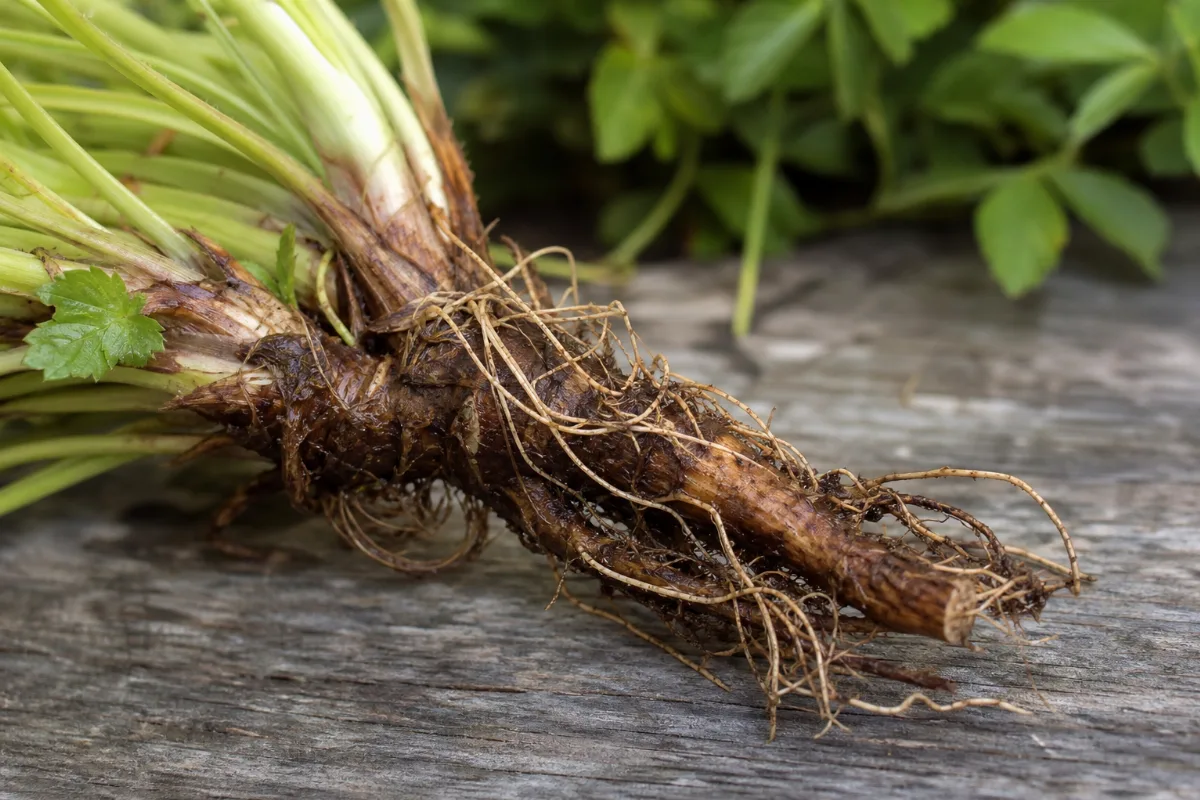
Tormentil is a low perennial of the rose family that grows in Europe and western Asia. The part used is the rhizome, which is dark red inside and has a strongly astringent, drying taste because of tannins.
Textbook figures cited by the European regulator put total tannins at about 15 to 22 per cent of the dry rhizome. There are also triterpene acids and a small amount of the ellagitannin agrimoniin.
Not to be confused with
Cranesbill (Geranium maculatum) is a different plant with a similar astringent folk use; it has its own page. Agrimony is another astringent herb of the same family, also on its own page. 'Blutwurz' is the German name for tormentil and is not the North American bloodroot.
Traditional uses
The European Medicines Agency accepts tormentil rhizome as a traditional herbal medicine for mild diarrhoea, and the tea and some liquid preparations for minor inflammation of the mouth lining, in adults. 'Traditional use' means there is not enough clinical trial evidence, but the use is plausible and has been safe for at least 30 years in the EU and elsewhere.
The rhizome is also an ingredient in herbal spirits in Germany, Ukraine and Russia.
What the research shows
There is very little. One small double-blind trial of 40 children in Russia found rotavirus diarrhoea lasted 3 days with a tormentil tincture against 5 days with placebo. The EU committee did not accept it as a basis for use in children. One open-label study of 16 adults with ulcerative colitis found lower scores, but it had no placebo group.
Other findings, on inflammation, antioxidant action and gut bacteria, come from the lab. We found no trial in adults with diarrhoea or with mouth problems.
At a glance
Traditional uses history, not proof
- Tea or tincture for mild diarrhoea in adults.
- Mouth rinse or gargle for sore or inflamed mouth lining.
- Herbal bitters and spirits in Germany, Ukraine and Russia.
Studied for research
- Mild diarrhoea in adults: traditional use, no adult trial (insufficient).
- Rotavirus diarrhoea in children: one trial of 40 children (very low certainty).
- Ulcerative colitis: one small open-label study (very low certainty).
- Inflammation and gut bacteria: lab work only.
Main compounds
- Tannins, about 15 to 22 per cent of the dry rhizome in textbook figures (condensed tannins from catechin).
- Agrimoniin, an ellagitannin, about 1 per cent.
- Triterpene acids and saponins such as quinovic acid.
Common forms
- Dried rhizome for tea.
- Tincture or liquid extract, including mouth rinses.
- Dry extract.
Research links: EMA: Tormentillae rhizoma herbal medicinal product · Children's rotavirus diarrhoea trial, 2003 (PubMed) · Ulcerative colitis open-label study, 2007 (PubMed) · Research Library · Genes & Biomarkers Library
The plant and its history
- Accepted scientific name
- Potentilla erecta (L.) Raeusch.
- Naming authority
- (L.) Raeusch.
- Synonyms
- Tormentilla erecta; Potentilla tormentilla
- Common names
- Tormentil (English); Blutwurz (German); Tormentill (German); Tormentillae rhizoma (Latin (drug name))
- Botanical family
- Rosaceae (the rose family).
- Classification
- Plantae > Tracheophyta > Magnoliopsida > Rosales > Rosaceae > Potentilla > Potentilla erecta
- Native range
- Europe and western Asia (per a 2024 lab paper abstract).
- Habitat
- Not verified from a source read.
- What the plant looks like
- Roots: The rhizome (underground stem) is the part used.; Stems: Not verified.; Leaves: Not verified.; Flowers: Not verified.; Fruit: Not verified.
- Cultivation
- Not verified from a source read.
- Harvest and processing
- The EU covers the dried and comminuted rhizome, liquid extracts made with solvents such as ethanol, and dry extracts. The pharmacopoeia minimum is 7% tannins (as pyrogallol) in the dried herb.
- Look-alikes and adulterants
- Name: Cranesbill (Geranium maculatum); Note: A different plant from North America with a similar astringent folk use; see its own page. Evidence for one does not apply to the other.; Name: Agrimony (Agrimonia eupatoria); Note: A different astringent herb of the same family, with its own page.
- Sustainability and conservation
- Not assessed here.
Traditional use and history history, not clinical proof
| Tradition or era | Documented use | Source |
|---|---|---|
| European traditional medicine | The rhizome has been used for diarrhoea, gut disorders, inflammation and wounds. The EMA accepts it as a traditional herbal medicine on the basis of at least 30 years of use, including at least 15 years within the EU. | s-ema-hmpc-tormentil |
| Herbal spirits and bitters | Rhizomes are used in alcoholic beverages in Germany, Ukraine and Russia. | p19857087 |
| 2024 | Named 'Heilpflanze des Jahres 2024' (Medicinal Plant of the Year 2024) in a German title; see the 2025 commentary. | p40188806 |
Traditional use shows how a plant was used. It does not show that a supplement works or is safe today.
What is inside, and how it may work
What the plant contains and how those compounds act in cells and animals. Laboratory and animal mechanisms are not proven effects in people.
Main compounds
| Compound | Family | Where it is concentrated | Activity studied | Level of evidence |
|---|---|---|---|---|
| Tannins (mostly condensed, catechin-based) PubChem 9064 | polyphenol | Rhizome About 15 to 22% total tannins in textbook figures cited by EMA; pharmacopoeia minimum 7%. | Astringent in the lab; anti-inflammatory and antioxidant in lab work. CID shown is catechin, a building block. 2 11 | Lab and textbook chemistry |
| Agrimoniin (a dimeric ellagitannin) PubChem 16129621 | ellagitannin | Rhizome About 1% of the herbal substance (EMA report). | Lab activity reported; EMA assessors note the low content makes translation unclear. 2 11 | Lab |
| Ellagic acid (breakdown product of ellagitannins) PubChem 5281855 | polyphenol | Rhizome (after hydrolysis) | Formed when hydrolysable tannins break down; ellagic acid derivatives were changed by gut-lining cells in a lab model. 2 6 11 | Lab |
| Triterpenes (quinovic acid, tormentillic acid and glycosides) PubChem 120678 | triterpene | Rhizome | Passed through a gut-lining cell layer in the lab. CID shown is quinovic acid; tormentillic acid was not looked up. 2 6 11 | Lab |
Mechanisms, receptors and pathways
| Target or pathway | Gene or receptor | What was found | Level |
|---|---|---|---|
| Protein binding (astringency) | Not applicable | Tannins bind proteins. The EU committee cites lab studies of astringent effects that reduce fluid absorption in the intestines. Not proven in people. 3 2 | Lab |
| Anti-inflammatory and antioxidant activity | Not specified | Reported for tannins in cell-free and cell tests; an older lab study cited by EMA found antioxidant activity in gut biopsy samples from colitis patients. Not shown to work in people. 2 12 | Lab |
| Gut microbiota metabolism | Not applicable | Gut bacteria in stool samples broke down catechin and its oligomers, leaving triterpenes unchanged, and Ruminococcaceae grew more in the dish. 7 | Ex vivo |
Absorption, metabolism and elimination
- Absorption
- In the colitis study, no whole or broken-down tannins could be found in patients' blood, so tannins are probably not absorbed in measurable amounts. In a gut-lining cell model only triterpenes crossed the cell layer.
- Distribution
- Not found.
- Metabolism
- Ellagic acid derivatives were changed by gut-lining cells; gut bacteria broke down catechin and its oligomers (lab studies).
- Elimination
- Not found.
- Bioavailability
- Not measured in people beyond the blood test above.
Isolated compounds versus whole extracts
No isolated compound from tormentil has been tested in people. The two human studies used whole extracts of different types (an ethanol tincture in children, a commercial dry extract in colitis), so results cannot be moved between products.
Nutritional composition
Tormentil is not a food or nutrient source. Tannin-rich plants can bind iron, shown for tea and not for tormentil.
2 very low certainty4 not enough evidence
What is Tormentil good for?
Tormentil has a regulator's traditional-use status for two small problems, but almost no clinical research. The rows below are each rated for how strong the evidence is. None is a recommendation.
Benefits, one by one
Each card is a research question, not a promise. Tap a goal to filter. Open a card to see the studies, doses and limits.
Mild diarrhoea in adults (traditional use)
Not enough evidenceThe European Medicines Agency accepts tormentil root as a traditional herbal medicine for mild diarrhoea in adults. That acceptance rests on long use and on lab findings about astringent tannins, not on clinical trials in adults. We found no controlled trial of tormentil for diarrhoea in adults.
4 studiesNot given here. The EU lists tea (infusion or decoction), tinctures, …
Studies, doses and limits
What the trials found
EMA/HMPC (monograph 2010, assessment report 2010, public summary 2019): traditional use for mild diarrhoea in adults. The committee found only preliminary clinical data, which supports traditional use but not 'well-established use'. No adult diarrhoea trial is described. The 2020 Planta Medica review (summary-only, title-only on PubMed, not re-opened) is described in our existing summary as saying lab and animal data support the uses while enough clinical studies are lacking.
Results
No controlled adult trial of tormentil for diarrhoea was found.
Effect sizes as reported
None: no adult trial.
Why this rating
Traditional-use status is a regulator's judgement that use is plausible and long-standing, not evidence that it works. There is no adult trial.
Form and dose studied
Not given here. The EU lists tea (infusion or decoction), tinctures, liquid extract and dry extract. Ask a doctor or pharmacist about amounts and products.
Who was studied
Adults only, according to the EU monograph. Children and adolescents under 18 are not covered.
Limits
Regulator acceptance is based on tradition. The monograph dates from 2010 and a periodic review was in progress when we read the EMA page. Tannin content differs between products.
Why researchers looked
The dried rhizome is very rich in tannins, which tighten tissue and are the usual explanation for its use against loose stools.
Traditional use
Tormentil root has been used in European folk medicine for diarrhoea and gut complaints for a very long time, and is also an ingredient in herbal spirits and bitters in Germany, Ukraine and Russia.
Proposed mechanism Preliminary mechanism
In lab experiments, tannins bind proteins and have an astringent effect, which the EU committee describes as reducing the absorption of fluid into the intestines, plus anti-inflammatory effects. These ideas come from lab work and have not been shown to explain any effect in people.
A proposed mechanism does not show that the effect happens in people.
See a doctor if diarrhoea lasts longer than 3 days, comes back, or contains blood. Nausea and vomiting have been reported. Avoid in pregnancy and breastfeeding. Take it apart from other medicines (see the Safety tab).
Rotavirus diarrhoea in young children (one small trial)
Very low certaintyOne small double-blind trial in Russia, in 40 children, found that a tormentil root tincture shortened rotavirus diarrhoea from about 5 days to 3 days compared with placebo. It is the only trial of this kind that we found. The EU committee did not accept it as a basis for use in children, and tormentil medicines are for adults only.
3 studiesNot given here. The trial used a specific tincture, and amounts depen…
Studies, doses and limits
What the trials found
Subbotina 2003 (Pediatric Infectious Disease Journal): randomised, double-blind, placebo-controlled trial in a children's infectious-disease hospital in St Petersburg; 40 children aged 3 months to 7 years with rotavirus diarrhoea; 20 got tormentil root extract, 20 got placebo, for up to 5 days. Diarrhoea lasted 3 days against 5 days (P < 0.0001). At 48 hours 8 of 20 (40%) were diarrhoea-free against 1 of 20 (5%) (P < 0.0001). The tormentil group needed smaller volumes of drip fluids. The EMA report says the tincture was a 1:10 ethanol 40% extract, the placebo was an alcohol extract of Indian tea, no side effects were reported, and the committee still concluded the use in children and adolescents cannot be recommended.
Results
Shorter diarrhoea and fewer children still having diarrhoea at 48 hours in one small trial.
Effect sizes as reported
Diarrhoea 3 days vs 5 days (P < 0.0001); diarrhoea-free at 48 h 8/20 vs 1/20 (P < 0.0001)
Why this rating
One small trial of 40 children, one hospital, one extract, not repeated in the sources we found. The EMA committee called the clinical data preliminary and gave no children's use.
Form and dose studied
Not given here. The trial used a specific tincture, and amounts depended on age; this is not a guide for parents.
Who was studied
Children 3 months to 7 years with rotavirus diarrhoea, in hospital.
Limits
Very small, single centre, short, product-specific; funding and conflicts are not stated in the abstract. It was done in hospital with medical supervision.
Why researchers looked
Rotavirus is a common cause of watery diarrhoea in young children, and the trial team wanted to test a gentle astringent next to standard rehydration.
Traditional use
Astringent tannin preparations have long been used for diarrhoea, including in standard European reference books, according to the EMA assessor.
Proposed mechanism Preliminary mechanism
The trial authors did not prove how any effect might work. The usual explanation is tannin astringency, which is a lab-based idea.
A proposed mechanism does not show that the effect happens in people.
Diarrhoea in babies and children can cause dangerous dehydration. Guidelines advise oral rehydration solution and medical advice first. Do not treat a child's diarrhoea with tormentil on your own.
Minor inflammation of the mouth lining (traditional use)
Not enough evidenceThe EU also accepts tormentil tea and some liquid preparations, used as a mouth rinse, for minor inflammation of the lining of the mouth. Again, this is based on long use and the astringent action of tannins, not on trials. We found no trial of tormentil for mouth problems in people.
3 studiesNot given here. The EU lists a rinse made from the dried herb or a ti…
Studies, doses and limits
What the trials found
EMA/HMPC lists 'minor inflammations of the oral mucosa' as the second traditional indication, using a rinse made from the herb or tincture. The assessment report says there are no clinical trial data for it. Newer lab and formulation papers on mouth gels exist; we did not read them.
Results
No human study of tormentil for mouth inflammation was found.
Effect sizes as reported
None: no trial.
Why this rating
Traditional-use status only. No trial in people.
Form and dose studied
Not given here. The EU lists a rinse made from the dried herb or a tincture diluted in water. Ask a pharmacist.
Who was studied
Adults only, per the EU monograph.
Limits
No trials; monograph from 2010.
Why researchers looked
Tannins tighten the surface of the mouth lining, which is the old reason for gargles and rinses from this root.
Traditional use
Tormentil rinses and tinctures are a long-standing European folk remedy for sore gums and mouth lining.
Proposed mechanism Preliminary mechanism
Astringent action of tannins is the proposed reason. This comes from lab work and has not been tested for the mouth in people.
A proposed mechanism does not show that the effect happens in people.
See a doctor if mouth problems last longer than 1 week or get worse. None known side effects for this use, per the monograph. Tinctures contain alcohol.
Active ulcerative colitis (one small open-label study)
Very low certaintyIn one small study of 16 adults with active ulcerative colitis, symptom scores and a blood marker of inflammation improved on a tormentil extract. There was no placebo group, so we cannot tell whether the herb caused the change. One patient out of 15 who finished got worse and was hospitalised, per the EU report. This is not a basis for treating colitis with tormentil.
2 studiesNot given here. A specific commercial extract was tested in stepped a…
Studies, doses and limits
What the trials found
Huber 2007 (Journal of Clinical Gastroenterology), open-label dose-escalation study (listed as Phase I on PubMed): 16 adults with active ulcerative colitis took a commercial ethanolic tormentil dry extract in four stepped doses, 3 weeks each, with 4-week breaks. At one of the higher dose steps the median colitis activity index fell from 8 to 4.5 and median C-reactive protein from 8 to 3 mg/L. The index fell in all patients on treatment and rose again during breaks. Mild upper-belly discomfort affected 6 of 16 (38%). No tannins were found in blood. The EMA report counts 15 finishers, says 62% had mild gut symptoms (heartburn, stomach discomfort, nausea), and notes one patient had worsening colitis and was hospitalised.
Results
Lower scores in a small before-and-after study; no control group.
Effect sizes as reported
Median colitis activity index 8 to 4.5; CRP 8 to 3 mg/L (one higher dose step)
Why this rating
Open-label, uncontrolled, 16 people, short. Improvement could be chance, natural ups and downs, or placebo effect. No later trial was found.
Form and dose studied
Not given here. A specific commercial extract was tested in stepped amounts under medical supervision.
Who was studied
Adults with active ulcerative colitis, supervised in a study.
Limits
No placebo or blinding; tiny; one product; funding not stated in the abstract; the colitis tool is partly self-reported.
Why researchers looked
The tannins are thought to calm gut inflammation, and some doctors had seen benefit in individual colitis patients.
Traditional use
Tormentil has been used for gut inflammation and diarrhoea in European folk medicine. Colitis is not an EU-approved use.
Proposed mechanism Preliminary mechanism
The study found no tannins in patients' blood, so any effect would have to act inside the gut. Lab work suggests anti-inflammatory and antioxidant activity of tannins; the EMA report notes that tormentil showed antioxidant activity in gut-lining biopsy samples from colitis patients in an older lab study. None of this proves how, or whether, it helps people.
A proposed mechanism does not show that the effect happens in people.
Ulcerative colitis needs medical care. Do not replace prescribed treatment with tormentil, and tell your gastroenterologist if you use it. Colitis can worsen quickly.
Anti-inflammatory and antioxidant action (lab only)
Not enough evidenceIn lab and animal studies, tormentil extracts and their tannins show anti-inflammatory and antioxidant activity. These are findings in dishes and animals. They do not show that tormentil lowers inflammation in people.
2 studiesNot applicable.
Studies, doses and limits
What the trials found
None. EMA assessment report: lab and non-clinical data only. Saller 2025 (Complementary Medicine Research, abstract read) is a commentary and reports no new human data.
Results
Lab and animal findings only.
Effect sizes as reported
Not applicable
Why this rating
Mechanistic findings only; none confirmed in people.
Form and dose studied
Not applicable.
Who was studied
None studied.
Limits
We did not re-read the lab literature. Lab results often do not carry over to people.
Why researchers looked
Tannins and ellagitannins in the rhizome are active in many lab inflammation tests, and researchers hope to explain the traditional uses.
Traditional use
Traditional use for inflamed gut and mouth lining.
Proposed mechanism Preliminary mechanism
Tannins, including the ellagitannin agrimoniin, show antioxidant and anti-inflammatory effects in cell-free systems and cells. The EU committee noted that agrimoniin makes up only about 1% of the herb, so its lab effects may not translate. A 2025 commentary argues experiments show a broad anti-inflammatory profile; that is the authors' interpretation.
A proposed mechanism does not show that the effect happens in people.
No safety implications beyond the general tannin cautions.
Gut bacteria and absorption (lab and ex vivo only)
Not enough evidenceLab studies in Poland tracked what happens to tormentil compounds in gut cells and stool samples. They found that parts of the extract are changed by gut bacteria and that some bacteria grew more in a dish. Nobody has shown that this helps people.
2 studiesNot applicable.
Studies, doses and limits
What the trials found
None in people. Kruk 2024 (Caco-2 cell layers) and Kruk 2025 (human stool samples incubated in the lab) are descriptive studies.
Results
Descriptive lab findings.
Effect sizes as reported
Not applicable
Why this rating
Cell-model and ex vivo work only.
Form and dose studied
Not applicable.
Who was studied
None.
Limits
No people were given the extract. The studies show what happens in a dish.
Why researchers looked
To learn which compounds reach the gut lining and how gut bacteria change them.
Traditional use
Traditional gut use.
Proposed mechanism Preliminary mechanism
Gut-lining cell layers let only triterpenes through, while condensed tannins stayed on the surface. In stool samples catechin and its oligomers were broken down by gut bacteria, triterpenes were unchanged, and Ruminococcaceae grew more. These are ex vivo and cell-model results.
A proposed mechanism does not show that the effect happens in people.
None.
Connections to the rest of health
How Tormentil connects to the rest of our health knowledge graph. Every link says what kind of connection it is. A safety link (for example to the liver) is a warning, not a benefit. A study that merely mentions a topic never creates a benefit link.
Explore every connection: goals, body systems, organs, symptoms, genes
A. Wellness goals
| Connected to | Kind of connection | Evidence status | Context | Studies |
|---|---|---|---|---|
| Digestive Support | Traditional use | Not enough evidence | Mild diarrhoea in adults (traditional use): The European Medicines Agency accepts tormentil root as a traditional herbal medicine for mild diarrhoea in adults. That acceptance rests on long use and on lab findings about astringent tannins, not on clinical trials in adults. We found no controlled trial of tormentil for diarrhoea in adults. | 3 1 2 10 |
| Gut Health | Traditional use | Not enough evidence | Mild diarrhoea in adults (traditional use): The European Medicines Agency accepts tormentil root as a traditional herbal medicine for mild diarrhoea in adults. That acceptance rests on long use and on lab findings about astringent tannins, not on clinical trials in adults. We found no controlled trial of tormentil for diarrhoea in adults. | 3 1 2 10 |
| Digestive Support | Potential benefit | Very low certainty | Rotavirus diarrhoea in young children (one small trial): One small double-blind trial in Russia, in 40 children, found that a tormentil root tincture shortened rotavirus diarrhoea from about 5 days to 3 days compared with placebo. It is the only trial of this kind that we found. The EU committee did not accept it as a basis for use in children, and tormentil medicines are for adults only. | 14 2 9 |
| Gut Health | Potential benefit | Very low certainty | Rotavirus diarrhoea in young children (one small trial): One small double-blind trial in Russia, in 40 children, found that a tormentil root tincture shortened rotavirus diarrhoea from about 5 days to 3 days compared with placebo. It is the only trial of this kind that we found. The EU committee did not accept it as a basis for use in children, and tormentil medicines are for adults only. Active ulcerative colitis (one small open-label study): In one small study of 16 adults with active ulcerative colitis, symptom scores and a blood marker of inflammation improved on a tormentil extract. There was no placebo group, so we cannot tell whether the herb caused the change. One patient out of 15 who finished got worse and was hospitalised, per the EU report. This is not a basis for treating colitis with tormentil. | 14 2 9 5 |
| Oral Health | Traditional use | Not enough evidence | Minor inflammation of the mouth lining (traditional use): The EU also accepts tormentil tea and some liquid preparations, used as a mouth rinse, for minor inflammation of the lining of the mouth. Again, this is based on long use and the astringent action of tannins, not on trials. We found no trial of tormentil for mouth problems in people. | 3 1 2 |
| Inflammation Balance | Potential benefit | Very low certainty | Active ulcerative colitis (one small open-label study): In one small study of 16 adults with active ulcerative colitis, symptom scores and a blood marker of inflammation improved on a tormentil extract. There was no placebo group, so we cannot tell whether the herb caused the change. One patient out of 15 who finished got worse and was hospitalised, per the EU report. This is not a basis for treating colitis with tormentil. | 5 2 |
| Inflammation Balance | Not enough evidence | Anti-inflammatory and antioxidant action (lab only): In lab and animal studies, tormentil extracts and their tannins show anti-inflammatory and antioxidant activity. These are findings in dishes and animals. They do not show that tormentil lowers inflammation in people. | 2 12 | |
| Gut Health | Not enough evidence | Gut bacteria and absorption (lab and ex vivo only): Lab studies in Poland tracked what happens to tormentil compounds in gut cells and stool samples. They found that parts of the extract are changed by gut bacteria and that some bacteria grew more in a dish. Nobody has shown that this helps people. | 6 7 |
B. Body systems
| Connected to | Kind of connection | Evidence status | Context | Studies |
|---|---|---|---|---|
| Digestive system | Traditional use | Not enough evidence | EU traditional use for mild diarrhoea in adults; one small children's trial; no adult trial. Preparation or compound: Rhizome tannins |
3 1 2 14 |
| Digestive System | Biological association | Not enough evidence | Studied for: Mild diarrhoea in adults (traditional use) Studied for: Rotavirus diarrhoea in young children (one small trial) | 3 1 2 10 14 9 5 12 6 7 |
D. Symptoms
I. Biomarkers
| Connected to | Kind of connection | Evidence status | Context | Studies |
|---|---|---|---|---|
| Duration of rotavirus diarrhoea | Biological association | Very low certainty | Measured in trials: decrease. A lab change is not the same as a health benefit. | 14 |
| Children free of diarrhoea at 48 hours | Biological association | Very low certainty | Measured in trials: increase. A lab change is not the same as a health benefit. | 14 |
| Volume of drip (parenteral) fluids needed | Biological association | Very low certainty | Measured in trials: decrease. A lab change is not the same as a health benefit. | 14 |
| Clinical activity index (ulcerative colitis) | Biological association | Very low certainty | Measured in trials: decrease. A lab change is not the same as a health benefit. | 5 2 |
| C-reactive protein (CRP) | Biological association | Very low certainty | Measured in trials: decrease. A lab change is not the same as a health benefit. | 5 |
| Ruminococcaceae growth (stool samples, lab) | Biological association | Not enough evidence | Measured in trials: increase. A lab change is not the same as a health benefit. | 7 |
L. Active compounds
| Connected to | Kind of connection | Evidence status | Context | Studies |
|---|---|---|---|---|
| Tannins (mostly condensed, catechin-based) | Biological association | Lab and textbook chemistry | Astringent in the lab; anti-inflammatory and antioxidant in lab work. CID shown is catechin, a building block. Preparation or compound: Rhizome |
2 11 |
| Agrimoniin (a dimeric ellagitannin) | Biological association | Lab | Lab activity reported; EMA assessors note the low content makes translation unclear. Preparation or compound: Rhizome |
2 11 |
| Ellagic acid (breakdown product of ellagitannins) | Biological association | Lab | Formed when hydrolysable tannins break down; ellagic acid derivatives were changed by gut-lining cells in a lab model. Preparation or compound: Rhizome (after hydrolysis) |
2 6 11 |
| Triterpenes (quinovic acid, tormentillic acid and glycosides) | Biological association | Lab | Passed through a gut-lining cell layer in the lab. CID shown is quinovic acid; tormentillic acid was not looked up. Preparation or compound: Rhizome |
2 6 11 |
Each connection is stored with the ingredient, the connected record, the kind of connection, the evidence status, the supporting studies, the preparation or compound involved, and a review date (last reviewed October 25, 2026).
The evidence
The research centre for Tormentil. Every record here was checked against PubMed or the publisher's page; we never list a study we have not verified.
Evidence by outcome
Bars show how many studies we found for each outcome, not how well it works. People are added up across trials only (reviews are not added, to avoid double counting).
How we rate evidence
High certainty
Several well-run trials or reviews agree; further research is unlikely to change the picture much.
Moderate certainty
Good trials point the same way, but some doubt remains.
Low certainty
Small, short or inconsistent trials. The finding could change with better research.
Very low certainty
Very little or very weak human data. Treat as a possibility only.
Mixed findings
Trials or reviews disagree with each other.
Not enough evidence
Not enough human research to say either way.
Evidence against
Good research found no benefit, or found harm.
We take the reviewers' own risk-of-bias and GRADE statements where they exist, and otherwise judge from study size, design, consistency, directness and whether a product matches what is sold. Many publications do not make evidence high. Method note: We read the EMA herbal page, the 2010 monograph and the 2010 assessment report in full, read PubMed abstracts for the trials and lab studies, and checked GBIF and PubChem. The 2020 review has no abstract on PubMed and was not opened. Not verified: NCCIH, LiverTox, LactMed, FDA, Commission E, WHO. Ratings are the compiler's own reading, not formal grades.
Study library: every study we checked 14
| Study | Design | People | Product, dose, length | Result |
|---|---|---|---|---|
| European Medicines Agency 2010 Community herbal monograph on Potentilla erecta (L.) Raeusch., rhizoma (EMA/HMPC/5513/2010) EMA, final community herbal monograph (compiled 25 November 2010) · Source |
Regulator monograph (traditional use) |
Adults and elderly | Tormentil rhizome (Potentilla erecta) Rhizome Not applicable Not applicable · vs Not applicable |
Two traditional indications: symptomatic treatment of mild diarrhoea (oral use) and of minor inflammations of the oral mucosa (mouth rinse). Use in children and adolescents under 18 is not recommended because it has not been established, owing to lack of adequate data. See a doctor if diarrhoea lasts longer than 3 days, if mouth symptoms last longer than 1 week, if diarrhoea recurs or if stools contain blood, or if symptoms worsen. Contraindication: hypersensitivity. Interactions: absorption of other medicines taken at the same time may be delayed, so the product should be taken 1 hour or more before or after other medicines (diarrhoea use); none reported for the mouth use. Pregnancy and breastfeeding: safety not established, use not recommended. Undesirable effects: mild gut complaints such as nausea and vomiting, frequency not known; none known for mouth use. No case of overdose reported. Tests on reproductive toxicity, genotoxicity and carcinogenicity have not been performed. Tinctures need alcohol (ethanol) labelling. Traditional-use monograph; no dosage given here Methods, limits and fundingOutcomes: Indications, precautions, interactions, pregnancy, undesirable effects Limitations: The monograph (2010) is older than the 2019 public summary, and a periodic review was in progress when we read the EMA page. Its dose figures are not reproduced here. Funding and conflicts: Public regulator. Read: full-text |
| European Medicines Agency 2010 Assessment report on Potentilla erecta (L.) Raeusch., rhizoma (EMA/HMPC/5511/2010) EMA, final assessment report · Source |
Regulator assessment report |
Review of the clinical and non-clinical literature to 2010 | Tormentil rhizome (Potentilla erecta) Rhizome Not applicable Not applicable · vs Not applicable |
Rhizome described as containing total tannins of about 15 to 22% (textbook figures; mostly condensed tannins, about 3.5% hydrolysable tannins, agrimoniin about 1%), plus flavonoids, phenolic acids and triterpene saponins; the pharmacopoeia minimum is 7% tannins. Only clinical data: the Huber 2007 open-label colitis study and the Subbotina 2003 rotavirus trial in children. The committee judged the trials preliminary: they support traditional use but not well-established use. It did not recommend use in children or adolescents (acute diarrhoea can be life-threatening in young children; no safe-use data for the monograph preparations). Only documented adverse effects came from the colitis study: all mild, 62% had mild gut symptoms, and 1 of 15 patients had worsening colitis and was hospitalised. Pregnancy and breastfeeding: no data, not recommended. No genotoxicity, carcinogenicity or reproductive tests; the assessors note tannins from oak may have carcinogenic potential and that relevance to tormentil is unclear. Overall: medicinal use regarded as safe for adults. Traditional use supported by preliminary data; adults only Methods, limits and fundingOutcomes: Constituents, non-clinical and clinical data, safety conclusions Limitations: Dated 2010. Newer data may exist; a periodic review was in progress. We read the main report, not the later addendum. Funding and conflicts: Public regulator. Read: full-text |
| European Medicines Agency 2019 Tormentillae rhizoma - herbal medicinal product (EMA public summary, EMA/166412/2019) EMA website · Source |
Regulator summary (traditional use herbal medicine) |
Adults (public summary of the HMPC conclusions) | Tormentil rhizome (Potentilla erecta): dried rhizome, liquid extract, dry extract Rhizome Not applicable Not applicable · vs Not applicable |
HMPC concluded that, on the basis of long-standing use, these preparations can be used for mild diarrhoea, and the herbal tea and some liquid preparations for minor inflammation of the lining of the mouth. Medicines should only be used in adults. A doctor should be consulted if diarrhoea worsens or lasts longer than 3 days, or mouth inflammation worsens or lasts longer than 1 week. 'Traditional use' means clinical trial evidence is insufficient, but effectiveness is plausible and safe use for at least 30 years (at least 15 within the EU) is documented. Lab studies considered showed astringent and anti-inflammatory effects of tannins. Mild gut complaints such as nausea and vomiting have been reported when taken for diarrhoea; frequency not known. Status on the page: 'C: ongoing call for scientific data' (periodic review of the monograph). Traditional use only; adults only Methods, limits and fundingOutcomes: Accepted uses, age limits, risks, evidence basis Limitations: Summary page, not the full monograph. The page text also lists a periodic-review call for data in progress. Funding and conflicts: Public regulator; no commercial funding. Read: full-text |
| GBIF Secretariat 2026 GBIF Backbone Taxonomy: Potentilla erecta (L.) Raeusch. (usage key 5365576) GBIF species match API · Source |
Taxonomy database record not applicable |
Plant name | Potentilla erecta Whole plant Not applicable Not applicable · vs Not applicable |
Strict match, EXACT, confidence 98: accepted species Potentilla erecta (L.) Raeusch., family Rosaceae, order Rosales, checked 2026-10-25. Accepted name confirmed Methods, limits and fundingOutcomes: Accepted name, family Limitations: Name record only. Funding and conflicts: Public database. Read: API response |
| Huber 2007 Tormentil for active ulcerative colitis: an open-label, dose-escalating study. Journal of Clinical Gastroenterology · PMID 17881930 |
Open label dose escalation study (listed as a Phase I trial on PubMed) |
16 16 adults with active ulcerative colitis (clinical activity index 5 or more) |
Tormentil extract (a commercial ethanolic dry extract) Rhizome Escalating steps (not reproduced here) 3 weeks per step, with 4-week breaks · vs None (before-and-after) |
Four escalating dose steps, 3 weeks each, with 4-week breaks. Mild upper-belly discomfort in 6 of 16 patients (38%), not needing a stop. At one of the higher dose steps the median CAI fell from 8 to 4.5 and median CRP from 8 to 3 mg/L. CAI fell in all patients during treatment and rose again during the breaks. No tannins, whole or broken down, could be found in patients' blood. The authors judged it safe in this study and said efficacy needs further testing. (The EMA report, which counts 15 finishers, adds that 62% had mild gut symptoms and one patient had worsening colitis and was hospitalised.) Median CAI 8 to 4.5; CRP 8 to 3 mg/L (at one of the higher dose steps) Methods, limits and fundingOutcomes: Side effects, colitis activity index (CAI), C-reactive protein (CRP), tannin levels in blood Limitations: No placebo group, no blinding, 16 people, short; the improvement could be natural fluctuation or placebo effect. Not a reason to treat ulcerative colitis with tormentil. Funding not stated in the abstract. Funding and conflicts: Not stated in the abstract. Read: abstract + EMA report |
| Kruk 2024 Heterogeneity of transport and metabolism of Tormentillae rhizoma constituents across human intestinal epithelium cellular model. Food Research International · PMID 38823825 · DOI |
Laboratory cell model study cell model |
Caco-2 human gut-lining cell layers | Tormentillae tincture (ethanol extract of the rhizome) Rhizome Not applicable Not applicable · vs Not applicable |
Only triterpenes passed through the cell layer. Condensed tannins mainly stuck to its surface. Ellagic acid derivatives were changed by the cells into compounds not described before. The authors suggest these could matter for gut inflammation, which was not tested. Descriptive; no effect size Methods, limits and fundingOutcomes: Which constituents cross a gut-lining cell layer and how they are changed Limitations: Cell layers in a dish, not people. Does not show any benefit. Funding and conflicts: Not stated in the abstract. Read: abstract |
| Kruk 2025 Selective metabolism of tormentil rhizome constituents by human gut microbiota and its impact on biodiversity ex vivo. Food Chemistry · PMID 40054211 · DOI |
Laboratory ex vivo study human stool samples (ex vivo) |
Human stool samples incubated with the extract in the lab | Tormentil rhizome extract Rhizome Not applicable Not applicable · vs Not applicable |
Only catechin and its oligomers were broken down by gut bacteria. Triterpenes were unchanged, and ellagic acid derivatives were not detected. The extract promoted growth of Ruminococcaceae (bacteria that make short-chain fatty acids) and other families and increased diversity in the dish. The authors say this may offer new strategies for gut health, which was not tested in people. Descriptive; no effect size Methods, limits and fundingOutcomes: Which constituents gut bacteria change; effect on bacterial diversity Limitations: Stool samples in a dish, not people. Does not show benefit. Funding and conflicts: Not stated in the abstract. Read: abstract |
| Lazrak 2021 Tea Consumption Reduces Iron Bioavailability from NaFeEDTA in Nonanemic Women and Women with Iron Deficiency Anemia: Stable Iron Isotope Studies in Morocco The Journal of Nutrition · PMID 34038558 · DOI |
Randomised crossover isotope study |
46 46 Moroccan women: 25 with iron deficiency anaemia, 21 without anaemia |
Green tea (about 492 mg polyphenols per serving) vs water with an iron-fortified wheat meal Tea leaf (not tormentil) 300 mL tea or water per test meal Two test meals, absorption measured after 14 days · vs Water |
Tea cut iron absorption by more than 85% in both groups. Median absorption in women with anaemia fell from 36.7% to 4.1%; in women without anaemia from 16.7% to 1.4% (both P < 0.001). >85% lower iron absorption with tea Methods, limits and fundingOutcomes: Fraction of iron absorbed from the meal Limitations: This is green tea, not tormentil, and one iron form (NaFeEDTA). It shows tannin-type plant polyphenols can block iron absorption; it does not measure tormentil. Funding and conflicts: Not stated in the abstract. Registration: NCT02175888 Read: abstract |
| Lo Vecchio 2016 Comparison of Recommendations in Clinical Practice Guidelines for Acute Gastroenteritis in Children Journal of Pediatric Gastroenterology and Nutrition · PMID 26835905 · DOI |
Systematic review of guidelines |
15 15 clinical practice guidelines on acute gastroenteritis in children |
Guideline recommendations Not applicable Not applicable Not applicable · vs Not applicable |
Oral rehydration solution is universally recognised as first-line treatment. Withdrawing food is discouraged by all guidelines; early refeeding is strongly recommended in 13 of 15. Zinc is recommended alongside rehydration by 10 of 15 guidelines; probiotics by 9 of 15. Routine antibiotics are discouraged. Guidelines list signs to judge dehydration, such as sunken eyes and poor general appearance. ORS first-line in all 15 guidelines Methods, limits and fundingOutcomes: What guidelines advise for children with acute diarrhoea and vomiting Limitations: Compares guidelines, not trials. Herbal astringents are not covered. Funding and conflicts: Not stated in the abstract. Read: abstract |
| Melzig 2020 Tormentillae rhizoma - Review for an Underestimated European Herbal Drug. Planta Medica · PMID 32155655 · DOI |
Narrative review mixed |
Review of the literature on tormentil rhizome | Tormentil rhizome (Potentilla erecta) Rhizome Not applicable Not applicable · vs Not applicable |
PubMed lists the title only; there is no abstract. We did not read the full text. The existing summary we hold for this herb describes it as saying that lab and animal data support the traditional uses while sufficient clinical studies are lacking; that statement is carried over as summary-only and not re-checked. Not applicable Methods, limits and fundingOutcomes: Overview of chemistry, lab studies and uses Limitations: Title-only on PubMed. We did not open the full text. Funding and conflicts: Not stated. Read: title-only (summary-only reuse) |
| NCBI PubChem 2026 PubChem compound name lookups: agrimoniin (CID 16129621), catechin (CID 9064), ellagic acid (CID 5281855), quinovic acid (CID 120678) PubChem PUG REST API · Source |
Chemistry database record not applicable |
Compound names | Compounds named in the EMA assessment report Rhizome Not applicable Not applicable · vs Not applicable |
Each name returned one compound ID (checked 2026-10-25). Tormentillic acid was not looked up. Identifiers only Methods, limits and fundingOutcomes: Compound identifiers Limitations: Identifier lookup only; does not show content in the plant. Funding and conflicts: Public database. Read: API response |
| Saller 2025 [Vom Spezifischen zum Systemischen - am Beispiel Tormentill/Blutwurz, der Heilpflanze des Jahres 2024]. Complementary Medicine Research · PMID 40188806 · DOI |
Narrative review / commentary (German, English abstract) mixed |
Discussion of tormentil as Medicinal Plant of the Year 2024 | Tormentil rhizome (Potentilla erecta) Rhizome Not applicable Not applicable · vs Not applicable |
The authors argue that experiments show tormentil rhizome has a broad range of compounds and several anti-inflammatory effects, which makes the traditional use plausible, and that it is well tolerated and could be used on skin and mucous membranes. They say current approval rules favour single-organ indications and overlook such effects, so few authorised products exist beyond some topical products and teas. This is the authors' opinion and framing, not new trial evidence. Not applicable Methods, limits and fundingOutcomes: Argument about research and regulation of a multi-compound herb Limitations: Opinion piece with an advocacy tone; reports no new clinical data. Funding and conflicts not stated in the abstract. Funding and conflicts: Not stated in the abstract. Read: abstract |
| Shushunov 2009 Determination of acute toxicity of the aqueous extract of Potentilla erecta (Tormentil) rhizomes in rats and mice. Journal of Medicinal Food · PMID 19857087 · DOI |
Animal toxicity study animal (rat, mouse) |
Rats and mice | Aqueous extract of Potentilla erecta rhizome Rhizome Not applicable Not applicable · vs Not applicable |
Single doses by mouth (2.5 g/kg in rats, 6.8 g/kg in mice) and into the belly cavity (3.8 g/kg in rats, 14.5 g/kg in mice): no deaths and no changes in appearance, behaviour or body weight over 2 weeks (by mouth) or 3 days (injected). No organ damage seen under the microscope. The authors say this fits long traditional use and the earlier trials, and consider acute toxicity low. No acute toxicity at the doses tested Methods, limits and fundingOutcomes: Death, behaviour, body weight and organ changes after a single dose Limitations: Single dose in animals only. Says nothing about long-term use, pregnancy, or people. Funding not stated in the abstract. Funding and conflicts: Not stated in the abstract. Read: abstract |
| Subbotina 2003 Effect of oral administration of tormentil root extract (Potentilla tormentilla) on rotavirus diarrhea in children: a randomized, double blind, controlled trial. Pediatric Infectious Disease Journal · PMID 12913771 · DOI |
Randomised double blind placebo controlled trial |
40 40 children aged 3 months to 7 years with rotavirus diarrhoea, in a children's infectious diseases hospital in St Petersburg, Russia |
Tormentil root extract (a 1:10 ethanol 40% tincture, per the EMA assessment report) Root/rhizome Weight-for-age drops (not reproduced here) Until diarrhoea stopped, at most 5 days · vs Placebo |
Diarrhoea lasted 3 days with tormentil extract against 5 days with placebo (P < 0.0001). At 48 hours, 8 of 20 children (40%) on tormentil were diarrhoea-free against 1 of 20 (5%) on placebo (P < 0.0001). The tormentil group received smaller volumes of parenteral (drip) fluids. The authors concluded it appeared effective for rotavirus diarrhoea. The EMA report adds that the placebo was an alcohol extract of Indian tea and no side effects were reported. Diarrhoea 3 days vs 5 days; 40% vs 5% diarrhoea-free at 48 h Methods, limits and fundingOutcomes: Duration of diarrhoea; diarrhoea-free at 48 hours; parenteral fluid volumes Limitations: Only 40 children, one hospital, maximum 5 days of treatment, one extract. The EMA committee judged it preliminary and did not accept it as a basis for use in children. Funding and conflicts are not stated in the abstract. Funding and conflicts: Not stated in the abstract. Read: abstract + EMA report |
What we do not know yet
- No trial in adults with diarrhoea or mouth inflammation.
- No repeat of the children's rotavirus trial.
- No placebo-controlled colitis trial.
- No long-term, pregnancy or interaction data, and no product testing.
How new research is added
New studies are found by a saved PubMed search and placed in a review queue. A person reads each one before it is added.
Lab markers
What changed in blood or saliva tests during trials. A changed number is not the same as feeling or being healthier, and we give no "normal ranges".
Other 6
Duration of rotavirus diarrhoea
Decrease in trials
How many days diarrhoea lasted in a child admitted with rotavirus.
Very low certaintyResults and what it means
Why it was measured
The main clinical outcome of the trial.
Statistical vs. clinical meaning
One small trial only; a shorter episode is a meaningful clinical outcome if it is repeated.
Safety implication
Not a reason to treat a child's diarrhoea at home with herbs.
| Study | Result | People | Product |
|---|---|---|---|
| 14 | 3 days with tormentil root extract against 5 days with placebo (P < 0.0001). | 40 children aged 3 months to 7 years with rotavirus diarrhoea, in hospital | Tormentil root extract (tincture), up to 5 days, against placebo |
Children free of diarrhoea at 48 hours
Increase in trials
The share of children with no diarrhoea two days after admission.
Very low certaintyResults and what it means
Why it was measured
A quick marker of recovery.
Statistical vs. clinical meaning
Same small trial; large relative difference but tiny numbers.
Safety implication
None reported in the trial.
| Study | Result | People | Product |
|---|---|---|---|
| 14 | 8 of 20 (40%) on tormentil against 1 of 20 (5%) on placebo (P < 0.0001). | Same 40 children | Tormentil root extract against placebo |
Volume of drip (parenteral) fluids needed
Decrease in trials
How much fluid had to be given by drip.
Very low certaintyResults and what it means
Why it was measured
Shows how much dehydration needed treating.
Statistical vs. clinical meaning
Direction reported, size not stated in the abstract.
Safety implication
None.
| Study | Result | People | Product |
|---|---|---|---|
| 14 | Smaller volumes of parenteral fluids in the tormentil group; the abstract gives no numbers. | Same 40 children | Tormentil root extract against placebo |
Clinical activity index (ulcerative colitis)
Decrease in trials
A score combining symptoms such as stool frequency and blood in the stool.
Very low certaintyResults and what it means
Why it was measured
The main outcome of the open-label colitis study.
Statistical vs. clinical meaning
Uncontrolled study; a fall does not prove cause.
Safety implication
One patient (EMA count of 15 finishers) worsened and was hospitalised.
| Study | Result | People | Product |
|---|---|---|---|
| 5 | Median score fell from 8 to 4.5 at one of the higher dose steps and fell in all patients; it rose again during washout. | 16 adults with active ulcerative colitis | Tormentil ethanolic dry extract in stepped doses, no control group |
C-reactive protein (CRP)
Decrease in trials
A blood marker of inflammation.
Very low certaintyResults and what it means
Why it was measured
To see whether inflammation fell alongside symptoms.
Statistical vs. clinical meaning
A lab marker, not a clinical outcome, and uncontrolled.
Safety implication
None.
| Study | Result | People | Product |
|---|---|---|---|
| 5 | Median CRP fell from 8 mg/L to 3 mg/L at one of the higher dose steps. | 16 adults with active ulcerative colitis | Tormentil ethanolic dry extract, no control group |
Ruminococcaceae growth (stool samples, lab)
Increase in trials
A family of gut bacteria that make short-chain fatty acids.
Not enough evidenceResults and what it means
Why it was measured
A rough lab screen of the effect on gut bacteria.
Statistical vs. clinical meaning
Lab screen only; says nothing about people.
Safety implication
None.
| Study | Result | People | Product |
|---|---|---|---|
| 7 | The extract promoted growth of Ruminococcaceae and other families and increased diversity in the dish. | Human stool samples incubated in the lab | Tormentil rhizome extract |
Safety
What studies and official sources say about side effects, medicines and who should check first. Each point shows what kind of evidence it comes from.
Main points to know 8
- Adults only: children and teenagers under 18 are not covered, and children's diarrhoea needs medical care. The European Medicines Agency says tormentil medicines should only be used in adults. The monograph says use under 18 has not been established because of a lack of adequate data. The assessors explain why: acute diarrhoea can be life-threatening in young children, and no safe-use data exist for the monograph preparations. One small Russian trial gave a tormentil tincture to 40 hospitalised children with rotavirus diarrhoea, with no side effects reported, but the committee did not accept it as a basis for use. Guidelines from 15 countries put oral rehydration solution first for children's diarrhoea. Seek medical care for a baby or child with diarrhoea, especially with fever, blood in the stool, repeated vomiting or signs of dehydration. Authoritative guidance 3 1 2 14 9
- See a doctor if diarrhoea lasts more than 3 days, comes back or has blood; mouth problems more than 1 week. The EU monograph says to consult a doctor or qualified health practitioner if diarrhoea lasts longer than 3 days, if it recurs, if stools contain blood, or if symptoms worsen, and if mouth inflammation lasts longer than 1 week. Persistent diarrhoea can cause dehydration and loss of body salts, and rehydration is the main treatment. Authoritative guidance 3 1 2
- Stomach upset, nausea and vomiting can happen; how often is not known. The EU summary and monograph list mild gut complaints such as nausea and vomiting with tormentil taken for diarrhoea, frequency not known; none are known for the mouth-rinse use. In the 16-person colitis study, mild upper-belly discomfort affected 6 patients (38%), and the EMA report counts 62% with mild gut symptoms such as heartburn, stomach discomfort and nausea. These were studies with high amounts of one extract, not everyday tea. Clinical trial 3 1 2 5
- Constipation and tannin irritation are expected from the way astringents work, but we found no reports. Tannins are astringent: the EU committee describes tormentil as reducing the absorption of fluid into the intestines in the lab. It is therefore reasonable to expect constipation or dry, tight feelings in the mouth or stomach upset from large or long use. We found no human report of constipation and no gut-irritation study of tormentil, so this is a theory based on how tannins work, not an observed side effect. Pharmacological theory 3 2
- Other medicines may be absorbed more slowly, and tannins can bind iron. The EU monograph says absorption of medicines taken at the same time may be delayed, and advises taking tormentil 1 hour or more before or after other medicines (diarrhoea use). Tannin-type plant polyphenols can also bind iron: green tea cut iron absorption by more than 85% in a trial in 46 women. That trial used tea, not tormentil, so the size for tormentil is unknown. Ask a doctor or pharmacist about timing, especially with iron, thyroid, heart or other medicines where the dose matters. Authoritative guidance 1 8
- Ulcerative colitis and other bowel disease: do not self-treat. In the only colitis study, one of 15 patients who finished developed worsening colitis and was hospitalised (EMA report), and there was no placebo group. Bloody stools or recurrent diarrhoea need medical assessment (EU monograph). Tell your gastroenterologist if you use tormentil. Clinical trial 5 2 1
- Pregnancy and breastfeeding: not recommended. The EU monograph says safety in pregnancy and breastfeeding has not been established and use is not recommended. The assessment report found no data. No reproductive toxicity tests have been done. We did not check LactMed. Authoritative guidance 1 2
- Tinctures contain alcohol. The EU monograph requires alcohol (ethanol) labelling on tinctures. This matters for people who avoid alcohol, are in recovery, or take medicines that interact with alcohol. Authoritative guidance 1
Side effects 5
| Effect | How often | Severity and recovery | Evidence |
|---|---|---|---|
| Nausea and vomiting (taken for diarrhoea) Frequency not known (EU monograph). | Not established | mild Not stated | Authoritative guidance 3 1 2 |
| Upper-belly discomfort, heartburn, stomach discomfort High amounts of an extract in colitis patients. | 6 of 16 patients (38%) in the colitis study; 62% had mild gut symptoms by the EMA report's count | mild Did not require stopping in the study | Clinical trial 5 2 |
| Worsening of ulcerative colitis needing hospital care Uncontrolled study; could be the disease, not the herb. Cause unknown. | 1 of 15 patients who finished the colitis study | serious Not stated | Clinical trial 2 |
| Constipation Expected from astringent action; no report found. | Not established | unknown Not stated | Pharmacological theory 3 |
| Allergy (hypersensitivity) Hypersensitivity to the active substance is the only contraindication in the monograph. | Not established | unknown Not stated | Authoritative guidance 1 |
Liver
We found no report of liver injury from tormentil. A search of the NCBI Bookshelf for tormentil and Potentilla erecta returned only unrelated entries, and no LiverTox page for it was opened, so the absence of an entry is not confirmed. The EMA report and the colitis study abstract mention no liver problems; liver blood tests were not described. 2 5
How often. No frequency of liver injury is known.
Monitoring. No official advice. Anyone who develops yellow skin or eyes, dark urine or severe tiredness should stop and seek medical advice.
This is a safety connection. It is not evidence that Tormentil supports liver health.
Medicines and supplements 4
| With | Why it matters | Importance | Evidence | What to do |
|---|---|---|---|---|
| Other medicines taken by mouth medicine | The EU monograph says absorption of medicines taken at the same time may be delayed. | Not measured; the advice is a precaution from the committee. | Authoritative guidance Low certainty 1 | The EU advises taking tormentil 1 hour or more before or after other medicines. Ask a pharmacist, especially for medicines with a narrow safety margin. |
| Iron supplements and iron in food (and other minerals such as zinc) supplement and food | Tannin-type polyphenols bind iron in the gut. In a trial of 46 women, green tea cut iron absorption by more than 85%. | Plausible for tormentil because it is tannin-rich; not measured for it. | Human trial different plant Not enough evidence 8 | If you take iron, ask a doctor or pharmacist about timing or avoiding the combination. |
| Other products for diarrhoea, laxatives and medicines that slow or speed the gut medicine | Opposite or added effects on bowel movement are possible in theory. | Unknown; no interaction study was found. | Pharmacological theory Not enough evidence 2 | Ask a doctor or pharmacist before combining. |
| Alcohol-containing tinctures and medicines that interact with alcohol medicine | Tinctures contain ethanol (EU labelling requirement). | Depends on the product. | Authoritative guidance Low certainty 1 | Check the label and ask a pharmacist if you take medicines that interact with alcohol. |
Who should check first 6
| Situation | Advice | Evidence |
|---|---|---|
| Allergy to tormentil or its preparations | Do not use (EU monograph contraindication). | Authoritative guidance 1 |
| Children and adolescents under 18 | Not recommended; use has not been established (EU). Children's diarrhoea needs oral rehydration and medical advice. | Authoritative guidance 1 2 9 |
| Pregnancy and breastfeeding | Not recommended; safety not established (EU). | Authoritative guidance 1 2 |
| Blood in the stool, recurrent diarrhoea, or symptoms over 3 days (diarrhoea) or 1 week (mouth) | See a doctor; do not self-treat. | Authoritative guidance 1 |
| Ulcerative colitis or other inflammatory bowel disease | Do not use in place of prescribed treatment; discuss with your gastroenterologist. | Clinical trial 5 2 |
| Iron deficiency or low iron | Ask a doctor or pharmacist; tannins can reduce iron absorption. | Human trial different plant 8 |
Overdose, product quality and regulators
Summary. Acute toxicity looks low in animals, and the EU report regards medicinal use in adults as safe, but long-term, reproductive, genotoxicity and cancer tests have not been done.
Animal. Shushunov 2009: single large doses of an aqueous extract by mouth or injection in rats and mice caused no deaths, behaviour change or organ damage over the observation period.
Human doses studied. Not reproduced here. See the EU documents and ask a pharmacist.
High dose or long term signals. No long-term study. In the colitis study, mild gut effects were common at high amounts and one patient worsened.
Overdose response. The EU monograph states that no case of overdose has been reported. Seek medical help for severe vomiting, severe belly pain or black stools.
Genotoxicity. Not tested. The EMA assessors note tannins from oak may have carcinogenic potential and that its relevance for tormentil is unclear.
Toxic plant parts. The rhizome (underground stem) is the part used and assessed. No toxic part is identified in the sources we read; leaves and flowers were not assessed.
We found no product testing. Risks are variable tannin strength, combination products and wild-harvest quality, which we could not check.
Uneven strength. The EMA report cites textbook tannin content of about 15 to 22% of the dry rhizome; the pharmacopoeia minimum is 7% tannins. Products can therefore differ a lot. 2
Combination products. The EU summary says mixtures with other herbs are not covered by its conclusions. Safety and evidence for those cannot be inferred from this page. 3
| Body | Action | Date |
|---|---|---|
| EMA / HMPC (European Union) | Community herbal monograph (2010) and public summary (first published 9 December 2019): traditional use for mild diarrhoea and, as tea and some liquid preparations, minor inflammation of the mouth lining; adults only; see a doctor if diarrhoea lasts over 3 days or mouth problems over 1 week; not recommended in pregnancy and breastfeeding. EMA page status: 'C: ongoing call for scientific data' (periodic review). source | 2019 |
When to get medical help
- A baby or child with diarrhoea: seek medical care, especially with fever, blood in the stool, repeated vomiting, sunken eyes, a very dry mouth, or no wet nappies for hours.
- Black, tarry or bloody stools, or severe belly pain.
- Diarrhoea lasting more than 3 days, or coming back again and again.
- Severe vomiting, dizziness on standing or very little urine (signs of dehydration).
- Worsening colitis symptoms: more blood, more stools a day, fever.
- Rash, swelling of lips or face, or trouble breathing after using it: stop and get urgent help.
Stop the supplement and contact a clinician or emergency service. In the US, Poison Control is 1-800-222-1222.
General information only, not medical advice. Ask a clinician or pharmacist before use, especially with medicines, in pregnancy or with a health condition. See the Natural Remedy Safety guide.
Frequently asked questions
What is tormentil?
What is it used for?
Does it work?
What did the trial in children find?
In a 2003 Russian trial of 40 children with rotavirus diarrhoea, diarrhoea lasted 3 days on a tormentil tincture against 5 days on placebo. It is small, from one hospital, and has not been repeated in the sources we found.
Can I give it to my child?
Is it safe in pregnancy or while breastfeeding?
What are the side effects?
Does it interact with medicines or iron?
When should I see a doctor?
Can it treat ulcerative colitis?
Is tormentil the same as cranesbill or agrimony?
No. They are different plants with a similar astringent folk use. Each has its own page, and evidence for one does not apply to the others.
Does the tincture contain alcohol?
Usually. The EU requires alcohol labelling on tinctures. Check the label if you avoid alcohol.
Explore by health goal
Editorial transparency
- Written by
- AlternativeMed editorial team. Research compiled with AI assistance, then checked against the sources cited.
- Medical review
- None. This page has not been reviewed by a physician or pharmacist.
- First published
- 2026-10-25
- Last substantive update
- 2026-10-25
- How we research
- We read the EMA herbal page, the 2010 monograph and the 2010 assessment report in full, read PubMed abstracts for the trials and lab studies, and checked GBIF and PubChem. The 2020 review has no abstract on PubMed and was not opened. Not verified: NCCIH, LiverTox, LactMed, FDA, Commission E, WHO. Ratings are the compiler's own reading, not formal grades.
- How we rate evidence
- See "How we rate evidence" in the Evidence tab.
- Independence
- No product is promoted on this page. No affiliate links are shown. This is an information page, not advice to use tormentil.
Sources 14
Each source was opened and checked. Where we read only the abstract, it says so. The small numbers in the text point here.
- European Medicines Agency, HMPC. Community herbal monograph on Potentilla erecta (L.) Raeusch., rhizoma (EMA/HMPC/5513/2010). EMA, final community herbal monograph (compiled 25 November 2010). 2010. (full-text)
- European Medicines Agency, HMPC. Assessment report on Potentilla erecta (L.) Raeusch., rhizoma (EMA/HMPC/5511/2010). EMA, final assessment report. 2010. (full-text)
- European Medicines Agency, HMPC. Tormentillae rhizoma - herbal medicinal product (EMA public summary, EMA/166412/2019). EMA website. 2019. (full-text)
- GBIF Secretariat. GBIF Backbone Taxonomy: Potentilla erecta (L.) Raeusch. (usage key 5365576). GBIF species match API. 2026. (API response)
- Huber R, Ditfurth AV, Amann F, et al.. Tormentil for active ulcerative colitis: an open-label, dose-escalating study.. Journal of Clinical Gastroenterology. 2007. PMID 17881930. (abstract + EMA report)
- Kruk A, Popowski D, Roszko MŁ, Granica S, Piwowarski JP. Heterogeneity of transport and metabolism of Tormentillae rhizoma constituents across human intestinal epithelium cellular model.. Food Research International. 2024. PMID 38823825. DOI 10.1016/j.foodres.2024.114326. (abstract)
- Kruk A, Popowski D, Średnicka P, Roszko MŁ, Granica S, Piwowarski JP. Selective metabolism of tormentil rhizome constituents by human gut microbiota and its impact on biodiversity ex vivo.. Food Chemistry. 2025. PMID 40054211. DOI 10.1016/j.foodchem.2025.143674. (abstract)
- Lazrak M, El Kari K, Stoffel NU, et al.. Tea Consumption Reduces Iron Bioavailability from NaFeEDTA in Nonanemic Women and Women with Iron Deficiency Anemia: Stable Iron Isotope Studies in Morocco. The Journal of Nutrition. 2021. PMID 34038558. DOI 10.1093/jn/nxab159. (abstract)
- Lo Vecchio A, Dias JA, Berkley JA, et al.. Comparison of Recommendations in Clinical Practice Guidelines for Acute Gastroenteritis in Children. Journal of Pediatric Gastroenterology and Nutrition. 2016. PMID 26835905. DOI 10.1097/MPG.0000000000001133. (abstract)
- Melzig MF, Böttger S.. Tormentillae rhizoma - Review for an Underestimated European Herbal Drug.. Planta Medica. 2020. PMID 32155655. DOI 10.1055/a-1129-7214. (title-only (summary-only reuse))
- NCBI PubChem. PubChem compound name lookups: agrimoniin (CID 16129621), catechin (CID 9064), ellagic acid (CID 5281855), quinovic acid (CID 120678). PubChem PUG REST API. 2026. (API response)
- Saller R, Schwabl H, Rostock M, Dal Cero M. [Vom Spezifischen zum Systemischen - am Beispiel Tormentill/Blutwurz, der Heilpflanze des Jahres 2024].. Complementary Medicine Research. 2025. PMID 40188806. DOI 10.1159/000545128. (abstract)
- Shushunov S, Balashov L, Kravtsova A, et al.. Determination of acute toxicity of the aqueous extract of Potentilla erecta (Tormentil) rhizomes in rats and mice.. Journal of Medicinal Food. 2009. PMID 19857087. DOI 10.1089/jmf.2008.0281. (abstract)
- Subbotina MD, Timchenko VN, Vorobyov MM, et al.. Effect of oral administration of tormentil root extract (Potentilla tormentilla) on rotavirus diarrhea in children: a randomized, double blind, controlled trial.. Pediatric Infectious Disease Journal. 2003. PMID 12913771. DOI 10.1097/01.inf.0000078355.29647.d0. (abstract + EMA report)