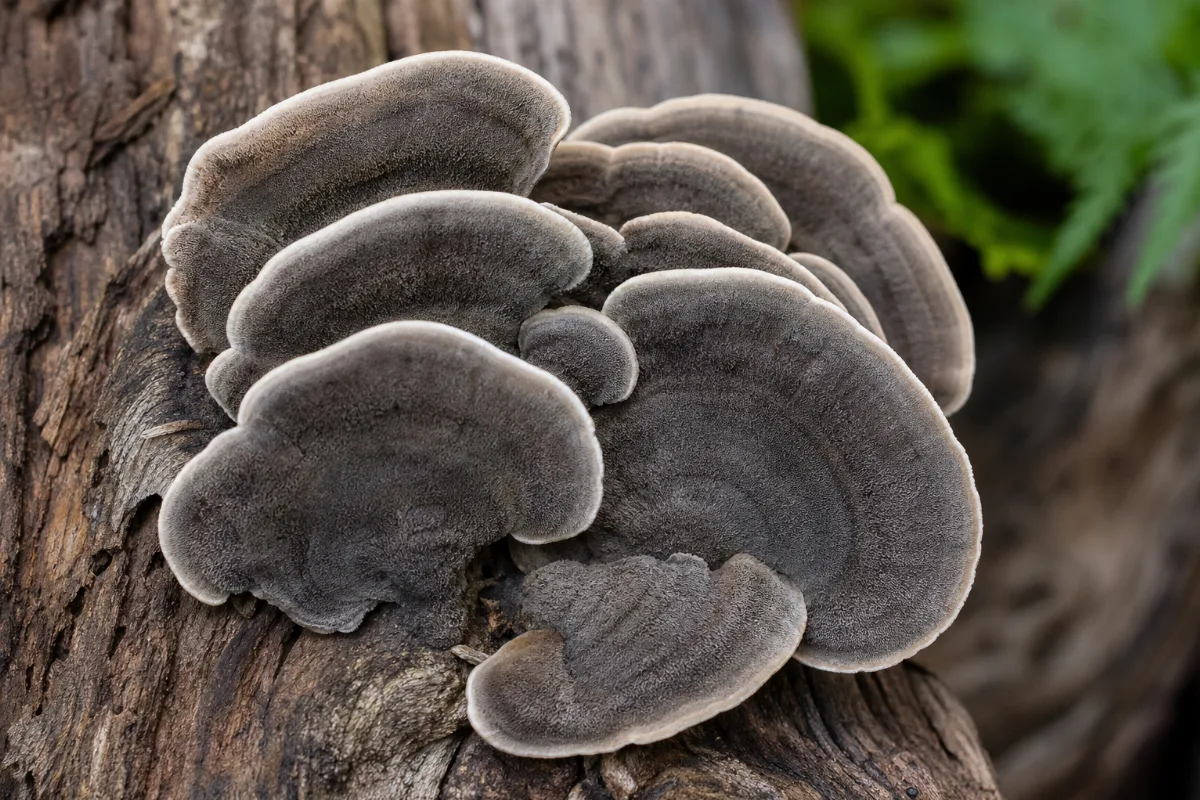
Mushrooms · Wild polypore fungus
Smoky Polypore
Bjerkandera adusta · also called Smoky bracket, scorched bracket
Smoky polypore is a common grey bracket fungus that rots dead hardwood. A foraging guide lists it as inedible, and we found no supplement made from it. There are no human trials of any health benefit: the research is mostly lab work on its enzymes and extracts. The main cautions are that its spores can act as an airway allergen and that one rare sinus infection has been reported.
General information, not medical advice. Last substantive update · Not medically reviewed. A named clinician has not signed off on this page. How this page is made
About Smoky Polypore
Smoky polypore (Bjerkandera adusta) is a very common thin grey bracket that rots dead hardwood. It is listed as inedible and is not a medicinal mushroom like reishi or turkey tail. Evidence is thin: lab work on enzymes and extracts, small Japanese case series on cough allergy, one rare infection case and mouse studies. We found no human trial of any health benefit.
What it is
Smoky polypore is a fungus, not a plant. It makes thin, fan-shaped, grey brackets, often in overlapping groups, on dead or stunted broad-leaved trees. It causes white rot, meaning it breaks down the wood.
GBIF lists Bjerkandera adusta as the accepted name, in the family Phanerochaetaceae. The sinus case report says it grows in temperate and subtropical zones worldwide.
Look-alikes
A foraging guide says young smoky brackets are easily confused with turkey tail, which has a more colourful skin and a brighter white pore surface. A close relative, big smoky bracket, is larger and paler.
This page gives no identification help. Never identify wild fungi from text, photos or apps.
What the research is about
Most published work on this species is about enzymes that break down dyes, drugs and wood. Health-style findings are few: an extract that cleared zones in dishes, chemicals that boosted protein clearing in skin cells, and a flask test of aflatoxin binding.
Mouse studies put killed fungus into the windpipe and show allergy-type lung inflammation, worse with sand dust or air pollution particles. In one five-fungus comparison, B. adusta was the weakest.
As a food or supplement
A foraging guide lists it as inedible, tasting sour. We found no food use, no nutrition table and no supplement.
The only nutrient figure is for broth-grown mycelium of two strains (about 32 to 39 percent protein by dry weight). That is a lab screen, not the bracket, and its authors say safety screening was not done.
At a glance
Traditional uses history, not proof
- A foraging guide lists it as inedible, with a sour taste (Wild Food UK).
- We found no traditional medicinal use in the sources we read.
Studied for research
- Germ-fighting activity of an extract (dish test), insufficient
- Phenolic compounds in an extract (lab chemistry), insufficient
- Protein-clearing activity in human skin cells (isolated compounds), insufficient
- Protein in broth-grown mycelium (food technology), insufficient
- Binding of aflatoxin in flasks (lab), insufficient
- Enzymes for cosmetic and clean-up research (test tube), insufficient
Main compounds
- Phenolic compounds (chlorogenic acid, catechin, quercetin)
- Chlorinated benzoic acid compounds
- Peroxidase enzymes
Common forms
- Wild bracket (not a food)
- Ethanol extract of dried fruiting bodies (lab only)
- Broth-grown mycelium (lab only)
- Crude enzyme preparations (lab only)
Research links: Case report: Bjerkandera adusta and invasive chronic rhinosinusitis (PubMed) · Antimicrobial activity and phenolics of wild Egyptian mushrooms, including B. adusta (PubMed) · Is B. adusta important to fungus-associated chronic cough as an allergen? (PubMed) · Mycoprotein screen of 28 basidiomycetes (PubMed) · Smoky bracket, Wild Food UK mushroom guide · Research Library · Genes & Biomarkers Library
What it is and its history
- Accepted scientific name
- Bjerkandera adusta
- Naming authority
- (Willd.) P.Karst. (GBIF species key 2543824)
- Synonyms
- Boletus adustus Willd. (basionym per GBIF listing); Bjerkandera isabellina (Schwein.) P.Karst.; Bjerkandera scanica (Fr.) P.Karst.; Agaricus crispus (Pers.) E.H.L.Krause; Several forms, subspecies and varieties are also listed
- Common names
- Smoky polypore (English); Smoky bracket (English); Scorched bracket (English (US, per Wild Food UK)); Szaroporka podpalana (Polish); Szenes likacsosgomba (Hungarian); Ysgwydd fyglyd (Welsh)
- Family or group
- Phanerochaetaceae (a fungus family), not a plant
- Classification
- Fungi > Basidiomycota > Agaricomycetes > Polyporales > Phanerochaetaceae > Bjerkandera > Bjerkandera adusta
- Native range
- The sinus case report says the mushrooms are widely distributed in temperate and subtropical zones worldwide. Wild Food UK calls it common and widespread.
- Habitat
- Dead or stunted broad-leaved trees, especially beech, rarely conifers. A saprotroph that causes white rot (Wild Food UK; sinus case report).
- What it looks like
- Fruiting body: Per Wild Food UK: 3 to 7 cm across, thin, convex to nearly flat, fan- or shelf-like, often overlapping or in rosettes, usually in groups. Margin white, blackening with age. Pore surface grey to smoke-grey, blackening when damaged. Flesh thin and elastic. White spore print. This is a summary of one source, not an identification guide.
- Cultivation
- Not cultivated as a food. It is grown on agar and in liquid broth in laboratories (mycoprotein screen) and used in enzyme and clean-up research.
- Harvest and processing
- No harvest or processing is advised. It is listed as inedible and has no medicinal or supplement use we could find.
- Look-alikes and adulterants
- Name: Turkey tail (Trametes versicolor); Note: Wild Food UK says young smoky brackets can be mistaken for turkey tail, which has a more colourful skin and a brighter white pore surface.; Name: Big smoky bracket (Bjerkandera fumosa); Note: A close relative, bigger (4 to 10 cm), paler cap, mostly on sycamore, alder or sweet chestnut, with a dark layer between two layers of flesh (Wild Food UK).
- Sustainability and conservation
- Common and widespread (Wild Food UK). Not assessed further.
Traditional use and history history, not clinical proof
| Tradition or era | Documented use | Source |
|---|---|---|
| Food | Wild Food UK lists the species as inedible, with a sour taste. No recipe or traditional food use was found. | s-wildfooduk |
| Medicine | No traditional medicinal use was found in any source we read, so none is claimed. | p39852473 |
| Modern laboratory interest | A PubMed search for the species name returns many records whose titles are about enzymes and breaking down dyes, drugs and pollutants. We read three of them (peroxidase and genome papers). | p36598284 |
| Medicine of the airways (from 2009, Japan) | Japanese doctors began describing fungus-associated chronic cough, with this fungus found in sputum and sensitisation to it linked to harder-to-clear cough. | p19863292 |
Traditional use shows how it was used. It does not show that it works or is safe today.
What is inside, and how it may work
What it contains and how those compounds act in cells and animals. Laboratory and animal mechanisms are not proven effects in people.
Main compounds
| Compound | Family | Where it is concentrated | Activity studied | Level of evidence |
|---|---|---|---|---|
| Phenolic compounds (chlorogenic acid, catechin, quercetin, rutin, cinnamic acid and others) | phenolic compounds | Ethanol extract of dried Egyptian fruiting bodies Chlorogenic acid 11.33, catechin 5.88, quercetin 4.46 micrograms per ml of that extract (single collection) | The authors link the extract's germ-fighting zones to these compounds; not tested directly. 22 | Laboratory research |
| Chlorogenic acid PubChem 1794427 | phenolic acid | Ethanol extract of fruiting bodies 11.33 micrograms per ml of extract | Measured by HPLC; no activity tested for this compound alone. 22 | Compositional analysis |
| Catechin PubChem 9064 | flavan-3-ol | Ethanol extract of fruiting bodies 5.88 micrograms per ml of extract | Measured by HPLC only. 22 | Compositional analysis |
| Quercetin PubChem 5280343 | flavonol | Ethanol extract of fruiting bodies 4.46 micrograms per ml of extract | Measured by HPLC only. 22 | Compositional analysis |
| 3-Chloro-4-methoxybenzoic acid and related benzoic acid derivatives PubChem 169982 | halogenated benzoic acids | Isolated from B. adusta (part not stated in the abstract) Not given in the abstract | Raised protein-clearing activity and cathepsin B and L activity in human skin cells in a dish. 7 | Laboratory research |
| alpha,alpha-Trehalose PubChem 7427 | disaccharide sugar | Mycelium grown in culture Not given in the abstract | Identified for the first time in this genus; no activity tested. 18 | Compositional analysis |
| Versatile peroxidase and DyP-type peroxidase (enzymes) | peroxidase enzymes | Culture liquid of strains CCBAS 930 and Dec 1 Enzyme activity units, not amounts per portion | Decolorized synthetic melanin and dyes and removed a cancer drug from water in test tubes. 1 19 24 | Laboratory research |
Mechanisms, receptors and pathways
| Target or pathway | Gene or receptor | What was found | Level |
|---|---|---|---|
| Toll-like receptor 2 (TLR2) and MyD88 signalling | TLR2; MyD88 | Eosinophil build-up in mouse lungs after B. adusta was weaker in mice lacking TLR2 or MyD88, and cell signalling ran mainly through TLR2 rather than TLR4. 8 9 | Animal research |
| Th2 and eosinophil-recruiting signals | IL-5; IL-13; eotaxin; C3; IL-3 | These signals rose in mouse lungs after B. adusta, more so with sand dust or particulate matter. 12 23 | Animal research |
| Antigen-presenting cell activation | Cell-surface activation markers | B. adusta raised activation markers on mouse antigen-presenting cells; human airway lining cells showed no remarkable inflammatory response. 10 | Laboratory research |
| Protein clearing: ubiquitin-proteasome and autophagy-lysosome pathways | Cathepsin B; cathepsin L | Benzoic acid derivatives from the fungus raised activity of both systems in human skin cells. 7 | Laboratory research |
| Aflatoxin B1 binding to cell debris | Not applicable | The toxin stuck mainly to cell debris, partly to lysate and exopolysaccharides. 3 | Laboratory research |
| Peroxidase oxidation of pigments | Versatile peroxidase; DyP | Enzymes needed hydrogen peroxide (and veratryl alcohol for melanin) to decolorize pigments in a tube. 1 24 | Laboratory research |
Absorption, metabolism and elimination
- Absorption
- Not found in the sources read.
- Distribution
- Not found in the sources read.
- Metabolism
- Not found in the sources read.
- Elimination
- Not found in the sources read.
- Bioavailability
- Not established.
Isolated compounds versus whole extracts
Nearly every finding here is from an alcohol extract, an isolated chemical, a crude enzyme, broth-grown mycelium or killed fungus put in a mouse's windpipe. None is the mushroom as it grows on a log, and none is something a person ate. Results from one preparation do not carry over to another.
Nutritional composition
It is not a food. The only nutrient figure we found is crude protein of 39.15 and 32.05 percent of dry weight in broth-grown mycelium of two strains, which is not the bracket. We found no nutrition table for the fruiting body.
8 not enough evidence
What was looked at
The 8 benefits and uses checked for Smoky Polypore, each with how strong the evidence is. Tap one to open it.
- Germ-fighting activity of an extract (dish test)Not enough evidence
- Phenolic compounds measured in an extract (lab chemistry)Not enough evidence
- Cell protein-clearing activity of compounds from the fungus (human skin cells)Not enough evidence
- Other reported activities (antioxidant, anticancer, immune) and any use in peopleNot enough evidence
- Protein in lab-grown mycelium (food technology)Not enough evidence
- Binding of aflatoxin B1 in culture (lab)Not enough evidence
- As a foodNot enough evidence
- Enzymes from the fungus (cosmetic and clean-up research)Not enough evidence
Lab markers tracked in the studies
Inhibition zone in a germ-growth dish (lab)Cathepsin B and L enzyme activity in human skin cells (lab)Crude protein in lab-grown myceliumAflatoxin B1 left in culture after incubation
What is Smoky Polypore good for?
The uses people ask about and how strong the evidence is for each. None is proven in people. Read this together with the Safety tab.
Benefits, one by one
Each card is a research question, not a promise. Tap a goal to filter. Open a card to see the studies, doses and limits.
Germ-fighting activity of an extract (dish test)
Not enough evidenceIn one Egyptian lab study, an alcohol extract of dried wild smoky polypore cleared zones in dishes seeded with several bacteria and a yeast. That is a dish test. It does not show that the mushroom helps with any infection in a person.
1 studiesA laboratory ethanol extract of dried fruiting bodies. It is not a pr…
Studies, doses and limits
Results
Ethanol extract of dried fruiting bodies of one wild Egyptian specimen, well-diffusion test (zone sizes include the 5 mm well): 22.0 mm against Micrococcus luteus, 17.0 against Streptococcus pneumoniae, 15.0 against Staphylococcus aureus, 12.0 against Escherichia coli, 12.0 against Candida albicans and 10.0 against Pseudomonas aeruginosa. No zone against Proteus mirabilis. Gram-positive bacteria were more sensitive than Gram-negative.
Effect sizes as reported
Zone diameters in millimetres in a dish; no health outcome measured
Why this rating
One extract, one wild collection, one lab, dish tests only. Nothing was tested in animals or people.
Form and dose studied
A laboratory ethanol extract of dried fruiting bodies. It is not a product. This page gives no amounts.
Limits
Single collection and single lab. Zone sizes depend on the method. No safety testing of the extract.
Why researchers looked
Researchers screen wild mushrooms for new germ-fighting compounds because many microbes resist current drugs.
Traditional use
We found no traditional medicinal use of this fungus in the sources we read.
Proposed mechanism Laboratory research
The authors suggest the phenolic compounds found in the extract may explain the activity. They did not test that directly.
A proposed mechanism does not show that the effect happens in people.
The extract was not tested for safety. Wild fungi can also carry metals and look-alikes; see the Safety tab.
Phenolic compounds measured in an extract (lab chemistry)
Not enough evidenceA lab measured a set of plant-type chemicals called phenolics in the same alcohol extract. The numbers describe what was in that one extract. They say nothing about what the mushroom does in the body.
1 studiesConcentrations in an ethanol extract made for the test. This page giv…
Studies, doses and limits
Results
HPLC of the ethanol extract of dried Egyptian fruiting bodies reported 11 compounds, in micrograms per ml of extract: chlorogenic acid 11.33, catechin 5.88, cinnamic acid 5.37, quercetin 4.46, rutin 3.93, propyl gallate 2.74, caffeine 2.10, 4',7-dihydroxyisoflavone 1.86, caffeic acid 1.63, syringic acid 1.24 and gallic acid 0.47.
Effect sizes as reported
Concentrations in a lab extract; not amounts per portion
Why this rating
One HPLC run on one wild collection. The figures are not typical values for the species and show no health effect.
Form and dose studied
Concentrations in an ethanol extract made for the test. This page gives no amounts for people.
Limits
Single collection from Egypt. Peaks were matched to standards but not confirmed by a second method in the abstract. Amounts will vary with the specimen, wood, season and extraction.
Why researchers looked
Phenolic compounds are often credited with the germ-fighting and antioxidant activity of mushroom extracts, so authors measure them.
Proposed mechanism Lab analysis
Not a mechanism claim. This is a chemical measurement by HPLC (a lab method that separates and measures chemicals).
A proposed mechanism does not show that the effect happens in people.
None reported.
Cell protein-clearing activity of compounds from the fungus (human skin cells)
Not enough evidenceChemicals taken out of this fungus made human skin cells in a dish clear old proteins more actively. The authors call it a lead for future anti-ageing research. It was done on isolated chemicals in cells, not on the mushroom or on people.
1 studiesPurified chemicals used in the lab. Not a food or supplement.
Studies, doses and limits
Results
Benzoic acid derivatives isolated from Bjerkandera adusta raised protein-clearing activity in human foreskin fibroblasts. The strongest, 3-chloro-4-methoxybenzoic acid, gave cathepsin B and L activation reported as 467.3 +/- 3.9 percent (the abstract does not state the baseline).
Effect sizes as reported
Percent activation in cell assays; no human outcome
Why this rating
Cells and computer models only, with isolated chemicals. No animal or human study was found.
Form and dose studied
Purified chemicals used in the lab. Not a food or supplement.
Who was studied
Human foreskin fibroblast cells
Limits
Isolated compounds, not the mushroom. The same chemical group is made by other fungi. No safety data.
Why researchers looked
Cells lose some of their protein-recycling ability with age, so researchers look for chemicals that boost it.
Proposed mechanism Laboratory research
The compounds raised activity of two cell clean-up systems (the ubiquitin-proteasome pathway and, more strongly, the autophagy-lysosome pathway) and activated the enzymes cathepsin B and L. Computer models suggested the compounds can bind those enzymes.
A proposed mechanism does not show that the effect happens in people.
No safety data. Chlorinated and brominated aromatic chemicals are not shown to be safe to eat.
Other reported activities (antioxidant, anticancer, immune) and any use in people
Not enough evidenceA review lists smoky polypore among many wild fungi reported to have activities such as antioxidant or anticancer effects. It gives no detail for this species. We found no human study of any health effect, and no supplement.
1 studiesNot applicable
Studies, doses and limits
Results
The 2025 review abstract names Bjerkandera adusta in a list of 17 freshwater-habitat macrofungi that it says have been reported to have antimicrobial, anticancer, anti-inflammatory, antioxidant, antidiabetic and other activities. It does not say which activity belongs to which species.
Why this rating
A list in an abstract, with no species-specific data we could read.
Limits
Only the abstract of the review was read.
Why researchers looked
Wood-decay fungi are often screened for medicine-like activity, mostly in dishes.
Traditional use
No traditional medicinal use was found in the sources we read.
Proposed mechanism Insufficient
Not stated for this species in the abstract of the review.
A proposed mechanism does not show that the effect happens in people.
See the Safety tab: allergy, cough and a rare infection are the documented human effects.
Protein in lab-grown mycelium (food technology)
Not enough evidenceResearchers grew the fungus's threads (mycelium) in liquid and found a high share of protein by dry weight. That is a food-technology screen. It is not the bracket, and it is not a health claim.
1 studiesMycelium grown in liquid broth in a lab; not a supplement or a food o…
Studies, doses and limits
Results
In a screen of 28 basidiomycete species, liquid-grown B. adusta mycelium held 39.15 percent crude protein by dry weight, third highest after Inonotus obliquus (41.98) and Neolentinus lepideus (40.27). A second B. adusta strain measured 32.05 percent. B. adusta also grew fastest on agar (1.09 cm per day).
Effect sizes as reported
Percent of dry weight (nitrogen x 6.25); no health outcome
Why this rating
A single composition screen. The authors note that safety and mycotoxin screening was not done.
Form and dose studied
Mycelium grown in liquid broth in a lab; not a supplement or a food on sale. No amounts given.
Limits
Mycelium is not the fruiting body. Protein by nitrogen can include non-protein nitrogen. Strain-to-strain spread was large (32 to 39 percent).
Why researchers looked
Companies look for safe fungi to grow as meat-free protein.
Proposed mechanism Lab analysis
Not a mechanism claim. This is a nutrient measurement.
A proposed mechanism does not show that the effect happens in people.
No safety or digestibility data. The authors' statement that B. adusta is non-toxic rests on other literature and was not tested.
Binding of aflatoxin B1 in culture (lab)
Not enough evidenceIn flasks, living smoky polypore cultures, and especially their cell debris, took up most of a toxin made by moulds on crops. This is a food-and-feed clean-up idea. It does not show that taking the fungus protects a person.
1 studiesLiving cultures and fractions in the lab. Not a product.
Studies, doses and limits
Results
B. adusta removed 96.3 percent of aflatoxin B1 after 14 days of culture (Auricularia auricula-judae 100 percent). Cell lysate removed 35 percent after 1 day and 80 percent after 5 days at 40 degrees C; cell debris removed 95 percent by day 5; exopolysaccharides removed 24 to 48 percent.
Effect sizes as reported
Percent toxin removed in culture; no human outcome
Why this rating
Culture experiment only, one report.
Form and dose studied
Living cultures and fractions in the lab. Not a product.
Limits
Binding may be physical (sticking to cell material), not breakdown. No test of what happens in an animal or person.
Why researchers looked
Aflatoxin B1 is a mould toxin and potent carcinogen that contaminates crops. Biological ways to remove it are under study.
Proposed mechanism Laboratory research
The authors conclude the toxin mainly sticks to cell debris and wall components, with exopolysaccharides contributing a smaller share.
A proposed mechanism does not show that the effect happens in people.
A fungus that holds toxins on its surface may also hold other contaminants; this was not tested.
As a food
Not enough evidenceA foraging guide lists smoky polypore as inedible and sour-tasting. We found no recipe, no food-composition table and no supplement. It is not a food.
1 studiesNot applicable.
Studies, doses and limits
Results
Wild Food UK lists the species as Inedible, with a sour taste and a somewhat sweet smell. We found no nutrition table for the fruiting body.
Why this rating
One foraging guide; no composition or safety data.
Limits
A foraging website, not a peer-reviewed source.
Why researchers looked
Foragers check whether wild brackets are edible.
Traditional use
No traditional food use was found.
Proposed mechanism None
Not applicable.
A proposed mechanism does not show that the effect happens in people.
Do not eat wild bracket fungi in the hope of a health effect. See the Safety tab.
Enzymes from the fungus (cosmetic and clean-up research)
Not enough evidenceMost of the published work on this species is about its enzymes, which break down dyes, drugs and wood. In test tubes one enzyme lightened synthetic melanin and another removed a chemotherapy drug from water. None of this was tested on skin, in animals or in people.
3 studiesCrude enzyme preparations in the lab; not the mushroom.
Studies, doses and limits
Results
Crude versatile peroxidase decolorized synthetic melanin by over 40 percent in 10 minutes at 37 degrees C and pH 4.5. Immobilized crude enzyme removed 95.57 percent of 10 micrograms per ml mitoxantrone from water in 72 hours. A genome announcement says the Dec 1 strain makes a DyP peroxidase that degrades anthraquinone dyes.
Effect sizes as reported
Percent removal or decolorization in tubes; no health outcome
Why this rating
Test-tube enzyme work only. Synthetic melanin is not skin.
Form and dose studied
Crude enzyme preparations in the lab; not the mushroom.
Limits
These are industrial and environmental studies. They are not studies of eating, taking or applying the fungus.
Why researchers looked
White-rot fungi make powerful peroxidase enzymes that industry wants for dye, waste and pollutant breakdown.
Proposed mechanism Laboratory research
Versatile peroxidase and DyP-type peroxidase enzymes oxidise pigments and drug molecules in a tube.
A proposed mechanism does not show that the effect happens in people.
No skin-safety or toxicity data for the enzyme preparations.
Connections to the rest of health
How Smoky Polypore connects to the rest of our health knowledge graph. Every link says what kind of connection it is. A safety link (for example to the liver) is a warning, not a benefit. A study that merely mentions a topic never creates a benefit link.
Explore every connection: goals, body systems, organs, symptoms, genes
B. Body systems
| Connected to | Kind of connection | Evidence status | Context | Studies |
|---|---|---|---|---|
| Respiratory system | Adverse effect or risk | Low certainty | Cough in people; lung eosinophil inflammation in mice. Preparation or compound: Inhaled spores or fungal debris |
4 8 23 |
| Immune System | Biological association | Not enough evidence | Studied for: Germ-fighting activity of an extract (dish test) Studied for: Other reported activities (antioxidant, anticancer, immune) and any use in people | 22 5 |
| Cellular Health | Biological association | Not enough evidence | Studied for: Phenolic compounds measured in an extract (lab chemistry) Studied for: Cell protein-clearing activity of compounds from the fungus (human skin cells) | 22 7 |
| Digestive System | Biological association | Not enough evidence | Studied for: Protein in lab-grown mycelium (food technology) Studied for: As a food | 13 27 |
| Hepatic System | Biological association | Not enough evidence | Studied for: Binding of aflatoxin B1 in culture (lab) | 3 |
| Integumentary System | Biological association | Not enough evidence | Studied for: Enzymes from the fungus (cosmetic and clean-up research) | 1 19 24 |
E. Health conditions
| Connected to | Kind of connection | Evidence status | Context | Studies |
|---|---|---|---|---|
| Fungus-associated chronic cough | Adverse effect or risk | Low certainty | Small Japanese case series link sensitisation to this fungus with harder-to-clear cough. Preparation or compound: Spores or antigen of Bjerkandera adusta |
15 14 25 28 |
| Invasive fungal sinusitis | Adverse effect or risk | Very low certainty | One case report in a woman with uncontrolled diabetes. Preparation or compound: Living fungus in tissue |
11 |
G. Root causes and contributing factors
| Connected to | Kind of connection | Evidence status | Context | Studies |
|---|---|---|---|---|
| Mould and fungal allergen exposure | Low certainty | Sensitisation to the fungus tracked with harder cough in small series. Preparation or compound: Airborne spores and debris of wood-decay fungi |
15 17 |
I. Biomarkers
| Connected to | Kind of connection | Evidence status | Context | Studies |
|---|---|---|---|---|
| Inhibition zone in a germ-growth dish (lab) | Biological association | Not enough evidence | Measured in trials: raised. A lab change is not the same as a health benefit. | 22 |
| Cathepsin B and L enzyme activity in human skin cells (lab) | Biological association | Not enough evidence | Measured in trials: raised. A lab change is not the same as a health benefit. | 7 |
| Crude protein in lab-grown mycelium | Biological association | Not enough evidence | Measured in trials: not clear. A lab change is not the same as a health benefit. | 13 |
| Aflatoxin B1 left in culture after incubation | Biological association | Not enough evidence | Measured in trials: lowered. A lab change is not the same as a health benefit. | 3 |
J. Genes, receptors and enzymes
K. Biological pathways
L. Active compounds
| Connected to | Kind of connection | Evidence status | Context | Studies |
|---|---|---|---|---|
| Phenolic compounds (chlorogenic acid, catechin, quercetin, rutin, cinnamic acid and others) | Biological association | In vitro | The authors link the extract's germ-fighting zones to these compounds; not tested directly. Preparation or compound: Ethanol extract of dried Egyptian fruiting bodies |
22 |
| Chlorogenic acid | Biological association | Compositional analysis | Measured by HPLC; no activity tested for this compound alone. Preparation or compound: Ethanol extract of fruiting bodies |
22 |
| Catechin | Biological association | Compositional analysis | Measured by HPLC only. Preparation or compound: Ethanol extract of fruiting bodies |
22 |
| Quercetin | Biological association | Compositional analysis | Measured by HPLC only. Preparation or compound: Ethanol extract of fruiting bodies |
22 |
| 3-Chloro-4-methoxybenzoic acid and related benzoic acid derivatives | Biological association | In vitro | Raised protein-clearing activity and cathepsin B and L activity in human skin cells in a dish. Preparation or compound: Isolated from B. adusta (part not stated in the abstract) |
7 |
| alpha,alpha-Trehalose | Biological association | Compositional analysis | Identified for the first time in this genus; no activity tested. Preparation or compound: Mycelium grown in culture |
18 |
| Versatile peroxidase and DyP-type peroxidase (enzymes) | Biological association | In vitro | Decolorized synthetic melanin and dyes and removed a cancer drug from water in test tubes. Preparation or compound: Culture liquid of strains CCBAS 930 and Dec 1 |
1 19 24 |
Each connection is stored with the ingredient, the connected record, the kind of connection, the evidence status, the supporting studies, the preparation or compound involved, and a review date (last reviewed October 25, 2026).
Evidence at a glance: what changed in 3 lab markers
Tap a number to show only those markers. Counts are markers, not people.
The evidence
The research centre for Smoky Polypore. Every record here was checked against PubMed or the publisher's page; we never list a study we have not verified.
Evidence by outcome
Bars show how many studies we found for each outcome, not how well it works. People are added up across trials only (reviews are not added, to avoid double counting).
How we rate evidence
High certainty
Several well-run trials or reviews agree; further research is unlikely to change the picture much.
Moderate certainty
Good trials point the same way, but some doubt remains.
Low certainty
Small, short or inconsistent trials. The finding could change with better research.
Very low certainty
Very little or very weak human data. Treat as a possibility only.
Mixed findings
Trials or reviews disagree with each other.
Not enough evidence
Not enough human research to say either way.
Evidence against
Good research found no benefit, or found harm.
We take the reviewers' own risk-of-bias and GRADE statements where they exist, and otherwise judge from study size, design, consistency, directness and whether a product matches what is sold. Many publications do not make evidence high. Method note: We read PubMed records and abstracts for 26 papers (one case report, one title-only letter, two narrative reviews, one review of 218 cases, one culture-collection survey, five human case series, five mouse studies, two cell studies, and eight lab, enzyme or analysis studies), read the Egyptian antimicrobial paper, the mycoprotein paper and the sinus case report in open-access full text, and checked the species name in GBIF. We also read the Wild Food UK page. Regulators were not read. Numbers come from abstracts unless stated. Certainty ratings are the compiler's own reading.
Study library: every study we checked 28
| Study | Design | People | Product, dose, length | Result |
|---|---|---|---|---|
| Baik 2021 Functional Characterization of Melanin Decolorizing Extracellular Peroxidase of Bjerkandera adusta. J Fungi (Basel) · PMID 34575800 · DOI |
Lab study enzyme (test tube) |
Test-tube enzyme assays on synthetic melanin | Crude extracellular versatile peroxidase from B. adusta culture liquid (enzyme) Not shown here |
The enzyme decolorized synthetic melanin by over 40 percent in 10 minutes at 37 degrees C and pH 4.5, needing veratryl alcohol and hydrogen peroxide. It lost activity quickly at 50 degrees C; glycerol helped stability. The authors say it may be considered for future cosmetic uses. Percent decolorization in a tube Methods, limits and fundingOutcomes: Decolorization of synthetic melanin; enzyme stability Limitations: Synthetic melanin in a tube, not skin. No safety, skin or human testing. An enzyme preparation, not the mushroom. Funding and conflicts: Funding and conflicts not checked in the abstract. Read: abstract |
| Ban 2026 Retrospective Analysis of Clinical Filamentous Basidiomycetes and Development of Multiplex PCR for Rapid Identification. Med Mycol J · PMID 41765496 · DOI |
Laboratory survey human (isolate survey) |
650 650 basidiomycete strains kept at a Japanese medical mycology centre, 2010 to 2024 |
Clinical isolates; multiplex PCR test developed clinical isolates Not shown here |
Schizophyllum commune made up 60 percent, Trametes 9.5, Irpex 5.2 and Bjerkandera adusta 4.3 percent. Most isolates came from respiratory samples and were linked to allergic bronchopulmonary mycosis, lung infection or sinusitis. 650 strains Methods, limits and fundingOutcomes: Species mix, sources and diseases Limitations: A culture-collection review in Japan. It does not give how many people were ill or how severe the illness was. Funding and conflicts: Funding and conflicts not checked in the abstract. Read: abstract |
| Choo 2021 Removal of Aflatoxin B1 by Edible Mushroom-Forming Fungi and Its Mechanism. Toxins (Basel) · PMID 34564672 · DOI |
Lab study fungus (lab study) |
Five edible mushroom-forming fungi tested in culture; this page uses the B. adusta results | Living cultures, cell lysates, cell debris and exopolysaccharides of B. adusta, incubated with aflatoxin B1 mycelial cultures Not shown here |
B. adusta removed 96.3 percent of aflatoxin B1 after 14 days (Auricularia auricula-judae 100 percent). Cell lysate removed 35 percent and cell-free supernatant 13 percent after 1 day. After 5 days at 40 degrees C lysate reached 80 percent and cell debris 95 percent; exopolysaccharides gave 24 to 48 percent. The authors conclude the toxin mainly binds to cell debris and wall components. Percent aflatoxin B1 removed in culture Methods, limits and fundingOutcomes: Removal of aflatoxin B1 measured by HPLC Limitations: A dish and flask experiment about food and feed decontamination. It does not show that eating or taking the fungus lowers aflatoxin in the body. Funding and conflicts: Funding and conflicts not checked in the abstract. Read: abstract |
| Chowdhary 2014 Recognizing filamentous basidiomycetes as agents of human disease: A review. Med Mycol · PMID 25202126 · DOI |
Narrative review human (review of cases) |
218 218 published global cases of filamentous basidiomycete disease |
Filamentous basidiomycete fungi (many species) environmental fungi in patients Not shown here |
Of 218 cases, Schizophyllum commune caused 52.3 percent. Bjerkandera adusta was among the rare agents. Japan had about 43 percent of cases. The respiratory tract was the most common site (71 cases), most of them allergic (59.1 percent), including 34 cases of allergic bronchopulmonary mycosis. B. adusta is linked to fungus-associated chronic cough, reported only from Japan. 218 cases reviewed Methods, limits and fundingOutcomes: Which fungi cause disease and what kind Limitations: Review of case reports, which are an uneven record. The abstract does not give B. adusta's share. Authors say these diseases are under-diagnosed. Funding and conflicts: Funding and conflicts not checked in the abstract. Read: abstract |
| Cicero 2025 Potential Medicinal Fungi from Freshwater Environments as Resources of Bioactive Compounds. J Fungi (Basel) · PMID 39852473 · DOI |
Narrative review review |
Review of medicinal fungi from freshwater habitats (macrofungi and microfungi) | Many fungi; B. adusta is one name in a long list fruiting bodies and isolates Not shown here |
The abstract names Bjerkandera adusta among 17 macrofungi seen in riparian habitat and says such fungi have been reported to have antimicrobial, anticancer, anti-inflammatory, antioxidant, antidiabetic and other activities. It gives no detail for B. adusta alone. Narrative; no effect size Methods, limits and fundingOutcomes: Reported medicinal properties Limitations: Narrative review. The abstract does not say which activity belongs to which species, so it cannot support any claim about smoky polypore by itself. Full text not read. Funding and conflicts: Funding and conflicts not checked in the abstract. Read: abstract only |
| GBIF Secretariat 2026 GBIF Backbone Taxonomy: Bjerkandera adusta (Willd.) P.Karst. (species key 2543824) GBIF API · Source |
Taxonomy record fungus |
Name record | n/a Not shown here |
Bjerkandera adusta (Willd.) P.Karst. is an accepted species in the family Phanerochaetaceae, order Polyporales (queried 2026-10-25). Synonyms listed include Boletus adustus Willd., Bjerkandera isabellina and Bjerkandera scanica, with several forms and varieties. Record only Methods, limits and fundingOutcomes: Accepted name, family, synonyms Limitations: A database record; it does not say which name any study used. Index Fungorum was not queried. Funding and conflicts: n/a Read: database record |
| Georgousaki 2020 Biological Evaluation and In Silico Study of Benzoic Acid Derivatives from Bjerkandera adusta Targeting Proteostasis Network Modules. Molecules · PMID 32033190 · DOI |
Lab study human cells |
Human foreskin fibroblast cells in a dish, plus computer docking | Benzoic acid derivatives isolated from Bjerkandera adusta (including 3-chloro-4-methoxybenzoic acid) isolated compounds, source part not stated in the abstract Not shown here |
The compounds raised activity of both protein-clearing systems in cells, especially the autophagy-lysosome pathway. The strongest, 3-chloro-4-methoxybenzoic acid, raised cathepsin B and L activity to 467.3 +/- 3.9 percent (the abstract does not say relative to what). Computer docking suggested all of them could bind both enzymes. The authors call the compound scaffold a candidate for future anti-ageing work. Cell-assay percentages; no human outcome Methods, limits and fundingOutcomes: Activity of the ubiquitin-proteasome and autophagy-lysosome protein-clearing systems; cathepsin B and L activity Limitations: Cells and computer models only. Isolated chemicals, not the mushroom. No animal or human data. Funding and conflicts: Funding and conflicts not checked in the abstract. Read: abstract |
| He 2015 The Role of Toll-Like Receptors and Myeloid Differentiation Factor 88 in Bjerkandera adusta-Induced Lung Inflammation. Int Arch Allergy Immunol · PMID 26641462 · DOI |
Animal study mouse |
Mice (wild-type and gene-knockout BALB/c and C57BL/6J) and mouse immune cells | B. adusta instilled into the windpipe four times at 2-week intervals fungal material Not shown here |
B. adusta caused lung inflammation with raised Th2 and eosinophil-related signals. The eosinophil response was weaker in mice lacking TLR2 or MyD88, which suggests these immune sensors are involved. Group differences in mice Methods, limits and fundingOutcomes: Lung pathology, lavage cells and inflammatory signals Limitations: Mouse study with fungus put straight into the airways. It does not give a human amount or risk. Funding and conflicts: Funding and conflicts not checked in the abstract. Read: abstract |
| He 2016 Silica-carrying particulate matter enhances Bjerkandera adusta-induced murine lung eosinophilia. Environ Toxicol · PMID 25044538 · DOI |
Animal study mouse |
ICR mice, plus mouse immune cells | Formalin-killed B. adusta (0.2 or 0.8 micrograms) with or without heated Asian sand dust fungal material Not shown here |
Together, dust and B. adusta, especially at the higher fungus amount, caused eosinophil build-up, mucus-cell growth, thickening under the airway lining and higher Th2 signals. In cells, the signal ran mainly through TLR2 rather than TLR4. Group differences in mice Methods, limits and fundingOutcomes: Lung pathology, signals, cell experiments Limitations: Mouse and cell study using killed fungus. Funding and conflicts: Funding and conflicts not checked in the abstract. Read: abstract |
| Honda 2017 Biological factor related to Asian sand dust particles contributes to the exacerbation of asthma. J Appl Toxicol · PMID 27714829 · DOI |
Lab study mouse and human cells |
Mouse immune cells and human airway lining cells | B. adusta and benzo[a]pyrene, with or without heated sand dust fungal material Not shown here |
B. adusta and benzo[a]pyrene both raised activation markers on mouse antigen-presenting cells, and the fungus did so more strongly. There were no remarkable effects on splenocytes or on inflammatory responses of human airway epithelial cells. Cell-assay differences Methods, limits and fundingOutcomes: Activation of antigen-presenting cells; inflammatory responses Limitations: Cells only. Mixed results: the human airway cells did not respond strongly. Funding and conflicts: Funding and conflicts not checked in the abstract. Read: abstract |
| Kurata 2025 Bjerkandera adusta Fungi as Causative Agent of Invasive Chronic Rhinosinusitis. Emerg Infect Dis · PMID 39983679 · DOI |
Case report |
1 One 57-year-old woman in Japan with type 2 diabetes and diabetic retinopathy |
Infection with Bjerkandera adusta fungus (not eaten); antifungal drugs by doctors fungal tissue growth in the sinuses and skull base Not shown here About 6 months of antifungal treatment |
Facial pain and a severe headache led to scans showing a lesion spreading through the right sphenoid sinus, orbit apex, cavernous sinus and skull base. Biopsy cultures grew a fungus identified as B. adusta by DNA analysis. Liposomal amphotericin B did not stop the spread; after a switch to voriconazole the headache eased, scans improved over a year, and treatment lasted 6 months with no relapse on MRI. The authors found no other reported case of invasive sinusitis from this fungus. Single case; no effect size Methods, limits and fundingOutcomes: Diagnosis, imaging, response to antifungals Limitations: One case. Mixed infection could not be fully excluded, and the fungus could not be tested for drug sensitivity, so the authors cannot confirm voriconazole works against it. It does not show a risk for healthy people. Funding and conflicts: Funding and conflicts not checked in the abstract. Read: abstract and open-access full text (Europe PMC) |
| Liu 2014 Lung inflammation by fungus, Bjerkandera adusta isolated from Asian sand dust (ASD) aerosol and enhancement of ovalbumin-induced lung eosinophilia by ASD and the fungus in mice. Allergy Asthma Clin Immunol · PMID 24499133 · DOI |
Animal study mouse |
CD-1 mice, 12 instilled mixtures | Formalin-killed B. adusta from Asian sand dust, heated sand dust, and ovalbumin fungal material Not shown here |
Heated sand dust worsened lung eosinophilia caused by B. adusta, and B. adusta worsened the eosinophilia caused by ovalbumin. The mix of all three caused the most severe changes, including thickening under the airway lining and more mucus cells. Group differences in mice Methods, limits and fundingOutcomes: Lung pathology, lavage cell counts and signals Limitations: Mouse study using killed fungus pushed into the windpipe together with dust. Funding and conflicts: Funding and conflicts not checked in the abstract. Read: abstract |
| Lupala 2025 Integrated Assessment of Growth and Protein Content in Basidiomycetous Fungi for Mycoprotein Production. J Microbiol Biotechnol · PMID 41309388 · DOI |
Lab analysis fungus (lab study) |
28 Basidiomycota species screened as possible 'mycoprotein' sources | Liquid-grown (submerged) mycelium; growth on potato dextrose agar mycelium (not fruiting body) Not shown here |
Crude protein in liquid-grown B. adusta mycelium was 39.15 percent of dry weight, third highest after Inonotus obliquus (41.98) and Neolentinus lepideus (40.27). The full text gives 32.05 percent for a second B. adusta strain and a radial growth rate of 1.09 cm per day, the fastest in the set. The authors note that mycotoxin and safety screening was not done. Dry-weight protein; no health effect Methods, limits and fundingOutcomes: Radial growth on agar; crude protein by the Kjeldahl method Limitations: Mycelium grown in broth is not the bracket. Protein figures are nitrogen times 6.25. No safety, digestibility or human data. The authors' statement that B. adusta is non-toxic rests on other literature and was not tested here. Funding and conflicts: Funding and conflicts not checked in the abstract. Read: abstract and open-access full text (Europe PMC) |
| Ogawa 2009 Is Bjerkandera adusta Important to fungus-associated chronic cough as an allergen? Eight cases' reports. J Asthma · PMID 19863292 |
Case series |
8 8 patients with chronic cough whose sputum culture grew B. adusta |
B. adusta antigen tests; antifungal treatment by doctors antigen extract Not shown here |
All 8 were diagnosed with fungus-associated chronic cough. Three with negative provocation or lymphocyte tests responded well to antifungal drugs. Five with a positive reaction took longer to clear and relapsed more often. The authors suggest allergic fungal cough sensitized to B. adusta may be part of intractable chronic cough. Case series, n = 8 Methods, limits and fundingOutcomes: Allergy tests, response to treatment Limitations: Eight patients, one team, no control group. Funding and conflicts: Funding and conflicts not checked in the abstract. Read: abstract |
| Ogawa 2011 Sensitization to Bjerkandera adusta enhances severity of cough symptom in patients with fungus-associated chronic cough (FACC). Med Mycol J · PMID 21891982 |
Case series |
17 17 Japanese patients with fungus-associated chronic cough who had an inhalation challenge with B. adusta antigen (11 positive, 6 negative) |
B. adusta antigen solution (test); antifungal treatment by doctors antigen extract Not shown here |
In the 11 patients who reacted to B. adusta, the immediate skin reaction was positive in 45.5 percent and the lymphocyte test in 63.6 percent (both higher than in the 6 who did not react, p<0.05). Time to full remission was longer (median 20 weeks, range 12 to 43; p=0.0009) and the cough came back more often (median 2 times against 0.5). Group comparison, small n Methods, limits and fundingOutcomes: Skin and blood tests; time to remission; recurrence Limitations: Small retrospective series from one team. Other causes of the cough cannot be excluded. It shows an association, not that the fungus caused the cough. Funding and conflicts: Funding and conflicts not checked in the abstract. Read: abstract |
| Ogawa 2013 Clinical experience with low-dose itraconazole in chronic idiopathic cough. Cough · PMID 23317373 · DOI |
Case series |
10 10 patients with chronic idiopathic cough in Japan |
Short course of an antifungal drug (itraconazole) added to usual care, by doctors drug (not the fungus) Not shown here |
Cough scores changed significantly in 3 patients and the questionnaire reached a meaningful change in 5. Throat-mucus sensation improved in 6 of 7 patients (85.7 percent) in the fungus-colonized group and in none of the others. The authors say they cannot conclude that itraconazole gives enough relief. Small uncontrolled series Methods, limits and fundingOutcomes: Cough visual scale and a cough questionnaire Limitations: Ten patients, no placebo group. Registered in the UMIN trial registry (UMIN000004933). It tests an antifungal drug in people who already have cough, not the mushroom. Funding and conflicts: Funding and conflicts not checked in the abstract. Registration: UMIN000004933 Read: abstract |
| Ogawa 2014 Atopic cough and fungal allergy. J Thorac Dis · PMID 25383202 · DOI |
Narrative review human (review) |
Review of atopic cough and fungal allergy by a Japanese research group | B. adusta as a fungal allergen environmental fungus Not shown here |
The review says B. adusta, a wood-decay fungus, has drawn attention because of its possible role in worsening cough through sensitization, and that finding fungal spores in the airways plus a good response to antifungals may support new treatment ideas. Narrative; no effect size Methods, limits and fundingOutcomes: Role in chronic cough Limitations: Review by the same team that wrote many of the case series. Describes ideas, not proof. Funding and conflicts: Funding and conflicts not checked in the abstract. Read: abstract |
| Rech 2021 Optimisation of Bjerkandera adusta culture conditions for the production of α-α-trehalose. Nat Prod Res · PMID 32370630 · DOI |
Lab study fungus (lab study) |
B. adusta isolated from Pinus taeda, grown in culture | Mycelial culture mycelium Not shown here |
Highest mycelial mass was at 24 degrees C in potato dextrose and malt extract media after 28 and 35 days. The sugar alpha,alpha-trehalose was isolated and identified by X-ray diffraction, for the first time in this genus. Growth and compound identification Methods, limits and fundingOutcomes: Effect of temperature, medium and time on growth and metabolites Limitations: Culture work. No health outcome. Funding and conflicts: Funding and conflicts not checked in the abstract. Read: abstract |
| Rybczyńska-Tkaczyk 2022 Bioremoval and Detoxification of the Anticancer Drug Mitoxantrone Using Immobilized Crude Versatile Peroxidase (icVP/Ba) Bjerkandera adusta CCBAS 930. Biology (Basel) · PMID 36358256 · DOI |
Lab study enzyme (test tube) |
Test-tube and small bioassay work on a chemotherapy drug in water | Immobilized crude versatile peroxidase from B. adusta CCBAS 930 culture liquid (enzyme) Not shown here |
The immobilized enzyme removed 95.57 percent of 10 micrograms per ml mitoxantrone in 72 hours, with lower plant, microbial and genotoxicity tests afterwards. The authors call it the first study of this kind. Percent drug removal in water Methods, limits and fundingOutcomes: Removal and detoxification of mitoxantrone Limitations: Environmental clean-up work on a drug in water. It says nothing about eating or taking the fungus. Funding and conflicts: Funding and conflicts not checked in the abstract. Read: abstract |
| Sadakane 2025 A comparative analysis of five fungal species isolated from high-altitude air samples based on their induction of murine lung eosinophilia along with heated Asian sand dust. Int J Environ Health Res · PMID 40183684 · DOI |
Animal study mouse |
BALB/c mice | Five fungi from high-altitude air, each killed with formalin and mixed with heated Asian sand dust fungal material Not shown here |
Eosinophil build-up ranked Coniothyrium fuckelii highest, then Phialocephala, Cladosporium, Lecythophora, with B. adusta lowest of the five. Ranking of five fungi Methods, limits and fundingOutcomes: Lung eosinophil counts and signals Limitations: Mouse study. It shows B. adusta was the weakest of five, not that it is harmless. Funding and conflicts: Funding and conflicts not checked in the abstract. Read: abstract |
| Sarikurkcu 2020 Metal concentration and health risk assessment of fifteen wild mushrooms collected from the Ankara University Campus (Turkey). Environ Sci Pollut Res Int · PMID 32506407 · DOI |
Food contaminant analysis fungus (lab analysis) |
15 wild mushroom species from a busy Ankara University campus, including B. adusta | Dried wild fruiting bodies analysed for metals fruiting body Not shown here |
Across all 15 species, cadmium ranged 0.18 to 5.3, lead 0.04 to 10.98 and nickel 0.22 to 8.23 mg per kg dry weight. The abstract gives no figures for B. adusta alone. The authors say eating some of the species there should be avoided until traffic emissions are controlled. Ranges across 15 species Methods, limits and fundingOutcomes: Iron, manganese, copper, zinc, cobalt, cadmium, lead and nickel; intake risk for edible species Limitations: The abstract gives ranges for all species only. The B. adusta values were not read, and a roadside campus is not typical. Funding and conflicts: Funding and conflicts not checked in the abstract. Read: abstract |
| Soliman 2021 Molecular identification and antimicrobial activities of some wild Egyptian mushrooms: Bjerkandera adusta as a promising source of bioactive antimicrobial phenolic compounds. J Genet Eng Biotechnol · PMID 34279789 · DOI |
Lab study fungus (lab study) |
Five wild mushrooms collected in Egypt and identified by DNA (ITS); this page uses the Bjerkandera adusta results | Ethanol extract of dried fruiting bodies (wild Egyptian specimen) fruiting body Not shown here |
Ethanol extract of B. adusta made clear zones (including the 5 mm well) of 17.0 mm against Streptococcus pneumoniae, 15.0 against Staphylococcus aureus, 22.0 against Micrococcus luteus, 12.0 against Escherichia coli, 10.0 against Pseudomonas aeruginosa and 12.0 against Candida albicans; no activity against Proteus mirabilis. Gram-positive bacteria were more sensitive than Gram-negative. The gentamicin comparison gave 8 to 10 mm on four of the five bacteria (2 mm on E. coli) and nothing on the yeast. HPLC found 11 phenolic or related compounds in the extract; the most abundant was chlorogenic acid at 11.33 micrograms per ml, then catechin 5.88, cinnamic acid 5.37, quercetin 4.46 and rutin 3.93. Zone diameters in a dish; no health effect measured Methods, limits and fundingOutcomes: Antimicrobial activity by well diffusion against six bacteria and one yeast; HPLC of phenolic compounds Limitations: Dish tests of one extract of one wild collection by one lab. Zone sizes include the 5 mm well. Not tested in animals or people. The authors attribute the activity to the phenolic compounds but did not test that directly. Caffeine (2.10 micrograms per ml) is among the compounds the authors list; this was one HPLC run and was not confirmed elsewhere. Funding and conflicts: Funding and conflicts not checked in the abstract. Read: abstract and open-access full text (Europe PMC), including Table 3 and Table 4 |
| Song 2026 Lung toxicity induced by co-exposure to particulate matter and indoor microorganisms in mice. Toxicol Lett · PMID 42800686 · DOI |
Animal study mouse |
C57BL/6 mice, 2 weeks | Windpipe instillation of particulate matter, with microorganisms including B. adusta fungal material Not shown here |
Mice given particulate matter together with B. adusta had markedly more eosinophils in the lungs than mice given either alone, and eosinophil-linked genes (C3, IL-3) were more active. Group differences in mice Methods, limits and fundingOutcomes: Lung cells, pathology and gene activity Limitations: Mouse study with substances put in the windpipe. Funding and conflicts: Funding and conflicts not checked in the abstract. Read: abstract |
| Sugawara 2023 Genome Sequence of Bjerkandera adusta Strain Dec 1, a Basidiomycete Secreting DyP-Type Peroxidase. Microbiol Resour Announc · PMID 36598284 · DOI |
Genome announcement fungus (DNA) |
Draft genome of B. adusta strain Dec 1 isolated from soil in Yokohama | DNA sequencing Not shown here |
The strain was identified as degrading persistent anthraquinone dyes, and a novel DyP peroxidase was responsible. Sequence record Methods, limits and fundingOutcomes: Genome sequence; DyP-type peroxidase Limitations: A genome announcement. No health data. Funding and conflicts: Funding and conflicts not checked in the abstract. Read: abstract |
| Tone 2019 Real-Time PCR Detection of the Basidiomycetous Fungus Bjerkandera adusta: A Tool to Identify Itraconazole Responder Patients with Unexplained Chronic Cough. Respiration · PMID 30343287 · DOI |
Case series |
23 23 patients with chronic cough (14 unexplained, 9 explained) |
Real-time PCR for B. adusta in sputum; oral itraconazole given by doctors sputum DNA Not shown here |
B. adusta DNA was found in 10 of 14 patients with unexplained chronic cough (71.4 percent) against 2 of 9 with an explained cough (22.2 percent; p<0.05). The amount of DNA matched how much cough improved on itraconazole. 71.4 percent against 22.2 percent Methods, limits and fundingOutcomes: Detection rate; link to response to itraconazole Limitations: Small, from one research group. An association; the cough may have had other causes, and itraconazole has its own effects and risks. Funding and conflicts: Funding and conflicts not checked in the abstract. Read: abstract |
| Tone 2022 Allergic bronchopulmonary mycosis associated with a novel pathogen: Bjerkandera adusta. Allergol Int · PMID 35717377 · DOI |
Letter (title only) human (letter) |
Not available: PubMed shows a letter with no abstract | Not available Not shown here |
The title links allergic bronchopulmonary mycosis to Bjerkandera adusta as a new cause. No abstract is available and the letter was not read, so no result is taken from it. Not read Methods, limits and fundingOutcomes: Allergic bronchopulmonary mycosis (title only) Limitations: Title and record only. Funding and conflicts: Funding and conflicts not checked in the abstract. Read: title and record only |
| Wild Food UK (Attila Fodi 2026 Smoky Bracket (Bjerkandera adusta), Mushroom Guide wildfooduk.com · Source |
Foraging guide fungus |
Species description page | n/a Not shown here |
The guide lists smoky bracket as Inedible, tasting sour with a somewhat sweet smell. It describes a very common, small, annual polypore on dead hardwood, especially beech, that causes white rot. It says young fruit bodies could be confused with turkey tail (Trametes versicolor) and that the close relative big smoky bracket (Bjerkandera fumosa) is bigger and paler. Record only Methods, limits and fundingOutcomes: Edibility, habitat, look-alikes Limitations: A foraging website, not a peer-reviewed or regulatory source. The page gives no safety testing. Funding and conflicts: n/a Read: web page text (fetched 2026-10-25) |
| Yamaura 2013 Specific detection of Bjerkandera adusta by polymerase chain reaction and its incidence in fungus-associated chronic cough. Mycopathologia · PMID 24293169 · DOI |
Laboratory survey |
Patients with fungus-associated chronic cough (sample size not stated in the abstract) | PCR detection of B. adusta in sputum sputum DNA Not shown here |
B. adusta was found in 42.86 percent of fungus-associated chronic cough cases. Antifungal drugs were effective in most cases and treatment duration differed between B. adusta and other cases. The authors suggest its presence may be one allergic factor behind hard-to-treat cough. Incidence 42.86 percent Methods, limits and fundingOutcomes: Incidence of B. adusta and treatment duration Limitations: Number of patients not given in the abstract. Presence of DNA in sputum does not prove cause. Funding and conflicts: Funding and conflicts not checked in the abstract. Read: abstract |
What we do not know yet
- No human trial of smoky polypore for any health outcome.
- No toxicity study of the fruiting body or an extract.
- No interaction, pregnancy, breastfeeding or child data.
- Cough and infection reports come from a few Japanese teams; no independent confirmation was found.
- No regulator (EFSA, EMA, FDA, NCCIH, LiverTox, LactMed) was read.
How new research is added
New studies are found by a saved PubMed search and placed in a review queue. A person reads each one before it changes any evidence rating or safety wording. New publications never change ratings automatically.
Lab markers
What changed in blood or saliva tests during trials. A changed number is not the same as feeling or being healthier, and we give no "normal ranges".
Other 4
Inhibition zone in a germ-growth dish (lab)
Raised in trials
The clear ring around a drop of extract where bacteria or yeast did not grow. Bigger ring means stronger effect in that dish.
Not enough evidenceResults and what it means
Why it was measured
A quick lab screen for germ-fighting compounds.
Statistical vs. clinical meaning
A dish result. It does not predict an effect in the body.
Safety implication
The extract was not tested for safety.
| Study | Result | People | Product |
|---|---|---|---|
| 22 | Zones of 10.0 to 22.0 mm (including a 5 mm well) with the ethanol extract of B. adusta against five bacteria and Candida albicans; none against Proteus mirabilis | Dish test (no people) | Ethanol extract of dried wild fruiting bodies |
Cathepsin B and L enzyme activity in human skin cells (lab)
Raised in trials
Cathepsins are enzymes that break down worn-out proteins inside cells.
Not enough evidenceResults and what it means
Why it was measured
Used as a marker of the cell's protein-recycling system, which slows with age.
Statistical vs. clinical meaning
A cell-dish result for isolated chemicals; no sign it matters in a person.
Safety implication
Not assessed.
| Study | Result | People | Product |
|---|---|---|---|
| 7 | The strongest compound, 3-chloro-4-methoxybenzoic acid, gave activation of 467.3 +/- 3.9 percent (baseline not stated in the abstract) | Human foreskin fibroblasts in a dish | Benzoic acid derivatives isolated from B. adusta |
Crude protein in lab-grown mycelium
Not clear in trials
Protein estimated from nitrogen content, as a percent of the dry weight of the sample.
Not enough evidenceResults and what it means
Why it was measured
To judge a fungus as a protein source for food technology.
Statistical vs. clinical meaning
A composition value; no health meaning.
Safety implication
No safety screening was done.
| Study | Result | People | Product |
|---|---|---|---|
| 13 | 39.15 percent (one strain) and 32.05 percent (a second strain) of dry weight | Lab culture (no people) | Liquid-grown B. adusta mycelium |
Aflatoxin B1 left in culture after incubation
Lowered in trials
How much of an added mould toxin is still measurable after the fungus has grown with it.
Not enough evidenceResults and what it means
Why it was measured
To test biological ways to clean contaminated feed or food.
Statistical vs. clinical meaning
Lab clean-up result; not a body effect.
Safety implication
Not assessed.
| Study | Result | People | Product |
|---|---|---|---|
| 3 | 96.3 percent removed after 14 days with whole B. adusta culture; cell debris 95 percent after 5 days | Lab culture (no people) | B. adusta cultures and fractions |
Safety
What studies and official sources say about side effects, medicines and who should check first. Each point shows what kind of evidence it comes from.
Main points to know 5
- Do not eat it or make remedies from it. Smoky polypore is a thin, tough wild bracket that a foraging guide lists as inedible. We found no safety testing of any preparation (tea, powder, extract) and no supplement. Young brackets can be mistaken for turkey tail, and it has a close relative, big smoky bracket. Never identify wild fungi from text, photos or apps; ask a local expert. General safety principle 27 13
- Its spores can act as an airway allergen, with long-lasting cough in some people. Japanese doctors report a group of people with long-lasting cough, with this fungus found in their sputum, some allergic to it. Those allergic to it took longer to clear and relapsed more often. These are small case series from a few teams. They show an association, not proof of cause. Case report 15 14 25 28 17
- One rare invasive sinus and skull-base infection was reported. A 2025 case report describes a 57-year-old woman with poorly controlled type 2 diabetes in Japan. The fungus grew through her sinuses toward the skull base. She recovered after treatment with an antifungal drug. The authors found no other case of this kind. It does not show a risk for healthy people, but it shows why weak immunity and diabetes matter with fungi. Case report 11
- Mouse studies: killed fungus plus dust or air pollution raised lung allergy-type inflammation. In mice, fungus put straight into the windpipe caused lung inflammation with eosinophils (an allergy-type white cell). Adding Asian sand dust or particulate matter made it worse. In one five-fungus comparison, B. adusta was the weakest of the five. Animal study 8 12 9 20 23
- No data for extracts, pregnancy, breastfeeding, children or medicine interactions. We found nothing on any of these. Absence of reports is not proof of safety. Lack of evidence
Side effects 4
| Effect | How often | Severity and recovery | Evidence |
|---|---|---|---|
| Long-lasting cough linked to sensitisation to the fungus (fungus-associated chronic cough), Japan Small series from one region. Other causes of cough cannot be excluded. | B. adusta DNA found in 42.86 percent of fungus-associated chronic cough cases in one study; 10 of 14 unexplained chronic cough patients in another | moderate Usually improved with antifungal drugs given by doctors; those with a positive allergy test took longer (median 20 weeks, range 12 to 43) and relapsed more | Case report 15 14 28 25 |
| Allergic bronchopulmonary mycosis linked to the fungus (title of a 2022 letter; not read beyond the title) A review of 218 cases and a 650-strain survey name this fungus as a rare cause; B. adusta was 4.3 percent of the 650 isolates. | Not established | unknown Unknown | Case report 26 4 2 |
| Invasive chronic rhinosinusitis spreading to the skull base In a woman with uncontrolled type 2 diabetes. | One reported case | severe Improved over about 6 months on antifungal treatment in that case | Case report 11 |
| Lung eosinophil build-up, mucus-cell growth and airway thickening in mice Killed fungus put into the windpipe, often with dust or particles. | Group differences in mice | unknown Not stated | Animal study 8 12 9 23 |
Liver
We found no report of liver injury linked to smoky polypore. LiverTox was not checked, and no animal toxicity study of the fungus was found.
How often. No human rate is known.
Monitoring. No agency advice was read. Anyone with liver disease should ask a doctor before using any fungus product.
This is a safety connection. It is not evidence that Smoky Polypore supports liver health.
Medicines and supplements 3
| With | Why it matters | Importance | Evidence | What to do |
|---|---|---|---|---|
| Antifungal medicines (not an interaction; treatment reports) prescription | Doctors in Japan gave antifungal drugs to people with fungus-associated cough and to the woman with sinus infection. The sinus case did not respond to one drug and improved on another. This is about treating illness, not about mixing the fungus with a medicine. | Treatment choices belong to a doctor. | Case report Very low certainty 11 16 | A long-lasting cough or ongoing one-sided facial pain needs a doctor, not self-treatment. |
| Weak immunity, steroid or immune-suppressing medicines, and poorly controlled diabetes condition | The sinus-infection authors say immunodeficient patients may be susceptible to infection by rare fungi. | Applies to infection risk from the fungus growing in the body, not to eating it. | Case report Very low certainty 11 | If your immunity is weak, avoid handling or inhaling dust from dried or crushed wild fungi and ask your doctor about any fungus product. |
| All other medicines prescription | No interaction study, laboratory test of enzyme effects, or case report was found for this fungus. | Unknown. | Absence of evidence Not enough evidence | Ask a pharmacist before using any fungus product alongside medicines. |
Who should check first 5
| Situation | Advice | Evidence |
|---|---|---|
| Eating, drinking or making an extract of the wild bracket | Do not. It is listed as inedible and has no safety testing. | General safety principle 27 |
| Wild fungi you have not had identified by a local expert | Do not eat or use them. A description, photo or app is not enough. | General safety principle 27 |
| Asthma, chronic cough, hay fever or mould allergy | Avoid breathing dust from dried or crushed wild fungi. Tell your doctor if a cough has lasted weeks. | Case report 15 14 |
| Weak immunity, poorly controlled diabetes or steroid use | Avoid handling or inhaling dried wild fungi, and ask your doctor about any fungus product. | Case report 11 |
| Pregnancy, breastfeeding and children | No data. Do not use. | Lack of evidence |
Overdose, product quality and regulators
Summary. No toxicity test of the fruiting body, a tea, powder or extract was found. The only exposure studies are mouse studies where killed fungus was put into the windpipe, and cell experiments.
Animal. Mice given killed B. adusta in the windpipe: lung inflammation with eosinophils; worse with sand dust or particulate matter. In a five-fungus comparison B. adusta gave the weakest eosinophil build-up.
High dose or long term signals. In mice, the higher fungus amount with dust gave the stronger lung response. Long-term human safety is unknown.
Overdose response. Not described in the sources read.
Genotoxicity. No genotoxicity test of the fungus itself was found. One enzyme paper reported lower genotoxicity of a cancer drug after enzyme treatment; that concerns the drug, not the fungus.
Toxic or hazardous parts. Fungus. The spores are the part linked to airway allergy reports. In the sinus case the fungus grew as threads (mycelium) in tissue. No source described poisoning from eating it.
Wild fungi can carry metals and other contaminants that depend on species and site. No B. adusta-specific figures were read.
Metals in wild mushrooms near traffic. A study of 15 wild species on a busy Ankara campus, including B. adusta, found cadmium 0.18 to 5.3, lead 0.04 to 10.98 and nickel 0.22 to 8.23 mg per kg dry weight across species. The abstract gives no figures for B. adusta alone. The authors advise against eating some of the species there. 21
Lab-grown mycelium. The authors of the mycoprotein screen say mycotoxin and safety screening was not done for their mycelium. 13
Toxin-binding behaviour. B. adusta cultures held most of an added aflatoxin on their cell debris in flasks. Whether wild specimens hold other contaminants was not tested. 3
| Body | Action | Date |
|---|
When to get medical help
- A headache that will not settle, pain in one side of the face, swelling around the eye or nose, double vision or loss of vision, especially with diabetes or weak immunity: see a doctor urgently.
- A cough lasting weeks, wheeze, breathlessness or coughing blood: see a doctor. Call your local emergency number if breathing is hard.
- After eating any wild mushroom: severe vomiting, diarrhoea, belly pain or confusion mean call your local emergency number or poison centre now. Keep a sample or photo of what was eaten.
If someone may be poisoned or in a crisis, contact a clinician or emergency service straight away. In the US, Poison Control is 1-800-222-1222.
General information only, not medical advice. Ask a clinician or pharmacist before use, especially with medicines, in pregnancy or with a health condition. See the Natural Remedy Safety guide.
Frequently asked questions
What is smoky polypore?
Is smoky polypore edible?
No. A foraging guide lists it as inedible, with a sour taste. We found no safety testing of it as food and no recipe.
Is it a medicinal mushroom?
Not in any sense that research supports. We found no traditional medicinal use and no human trial of any health benefit. It is not one of the studied medicinal polypores such as reishi or turkey tail.
What do the lab studies show?
Why do scientists study it at all?
Can smoky polypore make people sick?
Can it cause a long-lasting cough?
Is it the same as turkey tail?
No. A foraging guide says young smoky brackets can be mistaken for turkey tail, which has a more colourful skin and a brighter white pore surface. Turkey tail has its own research; smoky polypore does not.
Is it safe in pregnancy, breastfeeding or for children?
We found no data, so we cannot say it is safe. Do not use it.
Does it interact with medicines?
Should I make tea or an extract from wild brackets?
Is there a supplement made from it?
We found none. Beware products that use the name of another fungus or that claim benefits no study has shown.
Explore by health goal
Editorial transparency
- Written by
- AlternativeMed editorial team. Research compiled with AI assistance, then checked against PubMed records.
- Medical review
- None. This page has not been reviewed by a physician or pharmacist.
- First published
- 2026-10-25
- Last substantive update
- 2026-10-25
- How we research
- We read PubMed records and abstracts for 26 papers (one case report, one title-only letter, two narrative reviews, one review of 218 cases, one culture-collection survey, five human case series, five mouse studies, two cell studies, and eight lab, enzyme or analysis studies), read the Egyptian antimicrobial paper, the mycoprotein paper and the sinus case report in open-access full text, and checked the species name in GBIF. We also read the Wild Food UK page. Regulators were not read. Numbers come from abstracts unless stated. Certainty ratings are the compiler's own reading.
- How we rate evidence
- See "How we rate evidence" in the Evidence tab.
- Independence
- No product is promoted on this page. No affiliate links are shown. This page is information, not a recommendation to eat or use any wild fungus.
Sources 28
Each source was opened and checked. Where we read only the abstract, it says so. The small numbers in the text point here.
- Baik J, Purkayastha A, Park KH, et al. Functional Characterization of Melanin Decolorizing Extracellular Peroxidase of Bjerkandera adusta.. J Fungi (Basel). 2021. PMID 34575800. DOI 10.3390/jof7090762. (abstract)
- Ban S, Yoshioka I, Mori Y, et al. Retrospective Analysis of Clinical Filamentous Basidiomycetes and Development of Multiplex PCR for Rapid Identification.. Med Mycol J. 2026. PMID 41765496. DOI 10.3314/mmj.25-00031. (abstract)
- Choo MJ, Hong SY, Chung SH, et al. Removal of Aflatoxin B1 by Edible Mushroom-Forming Fungi and Its Mechanism.. Toxins (Basel). 2021. PMID 34564672. DOI 10.3390/toxins13090668. (abstract)
- Chowdhary A, Kathuria S, Agarwal K, et al. Recognizing filamentous basidiomycetes as agents of human disease: A review.. Med Mycol. 2014. PMID 25202126. DOI 10.1093/mmy/myu047. (abstract)
- Cicero I, Mirabile G, Venturella G. Potential Medicinal Fungi from Freshwater Environments as Resources of Bioactive Compounds.. J Fungi (Basel). 2025. PMID 39852473. DOI 10.3390/jof11010054. (abstract only)
- GBIF Secretariat. GBIF Backbone Taxonomy: Bjerkandera adusta (Willd.) P.Karst. (species key 2543824). GBIF API. 2026. (database record)
- Georgousaki K, Tsafantakis N, Gumeni S, et al. Biological Evaluation and In Silico Study of Benzoic Acid Derivatives from Bjerkandera adusta Targeting Proteostasis Network Modules.. Molecules. 2020. PMID 32033190. DOI 10.3390/molecules25030666. (abstract)
- He M, Ichinose T, Song Y, et al. The Role of Toll-Like Receptors and Myeloid Differentiation Factor 88 in Bjerkandera adusta-Induced Lung Inflammation.. Int Arch Allergy Immunol. 2015. PMID 26641462. DOI 10.1159/000441895. (abstract)
- He M, Ichinose T, Liu B, et al. Silica-carrying particulate matter enhances Bjerkandera adusta-induced murine lung eosinophilia.. Environ Toxicol. 2016. PMID 25044538. DOI 10.1002/tox.22025. (abstract)
- Honda A, Sawahara T, Hayashi T, et al. Biological factor related to Asian sand dust particles contributes to the exacerbation of asthma.. J Appl Toxicol. 2017. PMID 27714829. DOI 10.1002/jat.3395. (abstract)
- Kurata Y, Kimizuka Y, Yaguchi T, et al. Bjerkandera adusta Fungi as Causative Agent of Invasive Chronic Rhinosinusitis.. Emerg Infect Dis. 2025. PMID 39983679. DOI 10.3201/eid3102.241275. (abstract and open-access full text (Europe PMC))
- Liu B, Ichinose T, He M, et al. Lung inflammation by fungus, Bjerkandera adusta isolated from Asian sand dust (ASD) aerosol and enhancement of ovalbumin-induced lung eosinophilia by ASD and the fungus in mice.. Allergy Asthma Clin Immunol. 2014. PMID 24499133. DOI 10.1186/1710-1492-10-10. (abstract)
- Lupala AS, Lee YJ, Yoo S, et al. Integrated Assessment of Growth and Protein Content in Basidiomycetous Fungi for Mycoprotein Production.. J Microbiol Biotechnol. 2025. PMID 41309388. DOI 10.4014/jmb.2510.10014. (abstract and open-access full text (Europe PMC))
- Ogawa H, Fujimura M, Takeuchi Y, et al. Is Bjerkandera adusta Important to fungus-associated chronic cough as an allergen? Eight cases' reports.. J Asthma. 2009. PMID 19863292. (abstract)
- Ogawa H, Fujimura M, Takeuchi Y, et al. Sensitization to Bjerkandera adusta enhances severity of cough symptom in patients with fungus-associated chronic cough (FACC).. Med Mycol J. 2011. PMID 21891982. (abstract)
- Ogawa H, Fujimura M, Takeuchi Y, et al. Clinical experience with low-dose itraconazole in chronic idiopathic cough.. Cough. 2013. PMID 23317373. DOI 10.1186/1745-9974-9-1. (abstract)
- Ogawa H, Fujimura M, Ohkura N, et al. Atopic cough and fungal allergy.. J Thorac Dis. 2014. PMID 25383202. DOI 10.3978/j.issn.2072-1439.2014.09.25. (abstract)
- Rech KS, de Oliveira CF, Moura PF, et al. Optimisation of Bjerkandera adusta culture conditions for the production of α-α-trehalose.. Nat Prod Res. 2021. PMID 32370630. DOI 10.1080/14786419.2020.1758092. (abstract)
- Rybczyńska-Tkaczyk K. Bioremoval and Detoxification of the Anticancer Drug Mitoxantrone Using Immobilized Crude Versatile Peroxidase (icVP/Ba) Bjerkandera adusta CCBAS 930.. Biology (Basel). 2022. PMID 36358256. DOI 10.3390/biology11111553. (abstract)
- Sadakane K, Ichinose T, Maki T, et al. A comparative analysis of five fungal species isolated from high-altitude air samples based on their induction of murine lung eosinophilia along with heated Asian sand dust.. Int J Environ Health Res. 2025. PMID 40183684. DOI 10.1080/09603123.2025.2484775. (abstract)
- Sarikurkcu C, Sarikurkcu RT, Akata I, et al. Metal concentration and health risk assessment of fifteen wild mushrooms collected from the Ankara University Campus (Turkey).. Environ Sci Pollut Res Int. 2020. PMID 32506407. DOI 10.1007/s11356-020-09530-5. (abstract)
- Soliman ERS, El-Sayed H. Molecular identification and antimicrobial activities of some wild Egyptian mushrooms: Bjerkandera adusta as a promising source of bioactive antimicrobial phenolic compounds.. J Genet Eng Biotechnol. 2021. PMID 34279789. DOI 10.1186/s43141-021-00200-8. (abstract and open-access full text (Europe PMC), including Table 3 and Table 4)
- Song MK, Kim JW, Kim DI, et al. Lung toxicity induced by co-exposure to particulate matter and indoor microorganisms in mice.. Toxicol Lett. 2026. PMID 42800686. DOI 10.1016/j.toxlet.2026.113207. (abstract)
- Sugawara K, Sugano Y. Genome Sequence of Bjerkandera adusta Strain Dec 1, a Basidiomycete Secreting DyP-Type Peroxidase.. Microbiol Resour Announc. 2023. PMID 36598284. DOI 10.1128/mra.01049-22. (abstract)
- Tone K, Ogawa H, Alshahni MM, et al. Real-Time PCR Detection of the Basidiomycetous Fungus Bjerkandera adusta: A Tool to Identify Itraconazole Responder Patients with Unexplained Chronic Cough.. Respiration. 2019. PMID 30343287. DOI 10.1159/000492118. (abstract)
- Tone K, Ogawa H, Gochi M, et al. Allergic bronchopulmonary mycosis associated with a novel pathogen: Bjerkandera adusta.. Allergol Int. 2022. PMID 35717377. DOI 10.1016/j.alit.2022.05.005. (title and record only)
- Wild Food UK (Attila Fodi, photographer; guide text). Smoky Bracket (Bjerkandera adusta), Mushroom Guide. wildfooduk.com. 2026. (web page text (fetched 2026-10-25))
- Yamaura M, Satoh K, Yamazaki T, et al. Specific detection of Bjerkandera adusta by polymerase chain reaction and its incidence in fungus-associated chronic cough.. Mycopathologia. 2013. PMID 24293169. DOI 10.1007/s11046-013-9711-7. (abstract)


