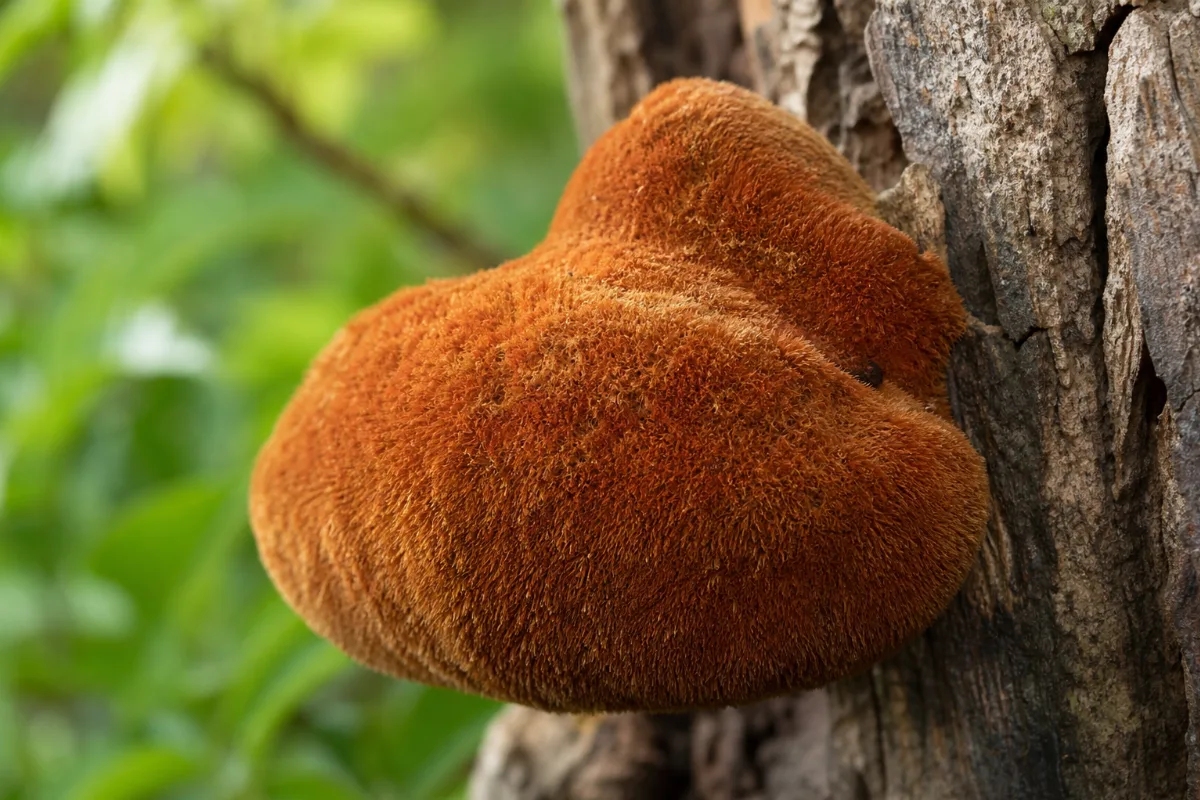
Mushrooms · Medicinal wild polypore
Shaggy Bracket
Inonotus hispidus (old name Polyporus hispidus) · also called Mulberry bracket, shaggy polypore; one of the fungi called sanghuang in China
Shaggy bracket (Inonotus hispidus) is a woody tree mushroom, bright yellow when young. In China it is one of the fungi called sanghuang, used in folk medicine for stomach problems, diabetes and cancer. Everything we found on health effects comes from test tubes, cells and animals: we found no human trial and no safety study in people. Nothing is known about safety, so ask a doctor or pharmacist first, and never eat a wild mushroom unless an expert has identified it.
General information, not medical advice. Last substantive update · Not medically reviewed. A named clinician has not signed off on this page. How this page is made
About Shaggy Bracket
Shaggy bracket (Inonotus hispidus) is a woody tree mushroom used in folk medicine in parts of China. All research on it is from cells, test tubes, computer models and animals; we found no human trial and no safety study in people. Any possible benefits are unproven, and its safety in people is unknown.
What it is
Shaggy bracket is a fungus in the family Hymenochaetaceae, not a plant. GBIF accepts the name Inonotus hispidus (Bull.) P.Karst.; old names include Polyporus hispidus and Xanthochrous hispidus. A review describes the fruiting body as woody, bright yellow when young, turning brown and then hairy and dark with age, and it usually grows on broadleaf trees such as mulberry and ash.
In China it is counted among the fungi called sanghuang. The word covers more than one species, which makes labels hard to read. It is a distant relative of chaga (Inonotus obliquus).
Traditional and current uses
A 2022 review says it has been used as a folk medicine in Xinjiang and Shandong for dyspepsia, cancer, diabetes and stomach problems, and that sanghuang appears in classical Chinese texts. We did not open the old texts, and which fungus they meant is disputed. Traditional use is not proof that it works or is safe.
Today it is studied mainly for its yellow pigments and extracts. The young yellow stage is described as edible, and it is also grown in China.
What the research shows
All of it is lab or animal work. Extracts and single compounds slowed cancer cells in dishes, and one compound slowed tumours in mice. Extracts changed human immune cells in culture. In mice, it eased alcohol-related liver changes, lowered cholesterol and blood sugar and reduced uric acid, and rats had less gout-like swelling.
None of this has been tested in a person. Animal results often do not carry over, and the forms used (spore powder, ethanol extract, purified fractions) are not comparable to any product.
Fruiting body, spores, mycelium and extracts are different
The studies used spore powder, ethanol extracts, a water-extracted polysaccharide and isolated pigments. Content differs by strain, substrate and the tree it grew on: the same metabolites were found on five host trees but in different amounts. Mycelium grown in tanks is a different material again. So one result cannot be applied to another product.
Legal and regulatory status
We did not find or read any regulator statement on shaggy bracket (EMA, FDA, EFSA, NCCIH, LiverTox, LactMed or WHO), so none is stated here. Rules differ by country and change.
At a glance
Traditional uses history, not proof
- Folk medicine in the Aksu region of Xinjiang and Xiajin County, Shandong, for dyspepsia, cancer, diabetes and stomach problems (a 2022 review).
- Early records of 'sanghuang' are said to go back to Shen Nong's Materia Medica; which fungus the old texts meant is disputed and not verified here.
- Called Meshimakobu in Japan and Sanghwang in South Korea in the review.
Studied for research
- Cancer cells in dishes and mice, insufficient (no human data)
- Immune cells in the lab, insufficient
- Antioxidant chemistry, insufficient
- Liver damage from alcohol in mice, insufficient
- Cholesterol, weight and blood sugar in mice, insufficient
- Uric acid and gout-like swelling in rodents, insufficient
- Flu virus in an egg test, insufficient
Main compounds
- Hispidin and hispolon, yellow polyphenol pigments
- Polysaccharides and triterpenoids
- Phenols and flavonoids
Common forms
- Young fresh fruiting body (described as edible)
- Dried fruiting body soaked or boiled in water, as described in some papers
- Spore powder and extracts used in animal studies
- Mycelium or fermentation products in research
Research links: Review of compounds and effects (abstract) · Immune cells in the lab (abstract) · Alcohol-fed mice and liver (abstract) · GBIF name record · Metals in wild mushrooms near a road (abstract) · Research Library · Genes & Biomarkers Library
What it is and its history
- Accepted scientific name
- Inonotus hispidus
- Naming authority
- (Bull.) P.Karst. (GBIF)
- Synonyms
- Polyporus hispidus (Bull.) Fr.; Boletus hispidus Bull.; Xanthochrous hispidus (Bull.) Pat.; Fomes hispidus (Bull.) Maubl.; Inodermus hispidus (Bull.) Quel.; Phaeoporus hispidus (Bull.) J.Schrot.; Polystictus hispidus (Bull.) Gillot & Lucand
- Common names
- Shaggy bracket (English); Mulberry bracket (English); Shaggy polypore (English); Sanghuang (a collective name that includes this fungus) (Chinese); Meshimakobu (Japanese); Sanghwang (Korean)
- Family or group
- Hymenochaetaceae (a fungus family, not a plant)
- Classification
- Fungi > Basidiomycota > Agaricomycetes > Hymenochaetales > Hymenochaetaceae > Inonotus > Inonotus hispidus
- Native range
- A review says it is found on broadleaf trees in China and Europe. Wider range not checked.
- Habitat
- Parasitic or brown-rot growth on living broadleaf trees. A review lists mulberry, ash, Populus euphratica, elm, rowan (Sorbus aucuparia) and maple (Acer saccharum); a cultivation paper and a trace-element paper also mention jujube and apple hosts.
- What it looks like
- Fruiting body: A review describes annual, sessile, woody fruiting bodies, bright yellow when young (the edible stage), turning light brown to brown, then dark brown with a hairy surface, and eventually black.
- Cultivation
- Cultivated in China. A 2026 paper grew three strains on jujube-wood waste with cottonseed hulls and says wild resources are threatened by overharvesting.
- Harvest and processing
- Not checked in the sources read.
- Look-alikes and adulterants
- Name: Sanghuangporus species (the other 'sanghuang' fungi); Note: A review says shaggy bracket fruit bodies are highly similar in form to the genus Sanghuangporus and have been called sanghuang. Our Phellinus guide covers the naming dispute.
- Sustainability and conservation
- A 2026 paper says wild resources are threatened by overharvesting; no formal status was checked.
Traditional use and history history, not clinical proof
| Tradition or era | Documented use | Source |
|---|---|---|
| China, classical texts (as cited by a review) | A 2022 review says the earliest records of 'sanghuang' go back to Shen Nong's Materia Medica and that it is described in the Compendium of Materia Medica. Which fungus the old texts meant is disputed, and we did not open the original texts. Treat this as NOT verified. | p36009965 |
| Xinjiang (Aksu) and Shandong (Xiajin), China | The same review says it grows on mulberry trees and has been used as a folk medicine for dyspepsia, cancer, diabetes and stomach problems. This rests on a source the review cites, which we did not open. | p36009965 |
| Japan and South Korea | The review gives the names 'Meshimakobu' (Japan) and 'Sanghwang' (South Korea) for the group of fungi it calls sanghuang. | p36009965 |
Traditional use shows how it was used. It does not show that it works or is safe today.
What is inside, and how it may work
What it contains and how those compounds act in cells and animals. Laboratory and animal mechanisms are not proven effects in people.
Main compounds
| Compound | Family | Where it is concentrated | Activity studied | Level of evidence |
|---|---|---|---|---|
| Hispidin PubChem 54685921 | styrylpyrone (yellow polyphenol pigment) | Fruiting body | Scavenges free radicals and binds copper in chemistry tests; reported in lab studies to affect immune cells and cancer cells. 19 3 4 | Laboratory research |
| Hispolon PubChem 10082188 | styrylpyrone-related polyphenol | Fruiting body | Reduced immune-cell responses and had antiviral activity in lab tests. 20 1 2 | Laboratory research |
| Polyphenols and flavonoids (total) | phenolic | Fruiting body An ethanol extract had total phenolics of 227.23 mg gallic acid equivalent per g (one extract, one study). | Radical scavenging in the lab. 9 16 | Laboratory research |
| Polysaccharides | polysaccharide | Fruiting body or mycelium Crude polysaccharides up to 156.54 mg per g in one cultivated strain (colour test, one study); one purified heteropolysaccharide (IHP3) was 22.0 kDa. | An isolated fraction reduced weight gain in obese mice. 16 15 | Animal research |
| Triterpenoids | terpenoid | Fruiting body and spores | Present in spore powder and fruiting bodies; the review lists them among the main compound groups. 11 13 | Laboratory research |
Mechanisms, receptors and pathways
| Target or pathway | Gene or receptor | What was found | Level |
|---|---|---|---|
| Inflammation signals (IL-1 beta, IL-6, TNF-alpha; JAK1/STAT3) | IL1B, IL6, TNF, JAK1, STAT3 | Lowered in alcohol-fed mice given the mushroom. 5 | Animal research |
| Oxidative stress and inflammation (Nrf2/NF-kB) | NFE2L2 (Nrf2), NF-kB | Regulated in high-fat-fed mice given the mushroom. 14 | Animal research |
| Interleukin-17 inflammation pathway and PPAR gamma | IL17, PPARG | An isolated polysaccharide suppressed the pathway and PPAR gamma phosphorylation in obese mice. 15 | Animal research |
| Fas-mediated cell death | FAS, FASLG, caspase-3, caspase-8 | One isolated compound raised Fas and caspase activity in liver cancer cells. 12 | Laboratory research |
| Thyroid peroxidase (computer docking) | TPO | A review reports hispidin as a stronger blocker than propylthiouracil in a docking model. No lab or human test was read. 11 | In silico |
Absorption, metabolism and elimination
- Absorption
- Not studied for the mushroom. One isolated compound (HDE) was absorbed into mouse plasma, peaking at 30 minutes.
- Distribution
- HDE reached spleen, liver, lung, kidney, muscle, thymus, heart and brain in mice.
- Metabolism
- Not found in the sources read.
- Elimination
- HDE appeared to undergo enterohepatic circulation in mice.
- Bioavailability
- Not established for the mushroom or its pigments.
Isolated compounds versus whole extracts
Most lab results come from isolated pigments (hispidin, hispolon), one purified compound or a purified polysaccharide, or from spore powder or ethanol extracts. These are not the same as the fruiting body, and none matches a retail product.
Nutritional composition
The young yellow stage is described in a review as edible, but shaggy bracket is not an ordinary food. A cultivated fruiting body held up to 18.80% crude protein in one strain (colour test, one study); no standard food table was found.
8 not enough evidence
What was looked at
The 8 benefits and uses checked for Shaggy Bracket, each with how strong the evidence is. Tap one to open it.
- Cancer cells in lab and mouse studiesNot enough evidence
- Immune cells in the labNot enough evidence
- Antioxidant chemistryNot enough evidence
- Liver damage from alcohol (mice)Not enough evidence
- Blood fats and body weight (mice)Not enough evidence
- Blood sugar (diabetic mice)Not enough evidence
- Uric acid and gout-like inflammation (rodents)Not enough evidence
- Flu virus in an egg testNot enough evidence
Lab markers tracked in the studies
Natural killer (NK) cell activity and functionTumour growth in miceRadical scavenging (DPPH test)LDL cholesterol, total cholesterol and triglyceridesLiver enzymes ALT and ASTSerum uric acid
What is Shaggy Bracket good for?
The uses people ask about and how strong the human evidence is for each. For every one, there is no human evidence. Read this together with the Safety tab.
Benefits, one by one
Each card is a research question, not a promise. Tap a goal to filter. Open a card to see the studies, doses and limits.
Cancer cells in lab and mouse studies
Not enough evidenceExtracts and single compounds from shaggy bracket slowed the growth of cancer cells in dishes, and some slowed tumours in mice. It is traditionally used in parts of China for cancer, but we found no human trial. This is not evidence that it helps anyone with cancer.
3 studiesSpore powder, isolated compounds and extracts, all in the lab or in m…
Studies, doses and limits
What the trials found
No human study of this was found. Our PubMed searches found no clinical trial and no case report in people.
Results
Spore powder suppressed tumour development in ApcMin/+ mice (a bowel tumour model). One isolated compound (HDE) cut tumour growth in liver-tumour mice by up to 69%, and treated mice's organ weights did not differ from controls.
Effect sizes as reported
Smaller tumours in mouse models; no human figures
Why this rating
Only cell and mouse work. Some of it uses one purified compound or spore powder, which are not the same as the mushroom. Nothing was tested in people.
Form and dose studied
Spore powder, isolated compounds and extracts, all in the lab or in mice. No study used a product comparable to what is sold.
Who was studied
Cancer cell lines and mice
Limits
Results in dishes and mice often do not carry over to people. The doses and forms used are not comparable to any product.
Why researchers looked
Anticancer activity is described as the main reason for scientific interest in this fungus, because it has a history of folk use for cancer in Xinjiang.
Traditional use
A review says people in the Aksu region of Xinjiang and Xiajin County in Shandong have used it as a folk medicine for dyspepsia, cancer, diabetes and stomach problems. Traditional use is not proof that it works.
Proposed mechanism Laboratory research
In the lab, pigments such as hispidin and hispolon and some other compounds trigger cell death in cancer cell lines. In one mouse model spore powder changed gut bacteria and immune signals. These are laboratory and animal findings.
A proposed mechanism does not show that the effect happens in people.
Shaggy bracket is not a cancer treatment. Anyone with cancer should not replace treatment with it. Nothing is known about safety in people. Ask a doctor or pharmacist before using shaggy bracket, and see the Safety tab.
Immune cells in the lab
Not enough evidenceIn test-tube studies, shaggy bracket extract and two of its pigments changed how human immune cells behave: they raised natural killer cell activity and made some cells mature, but also reduced the division of activated T cells. This does not show it strengthens or weakens immunity in a person.
3 studiesExtract and two isolated pigments in dishes.
Studies, doses and limits
What the trials found
No human study of this was found. The human cells in these studies were grown in a dish.
Results
Extract increased activation and reduced division of activated human T cells, increased natural killer cell activity dose-dependently, and made dendritic-cell markers mature. Hispolon and hispidin reduced the chemiluminescence response of human mononuclear cells in an earlier test.
Effect sizes as reported
Lab changes in immune-cell markers
Why this rating
Only cell cultures. The effects went in both directions (more activity in some cell types, less division in others), and no whole-body effect was measured.
Form and dose studied
Extract and two isolated pigments in dishes.
Who was studied
Human blood cells and mouse spleen cells in culture
Limits
Test-tube effects do not show what happens after eating the mushroom. We found nothing on infections or illness.
Why researchers looked
Immune-modulating activity is the other main interest in this fungus.
Traditional use
Not described in the sources we read as a traditional use.
Proposed mechanism Laboratory research
Hispidin and hispolon were found to be active in the extract. The abstract describes effects on T cells, natural killer cells and dendritic cells in culture.
A proposed mechanism does not show that the effect happens in people.
Lab results that dampen immune cells mean a theoretical question for people on immune-suppressing medicines. See the Safety tab. Nothing is known about safety in people. Ask a doctor or pharmacist before using shaggy bracket, and see the Safety tab.
Antioxidant chemistry
Not enough evidenceHispidin, the yellow pigment of the fungus, is a strong radical scavenger in chemistry tests, and an ethanol extract of shaggy bracket had very high phenol content in the lab. No study has measured an antioxidant effect in a person.
3 studiesIsolated hispidin and an ethanol extract in the lab.
Studies, doses and limits
What the trials found
No human study of this was found.
Results
Hispidin scavenged hydroxyl radicals at very high rates in modelled conditions and bound copper(II). An ethanol extract had total phenolics of 227.23 mg gallic acid equivalent per g and the strongest DPPH radical scavenging of four mushrooms tested.
Effect sizes as reported
Strong scavenging in the test tube
Why this rating
Chemistry tests only. Antioxidants that work in the test tube often do nothing useful in the body.
Form and dose studied
Isolated hispidin and an ethanol extract in the lab.
Limits
Test-tube radical scavenging is not a health outcome.
Why researchers looked
The yellow-orange pigments (styrylpyrones) are the best-known compounds of the fungus.
Traditional use
Not described as a traditional use in the sources we read.
Proposed mechanism Laboratory research
Test-tube chemistry and computer modelling show hispidin scavenging free radicals and binding copper ions. This is a chemical property, not proof of an effect in the body.
A proposed mechanism does not show that the effect happens in people.
Nothing is known about safety in people. Ask a doctor or pharmacist before using shaggy bracket, and see the Safety tab.
Liver damage from alcohol (mice)
Not enough evidenceIn mice given alcohol for a long time, shaggy bracket eased liver damage and lowered inflammation signals. There is no human liver study. It does not make drinking alcohol safe for the liver.
1 studiesNot stated in the abstract.
Studies, doses and limits
What the trials found
No human study of this was found.
Results
The mushroom strongly eased alcohol-induced liver changes in mice.
Effect sizes as reported
Less liver damage in alcohol-fed mice; no numbers in the abstract
Why this rating
One mouse model.
Who was studied
Mice
Limits
Does not show a liver benefit in people. No human liver data of any kind.
Why researchers looked
Shaggy bracket is traditionally used for stomach and digestive problems, and researchers tested whether it protects the liver.
Traditional use
A review lists dyspepsia and stomach problems among its folk uses; liver use is not listed in the parts we read.
Proposed mechanism Animal research
Reduced inflammation molecules (IL-1 beta, IL-6, TNF-alpha) and changed gut bacteria in the mice.
A proposed mechanism does not show that the effect happens in people.
No liver injury in people has been reported, but nothing has been studied. Nothing is known about safety in people. Ask a doctor or pharmacist before using shaggy bracket, and see the Safety tab.
Blood fats and body weight (mice)
Not enough evidenceIn mice fed a high-fat diet, shaggy bracket and one polysaccharide from it lowered cholesterol and triglycerides and limited weight and fat gain. No human data.
2 studiesThe isolated polysaccharide was extracted with water and purified; th…
Studies, doses and limits
What the trials found
No human study of this was found.
Results
High-fat-fed mice had lower LDL cholesterol, total cholesterol, triglycerides and leptin and higher HDL cholesterol with the mushroom; the isolated polysaccharide IHP3 reduced weight gain, fat accumulation and liver damage in obese mice.
Effect sizes as reported
Better blood fats and less weight gain in mice
Why this rating
Two mouse studies, one with a purified fraction.
Form and dose studied
The isolated polysaccharide was extracted with water and purified; the mushroom form in the other study is not stated in the abstract.
Who was studied
Mice
Limits
No human data. Mouse results on fats rarely carry over.
Why researchers looked
Researchers asked whether the fungus influences fat metabolism.
Traditional use
Not described as a traditional use in the sources we read.
Proposed mechanism Animal research
Reduced oxidative stress and inflammation signals (Nrf2/NF-kB and an interleukin-17 pathway) and changed gut bacteria in mice.
A proposed mechanism does not show that the effect happens in people.
Nothing is known about safety in people. Ask a doctor or pharmacist before using shaggy bracket, and see the Safety tab.
Blood sugar (diabetic mice)
Not enough evidenceAn ethanol extract lowered blood sugar and fats in mice with induced type 2 diabetes. No human data, and it must not replace diabetes care.
2 studiesEthanol extract.
Studies, doses and limits
What the trials found
No human study of this was found.
Results
The extract lowered blood sugar and fats, serum cholesterol, triglycerides, AST and ALT in diabetic mice.
Effect sizes as reported
Lower blood sugar in diabetic mice
Why this rating
One mouse and cell study.
Form and dose studied
Ethanol extract.
Who was studied
Diabetic mice and liver cell lines
Limits
Not tested in people. People with diabetes should not use it instead of treatment.
Why researchers looked
Folk medicine in Xinjiang uses it for diabetes among other problems.
Traditional use
A review says it has been used in Xinjiang for diabetes. Traditional use is not proof.
Proposed mechanism Animal research
Lower TNF-alpha/NF-kB signalling and changed gut bacteria in mice; 66 compounds were characterised.
A proposed mechanism does not show that the effect happens in people.
A blood-sugar-lowering effect, if it exists in people, could add to diabetes medicines. See the Safety tab. Nothing is known about safety in people. Ask a doctor or pharmacist before using shaggy bracket, and see the Safety tab.
Uric acid and gout-like inflammation (rodents)
Not enough evidenceIn mice with high uric acid and rats with gout-like joint swelling, shaggy bracket lowered uric acid and swelling. No human data.
1 studiesNot stated in the abstract.
Studies, doses and limits
What the trials found
No human study of this was found.
Results
Raised serum uric acid was reversed and xanthine oxidase lowered in mice; ankle swelling and inflammatory cell infiltration were reduced in rats, with lower MMP-9, CCL-2 and TNF-alpha.
Effect sizes as reported
Lower uric acid and swelling in rodents
Why this rating
One rodent study that tested two mushrooms together.
Who was studied
Mice and rats
Limits
No human data; gout needs medical care.
Why researchers looked
Researchers tested enzyme-blocking and anti-inflammatory activity reported for the fungus.
Traditional use
Not described as a traditional use in the sources we read.
Proposed mechanism Animal research
Lower xanthine oxidase (the enzyme that makes uric acid) and lower inflammation molecules in rodents.
A proposed mechanism does not show that the effect happens in people.
Nothing is known about safety in people. Ask a doctor or pharmacist before using shaggy bracket, and see the Safety tab.
Flu virus in an egg test
Not enough evidenceExtracts and two pigments showed antiviral activity against influenza A and B in a laboratory egg test in 2003. This is not evidence that it prevents or treats flu in people.
1 studiesEthanol extracts and two pigments.
Studies, doses and limits
What the trials found
No human study of this was found.
Results
Ethanolic extracts, hispidin and hispolon showed considerable activity against influenza A and B viruses in the test system.
Effect sizes as reported
Activity in an egg test; no figures in the abstract
Why this rating
A single 2003 egg-based lab test, abstract only.
Form and dose studied
Ethanol extracts and two pigments.
Who was studied
Virus in chicken eggs
Limits
No animal or human data on colds or flu.
Why researchers looked
Researchers screened the pigments for antiviral activity.
Traditional use
Not described as a traditional use in the sources we read.
Proposed mechanism Laboratory research
Not explained in the abstract.
A proposed mechanism does not show that the effect happens in people.
Nothing is known about safety in people. Ask a doctor or pharmacist before using shaggy bracket, and see the Safety tab.
Connections to the rest of health
How Shaggy Bracket connects to the rest of our health knowledge graph. Every link says what kind of connection it is. A safety link (for example to the liver) is a warning, not a benefit. A study that merely mentions a topic never creates a benefit link.
Explore every connection: goals, body systems, organs, symptoms, genes
A. Wellness goals
| Connected to | Kind of connection | Evidence status | Context | Studies |
|---|---|---|---|---|
| Immune Support | Preliminary mechanism | Not enough evidence | Immune cells in the lab: In test-tube studies, shaggy bracket extract and two of its pigments changed how human immune cells behave: they raised natural killer cell activity and made some cells mature, but also reduced the division of activated T cells. This does not show it strengthens or weakens immunity in a person. | 4 1 11 |
| Cellular Protection | Preliminary mechanism | Not enough evidence | Antioxidant chemistry: Hispidin, the yellow pigment of the fungus, is a strong radical scavenger in chemistry tests, and an ethanol extract of shaggy bracket had very high phenol content in the lab. No study has measured an antioxidant effect in a person. | 3 9 11 |
| Liver Support | Preliminary mechanism | Not enough evidence | Liver damage from alcohol (mice): In mice given alcohol for a long time, shaggy bracket eased liver damage and lowered inflammation signals. There is no human liver study. It does not make drinking alcohol safe for the liver. | 5 |
| Healthy Weight | Preliminary mechanism | Not enough evidence | Blood fats and body weight (mice): In mice fed a high-fat diet, shaggy bracket and one polysaccharide from it lowered cholesterol and triglycerides and limited weight and fat gain. No human data. | 14 15 |
| Blood Sugar Balance | Preliminary mechanism | Not enough evidence | Blood sugar (diabetic mice): An ethanol extract lowered blood sugar and fats in mice with induced type 2 diabetes. No human data, and it must not replace diabetes care. | 7 11 |
| Joint Support | Preliminary mechanism | Not enough evidence | Uric acid and gout-like inflammation (rodents): In mice with high uric acid and rats with gout-like joint swelling, shaggy bracket lowered uric acid and swelling. No human data. | 10 |
B. Body systems
| Connected to | Kind of connection | Evidence status | Context | Studies |
|---|---|---|---|---|
| Immune system | Drug or supplement interaction | Not enough evidence | Changed T-cell, natural killer cell and dendritic cell behaviour in dishes. Preparation or compound: Extract, hispidin, hispolon (cell studies) |
4 1 |
| Immune System | Biological association | Not enough evidence | Studied for: Immune cells in the lab Studied for: Flu virus in an egg test | 4 1 11 2 |
| Hepatic System | Biological association | Not enough evidence | Studied for: Liver damage from alcohol (mice) | 5 |
| Endocrine System | Biological association | Not enough evidence | Studied for: Blood sugar (diabetic mice) | 7 11 |
C. Body parts and organs
| Connected to | Kind of connection | Evidence status | Context | Studies |
|---|---|---|---|---|
| Thyroid | Drug or supplement interaction | Not enough evidence | A docking study suggests thyroid peroxidase blocking; untested in cells, animals or people. Preparation or compound: Hispidin (computer model) |
11 |
| Liver | Preliminary mechanism | Not enough evidence | Lower liver enzymes in diseased mice; no human liver safety data. Preparation or compound: Shaggy bracket (mouse studies) |
5 14 |
I. Biomarkers
| Connected to | Kind of connection | Evidence status | Context | Studies |
|---|---|---|---|---|
| Natural killer (NK) cell activity and function | Biological association | Not enough evidence | Measured in trials: raised. A lab change is not the same as a health benefit. | 4 |
| Tumour growth in mice | Biological association | Not enough evidence | Measured in trials: lowered. A lab change is not the same as a health benefit. | 12 |
| Radical scavenging (DPPH test) | Biological association | Not enough evidence | Measured in trials: raised. A lab change is not the same as a health benefit. | 9 |
| LDL cholesterol, total cholesterol and triglycerides | Biological association | Not enough evidence | Measured in trials: lowered. A lab change is not the same as a health benefit. | 14 7 |
| Liver enzymes ALT and AST | Biological association | Not enough evidence | Measured in trials: lowered. A lab change is not the same as a health benefit. | 14 7 |
| Serum uric acid | Biological association | Not enough evidence | Measured in trials: lowered. A lab change is not the same as a health benefit. | 10 |
J. Genes, receptors and enzymes
| Connected to | Kind of connection | Evidence status | Context | Studies |
|---|---|---|---|---|
| Xanthine oxidase | Preliminary mechanism | Animal | Lowered in hyperuricemic mice. | 10 |
K. Biological pathways
L. Active compounds
| Connected to | Kind of connection | Evidence status | Context | Studies |
|---|---|---|---|---|
| Hispidin | Biological association | In vitro | Scavenges free radicals and binds copper in chemistry tests; reported in lab studies to affect immune cells and cancer cells. Preparation or compound: Fruiting body |
19 3 4 |
| Hispolon | Biological association | In vitro | Reduced immune-cell responses and had antiviral activity in lab tests. Preparation or compound: Fruiting body |
20 1 2 |
| Polyphenols and flavonoids (total) | Biological association | In vitro | Radical scavenging in the lab. Preparation or compound: Fruiting body |
9 16 |
| Polysaccharides | Biological association | Animal | An isolated fraction reduced weight gain in obese mice. Preparation or compound: Fruiting body or mycelium |
16 15 |
| Triterpenoids | Biological association | In vitro | Present in spore powder and fruiting bodies; the review lists them among the main compound groups. Preparation or compound: Fruiting body and spores |
11 13 |
Each connection is stored with the ingredient, the connected record, the kind of connection, the evidence status, the supporting studies, the preparation or compound involved, and a review date (last reviewed October 25, 2026).
Evidence at a glance: what changed in 6 lab markers
Tap a number to show only those markers. Counts are markers, not people.
The evidence
The research centre for Shaggy Bracket. Every record here was checked against PubMed or the publisher's page; we never list a study we have not verified.
Evidence by outcome
Bars show how many studies we found for each outcome, not how well it works. People are added up across trials only (reviews are not added, to avoid double counting).
How we rate evidence
High certainty
Several well-run trials or reviews agree; further research is unlikely to change the picture much.
Moderate certainty
Good trials point the same way, but some doubt remains.
Low certainty
Small, short or inconsistent trials. The finding could change with better research.
Very low certainty
Very little or very weak human data. Treat as a possibility only.
Mixed findings
Trials or reviews disagree with each other.
Not enough evidence
Not enough human research to say either way.
Evidence against
Good research found no benefit, or found harm.
We take the reviewers' own risk-of-bias and GRADE statements where they exist, and otherwise judge from study size, design, consistency, directness and whether a product matches what is sold. Many publications do not make evidence high. Method note: We screened the titles of 91 PubMed records for the name and for human or safety terms, found no human study, and read the PubMed records and abstracts of 16 papers (a review, seven animal studies, three cell or egg studies and five lab-chemistry or composition studies), checked the name in GBIF and two compounds in PubChem. Parts of the 2022 review and the 2026 cultivation paper were read in full text. EMA, FDA, LiverTox and LactMed were not read. Certainty ratings are the compiler's own reading.
Study library: every study we checked 20
| Study | Design | People | Product, dose, length | Result |
|---|---|---|---|---|
| Ali 1996 Inhibition of chemiluminescence response of human mononuclear cells and suppression of mitogen-induced proliferation of spleen lymphocytes of mice by hispolon and hispidin. Die Pharmazie · PMID 8878257 |
Laboratory research in-vitro |
Human mononuclear blood cells and mouse spleen cells in culture | Hispolon and hispidin isolated from Inonotus hispidus Fruit bodies Not shown here Not shown here |
Both pigments reduced the chemiluminescence response of activated human mononuclear cells (hispolon IC50 4.4 to 4.6 micrograms/ml; hispidin below 0.1 to 1.5 micrograms/ml). Hispolon also reduced division of mouse spleen lymphocytes (IC50 3.4 micrograms/ml). Dampened immune-cell activity in the dish Methods, limits and fundingOutcomes: Immune-cell chemiluminescence response and mitogen-induced cell division. Limitations: 1996 test-tube study of two isolated pigments. No whole mushroom, no animal or human result. Funding and conflicts: Not read Read: abstract |
| Awadh Ali 2003 Antiviral activity of Inonotus hispidus. Fitoterapia · PMID 12837367 · DOI |
Laboratory research chick embryo (egg test) |
Influenza virus grown in the allantois of chicken eggs (laboratory test system) | Ethanol extracts, hispidin and hispolon from Inonotus hispidus Fruit bodies and mycelial cultures Not shown here Not shown here |
Ethanolic extracts, hispidin and hispolon showed considerable antiviral activity against influenza A and B in the egg test system. Antiviral signal in an egg test Methods, limits and fundingOutcomes: Antiviral activity against influenza A and B viruses. Limitations: 2003 egg-based lab test. It says nothing about colds or flu in people. Funding and conflicts: Not read Read: abstract |
| Boulebd 2025 A Comprehensive Experimental and Theoretical Investigation of the Antioxidant Properties of Hispidin and Isohispidin. The Journal of organic chemistry · PMID 39998063 · DOI |
Lab analysis in-vitro |
Chemical test systems and computer (DFT) calculations | Hispidin and isohispidin (a pigment of Inonotus hispidus) Isolated compound Not shown here Not shown here |
Under modelled body conditions hispidin scavenged hydroxyl radicals very fast, scavenged hydroperoxyl radicals strongly in water, and bound copper(II) ions. The calculations matched the DPPH and ABTS test-tube results. Strong radical scavenging in chemistry tests Methods, limits and fundingOutcomes: Free-radical scavenging, copper binding, DPPH and ABTS tests. Limitations: Test-tube chemistry and computer modelling of a single pigment. It does not show an antioxidant effect in the body. Funding and conflicts: Not read Read: abstract |
| Gründemann 2016 Effects of Inonotus hispidus Extracts and Compounds on Human Immunocompetent Cells. Planta medica · PMID 27428885 · DOI |
Laboratory research human cells |
Human immune cells in culture (T cells, natural killer cells, dendritic cells) | Inonotus hispidus extract, hispidin and hispolon Fruit body extract; two isolated pigments Not shown here Not shown here |
The extract increased activation and reduced division of activated human T cells, with cell death present. Natural killer cell activity and function rose in a dose-dependent way. Dendritic-cell markers suggested the extract can make them mature. Hispidin and hispolon gave similar but not identical results. Lab effects on immune cell types; no whole-body result Methods, limits and fundingOutcomes: T-cell activation and division, natural killer cell function, dendritic cell maturation, cell death. Limitations: Test-tube study of an extract and two isolated pigments. It does not show an effect from eating the mushroom. Funding and conflicts: Funding not stated in the abstract Read: abstract |
| Jin 2023 Protection of Inonotus hispidus (Bull.) P. Karst. against Chronic Alcohol-Induced Liver Injury in Mice via Its Relieving Inflammation Response. Nutrients · PMID 37630721 · DOI |
Animal research mouse |
Mice given alcohol for a long period (a model of alcoholic liver disease) | Inonotus hispidus (shaggy bracket) Not shown here Not shown here |
The mushroom strongly eased alcohol-induced liver changes in mice and lowered inflammation molecules (IL-1 beta, IL-6, TNF-alpha), with changes in gut bacteria and blood metabolites. Less liver damage in alcohol-fed mice Methods, limits and fundingOutcomes: Liver structure and function indices, gut bacteria, blood metabolites, inflammation molecules (IL-1 beta, IL-6, TNF-alpha, PPAR alpha, JAK1/STAT3). Limitations: Mouse model only. Does not show any liver benefit in people, and drinking alcohol harms the liver regardless. Funding and conflicts: Funding not stated in the abstract Read: abstract |
| Li 2022 Comparative Analysis of Metabolic Compositions and Trace Elements of Inonotus hispidus Mushroom Grown on Five Different Tree Species. ACS omega · PMID 35350328 · DOI |
Lab analysis fungus |
Fruiting bodies grown on five host tree species | Inonotus hispidus fruiting bodies from five tree species (mulberry, elm, ash, jujube, apple) Fruiting body Not shown here Not shown here |
The same 1353 metabolites were found on all five tree species, but their amounts differed. Polysaccharides, phenols, Ca, Na, Mg, Fe and Mn were enriched on mulberry, flavonoids on jujube, and steroids, terpenoids and Zn on apple. The abstract does not report levels of toxic metals. Content depends on the host tree Methods, limits and fundingOutcomes: 1353 metabolites, 8 principal components and 12 trace elements compared between host trees. Limitations: Abstract does not give the amounts. It shows that products from different host trees differ. Funding and conflicts: Not read Read: abstract |
| Li 2025 Mechanistic analysis of Inonotus hispidus in ameliorating T2DM: Metabolomics and gut microbiota profiling in mice models. Fitoterapia · PMID 41033475 · DOI |
Animal research mouse |
Mice with type 2 diabetes (high-fat diet plus streptozotocin); two human liver-cell models | Ethanol extract of Inonotus hispidus Ethanol extract (part not stated in the abstract) Not shown here Not shown here |
The extract lowered blood sugar and fats and the serum levels of total cholesterol, triglycerides, AST and ALT in diabetic mice, raised antioxidant enzyme activity and lowered IL-6 and TNF-alpha. 66 compounds were characterised, mostly polyphenols. Lower blood sugar and fats in diabetic mice Methods, limits and fundingOutcomes: Blood sugar and fats, liver enzymes, antioxidant enzymes, inflammation molecules, gut bacteria. Limitations: Mouse and cell models only. No human data. Funding and conflicts: Funding not stated in the abstract Read: abstract |
| Sarikurkcu 2020 Metal concentration and health risk assessment of fifteen wild mushrooms collected from the Ankara University Campus (Turkey). Environmental science and pollution research international · PMID 32506407 · DOI |
Lab analysis fungus |
15 wild mushroom species collected on a busy university campus in Ankara, Turkey | Wild fruiting bodies including Inonotus hispidus Wild fruiting body Not shown here Not shown here |
Across the 15 species, metal concentrations ranged widely (for example cadmium 0.18 to 5.3 and lead 0.04 to 10.98 mg/kg dry weight). For several species the authors calculated intake above health-risk limits for particular metals. The abstract does not give a result or a verdict for Inonotus hispidus on its own. Wild mushrooms near traffic can carry metals Methods, limits and fundingOutcomes: Iron, manganese, copper, zinc, cobalt, cadmium, lead and nickel; daily intake and health-risk index for the edible species. Limitations: The abstract gives ranges across all 15 species; the Inonotus hispidus values are not stated there. Collected beside a busy road. Funding and conflicts: Not read Read: abstract |
| Shomali 2019 Investigation of the Polyphenol Composition, Biological Activities, and Detoxification Properties of Some Medicinal Mushrooms from Turkey. Turkish journal of pharmaceutical sciences · PMID 32454708 · DOI |
Lab analysis in-vitro |
Ethanol extracts of four Turkish mushrooms, tested in the lab | Ethanol extract of Inonotus hispidus, compared with three other mushrooms Fruiting body (ethanol extract) Not shown here Not shown here |
The Inonotus hispidus extract had the highest total phenolics (227.23 +/- 4.96 mg gallic acid equivalent per g) and flavonoids (42.14 +/- 0.20 quercetin equivalent per g), the strongest radical scavenging (DPPH IC50 10.687 +/- 1.643 micrograms/ml) and the highest glutathione-S-transferase activity effect (with Sarcodon imbricatus). None of the extracts clearly blocked the bacteria tested. High phenolic content and radical scavenging in the lab Methods, limits and fundingOutcomes: Total phenolics and flavonoids, radical scavenging, glutathione-S-transferase enzyme activity, antibacterial disc test. Limitations: Colour tests and enzyme assays on extracts. No effect in people. Funding and conflicts: Not read Read: abstract |
| Sun 2022 Anti-Gouty Arthritis and Anti-Hyperuricemia Properties of Sanghuangporus vaninii and Inonotus hispidus in Rodent Models. Nutrients · PMID 36297105 · DOI |
Animal research mouse and rat |
Mice with high uric acid and rats with acute gout-like joint inflammation | Inonotus hispidus, tested alongside Sanghuangporus vaninii Not shown here Not shown here |
In mice with high uric acid, the mushroom reversed raised uric acid in serum and lowered xanthine oxidase in serum and liver. In rats with crystal-induced gout-like inflammation it reduced ankle swelling and inflammatory cell infiltration and lowered MMP-9, CCL-2 and TNF-alpha. Lower uric acid and less joint swelling in rodents Methods, limits and fundingOutcomes: Serum uric acid, xanthine oxidase, ankle swelling, inflammation molecules. Limitations: Rodent models. The paper tests two mushrooms together; findings for shaggy bracket alone are as stated. No human data. Funding and conflicts: Funding not stated in the abstract Read: abstract |
| Wang 2022 Diverse Metabolites and Pharmacological Effects from the Basidiomycetes Inonotus hispidus. Antibiotics (Basel, Switzerland) · PMID 36009965 · DOI |
Narrative review review |
Review of compounds and lab and animal findings on Inonotus hispidus | Inonotus hispidus (shaggy bracket) compounds, as reviewed Fruiting body, mycelium and fermentation broth (varies by study reviewed) Not shown here Not shown here |
Says the compounds show anticancer, anti-inflammatory, antioxidant, antimicrobial and enzyme-blocking activity in the lab, calls anticancer activity the main medicinal interest, and reports traditional use in Xinjiang for dyspepsia, cancer, diabetes and stomach problems. The parts we read describe cell, animal and computer studies, not human trials. Methods, limits and fundingOutcomes: Classifies the fungus's compounds (mainly polyphenols and triterpenoids) and their lab activities. Limitations: Mostly lab work. Its traditional records cite other sources we did not open. A correction notice (PMID 36421319) was published for this review; we did not open it. Funding and conflicts: Not read Read: full text |
| Yang 2019 Anti-tumour Effect and Pharmacokinetics of an Active Ingredient Isolated from Inonotus hispidus. Biological & pharmaceutical bulletin · PMID 30606981 · DOI |
Animal research mouse |
Mice with H22 liver tumours; HepG2 human liver-cancer cells in culture | HDE ((4S,5S)-4-hydroxy-3,5-dimethoxycyclohex-2-enone), one compound isolated from Inonotus hispidus Isolated single compound Not shown here Not shown here |
The compound slowed HepG2 cell growth (IC50 7.9 micrograms/ml) and reduced tumour growth in mice by up to 69%. It was absorbed into mouse plasma, peaking at 30 minutes, and reached organs including liver, lung and kidney. Organ weights of treated mice did not differ from controls. Slower tumour growth with one isolated compound Methods, limits and fundingOutcomes: Cell growth, tumour growth, absorption and tissue spread, organ weights. Limitations: One purified compound, not the mushroom. Mouse and cell study only. Funding and conflicts: Funding not stated in the abstract Read: abstract |
| Yang 2022 Anti-Colorectal Cancer Effects of Inonotus hispidus (Bull.: Fr.) P. Karst. Spore Powder through Regulation of Gut Microbiota-Mediated JAK/STAT Signaling. Nutrients · PMID 36014805 · DOI |
Animal research mouse |
ApcMin/+ mice (a mouse model that develops bowel tumours) | Inonotus hispidus spore powder Spore powder Not shown here Not shown here |
Spore powder changed gut bacteria and a blood amino acid (L-arginine), raised IL-2 and lowered IL-5, IL-6 and IL-10, and suppressed tumour development in these mice. Fewer tumours in a mouse model Methods, limits and fundingOutcomes: Tumour development, gut bacteria, blood metabolites, immune-signal molecules. Limitations: Mouse model of bowel cancer. Spore powder is not the same as the fruiting body. No human data. Funding and conflicts: Funding not stated in the abstract Read: abstract |
| Zhang 2022 Inonotus hispidus Protects against Hyperlipidemia by Inhibiting Oxidative Stress and Inflammation through Nrf2/NF-κB Signaling in High Fat Diet Fed Mice. Nutrients · PMID 36079733 · DOI |
Animal research mouse |
Mice fed a high-fat diet | Inonotus hispidus (shaggy bracket) Not shown here Not shown here |
In high-fat-fed mice the mushroom lowered LDL cholesterol, total cholesterol, triglycerides and leptin, raised HDL cholesterol, lowered ALT, AST and inflammation molecules, and changed gut bacteria. Better blood fat and liver-enzyme values in mice Methods, limits and fundingOutcomes: Blood fats, liver enzymes, fat-tissue and liver structure, inflammation molecules, gut bacteria. Limitations: Mouse study only; no human lipid data. Funding and conflicts: Funding not stated in the abstract Read: abstract |
| Zhang 2025 Structural characterization of polysaccharide isolated from Inonotus hispidus and its anti-obesity effect based on regulation of the interleukin-17-mediated inflammatory response. International journal of biological macromolecules · PMID 39706397 · DOI |
Animal research mouse |
Obese mice on a high-fat diet | IHP3, a water-extracted heteropolysaccharide (22.0 kDa) isolated from Inonotus hispidus Isolated polysaccharide from a water extract Not shown here Not shown here |
The isolated polysaccharide reduced weight and blood sugar gain, fat accumulation and liver damage in obese mice, and suppressed an inflammation pathway (interleukin-17). Less weight gain in obese mice Methods, limits and fundingOutcomes: Body weight, blood sugar, fat accumulation, lipid metabolism, liver function, inflammation signalling. Limitations: One purified polysaccharide fraction in mice; the paper presents it as a drug candidate, not a food or supplement. Funding and conflicts: Funding not stated in the abstract Read: abstract |
| Zhang 2026 Cultivation of Inonotus hispidus on Jujube Wood Waste: Effects on Fruiting Body Biological Characteristics, Nutrients, Active Constituents and Metabolic Profiles. Journal of fungi (Basel, Switzerland) · PMID 41745285 · DOI |
Lab analysis fungus |
Cultivated fruiting bodies of three strains (Z1, Z2, ZL) on jujube-wood substrates in China | Cultivated Inonotus hispidus fruiting bodies Dried fruiting body Not shown here Not shown here |
Fruiting bodies grew on jujube-wood substrates. Crude protein reached up to 18.80% (strain Z1) and crude polysaccharides up to 156.54 mg per g (phenol-sulfuric acid test). Flavonoid values of 101.54 and 108.31 mg per g were reported for two strains on one substrate, which look high for a colour test. Composition of cultivated mushrooms; not an effect Methods, limits and fundingOutcomes: Crude protein, fat, fibre, polysaccharides, polyphenols, triterpenoids, flavonoids, alkaloids, amino acids, metabolites. Limitations: Three replicates per treatment; one study, one region. Content varied by strain and substrate. Says nothing about benefit or safety. Funding and conflicts: Not read Read: full text |
| n/a 2026 Our PubMed searches for Inonotus hispidus (run 2026-10-25): titles screened for human studies and safety reports n/a · Source |
Database record n/a |
n/a | n/a |
A search for Inonotus hispidus or Phellinus hispidus in title or abstract returned 91 records. We read all titles, then a second search combining the mushroom, hispidin or hispolon with toxicity or safety words (65 records) and a third combining Inonotus hispidus with human, patient, trial or case-report words (26 records). None of the titles was a clinical trial, case report or safety study in people. Abstracts were read for the 16 records cited on this page only. Methods, limits and fundingOutcomes: A search for Inonotus hispidus or Phellinus hispidus in title or abstract returned 91 records. We read all titles, then a second search combining the mushroom, hispidin or hispolon with toxicity or safety words (65 records) and a third combining Inonotus hispidus with human, patient, trial or case-report words (26 records). None of the titles was a clinical trial, case report or safety study in people. Abstracts were read for the 16 records cited on this page only. Limitations: A title screen can miss papers. Only English-language PubMed was searched; Chinese-language journals and other databases were not searched. Funding and conflicts: Independent public or database record Read: full text |
| n/a 2026 GBIF Backbone Taxonomy: Inonotus hispidus (Bull.) P.Karst. (usage key 2521208), checked by API 2026-10-25 n/a · Source |
Database record n/a |
n/a | n/a |
Accepted name, family Hymenochaetaceae, order Hymenochaetales. Synonyms listed include Polyporus hispidus (Bull.) Fr., Boletus hispidus Bull., Xanthochrous hispidus (Bull.) Pat., Fomes hispidus, Inodermus hispidus, Phaeoporus hispidus and Polystictus hispidus. Methods, limits and fundingOutcomes: Accepted name, family Hymenochaetaceae, order Hymenochaetales. Synonyms listed include Polyporus hispidus (Bull.) Fr., Boletus hispidus Bull., Xanthochrous hispidus (Bull.) Pat., Fomes hispidus, Inodermus hispidus, Phaeoporus hispidus and Polystictus hispidus. Limitations: Naming record only; says nothing about use or safety. Funding and conflicts: Independent public or database record Read: full text |
| n/a 2026 PubChem compound record: Hispidin (CID 54685921), checked by API 2026-10-25 n/a · Source |
Database record n/a |
n/a | n/a |
Hispidin, formula C13H10O5, CID 54685921. Methods, limits and fundingOutcomes: Hispidin, formula C13H10O5, CID 54685921. Limitations: Identity record only; says nothing about amounts in products or effects. Funding and conflicts: Independent public or database record Read: full text |
| n/a 2026 PubChem compound record: Hispolon (CID 10082188), checked by API 2026-10-25 n/a · Source |
Database record n/a |
n/a | n/a |
Hispolon, formula C12H12O4, CID 10082188. Methods, limits and fundingOutcomes: Hispolon, formula C12H12O4, CID 10082188. Limitations: Identity record only; says nothing about amounts in products or effects. Funding and conflicts: Independent public or database record Read: full text |
What we do not know yet
- No human trial, case report or safety study of shaggy bracket was found.
- No toxicity test of the whole mushroom; look-alikes, cooking needs and allergy are not covered by any source read.
- Thyroid, immune and blood-sugar questions come from models, cells and mice only.
- Strain, host tree and form change content, and studies rarely state the form used.
- No regulator statement was read.
How new research is added
New studies are found by a saved PubMed search and placed in a review queue. A person reads each one before it changes any evidence rating or safety wording. New publications never change ratings automatically.
Lab markers
What changed in blood or saliva tests during trials. A changed number is not the same as feeling or being healthier, and we give no "normal ranges".
Other 6
Natural killer (NK) cell activity and function
Raised in trials
NK cells are white blood cells that attack infected or abnormal cells. Studies measure how many release their killing granules (CD107a) when challenged.
Not enough evidenceResults and what it means
Why it was measured
Used in the lab to see whether a substance changes innate immune activity.
Statistical vs. clinical meaning
A dish result only; not tested after eating the mushroom.
Safety implication
A rise in a lab marker does not mean better protection from illness.
| Study | Result | People | Product |
|---|---|---|---|
| 4 | NK cell activity and function increased with the extract in a dose-dependent way in purified human NK cells in culture. | Purified human NK cells in a dish | Inonotus hispidus extract |
Tumour growth in mice
Lowered in trials
Tumour size or growth in mice that were given cancer cells.
Not enough evidenceResults and what it means
Why it was measured
Used to see whether a compound slows tumours in an animal model.
Statistical vs. clinical meaning
One isolated compound in mice.
Safety implication
Not applicable to people; no human use of this compound is established.
| Study | Result | People | Product |
|---|---|---|---|
| 12 | Tumour growth was inhibited by up to 69% with the isolated compound HDE in mice with H22 liver tumours. | Mice with H22 hepatocarcinoma | One compound isolated from Inonotus hispidus, not the whole mushroom |
Radical scavenging (DPPH test)
Raised in trials
A colour test showing how well a sample neutralises a stable free radical in a tube.
Not enough evidenceResults and what it means
Why it was measured
A quick lab screen for antioxidant chemistry.
Statistical vs. clinical meaning
Test-tube chemistry.
Safety implication
Does not show any effect in the body.
| Study | Result | People | Product |
|---|---|---|---|
| 9 | Ethanol extract of Inonotus hispidus had the strongest scavenging of the four mushrooms tested (DPPH IC50 10.687 +/- 1.643 micrograms/ml). | Mushroom extracts in the lab | Ethanol extract of fruiting body |
LDL cholesterol, total cholesterol and triglycerides
Lowered in trials
Blood fats measured in a blood sample.
Not enough evidenceResults and what it means
Why it was measured
Used as markers of heart and metabolic risk.
Statistical vs. clinical meaning
Two mouse studies; no figures in the abstracts.
Safety implication
Not applicable to people yet.
Liver enzymes ALT and AST
Lowered in trials
Enzymes in blood that rise when liver cells are damaged.
Not enough evidenceResults and what it means
Why it was measured
Used to judge liver injury.
Statistical vs. clinical meaning
Mouse studies in diseased animals; this says nothing about liver safety in healthy people.
Safety implication
Not a human safety result.
Serum uric acid
Lowered in trials
Uric acid in blood; high levels are linked to gout.
Not enough evidenceResults and what it means
Safety
What studies and official sources say about side effects, medicines and who should check first. Each point shows what kind of evidence it comes from.
Main points to know 4
- Nothing is known about safety in people. We found no clinical trial, case report or safety study of shaggy bracket in people. Every health finding is from cells, test tubes, computer models or animals. That is a gap in knowledge, not proof that it is safe. Absence of evidence 17 11
- Wild mushrooms can be misidentified and can carry metals. Shaggy bracket is often found wild on trees. We found no source that lists look-alikes or tells how to identify it, so do not eat or use a wild mushroom unless an expert has identified it. Wild mushrooms near roads can contain cadmium, lead and other metals: a study of 15 wild species near a busy road in Turkey (which included shaggy bracket) found that several went over health-risk limits for some metals, though the abstract does not give the result for shaggy bracket alone. Lab analysis 8 18
- A computer model suggests a thyroid question. A review reports that, in a computer-docking study, the pigment hispidin blocked the thyroid enzyme thyroid peroxidase more strongly than the anti-thyroid drug propylthiouracil. This is a modelling result only. Nobody has tested it in people, so we cannot say whether it matters. In silico 11
- Products are not standardised. No product standard or label check applies to shaggy bracket that we could verify. Fruiting body, spores, mycelium and extracts differ in chemistry, and the host tree changes content, so one product cannot stand in for another. Lab analysis 6 16
Side effects 2
| Effect | How often | Severity and recovery | Evidence |
|---|---|---|---|
| No adverse effects in people have been reported No human use was studied, so this is not a finding of safety. | Not established | unknown Not applicable | Absence of evidence 17 |
| No change in organ weights in mice treated with one isolated compound One purified compound (HDE), not the whole mushroom, in mice only. | Not established | none seen in this one animal study Not applicable | Animal research 12 |
Liver
We found no case report or trial linking shaggy bracket to liver injury, and we found no human liver study of any kind. In mice with induced liver or metabolic disease, liver enzymes went down; that is a disease-model result and does not show safety in healthy people. 5 14 7
How often. No reports found; this is not proof of liver safety.
Monitoring. No agency monitoring advice was read. People with liver disease should ask a doctor before using any mushroom supplement.
This is a safety connection. It is not evidence that Shaggy Bracket supports liver health.
Medicines and supplements 4
| With | Why it matters | Importance | Evidence | What to do |
|---|---|---|---|---|
| Thyroid medicines and anti-thyroid drugs, or thyroid disease prescription | A computer-docking study reported that hispidin blocks thyroid peroxidase more strongly than propylthiouracil (as summarised in a review). | Modelling only. No test in cells, animals or people was read, so the real effect is unknown. | In silico Not enough evidence 11 | If you have a thyroid condition or take thyroid medicine, ask your prescriber or pharmacist before using shaggy bracket. |
| Immune-suppressing medicines, including after a transplant, and autoimmune conditions prescription | In the lab, extract and pigments changed activation of human T cells, natural killer cells and dendritic cells. | A theoretical concern from dish studies. Nothing is known in people. | Laboratory research Not enough evidence 4 1 | Ask your prescriber or pharmacist before use if you take medicines that suppress or modify the immune system. |
| Diabetes medicines (blood-sugar lowering) prescription | An ethanol extract lowered blood sugar in diabetic mice. | Unknown in people. A blood-sugar effect, if real, might add to medicines. | Animal research Not enough evidence 7 | Do not use it to treat diabetes. Ask a pharmacist before combining. |
| Blood thinners (warfarin-type) and antiplatelet medicines prescription | Not studied. | We found no information on bleeding or clotting. | Absence of evidence Not enough evidence 17 | Ask a pharmacist before combining; the absence of data is not proof of safety. |
Who should check first 6
| Situation | Advice | Evidence |
|---|---|---|
| Pregnancy and breastfeeding | No data. Avoid unless a doctor advises otherwise. | Absence of evidence 17 |
| Children | No data. Do not give to children. | Absence of evidence 17 |
| Thyroid disease, or taking thyroid medicine | Ask a doctor first because of the computer-model finding. | In silico 11 |
| Liver or kidney disease | Ask a doctor first. Nothing is known for this mushroom. Chaga, a relative in the same genus, has kidney (oxalate) reports; whether shaggy bracket has any oxalate has not been studied. | Absence of evidence 17 |
| Taking immune-suppressing medicines, having an organ transplant or an autoimmune condition | Ask a doctor first. | Laboratory research 4 |
| Allergy to mushrooms or moulds | No allergy reports for this mushroom were found, which does not mean it cannot cause one. Ask a doctor if you react to other mushrooms. | Absence of evidence 17 |
Overdose, product quality and regulators
Summary. No toxicity study of the whole mushroom was found. One mouse study of a single isolated compound reported no change in organ weights, and a review says none of the compounds tested in one set of cell experiments was toxic.
Animal. One compound (HDE) isolated from the fungus reduced tumours in mice and the treated mice's organ weights did not differ from controls (abstract). No acute or long-term toxicity test of the mushroom itself was read.
Human doses studied. No human use was studied.
High dose or long term signals. Not studied.
Overdose response. No overdose description was found.
Genotoxicity. Not read.
Toxic or hazardous parts. Fungus. The young yellow stage is described as edible in a review, and older fruiting bodies become woody. We found no cooking or preparation requirements, so none are stated.
No quality standard that we could verify applies to shaggy bracket products. Species naming, form and host tree all vary.
Naming: sanghuang covers more than one fungus. 'Sanghuang' is a collective Chinese name that includes shaggy bracket and Sanghuangporus species, and a review says the fruit bodies look alike. A label saying 'sanghuang' does not tell you which species is inside. 11
Host tree changes content. Fruiting bodies grown on five different tree species had the same metabolites but different amounts, and differed in trace elements such as calcium, sodium, magnesium, iron, manganese and zinc. The abstract does not give toxic-metal levels. 6
Strain and substrate in cultivated mushrooms. In cultivated fruiting bodies, protein, polysaccharide and flavonoid contents varied between three strains and substrates. This is composition data, not a health or safety finding. 16
Metals in wild mushrooms near roads. A study of 15 wild mushroom species, including shaggy bracket, near a busy road in Ankara found wide metal ranges and judged some species over risk limits. The abstract gives no separate result for shaggy bracket. 8
Mycelium versus fruiting body. Mycelium grown in tanks (liquid or solid culture) is not the same as the fruiting body; no source compared their chemistry for this species. 11
| Body | Action | Date |
|---|
When to get medical help
- Swelling of the face or throat, wheeze or trouble breathing after taking any mushroom product: call emergency services.
- Vomiting, severe diarrhoea or stomach pain after eating a wild mushroom: get medical help or call a poison centre and keep a sample.
- Yellow skin or eyes, dark urine or pale stools after taking a mushroom product: stop it and get medical help.
- Passing much less urine than usual or swelling of the legs after a mushroom product: stop it and get medical help.
If someone may be poisoned or in a crisis, contact a clinician or emergency service straight away. In the US, Poison Control is 1-800-222-1222.
General information only, not medical advice. Ask a clinician or pharmacist before use, especially with medicines, in pregnancy or with a health condition. See the Natural Remedy Safety guide.
Frequently asked questions
What is shaggy bracket?
What is sanghuang, and is shaggy bracket the same thing?
Sanghuang is a collective Chinese name for several yellow tree fungi. A review says it includes shaggy bracket, and that shaggy bracket looks very like the Sanghuangporus group. So the word on a label does not tell you which species is inside.
Is shaggy bracket related to chaga?
Does it help with cancer?
Is shaggy bracket safe?
Can I pick and eat it from the wild?
We cannot advise that. A review says the young yellow stage is edible, but we found no source on look-alikes, cooking or how to identify it. Wild mushrooms can also hold metals: a Turkish study of 15 roadside species, including this one, found several over health-risk limits. Do not eat a wild mushroom unless an expert has identified it.
Does it protect the liver?
Can it lower cholesterol or blood sugar?
Can it help with gout or uric acid?
Only rodent data exist. Mice with high uric acid had lower levels, and rats had less gout-like joint swelling. Gout needs medical care.
Does it interact with medicines?
Is it safe in pregnancy, breastfeeding or for children?
No data were found for any of these groups, so avoid it unless a doctor advises otherwise.
What does shaggy bracket contain?
Explore by health goal
Immune SupportCellular ProtectionLiver SupportHealthy WeightBlood Sugar BalanceJoint Support
Editorial transparency
- Written by
- AlternativeMed editorial team. Research compiled with AI assistance, then checked against PubMed records.
- Medical review
- None. This page has not been reviewed by a physician or pharmacist.
- First published
- 2026-10-25
- Last substantive update
- 2026-10-25
- How we research
- We screened the titles of 91 PubMed records for the name and for human or safety terms, found no human study, and read the PubMed records and abstracts of 16 papers (a review, seven animal studies, three cell or egg studies and five lab-chemistry or composition studies), checked the name in GBIF and two compounds in PubChem. Parts of the 2022 review and the 2026 cultivation paper were read in full text. EMA, FDA, LiverTox and LactMed were not read. Certainty ratings are the compiler's own reading.
- How we rate evidence
- See "How we rate evidence" in the Evidence tab.
- Independence
- No product is promoted on this page. No affiliate links are shown. This page is information, not a recommendation to use shaggy bracket.
Sources 20
Each source was opened and checked. Where we read only the abstract, it says so. The small numbers in the text point here.
- Ali NA, Lüdtke J, Pilgrim H, et al. Inhibition of chemiluminescence response of human mononuclear cells and suppression of mitogen-induced proliferation of spleen lymphocytes of mice by hispolon and hispidin.. Die Pharmazie. 1996. PMID 8878257. (abstract)
- Awadh Ali NA, Mothana RA, Lesnau A, et al. Antiviral activity of Inonotus hispidus.. Fitoterapia. 2003. PMID 12837367. DOI 10.1016/s0367-326x(03)00119-9. (abstract)
- Boulebd H, Amine Khodja I, Benarous K, et al. A Comprehensive Experimental and Theoretical Investigation of the Antioxidant Properties of Hispidin and Isohispidin.. The Journal of organic chemistry. 2025. PMID 39998063. DOI 10.1021/acs.joc.4c02837. (abstract)
- Gründemann C, Arnhold M, Meier S, et al. Effects of Inonotus hispidus Extracts and Compounds on Human Immunocompetent Cells.. Planta medica. 2016. PMID 27428885. DOI 10.1055/s-0042-111693. (abstract)
- Jin X, Li Z, Zhang Y, et al. Protection of Inonotus hispidus (Bull.) P. Karst. against Chronic Alcohol-Induced Liver Injury in Mice via Its Relieving Inflammation Response.. Nutrients. 2023. PMID 37630721. DOI 10.3390/nu15163530. (abstract)
- Li Z, Bao H. Comparative Analysis of Metabolic Compositions and Trace Elements of Inonotus hispidus Mushroom Grown on Five Different Tree Species.. ACS omega. 2022. PMID 35350328. DOI 10.1021/acsomega.1c06226. (abstract)
- Li G, Yu J, Yang Z, et al. Mechanistic analysis of Inonotus hispidus in ameliorating T2DM: Metabolomics and gut microbiota profiling in mice models.. Fitoterapia. 2025. PMID 41033475. DOI 10.1016/j.fitote.2025.106910. (abstract)
- Sarikurkcu C, Sarikurkcu RT, Akata I, et al. Metal concentration and health risk assessment of fifteen wild mushrooms collected from the Ankara University Campus (Turkey).. Environmental science and pollution research international. 2020. PMID 32506407. DOI 10.1007/s11356-020-09530-5. (abstract)
- Shomali N, Onar O, Alkan T, et al. Investigation of the Polyphenol Composition, Biological Activities, and Detoxification Properties of Some Medicinal Mushrooms from Turkey.. Turkish journal of pharmaceutical sciences. 2019. PMID 32454708. DOI 10.4274/tjps.galenos.2018.03274. (abstract)
- Sun Z, Li Z, Tan Y, et al. Anti-Gouty Arthritis and Anti-Hyperuricemia Properties of Sanghuangporus vaninii and Inonotus hispidus in Rodent Models.. Nutrients. 2022. PMID 36297105. DOI 10.3390/nu14204421. (abstract)
- Wang ZX, Feng XL, Liu C, et al. Diverse Metabolites and Pharmacological Effects from the Basidiomycetes Inonotus hispidus.. Antibiotics (Basel, Switzerland). 2022. PMID 36009965. DOI 10.3390/antibiotics11081097. (full text)
- Yang S, Bao H, Wang H, et al. Anti-tumour Effect and Pharmacokinetics of an Active Ingredient Isolated from Inonotus hispidus.. Biological & pharmaceutical bulletin. 2019. PMID 30606981. DOI 10.1248/bpb.b18-00343. (abstract)
- Yang H, Li S, Qu Y, et al. Anti-Colorectal Cancer Effects of Inonotus hispidus (Bull.: Fr.) P. Karst. Spore Powder through Regulation of Gut Microbiota-Mediated JAK/STAT Signaling.. Nutrients. 2022. PMID 36014805. DOI 10.3390/nu14163299. (abstract)
- Zhang Y, Hao J, Liu Z, et al. Inonotus hispidus Protects against Hyperlipidemia by Inhibiting Oxidative Stress and Inflammation through Nrf2/NF-κB Signaling in High Fat Diet Fed Mice.. Nutrients. 2022. PMID 36079733. DOI 10.3390/nu14173477. (abstract)
- Zhang Y, Zhang X, Jin X, et al. Structural characterization of polysaccharide isolated from Inonotus hispidus and its anti-obesity effect based on regulation of the interleukin-17-mediated inflammatory response.. International journal of biological macromolecules. 2025. PMID 39706397. DOI 10.1016/j.ijbiomac.2024.138975. (abstract)
- Zhang G, Huang S, Zhang Y, et al. Cultivation of Inonotus hispidus on Jujube Wood Waste: Effects on Fruiting Body Biological Characteristics, Nutrients, Active Constituents and Metabolic Profiles.. Journal of fungi (Basel, Switzerland). 2026. PMID 41745285. DOI 10.3390/jof12020143. (full text)
- n/a. Our PubMed searches for Inonotus hispidus (run 2026-10-25): titles screened for human studies and safety reports. n/a. 2026. (full text)
- n/a. GBIF Backbone Taxonomy: Inonotus hispidus (Bull.) P.Karst. (usage key 2521208), checked by API 2026-10-25. n/a. 2026. (full text)
- n/a. PubChem compound record: Hispidin (CID 54685921), checked by API 2026-10-25. n/a. 2026. (full text)
- n/a. PubChem compound record: Hispolon (CID 10082188), checked by API 2026-10-25. n/a. 2026. (full text)


