Mushrooms · Medicinal wild polypore
Tinder conk
Fomes fomentarius · also called Tinder fungus, hoof fungus, tinder polypore, Iceman fungus
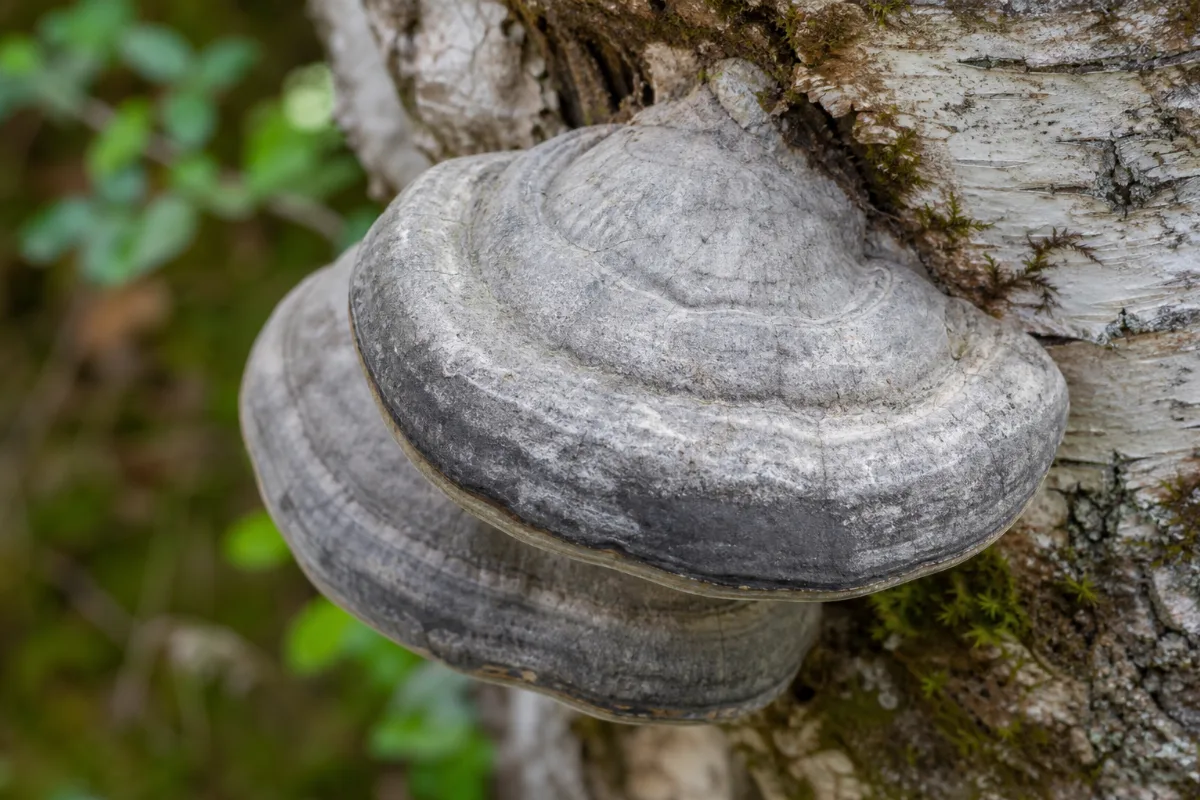
Tinder conk is a hard, hoof-shaped fungus that grows on birch, beech and other hardwoods. For thousands of years people made tinder and folk dressings from it, and pieces of it were found with Otzi the Iceman. We found no human trial, only lab and animal work, and no safety studies in people. It is not a food, it has look-alikes, and wild fungus should not be used without an expert.
General information, not medical advice. Last substantive update · Not medically reviewed. A named clinician has not signed off on this page. How this page is made
About Tinder conk
Tinder conk is a hard, hoof-shaped fungus on hardwood trees, best known as the material for amadou, a fire-starting tinder, and for being carried by Otzi the Iceman. Human research does not exist: what is known comes from cells in dishes, mice, rats and fruit flies. No safety studies in people were found. We found no test for toxic metals, it has look-alikes, and sources disagree on whether it is edible, so do not use wild fungus without an expert.
What it is
Tinder conk (Fomes fomentarius) is a perennial fungus that rots hardwood, especially birch and beech. Its woody fruiting bodies are usually hoof-shaped. GBIF lists it as an accepted name in the family Polyporaceae, with about 30 older names.
A 2016 review says it is not one uniform group: three genetic lineages exist, from North America, Europe and Asia, and strains differ in chemistry and activity. A 2015 study found that fungal strain changed how active the extracts were.
Fire-starting, the Iceman and folk use
Amadou is a soft tinder made by soaking and beating the flesh of young fruiting bodies. Wikipedia says it was used for starting fires and for making caps and gloves, and that use goes back to at least 3000 BCE. That page is a secondary source.
A 2014 review says two polypore species were found among Otzi's items, and that polypores were used from food and tinder to medicinal-spiritual purposes. MushroomExpert says the two were the tinder conk and the birch polypore, and that he apparently used the tinder conk as tinder. Why he carried each one is not known for sure, and the original paper was not opened.
Folk medicine in central Europe also used it for many complaints. A 2025 paper adds that it was used to stop bleeding and as a wound dressing, and that a preventive tea was made in the Balkans. Traditional use is not proof that it works.
What the research shows
Nothing has been tested in people. Extracts slowed cancer cells in dishes, though one also killed normal mouse cells. A polysaccharide raised immune signals in mice. A methanol extract eased paw swelling in rats and pain responses in mice. A lab-made polysaccharide lowered blood sugar in diabetic rats. Extracts slowed some microbes in tubes, but only at high amounts.
These results show the fungus has active chemistry. They cannot show a health effect, because dish and animal results often fail in people.
How strong is the evidence?
Cancer cells, antioxidant tests, germs, wound use and the brain enzyme are rated insufficient: dishes and tubes only. Immune activity, inflammation and pain, and blood sugar are rated very low: one or two rodent studies each. None is in people.
Two of the papers we used have authors linked to a company that sells tinder conk products, and the strongest-sounding review comes from the same group. A 2011 paper reports unusually strong anti-infective effects for purified fractions; we found nothing that backs them up in people.
Forms and products
Traditional forms are amadou and raw fungus, and a dried tea in the Balkans. Products may be wild or cultivated fruiting body or cultured mycelium, and NCI says supplement ingredients may vary considerably from lot to lot. Lab extracts used water, alcohol or alkali and are not the same as tea or powder. We found no study that compared forms and no standard strength.
Rules and regulators
NCI says the FDA has not approved medicinal mushrooms as a treatment for cancer or any other medical condition. Its page has no tinder conk section. We found no entry for it in LiverTox or LactMed. We did not search in depth for a European (EMA) monograph, so we make no statement about one.
At a glance
Traditional uses history, not proof
- Made into amadou, a soft tinder used to carry and start fire, and into caps, gloves and other items (Wikipedia, a secondary source).
- Folk medicine in central Europe for conditions such as painful periods, haemorrhoids, bladder disorders, fever, cough, cancer and rheumatism (2014 review).
- Used as a bleeding-stopper and wound dressing, and in the Balkans as a preventive tea (2025 paper, citing other sources). No test of either was found.
- Carried by Otzi, over 5,000 years ago, apparently as tinder (secondary pages; the original paper was not opened).
Studied for research
- Cancer cells, not enough evidence (cells in dishes only)
- Immune system, very low evidence (mice and mouse cells)
- Inflammation and pain, very low evidence (rats, mice and cells)
- Antioxidant tests, not enough evidence (chemical tests)
- Germs in the lab, not enough evidence (tube and dish tests)
- Blood sugar, very low evidence (diabetic rats, lab-made product)
- Wound care and bleeding, not enough evidence (not tested)
- Brain enzyme, not enough evidence (tube test)
Main compounds
- Beta-glucans and other cell-wall polysaccharides
- Phenolics such as isorhamnetin and kaempferol
- Betulin, fomentariol and ergostane-type sterols
Common forms
- Amadou and raw fungus (traditional tinder and dressings; not a food)
- Dried ground fungus for tea (traditional in parts of the Balkans)
- Water, ethanol, methanol and alkali extracts (laboratory)
- Capsules or powders, which may be fruiting body or mycelium
Research links: Review: European medicinal polypores and traditional uses (abstract) · Review: cell-wall fibre of the tinder conk (abstract) · Review: medicinal value and genetic lineages (abstract) · Ethanol extract and breast cancer cells in a dish (abstract) · Methanol extract in rats and mice (abstract) · NCI: Medicinal mushrooms (PDQ) · Research Library · Genes & Biomarkers Library
What it is and its history
- Accepted scientific name
- Fomes fomentarius
- Naming authority
- (L.) Fr. (GBIF)
- Synonyms
- Boletus fomentarius L.; Polyporus fomentarius (L.) Fr.; Placodes fomentarius (L.) Quel.; Pyropolyporus fomentarius (L.) Teng; Elfvingia fomentaria (L.) Murrill (these and about 25 more are listed by GBIF as synonyms)
- Common names
- Tinder conk (English); Tinder fungus (English); Hoof fungus (English); Tinder polypore (English); Iceman fungus (English); Mudi (Chinese); Trud (Serbian)
- Family or group
- Polyporaceae (a fungus family), not a plant
- Classification
- Fungi > Basidiomycota > Agaricomycetes > Polyporales > Polyporaceae > Fomes > Fomes fomentarius
- Native range
- Wikipedia says it is found in Europe, Asia, Africa and North America. A 2016 review of genetic lineages says strains from North America, Europe and Asia fall into different lineages.
- Habitat
- Wikipedia and MushroomExpert say it grows on hardwoods, especially birch and beech, causing white rot. The fruit bodies are perennial.
- What it looks like
- Fruiting body: Wikipedia describes a hard, woody, usually hoof-shaped fruit body, grey to brown, 5-45 cm across, with a cream pore surface that browns when handled. MushroomExpert describes a tough perennial polypore, usually hoof-shaped, with a woody zoned surface and brownish round pores.
- Cultivation
- Not found in the sources read.
- Harvest and processing
- Wikipedia describes making amadou by soaking young fruit bodies, cutting strips, then beating and stretching the fibres. Not a food process.
- Look-alikes and adulterants
- Name: False tinder conk (Phellinus igniarius); Note: Named as easily confused by Wikipedia.; Name: Ganoderma species (such as artist's conk); Note: Named as easily confused by Wikipedia.; Name: Red-belted conk (Fomitopsis pinicola); Note: Named as easily confused by Wikipedia. A potassium hydroxide colour test is mentioned there; do not treat that as identification advice.
- Sustainability and conservation
- Not found in the sources read.
Traditional use and history history, not clinical proof
| Tradition or era | Documented use | Source |
|---|---|---|
| Copper Age, found with the Tyrolean Iceman (Otzi) | A 2014 review abstract says two polypore species were found among Otzi's items, and that polypores were used from food and tinder to medicinal-spiritual purposes going back over 5,000 years. MushroomExpert says Otzi carried the tinder conk and birch polypore, and apparently used the tinder conk as tinder. Wikipedia says he carried four pieces and that chemical tests led to the conclusion it was for tinder. The two web pages are secondary sources; the original paper was not opened. A fire-starting use is not a health use. | s-mushroomexpert-fomes |
| Fire-starting and craft use (amadou) | Wikipedia says the fungus is the main ingredient of amadou, used as tinder and to make caps, gloves and other items, with use known as early as 3000 BCE. Secondary source; not verified against the original references. | s-wikipedia-fomes-fomentarius |
| Central European folk medicine | A 2014 review says the tinder conk and four other polypores were widely used in central European folk medicine for conditions such as painful periods, haemorrhoids, bladder disorders, fever, cough, cancer and rheumatism. Traditional use is not proof that it works. | p24786572 |
| Styptic and wound use in Europe | A 2025 paper says the fungus has been valued since the 15th century in Europe for tinder, spiritual practices, wound healing and stopping bleeding, and (citing other sources) that it was called 'agaric of the surgeons' and sold in pharmacies as styptic bandages. These details were not checked against the originals. | s-pmc12195499 |
| Balkan tea tradition | The same 2025 paper, citing an earlier ethnomycological study, says the fungus ('trud' in Serbian) was used as a preventive tea. No recipe or amount is given here. | s-pmc12195499 |
| Traditional Chinese medicine | A 2026 review gives its Chinese name as 'Mudi' and describes use in ethnomedicine. A 2022 rat paper says it is used in traditional Chinese medicine to treat various illnesses. | s-pmc13468453 |
Traditional use shows how it was used. It does not show that it works or is safe today.
What is inside, and how it may work
What it contains and how those compounds act in cells and animals. Laboratory and animal mechanisms are not proven effects in people.
Main compounds
| Compound | Family | Where it is concentrated | Activity studied | Level of evidence |
|---|---|---|---|---|
| Beta-glucans and cell-wall polysaccharides | polysaccharide | Fruiting body cell wall A 2023 review abstract says the cell-wall fibres are 25-38% glucans (mostly beta-glucans), about 30% polyphenols, 6% chitin and under 2% hemicellulose. | Polysaccharides raised immune signals in mouse cells and mice, and one caused DNA breaks in lung cancer cells in a dish. 11 8 13 | Animal research |
| Isorhamnetin PubChem 5281654 | flavonoid | Fruiting body 2734.00 micrograms/g in a Moroccan wild extract. | Most abundant phenolic in that sample; named in antioxidant tests. 6 | Laboratory research |
| Kaempferol PubChem 5280863 | flavonoid | Fruiting body 351.10 micrograms/g in a Moroccan wild extract. | Third most abundant phenolic in that sample. 6 | Laboratory research |
| Betulin PubChem 72326 | triterpene alcohol | Fruiting body Not given in the abstract. | Found in an ethanol extract and inhibited p-Akt in breast cancer cells in a dish. 15 | Laboratory research |
| Fomentariol PubChem 21675848 | polyphenol pigment (inferred from the name and formula) | Fruiting body Not given in the abstract. | Lowered NO, reactive oxygen species, IL-1 beta and IL-6 in mouse macrophage cells. Wikipedia links the compound to a red colour test. The PubChem CID matches the compound name only; the structure was not compared to the paper. 22 25 | Laboratory research |
| Fomentarols A-D and other ergostane sterols | sterol | Fruiting body Not given in the abstract. | Moderate cytotoxicity against a small panel of human cancer cell lines. 26 | Laboratory research |
| Polyamines (such as spermidine) | polyamine | Fruiting body Total polyamines 32.67-2910.09 nmol/g dry weight; spermidine up to 2910.09 nmol/g in the Bosnian strain. | Clustered with enzyme-blocking activity in the Balkan paper. 19 | Laboratory research |
| Melanins | pigment | Fruiting body (outer layer) A 2011 paper describes a water-soluble melanin-glucan complex of about 80% melanin and 20% beta-glucan. | Antimicrobial claims in culture and a rat model (see Benefits). 21 11 | Laboratory research |
Mechanisms, receptors and pathways
| Target or pathway | Gene or receptor | What was found | Level |
|---|---|---|---|
| PI3K/Akt and caspase cell-death pathway | Akt, caspase-9, caspase-3, Bcl-2 | Ethanol extract lowered Akt phosphorylation and raised cleaved caspases in MDA-MB-231 breast cancer cells. 15 | Laboratory research |
| NF-kappaB, iNOS and COX-2 | NF-kappaB, iNOS, COX-2 | Methanol extract lowered these in LPS-stimulated mouse macrophages and reduced swelling in rats. 18 | Animal research |
| ERK signalling and cytokines | ERK, IL-1 beta, IL-6 | Fomentariol lowered IL-1 beta and IL-6 but not TNF-alpha, possibly through ERK. 22 | Laboratory research |
| Immune cytokines and macrophage activity | TNF-alpha, IFN-gamma, IL-2 | Polysaccharides raised these in mouse spleen cells and raised antibody and macrophage activity in mice. 8 | Animal research |
| DNA damage in cancer cells | A polysaccharide caused single-strand DNA breaks in A549 lung cancer cells in a comet assay. 13 | Laboratory research | |
| P-glycoprotein drug pump | P-glycoprotein (ABCB1) | Extracts affected rhodamine exclusion in drug-resistant breast cancer cells. 3 | Laboratory research |
| Acetylcholinesterase | AChE | Ethanol and methanol extracts blocked the enzyme in a test tube. 19 | Laboratory research |
Absorption, metabolism and elimination
- Absorption
- Not found in the sources read.
- Distribution
- Not found in the sources read.
- Metabolism
- Not found in the sources read.
- Elimination
- Not found in the sources read.
- Bioavailability
- Not established.
Isolated compounds versus whole extracts
Lab studies use hot water, aqueous alkali, ethanol, methanol and chloroform extracts, cultured mycelium, purified polysaccharides, single compounds such as fomentariol and betulin, melanin-glucan complexes, cell-wall fibre and selenium nanoparticles. These pull out different compounds and are not the same as slices, tea, powder or capsules. Strain matters: one study found that strains of the same lineage differed. No study compared lab extracts with any product people use.
Nutritional composition
The tinder conk is not a normal food: sources call it inedible or at best technically edible but unpalatable. The Balkan paper measured minerals (for example manganese 5.24-8.05 mg/kg dry weight), and no nutrition claim is made.
3 very low certainty6 not enough evidence
What was looked at
The 9 benefits and uses checked for Tinder conk, each with how strong the evidence is. Tap one to open it.
- Cancer cells (laboratory work only)Not enough evidence
- Immune systemVery low certainty
- Inflammation and painVery low certainty
- Antioxidant testsNot enough evidence
- Germs (bacteria, fungi and viruses in the lab)Not enough evidence
- Blood sugarVery low certainty
- Wound dressing and stopping bleeding (traditional)Not enough evidence
- Brain enzyme (acetylcholinesterase) in the labNot enough evidence
- Cell-wall fibre claims (review)Not enough evidence
Lab markers tracked in the studies
Cancer cell viability (in a dish)Akt cell-survival signal (in cells)TNF-alpha, IFN-gamma and IL-2 release (mouse cells)Inflammation signals in macrophages (NO, PGE2, iNOS, COX-2, IL-1 beta, IL-6)DPPH radical scavenging (chemical test)Acetylcholinesterase inhibition (enzyme test)Blood glucose and HbA1c (diabetic rats)
What is Tinder conk good for?
The uses people ask about and how strong the evidence is for each. None is shown in people. Read this together with the Safety tab.
Benefits, one by one
Each card is a research question, not a promise. Tap a goal to filter. Open a card to see the studies, doses and limits.
Cancer cells (laboratory work only)
Not enough evidenceExtracts of the tinder conk slowed or killed cancer cells in dishes. One extract also harmed normal mouse cells, and another type of extract did nothing. No animal or human cancer trial was found. This is not a cancer treatment.
9 studiesStudies use ethanol, methanol, water, alkali and mycelium extracts, a…
Studies, doses and limits
Results
No human results to report. In dishes: an ethanol extract lowered the viability of six human cancer cell lines (breast, lung, prostate); a water-soluble polysaccharide inhibited lung cancer cells at 25-100 micrograms/mL; an aqueous alkali extract affected melanoma cells at 0.01-0.05 mg/mL but also killed normal mouse fibroblasts (IC50 0.44 mg/mL); extracts needed about 1-3 mg/mL to affect drug-resistant breast cancer cells; ethanol and methanol extracts from three Balkan strains slowed gynaecological cancer cell lines. Hot-water extracts of cultured mycelium hit leukaemia cells, but dry-biomass methanol-chloroform extracts of the same fungus did nothing.
Effect sizes as reported
Dish results only; no human effect measured
Why this rating
Every result is from cells in dishes. Dish results often fail in animals and people, extracts differ between studies, and normal cells were harmed in one study.
Form and dose studied
Studies use ethanol, methanol, water, alkali and mycelium extracts, and purified polysaccharides made in a lab. These are not the same as dried slices, tea or capsules.
Who was studied
Cancer cell lines (breast, lung, prostate, colon, melanoma, leukaemia, ovarian) and some normal cell lines
Limits
No animal or human cancer data in the sources we read. Strain and extract type change the result. Two of the papers have authors linked to a company that sells a tinder conk product.
Why researchers looked
Folk medicine used the fungus against cancer, and its extracts kill cells in lab tests, so researchers screen it as a source of new compounds.
Traditional use
Used for thousands of years as tinder to carry fire, and in folk medicine across Europe and Asia, including as a bleeding-stopper and wound dressing (reviews 2014 and 2025). Traditional use is not proof that it works.
Proposed mechanism Laboratory research
Ethanol extract acted on the Akt cell-survival pathway and raised cell-death markers in breast cancer cells; betulin, a compound in the extract, blocked p-Akt. A polysaccharide caused DNA breaks in lung cancer cells. These are dish findings, not proof of a health effect.
A proposed mechanism does not show that the effect happens in people.
Do not use tinder conk in place of cancer care. Tell your care team about any fungus product. No human safety data were found. See the Safety tab.
Immune system
Very low certaintyIn mice and mouse cells, a polysaccharide from the tinder conk raised immune signals. A company-linked review says the cell-wall fibre has immune effects in studies, but it does not say which. No human immune study was found.
3 studiesA polysaccharide fraction made in a lab, and a purified cell-wall fib…
Studies, doses and limits
Results
No human results to report. In mice, the polysaccharide at 25, 50 and 100 mg/kg raised antibody levels after immunisation, and at 50 and 100 mg/kg raised macrophage engulfing activity. In mouse spleen cells at 25-100 micrograms/mL it raised TNF-alpha, IFN-gamma and IL-2. A 2023 review by company-affiliated authors says the insoluble fibres can modulate the immune system, citing in vitro, in vivo, ex vivo and clinical studies it does not name in the abstract.
Effect sizes as reported
Raised immune measures in mice; no human effect measured
Why this rating
Animal and cell findings only. A higher immune signal is not a proven benefit and could be unwanted in some people. The review's clinical claim could not be checked.
Form and dose studied
A polysaccharide fraction made in a lab, and a purified cell-wall fibre. Not tea or raw fungus.
Who was studied
Mice and mouse cells
Limits
Abstract of a Chinese-language paper read. The company-linked review could not be checked for its clinical studies.
Why researchers looked
Mushroom polysaccharides and beta-glucans are widely studied for immune effects, and the cell wall of this fungus is rich in glucans.
Traditional use
Used for thousands of years as tinder to carry fire, and in folk medicine across Europe and Asia, including as a bleeding-stopper and wound dressing (reviews 2014 and 2025). Traditional use is not proof that it works.
Proposed mechanism Animal research
Polysaccharides raised TNF-alpha, IFN-gamma and IL-2 release from mouse spleen cells and lifted macrophage activity. Beta-glucans are thought to act on immune receptors, but that was not tested in these papers.
A proposed mechanism does not show that the effect happens in people.
A raised immune response may matter if you take immune-suppressing medicines or have an autoimmune disease. Ask a doctor or pharmacist before using any medicinal fungus.
Inflammation and pain
Very low certaintyA methanol extract eased paw swelling in rats and pain responses in mice, and an isolated compound lowered inflammation signals in mouse cells. Nothing was tested in people.
2 studiesMethanol extract and one isolated compound, not tea or powder.
Studies, doses and limits
Results
No human results to report. A 2004 study gave a methanol extract by mouth (50 and 100 mg/kg/day) and reduced paw swelling in rats and pain responses in two mouse tests. In mouse macrophage cells the extract lowered NO, PGE2 and TNF-alpha. The compound fomentariol lowered NO, reactive oxygen species, IL-1 beta and IL-6 in a 2015 cell study.
Effect sizes as reported
Swelling and pain measures improved in rodents; no human effect measured
Why this rating
One animal study from 2004 and cell work. Rodent results often fail in people, and there is no human trial.
Form and dose studied
Methanol extract and one isolated compound, not tea or powder.
Who was studied
Rats, mice and mouse cells
Limits
The animal study is old and has not been repeated in the papers we found.
Why researchers looked
Folk medicine used the fungus for inflammation and rheumatism, and its extracts block known inflammation pathways in cells.
Traditional use
Used for thousands of years as tinder to carry fire, and in folk medicine across Europe and Asia, including as a bleeding-stopper and wound dressing (reviews 2014 and 2025). Traditional use is not proof that it works.
Proposed mechanism Animal research
In macrophage cells the extract lowered nitric oxide, PGE2 and TNF-alpha and reduced iNOS and COX-2 by blocking NF-kappaB. The isolated compound fomentariol lowered IL-1 beta and IL-6 but not TNF-alpha, possibly through the ERK pathway.
A proposed mechanism does not show that the effect happens in people.
Do not use it for pain or swelling in place of medical care. Get help for severe, sudden or lasting pain.
Antioxidant tests
Not enough evidenceExtracts neutralised test radicals in chemical tests. This shows the fungus has phenolic chemistry; it does not show a benefit in the body.
3 studiesMethanol and ethanol-water extracts made in a lab.
Studies, doses and limits
Results
A Moroccan wild sample had total phenolics of 75.83 mg gallic-acid equivalents/g and a DPPH scavenging EC50 of 114.40 micrograms/mL. Polar extracts of three Balkan strains had DPPH IC50 values from 0.78 to 31.40 micrograms/mL in the paper's own data.
Effect sizes as reported
Tube results only
Why this rating
Test-tube antioxidant results often do not translate into a benefit when swallowed.
Form and dose studied
Methanol and ethanol-water extracts made in a lab.
Who was studied
Chemical tests
Limits
Extract type, strain and method change the numbers a lot.
Why researchers looked
The fungus holds phenolic compounds and flavonoids, which show up in antioxidant tests.
Traditional use
Used for thousands of years as tinder to carry fire, and in folk medicine across Europe and Asia, including as a bleeding-stopper and wound dressing (reviews 2014 and 2025). Traditional use is not proof that it works.
Proposed mechanism Laboratory research
Phenolics such as isorhamnetin and kaempferol, and melanins, can neutralise test radicals in a tube. That is a chemical property, not proof of a body effect.
A proposed mechanism does not show that the effect happens in people.
No safety conclusion can be drawn.
Germs (bacteria, fungi and viruses in the lab)
Not enough evidenceExtracts slowed some microbes in tubes, but only at high amounts, and far less than medicines. Some unusual claims come from purified fractions. Nothing was shown to treat an infection.
4 studiesLab extracts and purified fractions.
Studies, doses and limits
Results
A Moroccan extract inhibited all seven microbes tested: the most sensitive was Epidermophyton floccosum (MIC 2 mg/mL) and the most resistant Aspergillus fumigatus (MIC 26.67 mg/mL). An aqueous extract protected cells from herpes simplex 1 only at EC50 11.22 mg/mL, while acyclovir needed 0.20 micrograms/mL. In a 22-strain comparison, the tinder conk was not the strongest antibacterial of three polypores, and activity was strain-specific. A purified melanin-glucan complex was reported in a 2011 paper to stop Candida growth and to act on Helicobacter pylori, with unusually strong anti-HIV claims.
Effect sizes as reported
Tube and dish results only
Why this rating
Killing a microbe in a tube at a high concentration is very far from treating an infection in a person. The strongest claims come from one older paper on purified fractions.
Form and dose studied
Lab extracts and purified fractions.
Who was studied
Bacterial, fungal and viral cultures
Limits
Strains differ. The 2011 paper gives few numbers in its abstract.
Why researchers looked
Folk medicine put the fungus on wounds, and researchers screen fungi for antimicrobial compounds.
Traditional use
Used for thousands of years as tinder to carry fire, and in folk medicine across Europe and Asia, including as a bleeding-stopper and wound dressing (reviews 2014 and 2025). Traditional use is not proof that it works.
Proposed mechanism Laboratory research
Phenolics, triterpene-like compounds and melanin-glucan complexes are credited with the effects. These are lab findings.
A proposed mechanism does not show that the effect happens in people.
Do not treat an infection or wound with a fungus. See a doctor for infections.
Blood sugar
Very low certaintyA lab-made polysaccharide from cultured tinder conk lowered blood sugar in diabetic rats. It has not been tested in people, and it is not the mushroom as sold.
1 studiesCulture-made polysaccharide, selenium-enriched polysaccharide, and na…
Studies, doses and limits
Results
In streptozotocin-diabetic rats treated by mouth for 28 days, blood glucose fell by 48.24% with the plain polysaccharide and by 49.96%, 55.50% and 60.47% with selenium and nanoparticle versions. HbA1c fell and insulin secretion improved.
Effect sizes as reported
Large drops in a rat model with lab-made products
Why this rating
One rat study. The material was made from culture and engineered in nanoparticles, so it is not comparable to tea or powder.
Form and dose studied
Culture-made polysaccharide, selenium-enriched polysaccharide, and nanoparticle forms.
Who was studied
Diabetic rats
Limits
Chemically induced diabetes in rats; no human data.
Why researchers looked
Reviews list antidiabetic activity as a reported effect of the tinder conk.
Traditional use
Used for thousands of years as tinder to carry fire, and in folk medicine across Europe and Asia, including as a bleeding-stopper and wound dressing (reviews 2014 and 2025). Traditional use is not proof that it works.
Proposed mechanism Animal research
The polysaccharide is thought to improve insulin and liver measures in the rat model, but the paper only measured effects.
A proposed mechanism does not show that the effect happens in people.
Do not use it in place of diabetes medicines. It could in theory add to the effect of blood-sugar medicines; ask your prescriber.
Wound dressing and stopping bleeding (traditional)
Not enough evidenceThe tinder conk was traditionally used to stop bleeding and as a wound dressing, and was sold as styptic bandages. We found no test of this in people, animals or dishes.
3 studiesRaw fungus, amadou, and styptic dressings in the past.
Studies, doses and limits
Results
No results to report. A 2025 paper says the fungus was used as a styptic and was called 'agaric of the surgeons', and that styptic bandages were sold in pharmacies; those statements are taken from other sources and were not checked against the originals.
Effect sizes as reported
Not tested
Why this rating
Traditional use is not evidence. A fungus from a tree is not sterile.
Form and dose studied
Raw fungus, amadou, and styptic dressings in the past.
Who was studied
Not tested
Limits
Historic claims come second-hand.
Why researchers looked
This is the best-known folk medical use and the reason it is sold today.
Traditional use
Used for thousands of years as tinder to carry fire, and in folk medicine across Europe and Asia, including as a bleeding-stopper and wound dressing (reviews 2014 and 2025). Traditional use is not proof that it works.
Proposed mechanism Traditional
No mechanism has been tested. A company-linked review suggests the cell-wall fibre may speed wound healing, but it does not name the studies.
A proposed mechanism does not show that the effect happens in people.
Do not put a wild fungus on a wound. For bleeding that does not stop, get emergency help.
Brain enzyme (acetylcholinesterase) in the lab
Not enough evidenceEthanol and methanol extracts blocked a brain-related enzyme in test tubes. This is not a memory or brain-health result.
2 studiesEthanol and methanol extracts.
Studies, doses and limits
Results
Extracts of three Balkan strains showed significant anti-acetylcholinesterase activity, with galantamine used as the comparison compound; a 2025 optimisation paper also tested the enzyme and its relative.
Effect sizes as reported
Tube results only
Why this rating
Enzyme blocking in a tube does not show a memory or brain benefit.
Form and dose studied
Ethanol and methanol extracts.
Who was studied
Enzyme tests
Limits
No cell, animal or human test of memory.
Why researchers looked
Drugs for Alzheimer's disease block this enzyme, so researchers screen mushrooms for similar activity.
Traditional use
Used for thousands of years as tinder to carry fire, and in folk medicine across Europe and Asia, including as a bleeding-stopper and wound dressing (reviews 2014 and 2025). Traditional use is not proof that it works.
Proposed mechanism Laboratory research
Phenolics and polyamines clustered with the enzyme-blocking activity in the Balkan paper.
A proposed mechanism does not show that the effect happens in people.
No safety conclusion can be drawn.
Cell-wall fibre claims (review)
Not enough evidenceA review by company-linked authors says purified cell-wall fibre from the tinder conk has gut, wound, kidney and liver effects and absorbs heavy metals. We could not check the studies behind this.
1 studiesA purified insoluble fibre, not raw fungus.
Studies, doses and limits
What the trials found
The abstract of the review says clinical studies exist. We could not identify them; a PubMed search found no human trial record for the species.
Results
The abstract lists reported effects including immune modulation, gut health, wound healing, absorbing heavy metals, dyes and radionuclides, kidney and liver function, and antibacterial, antiviral, anxiolytic and pain effects, without numbers.
Effect sizes as reported
Cannot be checked
Why this rating
The authors work for companies and the abstract names no studies. Unverified.
Form and dose studied
A purified insoluble fibre, not raw fungus.
Who was studied
Not clear
Limits
Strong wording, no numbers. We read only the abstract.
Why researchers looked
The fungus cell wall is rich in beta-glucans, chitin and polyphenols.
Traditional use
Used for thousands of years as tinder to carry fire, and in folk medicine across Europe and Asia, including as a bleeding-stopper and wound dressing (reviews 2014 and 2025). Traditional use is not proof that it works.
Proposed mechanism Unclear
The review describes fibres 3-5 micrometres wide made of 25-38% glucans, about 30% polyphenols, 6% chitin and under 2% hemicellulose.
A proposed mechanism does not show that the effect happens in people.
The reported ability to absorb heavy metals is a reminder that wild fungus can hold metals itself.
Connections to the rest of health
How Tinder conk connects to the rest of our health knowledge graph. Every link says what kind of connection it is. A safety link (for example to the liver) is a warning, not a benefit. A study that merely mentions a topic never creates a benefit link.
Explore every connection: goals, body systems, organs, symptoms, genes
A. Wellness goals
| Connected to | Kind of connection | Evidence status | Context | Studies |
|---|---|---|---|---|
| Cellular Protection | Preliminary mechanism | Not enough evidence | Cancer cells (laboratory work only): Extracts of the tinder conk slowed or killed cancer cells in dishes. One extract also harmed normal mouse cells, and another type of extract did nothing. No animal or human cancer trial was found. This is not a cancer treatment. | 15 13 24 3 23 26 19 5 20 |
| Immune Support | Preliminary mechanism | Very low certainty | Immune system: In mice and mouse cells, a polysaccharide from the tinder conk raised immune signals. A company-linked review says the cell-wall fibre has immune effects in studies, but it does not say which. No human immune study was found. | 8 11 10 |
| Inflammation Balance | Preliminary mechanism | Very low certainty | Inflammation and pain: A methanol extract eased paw swelling in rats and pain responses in mice, and an isolated compound lowered inflammation signals in mouse cells. Nothing was tested in people. | 18 22 |
| Blood Sugar Balance | Preliminary mechanism | Very low certainty | Blood sugar: A lab-made polysaccharide from cultured tinder conk lowered blood sugar in diabetic rats. It has not been tested in people, and it is not the mushroom as sold. | 12 |
B. Body systems
| Connected to | Kind of connection | Evidence status | Context | Studies |
|---|---|---|---|---|
| Immune system | Preliminary mechanism | Very low certainty | Raised TNF-alpha, IFN-gamma and IL-2 and macrophage activity in mice; no human data. Theoretical caution for immune-suppressing medicines. Raised TNF-alpha, IFN-gamma and IL-2 and macrophage activity in mice; no human data. Preparation or compound: Polysaccharides (mouse cells and mice) |
8 |
| Skin and wounds | Not enough evidence | Traditional styptic and wound dressing; no test found. Preparation or compound: Raw fungus, amadou dressings |
19 | |
| Blood sugar | Preliminary mechanism | Very low certainty | Lowered blood glucose in rats; no human data. Preparation or compound: Culture-made polysaccharide (diabetic rats) |
12 |
| Immune System | Biological association | Not enough evidence | Studied for: Cancer cells (laboratory work only) Studied for: Immune system | 15 13 24 3 23 26 19 5 20 8 11 10 18 22 6 2 4 21 |
| Endocrine System | Biological association | Very low certainty | Studied for: Blood sugar | 12 |
| Integumentary System | Biological association | Not enough evidence | Studied for: Wound dressing and stopping bleeding (traditional) | 19 6 11 |
| Nervous System | Biological association | Not enough evidence | Studied for: Brain enzyme (acetylcholinesterase) in the lab | 19 5 |
| Digestive System | Biological association | Not enough evidence | Studied for: Cell-wall fibre claims (review) | 11 |
E. Health conditions
| Connected to | Kind of connection | Evidence status | Context | Studies |
|---|---|---|---|---|
| Pregnancy and breastfeeding | Contraindication | Not enough evidence | No safety data found. Preparation or compound: All tinder conk products |
16 |
I. Biomarkers
| Connected to | Kind of connection | Evidence status | Context | Studies |
|---|---|---|---|---|
| Cancer cell viability (in a dish) | Biological association | Not enough evidence | Measured in trials: lowered. A lab change is not the same as a health benefit. | 15 24 |
| Akt cell-survival signal (in cells) | Biological association | Not enough evidence | Measured in trials: lowered. A lab change is not the same as a health benefit. | 15 |
| TNF-alpha, IFN-gamma and IL-2 release (mouse cells) | Biological association | Very low certainty | Measured in trials: raised. A lab change is not the same as a health benefit. | 8 |
| Inflammation signals in macrophages (NO, PGE2, iNOS, COX-2, IL-1 beta, IL-6) | Biological association | Very low certainty | Measured in trials: lowered. A lab change is not the same as a health benefit. | 18 22 |
| DPPH radical scavenging (chemical test) | Biological association | Not enough evidence | Measured in trials: raised. A lab change is not the same as a health benefit. | 6 |
| Acetylcholinesterase inhibition (enzyme test) | Biological association | Not enough evidence | Measured in trials: lowered. A lab change is not the same as a health benefit. | 19 |
| Blood glucose and HbA1c (diabetic rats) | Biological association | Very low certainty | Measured in trials: lowered. A lab change is not the same as a health benefit. | 12 |
J. Genes, receptors and enzymes
K. Biological pathways
| Connected to | Kind of connection | Evidence status | Context | Studies |
|---|---|---|---|---|
| Akt | Preliminary mechanism | In vitro | Phosphorylation lowered by an ethanol extract and betulin in breast cancer cells. | 15 |
| NF-kappaB | Preliminary mechanism | In vitro | Binding activity reduced by a methanol extract in mouse macrophages. | 18 |
| P-glycoprotein | Preliminary mechanism | In vitro | Affected by extracts in resistant breast cancer cells. | 3 |
L. Active compounds
| Connected to | Kind of connection | Evidence status | Context | Studies |
|---|---|---|---|---|
| Beta-glucans and cell-wall polysaccharides | Biological association | Animal | Polysaccharides raised immune signals in mouse cells and mice, and one caused DNA breaks in lung cancer cells in a dish. Preparation or compound: Fruiting body cell wall |
11 8 13 |
| Isorhamnetin | Biological association | In vitro | Most abundant phenolic in that sample; named in antioxidant tests. Preparation or compound: Fruiting body |
6 |
| Kaempferol | Biological association | In vitro | Third most abundant phenolic in that sample. Preparation or compound: Fruiting body |
6 |
| Betulin | Biological association | In vitro | Found in an ethanol extract and inhibited p-Akt in breast cancer cells in a dish. Preparation or compound: Fruiting body |
15 |
| Fomentariol | Biological association | In vitro | Lowered NO, reactive oxygen species, IL-1 beta and IL-6 in mouse macrophage cells. Wikipedia links the compound to a red colour test. The PubChem CID matches the compound name only; the structure was not compared to the paper. Preparation or compound: Fruiting body |
22 25 |
| Fomentarols A-D and other ergostane sterols | Biological association | In vitro | Moderate cytotoxicity against a small panel of human cancer cell lines. Preparation or compound: Fruiting body |
26 |
| Polyamines (such as spermidine) | Biological association | In vitro | Clustered with enzyme-blocking activity in the Balkan paper. Preparation or compound: Fruiting body |
19 |
| Melanins | Biological association | In vitro | Antimicrobial claims in culture and a rat model (see Benefits). Preparation or compound: Fruiting body (outer layer) |
21 11 |
Each connection is stored with the ingredient, the connected record, the kind of connection, the evidence status, the supporting studies, the preparation or compound involved, and a review date (last reviewed October 25, 2026).
Evidence at a glance: what changed in 7 lab markers
Tap a number to show only those markers. Counts are markers, not people.
The evidence
The research centre for Tinder conk. Every record here was checked against PubMed or the publisher's page; we never list a study we have not verified.
Evidence by outcome
Bars show how many studies we found for each outcome, not how well it works. People are added up across trials only (reviews are not added, to avoid double counting).
How we rate evidence
High certainty
Several well-run trials or reviews agree; further research is unlikely to change the picture much.
Moderate certainty
Good trials point the same way, but some doubt remains.
Low certainty
Small, short or inconsistent trials. The finding could change with better research.
Very low certainty
Very little or very weak human data. Treat as a possibility only.
Mixed findings
Trials or reviews disagree with each other.
Not enough evidence
Not enough human research to say either way.
Evidence against
Good research found no benefit, or found harm.
We take the reviewers' own risk-of-bias and GRADE statements where they exist, and otherwise judge from study size, design, consistency, directness and whether a product matches what is sold. Many publications do not make evidence high. Method note: We read PubMed records and abstracts for 17 papers (3 reviews, 10 laboratory or cell studies and 4 animal or insect studies), read parts of 4 open-access papers from 2025-2026, checked the species in GBIF and four compounds in PubChem, and read the National Cancer Institute medicinal mushrooms page. Wikipedia and MushroomExpert were read as secondary sources and are labelled. Full texts of the PubMed papers were not opened, so numbers come from abstracts. LiverTox and LactMed were searched through NCBI Books and nothing was found. Certainty ratings are the compiler's own reading.
Study library: every study we checked 26
| Study | Design | People | Product, dose, length | Result |
|---|---|---|---|---|
| Antosyuk 2024 Extracts from Four Species of Xylotrophic Basidiomycetes Growing in the Middle Urals (Russia) Revealed Cytotoxic Effects on Model Object Drosophila melanogaster. International journal of medicinal mushrooms · PMID 39704619 · DOI |
Animal research fruit flies (Drosophila) |
Fruit-fly (Drosophila melanogaster) larvae | Aqueous-alcoholic extracts of four wood fungi, including F. fomentarius Fruiting body 0.5% of food |
Adding 0.5% of the extracts to the food did not significantly change larval death. All extracts raised the degree of DNA damage; the F. fomentarius extract caused the lowest level of DNA damage and reduced GstD1 gene expression, and it had a pronounced antiproliferative effect. A DNA-damage signal in fruit flies for all four fungi (lowest for tinder conk) Methods, limits and fundingOutcomes: Larval death, mutation marker (SMART), GstD1 gene, DNA damage Limitations: An insect model. DNA damage in flies is a screening signal, not a finding in people. Funding and conflicts: Funding not stated in the abstract Read: abstract |
| Dogan 2018 In Vitro Evaluation of the Antiviral Activity of Some Mushrooms from Turkey. International journal of medicinal mushrooms · PMID 29717666 · DOI |
Laboratory research cell culture (in vitro) |
Herpes simplex virus 1 in Vero cells | Aqueous and methanol extracts of ten mushrooms Fruiting body (as stated) |
The aqueous extract of F. fomentarius showed antiherpetic activity (EC50 11.22 mg/mL; selectivity index above 4.46). The reference drug acyclovir had EC50 0.20 micrograms/mL (selectivity index 3085), so the mushroom extract was roughly tens of thousands of times weaker by amount. Weak activity against herpes virus in cells, far below the medicine Methods, limits and fundingOutcomes: Protection of cells from virus damage Limitations: Dish study. The comparison is by concentration only. Funding and conflicts: Funding not stated in the abstract Read: abstract |
| Dogan 2020 Fomes fomentarius and Tricholoma anatolicum (Agaricomycetes) Extracts Exhibit Significant Multiple Drug-Resistant Modulation Activity in Drug-Resistant Breast Cancer Cells. International journal of medicinal mushrooms · PMID 32478999 · DOI |
Laboratory research cell lines (in vitro) |
Drug-resistant MCF-7 breast cancer cells (paclitaxel- and vincristine-resistant) | Aqueous, methanol and ethanol extracts Fruiting body (as stated for extracts) |
Half-maximal inhibitory concentrations of the extracts were 1.08-1.80 mg/mL in vincristine-resistant cells and 1.11-2.83 mg/mL in paclitaxel-resistant cells (both species together). The authors say the F. fomentarius methanol extract has potential to reverse multidrug resistance, and 11 phenolic compounds were characterised. Weak cell-killing (milligram-per-millilitre range) and some effect on a drug pump in resistant cells Methods, limits and fundingOutcomes: Cell viability and P-glycoprotein drug-pump activity Limitations: Dish study. The range given covers both mushroom species. A drug-pump effect also raises a theoretical question about medicine interactions. Funding and conflicts: Funding not stated in the abstract Read: abstract |
| Dresch 2015 Fungal strain matters: colony growth and bioactivity of the European medicinal polypores Fomes fomentarius, Fomitopsis pinicola and Piptoporus betulinus. AMB Express · PMID 25642401 · DOI |
Laboratory research bacteria and fungi (in vitro) |
22 22 strains of three polypore species |
Ethanolic fruit body extracts Fruiting body |
The abstract says there are several distinct lineages within the Fomes fomentarius species complex, and strains within one lineage differed in growth, chemistry and bioactivity. F. pinicola and Piptoporus betulinus extracts had the clearest antibiotic activity against Bacillus subtilis and Staphylococcus aureus (minimum inhibitory concentrations 31-125 micrograms/mL). Antifungal activity of all three was often strain-specific (125-1000 micrograms/mL). The authors stress reliable species identification and strain choice. Activity depends on the strain; F. fomentarius was not the strongest antibacterial of the three Methods, limits and fundingOutcomes: Growth, antibacterial and antifungal activity Limitations: Lab study of strains. Shows two samples of the 'same' fungus can differ. Funding and conflicts: Funding not stated in the abstract Read: abstract |
| Eraslan 2025 Maximization of bioactive potential of Fomes fomentarius via artificial Intelligence-Assisted optimization Scientific Reports · Source |
Laboratory research cell lines and chemical tests (in vitro) |
Ethanol-water extracts of Fomes fomentarius made under computer-optimised conditions | Ethanol-water extracts Fruiting body |
The abstract says extracts made under best conditions were compared for antioxidant, anticholinesterase (AChE, BChE) and antiproliferative activity (A549 lung, MCF-7 breast, DU-145 prostate cells) and phenolic profile, and that the response-surface extracts were more active than the neural-network ones. The abstract gives no clinical findings. Method paper on extraction; lab activities only Methods, limits and fundingOutcomes: As described Limitations: Abstract read; numbers not used. Funding and conflicts: Funding not stated in what was read Read: abstract (PMC) |
| Erbiai 2025 Bioactive Compounds and Pharmacological Properties of the Polypore Fomes fomentarius, a Medicinal Wild Mushroom Collected from Morocco International journal of molecular sciences · Source |
Laboratory research chemical and microbe tests (in vitro) |
Wild fruiting bodies collected in Morocco | Extract of wild fruiting body Fruiting body |
Total phenolics 75.83 mg gallic-acid equivalents/g and flavonoids 37.62 mg/g (dry matter extract). The most abundant phenolics were isorhamnetin (2734.00 micrograms/g), p-hydroxybenzoic acid (409.00) and kaempferol (351.10). In antioxidant tests the DPPH scavenging EC50 was 114.40 micrograms/mL. The extract inhibited all seven human disease-causing microbes tested; the most sensitive was Epidermophyton floccosum (MIC 2 mg/mL) and the most resistant Aspergillus fumigatus (MIC 26.67 mg/mL). The introduction calls the fungus 'technically edible' but unpalatable and rarely eaten. Lab chemistry and weak germ-growth effects at milligram-per-millilitre levels Methods, limits and fundingOutcomes: As described Limitations: Full text read in part. Test-tube tests only. Funding and conflicts: Funding not stated in what was read Read: full text (partly read) |
| GBIF Secretariat 2026 GBIF Backbone Taxonomy: Fomes fomentarius (L.) Fr. Global Biodiversity Information Facility · Source |
Registry or database n/a |
Taxonomy record (GBIF key 8068867) | n/a |
GBIF lists Fomes fomentarius (L.) Fr. as ACCEPTED (key 8068867), family Polyporaceae, order Polyporales, class Agaricomycetes, phylum Basidiomycota. It lists about 30 synonyms, including Boletus fomentarius L., Polyporus fomentarius (L.) Fr., Placodes fomentarius (L.) Quel. and Pyropolyporus fomentarius (L.) Teng. Checked by API on 2026-10-25. Name check Methods, limits and fundingOutcomes: As described Limitations: Index Fungorum was not checked. Funding and conflicts: Not applicable Read: database record |
| Gao 2009 [Immunomodulatory effects of Fomes fomentarius polysaccharides: an experimental study in mice]. Nan Fang Yi Ke Da Xue Xue Bao (Journal of Southern Medical University) · PMID 19304524 |
Animal research mice and mouse cells |
Mouse spleen cells, mouse macrophages and mice (article in Chinese; English abstract read) | Fomes fomentarius polysaccharides (FFP) 25, 50 and 100 mg/kg (mice) |
FFP at 25, 50 and 100 micrograms/mL raised metabolic activity of mouse spleen cells in vitro and increased TNF-alpha, IFN-gamma and IL-2. In mice, 25, 50 and 100 mg/kg raised the antibody level (hemolysin) after immunisation, and 50 and 100 mg/kg raised the ability of macrophages to engulf red blood cells. Immune activity raised in mouse cells and mice Methods, limits and fundingOutcomes: Immune cell activity, TNF-alpha, IFN-gamma, IL-2, antibody (hemolysin) level, macrophage phagocytosis Limitations: Mice only. A higher immune signal is not proven to be a health benefit and could matter for people with immune disease. Funding and conflicts: Funding not stated in the abstract Read: abstract |
| Gaper 2016 Medicinal Value and Taxonomy of the Tinder Polypore, Fomes fomentarius (Agaricomycetes): A Review. International journal of medicinal mushrooms · PMID 27910753 · DOI |
Review review |
Review of Fomes fomentarius taxonomy and medicinal value | Fomes fomentarius (various) Fruiting body and strains |
The abstract says three distinct internal transcribed spacer (ITS) lineages or sublineages exist among strains: A1 from North America, A2 only from Europe, and B from Europe and Asia. It says better understanding of the lineages could improve characterisation. The abstract states that medicinal value is discussed but gives no findings. Shows the tinder polypore is more than one genetic group Methods, limits and fundingOutcomes: Genetic lineages and medicinal value Limitations: Abstract gives no medicinal findings. Full text not opened. Funding and conflicts: Funding not stated in the abstract Read: abstract |
| Grienke 2014 European medicinal polypores--a modern view on traditional uses. Journal of ethnopharmacology · PMID 24786572 · DOI |
Review review |
Review of five polypores used in central European folk medicine (including Fomes fomentarius) | Various polypore preparations Fruiting body |
The abstract says five polypores, including Fomes fomentarius, were widely used in central European folk medicine for conditions such as painful periods, haemorrhoids, bladder disorders, fever, cough, cancer and rheumatism. It says artefacts over 5000 years old show polypores were used from food and tinder to medicinal-spiritual purposes, and that two polypore species were found among Otzi the Iceman's items. Crude extracts and isolated compounds showed anti-inflammatory, cytotoxic and antimicrobial activity. Narrative review of folk use and lab activity; no human trial described Methods, limits and fundingOutcomes: Traditional uses, chemistry and biological activity Limitations: Narrative review. The abstract does not say which two polypores Otzi carried. Folk use is not proof of benefit. Funding and conflicts: Research support, non-US government; no industry funding stated in the abstract Read: abstract |
| Kalitukha 2023 Medicinal Potential of the Insoluble Extracted Fibers Isolated from the Fomes fomentarius (Agaricomycetes) Fruiting Bodies: A Review. International journal of medicinal mushrooms · PMID 37017659 · DOI |
Review review of lab, animal and reported clinical work |
Review of the water-insoluble cell walls of Fomes fomentarius fruiting bodies | Insoluble cell-wall fibre purified from fruiting bodies Fruiting body |
The abstract says the fibres are 25-38% glucans (mostly beta-glucans), about 30% polyphenols, 6% chitin and under 2% hemicellulose. It says in vitro, in vivo, ex vivo and clinical studies show the fibres can modulate the immune system, help gut health, speed wound healing, absorb heavy metals, dyes and radionuclides, and have antibacterial, antiviral, antifungal, anxiolytic, anti-inflammatory and analgesic effects. The abstract does not name the clinical studies. Narrative claims of many benefits; which studies were in people could not be checked from the abstract Methods, limits and fundingOutcomes: Composition and reported benefits of the cell-wall fibre Limitations: Abstract only. We could not check which clinical studies are meant or how good they were. The wording of the conclusions is strongly positive. Funding and conflicts: Industry-linked: authors are affiliated with Good Feeling Products GmbH (Germany) and Innovative Drugs Regulatory Europe GmbH. Funding not stated in the abstract. Read: abstract |
| Keshavarz-Rezaei 2022 The HbA1c and blood glucose response to selenium-rich polysaccharide from Fomes fomentarius loaded solid lipid nanoparticles as a potential antidiabetic agent in rats. Biomaterials advances · PMID 36027667 · DOI |
Animal research rats |
Streptozotocin-induced diabetic rats | Culture-made extracellular polysaccharide (PS), selenium-enriched PS, and nanoparticle forms of both Culture-grown fungus (extracellular polysaccharide), not the fruiting body 28 days |
After oral treatment for 28 days, blood glucose fell by 48.24% (PS), 49.96% (PS-Se), 55.50% (nanoparticle PS) and 60.47% (nanoparticle PS-Se). Insulin secretion and body weight improved and HbA1c fell. The authors say the nanoparticle forms and selenium made the effect stronger. Large drops in blood sugar in diabetic rats with lab-made products Methods, limits and fundingOutcomes: Blood glucose, HbA1c, insulin, lipids, liver enzymes Limitations: Rats with chemically induced diabetes. The product is a lab-made polysaccharide, selenium-enriched and in nanoparticles, which is not the mushroom as sold. Funding and conflicts: No competing interests declared Read: abstract |
| Kim 2015 Apoptotic properties of polysaccharide isolated from fruiting bodies of medicinal mushroom Fomes fomentarius in human lung carcinoma cell line. Saudi journal of biological sciences · PMID 26150756 · DOI |
Laboratory research cell line (in vitro) |
Human lung cancer A549 cells in dishes | Water-extractable polysaccharide MFKF-AP1beta (12 kDa) Fruiting body |
The polysaccharide inhibited A549 cell growth in a dose-dependent way and caused single-strand DNA breaks at 25-100 micrograms/mL in a comet assay. The authors call the effect strong and say it could be useful in lung chemotherapy. Lung cancer cells died in dishes; no animal or human test Methods, limits and fundingOutcomes: Cell growth and DNA breaks Limitations: One cancer cell line, no normal cells described in the abstract. The conclusion about chemotherapy goes beyond the data. Funding and conflicts: Funding not stated in the abstract Read: abstract |
| Kuo 2010 Fomes fomentarius (MushroomExpert.Com) MushroomExpert.Com · Source |
Secondary n/a |
Identification page | n/a |
Describes a tough perennial polypore that usually becomes hoof-shaped, on standing and fallen hardwoods, especially birch and beech. Says that along with Piptoporus betulinus it is one of two mushrooms the Tyrolean Iceman was carrying about 5000 years ago, and that he apparently used Fomes fomentarius as tinder. The site states it contains no information about the edibility or toxicity of mushrooms. Read 2026-10-25. Identification and Otzi background Methods, limits and fundingOutcomes: As described Limitations: Secondary source, not a toxicity source. Funding and conflicts: Not applicable Read: web page text |
| Lee 2019 Fomes fomentarius Ethanol Extract Exerts Inhibition of Cell Growth and Motility Induction of Apoptosis via Targeting AKT in Human Breast Cancer MDA-MB-231 Cells. International journal of molecular sciences · PMID 30845749 · DOI |
Laboratory research cell lines (in vitro) |
Six human cancer cell lines (MDA-MB-231, MCF-7, A549, H460, DU145, PC-3) | Ethanol extract Fruiting body |
The extract lowered cell viability in all six cancer cell lines. In MDA-MB-231 breast cancer cells it reduced migration without toxicity, lowered matrix metalloproteinase-9 and Akt phosphorylation, arrested the cell cycle and raised cell-death markers (cleaved caspase-9, caspase-3). The extract contained betulin, which inhibited p-Akt in those cells. Cancer-cell growth and movement slowed in dishes; no animal or human test Methods, limits and fundingOutcomes: Cell viability, migration, cell-cycle and cell-death markers Limitations: Cell lines only. No normal-cell comparison is described in the abstract. Funding and conflicts: No conflicts of interest declared Read: abstract |
| NCBI 2026 NCBI Bookshelf search for LiverTox and LactMed entries (Fomes fomentarius, tinder conk, tinder fungus) NCBI Bookshelf · Source |
Database search n/a |
Three searches on 2026-10-25 | n/a |
Each search for 'Fomes fomentarius', 'tinder conk' and 'tinder fungus' combined with LiverTox or LactMed returned 0 results in NCBI Books. No entry found Methods, limits and fundingOutcomes: As described Limitations: A search of NCBI Books only; the LiverTox and LactMed sites themselves were not browsed. Funding and conflicts: Not applicable Read: search |
| PDQ Integrative 2024 Medicinal Mushrooms (PDQ) - Health Professional Version National Cancer Institute · Source |
Regulator guidance n/a |
Guidance page on medicinal mushrooms in cancer care | n/a |
States that dietary supplement ingredients may vary considerably from lot to lot with no guarantee that label ingredients are present, and that the FDA has not approved the use of medicinal mushrooms as a treatment for cancer or any other medical condition. The page has no Fomes fomentarius section. Page text read 2026-10-25; the summary was last updated 2024-11-06. General caution for medicinal mushrooms Methods, limits and fundingOutcomes: As described Limitations: General to medicinal mushrooms, not specific to tinder conk. Funding and conflicts: Public body, no industry funding Read: web page text |
| Park 2004 Anti-inflammatory and anti-nociceptive effects of the methanol extract of Fomes fomentarius. Biological & pharmaceutical bulletin · PMID 15467201 · DOI |
Animal research rats, mice and mouse cells |
Rats (paw swelling), mice (pain tests) and mouse macrophage cells | Methanol extract (MEFF) Fruiting body (as stated for the extract) 50 and 100 mg/kg/day by mouth (rats) |
Given by mouth at 50 and 100 mg/kg/day, the extract reduced carrageenin-induced paw swelling in rats and showed pain-relieving activity in the acetic-acid writhing and hot-plate tests in mice. In mouse macrophage cells it lowered nitric oxide, prostaglandin E2 and TNF-alpha and reduced iNOS and COX-2, with less NF-kappaB activity. Animal swelling and pain measures improved; cell signals lowered; nothing in people Methods, limits and fundingOutcomes: Paw swelling, pain responses, NO, PGE2, TNF-alpha, iNOS, COX-2, NF-kappaB Limitations: Rodents and cells only. Doses are per kilogram of animal weight and do not transfer to people. Funding and conflicts: Funding not stated in the abstract Read: abstract |
| Raseta 2025 Bioactive Potential of Balkan Fomes fomentarius Strains: Novel Insights into Comparative Mycochemical Composition and Antioxidant, Anti-Acetylcholinesterase, and Antiproliferative Activities Microorganisms · Source |
Laboratory research cell lines and chemical tests (in vitro) |
Three Balkan strains of Fomes fomentarius; hot water, chloroform, ethanol and methanol extracts | Hot water, chloroform, ethanol and methanol extracts Fruiting body |
The paper says the fungus has been valued since the 15th century in Europe for tinder, spiritual practices, wound healing and stopping bleeding. Total polyamines ranged from 32.67 to 2910.09 nmol/g dry weight (highest in the Bosnian strain). Several phenolic compounds were identified. Ethanol and methanol extracts showed significant anti-acetylcholinesterase and antiproliferative activity in tests on gynaecological cancer cell lines (strongest in ovarian A2780 and breast MCF-7 cells for the methanol extracts), with galantamine as the enzyme reference. Manganese and chromium were measured at 5.24-8.05 and 2.05-3.12 mg/kg dry weight. The paper describes a traditional Serbian preventive tea of the dried fungus; the amount is not repeated here. Its statement that extracts spare normal cells rests on an earlier 2016 study and was not tested in this paper. Lab chemistry and cell tests; no human data Methods, limits and fundingOutcomes: As described Limitations: Open full text read through the main sections; not every table was opened. Cancer cells were the only cells tested here, so the 'low toxicity to normal cells' remark is borrowed from another study. Funding and conflicts: Funding not stated in what was read Read: full text (partly read) |
| Roszczenko 2026 Anticancer Properties of Selected Wood-Inhabiting Fungi Nutrients · Source |
Review review of cell and lab studies |
Review of wood-inhabiting fungi including Fomes fomentarius | Various extracts Fruiting body |
The review calls the tinder conk an inedible, cosmopolitan species known in Chinese as 'Mudi'. It lists lab extracts and derivatives tested on cancer and normal cell lines. Its abstract says extracts may inhibit tumour growth, induce apoptosis and support immune response, and that further clinical studies are required. Review of lab work; no human result for this species Methods, limits and fundingOutcomes: As described Limitations: Read in part. Lab data for this species are cited from original papers that were not all opened. Funding and conflicts: Funding not stated in what was read Read: full text (partly read) |
| Seniuk 2011 Anti-infective properties of the melanin-glucan complex obtained from medicinal tinder bracket mushroom, Fomes fomentarius (L.: Fr.) Fr. (Aphyllophoromycetideae). International journal of medicinal mushrooms · PMID 22135899 · DOI |
Laboratory research cultures and rats |
Cultures of Helicobacter pylori, Candida albicans, herpes virus and HIV-1, plus Wistar rats | Water-soluble melanin-glucan complex (MGC) and insoluble chitin-glucan-melanin complex (ChGMC) Fruiting body (stated as obtained from the mushroom) |
MGC completely depressed growth of C. albicans in culture and acted on H. pylori like erythromycin. The authors report weak toxicity and high anti-HIV-1 activity compared with zidovudine. In rats, therapy with ChGMC was on average 1.35-1.43 times as effective as traditional therapy. The authors found no toxic effect on blood cells. Strong claims from lab cultures and one rat model; purified fractions, not the whole fungus Methods, limits and fundingOutcomes: Microbe growth and infection treatment in rats Limitations: Purified complexes, not tea or powder. Unusual claims (such as anti-HIV activity) have not been backed up by human work we found. The abstract does not give numbers for most results. Funding and conflicts: Funding not stated in the abstract Read: abstract |
| Seo 2015 Differential Modulation of Lipopolysaccharide-Induced Inflammatory Cytokine Production by and Antioxidant Activity of Fomentariol in RAW264.7 Cells. Mycobiology · PMID 26839505 · DOI |
Laboratory research mouse cell line (in vitro) |
Mouse macrophage cells (RAW264.7) stimulated with lipopolysaccharide | Isolated fomentariol Fruiting body (compound isolated from it) |
Fomentariol lowered nitric oxide and reactive oxygen species and suppressed interleukin-1 beta and interleukin-6 but not TNF-alpha. The authors suggest the effect may work through the ERK signalling pathway. A single isolated compound lowered some inflammation signals in mouse cells in a dish Methods, limits and fundingOutcomes: Nitric oxide, reactive oxygen species and cytokines Limitations: Isolated compound, not the whole fungus. Cells only. Funding and conflicts: Funding not stated in the abstract Read: abstract |
| Shnyreva 2018 Antiproliferative Activity and Cytotoxicity of Some Medicinal Wood-Destroying Mushrooms from Russia. International journal of medicinal mushrooms · PMID 29604909 · DOI |
Laboratory research cell lines (in vitro) |
Leukaemia and solid-tumour cell lines | Hot water extracts of mycelial biomass; methanol-chloroform extracts of dry biomass Mycelium (cultured) |
Hot water extracts of mycelium from five species, including F. fomentarius, were cytotoxic to leukaemia cell lines, mostly below 50 micrograms/mL. The methanol-chloroform dry-biomass extracts of F. fomentarius (and one other species) showed no antiproliferative activity. The most effective extract overall was from Trametes versicolor, not F. fomentarius. Mixed: active in one extract type, inactive in another; the best species in the study was a different mushroom Methods, limits and fundingOutcomes: Cell growth inhibition Limitations: Mycelium, not fruiting body. Dish study. Funding and conflicts: Funding not stated in the abstract Read: abstract |
| Storsberg 2022 In Vitro Cytotoxic Activity of an Aqueous Alkali Extract of the Tinder Conk Mushroom, Fomes fomentarius (Agaricomycetes), on Murine Fibroblasts, Human Colorectal Adenocarcinoma, and Cutaneous Melanoma Cells. International journal of medicinal mushrooms · PMID 36004705 · DOI |
Laboratory research cell lines (in vitro) |
Mouse fibroblasts (L929), human colon cells (Caco-2) and human melanoma cells (COLO-818) in dishes | Aqueous alkali extract (polyphenol and beta-glucan rich) Fruiting body |
The extract killed mouse fibroblasts in a dose-dependent way (half-maximal inhibitory concentration 0.44 mg/mL). Caco-2 cells did not react, which the authors say indirectly supports safety for the human gut lining. Melanoma cells were affected even at 0.01-0.05 mg/mL, with a confluent layer much more resistant than a sparse one. The authors suggest the extract applied to skin might help prevent melanoma in its early stages. The extract harmed normal mouse cells as well as melanoma cells in dishes; no animal or human test Methods, limits and fundingOutcomes: Cell survival, shape and metabolic activity Limitations: Dish study only. The normal-looking mouse cell line was affected, so selectivity for cancer is not shown. The skin-use suggestion is a hypothesis. Funding and conflicts: Industry-linked: a co-author is affiliated with Good Feeling Products GmbH. Funding not stated in the abstract. Read: abstract |
| Wikipedia contributors 2026 Fomes fomentarius (Wikipedia) Wikipedia · Source |
Secondary n/a |
Encyclopaedia page on the species | n/a |
Says the fungus is a perennial wood-rotting species of Europe, Asia, Africa and North America with hoof-shaped fruit bodies, inedible, and the main ingredient of amadou used as tinder and for clothing and other items. It says Otzi carried four pieces, supposedly for tinder, and that chemical tests led to the conclusion that he carried it for tinder. It says the fungus can easily be confused with Phellinus igniarius, Ganoderma species and Fomitopsis pinicola, and gives a potassium hydroxide colour test. It says the fungus was used as early as 3000 BCE and that it releases very large numbers of spores. Read 2026-10-25. Background and history, secondary Methods, limits and fundingOutcomes: As described Limitations: Secondary source; its own references were not all opened. The original Otzi paper could not be opened. Used for background and look-alikes only, with this label. Funding and conflicts: Not applicable Read: web page text |
| Zang 2013 Fomentarols A-D, sterols from the polypore macrofungus Fomes fomentarius. Phytochemistry · PMID 23747096 · DOI |
Laboratory research cell lines (in vitro) |
Chemical isolation, small panel of human cancer cell lines | Ethanol extract, isolated sterols Dried fruiting body |
Four new and seven known ergostane-type sterols were isolated from the ethanol extract. The authors report moderate cytotoxic effects of the isolated sterols against a small panel of human cancer cell lines. Chemistry paper; moderate cell toxicity of isolated sterols Methods, limits and fundingOutcomes: New compounds and their cell toxicity Limitations: Identifies compounds; says nothing about health effects. Funding and conflicts: Research support, non-US government Read: abstract |
What we do not know yet
- No human trial and no human safety study of tinder conk were found.
- No animal study of cancer outcomes was found; the cancer work is cell lines, and one extract harmed normal mouse cells.
- Lab extracts were not compared with tea, powder or capsules, and nothing is known about absorption.
- No test of toxic metals, pesticides or mould toxins in tinder conk products. LiverTox and LactMed entries were not found; an EMA page was not searched in depth.
- The original Iceman paper could not be opened, and the clinical studies cited by a company-linked review of the cell-wall fibre were not identified.
How new research is added
New studies are found by a saved PubMed search and placed in a review queue. A person reads each one before it changes any evidence rating or safety wording. New publications never change ratings automatically.
Lab markers
What changed in blood or saliva tests during trials. A changed number is not the same as feeling or being healthier, and we give no "normal ranges".
Other 7
Cancer cell viability (in a dish)
Lowered in trials
How many cancer cells stay alive after being treated with an extract in a laboratory dish.
Not enough evidenceResults and what it means
Why it was measured
Used to screen extracts for cell-killing activity.
Statistical vs. clinical meaning
Active in dishes, not selective in one study.
Safety implication
A cell-killing extract may also harm normal cells. A dish result is not a treatment.
| Study | Result | People | Product |
|---|---|---|---|
| 15 | An ethanol extract lowered cell viability in six human cancer cell lines (MDA-MB-231, MCF-7, A549, H460, DU145, PC-3). | Human cancer cell lines in a dish | Fomes fomentarius ethanol extract |
| 24 | An aqueous alkali extract affected melanoma cells at 0.01-0.05 mg/mL, but also killed mouse fibroblasts with IC50 0.44 mg/mL; Caco-2 cells did not react. | Mouse fibroblasts, human colon cells and human melanoma cells | Aqueous alkali extract |
Akt cell-survival signal (in cells)
Lowered in trials
Akt is a protein that helps cells survive and move. It was measured in breast cancer cells in a dish.
Not enough evidenceResults and what it means
Why it was measured
Used to see how an extract might slow cancer cells.
Statistical vs. clinical meaning
A mechanism seen in a dish.
Safety implication
Does not show an effect in a person.
| Study | Result | People | Product |
|---|---|---|---|
| 15 | The ethanol extract lowered Akt phosphorylation and matrix metalloproteinase-9 and raised E-cadherin in MDA-MB-231 cells; betulin from the extract lowered p-Akt. | Human breast cancer cell line | Ethanol extract and betulin |
TNF-alpha, IFN-gamma and IL-2 release (mouse cells)
Raised in trials
Signalling proteins released by immune cells, measured in cells taken from mice.
Very low certaintyResults and what it means
Why it was measured
Used to see whether a polysaccharide switches immune cells on.
Statistical vs. clinical meaning
Raised in mouse cells.
Safety implication
A higher signal is not a proven health benefit and could matter in immune disease.
| Study | Result | People | Product |
|---|---|---|---|
| 8 | At 25, 50 and 100 micrograms/mL the polysaccharide raised TNF-alpha, IFN-gamma and IL-2 release by mouse spleen cells. | Mouse spleen cells in a dish | Fomes fomentarius polysaccharides |
Inflammation signals in macrophages (NO, PGE2, iNOS, COX-2, IL-1 beta, IL-6)
Lowered in trials
Molecules that rise when immune cells are provoked. Measured in mouse macrophage cells.
Very low certaintyResults and what it means
Why it was measured
Used to find anti-inflammatory activity.
Statistical vs. clinical meaning
Lowered in mouse cells.
Safety implication
A cell signal is not a symptom. No human data.
| Study | Result | People | Product |
|---|---|---|---|
| 18 | A methanol extract lowered NO, PGE2 and TNF-alpha and reduced iNOS and COX-2, with less NF-kappaB binding. | Mouse macrophage cells (RAW 264.7) | Methanol extract |
| 22 | Fomentariol lowered NO, reactive oxygen species, IL-1 beta and IL-6 but not TNF-alpha. | Mouse macrophage cells (RAW 264.7) | Isolated fomentariol |
DPPH radical scavenging (chemical test)
Raised in trials
A test tube measure of how well an extract neutralises a test radical.
Not enough evidenceResults and what it means
Acetylcholinesterase inhibition (enzyme test)
Lowered in trials
Acetylcholinesterase breaks down acetylcholine. This measures whether an extract blocks it in a tube.
Not enough evidenceResults and what it means
Why it was measured
Screening for possible brain-related compounds.
Statistical vs. clinical meaning
Active in a tube.
Safety implication
Not a memory or brain result.
| Study | Result | People | Product |
|---|---|---|---|
| 19 | Ethanol and methanol extracts of Balkan strains showed significant anti-acetylcholinesterase activity (galantamine as reference). | Enzyme test | Ethanol and methanol extracts |
Blood glucose and HbA1c (diabetic rats)
Lowered in trials
Sugar in the blood and its 3-month average marker, measured in rats with chemically induced diabetes.
Very low certaintyResults and what it means
Why it was measured
Used to test antidiabetic products in animals.
Statistical vs. clinical meaning
Large rat effect with lab-made material.
Safety implication
Could add to the effect of diabetes medicines in theory.
| Study | Result | People | Product |
|---|---|---|---|
| 12 | Blood glucose fell by 48.24-60.47% across four culture-made polysaccharide products after 28 days; HbA1c fell. | Streptozotocin-diabetic rats | Culture-made polysaccharide forms by mouth |
Safety
What studies and official sources say about side effects, medicines and who should check first. Each point shows what kind of evidence it comes from.
Main points to know 5
- No human safety studies of tinder conk were found. A PubMed search on 2026-10-25 for the fungus together with patient, trial, randomized or volunteers returned no records. We found no case report or poison-centre report. That means the risks are unknown, not that there are none. Nothing here can be taken as a safety all-clear. None 11 20
- Wild fungus: look-alikes and no identification help here. Wikipedia says the tinder conk can easily be confused with the false tinder conk (Phellinus igniarius), Ganoderma species and the red-belted conk (Fomitopsis pinicola). It also describes a chemical colour test; this is a note from a secondary source, not advice to test or identify a fungus yourself. Do not use any fungus picked from a tree unless an expert has identified it. Insufficient 25 14
- It is not a food. Sources disagree on a small point: a 2025 Moroccan paper calls it technically edible but unpalatable and rarely eaten, while a 2026 review and Wikipedia call it inedible. One 2019 cell paper calls it an edible mushroom in its abstract, without support. MushroomExpert states it has no information on edibility or toxicity. We found no source on cooking it, and give no eating advice. Insufficient 6 20 25 15 14
- In dishes, one extract also killed normal mouse cells. An aqueous alkali extract killed normal mouse fibroblast cells in a dose-dependent way (IC50 0.44 mg/mL), so the cell-killing effect is not limited to cancer cells. In fruit flies, all four fungal extracts tested, including this one, raised a DNA-damage marker, though the tinder conk extract raised it least. These are screening signals, not findings in people. Laboratory research 24 1
- Possible interaction questions, none tested. Mouse studies show raised immune signals, a rat study shows lower blood sugar with a lab-made product, and a cell study shows effects on a drug pump. None has been tested with medicines. Ask a doctor or pharmacist if you take immune-suppressing, blood-sugar, blood-thinning or cancer medicines. Pharmacological theory 8 12 3
Side effects 3
| Effect | How often | Severity and recovery | Evidence |
|---|---|---|---|
| No adverse effects have been reported, but none have been looked for in people Absence of reports in the sources we read is not proof of safety. | Unknown | unknown Not applicable | None |
| Cell and insect signals of harm Normal mouse fibroblasts were killed by an alkali extract in a dish (IC50 0.44 mg/mL), and extracts raised a DNA-damage marker in fruit-fly larvae. Neither is a result in people. | Not applicable | unknown Unknown | Laboratory research 24 1 |
| Allergy or breathing reaction to spores or dust Wikipedia says the fungus makes very large numbers of spores. We found no report of allergy, but nobody appears to have looked; this is a precaution, not a known risk. | Unknown | unknown Unknown | None 25 |
Liver
We found no case report or trial linking the tinder conk to liver injury. Searches of NCBI Books on 2026-10-25 returned no LiverTox entry. Traditional use for liver complaints, and a company-linked review's claim of 'normalising liver function', are not safety evidence and were not verified. 16 11
How often. No liver reports found; this is not proof of liver safety.
Monitoring. No agency monitoring advice exists in the sources we read. People with liver disease should ask a doctor before using any medicinal fungus. See the urgent signs below.
This is a safety connection. It is not evidence that Tinder conk supports liver health.
Medicines and supplements 4
| With | Why it matters | Importance | Evidence | What to do |
|---|---|---|---|---|
| Immune-suppressing medicines (for example after a transplant or for autoimmune disease) prescription | A polysaccharide raised TNF-alpha, IFN-gamma and IL-2 release and macrophage activity in mouse cells and mice. | Unknown. No interaction study exists; this is a theoretical concern only. | Pharmacological theory Very low certainty 8 | Ask your prescriber or pharmacist before using it. |
| Diabetes medicines prescription | A lab-made polysaccharide from cultured fungus lowered blood glucose in diabetic rats. | Unknown. The material is not the mushroom as sold; this is a theoretical concern only. | Pharmacological theory Very low certainty 12 | Ask your prescriber or pharmacist; do not change diabetes medicines. |
| Blood thinners and other medicines that affect bleeding prescription | Traditional use as a bleeding-stopper raises the question, but no clotting or platelet test of this fungus was found. | Unknown. No data exist. | Traditional use Very low certainty 19 | Ask your prescriber or pharmacist before using it. |
| Cancer medicines (chemotherapy) prescription | Extracts affected P-glycoprotein, a drug pump, in drug-resistant breast cancer cells in a dish. | Unknown. No interaction study exists; this is a theoretical concern only. | Laboratory research Very low certainty 3 17 | Tell your cancer team about any fungus product before using it. |
Who should check first 6
| Situation | Advice | Evidence |
|---|---|---|
| Pregnancy and breastfeeding | No safety data were found, so it is not known whether it is safe. Ask a doctor. A search of NCBI Books for a LactMed entry returned nothing. | None 16 |
| Children | No safety data were found. Keep wild fungi away from children. | None |
| Immune disease, transplant or immune-suppressing medicines | Mouse data show raised immune signals. Ask a doctor first. | Pharmacological theory 8 |
| Liver or kidney disease | No safety data were found. Ask a doctor before using any medicinal fungus. | None |
| Open wounds, burns or bleeding | Do not put a wild fungus on a wound. It is not sterile and no test of this use was found. Get medical care for bleeding that does not stop. | None 19 |
| Anyone with cancer | Do not replace cancer care with a fungus. NCI says the FDA has not approved medicinal mushrooms as a treatment for cancer or any other medical condition. | Authoritative guidance 17 |
Overdose, product quality and regulators
Summary. No toxicity study in people was found. In fruit-fly larvae, 0.5% of extracts in food did not significantly change larval death but all four fungal extracts raised DNA damage. In dishes, an alkali extract killed normal mouse cells at 0.44 mg/mL. Unknowns remain for the liver, kidneys, allergy and long-term use.
Animal. Rats and mice received a methanol extract by mouth at 50 and 100 mg/kg/day in an anti-inflammatory study; the abstract reports no toxicity findings, and does not say whether toxicity was checked. Diabetic rats received culture-made polysaccharide by mouth for 28 days with improved liver measures reported.
Human doses studied. No human study. This page gives no amounts and none are advised.
Overdose response. No description was found. If someone becomes unwell after eating any wild fungus, seek medical help or call poison control.
Genotoxicity. In fruit-fly larvae the tinder conk extract raised DNA damage the least of four fungi, but still raised it. A lung cancer cell study reports DNA strand breaks in cancer cells from a polysaccharide. Nobody has tested genotoxicity in people.
Toxic or hazardous parts. Fruiting body only was studied. No toxic parts have been identified, and toxicity of the species has not been studied.
Almost all research uses wild-collected fruiting bodies, and wild wood fungi take up substances from their wood and soil. We found no test of lead, cadmium, mercury, arsenic, pesticides or mould toxins in tinder conk products.
Toxic metals not measured. The Balkan paper measured minerals including manganese (5.24-8.05 mg/kg dry weight) and chromium (2.05-3.12 mg/kg), but we found no cadmium, lead, mercury or arsenic values for this fungus in the papers read. Absence of data is not proof of absence. 19
The fibre binds metals (review claim). A review by company-affiliated authors says the purified cell-wall fibre can absorb heavy metals, dyes and radionuclides. If that holds, wild fungus from polluted places could hold metals itself; this is our inference, not a measurement. 11
Strain and lineage differences. Three genetic lineages exist (A1 North America, A2 Europe, B Europe and Asia), and strains within a lineage differed in chemistry and activity. Two samples of 'tinder conk' may not be the same. 9 4
Fruiting body or mycelium. Some research used cultured mycelium or culture-made polysaccharide, and some used wild fruiting bodies. A product may be either, and they are not interchangeable. 23 12 4
Supplement quality. NCI says supplement contents may vary considerably from lot to lot, with no guarantee that label ingredients are present. 17
Look-alikes and wild collecting. Wikipedia says the tinder conk can easily be confused with Phellinus igniarius, Ganoderma species and Fomitopsis pinicola. Do not use fungi picked from trees without an expert's identification. This is a caution, not tested advice. 25
Fire hazard of tinder products. The fungus is the main ingredient of amadou, a fire-starting tinder, and Wikipedia says adding gunpowder or saltpetre makes a more potent tinder. Keep fire-starting material away from skin and children. 25
| Body | Action | Date |
|---|---|---|
| US National Cancer Institute (PDQ) (United States) | States that the FDA has not approved medicinal mushrooms as a treatment for cancer or any other medical condition, and that supplement ingredients may vary considerably from lot to lot. The page has no tinder conk section. source | 2024-11-06 |
| NCBI Bookshelf (LiverTox and LactMed) (United States) | No LiverTox or LactMed entry was found for Fomes fomentarius, tinder conk or tinder fungus. source | 2026-10-25 |
When to get medical help
- Itching, hives, swelling of the lips, tongue or face, wheeze or trouble breathing after eating, handling or inhaling a fungus: get emergency help now (general advice, not from a tinder conk source).
- Repeated vomiting, severe stomach pain, diarrhoea, confusion or yellow skin or eyes after eating any wild fungus: get medical help now and call your local poison control number. Keep a sample of the fungus if you can.
- A wound that bleeds heavily, looks infected, or does not heal: do not rely on any fungus; get medical care.
- A burn from fire-starting material: cool the burn with running water and get medical care for anything larger than a small area (general first-aid advice).
If someone may be poisoned or in a crisis, contact a clinician or emergency service straight away. In the US, Poison Control is 1-800-222-1222.
General information only, not medical advice. Ask a clinician or pharmacist before use, especially with medicines, in pregnancy or with a health condition. See the Natural Remedy Safety guide.
Frequently asked questions
What is tinder conk?
What does Otzi the Iceman have to do with it?
Is tinder conk safe?
Is tinder conk edible?
Does tinder conk fight cancer?
Does it boost the immune system?
Is it anti-inflammatory or a painkiller?
Can I put it on a wound or use it to stop bleeding?
Does it lower blood sugar?
Not shown in people. A lab-made polysaccharide from cultured fungus lowered blood sugar in diabetic rats. Ask a pharmacist if you take diabetes medicines.
How do I tell it from look-alikes?
Is tinder conk the same as the birch polypore?
Explore by health goal
Cellular ProtectionImmune SupportInflammation BalanceBlood Sugar Balance
Editorial transparency
- Written by
- AlternativeMed editorial team. Research compiled with AI assistance, then checked against PubMed records.
- Medical review
- None. This page has not been reviewed by a physician or pharmacist.
- First published
- 2026-10-25
- Last substantive update
- 2026-10-25
- How we research
- We read PubMed records and abstracts for 17 papers (3 reviews, 10 laboratory or cell studies and 4 animal or insect studies), read parts of 4 open-access papers from 2025-2026, checked the species in GBIF and four compounds in PubChem, and read the National Cancer Institute medicinal mushrooms page. Wikipedia and MushroomExpert were read as secondary sources and are labelled. Full texts of the PubMed papers were not opened, so numbers come from abstracts. LiverTox and LactMed were searched through NCBI Books and nothing was found. Certainty ratings are the compiler's own reading.
- How we rate evidence
- See "How we rate evidence" in the Evidence tab.
- Independence
- No product is promoted on this page. No affiliate links are shown. This page is information, not a recommendation to use tinder conk.
Sources 26
Each source was opened and checked. Where we read only the abstract, it says so. The small numbers in the text point here.
- Antosyuk ON, Kostenko VV, Ermoshin AA, Kiseleva IS. Extracts from Four Species of Xylotrophic Basidiomycetes Growing in the Middle Urals (Russia) Revealed Cytotoxic Effects on Model Object Drosophila melanogaster.. International journal of medicinal mushrooms. 2024. PMID 39704619. DOI 10.1615/IntJMedMushrooms.2024055598. (abstract)
- Dogan HH, Karagoz S, Duman R. In Vitro Evaluation of the Antiviral Activity of Some Mushrooms from Turkey.. International journal of medicinal mushrooms. 2018. PMID 29717666. DOI 10.1615/IntJMedMushrooms.2018025468. (abstract)
- Dogan HH, Kars MD, Ozdemir O, Gunduz U. Fomes fomentarius and Tricholoma anatolicum (Agaricomycetes) Extracts Exhibit Significant Multiple Drug-Resistant Modulation Activity in Drug-Resistant Breast Cancer Cells.. International journal of medicinal mushrooms. 2020. PMID 32478999. DOI 10.1615/IntJMedMushrooms.2020033174. (abstract)
- Dresch P, D Aguanno MN, Rosam K, Grienke U, Rollinger JM, Peintner U. Fungal strain matters: colony growth and bioactivity of the European medicinal polypores Fomes fomentarius, Fomitopsis pinicola and Piptoporus betulinus.. AMB Express. 2015. PMID 25642401. DOI 10.1186/s13568-014-0093-0. (abstract)
- Eraslan, et al. Maximization of bioactive potential of Fomes fomentarius via artificial Intelligence-Assisted optimization. Scientific Reports. 2025. (abstract (PMC))
- Erbiai EH, et al. Bioactive Compounds and Pharmacological Properties of the Polypore Fomes fomentarius, a Medicinal Wild Mushroom Collected from Morocco. International journal of molecular sciences. 2025. (full text (partly read))
- GBIF Secretariat. GBIF Backbone Taxonomy: Fomes fomentarius (L.) Fr.. Global Biodiversity Information Facility. 2026. (database record)
- Gao HL, Lei LS, Yu CL, Zhu ZG, Chen NN, Wu SG. [Immunomodulatory effects of Fomes fomentarius polysaccharides: an experimental study in mice].. Nan Fang Yi Ke Da Xue Xue Bao (Journal of Southern Medical University). 2009. PMID 19304524. (abstract)
- Gaper J, Gaperova S, Pristas P, Naplavova K. Medicinal Value and Taxonomy of the Tinder Polypore, Fomes fomentarius (Agaricomycetes): A Review.. International journal of medicinal mushrooms. 2016. PMID 27910753. DOI 10.1615/intjmedmushrooms.v18.i10.10. (abstract)
- Grienke U, Zoll M, Peintner U, Rollinger JM. European medicinal polypores--a modern view on traditional uses.. Journal of ethnopharmacology. 2014. PMID 24786572. DOI 10.1016/j.jep.2014.04.030. (abstract)
- Kalitukha L, Galiano A, Harrison F. Medicinal Potential of the Insoluble Extracted Fibers Isolated from the Fomes fomentarius (Agaricomycetes) Fruiting Bodies: A Review.. International journal of medicinal mushrooms. 2023. PMID 37017659. DOI 10.1615/IntJMedMushrooms.2022047222. (abstract)
- Keshavarz-Rezaei M, Hatamian-Zarmi A, Alvandi H, Ebrahimi-Hosseinzadeh B, Mokhtari-Hosseini ZB. The HbA1c and blood glucose response to selenium-rich polysaccharide from Fomes fomentarius loaded solid lipid nanoparticles as a potential antidiabetic agent in rats.. Biomaterials advances. 2022. PMID 36027667. DOI 10.1016/j.bioadv.2022.213084. (abstract)
- Kim SH, Jakhar R, Kang SC. Apoptotic properties of polysaccharide isolated from fruiting bodies of medicinal mushroom Fomes fomentarius in human lung carcinoma cell line.. Saudi journal of biological sciences. 2015. PMID 26150756. DOI 10.1016/j.sjbs.2014.11.022. (abstract)
- Kuo M. Fomes fomentarius (MushroomExpert.Com). MushroomExpert.Com. 2010. (web page text)
- Lee SO, Lee MH, Lee KR, Lee EO, Lee HJ. Fomes fomentarius Ethanol Extract Exerts Inhibition of Cell Growth and Motility Induction of Apoptosis via Targeting AKT in Human Breast Cancer MDA-MB-231 Cells.. International journal of molecular sciences. 2019. PMID 30845749. DOI 10.3390/ijms20051147. (abstract)
- NCBI. NCBI Bookshelf search for LiverTox and LactMed entries (Fomes fomentarius, tinder conk, tinder fungus). NCBI Bookshelf. 2026. (search)
- PDQ Integrative, Alternative, and Complementary Therapies Editorial Board. Medicinal Mushrooms (PDQ) - Health Professional Version. National Cancer Institute. 2024. (web page text)
- Park YM, Kim IT, Park HJ, et al. Anti-inflammatory and anti-nociceptive effects of the methanol extract of Fomes fomentarius.. Biological & pharmaceutical bulletin. 2004. PMID 15467201. DOI 10.1248/bpb.27.1588. (abstract)
- Raseta M, et al. Bioactive Potential of Balkan Fomes fomentarius Strains: Novel Insights into Comparative Mycochemical Composition and Antioxidant, Anti-Acetylcholinesterase, and Antiproliferative Activities. Microorganisms. 2025. (full text (partly read))
- Roszczenko P, et al. Anticancer Properties of Selected Wood-Inhabiting Fungi. Nutrients. 2026. (full text (partly read))
- Seniuk OF, Gorovoj LF, Beketova GV, et al. Anti-infective properties of the melanin-glucan complex obtained from medicinal tinder bracket mushroom, Fomes fomentarius (L.: Fr.) Fr. (Aphyllophoromycetideae).. International journal of medicinal mushrooms. 2011. PMID 22135899. DOI 10.1615/intjmedmushr.v13.i1.20. (abstract)
- Seo DW, Yi YJ, Lee MS, Yun BS, Lee SM. Differential Modulation of Lipopolysaccharide-Induced Inflammatory Cytokine Production by and Antioxidant Activity of Fomentariol in RAW264.7 Cells.. Mycobiology. 2015. PMID 26839505. DOI 10.5941/MYCO.2015.43.4.450. (abstract)
- Shnyreva AV, Shnyreva AA, Espinoza C, Padron JM, Trigos A. Antiproliferative Activity and Cytotoxicity of Some Medicinal Wood-Destroying Mushrooms from Russia.. International journal of medicinal mushrooms. 2018. PMID 29604909. DOI 10.1615/IntJMedMushrooms.2018025250. (abstract)
- Storsberg J, Kruger-Genge A, Kalitukha L. In Vitro Cytotoxic Activity of an Aqueous Alkali Extract of the Tinder Conk Mushroom, Fomes fomentarius (Agaricomycetes), on Murine Fibroblasts, Human Colorectal Adenocarcinoma, and Cutaneous Melanoma Cells.. International journal of medicinal mushrooms. 2022. PMID 36004705. DOI 10.1615/IntJMedMushrooms.2022044657. (abstract)
- Wikipedia contributors. Fomes fomentarius (Wikipedia). Wikipedia. 2026. (web page text)
- Zang Y, Xiong J, Zhai WZ, et al. Fomentarols A-D, sterols from the polypore macrofungus Fomes fomentarius.. Phytochemistry. 2013. PMID 23747096. DOI 10.1016/j.phytochem.2013.05.003. (abstract)


