Mushrooms · Medicinal mushroom
Red-belted conk
Fomitopsis pinicola (Eurasia); Fomitopsis mounceae and related species (North America) · also called Red belt conk, red-belted bracket (names from the papers and guide we read)
Red-belted conk is a hard, woody bracket fungus that grows on trees across the northern forests. It is used in folk medicine in China and Korea, and some makers sell tinctures and teas of it. All the research we found was done in laboratory dishes or on mice and rats. No study in people was found, so there is no evidence it helps any health problem and nothing is known about its safety. Do not gather it from the wild without an expert to identify it.
General information, not medical advice. Last substantive update · Not medically reviewed. A named clinician has not signed off on this page. How this page is made
About Red-belted conk
Red-belted conk is a woody bracket fungus used in folk medicine in China and Korea. Research so far is limited to laboratory dishes, test-tube chemistry and studies in mice and rats, with no human study found. Safety in people is unknown, and wild conks can be confused with look-alikes. The name also covers different species: true Fomitopsis pinicola is Eurasian, while North American conks are other species such as Fomitopsis mounceae.
What it is
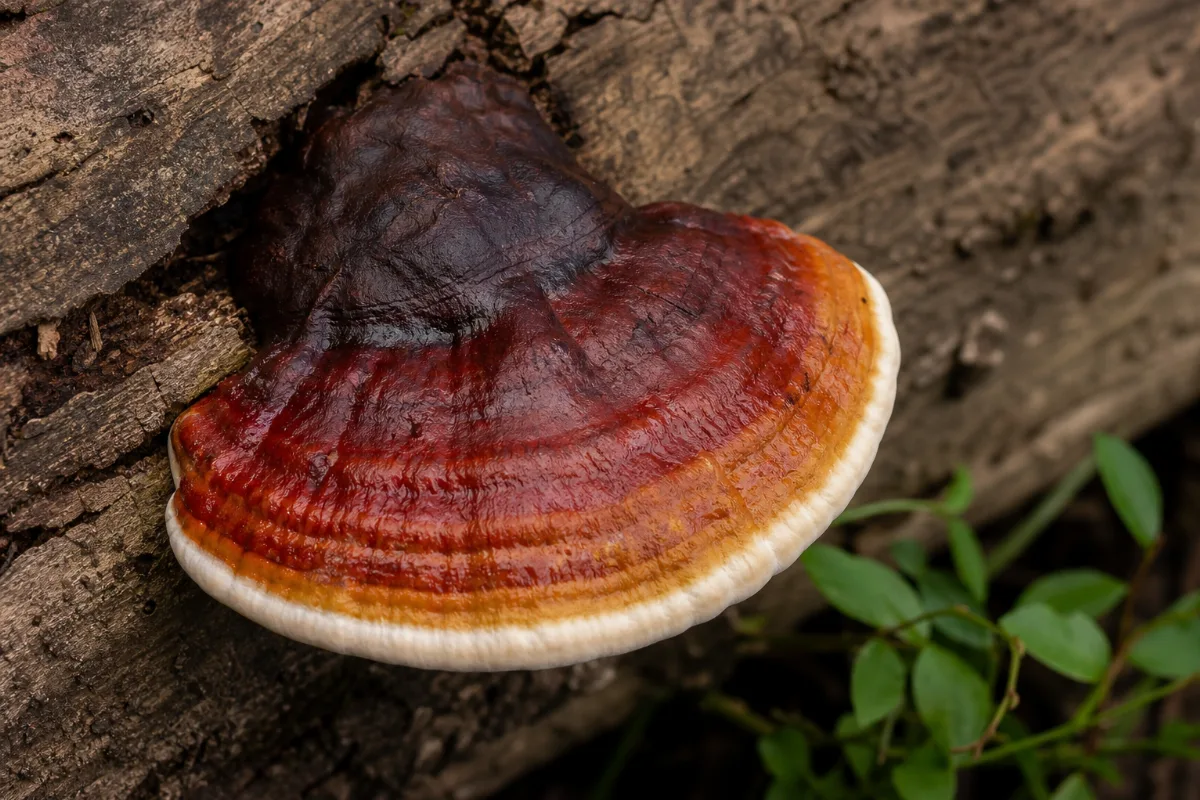
Red-belted conk is a perennial, hoof-shaped bracket with a shiny orange-red to red band on the cap and a thick whitish margin. It grows on conifers and hardwoods and causes brown rot in wood. It is a fungus, not a plant.
The name is tricky. GBIF accepts Fomitopsis pinicola, and a 2019 paper says that species in the strict sense is found only in Eurasia. In North America the red-belted conks are other species, including Fomitopsis mounceae, Fomitopsis schrenkii and Fomitopsis ochracea. Almost all the research used material from Asia and Europe, so results may not carry over to North American conks.
Traditional and current uses
A 2026 review says it has been used for centuries in traditional Chinese and Korean medicine as an anti-inflammatory and fever-lowering agent and for headaches, nausea and liver disease. Traditional use is not proof that it works or is safe. Wikipedia describes it as inedible because of its woody texture, which we could not check in a primary source.
Today some makers sell tinctures and teas of the conk. We did not find any human study of those products.
What the research shows
Everything comes from labs and animals. In test tubes, extracts neutralised test chemicals and blocked an inflammation-related enzyme. In mice with chemically caused colitis, a chloroform extract eased signs and lowered some blood inflammation markers. In diabetic rats, extracts lowered blood glucose, though an older rat study found a hot-water extract worked and an ethanol extract barely did.
A 2026 review table lists cancer-cell results: some extracts and compounds killed leukaemia, colon and other cancer cells in dishes, some shrank tumours in mouse models, and a whiskey extract made no difference in a prostate tumour model. These are not cancer treatments. We have not seen any of this tested in a person.
Forms you may see
Lab studies use solvent extracts such as chloroform, ethyl acetate, ethanol and water, and mycelium grown in tanks. Different solvents pull different compounds from the same fungus. A tea or tincture of the woody conk may therefore not match any extract that has been studied, and no product has been tested in people.
We found no analysis of any red-belted conk product, so the species, the part used and the contents are unknown. If you are thinking of using one, ask a doctor or pharmacist about what is right for you.
Regulation
We did not find a regulator or health-agency document about red-belted conk. Our search of research papers found none, but the agency websites were not searched for this species, so this is not proof that none exist. It is not an approved medicine, and no health claim for it has been checked by us for any regulator.
At a glance
Traditional uses history, not proof
- Described as a folk medicine in China and Korea, for example as an anti-inflammatory and fever-lowering agent and for headaches, nausea and liver disease (Nutrients 2026 review).
- Wikipedia says the woody conk has been used as tinder (not verified against a primary source).
Studied for research
- Antioxidant activity in test tubes, insufficient (lab only)
- Inflammation in mice and enzymes in dishes, insufficient (animal and lab only)
- Blood sugar and blood fats in diabetic rats, insufficient (rat studies disagree)
- Cancer cells in dishes and tumours in mice, insufficient (not a treatment)
- Liver protection, immune effects and germ-killing activity, insufficient (animal and lab only)
- Any effect in people, none studied
Main compounds
- Triterpenoids (pinicolic, forpinic and formipinic acids), the best-studied group
- Polysaccharides, the main part of the fruiting body according to a review
- Phenolic acids and sesquiterpenoids in smaller amounts
Common forms
- Dried woody conk (powder or simmered tea)
- Alcohol tinctures sold by some makers (no human study found)
- Lab solvent extracts (chloroform, ethyl acetate, ethanol, water) used in research
- Mycelium grown in tanks (a different material, used in labs)
Research links: Review: Fomitopsis compounds and properties (open access) · Review: anticancer properties of wood-inhabiting fungi (open access) · Mouse colitis study (abstract) · Rat diabetes study (abstract) · North American species paper (abstract) · MushroomExpert identification page · Research Library · Genes & Biomarkers Library
What it is and its history
- Accepted scientific name
- Fomitopsis pinicola
- Naming authority
- (Sw.) P.Karst. (GBIF)
- Synonyms
- Boletus pinicola Sw. (heterotypic synonym in GBIF); Boletus ungulatus Schaeff. (synonym in GBIF); Fomes albus (Lazaro Ibiza) Sacc. & Trotter (synonym in GBIF)
- Common names
- Red-belted conk (English); Red belt conk (English); Red-belted bracket (English)
- Family or group
- Fomitopsidaceae (a fungus family of woody bracket fungi), not a plant
- Classification
- Fungi > Basidiomycota > Agaricomycetes > Polyporales > Fomitopsidaceae > Fomitopsis > Fomitopsis pinicola
- Native range
- Strictly Eurasian according to Haight 2019 and MushroomExpert; North American collections are other species (F. mounceae, F. ochracea, F. schrenkii).
- Habitat
- Grows on dead and sometimes living conifers and hardwoods and causes a brown rot (MushroomExpert; Nutrients 2026 review).
- What it looks like
- Fruiting body: Perennial, semicircular to hoof-shaped conk up to about 25 cm across with a shiny orange-red to red band, a thick whitish margin and pale, leathery to woody flesh (MushroomExpert).
- Cultivation
- Lab studies grow the mycelium in tanks (Krupodorova 2024). Commercial growing was not checked.
- Harvest and processing
- Not checked.
- Look-alikes and adulterants
- Name: Red varnished Ganoderma species; Note: Brownish flesh that turns black with KOH, and very different under the microscope (MushroomExpert).; Name: Fomes fomentarius (tinder conk); Note: Old red-belted conks can look similar; the tinder conk lacks red shades and has a brown pore surface and flesh (MushroomExpert).; Name: North American relatives; Note: F. mounceae, F. ochracea and F. schrenkii are told apart by DNA, location and spore size (Haight 2019).
- Sustainability and conservation
- Not checked. It is a common species.
Traditional use and history history, not clinical proof
| Tradition or era | Documented use | Source |
|---|---|---|
| China and Korea (folk medicine) | Described as a traditional medicinal mushroom used in folk medicine, for example as an anti-inflammatory and fever-lowering agent and for headaches, nausea and liver disease. The dates and original texts were not checked. | p42588118 |
| Europe (tinder) | Wikipedia says the woody conk has been useful as tinder. This is Wikipedia only and NOT verified. | s-wikipedia-fp |
Traditional use shows how it was used. It does not show that it works or is safe today.
What is inside, and how it may work
What it contains and how those compounds act in cells and animals. Laboratory and animal mechanisms are not proven effects in people.
Main compounds
| Compound | Family | Where it is concentrated | Activity studied | Level of evidence |
|---|---|---|---|---|
| Lanostane triterpenoids (pinicolic acid and related acids, forpinic and formipinic acids) | triterpenoid | Fruiting body About 73 micrograms per gram dry weight in a Polish ethanol extract (Swieca 2026, mainly forpinic and formipinic acids). | Some killed leukaemia cells and reduced inflammation markers in cell assays (reviews). Cell work only. 9 8 5 | Laboratory research |
| Polysaccharides (including a fucogalactan-type heterogalactan) | polysaccharide | Fruiting body and mycelium Not verified. | Described in a review as the principal constituents of the fruiting body, with antioxidant results in the lab and blood-glucose results in diabetic rats. 5 | Animal research |
| Phenolic acids (vanillic and chebulic acids) | phenolic acid | Fruiting body About 20 micrograms per gram dry weight in the Polish ethanol extract. | Radical scavenging in the test tube. 9 | Laboratory research |
| Sesquiterpenoids (fomitopins A to L) | sesquiterpenoid | Fruiting body Not verified. | Reduced superoxide release and elastase release in cell assays (described in a review). 5 | Laboratory research |
Mechanisms, receptors and pathways
| Target or pathway | Gene or receptor | What was found | Level |
|---|---|---|---|
| Oxidation (radical scavenging) | n/a (chemical assay) | Mycelium and fruiting-body extracts neutralised the DPPH test radical in a test tube. 6 9 | Laboratory research |
| Lipoxygenase and xanthine oxidase enzymes | LOX, XO | Ethanol extract blocked lipoxygenase; xanthine oxidase was blocked less than by artist's bracket extracts. 9 | Laboratory research |
| Immune regulation in colitis | IL-6, IL-8 | A chloroform extract lowered serum IL-6 and IL-8 in colitis mice; the authors suggest it works through immune regulation. 1 | Animal research |
| Insulin release and antioxidant enzymes | insulin, CAT, SOD, GSH-Px | In diabetic rats the ethanol extract restored serum insulin and antioxidant enzyme levels; the authors propose increased insulin secretion. 11 | Animal research |
| Cell death in cancer cell lines | apoptosis | Extracts and triterpenoids caused apoptosis and cell-cycle arrest in cell lines (review table). 8 | Laboratory research |
Absorption, metabolism and elimination
- Absorption
- Not found.
- Distribution
- Not found.
- Metabolism
- Not found.
- Elimination
- Not found.
- Bioavailability
- Not established. A review table suggests low availability of active ingredients as one possible reason a whiskey extract did nothing in a mouse tumour model.
Isolated compounds versus whole extracts
Lab results come from solvent extracts, isolated compounds and lab-grown mycelium. Different solvents pull out different compounds (ethanol brings triterpenoids and phenols; alkaline and water extracts bring polysaccharides). A hot-water tea or an alcohol tincture may therefore not match any lab extract.
Nutritional composition
Red-belted conk is a woody bracket and is not a food or a nutrient source; no nutrition claim is made.
7 not enough evidence
What was looked at
The 7 benefits and uses checked for Red-belted conk, each with how strong the evidence is. Tap one to open it.
- Antioxidant activity in test tubesNot enough evidence
- Inflammation (enzymes in dishes and colitis in mice)Not enough evidence
- Blood sugar and blood fats (diabetic rats)Not enough evidence
- Cancer cells in dishes and tumours in miceNot enough evidence
- Liver protection (alcohol-injury in mice)Not enough evidence
- Immune system (one compound in mice)Not enough evidence
- Germ-killing activity in lab dishesNot enough evidence
Lab markers tracked in the studies
Fasting blood glucose (in diabetic rats)Cholesterol and triglycerides (in diabetic rats)Inflammation messengers IL-6 and IL-8 (in colitis mice)Tumour size in mice with grafted tumours
What is Red-belted conk good for?
The uses people ask about and how strong the evidence is for each. Every one rests on laboratory or animal work only, and none has been tested in people. Read this together with the Safety tab.
Benefits, one by one
Each card is a research question, not a promise. Tap a goal to filter. Open a card to see the studies, doses and limits.
Antioxidant activity in test tubes
Not enough evidenceExtracts of the wild conk and of lab-grown mycelium neutralise test chemicals in laboratory assays. This is chemistry in a dish. It has not been tested in people and does not show an effect in the body.
3 studiesLab extracts (ethanol, methanol, alkaline, water) of fruiting body an…
Studies, doses and limits
What the trials found
No human trial of red-belted conk was found. A search of Europe PMC (titles and metadata, 2026-10-25) found no clinical trial, case report or poisoning report.
Results
Mycelium extract: DPPH radical scavenging up to about 93 percent under the best culture conditions. Fruiting-body extracts (alkaline and ethanol) had the strongest scavenging of the fractions tested.
Effect sizes as reported
Strong in assays; not tested in any living body
Why this rating
Test-tube assays only. Cultured mycelium differs from the wild conk, and extraction solvents used in labs are not those of tea or tincture.
Form and dose studied
Lab extracts (ethanol, methanol, alkaline, water) of fruiting body and of cultured mycelium. No consumer product was tested.
Who was studied
Laboratory chemistry (no people, no animals)
Limits
Antioxidant assays do not predict health effects. Results depend on solvent and on which part of the fungus is used.
Why researchers looked
Wood-growing fungi make phenols and triterpenes that react with test radicals, so antioxidant assays are a common first screen.
Traditional use
Described as a folk medicine in China and Korea, for example for inflammation, fever, headache, nausea and liver complaints (Karunarathna 2025 review; Roszczenko 2026 review). Traditional use is not evidence that it works.
Proposed mechanism Laboratory research
Phenolic compounds and triterpenoids in the extracts neutralise the DPPH test radical and reduce other test chemicals (lab assay).
A proposed mechanism does not show that the effect happens in people.
Nothing is known about safety in people. Wild conks can be misidentified and may carry contaminants. See the Safety tab.
Inflammation (enzymes in dishes and colitis in mice)
Not enough evidenceIn the lab, ethanol extracts blocked an inflammation-related enzyme (lipoxygenase). In mice with chemically caused colitis, a chloroform extract eased signs and lowered some blood inflammation markers. No human has been studied.
3 studiesChloroform extract by mouth in mice for 3 weeks (dose not shown here)…
Studies, doses and limits
What the trials found
No human trial of red-belted conk was found. A search of Europe PMC (titles and metadata, 2026-10-25) found no clinical trial, case report or poisoning report.
Results
Mice: colitis scores, bloody stool and weight loss improved, and serum IL-6 and IL-8 were lower than in untreated colitis mice. Enzyme work: ethanol extract lipoxygenase IC50 0.62 mg per mL.
Effect sizes as reported
Better colitis scores in mice; enzyme blocked in a dish
Why this rating
Only animal and test-tube work, with solvent extracts (chloroform, ethanol) that are not consumer forms. No human data.
Form and dose studied
Chloroform extract by mouth in mice for 3 weeks (dose not shown here); ethanol extract in a test tube.
Who was studied
Mice with induced colitis; laboratory enzymes
Limits
A chloroform extract is not a tea or powder. Mouse colitis is not human ulcerative colitis. Sample sizes were not stated in the abstract.
Why researchers looked
Folk use for inflammation led researchers to test extracts and isolated triterpenes in cells and mice.
Traditional use
Described as a folk medicine in China and Korea, for example for inflammation, fever, headache, nausea and liver complaints (Karunarathna 2025 review; Roszczenko 2026 review). Traditional use is not evidence that it works.
Proposed mechanism In vitro and animal
Triterpenes and extracts reduce inflammation markers in cell assays and block lipoxygenase in the test tube. The mouse study suggests an effect on immune regulation and lower IL-6 and IL-8.
A proposed mechanism does not show that the effect happens in people.
Nothing is known about safety in people. Wild conks can be misidentified and may carry contaminants. See the Safety tab. The mouse paper also reported lower liver enzymes in colitis mice; that says nothing about safety in people.
Blood sugar and blood fats (diabetic rats)
Not enough evidenceIn rats made diabetic, extracts lowered blood glucose and improved cholesterol fractions in one 2020 study. An older rat study, described in a review, found a hot-water extract worked and an ethanol extract barely did. Nobody has tested this in people, and the results differ by extract.
2 studiesWater and ethanol extracts in rats at three doses each (doses not sho…
Studies, doses and limits
What the trials found
No human trial of red-belted conk was found. A search of Europe PMC (titles and metadata, 2026-10-25) found no clinical trial, case report or poisoning report. Do not replace diabetes medicines.
Results
Rats: fasting blood glucose lower, serum insulin back to normal, and with the high-dose ethanol extract higher HDL cholesterol and lower total cholesterol, triglycerides and LDL cholesterol.
Effect sizes as reported
Lower glucose and better blood fats in diabetic rats
Why this rating
Rat results only. Two rat studies disagree about which extract (water or ethanol) works, and nothing has been tried in people.
Form and dose studied
Water and ethanol extracts in rats at three doses each (doses not shown here); a review also mentions a polysaccharide extract.
Who was studied
Rats with induced diabetes
Limits
One research group; funding not stated in the abstract. Rat models do not predict human blood sugar.
Why researchers looked
Traditional and patent interest in fungal extracts for diabetes led to rat experiments.
Traditional use
Described as a folk medicine in China and Korea, for example for inflammation, fever, headache, nausea and liver complaints (Karunarathna 2025 review; Roszczenko 2026 review). Traditional use is not evidence that it works.
Proposed mechanism Animal research
Proposed in the rat study: more insulin release and protection of pancreas tissue from oxidative stress (animal finding, not proven).
A proposed mechanism does not show that the effect happens in people.
Not shown to be safe or useful in people with diabetes. Anyone on diabetes medicine should ask a doctor or pharmacist before trying any fungus product, because blood sugar could drop or rise unpredictably. Nothing is known about safety in people. Wild conks can be misidentified and may carry contaminants. See the Safety tab.
Cancer cells in dishes and tumours in mice
Not enough evidenceSome extracts and triterpene compounds killed cancer cells in dishes, and some extracts shrank tumours in mice. Other extracts were weak or did nothing. This is laboratory and animal work. It is not evidence that the conk treats cancer.
2 studiesLab solvent extracts (chloroform, ethyl acetate, methanol, hot water,…
Studies, doses and limits
What the trials found
No human trial of red-belted conk was found. A search of Europe PMC (titles and metadata, 2026-10-25) found no clinical trial, case report or poisoning report.
Results
Cell work: chloroform extract IC50 about 36 to 372 micrograms per mL depending on cell line; three isolated triterpenoids killed leukaemia (HL-60) cells at roughly 11 to 29 micromolar; hot-water extract was weak (60 to 100 percent of cells alive at 1000 micrograms per mL). Mice: ethyl acetate extract gave about 58 percent lower lymphoma tumour weight and chloroform extract about 48 percent inhibition of a sarcoma; a whiskey extract made no difference in a prostate tumour model.
Effect sizes as reported
Cell killing in dishes; smaller tumours in some mouse models; no effect in one
Why this rating
Cell lines and mouse models only. Doses that kill cells in a dish are often far above what can be reached in the body.
Form and dose studied
Lab solvent extracts (chloroform, ethyl acetate, methanol, hot water, whiskey) and isolated compounds.
Who was studied
Cancer cell lines; mice with grafted tumours
Limits
The details come from a 2026 narrative review table; the original studies were not opened. Not shown in people.
Why researchers looked
A long-standing interest in medicinal fungi for cancer led to many cell-line tests.
Traditional use
Described as a folk medicine in China and Korea, for example for inflammation, fever, headache, nausea and liver complaints (Karunarathna 2025 review; Roszczenko 2026 review). Traditional use is not evidence that it works.
Proposed mechanism In vitro and animal
Triterpenoids and extracts cause cell death (apoptosis) and stop cell division in cancer cell lines (cell work).
A proposed mechanism does not show that the effect happens in people.
Do not use this fungus in place of cancer treatment. People having cancer treatment should tell their care team about any fungus product.
Liver protection (alcohol-injury in mice)
Not enough evidenceA review describes a mouse study in which polysaccharides from lab-grown mycelium protected against alcohol-induced liver injury. The colitis mice also had lower liver enzymes. Nothing is known about the liver in people, and the effect of these products on human livers has not been tested.
2 studiesMycelium polysaccharide in mice (dose not shown here).
Studies, doses and limits
What the trials found
No human trial of red-belted conk was found. A search of Europe PMC (titles and metadata, 2026-10-25) found no clinical trial, case report or poisoning report.
Results
Described by the review without figures. In colitis mice, serum AST and ALT were lower with the chloroform extract.
Effect sizes as reported
Less liver injury in alcohol-exposed mice (as described by a review)
Why this rating
Animal work only, described second-hand by a review. The mouse study itself was not opened.
Form and dose studied
Mycelium polysaccharide in mice (dose not shown here).
Who was studied
Mice
Limits
Second-hand description. A lower enzyme in a colitis mouse is not a liver-safety test.
Why researchers looked
Folk use for liver complaints led to animal liver models.
Traditional use
Described as a folk medicine in China and Korea, for example for inflammation, fever, headache, nausea and liver complaints (Karunarathna 2025 review; Roszczenko 2026 review). Traditional use is not evidence that it works.
Proposed mechanism Animal research
Described in the review as better blood fats, preserved liver structure and shifted gut bacteria in alcohol-fed mice (animal finding).
A proposed mechanism does not show that the effect happens in people.
Because nothing is known about the human liver, people with liver disease should ask a doctor before using any fungus product. Nothing is known about safety in people. Wild conks can be misidentified and may carry contaminants. See the Safety tab.
Immune system (one compound in mice)
Not enough evidenceA review mentions a mouse study in which dried mycelium, or a compound from it, raised some immune-cell activity measures. It is mouse work only, and no human immune data exist.
1 studiesDried mycelium or an isolated triterpene acid, mice.
Studies, doses and limits
What the trials found
No human trial of red-belted conk was found. A search of Europe PMC (titles and metadata, 2026-10-25) found no clinical trial, case report or poisoning report.
Results
Described in a review: higher phagocytic rate and lymphocyte conversion in mice; no figures given.
Effect sizes as reported
Higher immune-cell activity in mice (second-hand)
Why this rating
One mouse study, described second-hand by a review, on mycelium or an isolated compound rather than the wild conk.
Form and dose studied
Dried mycelium or an isolated triterpene acid, mice.
Who was studied
Mice
Limits
Immune lab measures do not mean fewer infections.
Why researchers looked
Many medicinal fungi are tested for immune effects because of their beta-glucans and triterpenes.
Traditional use
Described as a folk medicine in China and Korea, for example for inflammation, fever, headache, nausea and liver complaints (Karunarathna 2025 review; Roszczenko 2026 review). Traditional use is not evidence that it works.
Proposed mechanism Animal research
The review describes more phagocytosis (immune cells eating particles) and lymphocyte change in mice, which faded at higher concentrations (animal finding).
A proposed mechanism does not show that the effect happens in people.
A product that changes immune activity could matter for people on immune-suppressing medicine, but this was not studied. Ask a doctor or pharmacist. Nothing is known about safety in people. Wild conks can be misidentified and may carry contaminants. See the Safety tab.
Germ-killing activity in lab dishes
Not enough evidenceIn laboratory dishes, extracts and compounds slowed the growth of some bacteria, including Helicobacter pylori and Bacillus cereus. This is not a treatment for any infection.
1 studiesLab extracts and isolated triterpenoids.
Studies, doses and limits
What the trials found
No human trial of red-belted conk was found. A search of Europe PMC (titles and metadata, 2026-10-25) found no clinical trial, case report or poisoning report.
Results
Described in the review: a methanol extract inhibited H. pylori in culture, and triterpenoids from American collections inhibited B. cereus; figures not verified.
Effect sizes as reported
Growth of some germs slowed in dishes
Why this rating
Test-tube work described second-hand by a review.
Form and dose studied
Lab extracts and isolated triterpenoids.
Who was studied
Bacterial cultures
Limits
Activity in a dish does not show an infection can be treated with the fungus.
Why researchers looked
Wood fungi make defensive compounds, so they are often tested against germs.
Traditional use
Described as a folk medicine in China and Korea, for example for inflammation, fever, headache, nausea and liver complaints (Karunarathna 2025 review; Roszczenko 2026 review). Traditional use is not evidence that it works.
Proposed mechanism Laboratory research
Triterpenoids and other compounds slow microbe growth in culture (lab finding).
A proposed mechanism does not show that the effect happens in people.
Do not use a wild fungus to treat an infection. See a doctor. Nothing is known about safety in people. Wild conks can be misidentified and may carry contaminants. See the Safety tab.
Connections to the rest of health
How Red-belted conk connects to the rest of our health knowledge graph. Every link says what kind of connection it is. A safety link (for example to the liver) is a warning, not a benefit. A study that merely mentions a topic never creates a benefit link.
Explore every connection: goals, body systems, organs, symptoms, genes
C. Body parts and organs
E. Health conditions
| Connected to | Kind of connection | Evidence status | Context | Studies |
|---|---|---|---|---|
| Diabetes medicines | Not enough evidence | Rat studies lowered blood glucose; an added effect with diabetes medicines is theoretical. Preparation or compound: Water and ethanol extracts in diabetic rats |
11 |
I. Biomarkers
| Connected to | Kind of connection | Evidence status | Context | Studies |
|---|---|---|---|---|
| Fasting blood glucose (in diabetic rats) | Biological association | Not enough evidence | Measured in trials: lowered. A lab change is not the same as a health benefit. | 11 |
| Cholesterol and triglycerides (in diabetic rats) | Biological association | Not enough evidence | Measured in trials: lowered. A lab change is not the same as a health benefit. | 11 |
| Inflammation messengers IL-6 and IL-8 (in colitis mice) | Biological association | Not enough evidence | Measured in trials: lowered. A lab change is not the same as a health benefit. | 1 |
| Tumour size in mice with grafted tumours | Biological association | Not enough evidence | Measured in trials: lowered. A lab change is not the same as a health benefit. | 8 |
J. Genes, receptors and enzymes
| Connected to | Kind of connection | Evidence status | Context | Studies |
|---|---|---|---|---|
| Lipoxygenase | Preliminary mechanism | In vitro | Blocked by ethanol extract in the test tube. | 9 |
K. Biological pathways
| Connected to | Kind of connection | Evidence status | Context | Studies |
|---|---|---|---|---|
| IL-6 and IL-8 | Preliminary mechanism | Animal | Lower in colitis mice given a chloroform extract. | 1 |
L. Active compounds
| Connected to | Kind of connection | Evidence status | Context | Studies |
|---|---|---|---|---|
| Lanostane triterpenoids (pinicolic acid and related acids, forpinic and formipinic acids) | Biological association | In vitro | Some killed leukaemia cells and reduced inflammation markers in cell assays (reviews). Cell work only. Preparation or compound: Fruiting body |
9 8 5 |
| Polysaccharides (including a fucogalactan-type heterogalactan) | Biological association | Animal | Described in a review as the principal constituents of the fruiting body, with antioxidant results in the lab and blood-glucose results in diabetic rats. Preparation or compound: Fruiting body and mycelium |
5 |
| Phenolic acids (vanillic and chebulic acids) | Biological association | In vitro | Radical scavenging in the test tube. Preparation or compound: Fruiting body |
9 |
| Sesquiterpenoids (fomitopins A to L) | Biological association | In vitro | Reduced superoxide release and elastase release in cell assays (described in a review). Preparation or compound: Fruiting body |
5 |
Each connection is stored with the ingredient, the connected record, the kind of connection, the evidence status, the supporting studies, the preparation or compound involved, and a review date (last reviewed October 25, 2026).
Evidence at a glance: what changed in 4 lab markers
Tap a number to show only those markers. Counts are markers, not people.
The evidence
The research centre for Red-belted conk. Every record here was checked against PubMed or the publisher's page; we never list a study we have not verified.
Evidence by outcome
Bars show how many studies we found for each outcome, not how well it works. People are added up across trials only (reviews are not added, to avoid double counting).
How we rate evidence
High certainty
Several well-run trials or reviews agree; further research is unlikely to change the picture much.
Moderate certainty
Good trials point the same way, but some doubt remains.
Low certainty
Small, short or inconsistent trials. The finding could change with better research.
Very low certainty
Very little or very weak human data. Treat as a possibility only.
Mixed findings
Trials or reviews disagree with each other.
Not enough evidence
Not enough human research to say either way.
Evidence against
Good research found no benefit, or found harm.
We take the reviewers' own risk-of-bias and GRADE statements where they exist, and otherwise judge from study size, design, consistency, directness and whether a product matches what is sold. Many publications do not make evidence high. Method note: We read PubMed records and abstracts for 7 papers (two narrative reviews, two lab studies, a mouse study, a rat study and a classification paper) and the open-access full text of the two reviews. We checked species names in GBIF, read a mushroom identification guide in full, read Wikipedia through its API, and scanned the titles of 184 Europe PMC records for any human study (none). EMA, NCCIH, LiverTox and LactMed were not searched. Only abstracts were read for papers, so numbers come from abstracts or from the reviews. Certainty ratings are the compiler's own reading; evidence here is very thin.
Study library: every study we checked 11
| Study | Design | People | Product, dose, length | Result |
|---|---|---|---|---|
| Cheng 2023 The beneficial effects of Fomitopsis pinicola chloroform extract on a dextran sulfate sodium-induced ulcerative colitis mice model. Annals of Translational Medicine · PMID 36819509 · DOI |
Animal study mouse |
Mice given dextran sulfate sodium in drinking water to cause colitis (group sizes not stated in the abstract) | Chloroform extract of F. pinicola (FPKc) Not shown here 3 weeks · vs Sulfasalazine (a colitis drug) and untreated colitis mice |
The extract, like the drug sulfasalazine, eased bloody stool and weight loss and improved disease activity and colon damage scores and gut structure. The spleen index and serum IL-6 and IL-8 were lower than in untreated colitis mice, and serum AST and ALT were lower. Milder colitis signs in mice Methods, limits and fundingOutcomes: Disease activity and colon damage scores, colon length and structure, spleen and thymus indexes, serum IL-6, IL-8, TNF-alpha, AST and ALT Limitations: Mouse study with a chloroform solvent extract that is not a food or supplement form. Group sizes and funding were not stated in the abstract. Not shown in people. Funding and conflicts: Not stated in the abstract Read: abstract |
| Europe 2026 Europe PMC literature search for red-belted conk (author search, 2026-10-25) Europe PMC (search) · Source |
Literature search n/a |
n/a | n/a |
On 2026-10-25 a search for Fomitopsis pinicola with trial, case-report, poisoning, patient and volunteer terms returned 91 records, and we read all 91 titles. None was a human trial, case report or poisoning report. A second search for titles and abstracts naming the species or Fomitopsis mounceae returned 184 records (patents, forest-ecology, enzyme and chemistry papers, lab and animal papers); no human study appeared in the titles. n/a Methods, limits and fundingOutcomes: Whether any human trial, case report or poisoning report exists Limitations: Titles and metadata only; absence from a search is not proof that none exist. Not a systematic search. Funding and conflicts: n/a Read: search run by us |
| GBIF 2026 GBIF Backbone Taxonomy API: Fomitopsis pinicola and Fomitopsis mounceae GBIF (web record) · Source |
Taxonomy record n/a |
n/a | n/a |
Checked 2026-10-25: Fomitopsis pinicola (Sw.) P.Karst., accepted species, key 2542395, family Fomitopsidaceae. Fomitopsis mounceae Haight & Nakasone, accepted species, key 10825597, family Fomitopsidaceae. n/a Methods, limits and fundingOutcomes: Accepted names, authorities and family Limitations: Index Fungorum was not checked. Funding and conflicts: n/a Read: record read (API) |
| Haight 2019 Fomitopsis mounceae and F. schrenkii-two new species from North America in the F. pinicola complex. Mycologia · PMID 30908115 · DOI |
Taxonomy study not applicable (taxonomy) |
Fungus collections from North America (taxonomy) | Genetic and shape analysis of fungus collections fruiting body and cultures Not shown here |
The paper describes F. mounceae and F. schrenkii as new species. It says F. mounceae and F. ochracea occur in Canada, the Appalachian Mountains and the northern United States, and F. schrenkii in the western and southwestern United States. It says F. pinicola in the strict sense is restricted to Eurasia and does not occur in North America. North American red-belted conks are mostly different species from the Eurasian F. pinicola Methods, limits and fundingOutcomes: Which species occur where in the F. pinicola complex Limitations: A classification paper with no health data. It means health results from Europe or Asia may not apply to the species sold or gathered in North America. Funding and conflicts: Not stated in the abstract Read: abstract |
| Karunarathna 2025 The bioactive compounds, beneficial medicinal properties, and biotechnological prospects of Fomitopsis: a comprehensive overview. Frontiers in Cellular and Infection Microbiology · PMID 40330023 · DOI |
Narrative review review of lab and animal studies |
Genus-wide review of the Fomitopsis fungi; not a systematic review and not limited to red-belted conk | Fomitopsis species, including F. pinicola fruiting body and mycelium Not shown here |
The abstract says the compounds show antioxidant, antimicrobial, anti-inflammatory and immunomodulatory properties, with promising applications in cancer therapy, cardiovascular health and immune modulation. The full text (open access, read) describes red-belted conk as a folk medicine in China and Korea and lists cell, mouse and rat findings: polysaccharide and alkali extracts lowering blood glucose in diabetic rats, a mouse immune study, mycelium polysaccharides in alcohol-induced liver injury, and methanol extract inhibiting Helicobacter pylori in culture. It describes no clinical trial of red-belted conk. Narrative summary of lab and animal findings; no human effect shown Methods, limits and fundingOutcomes: Chemistry and biological activities of Fomitopsis compounds, with a section on F. pinicola Limitations: A narrative genus review that repeats other authors' lab and animal results. Original papers behind the red-belted conk statements were mostly not opened. Several figures it quotes were not verified and are not used here. Funding and conflicts: Not stated in the abstract Read: abstract and full text (open access) |
| Krupodorova 2024 Enhancement of antioxidant activity and total phenolic content of Fomitopsis pinicola mycelium extract. Fungal Biology and Biotechnology · PMID 39511671 · DOI |
In vitro study laboratory (no animals or people) |
Fomitopsis pinicola mycelium grown in liquid culture under different conditions (laboratory) | Mycelium extract from laboratory culture mycelium (not fruiting body) 7 to 28 days of culture |
Under the best conditions the mycelium extract neutralised the DPPH test radical by 78 to about 93 percent, and phenol content rose by about 2.2 times with shaking or still culture. Growth conditions such as sugar, nitrogen source and temperature changed the results. Test-tube chemistry only Methods, limits and fundingOutcomes: Growth, total phenols, and DPPH radical scavenging in a test tube Limitations: A chemistry assay of cultured mycelium, which is a different material from the wild woody conk. It says nothing about effects in the body. Funding and conflicts: Not stated in the abstract Read: abstract |
| Kuo 2022 Fomitopsis pinicola (MushroomExpert.Com) MushroomExpert.Com · Source |
Identification guide n/a |
n/a | n/a |
Read in full on 2026-10-25. Describes a shiny orange-red to red band on the cap with a thick whitish margin, a perennial hoof-shaped conk, pale flesh that turns red to reddish-brown with KOH. Varnished red Ganoderma look similar but have brownish flesh that turns black with KOH; old specimens can resemble Fomes fomentarius. Says North American versions include F. ochracea, F. schrenkii and F. mounceae and that F. pinicola is strictly Eurasian. States that the site gives no information about edibility or toxicity. n/a Methods, limits and fundingOutcomes: Identification, look-alikes, North American versions Limitations: A hobbyist identification site by an expert author, not a peer-reviewed paper. It gives no safety advice. Funding and conflicts: n/a Read: full page read |
| Roszczenko 2026 Anticancer Properties of Selected Wood-Inhabiting Fungi. Nutrients · PMID 42588118 · DOI |
Narrative review review of cell and mouse studies |
Review of wood-inhabiting fungi in cancer research; one section covers Fomitopsis pinicola | Extracts and compounds of wood-inhabiting fungi, including F. pinicola fruiting body Not shown here |
The abstract says extracts may inhibit tumour growth, induce apoptosis and support the immune response, and that further clinical studies are required. The full text (open access, read) says red-belted conk has been used for centuries in traditional Chinese and Korean medicine, for example as an anti-inflammatory and fever-lowering agent and for headaches, nausea and liver disease. Its Table 6 lists cell results (chloroform extract, lanostane triterpenoids), a lymphoma and a sarcoma mouse model with smaller tumours, a hot-water extract with weak effects in cell lines, and a whiskey extract with no difference in a prostate tumour model. Lab and mouse results only; no human cancer data Methods, limits and fundingOutcomes: Cell-line toxicity and mouse tumour results Limitations: A narrative review of other authors' lab work. The original papers were not opened. Cell-dish toxicity does not predict an effect in people. Funding and conflicts: Not stated in the abstract Read: abstract and full text (open access) |
| Swieca 2026 Lipoxygenase and Xanthine Oxidase Inhibition and Antioxidant Potential of Fractions Obtained by Multistep Extraction of Artist's Bracket (Ganoderma applanatum) and Red-Belted Bracket (Fomitopsis pinicola). Antioxidants (Basel) · PMID 42351969 · DOI |
In vitro study laboratory (no animals or people) |
Extracts of fruiting bodies of two wood fungi (laboratory) | Multistep extracts (ethanol, methanol, water, alkaline) fruiting body Not shown here |
Red-belted bracket ethanol extracts held triterpenoids (about 73 micrograms per gram dry weight, mainly forpinic and formipinic acids) and phenolic acids (about 20 micrograms per gram). Alkaline and ethanol extracts had the strongest radical scavenging. Only ethanol extracts blocked lipoxygenase (IC50 0.62 mg per mL, described as noncompetitive). Red-belted bracket blocked xanthine oxidase less than artist's bracket (IC50 3.84 mg per mL). Test-tube enzyme and antioxidant activity only Methods, limits and fundingOutcomes: Triterpenoid and phenolic content, radical scavenging, and inhibition of two enzymes (lipoxygenase, xanthine oxidase) Limitations: Laboratory assays on extracts. Enzyme blocking in a dish does not show less inflammation in people. The paper's text calls the lipoxygenase inhibition mixed in one place and noncompetitive in the abstract; this page uses the abstract's wording. Funding and conflicts: Not stated in the abstract Read: abstract |
| Wikipedia contributors 2026 Fomitopsis pinicola (Wikipedia) Wikipedia · Source |
Encyclopedia n/a |
n/a | n/a |
Read on 2026-10-25 through the Wikipedia API. Says the mushroom is inedible because of its woody texture, useful as tinder, and reported to have medicinal uses in Asia. n/a Methods, limits and fundingOutcomes: Edibility and uses Limitations: Wikipedia only; not checked against a primary source. NOT verified. Funding and conflicts: n/a Read: full page read |
| Zahid 2020 Antidiabetic Properties of the Red Belt Conk Medicinal Mushroom Fomitopsis pinicola (Agaricomycetes) Extracts on Streptozotocin-Induced Diabetic Rats. International Journal of Medicinal Mushrooms · PMID 33389867 · DOI |
Animal study rat |
Rats made diabetic with a high-fat diet and streptozotocin; nine groups of eight rats | Water extract and ethanol extract of F. pinicola, three doses each Not shown here (animal doses) · vs Normal control, diabetic control and metformin groups |
Fasting blood glucose was lower after treatment and serum insulin returned to normal. The high-dose ethanol extract raised HDL cholesterol and lowered total cholesterol, triglycerides and LDL cholesterol, and normalised antioxidant enzyme levels. The authors concluded the ethanol extract was the more effective of the two. Lower blood glucose and better blood fats in diabetic rats Methods, limits and fundingOutcomes: Body and organ weight, fasting blood glucose, serum insulin, cholesterol fractions, antioxidant enzymes Limitations: Rat study. A different review (reading an older rat study) says a hot-water extract worked and an ethanol extract barely did, so results differ by extract and model. Funding was not stated. Not shown in people, and diabetes medicines must not be replaced. Funding and conflicts: Not stated in the abstract Read: abstract |
What we do not know yet
- No human study of any kind, so no one can say whether it helps or harms.
- No test of contents or contaminants (metals, pesticides, moulds) in wild or sold material.
- Which species is in sold products is not known.
- The original mouse and rat papers behind several review statements were not opened.
- Agency databases (EMA/HMPC, NCCIH, LiverTox, LactMed) were not searched.
How new research is added
New studies are found by a saved PubMed search and placed in a review queue. A person reads each one before it changes any evidence rating or safety wording. New publications never change ratings automatically.
Lab markers
What changed in blood or saliva tests during trials. A changed number is not the same as feeling or being healthier, and we give no "normal ranges".
Other 4
Fasting blood glucose (in diabetic rats)
Lowered in trials
The sugar level in blood after fasting. High values are a sign of diabetes.
Not enough evidenceResults and what it means
Why it was measured
Used in rat studies to judge a possible blood-sugar effect.
Statistical vs. clinical meaning
Significant in rats; no human data.
Safety implication
Rats only. Nothing is known about blood sugar effects in people, so no one should replace a diabetes medicine with it.
| Study | Result | People | Product |
|---|---|---|---|
| 11 | Fasting blood glucose was significantly lower after F. pinicola extract than in untreated diabetic rats; the high-dose ethanol extract was the most effective. | Rats with induced diabetes (8 per group) | Water or ethanol extract, three doses each |
Cholesterol and triglycerides (in diabetic rats)
Lowered in trials
Fats in the blood. Lower LDL and triglycerides and higher HDL are usually seen as favourable.
Not enough evidenceResults and what it means
Why it was measured
Measured in the rat study to see whether the extract changed blood fats.
Statistical vs. clinical meaning
Reported as improved in rats; no human data.
Safety implication
Rats only; no cholesterol or heart claim can be made for people.
| Study | Result | People | Product |
|---|---|---|---|
| 11 | High-dose ethanol extract raised HDL cholesterol and lowered total cholesterol, triglycerides and LDL cholesterol in diabetic rats. | Rats with induced diabetes | Ethanol extract, high dose |
Inflammation messengers IL-6 and IL-8 (in colitis mice)
Lowered in trials
Small proteins released by immune cells; higher levels go with more inflammation.
Not enough evidenceResults and what it means
Why it was measured
Measured in the mouse colitis study.
Statistical vs. clinical meaning
Reported as lower in mice; no human data.
Safety implication
Mice only. Not a test of any product sold to people.
| Study | Result | People | Product |
|---|---|---|---|
| 1 | Serum IL-6 and IL-8 were lower in colitis mice given the chloroform extract than in untreated colitis mice. | Mice with induced colitis | Chloroform extract of F. pinicola for 3 weeks |
Tumour size in mice with grafted tumours
Lowered in trials
How heavy the grafted tumour was at the end of the experiment.
Not enough evidenceResults and what it means
Why it was measured
Used in mouse cancer models to judge whether an extract slows tumour growth.
Statistical vs. clinical meaning
Mixed in mice, depending on the extract; no human data.
Safety implication
Mice only. Not a cancer treatment, and people with cancer should follow their care team's advice.
| Study | Result | People | Product |
|---|---|---|---|
| 8 | Ethyl acetate extract: tumour weight about 58 percent lower in a lymphoma mouse model; chloroform extract: 47.7 percent inhibition in a sarcoma model; whiskey extract: no difference in a prostate tumour model (Table 6 of the review). | Mice with grafted tumours | Different solvent extracts |
Safety
What studies and official sources say about side effects, medicines and who should check first. Each point shows what kind of evidence it comes from.
Main points to know 4
- Nothing is known about safety in people. No human trial, case report or poisoning report of red-belted conk was found. A search of Europe PMC (2026-10-25) turned up none, and the 2025 and 2026 reviews we read describe only laboratory and animal work. No news of harm is not proof of safety. None found 2 5
- Wild conks are easy to mix up and the species differ by continent. The glossy red band can look like some red Ganoderma, and older conks can look like Fomes fomentarius. Separating them uses flesh colour and a chemical test, not a photo or description. Strictly, Fomitopsis pinicola is Eurasian. The red-belted conks of North America are other species, such as Fomitopsis mounceae, so a result for one species may not apply to another. Identification guide 7 4 3
- Medicine, pregnancy, breastfeeding and children are untested. No source we read tested the conk in pregnancy, breastfeeding, children, surgery, autoimmune disease or with any medicine. Rat studies lowered blood glucose and a mouse study changed immune-cell measures, so a medicine effect cannot be ruled out. Ask a doctor or pharmacist before use. Pharmacological theory 11 5 2
- No test of contaminants was found. We did not find any test of heavy metals, pesticides or moulds in red-belted conk tinctures, teas or powders. Wild material grows on living and dead trees and its contents depend on the site, the tree and the species. Gap 2 7
Side effects 1
| Effect | How often | Severity and recovery | Evidence |
|---|---|---|---|
| No adverse effects in people have been described This reflects an absence of human reports, not safety. Mouse and rat abstracts we read did not describe toxicity tests. | Not established | unknown Not known | None found 2 |
Liver
No case report of liver harm from red-belted conk was found, and no human liver test. In mice, lower liver enzymes were reported in colitis mice given a chloroform extract, and a review mentions liver protection in alcohol-fed mice. Those are animal findings and say nothing about safety in people. LiverTox was not read for this species. 1 5 2
How often. No rate can be given because no human use has been studied.
Monitoring. No agency advice was found. People with liver disease or who drink heavily should ask a doctor before using a fungus product. Stop and get medical help for yellow skin or eyes, dark urine or pale stools.
This is a safety connection. It is not evidence that Red-belted conk supports liver health.
Medicines and supplements 4
| With | Why it matters | Importance | Evidence | What to do |
|---|---|---|---|---|
| Diabetes medicines (insulin, metformin and others) prescription | Extracts lowered blood glucose in diabetic rats (animal finding). | No human data. An added blood-sugar effect is a theoretical worry only. | Pharmacological theory Not enough evidence 11 | Do not swap a diabetes medicine for a fungus product. Ask the prescriber or pharmacist first. |
| Immune-suppressing medicines (after a transplant or for autoimmune disease) prescription | A mouse study described by a review found higher immune-cell activity measures (animal finding). | No human data; a theoretical worry only. | Pharmacological theory Not enough evidence 5 | Ask the prescribing team before using any fungus product. |
| Cancer treatments prescription | Extracts killed cancer cells in dishes and affected mouse tumours. | No human data on safety alongside chemotherapy or radiotherapy. | Pharmacological theory Not enough evidence 8 | Tell the care team about any fungus product used. |
| All other medicines prescription | Not studied. | No interaction data of any kind were found. | None found Not enough evidence 2 | Check with a pharmacist; unknown is not the same as safe. |
Who should check first 4
| Situation | Advice | Evidence |
|---|---|---|
| Pregnancy and breastfeeding | No safety data exist. Ask a doctor first; many people choose to avoid unstudied fungus products at these times. | None found 2 |
| Children | No safety data exist. Ask a doctor first. | None found 2 |
| Diabetes, or taking immune-suppressing medicine or cancer treatment | Ask the prescriber or pharmacist before using any fungus product. | Pharmacological theory 11 5 8 |
| Gathering a conk from the wild without expert identification | Do not use a wild fungus unless an experienced person has identified it in person. Look-alikes exist, and photos or descriptions are not enough. | Identification guide 7 |
Overdose, product quality and regulators
Summary. No poisoning from red-belted conk was found in the sources we read. It is a hard, woody conk, described as inedible because of its texture (Wikipedia only; one mushroom guide says it gives no edibility or toxicity advice).
Animal. The mouse and rat abstracts we read did not describe toxicity tests. Animal toxicity was not otherwise reviewed.
Human doses studied. No human has been studied. This page gives no amounts and none are advised.
High dose or long term signals. Not known.
Overdose response. Not described in any source. If someone feels very unwell after eating an unidentified fungus, seek medical help or call a poison centre.
Genotoxicity. Not read.
Toxic or hazardous parts. Fungus: the woody fruiting body is used. Cultured mycelium is a different material and no source compared the two for toxicity.
Red-belted conk products are not tested to the standards of approved medicines. We found no analysis of any product, so what is in a tincture or powder is unknown.
Which species is in the product. Fomitopsis pinicola in the strict sense is Eurasian. In North America, collections formerly called F. pinicola include F. mounceae, F. schrenkii and F. ochracea. A label that says red-belted conk may not say which species is inside, and research on the Eurasian species may not apply. 4 7 3
Look-alikes. Red varnished Ganoderma species have brownish flesh that turns black with KOH, and older red-belted conks can resemble Fomes fomentarius. Identification needs an expert. 7
Lab material is not the same as the wild conk. Lab studies use solvent extracts of fruiting bodies or mycelium grown in tanks. Different solvents pulled out different compounds from the same fungus, so a tea, a tincture and a powder may differ from each other and from the lab extracts. 9 6
Metals, pesticides and moulds. No source we read tested these in red-belted conk. They remain unknown for wild material. 2
| Body | Action | Date |
|---|
When to get medical help
- Vomiting, diarrhoea, bad belly pain, confusion or yellow skin or eyes after eating any unidentified wild fungus: get medical help or call a poison centre now.
- Swelling of the lips or throat, wheezing or trouble breathing after a fungus product: this is an emergency, get help now.
If someone may be poisoned or in a crisis, contact a clinician or emergency service straight away. In the US, Poison Control is 1-800-222-1222.
General information only, not medical advice. Ask a clinician or pharmacist before use, especially with medicines, in pregnancy or with a health condition. See the Natural Remedy Safety guide.
Frequently asked questions
What is red-belted conk?
Is red-belted conk proven to work?
Is red-belted conk safe?
Is Fomitopsis pinicola the same as Fomitopsis mounceae?
No, they are different species. A 2019 paper says Fomitopsis pinicola in the strict sense is found only in Eurasia, and that North American collections include Fomitopsis mounceae and relatives. Nearly all research was on the Eurasian material, so it may not apply to the North American species.
Can red-belted conk be confused with other fungi?
Yes. Red varnished Ganoderma species look similar, and old conks can resemble the tinder conk. Experts use flesh colour, a chemical test and microscope features. Never rely on a photo or a description.
Can it lower blood sugar?
Does it fight cancer?
Some extracts killed cancer cells in dishes and shrank tumours in some mouse models, while others did nothing. That is not evidence of a treatment in people. Anyone with cancer should follow their care team and tell them about any fungus product.
Does it interact with medicines?
Is it safe in pregnancy, breastfeeding or for children?
No safety data exist for any of these groups. Ask a doctor first.
Can I eat it?
Is it the same as reishi or chaga?
Has the FDA or another regulator approved it?
We found no regulator document about it. It is not an approved medicine, and supplement makers are not required to prove their products work. Ask a pharmacist about any product.
Explore by health goal
Editorial transparency
- Written by
- AlternativeMed editorial team. Research compiled with AI assistance, then checked against PubMed records.
- Medical review
- None. This page has not been reviewed by a physician or pharmacist.
- First published
- 2026-10-25
- Last substantive update
- 2026-10-25
- How we research
- We read PubMed records and abstracts for 7 papers (two narrative reviews, two lab studies, a mouse study, a rat study and a classification paper) and the open-access full text of the two reviews. We checked species names in GBIF, read a mushroom identification guide in full, read Wikipedia through its API, and scanned the titles of 184 Europe PMC records for any human study (none). EMA, NCCIH, LiverTox and LactMed were not searched. Only abstracts were read for papers, so numbers come from abstracts or from the reviews. Certainty ratings are the compiler's own reading; evidence here is very thin.
- How we rate evidence
- See "How we rate evidence" in the Evidence tab.
- Independence
- No product is promoted on this page. No affiliate links are shown. This page is information, not a recommendation to use red-belted conk.
Sources 11
Each source was opened and checked. Where we read only the abstract, it says so. The small numbers in the text point here.
- Cheng X, Ji Y, Li X, Wang Z, Wang B, He F, Xue S. The beneficial effects of Fomitopsis pinicola chloroform extract on a dextran sulfate sodium-induced ulcerative colitis mice model.. Annals of Translational Medicine. 2023. PMID 36819509. DOI 10.21037/atm-22-5143. (abstract)
- Europe PMC. Europe PMC literature search for red-belted conk (author search, 2026-10-25). Europe PMC (search). 2026. (search run by us)
- GBIF. GBIF Backbone Taxonomy API: Fomitopsis pinicola and Fomitopsis mounceae. GBIF (web record). 2026. (record read (API))
- Haight JE, Nakasone KK, Laursen GA, Redhead SA, Taylor DL, Glaeser JA. Fomitopsis mounceae and F. schrenkii-two new species from North America in the F. pinicola complex.. Mycologia. 2019. PMID 30908115. DOI 10.1080/00275514.2018.1564449. (abstract)
- Karunarathna SC, Patabendige NM, Kumla J, Hapuarachchi KK, Suwannarach N. The bioactive compounds, beneficial medicinal properties, and biotechnological prospects of Fomitopsis: a comprehensive overview.. Frontiers in Cellular and Infection Microbiology. 2025. PMID 40330023. DOI 10.3389/fcimb.2025.1534617. (abstract and full text (open access))
- Krupodorova T, Barshteyn V, Dzhagan V, Pluzhnyk A, Zaichenko T, Blume Y. Enhancement of antioxidant activity and total phenolic content of Fomitopsis pinicola mycelium extract.. Fungal Biology and Biotechnology. 2024. PMID 39511671. DOI 10.1186/s40694-024-00187-0. (abstract)
- Kuo M. Fomitopsis pinicola (MushroomExpert.Com). MushroomExpert.Com. 2022. (full page read)
- Roszczenko P, Szewczyk-Roszczenko OK, Gornowicz A, Czarnomysy R, Vassetzky Y, Bielawski K, Wujec M, Bielawska A. Anticancer Properties of Selected Wood-Inhabiting Fungi.. Nutrients. 2026. PMID 42588118. DOI 10.3390/nu18152495. (abstract and full text (open access))
- Swieca M, Michalska A, Lisiecka K, Sierocka M, Jarocki P, Zurek N, Kapusta I. Lipoxygenase and Xanthine Oxidase Inhibition and Antioxidant Potential of Fractions Obtained by Multistep Extraction of Artist's Bracket (Ganoderma applanatum) and Red-Belted Bracket (Fomitopsis pinicola).. Antioxidants (Basel). 2026. PMID 42351969. DOI 10.3390/antiox15060663. (abstract)
- Wikipedia contributors. Fomitopsis pinicola (Wikipedia). Wikipedia. 2026. (full page read)
- Zahid MT, Idrees M, Abdullah I, Ying W, Zaki AH, Bao H. Antidiabetic Properties of the Red Belt Conk Medicinal Mushroom Fomitopsis pinicola (Agaricomycetes) Extracts on Streptozotocin-Induced Diabetic Rats.. International Journal of Medicinal Mushrooms. 2020. PMID 33389867. DOI 10.1615/IntJMedMushrooms.2020035472. (abstract)
Where to buy
Check the label first. Whatever you buy, look for these:
- Fruiting body versus mycelium on grain: the label should say which
- The extract type and the beta-glucan amount, if stated
- A third-party testing mark
- Interactions: ask a pharmacist if you take medicines or blood thinners
Talk to a pharmacist or doctor before you start any supplement, especially if you take medicines. See the Safety tab for interactions.
Support our free guides: as an Amazon Associate we earn from qualifying purchases. Full disclosure.


